The Savvy Shopper’s Guide to Smart Curtain Lights: Unpacking Value in LED Strip Curtain Lights
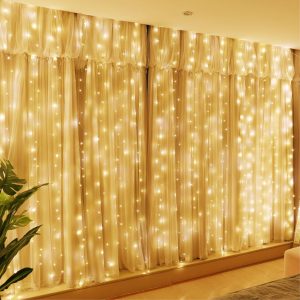
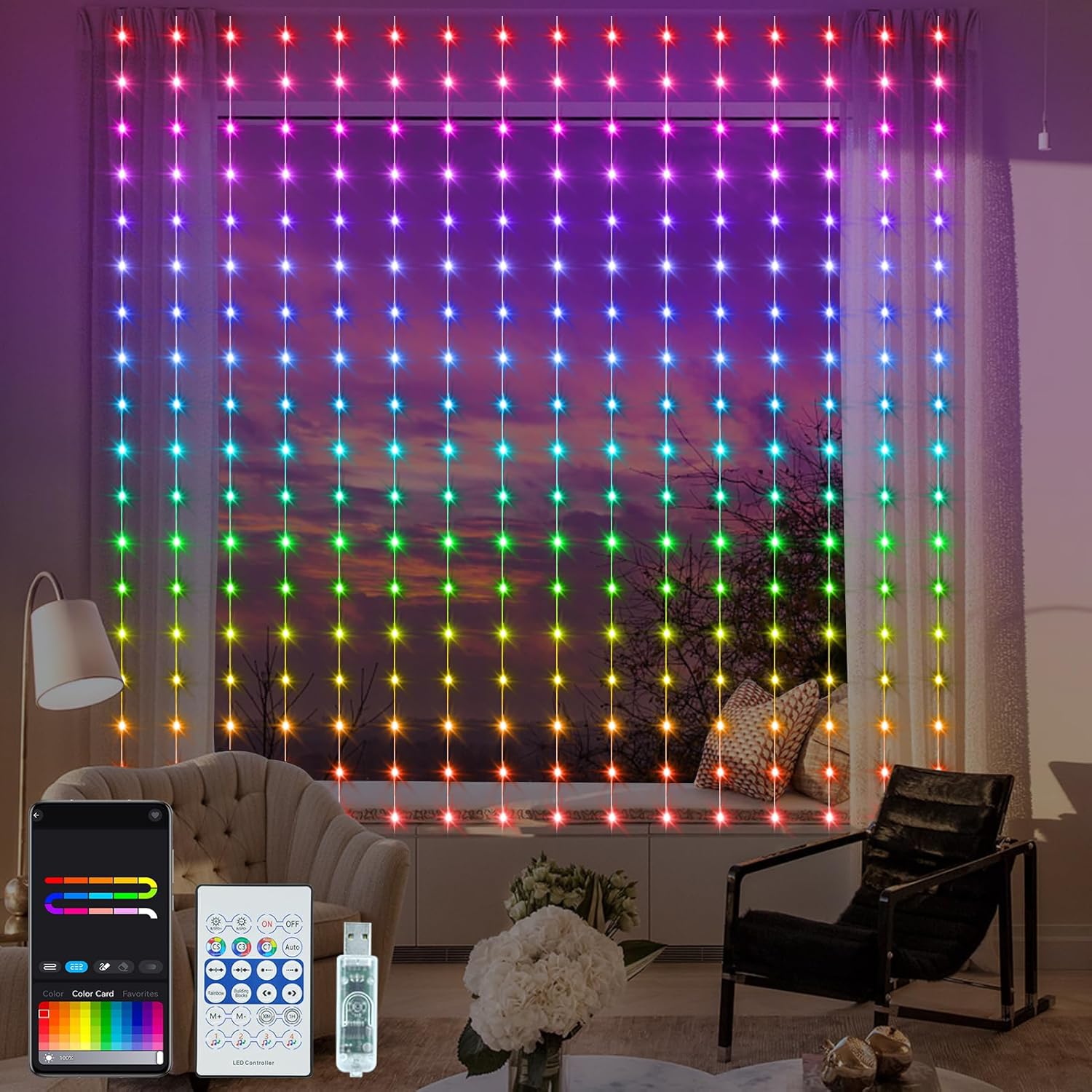
Thinking about sprucing up a space with some dazzling illumination? This guide cuts through the marketing fluff surrounding LED strip curtain lights, specifically the smart, app-controlled variants like the “Smart Curtain Lights RGB 5050 Built in Chip with APP Remote Control | 8Ft x 6Ft 144LED Color Changing Fairy Lights with Music Sync, USB Powered Curtain Light for Party Patio Garden Decor” — yes, that’s a mouthful. We’re here to help you figure out if these vibrant, music-syncing fairy lights are genuinely worth your hard-earned cash or just another passing trend. This isn’t about telling you what to buy, but rather equipping you with the know-how to make your own smart choice, whether for a lively party or just some chill patio ambiance.
Quick Answer Box:
Smart LED strip curtain lights, particularly those boasting RGB 5050 chips and seamless app integration, can indeed be a fantastic way to elevate any environment. They deliver unparalleled flexibility for setting moods, celebrating holidays, or injecting energy into gatherings, all thanks to their dynamic color changes and music-sync capabilities. For casual decorators, a reasonably priced set usually hits the sweet spot, though dedicated lighting aficionados might find the enhanced control and durable construction of premium models more appealing for long-term use.
What to Look For (The Buying Criteria)
Navigating the world of decorative lighting can feel a bit like wading through treacle. Everyone promises the moon and stars. But when it comes to smart curtain lights, particularly the RGB 5050 kind with app controls, a few solid criteria should guide your decision. Ignore the noise, focus on these details, and you’ll sidestep a lot of buyer’s remorse.
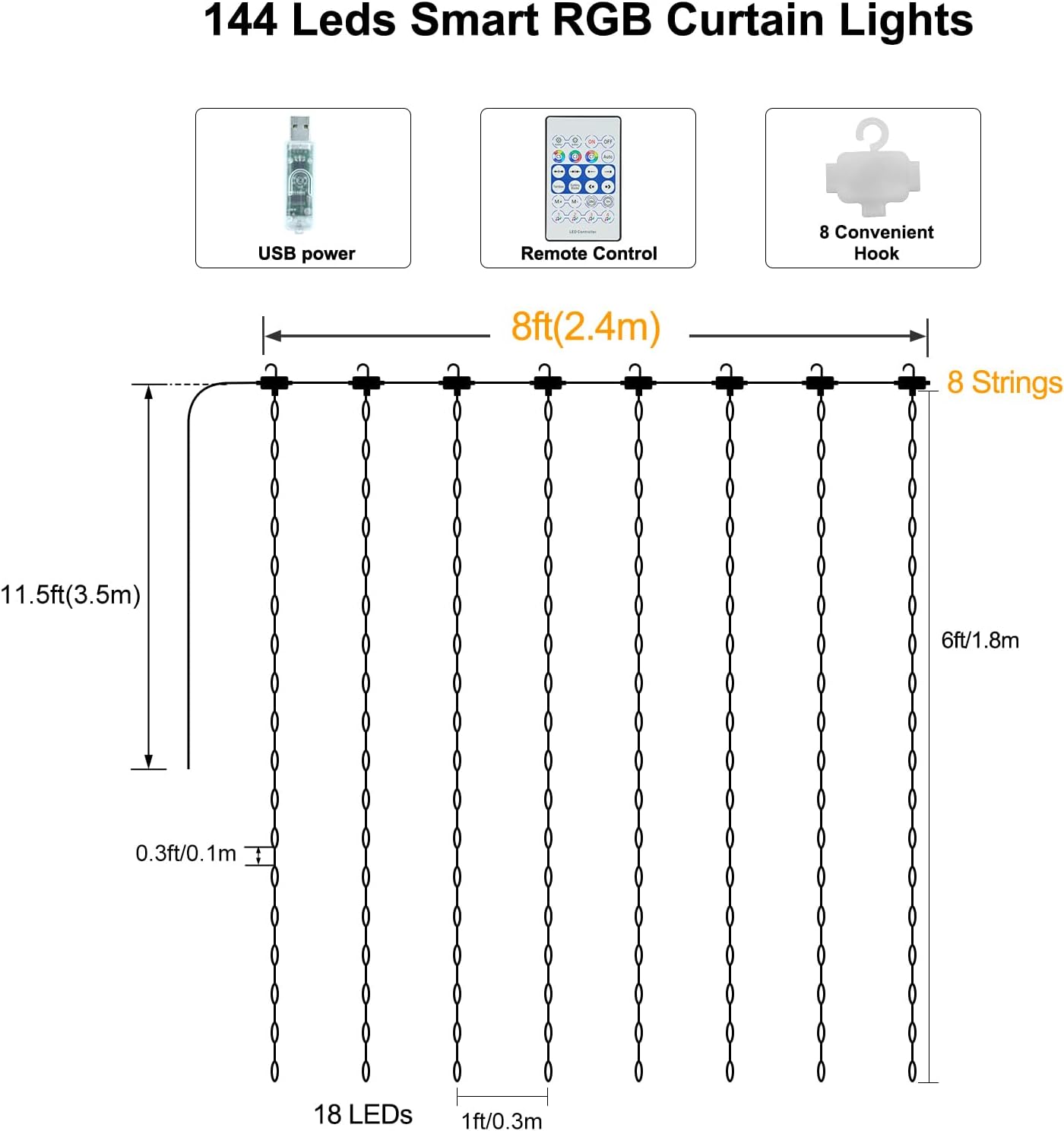
First up, LED Density and Size. This isn’t just about how many little lights you get, it’s about the visual impact. More LEDs per square foot, or a greater number of individual drops in your 8ft x 6ft curtain, generally means a fuller, more continuous glow. A sparse curtain looks cheap, frankly. Consider the total 144LED count as a baseline; anything significantly less for a similar footprint might leave you wanting more brilliance. The size of the individual LED chips, like the 5050 variety mentioned in many descriptions, affects brightness and color mixing. Larger chips often translate to bolder colors and a more commanding light output. The trade-off? Higher density and larger chips can mean more power draw, potentially stressing a basic USB powered connection.
Then there’s the App Control and Smart Home Integration. This is where “smart” really shines, right? A good app offers intuitive control over color changing fairy lights, multiple light modes, and the all-important music sync feature. Look for an app that feels responsive, not clunky or delayed. Can it save custom scenes? Schedule on/off times? Many budget-friendly options have basic apps that do the job, but premium choices often boast deeper customization, like pixel-level control or intricate animation builders, similar to what you’d find in high-end systems from brands like Govee or Twinkly. Be wary of apps that demand excessive permissions or offer a poor user experience — a common complaint with generic systems. Do you want it to play nice with your existing smart home setup, say, with voice assistants? That’s a whole other layer of compatibility to consider, and not all smart curtain lights manage it well.
Durability and Weather Resistance come next, especially if you’re eyeing these for patio garden decor. Not all lights are created equal, even if they claim “outdoor” suitability. You’ll often see IP ratings (like IP44 or IP65). A higher second digit generally means better protection against water jets and dust. For outdoor use, you absolutely want something that can handle a bit of rain, maybe even a good downpour. Indoor-only lights, while cheaper, won’t last a season outside. Even outdoor-rated lights have their limits; extreme temperatures or prolonged direct sunlight can degrade plastics and wiring over time, a reality many manufacturers gloss over. Nobody wants lights that flake out after a single winter.
And hey, let’s talk about Power Source and Length/Coverage. Many modern fairy lights are USB powered, which is convenient for indoor use or portable power banks. But for larger installations, or if you don’t have a USB port handy, a traditional wall plug might be more practical. Consider the length of the main strip and the individual drops. An 8ft x 6ft curtain suggests a main horizontal line of 8 feet and drops that hang down 6 feet. Is that enough for your window, wall, or pergola? Thinking about extending it? Some systems are modular, others aren’t. Not planning ahead here leads to disappointment, or a really awkward-looking short curtain. Power limitations also mean you can only chain so many together before voltage drop or overload becomes an issue.
Finally, think about Light Quality and Color Accuracy. You’re buying color changing lights, so the colors better be good. Cheap LEDs can produce muddy, desaturated hues, especially when mixing colors to create whites or pastels. The RGB 5050 built in chip is generally a good indicator of decent color reproduction, but not a guarantee. Look for lights that boast vibrant, distinct colors. Can they produce a true warm white, or just a bluish-white approximation? Some users care about the ability to dim the lights smoothly without flicker, too. It’s a subtle thing, but it separates the truly versatile decorative lighting from the basic blinky stuff. Sometimes, a “bargain” price means you get colors that look just… off.
How to Match the Product to Your Situation
Okay, so you’ve got a grasp on what makes these smart curtain lights tick. Now, how do you pick the right ones for your life? It’s not a one-size-fits-all deal, not by a long shot. Let’s break down a few common scenarios.
The Casual Decorator (Holiday & Party Enthusiast): You want something festive, something that makes a statement without requiring an engineering degree to set up. Think easy party decor, temporary holiday sparkle. For you, the focus is on ease of use, a decent selection of pre-set light modes, and that fun music sync feature. You probably don’t need pixel-level control or the most robust outdoor rating unless you host a lot of rain-or-shine backyard bashes. A mid-range set, perhaps with a basic remote alongside the app, is often enough. You’re looking for that immediate “wow” factor, not necessarily an investment that lasts for a decade. USB-powered options are perfectly fine here, allowing for flexibility with power banks during gatherings.
The Ambiance Architect (Home & Garden Enthusiast): This describes someone who sees LED strip curtain lights as a permanent, or semi-permanent, addition to their home’s aesthetic, both indoors and out. You’re thinking about patio decor, enhancing a cozy reading nook, or adding a touch of ambient lighting to a bedroom. Durability is a bigger concern here, especially if they’re exposed to the elements. You’ll appreciate a more sophisticated app for scheduling and fine-tuning color palettes to match different moods or seasons. Integrated smart home control is probably on your wish list, too. A higher IP rating and quality materials are key. You’ll likely lean towards the higher end of the mid-range or even venture into premium territory for better longevity and more nuanced control. Longevity matters, after all.
The Tech-Savvy Creator (Customization King/Queen): You don’t just want lights; you want a canvas. You’re probably already knee-deep in smart home tech and envision elaborate, custom decorative lighting displays. Maybe you’re looking for advanced pixel mapping capabilities, where each LED can be controlled individually. You’ll appreciate robust developer APIs, if available, or at least an app that allows for incredibly detailed scene creation and animation. You might even consider multiple sets to create larger, more complex installations. Price isn’t the primary driver; features and customizability are. You’re likely looking at specific brands known for their advanced smart lighting systems, often those with a strong community of users sharing custom effects. These aren’t just lights; they’re an extension of your creative expression.
A Comparison of Smart Curtain Light Tiers
Navigating the options can be confusing, but thinking in terms of tiers helps clarify things. It’s not about “good” or “bad,” but about “what fits.”
| Type/Tier | Best For | Price Tier | Key Feature | Watch-Out |
|---|---|---|---|---|
| Budget Basics | Occasional party fun, temporary indoor decor | Entry-level | Simple app control, basic color changes | Limited durability, fewer advanced modes, rudimentary music sync. |
| Mid-Range Movers | Regular home ambiance, casual outdoor events | Mid-range | Reliable app, good color quality, decent durability | App can still be clunky; music sync might lack nuance. |
| Premium Powerhouses | Permanent outdoor installs, advanced effects | Premium | Individual LED control, robust build, smart home integration | Significant cost; features can be overkill for simple use. |
Budget Basics are your go-to for a quick splash of color for a birthday or a seasonal window display indoors. They’ll offer basic app control, letting you cycle through a handful of colors and maybe a few simple chase effects. Just don’t expect them to survive a winter outside or offer finely tuned control; their music sync is often just a microphone reacting to general noise.
Mid-Range Movers hit a sweet spot for most consumers, offering a noticeable step up in build quality and light output. You’ll get more stable app performance, a wider array of vibrant colors, and generally better weather resistance for occasional outdoor use. These are solid choices for enhancing your patio decor or adding some consistent ambient lighting to a room, though their advanced features might not rival the top-tier options.
Premium Powerhouses are for those who demand the absolute most from their LED strip curtain lights. Expect superior component quality, advanced features like true pixel-addressability, and often robust integrations with popular smart home platforms. These are the ones you’d pick for intricate garden decor or permanent outdoor installations, but their higher cost requires a real commitment to leveraging their full potential.
Scenario-Specific Considerations for Your Smart Curtain Lights
Let’s zero in on a few practical scenarios. Because what works for a wild party probably won’t cut it for a quiet evening.
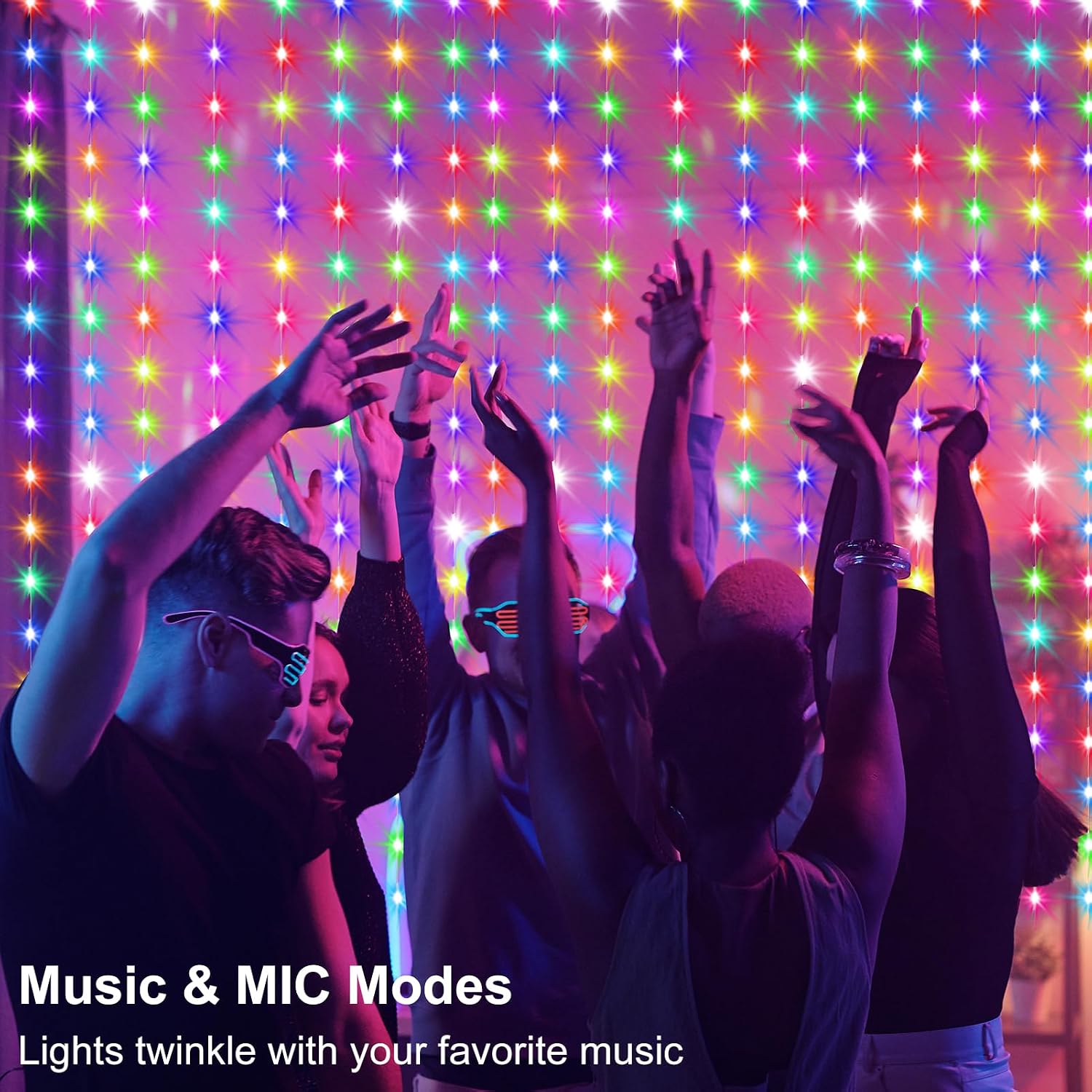
For Dynamic Party Decor: You’re hosting, you need energy. Music sync is paramount here. Look for smart curtain lights that have a sensitive microphone and offer various music-reactive modes — not just flashing, but pulsing, fading, or even spectrum analysis. The RGB 5050 built in chip is generally a good sign for vibrant, punchy colors that will stand out even in a lively setting. Ease of setup is also crucial; you don’t want to spend half the pre-party futzing with lights. Portability, perhaps with USB powered options, means you can move them between different party zones. A lot of people undervalue how much a good music sync can elevate an event. A bad one, however, can be utterly jarring.
Creating Year-Round Patio Ambiance: This is a very different beast than party lights. Here, durability and subtlety are key. You want lights that can withstand the elements, so a solid IP rating (aim for IP65 if you can get it) is non-negotiable. The ability to produce a pleasant warm white, along with a wide spectrum of colors, becomes more important than just flashy primary hues. Scheduling and dimming capabilities through the app are essential for setting different moods throughout the day or night. You’ll want something that feels integrated into your patio garden decor, not just slapped on. Many cheaper options struggle to maintain consistent color and brightness over time outdoors, which can be frustrating when you’re going for a cohesive look.
Adding a Touch of Magic to Kids’ Rooms: Kids love bright, color changing fairy lights. For this scenario, safety is paramount. Ensure the USB powered connection is secure and the light strings aren’t easily tangled or pulled down. Look for apps with child-friendly interfaces or simple physical controls. The ability to set soothing, slow-changing patterns or a gentle nightlight mode is more valuable than intense strobes. And honestly, for a kid’s room, you don’t need the most expensive, hyper-customizable option. Reliability and a fun, easy-to-use experience win out. I’ve seen parents spend way too much on features their kids never even touch.
Common Mistakes When Buying LED Strip Curtain Lights
It’s easy to get swept up in the excitement of shiny, new smart curtain lights. But a few missteps can turn that excitement into a headache. I see these all the time.
First, underestimating the required length and coverage. People often picture a dense wall of light from a small product description image and then realize their 8ft x 6ft curtain light barely covers a quarter of their window. Always measure your space – windows, walls, pergolas – twice. Consider the “drop” length, too, not just the horizontal spread. A short drop can look awkward, like something’s missing.
Another big one: ignoring the IP rating for outdoor use. Just because something says “outdoor-ready” doesn’t mean it can survive a monsoon. An IP44 rating is okay for sheltered outdoor areas, but if it’s truly exposed to rain and sprinklers, you’ll need something more robust, like IP65. Without proper water and dust resistance, those pretty patio garden decor lights will be fried sooner than you think. And nobody wants to be troubleshooting electrical issues in the rain.
Then there’s the mistake of overlooking app quality and connectivity. A smart light is only as smart as its app. Some budget smart curtain lights come with truly terrible, buggy apps that constantly disconnect or offer limited features. Before committing, try to find reviews that specifically mention the app experience. Is it intuitive? Does it support stable Bluetooth or Wi-Fi? A frustrating app can ruin the entire smart lighting experience, making those cool music sync features inaccessible.
Finally, a classic: prioritizing price over light quality and color accuracy. It’s tempting to grab the cheapest color changing fairy lights out there. But often, cheaper LEDs yield dull, inconsistent colors. Whites might look blue, reds might look orange, and the dimming can be choppy. If you’re investing in RGB 5050 built in chip lights for their vibrant palette, don’t skimp on the actual LED quality. You’ll end up with lights that just look… blah.
Why/How/What Mini-Section
Why are RGB 5050 chips so often highlighted for smart curtain lights?
The RGB 5050 built in chip refers to a type of surface-mounted device (SMD) LED that measures 5.0mm by 5.0mm. It’s popular for color changing lights because it often contains three smaller LED diodes (one red, one green, one blue) within a single chip. This allows for effective color mixing to create a wide spectrum of colors, making it a versatile choice for dynamic displays and the vibrant hues needed for party decor or ambient lighting. They also tend to be brighter than smaller chips.
How do I safely install LED strip curtain lights outdoors?
Safety is paramount. For outdoor patio garden decor, first, ensure your LED strip curtain lights have an appropriate IP rating for the exposure they’ll face. Use outdoor-rated extension cords and power adapters, making sure all connections are waterproofed or sheltered from direct moisture. Secure the lights firmly to prevent wind damage, perhaps using UV-resistant zip ties or clips, and keep them away from heat sources or active water features. Don’t leave exposed wiring.
What does “music sync” really mean for these fairy lights?
Music sync on smart curtain lights typically means the lights have a small microphone that listens to ambient sound. The light’s internal processor then interprets the sound’s rhythm, volume, or frequency and changes the lights accordingly. Simple systems might just flash to the beat, while more advanced ones can create complex patterns, change colors based on pitch, or respond to specific frequencies, transforming your space into a responsive light show perfect for party decor. It’s a fun feature.
FAQ
H3: Can I connect multiple sets of LED strip curtain lights together?
Often, yes, but it depends on the specific model and its power limitations. Some smart curtain lights are designed to be linkable, letting you expand your display. Always check the product’s instructions for maximum connectable length or number of sets to avoid overloading the power supply, especially for USB powered variants.
H3: Are these lights suitable for a permanent outdoor installation?
For permanent outdoor patio garden decor, you need to be really picky. Look for models with a high IP rating (IP65 or above) and robust, UV-resistant wiring. Cheaper options often degrade quickly under prolonged sun exposure and harsh weather. It’s often worth investing in a premium tier for true longevity outside.
H3: Do LED strip curtain lights use a lot of electricity?
Generally, no. LED strip curtain lights are quite energy-efficient compared to traditional incandescent bulbs. Even with 144LED units, the power consumption, especially for USB powered versions, is relatively low. This makes them an economical choice for extended periods of ambient lighting or party decor.
H3: How do the color-changing capabilities compare between different models?
Color changing abilities vary widely. Budget models might offer a limited palette and basic transitions, while higher-end RGB 5050 built in chip models can produce millions of distinct colors with smooth, nuanced shifts. Premium options often allow for much finer control over saturation and brightness, giving you truly vibrant or subtle hues.
H3: Can I use these fairy lights indoors and outdoors interchangeably?
You can usually use outdoor-rated smart curtain lights indoors without issue. However, you absolutely should not use indoor-only lights outdoors. They lack the necessary weatherproofing, posing safety risks and ensuring a very short lifespan if exposed to moisture or extreme temperatures. Check that IP rating!
H3: What’s the difference between Bluetooth and Wi-Fi app control?
Bluetooth-controlled LED strip curtain lights connect directly to your phone, usually within a limited range. Wi-Fi controlled models connect to your home network, offering control from anywhere with internet access and often enabling more seamless smart home integration with devices like voice assistants. Wi-Fi usually offers more robust connectivity, but can be a bit trickier to set up initially.
Final Recommendation
So, where does that leave us with LED strip curtain lights? If you’re merely dipping your toes into the world of color changing fairy lights for an occasional shindig or a seasonal indoor refresh, a solid mid-range option with a decent APP remote control and music sync will serve you well. You’ll get plenty of bang for your buck without breaking the bank, and the “Smart Curtain Lights RGB 5050 Built in Chip” description generally points to this sweet spot.
However, if you’re envisioning a more permanent, integrated patio garden decor or desire intricate ambient lighting for specific zones in your home, consider pushing into the premium tier. The improved durability, sophisticated app controls, and superior light quality of these models will pay dividends in longevity and artistic flexibility. For the serious decorator or the tech enthusiast, the extra investment in individual pixel control and robust smart home integration really unlocks a deeper level of creative expression. Don’t cheap out if you truly want these lights to become a staple of your environment.
#Smart #Curtain #Lights #RGB #Built #Chip #APP #Remote #Control #8Ft #6Ft #144LED #Color #Changing #Fairy #Lights #Music #Sync #USB #Powered #Curtain #Light #Party #Patio #Garden #Decor