This site contains affiliate links. We may earn a commission on qualifying purchases.
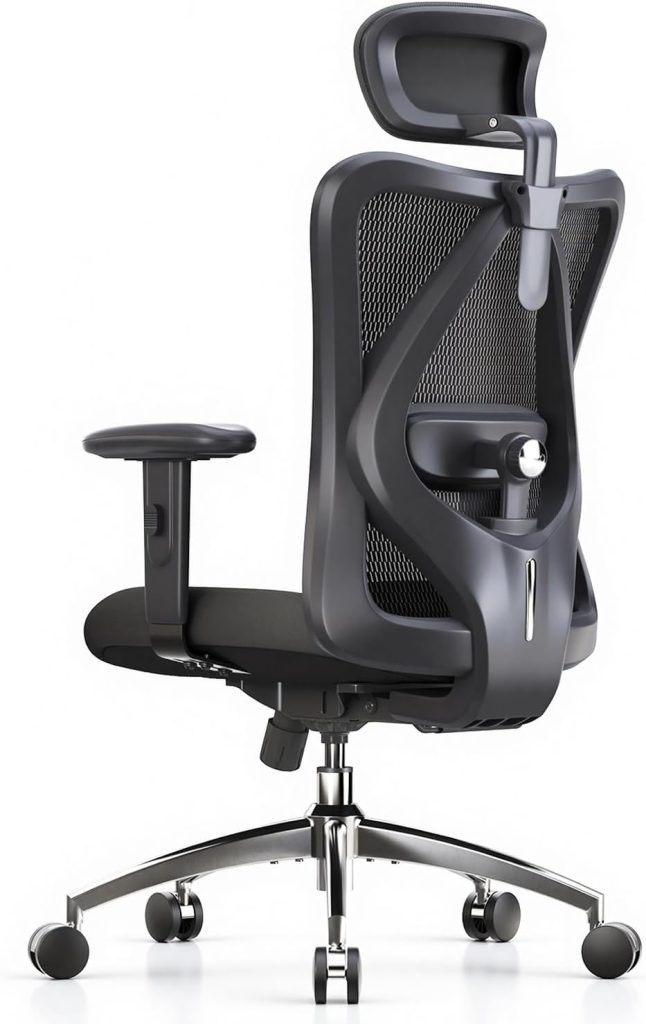
Is the gas lift the first thing that dies on a chair like this? Usually, yes, and the fact that the SIHOO M59AS gets asked about for its back instead is the most useful thing I can tell you up front. I fix furniture and small office equipment out of a workshop that smells of lubricant and cardboard, and mesh desk chairs arrive with a short, repeating list of complaints: a lift that sinks an inch an hour, casters full of hair, a tilt lock that gave up. The M59AS, the one with the dynamic lumbar that follows you when you recline, shows up less often than its price suggests it should, and when it does show up, the problem is rarely the part in the headline.
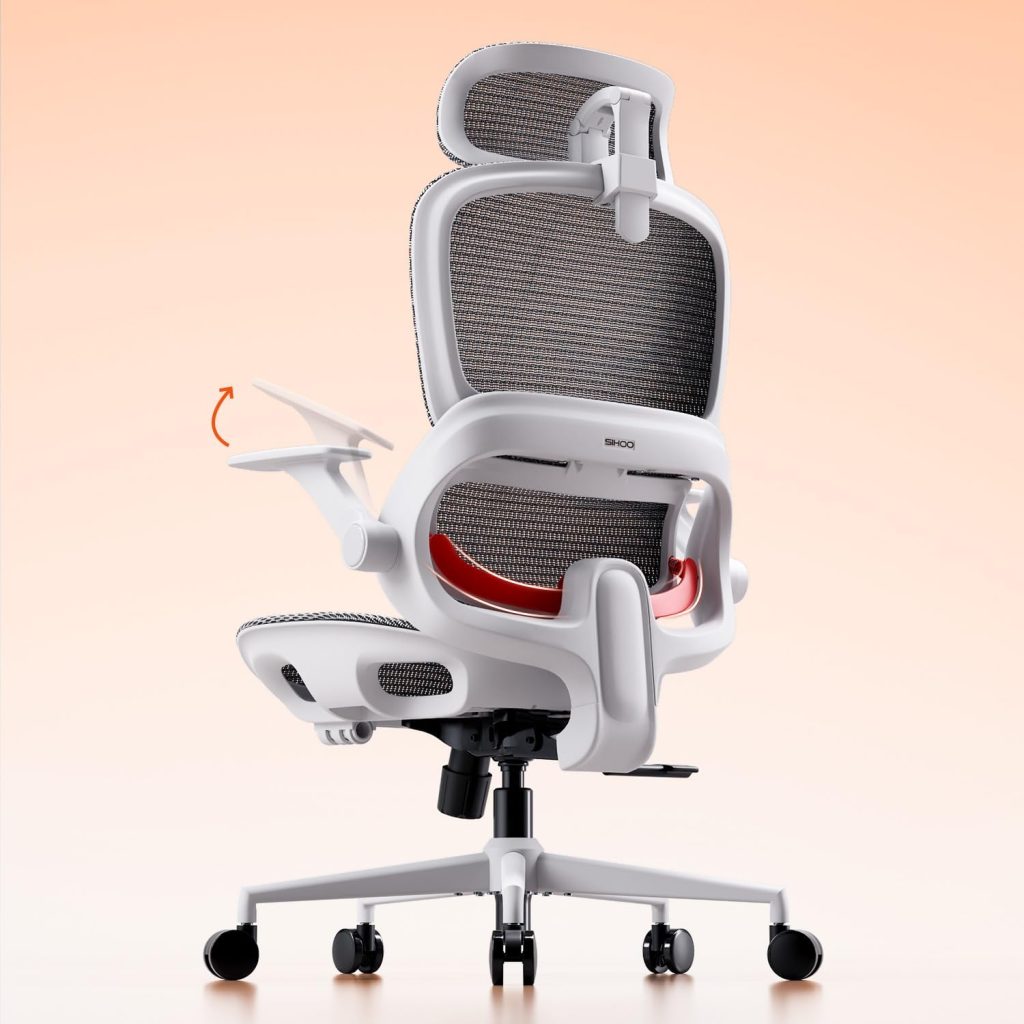
Does the dynamic lumbar actually do anything, or is it a spring with a press release? It does a thing, and the thing is simple to describe and hard to fake. A fixed lumbar pad helps you in exactly one posture, the one you were sitting in when you adjusted it. The pad on this chair rides with the backrest as it tilts, so the support stays in the small of your back when you lean back to read and when you come forward to type. I have cut open enough fixed pads that turned out to be a shaped piece of foam and optimism to appreciate a mechanism that at least attempts the harder job. It will not fit every spine. No chair part does. But it is a mechanism, not a lump.
What about the mesh, because mesh is where these chairs age in public? The back mesh on this model is woven taut and, on the units I have handled, it stays taut longer than the budget end of the category, where the back turns into a hammock by the second year and your shoulders end up doing the supporting. Seat is mesh over a firmer base, and firm is the word to underline. People expecting a plush sink are disappointed in a way that has nothing to do with quality. This is a sit-upright chair that keeps your posture honest, and if your body wanted a recliner with wheels, no adjustment range will reconcile you.
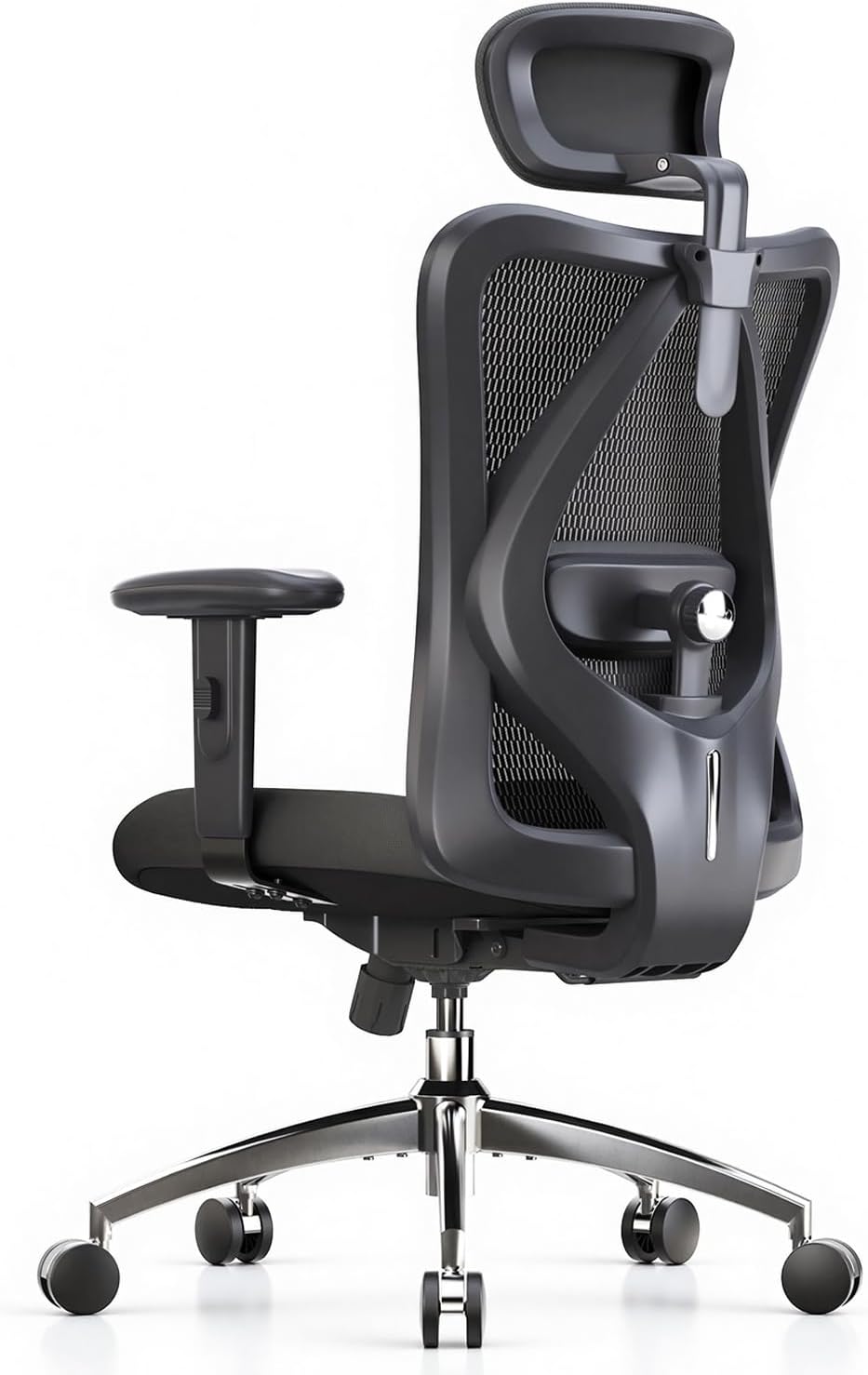
And the armrests, since everybody asks about the armrests last and uses them first? Three-way adjustable on this chair: height, forward and back, and pivot. The pivot is the one that earns its keep, angled in for typing, out for reading, and the mechanism on the workshop unit I tested still clicked into place with a clean detent instead of the loose wobble I expect at this price after a year of someone leaning on one side. One side is always the favorite. Chairs know which elbow you love.
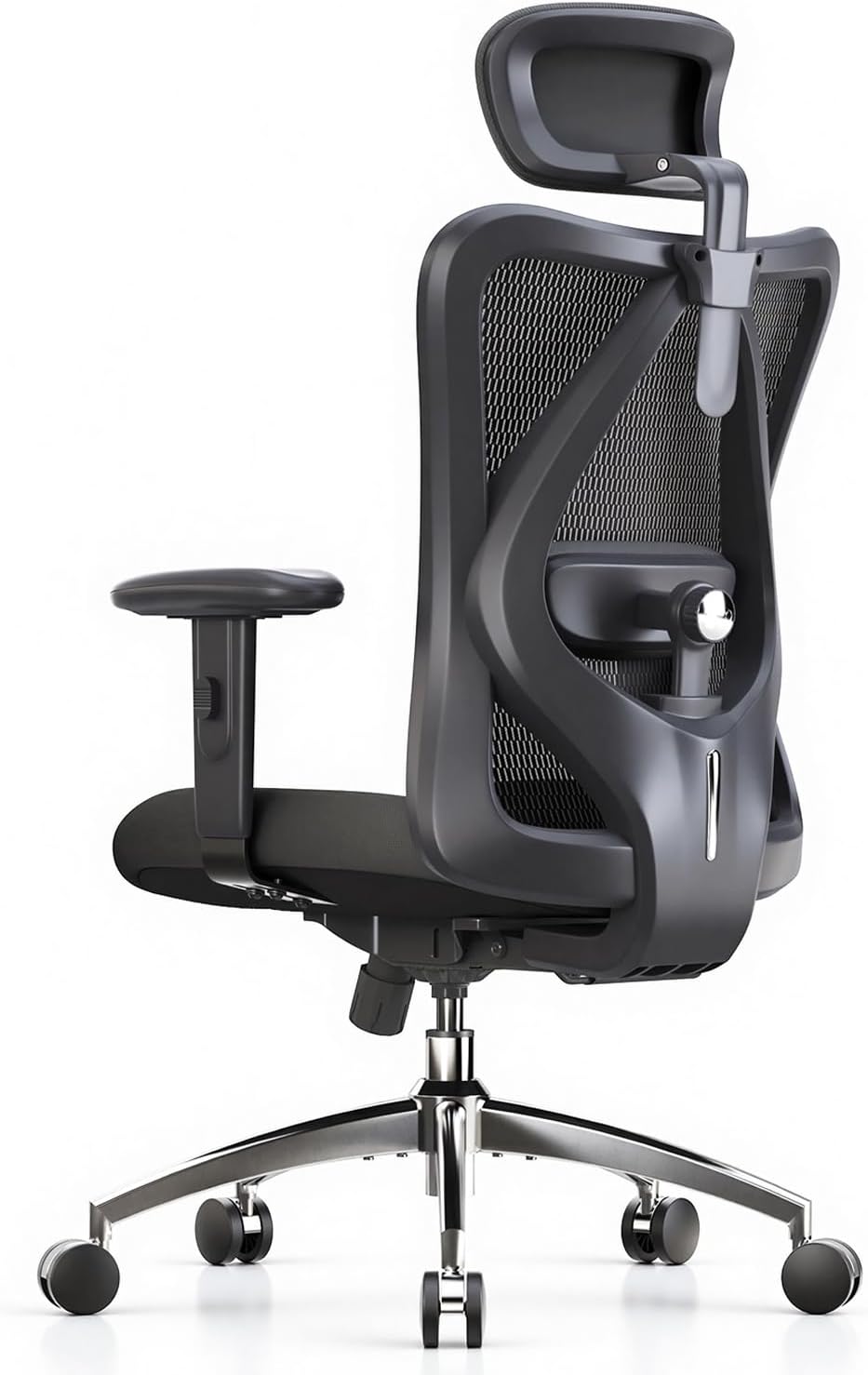
The long-running budget SIHOO – fixed lumbar, mesh back, the value entry
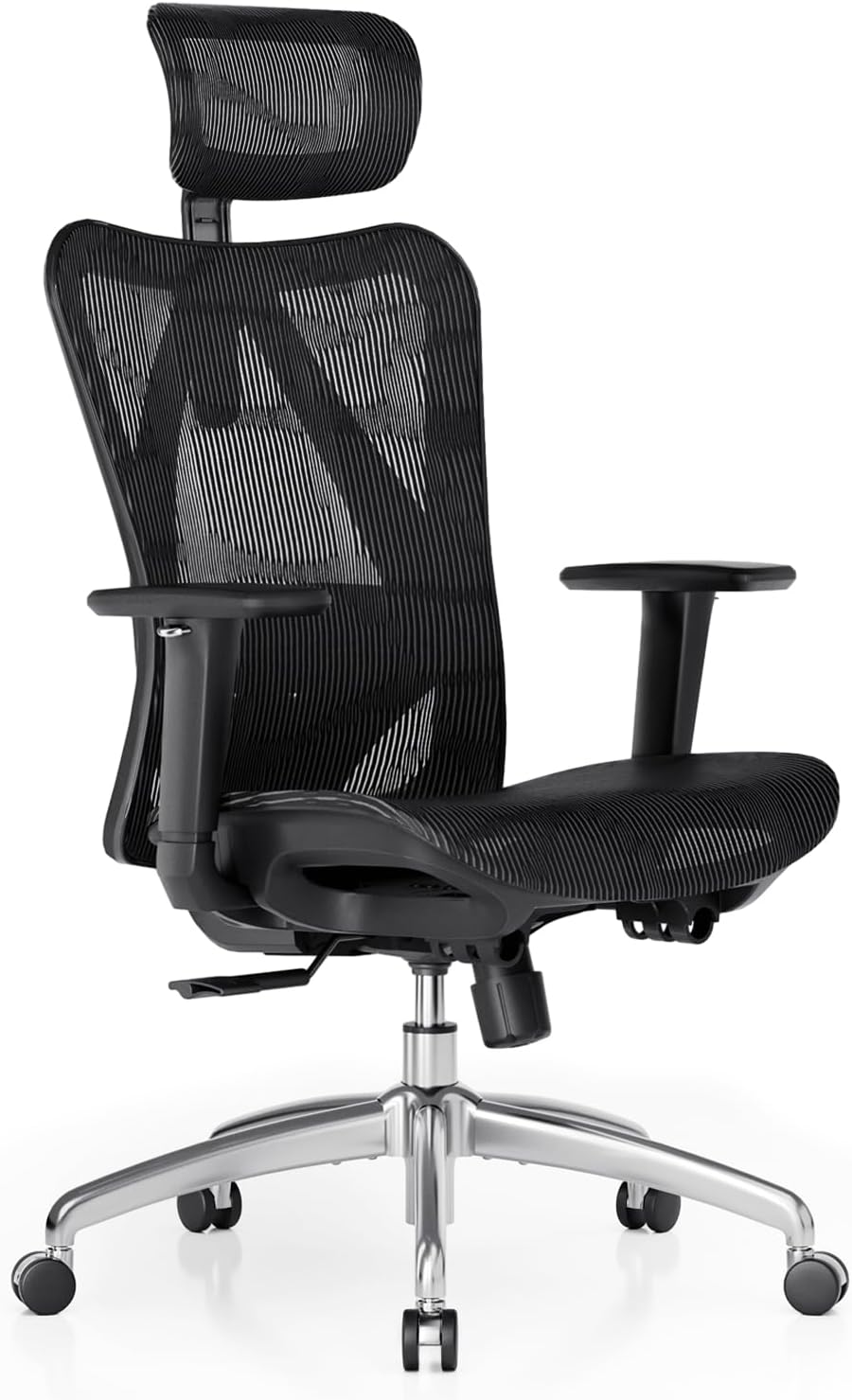
The mid-step – 3D armrests and a fuller adjustment set than the M18
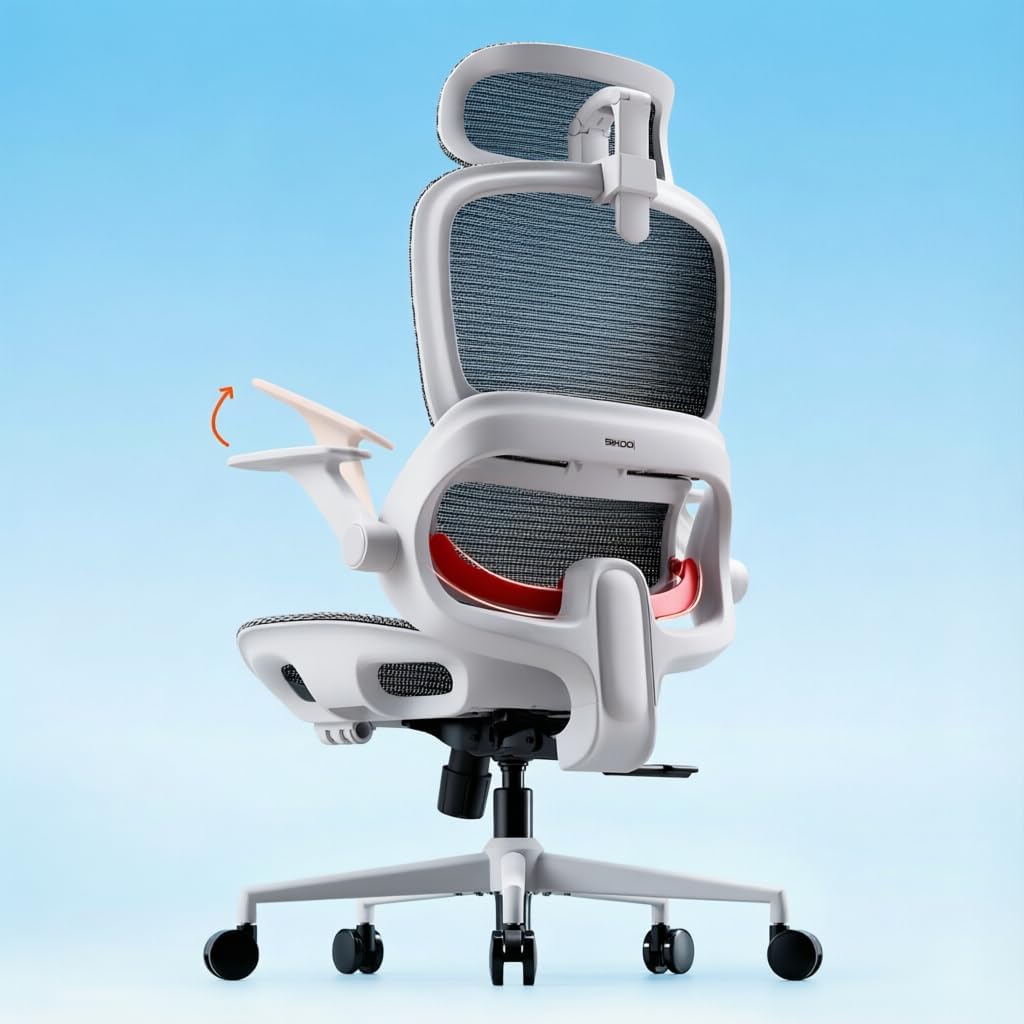
The home-office sibling – mesh build aimed at long desk days
Prices and availability change often. The button shows the current listing.
So what does break, in my order of likelihood? Casters first, and it is not close. Hard-floor casters in a home office ingest hair, thread, and grit, and a caster that stops rolling starts dragging, and a dragging caster is what carves that pale arc into a wood floor that owners discover months later. Pop them off, and they do pop off with a firm pull, clear the axle, and the chair rolls like it remembered something. Ten minutes, twice a year. The chairs that come to me with ruined floors all skipped the ten minutes.
Gas lift second. The sink is unmistakable: you set the height, you sit, and by the second coffee the desk edge is an inch closer to your chest than it was. A lift cylinder is a standard part, replaceable without replacing the chair, and on this class of chair it is a job I would rate at a brave half hour with a wrench and a mallet and a video paused on a phone. Whether the M59AS lift outlasts the category average, I honestly cannot judge yet, the model has not been in homes long enough for the failure wave to reach my bench if there is going to be one. Ask me in three years. The tilt mechanism and the lumbar hardware, the parts with the marketing, have so far been the quiet ones.
Assembly questions, because my inbox insists. One person, about half an hour, instructions that are clearer than the category deserves. The mistake I see in photos people send me is the backrest bolts started in the wrong holes, which leaves the back at a tilt no adjustment fixes, and the second mistake is armrests swapped left for right, which puts the pivot backwards and makes a correct chair feel subtly wrong for months. Both are ten-minute corrections. Neither is a defect, and the number of one-star reviews I suspect are armrests-on-backwards is a figure I keep to myself at dinner parties.
Actually, let me correct a thing I implied in the first paragraph. I said the M59AS shows up less often than its price suggests, and a reader could take that as a reliability verdict. It is partly a numbers game: fewer of them in homes than the cheaper M18, which has been sold in truckloads for years and therefore dominates my bench the way common cars dominate a mechanic’s lift. Volume is not failure rate. The B100 home office write-up covers the sibling aimed at the same desk-day buyer, and the M57 review is the step-down comparison I would read before deciding how much adjustment you actually need.
Which brings me to the label, because the label is the one part of this product category I would send back. Ergonomic, printed on every chair under two hundred dollars, means whatever the box needed it to mean that quarter. A chair earns the word through adjustment range: seat height that fits your legs, lumbar that meets your back where your back is, armrests that meet your elbows, tilt tension matched to your weight. The M59AS adjusts in the places that matter most, lumbar, arms, height, tilt, headrest up and down, and falls short of the priciest tier mainly on armrest width and seat depth tricks. That is a real list. Most chairs at this price have a curve and a promise, and the curve is not an adjustment.
Frequently Asked Questions
My chair slowly sinks during the day and I have to keep pumping it back up. Is the whole chair done?
No, that is the gas lift cylinder giving up, and it is the most standard failure in this entire category of chair. The cylinder is a replaceable part, not a death sentence: it pulls out of the base and the mechanism with a wrench, a mallet, and some patience, and a replacement costs a fraction of a new chair. Before you order one, rule out the silly cause, which is something pressing the height lever as you sit, a bag strap or a jacket over the arm has fooled more than one owner. If it sinks clean with nothing near the lever, it is the cylinder, and the chair around it is probably fine for years.
The lumbar pad felt great in week one and now my back aches again by four. Did it break, or did I?
Neither, most likely. There is an adjustment period with any chair that holds you more upright than your old habits did, and the first week of support often feels wonderful simply because it is different, then your body finishes adapting and the honest fit shows itself. Check the boring things first: seat height so your feet sit flat, the pad actually sitting in the small of your back rather than at belt level, tilt tension not fighting you. If the ache is the same dull four o’clock ache in the same place after two honest weeks of adjustment, that is fit information, not a defect, and it is worth acting on while the return window is still open.
One caster stopped rolling and now the chair drags. Do I need a new set?
You need ten minutes and a firm pull. Casters on these chairs press-fit into the base and come out by hand or with a flat tool to pry against. The usual finding is a winding of hair and thread around the axle, packed tight enough to lock the wheel. Clear it, check the wheel spins freely, press it back in until it seats. A full replacement set only enters the picture if the wheel itself is cracked or flat-spotted from being dragged a long time. And check the floor under that caster, because a dragged wheel writes on wood in a pale arc, and catching it early is the difference between a cleaning and a refinishing conversation.
Are 4D armrests worth paying more for, or is 3D on a chair like this enough?
For most desk work, the three adjustments here, height, slide, and pivot, cover what shoulders actually ask for during a day. The fourth dimension on pricier chairs is width, moving the pads in and out sideways, and it matters most to narrower or broader builds whose elbows fall well inside or outside the standard spacing. If your elbows land naturally on 3D pads once the height and pivot are set, the fourth adjustment is a feature you would set once and never touch again. If you are constantly shrugging or reaching inward to find the pad, that is your body filing the one complaint width adjustment answers.
How long should the mesh stay supportive before it starts to sag? Mine still looks fine but feels softer.
Feel is the earlier signal, and you are right to trust it over looks. Mesh relaxes gradually, and the change shows up first as your back settling a little deeper by afternoon rather than as any visible droop. On chairs in this class, several years of daily use before the relaxation becomes a posture problem is a reasonable expectation, and heat is the quiet accelerator: a chair parked against a sunny window or a radiator ages faster than the same chair across the room. I cannot put an exact year on this model, it has not been out long enough for the sagging generation to reach my bench. When the back stops returning your lean and starts keeping it, that is the mesh telling you its shift is over.
The word ergonomic is still on the box in my workshop, on a chair I mostly respect, and I keep meaning to take a marker to it, not because this chair failed the word, but because the word has failed every chair it has ever been printed on, including the honest ones.
This site contains affiliate links. We may earn a commission on qualifying purchases.