
Unpacking KAISA Filler Paper: Your Smart Shopping Guide to Wide Ruled, 3-Hole Punched Loose Leaf Sheets
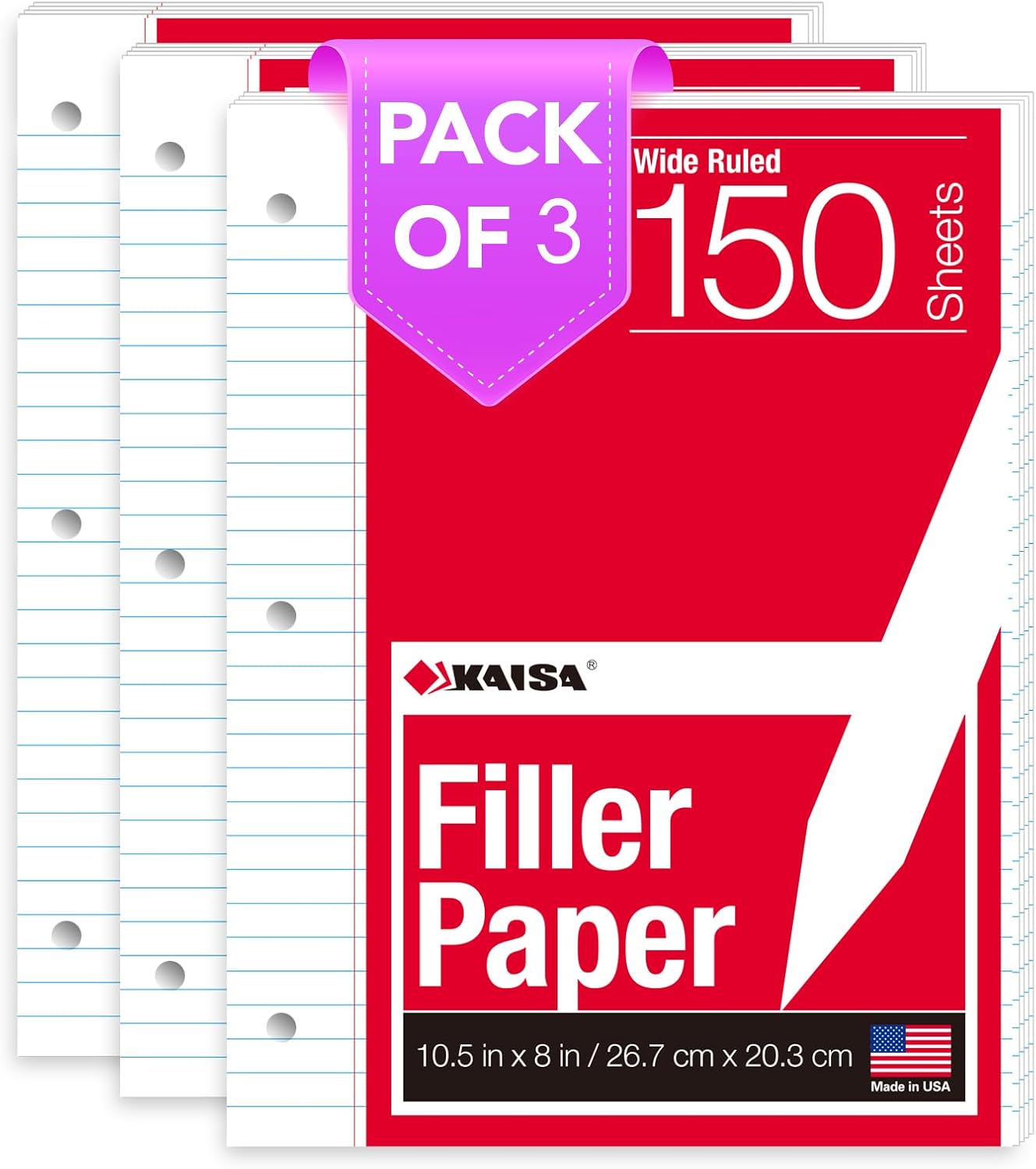
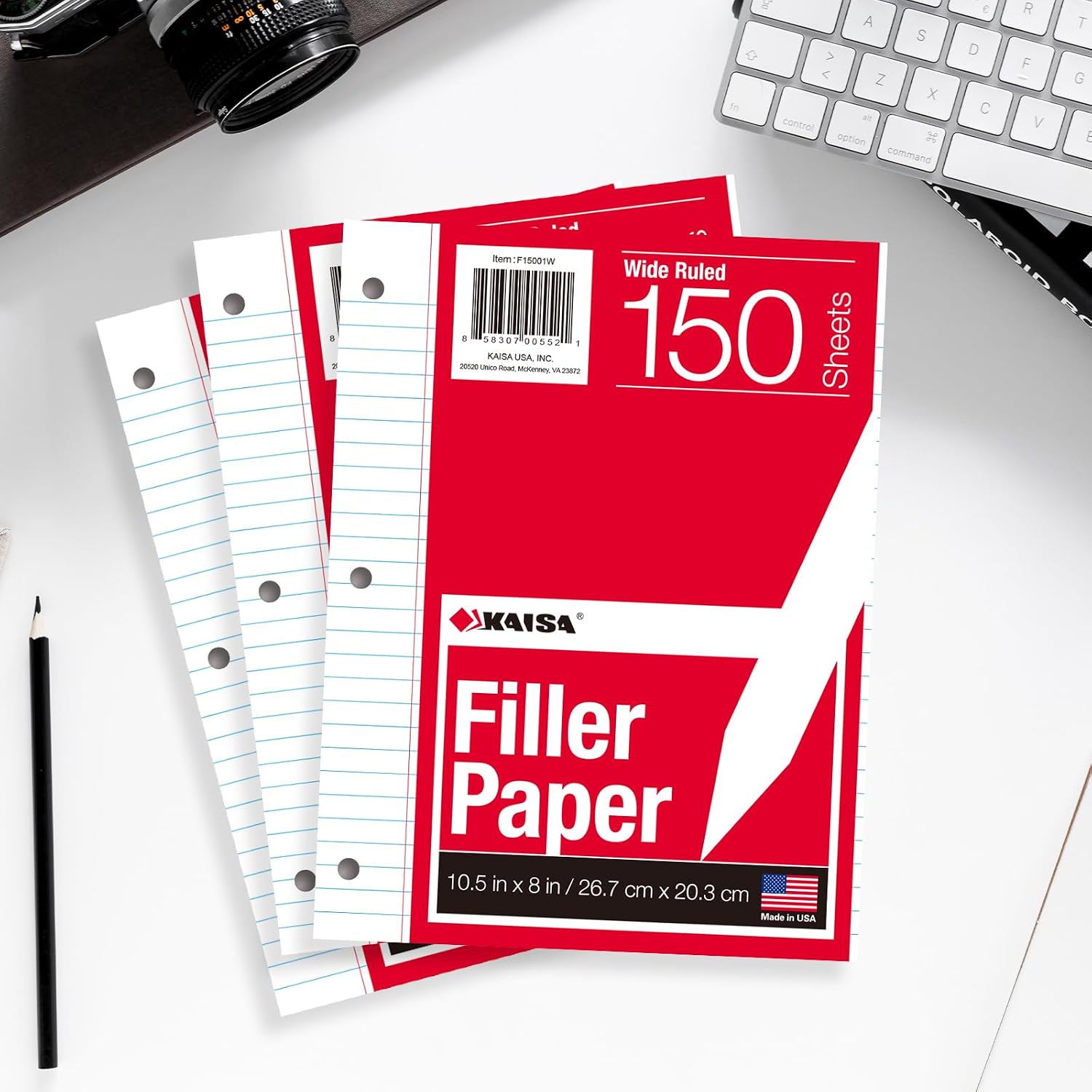
This guide dives deep into KAISA Filler Paper Loose Leaf Paper, Wide Ruled Paper, 8″x10-1/2″, 3-Hole Punched Binder Paper For 3-Ring Binders,150 Sheets/pack 3Pack, F15001W, helping you cut through the noise to understand what really matters when buying these everyday essentials. We’re here for the savvy shopper, the student, the office pro — anyone who uses a lot of paper and wants to make a smart choice. You’ll learn how to pick paper that actually suits your needs, not just whatever’s cheapest.
Quick Answer Box
KAISA filler paper offers a solid, budget-conscious option for everyday note-taking and schoolwork, especially if you prioritize quantity and basic functionality. Its wide ruled format and 3-hole punch make it a straightforward fit for standard binders. For most casual to moderate users, this particular pack provides ample sheets without a hefty investment.
What to Look For (The Buying Criteria)
Listen, paper might seem like just paper. But trust me, as someone who’s seen countless product categories, even something as humble as loose leaf paper has its nuances. Overlooking them can lead to frustration down the line. Here are the real factors that should guide your decision, whether you’re eyeing KAISA filler paper or something else.
1. Paper Weight and Thickness (The “Feel” Factor):
This is probably the biggest differentiator you don’t even think about until you’ve got a flimsy sheet in hand. Paper weight, often measured in grams per square meter (GSM), dictates how substantial the paper feels. A lighter paper stock might bend, tear, or crinkle easier in a binder. Worse, it’s often translucent, making ink from the other side visible – what we call “ghosting.” Thicker paper, on the other hand, stands up better to aggressive erasing, heavy-handed writing, and even the rigors of being shuffled in a backpack. While heavier paper can sometimes be bulkier, its durability usually justifies the minor trade-off, especially for notes you actually need to keep. With KAISA filler paper, you’re generally looking at a standard, somewhat lighter stock, which is fine for quick notes but might not be ideal for archival use or heavy ink pens.
2. Brightness and Whiteness (Eye Candy for Your Ink):
Paper brightness isn’t just about how “white” the paper looks; it impacts readability. A brighter sheet provides higher contrast for ink, making your notes pop and reducing eye strain over long study sessions. However, some papers can be too bright, a stark, almost blue-white that feels unnatural under certain lighting. A natural, crisp white is usually the sweet spot. A slightly off-white can be easier on the eyes in some settings, but often makes ink colors seem less vibrant. When you’re dealing with bulk packs like the KAISA sheets, you’re often getting a standard brightness level — perfectly adequate, but unlikely to be a super-premium, ultra-bright stock.
3. Smoothness and Texture (The Pen’s Playground):
Ever write on paper that just feels right? That’s smoothness. A truly smooth paper lets your pen glide effortlessly, reducing writing fatigue and making your handwriting look better. Rougher textures, sometimes called “tooth,” can grab at the pen tip, leading to scratchy lines or skipping, especially with fine-point pens or gel inks. Fountain pen users, in particular, will lament a paper that’s too rough or absorbent, as it can cause feathering (ink bleeding outwards along the fibers) and make ink look dull. The trade-off? Super smooth, coated papers can sometimes be pricier and take longer for ink to dry, potentially leading to smudges. Most wide ruled paper, including KAISA’s offering, aims for a general-purpose smoothness that works well enough with ballpoints and pencils.
4. Bleed-Through and Ghosting Resistance (The Backside Battle):
This is huge if you write on both sides of the sheet. Bleed-through happens when ink penetrates completely through the paper, making the back side unusable. Ghosting is less severe; the ink doesn’t bleed through but is clearly visible from the reverse, making it harder to read new text. Lighter weight and lower quality papers are far more prone to these issues. If you use permanent markers, heavy gel pens, or even just highlighters, good bleed-through resistance becomes paramount. Honestly, it’s one of those things that cheap paper always seems to struggle with. KAISA’s particular offering is designed for general utility, so manage your expectations if you plan on using heavily saturated inks.
5. Hole Punch Quality and Alignment (Binder Buddies):
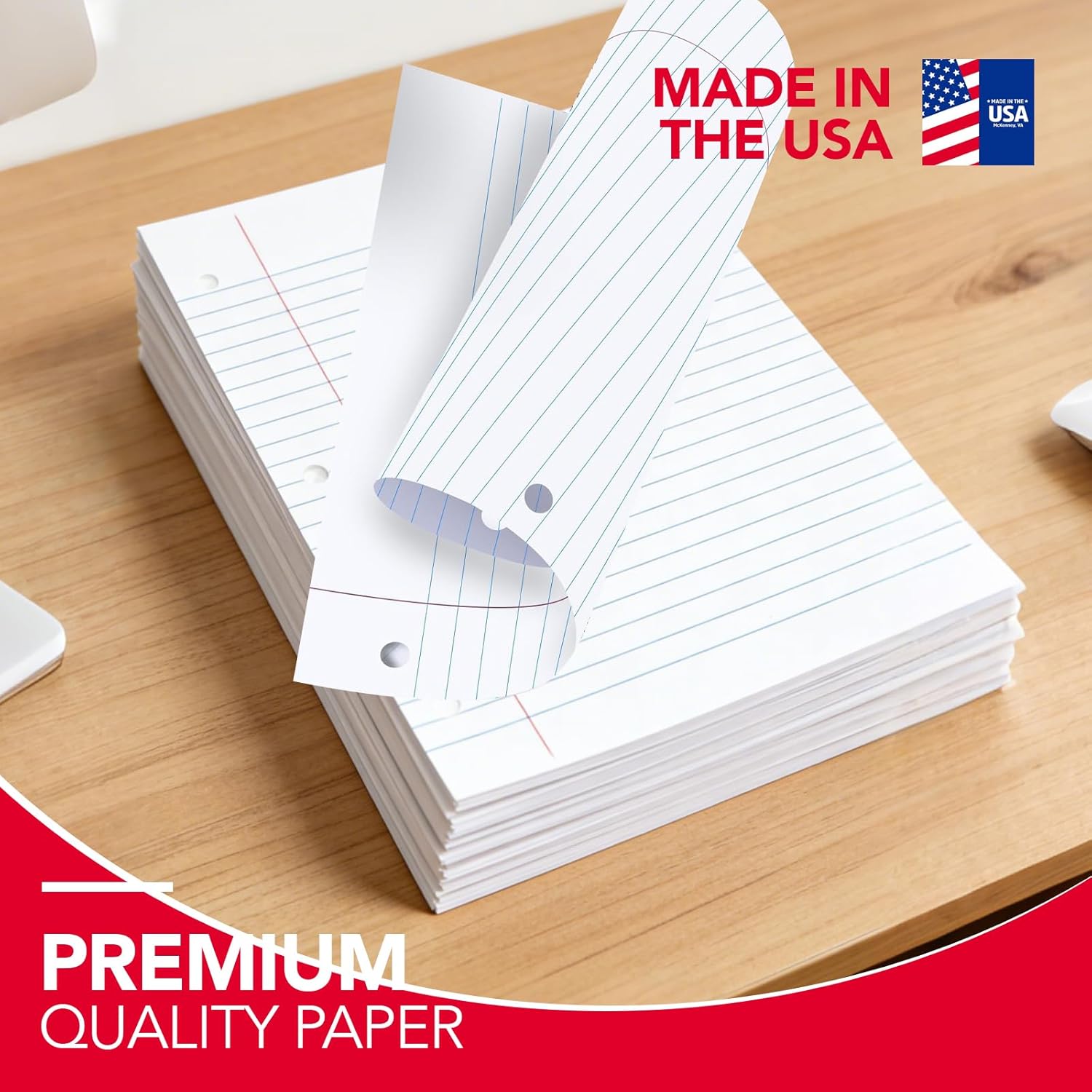
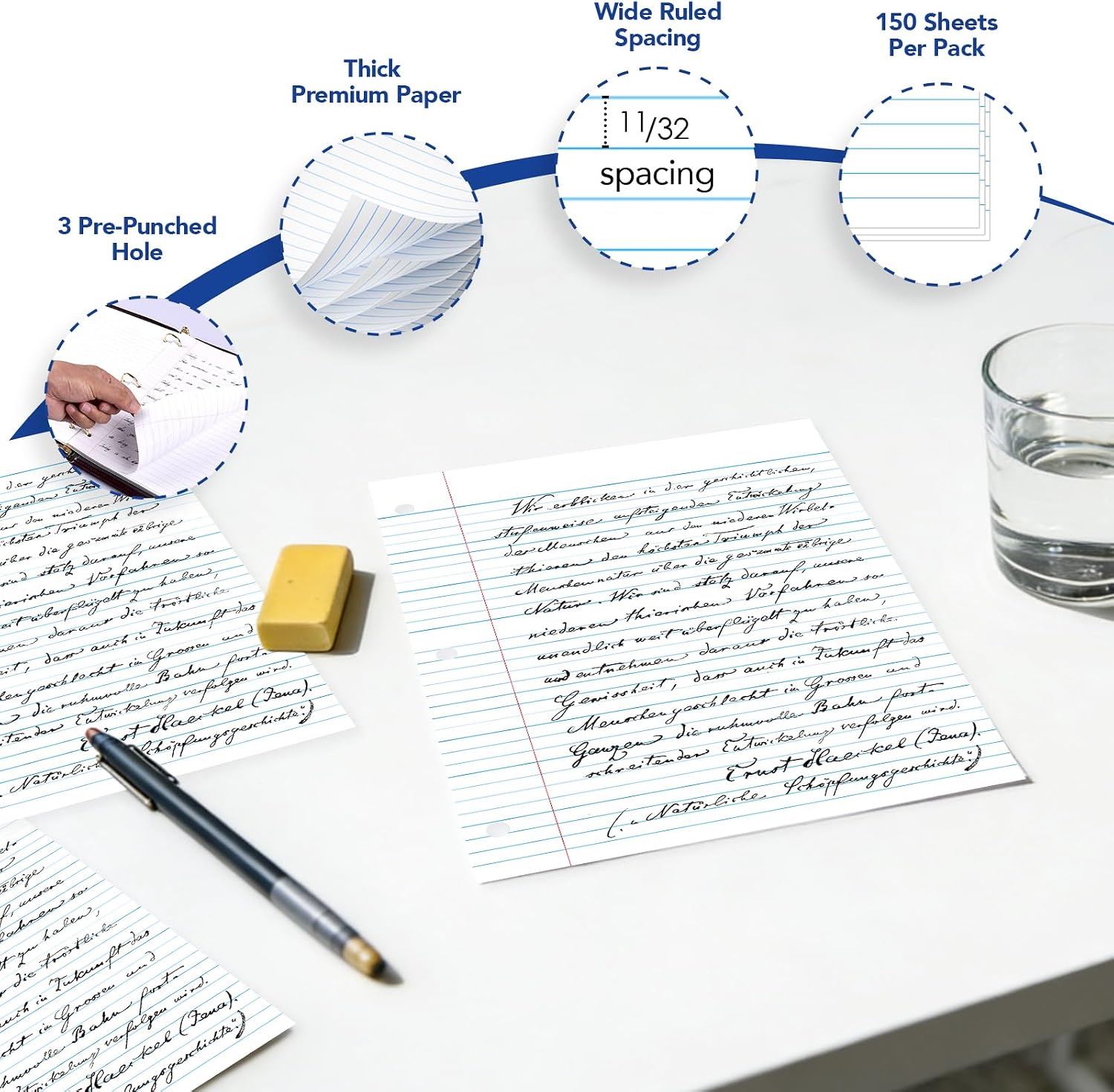
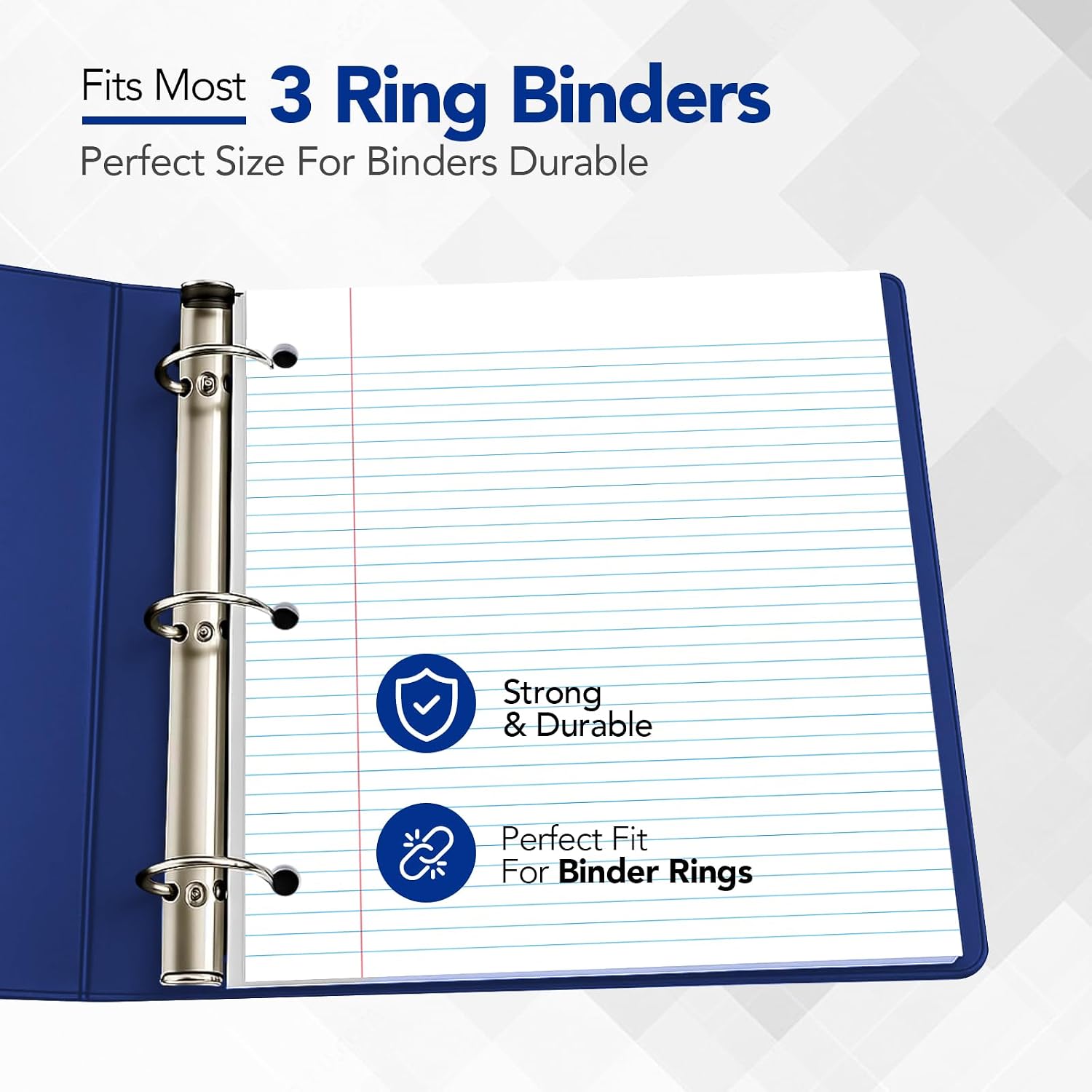
What’s the point of binder paper if it doesn’t fit your binder properly, or the holes tear out instantly? Good 3-hole punched paper should have clean, consistently aligned holes. The paper around the holes shouldn’t feel pre-perforated or weak. Sometimes, cheaper paper uses a less robust punch, making the edges around the holes brittle. You want paper that slides easily onto binder rings without snagging, and that stays put. Reinforcement around the holes, while not standard on basic filler paper, is a premium feature for a reason. For KAISA paper, like most bulk options, the holes are standard, designed for immediate use. Just make sure your binders are the standard 3-ring type, obviously.
6. Sheet Count and Packaging (The Practicalities of Supply):
Are you a heavy user, or do you just need a few sheets now and then? This KAISA filler paper pack comes in a bundle of three 150-sheet packs, totaling 450 sheets. That’s a decent amount for students or a busy home office. Buying in bulk almost always means a better per-sheet value. But consider storage. Do you have room for multiple packs, or do you prefer smaller, single packs that are easier to tuck away? Think about how quickly you go through paper, and what kind of commitment you want to make. Getting too much means it might sit and collect dust or get damaged. Not enough? You’re running out at the worst possible moment.
How to Match the Product to Your Situation
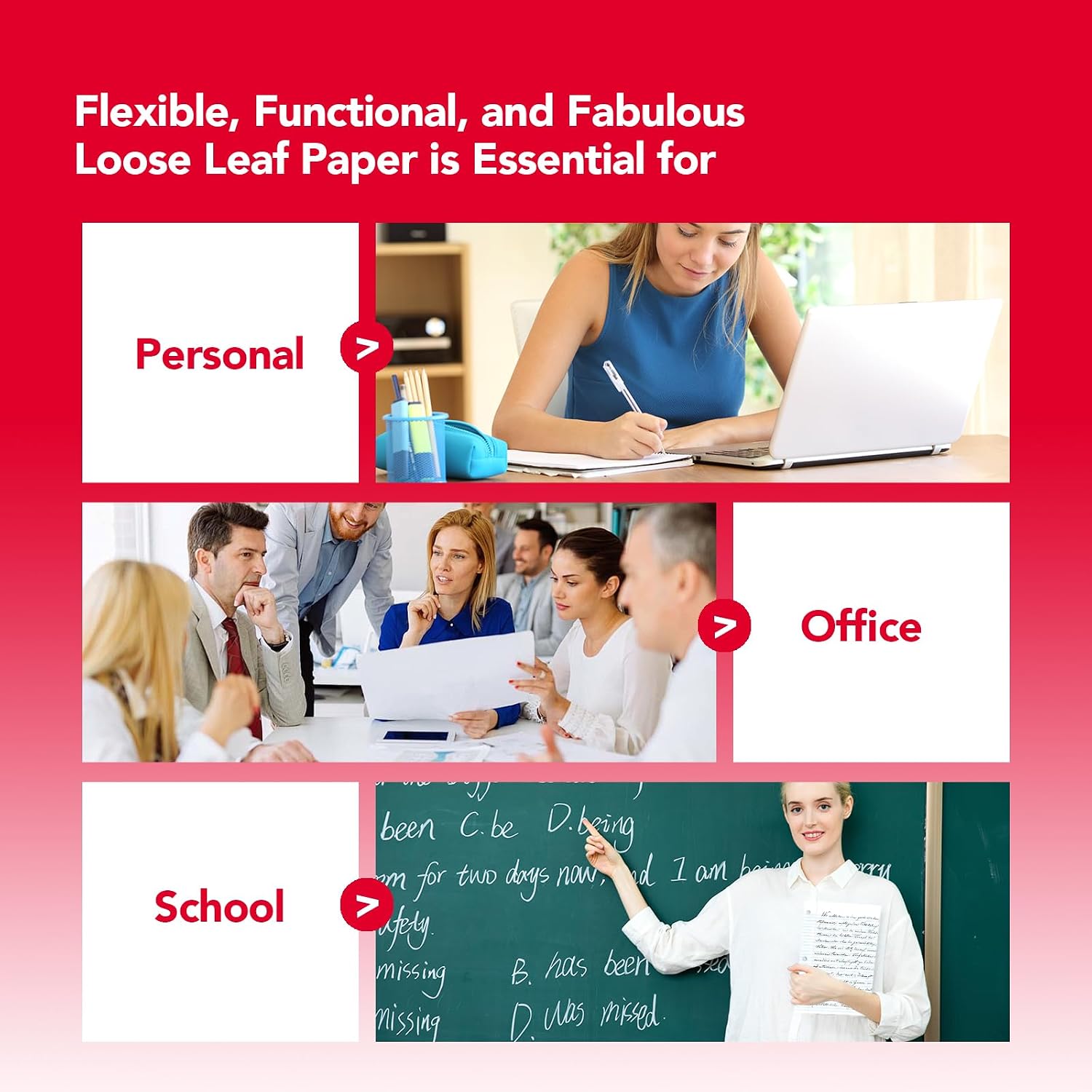
Choosing the right loose leaf paper, even something as specific as KAISA filler paper, really comes down to who you are and what you’re doing. Let’s look at a few common profiles.
1. The Frugal Student (High Volume, Low Budget):
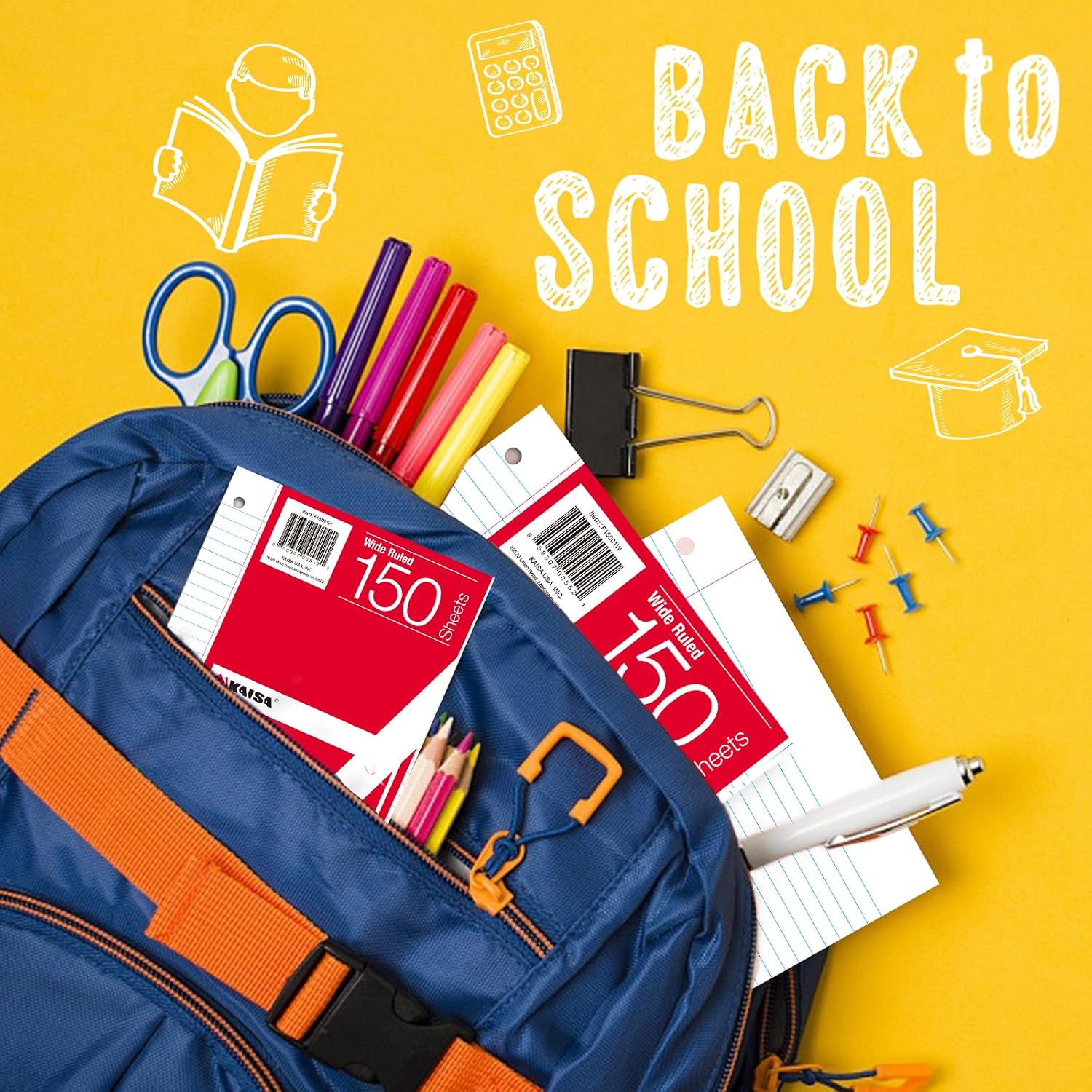
You’re drowning in lectures, churning out notes, and your budget for school supplies is, well, tight. You need paper that’s affordable and plentiful. Quality is secondary to quantity and basic functionality. You’ll likely be writing with ballpoint pens or pencils. Bleed-through is annoying, sure, but a slightly visible note on the other side isn’t a dealbreaker if it keeps costs down. For you, the KAISA filler paper, with its multi-pack count, is practically tailor-made. It gets the job done without breaking the bank. You’re not looking for a luxury writing experience; you’re looking for a reliable workhorse.
2. The Organized Professional / Planner Enthusiast:
Your binder is your lifeblood. Meeting notes, project plans, perhaps even a personal journal — it all goes in there. You appreciate a paper that feels good to write on, minimizes bleed-through, and presents your work cleanly. You might use gel pens, fine-liners, or even a fountain pen for a touch of class. Aesthetics and durability matter. For you, KAISA filler paper might be a good secondary option for rough drafts or less critical notes. For your main planning or archival work, you might want to explore paper with a slightly higher GSM and smoother finish, even if it costs a bit more. You value that clean, crisp look and feel.
3. The Home Office Parent / Casual User:
Loose leaf paper for you is for everything from grocery lists to kids’ homework, spontaneous doodles, or jotting down phone messages. You don’t go through reams every month, but when you need it, you really need it. Convenience and basic reliability are key. You probably use whatever pen is closest. The multi-pack of KAISA filler paper is pretty handy here. It means you’re stocked up, not constantly running to the store, and it handles the varied demands of a busy household without any fuss. It’s practical, no-nonsense paper for everyday life.
| Type/Tier | Best For | Price Tier | Key Feature | Watch-Out |
|---|---|---|---|---|
| Basic Utility Paper | Everyday note-taking, high-volume needs | Budget-friendly | Pure functionality, high sheet count | Can be prone to bleed-through; generally thinner |
| This paper is the workhorse of classrooms and casual home offices, focusing on getting words on the page without fuss. | ||||
| Enhanced Durability Paper | Important notes, double-sided writing | Mid-range | Thicker stock, better bleed resistance | Costs more per sheet, might be slightly heavier |
| Often a bit heavier, these sheets offer a more substantial feel and are better for preserving important information. | ||||
| Premium Writing Paper | Journaling, professional use, fountain pens | Premium | Superior smoothness, minimal ghosting/feathering | Significantly higher cost; less focus on bulk quantities |
| Designed for a luxurious writing experience, these papers cater to specific pen types and users who prioritize feel and presentation. |
Scenarios for Your KAISA Filler Paper
The beauty of a staple like wide ruled, 3-hole punched filler paper is its versatility. But sometimes, context changes everything.
1. High-Volume Lecture Notes:
You’re in a university lecture hall, furiously scribbling down insights from a professor who talks at warp speed. You’re going to fill dozens of pages a week, maybe even more. Here, the sheer quantity of sheets that KAISA filler paper offers is a huge win. You don’t want to worry about running out mid-semester. The wide ruling provides ample space for quick notes and perhaps even some marginalia. Is it the smoothest paper? Probably not for your calligraphy pen, but for rapid-fire ballpoint notes, it’s more than sufficient. You’re prioritizing capture over archival perfection.
2. Organizing a Multi-Subject Binder:
Think high school or middle school, where one binder needs to house English, Math, and Science. Each subject needs its own section, with plenty of room for assignments and notes. Having a generous supply of KAISA filler paper means you can easily replenish sections as needed without running short. The consistent 8″x10-1/2″ size ensures everything slots neatly into your 3-ring binder. The widespread availability of this type of paper is also a boon here; it’s easy to find and replace.
3. Project Brainstorming and Drafting at Home:
For many, a stack of loose leaf paper is the go-to for brainstorming, sketching out ideas, or drafting documents before they hit a computer. Maybe you’re outlining a story, working through a complex problem, or just making lists. KAISA filler paper is inexpensive enough that you don’t feel guilty about discarding pages filled with crossed-out thoughts. It’s a low-stakes canvas for high-stakes thinking. The wide ruled lines give structure without being too restrictive. You want to get ideas down, quickly, and without fuss.
Common Mistakes Buyers Make
Okay, so buying paper doesn’t feel like rocket science, does it? But I’ve seen enough people get frustrated with their stationery choices to know there are definite pitfalls. Avoid these common blunders.
- Buying Purely on Price Without Considering Usage: Look, a cheap pack of paper might seem like a win. Until you try to write on both sides, or use a highlighter, and suddenly your notes are a ghost story. If you’re going to write heavily, or use various ink types, that super-budget option might cost you more in frustration and wasted sheets than you save upfront. KAISA paper sits in a sweet spot for many, but if you’re a heavy ink user, be aware.
- Ignoring Paper Weight for Double-Sided Work: This is a classic. You think “I’ll just write on both sides to save paper!” Then your pen bleeds, or the text from the front is glaringly obvious on the back. For effective double-sided writing, you need paper with a bit more heft. Assuming all “filler paper” can handle it is a recipe for disaster.
- Underestimating Actual Consumption: You buy a single small pack, thinking it’ll last. Then mid-term season hits, or a new project lands, and you’re suddenly out, scrambling. It’s always a good idea to slightly overestimate your paper needs. Buying a multi-pack like the KAISA offering, even if it seems like a lot initially, often pays off in convenience and not having to restock constantly. Running out of paper when you need it most? Infuriating.
- Not Thinking About Storage (and Damage): Piling loose paper on a desk, or letting it float around in a backpack, leads to bent corners, rips, and general disarray. The whole point of 3-hole punched paper is that it goes in a binder. If you’re not using binders, or you’re just tossing these packs into a drawer, you might end up with wasted paper that’s too dinged up to look decent. Keep it in a binder. Or a box. Anywhere it stays flat and protected.
Why/How/What
Why bother with decent filler paper in the first place?
Because a poor writing surface is genuinely distracting and counterproductive. Good paper lets you focus on the content of your notes or work, not the flimsy feel, the ghosting, or the way your pen skips. It offers comfort, improves legibility, and helps ensure your notes last as long as you need them to. When you’re constantly fighting your tools, your concentration suffers.
How do I store loose leaf paper properly to keep it fresh?
The best way is always in a binder. That’s what it’s made for, after all. Failing that, a sturdy box, a file folder, or even a drawer where it can lay flat will do wonders. Keep it away from humidity fluctuations, direct sunlight, and anything that might crease or fold the corners. Basically, treat it like any important document you want to preserve.
What’s the deal with paper brightness — does it really matter?
Absolutely. Paper brightness plays a significant role in how easily you can read your writing and how colors appear. A good level of brightness provides a crisp contrast for your ink, making notes more legible and reducing strain on your eyes, especially during long study sessions or when reviewing documents. Too dull, and everything feels muted. Too harsh, and it can feel almost reflective. Finding that sweet spot, which KAISA paper generally aims for, is important for overall comfort and clarity.
FAQ
Is KAISA filler paper suitable for all types of pens?
For general use, yes. Ballpoint pens, pencils, and most standard rollerball pens should perform well. However, if you’re using heavy gel inks, fountain pens, or permanent markers, you might experience some bleed-through or ghosting due to the paper’s standard weight and finish.
Can I write on both sides of KAISA wide ruled paper?
You can, but whether it’s effective depends on your writing instrument. With a pencil or light ballpoint, you’ll likely be fine. If you use darker inks, highlighters, or anything that lays down a lot of pigment, you’ll probably see some ghosting, which can make the other side harder to read.
What does “wide ruled” mean, and is it right for me?
Wide ruled paper has lines spaced further apart than college ruled or narrow ruled paper. This larger spacing is generally preferred by younger students, individuals with larger handwriting, or anyone who simply appreciates more room to write without feeling cramped. It’s an ideal choice for general note-taking.
Is the 3-hole punch compatible with all standard binders?
Yes, the 3-hole punch configuration is the industry standard for binders in North America. KAISA filler paper should fit perfectly into any conventional 3-ring binder. Just slide it in.
How does the 8″x10-1/2″ size compare to other papers?
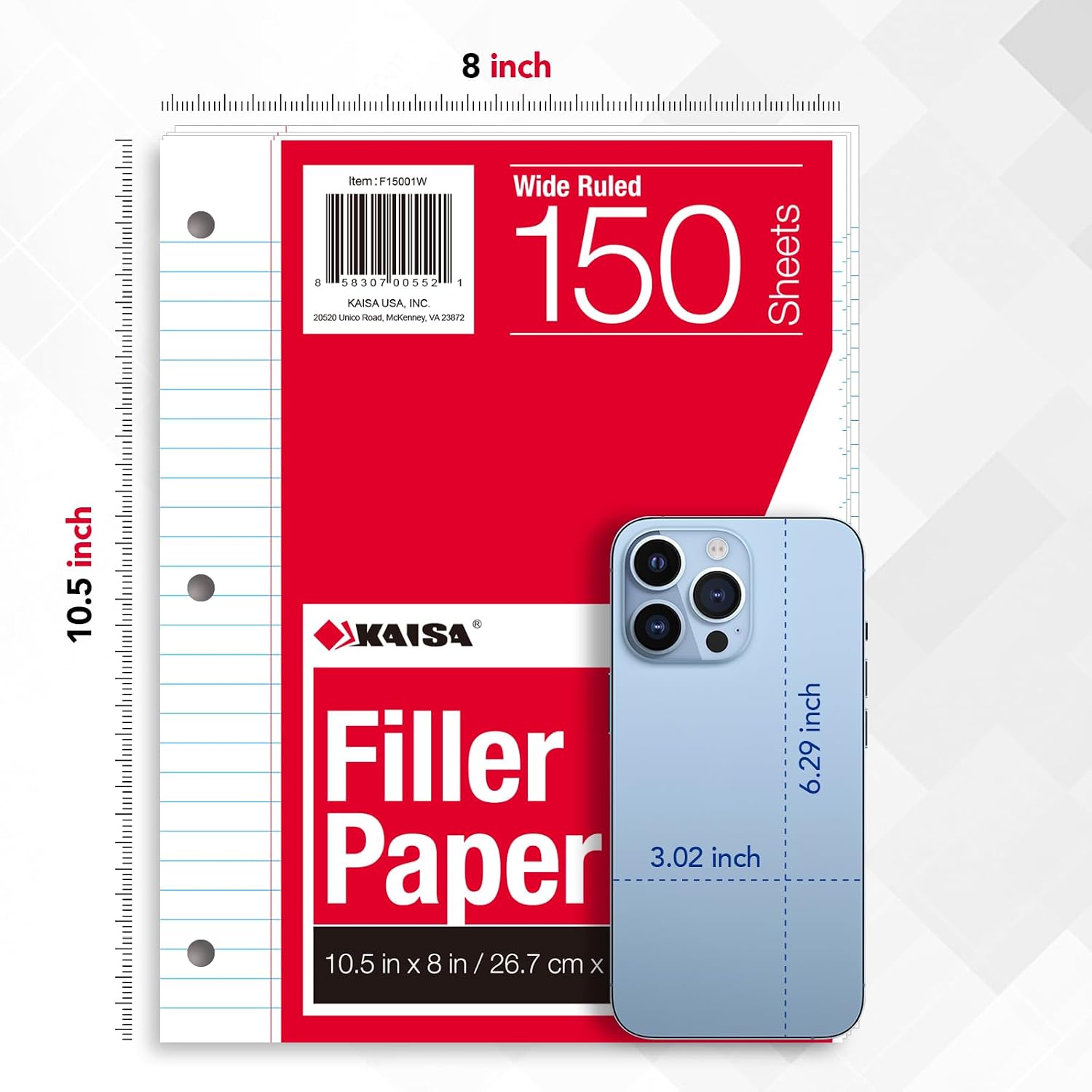
This is the standard letter-size dimension for filler paper. It’s the most common size you’ll find for binders and notebooks, ensuring compatibility with most folders, clear sheet protectors, and other office supplies. It’s that classic, familiar size everyone uses.
Is KAISA filler paper acid-free for long-term storage?
Typically, entry-level filler papers like the KAISA offering are not specifically marketed as acid-free. While they might last a good while, for truly archival purposes where notes need to endure for decades without yellowing or degradation, you would usually need to seek out paper explicitly labeled “acid-free” or “archival quality.”
What’s the benefit of buying a 3-pack of 150 sheets each?
Buying in a multi-pack like this significantly improves your per-sheet value and ensures you have a substantial supply on hand. It cuts down on how frequently you need to restock, which is especially convenient for busy students or home offices that go through a lot of paper.
Final Recommendation
For the vast majority of users — think high school and college students, busy home managers, or anyone needing a reliable stack of paper for daily tasks — the KAISA Filler Paper Loose Leaf Paper, Wide Ruled Paper, 8″x10-1/2″, 3-Hole Punched Binder Paper For 3-Ring Binders,150 Sheets/pack 3Pack, F15001W offers a smart, practical solution. It delivers exactly what you need for general note-taking, homework, and quick drafts: plenty of sheets, wide ruling for easy legibility, and standard 3-hole punching. It isn’t going to be the premium, silky-smooth experience that discerning fountain pen users crave, but for the price and quantity, it absolutely nails the utility aspect.
If your priority is value and consistent supply for everyday academic or organizational demands, this KAISA pack should be high on your list. It’s the dependable workhorse you can rely on without overthinking it. Check current availability through major retailers and grab a pack. You’ll be ready for whatever note-taking challenge comes your way.
#KAISA #Filler #Paper #Loose #Leaf #Paper #Wide #Ruled #Paper #8×10¹² #3Hole #Punched #Binder #Paper #3Ring #Binders150 #Sheetspack #3Pack #F15001W
Reviews
There are no reviews yet.