
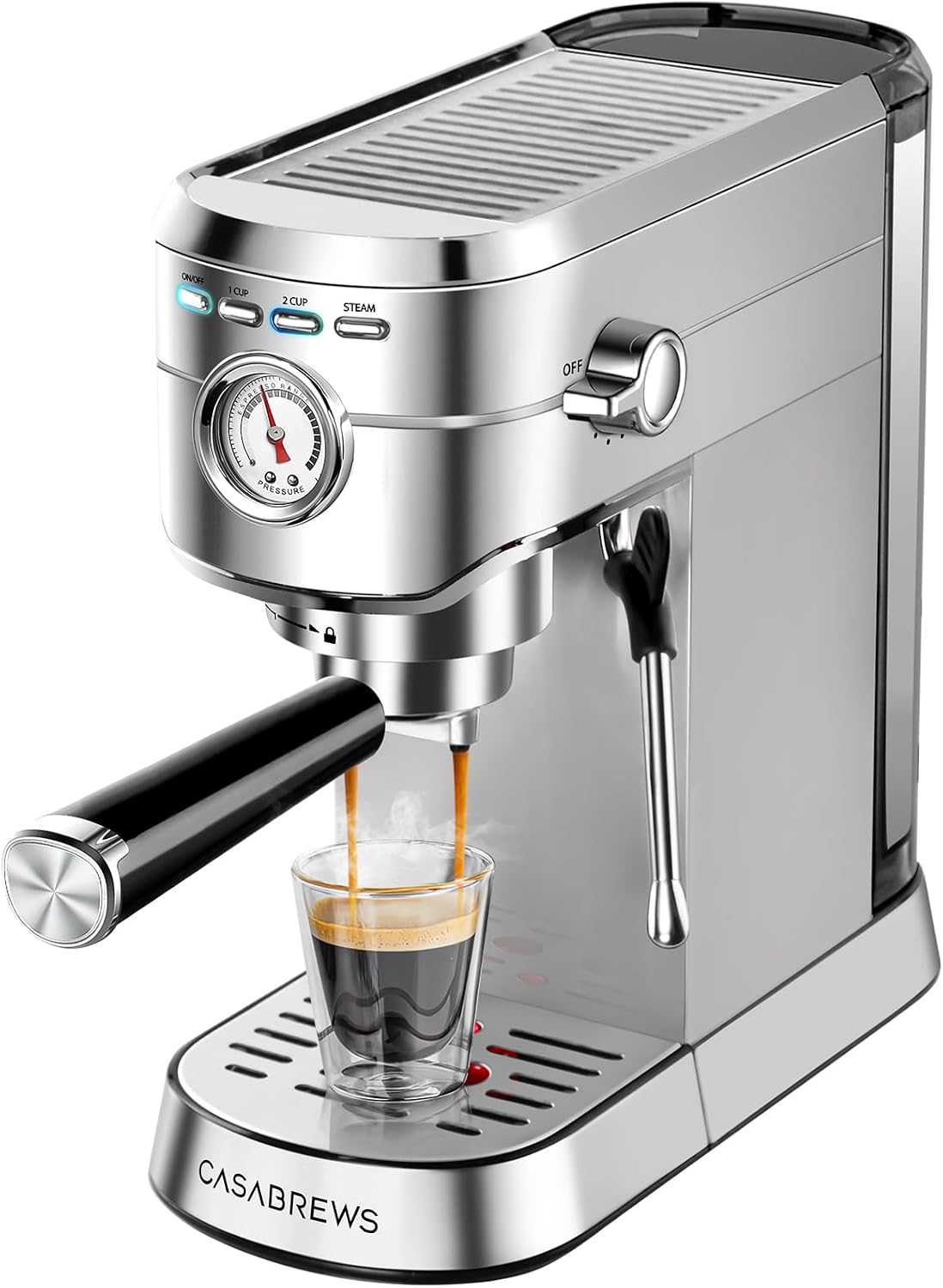
Unpacking the CASABREWS CM5418: Your Next Home Espresso Machine, or Just More Counter Clutter?
Considering an espresso machine for your kitchen counter? This guide’s for you. We’re cutting through the noise to figure out if a model like the CASABREWS CM5418 Compact Espresso Machine with Milk Frothing Steam Wand really delivers on the promise of cafe-quality drinks at home, or if you’re better off looking elsewhere. We’ll dissect what makes a home espresso maker tick and help you decide if this particular stainless steel, 20-bar pump unit is your ticket to better lattes.
Quick Answer
The CASABREWS CM5418 stands out as a solid contender for folks dipping their toes into home espresso without wanting to spend a fortune. Its 20-bar pump and robust steam wand offer features typically associated with higher-priced semi-automatic machines, making it a strong value proposition for the budding home barista. Expect a bit of a learning curve, but the potential for rich, well-extracted shots and creamy milk foam is definitely there.
What to Look For (The Buying Criteria)
Choosing an espresso machine isn’t as simple as picking the prettiest one. Trust me, I’ve seen countless machines gather dust because people didn’t consider a few core things before buying. Here’s what actually matters:
1. Pump Pressure and Extraction Quality:
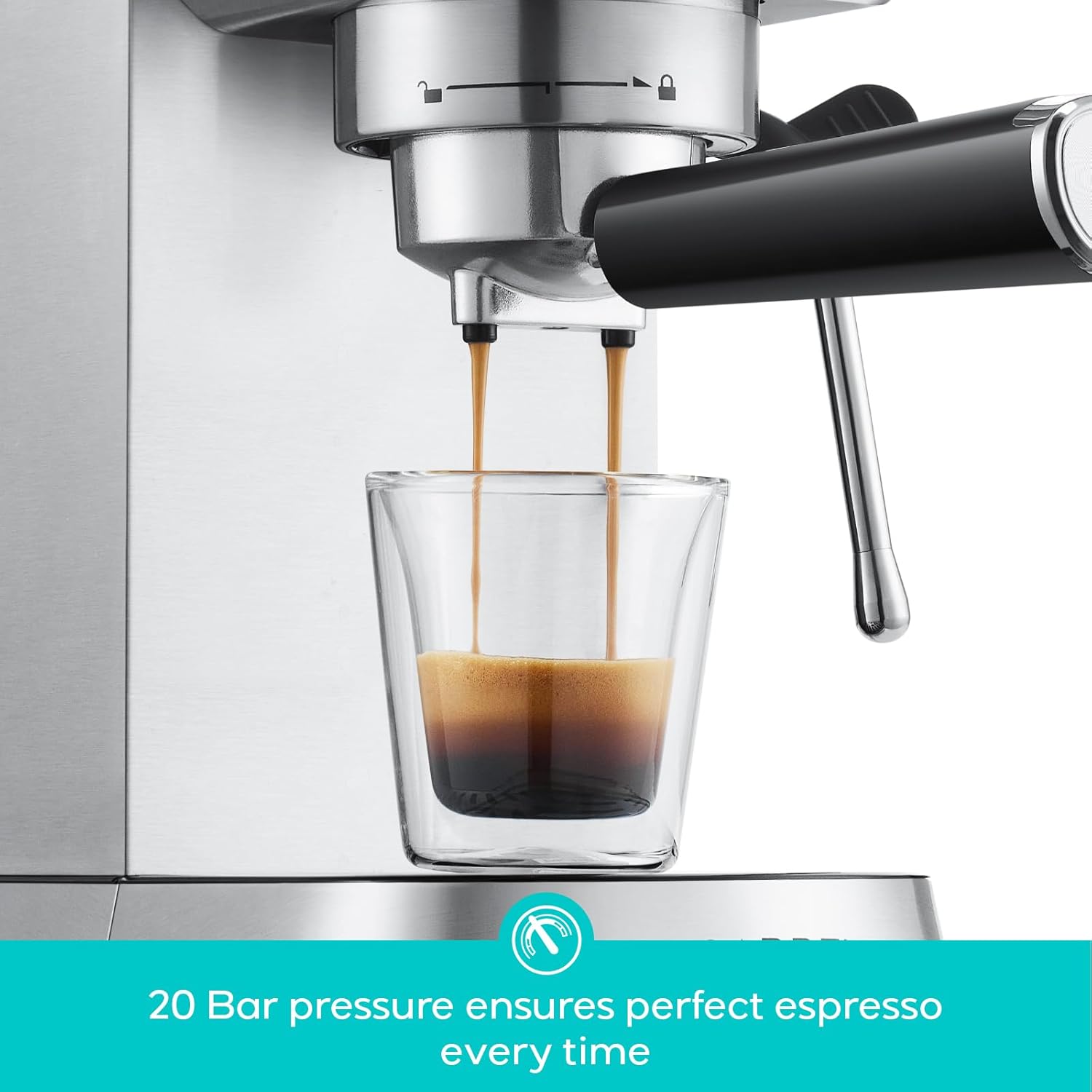
You hear numbers like “15-bar” or “20-bar” thrown around a lot. What does it even mean? Basically, it’s about the force used to push hot water through your coffee grounds. While 9 bars is the industry standard for optimal espresso extraction, a 20-bar pump, like that found in the CASABREWS CM5418, simply means it can generate that much pressure. More pressure capacity often translates to better consistency and the ability to really dial in your shot, extracting those deep, complex flavors. But it’s not the only factor. Tamp technique, grind size, and fresh beans are equally, if not more, crucial. Don’t fall for the “higher bar number automatically equals better espresso” trap.
2. Boiler System and Temperature Stability:
This is where many home espresso makers stumble. Consistent temperature is absolutely vital for a proper espresso shot. You want the water to hit those grounds at just the right heat, usually around 200°F (93°C). Cheaper machines often use a thermoblock heater, which heats water on demand. It’s fast, sure, but sometimes struggles to maintain that exact temperature throughout the shot. A single boiler system, common in this price range, heats water for both brewing and steaming. The trade-off? You usually have to wait for it to heat up or cool down between brewing an espresso shot and steaming milk, which can be a drag during your morning rush. More advanced machines use dual boilers or heat exchangers for simultaneous operation, but those are a different tier entirely. The CM5418 likely uses a thermoblock or single boiler.
3. Steam Wand Performance and Milk Frothing:
For many, an espresso machine isn’t complete without the ability to make a proper cappuccino or latte. The steam wand is where the magic happens. A powerful steam wand, like the one advertised on the CASABREWS CM5418, is non-negotiable for velvety microfoam. Look, anyone can make hot milk. But good steamed milk? That’s art. A weaker wand just makes big, airy bubbles, not that luscious texture you crave. The trick with any home machine, especially in the compact category, is often its consistency. Can it keep up steam production, or does it sputter out halfway through your milk pitcher? Learning to use a manual wand takes practice, definitely. It’s not just “point and shoot.”
4. Size and Countertop Footprint:
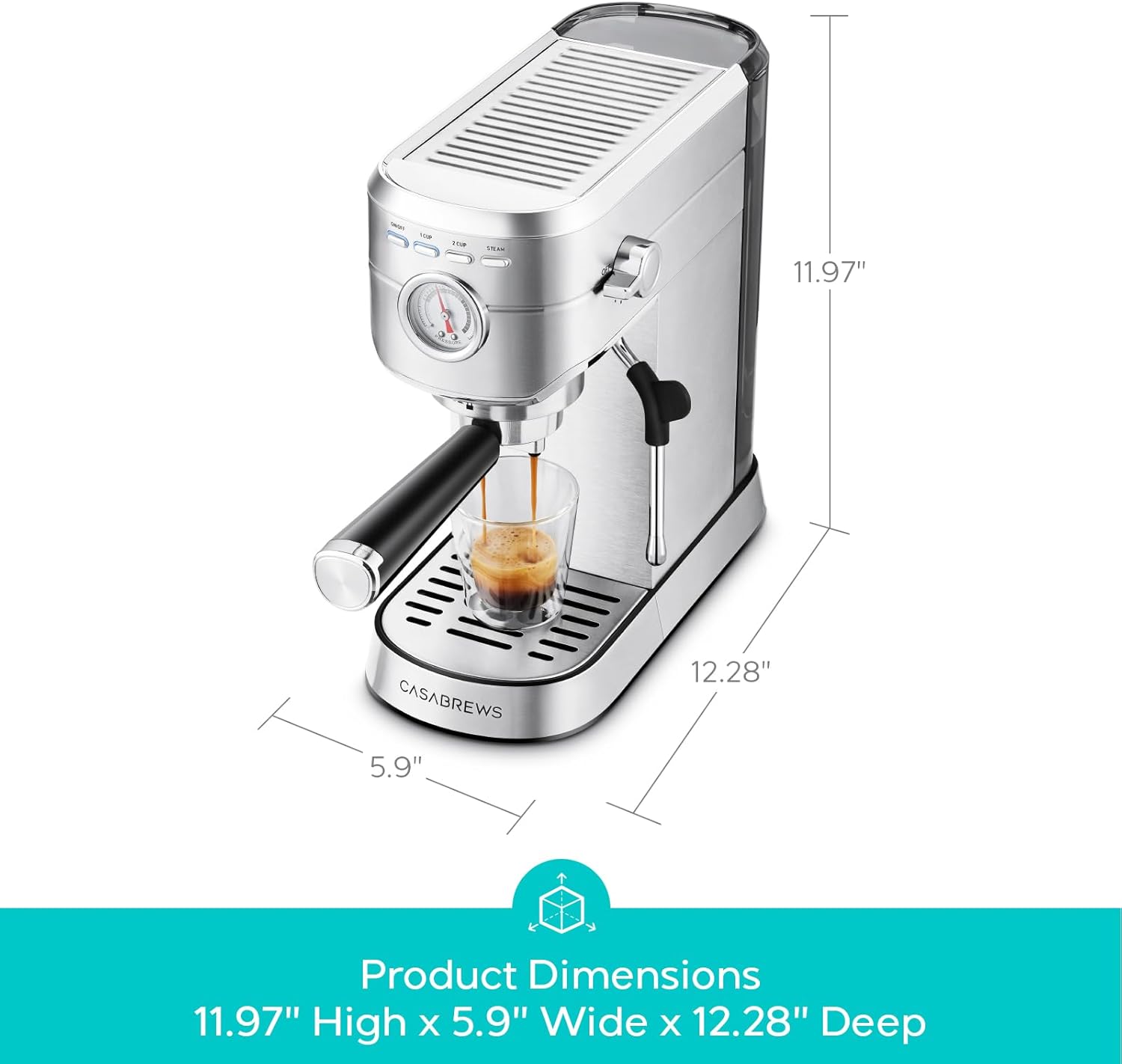
Let’s be real. Kitchens, particularly smaller ones, don’t have infinite counter space. A “compact” espresso machine isn’t just a marketing buzzword; it’s a genuine consideration. The CASABREWS CM5418’s compact design is a selling point for a reason. Before you buy, measure your available space—height, width, depth. Don’t forget to account for clearance if you have overhead cabinets. A machine might look small in photos but eat up more space than you expect once it’s next to your toaster and fruit bowl. And remember, smaller often means a smaller drip tray or water reservoir, which brings us to…
5. Water Tank Capacity and Ease of Refill:
Nobody wants to refill the water tank every single morning. A 34oz water tank, as seen on the CASABREWS CM5418, is fairly respectable for a compact machine. It’ll likely get you through a few drinks before needing a top-up. But think about how you refill it. Is it easily accessible from the top? Do you have to pull the whole machine out from under a cabinet? These little friction points add up. A removable tank is almost always preferable for convenience and cleaning.
6. Build Quality and Materials:
Stainless steel, like that used in the CASABREWS CM5418, is usually a good sign. It tends to be more durable and easier to clean than plastic. And it just looks better. But don’t confuse a stainless steel exterior with a stainless steel interior boiler. Often, these mid-range machines will still have plastic components inside. It’s a trade-off. What matters is the overall feel. Does it feel flimsy? Are the buttons wobbly? A well-built machine will last longer and stand up to daily use. Sometimes, you pay a little more up front for something that won’t give you headaches down the line.
How to Match the Product to Your Situation
Okay, so you’re eyeing that CASABREWS CM5418, but is it actually for you? Different strokes for different folks, right? Let’s consider a few archetypes.
The Budding Barista:
You’re excited about coffee. You’ve been drinking lattes from the local shop for years, maybe you’ve even tried your hand at pour-overs. Now, you want to get serious about espresso, but you’re not ready to drop a grand on a professional setup. You understand there will be a learning curve. You’re willing to experiment with grind size, tamp pressure, and milk frothing techniques. The CASABREWS CM5418 is almost tailor-made for you. It offers enough control with its manual steam wand and pressure gauge to teach you the ropes, without the overwhelming complexity (or price tag) of a pro-level machine. You’ll spend some time watching videos, sure, but you’ll appreciate the journey.
The “Just Give Me Coffee” Morning Commuter:
You just need your shot, maybe with a splash of milk, and you need it fast. You don’t want to mess with grind settings, purge the group head, or spend five minutes perfecting your latte art. Frankly, you’re busy. For you, a semi-automatic like the CASABREWS CM5418 might be a bit too much work. You might be happier with a simpler pod-based system or a super-automatic machine that grinds, tamps, and brews with the push of a button. While the CM5418 can make a quick espresso, the steaming process adds time and effort that might feel like a chore every morning.
The Entertainer / Weekend Enthusiast:
You love hosting. You enjoy making fancy coffee drinks for friends and family, but daily use isn’t really your thing. The CASABREWS CM5418 could fit perfectly here. It’s capable of producing really decent drinks when you take the time. The compact size means it won’t hog prime real estate when not in use, and its sleek stainless steel aesthetic looks good when you do pull it out. The occasional learning curve won’t bother you as much because it’s a fun project, not a daily obligation.
A Comparison of Espresso Machine Types
You’ve got options when it comes to home espresso. Here’s how different tiers stack up:
| Type/Tier | Best For | Price Tier | Key Feature | Watch-Out |
|---|---|---|---|---|
| Pod/Capsule Machines | Ultimate convenience, speed, consistency. | Budget-Friendly | Single-serve, minimal cleanup. | Limited coffee variety, proprietary pods, often less hot, can get pricey over time for pods. |
| Entry-Level Semi-Automatic | Budding baristas, hands-on learning, good value. | Budget to Mid-Range | Manual control over extraction and steaming. | Learning curve, single boiler means wait times, can be inconsistent without practice. |
| Mid-Range Semi-Automatic | Serious home enthusiasts, daily use, customization. | Mid-Range | Better temperature stability, more robust build. | Still a learning curve, can be bulky, some still have single boilers. |
| Super-Automatic | Effortless espresso, one-touch convenience. | Premium | Grinds beans, tamps, brews, and sometimes froths automatically. | Very expensive, less control over shot parameters, harder to clean thoroughly, complex internal parts. |
Pod machines are for convenience fanatics; you just pop in a capsule and press a button, but you’re locked into specific coffee brands and often miss out on genuine espresso crema. Entry-level semi-automatics, like the CASABREWS CM5418, offer a fantastic balance of control and affordability, letting you develop real barista skills, though patience is key. Mid-range semi-automatics step up the game with better components and more consistent performance, making daily high-quality espresso a more achievable reality for the dedicated. Super-automatics are the ultimate in push-button ease, handling everything from bean grinding to milk frothing, but they come at a significant cost and sacrifice some of that hands-on artisanal feel.
Scenario-Specific Mini-Sections
1. The Daily Grinder (Frequent Use):
If you’re making two, three, maybe even four espresso drinks every single day, the durability and ease of maintenance become paramount. A compact machine like the CASABREWS CM5418 can handle this, absolutely. But you’ll notice things like the drip tray filling up quickly or the water tank needing more frequent refills. Also, consider the cleaning routine. Daily purging of the steam wand, wiping down the group head, and rinsing the portafilter become habits. A machine with easy-to-clean stainless steel surfaces is a blessing when you’re doing this every day. Some smaller machines can feel a bit fussy with high frequency.
2. The Weekend Treat Maker (Infrequent Use):
For those who primarily use their espresso machine for weekend brunches or special occasions, the learning curve on a semi-automatic machine like the CM5418 might feel a little steeper. You’re not practicing daily, so getting that perfect shot and ideal microfoam will take a fresh effort each time. The good news? Its compact size means it won’t be a permanent fixture if you prefer to tuck it away. But if you’re pulling it out after a week, don’t expect perfection on your first try. A quick re-read of the manual (or a YouTube video) will be your friend.
3. The Space-Conscious Apartment Dweller:
This is where the “compact” in CASABREWS CM5418 really shines. Living in an apartment, especially one with a smaller kitchen, means every inch of counter space is precious. A machine that delivers on espresso quality without demanding half your kitchen island is a huge win. You might sacrifice a massive water reservoir or an extra-large drip tray, but that’s a fair trade-off for a machine that actually fits without making your kitchen feel cramped. Just make sure the steam wand has enough room to pivot without banging into cabinets. That’s a real frustration, trust me.
Common Mistakes
Even savvy shoppers make blunders. When buying an espresso machine, these are some common pitfalls:
- Ignoring the Grinder: This is probably the biggest mistake. You can buy the fanciest espresso machine in the world, but if you’re using pre-ground coffee or a cheap blade grinder, your espresso will be bad. Period. A consistent, fine grind is absolutely fundamental for proper extraction. Think of it as investing in a good foundation for your house. Without it, everything else crumbles.
- Not Calibrating Expectations: A home espresso machine, especially one in the mid-range like the CASABREWS CM5418, won’t immediately produce drinks identical to your local cafe. Baristas have commercial-grade equipment and years of training. You’re learning. Be patient. Embrace the process. Your first few shots might be sour, or bitter, or just plain weird. That’s part of the fun!
- Forgetting About Maintenance: Espresso machines need love. If you don’t clean the group head, purge the steam wand, and descale regularly, your machine will clog, perform poorly, and eventually break. A “powerful steam wand” is only powerful if you keep it clear. Neglecting maintenance is like never changing the oil in your car – it’ll run for a bit, then die prematurely.
- Buying Based Solely on Features: A machine might boast a “20-bar pump” and “powerful steam wand,” but how well do those features work together? Does the machine actually achieve consistent temperature? Is the build quality durable enough for those features to matter long-term? Look beyond the bullet points and consider the overall design and user experience.
Why/How/What Mini-Section
Why should I care about a pressure gauge on my espresso machine?
A pressure gauge, like the one built into the CASABREWS CM5418, is a really handy tool for learning. It gives you immediate feedback on whether you’ve got your grind size and tamp pressure just right. If the pressure is too low, your grind might be too coarse; too high, and it’s probably too fine. It’s an invaluable visual aid for dialing in your espresso shot and getting more consistent results.
How do I get that perfect microfoam with a manual steam wand?
Achieving microfoam with a powerful steam wand takes practice, but the core idea is to introduce air into the milk just enough to create a velvety texture, then submerge the wand to create a swirling vortex that blends the air throughout. Listen for a gentle tearing sound initially, then silence. Don’t overheat the milk. It’s less about brute force and more about technique.
What’s the real difference between a semi-automatic and a super-automatic espresso machine?
The main distinction lies in how much control you have – or want. A semi-automatic, like the CASABREWS CM5418, puts you in charge of grinding, tamping, and often the length of the shot and milk frothing. A super-automatic does everything for you: it grinds the beans, tamps them, brews the shot, and some even froth milk automatically, all with the push of a button. It’s convenience versus control.
FAQ
What kind of coffee beans should I use with a home espresso machine?
Freshly roasted, high-quality whole beans are critical. Always grind them just before brewing. Look for roasts specifically intended for espresso – they’re often darker but not burnt, and yield a richer crema.
Is 20 bars of pump pressure truly necessary for good espresso?
While a 20-bar pump indicates a machine’s capability, you’ll rarely need to utilize all of that pressure. Standard espresso extraction is done around 9 bars. The higher capacity offers a margin for error and consistency, but technique is still king.
How often do I need to clean my espresso machine?
Daily cleaning of the portafilter and steam wand is essential. A weekly backflush (if your machine supports it) and a monthly descaling are also highly recommended to prevent mineral buildup and maintain performance.
Can I use pre-ground coffee with the CASABREWS CM5418?
You can, but it’s generally not recommended for optimal espresso. Pre-ground coffee loses freshness quickly and is often too coarse for proper espresso extraction, leading to weak or sour shots. A good burr grinder is a worthwhile investment.
What’s the ideal water temperature for brewing espresso?
The sweet spot for espresso extraction is typically between 195°F and 205°F (90°C to 96°C). Temperature stability is more important than the exact initial heat.
Does a compact espresso machine compromise on quality?
Not necessarily. While larger, professional machines often have more robust components, many compact models, like the CASABREWS CM5418, are designed to deliver surprisingly good quality within their footprint. You might see trade-offs in water tank size or boiler capacity, but not always in the final cup.
Is a built-in pressure gauge really that helpful for a beginner?
Yes, it absolutely is. For new users, a pressure gauge provides immediate visual feedback, helping you understand how your grind size and tamping technique affect the extraction. It’s like having a little coach right on your machine.
Final Recommendation
For those embarking on their home barista journey, particularly if you’re tight on space but refuse to compromise on flavor, the CASABREWS CM5418 Compact Espresso Machine is a genuinely strong contender. Its feature set — a 20-bar pump, pressure gauge, and powerful steam wand — puts it firmly in the sweet spot of value for money, allowing you to learn the craft without needing a second mortgage. You’ll need to put in the practice to master milk frothing and shot dialing, but the machine provides the tools.
If you’re someone who craves a hands-on approach and wants to impress guests with café-quality drinks on the weekends, or even make your daily cappuccino, this semi-automatic espresso machine offers a compelling package. It’s a solid step up from pod machines and gives you a taste of serious espresso without the hefty investment or counter space demands of a premium model. Just remember, a good grinder is non-negotiable, and patience truly is a virtue here.
#CASABREWS #CM5418 #Compact #Espresso #Machine #Milk #Frothing #Steam #Wand #Stainless #Steel #20Bar #Pump #Builtin #Pressure #Gauge #Powerful #Steam #Wand #Cappuccino #Latte #Home #34oz #Water #Tank
Reviews
There are no reviews yet.