
Immersion Blenders: Is the Waring EvolutionX Really Necessary?
So, you’re thinking about an immersion blender, huh? It’s more than just a kitchen gadget; for many, it’s a workhorse, especially if you’re tackling big jobs. This guide cuts through the marketing fluff to help you figure out what really matters in an immersion blender, focusing particularly on whether a commercial-grade beast like the Waring EvolutionX is overkill for your needs or precisely what you’ve been missing. We’ll talk about what separates the good ones from the flimsy, and how to spot real value.
Quick Answer Box
For serious cooks or high-volume kitchens, the robust power and capacity of a unit like the Waring EvolutionX Immersion Blender absolutely justifies its premium standing. For most home cooks, however, a capable mid-range stick blender will handle everyday tasks like smoothies and soups with ease, offering a better balance of cost and utility. Your actual usage and the volumes you work with are the real deciders here.
What to Look For (The Buying Criteria)
Choosing an immersion blender isn’t rocket science, but it’s not entirely straightforward either. There’s a sea of options, from dinky little models struggling with a single smoothie to industrial-strength giants designed for hundreds of gallons. Knowing what truly counts will save you frustration and, let’s be honest, a good chunk of change.
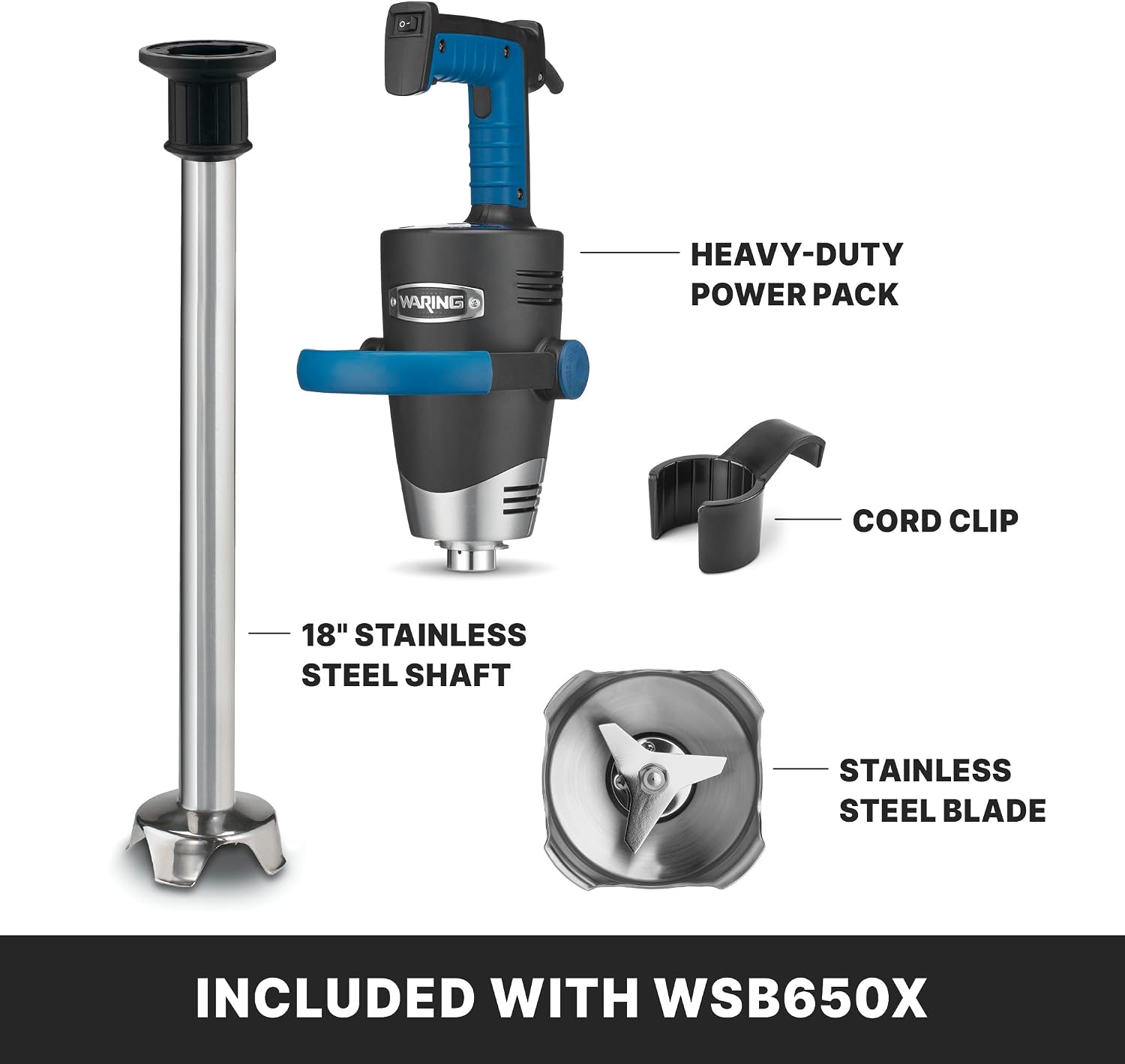
Power and Motor Strength: This is probably the biggest differentiator, and it’s where a model like the Waring EvolutionX truly shines with its formidable 1.5 Horsepower Motor. More power means less strain, smoother results, and the ability to tackle tougher ingredients. Think about it: a weaker motor might struggle with ice or dense vegetables, leading to chunky results or, worse, burnout. For the occasional soup or quick dressing, you might get away with something under 300 watts. But for regular, heavier-duty tasks – especially anything involving frozen fruit, nuts, or large batches of hot soup – you want at least 500 watts, ideally more. The downside? More power often means a heavier, noisier unit. And you’re paying for it, obviously.
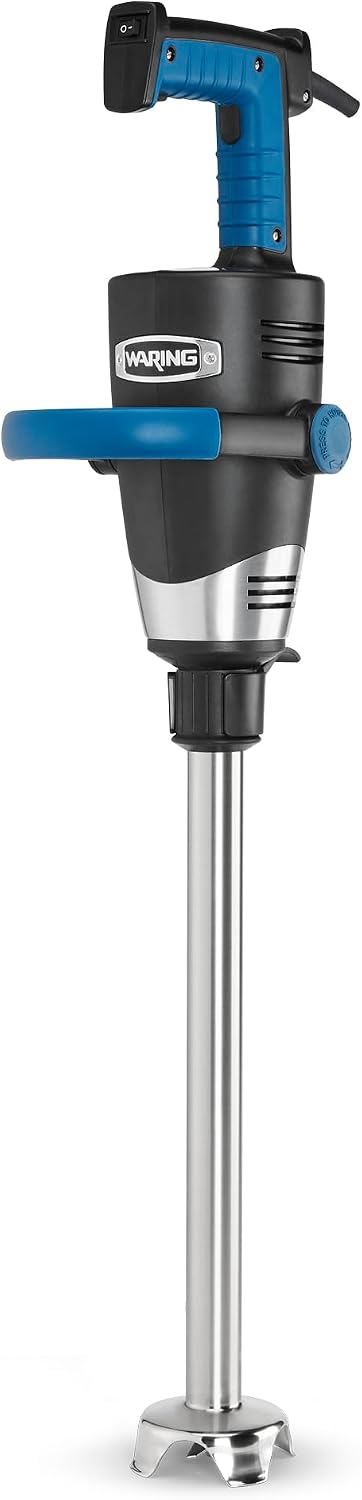
Shaft Length and Material: The shaft is where the blending action happens. A longer shaft, like the 18″ Stainless Steel Shaft on the Waring EvolutionX, is absolutely crucial for blending in deep pots or large containers, preventing you from constantly tipping the pot or getting splatter everywhere. Imagine trying to puree 10 gallons of soup with a short shaft. A mess, right? Shorter shafts are fine for small pitchers or single-serve cups, but they’re a literal pain in the neck for anything beyond that. Stainless steel is the gold standard here for hygiene and durability. Plastic shafts just don’t hold up, especially with hot liquids or repeated use. They stain, they scratch, they warp. You’ll regret skimping on this, trust me.
Capacity Rating: This feature often gets overlooked by home users, but it’s paramount for anyone working in quantity. The Waring EvolutionX proudly boasts a 35-Gallon Capacity, a clear indicator of its commercial intent. This isn’t about how much liquid the blender itself holds, but the maximum volume of ingredients it’s designed to effectively process in a single batch. If you’re regularly pureeing enough soup to feed a small army, this rating directly translates to efficiency and results. A typical home immersion blender might handle a few quarts. Trying to blend a 5-gallon stockpot with that? You’d be there all day, and the motor would likely protest.
Variable Speed Control: One speed for everything? Please. A variable speed dial or trigger, like what you find on the Waring EvolutionX, gives you precision. You need a gentle stir for a delicate sauce, a medium whirl for a vinaigrette, and full power for pulverizing fibrous veggies or crushing ice. Without it, you’re either splattering ingredients all over your kitchen or not getting a fine enough blend. It’s not just about more options; it’s about control. Some models offer just two speeds, which is better than one, but truly variable control lets you dial in the exact consistency.
Ergonomics and Weight: Look, you’re going to be holding this thing. Maybe for minutes at a time if you’re working through a big batch of gazpacho. A bulky, unbalanced immersion blender quickly becomes tiresome. Even a powerful model can be a nuisance if it feels like a brick in your hand. Weight is a factor, especially for higher-powered commercial units. The Waring EvolutionX, given its power and shaft length, isn’t going to feel like a feather. You need comfortable grips, intuitive button placement, and a design that feels sturdy without being unwieldy. Don’t underestimate how quickly hand fatigue sets in.
Ease of Cleaning: Detachable shafts are a must. Seriously. Trying to clean a fixed blade and shaft is a nightmare, risking cuts and leaving food trapped. Most decent immersion blenders offer a twist-and-remove shaft that can go straight into the dishwasher (though handwashing is often recommended for longevity). Less fuss after cooking? Yes, please. This is one of those quality-of-life features that you’ll appreciate every single time. A word to the wise: some models have more nooks and crannies than others around the blade housing, making them a bit more annoying to get truly spotless.
Durability and Construction: This ties into material choices, but it’s more about the overall build. Is the housing cheap plastic or robust, food-grade material? Are the connections solid, or do they feel flimsy? For something you’ll be dunking into liquids, you want seals that actually, you know, seal. Commercial models are built like tanks precisely because they have to withstand constant, demanding use. A home-use model, even a good one, typically isn’t designed for that kind of punishment. Consider this: a budget model might cost less upfront, but if it conks out after a year, was it really a saving? Probably not.
How to Match the Product to Your Situation
Deciding which immersion blender makes sense for you really boils down to how, where, and how often you plan to use it. No one needs a dragster for grocery runs. But if you’re hauling serious freight, that sedan isn’t going to cut it. This is where the idea of a “decision tree” comes into play, guiding you through what matters most.
The Casual Home Cook: You make a smoothie a few times a week. Maybe a batch of tomato soup on a chilly Sunday. You’re not feeding an army, and a 35-Gallon Capacity blender sounds utterly absurd. Your priorities are ease of use, compact storage, and a reasonable price. You need enough power to handle softer fruits and cooked vegetables, but you probably don’t need a 1.5 Horsepower Motor. A standard stick blender with a shorter shaft (say, 8-10 inches) will do the trick. Variable speed is nice, but not a deal-breaker. Look for something that’s easy to clean and won’t hog drawer space.
The Serious Home Chef/Batch Cooker: This is someone who loves to cook. You’re often making larger quantities of things – big pots of pureed butternut squash soup, homemade mayonnaise, salad dressings for the week. You might even dabble in canning or preserving. While the Waring EvolutionX is still likely overkill, you definitely need more grunt than the casual cook. You want a blender with a solid motor (at least 600-800 watts), a medium-to-long stainless steel shaft (10-14 inches is a good sweet spot), and definite variable speed control. Durability starts to matter more here. You’ll appreciate a comfortable grip and a design that feels built to last through more frequent use.
The Commercial Kitchen / Food Service Professional: Alright, this is where the Waring EvolutionX Immersion Blender really finds its stride. You’re working in a restaurant, catering company, or a high-volume institutional kitchen. Blending isn’t an occasional chore; it’s an everyday, essential task, often involving immense quantities. Think multiple dozens of gallons of soup, a huge batch of hummus, or hundreds of servings of a silky smooth puree. The 35-Gallon Capacity, 1.5 Horsepower Motor, and the lengthy 18″ Stainless Steel Shaft aren’t luxuries here; they’re operational necessities. You need a tool that can run for extended periods without overheating, that can pulverize anything thrown at it, and that can reach the bottom of massive stockpots. Reliability, power, and efficiency are non-negotiable. Compromising on these points means lost time and inconsistent product.
Comparison of Immersion Blender Types/Tiers
Understanding the different categories of immersion blenders helps frame the “worth it” question. They aren’t all created equal, nor are they meant for the same jobs.
| Type/Tier | Best For | Price Tier | Key Feature | Watch-Out |
|---|---|---|---|---|
| Basic Home Stick Blender | Light duty, single servings, occasional use | Budget-friendly | Compact size, simple operation | Limited power, shorter lifespan with heavy use |
| Mid-Range Home Immersion Blender | Regular home cooking, larger batches for families | Mid-range | More power, better build quality | Still not designed for continuous, commercial duty |
| Light Commercial Hand Blender | Small cafes, catering, very frequent home use | Mid-to-premium | Enhanced durability, longer run times | Higher cost, can still struggle with very large volumes |
| Heavy-Duty Commercial Immersion Blender | Restaurants, institutional kitchens, high-volume production | Premium | Extreme power, high capacity, extended shaft | Significant investment, bulky, very powerful motor |
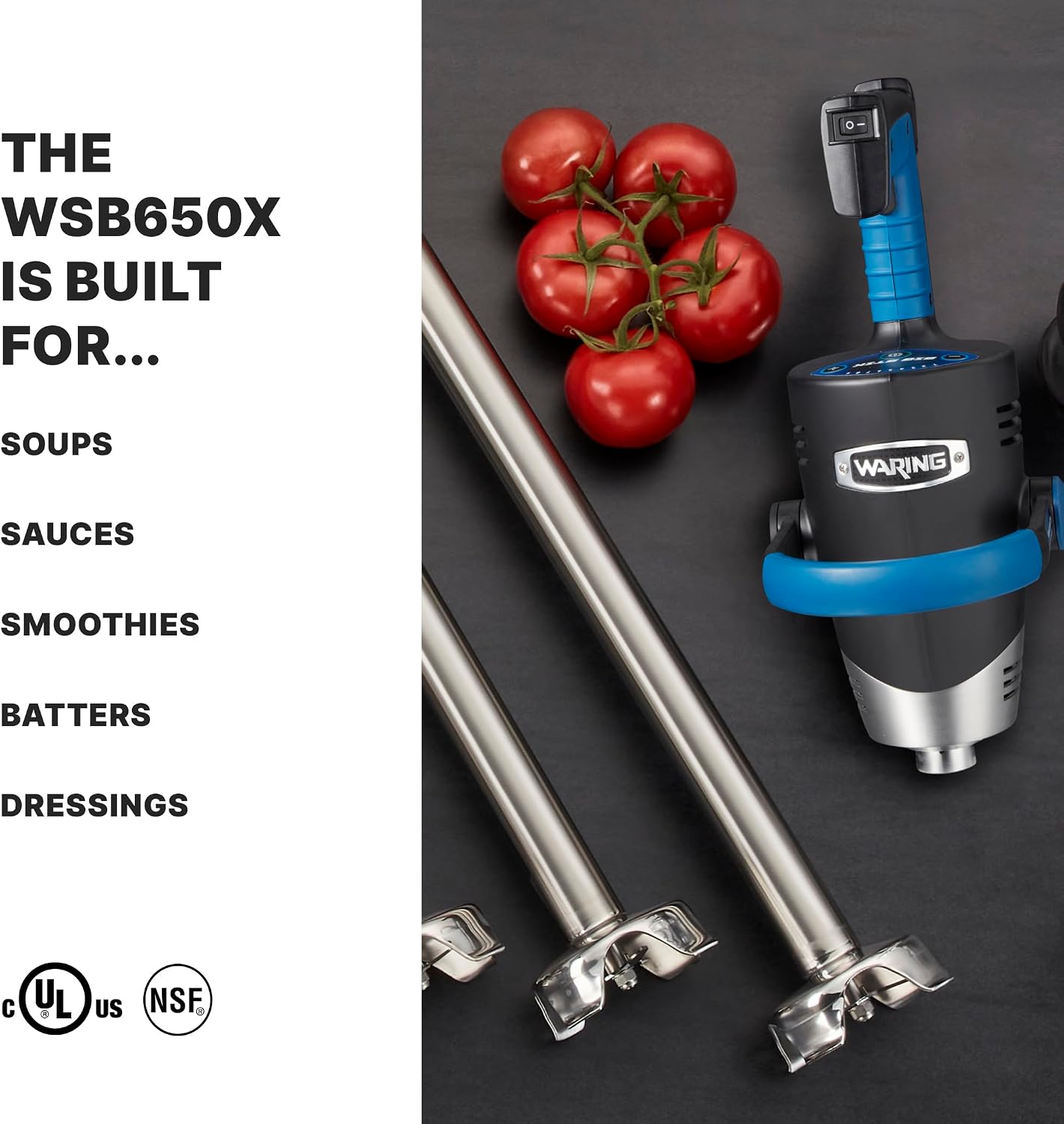
Basic home models are often perfectly fine for those quick smoothie needs or a small pot of soup, but don’t expect them to handle fibrous greens or ice without a fight.
These are the workhorses for serious home cooks, offering a good balance of power, features like variable speed, and durability for daily tasks without breaking the bank.
A step up, these blenders bridge the gap, built tougher than any home model but without the sheer brute force or capacity of truly heavy-duty units like the EvolutionX.
This is where units like the Waring EvolutionX Immersion Blender live, built for continuous operation in the most demanding environments, handling huge capacities effortlessly.
Scenario-Specific Needs: When Does a Heavy-Duty Unit Like the EvolutionX Truly Shine?
Sometimes, you need to think beyond the basic blender. The context of use changes everything.
The Busy Restaurant Kitchen: Here, consistency is king, and time is money. Imagine a line cook churning out gallons of vichyssoise or a velvety tomato bisque every service. They don’t have time for a weak motor that overheats, or a short shaft that forces them to blend in batches. The Waring EvolutionX, with its 1.5 Horsepower Motor and impressive 35-Gallon Capacity, isn’t just a convenience; it’s a foundational piece of equipment. It keeps the kitchen running smoothly, ensuring every batch meets the same high standard, day in and day out. It means fewer breakdowns and more uniform product.
High-Volume Catering Operations: Catering often involves transporting large quantities of pre-prepped food. Think about pureeing a huge batch of hummus or a dozen gallons of dressing. You need a robust machine that can handle these volumes quickly and efficiently, often in non-traditional kitchen setups. The 18″ Stainless Steel Shaft is a godsend for reaching into those massive food-grade containers. A commercial hand blender like the EvolutionX is indispensable for maintaining quality and consistency across a large number of servings, whether it’s for a wedding reception or a corporate event. Anything less powerful would simply bottleneck production.
Artisanal Food Production: Some smaller businesses specialize in specific food items – gourmet sauces, specialty nut butters, small-batch soups for local markets. While not always at the “35-gallon” scale, they still require professional-grade equipment for quality and efficiency. A strong motor, variable speed, and robust construction ensure their product is consistently emulsified, smooth, or whatever texture they’re aiming for. They value the precision and durability that premium tools offer, knowing it translates directly to customer satisfaction and fewer production hiccups. It’s an investment in their craft.
Common Mistakes When Buying Immersion Blenders
People get tripped up by these things all the time. Don’t be one of them.
- Underestimating Power Needs: This is probably the most frequent blunder. Folks see a cheap price tag and think, “A blender’s a blender, right?” Wrong. Trying to blend fibrous greens, tough root vegetables, or even just a thick smoothie with an underpowered motor is a recipe for frustration and, eventually, a dead appliance. You end up with chunks, or worse, the motor simply gives up the ghost. For example, the Waring EvolutionX isn’t just powerful for show; that 1.5 Horsepower Motor is there for a reason. Most home cooks need more than they think.
- Ignoring Shaft Length and Material: A short, plastic shaft might look cute for a quick cup of protein shake. But try to puree a stockpot of soup, and you’ll quickly realize your mistake. Splatter city! Not only that, plastic shafts can stain, scratch, and eventually harbor bacteria. Always prioritize a stainless steel shaft, and consider the depth of your typical blending vessels. You don’t want to be fishing for an extender… because there isn’t one.
- Forgetting About Ergonomics and Weight: You’ll be holding this thing. Maybe for a while. A bulky, heavy, or poorly balanced immersion blender might feel sturdy in the store, but after five minutes of blending, your arm will scream. This is especially true for powerful units. Even with a powerful hand blender, if it’s uncomfortable, you won’t use it. Test the grip, feel the balance. It makes a bigger difference than you might think.
- Not Considering Cleanup: What good is a powerful blender if it takes longer to clean than to use? Models without detachable shafts are a real pain to wash safely and thoroughly. Nooks and crannies around the blade housing can trap food, leading to hygiene issues. Always check for easy-to-remove, dishwasher-safe (or easily hand-washable) components. It’s a small detail, but a major quality-of-life improvement.
Why/How/What
Why choose a commercial-grade immersion blender like the Waring EvolutionX?
You opt for a Waring EvolutionX Immersion Blender when consistency, speed, and endurance are paramount. It’s built for the relentless demands of a professional environment, handling massive batches up to its 35-Gallon Capacity without flinching. The robust 1.5 Horsepower Motor means you get silky smooth results every time, faster, and without the motor burning out under pressure. It’s an investment in efficiency and reliability for high-volume operations.
How does variable speed control impact blending performance?
Variable speed control gives you precise command over the blending process. You can start slow to prevent splatter, gradually increase speed to incorporate ingredients evenly, and then ramp up to full power for a perfectly smooth puree. This prevents over-processing delicate mixtures or under-blending tougher ones. It’s the difference between a chunky soup and a velvety smooth one, or a perfectly emulsified dressing versus one that quickly separates.
What specific features of the Waring EvolutionX make it suitable for large-scale production?
The Waring EvolutionX is tailor-made for large-scale production due to several key features. Its massive 35-Gallon Capacity rating means you can tackle enormous batches efficiently. The powerful 1.5 Horsepower Motor ensures it won’t bog down, even with dense ingredients. Crucially, the 18″ Stainless Steel Shaft allows it to reach deep into large stockpots or industrial containers, preventing mess and ensuring thorough blending from top to bottom. This combination makes it a true powerhouse for professional kitchens.
FAQ
Can an immersion blender replace a full-sized blender?
For many tasks, yes! Immersion blenders are fantastic for soups, sauces, smoothies, and dressings, especially when you want to blend directly in the pot or serving container. However, full-sized blenders might still be better for very tough tasks like crushing large quantities of ice or making super thick batters due to their contained design and often higher-spinning blades.
Are all immersion blenders safe for hot liquids?
Most modern immersion blenders with stainless steel shafts are designed to handle hot liquids directly in the pot. However, always check the manufacturer’s instructions. Models with plastic shafts or cheaper components might not withstand high temperatures well, risking warping or leaching undesirable chemicals into your food.
What’s the difference between an immersion blender and a hand mixer?
An immersion blender has a blade at the end of a shaft, designed to blend, puree, and emulsify liquids and soft solids. A hand mixer has beaters for whipping, creaming, and mixing doughs and batters. They serve entirely different functions in the kitchen.
How do I clean my immersion blender properly?
The easiest way is to detach the shaft (if possible) and wash it by hand with warm, soapy water or place it in the dishwasher. For the motor unit, wipe it down with a damp cloth, never immersing it in water. A quick trick for the blade: immerse it in a glass of soapy water and pulse for a few seconds.
Is the Waring EvolutionX too powerful for home use?
For typical home kitchen tasks, yes, it’s significantly overpowered and oversized. The Waring EvolutionX Immersion Blender is built for commercial volumes and continuous operation. While it could blend a home-sized soup, its bulk and cost make it impractical for everyday residential use where smaller, less powerful stick blenders are more suitable.
What does “variable speed” actually mean for a home cook?
For a home cook, variable speed control lets you start blending gently to avoid splashing ingredients all over your counter. Then, you can slowly increase the speed to get exactly the right texture for your sauces, soups, or whipped creams, giving you much more control than a simple on/off switch.
Why is shaft length important for an immersion blender?
Shaft length dictates the depth you can blend into containers. A longer shaft, like the 18″ Stainless Steel Shaft on the Waring EvolutionX, is essential for reaching the bottom of deep stockpots or large mixing bowls without tilting them, reducing mess and ensuring a thorough blend. For smaller jobs, a shorter shaft is fine, but it limits versatility.
Final Recommendation
Choosing the right immersion blender ultimately boils down to your kitchen’s demands and your tolerance for compromise. For the vast majority of home cooks, splurging on a powerhouse like the Waring EvolutionX Immersion Blender simply doesn’t make sense. Its 1.5 Horsepower Motor, formidable 35-Gallon Capacity, and lengthy 18″ Stainless Steel Shaft are specifically engineered for the relentless pace and massive volumes of a commercial kitchen. It’s a premium piece of equipment for a premium application, providing unmatched reliability and performance where downtime is costly.
If you’re a serious home chef, constantly cooking for crowds or doing major batch prep, you should certainly look towards the higher end of the mid-range stick blender market. Seek out models with good power (around 600-800 watts), a robust stainless steel shaft (10-14 inches), and crucially, true variable speed control. This strikes an excellent balance between performance, durability, and practical home use. For everyone else – the casual cook making the occasional smoothie or soup – a reliable, budget-friendly home immersion blender will serve you perfectly well. Don’t overspend on features you’ll never tap into. Identify your true need, then pick the tool that matches it.
#Waring #EvolutionX #Immersion #Blender #35Gallon #Capacity #Horsepower #Motor #Stainless #Steel #Shaft #Variable #Speed #35Gallon #Capacity #Soups #Dressings #Smoothies
Reviews
There are no reviews yet.