Is the YOSUKATA 13.5” Blue Carbon Steel Wok Pan a Smart Buy for Your Kitchen?
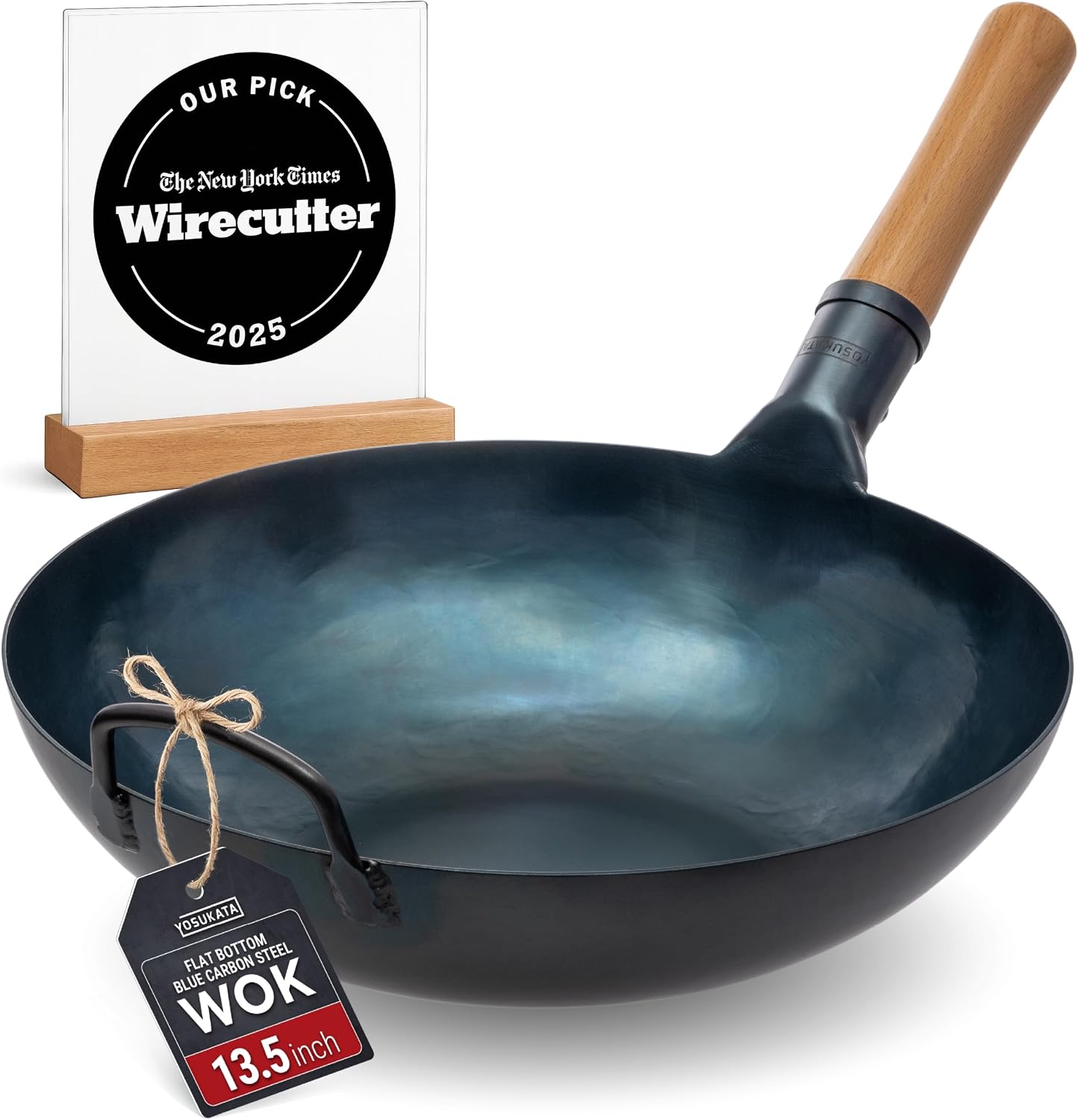
Stepping into the world of proper stir-frying means confronting a dizzying array of cookware choices. For anyone serious about authentic flavors and high-heat cooking, a solid carbon steel wok is often the first recommendation. This guide dives deep into the YOSUKATA 13.5” Blue Carbon Steel Wok Pan, specifically dissecting its features, comparing it against rivals, and helping you figure out if this popular, pre-seasoned, flat-bottom wok deserves a spot in your busy kitchen. We’re cutting through the marketing fluff to deliver clear, actionable advice for savvy shoppers.
Quick Answer Box
The YOSUKATA 13.5” Blue Carbon Steel Wok Pan is a compelling choice for home cooks ready to embrace traditional Chinese cooking techniques and the nuances of carbon steel. Its pre-seasoned, flat-bottom design offers excellent versatility across various cooktops, including induction, making it a highly practical option. If you value durability, superior heat performance, and a pan that gets better with age, this model offers a significant step up from basic nonstick options, even if it demands a bit more love.
What to Look For (The Buying Criteria)
Choosing a wok isn’t as simple as grabbing the first shiny thing you see. There are crucial factors that separate a kitchen workhorse from a dust collector. For a carbon steel wok, especially one like the YOSUKATA 13.5”, understanding these points can make all the difference.
Material Matters: Carbon Steel and Beyond
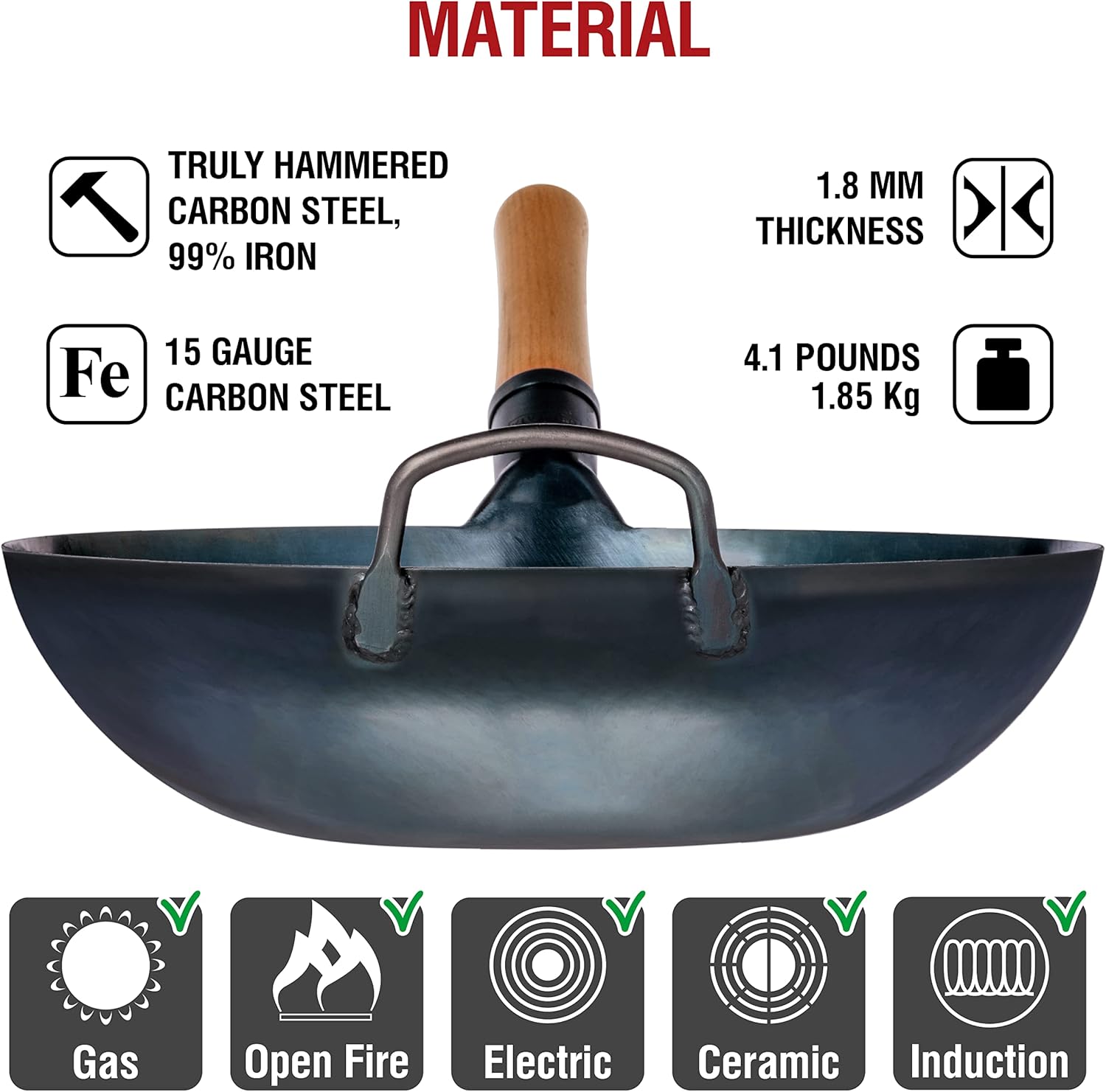
Look, we’ve all seen those lightweight aluminum woks with flimsy nonstick coatings. Forget ’em. For serious stir-frying, you want carbon steel wok. It’s the gold standard for a reason. Carbon steel heats up fast, gets screaming hot, and responds quickly to temperature changes – crucial for achieving that elusive “wok hei” (more on that later). It’s lighter than cast iron but sturdier than stainless. The blue carbon steel specifically, like what the YOSUKATA uses, often indicates a specialized heat treatment during manufacturing, which can enhance its rust resistance and make initial seasoning a bit easier. It also creates that distinct, rather attractive blued finish.
Now, a limitation: carbon steel needs care. It’s not a set-it-and-forget-it kind of pan. It requires seasoning, and if neglected, it will rust. But the payoff? A naturally nonstick surface that improves with every single cook. It’s a relationship, you see.
Bottom Design: Flat vs. Round for Modern Kitchens
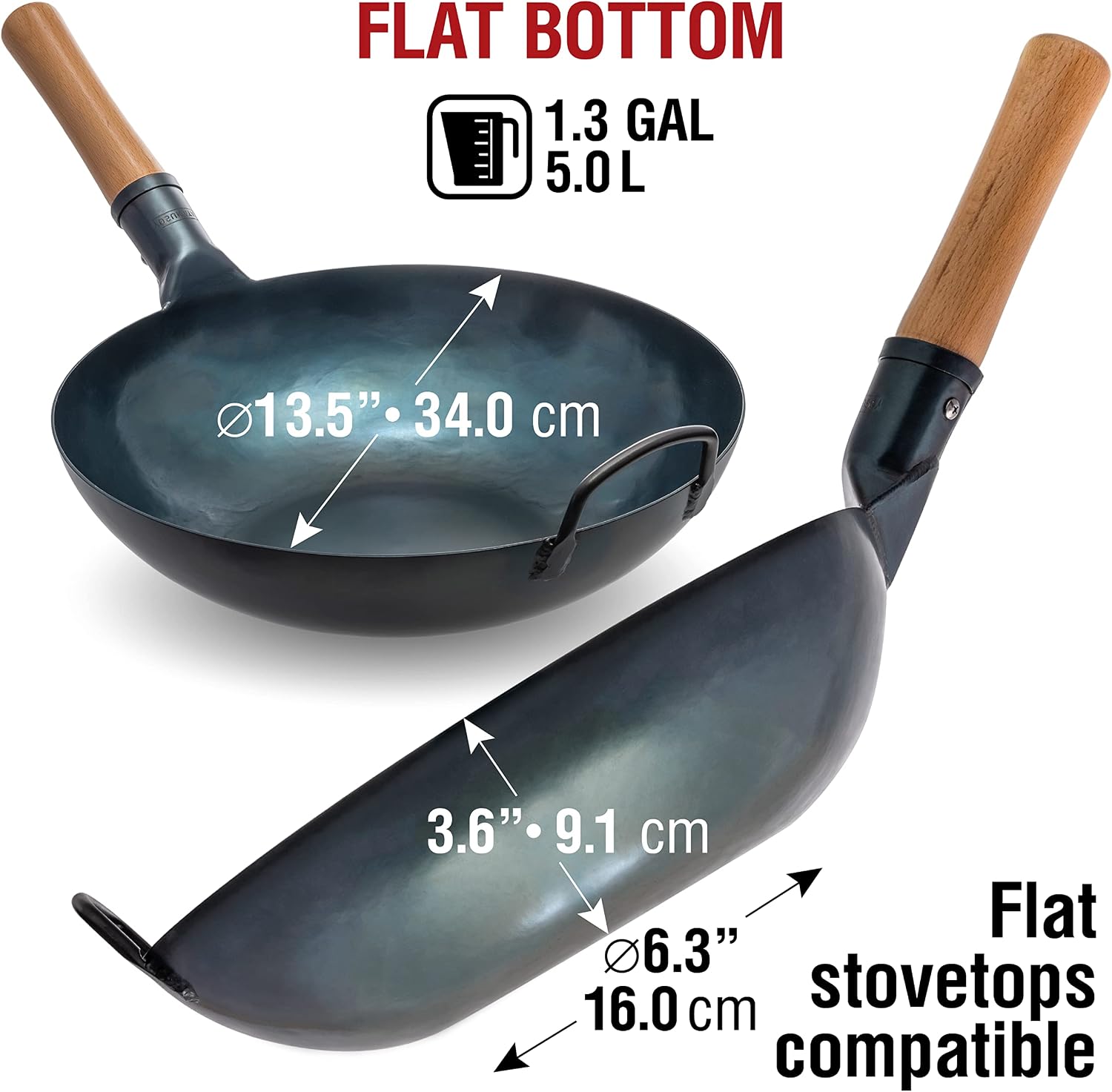
Traditional woks have rounded bottoms. They’re fantastic for gas stoves with powerful burners and wok rings, allowing for maximum heat exposure and easy tossing. But most of us? We live in the real world. That means electric coils, glass-tops, and induction cooktops. For those, a flat bottom wok is non-negotiable. The YOSUKATA’s flat bottom provides stability and ensures even contact with your heating element, which is critical for efficient cooking on anything other than an open flame.
The trade-off here is that a flat bottom doesn’t allow for the same super-efficient heat distribution up the sides as a round bottom, nor the traditional rocking motion. But honestly, for a home kitchen, the stability and cooktop compatibility outweigh those minor points. It’s a practical compromise.
Size and Capacity: Finding Your Sweet Spot
The YOSUKATA measures 13.5 inches. This is, frankly, an ideal size for most home kitchens. Too small, and you’re overcrowding the pan, steaming your food instead of stir-frying it. Too big, and it’s unwieldy, hard to store, and might not fit your burner efficiently. A 13.5-inch pan comfortably handles meals for 2-4 people, maybe even 5 if you’re cooking something dense. For bigger families or batch cooking, you might find yourself doing a couple of rounds, but that’s better than a sloppy, steamed mess. Think about your average meal size. Is this pan going to work for it?
Handle Ergonomics and Material: Tossing and Carrying
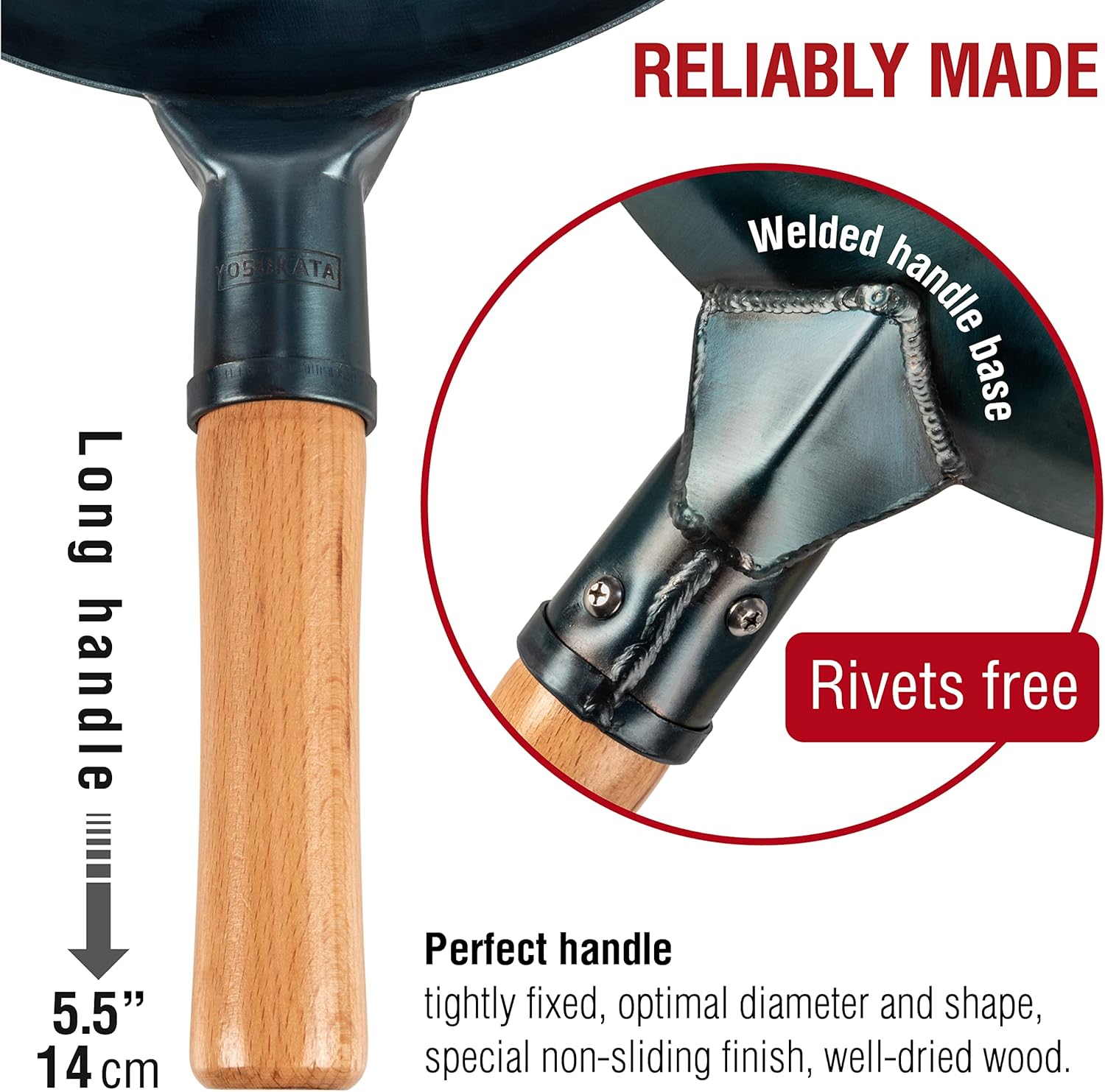
A wok handle isn’t just for picking it up. It’s for tossing, flipping, and maneuvering. The YOSUKATA, like many traditional Chinese pan designs, often features a long, sturdy main handle. Some models add a helper handle on the opposite side, which is invaluable for lifting a heavily loaded wok off the stove or carrying it to the table. Wood handles are popular for their cool-to-touch nature, but they typically can’t go into a hot oven. Metal handles, on the other hand, usually can, but you’ll definitely need a potholder. Look for a secure attachment – rivets are usually a good sign of durability. There’s nothing worse than a wobbly handle.
Pre-Seasoned vs. Raw: A Head Start, Not a Finish Line
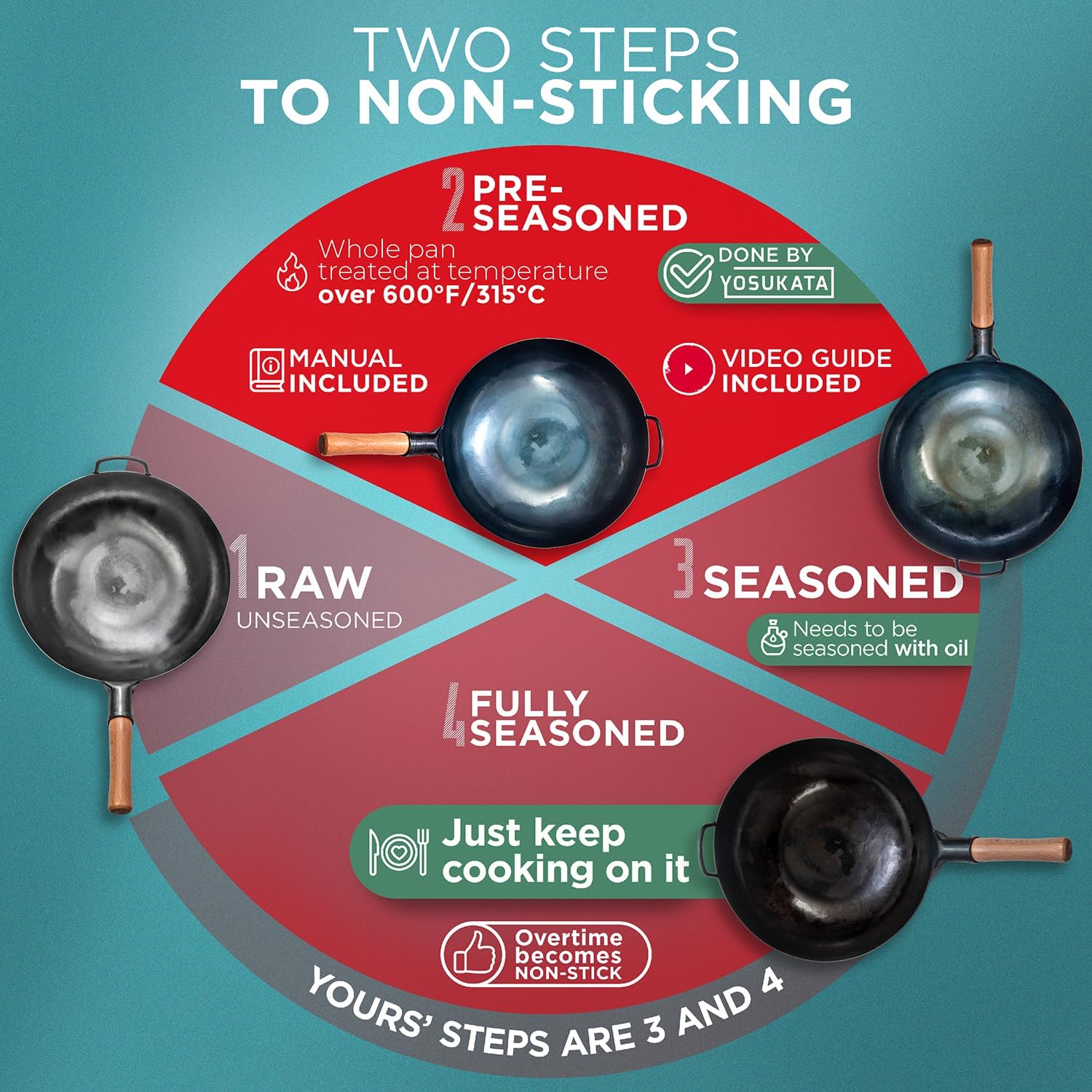
The YOSUKATA advertises itself as a pre-seasoned wok. This is a huge convenience for many, especially beginners. It means the manufacturer has applied an initial layer of seasoning, essentially giving you a head start on developing that natural nonstick surface. You won’t have to spend hours scrubbing off a factory coating and building layers from scratch before your first meal.
However, “pre-seasoned” isn’t “perfectly seasoned forever.” You’ll still need to wash it properly upon arrival, likely give it another light coat or two of oil, and always maintain it after cooking. Don’t expect it to perform like a Teflon pan right out of the box. It’s a living, breathing piece of cookware, and it needs your attention. Ignoring this fact is a common pitfall.
Heat Source Compatibility: Don’t Get Cooktop-Shy
This is a big one. The YOSUKATA 13.5” boasts broad cooktop compatibility: open fire, gas, electric, ceramic, and induction cooktops. This is a significant advantage, particularly the induction part. Many traditional carbon steel woks struggle on induction due to their design or material, but a well-made flat-bottom carbon steel wok can be a powerhouse. This versatility means you can take it camping for some BBQ, Grill, Camping action, then bring it back home for everyday stir fry pan use, without missing a beat. Make sure your chosen wok explicitly states it works with your specific stove type. You’d be surprised how many people overlook this detail until it’s too late.
How to Match the Product to Your Situation
The ideal wok really depends on who you are and how you cook. The YOSUKATA 13.5” Blue Carbon Steel Wok Pan isn’t a one-size-fits-all, but it certainly fits a lot of folks.
The Weekend Warrior
You love cooking, probably own a decent set of kitchen knives, and enjoy experimenting with different cuisines. You might have a powerful gas burner and dream of achieving perfect wok hei. You’re not afraid of a bit of kitchen maintenance, understanding that quality tools need care. For you, the YOSUKATA is a fantastic companion. Its carbon steel construction and potential for high heat cooking will let you explore authentic traditional Chinese cooking methods. You’ll appreciate the durability and the satisfaction of building up its seasoning over time. This isn’t just a pan; it’s an extension of your culinary ambition.
The Apartment Dweller
Space is at a premium, and you might be stuck with an electric or induction cooktop. You need versatile cookware that performs well but doesn’t require a whole cabinet for itself. You also want something that works on your stove without wobbling or underperforming. The YOSUKATA’s flat bottom and wide cooktop compatibility make it a strong contender here. Its 13.5-inch size is manageable for storage, and its ability to handle various dishes means you might be able to consolidate some other pots and pans. It’s practical, adaptable, and genuinely useful for compact living. Just make sure you commit to the seasoning – neglect isn’t an option.
The Family Chef
You’re cooking for more than just yourself, maybe 3-5 hungry mouths, and you need a reliable, robust pan that can handle daily abuse. You value performance but also ease of use (after the initial learning curve, that is). You might be making big batches of stir-fry, fried rice, or even searing meats. The YOSUKATA’s sturdy build and excellent heat retention are perfect for this kind of kitchen durability. While it might require a touch more post-cook care than a disposable nonstick pan, its longevity and superior cooking results will pay dividends in the long run. It’s an investment in better family meals, really.
Comparing Wok Types: Finding Your Fit
Let’s break down some common wok types so you can see where the YOSUKATA, as a blue carbon steel wok, stands. There’s a lot out there, and each has its quirks.
| Type/Tier | Best For | Price Tier | Key Feature | Watch-Out |
|---|---|---|---|---|
| Carbon Steel (YOSUKATA) | High-heat stir-frying, authentic Asian cuisine | Mid-range | Excellent heat response, develops natural nonstick | Requires seasoning and careful maintenance |
| Cast Iron Woks | Deep-frying, slow braises, long heat retention | Mid-range | Holds heat incredibly well, very durable | Very heavy, slow to heat up/cool down, can be brittle |
| Stainless Steel (Multi-Ply) | General purpose cooking, looks good, easy clean | Premium | Non-reactive, dishwasher safe, no seasoning needed | Can stick without enough oil, poor traditional wok performance |
| Nonstick Coated | Beginner-friendly, low-oil cooking | Budget-friendly | Food slides off easily, minimal sticking | Coatings wear out, not for very high heat, often less durable |
Carbon Steel, exemplified by the YOSUKATA, offers the best balance of heat performance, responsiveness, and eventual nonstick capabilities for traditional wok cooking, though it demands commitment. Cast iron woks are incredibly sturdy and retain heat like champions, making them superb for high-volume deep-frying or braising, but their weight and slow thermal response limit their agility for quick stir-fries. Multi-ply stainless steel woks are beautiful, easy to clean, and non-reactive, which is great for acidic dishes, but they don’t quite achieve the same high heat searing and “wok hei” that carbon steel excels at. Nonstick coated woks are super easy to start with, food won’t stick, but they’re not designed for the intense, searing heat required for proper stir-frying and their coatings have a limited lifespan.
Getting the Most Out of Your Carbon Steel Wok
Having a great carbon steel wok like the YOSUKATA 13.5” is just the first step. To truly unlock its potential, you need to understand how to use it in various real-world situations. It’s not just a pan; it’s a cooking partner.
Daily Stir-Fry Sessions
This is where your YOSUKATA truly shines. Frequent, high-heat cooking is carbon steel’s best friend. Every time you stir-fry, especially with a bit of oil, you’re contributing to its seasoning. That beautiful, naturally nonstick surface isn’t built overnight; it’s a cumulative effort. Don’t be shy about cranking up the heat (within reason for your oil’s smoke point, of course). The responsiveness of the blue carbon steel wok allows you to quickly sear ingredients and move them around, ensuring even cooking and that coveted smoky flavor. The more you use it, the better it gets. Simple as that. It’s a joy to cook with, honestly, once you get into the rhythm of it.
Outdoor and Camping Adventures
One of the less-talked-about perks of a well-made carbon steel wok is its sheer durability. Unlike delicate nonstick pans, the YOSUKATA can handle some rough-and-tumble. Taking it on a camping trip for BBQ, Grill, Camping cooking over an open fire? Absolutely. It’s built to withstand intense heat and outdoor elements. Just be sure to clean and season it properly after its adventures to prevent rust. Its robustness means you don’t have to baby it quite as much as other cookware when you’re out in the wild. A true traditional Chinese pan can handle anything.
Induction Cooktop Performance
For those with induction cooktops, finding a proper wok can be a real headache. Many traditional woks with rounded bottoms are useless, and even some flat-bottom ones don’t have enough ferrous material or a flat enough base to work efficiently. The YOSUKATA’s flat bottom and carbon steel construction are specifically designed for this. It should heat up quickly and evenly, allowing induction users to finally experience the joy of authentic stir-frying without needing a gas stove. This broad cooktop compatibility really sets it apart from many of its more traditional cousins. But, as with any pan on induction, be mindful of overheating; induction can be fast.
Common Mistakes Wok Buyers Make
It’s easy to get excited and make a purchase, but knowing the pitfalls can save you a lot of grief. Here are a few common blunders I’ve seen folks make with woks, especially carbon steel ones.
One huge mistake is ignoring seasoning requirements. People buy a carbon steel wok, sometimes even a pre-seasoned one, and expect it to be a magic nonstick pan from day one, without any ongoing care. Carbon steel needs to be cleaned gently (often no soap, or minimal, then dry and re-oil immediately) and re-seasoned regularly. Skipping this step leads to sticking food, frustration, and eventually, rust. Your wok is alive; treat it that way.
Another common slip-up is buying the wrong bottom type for their stove. A beautiful round-bottom wok won’t do you any good if you have a glass-top electric or induction stove. It’ll wobble, won’t make good contact, and just won’t heat properly. Always, always verify cooktop compatibility before you buy. That flat bottom on the YOSUKATA is a lifesaver for most modern kitchens.
Then there’s the utensil problem: using the wrong utensils. Metal spatulas are fine, often preferred, for carbon steel woks – they won’t scratch a natural seasoning like they would a delicate nonstick coating. However, some people use plastic or silicone exclusively out of habit, which can feel clumsy for the aggressive tossing and scraping often associated with wok cooking. Don’t be afraid to use a sturdy metal wok spatula. It’s part of the fun.
Finally, many new users make the mistake of expecting instant nonstick properties. A carbon steel wok, even a pre-seasoned one, needs time and use to develop its full nonstick potential. It’s not like cooking with a brand new PTFE-coated pan. There’s a breaking-in period. If your food sticks a little during the first few cooks, don’t despair. It’s part of the journey. Keep cooking, keep seasoning, and it will get there.
Why, How, and What of Wok Ownership
Let’s quickly tackle some fundamental questions about owning and using a wok, particularly a carbon steel one like the YOSUKATA.
Why choose carbon steel over other materials?
You’d pick carbon steel because it’s the closest thing to professional-grade performance you can get in a home kitchen. It heats up incredibly fast, distributes heat evenly across the cooking surface, and most importantly, it develops a natural nonstick layer over time. This makes it ideal for true stir fry pan action, creating those beautiful sears and authentic flavors. It’s also remarkably durable; a well-cared-for carbon steel wok can last for decades, becoming an heirloom piece.
How do I properly season my pre-seasoned YOSUKATA wok?
Even though it’s pre-seasoned wok, you’ll want to give it a good start. First, wash it thoroughly with hot water and a soft sponge (avoid harsh soaps for carbon steel generally). Dry it completely, immediately. Then, place it over medium heat on your stove until any remaining moisture evaporates. Add a very thin layer of high smoke point oil – think grapeseed, flaxseed, or even a basic vegetable oil. Wipe off any excess so it’s barely there. Heat the wok until it smokes lightly, then let it cool. Repeat this process 2-3 times before your first cook. This builds up a robust, protective, and nonstick foundation.
What is “wok hei” and can I achieve it at home?
“Wok hei” (literally “wok breath”) is that unique, smoky, charred aroma and flavor you find in the best restaurant stir-fries. It comes from the rapid cooking of food at incredibly high temperatures, where some of the food sugars caramelize and even vaporize against the hot metal. Can you achieve it at home? Yes, but it takes practice and a powerful heat source. The YOSUKATA 13.5” Blue Carbon Steel Wok Pan’s ability to get incredibly hot, combined with carbon steel’s thermal properties, definitely puts you in the running. Don’t overcrowd the pan, use high heat, and keep things moving. It’s a skill, but a rewarding one.
Frequently Asked Questions About Woks
Can I use soap to clean my carbon steel wok?
Generally, it’s best to avoid harsh dish soap, especially during the initial seasoning phase, as it can strip away the developing nonstick layer. Hot water and a stiff brush or non-abrasive sponge are usually sufficient. If you must use soap, use a very small amount, then rinse thoroughly and dry immediately, following up with a quick re-oiling.
How do I prevent my wok from rusting?
Rust is the archenemy of carbon steel. The key is to keep your wok dry and lightly oiled. After cleaning, dry it thoroughly on the stovetop over low heat until all moisture is gone. Then, wipe the entire surface, inside and out, with a very thin layer of cooking oil. Proper seasoning also acts as a protective barrier against rust.
Is a 13.5-inch wok big enough for a family of four?
For most stir-fries or daily meals, yes, a 13.5-inch wok like the YOSUKATA is quite suitable for a family of four. It allows enough space to cook ingredients without overcrowding, which is crucial for good stir-frying. For larger batches or big gatherings, you might need to cook in two rounds.
What kind of oil should I use for stir-frying in a wok?
High smoke point oils are your best bet. Think peanut oil, grapeseed oil, canola oil, or refined sunflower oil. Avoid extra virgin olive oil or butter, as they have low smoke points and will burn quickly at the high temperatures required for wok cooking.
Can I put my wok in the oven?
It depends on the handle material. If your wok has an all-metal construction or oven-safe handles, then yes, it can often go in the oven for seasoning or even some cooking. However, woks with wooden handles, like many traditional ones, are generally not oven-safe and the wood can warp or burn. Always check manufacturer guidelines.
Do I need a special spatula for my carbon steel wok?
While you can use various utensils, a purpose-built wok spatula (often called a “chan”) is highly recommended. These spatulas are typically thin, broad, and curved to match the contours of the wok, making it easy to scoop, toss, and scrape food from the sides. Metal spatulas are perfectly fine for carbon steel, unlike nonstick.
How long does a good carbon steel wok last?
With proper care and maintenance, a high-quality carbon steel wok, like the YOSUKATA, can easily last for decades. It’s an incredibly durable piece of cookware that, unlike nonstick, isn’t designed to be replaced after a few years. It truly is a lifetime purchase if treated right.
Final Recommendation
So, is the YOSUKATA 13.5” Blue Carbon Steel Wok Pan worth it? Absolutely, for the right cook. If you’re tired of mediocre stir-fries, wary of disposable nonstick coatings, and keen to embrace the rewarding journey of carbon steel cooking, this wok is a seriously compelling option. It offers a solid bridge between traditional performance and modern kitchen convenience, particularly with its pre-seasoned nature and wide cooktop compatibility for induction users.
This isn’t just another pan. It’s an investment in better flavor, more authentic cooking, and a piece of cookware that develops character with every meal. If you’re willing to commit to the slight learning curve of seasoning and care, the YOSUKATA 13.5” Blue Carbon Steel Wok Pan will reward you with years of phenomenal cooking experiences. Check current availability through major retailers; it’s a popular one for good reason.
#YOSUKATA #Blue #Carbon #Steel #Wok #Pan #PreSeasoned #Flat #Bottom #Wok #Compatible #open #fire #gas #electric #ceramic #induction #cooktops #Traditional #Chinese #Pan #Stir #Fry #BBQ #Grill #Camping