Navigating the World of TV Stands: Is the Perlegear Universal Stand the Right Choice for Your Space?
This guide cuts through the noise surrounding modern entertainment setups, focusing squarely on what makes a truly functional and adaptable TV stand. We’re going to dig into the Perlegear Universal TV Stand with Power Outlet (model PGTVS31) – a popular contender for those seeking versatility – and figure out if its features actually deliver real-world value for your dollar. It’s for anyone tired of cluttered cables and inflexible viewing angles, ready to make an informed decision about their next TV stand.
Quick Answer Box:
The Perlegear Universal TV Stand PGTVS31 offers solid value for medium to large displays, combining integrated power, a sturdy swivel mount, and height adjustability. It’s a smart pick for renters or anyone who wants the flexibility of a mounted TV without drilling into walls, though its aesthetic might be too modern for some decors.
What to Look For (The Buying Criteria)
Choosing a TV stand might seem straightforward, but there’s a surprising number of pitfalls. You don’t just want something that holds your screen; you need a foundational piece of furniture that genuinely enhances your viewing experience and fits your living space. This isn’t just about the display size; it’s about the entire ecosystem around it.
1. VESA Compatibility and Screen Size Range:
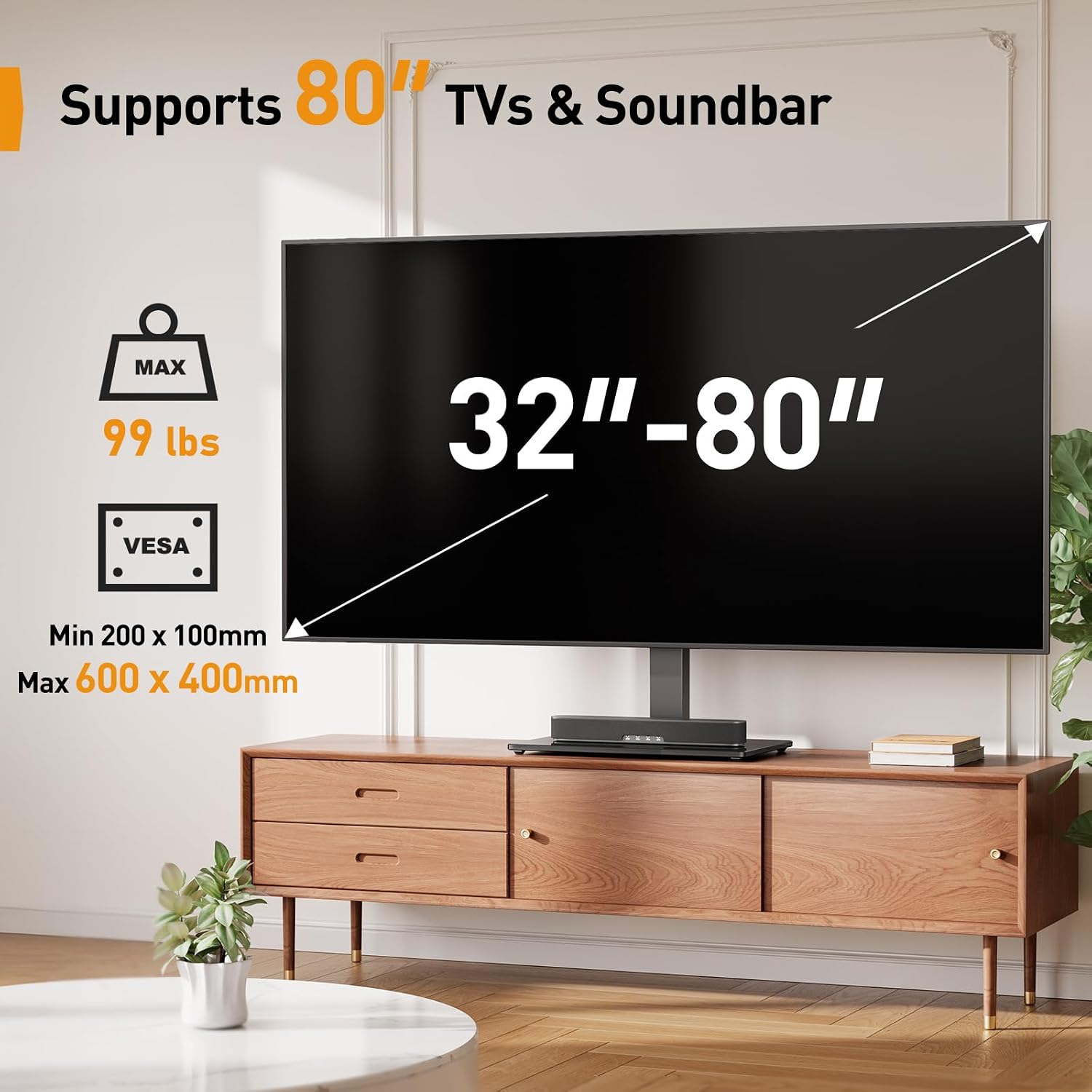
First things first, does it actually fit your TV? The VESA standard (Video Electronics Standards Association) dictates the pattern of mounting holes on the back of your television. Stands like the Perlegear Universal TV Stand often list a range, like “Max VESA 600x400mm” and “for 32-80 inch TVs.” You need to measure your TV’s VESA pattern — it’s usually on the back, or in the manual. This is a critical match. If the stand’s VESA max is smaller than your TV’s, you’re out of luck. Even if your TV is within the listed screen size range, the VESA pattern could be wrong. A stand that claims a wide range, say 32-80 inches, is pretty accommodating, but always verify your specific model’s hole pattern. The limitation here, of course, is that larger, heavier TVs beyond 80 inches or with non-standard VESA patterns just won’t work.
2. Weight Capacity and Stability:
Your television is an investment. Do you trust it on a flimsy stand? A stand’s weight capacity is non-negotiable. The Perlegear PGTVS31, for instance, touts a “99 lbs” limit. This means you absolutely should not put a 100-pound TV on it. Give yourself a buffer. Always. Modern flat-screen TVs are lighter than they used to be, but heavier, older models or certain premium QLED/OLED screens can still push those limits. Beyond raw weight, consider stability. A wide, solid base, like the tempered glass base on the Perlegear stand, contributes significantly to preventing accidental wobbles or tips. You’ll want to ensure the base is substantial enough, especially if you have pets or small children who might bump into it. A narrow base, even if it technically supports the weight, just feels less secure.
3. Swivel Functionality and Viewing Angles:
One of the real perks of a mounted TV stand, distinct from a traditional media console, is the ability to adjust the screen. The swivel feature on the Perlegear Universal TV Stand allows you to pivot your TV left or right. Why does this matter? Well, think about an open-concept living space where you might watch TV from the kitchen while cooking, or from the dining table during a meal. A fixed stand would force you to crane your neck or simply miss out. A good swivel provides flexibility. Now, the trade-off: a swiveling stand might introduce a tiny bit more sway than a completely rigid one, and the range of motion itself can vary significantly between models. Some offer a mere few degrees, others a much more generous arc. Always check the claimed swivel range to see if it meets your needs for different viewing positions.
4. Integrated Power Outlets and Cable Management:
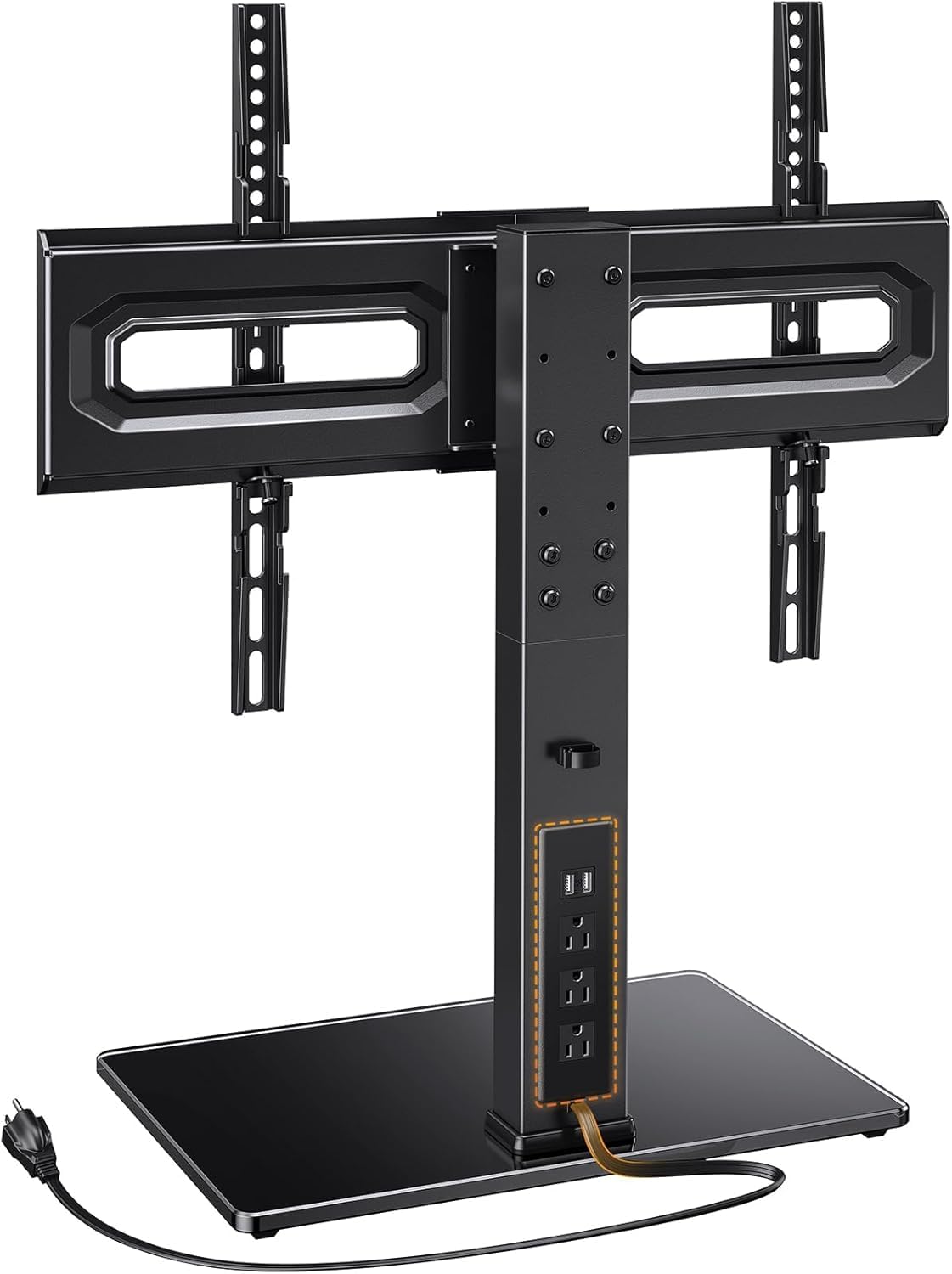
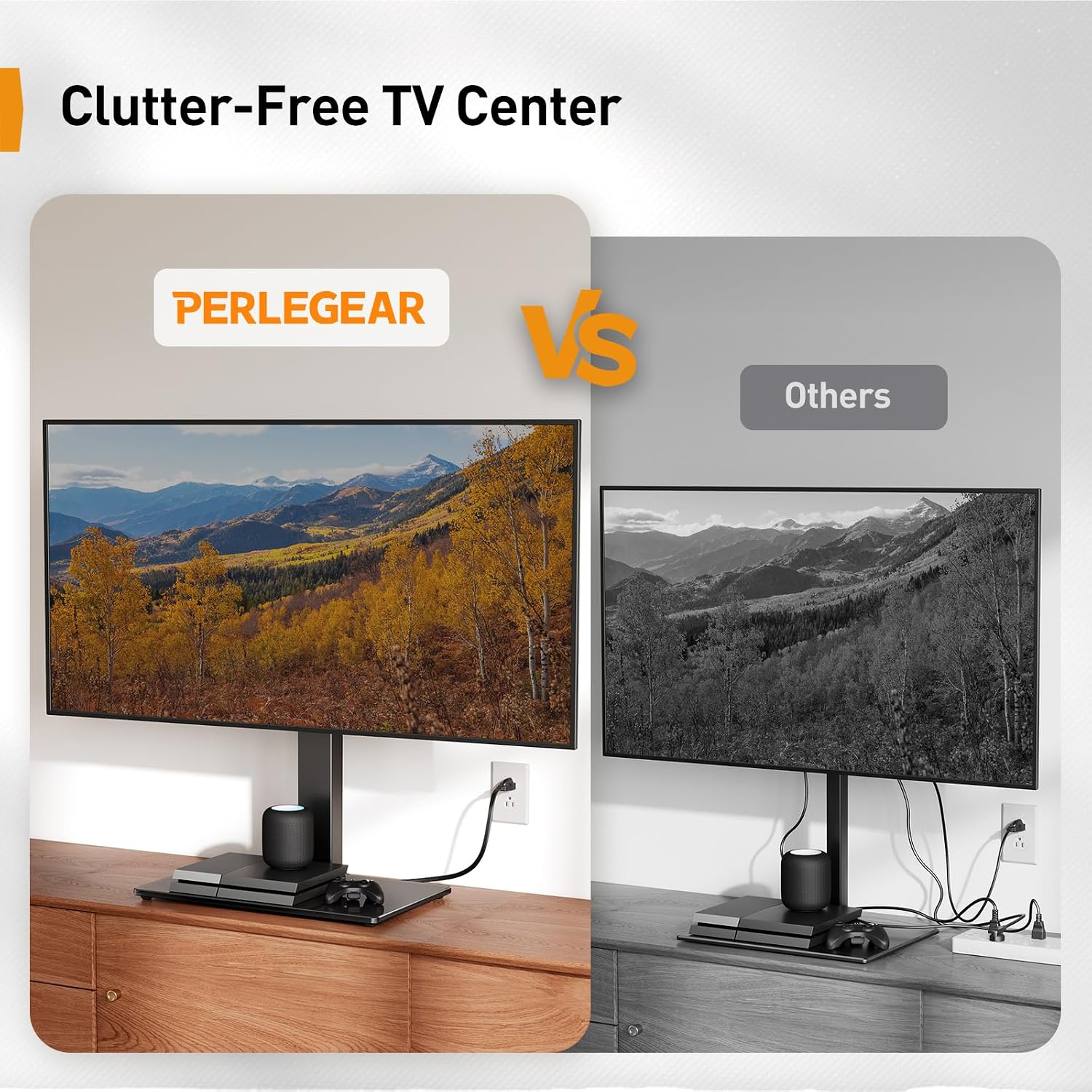
Clutter. It’s the bane of any entertainment setup. Power bricks, HDMI cables, speaker wires – they turn a sleek setup into a tangled mess. This is where integrated power outlets, a key feature of the Perlegear Universal TV Stand PGTVS31, really shine. Having a power strip built right into the stand base or spine means fewer extension cords trailing across the floor and fewer outlets needed on the wall. It’s cleaner, safer, and just looks better. But it’s not a magic bullet; you still need to get power to the stand itself. Good cable management routes, often channels or clips running along the central column, help keep those necessary cables tucked away. A stand without these features means you’ll be buying external solutions, adding more stuff to hide. Make sure the built-in outlets provide enough for your devices (TV, streaming stick, soundbar maybe?), otherwise you’re back to square one with an extra power strip.
5. Height Adjustability:
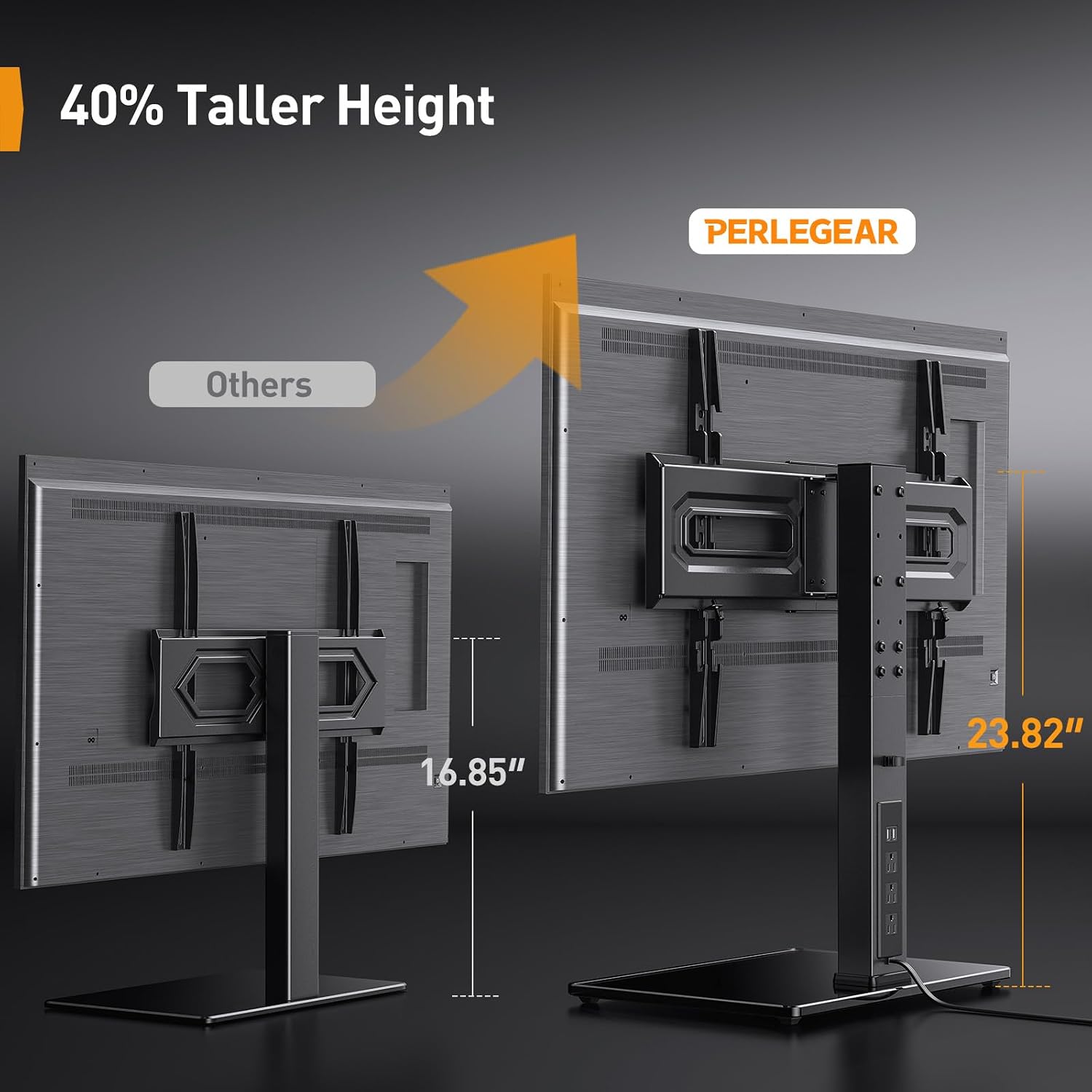
Not all couches are created equal, and neither are all viewers. Being able to adjust the TV’s height is incredibly useful for ergonomic viewing. Maybe you sit low on a beanbag chair. Perhaps you prefer a higher line of sight from a barstool. A height adjustable TV mount allows you to fine-tune your screen’s position, preventing neck strain and ensuring everyone has a decent view. The flexibility of something like the Perlegear stand means you aren’t stuck with a fixed height. However, there’s usually a finite range of adjustment, and adjusting it frequently isn’t always quick; it often involves unscrewing and re-screwing components. It’s usually a set-it-and-forget-it kind of feature, so don’t expect to quickly change the height every time you change chairs.
6. Aesthetic and Material Quality:
Let’s be real, a TV stand isn’t just utilitarian; it’s furniture. Does it fit your home’s decor? The Perlegear PGTVS31, with its tempered glass base and metal uprights, leans modern, maybe a touch industrial. If your living room is all distressed wood and rustic charm, this might clash. Material quality is also key. Tempered glass is stronger and safer than regular glass, a plus for the base. Steel construction for the mount and column generally means durability. Flimsy particle board or plastic components? Those are immediate red flags. You want materials that feel substantial, that don’t rattle or flex under pressure. A cheaper stand might look similar in photos but feel entirely different once assembled. Always consider how it looks in your space and how it feels to touch.
How to Match the Product to Your Situation
Finding the right TV stand isn’t a one-size-fits-all deal. Your living situation, your viewing habits, and even your tech setup all play a role. Let’s look at a few common scenarios where a stand like the Perlegear Universal TV Stand with Power Outlet might be a really smart fit… or maybe not.
The Urban Apartment Dweller / Renter:
You’re in a smaller space, probably renting, and drilling holes in the wall is a no-go or just too much hassle. You want flexibility. Maybe your furniture layout changes with the seasons, or you need to move the TV from one corner to another for a party. You don’t want to commit to a wall mount. For you, the Perlegear Universal TV Stand PGTVS31 is pretty compelling. Its floor-standing design means no wall damage. The swivel feature is a lifesaver for small apartments where viewing angles are often restricted, letting you optimize the screen for wherever you’re sitting. The integrated power outlet means fewer unsightly cables to trip over in tight quarters, and that’s a huge win for cleanliness and safety in a compact area. It solves the “wall mount desire, renter reality” dilemma quite elegantly.
The Casual Gamer / Sports Fan:
You might not need a full-on, multi-monitor gaming setup, but you love your big screen for immersive experiences. You’re probably going to have a console or two, maybe a soundbar, and a streaming stick all vying for power and HDMI ports. And when the big game is on, everyone needs a good view, right? A height adjustable TV mount means you can position the screen for optimal gameplay from your beanbag or for clear sightlines over heads during a watch party. The swivel of the Perlegear stand helps here, too. The built-in power outlets reduce the rats’ nest of cables behind your console, keeping things tidy. You want something sturdy enough for a larger screen, and the PGTVS31’s substantial weight capacity delivers. It’s a pragmatic choice for someone who values functionality for their entertainment.
The Minimalist / Aesthete:
You appreciate clean lines, modern design, and hate visual clutter. A massive media console feels bulky and outdated. You want the TV to almost float in the room, creating a sleek, almost gallery-like feel. The tempered glass base and slender column of the Perlegear Universal TV Stand could appeal. It’s less obtrusive than a traditional cabinet and the integrated cable management keeps things neat. However, here’s the catch: while it’s more minimalist than a full console, it is still a visible stand. If your ultimate goal is a truly invisible, floating screen, a professional wall mount is probably your real aspiration. This Perlegear model is a compromise, albeit a visually appealing one for many, bridging the gap between a bulky console and a permanent wall fixture.
Understanding Your Options: A Comparison of TV Stand Types
So, you’re not just looking at a specific model, but a whole universe of ways to prop up your television. Let’s break down the common categories and where a stand like the Perlegear PGTVS31 fits in the grand scheme.
| Type/Tier | Best For | Price Tier | Key Feature | Watch-Out |
|---|---|---|---|---|
| Traditional Media Console | Hiding components, maximum storage, classic look | Varies widely | Lots of internal storage for devices & media | Can be bulky, fixed viewing angle, often requires wall outlets nearby |
| Floating Wall Mount | Ultimate minimalist aesthetic, space saving | Mid-range to Premium | Near-invisible TV, frees up floor space | Permanent installation, no swivel (usually), no storage, complex cable routing often needed |
| Pedestal TV Stand (like Perlegear PGTVS31) | Versatility, no drilling, modern aesthetic | Mid-range | Swivel, height adjustment, portability | Limited storage, still takes up floor space, can feel less “built-in” than a wall mount |
| Tripod/Easel TV Stand | Unique style, temporary setups, easy mobility | Mid-range to Premium | Highly portable, striking design | Less stable for very large TVs, often no cable management, minimal storage |
- Traditional Media Console: These are your classic TV cabinets or credenzas. They’re fantastic if you have a stack of game consoles, a large sound system, or a collection of DVDs you want to keep hidden away. But they’re static, chunky, and don’t offer much in the way of adjusting your TV’s view. You’ll likely need separate power solutions.
- Floating Wall Mount: For folks who absolutely despise seeing any cables and want the TV to look like a piece of art on the wall, this is the gold standard. It’s undeniably sleek. But getting it right takes effort, often involving professional installation and figuring out how to run cables inside the wall, and once it’s up, it’s there for good.
- Pedestal TV Stand (like Perlegear PGTVS31): This is where our Perlegear Universal TV Stand really shines. It offers a “wall-mounted” look and feel without the commitment of drilling. You get adjustability – swivel, height – and often integrated features like power outlets. It’s a fantastic middle ground, offering a modern aesthetic and flexibility without the permanent nature of a true wall mount. The trade-off is you still have a visible stand structure and minimal integrated storage.
- Tripod/Easel TV Stand: These are more about making a design statement. Think art studio vibes for your TV. They’re often highly mobile and can look incredibly chic. They’re great for smaller, lighter screens or temporary setups but usually lack any practical features like cable management or substantial stability for very large, heavy TVs.
Scenario-Specific Considerations for Your TV Stand
Beyond the broad categories, how you actually use your TV stand makes a big difference. Let’s get into some specific ways the Perlegear Universal TV Stand PGTVS31 handles different real-world needs.
1. The Multi-Purpose Room:
Living rooms aren’t just for watching TV anymore, are they? Sometimes it’s a home office, sometimes a yoga studio, sometimes a dining area. If your TV needs to adapt, a static stand just won’t cut it. The swivel function on the Perlegear stand is key here. Imagine working at a desk off to the side, then swiveling the TV for a quick news update. Later, you turn it towards the kitchen island while prepping dinner. This kind of flexibility is what makes a universal TV base like the PGTVS31 stand out. It empowers the room, rather than limiting it. It’s a functional chameleon, honestly, for dynamic spaces.
2. Dealing with Reflection and Glare:
Ever tried watching a movie only to see a bright window reflection directly in your screen? Infuriating. Windows, lamps, even shiny surfaces can create glare, making it hard to see details. A traditional fixed console offers no recourse unless you move the entire piece of furniture. That’s usually not happening. But with a swivel TV stand, you can often pivot the screen just enough to dodge that annoying reflection. The height adjustable TV mount also plays a role; sometimes a slight vertical adjustment is all it takes to move the screen out of a glare path. This is a practical, everyday problem that the Perlegear Universal TV Stand tackles directly, without needing to rearrange your entire room or pull down blinds every single time. It’s about optimizing your view on the fly.
3. Small Child / Pet Households:
This is a big one. Tip-overs are a real concern, and not just from curious toddlers. A rambunctious dog could knock into a wobbly stand. The Perlegear PGTVS31’s solid tempered glass base and sturdy central column are designed for stability. While no stand is completely child or pet proof (you should always secure your TV with anti-tip straps regardless, especially with young kids around), a well-designed pedestal stand minimizes the risk compared to a TV simply sitting on its own wobbly factory feet on a narrow table. The fact that the TV is mounted to the stand, rather than just sitting on top, adds another layer of security. It’s bolted down. That’s a fundamental difference.
Common Mistakes When Buying a TV Stand
People often overlook some crucial details when picking out a TV stand. These aren’t obscure traps; they’re easy-to-miss points that can lead to real buyer’s remorse.
1. Ignoring VESA Patterns:
This is probably the most common blunder. You see a cool TV stand, you check the screen size range, and it looks good. You buy it. You get it home, unbox everything, only to find the mounting holes on your TV don’t line up with the stand’s bracket. Seriously frustrating. The “Max VESA 600x400mm” on the Perlegear PGTVS31 isn’t just a suggestion; it’s a hard limit. Always, always measure your TV’s VESA pattern before you even think about buying. A few minutes with a tape measure can save you hours of returns and re-shipping.
2. Underestimating Weight Capacity:
Another easy mistake. Just because a stand looks sturdy doesn’t mean it is. A TV stand rated for 75 pounds simply cannot safely hold a 90-pound television. It’s not about hoping for the best; it’s about physics and safety. The 99 lbs weight capacity of the Perlegear Universal TV Stand means it’s designed for TVs up to that weight, but I’d always recommend leaving a bit of wiggle room. Don’t push the absolute limit. A stressed stand can fail, and a falling TV is not just damaged property, it’s a significant safety hazard.
3. Overlooking Cable Management (or lack thereof):
You invest in a sleek new TV and a modern stand, only to have a spaghetti monster of wires dangling behind it. It ruins the aesthetic. Many people focus on the TV itself or the stand’s primary features and forget about the practicalities of power and data cables. A stand like the Perlegear PGTVS31 includes specific solutions like integrated power and cable routing, which is a massive plus. If your chosen stand doesn’t, you’ll need to factor in additional costs and effort for cable ties, sleeves, or covers to maintain that clean look. Don’t assume cables will magically disappear.
4. Neglecting Room Aesthetics and Flow:
It sounds basic, but how many times have you seen a huge, clunky TV stand crammed into a tiny room? Or a sleek, modern stand totally out of place in a traditional living space? A TV stand is a piece of furniture that needs to complement its surroundings. Consider the overall footprint, the materials (like the tempered glass base), and the general design language. The Perlegear PGTVS31, for example, has a fairly contemporary look. Will it blend harmoniously, or will it stick out like a sore thumb? Think about more than just functionality; think about how it feels in your home.
Why / How / What Mini-Section
Why should I consider a universal TV base instead of just using my TV’s original feet?
Your TV’s factory feet are often fixed, low to the surface, and frankly, a bit flimsy. A universal TV base like the Perlegear PGTVS31 offers significant upgrades: better stability, the crucial ability to swivel the screen for optimal viewing from different angles, and often height adjustment. Plus, many come with integrated features like power outlets and cable management, which factory feet certainly don’t provide. It’s about more than just propping up the screen.
How do I ensure my TV is truly secure on a stand with a mount?
First, rigorously follow the assembly instructions. Every step matters. Double-check all bolts and connections, making sure they’re snug but not overtightened to strip threads. Ensure your TV’s VESA pattern and weight are well within the stand’s stated limits. For added peace of mind, especially in households with children or pets, consider using anti-tip straps to anchor the TV stand itself to the wall. This combination of proper assembly and extra anchoring dramatically boosts security.
What’s the real benefit of a swivel TV stand for everyday use?
The real benefit is dynamic viewing. Imagine you’re doing chores around the house and want to keep an eye on the news from different vantage points. Or maybe you have guests over, and some are on the couch, others on armchairs. A swivel TV stand, like the Perlegear Universal TV Stand, allows you to easily adjust the screen to face the primary viewing area, eliminating glare and neck strain for everyone. It just makes the TV far more useful and less of a static object.
FAQ
Q: Can I use this Perlegear TV stand with a curved TV?
A: Generally, yes, most curved TVs use standard VESA mounting patterns. As long as your curved TV falls within the PGTVS31’s VESA range (Max VESA 600x400mm) and weight capacity (99 lbs), it should be compatible. Always check your TV’s manual for its specific VESA dimensions.
Q: Is the tempered glass base really strong enough?
A: Tempered glass is significantly stronger and safer than regular glass; it’s designed to shatter into small, blunt pieces rather than sharp shards if it breaks. For a TV stand like the Perlegear PGTVS31, it provides a stable and aesthetically pleasing foundation, supporting the stated weight capacity when assembled correctly. It’s tough stuff.
Q: What kind of tools do I need to assemble this type of TV stand?
A: Most universal TV stands, including the Perlegear PGTVS31, come with all the necessary hardware and basic tools like Allen wrenches. You might find a Phillips head screwdriver helpful, and a level is always a good idea for ensuring your screen is perfectly straight. It’s usually a one-person job, but an extra set of hands can make attaching the TV easier.
Q: Does the integrated power outlet provide surge protection?
A: Specific details vary by model, but generally, the integrated power outlets in a TV stand like the Perlegear PGTVS31 provide basic power distribution. They usually do not include advanced surge protection as a dedicated surge protector or UPS would. If surge protection is a critical concern, it’s wise to plug the stand into a separate, high-quality surge protector.
Q: Can I move the TV stand easily once it’s assembled with a TV on it?
A: While it’s a floor stand and not permanently fixed, moving it with a large TV attached can be cumbersome and risky. It’s generally best to position it where you want it first, then attach the TV. If you do need to move it, always get help, lift from the base, and be extremely careful to avoid bumps or tip-overs. It’s not meant for frequent relocation.
Final Recommendation
Alright, so you’ve weighed your options, thought about your space, and considered your viewing habits. Is the Perlegear Universal TV Stand with Power Outlet (PGTVS31) the right call for you?
Look, if you’re a renter, or simply someone who despises drilling into walls but craves the flexibility of a mounted screen, this stand is a seriously strong contender. The combination of a substantial weight capacity, a wide screen size range (32-80 inch TVs), that crucial swivel feature, and integrated power is hard to beat for the mid-range price tier. It cuts down on cable clutter and gives you control over your viewing angles, which frankly, makes a huge difference in everyday living. If a modern aesthetic with a solid tempered glass base appeals, and you value adaptability in your entertainment setup, the Perlegear stand truly delivers. It’s a smart upgrade from flimsy factory feet, bridging that gap between a basic table and a permanent wall installation without the commitment.
#Perlegear #Universal #Stand #Power #Outlet #Swivel #Stand #inch #TVs #lbs #Base #Tempered #Glass #Base #Height #Adjustable #Mount #Stand #Max #VESA #600x400mm #PGTVS31