Cutting Through the Clutter: Finding the Right 2-Drawer Filing Cabinet with Lock for Your Space
Shopping for a filing cabinet shouldn’t feel like a chore, but honestly, wading through all the options for a basic 2 drawer file cabinet with lock can be surprisingly complicated. This guide is for the savvy shopper, the one who wants durable, reliable storage for their important documents without overspending on features they’ll never use. We’re going to talk about what truly matters when picking a steel vertical filing solution for your home office or small business, especially if you’re wrangling a mountain of letter-size files.
Quick Answer
For most home offices or small business needs, a well-built steel vertical filing cabinet with two drawers and a reliable lock is a solid choice. Look for sturdy construction, smooth ball-bearing drawer glides, and an effective anti-tip mechanism. It needs to handle your letter-size files efficiently and offer decent document security without breaking the bank.
Key Takeaways
- Steel is King: Don’t skimp on material if security and longevity matter.
- Smooth Operation: Ball-bearing glides prevent frustration, trust me.
- Security First: A good lock protects your sensitive documents.
- Assembly Matters: Be realistic about your DIY comfort level.
What to Look For (The Buying Criteria)
Choosing the right filing cabinet goes beyond just grabbing the cheapest option. You’re investing in organizational peace of mind and, let’s be real, often document security. Here’s where your focus should be.
Material Quality and Construction
When we talk about a 2 drawer file cabinet with lock, steel is usually the go-to material. And for good reason. It’s tough. You’ll find different gauges of steel, with lower numbers generally meaning thicker, more robust metal. A heavier gauge steel cabinet will simply hold up better over time, resisting dents and dings that cheaper, thinner options succumb to. It also plays a big role in how secure your lockable storage actually feels. Thinner steel can be bent or pried more easily, undermining the very purpose of having a lock.
But here’s the rub: thicker steel means more weight. This might be a trade-off if you anticipate moving the cabinet around frequently. Some budget models might use particle board or thinner metals, which might save you a few bucks upfront, but they won’t stand the test of time or offer much real security. Don’t be fooled by a shiny exterior if the underlying material feels flimsy.
Drawer Capacity and Glides
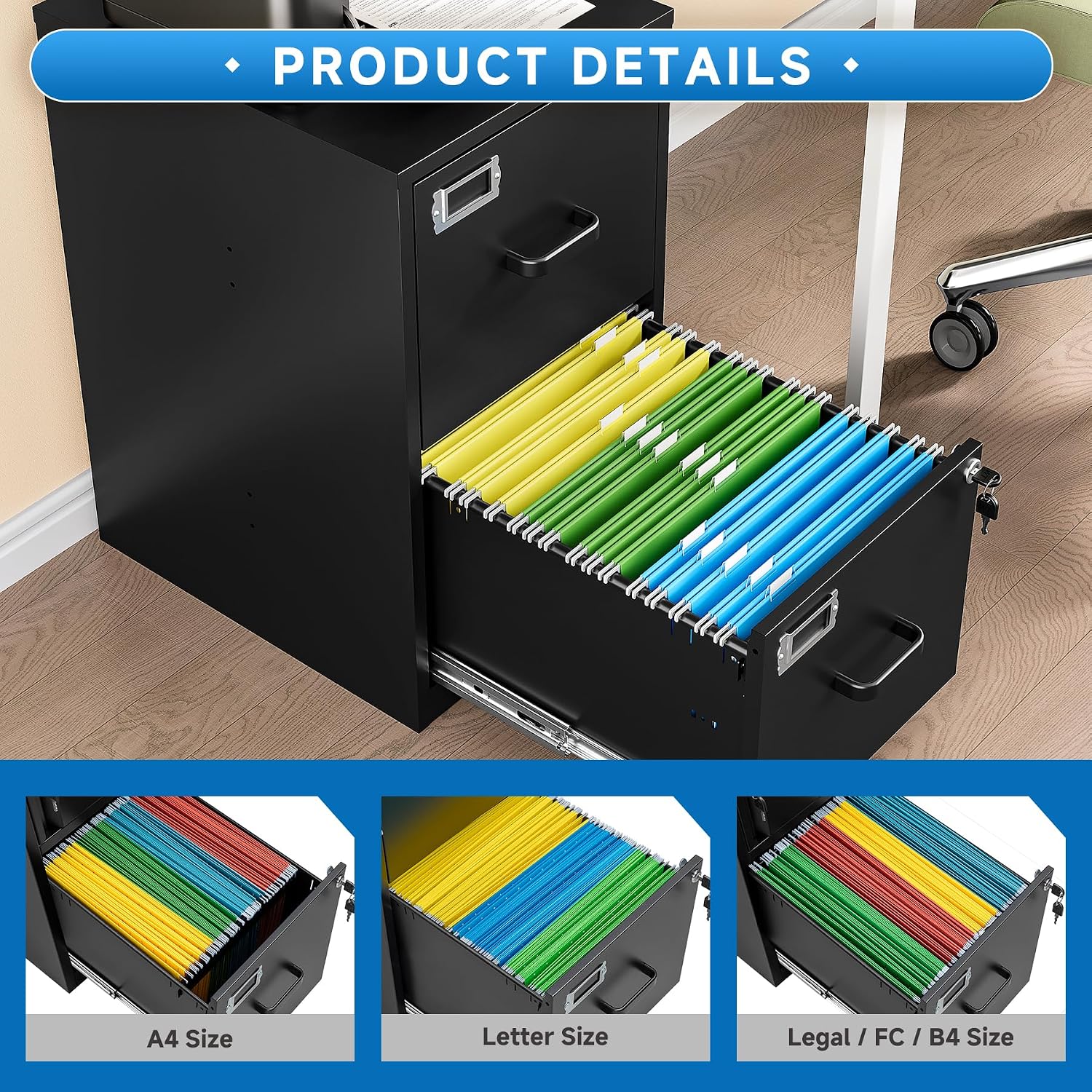
Okay, a 2 drawer file cabinet sounds straightforward, right? Not entirely. The internal dimensions for letter size files can vary slightly. Make sure your hanging folders actually fit without squishing, especially if you’re dealing with bulkier legal documents that technically shouldn’t be in a letter-size cabinet, but sometimes life happens. Also, consider the weight capacity per drawer. If you’re a heavy filer, stuffing those drawers to the brim, you need glides that can handle it.
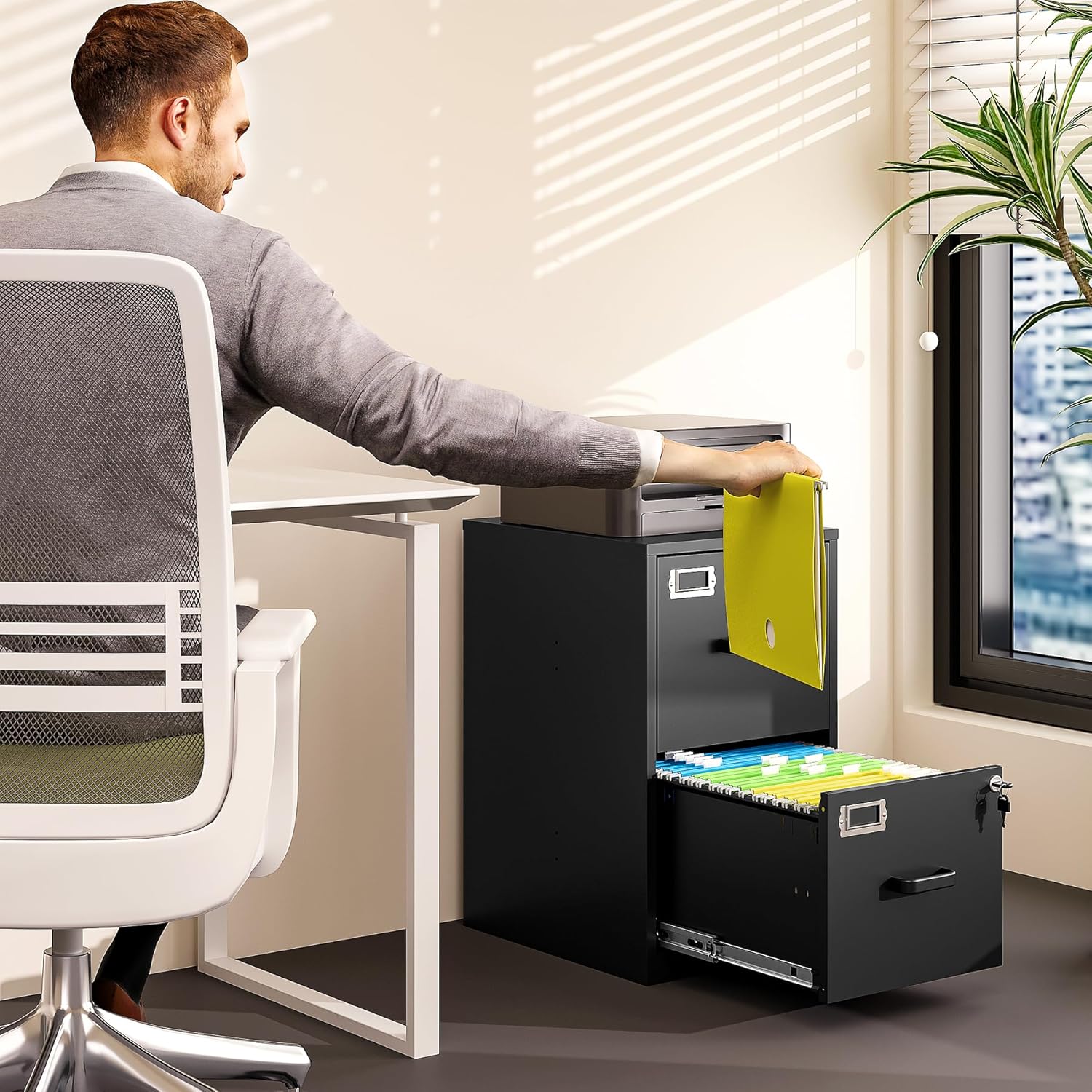
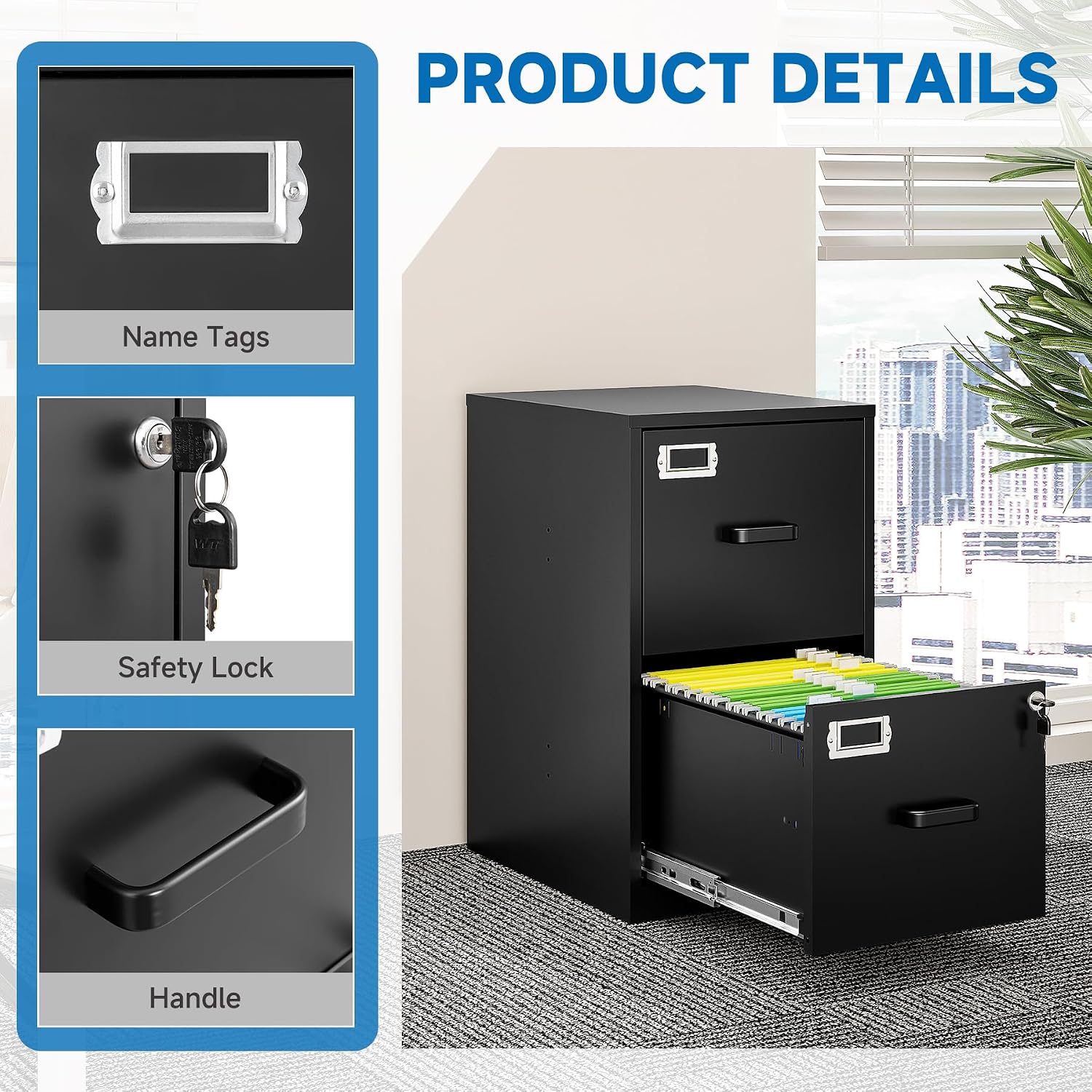
This brings us to drawer glides. Cheap cabinets often use simple metal-on-metal slides. They bind, they squeak, and they generally make you want to throw your tax returns out the window. Ball-bearing glides? Those are the sweet spot. They operate smoothly, even when fully loaded, and extend fully so you can access everything in the back of the drawer. It’s a small detail, but a major quality-of-life improvement. Sure, they might add a little to the price tag, but the frustration they save is absolutely worth it.
Locking Mechanism and Security
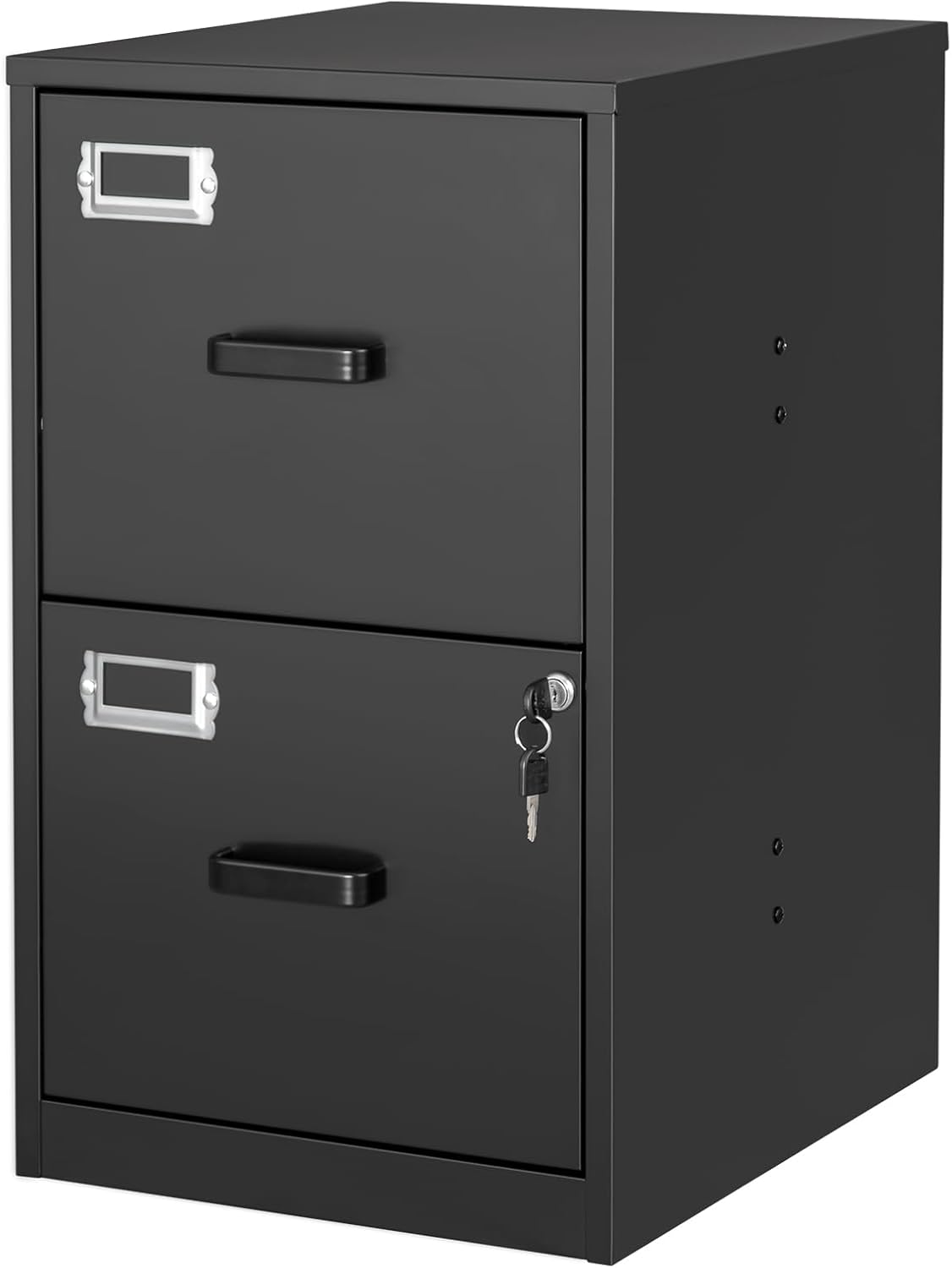
A lock on your filing cabinet isn’t just for show. It’s for keeping prying eyes (or sticky fingers) away from sensitive information. Most steel file cabinets for home or office use come with a basic cam lock that secures both drawers with a single key. This is generally sufficient for preventing casual access.
However, understand its limitations. These aren’t bank vaults. A determined individual with tools can usually get in. For truly vital, irreplaceable documents, you might need something more substantial, like a fireproof safe, which is a different beast entirely. Still, for everyday document security against kids, casual visitors, or even just keeping things organized in a shared office space, a decent lock offers peace of mind. Check if the lock feels robust, or if it feels like it could snap off with a stiff breeze. A quality lock cylinder makes a difference.
Anti-Tilt Mechanism and Stability
Ever seen a heavily loaded vertical filing cabinet tip over when you pull out the top drawer? It’s not pretty, and it’s dangerous. This is why an anti-tilt mechanism is crucial, especially on taller, two-drawer models. This safety feature prevents more than one drawer from opening at a time. So, if the top drawer is open, the bottom one stays locked in place, maintaining the cabinet’s center of gravity and preventing it from toppling forward.
Don’t skip this. Seriously, it’s a non-negotiable safety feature, especially in a busy home office or if kids are around. Some older or extremely budget-friendly models might lack this, and that’s a red flag. Always confirm it’s present.
Assembly Required: Your DIY Reality Check
The phrase “assembly required” can strike fear into the hearts of many. With steel vertical file cabinets, it’s usually not rocket science, but it’s rarely a 15-minute job either. Some models come almost entirely pre-assembled, needing only the handles or casters attached. Others arrive as a flat pack of metal panels, requiring you to screw, bolt, and align every piece.
Be honest with yourself about your comfort level with tools and instructions. Do you have an afternoon to dedicate to it? Is there someone to help hold pieces? A complex build can be frustrating and, if done incorrectly, can compromise the cabinet’s stability and drawer operation. If you’re not handy, or simply don’t have the time, factor in how much assembly you’re willing to tackle. Sometimes paying a little more for a mostly pre-assembled unit is worth the sanity saved.
Aesthetics and Footprint
While a filing cabinet is primarily functional, it still lives in your space. A clunky, industrial-looking cabinet might clash horribly with a carefully designed home office setup. Most modern steel file cabinets come in neutral colors like black, white, or gray, with clean lines. Consider the overall look and how it integrates into your existing office storage.
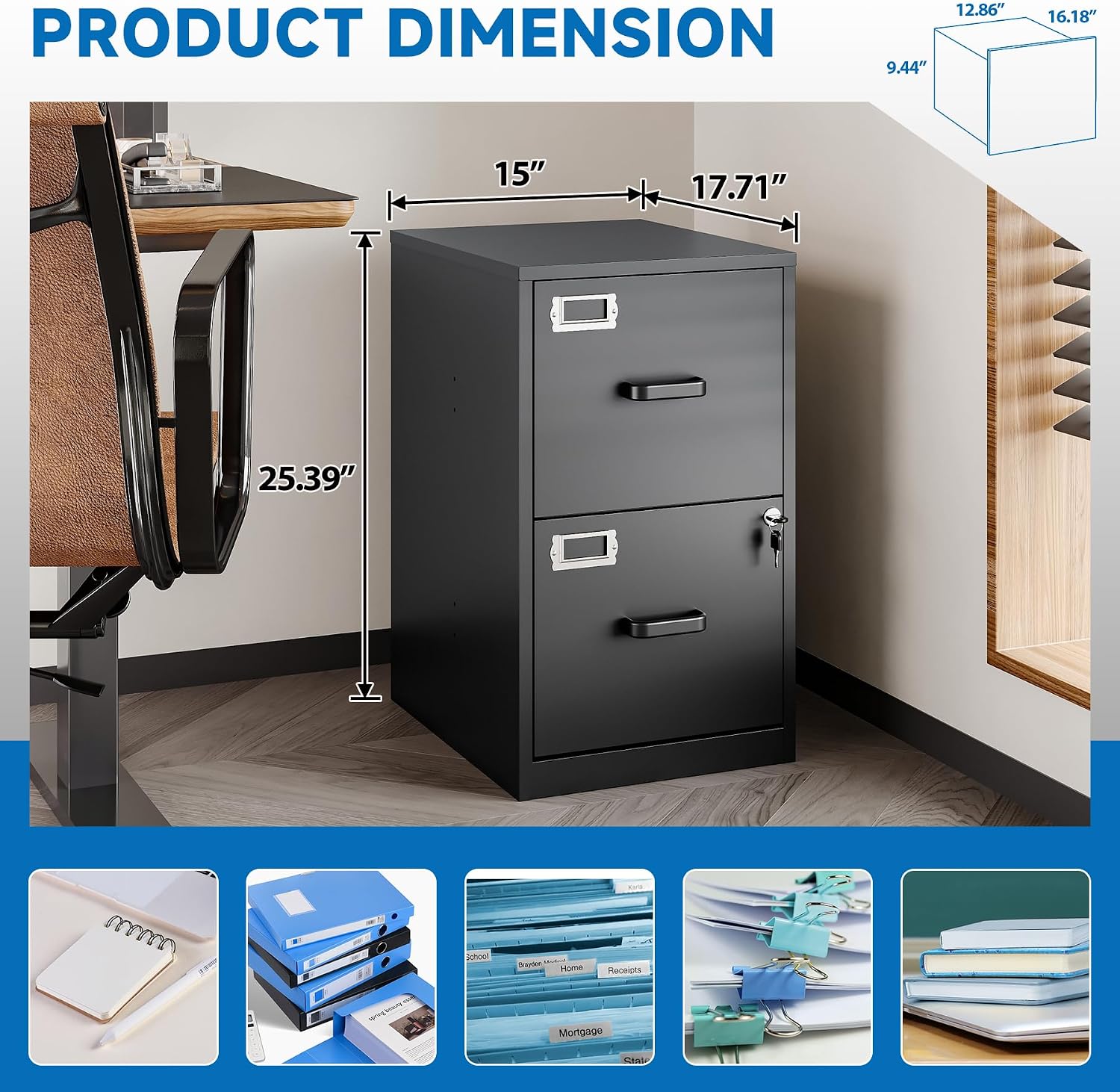
Then there’s the footprint. A 2 drawer file cabinet is inherently more compact than a lateral one, making it ideal for smaller spaces. Measure your intended spot twice. Remember to account for the drawers being fully extended — you need enough clearance for that. Some models are surprisingly deep, and that might impact your workflow or traffic paths in a tight room.
How to Match the Product to Your Situation
Your ideal filing cabinet isn’t just about features; it’s about fitting your life. Who are you, the filer?
The Home Office Hero
You’re running a business, freelancing, or just managing a household from your spare room. Your home office is a sanctuary, but also a paper magnet. You need a 2 drawer file cabinet with lock that looks decent, doesn’t take up too much space, and offers solid document security for tax documents, client files, or sensitive personal records. You don’t need industrial-grade robustness, but you demand reliability. Smooth drawer action is key for daily use, and you appreciate an anti-tilt mechanism for safety, especially if pets or kids might be around. Assembly shouldn’t be a nightmare, but you’re probably willing to tackle a moderate build if it means a better value.
The Small Business Boss
You’re managing a small team, a startup, or a specialized practice. Your needs are a step up from a home office. These steel file cabinets might see heavier daily use and need to withstand more wear and tear. You’re likely storing client records, HR documents, or proprietary information, so a reliable lock isn’t just a nicety; it’s a business necessity. Aesthetics still matter, but durability and function often outweigh pure design. You might be buying several units, so ease of assembly for multiple cabinets or the option of pre-assembled units becomes more appealing. You’re looking for a workhorse that keeps sensitive information safe and organized without constant fuss.
The Archiver
Maybe you’re not constantly accessing files, but you need long-term, secure storage for important family records, historical documents, or project archives that only see the light of day once a year. Your filing cabinet acts more like a time capsule. For you, the primary concerns are long-term durability, resistance to environmental factors (within reason, this isn’t a museum vault), and maximum security within the budget. You might even consider a heavier-gauge steel vertical filing solution for extra peace of mind, even if it’s a bit overkill for occasional use. Assembly might be a one-time project, so you might invest more time here if it gets you a more robust product.
Product Type Comparison
Let’s break down the typical filing cabinet offerings you’ll encounter, especially when you’re specifically eyeing a 2 drawer file cabinet with lock that’s likely steel.
| Type/Tier | Best For | Price Tier | Key Feature | Watch-Out |
|---|---|---|---|---|
| Budget Steel Vertical | Light home use, infrequent access | Budget-friendly | Minimalist design, basic lock | Thinner steel, potentially sticky drawers, challenging assembly |
| Mid-Range Steel Vertical | Regular home office, small business | Mid-range | Ball-bearing glides, decent security | Assembly still required, limited color options |
| Premium Steel Vertical | High-traffic office, sensitive documents | Premium | Heavy-gauge steel, smooth action, robust lock | Significantly higher cost, very heavy, may require professional assembly |
-
Budget Steel Vertical: These are your entry-level filing cabinets. They get the job done for occasional storage of letter size files but don’t expect butter-smooth drawer action or bank-vault security. The steel might be thinner, and the lock fairly simple. Often, the biggest hurdle is the assembly itself, which can be fiddly and frustrating if instructions aren’t clear or parts don’t align perfectly. They’re fine if you just need a place to stash old bills.
-
Mid-Range Steel Vertical: This is where most people find their sweet spot for a 2 drawer file cabinet with lock. You’re getting better construction, often with an anti-tilt mechanism and those glorious ball-bearing drawer glides. The steel is a bit more substantial, offering better durability and a more reassuring feel. The locks are usually a step up, too. These are built for regular use in a home office or a low-volume business environment, offering a solid blend of features, durability, and value. Assembly is generally manageable, though it’ll still take some time.
-
Premium Steel Vertical: Stepping into the premium realm means investing in serious office storage. These steel file cabinets boast heavy-gauge steel, often fully welded (meaning less or no assembly required), and smoother, more robust drawer mechanisms. The locks might be more sophisticated, and some even offer fire-resistant properties (though true fireproof safes are a different category). Expect these to be significantly heavier and more expensive, but they’re designed for demanding commercial use where security and longevity are paramount. If you’re not constantly pulling files or storing highly sensitive documents, this might be overkill.
For Different Filing Routines
How you use your filing cabinet dictates what you really need.
For the Occasional Filer
You’ve got important papers, sure, but they mostly sit. Tax documents, insurance policies, a few client contracts from last year. You’re not opening these drawers daily, maybe not even weekly. A basic to mid-range 2 drawer file cabinet with lock will serve you just fine. Focus on decent document security for peace of mind and an assembly required process that won’t make you want to scream. You can probably opt for thinner steel without much worry about daily wear and tear. Just make sure the lock isn’t laughably easy to defeat, and that it holds your letter size files without issue.
For Daily Document Management
Ah, the daily grind. Invoices, receipts, ongoing projects, client correspondence — your filing cabinet is a workhorse, always in motion. This is where ball-bearing glides go from “nice-to-have” to “absolutely essential.” You want those drawers to glide open and closed with minimal effort, day in and day out. Durability is key; look for a mid-range or even a premium steel model. The anti-tilt mechanism is paramount here for safety, especially with frequent opening and closing. A robust lock for your office storage is also crucial as you’re likely handling active, sensitive information. You’ll thank yourself later for investing in quality here.
For Securing Sensitive Information
Some documents just need to be locked up tight. Medical records, legal papers, employee information, proprietary business plans. While a standard 2 drawer file cabinet with lock offers a deterrent, for truly sensitive data, consider a higher-end steel model with a more substantial locking mechanism, or even a specialized security cabinet. Understand that no standard office filing cabinet is impenetrable, but a thicker gauge steel, well-constructed cabinet with a solid lock offers a significant barrier. If fire protection is a concern, you’re looking at specific fireproof filing cabinet models, which are a different, more specialized (and pricier) category altogether. But for basic, yet serious, privacy, a robust steel option is your best bet.
Common Mistakes When Buying a Filing Cabinet
It’s easy to stumble when you’re just trying to get organized. Here are a few common pitfalls to avoid.
Underestimating Assembly Time and Effort
This is a big one. When a 2 drawer file cabinet shows up flat-packed, you’re not just assembling a toy. These are metal components, sometimes heavy, with specific alignments. Trying to rush it or tackle it solo when you really need a second pair of hands can lead to bent parts, stripped screws, or a wobbly cabinet that doesn’t close properly. Read those instructions before you start. Check that all parts are present. If you hate assembly, seriously, look for models with “minimal assembly” or “fully welded” in their descriptions, even if it costs a bit more. Your sanity has value.
Ignoring Internal Dimensions for Your Files
“Letter size” sounds universal, right? Mostly, yes. But some cheaper filing cabinets might be just a hair too narrow or shallow, making it a frustrating fight to get hanging folders in and out, especially if they have tabs. If you’re mostly storing manila folders or loose papers, it might not be a huge deal. But if you rely on hanging folders for your vertical filing, double-check the actual internal measurements against a typical hanging folder. You don’t want to receive your shiny new steel file cabinet only to find your folders don’t quite fit right. It’s a surprisingly common complaint, actually.
Neglecting Stability and Anti-Tilt Features
As mentioned, a top-heavy filing cabinet with both drawers extended is a recipe for disaster. This isn’t just an inconvenience; it’s a safety hazard. People get injured. It seems like a minor detail, but bypassing a cabinet without an anti-tilt mechanism to save a few bucks is a false economy. Always confirm this feature. If you can’t find clear information, or if the price seems too good to be true, be wary. A stable cabinet is a safe cabinet.
Why/How/What
Quick hits on some common questions people have about these workhorses.
Why invest in a steel filing cabinet with a lock?
Look, paper documents aren’t going anywhere. For important records, especially those with personal or financial info, a steel filing cabinet with a lock provides a basic but essential layer of document security that digital files just can’t quite replicate. It’s physically there. It also offers a centralized, organized place for crucial papers, saving you frantic searches later.
How do I assess the actual “assembly required” for a steel cabinet?
Check the product description for phrases like “minimal assembly,” “fully welded,” or specific details on what needs to be attached. If it just says “assembly required” and the box weighs a ton, assume it’s a full build from scratch. Look for user images or videos of the assembly process if available through major retailers; they can reveal a lot about the complexity.
What’s the real benefit of ball-bearing glides over standard slides?
The difference is night and day. Standard slides can be stiff, noisy, and prone to jamming, especially under weight. Ball-bearing glides offer a fluid, quiet motion, allowing drawers to open and close effortlessly, even when fully loaded with letter size files. This means less wear and tear on you, your cabinet, and your documents. It really is a small luxury that makes a huge difference in daily usability.
FAQ
Are steel filing cabinets really better than plastic or wood for office storage?
For durability and document security, absolutely. Steel offers superior strength, resistance to fire (to a degree, not fireproof), and general longevity compared to plastic or particle board. Wood can look nice, but steel is more robust for a working filing cabinet.
What kind of lock is typical for a 2 drawer file cabinet with lock?
Most common is a simple cam lock operated by a key, securing both drawers simultaneously. It’s designed as a deterrent for casual access rather than impenetrable security.
Can I put legal-size files in a letter size files cabinet?
Generally, no. Letter size files are shorter than legal-size ones. While some cabinets are designed for both, a dedicated letter-size cabinet won’t accommodate legal documents properly. You’ll need a specific legal or letter/legal convertible model.
How much weight can a single drawer hold in a steel vertical filing cabinet?
This varies wildly by manufacturer and construction, but generally, a good quality drawer designed for letter size files can hold 50-75 pounds. Check the specifications for exact numbers, especially if you plan to stuff it.
Do I need to anchor my filing cabinet to the wall?
For taller units or those in high-traffic areas, anchoring is a smart move, especially if an anti-tilt mechanism isn’t present or you’re opening multiple drawers (which you shouldn’t do). Safety first.
Is a fully assembled filing cabinet worth the extra cost?
If you dread assembly required tasks, lack tools, or simply don’t have the time, paying more for a fully or mostly assembled steel file cabinet can be entirely worth it. It saves frustration and ensures proper construction from the start.
What’s the best way to maintain my lockable storage?
Keep the glides clean and occasionally lubricate them with a dry lubricant if they start to stick. Don’t force drawers closed. For the lock, a tiny puff of graphite powder can keep it smooth if it feels stiff.
Final Recommendation
So, what’s the verdict on finding that ideal 2 drawer file cabinet with lock?
For the everyday user, the Home Office Hero or the Small Business Boss needing reliable office storage without spending a fortune, a mid-range steel vertical filing cabinet is usually the sweet spot. You’re getting the essential features: durable steel construction, smooth ball-bearing glides, an anti-tilt mechanism, and a dependable lock for your document security. It offers the best balance of value, usability, and longevity for managing your letter size files day-to-day. Look for clear indications that assembly required won’t be a nightmare, or be ready to dedicate some focused time to it. This tier reliably keeps your important papers organized and secure without unnecessary frills.
#Drawer #File #Cabinet #Lock #Vertical #Filing #Storage #Cabinet #Office #Home #Steel #Vertical #File #Cabinets #Letter #Size #File #Cabinet #LockedAssembly #Required