The Right Juicer for Your Lifestyle: A Look at the Zulay Kitchen Extra Tall and Beyond
Finding the right juicer for your home isn’t just about grabbing the first thing you see; it’s about matching your needs with a machine that actually delivers. This guide cuts through the noise, helping you understand the real differences between juicers and whether a robust manual option, like the highly popular Zulay Kitchen Extra Tall Cast Iron Juicer, makes sense for your daily ritual. We’re here to help you make a smart choice for delicious, fresh juice, without overspending or regretting a purchase that just doesn’t fit your groove.
Quick Answer
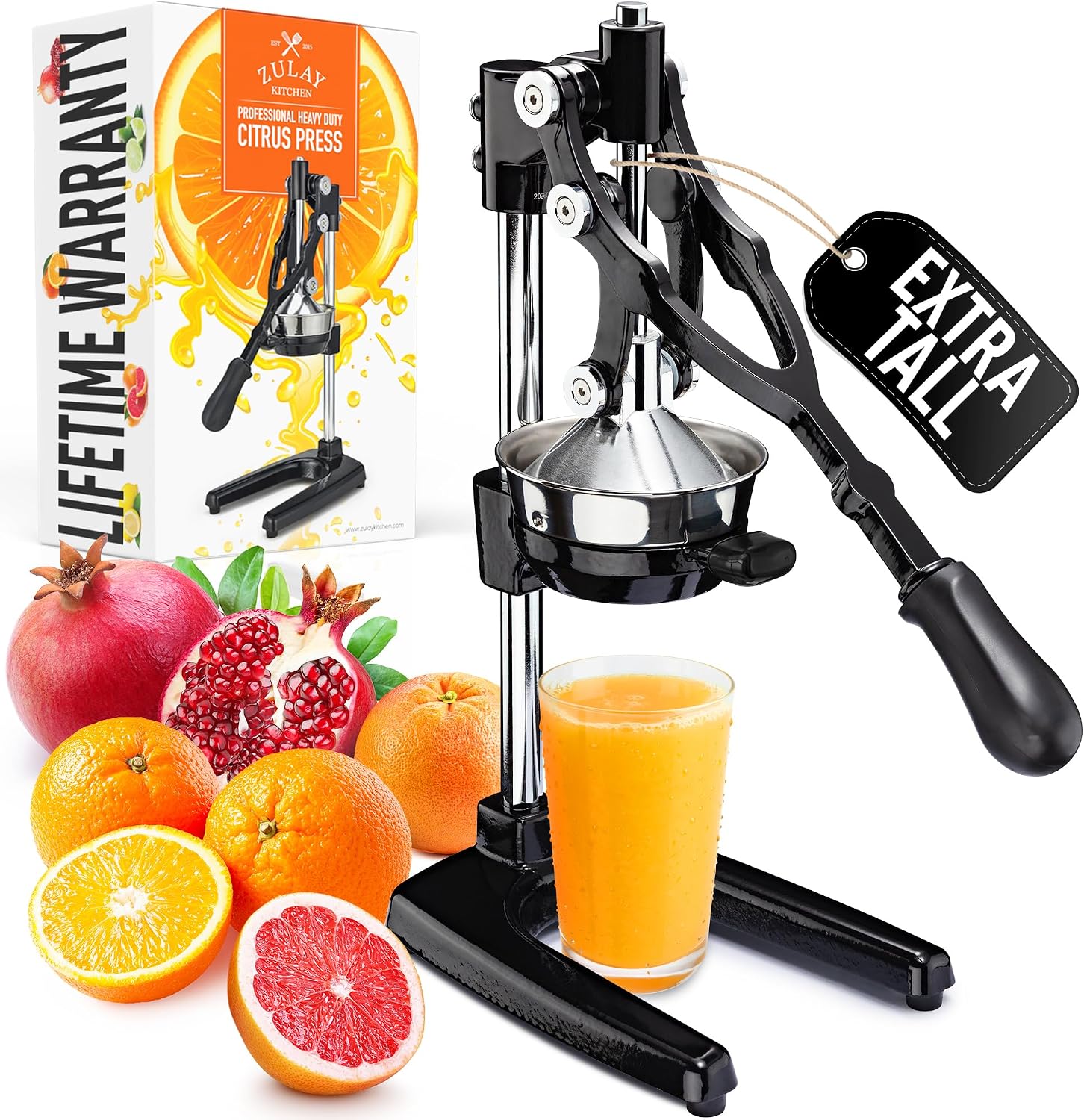
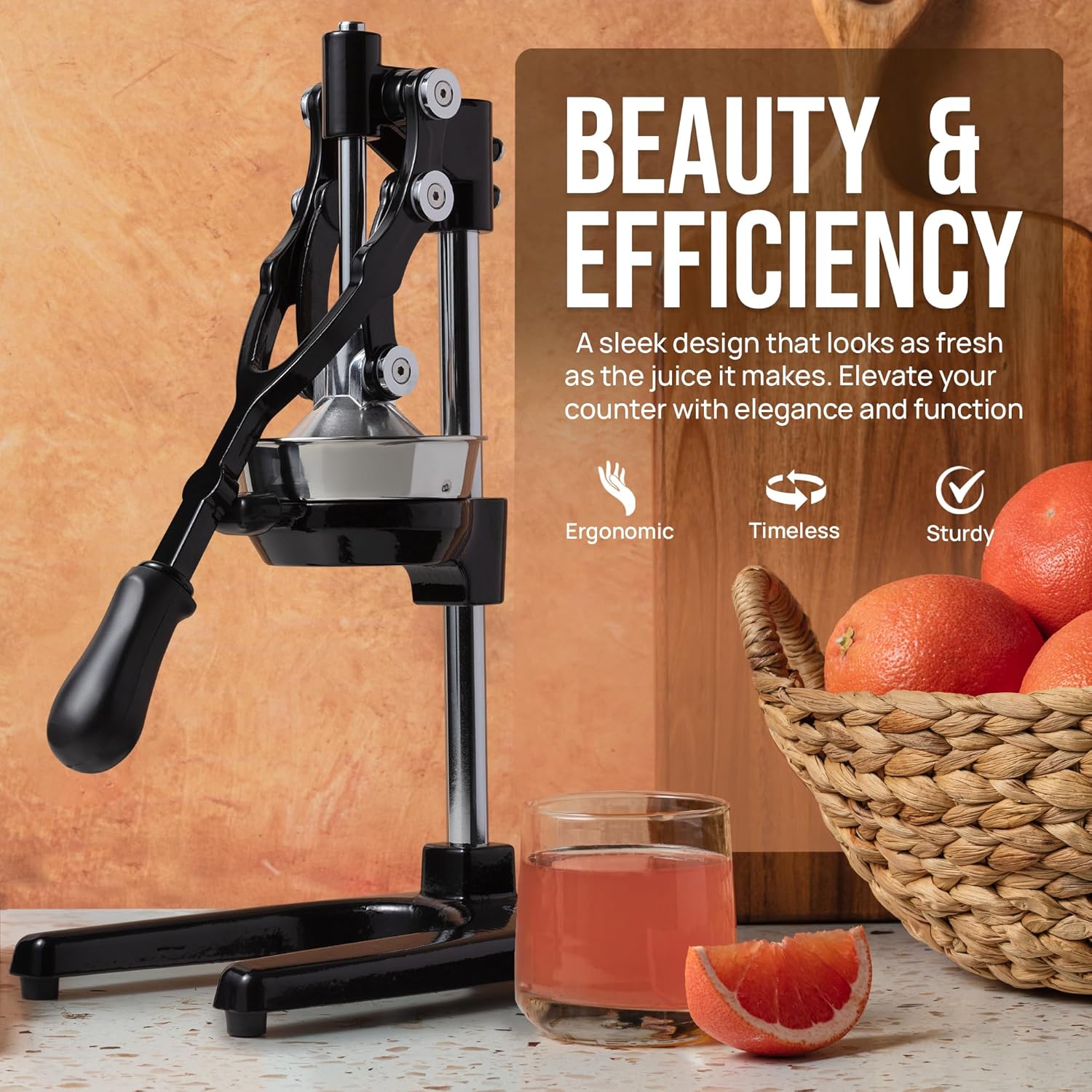
For most folks looking to easily extract juice from citrus fruits like oranges, lemons, and limes, a sturdy manual citrus press offers surprising efficiency and fantastic value. The Zulay Kitchen Extra Tall Cast Iron Juicer, specifically, stands out for its solid build, ample clearance for taller glasses, and straightforward operation, making it a compelling choice for regular home use or even busy bartending.
What to Look For (The Buying Criteria)
Choosing a juicer, especially when you’re zeroing in on a workhorse like the Zulay, means really thinking about how you’ll use it. It’s not just about getting juice; it’s about the entire experience.
1. Type of Juicer: Manual vs. Electric
This is the big fork in the road. You’ve got your manual presses, like the Zulay, which rely on your muscle power to squeeze fruit. They’re typically simpler, quieter, and often more compact. Then there are electric models: centrifugal juicers, which are fast but can be noisy, and masticating (slow) juicers, which are quieter and extract more juice from leafy greens, but cost more and take up serious counter space. For pure citrus, a manual press can sometimes extract more efficiently than some electric models, especially if you’re only doing a few fruits. However, if you’re dreaming of a gallon of carrot juice, a manual citrus press simply won’t cut it.
2. Material and Build Quality: Durability Matters
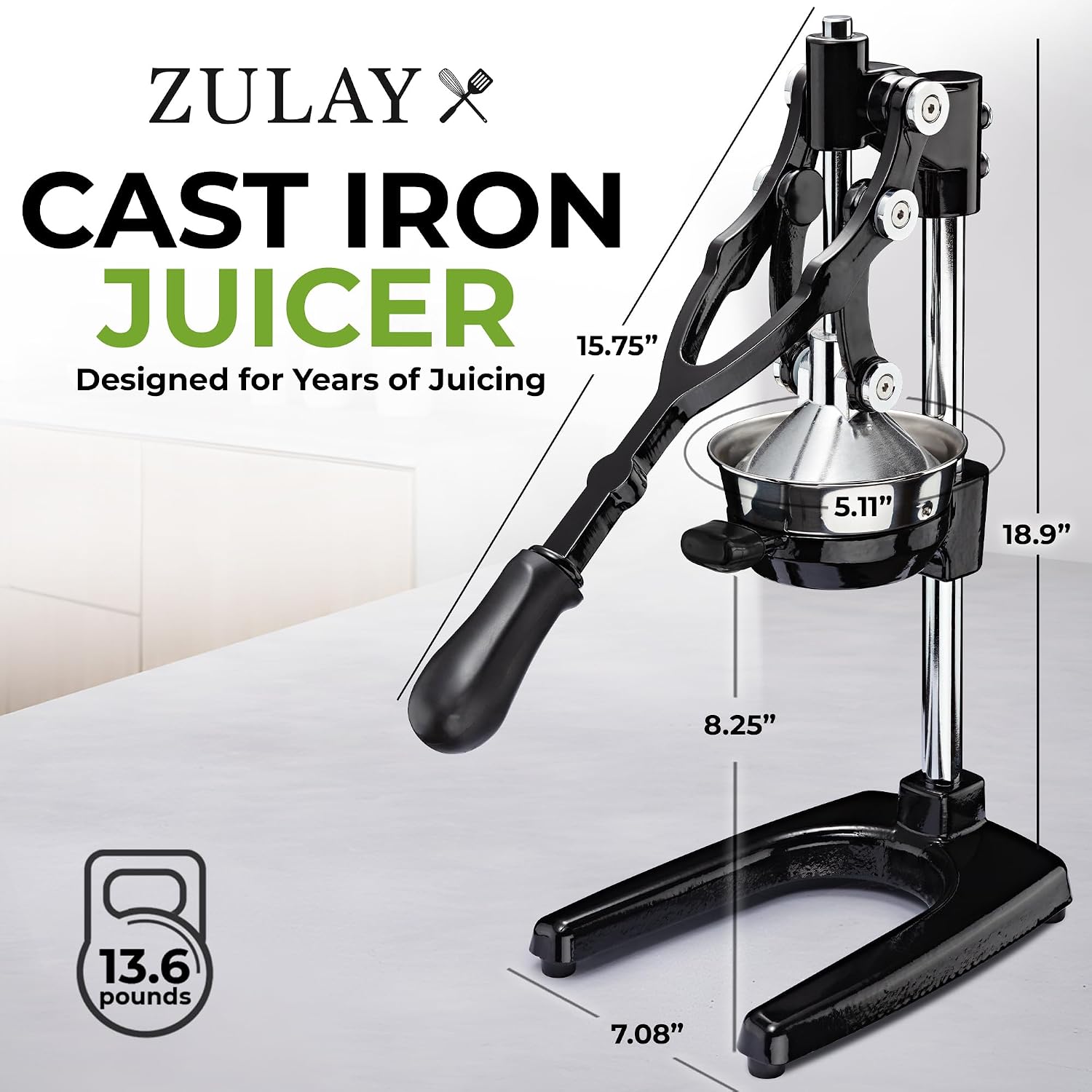
A juicer, particularly a manual one, takes a beating. You’re applying force, after all. Cast iron, like what you find in the Zulay Kitchen Extra Tall, is incredibly durable. It’s heavy, which means it stays put on your countertop, reducing wobbling and making the job easier. Stainless steel components are also a good sign, as they resist rust and are easier to clean. Plastic models? They’re lighter on the wallet initially, sure, but often feel flimsy and just don’t last. Think about those cheap plastic lemon squeezers that crack after a few uses. That’s a real frustration, isn’t it? The trade-off for a heavy-duty material like cast iron is, well, the weight. Moving it around can be a chore.
3. Size and Footprint: Countertop Real Estate
This is a surprisingly important factor that many overlook. Some electric juicers are massive, claiming a permanent spot on your kitchen countertop. A manual citrus press, like the Zulay, tends to have a smaller footprint, but it’s still substantial. The “extra tall” aspect of the Zulay model means it’s designed to fit various glass sizes, which is a blessing, but it also means it’s taller, potentially needing more vertical storage space. Consider where it will live when not in use. Will it fit in a cupboard, or will it become a permanent fixture?
4. Ease of Cleaning: The Dealbreaker
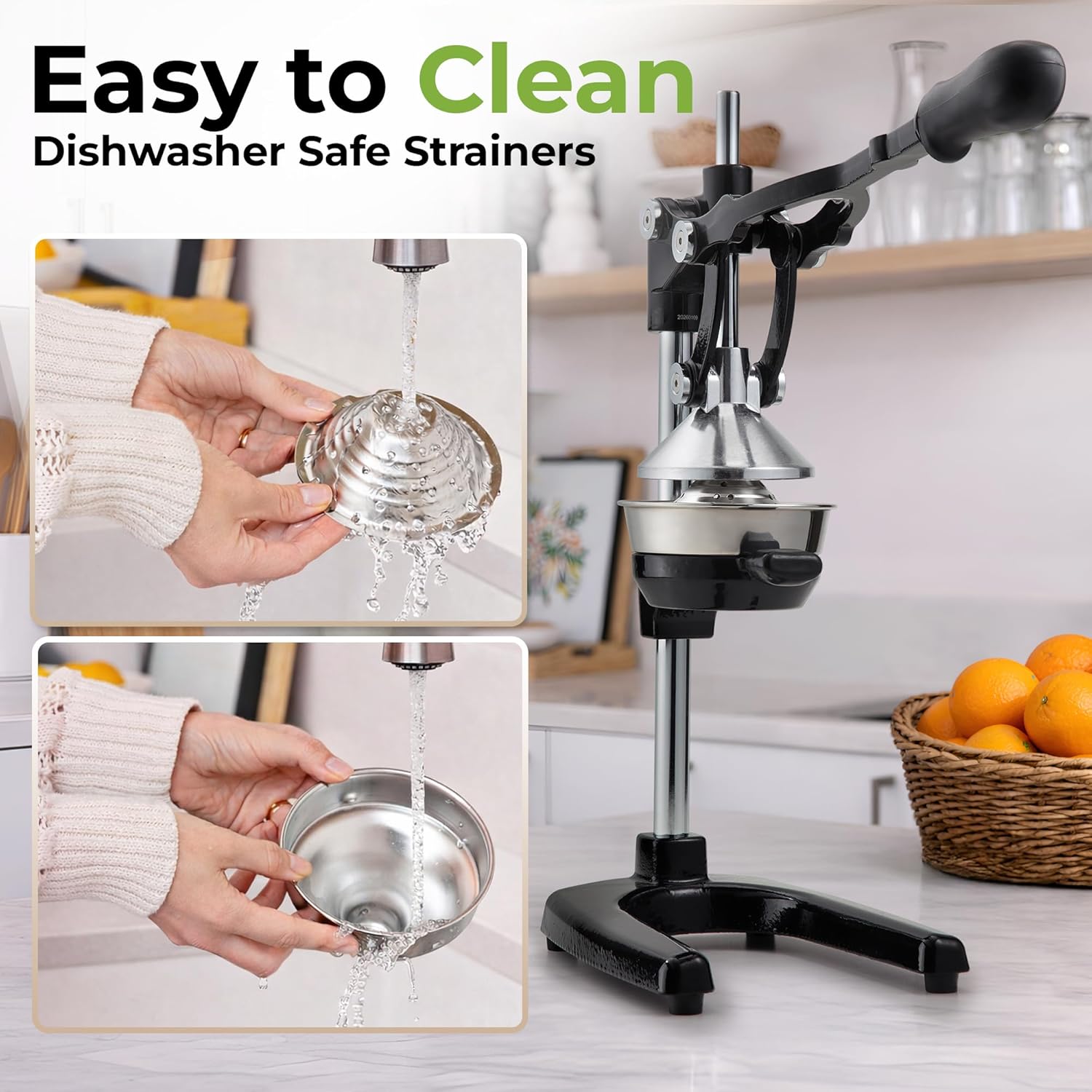
Nobody wants to spend more time cleaning a juicer than actually enjoying the juice. This is where manual citrus presses often shine. Most, including the Zulay Kitchen Extra Tall Cast Iron Juicer, come with detachable strainers and easily accessible parts that can be rinsed quickly under the tap. Electric juicers, especially masticating ones with their complex augers and filters, can be a real pain to disassemble, clean, and reassemble. If ease of cleaning is high on your priority list – and honestly, it should be for everyone – a simpler design is your friend. But even with simple parts, ensuring all the pulp and seeds are removed without fuss is key.
5. Yield and Efficiency: Getting Every Drop
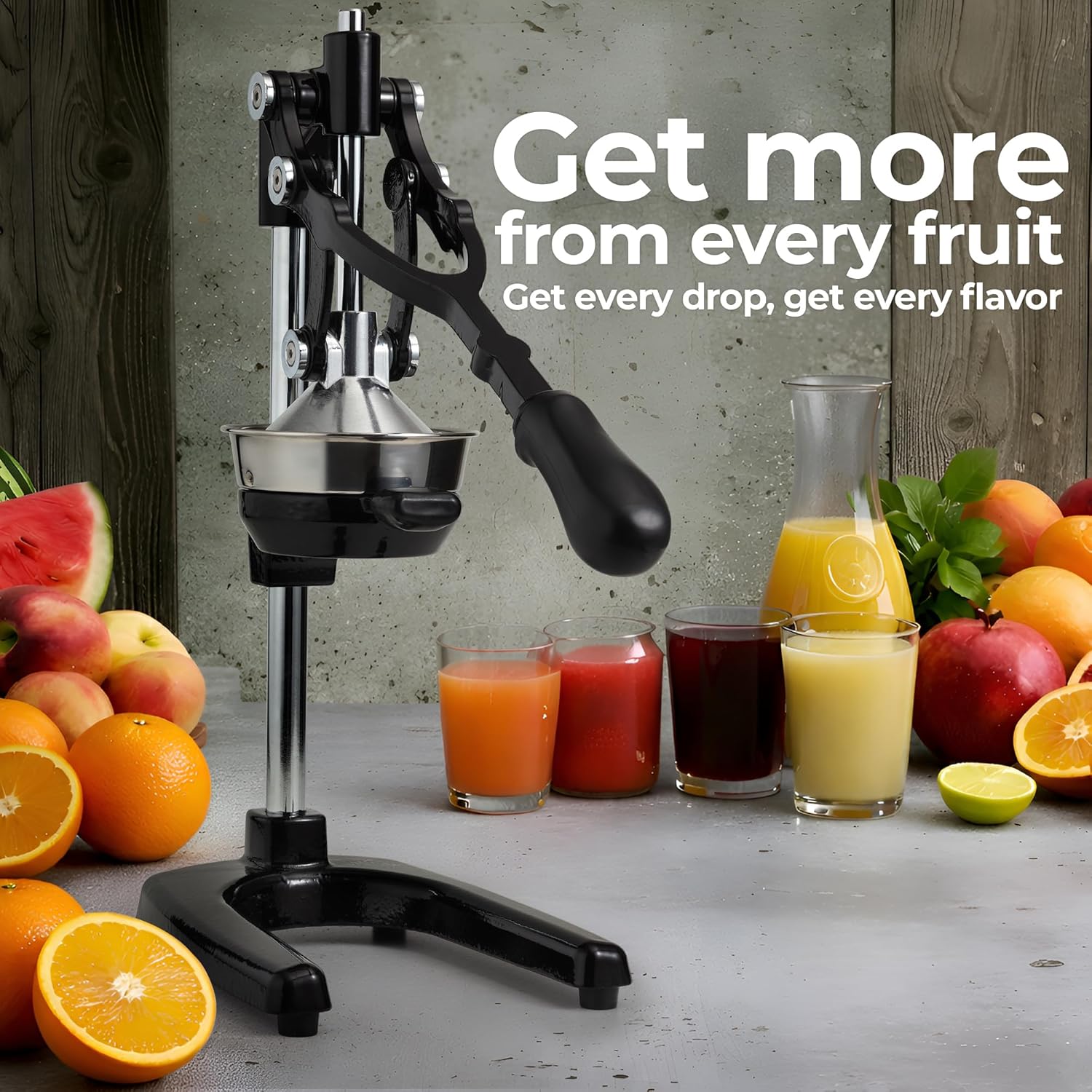
How much juice you get from each fruit depends heavily on the juicer’s design. A good manual citrus press, with its lever mechanism, can apply significant pressure to extract a high yield from oranges, grapefruits, lemons, and limes. The design of the cone and how it presses against the fruit matters. Some cheaper models just squish, leaving a lot of juice in the pulp. With something like the Zulay, the heavy-duty mechanism is designed for maximum juice extraction, leaving dryer pulp. Electric juicers vary wildly here; fast centrifugal ones can sometimes leave wetter pulp, while slow masticating juicers are often praised for their high yield across a broader range of produce.
6. Specific Fruit Compatibility: What Are You Juicing?
Let’s be real. The Zulay Kitchen Extra Tall Cast Iron Juicer is built for citrus. Period. It’s a fantastic manual citrus juicer. If your vision of fresh juice includes leafy greens, hard vegetables like beets, or even softer fruits like berries, you’re looking at a different category entirely – likely a masticating or centrifugal electric juicer. Don’t buy a Ferrari for off-roading, right? Knowing your primary ingredients saves a lot of heartache and ensures you pick the right tool for the job.
How to Match the Product to Your Situation
Your lifestyle dictates the best juicer. Simple as that. Forget the fancy marketing for a second; let’s talk real-world use.
The Daily Juice Fiend: You’re starting every morning with a tall glass of fresh orange juice. Maybe a lemon-ginger shot to kick things off. For you, consistency, speed, and ease of cleanup are paramount. You’re not looking to juice a massive variety of produce, but you want to power through a dozen oranges without breaking a sweat, or your juicer. A robust manual citrus press, like the Zulay Kitchen Extra Tall Cast Iron Juicer, is actually a strong contender here. It’s quick, relatively quiet (no grinding motor to wake up the house), and cleanup is minimal. You’ll get your morning fix without a fuss.
The Occasional Entertainer: Hosting brunch? Mixing cocktails? You need a good amount of fresh lemon or lime juice for margaritas or a big batch of fresh lemonade, but not every single day. Durability and output on demand are key. You want something that feels substantial, can handle a bit of volume when needed, and stores away reasonably well. The heavy-duty manual juicers, especially the cast iron ones, fit this bill perfectly. They’re built to last for those intermittent bursts of activity, ensuring you’re never scrambling for a flimsy plastic squeezer in the middle of a party. Plus, it looks pretty sharp on a bar cart.
The Kitchen Minimalist: Your counter space is sacred. Every gadget has to earn its spot. You appreciate tools that are single-purpose but perform that purpose exceptionally well. Perhaps you enjoy a glass of orange juice on the weekends or make fresh dressings. You’re not looking for another appliance with a thousand parts. A compact, well-designed manual juicer makes sense. It’s effective, doesn’t need electricity, and can be tucked away when not in use. While the “extra tall” might make the Zulay a bit visually imposing, its focused utility is exactly what a minimalist could appreciate.
Juicer Types: A Quick Look
| Type/Tier | Best For | Price Tier | Key Feature | Watch-Out |
|---|---|---|---|---|
| Manual Citrus Press | Daily citrus juice, cocktails, small batches | Budget-Mid | Simple, durable, quiet, easy to clean | Limited to citrus, requires manual effort, not for large quantities |
| Centrifugal Juicer | Quick, everyday use of hard fruits/veg | Mid-Range | Fast juicing, wider chute for less prep | Noisy, can produce foamy juice, lower yield for leafy greens, harder to clean |
| Masticating (Slow) Juicer | High-yield, leafy greens, nutrient retention | Premium | Extracts more juice, quieter, handles diverse produce | Slower process, often larger footprint, higher initial cost, more parts to clean |
Manual citrus presses, like the Zulay Kitchen Extra Tall Cast Iron Juicer, excel at pure citrus extraction with minimal fuss and mess. Centrifugal juicers are speedy for apples and carrots but struggle with delicate greens and can be quite loud. Masticating juicers are the kings of leafy greens and offer the highest yield for many ingredients, yet their price and cleaning complexity are real considerations.
Scenario-Specific Considerations
Sometimes, it’s about more than just the type of juicer. It’s about how it fits into your actual day.
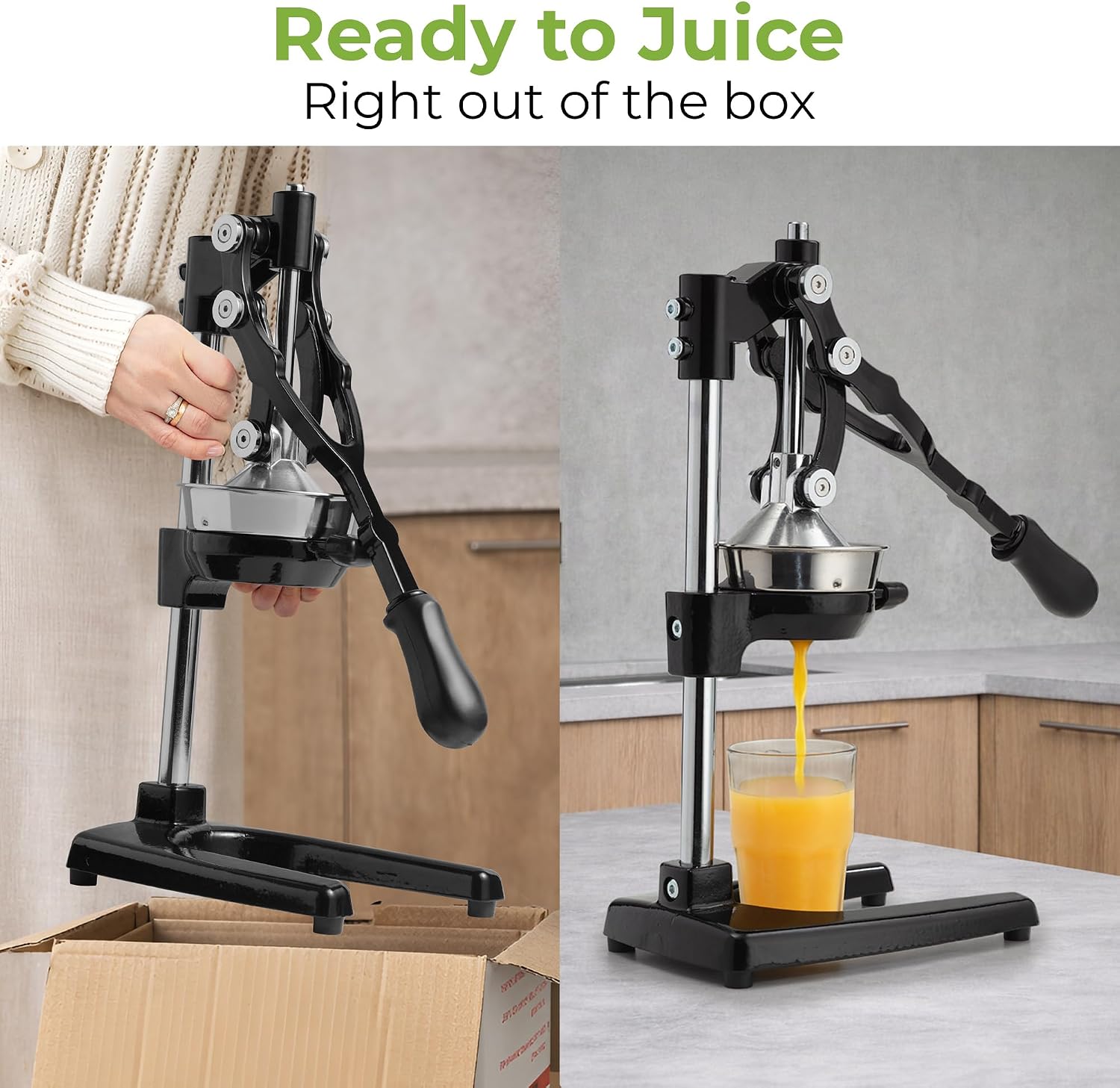
Quick Morning Routine: You’re bleary-eyed, coffee brewing, and need a shot of vitamin C. Fast. A manual citrus press, especially one with a good leverage system, gets the job done without much thought. No plugging in, no complicated assembly. Just slice, press, and rinse. The Zulay’s tall design means you can press directly into your morning travel mug. Think about it: less fumbling around, more time for that first sip of coffee.
Large Batch Prepping: Making juice for a whole party? Or prepping a week’s worth of fresh lemon water? A manual juicer, while capable, can become a workout. Your arm might get tired after fifteen oranges. For serious volume, especially if you’re doing other fruits and veggies, an electric juicer might be less taxing, even with the added cleanup. Still, if it’s just citrus, the sheer mechanical advantage of a solid manual press can power through quite a bit before fatigue sets in.
Portability for Potlucks or Picnics: You’re heading to a friend’s place and want to bring fresh-squeezed lime juice for margaritas, or maybe some fresh orange juice for mimosas. An electric juicer is a non-starter. But a sturdy manual press? It’s self-contained, no power needed. Just pack your lemons, limes, and the juicer. The heavy cast iron construction means it’s not exactly light, but it’s self-sufficient and reliable in any setting.
Common Mistakes When Buying a Juicer
You’d be surprised how often people trip up on the simplest things. Don’t be one of them.
- Overbuying for your needs: Many people think they need a fancy, expensive masticating juicer because “it’s the best.” But if all you’re doing is juicing oranges, that’s overkill, and you’ve spent a lot of extra money for features you’ll never touch. A robust manual citrus juicer, like the Zulay Kitchen Extra Tall, is often more than enough for specific citrus needs.
- Ignoring cleanup: This is a huge one. That slick electric juicer might look appealing, but if it takes ten minutes and five different brushes to clean every time, you won’t use it. It’ll gather dust. Always prioritize ease of disassembly and cleaning.
- Underestimating the importance of stability: Especially with manual juicers, if it slides around on your counter, it’s going to be a nightmare to use, and frankly, a bit dangerous. Heavy-duty construction, often indicated by cast iron or significant weight, helps prevent this.
- Forgetting fruit type limitations: As mentioned, a citrus press won’t juice kale. A centrifugal juicer won’t do wheatgrass well. Know what kind of produce you actually intend to juice consistently before you buy. Don’t let aspiration blind you to practicality.
Why/How/What
Why go manual for citrus?
Manual citrus presses offer simplicity, durability, and a surprising amount of leverage, making them incredibly effective for lemons, limes, and oranges. They are often quieter than their electric counterparts, easier to clean with fewer moving parts, and require no electricity, making them a reliable choice. Plus, there’s a satisfying feeling to the mechanical action.
How do I get the most juice from my fruit?
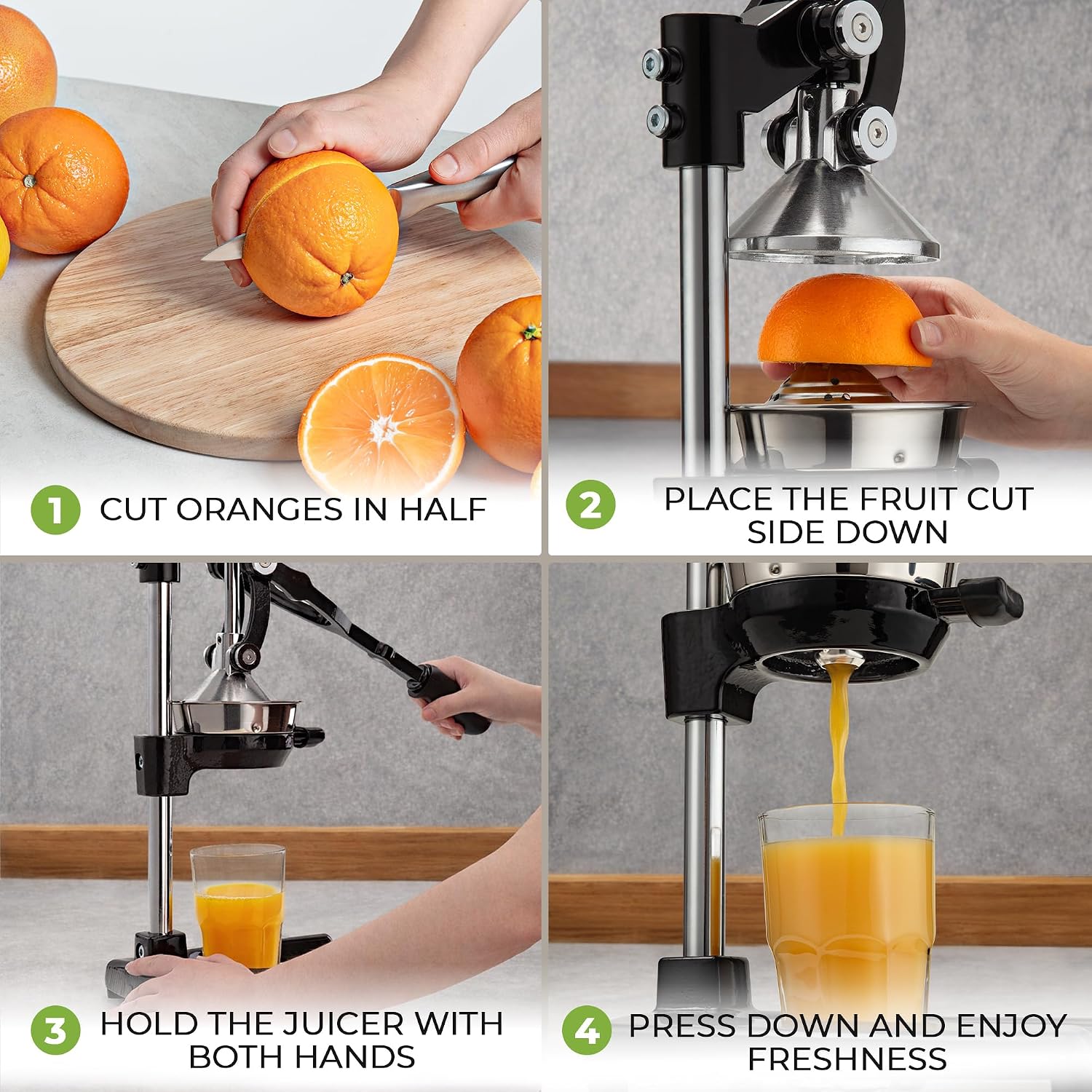
For citrus, a good trick is to roll the fruit firmly on a countertop before slicing it in half; this breaks down the internal membranes, releasing more juice. Make sure your fruit is at room temperature, too. Cold fruit just doesn’t yield as much juice. With a manual press like the Zulay, place the cut side down and apply steady, firm pressure to extract every last drop.
What about pulp control?
Most manual citrus juicers, including the Zulay Kitchen Extra Tall, come with integrated strainers that effectively separate the pulp and seeds from the juice. If you prefer pulp-free juice, this integrated strainer system works well. For those who like a bit of pulp, you can always use a coarser strainer or simply skip straining after the initial extraction. It’s really about personal preference and the juicer’s design making that easy to manage.
FAQ
Is a cast iron juicer really better than a plastic one?
Absolutely. Cast iron juicers, like the Zulay, offer superior durability, stability, and leverage compared to plastic models. They’re built to withstand repeated, forceful use without cracking or flexing, which means better juice extraction and a much longer lifespan.
Can the Zulay Kitchen Extra Tall handle different sized citrus?
Yes, its design with the larger cone and lever arm is specifically made to accommodate a range of citrus, from small limes to larger grapefruits. The “extra tall” clearance is a bonus, allowing taller glasses or pitchers to be used directly beneath the press.
How do I clean a manual citrus press?
Cleaning is typically very straightforward. Most manual presses, including the Zulay, have removable cone and strainer parts that you can simply rinse under running water after each use. Sometimes a quick scrub with a brush is needed to get all the pulp out of the strainer holes.
Is a manual juicer a lot of work?
For a few glasses of juice, not at all. A well-designed manual juicer, especially one with good leverage like the Zulay Kitchen Extra Tall Cast Iron Juicer, makes the process surprisingly easy. For truly massive quantities, it can become a bit of a workout, but for daily use or entertaining, it’s efficient.
Do manual juicers preserve more nutrients than electric ones?
There’s a common belief that manual juicers, particularly those that don’t introduce heat or high-speed oxidation, preserve more nutrients. For citrus, the difference is negligible for practical purposes. The important thing is getting fresh juice into your diet.
Can I juice berries or other non-citrus fruits with a manual press?
No, a manual citrus press is designed specifically for the unique structure of citrus fruits. It won’t effectively extract juice from berries, apples, or leafy greens. You’d need a different type of juicer, like a masticating or centrifugal model, for those.
Are manual juicers noisy?
Not at all. One of the big advantages of a manual juicer is its silence. There are no motors or spinning blades, just the sound of fruit being pressed, which makes it perfect for early mornings or late-night cocktail prep without disturbing anyone.
Final Recommendation
For anyone primarily interested in fresh-squeezed citrus juice—be it for morning routines, lively cocktails, or just a simple, wholesome treat—a robust manual citrus press is often the smartest choice. It’s a focused tool, but it performs its specific job exceptionally well. Look, I’ve seen people spend way too much on multi-function gadgets they never fully utilize. For dedicated citrus lovers, the Zulay Kitchen Extra Tall Cast Iron Juicer is a standout option. Its heavy-duty construction and thoughtful design, particularly that extra clearance for various glasses, mean it’s built to last and makes the daily ritual of juice extraction surprisingly enjoyable. It’s a workhorse that earns its spot, offering both efficiency and impressive durability without the complexity or noise of many electric models.
#Zulay #Kitchen #Extra #Tall #Cast #Iron #Juicer #Fits #Glass #Heavy #Duty #Manual #Citrus #Juicer #Detachable #Strainers #Easy #Cleaning #Perfect #Bartenders #Juice #Lovers #Health #Enthusiasts