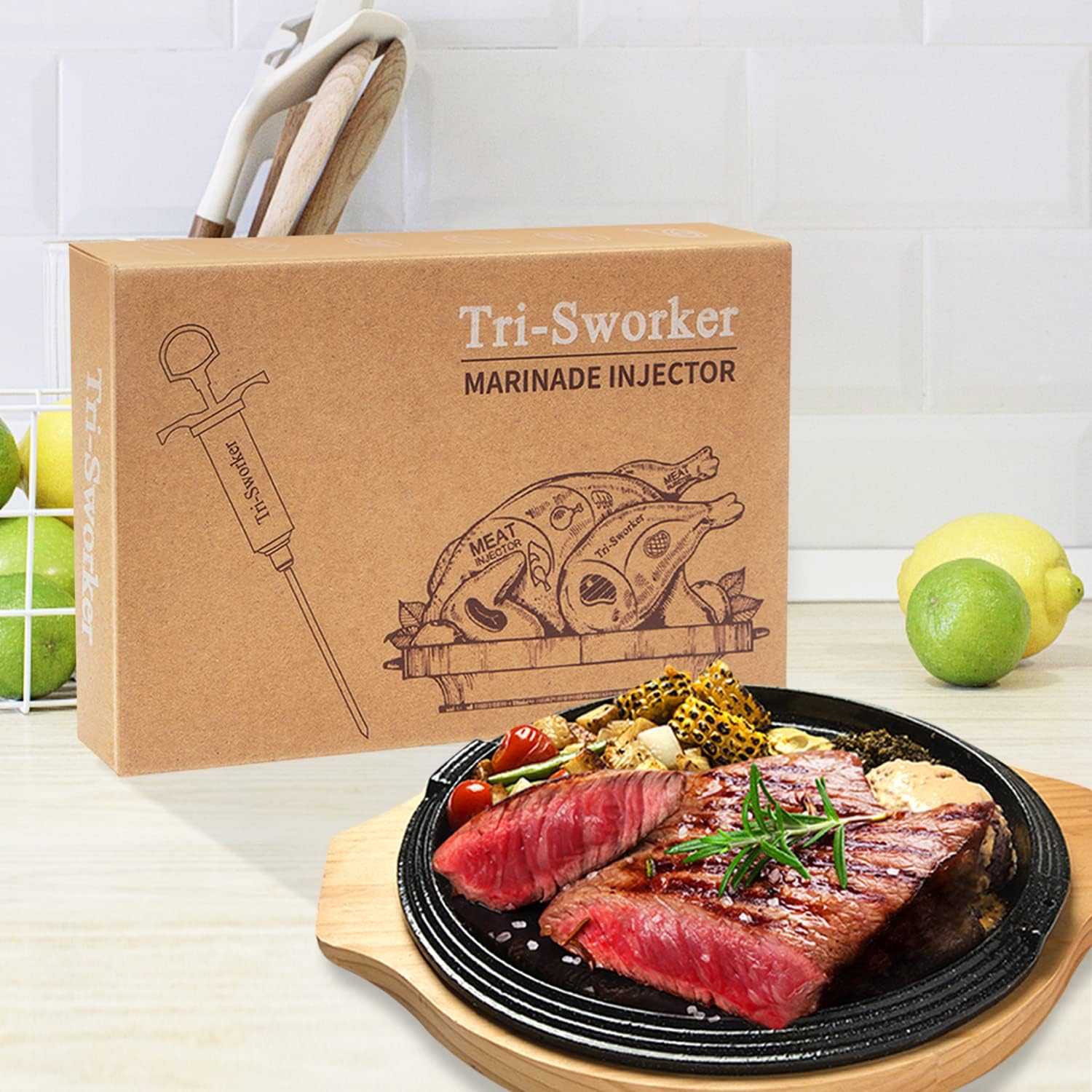

Injecting Flavor, Not Fuss: Your Guide to the Tri-Sworker Meat Injector Syringe for That Perfect Turkey
You want to make a truly memorable meal, don’t you? This guide cuts right to the chase on choosing and using a quality turkey injector, specifically looking at what makes a model like the Tri-Sworker Meat Injector Syringe a contender for your kitchen. We’re talking about getting that deep, moist flavor into your holiday bird, your smoked brisket, or even just a weeknight roast chicken. Forget dry, bland meat; we’re here to talk about true flavor infusion.
Quick Answer
For home cooks who want to elevate their holiday roasts and smoked meats without a steep learning curve or a hefty investment, a solid meat injector syringe like the Tri-Sworker with its multiple needle options offers significant bang for the buck. It handles everything from thin marinades for poultry to chunkier flavor mixes for brisket, making it a versatile tool in any serious cook’s arsenal. You get reliable performance, essential accessories, and the promise of incredibly juicy results.
What to Look For (The Buying Criteria)
Navigating the world of kitchen gadgets can feel overwhelming. Seriously, how many gizmos do you really need? When it comes to a turkey injector, though, a few key factors separate the useful tools from the regrettable purchases. We’re talking about getting flavor into your food, right? So, this isn’t a place to cut corners entirely.
First up, material quality. This is non-negotiable. You’re pushing liquids, sometimes acidic ones, into food you’re going to eat. Think food-grade stainless steel. It’s durable, resists rust, and won’t leach funky flavors into your precious marinades. Plastic models? They might save you a few bucks upfront, but they often crack, stain, or just feel flimsy after a few uses. Plus, getting plastic clean enough to feel truly sanitized after handling raw meat is, well, a chore. The Tri-Sworker, for example, emphasizes its stainless steel construction, which is exactly what you want to hear.
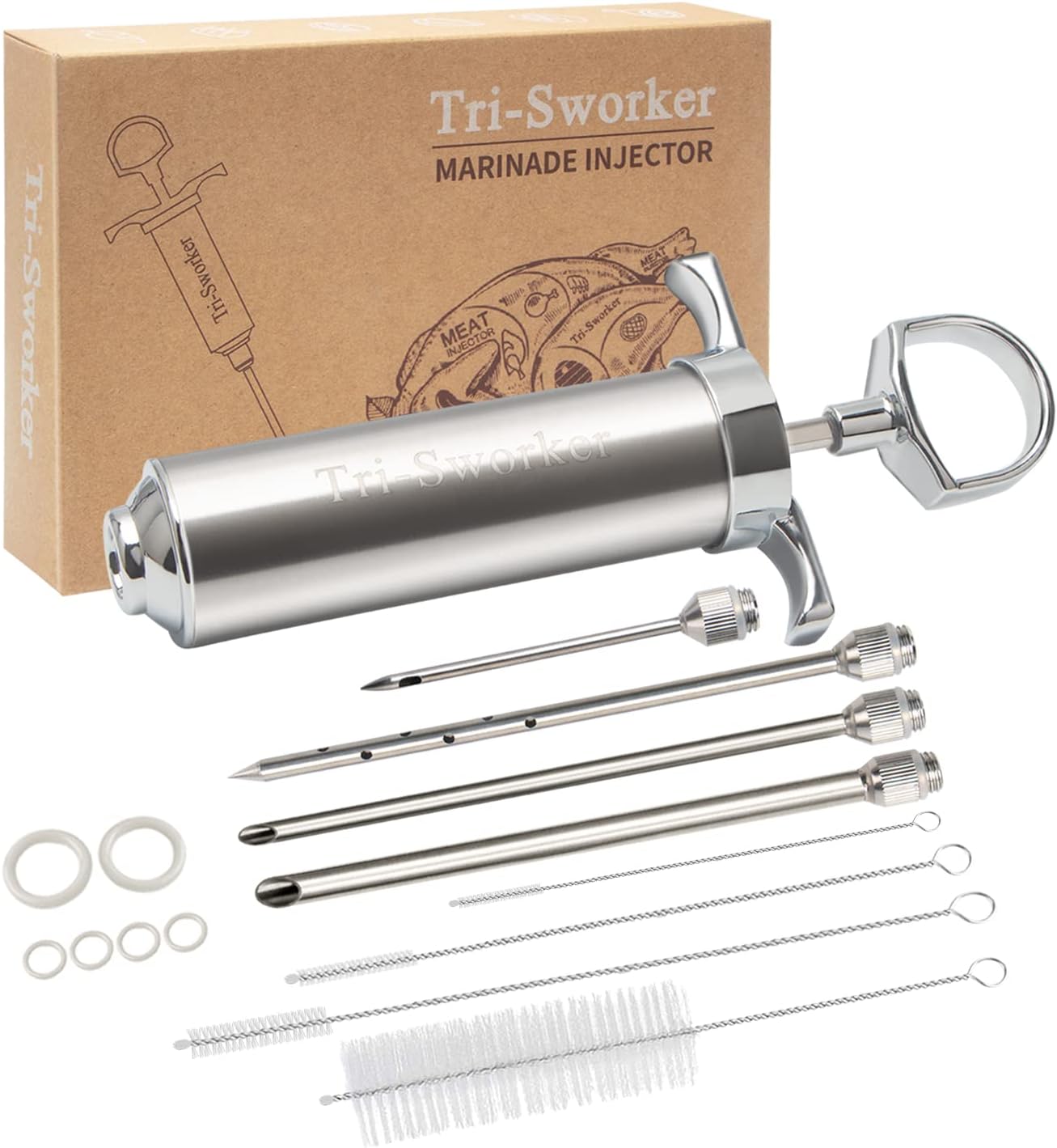
Then there’s the needle variety. Marinades aren’t one-size-fits-all. Some are thin and watery, others are thick with herbs, garlic bits, or finely minced onion. A good marinade injector needs options. Look for at least a few different needles: a wider gauge one for those chunkier marinades, a thinner one for clear liquids, and maybe even an angled one to hit different spots in the meat. The Tri-Sworker comes with four—that’s a solid offering for most home cooks. It means you aren’t stuck hoping your finely chopped garlic doesn’t clog the only needle you’ve got. And trust me, a clogged injector mid-prep is a special kind of frustration.
Next, consider the capacity. Most home cooks find a 2-ounce capacity to be a pretty sweet spot. It’s enough to get a good amount of marinade into a sizable turkey or brisket without constant refills. But it’s also not so big that it becomes unwieldy to handle or too difficult to clean. Larger capacities exist, sure, but they can be overkill for average use and harder to maneuver. Smaller ones? You’ll be refilling constantly, which slows you down.
Ease of cleaning is another huge one. You’re dealing with raw meat juices and often sticky marinades. If an injector is a nightmare to take apart or has tiny crevices that are impossible to reach, you just won’t use it. Dishwasher safe components are a plus, but at minimum, you want something that disassembles easily and comes with a cleaning brush. The Tri-Sworker includes cleaning brushes, which is a definite plus in the fight against stubborn marinade residue. If you can’t clean it properly, you risk bacterial contamination. Nobody wants that.
Finally, think about ergonomics and overall feel. Does it feel good in your hand? Is the plunger smooth? Does it leak? A flimsy plunger or a sticky mechanism makes the whole process annoying, even messy. You’re injecting, not battling your equipment. A bit of weight to it can actually be a good sign of quality construction, giving you better control. Don’t underestimate how much a good grip and smooth operation contribute to a less stressful cooking experience.
How to Match the Product to Your Situation
Okay, so you’re convinced a flavor injector is the move. But which one fits your kitchen? People cook differently, with varying frequencies and ambitions. Let’s break it down by a few common scenarios.
First, you’ve got The Weekend Smoker. This person probably already owns a decent smoker or grill and spends their Saturday tending to pork shoulders or briskets. They need durability, versatile needle types for various marinades (thin liquids, thicker rubs), and enough capacity to handle larger cuts without endless refilling. They appreciate stainless steel injector construction because their tools see a lot of action and need to stand up to repeated cleaning and outdoor elements. For this chef, the Tri-Sworker is an excellent mid-range choice. Its robust build and four needles mean they can tackle different cuts and marinade consistencies for serious smoking meats sessions.
Then there’s The Holiday Host. This is someone who breaks out the big guns primarily for special occasions: Thanksgiving turkey, Christmas ham, Easter lamb. Their main goal? Impressing guests with incredibly juicy, flavorful meat without too much stress. They don’t need a professional-grade unit that costs a fortune, but they absolutely need reliability. A unit that clogs or leaks when the family is watching? No thanks. They need easy setup, straightforward operation, and simple cleanup. The 2-ounce capacity of a model like the Tri-Sworker is just right for a Thanksgiving turkey, and the included cleaning brushes mean less fuss when the meal’s over.
Finally, consider The Everyday Enthusiast. Maybe they’re experimenting with injecting roast chicken during the week, or adding a little extra something to their beef roasts on a Sunday. They’re looking for value, ease of use, and something that’s not overly complicated. They might not need every fancy feature, but they won’t settle for flimsy. A solid, easy-to-clean injector that can handle basic marinades for smaller poultry or beef cuts is key. The Tri-Sworker fits here too, offering enough features to learn and grow with, without being intimidating. It’s a tool they’ll actually pull out, not just stash in the back of the drawer.
| Type/Tier | Best For | Price Tier | Key Feature | Watch-Out |
|---|---|---|---|---|
| Basic Plastic | Occasional, light-duty poultry injection | Budget-friendly | Very low cost, lightweight. | Prone to breaking, staining, difficult to clean properly, can impart flavors. |
| Mid-Range SS | Regular home use, holiday cooking, smoking | Mid-range | Durable stainless steel, multiple needles, good capacity. | May not have every specialized feature of pro models, some still have plastic parts. |
| Premium SS | Frequent heavy use, commercial applications, large briskets | Premium | All stainless steel, specialized needles, larger capacity, precise mechanisms. | Higher initial investment, larger footprint, possibly overkill for casual users. |
Basic plastic meat injector models are fine if you’re only going to inject a turkey once a year and don’t care much about longevity or flavor integrity. However, they frequently feel cheap in hand, often leak, and can be a real pain to clean thoroughly.
Mid-range options, like the Tri-Sworker, strike a strong balance, giving you the durability of food-grade construction and versatility with various needle types without breaking the bank. These are often the sweet spot for most home cooks looking for reliable performance for their juicy turkey goals.
Premium stainless steel units are often built like tanks, offering superior longevity and precision for serious volume or highly specific injection needs, but their higher cost often isn’t justified for the average home cook. They can also be a bit more cumbersome to store.
For the Smoked Brisket Obsessed
If your weekends revolve around the smoker, and you’re constantly chasing that perfect bark and incredibly juicy meat, a robust brisket injector is non-negotiable. You’ll be working with thicker cuts of meat, which means you need needles that can penetrate deep without bending or clogging, even with marinades that might include finely ground spices or herbs. The Tri-Sworker’s various needle options, particularly the wider gauge one, are designed for exactly this kind of work, allowing effective flavor injection into dense beef. You don’t want a flimsy tool failing you after 10 hours of smoking.
For Mastering the Holiday Roast
The pressure of the holiday meal is real. No one wants a dry turkey injector failure on their watch. The key here is not just functionality, but also ease of use and consistent results. You need an injector that fills easily, operates smoothly, and — critically — is simple to clean up afterward, so you’re not stuck scrubbing while everyone else is enjoying dessert. A 2-ounce capacity is generally sufficient for even a large bird, ensuring thorough coverage without constant refills. The Tri-Sworker aims for this exact experience, providing a straightforward, reliable tool that makes holiday cooking less stressful and more delicious.
Common Mistakes When Using a Turkey Injector
People make some pretty common blunders with these things. And honestly, it’s usually because they either rush or don’t think a few steps ahead.
One big mistake? Not filtering your marinade properly. You’ve lovingly crafted a marinade with garlic, herbs, and spices, right? But if those bits are too big for your marinade injector needle, you’re going to clog it. Instantly. That leads to frustration, wasted marinade, and potentially bent needles. Always, always strain your marinade through a fine-mesh sieve if you’re using anything thicker than a very thin liquid, especially with a finer gauge needle.
Another common pitfall is over-injecting in one spot. Thinking “more is better” in a single area just creates pockets of marinade that can alter the texture of the meat there, making it mushy. Or worse, it causes the marinade to leak out during cooking. You want even distribution. Inject small amounts in multiple spots, moving the needle around the meat to spread the flavor. Think of it like a grid pattern across your poultry or brisket.
And speaking of leakage: injecting too fast or with too much force. This is a rookie error. If you press that plunger like you’re trying to win a race, the marinade is just going to squirt right back out the injection hole. Not ideal. A slow, steady push is the way to go. You want the meat fibers to gently absorb the liquid, not be blasted by it. A smooth plunger action, like what you’d expect from a good quality meat injector syringe, really helps with this.
Finally, people often neglect thorough cleaning immediately after use. Raw meat juices, especially from turkey or beef roasts, are a breeding ground for bacteria if left unchecked. Marinades, too, can be sticky and corrosive. Don’t let your injector sit in the sink overnight. Disassemble it, use the provided cleaning brush for the needles and barrel, and wash it with hot, soapy water right away. If it’s dishwasher safe, pop it in. But don’t just rinse it.
Why/How/What Mini-Sections
Why should I use a turkey injector in the first place?
You’re cooking a large piece of meat, especially something lean like turkey breast or a whole bird. The problem? That outer layer cooks faster, and by the time the inside is done, the outside can be dry. Injecting marinades or brines directly into the meat ensures that moisture and flavor penetrate throughout, leading to a significantly juicier, more tender, and far more flavorful end product. It’s the secret to those perfectly moist holiday turkeys you hear about.
How do I properly care for my stainless steel injector?
After each use, immediately disassemble the injector, including removing the plunger and all needle types. Wash all components thoroughly with hot, soapy water, making sure to use the cleaning brushes (like the ones included with the Tri-Sworker) to scrub inside the barrel and through each needle to remove any residue. Rinse everything well and allow it to air dry completely before reassembling or storing. This prevents rust, clogs, and bacterial growth, keeping your flavor injector in top condition for years.
What’s the deal with different needle types?
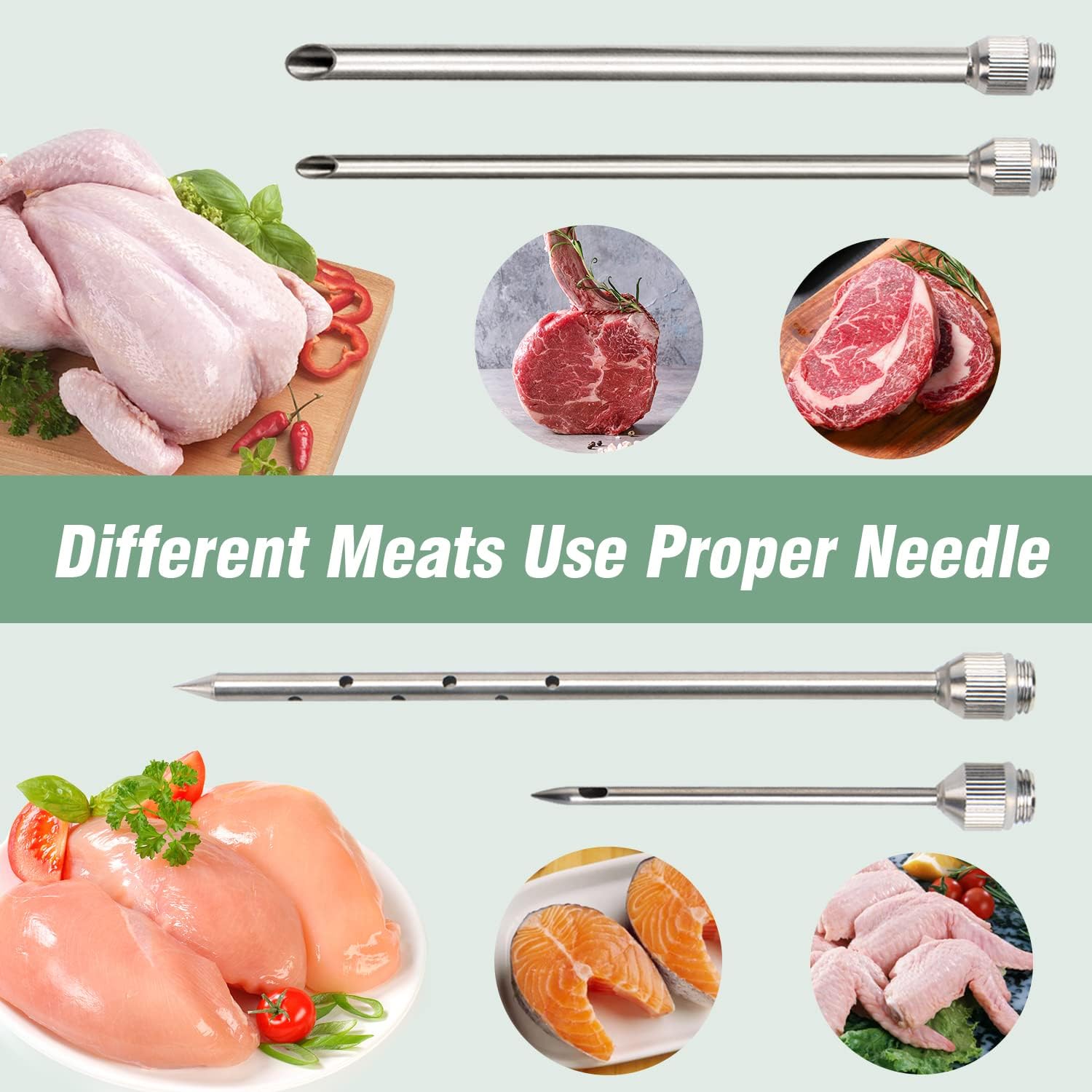
Different needles serve distinct purposes for marinade injection. A wider, often blunt-tipped needle is for marinades containing small bits of herbs or garlic – it prevents clogging. A thinner, pointed needle is for clear, thin liquids, making smaller holes in the meat. Sometimes you’ll find an angled needle, which helps direct marinade into hard-to-reach areas or allows you to inject horizontally within the meat. Having options, like the Tri-Sworker’s variety, means you’re prepared for any recipe.
FAQ
Is a meat injector necessary for smoking?
Absolutely. When smoking meats like brisket or pork butt, the long cooking times can dry out the meat. A meat injector helps infuse moisture and flavor deep inside, ensuring a succulent result throughout the entire smoking process. It makes a noticeable difference.
Can I use store-bought marinades with an injector?
Yes, but you’ll need to check their consistency. Many bottled marinades are thin enough, but if they contain spices, herbs, or even bits of onion, straining them through a fine-mesh sieve is always a good idea. Otherwise, you risk clogging your flavor injector needles.
How much marinade should I inject into a turkey?
A general rule of thumb is about 1/2 to 1 ounce of marinade per pound of meat. For a 15-pound turkey, that means roughly 7.5 to 15 ounces total. Distribute it evenly across the breast, thighs, and drumsticks for the juiciest turkey.
What’s the advantage of a 2-ounce capacity injector like the Tri-Sworker?
A 2-ounce capacity is generally considered ideal for home use. It’s large enough to inject a good amount of marinade without constant refilling, yet small enough to handle comfortably and store easily. It hits that sweet spot for efficiency and practicality.
How deep should I inject the marinade?
You want to penetrate deep into the thickest parts of the meat, but avoid going all the way through to the other side. Aim for the center of the muscle. Pull the needle out slowly while depressing the plunger to distribute the marinade as you withdraw.
Can I inject hot liquids?
It’s generally not recommended to inject very hot liquids as this can start to cook the meat immediately, altering its texture in undesirable ways. Let your marinades cool to room temperature or even chill them slightly before injecting.
What kind of recipes benefit most from a turkey injector?
Any large, lean cut of meat or poultry will see huge benefits. Think whole turkey, brisket, pork loin, roast chicken, or even larger fish like salmon. Anytime you want deep, even flavor and moisture, a good meat injector is your friend.
Final Recommendation
For most home cooks looking to significantly upgrade their roasting and smoking game, particularly when it comes to turkey or brisket, a mid-range, stainless steel injector like the Tri-Sworker Meat Injector Syringe is the smart play. You’re getting the essential features—durable construction, multiple versatile needle types, a practical 2-ounce capacity, and easy cleaning via the included brushes—without overspending on professional-grade bulk or features you’ll never use.
It offers the reliability and consistent results that make a real difference, especially during high-stakes holiday cooking or those long weekend smoking sessions. Don’t waste your effort on a flimsy plastic unit that’ll quit on you. Invest in a tool that stands up to repeated use and actually delivers on the promise of truly flavorful, incredibly juicy meat.
#TriSworker #Meat #Injector #Syringe #Smoking #Marinade #Flavor #Food #Injector #Needles #Ideal #Injector #Marinades #Meats #Turkey #Brisket #Beef #2OZ #Capacity