Getting Started with Your First Wok: Unpacking the Teewe Carbon Steel Wok and What It Means for Your Kitchen
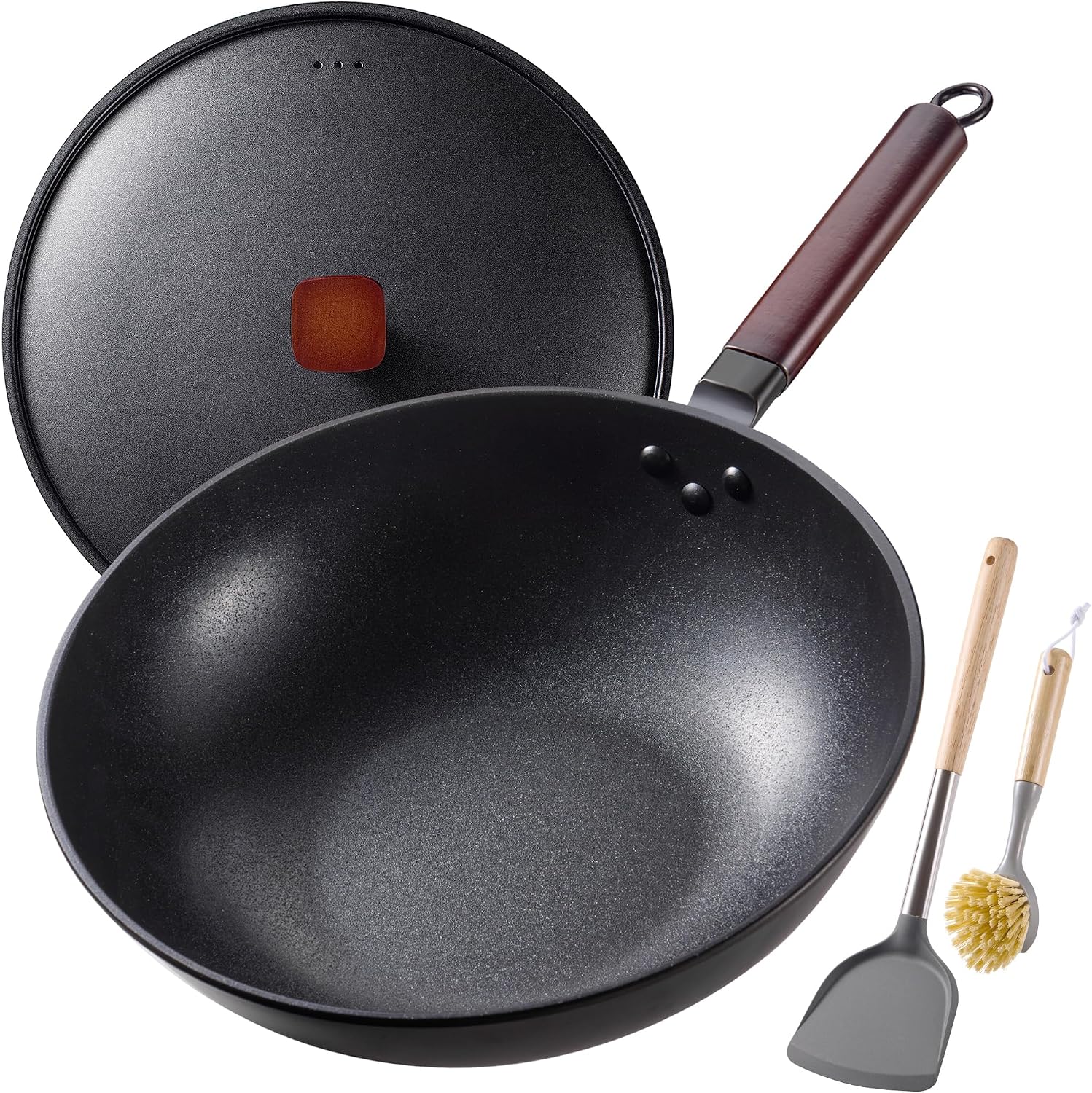
So, you’re eyeing a wok, maybe specifically the Teewe Carbon Steel Wok bundle that promises a whole lot in one package – a 13-inch wok, a lid, spatula, and even a dish brush. This guide isn’t about listing specs; it’s about giving you the real talk. We’ll cut through the marketing jargon, figure out what matters when you’re buying a wok, and decide if a complete setup like the Teewe is genuinely a smart move for your kitchen adventures, especially if you’re new to the stir-fry game.
Quick Answer
The Teewe Carbon Steel Wok package offers a solid entry point for anyone looking to get into high-heat cooking and stir-frying without piecing together a kit. Its pre-seasoned flat bottom design means it’s ready for various stovetops, including induction cooktops, and the included accessories are genuinely useful for beginners. It’s a pragmatic choice that saves you the hassle, though long-term durability and true nonstick performance (beyond initial seasoning) are always a consideration with bundled value sets.
What to Look For (The Buying Criteria)
Choosing a wok isn’t just about picking the prettiest one. There’s a science, or at least a practical logic, to it. Over the years, I’ve seen people spend way too much on features they never use, or skimp on essentials only to upgrade later. Don’t be that person.
1. Material Matters: Carbon Steel vs. Others
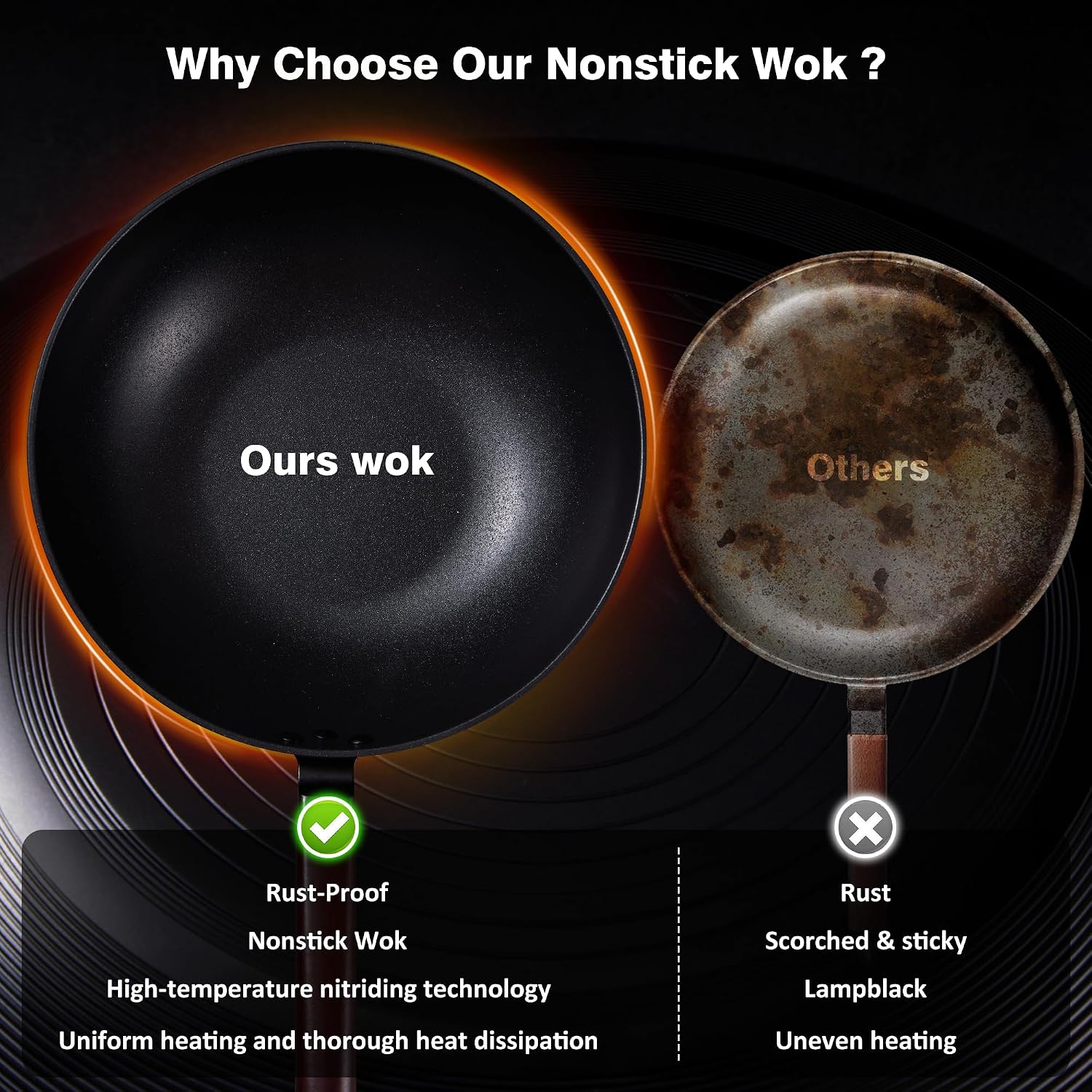
This is probably the biggest decision you’ll make. The Teewe is a carbon steel wok, and honestly, that’s often the gold standard for traditional stir-frying. Carbon steel heats up fast, retains heat well, and, crucially, develops a natural, incredibly durable seasoning over time. This seasoning is what gives it its eventual nonstick properties – not a chemical coating. It means better flavor transfer, too. The downside? It requires a bit more care. You can’t just toss it in the dishwasher. It needs to be dried immediately after washing and re-oiled occasionally to maintain that seasoning and prevent rust. Aluminum woks exist, but they don’t hold heat as well. Stainless steel? Even worse for actual stir-frying. Cast iron woks are another option, but they’re substantially heavier and slower to heat up, which isn’t ideal for the quick temperature changes a wok needs.
2. Shape and Bottom Design: Round vs. Flat
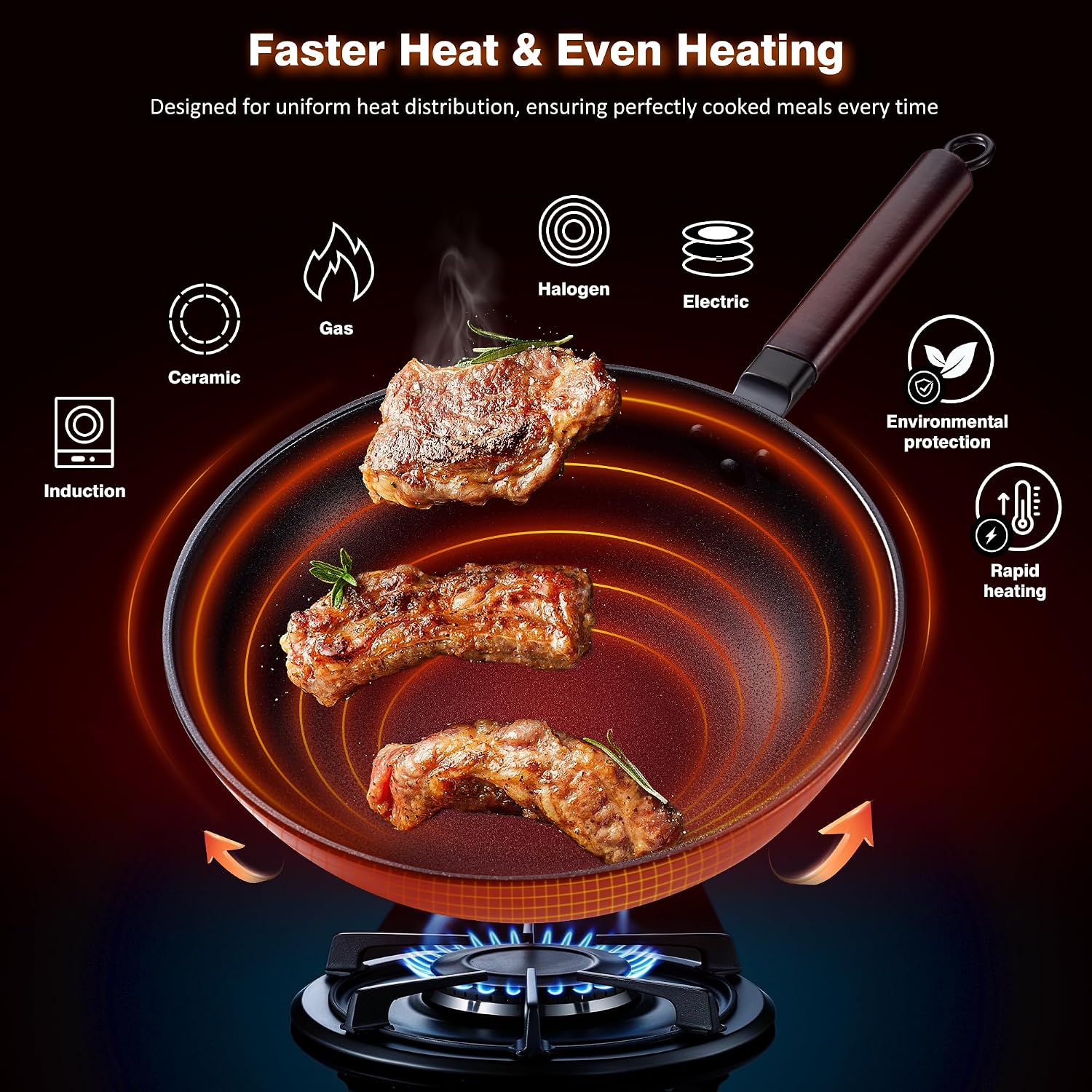
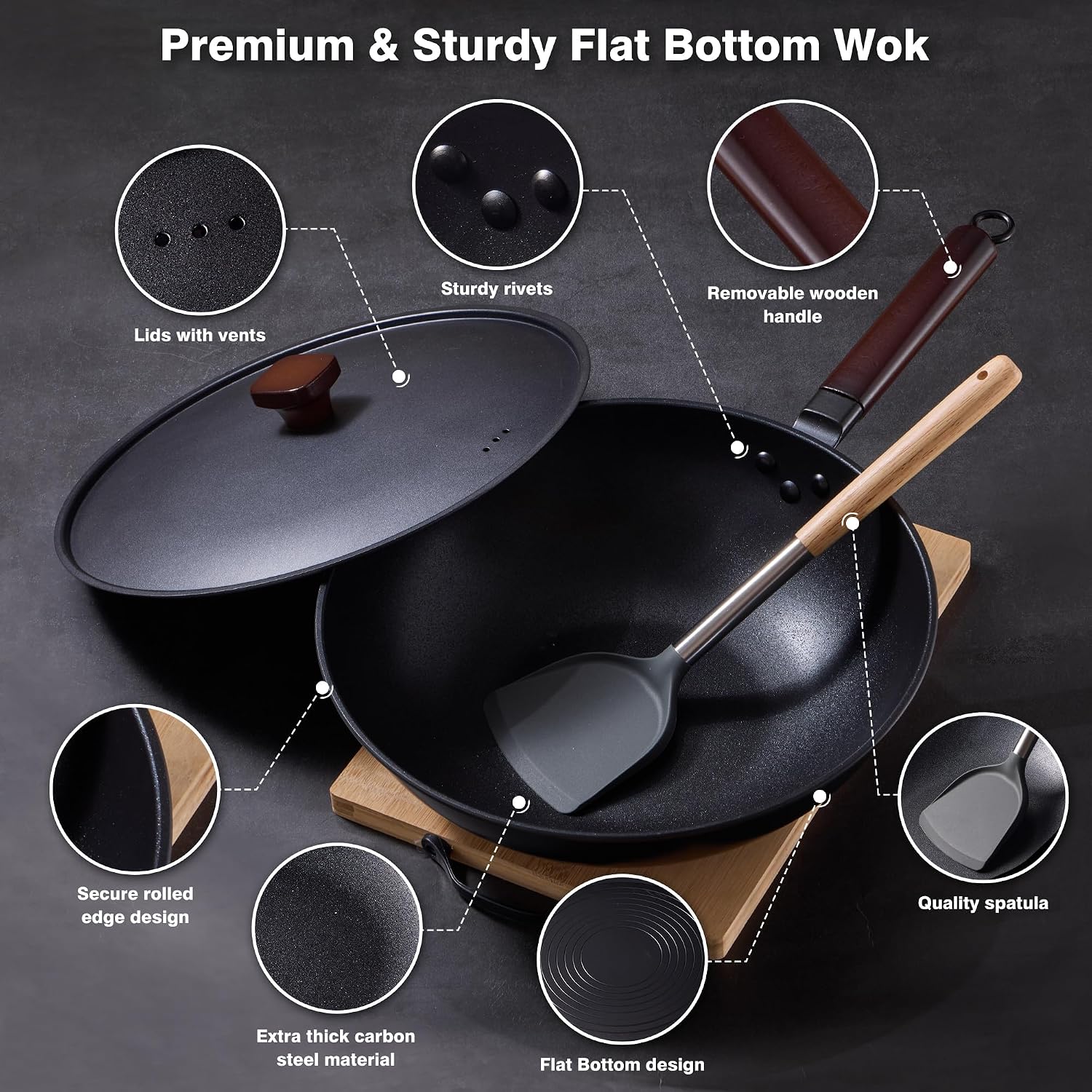
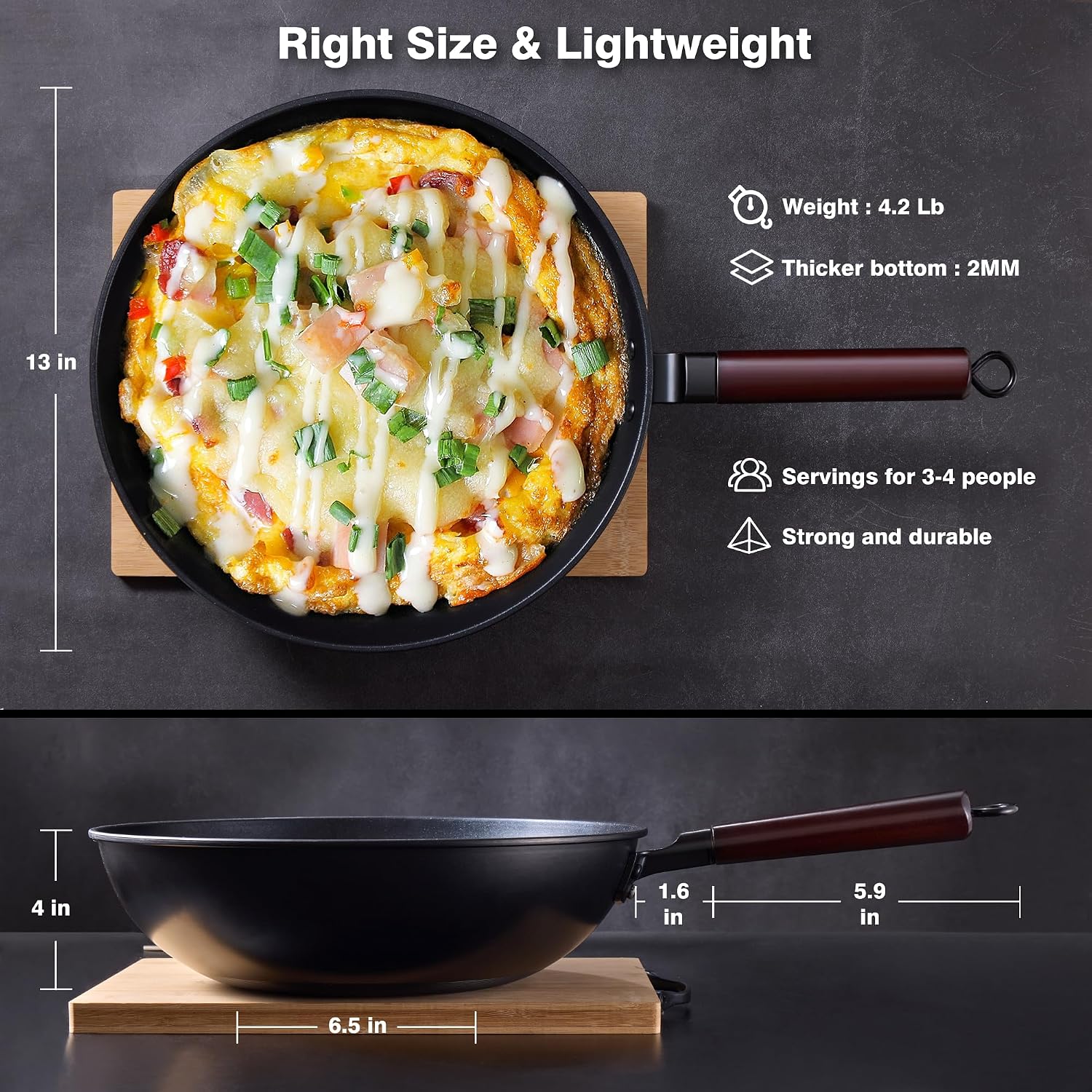
Traditional woks have a round bottom, perfect for powerful burner configurations and maximum heat concentration. But let’s be real, most home stoves, especially electric or induction cooktops, need a flat surface. The flat bottom wok design, like the 13-inch Teewe, is a concession to modern kitchens. It provides stability and maximum contact with heating elements. Is it as authentic as a round bottom on a specialized wok burner? No. But for practicality in a standard kitchen, it’s pretty much a necessity. Just be aware that some of the classic “wok hei” — that smoky, intense flavor from high-heat stir-frying — is easier to achieve with a round bottom on an appropriate burner. You sacrifice a tiny bit of surface area for stability, but it’s a worthwhile trade-off for most home cooks.
3. Size: Is 13-inch Right for You?
The Teewe is a 13-inch wok. This is a decent size for a home kitchen, generally capable of handling meals for 2-4 people without feeling overcrowded. Go much smaller, and you lose the high walls needed for proper stir-frying without flinging food everywhere. Much larger, and it becomes unwieldy on a typical stovetop, hard to store, and heavier to handle, especially when full. A 13-inch stir-fry pan provides a good balance, but if you’re regularly cooking for a big family, you might eventually wish for something a bit larger. Don’t underestimate how quickly a wok gets crowded if you try to cook too much at once.
4. Handles: A Grip on Your Cooking
A wok needs a sturdy handle. Some traditional woks have two loop handles. The Teewe appears to have a single long handle, probably with a helper handle on the opposite side. That long handle is crucial for tossing ingredients, which is the heart of stir-frying. A good handle stays cool enough to touch (or at least manage with a towel) and provides a secure grip. Look for something riveted, not just screwed on, for durability. Heat-resistant material is a plus. A poorly designed handle makes the whole experience a chore.
5. Nonstick Claims and Seasoning: The Real Deal
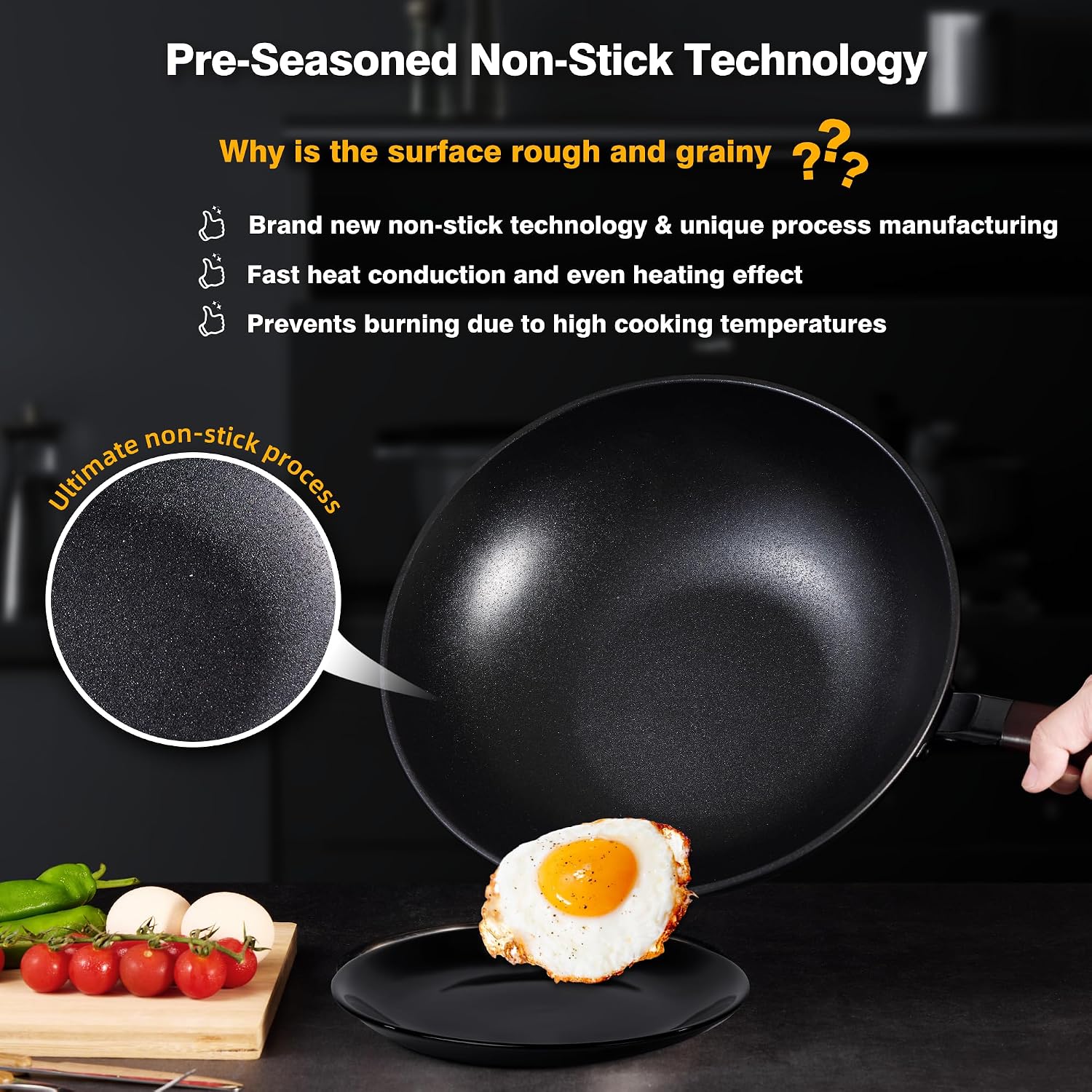
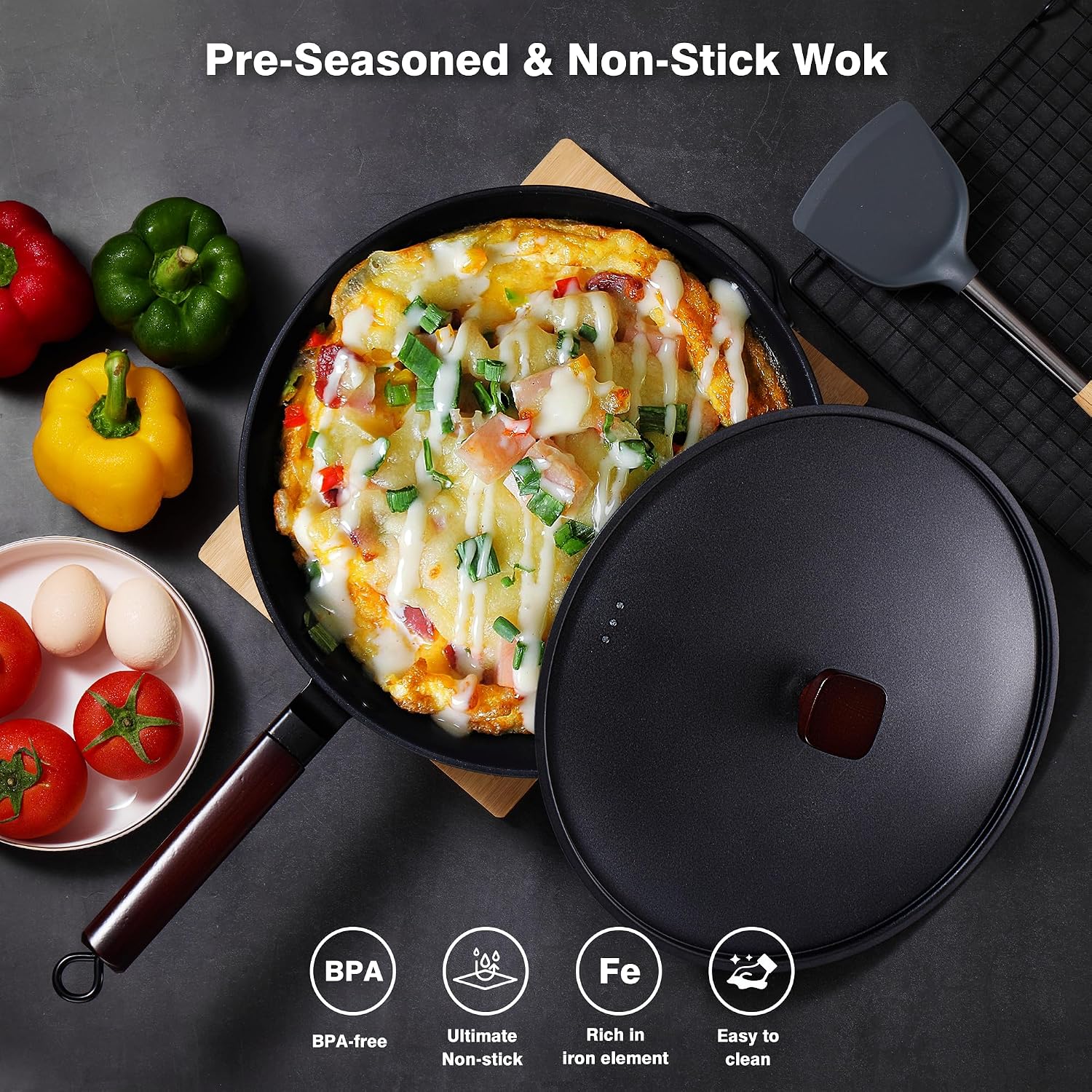
The product title mentions “nonstick.” For carbon steel, this means it’s been pre-seasoned wok from the factory. This initial layer is a great start, but it’s not a magic, permanent coating like Teflon. It’s a polymerized oil layer that will deepen and improve with proper use and care. Don’t expect instant egg-sliding performance out of the box, especially not like a typical PTFE-coated pan. The nonstick properties of a carbon steel wok are earned through diligent cooking and maintenance. If you neglect it, the seasoning can strip, and food will stick. It’s a commitment, not just a feature.
6. Included Accessories: Are They Just Fluff?
The Teewe bundle includes a lid, a spatula, and a wok brush. A lid is surprisingly useful for steaming or braising in a wok, or just keeping food warm. A proper metal wok spatula (often called a “chan”) is designed to curve with the wok’s shape, making tossing and scraping much more effective than a flat spatula. The dish brush is a handy addition for cleaning without stripping the seasoning. These aren’t just throw-ins; they actually enhance the wok experience, especially for beginners who might not know what specialized tools they need. It’s a thoughtful touch, but remember that the quality of these accessories can vary.
How to Match the Product to Your Situation
Finding the right wok means thinking about your cooking style and living situation.
The Weeknight Warrior:
You’re busy, you want quick, flavorful meals. You might be cooking for one or two, maybe a small family. You appreciate convenience but also want decent results. For you, the Teewe Carbon Steel Wok, with its pre-seasoned, flat bottom wok design, is a strong contender. The accessories mean you’re ready to go right away. You don’t want to mess with seasoning from scratch. Just cook, clean, and go. The 13-inch size is perfect for your needs, preventing food overload.
The Aspiring Chef (Home Edition):
You’re excited about mastering new techniques, trying authentic recipes, and maybe dabbling beyond just stir-fries. You’re willing to invest a little time in maintenance for superior results. While the Teewe is a great start, you might eventually find yourself craving a truly traditional, round-bottom carbon steel wok for specific applications, especially if you get a powerful outdoor burner. For now, the Teewe offers a fantastic platform to learn proper stir-frying techniques, understand seasoning, and get a feel for high heat cooking. It’s a stepping stone, not necessarily the final destination for the truly obsessed.
The Space-Conscious Apartment Dweller:
Kitchen storage is always a puzzle. You need versatile tools that earn their keep. A 13-inch wok isn’t tiny, but it’s manageable. The Teewe’s bundled accessories mean you’re not buying separate items that take up more space. Its compatibility with various stoves, including induction cooktops, means it’ll likely work wherever you land. Just ensure you have a dedicated spot for it, as it’s not something you’ll want to tuck into a drawer.
Wok Comparison: Types & Tiers
| Type/Tier | Best For | Price Tier | Key Feature | Watch-Out |
|---|---|---|---|---|
| Teewe Carbon Steel Wok | Beginners, everyday home cooks, value-seekers | Budget-friendly | Pre-seasoned, flat bottom, bundled accessories | Long-term accessory quality, seasoning maintenance required |
| Basic Carbon Steel Wok | Enthusiasts, those willing to season, DIYers | Budget-friendly | Raw carbon steel, often lighter gauge | Requires extensive initial seasoning, no accessories |
| Heavy-Gauge Carbon Steel | Serious cooks, durability-focused | Mid-range | Thicker steel, better heat retention, robust | Heavier to handle, can be pricier, still needs seasoning |
| Nonstick Coated Wok | Absolute beginners, low-maintenance priority | Mid-range | Easy initial cleanup, minimal sticking | Coating degrades over time, lower max heat, less wok hei |
The Teewe Carbon Steel Wok stands out for its all-in-one approach. It removes the barrier to entry by providing a pre-seasoned surface and necessary tools, which is huge for a beginner.
A Basic Carbon Steel Wok might be cheaper upfront, but you’ll spend more time and effort seasoning it yourself, plus you’ll need to buy a lid and spatula.
Heavy-Gauge Carbon Steel options are built to last and perform incredibly well once seasoned, but they demand more upper body strength and a larger investment.
And then there are the Nonstick Coated Wok choices. They’re undeniably easy for a while, but that coating rarely holds up to the high heat that a wok truly needs. You’ll likely replace it more often.
Scenarios for Your Wok Life
Occasional Stir-Frying (1-2 times a month):
If you’re only whipping out a wok sporadically, ease of use is key. You don’t want a high-maintenance piece of equipment that stares at you accusingly between uses. The Teewe’s pre-seasoned nature and full kit make it less intimidating. You can pull it out, get cooking, and quickly clean it up without a huge fuss. Just remember to re-oil after washing, even if it’s just once a month.
Regular Weeknight Meals (2-3 times a week):
Here, the Teewe really shines. Regular use actually improves the seasoning on a carbon steel wok. The more you cook, especially with oil, the better its natural nonstick surface becomes. A 13-inch flat bottom wok is a workhorse for consistent, varied meals, from lightning-fast noodle dishes to steaming vegetables. The included spatula will become your constant companion.
High-Heat Culinary Experiments:
Are you pushing the boundaries, trying to achieve that restaurant-quality wok hei? The Teewe can get you there, but you’ll need a powerful burner, probably a gas stove. While compatible with induction cooktops, induction’s even heat might not replicate the focused intensity a flame provides for truly searing results. A robust carbon steel wok, once expertly seasoned, can handle the extreme temperatures needed for authentic high-heat cooking. Just remember the handle will get hot. Always.
Common Mistakes Wok Buyers Make
- Expecting instant nonstick performance from carbon steel: The pre-seasoned wok label on the Teewe means it has a head start, but it’s not Teflon. It’s a developing surface. Be patient. Cook with enough oil. Avoid harsh soaps.
- Using harsh detergents on carbon steel: Your seasoning is essentially polymerized oil. Dish soap, especially strong stuff, will strip it away. Hot water and a wok brush or soft sponge are usually all you need. If you absolutely must use soap, use it sparingly and re-oil immediately.
- Not drying the wok immediately after washing: This is a rust magnet. Water is the enemy of carbon steel. Wash it, dry it thoroughly over low heat on the stove, then apply a tiny film of cooking oil. Every. Single. Time.
- Overcrowding the wok: This is probably the biggest rookie mistake in stir-frying. Too much food lowers the temperature drastically, steaming your ingredients instead of searing them. Cook in batches if you need to. A 13-inch wok has its limits.
Why/How/What Mini-Sections
Why is carbon steel so often recommended for woks?
Carbon steel is the material of choice because it’s incredibly responsive to heat changes – crucial for the dynamic cooking style of stir-frying. It heats up quickly and, unlike cast iron, cools down fast when removed from the burner, giving you precise control. Plus, with proper care, it develops a natural, durable nonstick surface through seasoning, which actually improves with age and use.
How do I maintain the seasoning on my Teewe wok?
Maintaining your wok’s seasoning involves a few simple steps. First, avoid harsh detergents. After cooking, wash it with hot water and a gentle brush or sponge. Immediately dry it completely, either with a towel or by placing it back on low heat for a minute. Once dry, wipe the entire surface, inside and out, with a very thin layer of cooking oil. This protects it from rust and builds up that lovely nonstick layer.
What’s the deal with flat bottom woks and induction cooktops?
Flat bottom wok designs are essential for induction cooktops because induction technology requires direct contact with a flat, magnetic surface to generate heat efficiently. A round-bottom wok simply won’t work on induction unless you use a special adapter ring, which isn’t ideal. The flat base of models like the Teewe ensures maximum surface contact, allowing for effective heat transfer and stability on modern stoves.
FAQ
Is a carbon steel wok truly nonstick?
It can become remarkably nonstick, yes, but it’s an earned nonstick. It’s not like a PTFE coating. The pre-seasoned wok gives you a head start, but you build and maintain that seasoning layer through cooking with oil and proper care.
Can I use my Teewe wok on an electric stove?
Absolutely. The flat bottom wok design of the Teewe is specifically made for stability and even heat distribution on flat electric cooktops, as well as gas and induction.
What kind of oil should I use for seasoning and cooking in a wok?
For initial seasoning and maintenance, high smoke point oils like grapeseed, canola, or flaxseed oil are great. For cooking, any high smoke point oil works, but peanut oil is traditional for many stir-fries, offering a subtle nutty flavor.
Do I really need a special wok spatula?
While you can make do with a regular spatula, a proper wok spatula (often called a chan) is designed with a curved edge that fits the wok’s contours perfectly. This makes it much easier to scoop, toss, and scrape every bit of food.
Why does my carbon steel wok rust?
Rust occurs when your carbon steel wok isn’t properly dried and oiled after use. Water and air exposure will quickly lead to rust. Always dry it completely and wipe it with a thin layer of oil immediately after cleaning.
Is 13 inches a good size for a wok?
For most home cooks and typical family meals (2-4 people), a 13-inch stir-fry pan is a very versatile and manageable size. It’s big enough to cook a decent volume without overcrowding, but not so large it’s difficult to handle or store.
Can I cook more than just stir-fries in a wok?
Definitely! A wok is incredibly versatile. Beyond stir-frying, you can deep-fry, steam (especially with the included lid), braise, smoke, and even pan-fry in it. It’s a kitchen workhorse if you let it be.
Final Recommendation
If you’re a beginner to the world of high-heat Asian cooking, or simply need a reliable, all-in-one setup without the fuss of sourcing individual pieces, the Teewe Carbon Steel Wok -13 Inch bundle is a genuinely smart starting point. Its pre-seasoned flat bottom makes it ready for modern stoves, including induction cooktops, right out of the box. The included lid, spatula, and dish brush are practical additions that save you time and guesswork, setting you up for success.
It’s a solid, budget-friendly choice that prioritizes ease of entry. You get a functional carbon steel wok and the tools to start cooking immediately, rather than tackling a raw seasoning process. While enthusiasts might eventually seek a heavier gauge or a purely traditional round-bottom model, the Teewe offers all the core benefits needed to learn and enjoy the art of stir-frying without the initial hurdles. Just commit to that simple, consistent care routine, and this wok will serve you well.
#Teewe #Carbon #Steel #Wok #Inch #Woks #Stirfry #Pans #Nonstick #Wok #Pan #Lid #Spatula #Dish #Brush #PreSeasoned #Flat #Bottom #Chinese #Woks #Induction #Electric #Gas #Stoves