
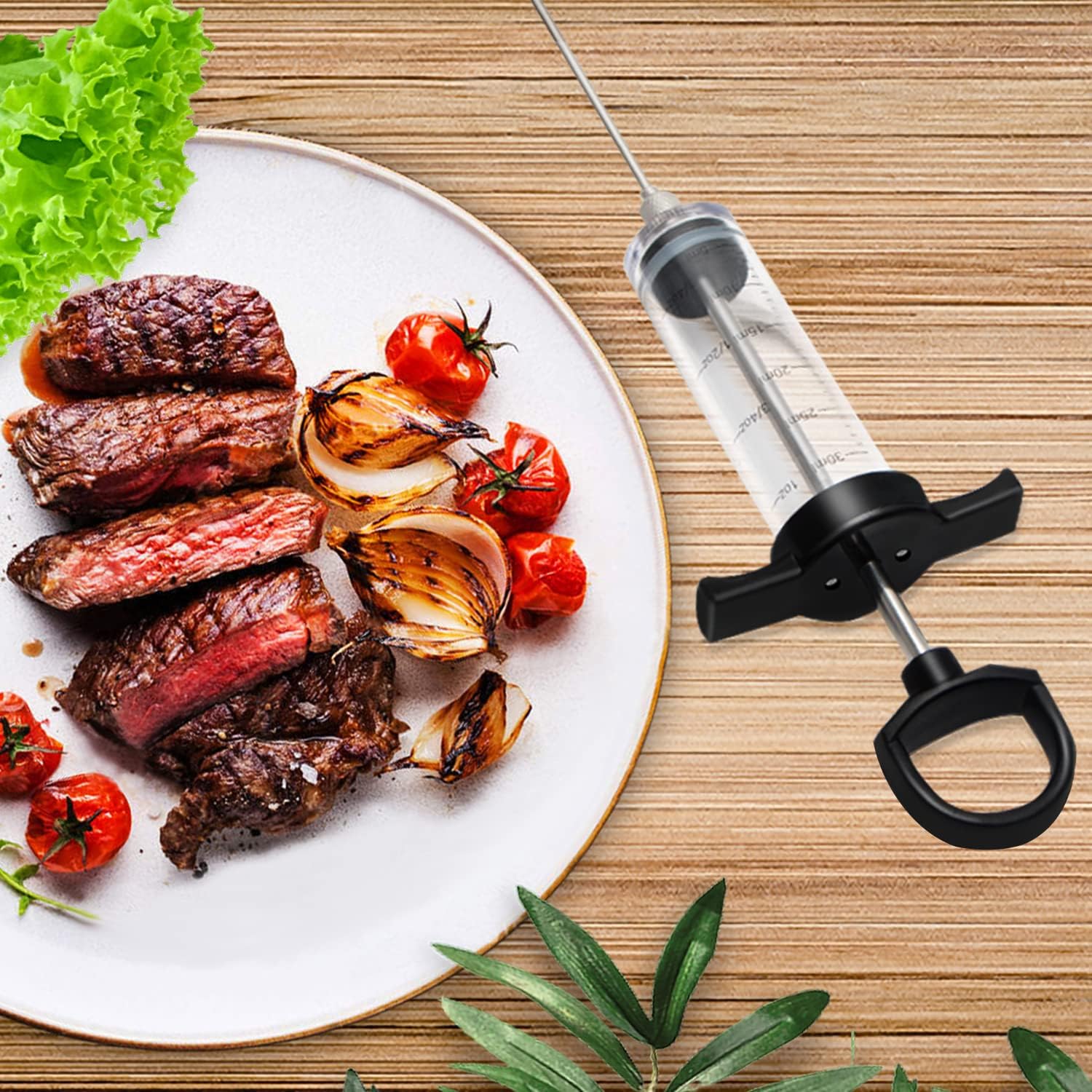
Getting Your Bird Basted: A Smart Shopper’s Guide to the Right Turkey Injector
If you’re reading this, chances are you’ve tried dry turkey. Or maybe a brisket that just didn’t quite soak up the goodness. That’s where a good turkey injector comes in, pushing marinades deep into the meat where a brush just can’t reach. This guide cuts through the noise, helping you figure out if a kit like the Tri-Sworker Plastic Meat Injector is truly what your kitchen needs, or if you should look elsewhere for that perfectly juicy roast.
Quick Answer
For most home cooks looking to infuse flavor without a big investment, a basic plastic injector like the Tri-Sworker kit offers decent value. It’s got different needles for various marinades and a manageable capacity, making it a solid entry point for occasional use. But for serious pitmasters or those who expect heavy-duty durability, you might want to consider stepping up to a more robust, often metal, option for consistent, long-term performance.
What to Look For (The Buying Criteria)
Choosing a meat injector isn’t rocket science, but there are a few key things worth considering before you jump in. You want something that’ll actually get the job done, won’t fall apart after one use, and isn’t a total pain to clean. Believe me, I’ve seen people spend way too much on features they never use.
1. Material Quality and Durability: This is probably the big one. Most injectors are either plastic or stainless steel. Plastic models, like the Tri-Sworker Plastic Meat Injector Kit, are typically more budget-friendly. They work, no doubt. But they can be prone to cracking, especially if you’re injecting thicker marinades or really pushing hard into dense cuts like brisket. Sometimes the threads on the plunger or where the needle attaches can wear out or strip pretty fast. Stainless steel? That’s your tank. It’s heavier, more expensive, but it’s built to last. You’ll worry less about it breaking mid-injection. The trade-off? Stainless steel can be harder to see through, so you might not instantly know how much marinade you have left.
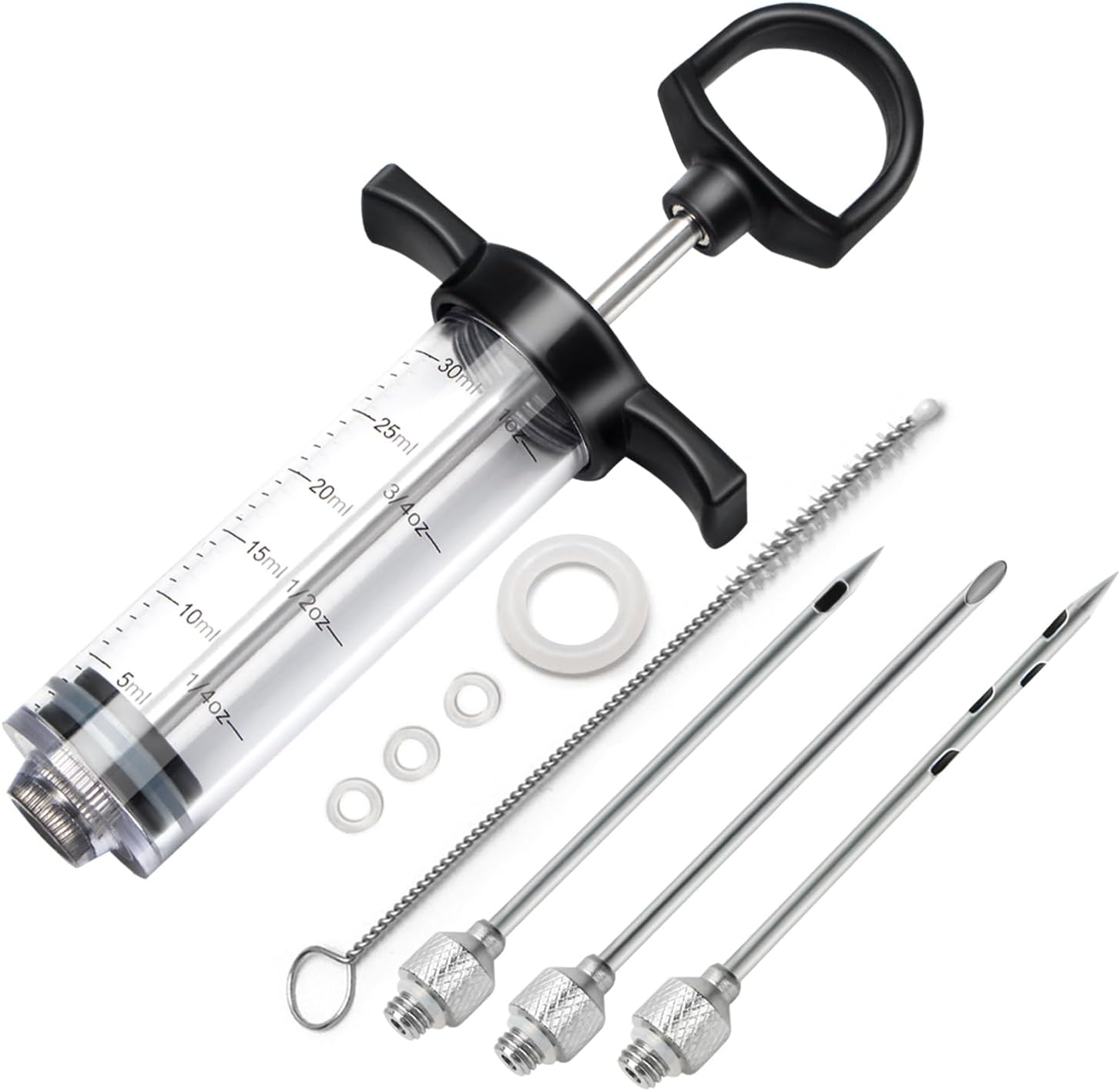
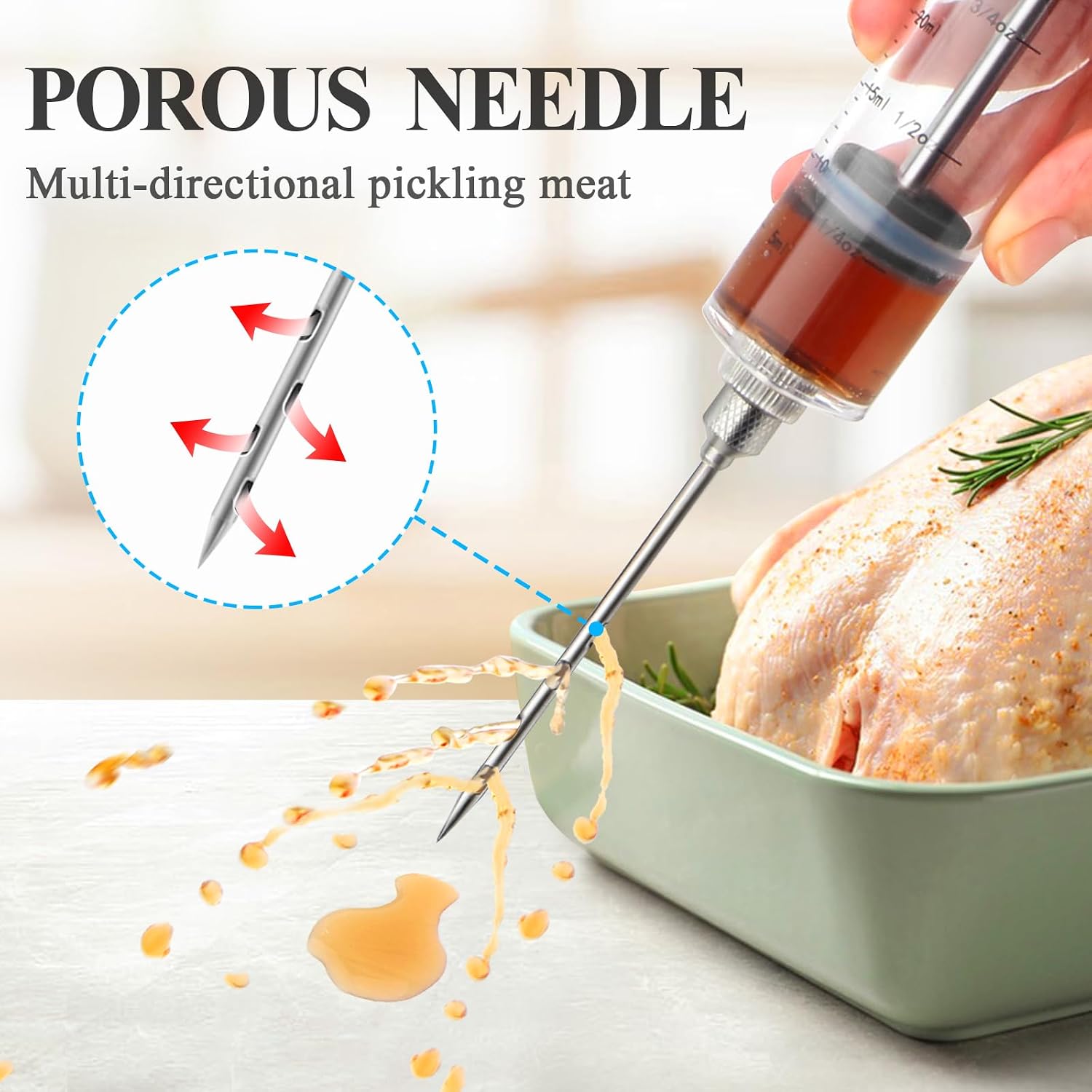
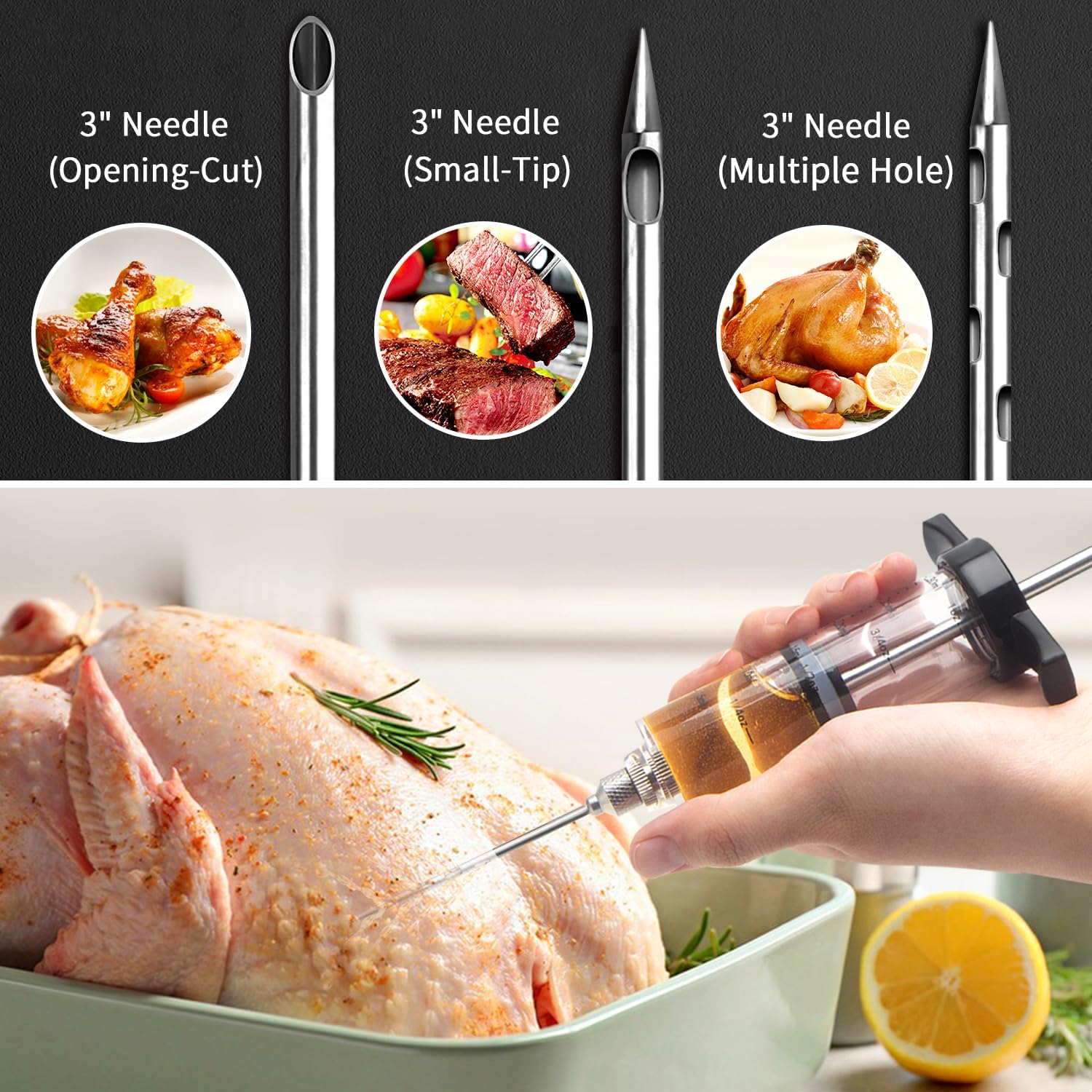
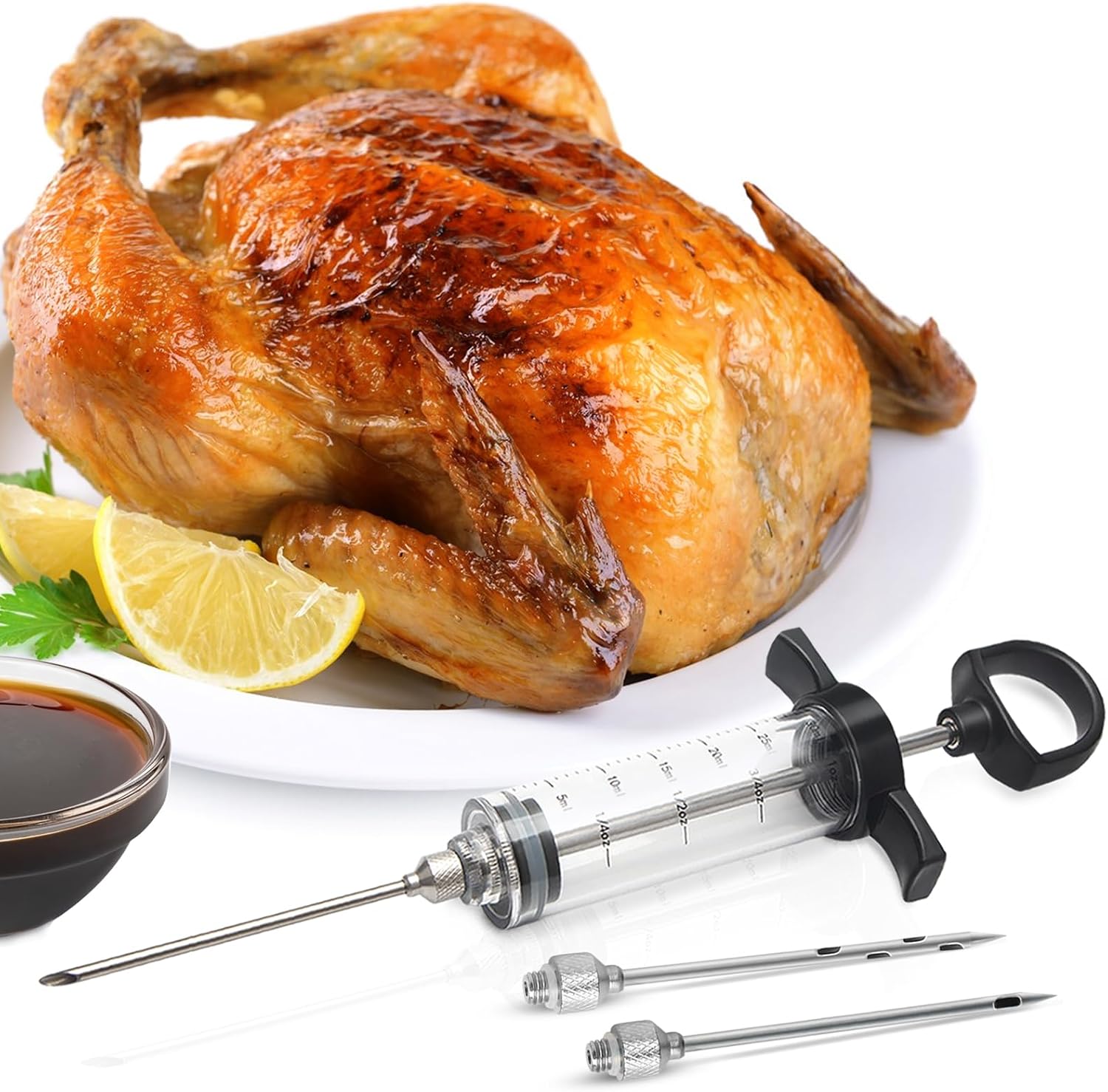
2. Needle Selection and Gauge: This isn’t just about looking fancy. Different marinades need different needles. You’ll find needles with multiple holes for liquid marinades (think thin, watery sauces that spread easily) and wider, single-hole needles for chunky marinades that might contain herbs, minced garlic, or pepper flakes. The Tri-Sworker kit, for instance, boasts three flavor food syringe needles, which is pretty standard and covers most bases. But pay attention to the gauge – how wide is the opening? Too thin, and those herb bits will clog it instantly, causing frustration. Too wide, and you leave bigger holes in your meat, which isn’t ideal for retention. It’s a balancing act.
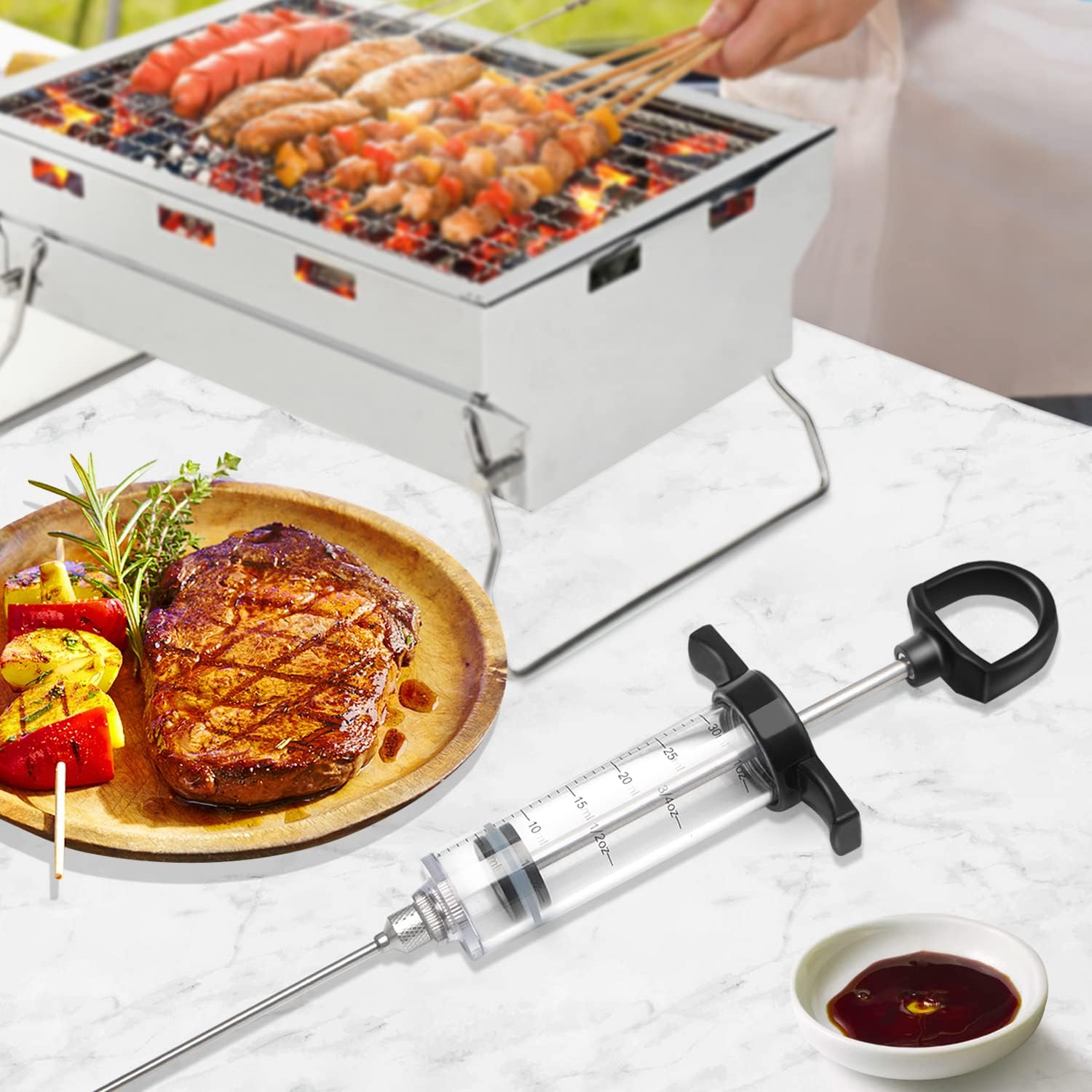
3. Capacity and Size: How much marinade can it hold? The Tri-Sworker kit specifies 1-ounce. For a regular chicken or a smaller turkey, that’s probably fine. You might have to refill it a few times, but it’s manageable. If you’re tackling a monster 20-pound bird or a big ol’ brisket for a crowd, you might quickly get tired of constantly refilling a 1-ounce syringe. Larger capacity injectors (2-ounce or even bigger) mean fewer refills, which is a blessing when you’re in the middle of prep. However, bigger capacity often means a bulkier tool that can be a bit more awkward to handle, especially if you have smaller hands or are working in tight spaces.
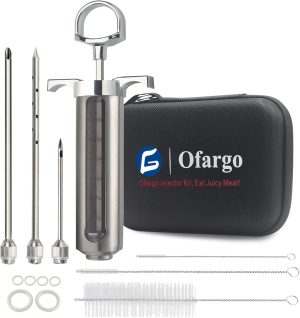
4. Ease of Cleaning: Seriously, don’t overlook this. You’re injecting raw meat, often with savory, sticky, or oily marinades. If your injector isn’t easy to disassemble and clean thoroughly, it’s going to become a breeding ground for bacteria. Look for models that come apart easily, where you can get a brush or warm soapy water into every crevice of the barrel and, crucially, through the needles. Many good kits include small cleaning brushes, and that’s a definite plus. Without one, those tiny needle holes are almost impossible to sanitize. A plastic body with simpler construction might seem easier, but often metal parts on higher-end models are designed for quick breakdown and dishwasher safety. Just be sure to check.
5. Plunger Action and Grip: A smooth plunger operation is key. You don’t want it sticking, jerking, or squirting marinade everywhere when you’re trying to inject precisely. Look for a comfortable grip, something that feels secure in your hand even when it’s a bit greasy. Plastic plungers can sometimes be less smooth than metal ones, especially after some use or if the seals aren’t quite right. A good handle makes all the difference when you’re trying to apply even pressure. Nobody likes a squirrely plunger.
6. Extras and Value-Adds: Some kits, like the Tri-Sworker, throw in a paper user manual and a recipe e-book. These aren’t critical for the injector’s function, but they can be genuinely helpful, especially for beginners. The recipes might inspire new flavor combinations, and a proper user manual can explain assembly and cleaning tips. Consider if these value-adds matter to you. Sometimes, a simpler, more robust injector without the bells and whistles is actually a better buy than a feature-packed one that skimps on core quality.
How to Match the Product to Your Situation
Finding the right turkey injector isn’t about finding the objectively “best” one; it’s about finding the best fit for you. Are you just a holiday cook? Or is smoking meat a weekly ritual? Let’s break it down.
The Occasional Holiday Chef:
- Who you are: You pull out the marinade injector maybe once or twice a year – Thanksgiving, Christmas, a special backyard BBQ. Durability is nice, but extreme longevity isn’t your top priority. You want something affordable and effective for those big occasions.
- What you need: A reliable, easy-to-use plastic model, much like the Tri-Sworker kit, would be right up your alley. The multiple needles are a bonus for versatility, and the 1-ounce capacity is fine for an annual turkey or a couple of chickens. The included user manual and recipes? Perfect for getting started without much fuss. Cleaning should be simple.
- Why it works: You’re not putting heavy mileage on it. A mid-range plastic injector gets the job done without breaking the bank. You learn the ropes, get juicy meat, and don’t feel like you overspent for infrequent use.
The Regular Smoker/BBQ Enthusiast:
- Who you are: You’re frequently injecting briskets, pork butts, and whole chickens for the smoker. This isn’t just a seasonal thing; it’s a hobby, maybe even a passion. You need tools that can stand up to regular use and a variety of marinades.
- What you need: You’re looking beyond basic plastic. A sturdy stainless steel meat injector is probably your best bet. You’ll want a larger capacity (2-ounce or more) to handle bigger cuts efficiently. A robust plunger, easily changeable needles, and a design that makes thorough cleaning a breeze are non-negotiable. While the Tri-Sworker kit could work in a pinch, its plastic construction and smaller capacity might test your patience over time.
- Why it works: Longevity and reliability matter here. You’ll appreciate the smoother operation and knowing your tool won’t fail when you’re elbow-deep in a competition brisket. Investing a bit more upfront saves headaches and potential replacements down the line.
The Culinary Experimenter:
- Who you are: You’re not just injecting meat; you’re infusing pastries, filling desserts, or adding creative flavor bombs to veggies. Your uses are varied, sometimes unconventional, and precision is important.
- What you need: Versatility is key. A kit with a wide range of needles, different gauges, and perhaps even adjustable depth settings. Material can be a mix of high-grade plastic and stainless steel components, but everything needs to be food-safe for diverse applications. Easy disassembly for very specific cleaning (different flavors, different foods) is paramount. A kit like Tri-Sworker could serve as a starting point, but you might quickly outgrow its specific focus on meat injection and seek more specialized or broader-range options.
- Why it works: Your needs go beyond just moisture and flavor in meat. You require adaptability. A well-designed, perhaps modular, system allows you to explore culinary boundaries without needing a dedicated tool for every whim.
Injector Types & Tiers: A Quick Look
| Type/Tier | Best For | Price Tier | Key Feature | Watch-Out |
|---|---|---|---|---|
| Basic Plastic Kit | Entry-level, occasional holiday cooks | Budget-friendly | Lightweight, easy to handle, typically multiple needles | Less durable, prone to cracking, may clog easily |
| Mid-Range Stainless Steel | Regular home cooks, frequent BBQers | Mid-range | Solid construction, better durability, smoother action | Can still have flimsy needles, smaller capacity options |
| Professional-Grade Stainless Steel | Pitmasters, heavy-duty use, large cuts | Premium | Built to last, large capacity, precision needles | Higher initial cost, can be overkill for light users |
Basic Plastic Kit: Great for dipping your toes into the world of meat injection. These are often a good starting point, like the Tri-Sworker kit, giving you the essentials without a significant outlay.
Mid-Range Stainless Steel: This is where many enthusiasts land. You get a significant upgrade in feel and longevity without hitting the top-tier prices.
Professional-Grade Stainless Steel: For those who live and breathe smoking and BBQ, this tier offers the ultimate in reliability and performance. It’s an investment, but it truly lasts.
Scenario-Specific Considerations
It’s not just what you’re injecting, but how and when. The right tool makes a difference in different situations.
For Large-Scale Family Gatherings:
Picture this: It’s Thanksgiving, and you’ve got a 20-pound heritage bird. You need to get that bird plump and juicy. A small capacity turkey injector – like a 1-ounce model – will have you refilling endlessly. And honestly, who needs that kind of stress on Turkey Day? This is a scenario where a larger capacity (say, 2-ounce or more) stainless steel injector shines. It reduces refill time, allows for consistent pressure across the entire bird, and generally makes the process smoother, especially when you’re already juggling a dozen other tasks. The Tri-Sworker kit, while functional, might feel a bit underpowered for such a grand culinary undertaking.
Injecting Thicker Marinades for Smoking:
If your go-to marinade for brisket or pork butt includes finely minced garlic, a good amount of black pepper, or perhaps some herbs, you’re dealing with thicker liquid and solid particulates. A standard, multi-hole needle on many plastic injectors, or even some smaller stainless steel ones, will clog. Fast. You’ll spend more time trying to clear the needle than actually injecting. For this, you absolutely need an injector with a wide-gauge, single-hole needle. The Tri-Sworker kit comes with three needles, and you’ll want to ensure at least one of them has that wider opening to handle chunky concoctions without a hitch. If it doesn’t, you’ll be frustrated.
When Travel or Portability Matters:
Sometimes you’re cooking at a friend’s place, at a cabin, or taking your BBQ skills on the road. In these cases, a compact, lightweight kit makes more sense. A plastic injector, because it’s lighter and often comes in a simple, easy-to-pack form, can be ideal. It’s less of a concern if it gets jostled around, and the overall footprint is smaller. The portability of a kit like the Tri-Sworker, with its simple components and a likely small storage box (or even just the original packaging), is a definite plus. You’re trading heavy-duty robustness for convenience. It’s a trade-off many occasional users find perfectly reasonable.
Common Mistakes When Buying a Meat Injector
Honestly, people often mess up the same few things when picking out a marinade injector. Let’s keep you from making those blunders.
1. Ignoring Needle Versatility: Buyers often grab the cheapest injector and don’t even look at the needles. Then they get home, try to inject their famous garlic-herb marinade, and it clogs instantly. You need options! Different cuts of meat, different marinades. One needle isn’t going to cut it for everything. Make sure the kit, like the Tri-Sworker, actually provides different needle types and gauges for various uses.
2. Underestimating the Importance of Cleaning: This isn’t just about hygiene, it’s about product lifespan. A plastic injector, especially, can degrade quickly if marinade dries and hardens inside. And nothing ruins a cooking session faster than a gunky, unusable flavor syringe. If it looks like a nightmare to clean, it probably is. And you won’t do it.
3. Thinking All Injectors Handle All Marinades: Some folks think any meat injector can handle anything from watery brine to thick chili paste. Nope. That 1-ounce plastic injector with a tiny needle isn’t going to stand a chance against a chunky, homemade sauce meant for brisket injection. You’ll break it, clog it, or both. Be realistic about what you plan to inject.
4. Buying Based Solely on Price: While it’s tempting to go for the cheapest option, particularly for a tool you might not use daily, extremely low-cost injectors often disappoint. The plastic can be flimsy, the needles bend easily, and the plunger can stick after a few uses. It’s often a false economy, leading to frustration and a quick replacement purchase. Sometimes, a slightly higher initial outlay for better quality pays off exponentially in performance and durability.
Why/How/What
Why bother with a turkey injector at all?
Good question. A turkey injector ensures your meat stays moist and flavorful from the inside out. Brushing marinades on the surface only does so much; the internal meat still dries out and tastes bland. Injecting bypasses this, delivering seasoning and moisture directly into the muscle fibers, resulting in a more tender, succulent, and consistently delicious final product that actually tastes like it’s been properly seasoned throughout.
How do I clean my meat injector effectively?
First, disassemble it completely. Run warm, soapy water through the barrel and all the needles. Many kits, even one like the Tri-Sworker, come with small cleaning brushes specifically designed for the needles; use them. Rinse thoroughly, making sure no soap residue remains. Let all parts air dry completely before reassembling and storing to prevent bacterial growth.
What kind of marinades work best with an injector?
Thin, flavorful liquids work best. Think broths, melted butter, cider vinegar-based solutions, soy sauce mixtures, or wine reductions. For thicker marinades, you need to ensure any solids (herbs, garlic) are very finely minced or strained out, unless your injector has a wide-gauge, single-hole needle specifically for chunky marinades. Oil-based marinades are fine, but be sure to emulsify them well to prevent separation and clogging.
FAQ
Q: Can I use my turkey injector for things other than turkey?
A: Absolutely! The name is a bit misleading. You can use it for chicken, pork shoulder, brisket injection, lamb, or even large fish fillets. Any meat that benefits from internal moisture and flavor can be injected.
Q: Is a plastic injector like the Tri-Sworker strong enough for brisket?
A: A plastic injector can work for brisket, especially if the brisket isn’t overly dense and your marinade is thin. However, the plastic plunger and body might struggle with the pressure needed for thicker marinades or very tough cuts. A more robust, often stainless steel, option is generally preferred for briskets due to their density and the volume of marinade required.
Q: My flavor syringe keeps getting clogged. What am I doing wrong?
A: Most likely, your marinade is too thick or contains too many solid particles for the needle you’re using. Try straining your marinade, using very finely minced ingredients, or switch to a wider-gauge needle if your kit includes one (like the various options in the Tri-Sworker kit).
Q: How full should I fill my meat injector?
A: Fill it to a comfortable level, leaving a little room at the top to avoid spills. Don’t overfill to the very brim, as you need space for the plunger to enter and create suction. For a 1-ounce capacity injector, aiming for about 0.75 ounces gives you good control.
Q: Do I really need multiple syringe needles?
A: Yes, if you plan to inject different types of meats or marinades. Finer needles are great for thin brines and poultry, while wider, single-hole needles are essential for thicker, chunkier marinades in cuts like brisket. A kit with a good selection, like the Tri-Sworker kit, offers much-needed versatility.
Q: Can I put my marinade injector in the dishwasher?
A: It depends on the material. Most stainless steel injectors are dishwasher safe. For plastic models, like the Tri-Sworker, it’s generally safer to hand wash to prevent warping or damage from high heat, especially to smaller components or seals. Always check the manufacturer’s specific care instructions.
Q: Is it safe to reuse marinade that I’ve drawn into the injector?
A: No, absolutely not. Once marinade has been drawn into the injector and potentially exposed to raw meat, it should be discarded if not fully injected. Never return it to your main batch of fresh marinade. This is a critical food safety practice to prevent cross-contamination.
Final Recommendation
So, which turkey injector makes sense for you? It really boils down to how often you’ll use it and what you plan to inject.
If you’re just starting out, or only pull out the injector for the big holiday bird once or twice a year, a basic plastic kit like the Tri-Sworker Plastic Meat Injector is a sensible choice. It’s budget-friendly, includes the crucial multi-needle assortment, and the 1-ounce capacity is perfectly fine for occasional use. The included manual and recipe e-book are nice touches for beginners, providing a little guidance when you’re getting your feet wet. It’s a good entry point.
However, if you’re a regular in the smoking and BBQ circuit, tackling big briskets and large poultry consistently, you’ll quickly appreciate the upgrade to a mid-range or professional-grade stainless steel injector. The increased durability, smoother plunger action, larger capacity, and more robust needles will save you frustration and last through countless cooks. While the initial cost is higher, the long-term value and improved user experience are substantial for frequent use. Think about your actual cooking habits, not just the lowest price tag. You’ll thank yourself later.
#TriSworker #Plastic #Meat #Injector #Kit #Smoker #Flavor #Food #Syringe #Needles #Ideal #Injecting #Marinade #Turkey #Meat #Brisket #1OZ #Including #Paper #User #Manual #Recipe #EBook #PDF