Getting a Grip: Choosing the Right Manual Can Opener for Your Kitchen
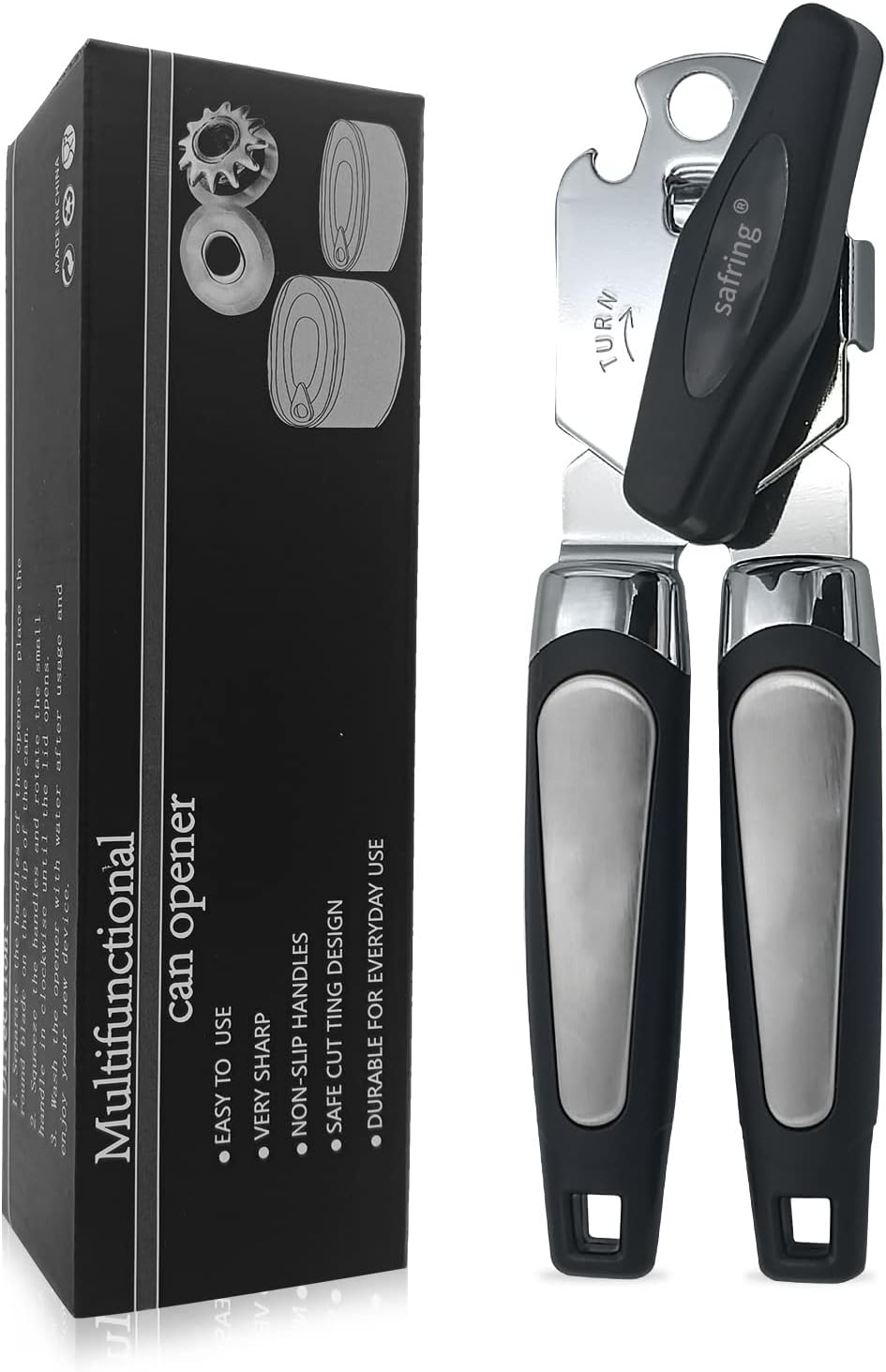
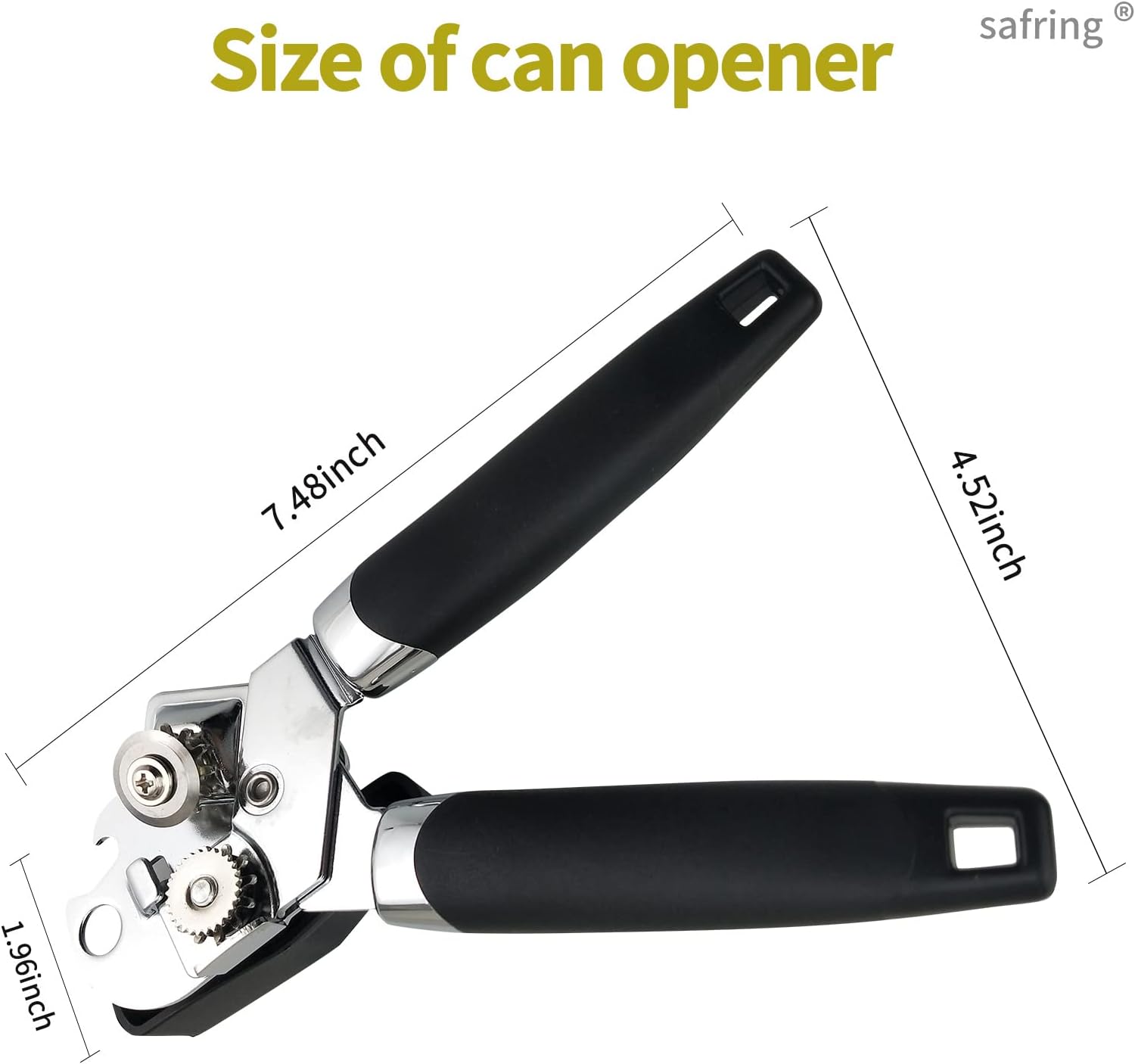
Look, a can opener isn’t exactly a glamorous kitchen gadget. Nobody’s dreaming of it for their wedding registry. Still, try opening a can of diced tomatoes without one, and you’ll quickly realize its fundamental importance. This guide cuts through the noise, helping you understand what makes a truly reliable handheld can opener, especially when you’re looking at sturdy models like the Safring Can Opener Manual, which promises heavy-duty stainless steel construction and a smooth edge. We’re talking practical advice for savvy home cooks and anyone who just wants to get dinner on the table without a struggle.
Quick Answer
For most kitchens, a robust manual can opener offers unbeatable reliability and portability. Focus on durable stainless steel builds, ergonomic handles for comfort, and a design that prioritizes a clean, smooth cut. Models boasting features like an integrated bottle opener, much like the Safring, add useful functionality without complicating things. Pick one that feels solid in your hand; you won’t regret it.
What to Look For (The Buying Criteria)
Choosing a manual can opener might seem straightforward, but ignore a few key details and you’ll end up with a drawer full of frustrating, rust-prone gadgets. Been there. It’s all about longevity, ease, and a bit of kitchen peace.
Blade Material & Cutting Mechanism
This is the heart of any can opener. You want something that cuts cleanly, consistently, and without leaving jagged, dangerous edges. Most folks lean towards stainless steel can opener blades, and for good reason—they resist rust and corrosion far better than cheaper alloys. Rust is a deal-breaker. A rusty opener isn’t just gross; it’s less effective, and honestly, it just feels unsanitary.
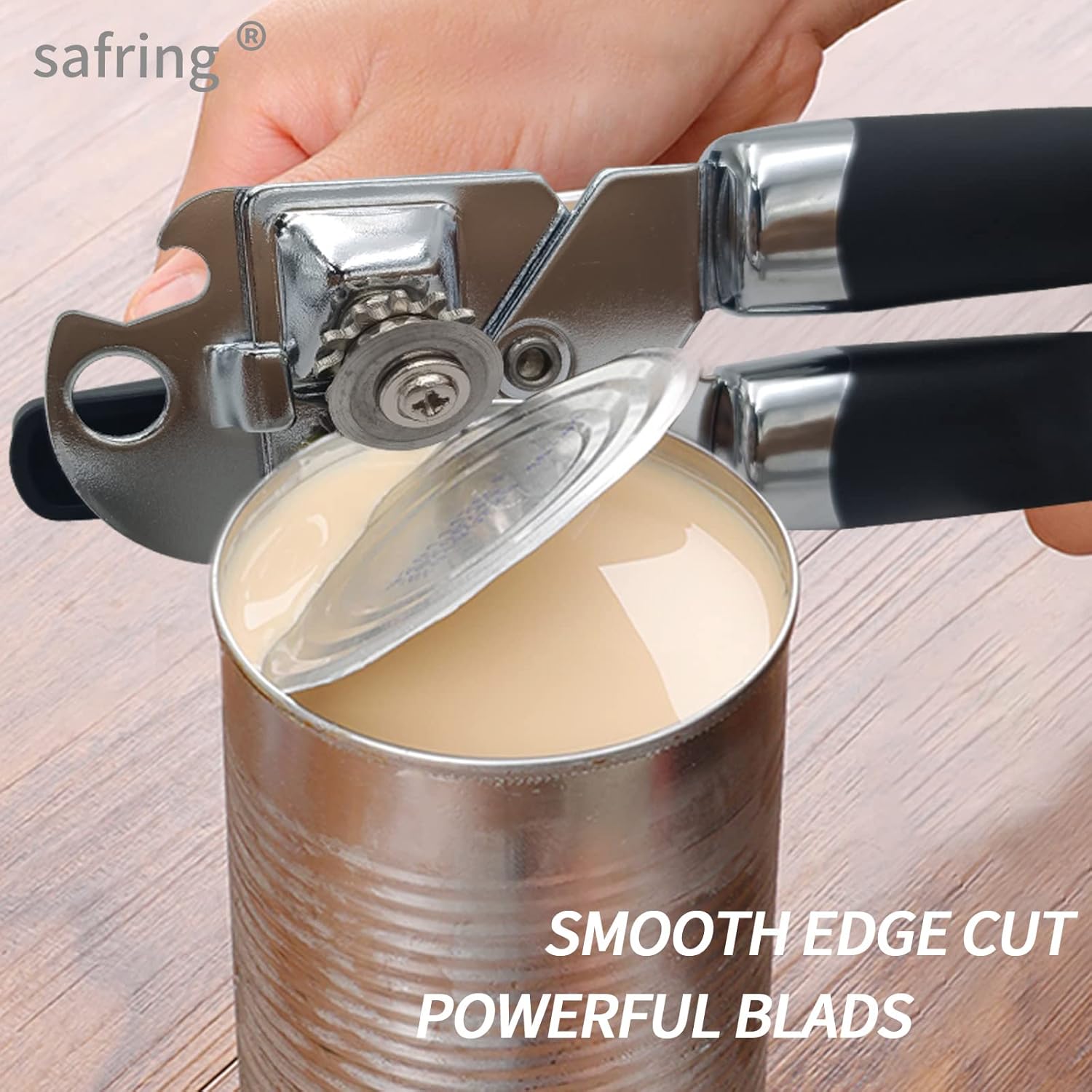
Then there’s the cutting style. Traditional openers slice into the top of the can lid, leaving a sharp rim. Many newer smooth edge can opener designs, sometimes called safe cut can openers or side-cutters, work by severing the can’s seam just below the rim. This leaves a dull, safe edge on both the can and the lid. It’s a game-changer for safety, especially if you have kids rummaging through the recycling or if you simply hate getting nicked. The trade-off? Side-cutters can sometimes be a bit trickier to engage initially, requiring a precise alignment. You gotta get it just right.
Handle Ergonomics & Comfort
A manual can opener is, well, manual. Your hand is doing the work. So, how it feels in your grip matters immensely. A well-designed handle, often featuring a soft, non-slip material or an ergonomic handle contour, makes a huge difference. Think about it: a flimsy plastic handle that digs into your palm or slips when wet is a recipe for frustration. Especially if you’re dealing with stubborn cans or cooking for a crowd.
Heavy-duty models often pair their robust cutting mechanisms with substantial, comfortable grips. This isn’t just about luxury; it’s about leverage and reducing hand fatigue. Don’t underestimate this. If it hurts to use, you won’t use it. But beware, sometimes “ergonomic” just means bulky, and too much bulk can make it awkward to store. A compact kitchen needs thoughtful design, not just squishy plastic.
Durability & Build Quality
Nobody wants to replace their can opener every year. A truly good one should last for ages. This is where the “heavy duty” part of a heavy duty can opener comes into play. Look for solid construction, minimal flex, and components that feel securely assembled. Metal gears, rather than plastic, are a strong indicator of longevity.
When you hold it, does it feel substantial? Does it feel like it could survive a drop onto the kitchen floor without shattering? That’s what you want. While a premium feel usually comes with a slightly higher price, it’s an investment in not having to buy another one any time soon. The downside to some ultra-durable models? They can be a bit heavier, which might be a consideration for some users.
Ease of Use & Operation
Even a heavy-duty model needs to be simple to operate. The turning knob should glide smoothly, without excessive resistance. The clamping mechanism needs to attach securely to the can rim on the first try, every time. There’s nothing worse than wrestling a handheld can opener onto a can, only for it to slip off midway through the cut.
Some designs are just intuitively better. Others? They require a specific knack, a secret handshake if you will, to get going. Test it if you can (or read reviews carefully). This is often where simpler, traditional designs sometimes win out over more complex “safety” models. Less to go wrong, often. But simpler doesn’t always mean easier if the blade itself isn’t sharp or the gears are sticky. It’s a balance.
Multi-functionality
Many modern can openers do more than just open cans. It’s not uncommon to find an integrated bottle opener, a feature present in models like the Safring Can Opener. Some even include a small hook for opening pull-tab cans or a jar opener grippy bit.
These extra features can be genuinely useful, especially if you’re trying to keep your kitchen drawer clutter-free. One tool, multiple jobs. But here’s the kicker: sometimes, adding too many functions compromises the primary one. A can opener with a subpar bottle opener isn’t doing you any favors; it’s just taking up space. So, make sure any secondary functions are well-executed, not just tacked on.
Cleaning & Maintenance
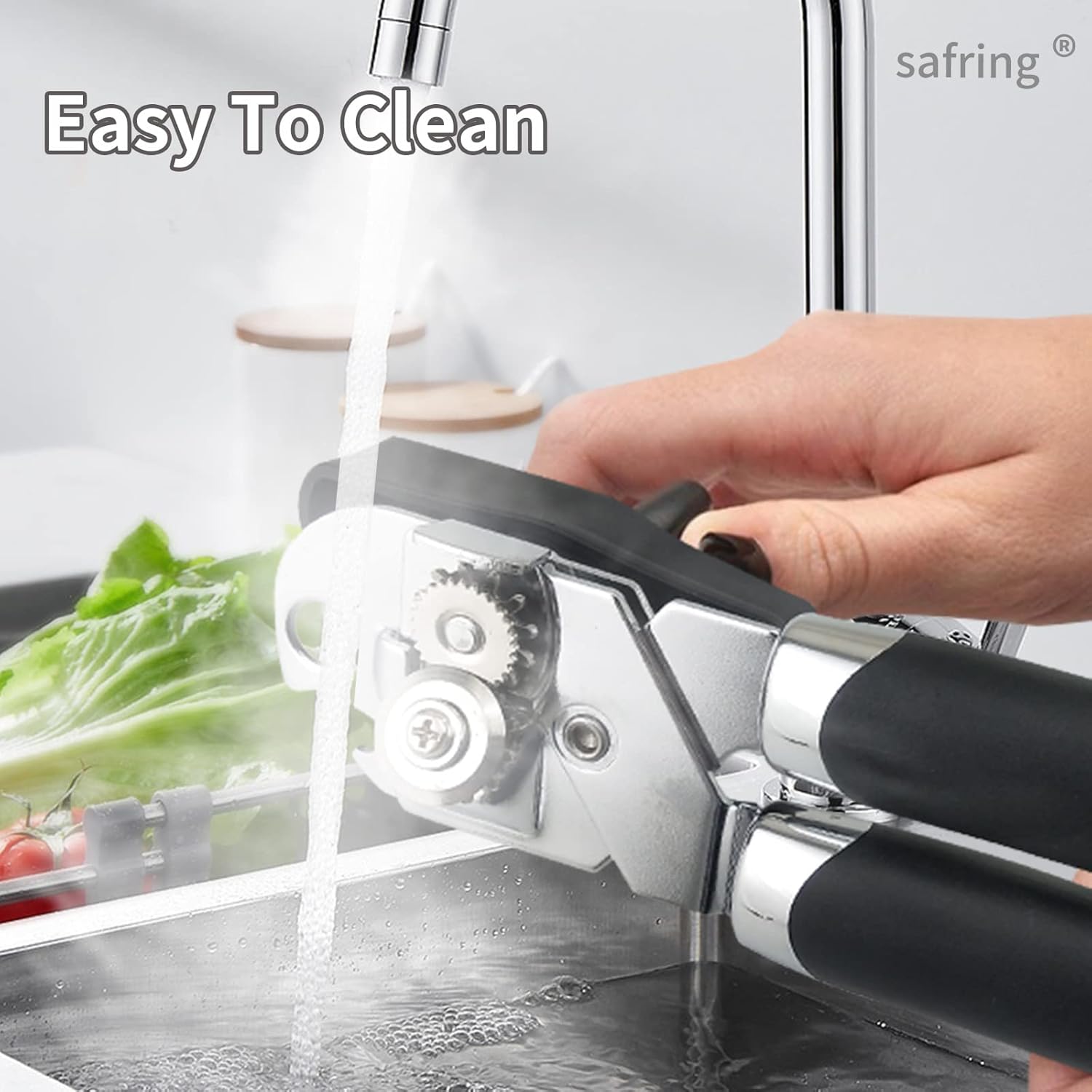
This is the unglamorous part. Food debris, especially from thicker sauces, can easily get stuck in the gears or around the blade. If you don’t clean it, it’s going to get nasty, and eventually, it’ll stop working smoothly. Many stainless steel can openers are touted as dishwasher safe. That’s a convenience, no doubt.
However, even dishwasher-safe items sometimes benefit from a quick rinse by hand immediately after use to prevent food from drying on. And if it’s not dishwasher safe, a thorough hand wash with warm, soapy water is essential. Proper drying is also crucial, even for stainless steel, to prevent water spots and potential long-term corrosion. Neglect this, and even the most durable model will falter.
How to Match the Product to Your Situation
Your ideal can opener isn’t just about what’s good; it’s about what’s good for you. We all use our kitchens differently, right?
The Everyday Home Chef
You’re in the kitchen a lot. Opening cans of beans, tomatoes, coconut milk — it’s a regular occurrence. For you, consistency and comfort are paramount. You need a handheld can opener that feels like an extension of your arm, not a clumsy tool you dread using. Look for a heavy duty can opener with a truly ergonomic handle and smooth-gliding gears. A reliable stainless steel can opener that promises a clean, consistent cut, perhaps even a smooth edge can opener for safety, will save you time and frustration. The Safring Can Opener, for instance, aims to hit this sweet spot of durability and comfort. You want something that will work every single time without a second thought.
The Occasional Kitchen Adventurer / Small Space Dweller
Maybe you don’t cook from scratch every day. Maybe your kitchen is tiny, and every square inch of drawer space counts. For you, the focus is on a compact, highly reliable unit that performs perfectly when called upon. Portability and efficient storage are key. A basic, but well-made, manual can opener that doesn’t demand much space is your go-to. A model with an integrated bottle opener could be a bonus, consolidating tools. Durability is still important, because even occasional use deserves a tool that won’t fail when you really need it. You want something that just works when you pull it out, even if that’s only once a week.
The Preparedness Pro / Off-Grid Enthusiast
Power outages happen. Camping trips call. For you, a can opener needs to be utterly dependable, requiring no electricity, no batteries, and ideally, minimal fuss. A classic, robust traditional can opener design, especially one made from strong metal like a heavy duty stainless steel can opener, is your best friend. Multi-functionality like a bottle opener is a definite plus here, reducing the number of individual tools you need to pack or store. Ease of cleaning, too, becomes a bigger factor when water might be scarce. You need a tool that’s straightforward, virtually indestructible, and won’t let you down when the chips (or the canned goods) are down.
Can Opener Types: A Quick Look
| Type/Tier | Best For | Price Tier | Key Feature | Watch-Out |
|---|---|---|---|---|
| Traditional Manual | Everyday reliable use, durability, off-grid. | Budget-Mid | Simple operation, widely available, robust build. | Can leave sharp edges on cans and lids. |
| Smooth Edge Manual | Safety-conscious users, families with kids. | Mid-Premium | Leaves dull, safe edges; eliminates sharp risks. | Might require a bit more practice to align correctly. |
| Electric Countertop | Users with dexterity issues, frequent large batch cooking. | Mid-Premium | Hands-free operation, consistent cuts. | Takes up counter space, requires power, harder to clean. |
| Electric Handheld | Limited counter space, occasional convenience. | Mid-Range | Portable electric assist, battery-operated. | Can be finicky with different can sizes, batteries can die. |
Traditional Manual: These are your classic, workhorse can openers, like the Safring model. They clamp onto the can and cut into the top of the lid. They’re usually quite affordable and incredibly reliable, but be mindful of the potentially sharp edges left behind.
Smooth Edge Manual: Often a touch pricier, these innovative can openers slice along the side seam of the can, creating a re-sealable, dull-edged lid. It’s a peace of mind feature, but getting the initial grip can be a little different from what you’re used to.
Electric Countertop: Convenience is the name of the game here. You just place the can, press a button, and it does the work. These are a godsend for folks with arthritis or weakened grip, but they’re bulky kitchen gadgets.
Electric Handheld: A good compromise if you want some electric help without sacrificing counter space. They’re usually battery-operated and just glide around the can. The downside? Battery life is always a concern, and some models struggle with oddly shaped cans.
Scenario-Specific Considerations for Your Can Opener
Beyond just the basic features, think about your life. Really think. How will this seemingly simple food prep tool truly fit into your routine?
For the Frequent Home Chef
You’re a cooking machine. Batch prepping on Sundays. Whipping up dinner every weeknight. Your can opener isn’t an afterthought; it’s a key member of your kitchen gadgets lineup. Here, the emphasis has to be on enduring quality and effortless operation. A flimsy unit that jams or struggles with every other can just won’t cut it. You need a heavy duty stainless steel can opener that can withstand constant use and repeated cleanings without skipping a beat. An ergonomic handle isn’t a luxury; it’s a necessity, saving your hands from strain over hundreds of cans. And a smooth edge can opener might just be the quiet hero, preventing annoying nicks when you’re moving fast. Honestly, that stuff adds up.
For Campers and Emergency Kits
When you’re out in the wilderness, or simply preparing for the unexpected, reliance on electricity is out. A robust manual can opener becomes an absolutely critical item. This isn’t about fancy features; it’s about pure, unadulterated functionality. Simplicity and durability are your watchwords. A straightforward traditional can opener made from sturdy materials is usually the winner. It needs to be lightweight enough to carry, but strong enough to open countless cans of chili or peaches without failure. And yes, that integrated bottle opener becomes surprisingly important when you’re far from home and need to crack open a cold one (or a soda, or whatever). No power? No problem. That’s the entire point.
For Those with Dexterity Challenges
Cooking should be enjoyable for everyone, but some kitchen tools can pose real challenges for individuals with arthritis, carpal tunnel, or general hand weakness. For these users, a can opener absolutely must be easy to grip and turn. Forget anything with small, fiddly knobs or hard, unyielding handles. An ergonomic handle with a generous, soft grip is non-negotiable. Furthermore, a smooth-turning mechanism that requires minimal force to operate is crucial. An electric model might seem like the obvious choice here, but a well-designed manual can opener with a large, comfortable knob can often be just as effective, and perhaps even more reliable in the long run. Sometimes the simplest solution, when executed well, is truly the best. Why complicate things with batteries if you don’t have to?
Common Mistakes When Buying a Can Opener
It’s just a can opener, right? How hard can it be to mess up? Oh, honey, let me tell you. I’ve seen people spend way too much on features they never use, and way too little on quality that they regret immediately.
- Going for the Cheapest Option: This is probably the biggest blunder. Super cheap can openers are often made with flimsy stamped metal, plastic gears, and dull blades that rust quickly. You’ll end up fighting every can, leaving ragged edges, and replacing it within months. It’s a false economy, pure and simple. You’re just asking for trouble.
- Ignoring Handle Comfort: Many people focus purely on the cutting mechanism, forgetting that they actually have to hold the thing. A sharp blade is useless if the handle digs into your palm or slips out of your hand. Prioritizing an ergonomic handle prevents hand strain and makes the entire experience less of a chore.
- Neglecting Proper Cleaning: Even the most durable stainless steel can opener will eventually seize up or start to look gnarly if you don’t clean it properly. Bits of food and liquid get stuck in the gears. Rinse it immediately after use. Seriously. It prevents rust and keeps it operating smoothly.
- Assuming All “Smooth Edge” Claims Are Equal: While a smooth edge can opener is designed for safety, the execution varies. Some cheaper models might still leave a slightly burred edge, or be inconsistent. Do your homework. A truly good one leaves a completely dull, re-sealable edge on the can. Not all are created equally.
Why/How/What for Your Can Opener
Here are a few common questions that pop up.
Why choose a manual can opener over electric?
Look, electric can openers are convenient, especially for those with limited hand strength. But a quality manual can opener, like a heavy duty stainless steel can opener, offers unparalleled reliability and portability. No power cords, no batteries, no counter space taken up. They’re perfect for camping, emergency kits, or just keeping your kitchen minimalist. Plus, a good one will last for years and years without needing a single charge. It’s a simpler existence, sometimes.
How do you properly clean a stainless steel can opener?
After each use, give your stainless steel can opener a quick rinse under warm running water. Use a small brush or sponge with a drop of dish soap to gently scrub any food residue from the blade and gears. Rinse thoroughly and then—this is key—dry it immediately with a towel. Don’t let it air dry, especially if you have hard water; that’s how water spots and potential corrosion start. Some are dishwasher safe, sure, but a quick hand wash extends its life.
What does “smooth edge” really mean for can opening?
A smooth edge can opener, often called a safe cut can opener, works differently than traditional models. Instead of cutting into the top of the can lid, it cuts along the side of the can, just below the rim. This separates the lid from the can without creating any sharp, jagged edges on either the can or the lid. The lid can often then be re-placed on the can for temporary storage, and the can itself is safe to handle. It’s a nice safety feature, particularly in busy kitchens or around kids.
FAQ
Are manual can openers hard to use?
Not at all, not if you pick a good one. A quality manual can opener with an ergonomic handle and smooth-turning gears should attach easily and cut through can lids with minimal effort. Some cheaper models can be a pain, but a well-designed one is a breeze.
What’s the deal with “smooth edge” can openers?
They’re designed for safety. Instead of leaving sharp edges, these can openers cut the can’s seam, creating a dull, safe edge on both the can and the lid. It’s a safer way to open cans, reducing the risk of accidental cuts.
Can a can opener also open bottles?
Many modern handheld can openers, like the Safring Can Opener, include an integrated bottle opener. This multi-functional design can be really convenient, consolidating two kitchen gadgets into one tool. It’s a nice touch.
How long should a good can opener last?
A well-made, heavy duty stainless steel can opener should realistically last for many years, even decades, with proper care. It’s an investment piece for your kitchen, really. Flimsier models? Not so much.
Why would my can opener stop working?
Often, a can opener stops working smoothly due to food debris getting stuck in the gears or a dull blade. Rust is another common culprit. Proper cleaning and drying after each use can prevent most of these issues. Or you bought a cheap one.
Are stainless steel can openers truly better?
Generally, yes. Stainless steel can openers offer superior rust resistance and durability compared to models made from cheaper metals or plastic. They maintain their sharpness longer and stand up better to repeated use and washing. It’s just a better material for the job.
Can I sharpen my can opener blade?
It’s generally not recommended or even practical to sharpen the cutting wheel of a can opener. The small, often serrated, edge isn’t designed for home sharpening. If your can opener isn’t cutting cleanly, it might be time for a replacement.
Final Recommendation
Choosing the right can opener doesn’t have to be a major undertaking, but making an informed decision saves you a ton of hassle down the line. For most home cooks, the sweet spot lies with a robust manual can opener that prioritizes both durability and user comfort. Think about something like the Safring Can Opener Manual – a model that emphasizes a heavy duty stainless steel can opener build, an ergonomic handle, and a smooth edge can opener mechanism for safety. These features are not just marketing fluff; they genuinely make a difference in your daily kitchen routine.
If you’re someone who cooks frequently, or simply values reliability and wants to avoid the frustration of flimsy kitchen gadgets, investing in a quality handheld can opener is a smart move. And yes, that integrated bottle opener is usually a welcome bonus. Don’t overthink it, but don’t under-buy it either. Get one that feels good, works every time, and you’ll forget you even own it—until you need it, and then you’ll be glad you picked wisely.
#Safring #Opener #Manual #Handheld #Strong #Heavy #Duty #Stainless #Steel #Opener #Comfortable #Handle #Sharp #Blade #Smooth #Edge #Openers #Multifunctional #Bottle #Opener