The Savvy Cook’s Guide to the Meat Injector Syringe: Is the 1-oz Plastic Marinade Turkey Injector Kit by QPMR Your Best Bet?
Okay, let’s talk turkey (and chicken, and pork, and brisket). If you’re serious about moist, flavorful meat, a turkey injector isn’t just a gadget; it’s a game-changer for your culinary arsenal. This guide cuts through the noise, diving into what makes a good meat injector, especially when considering options like the 1-oz Plastic Marinade Turkey Injector Kit by QPMR, and helps you figure out if it’s the right fit for your kitchen. We’ll compare it to others, dissect its features, and ultimately help you decide if it’s worth your hard-earned cash.
Quick Answer
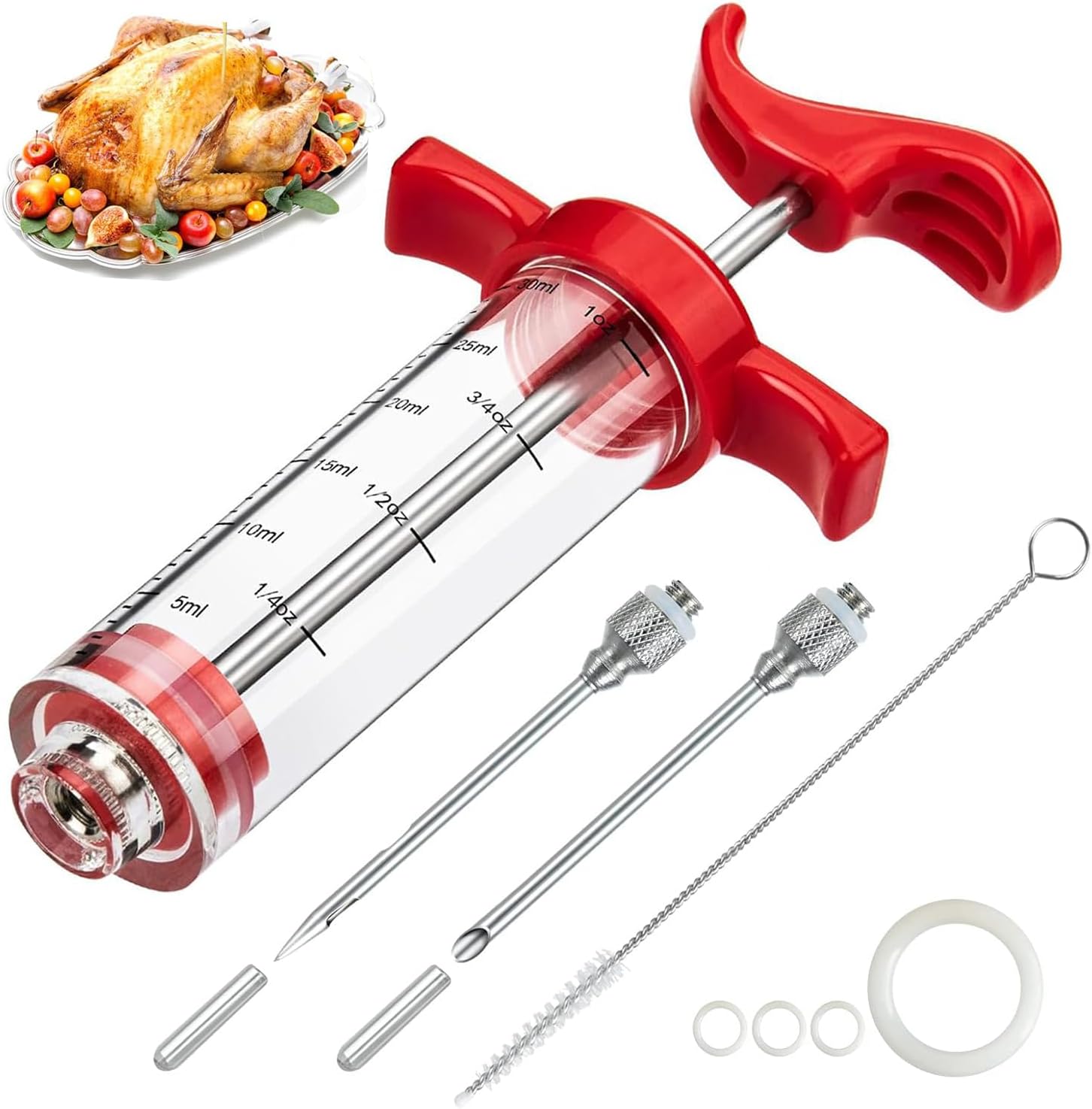
The QPMR 1-oz Plastic Marinade Turkey Injector Kit offers a budget-friendly entry into the world of flavor injection, particularly suited for occasional use with smaller cuts of meat or single holiday turkeys. Its plastic construction and modest capacity make it light and easy to handle for quick jobs, though it might not stand up to the rigors or versatility of its more robust, pricier counterparts.
Key Takeaways:
- QPMR Kit: Good for beginners, light duty, occasional cooks, and those on a tighter budget.
- Capacity: 1-oz means frequent refills for larger items like a whole turkey.
- Material: Plastic is lighter, but less durable than stainless steel.
- Needles: Two included, which is handy, but check their quality.
What to Look For (The Buying Criteria)
Navigating the world of meat injectors can feel surprisingly complicated, right? But really, it boils down to a few core elements. These are the things you should be scrutinizing before you buy, especially if you’re looking at something like the QPMR kit.
-
Material Quality & Durability: This is probably the biggest deal-breaker for most folks. Injectors typically come in either plastic or stainless steel. The QPMR kit, for instance, is plastic. Plastic models are often lighter and certainly less expensive up front. But they can crack, stain, or wear out faster, particularly with repeated exposure to hot marinades or forceful use. Stainless steel, on the other hand, costs more, yet it’s built like a tank. It resists odors, stains, and generally lasts a lifetime. The trade-off? Weight and cost. Are you buying something for a few uses a year, or a lifetime of BBQ? Think about it.
-
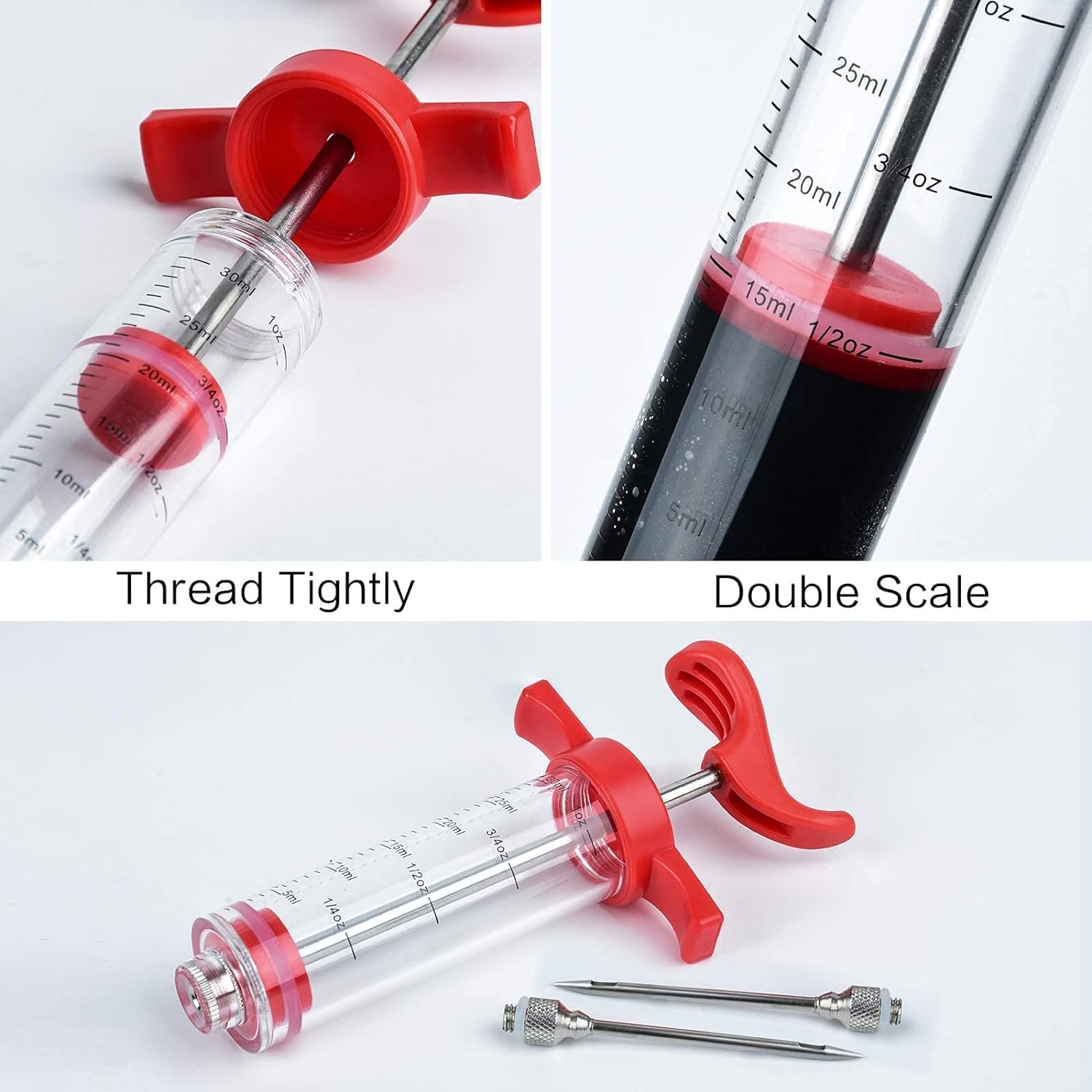
Capacity of the Syringe Barrel: The QPMR kit has a 1-oz capacity. What does this mean in practical terms? Well, it means you’ll be refilling it a lot if you’re injecting a large turkey, brisket, or pork shoulder. A 1-oz barrel is fine for chicken breasts, pork chops, or even a small roast. But for a 20-pound bird, you might find yourself refilling 10-15 times. Larger capacity injectors (2-oz or even 4-oz) cut down on refill time, making the job quicker and less messy. It’s a convenience factor, sure, but a significant one when you’re elbow-deep in a marinade.
-
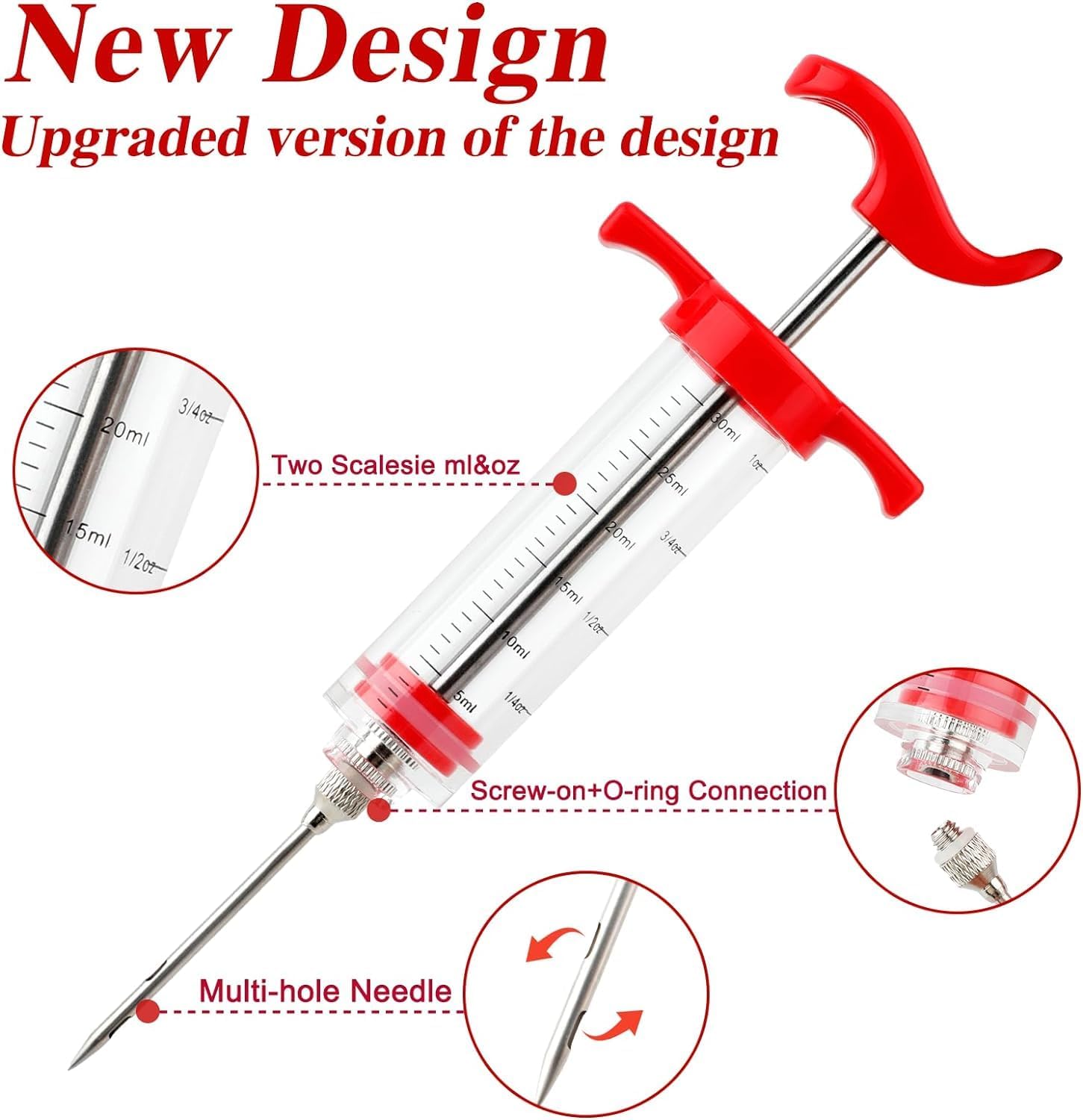
Number and Type of Needles: A good meat injector kit doesn’t just come with one needle. The QPMR kit includes two, which is a decent start. But you want to consider the variety and quality of those needles.
- Open-ended needles: These are for thinner, clear marinades, allowing for quick dispersal.
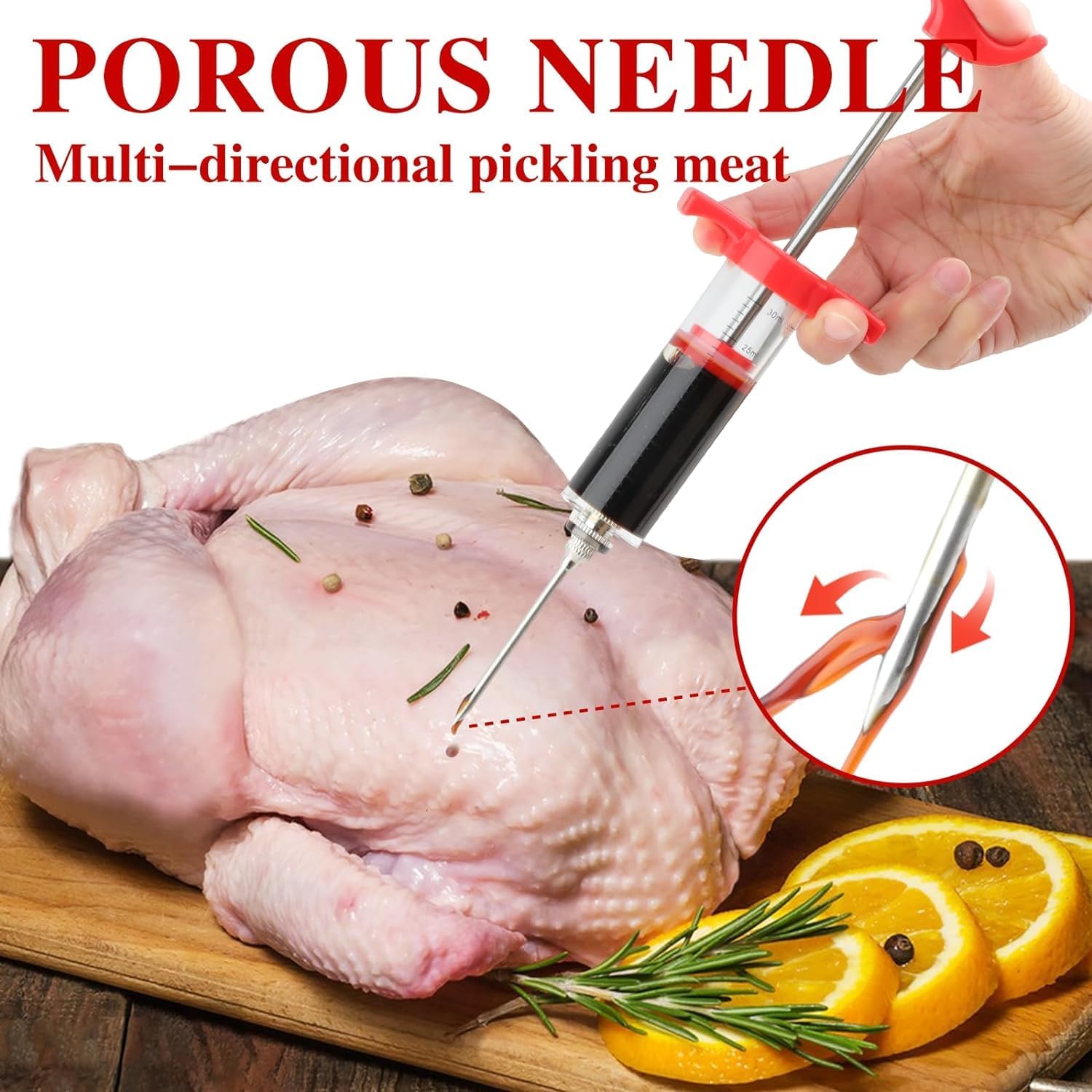
- Perforated needles (multiple holes): Ideal for thicker marinades, minced garlic, herbs, or spices, distributing flavor more evenly throughout the meat without clogging.
- Angled needles: Sometimes useful for reaching tricky spots.
You want needles that are sharp enough to pierce tough meat without excessive force, and robust enough not to bend or break under pressure. Flimsy needles are a pain. They clog. They bend. Ugh.
-
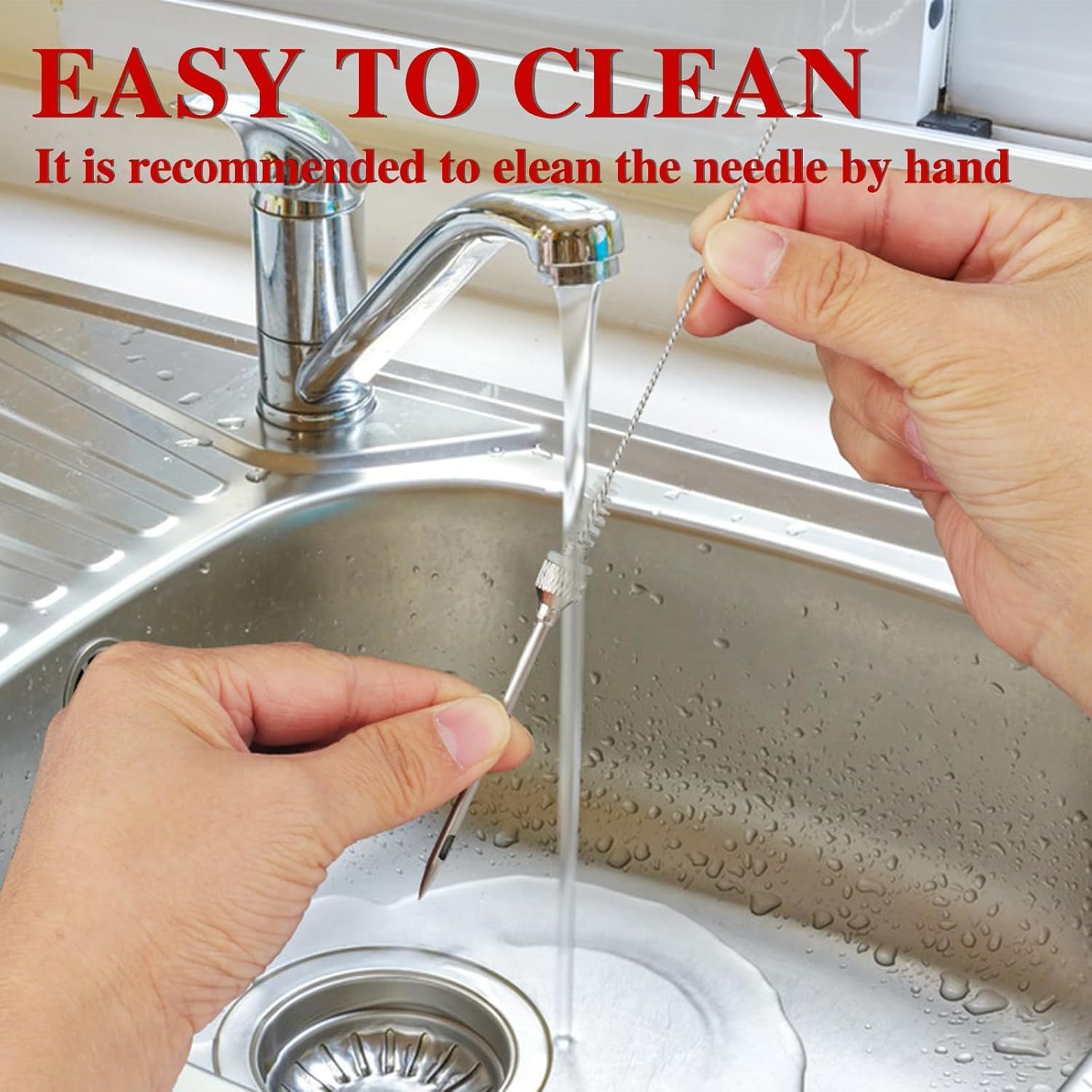
Ease of Cleaning: After all that deliciousness, comes the cleanup. And let’s be honest, this is where many kitchen tools fall short. A turkey injector, with its narrow needles and barrel, can be a breeding ground for bacteria if not cleaned thoroughly. Look for models that fully disassemble. Removable O-rings and plungers are essential for getting into every nook and cranny. Dishwasher safety is a bonus, but hand washing with a good brush (often included in better kits) is usually recommended for longevity. The QPMR, being plastic, is generally easier to clean than steel in terms of scrubbing, but those plastic parts might retain odors or discoloration over time.
-
Ergonomics and Build Quality (The Plunger Action): How does it feel in your hand? Is it comfortable to grip, even when applying pressure? Does the plunger move smoothly without sticking or squirting marinade everywhere but where you want it? A jerky plunger action is incredibly frustrating and makes for a messy experience. A well-designed injector will have a comfortable grip, a secure seal at the plunger, and a smooth, consistent push. The O-rings are key here; cheap ones fail fast. Some plastic models can feel a bit flimsy, and their plungers might not offer the same robust, leak-free action as higher-end stainless steel ones. I’ve seen people spend way too much on features they never use, but a solid plunger action? That’s not a feature; that’s fundamental.
-
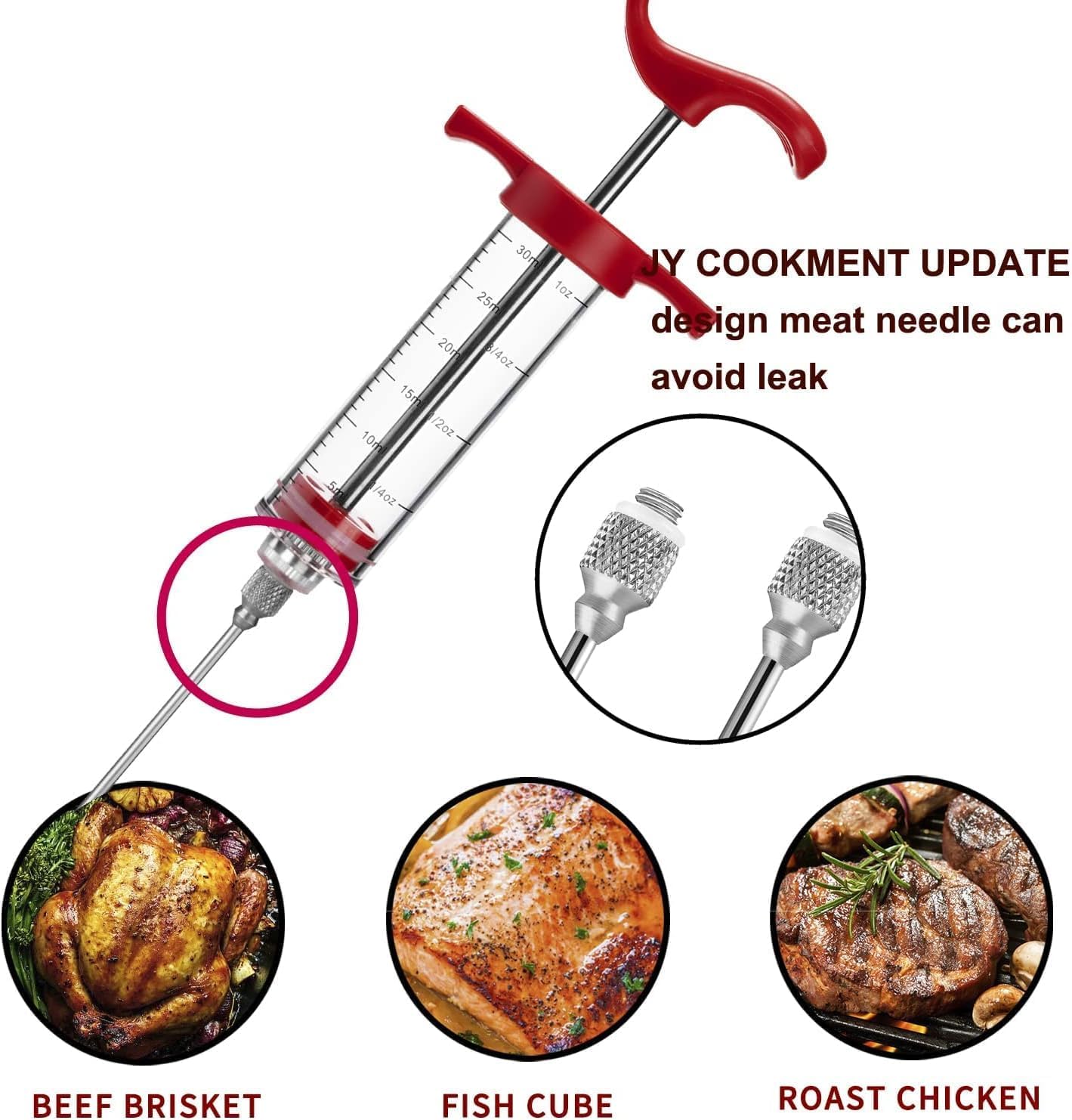
Leakage & Seal Integrity: You’re working with liquids, often messy ones. The last thing you want is marinade oozing out where the needle meets the barrel, or worse, leaking from the plunger area. This usually comes down to the quality of the threading or connection points and the O-rings. A tight, secure fit is non-negotiable. Plastic threading, while functional, can sometimes wear down faster than metal, potentially leading to leaks down the line. It’s a small detail that makes a huge difference in your cooking experience. Who wants a slippery, marinade-covered hand while trying to prep a holiday meal? Not me.
How to Match the Product to Your Situation
Okay, so you know what to look for. But how do you align that with your specific needs? Every cook is different. Are you a weekend warrior or an everyday griller?
The Casual Holiday Cook:
You bust out the big bird once or twice a year – Thanksgiving, maybe Christmas. You want something functional, affordable, and easy to store. You don’t need a professional-grade tool that takes up half your drawer space.
- Recommendation: A basic plastic turkey injector kit, like the QPMR 1-oz Plastic Marinade Turkey Injector Kit, is probably your sweet spot. It’s perfectly adequate for a single large bird or a few smaller pieces of poultry. Its lighter weight is a plus for infrequent use. Don’t overthink it, just get one that works for the job at hand.
The Dedicated BBQ Enthusiast / Weekend Griller:
You’re smoking briskets, grilling chickens, and roasting pork loin practically every other weekend. You experiment with different marinades, spice rubs, and brining techniques. You need something durable, versatile, and efficient. Refilling a small barrel constantly would drive you nuts.
- Recommendation: You’ll want to invest in a mid-range to premium stainless steel meat injector with a larger capacity (2-oz or more) and a variety of robust needles. Durability is paramount here; you don’t want something that will rust, crack, or clog after a few uses. Look for models with easily replaceable O-rings and a smooth plunger action. Yes, it’s more expensive, but it pays off in convenience and longevity.
The Flavor-Fussy Perfectionist:
You obsess over every detail. Every pore of your protein must be infused with flavor. You use complex marinades with finely minced aromatics and demand precision in your injection. Cleanliness and a perfectly leak-free experience are non-negotiable.
- Recommendation: Go for a top-tier, surgical-grade stainless steel injector. These often feature multiple, specialized needles for different marinade consistencies, precise markings on the barrel, and superior plunger mechanisms. They’re built for maximum efficiency and ease of cleaning, ensuring no flavor is wasted and no mess is made. Think of it as a precision instrument for your culinary artistry. Anything less would just irritate you, wouldn’t it?
Comparison of Injector Types/Tiers
| Type/Tier | Best For | Price Tier | Key Feature | Watch-Out |
|---|---|---|---|---|
| Basic Plastic Injectors | Occasional holiday cooks, smaller cuts, beginners | Budget-friendly | Lightweight, low initial cost, easy storage | Less durable, smaller capacity (e.g., QPMR 1-oz), prone to staining/cracking, potential for leaks over time. |
| Mid-Range Kits | Regular home cooks, frequent grillers, diverse use | Mid-range | Often stainless steel, multiple needles, decent capacity | Quality can vary, some cheaper models may have flimsy needles or O-rings that degrade quickly. |
| Premium Stainless Steel | Serious BBQ pros, large roasts, frequent use, durability | Premium | Robust construction, large capacity, precision plunger | Higher upfront cost, can be heavier, requires proper cleaning and maintenance. |
Basic plastic injectors, like the QPMR kit, are a fine starting point for someone who only needs an injector a few times a year and doesn’t want to spend much. Mid-range kits typically step up to stainless steel, offering better longevity and more features, making them a sensible choice for those who inject regularly. Premium stainless steel models are for the true enthusiasts, offering top-notch durability, capacity, and an effortless injection experience that justifies the higher price tag.
Scenario-Specific Mini-Sections
For the Occasional Holiday Bird
When that big, beautiful turkey takes center stage, you want it juicy. You’re not injecting meat every weekend. You need something simple, straightforward, and not overly expensive. The QPMR 1-oz Plastic Marinade Turkey Injector Kit fits this bill quite nicely. Its plastic construction means it’s light to handle, and the 1-oz capacity is manageable for one big bird, even if it requires a few refills. You won’t feel like you overspent for a tool that sits in the drawer most of the year.
For Regular Grilling & Smoking
Now, if your grill or smoker sees action weekly, a little 1-oz plastic injector might feel… inadequate. You’re probably injecting various cuts – ribs, shoulders, whole chickens, maybe even a beef tenderloin. The constant refilling of a small barrel would get tedious fast, wouldn’t it? And plastic might not hold up to the frequent use or the stronger, thicker marinades you’re concocting. For this lifestyle, you’ll benefit from a larger capacity (2-oz or more) stainless steel injector that can handle the volume and consistency of your marinades without complaint.
For Marinades Beyond Turkey
Don’t let the “turkey injector” name fool you. These tools are fantastic for all sorts of meats. Think about injecting fruit juice into pork loin, garlic butter into a roast, or a spicy blend into chicken thighs. The QPMR kit, with its basic needle set, will work for thinner, clearer liquids in smaller cuts. But if you’re getting creative with chunkier marinades – finely minced rosemary, pepper flakes, or thicker sauces – you’ll quickly hit the limits of a standard open-ended needle. That’s when those multi-hole or wider-gauge needles from more comprehensive kits really shine, preventing clogs and ensuring even flavor distribution.
Common Mistakes
Even with a simple tool like a turkey injector, there are pitfalls. And trust me, I’ve seen these played out countless times.
-
Overfilling the Syringe Barrel: It seems counter-intuitive, right? More marinade, less refilling? But cramming the barrel to the absolute brim increases the chance of leaks, makes the plunger stiff, and can even cause it to squirt out the top or sides under pressure. Fill it to about 80-90% capacity. It’s a little less liquid, but much less mess and frustration.
-
Using the Wrong Needle for Your Marinade: This is a big one. Trying to inject a marinade with minced garlic or herbs through a thin, open-ended needle? That’s a recipe for a clogged needle and a very annoyed cook. Always match the needle type to your marinade’s consistency. If it’s chunky, you need a multi-hole needle. If it’s thin, an open-ended one is fine. That’s why having a kit with multiple needles, even just two like the QPMR, is useful.
-
Not Cleaning Thoroughly (Especially the Needles and O-rings): Marinade is delicious, but it can also become a bacterial playground if not completely removed. Disassemble your injector immediately after use. Get into those needles with a cleaning brush (a good kit will include one). Pay special attention to the plunger and the O-rings. Any leftover residue can lead to clogs, odors, or worse. Gross.
-
Ignoring the Seal/O-ring Condition: Those little rubber O-rings are tiny, but mighty. They create the seal that prevents leakage around the plunger and at the needle attachment point. If they’re cracked, stiff, or missing, your injector will leak. Period. Period. If your plastic QPMR starts oozing, check those O-rings. Don’t just toss the whole thing if the O-rings are the only problem; replacements are often available for higher-end models, though maybe not for every budget plastic kit.
Why/How/What Mini-Sections
Why bother with a turkey injector at all?
Look, people have been roasting meats for centuries without injecting them, right? True. But a turkey injector takes your meat from “good” to “unforgettable.” It bypasses surface seasonings and delivers flavor and moisture directly into the muscle fibers, deep within the cut. This is especially crucial for lean meats prone to drying out or for large pieces where surface rubs just can’t penetrate far enough to make a real difference. It’s about ensuring every bite is as delicious as the last.
How to get the best flavor penetration.
It’s not just about squirting liquid in there. For optimal flavor, inject evenly across the entire cut of meat, spacing your injection points a few inches apart. Angle the needle at different directions from each insertion point to create pockets of marinade. Don’t pull the needle out completely before injecting more; instead, withdraw it slowly as you push the plunger, allowing the marinade to spread through the meat’s internal structure. This technique ensures maximum distribution and prevents pockets of over-saturated meat.
What’s the deal with plastic versus metal?
The basic difference is durability and perceived quality, really. Plastic injectors, like the QPMR kit, are lightweight and super affordable. They’re fine for occasional use, but they can degrade, stain, or crack over time, especially with hot liquids or strong cleaning agents. Metal (usually stainless steel) injectors are robust, last forever, and handle everything you throw at them. They cost more, but they’re an investment. It boils down to how often you’ll use it and how much you value longevity and a solid feel.
FAQ
How do I clean my turkey injector thoroughly?
Disassemble it completely right after use. Use warm, soapy water and the cleaning brushes provided in most kits to scrub the barrel and inside the needles. Rinse thoroughly and let all parts air dry completely before reassembling or storing.
Can I use a turkey injector for meats other than turkey?
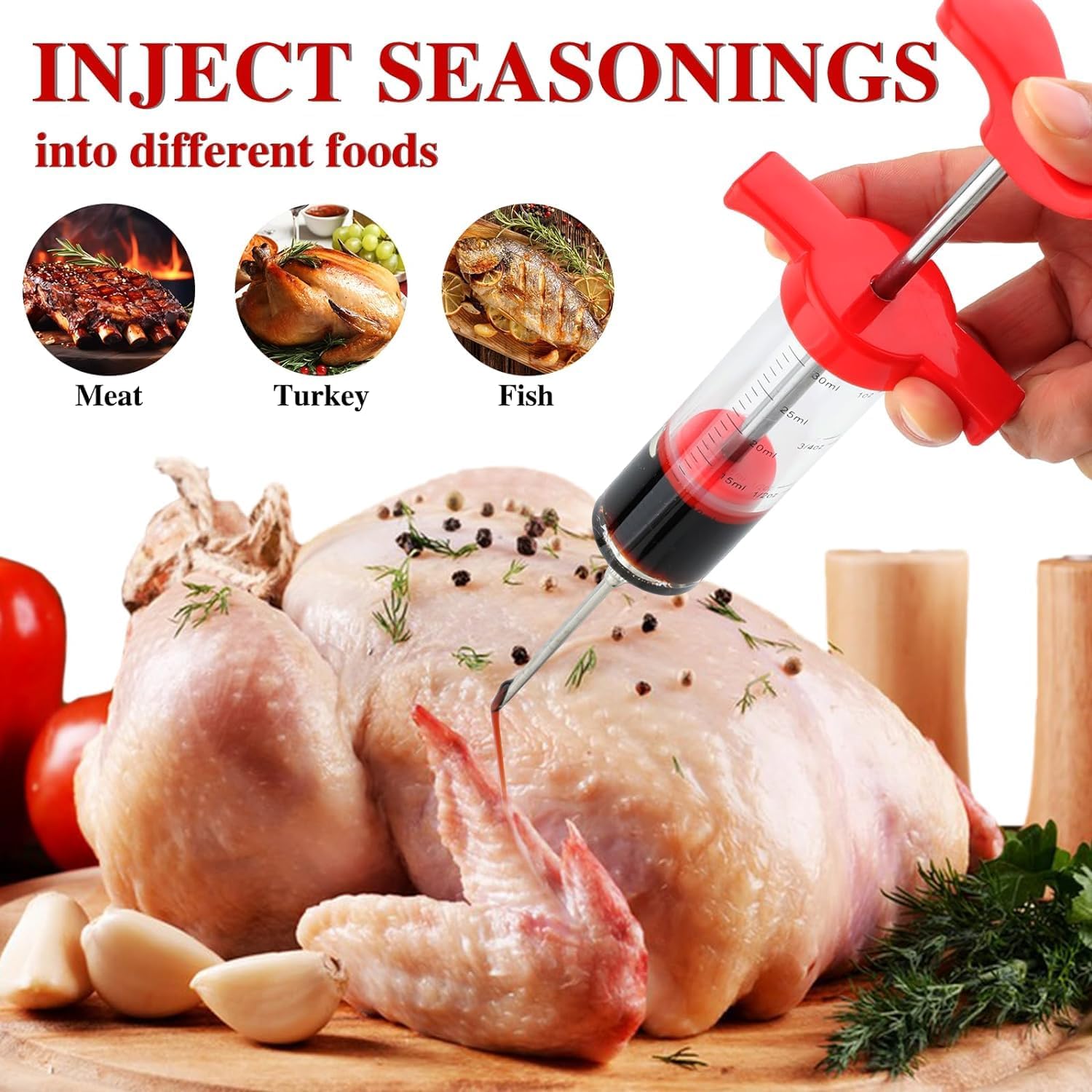
Absolutely! The “turkey” in the name just points to one common use. You can inject marinades into chicken, pork shoulder, beef brisket, lamb, and even fish. It’s a versatile tool for any meat you want to keep moist and flavorful.
Is it better to brine a turkey or inject it?
They’re different techniques, both good for moisture. Brining involves soaking the whole bird in a salt solution to increase moisture content. Injecting delivers flavor directly and often more intensely into specific areas, especially with thicker marinades. Some serious cooks do both!
What kind of marinades work best for injecting?
Thin, liquid-based marinades work well for any injector. For thicker marinades with herbs or minced garlic, you’ll need a needle with multiple holes to prevent clogging. Avoid anything with large chunks that won’t pass through the needle.
My injector is leaking, what should I do?
First, check the O-rings on the plunger and where the needle attaches. If they’re worn, cracked, or missing, that’s likely the culprit. Ensure all parts are screwed together tightly. If it’s an older plastic model, general wear and tear might be the issue.
How do I store my meat injector kit?
Make sure all parts are completely dry to prevent rust (for metal) or mildew (for plastic). Store it disassembled in its original box or a dedicated drawer to protect the needles from bending and keep all components together.
How long does an injected marinade take to penetrate the meat?
The flavor is in there instantly, but for the best results, let the meat rest in the refrigerator for at least 30 minutes, or even a few hours, after injecting. This allows the marinade to distribute and for the meat fibers to reabsorb any displaced juices.
Final Recommendation
For the casual cook who prepares a holiday turkey or an occasional roast, the QPMR 1-oz Plastic Marinade Turkey Injector Kit is a perfectly reasonable and budget-friendly choice. Its lighter weight and simpler design are assets for infrequent use, and it gets the job done without much fuss. You won’t break the bank, and you’ll still get that juicy, flavorful result. Just remember its 1-oz capacity means more refills for larger projects.
However, if you’re a dedicated griller or a serious home chef who’s regularly injecting various meats, you’ll quickly outgrow a basic plastic model. The constant refilling, potential for less durable components, and limited needle versatility of a 1-oz plastic injector might become a source of frustration. For those scenarios, investing in a mid-range to premium stainless steel injector with a larger capacity and diverse, robust needles will pay dividends in ease of use, durability, and overall cooking satisfaction. It’s a tool you’ll use for years, making the higher upfront cost entirely justifiable. Choose wisely, and happy injecting!
#Meat #Injector #Syringe #1oz #Plastic #Marinade #Turkey #Injector #Kit #Marinade #Injector #Needles #BBQ #Grill #QPMR