Ditching the Dreaded Dry Pan: Is the Caraway Griddle Pan a Savvy Move or Just Pricey Hype?
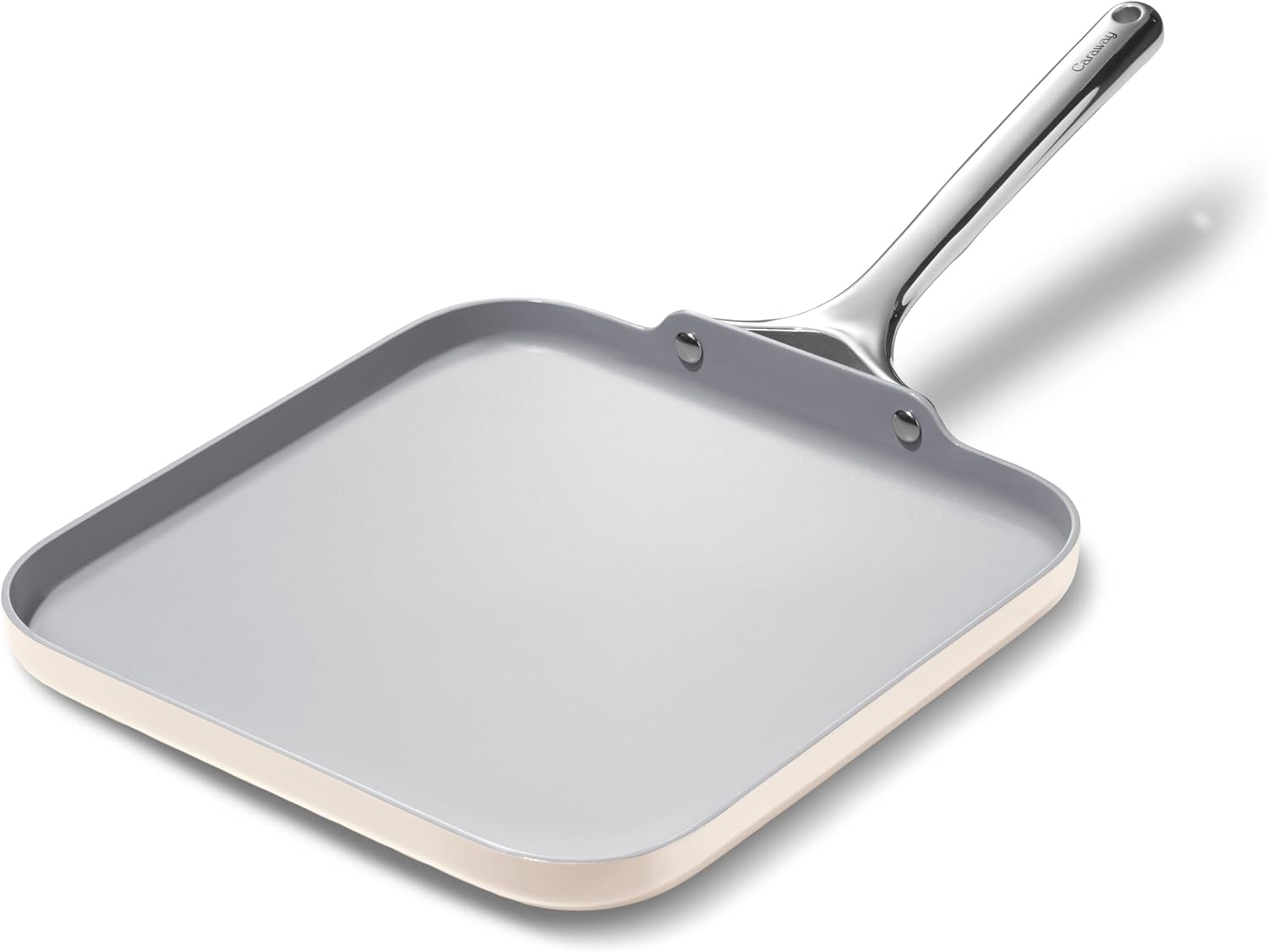
Choosing the right griddle pan can genuinely change your kitchen game, moving you from sad, unevenly cooked breakfasts to a stack of golden-brown perfection. This guide cuts through the marketing noise, focusing on what really matters when you’re considering a new stovetop companion—especially if you’ve got your eye on a premium option like the Caraway 11″ Non-Stick Square Griddle Pan with its ceramic coating. We’ll dissect value, features, and whether that higher price tag truly translates into a better cooking experience for you.
Quick Answer
The Caraway 11″ Non-Stick Square Griddle Pan is a solid pick for those prioritizing a truly non-toxic, easy-to-clean ceramic cooking surface and a distinct aesthetic. While it sits at a premium price point, its PTFE and PFOA-free design, oven-safe versatility, and compatible with all stovetops claim offer tangible benefits for home cooks who value health, convenience, and durability over absolute budget options. It’s a worthy investment for frequent use, but casual cooks might find its cost hard to justify for occasional pancake duty.
What to Look For (The Buying Criteria)
Alright, so you’re thinking about a griddle pan. Maybe your old one’s toast, or you’re finally ready to graduate beyond a standard frying pan for your pancakes and grilled cheeses. What should you actually pay attention to? It’s more than just pretty colors, trust me.
1. Material and Construction: Beyond Basic Metal
Look, most griddle pans are metal, obviously. But the type of metal and how it’s put together? That’s where the magic, or the misery, happens. You’ve got your basic aluminum options, which are light and heat up fast, but sometimes they don’t hold heat worth a darn, leading to cold spots if you’re not careful. Then there’s cast iron, the old standby, revered for its incredible heat retention and searing power. But cast iron? It’s heavy, needs seasoning, and can be a pain to maintain properly if you’re not used to it. The Caraway griddle, for example, is built with an aluminum core, which gives it that responsive heating, but it’s covered by that non-stick ceramic layer. The trade-off with any aluminum core is usually less overall heat retention compared to, say, a thick cast iron, meaning it might struggle a bit more if you overload it with cold food.
2. Non-Stick Coating: A Health & Performance Tug-of-War
This is probably the biggest debate in griddle pan land right now. Traditional non-stick surfaces, often made with PTFE (the stuff in Teflon), are super slick, no doubt. But questions about their safety at high temperatures have driven many folks to alternatives. That’s where non-toxic, PTFE and PFOA-free options come in, like the ceramic coating on the Caraway. These ceramic surfaces are generally considered safer, often requiring less oil, and they clean up like a dream. The catch? Ceramic, while durable, isn’t always as slick as brand-new traditional non-stick, and it can lose its non-stick properties over time if not cared for meticulously—think high heat abuse or abrasive utensils. You really have to commit to lower-to-medium heat with these.
3. Size, Shape, and Lip Design: More Than Just a Square
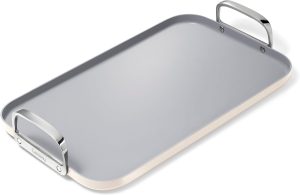
A griddle pan isn’t just a frying pan without sides. The whole point is more surface area, right? The 11″ square griddle design, like the Caraway offers, is incredibly efficient for cooking multiple items, whether it’s pancakes, bacon strips, or a few grilled cheese sandwiches. That square shape uses your stovetop space better than a round pan. Pay attention to the lip, too. Some griddles have very low lips, making it easier to flip, but also more prone to grease spills. Others have slightly higher edges, which contain things better but might make getting a spatula under a pancake a bit trickier. It’s a small detail, but it matters for your workflow.
4. Handle Ergonomics and Material: The Unsung Hero
Ever tried moving a heavy pan with a hot, flimsy handle? It’s no fun. A good handle is comfortable, stays cool enough to touch on the stovetop (if it’s not designed for oven use, that is), and feels secure in your hand. Handles that are riveted on tend to be sturdier than those screwed in. Many griddle pans, especially those designed to be oven safe, will have handles that get very hot, requiring an oven mitt or towel. The Caraway griddle, with its specific design, does have a handle that gets warm—it’s metal, after all—so you’ll want to be mindful if you’re pulling it from a hot oven. It’s a trade-off for oven versatility.
5. Stovetop Compatibility and Oven Safety: Versatility is Key
Are you cooking on gas, electric, or induction? Not all griddle pans work on all stovetops. If you have an induction cooktop, you need a pan with a magnetic base. Many newer pans, including the Caraway 11″ Non-Stick Square Griddle Pan, are designed to be compatible with all stovetops, which is a huge convenience if you ever move or upgrade your kitchen. And oven safe capability? That’s a big deal for finishing steaks, keeping food warm, or even baking certain items. Just make sure the pan you pick can handle the heat. Some plastics on handles just melt. Really, they do.
6. Heat Distribution and Retention: The Even Cooking Challenge
This is often where the real quality of a griddle pan shines through. Or doesn’t. You want even heat across the entire surface; no one likes a pancake that’s burnt on one side and raw on the other. Thicker bases, especially those with an encapsulated aluminum or copper layer, generally perform better here. While aluminum heats quickly, thicker materials retain that heat more consistently, which is crucial for things like searing or cooking batches of food without the pan losing too much temperature between items. The Caraway griddle, with its aluminum core, generally offers good responsiveness to heat adjustments, but don’t expect it to perform like a massive, thick cast iron plate for prolonged, high-heat searing. It’s a balance.
How to Match the Product to Your Situation
Finding the right griddle pan isn’t about buying the most expensive or the cheapest; it’s about what fits your life.
The Weekend Brunch Enthusiast
You live for lazy Saturday mornings, flipping pancakes, sizzling bacon, and maybe even whipping up some fried eggs or grilled ham and cheese. You probably cook for more than one person, so surface area is your friend.
- Your Match: A larger, square griddle pan that offers ample space for cooking multiple items simultaneously. The Caraway 11″ Non-Stick Square Griddle Pan with its spacious design and easy cleanup is ideal here. Its non-toxic coating means you’re not worrying about chemicals while enjoying your leisurely breakfast. You want something that looks good, too, right? This pan fits that bill.
The Health-Conscious Everyday Cook
You’re cooking meals most days, and health is a priority. That means less oil, non-toxic materials, and easy cleanup so you’re not scrubbing forever. You appreciate quality ingredients in your food, and you want that reflected in your cookware too.
- Your Match: A premium non-stick ceramic griddle pan. The Caraway griddle, being PTFE and PFOA-free, aligns perfectly with your values. It allows for cooking with minimal added fats and ensures you’re not introducing unwanted chemicals into your food. Plus, its easy-care nature means less time fussing and more time enjoying healthy meals.
The Space-Saving Urban Dweller
Your kitchen might be charming, but it’s probably not sprawling. Every piece of cookware needs to earn its spot, offering versatility and not taking up an entire cabinet. You might not have room for a separate griddle and a bunch of frying pans.
- Your Match: A versatile, oven-safe griddle pan. The Caraway 11″ Non-Stick Square Griddle Pan works on all stovetops and can go into the oven, essentially giving you more utility than a single-purpose item. Its relatively compact yet efficient 11″ square footprint means it handles a surprising amount of food without being unwieldy for storage. You get the best of both worlds—dedicated griddle performance without needing a massive, specialized appliance.
Griddle Pan Comparison: Tiers, Trade-offs, and Tangibles
Here’s a quick breakdown of what you’ll find out there when you’re hunting for a griddle pan, from the bare-bones to the bougie. Each tier has its place, but none are truly without their limitations.
| Type/Tier | Best For | Price Tier | Key Feature | Watch-Out |
|---|---|---|---|---|
| Budget Non-Stick | Casual use, college students, quick replacement | Budget | Very low initial cost, lightweight | Durability issues, short non-stick life, inconsistent heat, often not oven safe |
| Mid-Range Ceramic | Regular family meals, health-conscious starters | Mid-Range | PTFE and PFOA-free, good heat distribution | Non-stick can degrade with high heat or improper care, less robust build |
| Caraway Griddle (Premium Ceramic) | Everyday discerning cooks, aesthetic seekers | Premium | Non-toxic ceramic coating, even heat, oven safe, stylish | Higher upfront investment, requires gentle care for coating longevity |
| Cast Iron Griddle | Searing, camping, heat retention, heirloom quality | Mid-Range+ | Superior heat retention, nearly indestructible | Heavy, needs seasoning, can rust, not always truly non-stick initially |
- Budget Non-Stick: These are your impulse buys, often flimsy aluminum with a thin, standard non-stick coating that usually scratches or degrades quickly. You’ll replace it in a year or two, probably.
- Mid-Range Ceramic: A step up, these offer a better cooking experience and safer materials, but often compromise slightly on overall build quality or coating resilience compared to premium options. You’re getting good value here, but temper your expectations for long-term perfection.
- Caraway Griddle (Premium Ceramic): This tier combines a robust build with high-quality, non-toxic ceramic coating and thoughtful design, making it a joy to use and show off. But remember, premium doesn’t mean bulletproof; even the best ceramic needs TLC.
- Cast Iron Griddle: This is a workhorse, often lasting generations, but it demands commitment to seasoning and specific cleaning routines. You won’t get the instant non-stick convenience of ceramic without a lot of effort.
What’s Your Griddle Pan Scenario?
Different lives, different needs. Your ideal griddle pan might look totally different from your neighbor’s.
The Weekday Quick Meal Hustle
You need speed. Mornings are a blur, and dinner might be a quick grilled sandwich or a couple of chicken breasts. You don’t have time for fussy clean-up or waiting for a pan to slowly come to temp.
For this, a pan that heats up fast and offers quick release is paramount. The Caraway 11″ Non-Stick Square Griddle Pan excels here. Its aluminum core means it reaches cooking temperature quickly, and the non-stick ceramic surface means your eggs won’t cling, and wiping it clean is often a one-swipe affair. Efficiency is the name of the game.
The Weekend Feast Prep
When the weekend hits, you’re cooking for a crowd, or at least a hungry family. You might be making a huge batch of pancakes, sizzling up a pound of bacon, and then transitioning to a bigger meal. You need even heat and enough space.
A larger griddle with consistent heat distribution is key. The 11″ square footprint of the Caraway griddle allows you to line up more food items without overcrowding, which can lead to uneven cooking. Its ability to go from stovetop to oven safe also means you can keep things warm or even finish off a thick-cut steak if that’s on the menu.
The Specialized Home Cook
Maybe you’re really into specific dishes, like making perfect smash burgers, authentic Korean BBQ at home, or delicate crepes. You need a pan that can handle specific demands, often involving higher heat or very precise temperature control.
While the Caraway griddle offers good versatility, for truly high-temp searing like smash burgers, a dedicated cast iron griddle might be preferred for its sheer heat retention. However, for delicate crepes or stir-frying small ingredients, the non-stick ceramic of the Caraway griddle offers superior release and control, preventing sticking that can ruin delicate items. It’s about matching the tool to the specific task’s demands, not just general cooking.
Common Mistakes Griddle Pan Buyers Make
It’s easy to mess up when buying and using a griddle pan. We’ve all been there.
1. Ignoring Stovetop Compatibility: You’d think this would be obvious, but people forget. Not every pan works with every stovetop. If you have induction, you absolutely must check for magnetic compatibility. Don’t end up with a beautiful new pan that just sits there, useless.
2. Overheating Non-Stick Coatings: This is a big one, especially for ceramic griddles. Many home cooks crank the heat to high, thinking it will speed things up. Bad idea. High heat is the enemy of non-stick ceramic. It can degrade the coating, reduce its life, and sometimes even cause it to emit unpleasant odors. Stick to medium-low to medium heat. The Caraway griddle is designed for efficient heat at moderate temperatures.
3. Using Metal Utensils: This might seem like a no-brainer, but one lapse in judgment with a metal spatula can scratch even the most durable non-stick ceramic surface. Use silicone, wood, or plastic. Always. Your pan will thank you.
4. Improper Cleaning and Storage: Throwing a hot griddle pan straight into cold water is a recipe for warping. Let it cool down first. And scrubbing with abrasive sponges or harsh chemicals can destroy the non-stick. Gentle soap and a soft sponge. Store it carefully, too; don’t stack other pans directly on its cooking surface without a protector. It’s not just about the coating; it’s about the whole pan’s longevity.
Why, How, What
Why invest in a good griddle pan?
Honestly, a quality griddle pan transforms everyday cooking tasks, making breakfasts and quick meals significantly easier and tastier. It offers a larger, flatter cooking surface than a standard frying pan, which is ideal for cooking multiple items evenly, whether it’s a batch of pancakes or several grilled sandwiches at once. Plus, with options like non-toxic ceramic, you’re making a healthier choice for your family, reducing the need for excessive cooking oils and avoiding certain chemical coatings. It’s an efficiency upgrade for your kitchen.
How to extend the life of your non-stick griddle pan?
Simple steps make a huge difference: always use low to medium heat settings, never high. Stick to soft utensils—silicone or wood are your friends. After cooking, let the pan cool completely before washing it by hand with mild soap and a soft sponge. Store it carefully, ideally hanging it or placing a soft cloth between it and other pans to prevent scratches. Consistency in gentle care is key to keeping that non-stick ceramic performing its non-toxic magic.
What makes ceramic non-stick different?
Unlike traditional non-stick coatings that use synthetic polymers like PTFE, non-stick ceramic surfaces, such as those on the Caraway griddle, are made from inorganic minerals, typically silicon dioxide, applied as a gel. This makes them PTFE and PFOA-free and generally considered a greener, healthier option for cookware. They provide excellent food release and often have a more robust, slightly textured surface, though they might require a bit more oil than a brand-new traditional non-stick pan and are more susceptible to losing their non-stick properties if subjected to extreme heat.
Decision Tree: Is the Caraway Griddle Pan for You?
Considering the Caraway 11″ Non-Stick Square Griddle Pan? Here’s a quick thought process.
- Do you cook pancakes, grilled sandwiches, or large breakfast items often (2+ times a week)?
- Yes: Go to Q2.
- No: Go to Q4.
- Is “non-toxic,” “PTFE and PFOA-free,” or “ceramic coating” a high priority for you regarding cookware?
- Yes: Go to Q3.
- No: Consider a good quality traditional non-stick or cast iron griddle instead.
- Are you comfortable with a premium price point for a durable, high-performing, and aesthetically pleasing piece of cookware?
- Yes: The Caraway griddle is likely an excellent fit. Its oven safe and all stovetop compatible features add significant value.
- No: Look at mid-range ceramic options that offer similar health benefits without the design premium.
- Do you primarily use your griddle pan for occasional, very light cooking?
- Yes: A budget or mid-range option might be more practical. You won’t maximize the value of the Caraway’s features.
- No: Re-evaluate your cooking habits. If you’re cooking more than you thought, cycle back to Q1.
Key Takeaways Box
- Premium Investment: The Caraway 11″ Non-Stick Square Griddle Pan is a premium purchase. It’s not your basic, throw-away pan.
- Health & Safety Focus: Its non-toxic, PTFE and PFOA-free ceramic coating is a major selling point for health-conscious cooks.
- Versatility Rules: Oven safe and compatible with all stovetops, it offers flexibility.
- Care is Crucial: To preserve its non-stick ceramic properties, gentle use and proper cleaning are essential. No metal utensils, please!
- Aesthetic Appeal: Beyond function, it brings a distinct, modern look to your kitchen.
FAQ
Is the Caraway griddle pan truly non-stick, or does food still cling?
Out of the box, it offers impressive food release, making it quite non-stick. With proper care and by avoiding very high heat, this non-stick ceramic performance holds up well over time.
Can I use the Caraway griddle pan on an induction cooktop?
Yes, the Caraway 11″ Non-Stick Square Griddle Pan is explicitly designed to be compatible with all stovetops, including induction, gas, and electric.
How do I clean my Caraway griddle pan to keep it looking new?
Let it cool completely, then wash by hand with warm, soapy water and a non-abrasive sponge or cloth. Avoid harsh scrubbers or metal tools to protect the non-stick ceramic coating.
Is the Caraway griddle oven-safe? What temperatures can it handle?
It is indeed oven safe. The brand generally rates its bakeware, including this griddle, for use up to 550°F (280°C), making it versatile for finishing dishes or keeping food warm.
Is the ceramic coating on the Caraway griddle pan durable?
The non-stick ceramic coating is designed for durability under normal cooking conditions. However, like all ceramic non-stick, it requires proper care—avoiding extreme temperatures, metal utensils, and abrasive cleaning—to maintain its integrity and non-stick properties long-term.
Why is the Caraway griddle pan considered non-toxic?
It’s considered non-toxic because its ceramic coating is made without common contentious chemicals like PTFE, PFOA, PFA, lead, or cadmium, which are sometimes found in traditional non-stick cookware.
Does the Caraway griddle have a ridged surface for grilling?
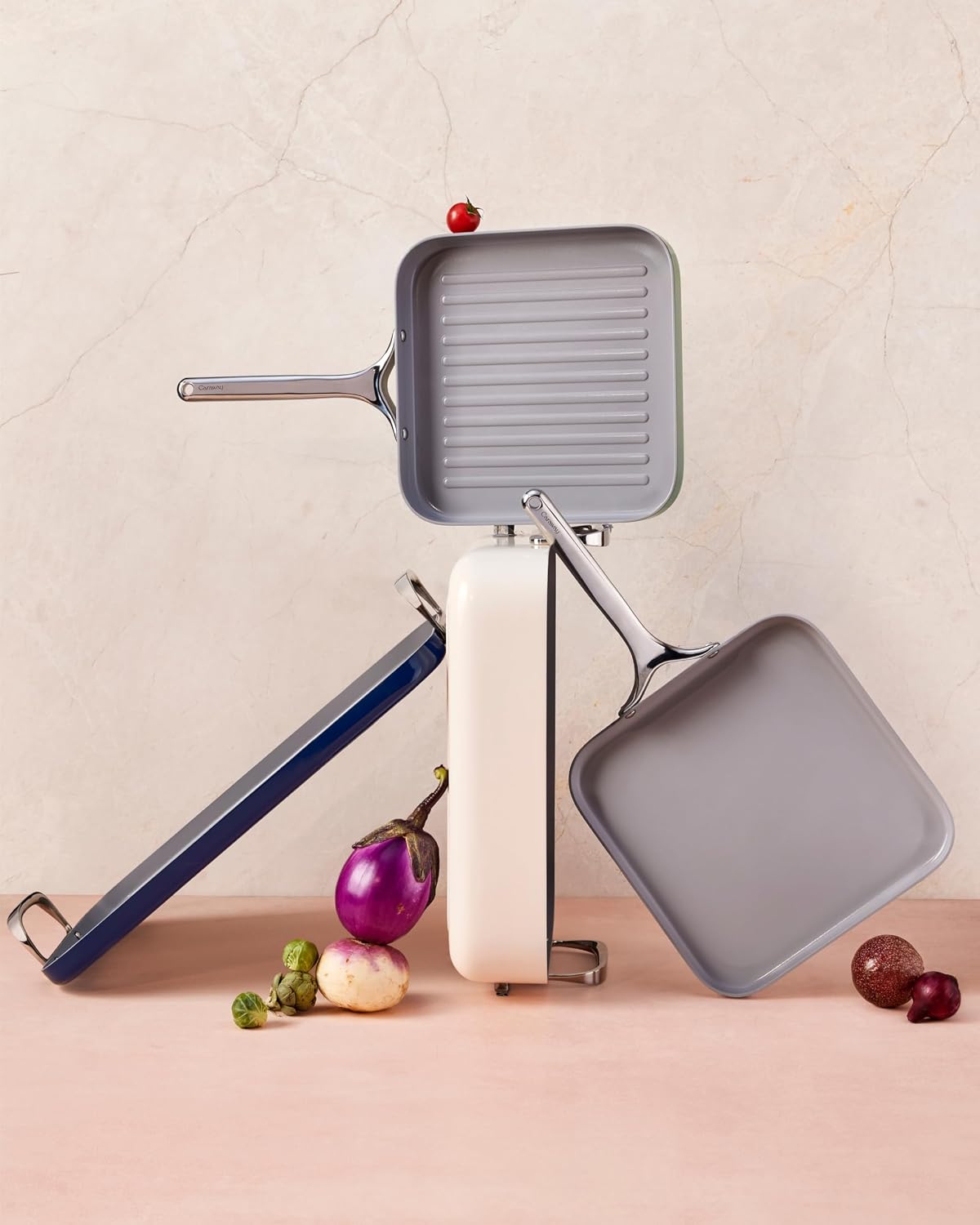
No, the Caraway 11″ Non-Stick Square Griddle Pan has a completely flat cooking surface. This is ideal for pancakes, eggs, and sandwiches where full-surface contact is desired, as opposed to grill marks from a ridged pan.
Final Recommendation
For the savvy home cook who values health-conscious materials, impressive non-stick ceramic performance, and cookware that actually looks good on the stovetop, the Caraway 11″ Non-Stick Square Griddle Pan is absolutely worth the investment. It’s not just a griddle; it’s a commitment to easier, healthier cooking with a touch of elegance. If your current griddle pan has seen better days, or you’re tired of concerns about traditional non-stick coatings, this premium option offers a compelling upgrade.
However, if your griddle use is sporadic, or budget is the absolute tightest constraint, you might explore solid mid-range ceramic options first. But for those who demand daily performance, easy cleanup, and the peace of mind that comes with a non-toxic, PTFE and PFOA-free cooking surface, the Caraway griddle truly delivers. It handles everything from breakfast feasts to quick weekday meals with grace, making it a standout choice for an essential kitchen tool.
#Caraway #NonStick #Square #Griddle #Pan #NonStick #Ceramic #Coated #NonToxic #PTFE #PFOA #Free #Oven #Safe #Compatible #Stovetops #Cream