Is the Caraway 12-Piece Ceramic Cookware Set Worth It? A Deep Dive for Savvy Kitchens
Navigating the world of ceramic cookware can feel like wading through treacle sometimes. Every brand promises non-stick nirvana and health benefits, but what’s the real story? This guide cuts through the marketing fluff to help you understand if a premium option, specifically the Caraway 12-Piece Non-Stick Ceramic Cookware Set in Sage, truly deserves a spot in your kitchen, or if you’re just paying for pretty packaging. We’re talking about real value here, not just sticker price.
Quick Answer
The Caraway 12-Piece Ceramic Cookware Set is a premium contender in the non-toxic cookware space, offering striking aesthetics, thoughtful storage solutions, and a genuinely effective non-stick surface. It’s a significant investment, to be sure, but for those prioritizing a coordinated, health-conscious kitchen and a superior user experience, its blend of design, performance, and storage might just justify the cost. For others? Well, let’s just say there are factors to weigh.
What to Look For (The Buying Criteria)
Buying cookware isn’t like buying a toaster; it’s a relationship. You’ll be using these pieces regularly, perhaps daily. So, before you commit to any ceramic non-stick set, especially one as prominent as Caraway, let’s break down what truly matters. We’re looking beyond the shiny pictures, okay?
Coating Material & Safety: Beyond Just “Non-Stick”
Everyone’s talking about non-toxic options these days, and for good reason. Traditional non-stick coatings, historically, have raised some eyebrows regarding chemicals like PFAS and PFOA. Ceramic cookware, by its very nature, sidesteps this. It’s typically made from a silica-gel based coating applied over an aluminum core. This means it offers that easy-release surface without the long chemical names most people can’t even pronounce.
But here’s the rub: not all ceramic coatings are created equal. Some cheaper ones might scratch easily, compromising the non-stick properties faster than you’d like. And while they’re generally considered safer than older PTFE coatings, the long-term inertness still depends on the integrity of that surface. Caraway specifically highlights its PFAS and PFOA-free status, which is reassuring, though it’s pretty standard for any brand calling itself “ceramic” these days. The real question is how durable that particular ceramic coating is. Does it stand up to actual cooking, day in and day out? Because a non-toxic pan that sticks after six months is just… a regular pan. A disappointing regular pan.
Construction & Heat Distribution: The Unsung Heroes
A good non-stick surface is nothing without a solid foundation. Most ceramic cookware uses an aluminum core because it’s a champ at heating up quickly and distributing that heat evenly. This prevents hot spots that can scorch your food and destroy your pan’s coating over time. A thicker gauge aluminum, or even a multi-ply construction with a stainless steel base, will give you better performance and longevity.
The Caraway set, for instance, uses an aluminum core. What you want to pay attention to is how substantial it feels. Does it have some heft? Or does it feel flimsy, like it’ll warp if you look at it funny? A thick, flat base is crucial, especially if you’re cooking on glass or induction cooktops. An uneven bottom just doesn’t sit right, causing frustrating heat inconsistencies. This matters more than you might think. Uneven heat doesn’t just make for bad food; it’s actually tougher on your non-stick surface, accelerating its demise.
Durability & Lifespan: The Elephant in the Kitchen
Let’s be brutally honest: no non-stick coating lasts forever. Not even the expensive ones. This is the biggest trade-off with ceramic non-stick. While they offer fantastic release right out of the box, they are generally less durable than traditional PTFE coatings in the long run. They can be prone to chipping if knocked around, and high heat or abrasive scrubbing can degrade the surface, diminishing its non-stick properties surprisingly fast.
So, when considering the Caraway 12-Piece Set, or any ceramic option, temper your expectations regarding a lifetime of perfect slides. You’re probably looking at a few solid years of reliable non-stick performance with proper care. Is that worth the premium price for you? Only you can say. It’s not a set your grandkids will inherit, let’s put it that way. Expecting a decade of non-stick perfection from any ceramic pan is just setting yourself up for disappointment.
Compatibility: Where Will It Live?
Your stove and oven situations dictate a lot. Is your range induction cooktop compatible? Not all ceramic pans are. You need a magnetic base for induction, typically stainless steel. Many aluminum core ceramic pans incorporate this, but it’s always worth double-checking. For the Caraway set, they do confirm induction compatibility, which is a big plus for modern kitchens.
Then there’s oven safety. Can you transfer a pan from stovetop to oven to finish a dish? The Caraway pots and pans are indeed oven-safe, which adds a ton of versatility. Roasting vegetables, searing a steak and finishing it under the broiler – these are things you want to do without switching pans. But remember: the non-stick coating on any pan can suffer at very high oven temperatures. Think moderate baking, not blasting under a 500-degree broiler for ages if you want that non-stick to last. Handles, too, need to be oven-friendly. Caraway’s handles are designed for this, a welcome feature.
Handles, Lids, & Ergonomics: Small Details, Big Impact
Ever tried to lift a heavy pot with a flimsy, hot handle? Not fun. Handles should be comfortable, stay cool on the stovetop (if possible), and be securely riveted or welded. The Caraway set’s handles are metal, which means they will get hot in the oven, and sometimes even on the stovetop, especially when cooking for extended periods. Keep a mitt handy.
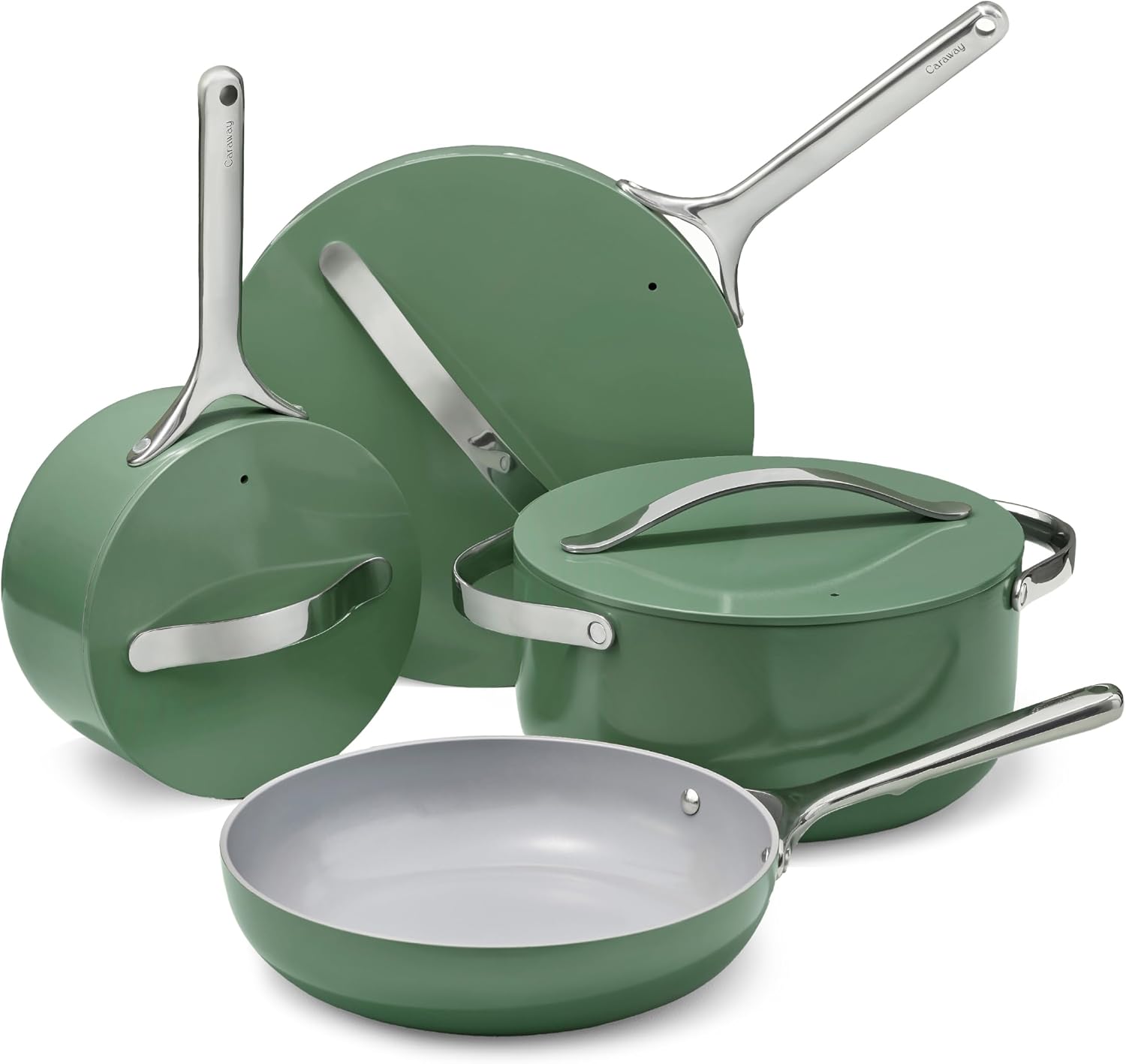
Lids are another often-overlooked detail. Vented lids prevent boil-overs. Tempered glass lets you see what’s cooking without lifting. Caraway’s lids are designed for function and aesthetics, which is great. And those little holes on the underside of the handles for hanging? Thoughtful touches. Details like these make daily cooking less of a chore. Or more of a joy, depending on your outlook.
Storage & Aesthetics: The Caraway X-Factor
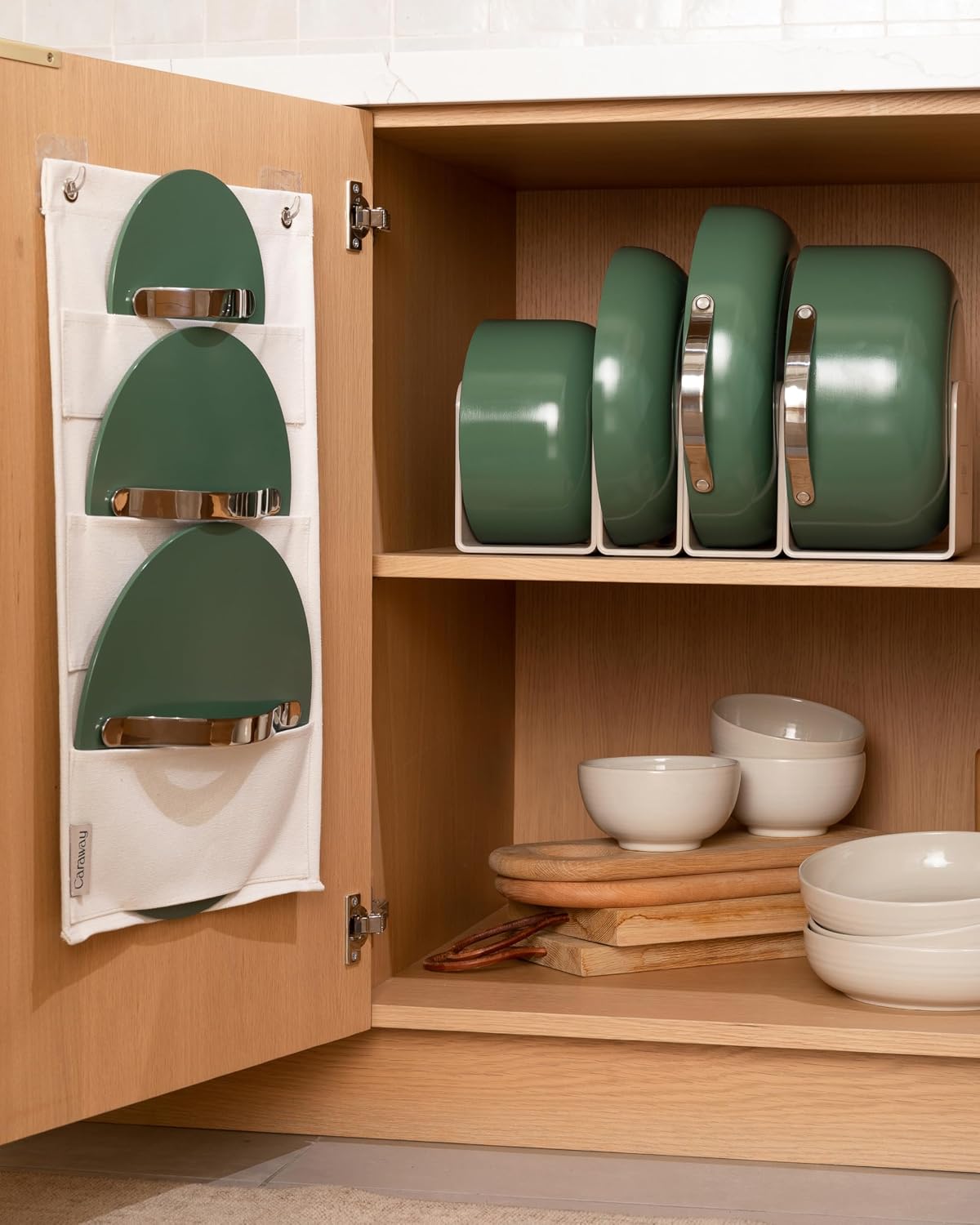
This is where the Caraway 12-Piece Set truly distinguishes itself. Many cookware sets are just… cookware. They stack awkwardly, cluttering cabinets. Caraway comes with a custom magnetic pan rack and a canvas lid holder. This isn’t just a gimmick; it’s a genuine solution for kitchen organization. If you have a smaller kitchen, or just appreciate a tidy space, this is a huge selling point. It transforms a functional necessity into a design statement.
And the aesthetics? They’re undeniable. The range of colors, like that lovely Sage, are designed to be displayed. This might sound superficial, but for many, a beautiful kitchen environment contributes significantly to the cooking experience. If your cookware makes you want to cook, that’s a win, isn’t it? It’s part of the whole premium package. You’re not just buying pans; you’re buying a kitchen system.
Maintenance & Care: The Secret to Longevity
Ceramic non-stick requires a specific kind of love. You can’t treat it like cast iron. No metal utensils. Ever. Seriously, don’t do it. Always use silicone, wood, or plastic. Hand washing is highly recommended, even if a brand claims “dishwasher safe.” Harsh detergents and high-heat cycles in a dishwasher are notorious for stripping non-stick coatings. A gentle sponge and warm, soapy water is all you need for healthy cooking with ceramic. And don’t use abrasive scrubbers. A little soak usually takes care of any stubborn bits. This isn’t just a suggestion, it’s a mandate if you want your investment to last. You wouldn’t put premium clothes in a rough wash, would you? Same logic applies here.
How to Match the Product to Your Situation
Different cooks, different needs. The Caraway 12-Piece Set isn’t for everyone, but it shines for specific types of kitchen dwellers.
The Health-Conscious Home Cook
You’re meticulous about ingredients. You read labels. The thought of chemicals leaching into your food gives you the creeps. You also cook a lot. For you, the PFAS-free and PFOA-free nature of ceramic non-stick is paramount. You appreciate the easy cleanup, which encourages more home-cooked meals.
Caraway fits this bill perfectly because it leans heavily into that non-toxic narrative, making it a natural choice for someone prioritizing healthy cooking. Its non-stick efficiency means less oil, too, which aligns with health goals. You’re not just buying tools; you’re investing in peace of mind.
The Style-Savvy Entertainer
Your kitchen isn’t just a place to cook; it’s a showpiece. Presentation matters, from the plating of your dish to the gleaming appliances. You host dinners, and you want your kitchen tools to reflect your aesthetic. The Caraway set, with its gorgeous color palette (like Sage) and integrated storage, becomes part of your kitchen’s decor.
It’s about the whole vibe, isn’t it? When guests glimpse your neatly organized, beautiful cookware, it speaks volumes. You’re not hiding your pans in a chaotic cabinet; they’re an extension of your home’s design. This user isn’t just looking for functionality; they’re looking for a statement piece.
The Practical Space-Saver
Maybe you live in a smaller apartment, or your kitchen simply lacks cavernous storage. Clutter is your enemy. You value smart design that solves real-world problems. The magnetic pan racks and lid holders included with the Caraway set are a godsend.
This isn’t just about pretty colors for you. This is about making space. It’s about not having to wrestle with a precarious stack of pans or searching endlessly for the right lid. The organized storage system isn’t a bonus; it’s a core feature that justifies a good chunk of the price tag. It just makes daily life easier. And who doesn’t want that?
| Type/Tier | Best For | Price Tier | Key Feature | Watch-Out |
|---|---|---|---|---|
| Budget Ceramic | First-time buyers, occasional use | Budget-friendly | Initial non-stick, wide availability | Coating degrades quickly, less robust construction |
| These sets are great for getting started without breaking the bank, but manage expectations on how long they’ll perform like new. | ||||
| Mid-Range Ceramic | Regular home cooks seeking better value | Mid-range | Improved durability, better heat distribution | Still requires careful handling, non-stick isn’t eternal |
| Brands like GreenPan or Our Place’s Always Pan fall here, offering a noticeable step up in quality and user experience. | ||||
| Premium Ceramic | Design-conscious, health-focused, organized kitchens | Premium | Superior aesthetics, integrated storage, user experience | High initial investment, requires diligent care |
| This is where the Caraway 12-Piece Set truly shines, offering a cohesive system and elevated kitchen presence beyond just cooking. | ||||
| Enameled Cast Iron | Extreme durability, slow-cook, oven-centric dishes | Premium | Exceptional heat retention, heirloom quality | Very heavy, can be prone to chipping enamel, not always non-stick |
| While not non-stick ceramic, it’s a common comparison for those valuing robust, long-lasting, and non-reactive cookware for different tasks. |
For the Everyday Chef
If you’re someone who cooks dinner most nights, sometimes breakfast, and often lunch, you need reliability. You need a pan that consistently releases eggs without a fuss, sears chicken evenly, and cleans up in a flash. The initial performance of ceramic non-stick, like that found in the Caraway set, is fantastic for this. Food glides, cleanup is swift. That said, remember that even Caraway isn’t impervious to wear. Your consistent use means you’ll need to be extra diligent with care – moderate heat, soft utensils, hand washing – to get the most mileage. It’s a trade-off: incredible ease of use balanced against a shorter non-stick lifespan than, say, a well-seasoned cast iron skillet.
For the Occasional Baker/Roaster
Do you love whipping up frittatas or finishing a perfectly seared salmon in the oven? Then oven-safe pans are non-negotiable. The Caraway set’s oven compatibility up to reasonable temperatures (usually around 550°F, but always check specifics) makes it a versatile tool for those who blend stovetop and oven cooking. It means fewer dishes, which is always a win in my book. Just be mindful of the all-metal handles getting scorching hot. Use oven mitts, always. A no-brainer, perhaps, but one people forget in the heat of the moment.
For the New Homeowner Setting Up a Kitchen
Congratulations! Starting from scratch can be daunting. A comprehensive set like the Caraway 12-Piece Set gives you a cohesive foundation. You get the essential pots and pans you need – a frying pan, saucepan, sauté pan, and Dutch oven – plus the specific storage solutions that make setting up a new kitchen less of a headache. It’s an investment, yes, but it provides a consistent, attractive, and functional start, rather than a mishmash of random pieces that don’t quite fit together. Think of it as a complete kitchen ecosystem, not just a collection of pots. That initial cost feels less jarring when you consider the unified approach.
Common Mistakes Buyers Make with Ceramic Cookware
Look, we’ve all been there. New cookware, new rules, right? But ceramic non-stick is a different beast entirely. Avoid these pitfalls to keep your investment performing its non-stick magic.
- Blasting It with High Heat: This is the quickest way to ruin your ceramic coating. Unlike cast iron or stainless steel, ceramic non-stick isn’t designed for super high temperatures. It degrades the coating and can even release fumes (though not the same harmful ones as older PTFE). Stick to low to medium heat. Your food will still cook, I promise.
- Using Metal Utensils: This is non-negotiable. Metal spoons, spatulas, or whisks will scratch, chip, and ultimately destroy the non-stick surface. Always use wood, silicone, or heat-resistant plastic. This isn’t a suggestion; it’s a commandment.
- Harsh Cleaning Agents or Abrasive Scrubbers: Forget those steel wool pads or oven cleaner sprays. They’re far too aggressive. Warm water, a little dish soap, and a soft sponge is all you need. If something’s really stuck, let it soak for a bit. The non-stick should make cleanup pretty easy anyway, if you’re using it right.
- Stacking Without Protection: Just tossing your pans into a cabinet, one inside the other, is a recipe for scratches and chips. Use pan protectors, paper towels, or the storage solutions Caraway provides. Those beautiful Sage exteriors won’t stay beautiful if they’re constantly grinding against other metal surfaces.
Why/How/What
This segment tackles some fundamental questions about ceramic non-stick cookware, cutting to the chase.
Why choose ceramic non-stick over traditional non-stick?
Most people opt for ceramic non-stick primarily due to health concerns surrounding PFAS and PFOA chemicals historically used in older PTFE-based coatings. While regulatory bodies generally deem these traditional coatings safe when used properly, ceramic offers a “greener”, “non-toxic” alternative that provides similar easy food release without those controversial chemicals. It’s about peace of mind for many home cooks.
How can I extend the life of my ceramic cookware?
To truly get the most out of your ceramic non-stick, gentle care is key. Always cook on low to medium heat, avoid any metal utensils, and prioritize hand washing with mild soap and a soft sponge. Never shock a hot pan with cold water, and always store your cookware carefully, perhaps using pan protectors, to prevent scratches. Treat it nicely, and it’ll serve you well for longer.
What makes a “good” ceramic non-stick pan?
A good ceramic non-stick pan isn’t just about the coating; it starts with solid construction. Look for a heavy-gauge aluminum core for excellent heat distribution, potentially with a magnetic stainless steel base for induction cooktop compatibility. The ceramic coating itself should feel robust and uniform, ideally with multiple layers for improved durability, even if it’s still not indestructible. Thoughtful design, like ergonomic handles and tight-fitting lids, also separates the contenders from the pretenders.
FAQ
Here are some common questions folks ask when considering ceramic cookware.
Is ceramic cookware truly non-toxic?
Yes, ceramic cookware is generally considered non-toxic. Its non-stick coating is derived from sand (silica) and doesn’t contain the PFAS or PFOA chemicals associated with older traditional non-stick coatings. This makes it a popular choice for those seeking a healthier cooking option.
How long does ceramic non-stick last?
Honestly? Not forever. The non-stick properties of ceramic coatings typically last 1-3 years with regular use, even with proper care, before showing signs of degradation. They’re known for fantastic initial performance, but less so for long-term durability compared to other materials like stainless steel or cast iron.
Can I use my ceramic pans on an induction cooktop?
Some ceramic pans are **induction cooktop compatible**, but not all. You need a pan with a magnetic base, usually stainless steel, for it to work. Always check the product specifications; reputable brands like Caraway will clearly state if their sets are induction-friendly.
How do I clean ceramic non-stick cookware?
Cleaning ceramic non-stick is pretty straightforward. A little warm water, mild dish soap, and a soft sponge usually do the trick. Avoid abrasive scrubbers, steel wool, or harsh detergents, as these can quickly damage the delicate non-stick surface. Hand washing is always the safest bet.
Is the Caraway set oven safe?
Yes, the **Caraway 12-Piece Ceramic Cookware Set** is designed to be **oven-safe**. This versatility means you can easily transfer dishes from the stovetop to the oven, which is super convenient for many recipes. Just remember that the handles will get very hot in the oven, so always use oven mitts.
What’s the deal with PFAS/PFOA?
PFAS (per- and polyfluoroalkyl substances) and PFOA (perfluorooctanoic acid) are man-made chemicals often used in older non-stick coatings and can be harmful to health and the environment. Ceramic non-stick coatings are lauded because they are completely free of these substances, offering a chemical-free alternative.
Are there different types of ceramic coatings?
While they’re all generally silica-based, ceramic coatings can vary in their exact composition and the number of layers applied. Some higher-end coatings boast additional mineral reinforcements for better durability, scratch resistance, and prolonged non-stick performance compared to basic, single-layer ceramic coatings.
Final Recommendation
So, should you shell out for the Caraway 12-Piece Ceramic Cookware Set? Look, if you’re someone who values a truly cohesive kitchen aesthetic, insists on PFAS-free and PFOA-free non-toxic cookware, and genuinely appreciates smart storage solutions, then yes, this premium set makes a strong case for itself. The experience, from unboxing to cooking to the organized cabinet, is thoughtfully designed. It’s an investment in a certain lifestyle, a blend of form and function that few other brands nail quite as well.
However, if your primary concern is absolute non-stick longevity above all else, or if you simply need functional pots and pans without the design flair and integrated storage, you might find similar (though less aesthetically pleasing) ceramic non-stick performance in mid-range options. For the health-conscious home cook who sees their kitchen as both a sanctuary and a statement, the Caraway set truly delivers a premium experience that, for the right buyer, is indeed worth the steeper price.
#Caraway #12Piece #NonStick #Ceramic #Cookware #Set #Pots #Pans #Lids #Kitchen #Storage #PFAS #PFOA #Free #Oven #Safe #Pan #Set #Compatible #Stovetops #Sage