Decoding Icicle Lights: Is That JMEXSUSS 38.8ft Strand Right For Your Holiday Vibe?
Trying to figure out which icicle lights will actually make your place look festive, not flimsy? This guide cuts straight to the chase for savvy shoppers eyeing the popular JMEXSUSS 38.8ft 400 LED White Icicle Lights, among others. We’re digging into what makes a good set of outdoor icicle lights, whether those budget-friendly options really cut it, and how to spot a truly long-lasting holiday decoration. You want a display that shines, obviously, and doesn’t quit on you midway through December.
Quick Answer
For most homes looking to create a classic, sparkling outdoor display, the JMEXSUSS 38.8ft 400 LED White Icicle Lights offer a solid balance of length, brightness, and connectability at a reasonable price point. While they might not boast every high-end feature, their robust construction for outdoor use and ample LED count make them a practical choice for achieving that traditional, festive look without breaking the bank. Just make sure to consider your total coverage needs, as a single strand is rarely enough for a grand display.
What to Look For (The Buying Criteria)
Picking out the right icicle lights isn’t just about grabbing the first pretty box you see. You’ve got to think through a few key things if you want a display that looks good and holds up. Trust me, I’ve seen too many holiday displays go from “wow” to “womp-womp” because someone overlooked the basics.
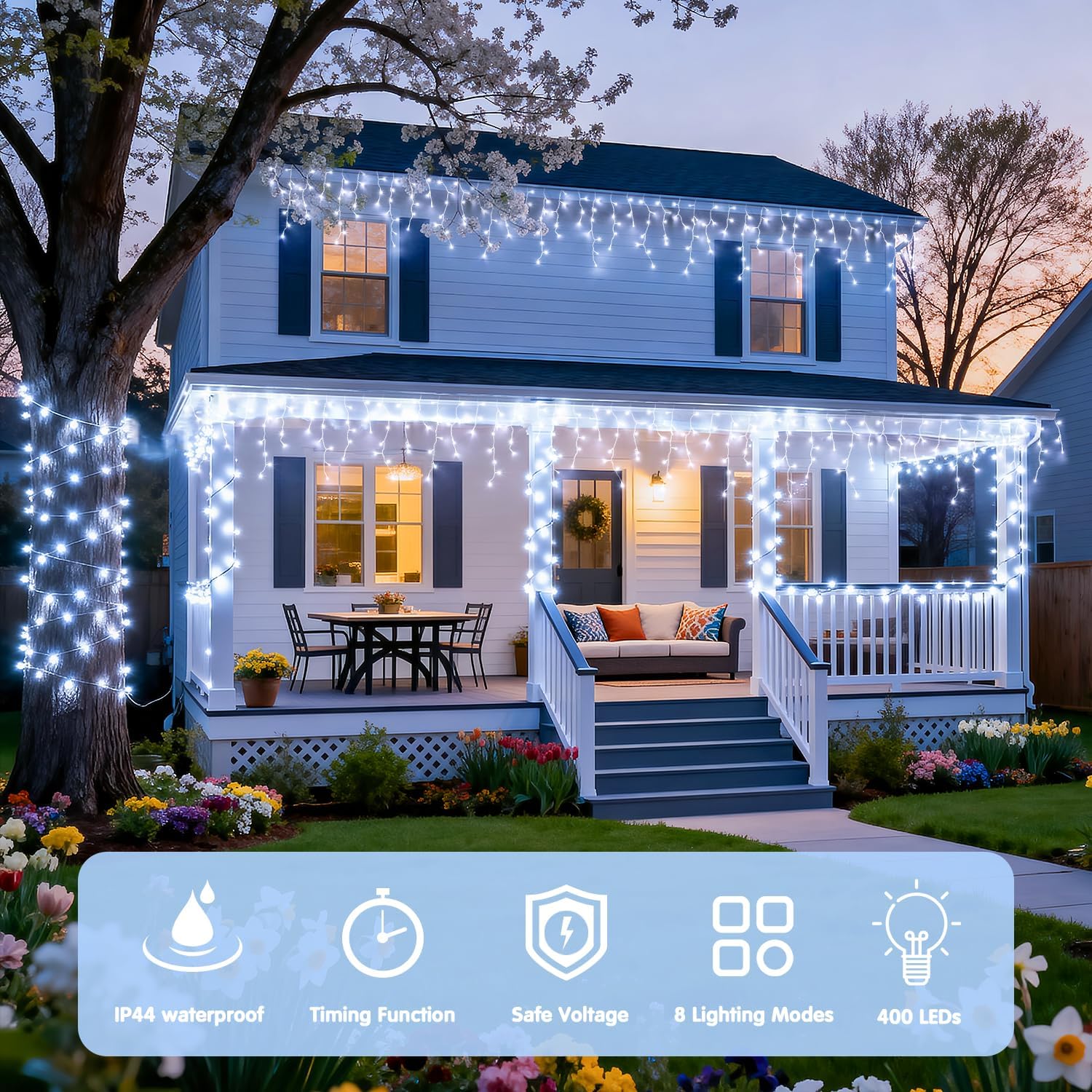
First up, Durability and Weather Resistance. This is probably the biggest deal-breaker for outdoor icicle lights. We’re talking about something that’s going to hang outside for weeks, maybe even months. It’ll face rain, snow, wind, and whatever else the season throws at it. So, you need lights built to take a beating. Look for terms like “IP44” or “IP65” — those numbers mean something, denoting how well the product resists dust and water. A lower rating might be fine for a covered porch, but if they’re exposed to the elements, you really want that stronger protection. And then there’s the wire itself. Flimsy, thin wire is a recipe for tangles and breaks, especially in colder weather. Thicker, more robust wiring simply lasts longer. Some cheaper sets? They feel like they’re going to snap if you even look at them wrong.
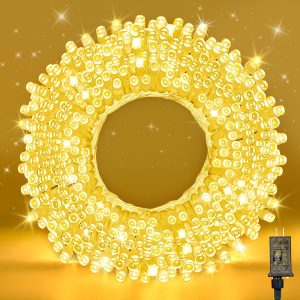
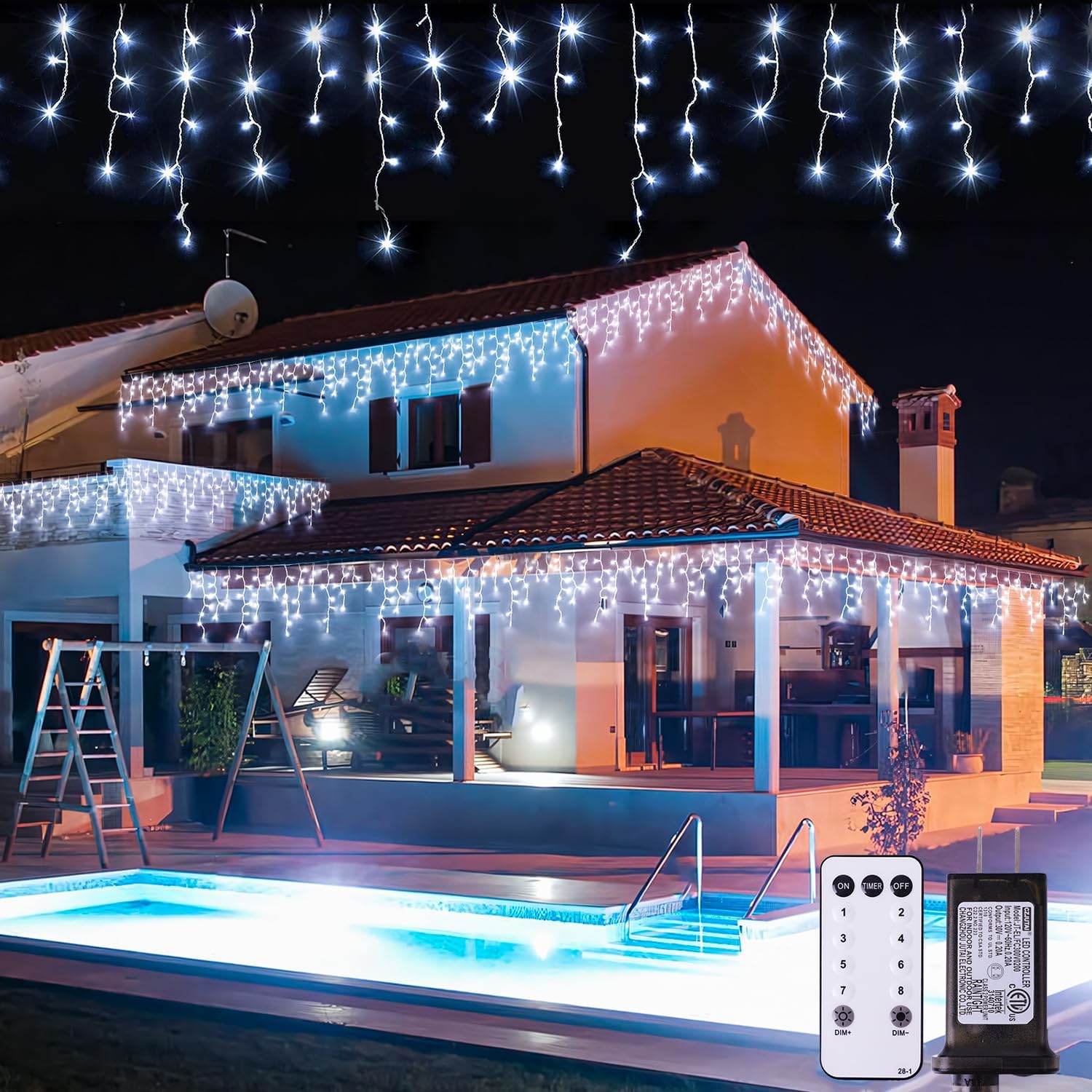
Then there’s Brightness and Color Consistency. You want your icicle lights to be seen, right? LED icicle lights have become the standard for a reason: they’re bright and energy-efficient. But not all LEDs are created equal. Some budget options can have a slightly bluish tint even when advertised as “white,” or a rather anemic glow. The JMEXSUSS 400 LED white icicle lights, for instance, generally offer a consistent, crisp white light that cuts through the dark without being overwhelmingly harsh. Consider if you want a warm white, which has a cozy, yellowish hue, or a cool white, which is more stark and modern. Mixing them can look a little… messy. So, stick to one type across your whole display.
Next, Connectability and Length. You’re rarely just decorating one small window. Most people need multiple strands to cover eaves, railings, or larger areas. That’s where connectability becomes a hero. You can often link several strands end-to-end from a single power source, which is far better than having a bunch of extension cords snaking everywhere. The JMEXSUSS model is connectable, which is a huge plus. But check how many strands can be linked. Some brands allow dozens; others limit you to just a few. And think about the overall length of each strand, too. A 38.8ft length, like our JMEXSUSS example, is decent, but you might need four or five of those to wrap around a standard house. Planning your layout beforehand prevents that frantic mid-decorating run to the store.
Power Consumption and Energy Efficiency certainly warrant a look. Nobody wants a massive electric bill just for a few weeks of sparkle. This is another area where LED technology shines. LEDs use significantly less power than traditional incandescent bulbs. So, while the initial cost might be a touch higher for LED icicle lights, the savings on your electricity bill can add up over time, especially if you’re running them for hours every night. It’s also better for the environment. Some older string lights can really suck down the juice, and who needs that kind of financial drain?
Consider the Ease of Installation and Storage. Are the icicle lights prone to tangling? Do they come on a spool or in a giant, knotted mess? Lights with thicker wire tend to tangle less and are easier to spool up at the end of the season. Also, think about how the “icicles” themselves are structured. Are they just random lengths, or are they uniformly spaced? This affects how easy it is to achieve a neat, even look along your eaves. Nobody wants a wonky display because the strands refuse to cooperate. And honestly, putting them away neatly saves you a massive headache next year.
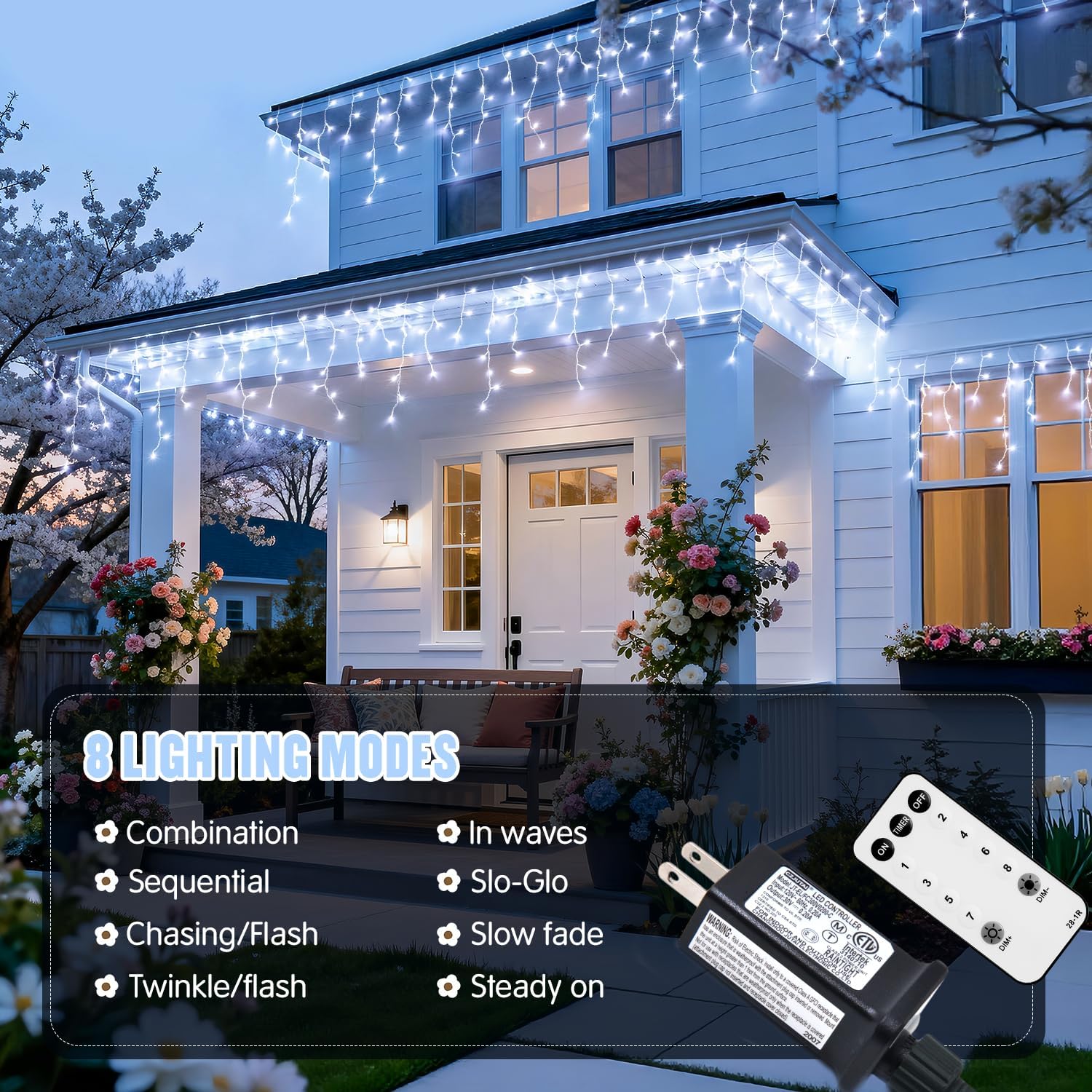
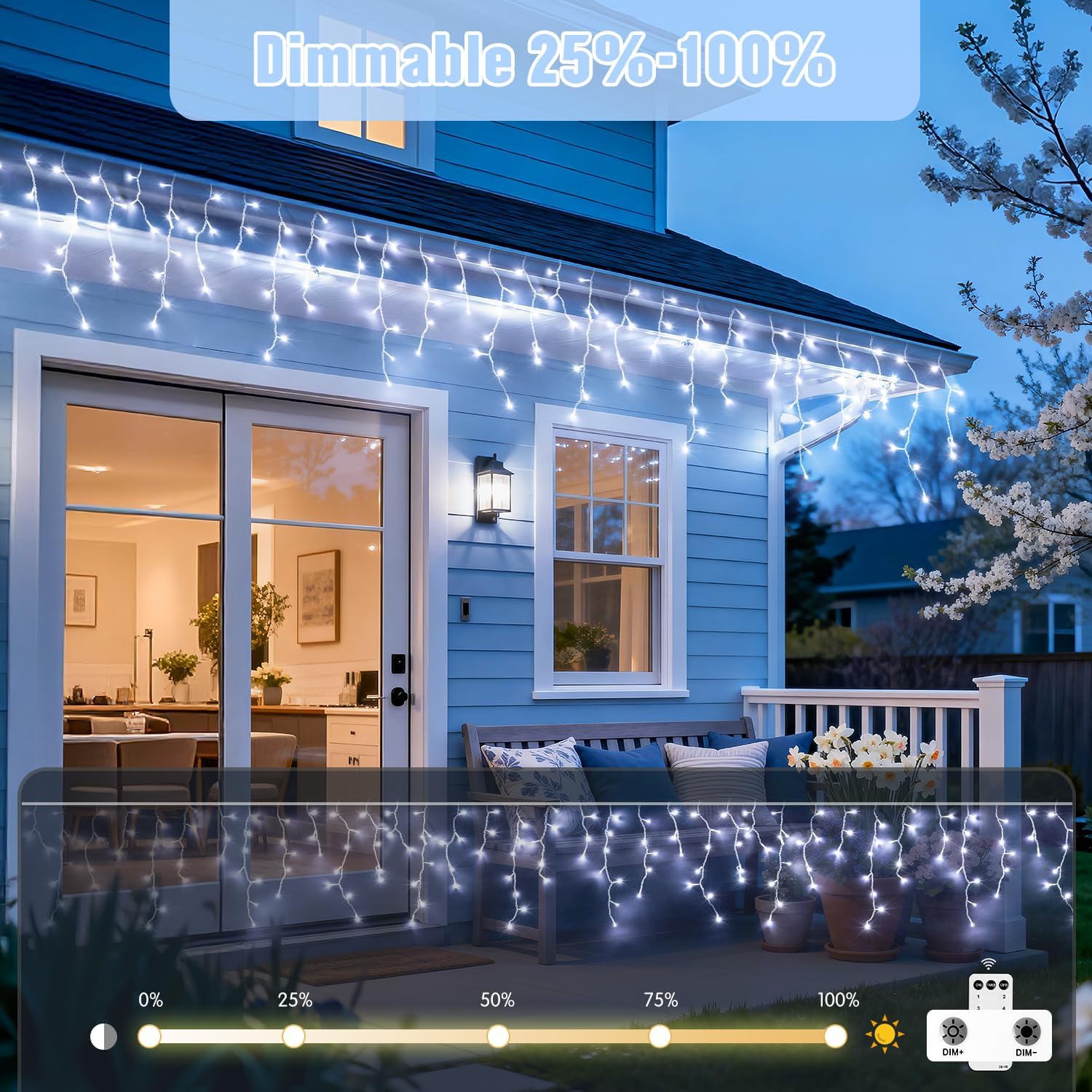
Finally, don’t overlook Light Modes and Features. Some icicle lights offer multiple settings—steady on, twinkling, fading, waves, sequential, you name it. For some, a simple steady glow is all they need. For others, the ability to switch between modes adds a fun, dynamic element to their holiday decorations. Remote controls can be super handy too, saving you from having to trek outside in the cold to change a setting. The JMEXSUSS lights often come with various modes, which is a nice touch if you like to switch things up. But remember, extra features often mean extra cost, and sometimes, a simpler design means less to go wrong.
How to Match the Product to Your Situation
Your perfect set of icicle lights depends a lot on your specific setup and holiday ambitions. One size definitely does not fit all.
The “Classic Homeowner”: You’re looking for that traditional, inviting glow. Something reliable that makes the house look festive without being over-the-top or demanding constant attention. You probably have a standard single-story or two-story home, and you want to drape icicle lights along the eaves, maybe a porch railing. You prioritize durability, good color consistency, and ease of connection so you can cover a decent span without a tangle of wires. For you, a mid-range offering like the JMEXSUSS 38.8ft 400 LED White Icicle Lights is often spot-on. They provide enough length and brightness, and they’re usually connectable, making them ideal for creating a cohesive display that looks cared-for, not haphazard. You want “set it and forget it,” mostly.
The “Holiday Enthusiast”: Your yard is a canvas. You’re thinking multiple layers, intricate patterns, maybe synchronized elements. You need serious length, high-end durability, and possibly advanced features like app control or custom programming. You’re likely combining icicle lights with other string lights and animated displays. For this level of ambition, you’ll be looking at premium-tier outdoor icicle lights, possibly commercial-grade strands. These often boast superior weather resistance, much longer connectable runs, and professional-grade wiring. You’re willing to pay more for lights that can withstand years of elaborate setups and takedowns. The JMEXSUSS model might serve as a good base layer but you’d augment it with more specialized, higher-tier strands for the showstopper elements.
The “Budget-Conscious Decorator”: You love the holiday spirit, but your wallet prefers sensible spending. You might be decorating a small apartment balcony, a single window, or just want a modest touch of sparkle. Price is a primary concern, but you still want something that works and doesn’t look cheap. You’re probably okay with fewer features, maybe a slightly shorter run, and might only need one or two strands. Entry-level LED icicle lights are your sweet spot. You’ll need to scrutinize reviews for actual color and durability, as this tier can be a mixed bag. The JMEXSUSS lights, while not the absolute cheapest, do offer a good bang for the buck, positioning them as a strong contender if you can stretch a little past the absolute bottom rung. You just need some sparkle.
Icicle Light Tiers: What’s the Real Difference?
It’s not all just “lights.” There are distinct tiers, and understanding them helps you avoid overspending—or underspending.
| Type/Tier | Best For | Price Tier | Key Feature | Watch-Out |
|---|---|---|---|---|
| Budget Basics | Small-scale decor, temporary setups, indoor | Entry-level | Minimal upfront cost, simple plug-and-play. | Often poor weather resistance, short lifespan, inconsistent light. |
| Mid-Range Workhorses | Average home exteriors, reliable holiday sparkle, JMEXSUSS fits here | Mid-range | Good balance of durability, brightness, connectability. | Feature sets can be limited, not for extreme weather. |
| Premium Pro-Grade | Large properties, commercial applications, year-round display | High-end | Superior weatherproofing, extensive connectability, advanced controls, robust wiring. | Significantly higher cost, sometimes overkill for small jobs. |
Budget Basics: These are your grab-and-go options. They’re cheap, readily available, and generally fine for a single season, especially if they’re mostly sheltered indoors or under a deep eave. But don’t expect them to last more than a year or two outside in anything resembling real weather. The wiring can be brittle, and the waterproofing is often minimal. You’ll likely replace them sooner rather than later.
Mid-Range Workhorses: This is where products like the JMEXSUSS 38.8ft 400 LED White Icicle Lights really shine. They offer a significant step up in quality without jumping to commercial pricing. You get better weather resistance, brighter and more consistent LEDs, and crucial features like connectability. These are generally reliable performers for several seasons of typical outdoor use, giving you good value for your investment.
Premium Pro-Grade: If you’re decorating a large estate, a business, or you just demand the absolute toughest, brightest, and most feature-rich icicle lights, this is your category. Expect thick-gauge wiring, heavy-duty connectors, and superior sealing against the elements. They often come with longer warranties and can handle truly harsh conditions. The trade-off is the price, which can be several times that of mid-range options. Overkill for most of us.
Scenario-Specific Mini-Sections
Different situations demand different considerations for your icicle lights. It’s not just about what looks good.
For Exposed Outdoor Areas (eaves, fences, uncovered railings):
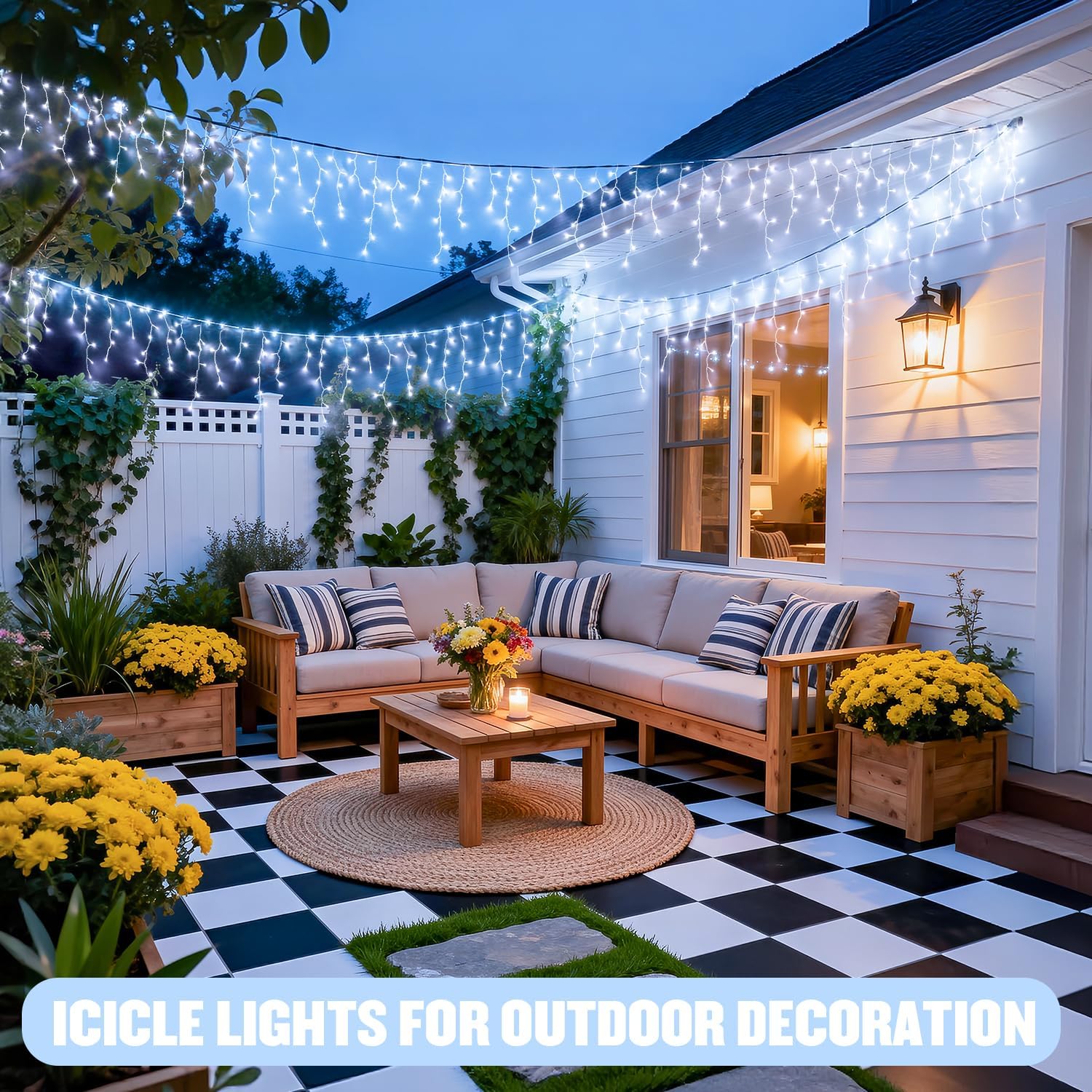
If your icicle lights are going to be completely out in the open, facing rain, snow, and wind head-on, you absolutely need to prioritize robust weather resistance. Those IP ratings? This is where they matter most. Look for lights specifically designed for “heavy duty” or “all-weather” outdoor use. The JMEXSUSS 38.8ft 400 LED White Icicle Lights are generally rated for outdoor use, which means they can handle typical exposure. But if you live in a region with particularly harsh winters or extreme humidity, pushing towards a more premium, commercial-grade product might prevent premature failure. Better safe than sorry when it comes to electrical items getting wet.
For Temporary or Special Event Decor (parties, short-term displays):
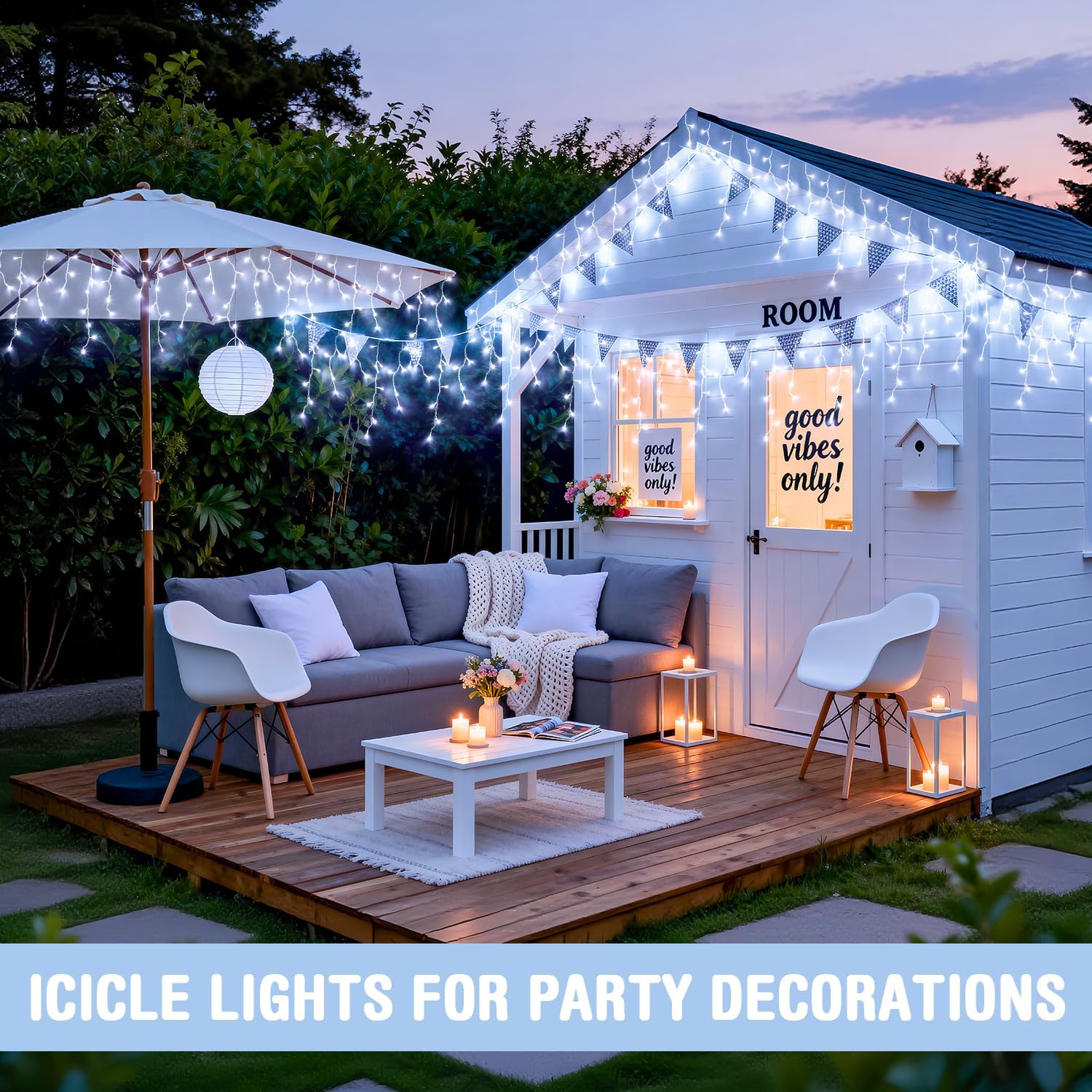
Sometimes, you just need a splash of sparkle for a specific event or a shorter holiday period. In these cases, you might not need the absolute highest tier of durability. Connectable icicle lights are still key for flexibility in layout. The JMEXSUSS model, with its manageable length and decent LED count, works well here. You can easily string them up for a party and then pack them away. The upfront cost is reasonable enough that if they only last a few seasons, you won’t feel too bad. Ease of setup and takedown becomes more important than year-after-year endurance, frankly. Why spend more than you need to?
For Indoor/Covered Outdoor Applications (mantels, covered patios, balconies):
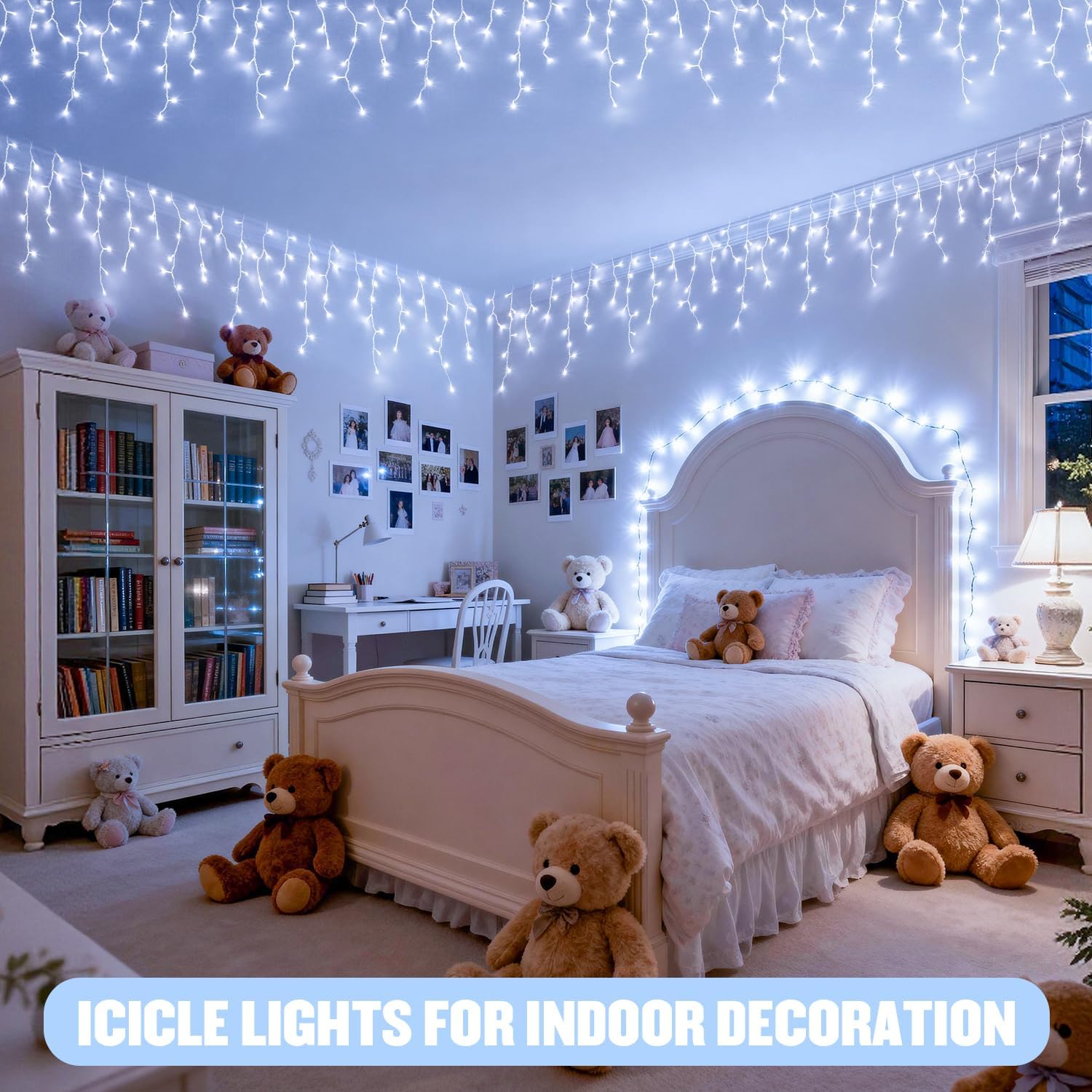
If your icicle lights are staying indoors, or under a fully covered area where they won’t directly get wet, your requirements shift. Weather resistance becomes less critical, allowing you to perhaps prioritize aesthetic features or even consider slightly more delicate designs. You still want good color consistency and brightness, of course. The JMEXSUSS lights would work perfectly here, perhaps even exceeding your needs for weather protection. For indoor use, you might even consider battery-operated options for areas without easy outlets, though these tend to be shorter and less bright. Power consumption is less of a worry here too, since they won’t be running continuously in the cold.
Common Mistakes When Buying Icicle Lights
Look, we’ve all been there. You get excited, you click “buy,” and then you realize you’ve made a rookie error. With icicle lights, these mistakes are particularly annoying when you’re halfway through decorating.
One major blunder is underestimating the required length. People often buy one or two strands, thinking “that’ll be enough for the front.” Then they get home, hang them up, and realize they’ve covered about a tenth of their eaves. Suddenly, you’re looking at uneven light distribution and multiple trips to the store. Always measure your space first. Seriously, get a tape measure. Add a little extra for good measure – better to have a bit too much than too little.
Another common pitfall is ignoring weather ratings for outdoor use. Those cheap, “indoor/outdoor” icicle lights might survive a light drizzle, but a proper winter storm? Not a chance. Water ingress is the enemy of any electrical product. You’ll end up with shorts, flickering, or complete failure, possibly even a safety hazard. Always check that IP rating, especially for exposed areas. Don’t compromise on safety for a few bucks.
Then there’s the mistake of mixing different brands or types of “white” lights. You might think all “white” LED icicle lights are the same. They are not. Some are warm white, some are cool white, some are downright bluish. Even between brands advertising the same “color temperature,” there can be subtle but noticeable differences. The result is a patchwork quilt of light that looks disjointed and, frankly, a bit amateurish. Stick to one brand and one specific white tone for a uniform, polished look. The JMEXSUSS 400 LED White Icicle Lights are a good bet for consistency if you buy enough of them.
Finally, skimping on storage during the off-season. You just spent good money on these lights, so don’t just shove them into a bin in a tangled mess. That’s how wires get crimped, bulbs get broken, and next year’s setup becomes a frustrating hour-long untangling session. Invest in a proper light spool or even just use cardboard to wrap them neatly. It takes five extra minutes now, saves you an hour of headaches later. Trust me on this; your future self will thank you.
Why/How/What Mini-Section
Why bother with connectable icicle lights?
Honestly, it’s about simplicity and safety. Running multiple separate strands means more extension cords, more outlets needed, and more potential points of failure or trip hazards. Connectable Christmas lights allow you to power a long run of illumination from a single plug, cleaning up your display and making installation much less of a headache. Fewer wires snaking across your lawn is always a win.
How do I make my icicle lights look symmetrical?
Achieving that clean, symmetrical look largely comes down to pre-planning and careful installation. First, measure your eaves or hanging surface accurately. Then, mark equal intervals. When hanging, ensure the drops (the “icicles” themselves) are falling at consistent points. For products like the JMEXSUSS 38.8ft 400 LED White Icicle Lights, where the drops are usually spaced uniformly, this is easier. Don’t rush it; a little patience goes a long way.
What’s the difference between warm white and cool white icicle lights?
It’s all about the color temperature, essentially. Warm white icicle lights emit a softer, yellowish glow, reminiscent of traditional incandescent bulbs or candlelight, creating a cozy, inviting atmosphere. Cool white icicle lights, on the other hand, produce a brighter, almost bluish-white light that feels more modern, crisp, and can really make colors pop in a display. Your choice depends on the overall aesthetic you’re aiming for.
FAQ
How many JMEXSUSS 38.8ft strands do I need for a typical house?
It really depends on the size of your house and how much coverage you want. A single 38.8ft strand might cover a small garage door or a single window. For average-sized eaves around a standard house, you’d likely need anywhere from 3 to 6 strands, possibly more for larger homes or extensive coverage. Measure your total desired length and divide by 38.8 to get a rough estimate.
Can these icicle lights stay out all winter?
The JMEXSUSS 400 LED White Icicle Lights are designed for outdoor use and generally hold up well to typical winter conditions. They often have decent weather resistance, but like any electronics, prolonged exposure to extreme weather (heavy ice storms, relentless high winds) can test their limits. If you live in a particularly harsh climate, consider bringing them in during severe weather or opting for a commercial-grade set.
Are LED icicle lights like JMEXSUSS energy efficient?
Absolutely. One of the biggest advantages of LED technology is its energy efficiency. Compared to old incandescent bulbs, LED icicle lights consume significantly less electricity, which can lead to noticeable savings on your utility bill during the holiday season. They also tend to last much longer, adding to their overall value.
Can I connect JMEXSUSS icicle lights with other brands?
Generally, it’s not recommended. While some connectors might look similar, voltage and current requirements can differ between brands, leading to flickering, reduced brightness, or even damage to the lights. For optimal performance and safety, stick to connecting strands of the same brand and model, like multiple JMEXSUSS 38.8ft 400 LED White Icicle Lights.
Do these icicle lights come with different light modes?
Many modern icicle light sets, including various JMEXSUSS models, do offer multiple light modes. You’ll often find options like steady on, slow fade, twinkling, waves, and sequential patterns. There’s usually a button on the plug or a small control box to cycle through these different settings, letting you change up the look of your display.
How long do LED icicle lights typically last?
LED icicle lights generally have a much longer lifespan than traditional incandescent options. A well-made set, like the JMEXSUSS 400 LED lights, can easily last for several holiday seasons, often 3-5 years or even more with proper care and storage. Their longevity is a significant part of their value proposition.
Final Recommendation
When it comes down to dressing up your home with that classic cascade of light, the JMEXSUSS 38.8ft 400 LED White Icicle Lights land squarely in that sweet spot for most homeowners. They offer a strong blend of length, LED count, and crucial connectability, making them a superb mid-range choice. If you’re decorating a standard-sized home and want a reliable, bright, and aesthetically pleasing display that won’t require a second mortgage, these are a seriously sensible pick. They’re robust enough for typical outdoor weather, and their consistent white light delivers that crisp holiday sparkle without any weird color inconsistencies you sometimes get with cheaper alternatives.
Look, you don’t always need to shell out for the priciest, commercial-grade gear unless you’re aiming for a holiday light show that stops traffic. And honestly, the very cheapest options are often a false economy, failing after one season and leaving you frustrated. The JMEXSUSS hits that perfect balance: good quality, good performance, and a practical choice for creating a welcoming, festive glow that lasts through the season. Just remember to grab enough strands for your whole setup!
#JMEXSUSS #38.8ft #LED #White #Icicle #Lights #Connectable #Christmas #Icicle #Lights #Outdoor #Indoor #Plug #String #Lights #House #Patio #Party #Room #Eave #Decorations