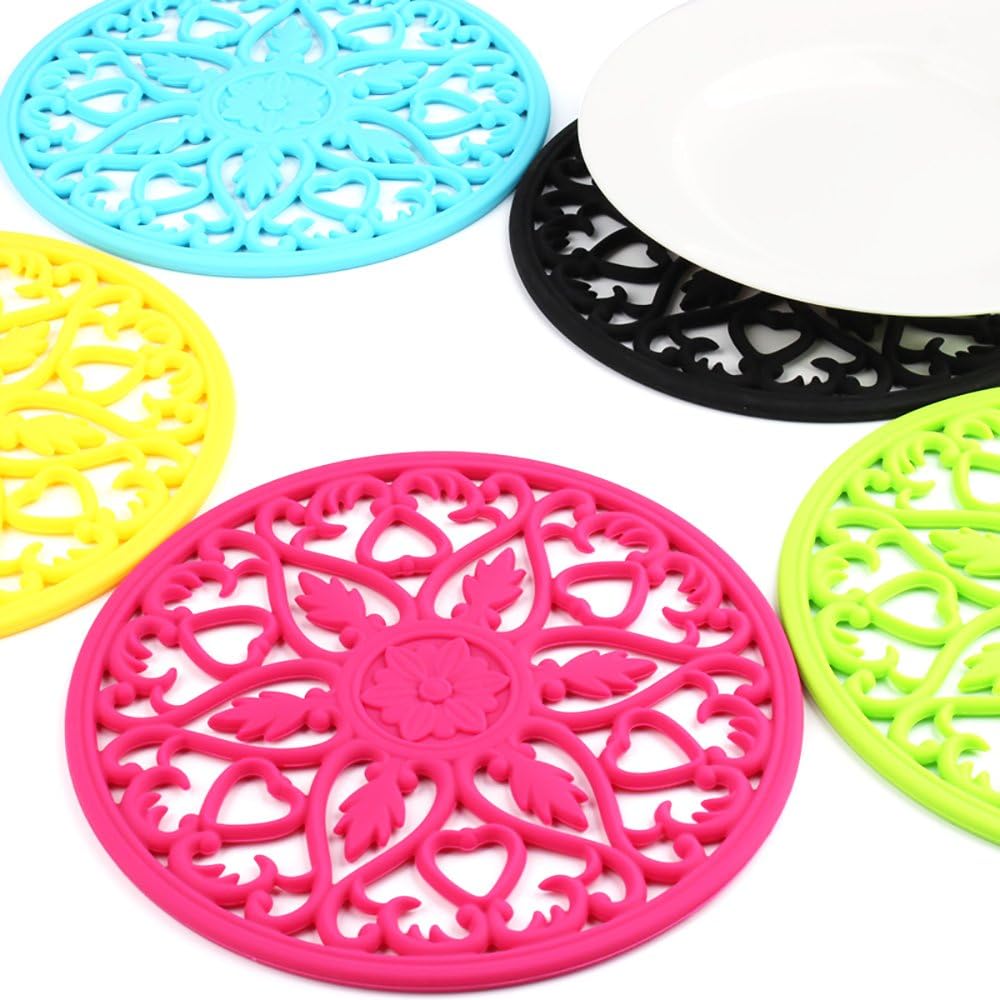
Deciphering Trivets: Are ME.FAN Silicone Hot Pads the Real Deal for Your Kitchen?
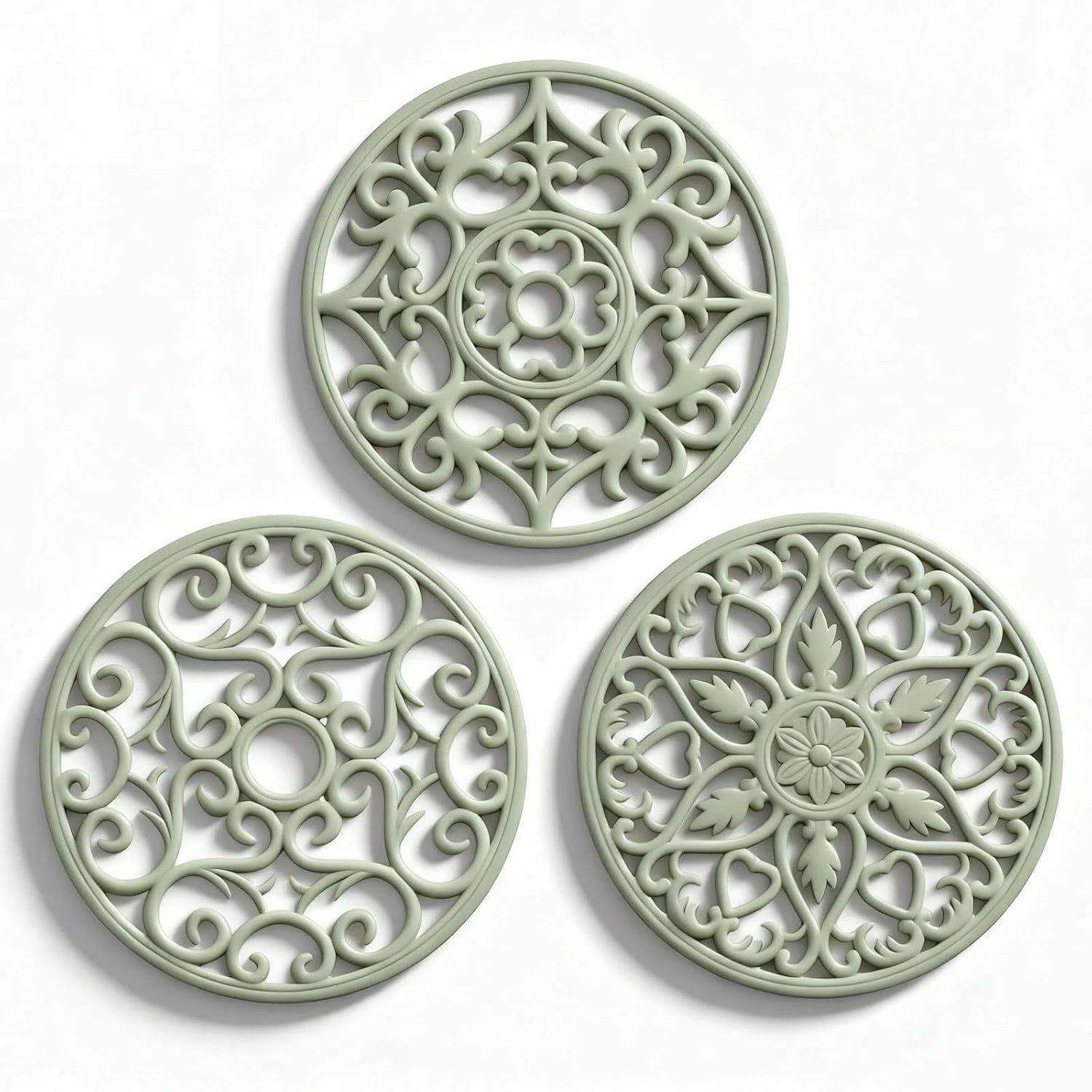
Choosing the right trivets might seem like a small decision in the grand scheme of kitchenware, but anyone who’s scorched a countertop or chipped a prized dining table knows better. This guide is for the practical shopper, the one who wants durable, effective hot pads without overspending or falling for flimsy fads. We’re going to really dig into what makes a good trivet, focusing our lens on a popular option: the ME.FAN Trivets for Dishes/Pots/Pans, 3 Pcs Silicone Mats in Desert Sage. You’ll understand where they shine, where they might fall short, and ultimately, if they’re the smart pick for your home.
Key Takeaways
- Silicone is a Strong Contender: For modern kitchens, silicone mats like the ME.FAN offer significant advantages in heat resistance, grip, and ease of cleaning compared to traditional materials.
- ME.FAN Delivers on Core Promises: The ME.FAN trivets generally live up to their billing as flexible, durable, non-slip hot pads that protect surfaces.
- Consider Your Aesthetic: While functional, the “Desert Sage” color (or any specific silicone shade) needs to jive with your kitchen décor. Not everyone wants a bright pop of color.
- Value in the Multi-Pack: The 3-piece set offers good utility for varied pot and pan sizes.
Quick Decision Tree: Do You Need ME.FAN Trivets?
- Is heat protection your absolute top priority?
- Yes: Proceed to Q2.
- No (mostly decorative): Consider a dedicated decorative option.
- Do you frequently use hot pots, pans, or baking dishes straight from the oven/stovetop?
- Yes: Proceed to Q3.
- No (only occasional): A simpler, less robust option might suffice.
- Is easy cleanup (dishwasher safe) important to you?
- Yes: Silicone is a strong candidate. Proceed to Q4.
- No (happy to hand wash anything): Opens up more material choices.
- Do you value non-slip stability for your cookware?
- Yes: Silicone excels here. Proceed to Q5.
- No (don’t mind minor shifting): Other materials can work.
- Does a modern, slightly minimalist aesthetic appeal to you, and are you okay with a specific color like Desert Sage?
- Yes: ME.FAN Trivets are likely a good fit.
- No (prefer traditional or specific décor match): Explore other materials and designs.
What to Look For (The Buying Criteria)
When you’re sifting through options for those crucial countertop defenders, it’s easy to get lost in the details. But after years of watching these things evolve, I can tell you there are a few non-negotiables that really separate the good from the “why did I bother?”
First up: Material Matters. A Lot.
You’ve got your classic wooden trivets, often beautiful, sometimes handmade. They absorb heat, which is fine, but they can scorch, stain, or warp over time. Then there are metal trivets, usually cast iron, which look substantial and can handle serious heat. They’re nearly indestructible. The rub? They conduct heat, meaning the metal itself gets screaming hot, and those little feet need to be perfectly protected lest they scratch a delicate surface. Cork trivets are budget-friendly, offer decent insulation, but they stain like crazy and tend to crumble or flake with heavy use. Enter silicone mats. Specifically, the ME.FAN ones are made of silicone, and this material offers a compelling blend of benefits. It’s highly heat resistant, won’t scratch surfaces, and perhaps most crucially, it’s flexible and durable. But the downside to silicone? Sometimes it can feel a bit less “premium” or rustic than a beautiful piece of carved wood, and if you get a cheap, thin version, it won’t insulate effectively. You want a decent thickness.
Then, there’s Heat Resistance: How Hot is Too Hot?
This is pretty obvious, right? Your trivet needs to handle the heat. But not all materials are created equal. A boiling pot might be one thing; a baking dish pulled from a 450-degree oven is quite another. Most silicone products, like the ME.FAN set, are designed to withstand temperatures well into the high hundreds of degrees Fahrenheit, often upwards of 450-500°F. That’s usually enough for anything coming off a home stovetop or oven. Wooden ones, as I mentioned, will eventually char. Cork? Forget about it for extreme heat. Metal is fine, but again, it transfers the heat. A good trivet insulates, meaning it absorbs the heat without becoming a searing surface itself. This is where a thicker silicone mat really proves its worth. Thin ones? Not so much.
Stability and Non-Slip Properties: Does It Stay Put?
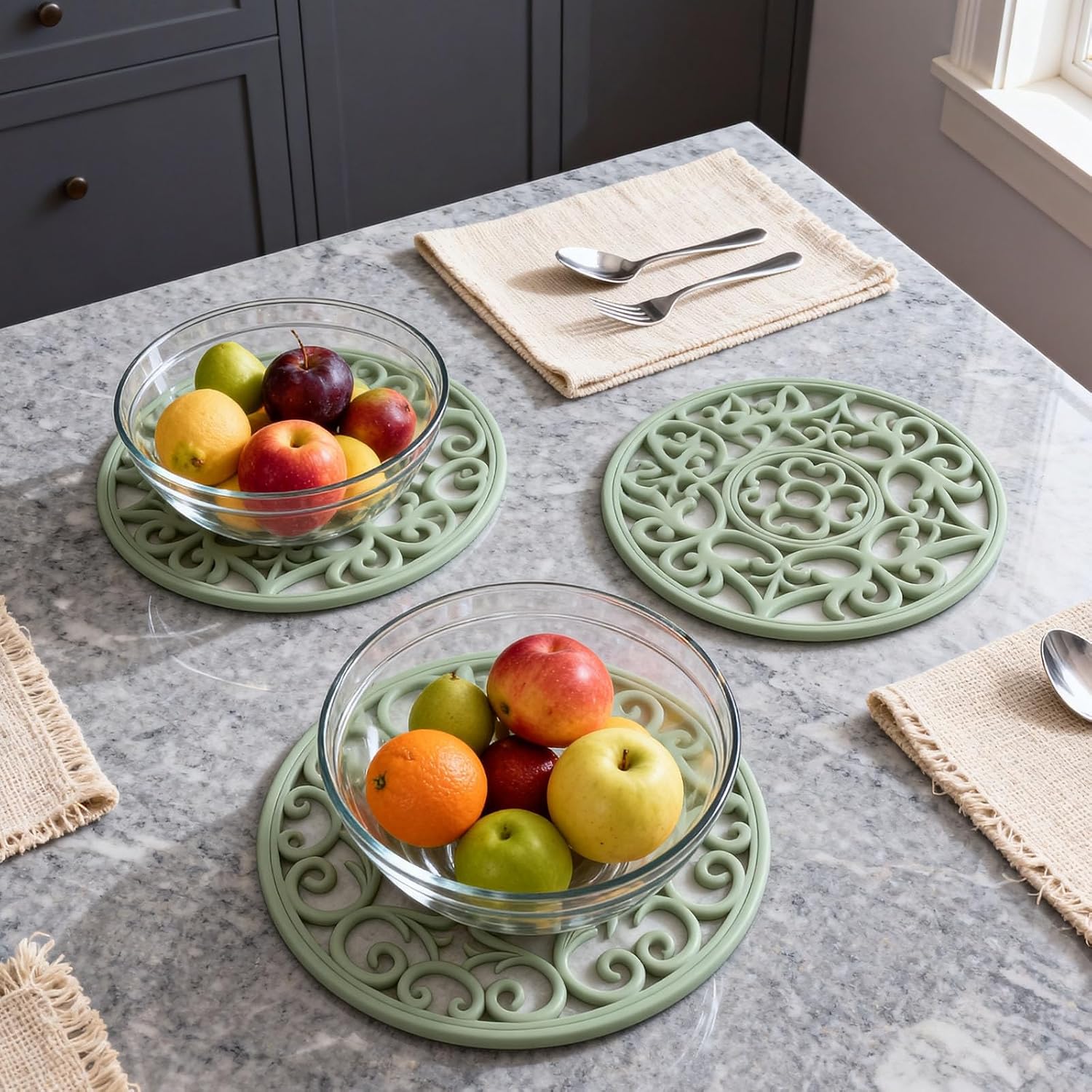
This is often overlooked, but imagine sliding a heavy, steaming pot of chili off a wobbly, slick trivet onto your lap. Not fun. Good trivets should offer a stable platform. Many silicone trivets, including the ME.FAN for dishes/pots/pans, excel here because silicone inherently has a grippy texture. This means both the trivet itself tends to stay put on the counter, and the pot or pan placed on it won’t slide around easily. Traditional trivets, especially those with small metal feet, can sometimes shift or even scratch if dragged. Cork or woven fabric options also offer some grip, but their stability depends on their thickness and weight.
Next, think about Size and Shape: Fit for Purpose.
You’re not going to put a massive roasting pan on a dainty little trivet designed for a teapot. A good trivet set, like the ME.FAN 3-piece bundle, provides options. A larger mat is great for a Dutch oven, while a smaller one works for a single serving dish. Some people like square or round; others prefer interlocking designs. Consider the types of cookware you use most often. Do you need one pot holder for a tiny saucepan, or a large surface for a baking sheet? The ME.FAN silicone mats are flexible, so they can adapt somewhat, even conforming slightly to uneven surfaces, which is a neat trick. But don’t expect a single small one to protect your entire counter from a sheet pan. That’s just silly.
Ease of Cleaning: A Real Time Saver.
Nobody wants another kitchen gadget that’s a pain to clean. Wooden trivets can absorb spills and become breeding grounds for bacteria if not dried properly. Cork often stains permanently. Metal can be easy to wipe, but if it has intricate patterns, food can get trapped. Silicone, however? It’s generally non-porous, so spills wipe right off. Many, including the ME.FAN trivets, are dishwasher-safe. Just toss them in. This is a huge win for hygiene and convenience. Still, vibrant colors, like Desert Sage, can sometimes show subtle discoloration over time if exposed to very strong, colorful sauces and not rinsed quickly. It’s not a deal-breaker, but something to keep in mind if you’re a heavy-duty pasta sauce maker.
Finally, there’s Aesthetics and Storage: Does it Look Good and Tuck Away?
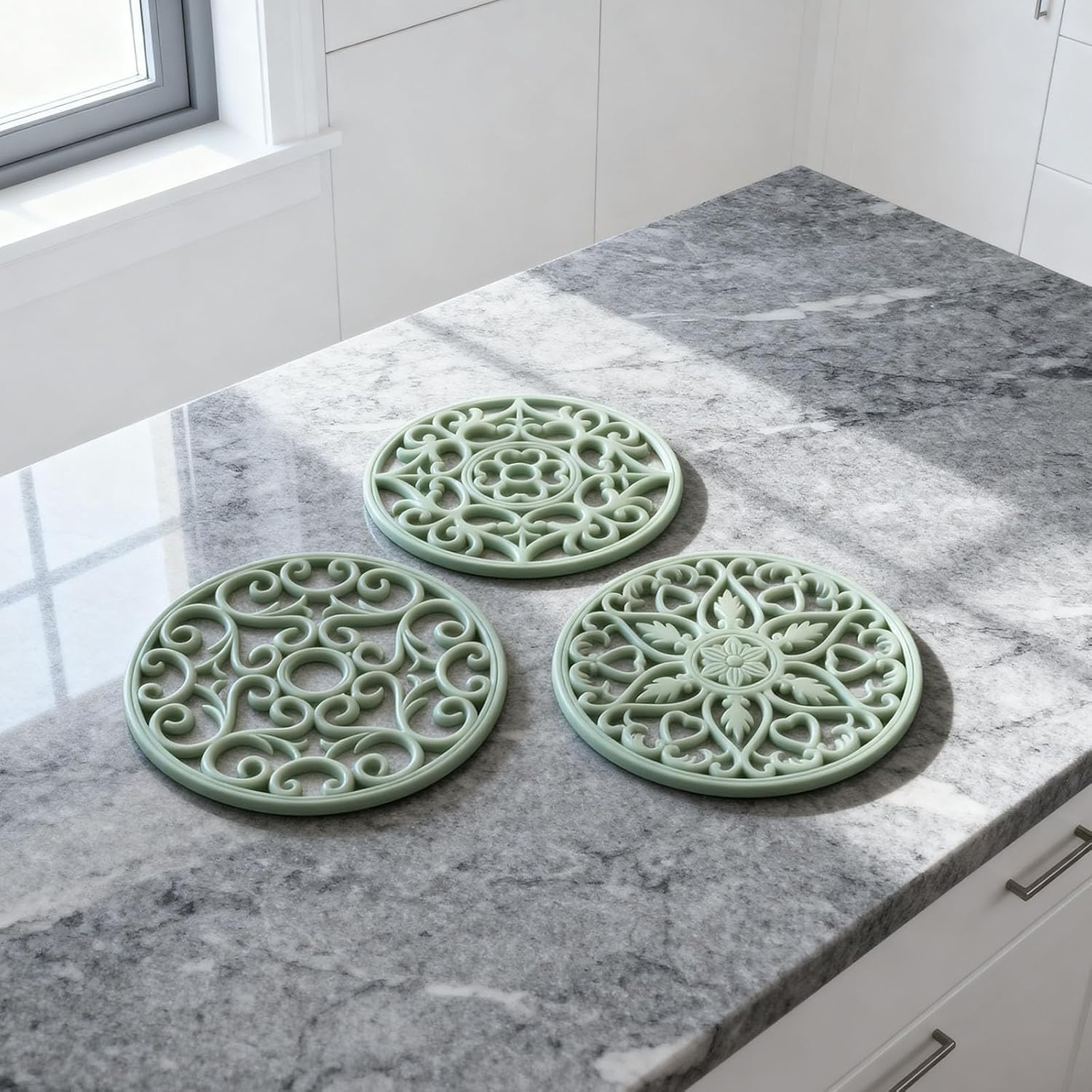
Let’s be real, kitchen tools live in our homes. They should either look decent or disappear entirely. Some people love the rustic charm of wooden trivets or the industrial feel of cast iron. Others prefer the clean lines and modern colors of silicone. The ME.FAN trivets come in that Desert Sage color, which is muted but distinct. If that doesn’t fit your kitchen’s vibe, you might be out of luck, as color choice can be limited with some brands. Also, consider how they store. Flexible silicone mats can often be rolled up or stacked flat in a drawer, taking up minimal space. Rigid or bulky trivets might require dedicated cupboard real estate. So, think about both form and function here.
How to Match the Product to Your Situation
Finding the right trivets isn’t about picking the “best” one; it’s about picking the best one for you. Let’s sketch out a few common kitchen scenarios.
The Everyday Home Cook: “I’m always juggling hot pans.”
You’re the kind of person who cooks multiple dishes for dinner, perhaps baking regularly, and you need reliable counter protection that can keep up. Your kitchen sees a lot of action, and convenience is key. You value practicality over pure decorative flair. For you, a multi-piece set of silicone mats, like the ME.FAN set, is a strong candidate. The different sizes mean you’re prepared for anything from a small saucepan to a large casserole dish. The non-slip nature is crucial when you’re moving quickly, reducing the risk of accidental slips. And let’s not forget the dishwasher-safe aspect. After a big meal, you just want to clean up and relax, not scrub trivets. You’re not looking for fancy, just effective.
The Entertainer: “My dining table is a showpiece.”
When guests are over, your table becomes the center stage. Presentation matters, but so does safeguarding that beautiful wood or stone surface. You might pull out multiple serving dishes, all hot, all needing careful placement. You need something that looks good but performs without fail. For this scenario, while silicone offers unmatched protection and stability, its modern aesthetic might not always mesh with a formal dining setting. You might opt for a mix: use the ME.FAN hot pads in the kitchen for prep and staging, then transfer dishes to more traditional or decorative trivets (perhaps cork or artful wood) for the dining table itself. Or, if your style leans contemporary, the Desert Sage silicone could fit right in. The key is knowing when function can take a backseat to form, and when it absolutely cannot.
The Space-Challenged Minimalist: “Every inch counts.”
Perhaps you live in a smaller apartment, or you just hate clutter. You need tools that are multi-functional and easy to store. Bulky, rigid trivets are out of the question. For you, the flexibility and stackability of silicone mats are a massive bonus. The ME.FAN trivets, being thin and pliable, can be tucked into a drawer or hung on a hook without taking up much room. Their ability to double as jar openers or even a temporary pot handle grip (carefully, of course!) makes them even more appealing. You’re not looking for a collection of specialized tools; you’re looking for versatile workhorses.
Trivet Types & Tiers: A Comparative Look
| Type/Tier | Best For | Price Tier | Key Feature | Watch-Out |
|---|---|---|---|---|
| Silicone Mats | Everyday use, heavy pots, easy cleaning | Budget-Mid | Excellent heat resistance, non-slip, flexible | Can attract lint, aesthetic might not suit all décor |
| Cork Trivets | Light to moderate heat, budget-conscious | Budget | Natural feel, good initial insulation | Stains easily, crumbles over time, lower durability |
| Wooden Trivets | Decorative appeal, moderate heat | Mid-Premium | Aesthetic charm, classic look, good insulation | Can scorch, warp, harder to clean, absorbs odors |
| Cast Iron/Metal | Extreme heat, heavy duty, industrial aesthetic | Mid-Premium | Virtually indestructible, very stable | Heavy, can scratch surfaces if feet aren’t padded |
Silicone Mats: These, like the ME.FAN option, are the modern workhorses. They’re soft, won’t scratch your counters, and truly hold onto hot items. Their flexibility means they can often be used for other things, too. Still, they can sometimes look a bit utilitarian, and if you leave them out, dust and pet hair love to cling to them.
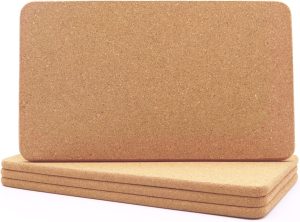
Cork Trivets: Cork is a natural insulator and usually quite affordable. They’re fine for a warm teapot or a serving dish that’s cooled slightly. The issue is they’re absorbent. Spill a bit of red wine or tomato sauce, and that stain is probably there forever. They don’t last long under real kitchen stress.
Wooden Trivets: These are often beautiful, especially artisan-made pieces. They insulate well and add a rustic touch to a table. The “watch-out” is real, though. A screaming hot pan can leave a permanent burn mark, and they’re a pain to properly sanitize if something spills. Not usually dishwasher safe, clearly.
Cast Iron/Metal: If you want something that feels substantial and looks almost like a piece of art, these fit the bill. They handle super hot items without issue. However, they’re heavy, and you must ensure the feet have good, soft pads, or you’re begging for scratched surfaces. And they get hot themselves, so don’t touch the metal part after a pot has been on it a while.
Scenario-Specific Needs for Trivets
The Baking Enthusiast’s Dilemma: Counter Space is Gold.
You just pulled a sheet pan full of roasted veggies or a hot pie out of the oven. Where does it go? Not on the cool countertop, obviously. Not on the floor. You need an immediate, reliable spot. For the baking crowd, having larger silicone hot pads that can accommodate bigger baking sheets or multiple ramekins is crucial. The flexibility of something like the ME.FAN allows you to quickly lay out a few to create a larger protected zone. You don’t want to fumble with tiny, individual trivets when your oven mitts are on and steam is wafting. That quick, expansive protection is key.
Outdoor Grilling & Potlucks: Taking the Heat On the Go.
Summer barbecues, tailgates, potluck dinners at a friend’s place – these are scenarios where trivets often get forgotten, leading to ruined surfaces. When you’re bringing a steaming dish over, or plating hot food directly from the grill, you need something rugged, easy to transport, and utterly reliable. Silicone mats fit this bill perfectly. They’re lightweight, flexible enough to tuck into a cooler bag, and won’t get damaged if they bump around a bit. And think about it: if someone spills chili on a wooden picnic table, and your ME.FAN hot pad is under it, you’ve saved the day. Plus, they clean up easily back home. Try that with a delicate ceramic option.
Protecting Your Prized Surfaces: Beyond the Kitchen Counter.
It’s not just kitchen counters. Maybe you have a gorgeous vintage wooden dining table, or a glass coffee table that you want to shield from a hot pizza box. People forget that trivets aren’t just for pots and pans. They can protect against heat from takeout containers, laptop chargers, or even a hot mug of tea that sits too long. For these “everywhere else” scenarios, the discreet profile and non-marking nature of silicone trivets are really beneficial. You don’t want something bulky or scratchy on your fine furniture. The Desert Sage color on the ME.FAN is neutral enough to blend into various settings without being a jarring eyesore.
Common Mistakes Buyers Make
- Prioritizing Looks Over Function: It’s tempting to buy that beautiful, intricately carved wooden trivet because it matches your kitchen perfectly. But if it’s too small for your average pot, or worse, if it’s prone to scorching, you’ve wasted your money. You’re buying protection, first and foremost.
- Underestimating Heat Intensity: Just because a label says “heat resistant” doesn’t mean it handles all heat. A glass baking dish straight from a 450°F oven is far hotter than a warm serving bowl. Many materials, especially thin cork or fabric, simply aren’t up to that task. You might still damage your table protection.
- Ignoring Stability: A lightweight, smooth-bottomed trivet might look fine, but if it slides around on your countertop when you place a heavy pot on it, that’s a safety hazard waiting to happen. Non-slip is critical, especially in a busy kitchen.
- Not Considering Cleanup: Fabric pot holders absorb everything. Intricate metal designs trap food. If you’re not willing to put in extra effort, you’ll end up with dirty, potentially unsanitary trivets that you hate using. Ease of cleaning should be high on your list, especially for something used daily.
Why/How/What for Trivets
Why bother with dedicated trivets when I have dish towels?
Dish towels, while seemingly convenient, offer inconsistent and often inadequate heat resistance. Their material can easily scorch or even catch fire if exposed to prolonged, intense heat. Furthermore, they provide very little non-slip stability, making hot pots prone to shifting and accidental spills. Dedicated trivets are engineered specifically for thermal insulation and surface protection, offering a far safer and more reliable solution.
How do I know if my trivets are still effective?
With silicone mats like the ME.FAN, look for signs of hardening, cracking, or any changes in color that suggest heat degradation. For wooden trivets, excessive charring, splintering, or warping indicates a loss of integrity. Metal ones are usually good unless their protective feet are gone. If you notice your countertop feeling unusually warm beneath a trivet, or if the material itself has become brittle, it’s probably time to replace it. A good trivet should remain consistent in its insulating properties.
What are some unexpected uses for flexible silicone trivets?
Beyond their primary function as hot pads or pot holders, flexible silicone mats are surprisingly versatile. You can use them to get a better grip when opening stubborn jars or bottles. They can serve as non-slip pads under mixing bowls while you’re vigorously stirring. Some folks even use them to protect surfaces from condensation when serving cold items, though their primary purpose is heat. Their flexibility really opens up some creative solutions in the kitchen.
FAQ
Are silicone trivets safe for all types of countertops?
Yes, generally silicone mats are very safe. They won’t scratch or chemically react with most countertop materials, including granite, quartz, laminate, and wood. Their soft, flexible nature ensures they protect delicate surfaces without damage.
How often should I replace my trivets?
It really depends on the material and frequency of use. Silicone trivets like the ME.FAN can last for many years if cared for, showing signs of wear through cracking or hardening. Cork or fabric options might need replacing every year or two due to staining or fraying. Listen to your intuition. If it looks worn out, it probably is.
Can I use these ME.FAN silicone mats in the oven?
While the silicone material itself is heat-resistant, these particular items are designed as trivets or hot pads for under hot items, not in the oven. Using them as a baking mat or lining could lead to uneven cooking or damage. Stick to their intended purpose for table protection.
Are larger trivets always better?
Not always. Larger trivets are good for big pots or pans. However, a collection of smaller ones, like the 3-piece ME.FAN set, often offers more versatility. You can use them individually for smaller dishes or combine them to create a larger protected area when needed. It’s about matching the size to your specific cookware.
Do colored silicone trivets stain easily?
They are generally stain-resistant because silicone is non-porous. However, very potent, vibrant sauces (think turmeric-heavy curries or deep red tomato paste) can sometimes leave a faint tint over time, especially on lighter colors like Desert Sage. Prompt rinsing usually prevents this. It’s usually a cosmetic issue, not a functional one.
Final Recommendation
For the vast majority of home cooks looking for reliable, no-fuss trivets that truly deliver on counter protection and ease of use, the ME.FAN Trivets for Dishes/Pots/Pans, 3 Pcs Silicone Mats are a really solid choice. Their flexibility, durable, non-slip characteristics mean they’ll protect your surfaces without complaint, and the multi-pack ensures you’ve got options for different pot and pan sizes.
If you’re okay with the modern aesthetic of silicone mats and don’t require the traditional look of wood or cork, these offer a compelling blend of value and performance. They’re a practical, trustworthy solution that handles real kitchen heat and cleans up with minimal effort. You can’t ask for much more from your everyday hot pads.
#ME.FAN #Trivets #DishesPotsPans #Pcs #Silicone #Mats #FlexibleDurableNon #Slip #Hot #Pads #Protect #Table #Counter #Top #Desert #Sage