A Savvy Shopper’s Guide to the Ultimate Turkey Brine Kit: Mastering the Meat Injector
Trying to figure out which meat injector syringe truly deserves a spot in your kitchen arsenal, especially when it comes to a proper turkey brine kit? This guide cuts through the noise, focusing squarely on those plastic marinade injectors, the kind with a screw-on meat needle, often bundled with a recipe e-book. We’re here to arm deal-conscious cooks with the know-how to pick a reliable flavor infuser without breaking the bank or settling for a flimsy gadget that’ll quit on you mid-brine.
Quick Answer
For most home cooks eyeing a plastic marinade turkey injector syringe, the value lies in a durable plastic body with a secure screw-on metal needle, ensuring minimal leakage and easy cleaning. Don’t overlook the capacity; a 1-oz model is perfectly fine for most home brining tasks, and a digital recipe e-book can be a pleasant bonus for inspiration. It’s about getting consistent flavor, not just fancy features.
What to Look For (The Buying Criteria)
Choosing the right tool for injecting your holiday bird or smoked meats isn’t as simple as grabbing the cheapest option. You want something that works, truly works, without making a mess or giving up the ghost halfway through. Here’s what seasoned cooks really consider.
Material Matters: Plastic Body, Metal Needle
Let’s be real: a plastic meat injector isn’t going to have the heft of a high-end stainless steel model. And that’s okay. The trick is finding sturdy, food-grade plastic that won’t crack under pressure or degrade with acidic marinades. A truly cheap plastic body? It’ll flex, creak, and eventually fail, probably when you’re wrestling a hefty turkey. The real make-or-break, though, often comes down to the needle. Look for a stainless steel needle even if the body is plastic. Why? Plastic needles bend, clog, and just don’t deliver brine as effectively. The contrast between a robust plastic syringe and a flimsy needle is just… disheartening. It should feel solid enough to pierce skin and muscle without a fight.
Needle Design and Attachment: Screw-On Security
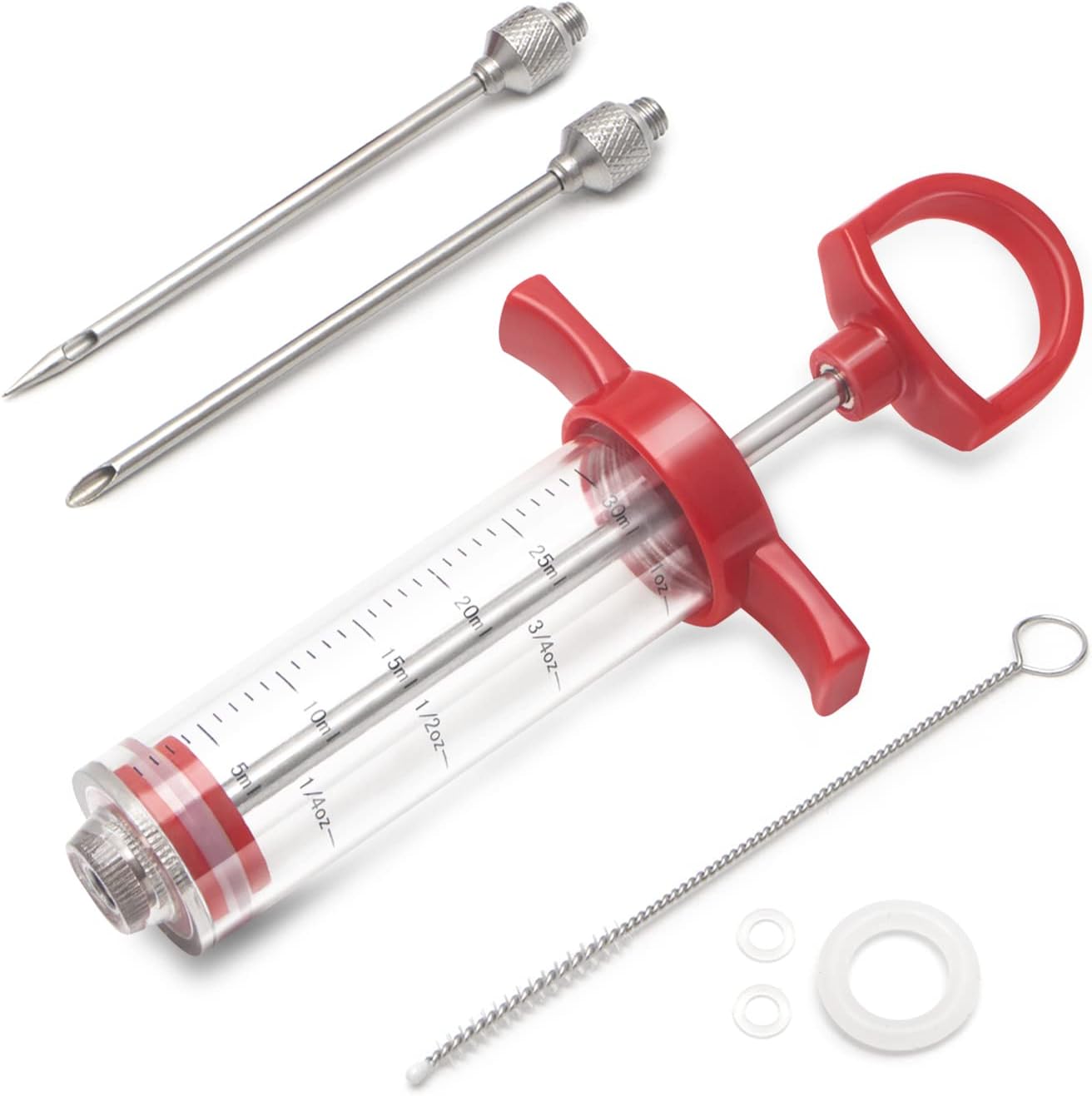
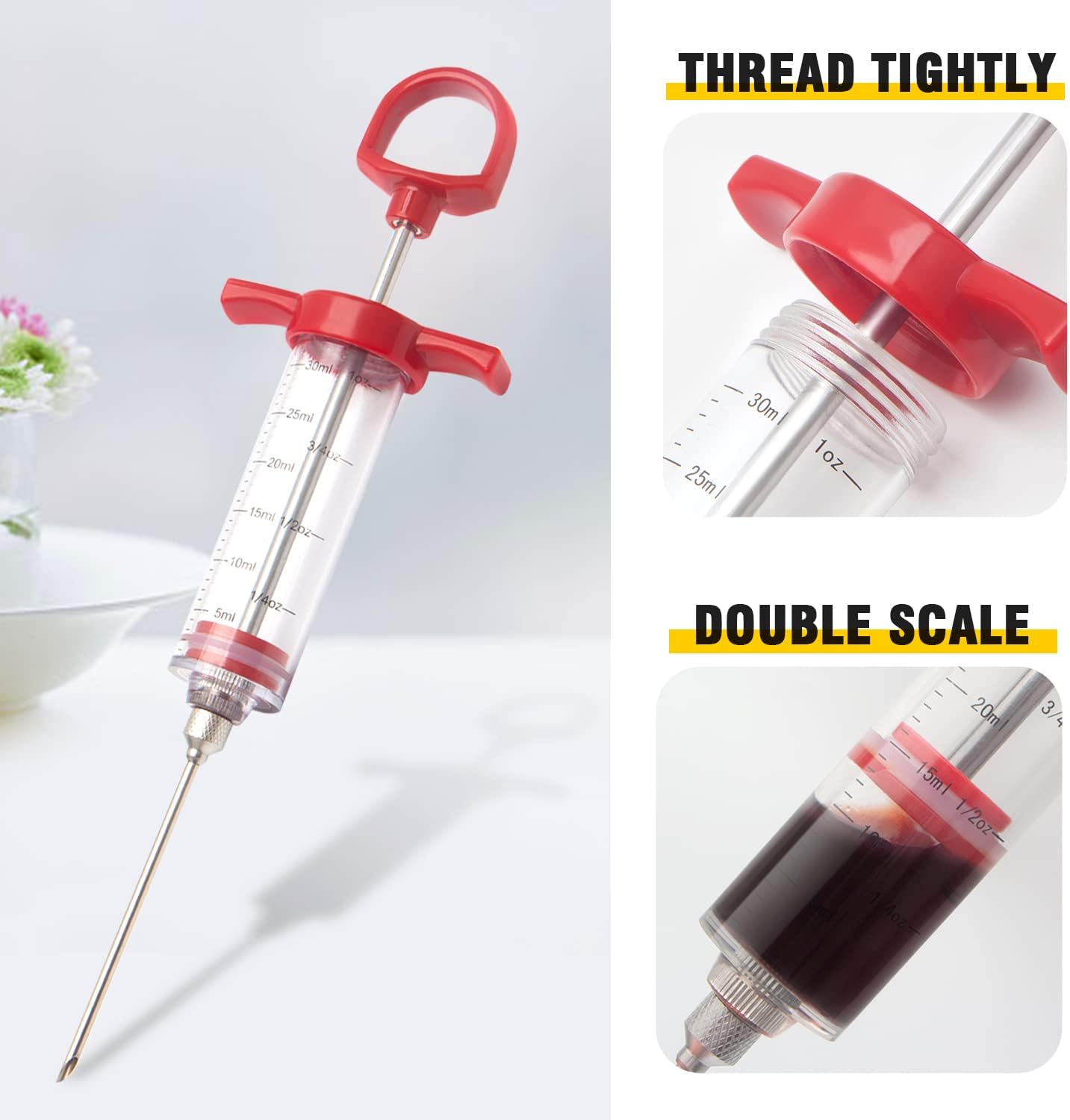
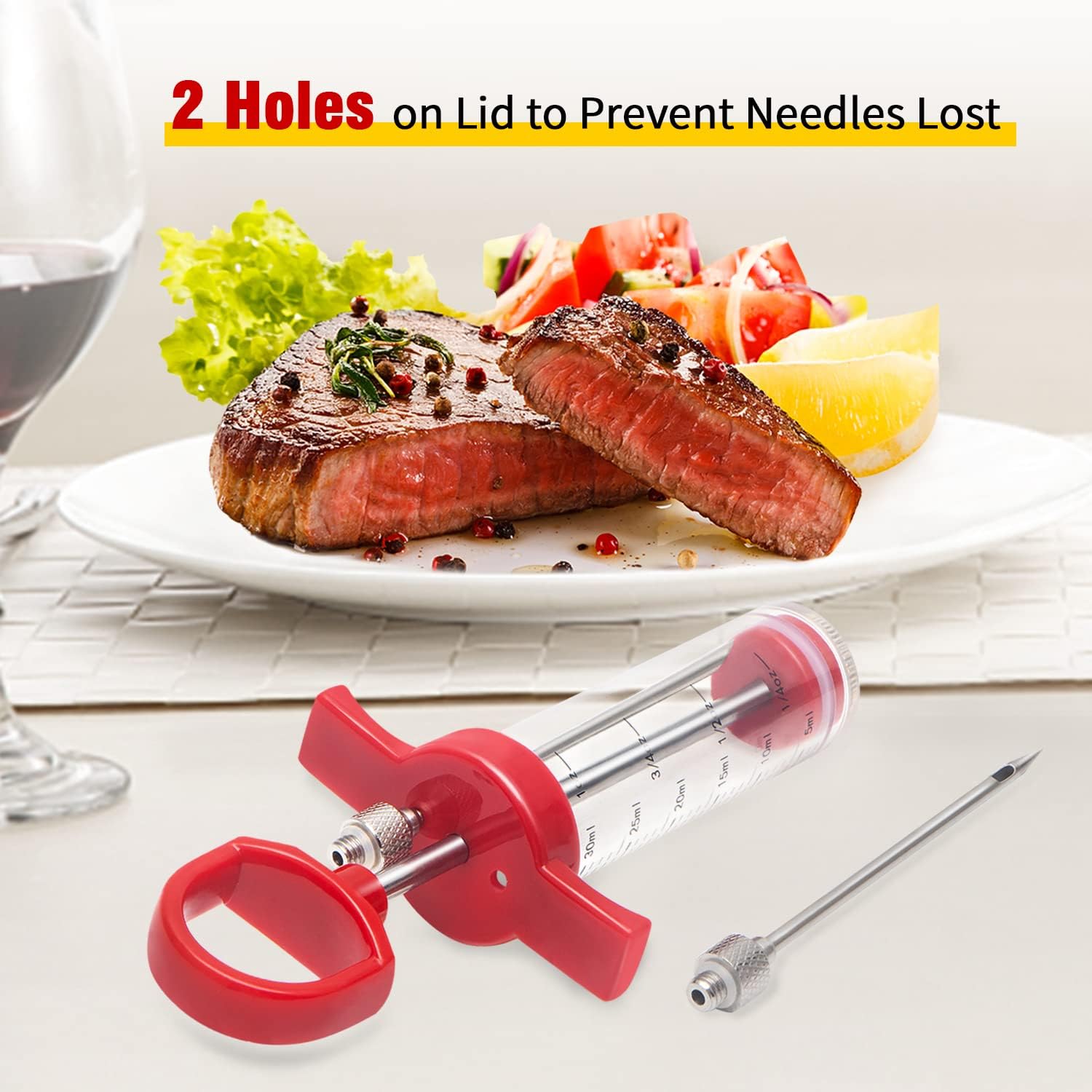
This is huge. A screw-on meat needle is non-negotiable for a hassle-free experience. Slip-on needles? They pop off. They leak. You end up with sticky marinade everywhere but inside your meat. Trust me, I’ve seen kitchens look like a brine explosion zone thanks to a cheap slip-on. A secure threaded connection keeps the needle firmly attached to the 1-oz syringe, preventing spills and ensuring all that precious brining solution gets where it needs to go. Also, consider the needle gauge and holes. A wider gauge handles slightly thicker marinades better, and multiple holes at the tip help distribute the liquid more evenly within the meat, rather than creating one big pocket.
Capacity and Readability: Is 1-oz Enough?
Most general-purpose marinade injectors, like the ones often found in a turkey brine kit, come with a 1-oz capacity. For a standard home cook, this is usually perfectly adequate. You’ll likely inject in multiple spots, so refilling isn’t a huge chore. What is important, however, are clear, accurate measurement markings on the side of the plastic syringe. Trying to eyeball how much brine you’re injecting? That’s a recipe for inconsistent results. Some models have barely visible lines; others use contrasting colors or etched markers that won’t rub off after a few washes. You don’t want guesswork here.
Ease of Cleaning: A Real Chore or a Quick Rinse?
Listen, if a tool is a pain to clean, you won’t use it. It’s that simple. Injectors, especially after handling brining solutions or marinades with spices, can get gunked up fast. The best plastic marinade syringes will disassemble completely. We’re talking plunger, barrel, and needle all coming apart. Many good kits include a small cleaning brush specifically designed to scrub out the inside of the needle and the syringe barrel. If it doesn’t come with one, you’ll need to source your own. Trapped residue is a breeding ground for bacteria and can taint your next culinary creation. A major drawback of some cheaper plastic designs is complex parts that simply don’t come apart for thorough cleaning.
Plunger Mechanism and Seal: No Leaks Allowed
Nobody wants a leaky injector. A smooth, well-sealed plunger is critical. When you draw up your brine, you don’t want air bubbles getting trapped, and you certainly don’t want liquid seeping out the top. A well-designed plastic injector syringe will have a silicone or rubber O-ring seal on the plunger that creates a snug, airtight fit. This ensures consistent pressure and prevents backflow or drips when you’re moving from your brine bowl to the turkey. A jerky plunger that sticks or wobbles? That’s just a frustrating experience waiting to happen, often indicative of cheaper materials or poor manufacturing tolerances.
The E-Book and Other Accessories: Real Value or Fluff?
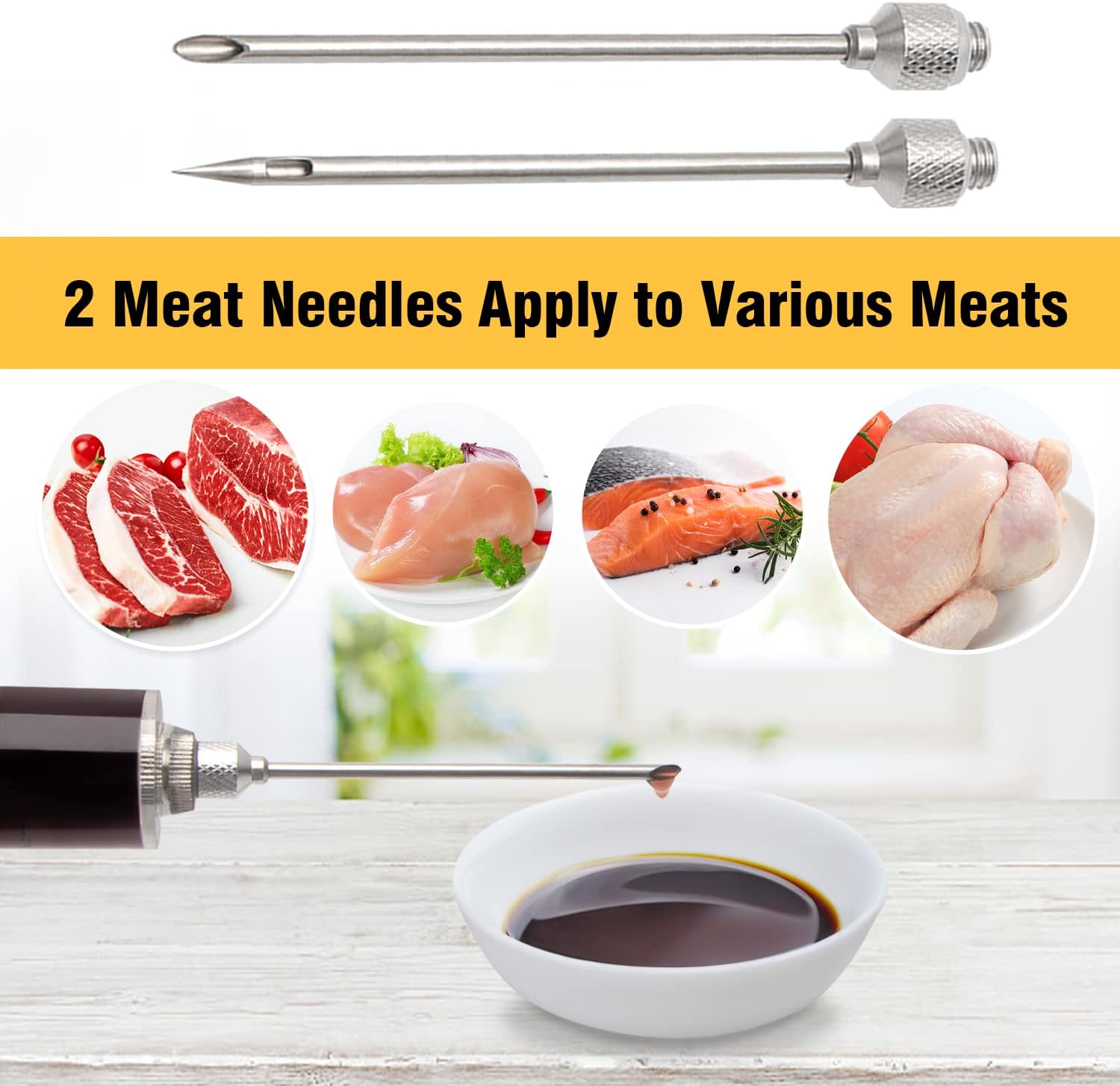
Often, these kits are bundled with a “recipe e-book” or extra needles. A downloadable Recipe E-Book (Download PDF) can be genuinely helpful, especially for beginners who need ideas for brining solutions or marinade recipes beyond just salt and sugar. Look for variety, clear instructions, and perhaps some tips for using your new flavor infuser on other meats. As for extra needles, they’re a plus, offering versatility for different liquid consistencies. A fine needle for clear brines, a wider one for marinades with herbs or minced garlic. Just be cautious; sometimes the “extras” are of poorer quality than the main components.
How to Match the Product to Your Situation
Your ideal meat injector isn’t a one-size-fits-all deal. It really depends on how you cook and what you value in your kitchen tools.
The Occasional Holiday Cook
You’re pulling out the big bird once or twice a year, maybe for Thanksgiving and Christmas. You need a reliable, straightforward plastic marinade turkey injector that won’t fail when the pressure’s on, but you don’t need industrial-grade durability. A basic model with a sturdy screw-on stainless steel needle and a 1-oz capacity will do the trick. Ease of cleaning is a bonus, because who wants extra fuss during the holidays? You’re likely looking for something that offers solid performance without a premium price tag. The included recipe e-book could be a real boon here, offering inspiration without requiring you to hunt down recipes.
The Grill Master/Smoker Enthusiast
You’re brining and injecting frequently, not just turkey but briskets, pork shoulders, and chicken. You demand more. While a plastic body is acceptable for lightweight tasks, you’ll probably push it harder. You need maximum durability and leak prevention. A plastic model might feel a bit more disposable for your frequent needs. You’re probably looking for something with a robust plunger and multiple, interchangeable needles that can handle thicker rubs suspended in liquids. While this specific plastic model can work, you’ll be the one to really push its limits, so robustness is key. You’re a pro, even if you’re just cooking for friends. You know the importance of a well-distributed brine.
The Budget-Conscious Experimenter
You’re curious about flavor injection, perhaps heard about brining and want to give it a shot without a significant investment. You want to see if it’s “your thing” before committing to something more substantial. A budget-friendly plastic marinade injector syringe is a perfect entry point. The 1-oz red plastic model, especially if it comes with that handy recipe e-book, offers a low barrier to entry. Just be mindful of the “watch-outs” for cheaper models – things like flimsy needles or tricky cleaning. For experimentation, it’s about getting the technique down without a big outlay. If it breaks after a dozen uses, well, you’ve learned something and can upgrade later.
Turkey Brine Kit Injector Comparison
It’s worth breaking down the different types of injectors you might encounter, even within the plastic-bodied realm.
| Type/Tier | Best For | Price Tier | Key Feature | Watch-Out |
|---|---|---|---|---|
| Basic Plastic Injector | First-time users, very occasional cooks | Budget-friendly | Lightweight, simple operation | Often flimsy needles, prone to leakage if poor quality |
| Upgraded Plastic Injector | Regular holiday cooks, moderate frequency | Mid-range | Screw-on metal needle, cleaning brush | Still plastic, so long-term durability is a question |
| Entry-Level Stainless Steel | Serious home cooks, frequent use, versatility | Mid-range to Premium | Durable, robust plunger, multiple needles | Heavier, typically costs more upfront |
Basic Plastic Injector: These are often the bare bones, sometimes with a slip-on plastic needle, designed for minimal use. They might inject, but don’t expect a leak-free or long-lasting experience.
Upgraded Plastic Injector: This is where our specific product fits, featuring a plastic body with a screw-on metal needle. It brings significant improvements in reliability and usability over the truly basic models, often including a recipe e-book and a cleaning brush, making it a solid choice for most home cooks.
Entry-Level Stainless Steel Injector: These step up the game in terms of material durability, offering a full metal construction. They can handle more rigorous use and typically come with a range of specialized needles, but you’ll pay a bit more.
Scenario-Specific Considerations
Sometimes, the context of your cooking dictates the right tool more than anything else.
For the Once-a-Year Turkey
Let’s face it, if your turkey injector only sees the light of day once a year for Thanksgiving, you probably don’t need to splurge on the most industrial-grade model out there. A well-constructed plastic marinade turkey injector syringe with a screw-on metal needle makes perfect sense. It’s affordable, effective for its intended purpose, and easy enough to clean and store away until next year. The 1-oz capacity is entirely manageable for a single large bird, and you’ll appreciate the stability of the screw-on needle when you’re trying to inject 20 different spots. You don’t need a heavy, expensive tool cluttering your drawer eleven months out of the year.
For Different Marinades and Brines
Are you only injecting thin, clear brining solution? Or do you sometimes get adventurous with thicker marinades, maybe some finely minced herbs or garlic in the mix? This matters quite a bit. A finer gauge needle that works beautifully with clear liquid will clog faster than you can say “flavor boost” if you try to push chunky garlic through it. The common plastic injectors, particularly those with a single, general-purpose stainless steel needle, are generally best suited for thin to medium-viscosity liquids. If your recipe e-book suggests something with solids, you might need to strain your marinade carefully or consider an injector kit that offers a wider-gauge needle. It’s a real hassle to un-clog a needle mid-injection.
When Durability is Non-Negotiable
Okay, so you’ve got a smoker, you’re doing a brisket a month, maybe smoking a whole hog for a party. You inject, you baste, you infuse. For this kind of heavy rotation, while a plastic injector can get the job done, you’re constantly pushing its limits. Durability suddenly jumps to the top of the list. You’ll want a meat injector that can stand up to repeated use and frequent, thorough cleaning cycles. Even the best plastic can degrade over time with strong brines or high heat from cleaning. For non-negotiable durability, you might eventually gravitate towards a full stainless steel construction, but the quality of the plastic injector’s plunger and needle attachment become paramount if you stick with plastic. You want it to last. I’ve seen people spend way too much on features they never use, or worse, skimp on something crucial only to have it fail right before the big feast.
Common Mistakes When Buying or Using Injectors
Don’t fall into these traps. A little foresight goes a long way.
One frequent misstep is not cleaning the injector thoroughly right after use. Marinades and brines, especially if they contain sugars or spices, can become incredibly sticky and harbor bacteria if left to dry inside the syringe or needle. Even a quick rinse isn’t enough; you need to fully disassemble and scrub.
Another common mistake? Using the wrong needle for the job. Trying to force a thick, herb-laden marinade through a fine, delicate needle is a recipe for clogs and frustration. Conversely, using an overly wide needle for a thin brine can create unnecessarily large holes in your meat, leading to brine leaking out during cooking.
Some folks neglect the plunger mechanism maintenance. If your injector plunger starts to stick or leak, it often just needs a little food-grade lubricant around the O-rings. Ignoring it means inconsistent pressure and wasted marinade. It’s simple upkeep, but often overlooked.
Finally, a lot of beginners tend to over-inject. More isn’t always better. Injecting too much brine or marinade in one spot can blow out the meat fibers, leaving you with pockets of liquid instead of evenly distributed flavor. Inject slowly, in multiple spots, and don’t try to force too much liquid into a single area.
Why/How/What Mini-Section
Why use a meat injector for brining?
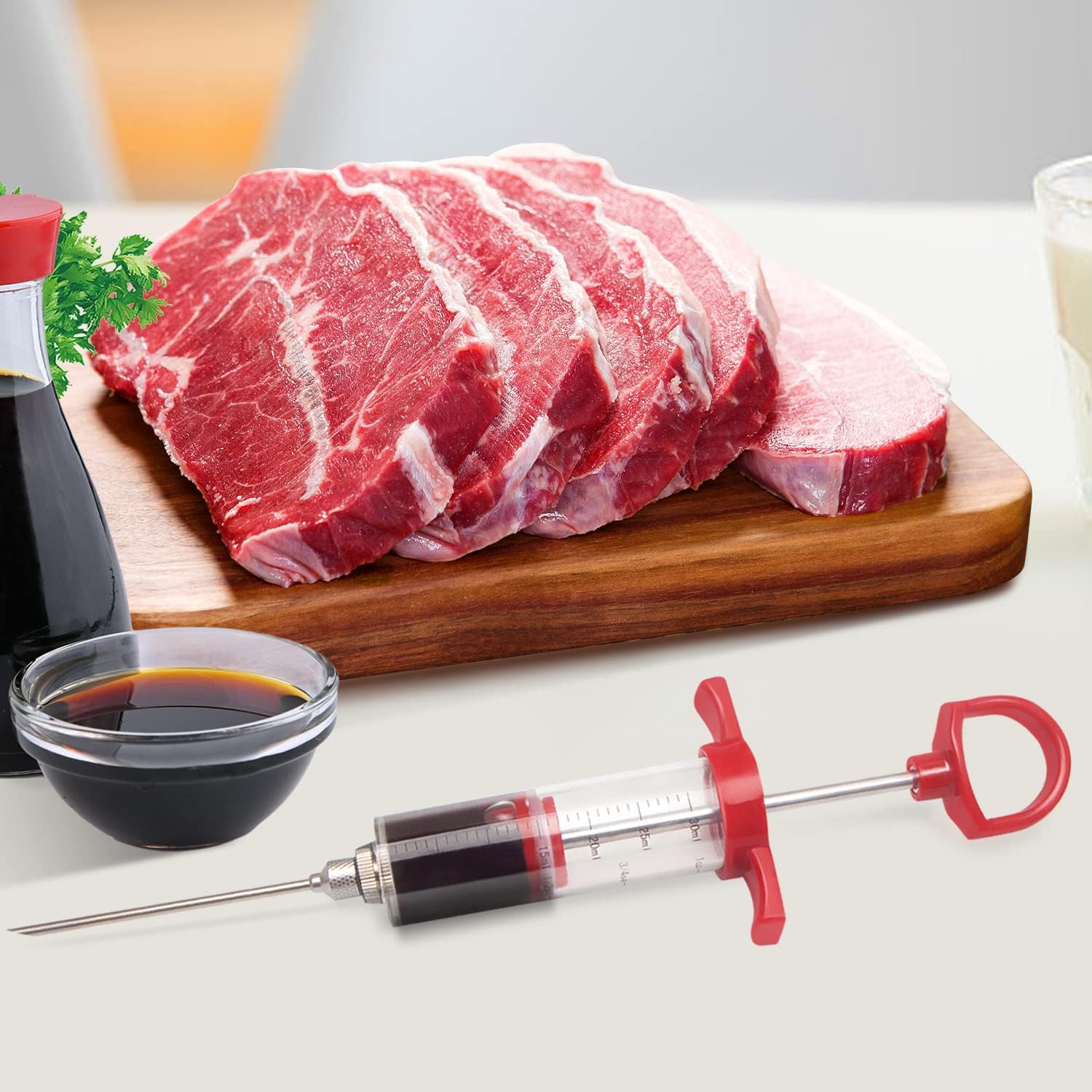
A meat injector ensures your brine penetrates deep into the muscle, not just seasoning the surface. This means a juicier, more flavorful turkey throughout, especially for those larger cuts where a simple surface rub or traditional brining might not reach the core effectively. It’s about consistent taste and moisture, truly making a difference in the final product.
How to prevent clogging when injecting?
The key here is preparation. Always strain your brine or marinade through a fine-mesh sieve before loading it into your 1-oz syringe, especially if it contains herbs or spices. If you must use thicker ingredients, opt for an injector with a wider needle or use a plunger with significant force to push it through.
What’s the deal with the recipe e-book?
The recipe e-book often packaged with these plastic marinade turkey injectors serves as a handy starting point. It provides guidance on different brining solutions, marinade flavors, and injection techniques. For someone new to the world of flavor injection, it can spark creativity and offer tested recipes, saving you time researching online.
FAQ
Is a plastic meat injector really durable enough?
Yes, for most home cooks doing occasional brining, a well-made plastic injector with a strong screw-on metal needle can be surprisingly durable. The key is quality plastic that doesn’t flex excessively and a robust plunger seal. Just don’t drop it too often.
Can I use this injector for things other than turkey?
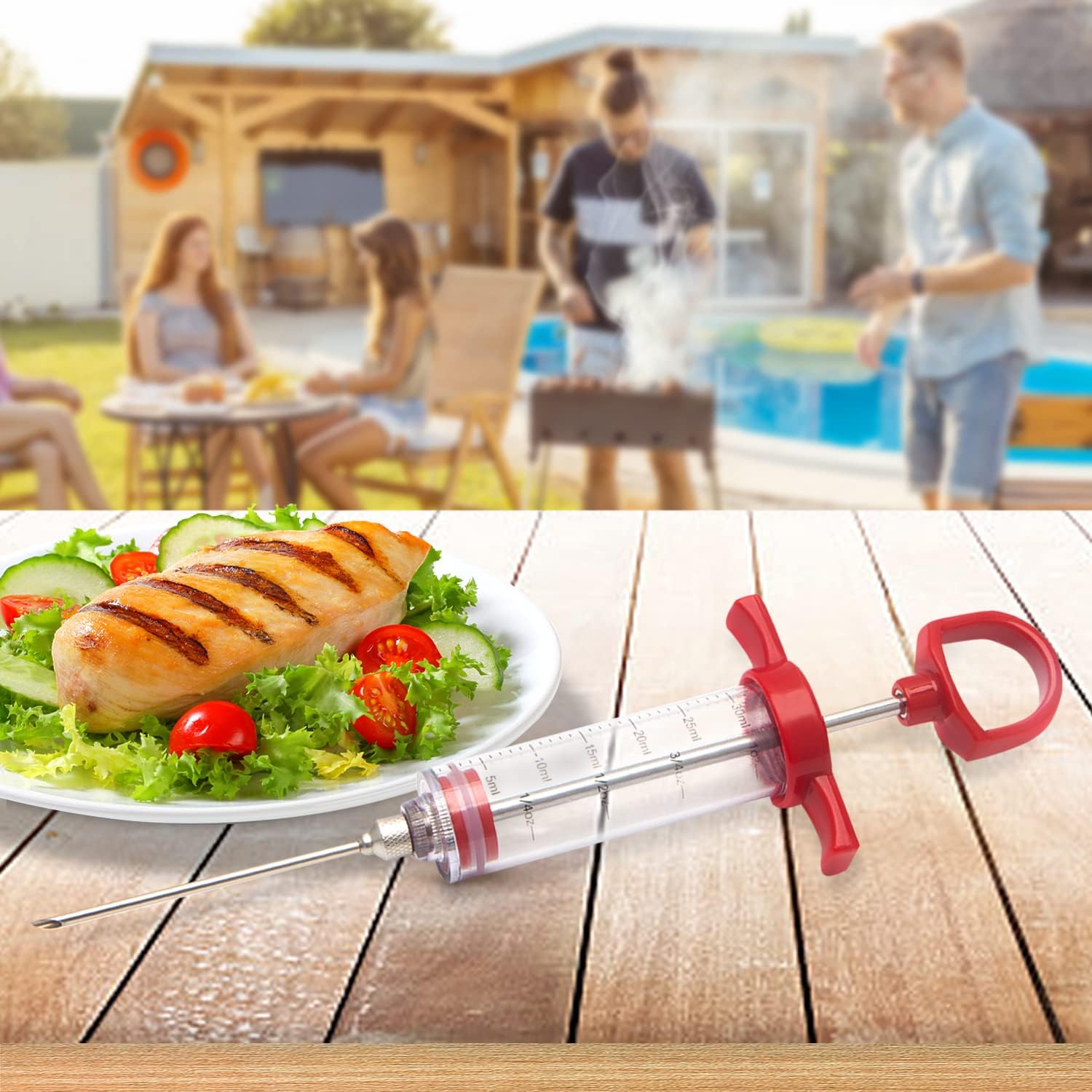
Absolutely. A marinade syringe is versatile. You can use it to inject chicken, pork, beef brisket, and even game meats with brines, marinades, or melted butter for added moisture and flavor. It’s a multi-purpose tool for any meat enthusiast.
What’s the best way to clean a marinade syringe?
Disassemble the entire plastic marinade turkey injector: pull out the plunger, unscrew the needle. Rinse all parts immediately after use, then wash them thoroughly with hot, soapy water, using a small cleaning brush for the barrel and needle. Let everything air dry completely before reassembling.
How do I avoid getting brine everywhere when injecting?
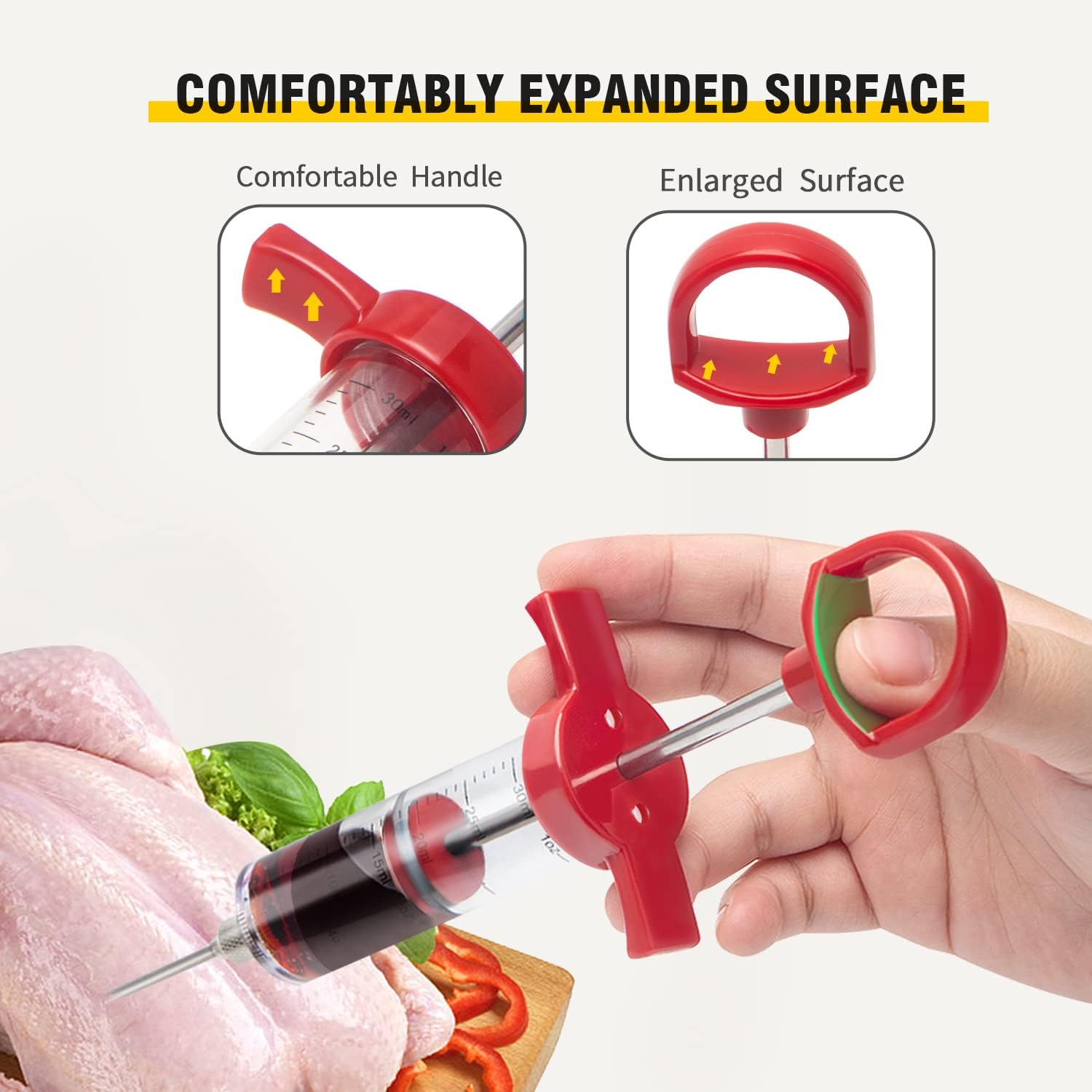
First, ensure your screw-on needle is tightly secured. Second, inject slowly and steadily, pulling the needle out slightly as you push the plunger, which helps distribute the liquid and prevents it from squirting back out. A little technique goes a long way.
Do I need different needles for different marinades?
Ideally, yes. Thinner brines are fine with smaller needles, but thicker marinades containing finely minced herbs or spices benefit from a wider-gauge needle to prevent clogging. If your kit only has one needle, straining your marinade becomes even more crucial.
Is the 1-oz capacity sufficient for a large bird?
For most home cooks, a 1-oz capacity is perfectly adequate for a large turkey. You’ll simply refill the syringe multiple times as you work your way around the bird, injecting in various spots. It offers good control without being overly bulky to handle.
What benefits does a brine kit offer over just rubbing spices?
A brine kit, especially when combined with a meat injector, delivers moisture and flavor inside the meat, while spice rubs primarily season the surface. This internal infusion results in a significantly juicier and more uniformly flavorful final product, resisting dryness often found in larger cuts.
Final Recommendation
For the vast majority of home cooks planning to use a turkey brine kit, particularly for the annual holiday bird or a few smoking sessions a year, the upgraded plastic marinade turkey injector syringe with a screw-on metal needle hits that sweet spot. It offers a fantastic balance of performance, ease of use, and sensible pricing. The secure screw-on connection eliminates common frustrations with leakage, and the durable plastic body combined with a stainless steel needle ensures it can handle your brining projects without complaint.
If you’re just dipping your toes into flavor injection, this type of injector—especially one bundled with a helpful recipe e-book—provides an excellent, low-risk entry point to truly elevating your poultry and meats. It’s reliable, effective, and won’t feel like an over-investment for a tool you might only use occasionally. You get consistent results without the fuss or the higher cost of full metal construction.
#Meat #Injector #Plastic #Marinade #Turkey #Injector #Syringe #Screwon #Meat #Needle #Smoker #BBQ #Grill #1oz #Red #Recipe #EBook #Download #PDF