The Real Deal on Vegetable Choppers: Is the OXO Good Grips Model Worth Your Dime?
This guide digs deep into the world of vegetable choppers, helping you figure out if these kitchen gadgets are a true time-saver or just another countertop clutter creator. We’re specifically zeroing in on the OXO Good Grips Vegetable Chopper with Easy-Grip Handle, a popular option that promises consistent dicing for everything from onions to peppers. So, if you’re looking to streamline your meal prep without getting bogged down by marketing fluff, you’re in the right place.
Quick Answer Box
For many home cooks eyeing more efficient meal prep, a well-designed vegetable chopper like the OXO Good Grips model absolutely delivers on convenience and consistent results. It’s a solid choice for those who frequently dice produce and appreciate thoughtful design, though its value hinges on how often you’ll actually use it. Think about your typical chopping tasks before committing; sometimes, a good knife is all you need.
What to Look For (The Buying Criteria)
This is where we get into the nitty-gritty. Don’t just grab the first vegetable chopper you see. A few key factors separate the heroes from the zeros when it comes to these kitchen workhorses, and ignoring them can lead to instant buyer’s remorse.
-
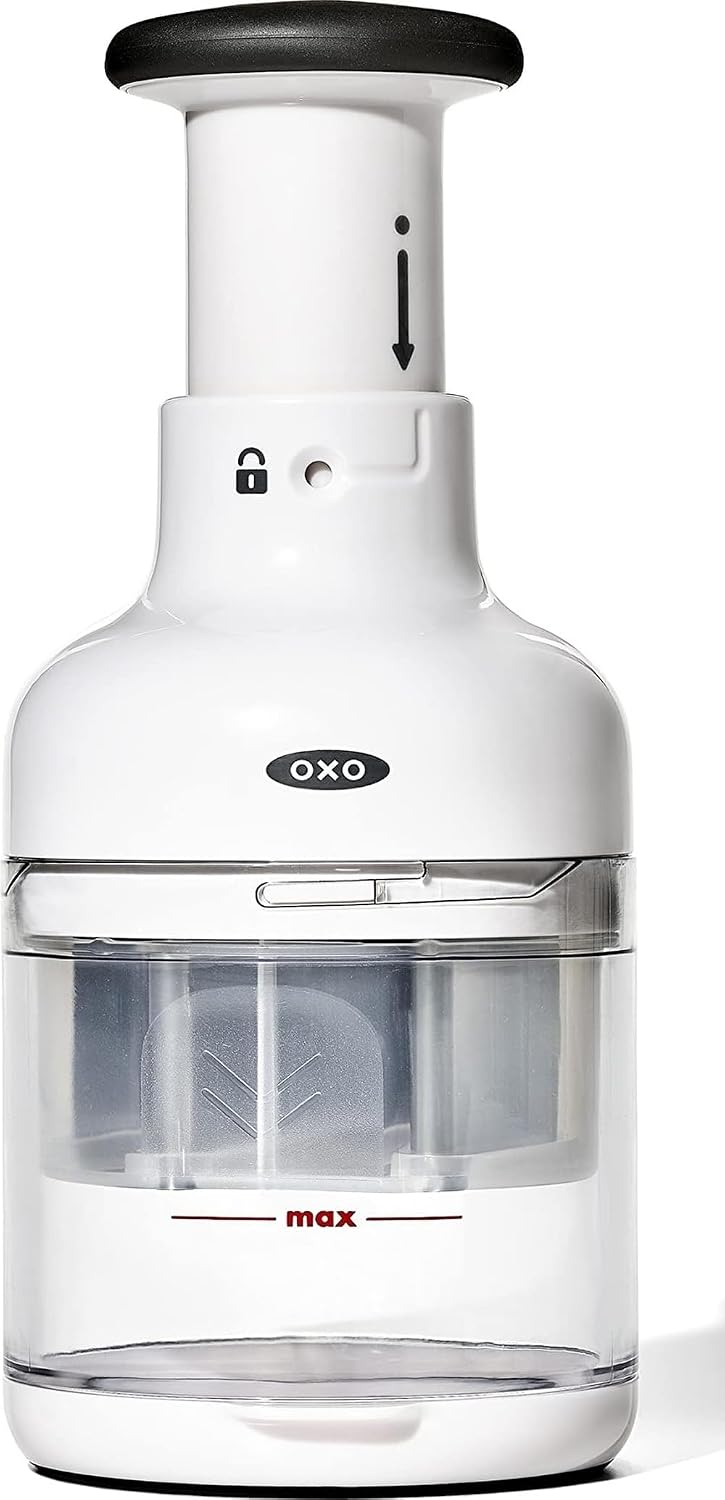
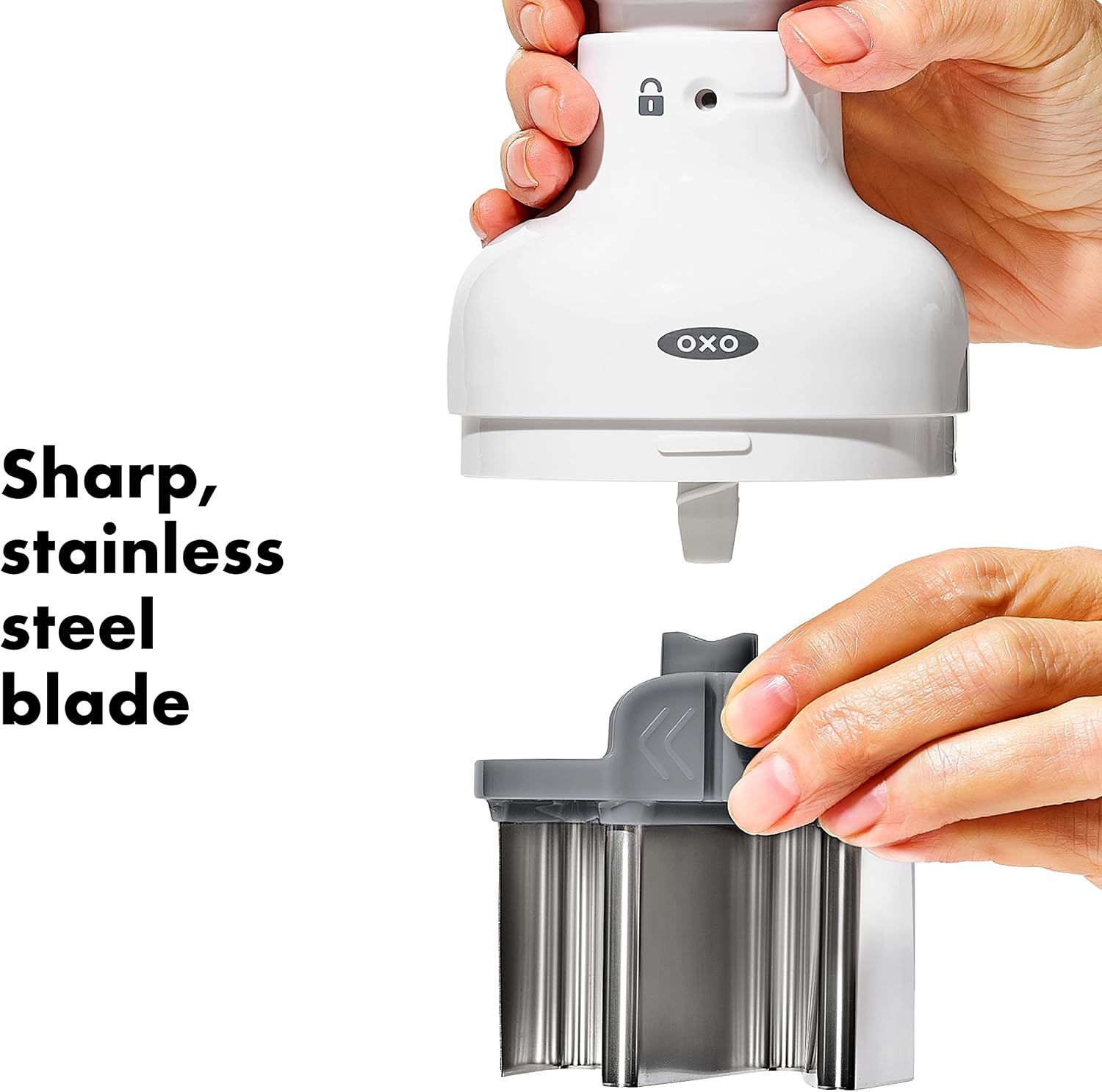
Blade Quality and Sharpness: This is absolutely fundamental. A chopper is only as good as its blades. Look for cutting grids crafted from durable stainless steel that hold an edge, ensuring clean, quick cuts rather than mushing your veggies into a sad, pulpy mess. Flimsy blades, even if they start out sharp, dull fast. They quickly turn the whole chopping experience into a frustrating exercise in mashing. And trust me, nothing’s worse than struggling to chop a single onion when you’re already pressed for time. The OXO Good Grips model, for its part, usually boasts pretty decent blade construction, engineered for repetitive, clean dicing. It’s not a razor, but it gets the job done consistently.
-
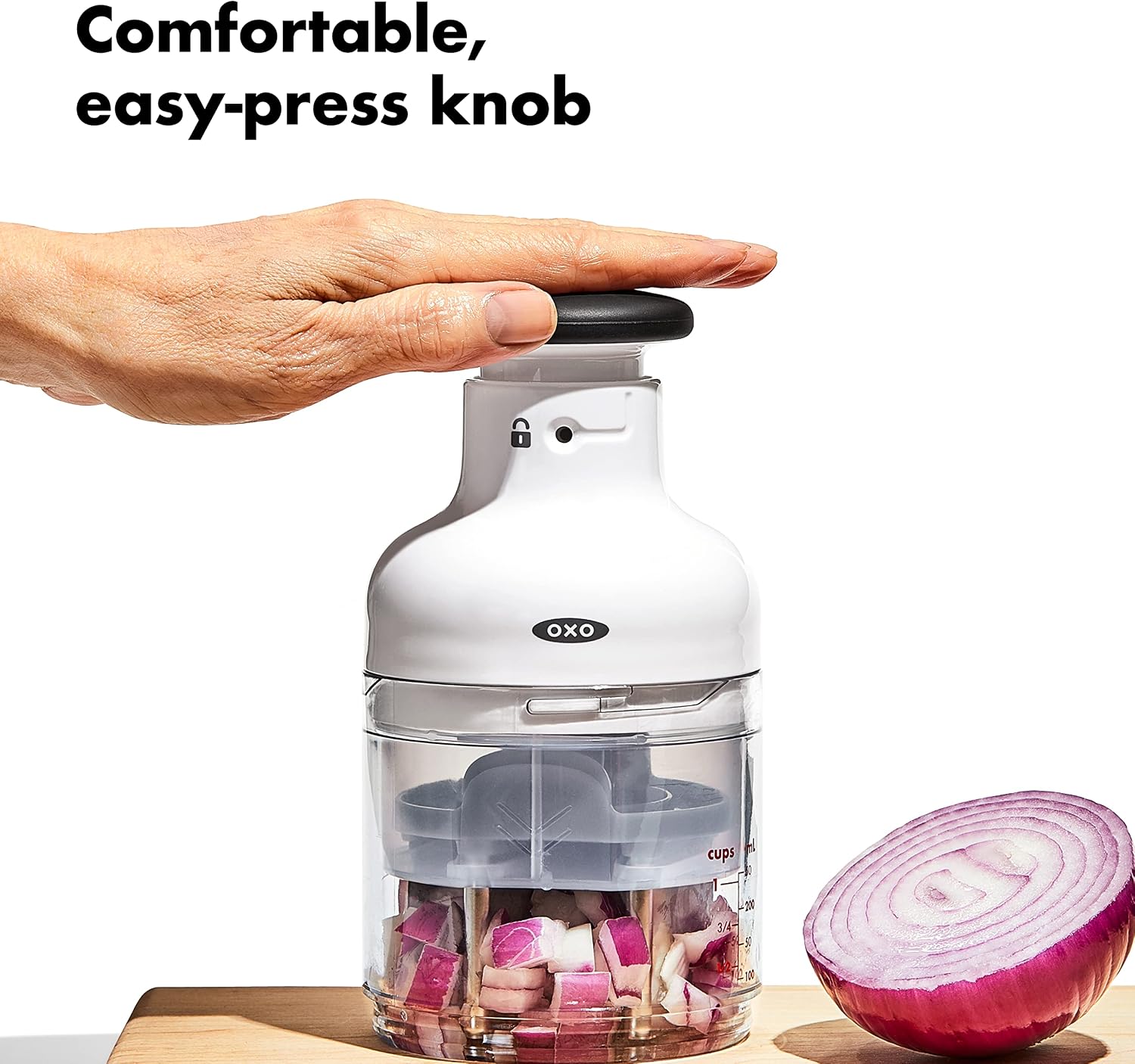
Ease of Use & Ergonomics: How it feels in your hand matters a lot. Is the handle comfortable, giving you a secure purchase even when your hands are a bit wet or greasy? An easy-press blade mechanism, like the one featured on the OXO Good Grips Vegetable Chopper, can significantly reduce hand strain during bigger prep sessions, preventing that annoying ache that creeps in after dicing a couple of bell peppers. Some budget models feel clunky, demanding awkward, excessive force, which isn’t just annoying; it can be downright unsafe, leading to slips or mishaps. If it’s a struggle to press, you won’t reach for it.
-
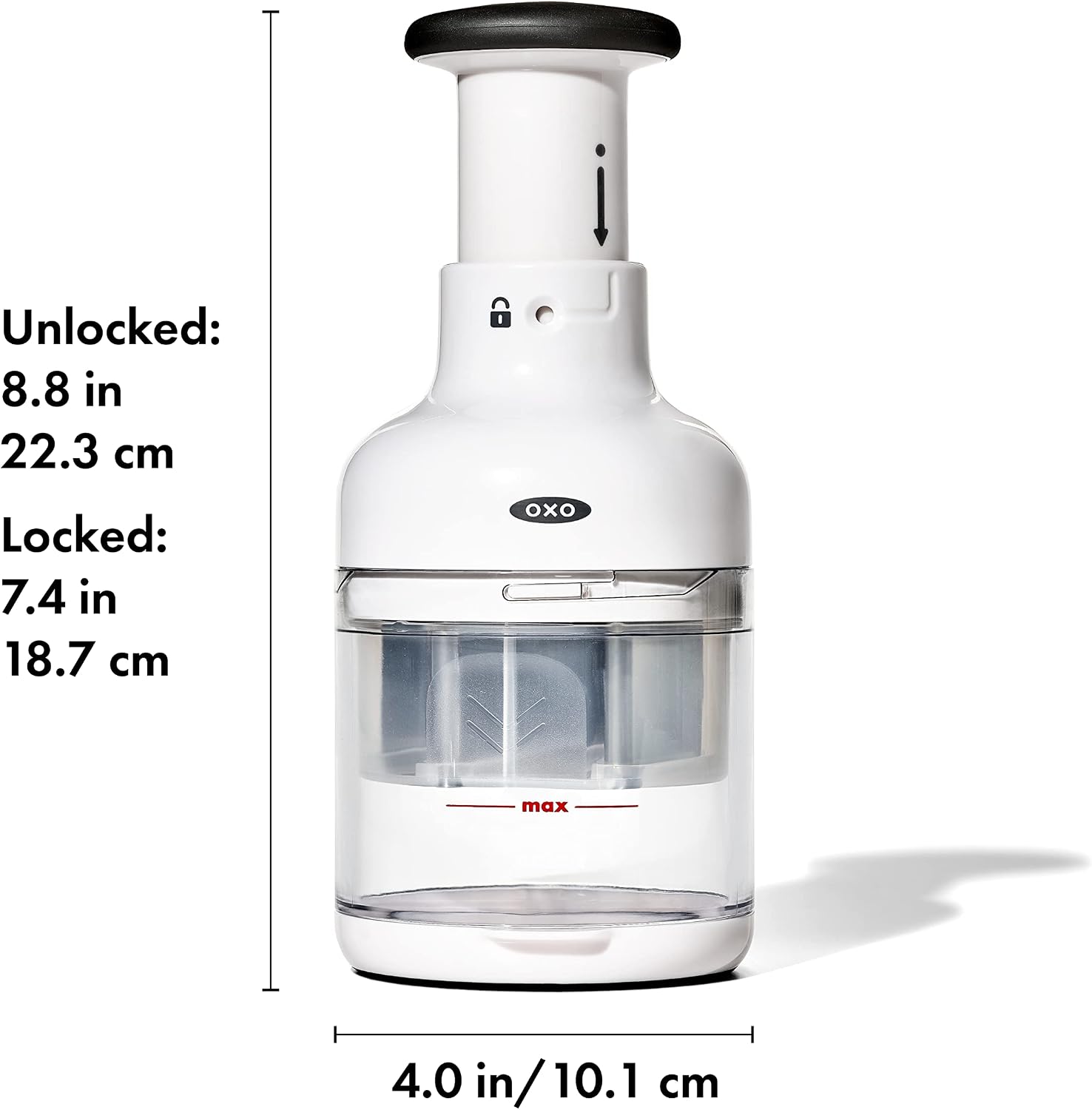
Container and Collection System: Does it come with a built-in container to gracefully catch your chopped food? This might seem like a small detail initially, but it’s huge for efficiency and keeping your workspace tidy. Nobody wants stray onion bits or flying pepper fragments scattering across their pristine countertop. A clear container is a definite plus, letting you eyeball exactly how much you’ve chopped without having to lift the entire unit. It keeps everything contained, reducing cleanup on your cutting board. The OXO model, you’ll notice, nails this, incorporating a collection container that clips neatly into place, ready to transfer your diced goods straight to the pan.
-
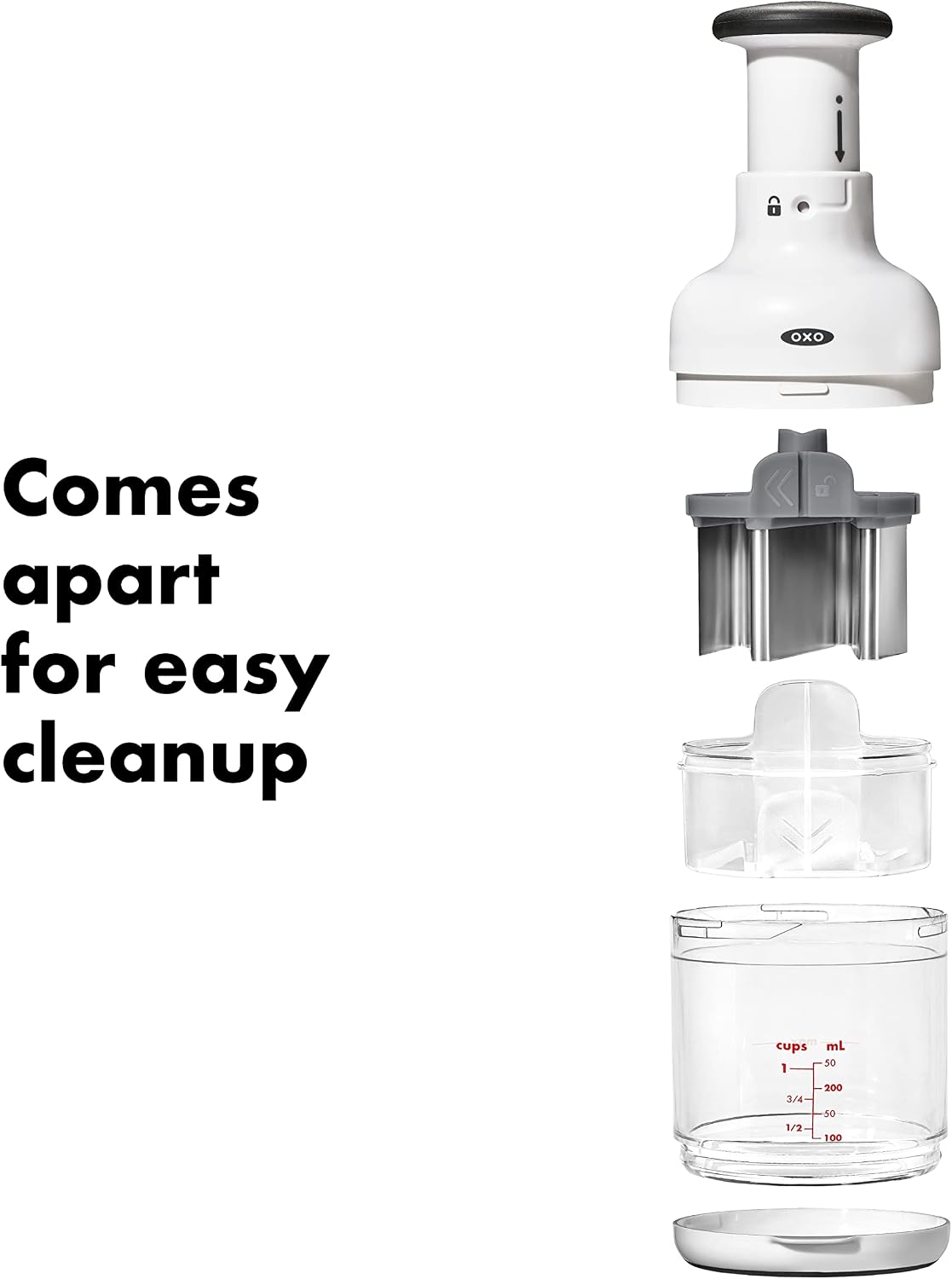
Cleaning and Maintenance: Here’s the absolute kicker, the thing that determines if your new kitchen gadget becomes a cherished helper or an expensive dust collector in the back of a drawer. If a kitchen tool is a nightmare to clean, it simply won’t get used. Can you easily disassemble it without a puzzle diagram? Are the blades simple to rinse without risking a finger in the process? Dishwasher-safe components are a huge win for most folks, transforming cleanup from a chore into a quick rinse and toss. Some choppers, bless their intricate little hearts, have far too many nooks and crannies that trap food particles, making cleanup a tedious, frustrating ordeal. This is a common trade-off, unfortunately; often, the more intricate the dicing mechanism, the harder the wash.
-
Durability and Build Materials: You’re investing in this thing, so you want something that will actually last, right? Cheap plastic, the kind that feels brittle to the touch, can crack under pressure, hinges can break off mid-chop, and springs can fail, rendering the whole unit useless. Examine the overall construction closely. Is it sturdy? Does it feel like it can withstand repeated downward pressure without flexing or threatening to fall apart? A non-slip base is another subtle but crucial sign of thoughtful design, preventing slippage on slick countertops as you’re bearing down. The soft non-slip grip on the OXO is a testament to this kind of attention, contributing both to user comfort and the overall stability and longevity of the tool.
-
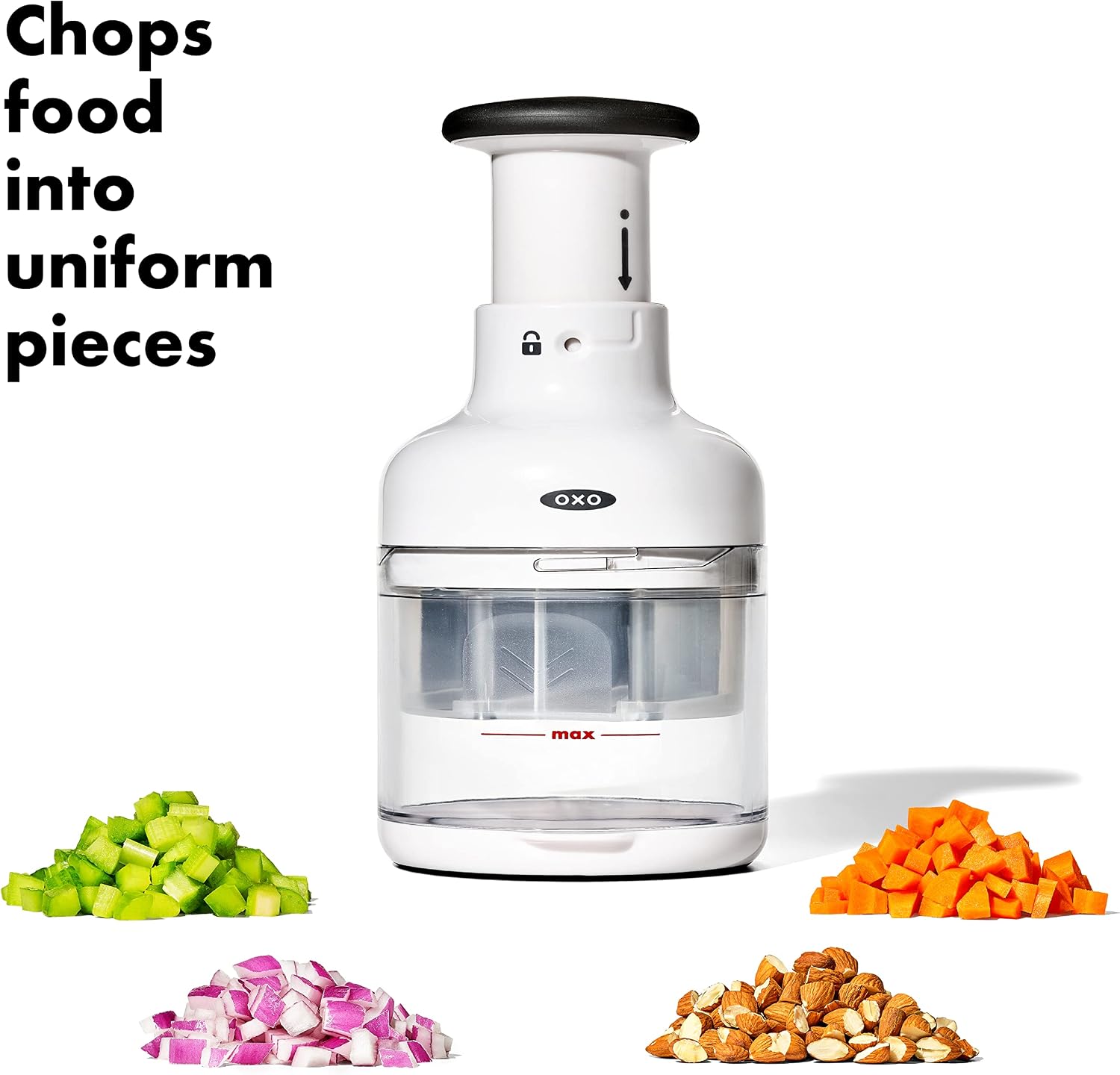
Consistency of Chop: The entire point of a vegetable chopper, beyond speed, is uniform pieces. If it gives you a chaotic mix of finely minced bits and awkwardly large chunks, what’s really the point? A good one should produce remarkably consistent dice sizes, whether you’re tackling peppers for a fajita night or cucumbers for a refreshing salad. Some cheaper units tend to smash softer items more than cut them, which just won’t do for presentation, or even for cooking uniformly. Think about it: uneven pieces cook unevenly. A quality chopper ensures everything cooks at the same pace.
How to Match the Product to Your Situation
Different cooks have vastly different needs and routines. A single-person apartment dweller probably doesn’t need the exact same gear as a family meal prepper juggling multiple dishes. Let’s find your personal fit for a vegetable chopper.
-
The Weekend Warrior (Meal Prepper Extraordinaire): You’re the kind who dedicates Sunday afternoons to orchestrating an entire week’s worth of meals. This means dicing formidable piles of onions, bell peppers, carrots, and other vibrant veggies is a regular, almost ritualistic, routine. For you, a robust manual chopper with a sturdy build and a generous collection container, like the OXO Good Grips Vegetable Chopper, is practically a necessity, not a luxury. You need something that won’t strain your hands after the fifth onion, consistently delivers those uniform cuts for all your meal prep containers, and is, crucially, easy to clean once the marathon chopping session is over. Durability here isn’t just a bonus; it’s absolutely essential, because this tool will definitely see a lot of action, week after week.
-
The Weeknight Whiz (Quick Dinner Dynamo): Your primary goal is to get a wholesome dinner on the table as fast as humanly possible after a long, exhausting day. You don’t necessarily prep huge batches, but you frequently find yourself needing to quickly chop one or two onions, maybe some garlic, or a couple of bell peppers for a speedy stir-fry or a quick pasta sauce. For your lifestyle, an easy-to-grab, even easier-to-clean chopper makes all the difference in the world. You’re looking for simplicity and lightning-fast speed over absolute bulk capacity. A mid-range, compact model might be your sweet spot, especially one that tucks away neatly into a drawer or cabinet. The easy-press blade on the OXO makes it really attractive for those quick sprints, saving precious minutes when every second counts.
-
The Kitchen Minimalist (Space-Conscious Cook): You value your countertop real estate above almost all else, and you only bring tools into your kitchen that you know you’ll use frequently and that truly earn their keep. Bulky, single-purpose gadgets? Absolutely out of the question. For you, a compact, highly efficient vegetable chopper is a smart, strategic addition, provided it truly earns its place. It needs to perform well for smaller tasks, be an absolute breeze to clean, and, crucially, tuck away neatly without hogging precious cabinet space. Perhaps you only dice onions once or twice a week, but you utterly despise the tears and the fiddliness of a knife. A dedicated, well-designed chopper saves you time and tears without taking over your entire kitchen. Just don’t let it become another single-use gadget that you buy with good intentions only to forget about.
A Comparison of Vegetable Chopper Types
Let’s break down the general categories you’ll encounter when shopping for a vegetable chopper, beyond just the specific OXO Good Grips model. Each type has its distinct place, its quirks, and, inevitably, its compromises. Understanding these differences can really guide your purchase.
| Type/Tier | Best For | Price Tier | Key Feature | Watch-Out |
|---|---|---|---|---|
| Basic Manual Dicer | Occasional, small-batch chopping | Budget-friendly | Simple push-down mechanism | Blades often dull quickly; less consistent chop; can feel flimsy. |
| Premium Manual Chopper | Regular meal prep, consistent dicing | Mid-range | Sturdy build, sharp blades, container | Can still be labor-intensive for very large quantities; requires hand strength. |
| Pull-Cord Chopper | Small batches, mincing herbs, garlic, nuts | Budget to Mid-range | Hand-powered, no electricity; compact | Limited to larger vegetables; not ideal for firm, large pieces. |
| Electric Mini Food Processor | High volume, varied textures (puree, chop) | Mid-range to Premium | Motorized efficiency, multiple blades | Bulkier; more parts to clean; can easily over-process if not careful. |
Okay, let’s expand on those a bit.
The Basic Manual Dicer is usually the entry-level option you see at discount stores. It’s perfectly fine for that one time you need to quickly chop an onion for chili, or maybe a single cucumber. But don’t expect it to hold up for weekly meal prep sessions. Those blades, more often than not, just don’t hold up their sharpness.
A Premium Manual Chopper, which is precisely where the OXO Good Grips Vegetable Chopper truly shines, offers significantly better build quality. You’ll get sharper, more resilient blades and a host of thoughtful design details, like that handy collection container. You’re definitely paying for enhanced durability and a far superior user experience; it feels substantial, like a real kitchen tool. It’s a workhorse designed to handle regular use, not a fragile toy.
Then there are the Pull-Cord Choppers. These little gadgets are fantastic for quickly mincing garlic or herbs, maybe whipping up a quick salsa, or finely chopping nuts. They’re usually quite compact and incredibly simple to operate. But try to chop a big, firm potato in one of these? You’ll be tugging that cord all day, and it probably won’t work very well. Their utility is pretty specific.
Finally, the Electric Mini Food Processor offers power and a whole lot of versatility. If you’re tackling massive batches, or if you need the flexibility to switch between chopping, mincing, and even pureeing, it’s a very strong contender. Just be prepared for a bit more noise, a more involved cleanup process (hello, motor base and multiple attachments!), and a larger footprint on your counter. It’s a fundamentally different beast entirely, often crossing over into the territory of a mandoline for certain tasks, but with more power.
Scenario-Specific Chopping Needs
Let’s get specific about how a vegetable chopper truly fits into various cooking routines. The kind of person you are in the kitchen, your habits and preferences, really dictates what kind of tool you’ll actually embrace and consistently use. I’ve seen people spend way too much on features they never use, or conversely, buy something too cheap and get frustrated into giving up.
-
The Bulk Prepper: You’re slicing and dicing for days, often making a giant batch of soup base, a week’s worth of stir-fry components, or a huge veggie platter. For this kind of volume, you absolutely need something that can handle the quantity without causing significant hand fatigue or slowing you down excessively. The OXO Good Grips Vegetable Chopper is a very strong candidate here because of its easy-press blade and soft non-slip grip, which means less stress on your joints through dozens upon dozens of pushes. Consistency in chop size is non-negotiable for even cooking and appealing meal prep containers, and this type of premium manual chopper typically delivers on that front. You’ll still get a bit of a workout, don’t get me wrong, but it’s far less laborious than meticulously dicing everything by hand with a knife for sheer repetitive action.
-
The “Hate Chopping Onions” Crowd: For some, the sheer dread of tearing up uncontrollably while dicing an onion is enough to deter them from cooking certain dishes altogether. If this describes you, a contained vegetable chopper is nothing short of a godsend. The clever design means the container catches food and largely keeps those pungent, eye-stinging fumes away from your face until you’re ready to transfer the chopped goods to your pan. It’s a small victory, yes, but a victory nonetheless, making a previously irritating task much more tolerable. Even if you only pull it out for onions and bell peppers, the avoided tears and irritation often justify the purchase price. Here, it’s not primarily about speed; it’s about comfort and avoiding a common kitchen nuisance.
-
The Limited Mobility Cook: Perhaps you contend with arthritis, carpal tunnel syndrome, or simply have less hand strength than you used to. Traditional knife chopping can become an incredibly painful or even downright impossible task. This is precisely where a well-designed manual chopper can genuinely make cooking accessible and enjoyable again. The thoughtful ergonomic design, like the Easy-Grip Handle on the OXO, is absolutely crucial. It minimizes the force required and provides superior leverage, transforming what was once a difficult task into a manageable one. Sure, an electric food processor is an alternative, but sometimes the setup, the noise, and the more extensive cleanup are just too much bother for everyday tasks. A simple, well-leveraged manual device is often preferred for those smaller, daily chopping needs because of its immediate readiness.
Common Mistakes When Buying a Vegetable Chopper
Look, we’ve all been there. Bought something shiny, got it home, then had that sinking realization of our mistake. Don’t let that happen with your vegetable chopper. Avoiding these common pitfalls can save you time, money, and a heap of frustration.
-
Underestimating Cleanup Time: This is a big one. People often forget to consider the aftermath, the dreaded cleanup. A chopper that disassembles into a dozen tiny, fiddly parts, or one that has hard-to-reach crevices where food inevitably gets trapped, will quickly become a dust collector, plain and simple. Always, always prioritize models that are genuinely easy to rinse and, ideally, have components that are dishwasher-safe. The OXO Good Grips model, for example, is designed with this in mind, making disassembly for cleaning relatively straightforward. Still, you’ll need to handle those sharp blades with extreme care.
-
Prioritizing Price Over Quality: A super cheap vegetable chopper might seem like an absolute bargain, a steal even, but it’s usually a false economy. Flimsy, brittle plastic, dull blades that won’t cut, and wobbly, unstable construction invariably lead to frustration, wildly inconsistent results, and a very short lifespan. You’ll likely end up buying another one much sooner than you anticipated, essentially spending more in the long run. It’s smarter to invest a little more upfront for something that genuinely works well and is built to hold up to repeated use.
-
Expecting Too Much from a Manual Tool: A manual vegetable chopper, even a really good one like the OXO, isn’t some magical, do-it-all food processor. It truly excels at dicing firm, sturdy vegetables such as onions, bell peppers, carrots, and celery into neat cubes. Don’t expect it to perfectly chop leafy greens, super soft tomatoes (unless they’re exceptionally firm and ripe), or extremely tough, fibrous root vegetables without significant pre-slicing or a lot of brute effort. Know its limitations. It’s a specialist, not a generalist.
-
Ignoring Grip and Stability: This is crucial for safety. A chopper that slides around precariously on your countertop or feels awkward and unstable to hold is not just annoying; it’s a genuine safety hazard waiting to happen. Always, always check for non-slip bases and ergonomically designed handles that feel secure in your hand. A firm, confident grip and a stable base are absolutely non-negotiable for safe and effective chopping, preventing slips and potential injuries. That soft non-slip grip on the OXO isn’t just a marketing blurb; it’s a fundamental safety feature that provides peace of mind.
Why/How/What
-
Why bother with a vegetable chopper if I have a knife?
Honestly, for many home cooks, it’s about achieving speed, consistency, and avoiding the sheer tediousness of repetitive dicing. A good chopper will give you impressively uniform pieces much faster than even a skilled chef can accomplish by hand, especially when dealing with a large batch. Plus, it can significantly mitigate eye irritation when dealing with pungent onions, and it often reduces the risk of cutting yourself compared to a hurried, less precise knife job. It’s a convenience tool, not necessarily a skill replacement. -
How do I get the most out of my OXO Good Grips Vegetable Chopper?
To truly maximize its potential, always make sure to pre-cut larger vegetables into pieces that will fit comfortably and evenly onto the blade grid. Don’t try to overload it; smaller batches yield better, far more consistent results and put less strain on the mechanism. And for cleaning, rinse it immediately after each use to prevent any food particles from drying and sticking stubbornly onto the blades and components. A small, stiff brush, often included or easily found, can be incredibly handy for those tougher-to-reach spots. -
What’s the main difference between dicing and mincing with these tools?
Most manual vegetable choppers, like the OXO, are primarily designed for dicing — creating small, uniform cubes. Mincing, which generally means chopping into very tiny, often irregular pieces (think super-fine garlic or ginger), is typically better achieved with a sharp chef’s knife or a specialized pull-cord style chopper, which tends to pulverize more than precisely dice. While some choppers might offer different blade grids for varying dice sizes, achieving true, fine mincing is often a step beyond what most manual dicing tools are built for.
FAQ
Q: Is the OXO Good Grips Vegetable Chopper really faster than using a knife?
A: For repetitive dicing tasks, especially with firm vegetables like onions, bell peppers, or carrots, it’s often significantly faster and provides much more consistent results than hand-chopping. If you’re only dicing one small item, the setup and cleanup might negate the time savings, but for a few bell peppers and an onion, it’s usually a clear win in terms of efficiency.
Q: Can I chop softer vegetables like tomatoes in a vegetable chopper?
A: It really depends on the firmness of the tomato. Very firm, ripe tomatoes might work if the blades are incredibly sharp, but softer ones often get squashed and bruised rather than cleanly diced, leading to a pulpy mess. For truly soft items, you might still prefer a good serrated knife to maintain their integrity.
Q: How do I clean the blades safely?
A: Most models, including the OXO, allow for easy removal of the blade grid for cleaning. Use a small brush to dislodge food particles, and rinse under running water, taking extreme care around the very sharp blades. Many components are typically top-rack dishwasher safe, but always double-check the specific care instructions for your model.
Q: Does it take a lot of effort to push down the handle?
A: Premium models like the OXO Good Grips Vegetable Chopper are engineered with leverage in mind, featuring an easy-press blade and ergonomic handles to minimize the required effort. Still, it does necessitate some downward force, especially for harder vegetables like raw carrots or potatoes. If you have significant hand strength issues or mobility challenges, an electric option might be a more suitable consideration.
Q: What vegetables are best suited for this type of chopper?
A: It truly shines when used with firm, dense vegetables. Think standard items like onions, bell peppers, celery, carrots, cucumbers, zucchini, and even cooked potatoes. These are the items that yield those satisfying, uniform dice the chopper is explicitly designed to produce, making your food prep look professional.
Q: Will a vegetable chopper make my food processor obsolete?
A: Not entirely, no. A vegetable chopper excels at consistent dicing into uniform cubes. A food processor, on the other hand, is far more versatile, capable of tasks like shredding, slicing, pureeing, and handling much larger volumes of ingredients. They truly serve different, albeit sometimes overlapping, functions in a busy kitchen, making them complementary tools rather than replacements.
Q: Are there different blade sizes available for the OXO Good Grips model?
A: The OXO Good Grips Vegetable Chopper typically comes with a single, fixed blade grid that is specifically designed for a reliable medium dice. While some other brands do offer interchangeable grids for different chopping sizes, the OXO often focuses on the simplicity and consistent performance of its single, well-engineered size. It’s a trade-off for user-friendliness and fewer parts to manage.
Decision Tree: Is the OXO Good Grips Vegetable Chopper Right for You?
- Do you frequently dice vegetables (onions, peppers, carrots, etc.) for meal prep or everyday cooking?
- Yes: Proceed.
- No (only occasionally, or prefer knife): You probably don’t need a dedicated chopper. Stick with your trusty knife or a basic model if you must.
- Is consistency in your chopped vegetables important to you?
- Yes: Proceed.
- No (don’t mind uneven bits): A simpler, cheaper chopper might suffice, or just keep using that knife.
- Are you willing to pay a bit more for thoughtful design, durability, and features that enhance ease of use (e.g., easy-press, non-slip grip, contained chopping)?
- Yes: The OXO Good Grips Vegetable Chopper is a strong contender. Its design directly addresses these precise points.
- No (strict budget priority): Look at a basic manual dicer, but manage your expectations regarding its longevity and overall performance.
- Do you prioritize easy and straightforward cleanup (e.g., simple disassembly, dishwasher-safe parts) after each use?
- Yes: The OXO is designed with this in mind, making it a top choice.
- No (don’t mind fiddly cleaning): Well, that’s unusual, but it’s not a deal-breaker then!
Key Takeaways
- The OXO Good Grips Vegetable Chopper truly excels in build quality, ergonomic design, and consistent dicing for all your common vegetables.
- It’s a sound investment for regular meal preppers and anyone looking to significantly reduce hand strain or the dreaded eye irritation from dicing onions.
- While a premium manual option, it still requires some physical effort; it is not, and never will be, a complete replacement for a more powerful electric food processor.
- Always consider the ease of cleaning and the durability of the blades as your primary decision-making factors, regardless of the brand you’re looking at.
Final Recommendation
So, after considering all the angles, is the OXO Good Grips Vegetable Chopper with Easy-Grip Handle truly worth the extra investment over a bare-bones option? For the vast majority of home cooks who genuinely want to simplify, speed up, and make their dicing tasks more pleasant, absolutely. This isn’t just another kitchen gadget destined for the back of the cupboard; it’s a thoughtfully engineered tool that directly addresses the common pain points of vegetable prep. Its robust construction, that comforting soft non-slip grip, and the intelligent easy-press blade system all combine to make repetitive dicing much less of a chore, consistently yielding uniform results without unduly taxing your hands.
If you’re someone who preps vegetables a few times a week, frequently making stir-fries, hearty soups, or vibrant salads, this model represents a sensible and worthwhile upgrade from struggling with a knife or dealing with the frustrations of flimsy, unreliable budget choppers. It’s a solid, dependable choice that actually lives up to its promises, and frankly, that’s more than you can say for a lot of kitchen tools out there. Just remember to manage your expectations: it’s a specialized dicing tool, not an all-purpose kitchen appliance, and it undeniably thrives on firmer produce.
#OXO #Good #Grips #Vegetable #Chopper #EasyGrip #Handle #Meal #Prep #Dices #Onions #Peppers #Soft #NonSlip #Grip #Easypress #Blade #Container #Catches #Food #Kitchen #Meal #Prep #Tool