Conquering Cutlery Chaos: Is the Lifewit Expandable Silverware Drawer Organizer Really Your Kitchen’s Next Hero?
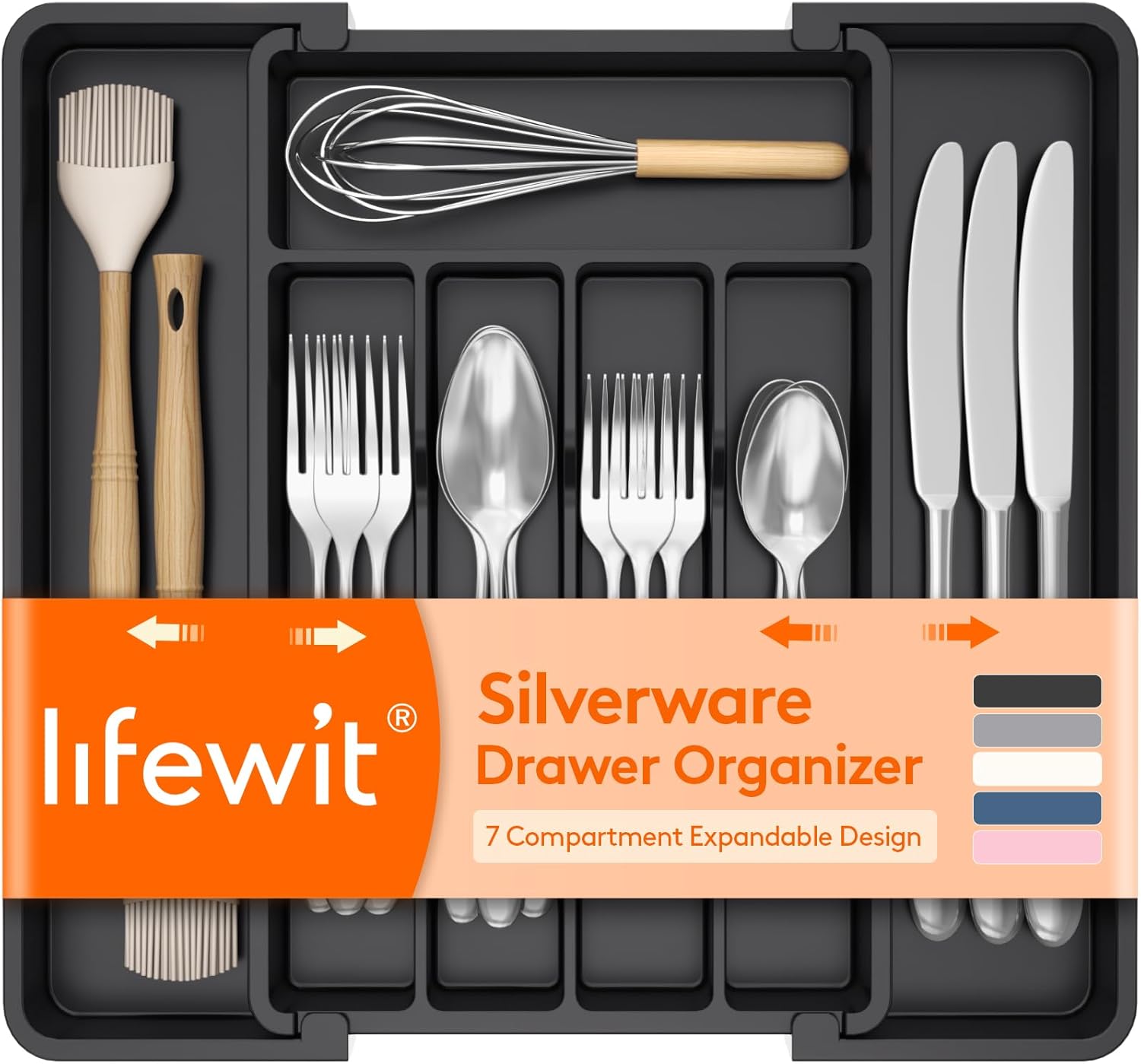
Alright, let’s talk brass tacks about kitchen drawer organizers. Seriously, if you’ve ever rummaged through a tangled mess of spoons, forks, and those oddly shaped tools you only use twice a year, you know the frustration. This guide cuts through the marketing fluff to help you decide if a product like the Lifewit Expandable Silverware Drawer Organizer, Kitchen Utensil Tray | BPA-free Plastic Flatware Cutlery Holder, Space-Saving Storage for Spoons Forks Knives, 8-13.8 x 11.2 x 1.4“, Black is truly the solution your kitchen drawers are crying out for. We’re looking at value, practicality, and what actually works for real people.
Quick Answer
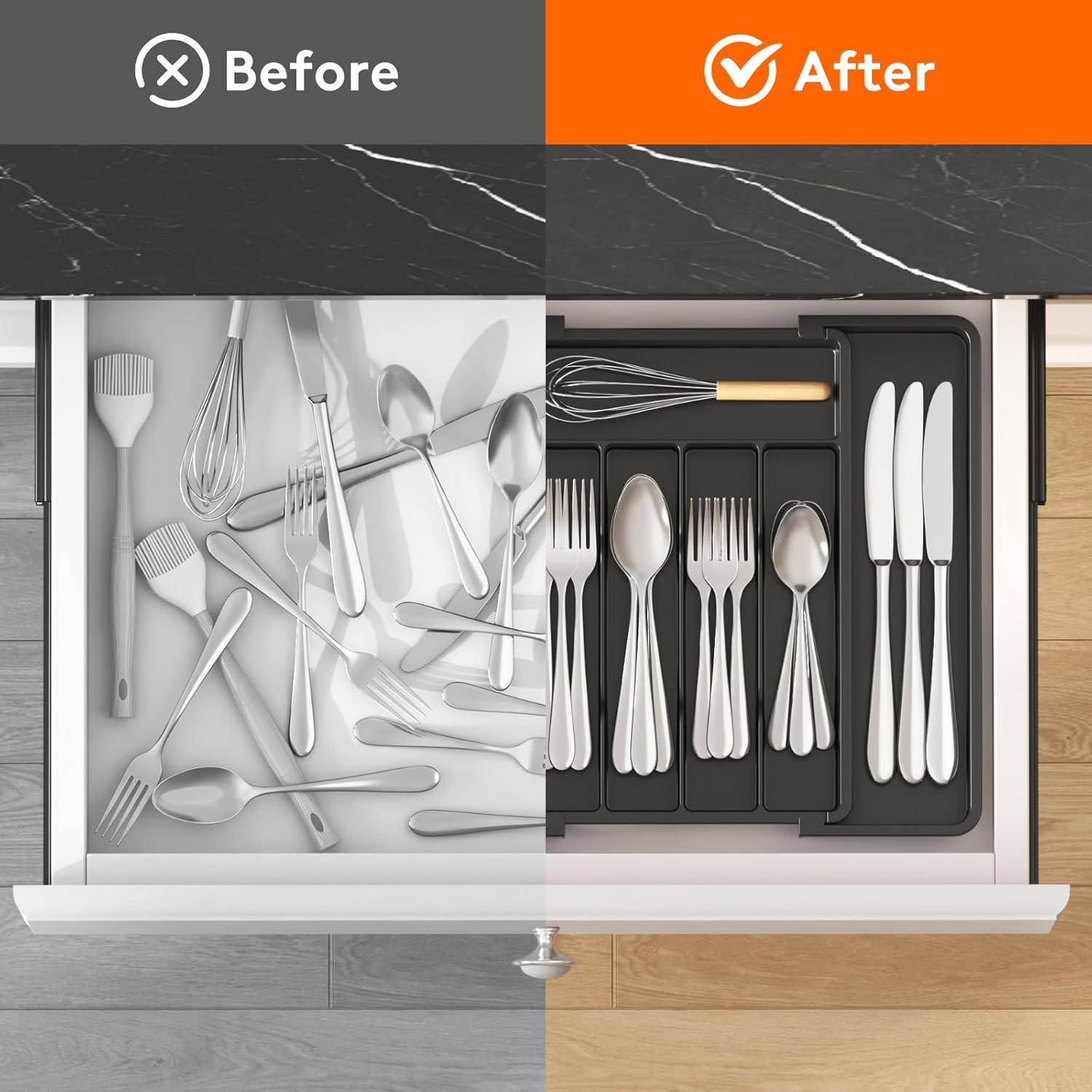
For most households battling average utensil clutter in standard kitchen drawers, an expandable kitchen drawer organizer like the Lifewit model offers a solid, adaptable solution. It hits a sweet spot between affordability and functionality, providing dedicated slots for flatware and a flexible layout without demanding a custom build.
What to Look For (The Buying Criteria)
Choosing the right kitchen drawer organizer isn’t rocket science, but ignoring a few key factors can lead to buying something that just doesn’t quite fit. Or worse, something that collapses into a plastic jumble after a few months. Here’s what smart shoppers consider:
-
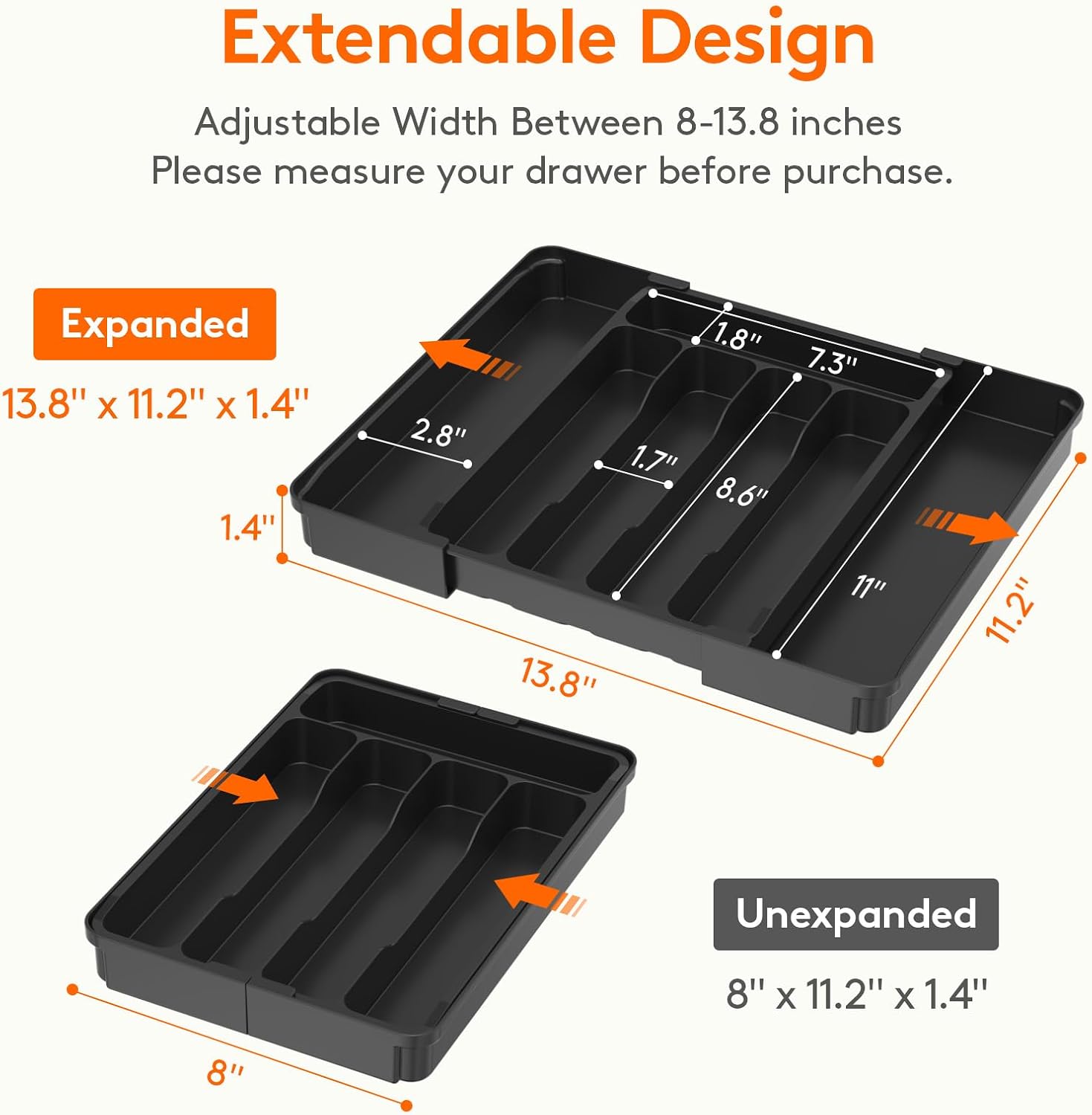
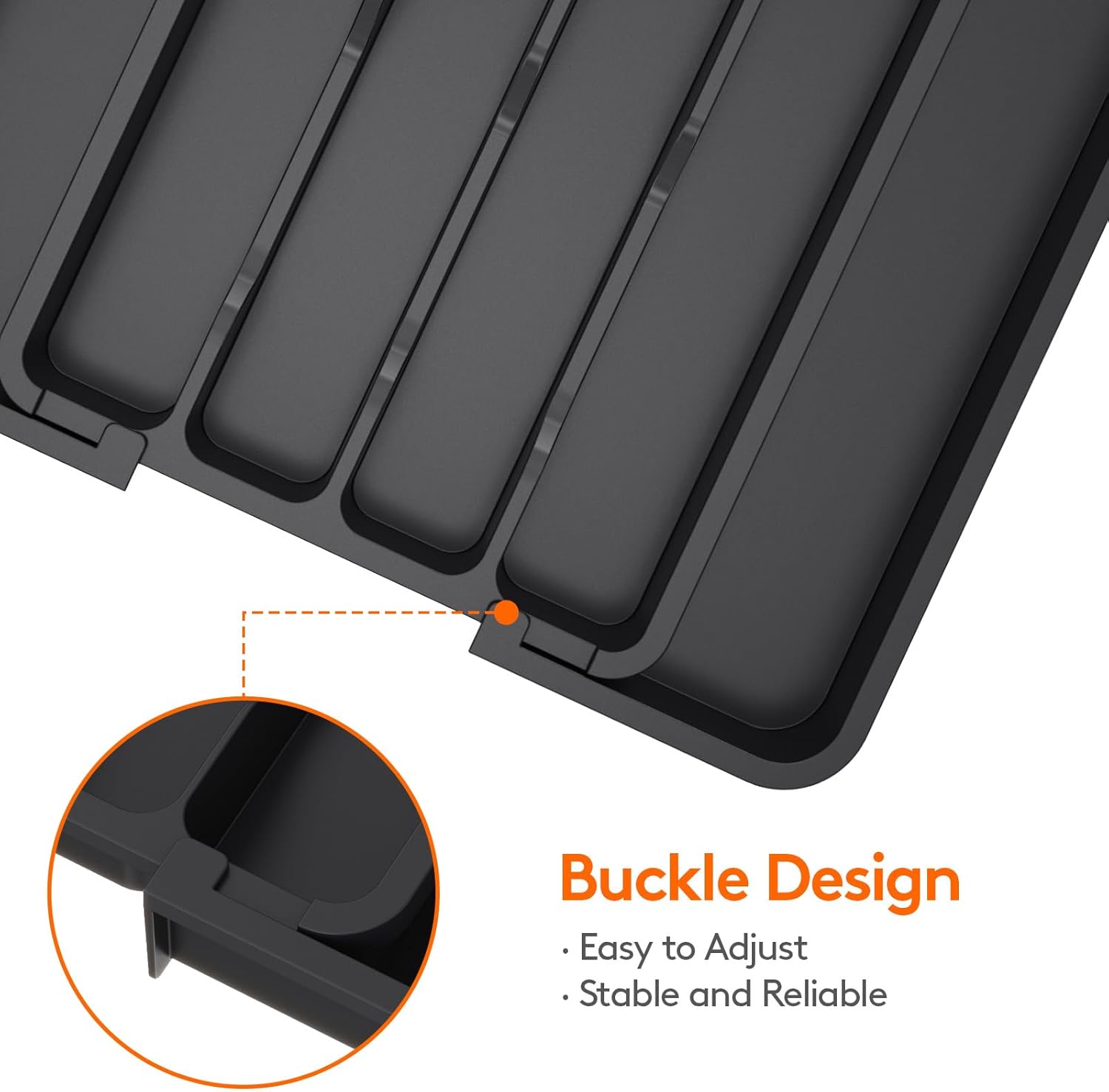
Size and Expandability: This is probably the biggest one, right? Most kitchen drawers aren’t perfectly uniform. You’ve got those shallow ones, some really deep ones, and a whole spectrum in between. A fixed-size organizer might work if your drawer measurements are exact, but how often does that actually happen? The Lifewit organizer boasts an expandable design, sliding out to accommodate wider drawers. That flexibility is gold. You measure your drawer before you buy, of course, but knowing it can adjust within a range really lowers the stress level. Still, even expandable options have limits; don’t expect a single unit to fit both your narrow spice drawer and your wide utensil drawer.
-
Material Quality and Durability: We’ve all seen those flimsy plastic organizers, haven’t we? They crack, warp, and just look grubby after a while. For a flatware cutlery holder, you want something that can stand up to daily abuse. Plastic, like the BPA-free plastic used in the Lifewit tray, can be durable, but look for thicker gauges and solid construction. Bamboo organizers are popular too, offering a natural look, but they can sometimes be trickier to clean and might swell if exposed to too much moisture. Stainless steel options exist, though they tend to be pricier and noisier. It’s a trade-off: budget-friendly plastic vs. the aesthetic of wood or the industrial feel of metal.
-
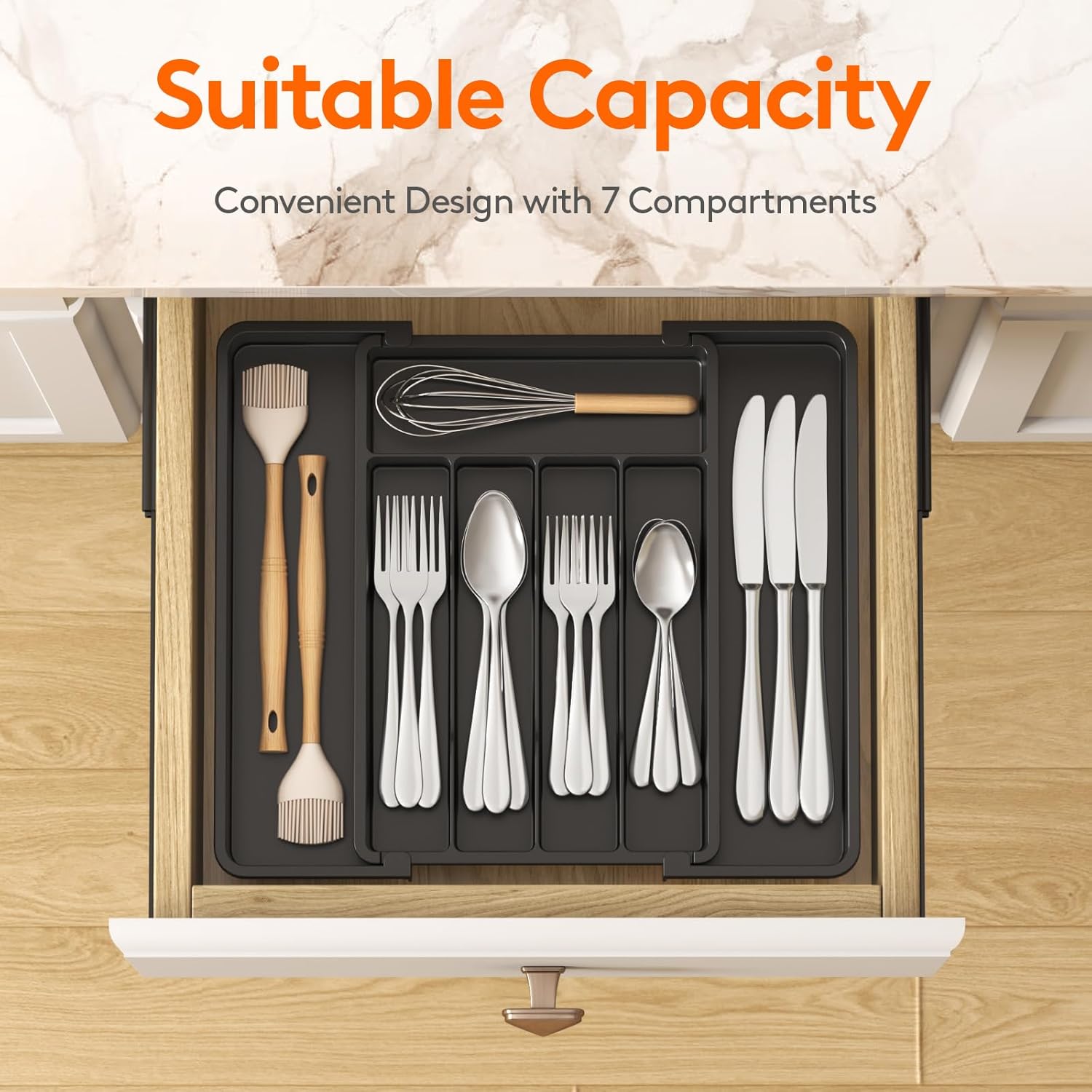
Compartment Design and Capacity: What are you actually trying to organize? Spoons, forks, knives are standard, but what about serving utensils? Bottle openers? Those pesky little corn cob holders? The Lifewit model, like many silverware tray designs, offers dedicated slots. Good. But consider if those slots are deep enough, wide enough. Some organizers have fixed compartments, which is fine for basic flatware, but can be limiting for specialty items. Others offer adjustable dividers, letting you customize the layout. That’s a nice perk, though often found in higher-tier drawer inserts. Remember, more compartments aren’t always better if they’re too small to be useful.
-
Ease of Cleaning: Utensil trays get dirty. Crumbs, spilled sugar, the occasional sticky residue from a jam spoon. It happens. Plastic cutlery organizers are generally the easiest to clean — a quick wipe or rinse in the sink. The BPA-free plastic of the Lifewit organizer should be straightforward in this regard. Bamboo can require more careful cleaning, sometimes just a damp cloth, and often shouldn’t be submerged. If cleaning feels like a chore, you won’t do it, and then your organized drawer becomes… not so organized. It’s a simple point, but often overlooked.
-
Non-Slip Features: Ever open a drawer only to have your organizer slide to the back, dumping half its contents? Annoying, right? A good utensil tray should stay put. Look for organizers with rubber feet, silicone bumpers, or a textured bottom. The Lifewit model, for example, typically includes non-slip pads. This seemingly minor detail makes a huge difference in daily use and keeps your kitchen organization from becoming a jumbled mess again. Without it, you’re constantly pushing things back into place.
-
Aesthetics and Cohesion: Okay, this might seem superficial for a drawer insert, but it matters! Especially if you’re trying to create a cohesive look in your kitchen. Do you prefer the warmth of wood, the sleekness of black plastic, or something transparent? A cheap, mismatched organizer can detract from an otherwise well-appointed kitchen, even if it’s hidden away. A tidy drawer just feels better, doesn’t it? The black finish of the Lifewit organizer is pretty neutral, so it should blend with most drawer interiors.
How to Match the Product to Your Situation
Your ideal kitchen drawer organizer really depends on your life, your kitchen, and your habits. No one-size-fits-all here.
The Aspiring Home Chef with Limited Drawer Real Estate:
You love cooking, but your apartment kitchen isn’t exactly sprawling. Every inch of storage counts. You need something that maximizes space without sacrificing functionality. An expandable organizer like the Lifewit model is a lifesaver here. Its ability to adjust means you’re not stuck with wasted space on either side. You can dedicate compartments to your go-to knives and whisks, keeping them accessible but neat. This type of modular storage solution is practical for smaller spaces where versatility is key.
The Family Organizer Battling Cutlery Chaos:
With kids, spouses, and general life, your kitchen drawers are in a constant state of flux. Spoons go missing, forks migrate to other drawers. You need something robust, easy to clean, and intuitive. The Lifewit’s clear, defined sections help everyone put things back where they belong. The BPA-free plastic means you don’t fret about food contact, and its durability stands up to frequent use. It’s a simple, straightforward system that requires minimal thought, which is exactly what a busy family needs. Simplicity often wins.
The Aesthetic-Minded Minimalist:
You appreciate clean lines and natural materials. While the black plastic of the Lifewit organizer is functional, you might lean towards bamboo drawer organizer options for their earthy appeal. You’re willing to pay a bit more for that consistent visual language. However, if your budget is tighter or you prioritize extreme ease of cleaning, a well-designed plastic model can still offer that streamlined look without the natural texture. It’s all about priorities, isn’t it? Do you hide the organizer or let it peek out with pride?
Comparison of Kitchen Drawer Organizer Types
| Type/Tier | Best For | Price Tier | Key Feature | Watch-Out |
|---|---|---|---|---|
| Basic Utility Plastic | Budget-conscious, simple flatware, temporary | Budget-friendly | Lightweight, very easy to clean | Often flimsy, fixed size, minimal non-slip |
| Expandable Plastic | Versatile needs, varying drawer sizes | Mid-range | Adaptable width, good compartment separation | Can sometimes feel less premium than wood |
| Natural Wood/Bamboo | Aesthetic appeal, eco-conscious, durability | Mid-to-Premium | Sturdy construction, attractive, natural feel | Heavier, can be harder to clean, susceptible to moisture |
| Modular Custom Systems | Large collections, specific tool shapes | Premium | Highly customizable, interlocking components | Higher cost, can be overkill for basic needs |
Basic Utility Plastic options are fine for a starter home or if you just need something to hold a few items, but they rarely last long. Expandable Plastic organizers, exemplified by the Lifewit model, are often the smartest choice for most homes, offering adaptability and robust enough construction without breaking the bank. Natural Wood/Bamboo brings a touch of class and heft, appealing to those who favor a warmer kitchen aesthetic, though they demand a bit more care. Modular Custom Systems are the dream for collectors of specialized kitchen tools, allowing you to build exactly what you need, but you’ll pay for that bespoke feel.
Specific Situations and Your Organizer Choice
Even within the broad category of kitchen drawer organizers, certain scenarios just push one type ahead of the others.
For Shallow Drawers with Limited Depth:
Many drawers, especially in older homes or built-in cabinets, aren’t very deep. A standard utensil tray might be too tall, preventing the drawer from closing properly. You need a design with a lower profile. While the Lifewit model is generally quite shallow at 1.4 inches, you absolutely must measure your drawer’s internal height. Some flatware cutlery holder designs are specifically marketed as “low profile,” a crucial detail that saves you the headache of returns. Nobody wants a perpetually ajar drawer.
For Kitchens with a Mix of Standard and Oversized Utensils:
Let’s face it, not all spoons are created equal. You have your regular teaspoons, but then there’s the serving spoon, the ladle, the spaghetti server, maybe a few spatulas. An organizer that only has slots for standard flatware will leave your larger items floating around. This is where an expandable option with wider, longer side compartments becomes invaluable. The Lifewit organizer often features broader sections once expanded, giving those bigger tools a proper home instead of forcing them into small slots. It’s not about stuffing them in; it’s about giving them dignity.
For Rental Properties or Temporary Living Situations:
If you’re in a rental or know you’ll be moving in a few years, investing in expensive, custom-fit organizers is probably a waste. You need something flexible and easily transferable. An expandable plastic cutlery organizer like the Lifewit is perfect here. It adjusts to new drawer sizes, is lightweight, and won’t make you feel bad about leaving it behind or taking it with you. Durability without over-commitment, that’s the ticket. And you won’t have to drill anything or use any adhesive.
Common Mistakes Buyers Make
So many people trip up on these simple things when buying a kitchen drawer organizer. Don’t be one of them.
- Not Measuring Your Drawers (Twice!): This is the cardinal sin. People eyeball it, or they measure the outside of the drawer. You need the internal dimensions: length, width, and depth. Especially that depth. A Lifewit Expandable Silverware Drawer Organizer might fit the width, but if it’s too tall, your drawer won’t close. Rookie mistake.
- Overlooking Your Actual Utensil Collection: Do you have five sets of flatware, or just two? Do you have an array of specialty cooking tools? Buying a tiny silverware tray for a large family with lots of utensils is an exercise in futility. Conversely, a huge, multi-tiered system for a minimalist kitchen is just overkill. Assess your stash honestly.
- Ignoring Material for Ease of Cleaning: You want something that holds utensils, sure. But if it’s a pain to clean, you’ll put it off, and then crumbs accumulate. Fast. This leads to a less hygienic, and frankly, less pleasant kitchen. Plastic, especially BPA-free plastic, usually wins on this front.
- Prioritizing Price Over Practicality: While budget matters, buying the cheapest option often means sacrificing durability or adjustability. You end up replacing it sooner, or living with an inefficient system. Sometimes a slightly more mid-range choice, like a well-regarded expandable organizer, saves money and frustration in the long run.
Why/How/What
-
Why bother with a kitchen drawer organizer at all?
Look, life’s too short to dig for a clean fork. Organized drawers save time, reduce stress, and make your kitchen more efficient. They also protect your utensils from getting scratched or dull rubbing against each other. It’s about creating order from chaos, giving everything a home. -
How do I choose the right size of expandable organizer?
First, measure the inside width, length, and depth of your drawer. The Lifewit model, for instance, provides its unexpanded and expanded dimensions right upfront. Pick an organizer whose unexpanded width is less than or equal to your drawer’s narrowest point, and whose fully expanded width is greater than or equal to your drawer’s widest point (within reason). Don’t forget the depth! -
What does “BPA-free plastic” mean for a utensil tray?
BPA, or Bisphenol A, is a chemical sometimes used in plastics. “BPA-free” means the plastic doesn’t contain this chemical. For a flatware cutlery holder that will be in constant contact with items you eat with, choosing BPA-free offers peace of mind, suggesting a safer material choice for your kitchen.
FAQ
Can all kitchen drawer organizers be cleaned in a dishwasher?
No, absolutely not. Many plastic models, especially those with non-slip silicone bases, are best hand-washed. Wooden or bamboo organizers should almost never go in a dishwasher; they can warp or crack. Always check the manufacturer’s recommendations.
Do I need an expandable organizer if my drawer is a standard size?
Even if your drawer seems standard, an expandable kitchen drawer organizer offers flexibility. It ensures a snug fit across the width, preventing sliding. Plus, it gives you extra compartments when expanded, which is always a bonus. It’s about adaptation.
Are bamboo organizers more durable than plastic ones?
Not necessarily. High-quality, thicker plastic, like the kind in the Lifewit expandable organizer, can be incredibly durable and resistant to water. Bamboo offers a rigid structure and natural aesthetic, but can be prone to warping or mold if not properly cared for, especially in humid environments.
How many compartments should a good silverware tray have?
It depends on your household’s needs. For basic flatware, 5-7 compartments (for spoons, forks, knives, and maybe a few larger serving pieces) is usually sufficient. If you have many specialty tools or a large family, look for more, or choose an expandable organizer with large side sections.
Will an organizer scratch the inside of my drawer?
A well-designed drawer insert often includes rubber feet or silicone pads to prevent scratching and ensure it stays put. Models like the Lifewit Expandable Silverware Drawer Organizer typically have these features. Cheaper, bare plastic organizers might pose a minor risk, though most drawer interiors are quite resilient.
Can I use a kitchen drawer organizer for non-kitchen items?
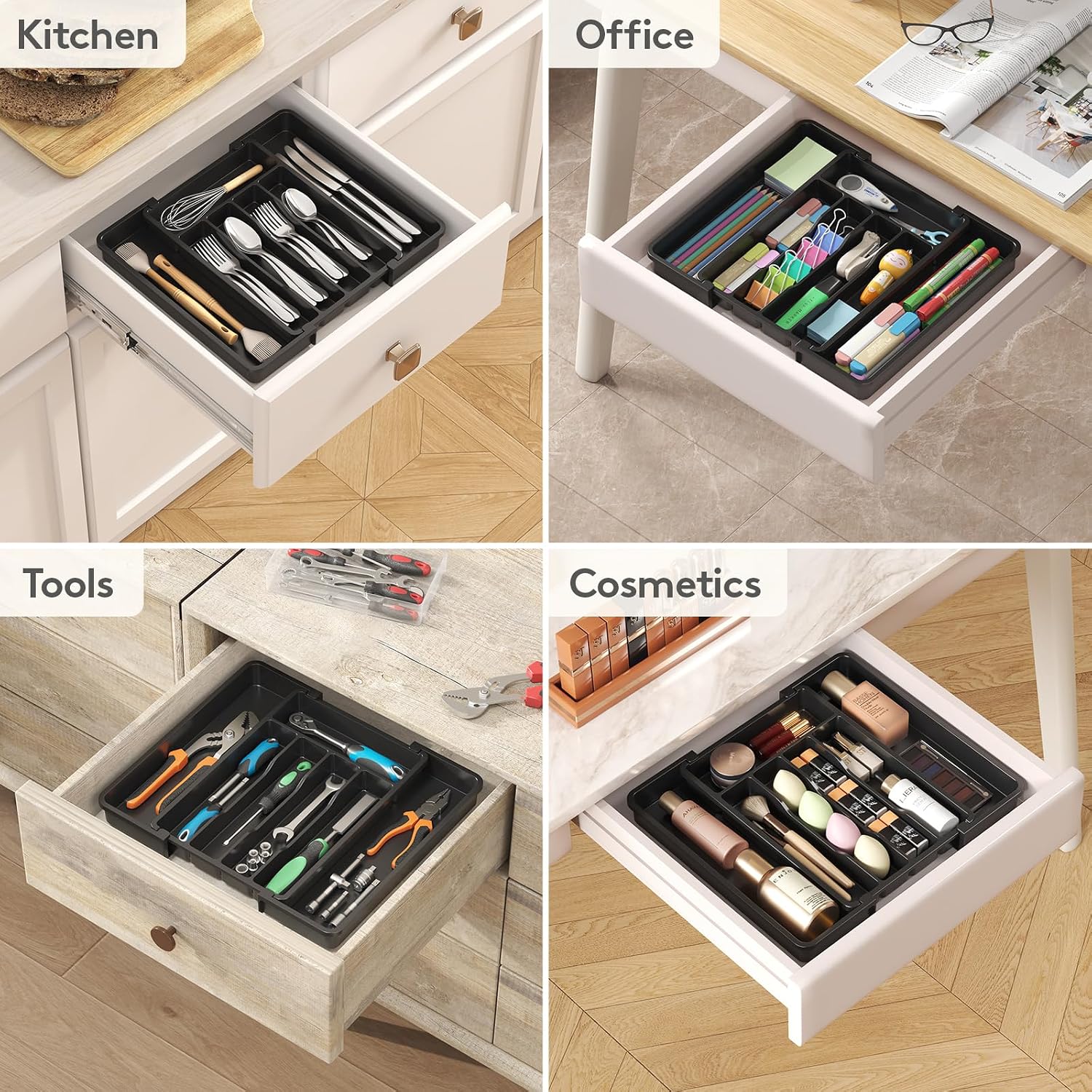
Absolutely! Many people use these modular storage solutions in office drawers for pens and paperclips, in craft rooms for supplies, or even in bathroom vanity drawers for toiletries. Their design for small item separation is quite universal. It’s just smart storage, wherever you need it.
What’s the ideal depth for a kitchen utensil tray?
The ideal depth depends on your drawer, but generally, something around 1.5 to 2.5 inches allows most utensils to lay flat without being too tall for the drawer. The 1.4-inch depth of the Lifewit organizer is quite practical for many standard, shallower kitchen drawers.
Decision Tree: Choosing Your Kitchen Drawer Organizer
-
Do you want the organizer to be visible when the drawer is open (aesthetic priority)?
- YES: Consider natural wood/bamboo or premium metal options.
- NO: Plastic (like the Lifewit) is perfectly functional and often more budget-friendly. Go to next question.
-
Does your drawer width vary, or are you unsure of exact measurements for future use (e.g., moving)?
- YES: An expandable kitchen drawer organizer (like the Lifewit Expandable Silverware Drawer Organizer) is your best bet for adaptability.
- NO: A fixed-size plastic or bamboo organizer could work, provided you measure meticulously. Go to next question.
-
Are ease of cleaning and food safety (BPA-free) top concerns?
- YES: Prioritize BPA-free plastic models. They’re typically dishwasher-safe (check specifics) or very easy to hand-wash.
- NO: Wood or other materials might be acceptable if aesthetics or other features outweigh this for you.
-
Do you have many large serving utensils or oddly shaped tools to store?
- YES: Look for expandable organizers with larger, customizable side compartments, or a modular system.
- NO: A standard flatware cutlery holder with dedicated slots for spoons, forks, and knives will suffice.
Key Takeaways
- Measure Everything: Internal drawer dimensions (length, width, depth) are non-negotiable.
- Expandability is Key: For most homes, an expandable organizer offers unparalleled flexibility and a snug fit.
- Material Matters: Consider durability, cleaning, and aesthetics. BPA-free plastic hits a good balance.
- Non-Slip Features Save Headaches: Don’t underestimate their value.
- Balance Cost with Longevity: A slightly more robust, mid-range option often proves to be better value in the long run than the absolute cheapest.
Final Recommendation
For the vast majority of households seeking to finally tame their chaotic cutlery drawers, an expandable plastic kitchen drawer organizer like the Lifewit Expandable Silverware Drawer Organizer is probably your smartest play. It strikes a pragmatic balance between cost, adaptability, and everyday utility. You get the flexibility to fit various drawer sizes, dedicated slots for your everyday flatware, and the peace of mind that comes with a BPA-free, easy-to-clean material.
If your budget allows, and you absolutely crave the warmth and feel of natural materials, a bamboo option can certainly elevate the look. But for sheer practical effectiveness, especially if you’re dealing with varied utensil collections or the potential for drawer-size changes down the line, a well-constructed expandable plastic utensil tray is just really tough to beat. It just works.
#Lifewit #Expandable #Silverware #Drawer #Organizer #Kitchen #Utensil #Tray #BPAfree #Plastic #Flatware #Cutlery #Holder #SpaceSaving #Storage #Spoons #Forks #Knives #Black