Decoding the Hype: Is a Smart Wireless Meat Thermometer Like the ThermoMaven Sub-1G Really Worth It?
Navigating the world of advanced cooking gadgets can feel like a trek through a jungle of buzzwords, can’t it? This guide cuts straight to the chase for anyone considering a high-tech meat thermometer, particularly those eyeing sophisticated options like the ThermoMaven Sub-1G Smart Wireless Meat Thermometer with Standalone Base. We’re here to help savvy home cooks and BBQ enthusiasts figure out if these feature-packed devices truly deliver on their promises of precision and convenience, or if they’re just another gadget gathering dust.
Quick Answer Box
A smart wireless meat thermometer, exemplified by models like the ThermoMaven Sub-1G, often justifies its premium tag for dedicated cooks seeking unparalleled accuracy, extended range, and precise remote monitoring. For those who frequently tackle large cuts, low-and-slow BBQ, or intricate oven roasts, the investment pays off in consistent results and reduced kitchen stress, assuming its connectivity lives up to the claims.
What to Look For (The Buying Criteria)
Choosing a meat thermometer today isn’t as simple as grabbing the cheapest probe. The market’s exploded with options, and frankly, some are far more useful than others. Here’s what seasoned cooks really consider before making a splash.
-
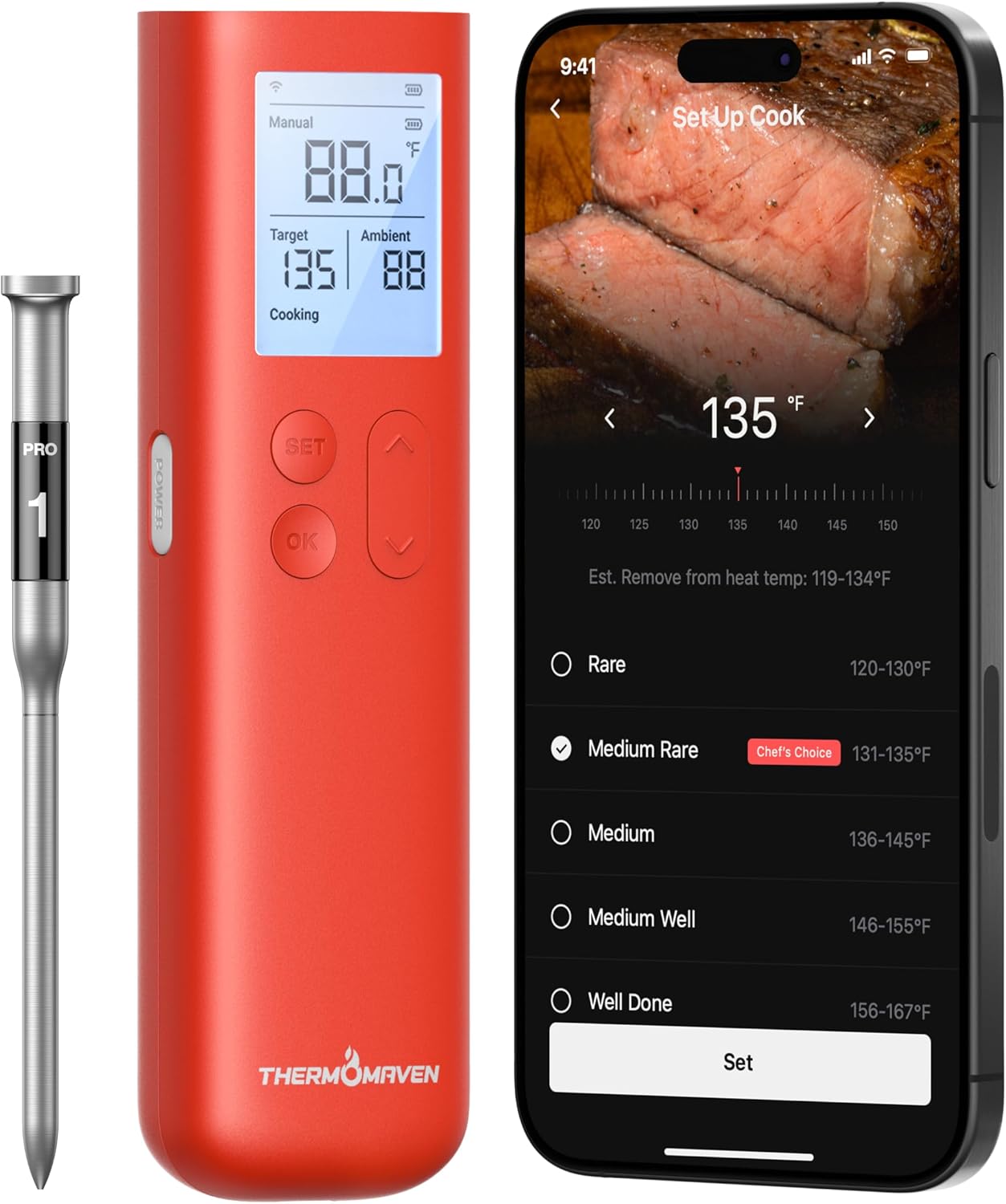
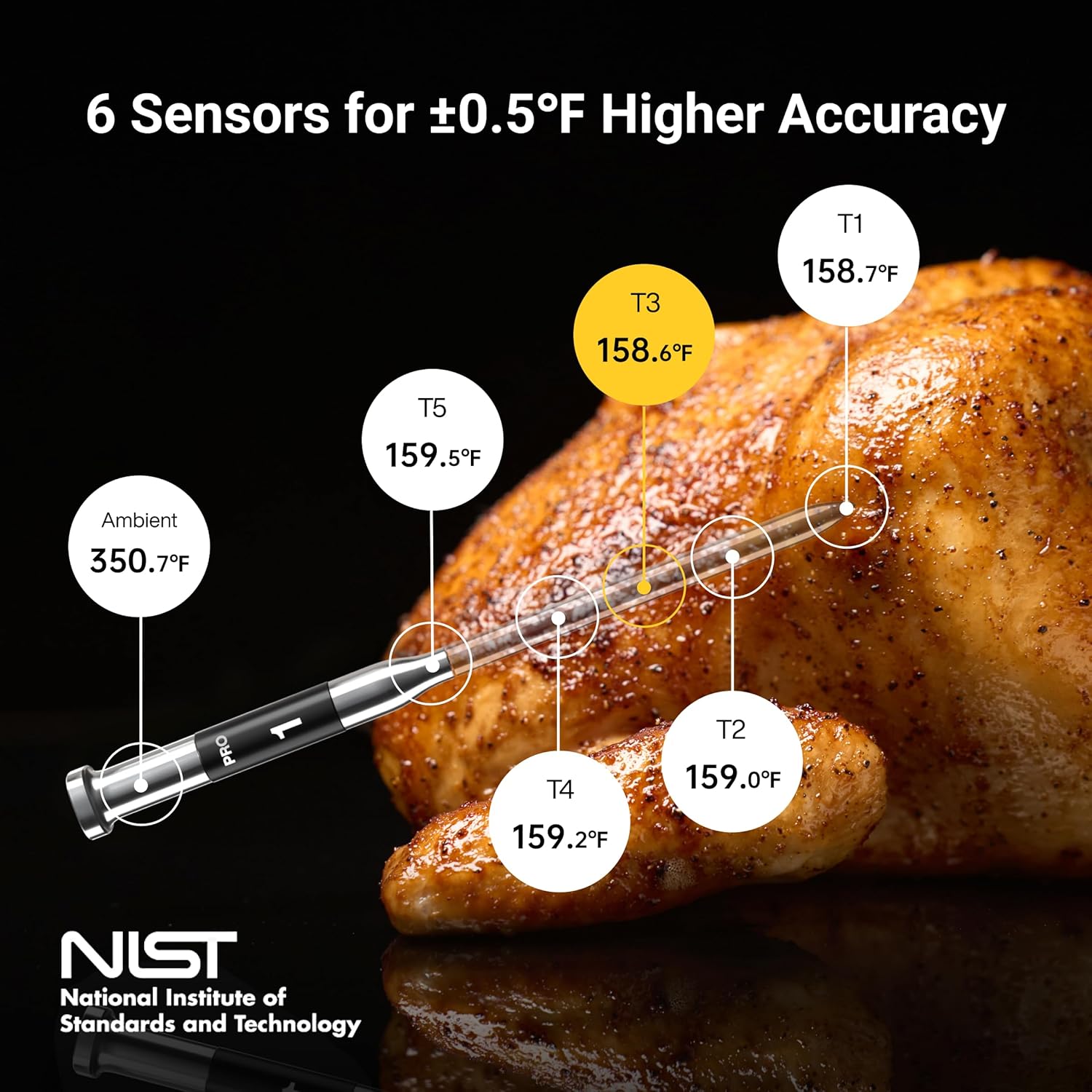
Accuracy (And Why It Matters So Much): Look, nobody wants a medium-rare steak that turns out shoe leather. Or worse, a pork shoulder that’s just under temp, calling for another hour in the smoker. A device promising something like ±0.5℉ Certified Accuracy, as touted by the ThermoMaven Sub-1G, isn’t just a marketing blurb; it’s the difference between culinary triumph and a frustratingly dry meal. Inconsistent readings are perhaps the biggest frustration with cheaper thermometers. You’re trying to hit a specific doneness, right? That tiny variance can actually mess with your cook big-time. Don’t settle for “close enough.”
-
Wireless Connectivity: Bluetooth vs. WiFi: This is where things get interesting, and often, confusing. Basic wireless meat thermometer models typically rely on Bluetooth thermometer tech. It’s fine for standing a few feet from your grill. But wander inside, tend to guests, or simply step out to grab a drink? Signal drops. That’s a pain. A WiFi meat thermometer, like the ThermoMaven Sub-1G with its promise of “WiFi Unlimited Range,” is a whole different beast. It leverages your home network, letting you monitor temps from anywhere your WiFi reaches – the living room, the backyard, maybe even across the street if your signal’s strong enough. But here’s the rub: WiFi can be trickier to set up, sometimes needing a separate base unit, and it’s heavily dependent on your home network’s stability. If your WiFi drops often, you’ll feel that frustration keenly.
-
Signal Range and Stability: Many a good cook has been foiled by a flimsy signal. You step away from the smoker for just a minute, and poof, no reading on your phone. Devices claiming “10X Enhanced Signal and Stability” or an “Unlimited Range” aren’t just boasting; they’re addressing a genuine pain point. Think about those long, slow cooks, the brisket that’s going for 12 hours. You need to trust that connection, always. A standalone base unit, often found with smart thermometer systems, can significantly boost this by acting as a relay, pushing data further and more reliably. Still, environmental factors (thick walls, other wireless interference) can always play havoc, even with the strongest signals. It’s not magic, just better engineering.
-
Probe Design and Durability: This is a part people often overlook until it fails. How many probes can you stick in a single roast? Some systems offer multiple probes, which is amazing for tracking different parts of a large cut or cooking multiple items at once. Are they durable? Heat resistant? Can they handle intense flare-ups or the long haul in a smoker without corroding? That’s key. Inferior probes can warp, short out, or just give inconsistent readings after a few uses, making the whole system useless. And then there’s cleanup. Some designs are far easier to clean than others, and honestly, who wants to scrub a fiddly probe after a big meal?
-
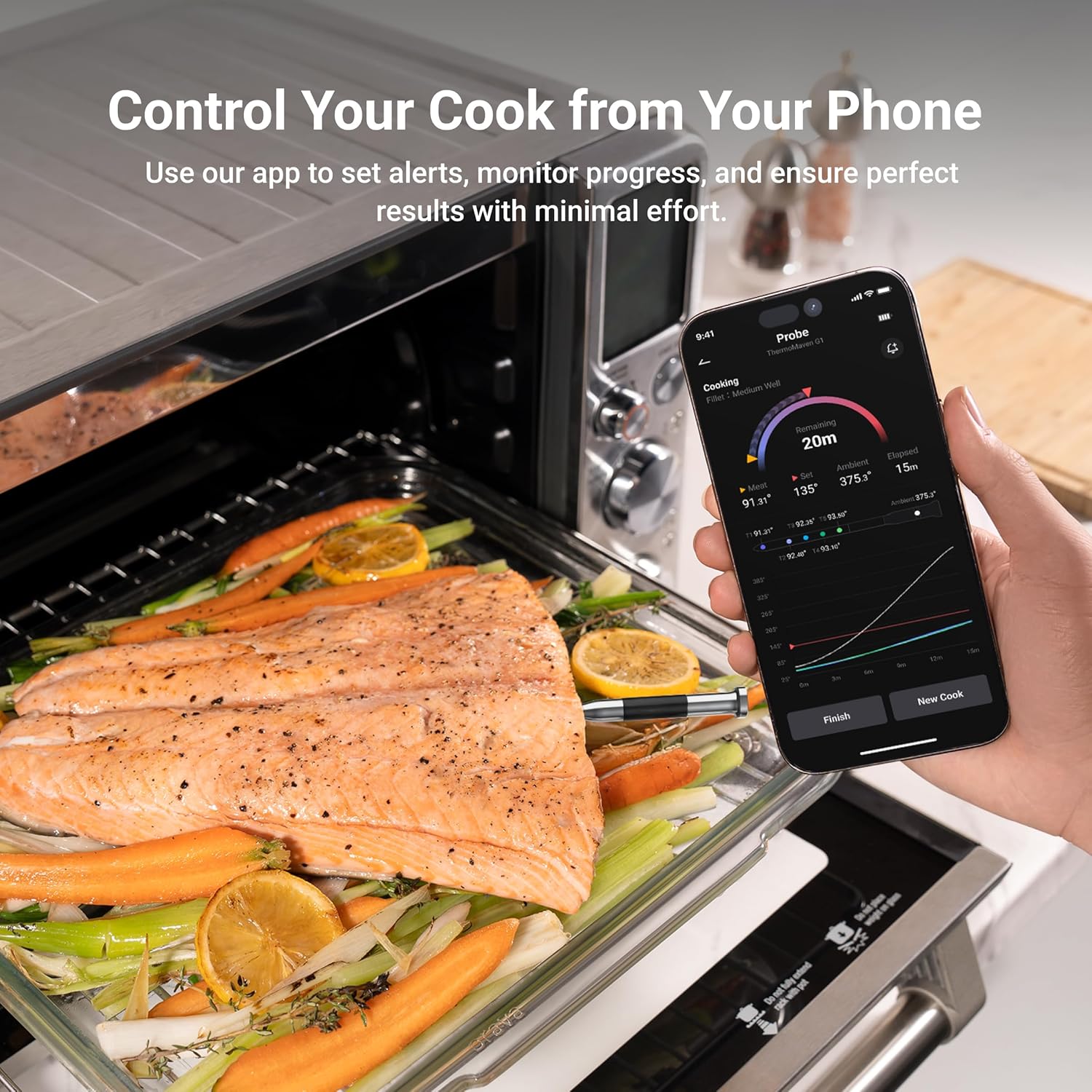
App Connectivity and Features: A smart thermometer is only as smart as its app. What does it do? Does it offer preset temperatures for various meats? Can you customize alerts for target temps and even high/low ranges (super useful for smokers)? Does it graph temperature progression over time? That last one is a godsend for learning how your oven or smoker performs. An intuitive, stable app is non-negotiable for a premium device. If the app crashes, is buggy, or just looks like it was designed in 2005, it detracts from the entire experience, making that fancy hardware feel, well, dumb. A clunky interface can turn a helpful tool into a headache.
-
Battery Life and Charging: Wireless means batteries, obviously. How long do they last? A big cook can run for hours, even a full day. You don’t want your probe dying halfway through a brisket. Does it use standard batteries, or is it rechargeable? A standalone base that also charges the probe, like that described for the ThermoMaven Sub-1G, is a thoughtful touch. It means one less thing to worry about. But remember, rechargeable batteries, while convenient, do degrade over time, a hidden cost down the line.
How to Match the Product to Your Situation
Your ideal meat thermometer isn’t just about features; it’s about how you cook.
-
The Weekend Warrior: You fire up the grill or smoker most weekends. Maybe a pork butt here, some ribs there, a whole chicken. You love hosting, and you’re tired of hovering. You need reliable remote monitoring. A WiFi meat thermometer system, like the ThermoMaven Sub-1G, would be a substantial upgrade. Its long range means you can actually relax with guests without constantly checking on the grub. Accuracy is paramount for impressing your friends, but you probably don’t need every single pro feature. Still, the peace of mind? Invaluable.
-
The Aspiring Pitmaster: You’re serious about your BBQ. Brisket, whole hog, obscure cuts that take 18 hours. You live by temperature and timing. For you, precision, unwavering signal stability, and detailed app analytics are non-negotiable. You’re likely running a smoker thermometer for multiple probes, tracking both ambient pit temp and meat temp. The ability to monitor from anywhere, even if you run to the store, is critical. This person needs top-tier temperature accuracy and robust app app connectivity, making devices like the ThermoMaven Sub-1G a serious contender. You’re looking for consistent results, every single time. And honestly, it simplifies a deeply complex cooking process.
-
The Everyday Oven Roaster: Maybe you do a lot of weeknight roasts, holiday turkeys, or just want perfect salmon every time without guesswork. You’re probably not hauling a smoker out every day, but you still want foolproof results. An advanced digital thermometer with a single, highly accurate probe and a decent wireless range (even Bluetooth might suffice for smaller homes) would be a game-changer. You need something simple, reliable, and maybe less expensive than a full-blown pitmaster setup. Ease of use and quick setup trump ultimate range for you.
| Type/Tier | Best For | Price Tier | Key Feature | Watch-Out |
|---|---|---|---|---|
| Instant-Read Digital | Quick checks, grilling, pan-searing | Budget-friendly | Near-instant readings | No remote monitoring, single-use only |
| Basic Wireless (Bluetooth) | Grill monitoring, smaller cooks, close range | Mid-range | Remote monitoring (limited) | Range limitations, potential signal drops |
| Advanced Wireless (WiFi) | Long cooks, smoking, large homes, high precision | Premium | Extended range, robust app | Higher cost, WiFi setup can be tricky |
| Multi-Probe Wired | Monitoring multiple items, budget smoking | Mid-range | Multiple probes | Wires can be cumbersome, no truly wireless |
- Instant-Read Digital thermometers are your go-to for quick temp checks, ensuring that chicken breast isn’t overdone in a flash, but you’re physically there.
- Basic Wireless (Bluetooth) models let you step away from the grill for a bit, but don’t expect to run errands while your pork shoulder slowly cooks; the signal just won’t stretch that far.
- Advanced Wireless (WiFi) systems, including specific ones like the ThermoMaven Sub-1G, represent the pinnacle for serious cooks, offering freedom and precision over expansive areas, but they do require a more significant initial investment and a stable home network.
- Multi-Probe Wired options give you the advantage of tracking several temperatures simultaneously without breaking the bank on a fully wireless setup, though you’ll still have wires to contend with.
Cooking Scenarios: Where a Smart Thermometer Shines
Let’s get specific about how these advanced devices actually enhance your cooking game.
-
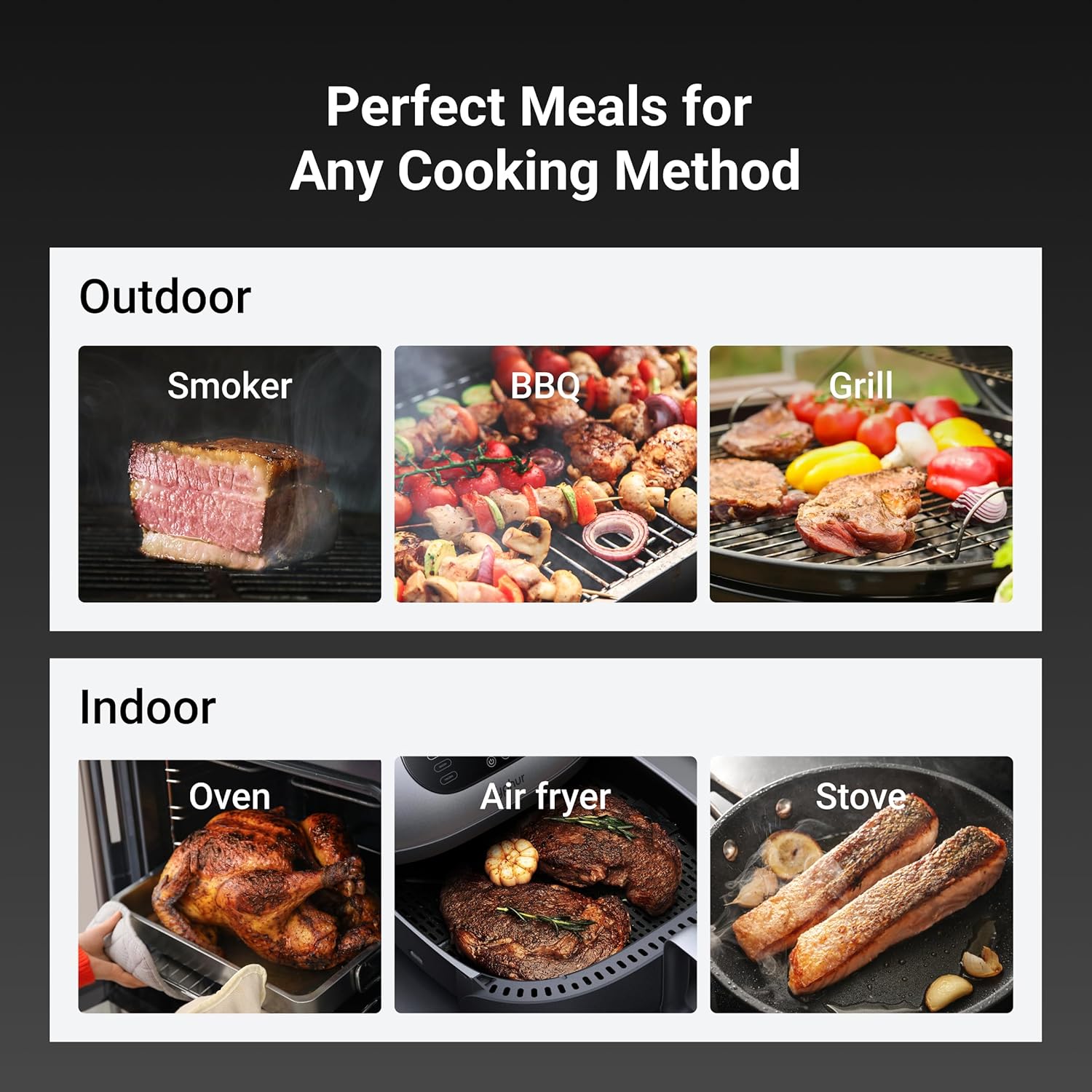
The BBQ Smoker Marathon: Picture this: a massive brisket, smoking low and slow for 14 hours. You need to maintain a precise pit temperature, and more importantly, hit that perfect internal meat temp. With a smoker thermometer like a smart wireless unit, you can track both from your phone, inside the house, catching a game. The “unlimited range” and 10X Enhanced Signal mentioned with the ThermoMaven Sub-1G really comes into play here, eliminating the constant trek out to the smoker. No more ruining sleep to check temps. You set alerts, and the thermometer tells you when something needs attention. Pure freedom, honestly.
-
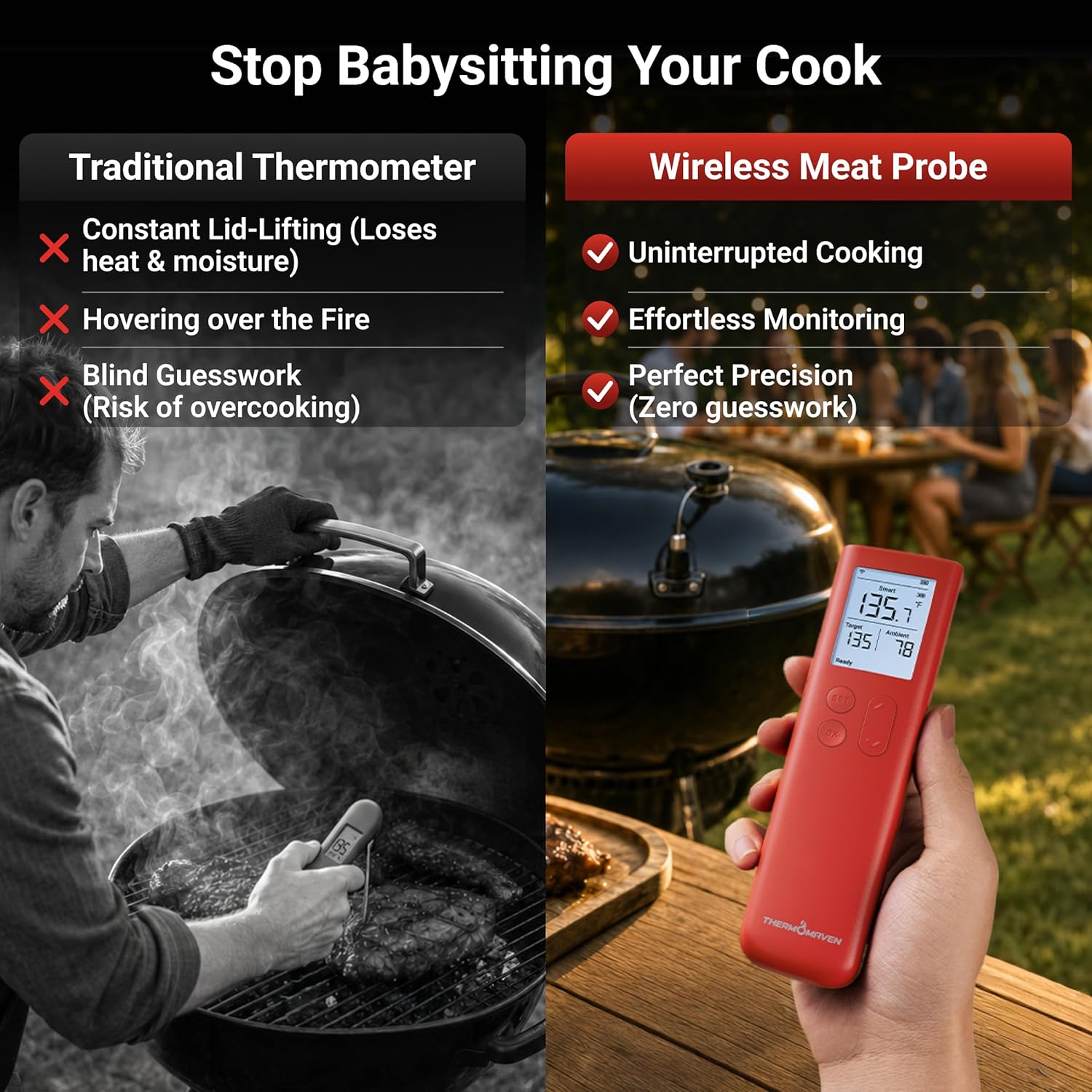
The Oven Roasting Masterpiece: Ever dry out a prime rib because you kept opening the oven door to check it? Guilty. Every time you open that door, heat escapes, extending cooking time and drying out your roast. A oven thermometer that’s truly wireless lets you keep the oven door shut. You insert the probe once, set your target, and monitor from the kitchen counter or living room. It’s especially useful for delicate roasts or complex bakes that demand stable temperatures. No more guessing games.
-
Grilling for a Crowd: You’ve got steaks, chicken breasts, maybe some corn on the cob all on the grill. Flipping, basting, chatting with guests. It’s a whirlwind. Trying to juggle multiple proteins to different doneness levels with an instant-read can be a nightmare. A multi-probe grill thermometer, especially one with a strong wireless signal, lets you track each piece individually. You know exactly which steak is medium-rare and which is medium, all without interrupting the flow of the party. It takes a huge amount of stress off the cook.
Common Mistakes Buyers Make with Smart Wireless Thermometers
Even the smartest tech can be undermined by simple oversights. Don’t fall into these traps.
- Ignoring Probe Placement: The biggest mistake, hands down, is sticking the probe into fat or bone. That’s not giving you an accurate internal temperature of the meat. Always aim for the thickest part of the muscle, avoiding bone and gristle. A few millimeters can throw off your reading by several degrees, leading to under or overcooked results. It’s crucial.
- Underestimating Range Limitations (Even for WiFi): While WiFi meat thermometer systems like the ThermoMaven Sub-1G boast impressive range, they’re not infallible. Thick stone walls, major appliances, or even outdoor structures can create dead zones. Don’t assume “unlimited” means literally anywhere. Test your signal where you plan to be, especially for critical long cooks.
- Neglecting App Setup and Calibration: Some people just want to plug and play. But a smart thermometer needs its app configured, and occasionally, probes might need a quick calibration check (especially if you suspect inaccuracy). Skipping this step is like buying a fancy sports car and never checking the tire pressure. You’re not getting the full, precise experience.
- Poor Cleaning and Maintenance: These probes live in high-temperature, greasy environments. If you don’t clean them thoroughly and properly after each use, you risk food contamination, degraded performance, and ultimately, a much shorter lifespan for your expensive investment. Don’t dunk the entire probe base in water unless it’s explicitly rated for it.
Why/How/What
-
Why go wireless for a meat thermometer?
Honestly, it’s about freedom and consistency. You’re no longer tethered to your grill or oven, constantly pulling out a probe. Instead, you get real-time data on your phone, giving you control and confidence to walk away, mingle, or even get other meal prep done. This leads to less stress and, crucially, more reliably cooked food. -
How do WiFi thermometers like the ThermoMaven Sub-1G differ from simpler Bluetooth models?
The core difference lies in their network. Bluetooth creates a direct, short-range connection between the probe and your phone (or a small receiver). WiFi, on the other hand, connects the probe’s base unit to your home internet network, which then transmits data to the cloud, allowing your phone to pull information from anywhere you have internet access. This vastly extends your monitoring range, often limited only by your home WiFi’s reach. -
What about the durability and longevity of these probes?
Probe durability varies wildly, even among premium options. The best ones use high-grade stainless steel and robust wiring, designed to withstand extreme temperatures and repeated cleaning. However, the delicate sensors inside can still be damaged by sudden, extreme temperature changes or improper handling. Treat them with care, and they’ll serve you well; abuse them, and you’ll be buying replacements sooner than you’d like.
Expert Tips
- Preheat the Probe: For accurate readings on large, slow cooks, insert the probe into the cold meat before it goes into the oven or smoker. This prevents shocking the sensor with sudden heat.
- Test Your Range: Seriously, don’t trust the box. Before a big cook, place your thermometer where you’ll use it, then walk around your house with your phone. Note any dead spots.
- Use Preset Alarms: Most smart apps offer them. Set alarms for both your target temp and a lower “danger zone” temp if your smoker is running too cold. This saves your cook.
FAQ
What exactly is Sub-1G technology in a meat thermometer?
Sub-1G refers to a sub-gigahertz wireless frequency band, which typically offers better range and penetration through obstacles like walls compared to higher frequencies like 2.4GHz WiFi. For a wireless meat thermometer, this translates to a more stable and extended signal, especially important for long-range monitoring in environments like large backyards or through multiple house walls.
Can a WiFi meat thermometer really have “unlimited range”?
While marketers might use “unlimited range,” it’s generally understood to mean “limited only by your WiFi network’s reach.” If your home WiFi signal drops in your far backyard, so will the thermometer’s connectivity. However, compared to Bluetooth, a WiFi system offers significantly greater flexibility for remote monitoring across a larger area.
Is ±0.5℉ Certified Accuracy overkill for home cooking?
Not at all. For delicate proteins like fish, poultry, or perfectly rare steak, even a few degrees can drastically change the outcome from “just right” to “overdone.” For longer, slower cooks like brisket or pork shoulder, hitting a precise internal temperature for collagen breakdown is key to tenderness. That level of precision helps you hit your desired results consistently.
Do I need a separate base unit for a smart wireless thermometer?
Many advanced smart thermometer systems, especially WiFi ones like the ThermoMaven Sub-1G, include a standalone base. This base typically houses the main receiver, connects to your WiFi, and often acts as a charging station or display. It’s crucial for boosting signal and allowing your probes to communicate with your home network.
How many probes do I actually need?
It depends on your cooking style. For basic grilling of one item, a single probe is fine. But if you’re smoking a brisket (needing pit temp and meat temp), or cooking multiple items in the oven, 2-4 probes become incredibly useful. Some systems even support more. It’s about how much simultaneous monitoring you want.
Are these advanced meat thermometer systems difficult to set up?
Setup can be a bit more involved than a simple instant-read. You’ll likely need to download an app, create an account, and connect the base unit to your home WiFi network. While generally straightforward, some users might find WiFi pairing a bit finicky depending on their router settings. Most good systems have clear, step-by-step instructions.
What’s the typical battery life for a wireless meat thermometer probe?
Battery life varies considerably. Basic Bluetooth probes might last a few dozen hours, while the probes for premium WiFi systems are often designed for longer durations, sometimes claiming 24+ hours of continuous use on a single charge. This is a critical factor for overnight or multi-day cooks. Rechargeable probes are convenient, but remember to charge them before a big cook.
Final Recommendation
Look, if you’re cooking for one or just doing quick weeknight meals, an instant-read meat thermometer or a basic, budget-friendly Bluetooth model will probably serve you just fine. There’s no need to overspend on features you won’t use.
However, if you’re truly dedicated to your craft—smoking briskets for hours, hosting large BBQ parties, or simply striving for culinary perfection in your oven roasts—then investing in a premium smart wireless meat thermometer system like the ThermoMaven Sub-1G is absolutely worth it. The enhanced accuracy, extended WiFi unlimited range, and robust app features fundamentally change how you interact with your cooking. It’s about reducing stress, eliminating guesswork, and consistently hitting those elusive perfect temperatures. For the serious cook, it’s a tool that pays for itself in peace of mind and perfectly cooked meals.
#ThermoMaven #Sub1G #Smart #Wireless #Meat #Thermometer #Standalone #Base #10X #Enhanced #Signal #Stability #Certified #Accuracy #WiFi #Unlimited #Range #BBQ #Oven #Smoker #Grill