The Unsung Hero: Navigating the World of Heavy-Duty Can Openers
Every serious kitchen, whether home or commercial, needs a reliable can opener. We’re not talking about those flimsy little gadgets that struggle with anything bigger than a tuna tin, or the electric contraptions that always seem to die at the worst possible moment. This guide is for the folks who actually use a can opener, often for larger, #10 cans, and want something that won’t give up halfway through a batch of chili. We’ll dive deep into what makes a manual can opener truly heavy duty, comparing options like the UHIYEE Commercial Can Opener and other robust contenders, so you can pick a kitchen workhorse that lasts. This isn’t just about opening cans; it’s about investing in a reliable kitchen tool that makes light work of a common chore.
Quick Answer
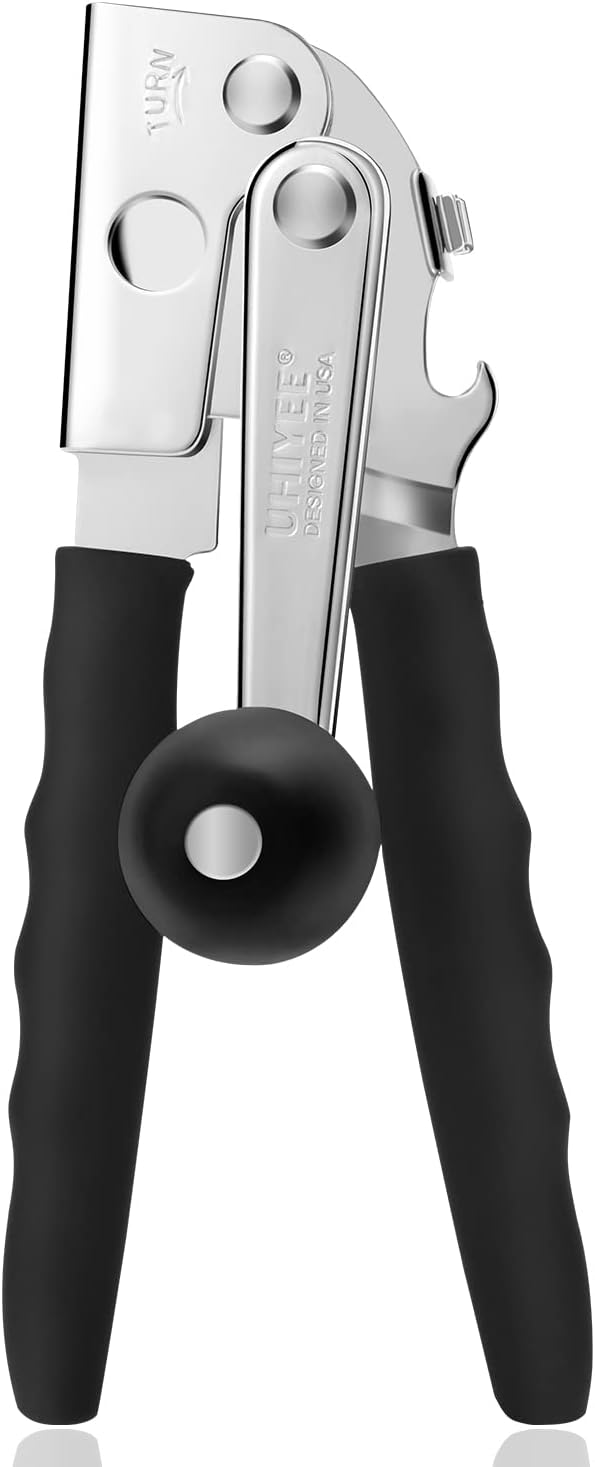
For anyone regularly opening large, #10 cans or needing a truly durable kitchen tool, investing in a robust, hand crank can opener like the UHIYEE Commercial Can Opener is generally a smart move. Its heavy-duty construction, often featuring a high-carbon blade and an extra-long handle, offers superior leverage and longevity compared to typical household models. These units tackle big jobs with remarkable ease, minimizing strain, reducing frustration, and preventing common issues like bent lids or sticky mechanisms.
What to Look For (The Buying Criteria)
Choosing the right can opener means understanding a few core factors. This isn’t rocket science, but ignoring these details is precisely how you end up with a tool that fights you at every turn. Let’s break it down.
Construction Material & Durability
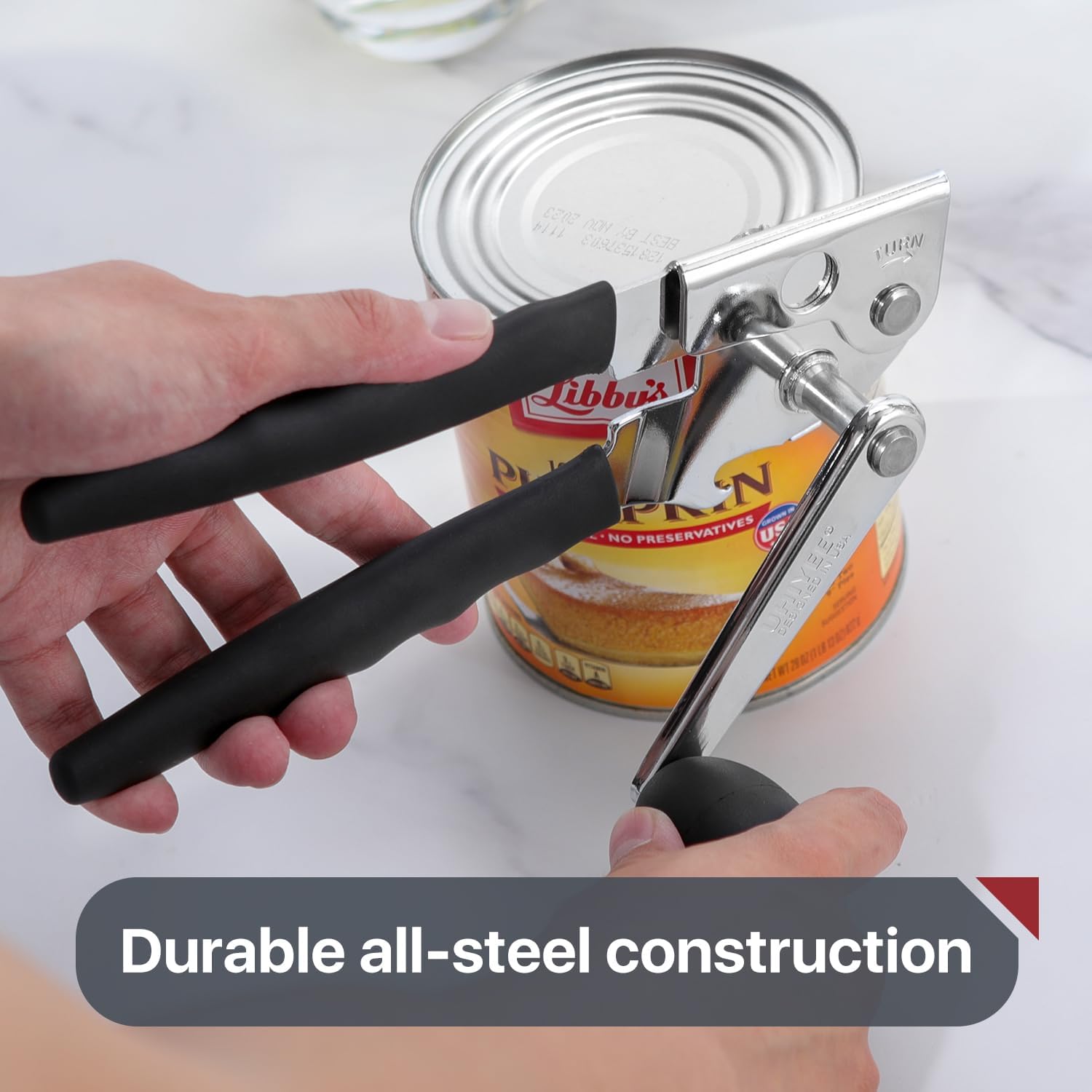
Many cheap can openers are made of thin stamped metal and plastic. They bend. They break. Seriously, I’ve seen people go through three in a year, convinced they just got a “bad one.” A good heavy duty can opener needs substantial materials. Think thick, corrosion-resistant stainless steel for the body and the core mechanism, not just the decorative parts. Plastic components? Fine for a comfortable grip or an oversize knob, but never for the critical cutting mechanism or the drive gears that move the blade around the can. Those need to be solid metal, ideally hardened steel, to withstand the torque and pressure of thick can rims. Anything less is a recipe for premature failure, particularly when you’re wrestling with stubborn #10 cans.
The primary trade-off here is weight. More durable materials naturally mean a heavier unit. This might be overkill for someone who opens one tiny can of olives a month, and a lighter, simpler model would be perfectly fine. But if you’re frequently engaging in serious meal prep or dealing with institutional-sized cans, that heft translates directly into stability and longevity.
Blade Quality and Cutting Mechanism
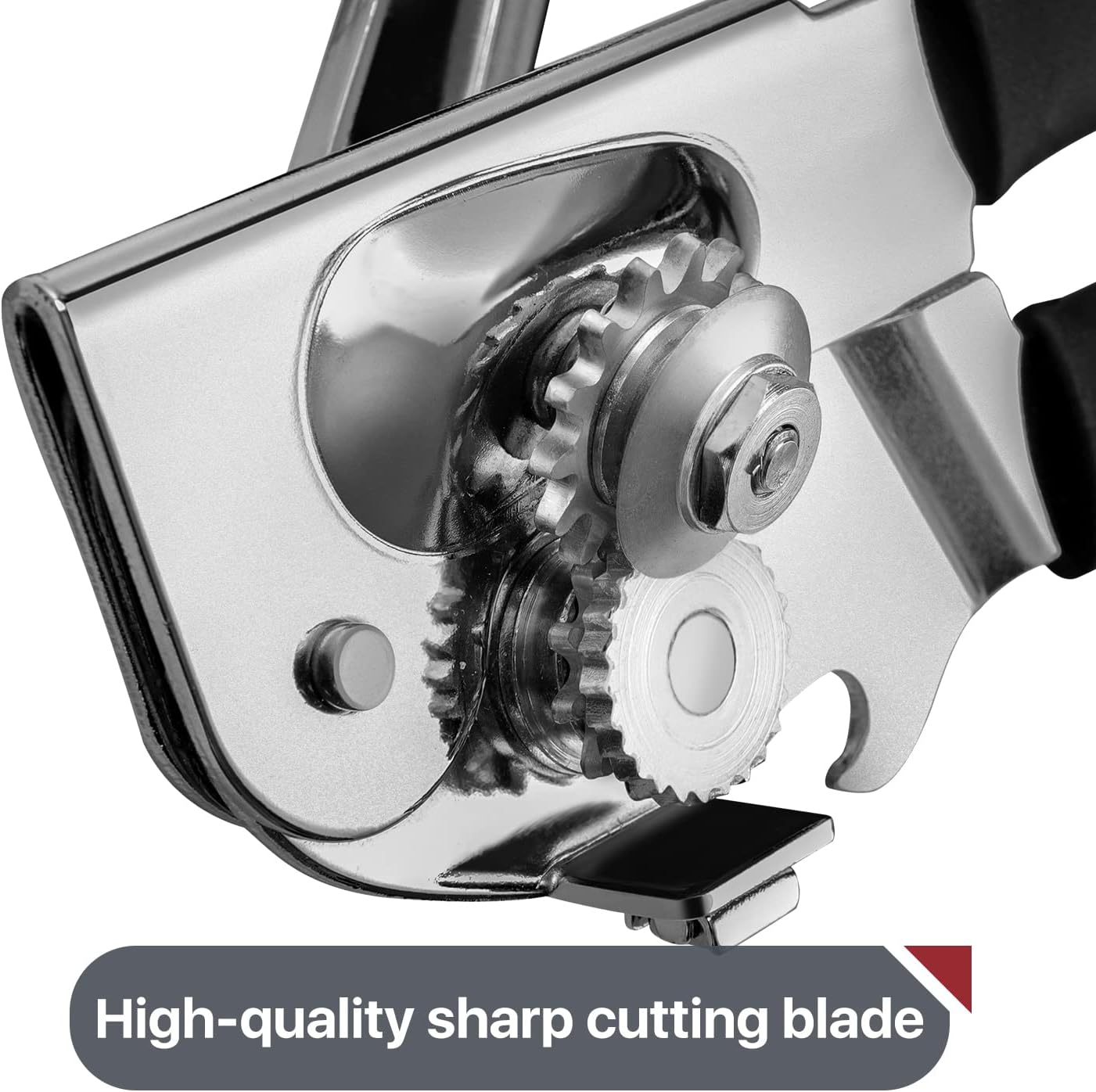
This is where the rubber meets the road. A dull or poorly designed blade makes opening a can a Herculean task, forcing you to strain your hands and wrists. Look for descriptions mentioning a high-carbon blade or precision-ground, hardened steel. These blades are designed to hold their edge for significantly longer periods, slicing through thicker can rims with crisp, clean cuts and requiring far less effort from you. Many quality manual can openers employ a robust, gear-driven cutting wheel that “walks” around the can. This mechanism minimizes slippage, ensures consistent progress, and prevents the blade from skipping off the rim. A common frustration with lesser models is the blade constantly losing its grip; a good gear system solves that.
A noteworthy alternative is the smooth edge can opener, which cuts along the side of the can, just below the rim, leaving no sharp edges on either the can or the lid. It’s a neat trick, offering a significant safety advantage. However, these mechanisms can sometimes be a bit finicky, often requiring precise alignment to start, and they might struggle more with very thick or unusually shaped rims than a traditional top-cut model. It’s a compromise between enhanced safety and raw, unadulterated cutting power and speed. For high-volume work, a traditional top-cut might still be preferred, despite the inherent risk of a sharp edge.
Handle Design and Ergonomics
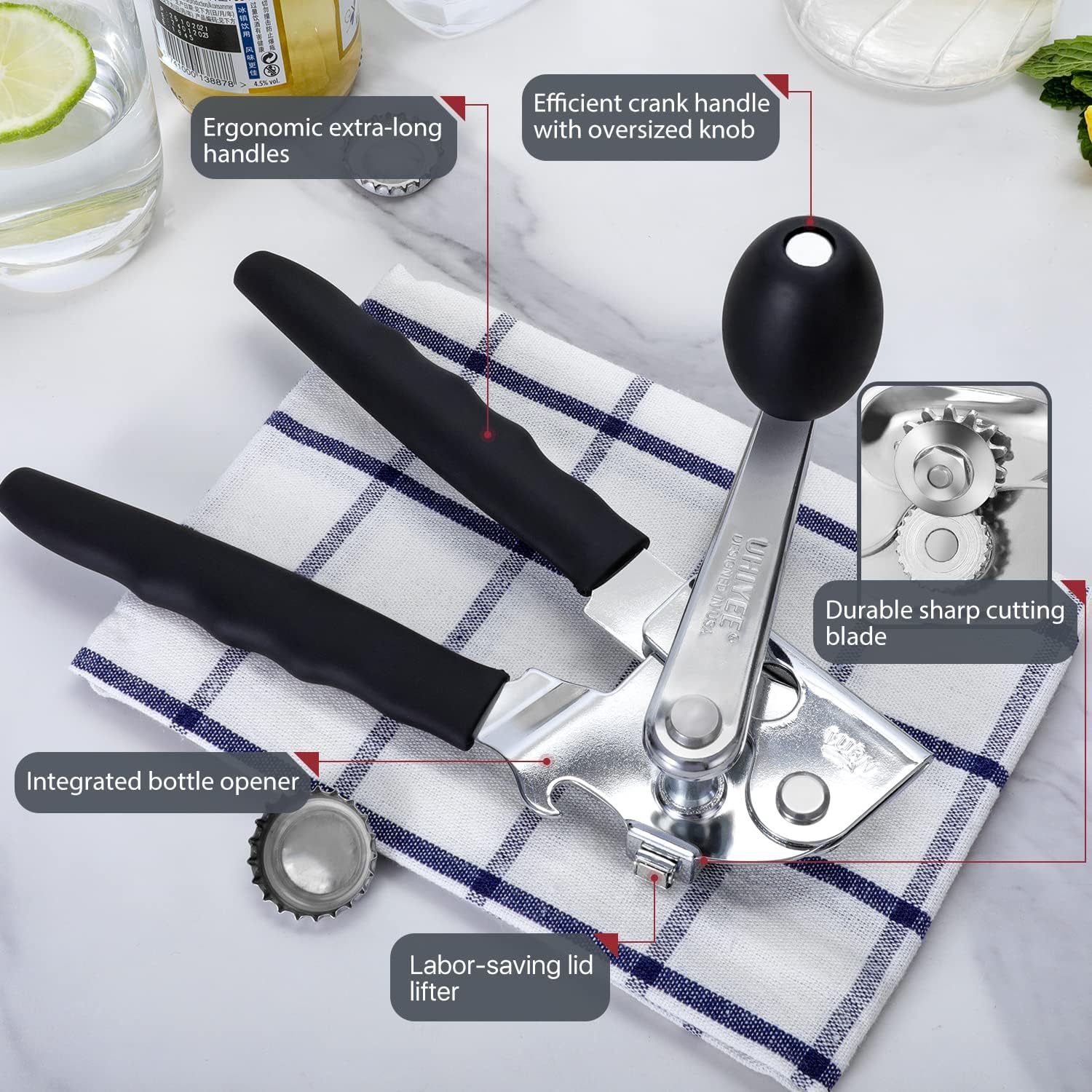
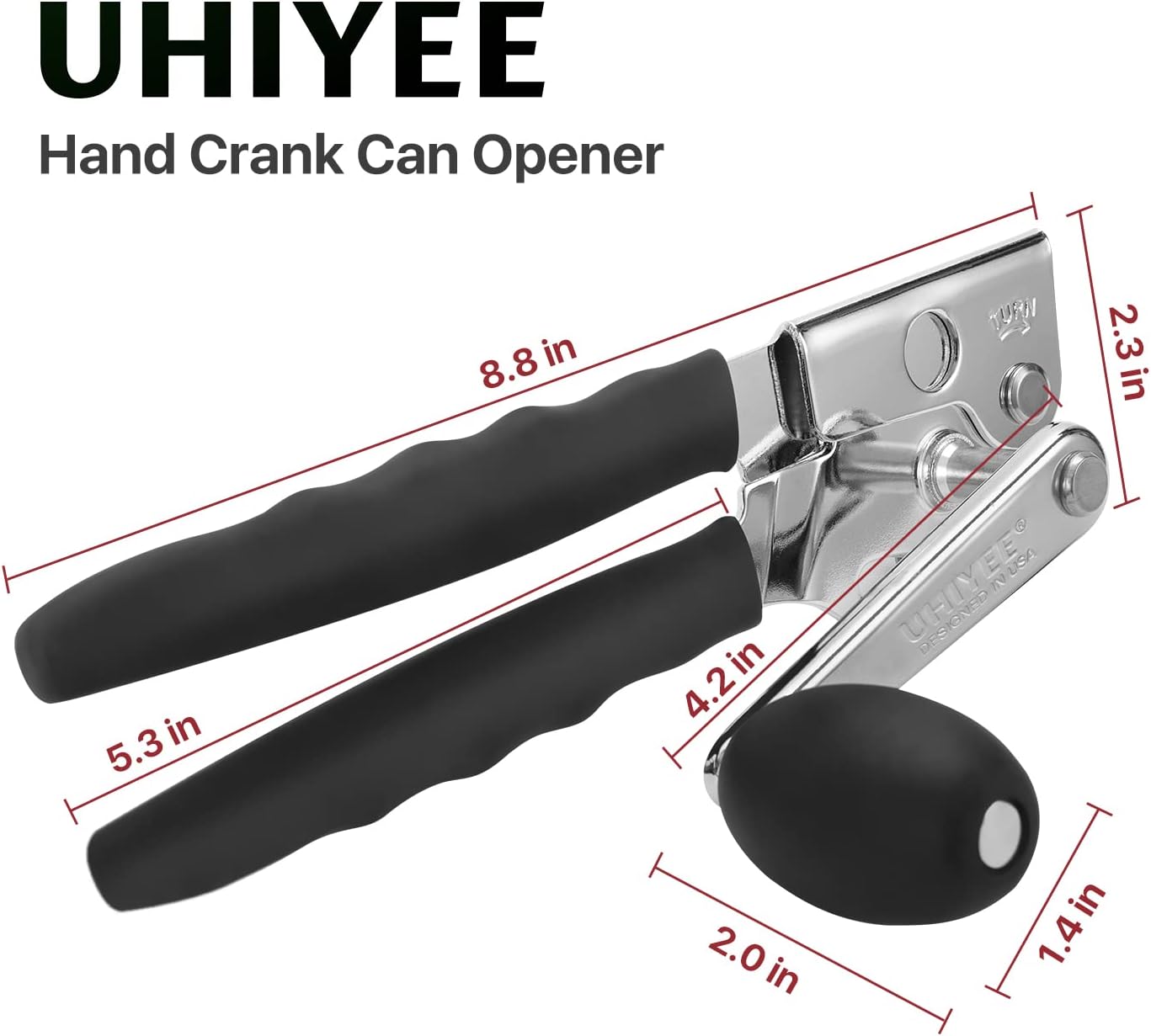
Ever try opening a monster #10 can with a tiny, flimsy handle? It’s torture. An extra-long handle isn’t just a comfort feature; it’s a fundamental aspect of leverage. This extended lever arm significantly reduces the actual force you need to apply, making the job feel effortless even on the toughest cans. It’s about mechanics, not brute strength. A well-designed grip, perhaps with a non-slip coating or a shape contoured to your hand, further enhances comfort and control, preventing hand fatigue and slippage.
The oversize knob on a hand crank can opener is another unsung hero in the fight against can-opening frustration. A small, stiff knob means your fingers are working overtime, often painfully. A larger, easier-to-grip knob allows for smoother, more consistent rotation, distributing the pressure across your hand. This design minimizes the chance of cramping or losing your grip mid-cut. However, remember that an extra-long handle inevitably means a larger overall footprint for storage. You’ll need dedicated counter space or a deep drawer for a true commercial can opener, a trade-off for its superior performance.
Type of Can Opening (Top-Cut vs. Side-Cut)
We touched on this briefly, but it’s worth a deeper dive. Traditional manual can openers, like many general-purpose models, cut directly into the top rim of the can. These are generally robust, quite reliable, and often more forgiving of slight imperfections or dents in a can’s rim. The downside? They leave a lid with a very sharp, potentially dangerous edge, which requires careful handling.
Side-cut can openers, also known as safety can openers, take a different approach. They slice through the side wall of the can, just below the crimped rim, separating the lid without creating those jagged edges. This method is undeniably safer, as both the can and the lid remain smooth. However, they can sometimes be slower to engage, occasionally more difficult to start on certain can types, and the lid, once removed, might tend to fall into the can’s contents if not handled gingerly. For environments prioritizing speed and consistent performance with large cans, the top-cut method, despite its sharp edges, often proves more efficient. It’s a fundamental choice between raw cutting power and safety-first design.
Stability and Mounting Options
This factor becomes absolutely huge when you’re dealing with larger cans, especially those wobbly #10 cans. Trying to hold a gallon-sized can steady with one hand while cranking a can opener with the other is just asking for a mess, spills, and potential hand strain. Some heavy duty can openers, particularly those explicitly designed for #10 cans and commercial use, are built to be bolted to a countertop or table edge. This permanent stability is a true game-changer for speed, safety, and effort reduction. With a mounted unit, the can opener provides unwavering support, freeing both your hands to control the can and crank the mechanism.
Of course, bolting something down means it’s a permanent fixture. If you need portability, want to keep your counters clear, or simply don’t want to drill into your surfaces, you’ll have to compromise on this ultimate level of stability. Some non-mounted options exist that feature very heavy, wide bases to provide stability without permanent attachment, but these tend to be more premium-priced due to the materials involved. It’s a choice between absolute rock-solid performance and flexibility in your kitchen layout.
Additional Features and Value
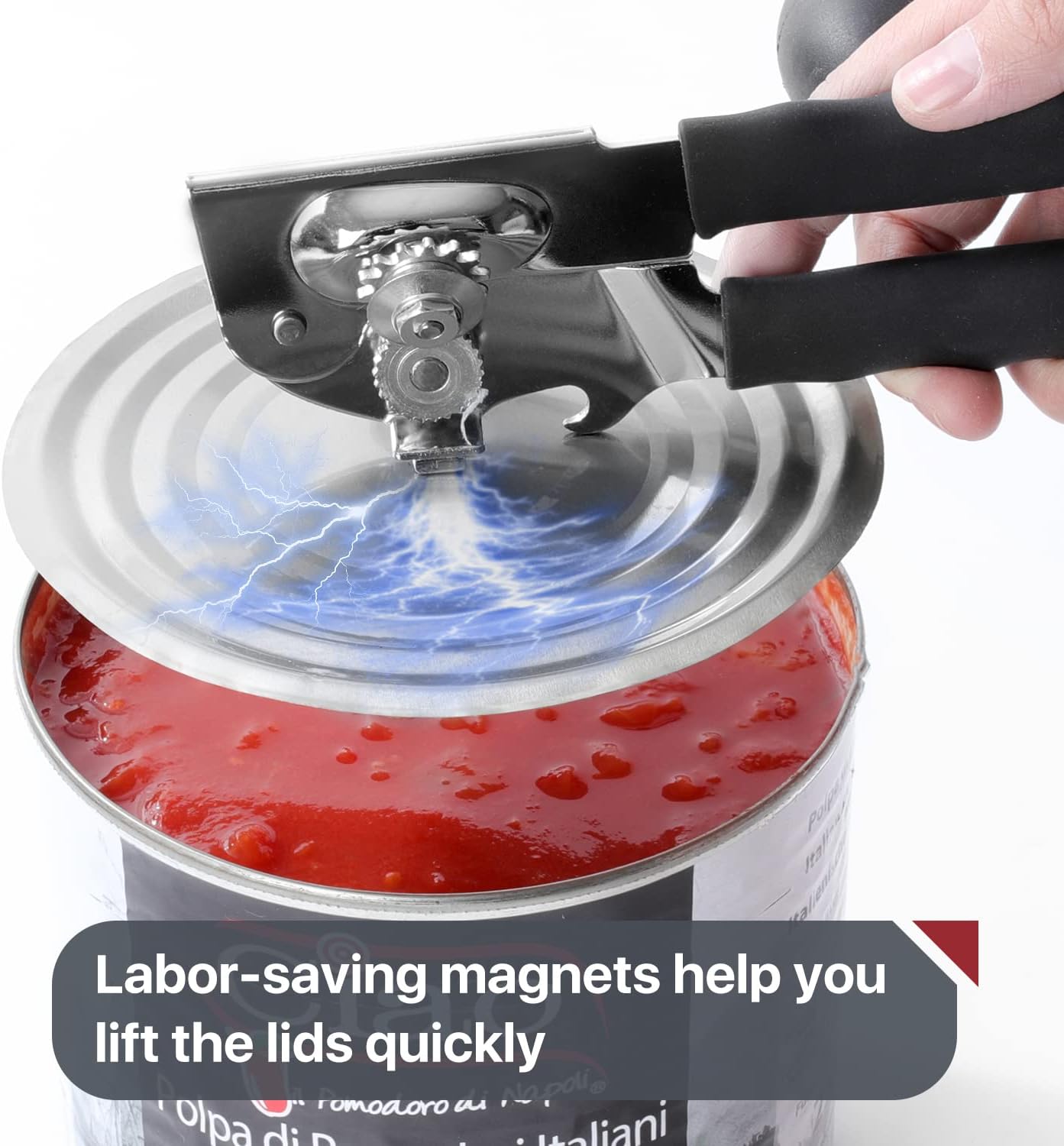
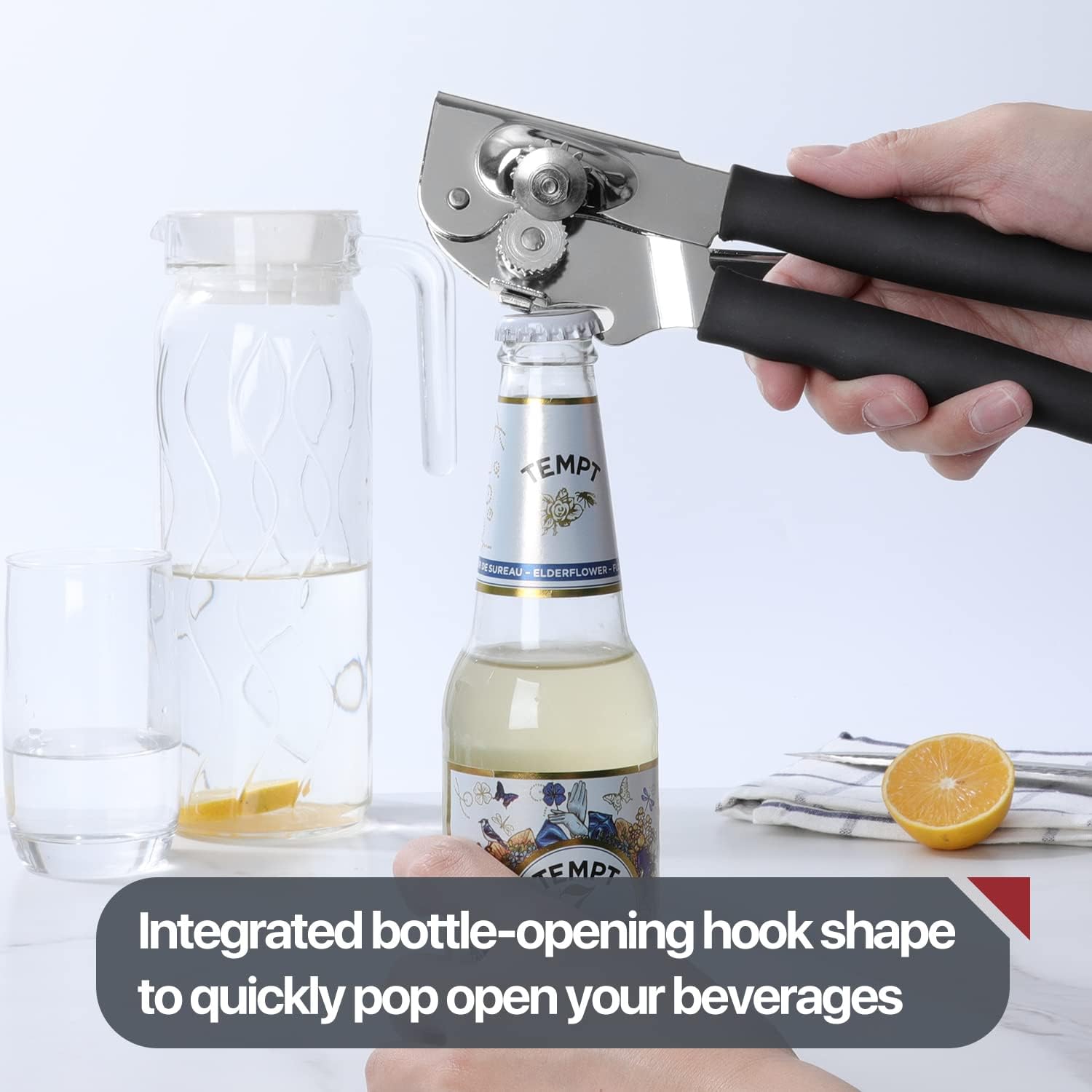
Sometimes, manufacturers throw in little extras. A built-in bottle opener on a can opener isn’t going to make or break its primary function, but hey, it’s convenient if it’s there. A magnet designed to help lift the lid once it’s cut? Also handy, keeping your fingers away from potentially sharp edges. These are nice-to-haves, sure, but never let them overshadow the core functionality. A fancy magnet won’t compensate for a flimsy cutting blade or a wobbly drive system.
Think about the long haul. Consider maintenance. Is the can opener easy to clean thoroughly, especially around the gears where food debris can accumulate? Can the blade itself be sharpened if it dulls, or even better, can it be replaced? A truly durable piece of food service equipment should offer a long service life, not just out-of-the-box performance. If the critical cutting components aren’t designed for easy cleaning or are irreplaceable, that significantly reduces its long-term value and sustainability. These seemingly small details can be a big deal down the road.
How to Match the Product to Your Situation
Choosing the right can opener isn’t about finding the objectively “best” one; it’s about finding the best fit for you and your specific kitchen habits. Don’t fall for marketing hype; consider your actual needs.
-
The Batch Cooker / Home Canner: You’re frequently opening large industrial-sized cans for family meals, preparing for parties, or preserving fruits and vegetables. Maybe you’re even dealing with those massive #10 cans of diced tomatoes, beans, or pumpkin puree. For you, consistency, brute strength, and effortless operation are paramount. You likely have a dedicated spot for your heavy-duty kitchen tools. A robust, commercial-grade manual can opener with a sturdy base or a countertop mount, like the UHIYEE Commercial Can Opener, is your ideal companion. It saves your wrists from strain, significantly cuts down on prep time, and preserves your sanity when facing a mountain of cans. You truly don’t want to mess around with anything less; it’ll just frustrate you.
-
The Casual Home Chef: You enjoy cooking regularly, but typically use standard-sized cans of ingredients. Occasionally, you’ll grab a slightly larger can of soup or chili, but #10 cans are a rare sight in your pantry. You value ease of use, a clean cut, and something that tucks away neatly in a drawer or sits unobtrusively on your counter. You probably don’t need a permanently mounted behemoth taking up valuable real estate. A good quality, comfortable handheld can opener with a solid build or a reliable electric can opener might serve you exceptionally well. You’re looking for dependability and convenience for daily tasks over industrial capacity. Still, don’t skimp on blade quality; even smaller cans can become a genuine pain with a dull or poorly manufactured blade.
-
The RV Adventurer / Off-Grid Living Enthusiast: For you, space is at a premium, and power sources might be unreliable or nonexistent. You need something compact, foolproof, and completely self-sufficient. An electric can opener is definitely out of the question. What you require is a robust, exceptionally well-made handheld manual can opener that can handle various can sizes without complaint. Think about models with an ergonomic grip, perhaps even a built-in bottle opener for added utility in tight spaces. Durability in potentially harsh or mobile conditions is paramount; you need it to work every single time, without fuss, even if it’s been rattling around in a drawer on bumpy roads for weeks. Simplicity and resilience are your watchwords here.
Comparing Can Opener Tiers: Is That Premium Worth It?
| Type/Tier | Best For | Price Tier | Key Feature | Watch-Out |
|---|---|---|---|---|
| Budget Handheld Manual | Occasional use, small cans | Entry | Compact, portable | Flimsy construction, dull blades, short lifespan |
| This is your standard grocery store special; it works for a bit, then becomes a frustrating chore, often bending or slipping on tougher can rims. | ||||
| Mid-Range Handheld Manual | Regular home cooking, standard can sizes | Mid-range | Better build, sharper blade | Can struggle with large or oddly shaped cans |
| A noticeable step up in quality, offering more comfort and reliability for daily kitchen tasks without requiring a huge investment. | ||||
| Heavy-Duty Commercial Grade | Large batch cooking, #10 cans, food service | Premium | Exceptional durability, leverage, efficiency | Bulky, less portable, higher initial investment |
| Models like the UHIYEE Commercial Can Opener truly shine here, designed for consistent, tough work, making big jobs remarkably easy and lasting years. | ||||
| Electric Can Openers | Users with dexterity issues, hands-free convenience | Mid-range+ | Effortless operation, smooth edges | Requires power, larger footprint, can be less durable |
| While undeniably convenient, an electric unit needs dedicated counter space and a power outlet, and some can fail sooner than a robust manual model, often without repair options. |
Scenario-Specific Solutions
Let’s break down a few common usage scenarios to see where different can opener types really shine, or frankly, fall flat. Choosing the right tool for the job is always smart.
The Professional Kitchen Demands
Imagine a bustling restaurant prep kitchen, a school cafeteria, or even a community food pantry. They aren’t opening one or two cans a day; they’re going through dozens of #10 cans of sauce, vegetables, and fruit, often back-to-back. Here, anything less than a sturdy, table-mounted commercial can opener is just a bottleneck waiting to happen. The UHIYEE Commercial Can Opener, with its extra-long handle and oversize knob, provides the critical leverage and impressive speed needed to power through huge volumes. You simply can’t expect a small handheld unit to stand up to that kind of daily abuse; it would wear out in weeks, if not days, causing delays and frustration for staff. Dependability is non-negotiable.
The Serious Home Enthusiast
You might not be running a commercial kitchen, but you regularly engage in extensive home baking, preserving, or large-scale meal prep. Maybe you make your own jams and jellies, or you prefer to buy your canned tomatoes and beans in bulk, often in those industrial-sized containers. The sheer volume might not match a professional setting, but the size of the cans often does. A good heavy duty can opener makes opening those big tins of condensed milk, pureed pumpkin, or entire batches of stock much, much easier. It’s an investment in your personal comfort and efficiency during your big projects. Don’t underestimate the strain a cheap can opener puts on your hand after opening a half-dozen large cans. That’s a real bummer when you’re in the flow.
The Outdoor Adventure Kit
When you’re out in the wilderness—camping, backpacking, or simply enjoying an off-grid cabin—reliability is paramount. You certainly aren’t plugging in an electric can opener, and carrying a bulky, mounted unit is out of the question. A compact, incredibly durable manual can opener that doesn’t rely on batteries or power outlets is your absolute best bet. Think about how much abuse it might take rattling around in a backpack or a camp box, exposed to dirt and damp. Look for solid, simple metal construction, minimal moving parts that can break, and a design that’s easy to clean in primitive conditions. A humble but robust model, perhaps even an old-school army-style P-38 or P-51, can be surprisingly effective for its size, though it won’t handle #10 cans with the grace or speed of a dedicated commercial unit. You balance convenience and portability against sheer capacity.
Common Mistakes When Buying a Can Opener
People mess up their can opener purchases all the time. It’s not a glamorous item, so it often gets overlooked until frustration boils over. Here are a few head-scratchers I’ve seen over the years.
-
Underestimating Your Actual Usage: Folks often grab the cheapest manual can opener for what they think will be occasional use, then quickly realize they’re opening cans way more often than they anticipated. Or, worse, they try to tackle a family-sized #10 can with a tool meant for a tiny tin of olives. This quickly leads to frustration, damaged cans, and ultimately, having to buy another opener. Match the tool to the real job, not the fantasy, infrequent one. Be honest with yourself about how often you’ll be reaching for it.
-
Prioritizing Gadgetry Over Core Function: Oh, a can opener that also sharpens knives, opens bottles, and somehow tells you the weather? Probably not. Stick to the core function. While a built-in bottle opener is a nice touch on many kitchen tools, if the primary can opener mechanism is weak, flimsy, or poorly designed, those extra features are just marketing fluff designed to distract you. Focus on the blade, the gears, and the handle first. Ensure the primary job is done well, consistently, and reliably.
-
Ignoring Ergonomics (Especially for Large Cans): It’s incredibly easy to overlook how a can opener actually feels in your hand until you’re halfway through a particularly tough can. For heavy duty can openers and large cans, handle length, knob size, and overall grip comfort are absolutely critical. A tiny knob or a short handle on a big can is a recipe for hand cramps, painful blisters, and inevitable slippage. Don’t be afraid to mentally simulate the act of opening a can before committing to a purchase. Does it feel right? Does it offer leverage?
-
Forgetting About Basic Maintenance: Even the best high-carbon blade can dull over time, and gears can get gunked up. If a can opener can’t be cleaned easily, or, even better, if its blade can’t be sharpened or replaced, its lifespan is inherently finite. Many assume these are “set it and forget it” tools, but a little care goes a long way. Rust is a killer for any kitchen tool, especially one that gets wet often from food contact. Check if parts are replaceable or if there are specific cleaning instructions for longevity.
Why / How / What
-
Why invest in a heavy-duty can opener for #10 cans?
Look, those big #10 cans of ingredients are designed for efficiency in commercial settings, or for serious home cooking projects. Regular handheld can openers simply aren’t built for their thicker steel rims and much larger diameter. You desperately need the enhanced leverage from an extra-long handle, the sheer power of a durable cutting mechanism, and the rock-solid stability of a robust frame to open them safely and efficiently. It’s not just about getting the lid off; it’s about doing it without risking injury, making a huge mess, or breaking your tool. Real talk. -
How do commercial can openers like the UHIYEE model achieve superior leverage?
It’s all about fundamental physics, specifically the principle of the lever. The UHIYEE Commercial Can Opener, with its significantly long handle, provides a much longer lever arm. This means you need to apply far less input force on your end to generate a considerably greater output force at the cutting point on the can. Couple that mechanical advantage with an oversize knob for easier, more comfortable rotation and a sturdy, often mounted, base for unwavering stability, and you’ve got a system that effortlessly multiplies your efforts. That’s why these hand crank can openers feel so much smoother and less strenuous to operate, even on the most stubborn lids. -
What differentiates a high-carbon blade from standard stainless steel in a can opener?
A high-carbon blade is generally much harder and more rigid than typical stainless steel used in cheaper can openers. This superior hardness allows it to hold a razor-sharp edge for a significantly longer period, cutting through thick can material more cleanly and efficiently with less resistance. While standard stainless steel offers good general rust resistance, high-carbon steel excels at maintaining that critical edge retention. It’s a trade-off, as high-carbon blades can sometimes be slightly more prone to corrosion if not properly cared for and dried after use. But for sheer, consistent cutting performance? It often takes the cake, no contest.
FAQ
How do I properly clean a manual can opener to prevent rust?
After each use, especially if it gets wet or comes into contact with acidic food, wipe down the cutting wheel and gears with a damp cloth. Most importantly, ensure you dry it thoroughly immediately afterward. Air-drying completely before storing is a good habit. Some people apply a tiny bit of food-grade mineral oil to the moving parts periodically to keep things running smoothly and prevent rust, which is often the silent killer of metal kitchen tools.
Can a heavy-duty can opener be sharpened?
Many heavy duty can openers feature cutting wheels that can indeed be sharpened, especially those with high-carbon blades. You’d typically use a small, fine-grit file or sharpening stone, carefully working the edge. Some premium models even have easily replaceable blades. Always check the manufacturer’s recommendations or look for specific instructions; a sharp blade truly makes all the difference in ease of use and cutting efficiency.
Are electric can openers safer than manual ones?
Electric can openers often create a smooth edge on the can, cutting below the rim and virtually eliminating sharp, jagged edges, which is a big safety advantage. However, a well-designed manual can opener, particularly a good side-cut can opener, can also produce safe edges. The primary safety benefit of electric models is often for users with limited hand strength or dexterity, as they require minimal effort.
What is a #10 can and why does it need a special can opener?
A #10 can is a large, institutional-sized can, typically holding about 107 ounces (roughly 6 pounds, 11 ounces) of product, like diced tomatoes, beans, or sauces. Its significantly larger diameter and often thicker steel construction demand a heavy duty can opener with robust gearing, an extra-long handle for superior leverage, and frequently a stable, even mounted, base to manage its considerable weight effectively. Regular, flimsy openers just aren’t up to the substantial task.
How do I know if my can opener blade is dull?
If you find yourself having to apply excessive force to turn the crank, if the can opener slips frequently off the rim, or if it consistently leaves jagged, unfinished edges, your blade is almost certainly dull. A sharp blade should cut smoothly and cleanly with relatively little effort and consistent grip. It’s usually the very first sign it’s time for maintenance, sharpening, or replacement.
Can a commercial can opener be used in a home kitchen?
Absolutely! If you frequently open large cans, do a lot of batch cooking, or simply appreciate superior durability and effortless operation, a commercial can opener like the UHIYEE Commercial Can Opener is a fantastic, long-term addition to a home kitchen. Its larger size might require a dedicated spot on your counter or in a specific cabinet, but the performance, sheer robustness, and extended longevity are often well worth it for serious home cooks and large families.
Are all manual can openers difficult for people with arthritis?
Not necessarily. While some flimsy, poorly designed manual openers can indeed be quite challenging and painful, a well-designed, heavy duty can opener with an extra-long handle and an oversize knob can actually be surprisingly easier to use than many mid-range options. The enhanced leverage significantly reduces the force required from your hands and wrists, making it less strenuous. While electric can openers are often the top choice for those with arthritis, a good manual option can still be a viable and much-appreciated alternative.
Final Recommendation
So, what’s the verdict on the UHIYEE Commercial Can Opener and its heavy-duty kin? For anyone regularly tackling those hefty #10 cans, engaging in serious batch cooking, or running a small food service operation, making the leap to a commercial can opener is more than just a purchase; it’s an investment in efficiency, safety, and sanity. The enhanced leverage from an extra-long handle, the smooth, powerful operation courtesy of an oversize knob, and the sheer durability of a high-carbon blade mean less struggling, reduced hand strain, and more time actually cooking or serving.
While the initial outlay for a premium hand crank can opener might seem like a lot compared to a basic household model, consider the frustration saved, the reduced risk of injury from slipping tools or jagged edges, and the sheer longevity these units offer. For the casual home cook, a mid-range handheld might suffice, but if you’re truly serious about your kitchen work and those big cans are a regular feature in your routine, opting for a robust, dedicated unit built specifically for the task is, without question, the smarter, more economical move in the long run. It’ll be the last can opener you buy for a very, very long time.
#UHIYEE #Commercial #Opener #Heavy #Duty #Hand #Crank #Large #Cans #Black #Manual #Opener #HighCarbon #Blade #ExtraLong #Handle #Oversize #Knob #Builtin #Magnet #Bottle #Opener #Cans