Decoding the Zulay Kitchen Pulperizer: Is This Manual Juicer Worth the Hype?
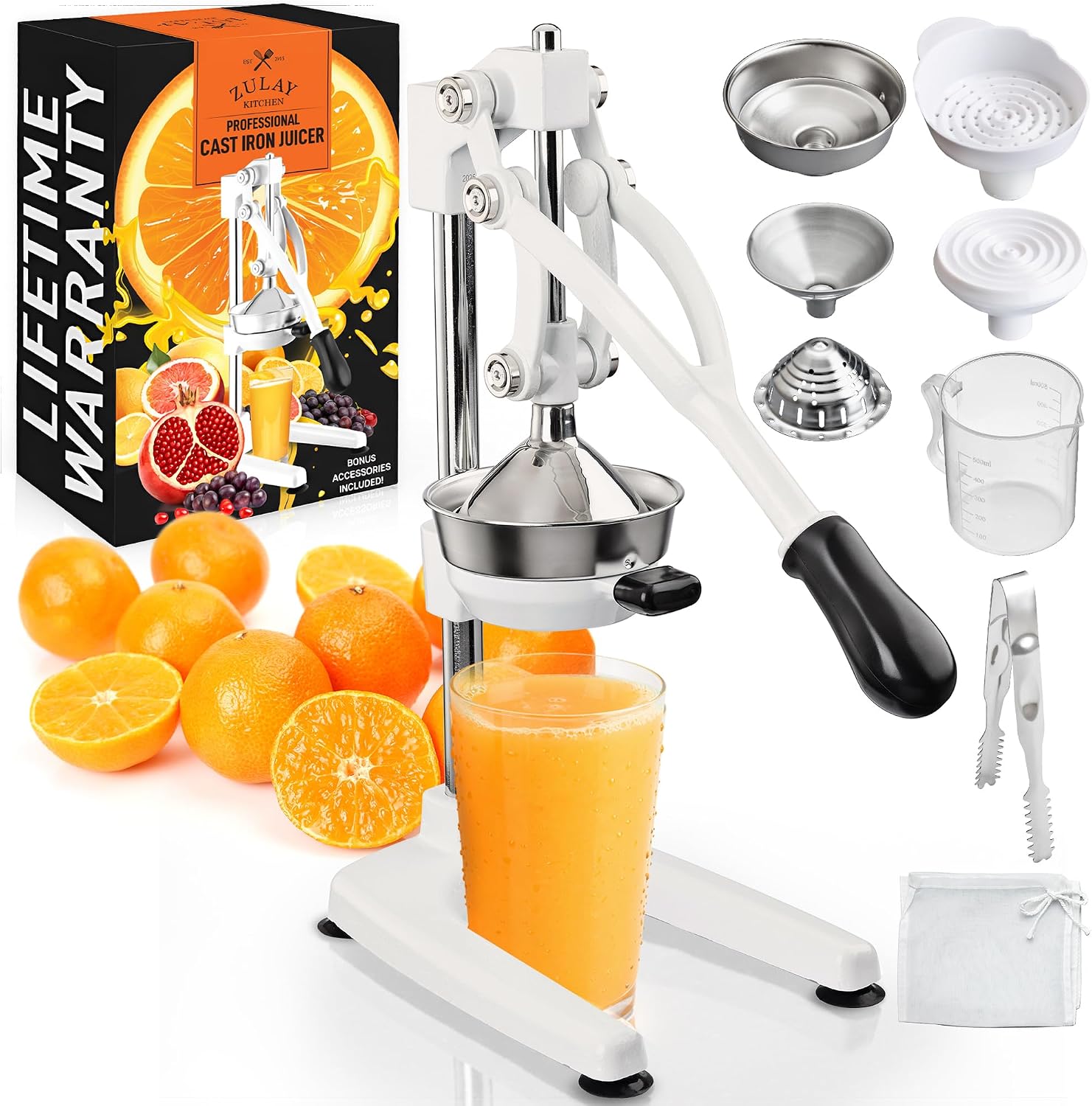
Getting fresh juice at home shouldn’t feel like a science experiment, right? This guide cuts through the noise, digging into the Zulay Kitchen Pulperizer 9 in 1 Cast Iron Juicer to see if it delivers on its promise of easy, heavy-duty juicing for all types of fruits. We’re talking about what makes a juicer truly worthwhile, especially when you’re eyeing a manual, cast-iron option in a world full of buzzing electric machines. If you’re pondering adding a sturdy, no-nonsense fruit juicer to your kitchen, you’ve come to the right place.
Quick Answer
The Zulay Kitchen Pulperizer is a strong contender for those who prioritize durability, high juice yield for citrus, and a manual, old-school approach to juicing. It’s an investment in a robust, low-tech tool that really shines with lemons, limes, and oranges, offering impressive extraction and easy cleanup. While it’s a champion for those specific tasks, it’s not designed for leafy greens or tougher vegetables, so temper expectations if your juicing ambitions stretch beyond fruit.
What to Look For (The Buying Criteria)
Navigating the world of juicers, even something as seemingly simple as a manual fruit juicer, can get surprisingly tricky. There are a handful of factors that really separate the contenders from the clutter. Pay attention here; this is where you save yourself from buyer’s remorse.
Construction and Durability
Look, you don’t want a kitchen gadget that feels flimsy right out of the box. For something like the Zulay Kitchen Pulperizer, which leans heavily on its “heavy-duty” claim, construction materials are everything. Cast iron? That’s typically code for “built like a tank.” It suggests longevity, the kind of tool you might pass down. But here’s the rub: cast iron is heavy. And it can, if not properly cared for, rust. So, while you get an incredibly stable base for applying pressure, you’re also committing to a significant piece of countertop real estate and a bit of upkeep. Plastic components, even on sturdy models, can be a weak point; check reviews for how well they stand up over time. If you’re serious about daily juicing, you need something that can take a beating.
Juice Yield and Efficiency
This is the big one, isn’t it? What’s the point of juicing if you’re leaving half the liquid in the fruit? For a manual juicer, particularly a citrus press, the leverage mechanism is key. A good design means you shouldn’t have to wrestle with an orange to get every drop. The Zulay Pulperizer, with its extra-tall design and presser attachment, aims to maximize this. But not all manual presses are created equal; some require Herculean strength. You want one that provides ample leverage so a firm, steady push yields results without straining your arm. A common trade-off? Some manual presses are fantastic for oranges but struggle with smaller limes or vice-versa, leaving pulp or not quite getting it all.
Ease of Cleaning
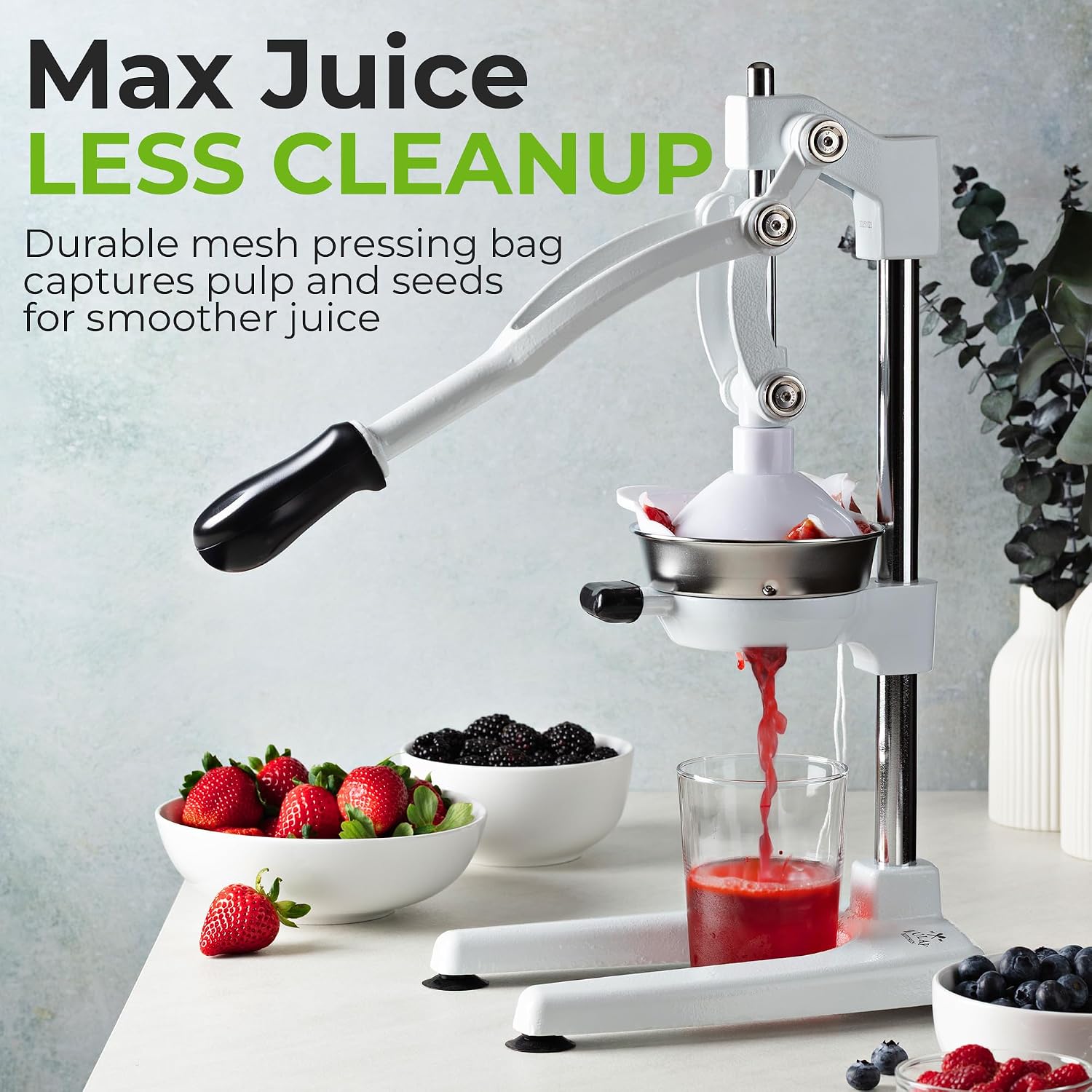
Honestly, if a juicer is a nightmare to clean, you won’t use it. Period. We’ve all been there: the excitement of a new gadget, followed by the dread of scrubbing tiny mesh filters. For a cast iron juicer, especially one with a stainless steel bowl, the promise of “easy-to-clean” is attractive. Usually, this means fewer nooks and crannies for pulp to hide in. Detachable parts, smooth surfaces, and materials that don’t stain easily are huge pluses. On the flip side, some manual juicers have awkward crevices or aren’t entirely dishwasher-safe, forcing you into tedious hand-washing. And remember that cast iron? It often needs specific care to prevent rust, which isn’t always “easy.”
Versatility and Fruit Compatibility
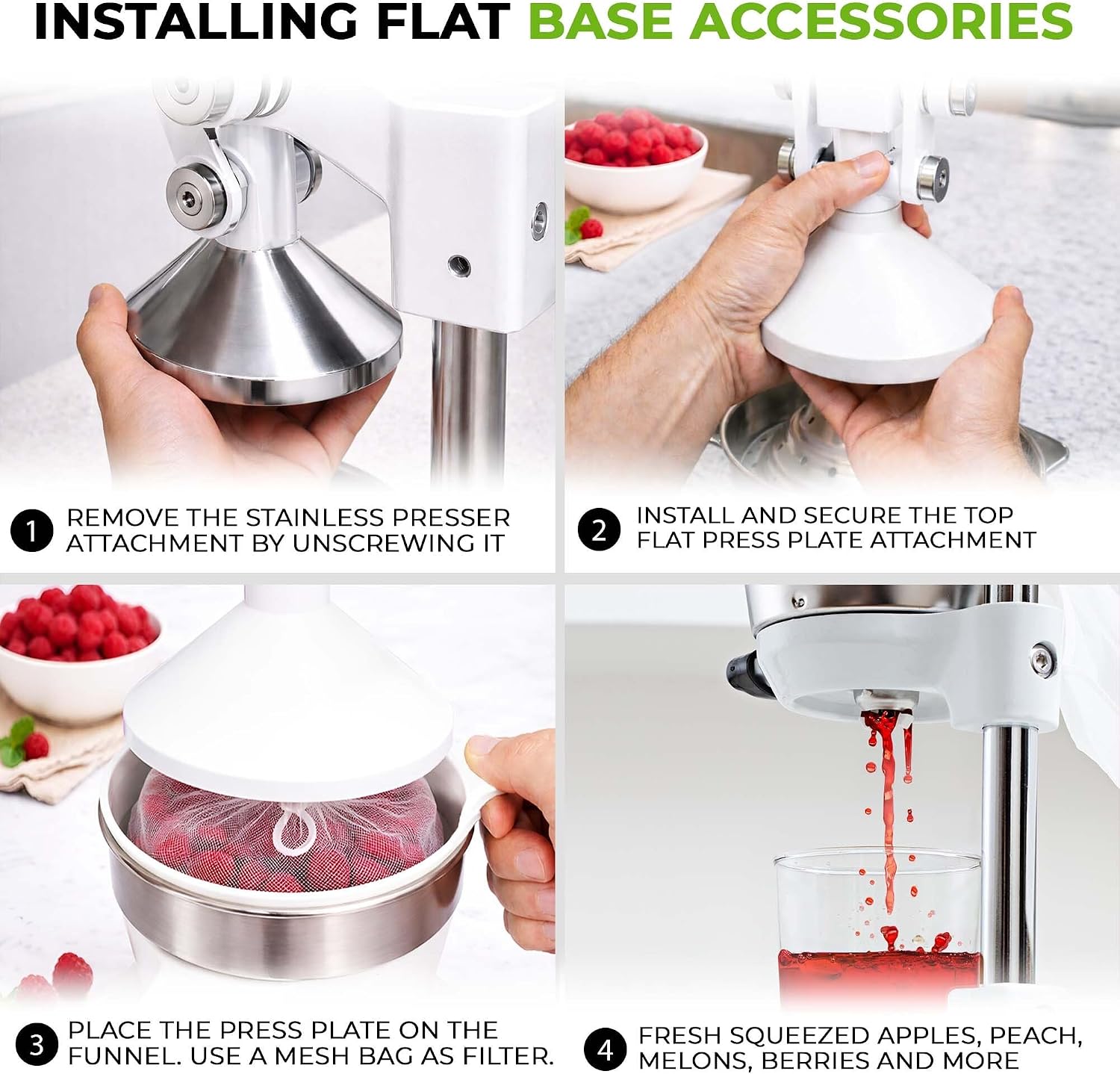
The Zulay Kitchen Pulperizer specifically highlights its ability to juice “all types of fruits.” But let’s be realistic here. A press-style fruit juicer is inherently different from, say, a slow-masticating juicer. It’s designed for fruits where you want to crush and extract the liquid, particularly those with a lot of soft pulp and high water content, like lemons, limes, and oranges. Can it handle a small apple? Maybe, but you’d likely need to pre-cut it dramatically, and the yield won’t be like a dedicated apple juicer. Its strength lies in being an exceptional lemon press or orange juicer, not a universal veggie pulverizer. If your vision involves kale and ginger shots, this isn’t your machine.
Countertop Footprint and Storage
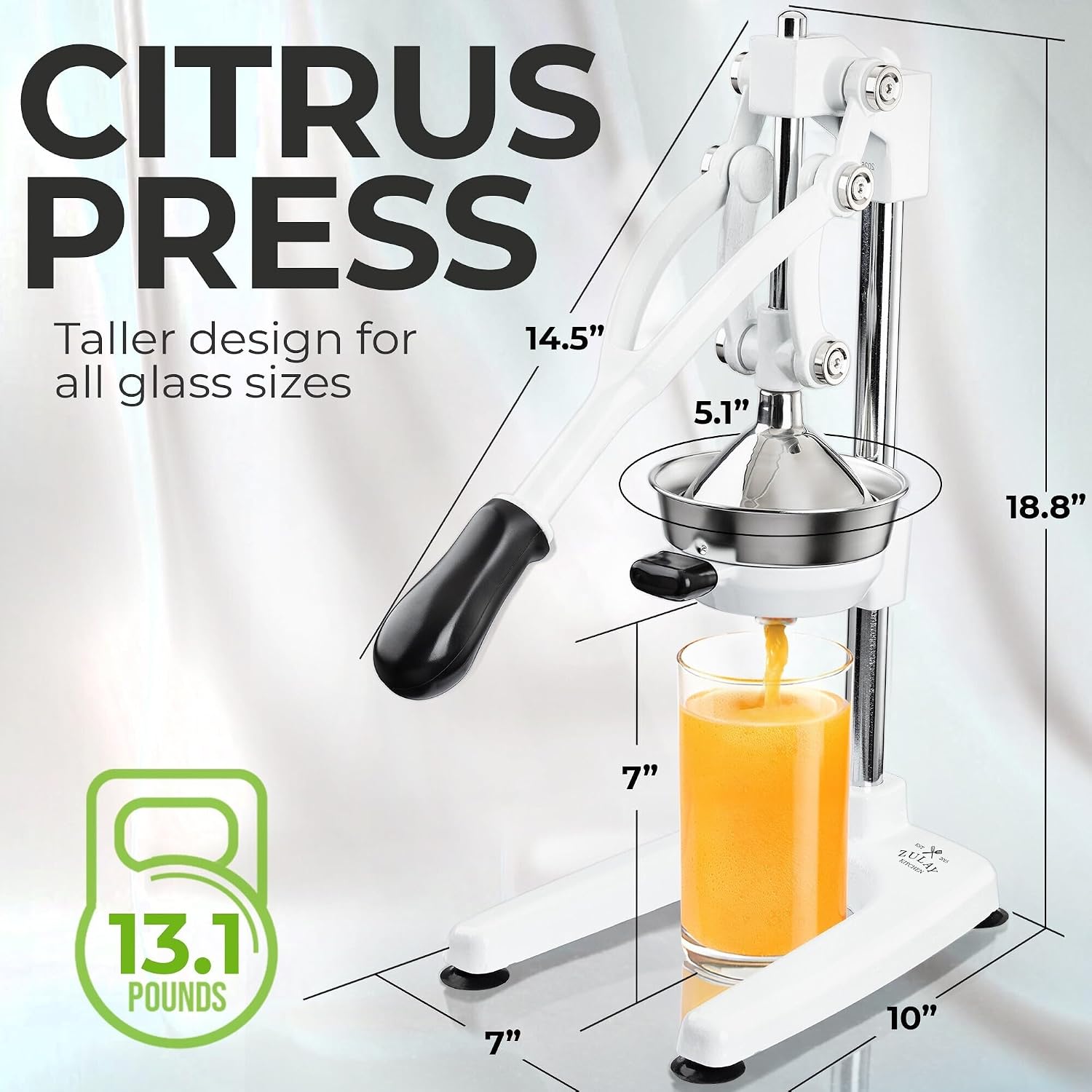
That “extra tall” feature on the Zulay sounds great for leverage, but it means this heavy-duty juicer is going to take up some vertical space. Think about your kitchen. Do you have dedicated space for a substantial countertop appliance, or will you be hauling it out of a cabinet every time? A sturdy, heavy unit like a cast iron model isn’t something you want to constantly move around. And for a manual device, there’s no cord to worry about, which helps, but its sheer size can be a limitation for smaller kitchens.
Manual vs. Electric Experience
This isn’t just about price; it’s a whole different vibe. A manual juicer, like the Zulay, gives you direct control. No whirring motors, no electricity needed. It’s quiet, satisfying in a primal sort of way, and very reliable because there are fewer parts to break. You feel the juice being extracted. However, it takes more physical effort, especially if you’re doing large batches. Electric juicers, whether centrifugal or masticating, offer speed and less effort, but they come with noise, more components to clean, and often a higher upfront cost. So, are you a hands-on, quiet-morning juicer, or do you need speed above all else? Your choice here matters.
How to Match the Product to Your Situation
Finding the right juicer isn’t just about specs; it’s about how it fits into your life. Let’s consider a few types of folks who might be eyeing a manual option.
The Everyday Citrus Enthusiast
You’re the person who starts the day with a glass of fresh-squeezed orange juice, makes lemon press concoctions, or needs fresh lime juice for cocktails and cooking almost nightly. You’re not making gallons, but you’re doing it consistently. For you, the Zulay Kitchen Pulperizer is an almost ideal fit. Its durable, heavy-duty build means it can handle daily use without a fuss. The high juice yield for citrus fruits will feel satisfying, and the simple, mostly two-part design makes cleanup a breeze compared to complex electric models. You appreciate the quiet operation and the control.
The Occasional Party Host/Cook
Maybe you don’t juice every day, but when you do, it’s for a pitcher of margaritas, a big batch of lemonade for a BBQ, or a specific recipe that calls for a lot of fresh juice. The thought of meticulously squeezing dozens of limes by hand makes you tired. Here, the Zulay’s robust leverage and efficiency for high-volume citrus juicing become incredibly valuable. It’s a workhorse for those larger, less frequent tasks. You won’t mind the countertop presence if it only comes out for specific occasions, but you’ll appreciate how quickly it helps you power through a bag of fruit.
The Minimalist/Durability Seeker
You value tools that last, don’t rely on electricity, and do one thing exceptionally well. You’re fed up with gadgets that break or become obsolete. The cast iron juicer aesthetic appeals to you – solid, functional, almost industrial. You understand that a truly heavy-duty manual juicer is an investment, not just in juice, but in a long-lasting kitchen companion. For you, the Zulay Kitchen Pulperizer isn’t just a juicer; it’s a statement about conscious consumption and appreciating well-made things. It might take up space, but it’s a space earned.
| Type/Tier of Juicer | Best For | Price Tier | Key Feature | Watch-Out |
|---|---|---|---|---|
| Manual Citrus Press (e.g., Zulay Kitchen Pulperizer) | Daily fresh citrus, cocktails, small batches, quiet operation. | Budget to Mid-range | Leveraged pressing for high citrus yield, no electricity. | Limited to soft fruits, requires physical effort, often heavy. |
| Centrifugal Juicer | Quick, large batches of firm fruits and veggies, convenience. | Mid-range | High-speed spinning blades quickly extract juice. | Oxidizes juice faster, noisier, pulp often wasted, harder to clean. |
| Masticating (Slow/Cold Press) Juicer | Nutrient-dense juice, leafy greens, high yield for most produce. | Premium | Slowly crushes and presses produce to extract juice. | Slow operation, higher cost, can be bulky, multiple parts to clean. |
| Reamer/Handheld Citrus Juicer | Single glass of juice, minimal counter space, portability. | Budget | Simple cone design, manual twisting to extract juice. | Very labor-intensive for more than one serving, lower yield. |
The Manual Citrus Press, like our focus, offers a reliable, low-tech way to get juice without noise or electricity, perfect for dedicated citrus fans, but it’s a one-trick pony. Centrifugal Juicers are speedy for a quick glass, but they’re loud and often don’t extract every last bit of juice or nutrients from certain produce. Masticating Juicers are the quiet, nutrient-preserving champions, excelling with everything from kale to berries, though their slowness and higher price tag might deter some. And then there’s the humble Reamer, which is super portable and budget-friendly, but you’ll get tired fast if you’re juicing more than a single lemon.
Juicing for a Crowd vs. Solo Sipping
Planning a big brunch or a cocktail party where fresh juice is paramount? The sheer efficiency of a sturdy manual press like the Zulay Kitchen Pulperizer really shines here. Trying to squeeze a dozen oranges with a small reamer is a recipe for hand cramps and frustration. A heavy-duty, cast iron juicer lets you process a significant amount of fruit relatively quickly, especially when you’re mostly dealing with standard-sized citrus.
But if you’re just making a glass for yourself each morning, perhaps a small, handheld reamer could do the trick. No, it won’t give you the same impressive yield, but it’s tiny. Sometimes, convenience beats absolute efficiency for a single serving. And while the Zulay is great for consistency, pulling out and positioning a large unit for just one lemon might feel like overkill to some.
The Quest for Flavor vs. Nutrient Retention
This is where the manual vs. electric debate often gets lively. A manual press, particularly for citrus, focuses on getting the juice out, without introducing heat or excessive air. This means the flavor tends to be vibrant, pure, and very fresh-tasting. You’re crushing, not pulverizing at high speeds.
Electric centrifugal juicers, with their fast-spinning blades, can introduce heat and aeration, which some argue slightly diminishes certain heat-sensitive nutrients and can make the juice foamier. Masticating juicers, on the other hand, are celebrated for their slow, cold-press method that’s supposed to preserve the maximum amount of nutrients. So, if your primary goal is the purest, most stable nutrient profile from a wide range of produce, a manual citrus press, while excellent for flavor, isn’t quite in the same league as a true cold press masticating juicer. But for the simple, bright flavor of citrus? Hard to beat a good press.
Common Mistakes Buyers Make
So many people trip up when buying a juicer. Don’t be one of them.
- Buying the Wrong Type for Their Produce: This is probably the biggest blunder. Someone sees a gleaming manual juicer and assumes it can handle carrots, apples, and kale, because, well, it’s a juicer! Then they’re disappointed when it struggles or simply isn’t designed for it. The Zulay Kitchen Pulperizer is a fruit juicer, specifically an outstanding citrus press. Don’t buy it expecting to make green juices or apple juice efficiently. You’ll only end up frustrated. Match the tool to the task, always.
- Underestimating the Cleaning Commitment: Oh, the siren song of “easy clean.” Every manufacturer claims it. But what does it really mean? If you’re not willing to rinse parts immediately after use, pulp can dry and become a concrete-like nightmare. For a manual press, especially with a stainless steel bowl, it’s generally simpler. But if you dread hand-washing, even simple parts, consider if any juicer is truly for you. And for cast iron, remember that rust prevention.
- Ignoring Countertop Space: That beautiful, heavy-duty juicer might look fantastic in a picture, but where will it live in your kitchen? A cast iron juicer isn’t something you tuck away into a small drawer. It’s substantial. Measure your available space. Seriously. A bulky appliance that lives in a cupboard and is a pain to retrieve tends to become a dust collector, not a daily workhorse.
- Chasing the “Ultimate” Juicer: Some folks try to find one machine that does absolutely everything perfectly – from tiny berries to fibrous celery. Such a unicorn doesn’t exist, not really. Each juicer type excels at specific tasks. Instead of seeking the mythical “9-in-1” that does all things equally, identify your primary juicing needs. If it’s citrus, focus on the best citrus press. If it’s greens, look at masticating. Trying to force one into a job it wasn’t built for just leads to disappointment and wasted money.
Why/How/What Mini-Sections
Why is cast iron a good material for a juicer?
Cast iron juicers bring unparalleled stability and leverage to the table. The sheer weight prevents the unit from sliding around while you apply significant pressure, which is crucial for maximizing juice extraction from tough citrus. Its inherent strength also means it’s incredibly durable; with proper care, a cast iron appliance can genuinely last for decades. It just feels solid, a satisfying kind of heft.
How does a manual press compare to an electric reamer for oranges?
A manual press like the Zulay Pulperizer uses leverage to crush the fruit, extracting juice by brute force and smart design. This typically yields far more juice from an orange than an electric reamer, which simply spins to scrape the pulp, often leaving a lot of liquid behind. The press is also quieter, but requires more manual effort than merely holding an orange against a spinning cone.
What does “extra tall” mean for juicing performance?
When a juicer is described as “extra tall,” it generally refers to the length of the handle and the distance between the presser and the base. This increased length provides significantly more leverage, meaning you need less physical force to apply greater pressure to the fruit. It makes juicing easier on your arms and hands, contributing to a more comfortable and efficient experience, particularly when working with larger fruits or doing big batches.
FAQ
Is the Zulay Kitchen Pulperizer hard to use?
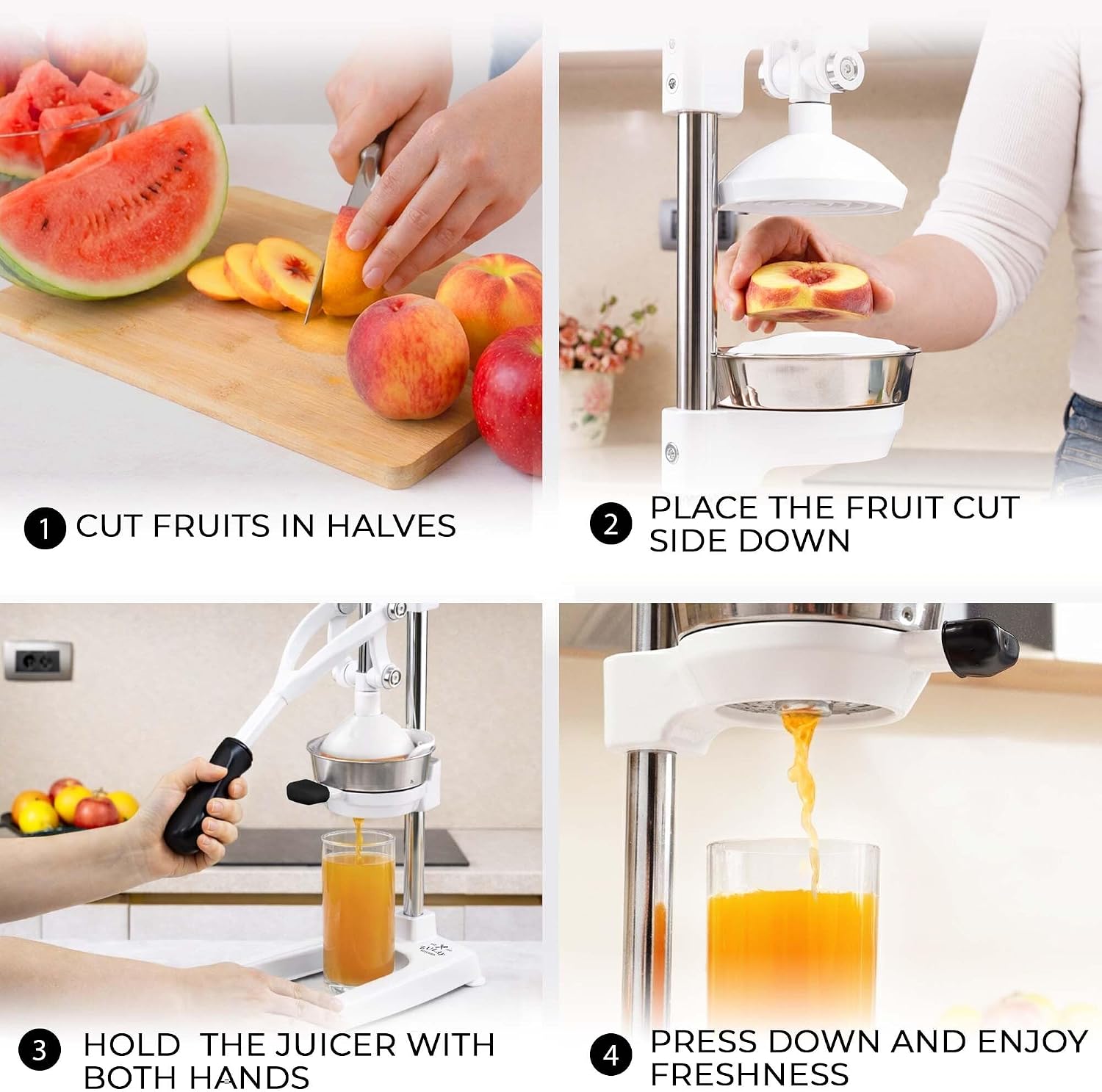
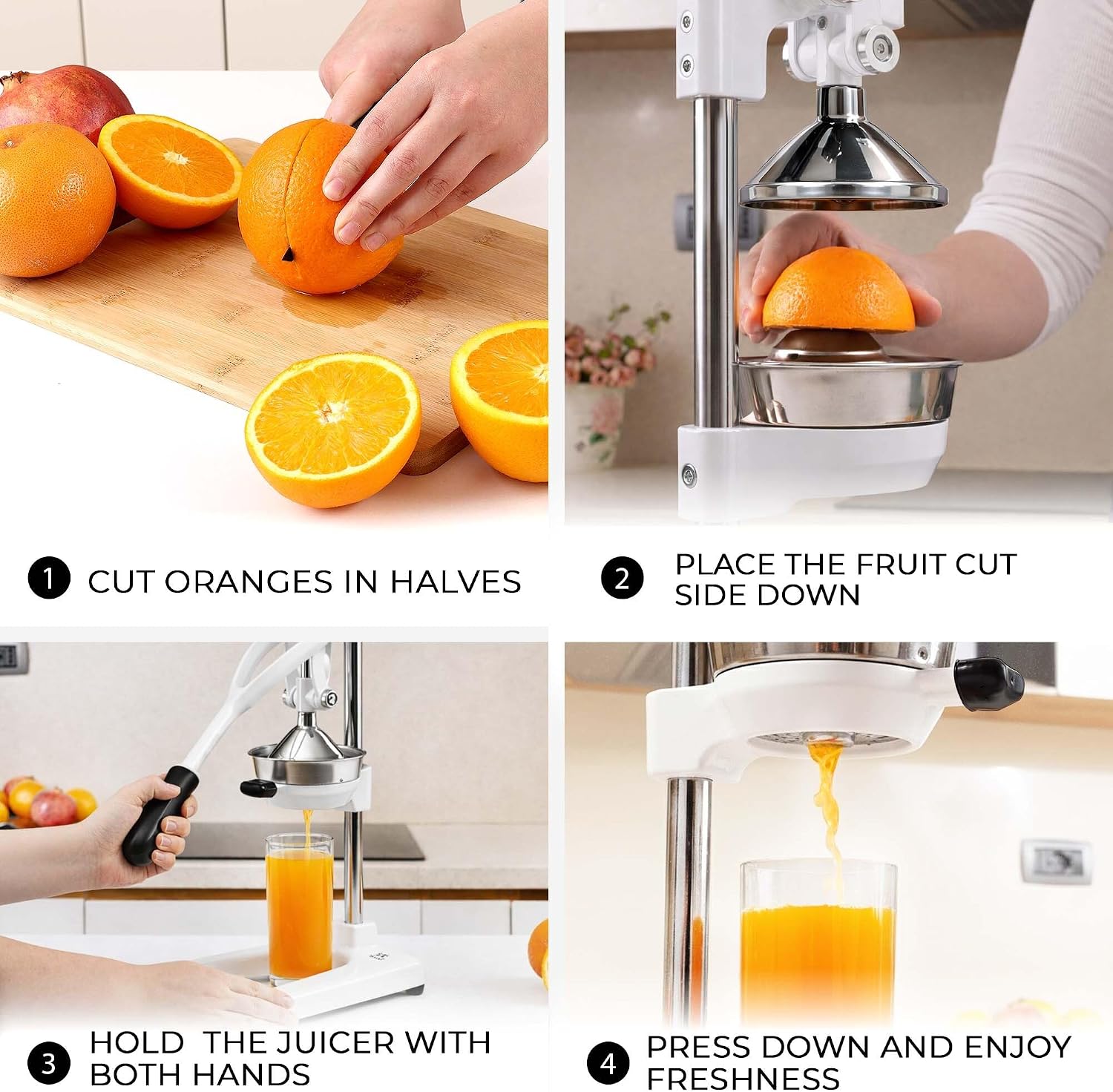
Not at all. Its lever-action design is quite intuitive; you simply place half a fruit in, pull the handle down, and the juice flows. The main “difficulty” is the physical effort required for large batches, but the leverage helps a lot.
Can I juice berries or grapes with this manual juicer?
You could, but it won’t be efficient. This type of press is best for larger, softer fruits like citrus. Berries and grapes would likely just get squished into a pulpy mess, with low juice yield compared to a screen-based juicer.
What kind of fruits are best for the Zulay Kitchen Pulperizer?
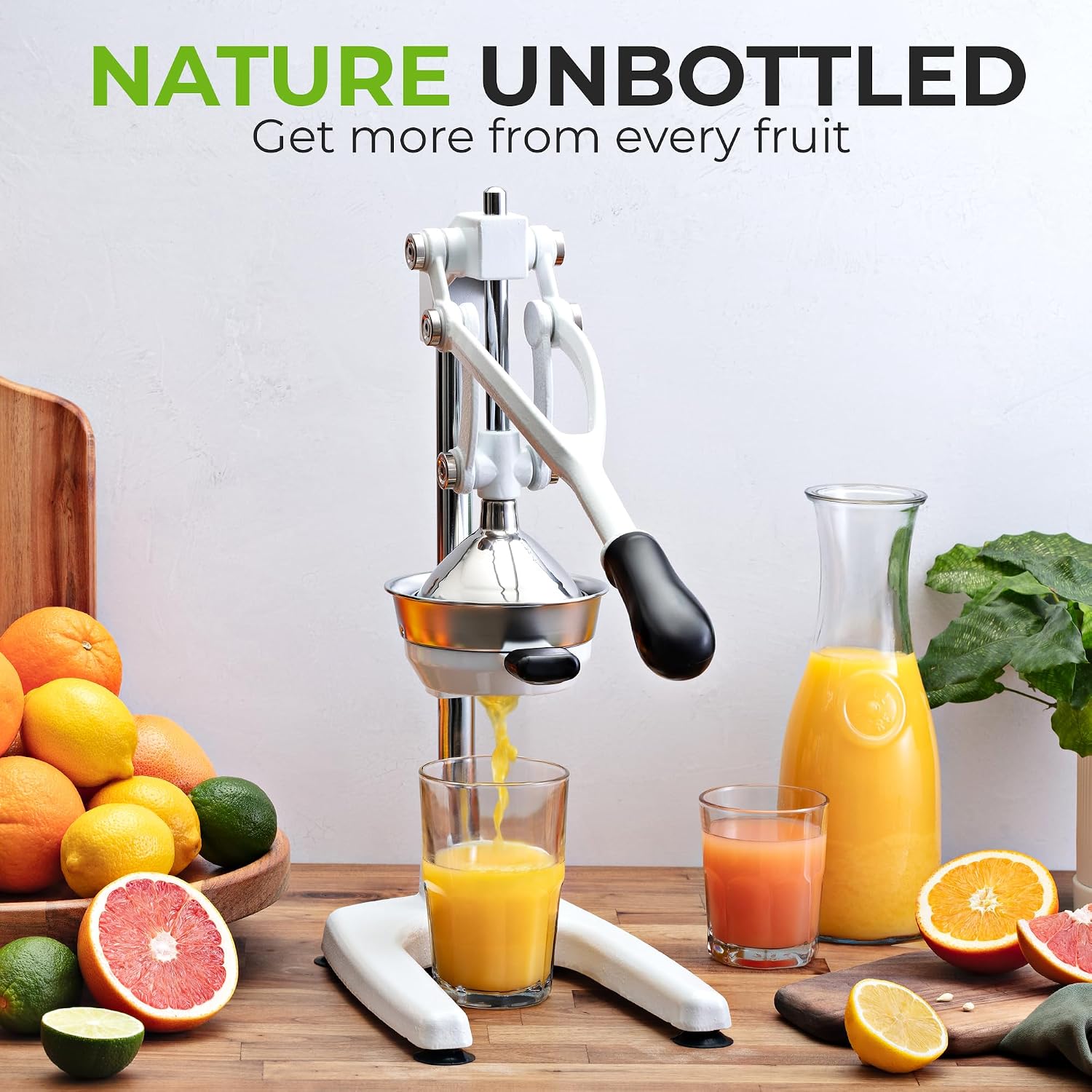
Hands down, all types of citrus: oranges, lemons, limes, and grapefruits. Its design is perfectly suited to extract maximum juice from these fruits, making it an excellent lemon press or orange juicer.
How do I clean a cast iron juicer to prevent rust?
Wipe it down immediately after use with a damp cloth, then thoroughly dry it. Some models might have specific coating recommendations, but the main thing is preventing prolonged moisture exposure. Don’t let it air dry.
Is the stainless steel bowl necessary?
The stainless steel bowl is a smart addition because it’s non-reactive and easy to clean, ensuring the juice doesn’t pick up metallic tastes. It’s far superior to an all-cast iron collection bowl which could impart flavor or rust.
Does a manual juicer retain more nutrients than an electric one?
For citrus, a good manual press likely retains nutrients as well as, if not better than, a fast centrifugal electric juicer because it doesn’t generate heat or excessive aeration. However, it’s not a true “cold press” in the same way a masticating juicer is.
Is the Zulay Pulperizer really “9 in 1”?
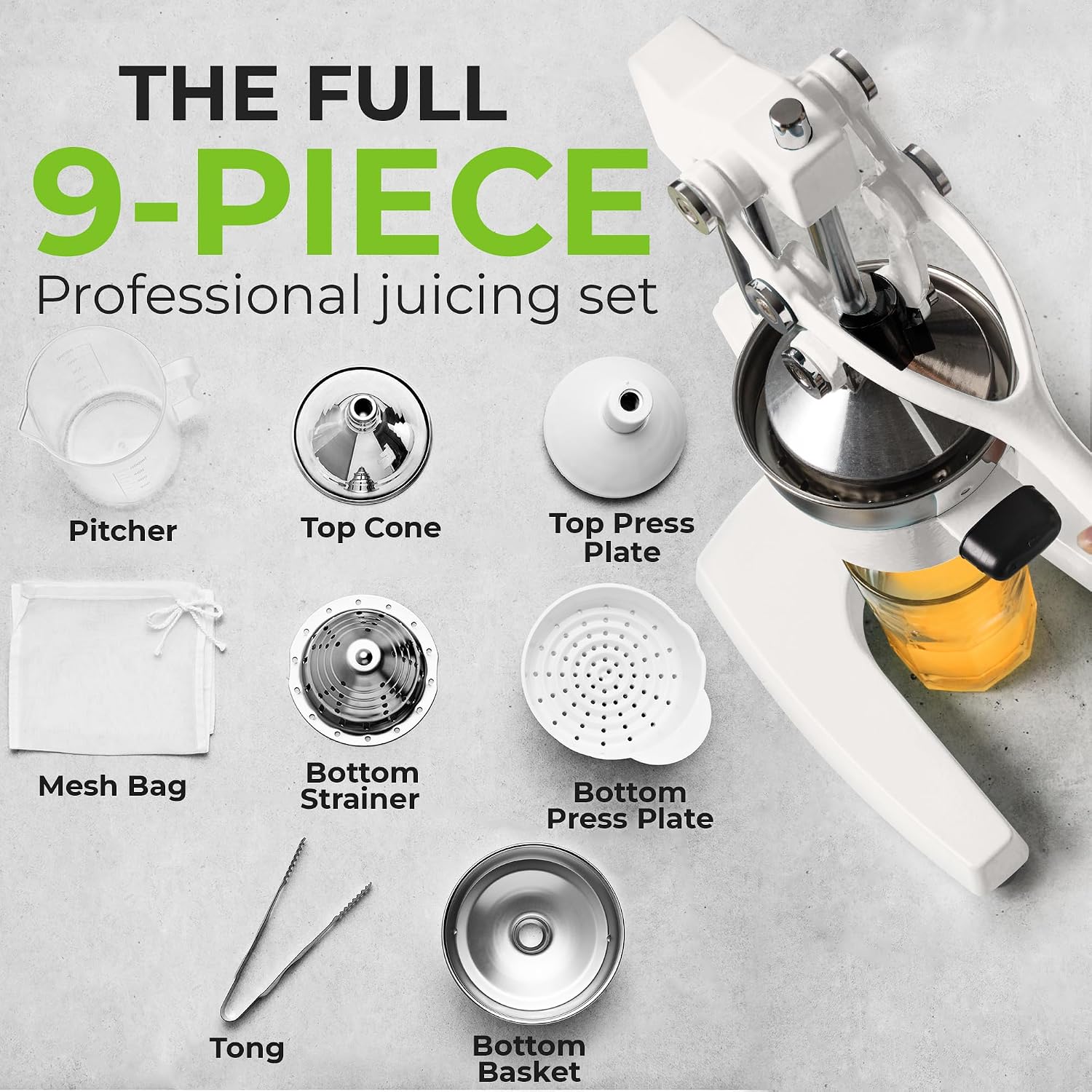
Look, “9 in 1” is often a bit of marketing flair. For a juicer like this, it typically means it can handle various citrus sizes, maybe some smaller soft fruits with effort, and perhaps implies its multiple detachable components. It’s still fundamentally a leveraged manual fruit press. Don’t expect it to brew coffee or toast bread.
Final Recommendation
For those whose juicing ambitions primarily revolve around citrus — from your morning glass of orange juicer fresh-squeezed to your evening cocktail’s fresh lime component — the Zulay Kitchen Pulperizer is an incredibly solid choice. It’s a heavy-duty, reliable manual juicer that prioritizes durability and an impressive juice yield for its intended purpose. Yes, it takes up some space, and yes, it requires a bit of elbow grease, but the reward is pure, vibrant juice without the noise or complexity of electric machines.
If you value sturdy, long-lasting kitchen tools and your main focus is on lemons, limes, and oranges, this cast iron juicer offers a straightforward, effective solution. It’s not for the green juice enthusiast or the person seeking a “juicer for everything,” but for what it does, it does it very well indeed. Think of it as a dedicated, old-school workhorse that won’t let you down.
#Zulay #Kitchen #Pulperizer #Cast #Iron #Juicer #EasytoClean #HeavyDuty #Manual #Juicer #Presser #Attachment #Juice #Types #Fruits #Extra #Tall #Stainless #Steel #Bowl #White