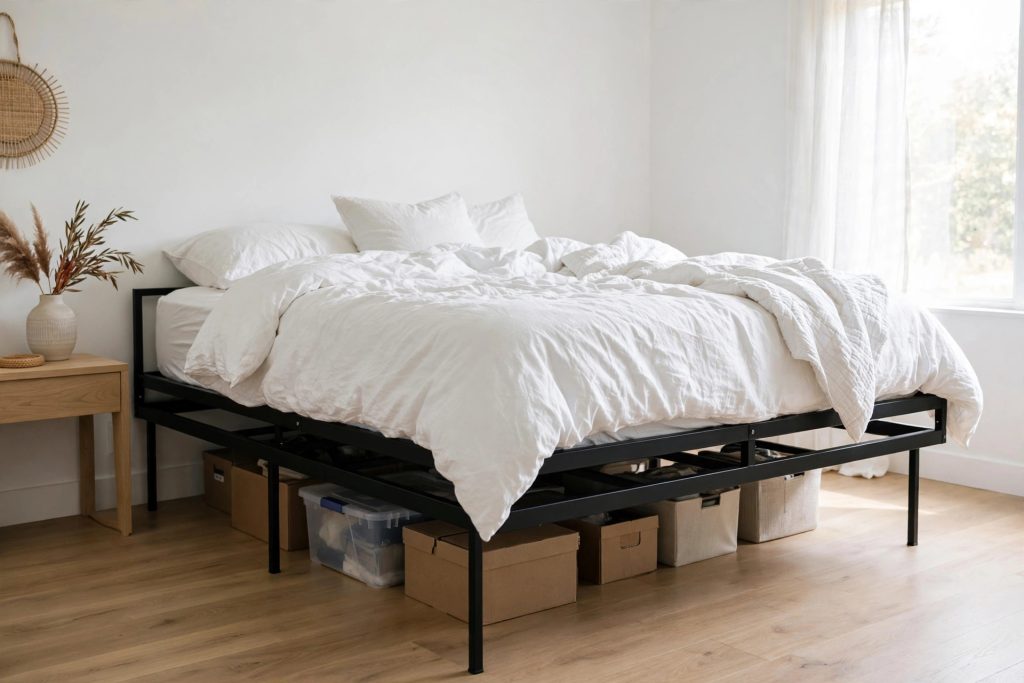
I bought the 18-inch frame because the listing photo showed all that glorious under-bed storage, and I did not do the addition. Eighteen inches of frame plus my twelve-inch mattress equals a thirty-inch sleep surface, which puts my feet a good four inches off the floor when I sit on the edge. I am five foot six. Every morning for the first week I slid off the bed like I was dismounting a horse.
The listing never lies about the 18 inches. It just never mentions your mattress.
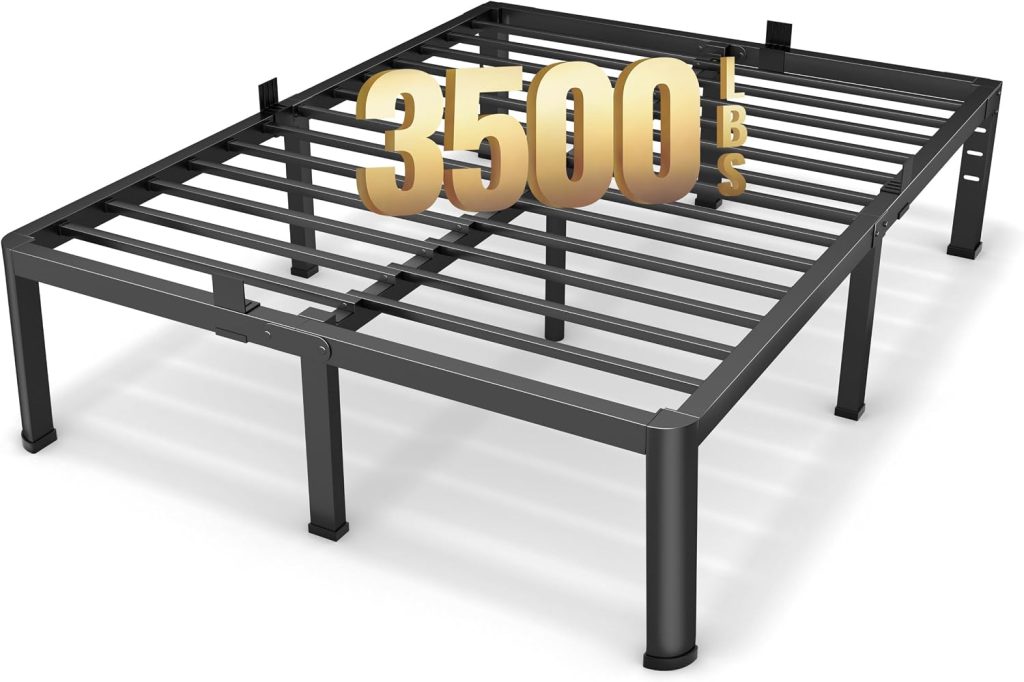
That is the actual trap with tall platform frames, and the Superay 18-inch queen metal platform bed frame is the one I see recommended most. The storage is real, 16.4 inches of usable clearance, and bins slide under without a fight. But nobody buying it for the storage does the sit-down math, and the sit-down math is the part you live with twice a day. I measured my old frame after the fact. Fourteen inches. My knees bent at ninety degrees. I had been comfortable for years and never knew why, until I wasn’t.
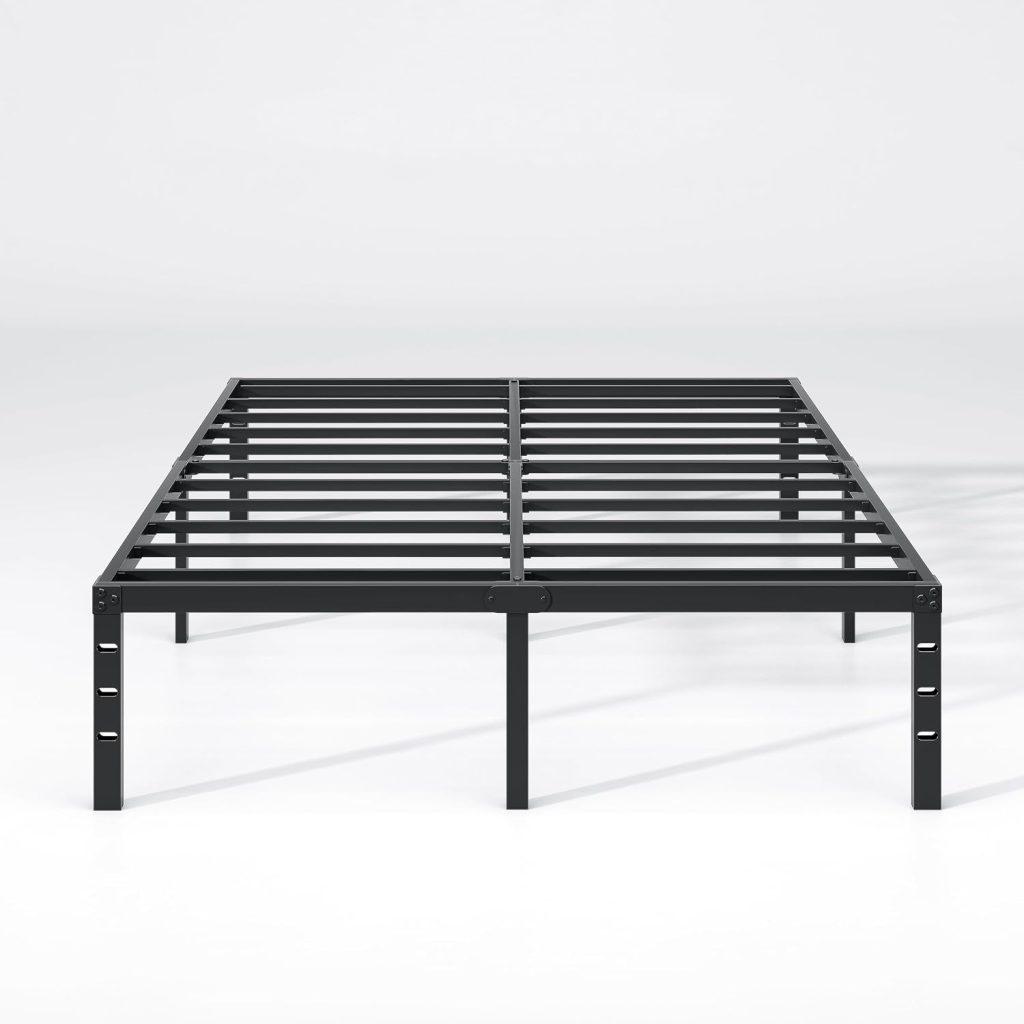
Here is what “no box spring needed” actually means, because the phrase does a lot of quiet work in these listings. It means the steel slats hold the mattress directly. What it does not tell you is the slat spacing, which is the number that decides whether your memory foam survives. Slats more than about three inches apart and a foam mattress starts hammocking between them within months. The foam doesn’t care that you skipped the box spring. It cares what it is resting on, inch by inch.
I learned this on a different frame years ago, the kind of lesson that costs you a mattress. The slats looked fine in the photo. In person they were four inches apart and about as supportive as they looked, which is to say not very. Six months in, my foam mattress had permanent valleys. The frame was still perfect. The frame is always still perfect. That is the cruelest part of buying a good frame with a bad combination.
The Superay’s slats are foldable steel, which beats the pine-slat frames that warp with humidity and develop the bow that lets foam sink between supports. That much I will give it. But I still measured the gaps with a ruler when mine arrived, because listing photos are shot at angles that flatter spacing. Two minutes with a tape measure. I do it now the way some people knock on wood.
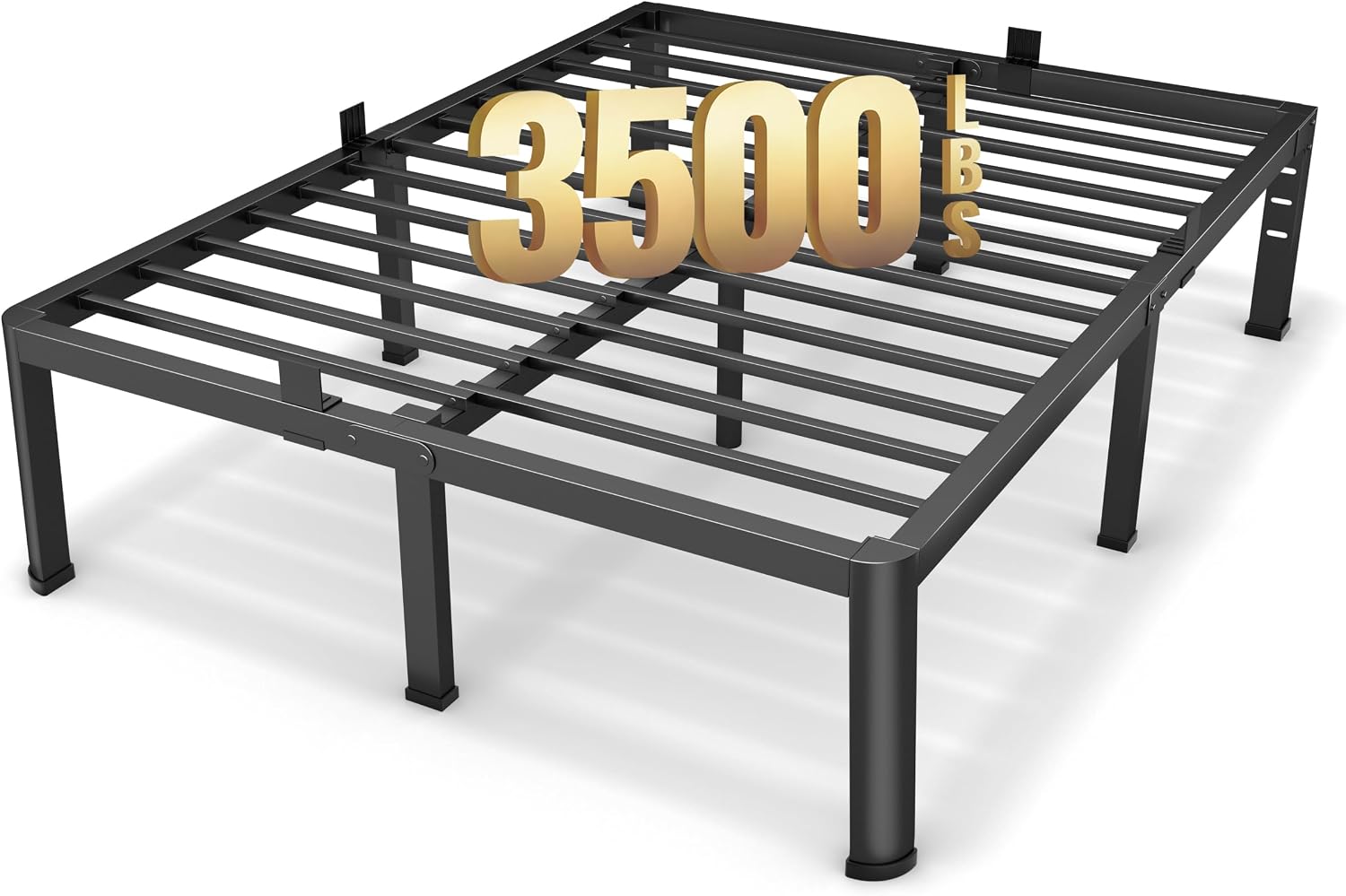
Foldable steel slats · 16.4″ storage cavity · headboard holes · silent sponges between slats
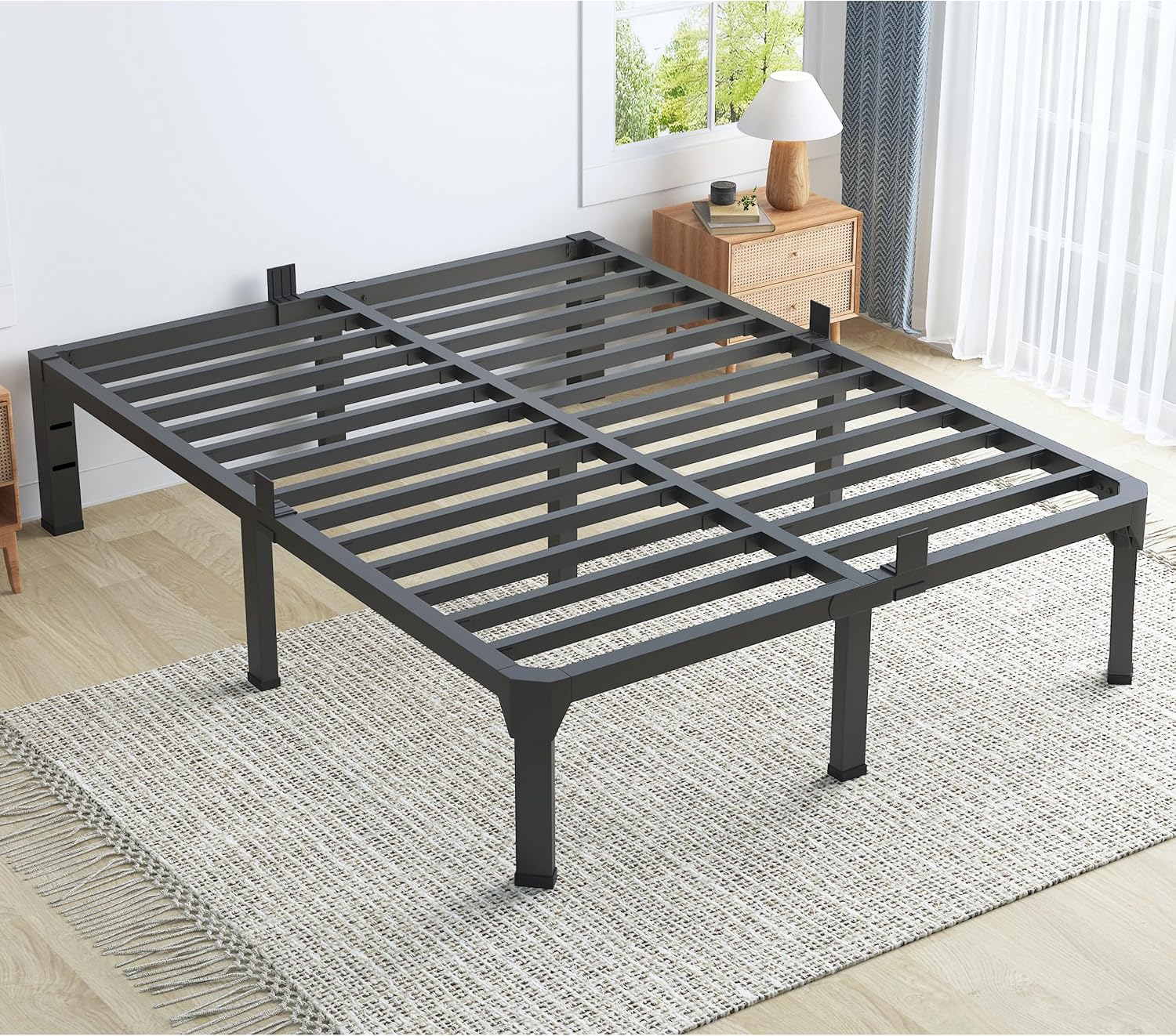
Mattress stoppers included · silicone leg caps · up to 2000 lb claimed support · 15-min assembly
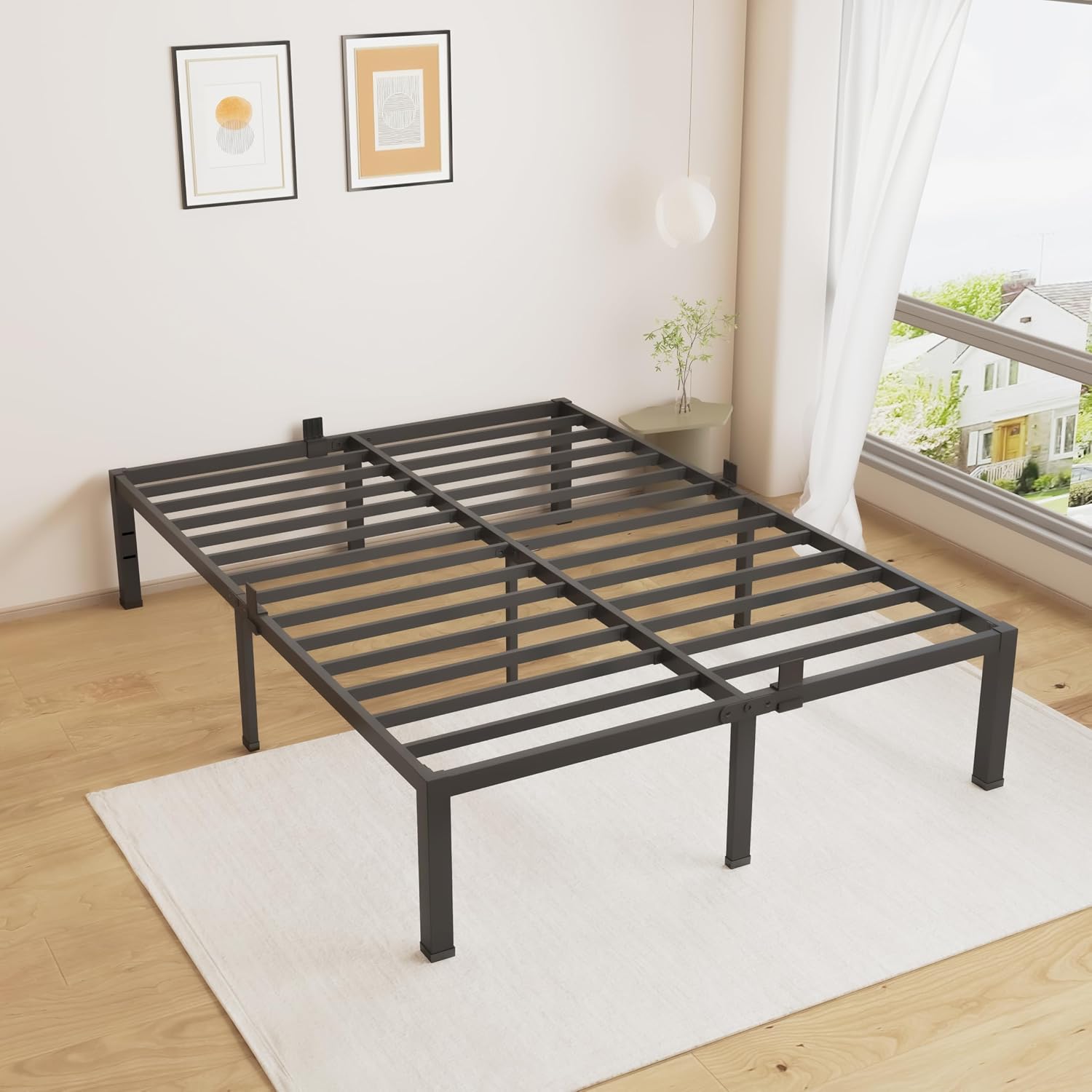
Pre-drilled headboard holes · mattress stopper · noise-free design · no box spring needed
The 2,000-pound capacity claim deserves its own paragraph, because it is doing even more quiet work than “no box spring needed.” That number is a static rating, weight distributed evenly in a lab, probably on a frame assembled by someone who does it for a living. Nobody sleeps like a distributed load. You flop down on one edge. You sit on the corner to put on socks. Two hundred pounds of dynamic human hitting the same joint every night for two years is a completely different test, and it is the test nobody publishes.
I am not saying the frame will collapse. It won’t. What happens instead is slower and more annoying. A joint loosens a millimeter. A slat develops a barely visible bow. The silicone foot cap on one leg goes missing and the frame starts drifting across the hardwood. By month eight you have a bed that is technically holding two thousand pounds and practically creaking every time you roll over.
Which brings me to “noise-free,” my least favorite word in this entire category. No bolted steel frame is permanently noise-free. The claim means noise-resistant if you maintain it, and nobody maintains it. The Superay does have the right hardware for the job, silicone caps on the legs and those little sponges between the slats, and those are real features, not vapor. They genuinely cut metal-on-metal contact. But bolts loosen. Every bolted joint needs a re-torque around week two and then twice a year, and I have never met a single owner who does this.
Not one.
I didn’t either, the first time. Month six, 2 AM, the classic creak. I got up with a socket wrench and fixed in five minutes what I had been tolerating for weeks. That is the real price of silence on a queen metal platform bed frame, five minutes twice a year, and the entire “noise-free” marketing category exists to avoid saying so.
I used to think taller was always better for storage. Actually, no. That is what I told myself when I ordered the 18-inch, and it is wrong in the specific way that matters most. The storage is great, genuinely, I fit bins under there I had been tripping over for a year. But I traded a comfortable sit-down height for bin space, and I use the sit-down height twice a day and the bins twice a season. The math was obvious in hindsight.
It always is.
The 16.4 inches of storage is the reason most people buy an 18-inch queen metal platform bed frame, so here is what actually fits under there. A standard 12-inch bin slides in with room to spare. Fourteen-inch bins fit but scrape. Anything with a lid handle, forget it. And everything under a bed collects dust at roughly twice the rate of everything else in the room, which means your storage solution needs its own cleaning schedule. I bought nice bins with labels. The labels are still accurate. The bins have a fine gray film on top that I pretend not to see when guests come over.
The round-corner legs are the detail I did not expect to care about. Every square-legged frame I have owned has taken a divot out of my shin at least once, usually at 2 AM on the way to the bathroom. Round corners don’t repeal the laws of physics, but they turn a hospital visit into a muttered curse. Small thing. I notice small things now.
The mattress stoppers, four little nubs that keep the mattress from migrating, are the kind of feature that sounds like nothing until you have spent a month shoving your mattress back into place every morning. My old frame didn’t have them. I developed a whole morning ritual, hip-check the mattress back while the coffee brewed. I don’t miss the ritual.
Assembly took me forty minutes, not the fifteen the listing suggests, and I want to be fair about why. The instructions were fine. The parts were all there. What the fifteen-minute number assumes is a second person and a power driver, and I had neither at 9 PM on a Tuesday. The Allen key they include works, technically. If you own a ratchet set, this is a twenty-minute job. I didn’t own one. By bolt six I was regretting every life choice that led to that moment, which had nothing to do with the frame and everything to do with my toolbox.
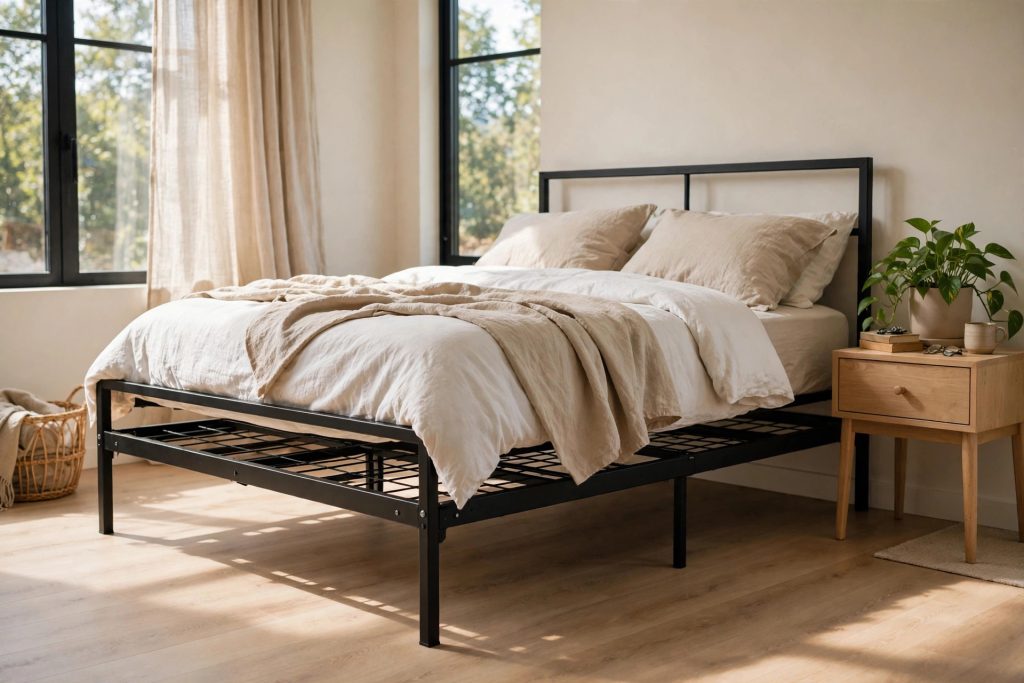
I haven’t tested the headboard-hole version long-term, so I can’t tell you whether those pre-drilled holes stay tight or wallow out over time. Mine is the round-corner one. The headboard question is outside what I have actually lived with, and I would rather say that than invent an opinion.
If you are comparing heights, the Superay 20-inch queen review covers the taller sibling, which I cannot imagine needing unless you are very tall or very committed to bins. The 14-inch heavy-duty steel queen is the lower, easier climb, and honestly closer to what most people should buy. For a different brand’s take on the same queen metal platform bed frame job, the DIIYIV queen platform review is worth a look.
Frequently Asked Questions
18 inches of frame plus a 12-inch mattress. Am I going to need a step stool?
Probably not a step stool, but your feet will dangle if you are under about five foot eight. The 18 inches is the frame alone, and the listing never adds your mattress to it, so I did the addition myself after the fact. Thirty inches with a twelve-inch mattress, and the first week felt like climbing into a bunk. You get used to it, mostly, though I still notice it on mornings when my knees are stiff. The storage underneath is genuinely useful, which is the trade you are making, but nobody tells you it is a trade until your calves are doing the telling.
2,000 lb capacity. So why did my slats start bowing in eight months?
The rating is static, measured with weight spread evenly in a lab. Real sleep is dynamic, the same two hundred pounds hitting the same edge joint every single night. That is a different test and nobody publishes it. Check the slat spacing with a ruler when it arrives, and re-torque every bolt at week two. The bowing I have seen was always the middle slats, always the ones taking the edge-sitting load. The frame didn’t fail. The rating just never described your life.
The listing says noise-free. Mine creaks at 2 AM. What actually fixes it?
A socket wrench, in about five minutes. The creak is almost always a bolt that has loosened a quarter turn, not a defect. The silicone caps and slat sponges do their job, but they can’t compensate for a joint that has worked itself loose. I re-torque mine twice a year now. The creak hasn’t come back. I still don’t trust it.
No box spring needed, but my memory foam is sagging between the slats. What gives?
The slats are too far apart for foam, that is the whole story. “No box spring needed” is true for the frame and irrelevant to your mattress, because foam needs support every couple of inches and some frames space their slats wider than that. I measured mine with a ruler the day it arrived. Over three inches of gap, and a twenty-dollar bunkie board between the slats and the mattress fixes it. I wish someone had told me that before I blamed the mattress.
The frame is still in my bedroom. The creak comes back every few months, I tighten the bolts, it goes quiet. Last week I caught myself standing in a store aisle comparing sit-down heights on the 14-inch version, just standing there doing the calculation. I haven’t ordered it. I probably won’t. But I keep thinking about it, which tells you everything about how the 18-inch and I actually get along.
This site contains affiliate links. We may earn a commission on qualifying purchases.