Unlocking Your Kitchen’s Potential: A Straightforward Guide to Picking Your First Bakeware Set
So, you’re thinking about diving into the world of home baking, or maybe your current kitchen setup just isn’t cutting it anymore. You’re searching for “bakeware set” and seeing a dizzying array of options. This guide is for the savvy shopper who wants to understand what really matters when choosing a bakeware set, especially one that promises a lot, like a comprehensive 12-piece nonstick oven pan collection with wider grips and muffin liners. We’ll cut through the fluff and focus on practical advice for getting started without wasting your hard-earned cash.
Quick Answer Box
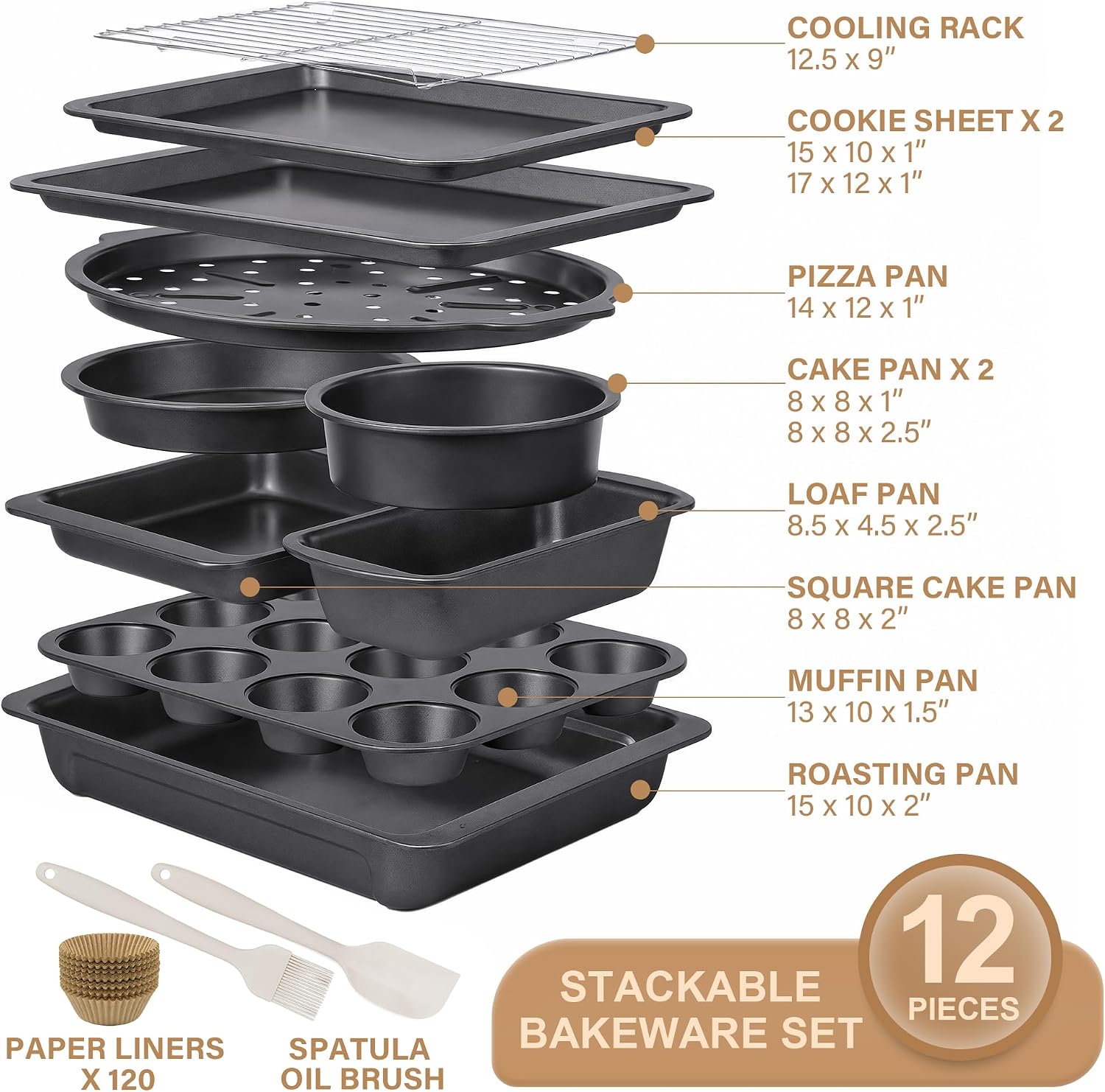
Choosing the right bakeware set, particularly a versatile one like a 12-piece nonstick collection, hinges on balancing durability, pan variety, and ease of use. For most beginner and intermediate bakers, a carbon steel set with a reliable nonstick coating, featuring key items like a cookie sheet, muffin, loaf, and cake pans, plus handy wider grips and maybe some silicone liners, offers excellent value and versatility right out of the gate.
What to Look For (The Buying Criteria)
Navigating the bakeware aisle, virtual or physical, can be a real headache. There are so many marketing buzzwords, and frankly, a lot of unnecessary features. When you’re eyeing a comprehensive bakeware set, especially one designed to be a complete solution like that 12-piece nonstick baking pans set often seen, focus on these core elements. They truly make a difference in your baking success and your sanity.
1. Material Matters: It’s Not Just About Nonstick
Sure, nonstick is the star of the show for many, but the underlying material is the backbone of your bakeware. Most nonstick bakeware sets, including the popular multi-piece nonstick oven pan options, are made from carbon steel or aluminum. Carbon steel is often favored because it heats up quickly and distributes that heat quite evenly, which is crucial for things like perfectly baked cookies or a consistently risen loaf of bread. It’s also surprisingly durable, able to handle higher oven temperatures without warping as easily as thinner aluminum can. But here’s the rub: carbon steel can be a bit heavier, and if not cared for properly, it can rust, especially if left wet. Thin aluminum pans, on the other hand, are lighter and cheaper, but they can sometimes buckle or warp under high heat, leading to uneven baking. Consider how much heavy-duty use you expect. Will you be baking delicate cakes or heavy casseroles?
2. The Nonstick Coating: Quality Over Claims
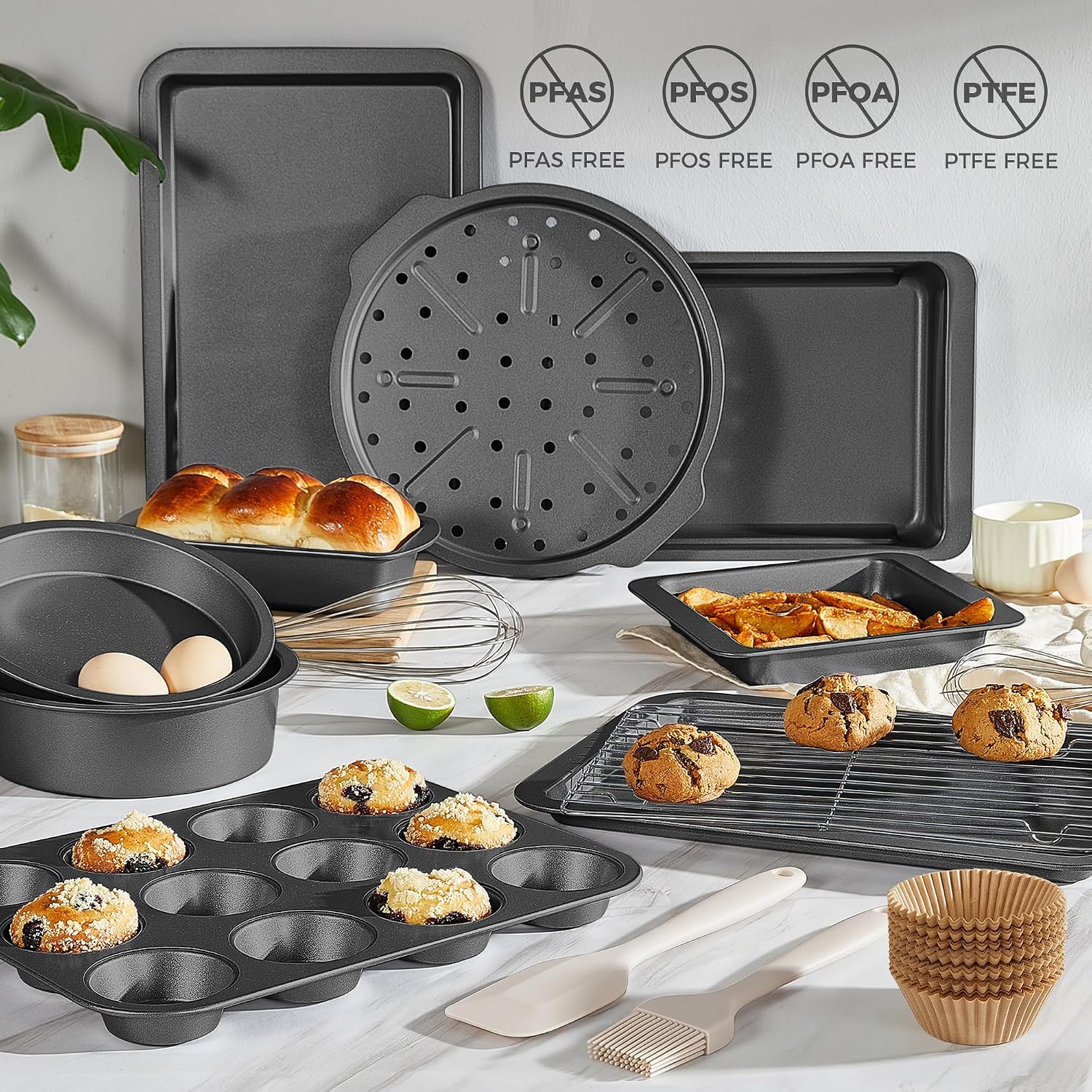
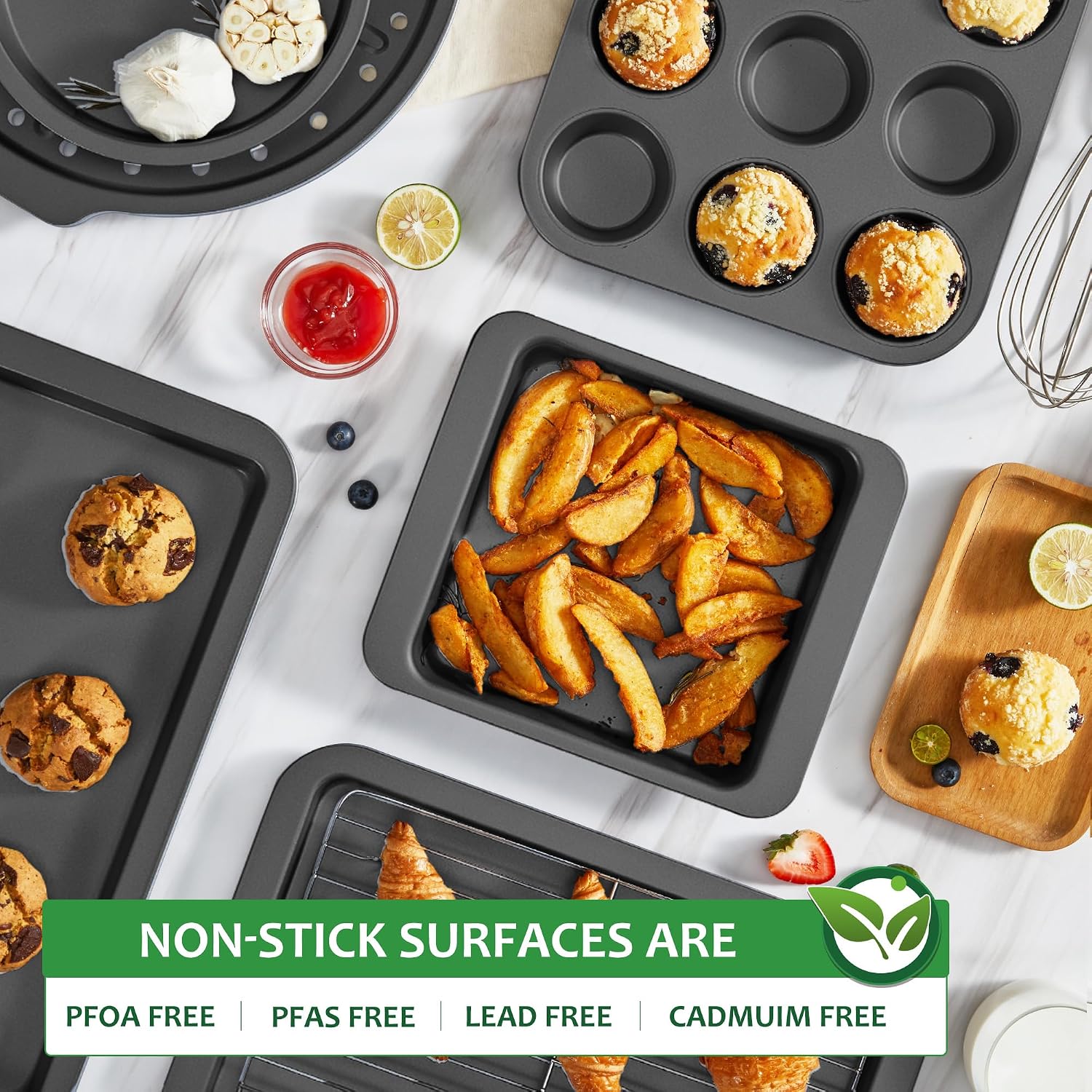
“Nonstick” gets thrown around a lot. What does it actually mean for your baking pans? A good nonstick coating means your food slides off easily, cleanup is a breeze, and you don’t have to grease the pan nearly as much. But there’s a massive spectrum of quality here. Cheaper coatings can scratch or flake off far too easily, sometimes after only a few uses, which is just frustrating. Look for coatings that are described as multi-layer or reinforced. These tend to hold up better against the scrapes of spatulas and the wear of repeated washing. Still, even the best nonstick isn’t invincible; metal utensils are generally a no-go. And don’t forget about PFOA-free claims – it’s pretty standard these days, but always worth a quick check for peace of mind. The trade-off? Nonstick coatings inherently have a lifespan, unlike bare stainless steel or cast iron. So, you’ll likely replace these pans sooner than other types.
3. Set Composition and Pan Variety: Do You Need It All?
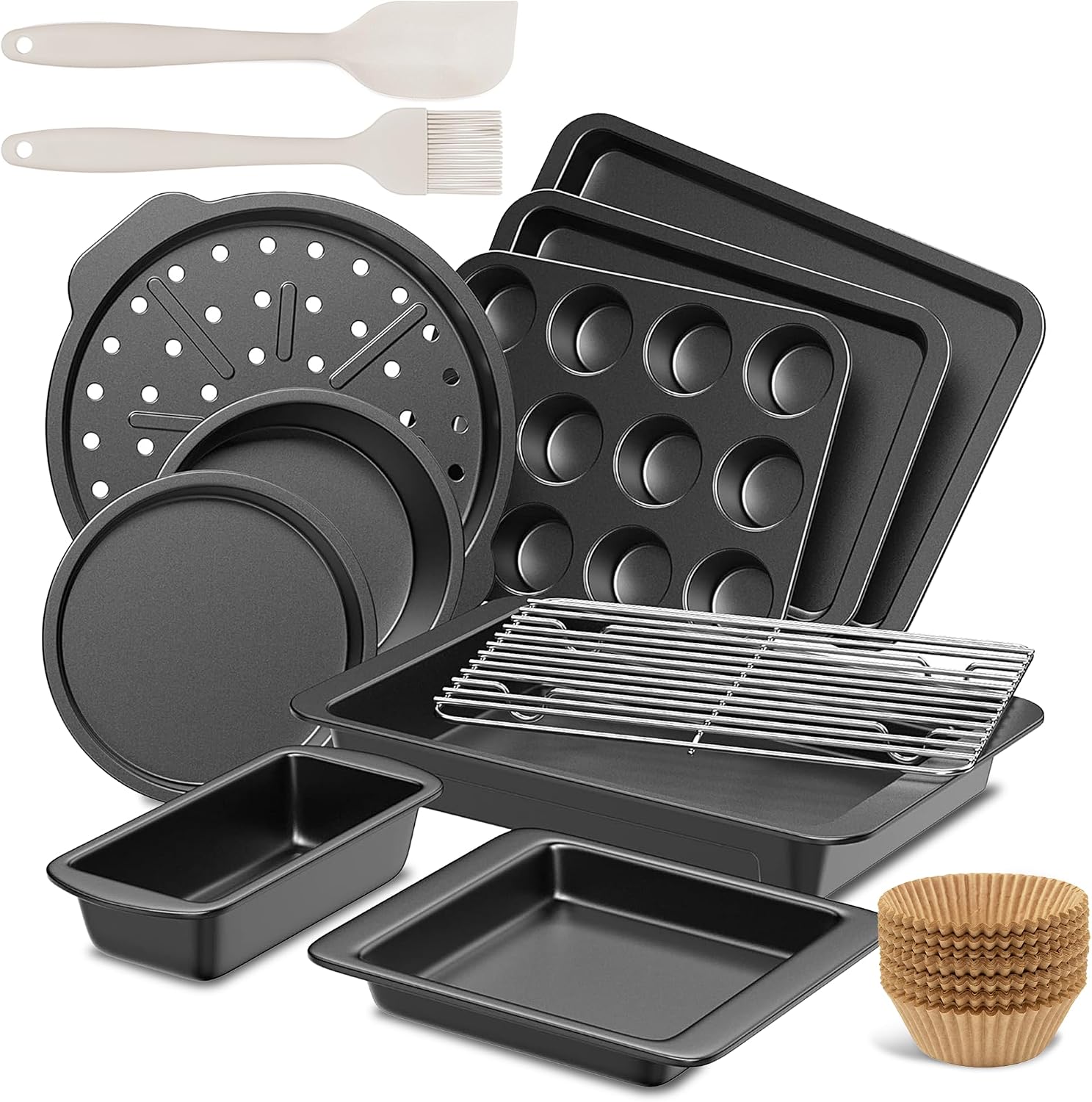
A 12-piece bakeware set sounds incredibly comprehensive, right? It might include a cookie sheet, muffin pan, loaf pan, cake pan, and even a pizza pan, plus extras like cooling racks or silicone liners. This is great for beginners who are outfitting a kitchen from scratch. You get all your bases covered. But take a beat. Do you really make pizza from scratch often enough to justify a dedicated pizza pan in your first set? Or do you primarily bake cookies and muffins? An overstuffed set means more items to store, and possibly more pieces you rarely touch. On the flip side, a starter set like this often bundles essentials, making it more cost-effective than buying each item separately. It’s a classic decision: convenience and value for a full suite, versus potential clutter and unused items.
4. Wider Grips and Handling: Your Hands Will Thank You
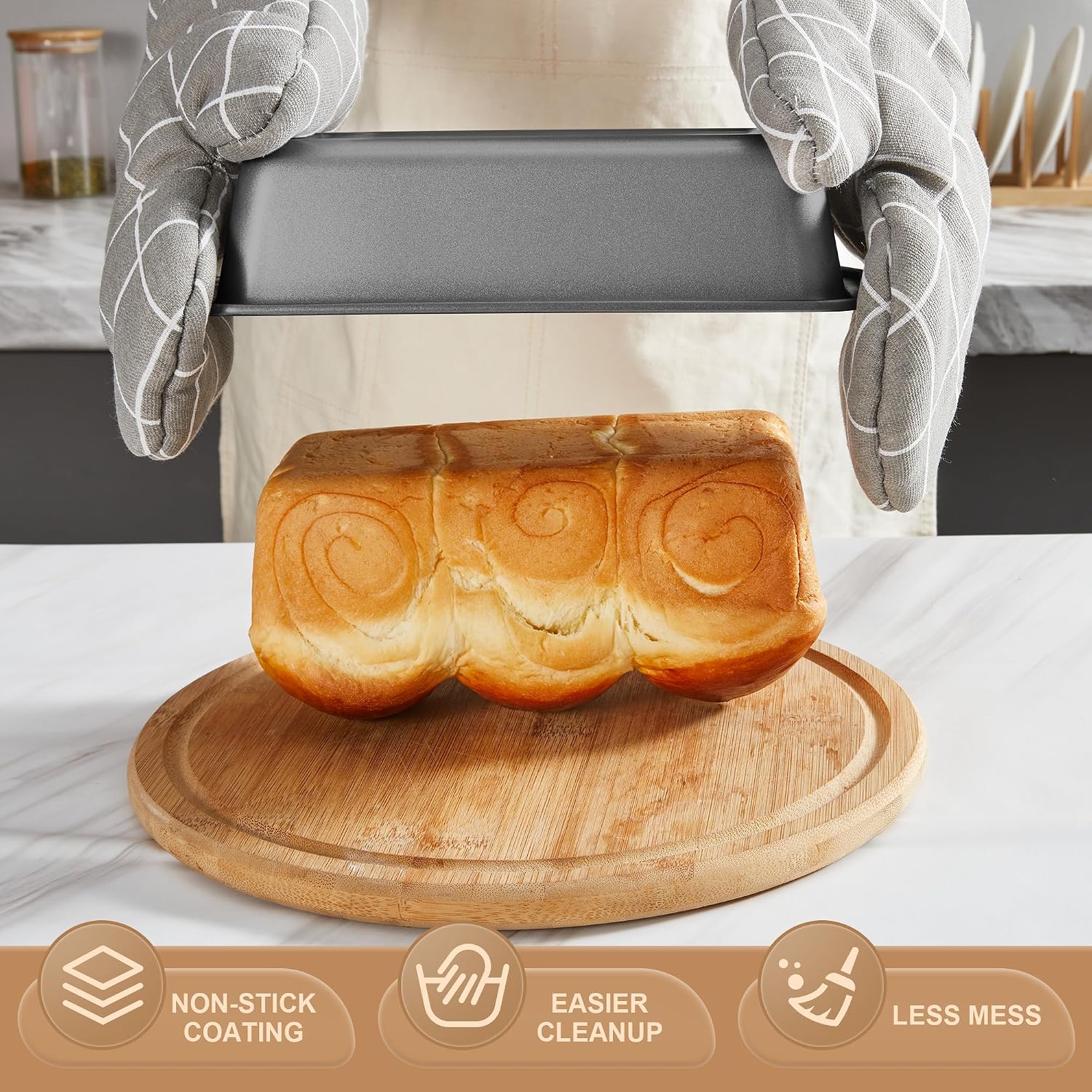
This is one of those features that sounds minor but makes a huge difference in practice. A bakeware set with wider grips or rolled edges makes pulling hot pans out of a scorching oven much safer and easier. Think about it: fumbling with small, narrow edges while wearing bulky oven mitts is a recipe for disaster. Wider grips give you a more secure hold, reducing the risk of drops, spills, or burns. It’s a small detail, but a thoughtful design choice like this points to a company that understands actual kitchen use. Without them, you’re constantly fighting to get a good grip, and that’s just annoying.
5. Ease of Cleaning: The Unsung Hero
Nobody loves scrubbing. A good nonstick surface vastly simplifies cleanup. Often, a quick wipe with a damp cloth or a gentle scrub with soap and water is all it takes. However, some nonstick surfaces are more durable in the dishwasher than others. If a pan isn’t specifically labeled as dishwasher safe, or if it has a delicate nonstick coating, handwashing is almost always the safer bet to extend its lifespan. Pans with lots of nooks and crannies (like complex muffin molds) are always harder to clean, regardless of coating. Those 120 muffin liners that come with some sets? They’re a cleaning game-changer for your muffin pan, making individual cleanup practically nonexistent. The downside? They’re an extra item to store and wash themselves, if reusable.
6. Storage Solutions: Because Kitchens Aren’t Infinite
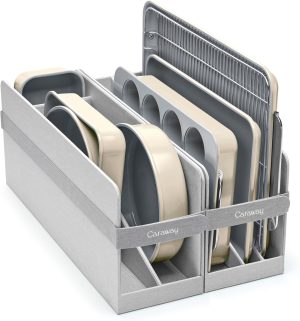
A 12-piece bakeware set, especially with a cooling rack and several different pan shapes, can take up serious real estate. Are the pans designed to stack neatly? Do the cooling racks fit inside the cookie sheets? Are the individual items (like the silicone liners) flexible enough to tuck away easily? If your kitchen cabinets are already overflowing, this becomes a critical consideration. A set that nests well is a lifesaver; one that doesn’t just turns into a frustrating Jenga tower.
How to Match the Product to Your Situation
Finding the right bakeware set, particularly a comprehensive baking pans set, really comes down to how you bake and live. We’re talking about more than just the basics here; it’s about what fits your rhythm.
The Occasional Baker (The “Only for Special Occasions” Crew)
You might bake a batch of cookies for a holiday party, a birthday cake once a year, or perhaps a quick loaf of banana bread when inspiration strikes. You don’t need industrial-grade anything. A basic, budget-friendly 12-piece nonstick bakeware set, featuring the essentials like a cookie sheet, a standard muffin pan, and a loaf pan, would be perfect. The key here is convenience and affordability. Durability is less of a concern since you won’t be putting them through the wringer daily. Just make sure the nonstick coating is decent enough for easy release when you do use it.
The Aspiring Enthusiast (The “Weekend Project” Person)
You’re moving beyond boxed mixes, trying new recipes, and maybe even experimenting with different types of dough. Baking is a hobby, and you want tools that support your growing skills. For you, a mid-range nonstick bakeware set with a good variety of items – like a quality 12-piece oven pan collection that includes a sturdy cookie sheet, versatile cake pan sizes, a deep muffin pan (maybe even with those handy silicone liners), and a solid pizza pan – makes sense. Look for carbon steel construction for better heat distribution and a more robust nonstick coating that will stand up to more frequent use. Wider grips? Absolutely essential for easier handling as you juggle more complex bakes.
The Busy Family Cook (The “Feeding a Crowd” MVP)
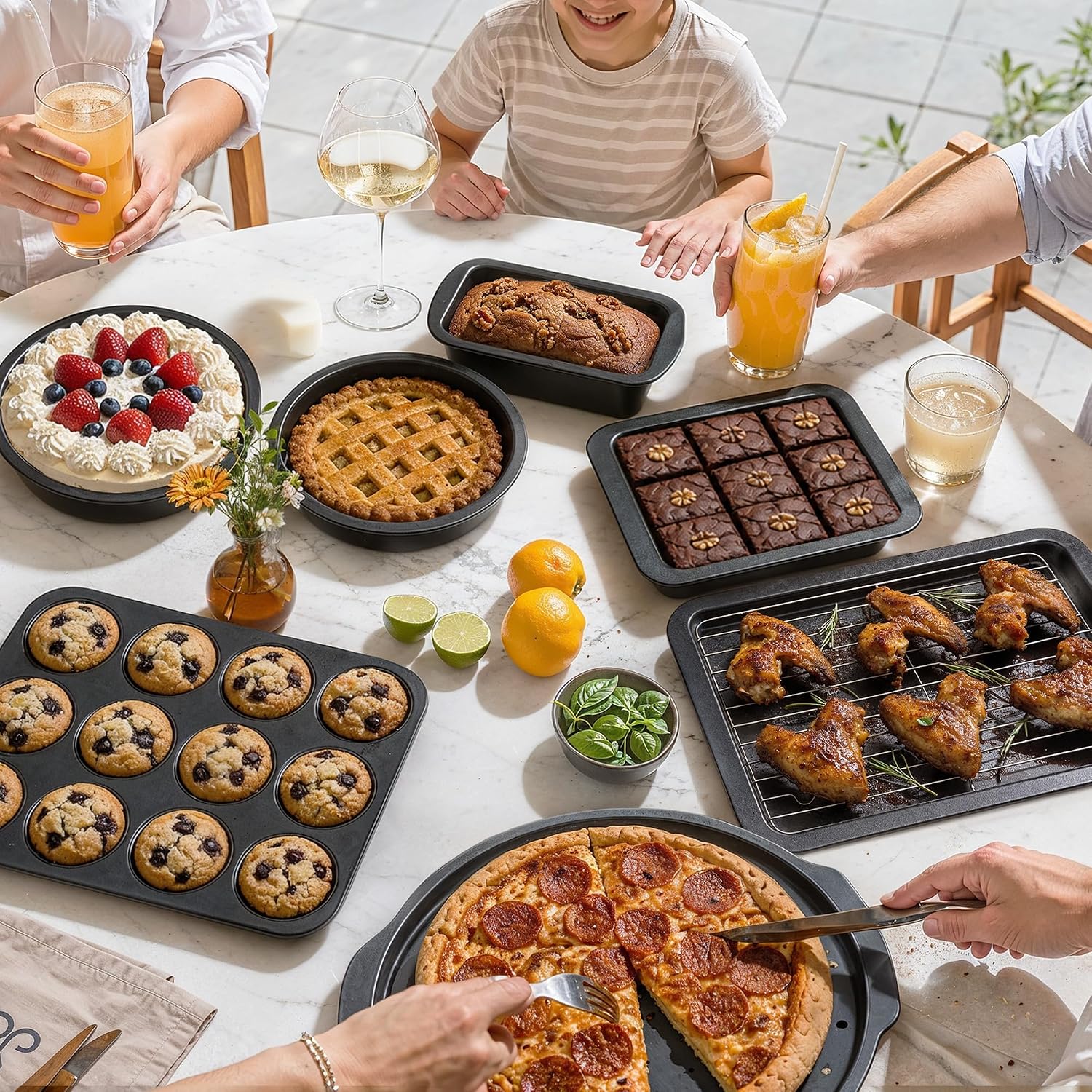
Your kitchen is a hub of activity. You’re baking birthday cakes, making quick weeknight sheet pan dinners, and whipping up muffins for breakfast multiple times a week. Your bakeware needs to be a workhorse. You’d benefit from a more durable, mid-to-premium tier bakeware set. Prioritize thicker gauge carbon steel that resists warping, and a nonstick coating known for its longevity. A comprehensive 12-piece set with generous sizes (think larger cookie sheets, bigger cake pans) and items like a cooling rack will be invaluable. Easy cleanup is paramount, so a really good nonstick surface, perhaps even dishwasher-safe if you’re lucky, will save you precious time. Wider grips aren’t just a nicety; they’re a necessity when you’re pulling heavy pans of food from the oven for a hungry family.
Bakeware Set Comparison: Tiers and Trade-offs
Choosing a bakeware set isn’t always about finding the absolute “best.” It’s about finding the right fit for your budget, your baking habits, and your expectations. Let’s break down some common types and tiers you’ll encounter, especially when looking at a comprehensive baking pans set.
| Type/Tier | Best For | Price Tier | Key Feature | Watch-Out |
|---|---|---|---|---|
| Basic Nonstick | Casual bakers, first-time homeowners | Budget | Affordable entry, covers essential pan types | Thinner material, nonstick coating may degrade faster |
| Durable Nonstick | Aspiring home bakers, frequent cooks | Mid-range | Sturdier build, longer-lasting nonstick | Still needs careful handling, some handwashing required |
| Heavy-Duty Specialty | Serious bakers, specific niche baking | Premium | Superior heat distribution, often specialized | High cost, may not be nonstick, heavy, storage demands |
| Silicone-Hybrid Options | Health-conscious, easy release, flexible | Mid-range | Ultimate nonstick, flexible, often colorful | Can be flimsy, less rigid for certain bakes, storage issues |
- Basic Nonstick: These sets, often marketed as a full 12-piece nonstick oven pan collection, offer an accessible entry point. They usually provide a variety of pan types, from a cookie sheet to a muffin pan, giving you a solid foundation without a huge upfront investment. However, expect thinner gauge materials and nonstick coatings that might not last through years of rigorous use.
- Durable Nonstick: Stepping up, these bakeware sets typically feature thicker carbon steel or aluminized steel, offering better heat retention and warp resistance. The nonstick coating here tends to be more robust, potentially multi-layered, providing better longevity, but you’ll still need to use silicone or wood utensils. You might even find some with those coveted wider grips.
- Heavy-Duty Specialty: These aren’t always sold as multi-piece sets, but individual pieces might pop up in a premium baking pans set. Think commercial-grade aluminum or heavy-gauge stainless steel. They’re built like tanks, offer incredibly consistent baking, and will likely last a lifetime. The catch? They rarely feature nonstick coatings and demand proper seasoning or parchment paper, plus they carry a significantly higher price tag and serious weight.
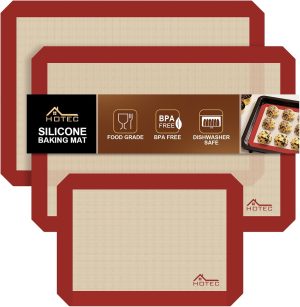
- Silicone-Hybrid Options: Sometimes, you’ll see a bakeware set that incorporates silicone, either as full pans or, more commonly, as the included silicone liners often found in 12-piece sets. Silicone offers incredible flexibility and practically perfect nonstick properties. It’s fantastic for muffins or small cakes. The drawback is its inherent floppiness, which means you often need a rigid pan underneath for support, and it can brown food differently than metal.
Scenario-Specific Mini-Sections
Let’s get specific. How your life flows impacts which bakeware set truly fits.
Baking Frequency: The Weekend Warrior vs. Daily Dynamo
Are you the type who bakes only when the mood strikes, usually on a lazy Sunday afternoon? Or is your oven constantly churning out treats and meals?
The Weekend Warrior, someone who pulls out their bakeware set perhaps once a week, or even less, can probably get away with a solid mid-tier nonstick oven pan collection. You want reliable nonstick and a good assortment of pieces (a cookie sheet, a loaf pan, maybe a cake pan), but you don’t need the absolute top-of-the-line durability. Something that cleans up easily and stores without a fuss is key. You’ll appreciate the convenience of a baking pans set that includes things like silicone liners to minimize effort on those infrequent baking sessions.
But if you’re a Daily Dynamo, someone who bakes or cooks with their oven several times a week, durability moves to the top of the list. You’ll quickly wear out cheaper nonstick coatings. Look for a bakeware set with heavy-gauge carbon steel and a genuinely tough, multi-layer nonstick surface. Investing a bit more here saves you from constantly replacing pans. And those wider grips? They’re a godsend when you’re repeatedly hauling hot, heavy items out of the oven. This kind of usage really demands a workhorse oven pan collection.
Kitchen Space: Apartment Dweller vs. Sprawling Kitchen
Got a tiny galley kitchen in a city apartment, or a sprawling suburban kitchen with cabinets for days? This matters for your bakeware set.
Apartment dwellers, I feel your pain. Every inch counts. When looking at a multi-piece bakeware set like a 12-piece collection, you must prioritize nesting capabilities. Do the cookie sheets slide into each other? Can the muffin pan stack on top of the cake pan? Are the silicone liners foldable? You’ll likely prefer a set that offers maximum utility in minimum space. A set with fewer, more versatile pieces might even be better than a huge one, even if it means sacrificing a dedicated pizza pan for instance.
If you’re blessed with a sprawling kitchen, storage might not be as much of an issue, but organization still is. You can afford a larger, more varied baking pans set, perhaps one that includes specialized items you might not normally squeeze in. You might even have dedicated drawers for your oven pans and cookie sheets. Even then, well-designed, stackable bakeware makes life easier. Nobody wants a tumbling pile of metal every time they open a cabinet.
Recipe Variety: Sweet Treats Only vs. Savory & Sweet
Are you all about cookies, cakes, and muffins, or do you dabble in savory roasts, sheet pan dinners, and homemade pizzas too?
If your oven is mostly for sweet treats – think cookies, cupcakes (those muffin liners will be your best friend!), and layered cakes – then a bakeware set focused on specific baking pan types is crucial. You’ll want good quality cookie sheets that don’t warp, a reliable muffin pan, and a sturdy cake pan. Nonstick performance is paramount for easy release of delicate baked goods.
However, if you’re a cook who uses the oven for everything from roasting vegetables to baking lasagna, in addition to your sweet endeavors, then the versatility of a comprehensive 12-piece nonstick oven pan collection really shines. A pizza pan might see regular action, and a deeper oven pan could double for casseroles. The overall durability of the set becomes more important here, as savory dishes often involve higher temperatures, fats, and acids that can be tougher on nonstick coatings. A high-quality carbon steel core is a real advantage for this kind of diverse use.
Common Mistakes When Buying Your First Bakeware Set
It’s easy to get sidetracked by flashy marketing or incredibly low prices. But making an informed choice about your bakeware set, especially a large 12-piece collection, can save you grief and wasted money down the line.
1. Ignoring the Material Under the Nonstick: People often fixate solely on the “nonstick” part and forget about the pan’s actual construction. Thinner, cheaper materials (like very light-gauge aluminum) will warp and dent easily, leading to uneven baking and frustrating experiences. A cookie sheet that warps mid-bake? Not fun. Always consider the carbon steel core or similar robust material when looking at a baking pans set. It’s the foundation.
2. Overlooking Nonstick Coating Care: Assuming all nonstick is created equal, or that it’s indestructible, is a fast track to ruin. Metal utensils, abrasive scrubbers, and high heat can all damage even the best nonstick coating. Many folks toss their nonstick bakeware in the dishwasher without checking if it’s truly safe for it, which can drastically shorten its life. Always read the care instructions. Those silicone liners that often come with sets can help protect your muffin pan from wear and tear, but they also need proper cleaning.
3. Buying an Imbalanced Set (or one with too many unused pieces): That 12-piece nonstick oven pan collection sounds awesome, right? But if it includes three different size loaf pans and you only ever bake one kind of bread, you’ve got wasted space. Or if it has a pizza pan and you only buy frozen pizzas. I’ve seen folks shell out serious cash for a fancy bakeware set, only to realize half the pieces just collect dust. Assess your actual needs. Will you use that specific cake pan size or that small round oven pan?
4. Skipping Wider Grips for “Sleek” Designs: Aesthetics are nice, but practicality rules in the kitchen. Those super-sleek pans with no discernible lip or handle are a pain to get out of a hot oven, especially with clumsy oven mitts. Wider grips aren’t just a design choice; they’re a safety and convenience feature. Don’t underestimate their value, especially when you’re pulling a full, hot cookie sheet from the back of the oven. It’s a small detail, but it speaks volumes about the pan’s user-friendliness.
Why/How/What Mini-Section
Why invest in a comprehensive bakeware set?
Investing in a well-chosen bakeware set, especially one that includes a range of items like a 12-piece nonstick collection, sets you up for success in the kitchen. It ensures you have the right tools for various baking tasks, from a cookie sheet for everyday treats to a loaf pan for homemade bread, without having to buy each item separately. This approach often saves money and guarantees a cohesive look and feel among your baking pans. Plus, having the right equipment makes baking more enjoyable and less prone to frustrating mishaps.
How do nonstick coatings work and how do I care for them?
Nonstick coatings, typically made from materials like PTFE, create a low-friction surface that prevents food from adhering to the pan. They achieve this by having a molecular structure that repels food particles. To care for them, avoid metal utensils, use low to medium heat (high heat can degrade the coating), and handwash with mild soap and a soft sponge. Gentle handling extends the life of your nonstick oven pan.
What are wider grips for?
Wider grips on bakeware, like those found on many modern baking pans, serve a critical practical purpose: safety and ease of handling. They provide a more substantial and secure area for you to grasp the hot pan, even when wearing thick oven mitts. This significantly reduces the chance of dropping the pan, spilling contents, or burning yourself when moving items like a full cookie sheet or heavy cake pan in and out of a hot oven. It’s a thoughtful design element that directly impacts user experience.
Checklist: Picking Your Perfect Bakeware Set
Before you commit to that 12-piece nonstick oven pan collection, run through this quick checklist. It’ll help you confirm you’re making a smart choice.
- Underlying Material: Is it durable carbon steel or robust aluminum that resists warping?
- Nonstick Quality: Does it feel substantial? Is it explicitly PFOA-free? Are there positive indicators about its durability?
- Pan Variety: Does the set actually include the specific items you’ll use most often (cookie sheet, muffin pan, loaf pan)?
- Grips and Edges: Are there wider grips or rolled edges for easy, safe handling with oven mitts?
- Cleaning Instructions: Is it clearly stated how to clean the bakeware? Are you prepared to handwash if necessary?
- Storage Potential: Will the pieces nest or stack reasonably well in your available kitchen space?
- Included Extras: Are the silicone liners or cooling rack useful additions, or just filler?
- Price Tier Alignment: Does the price reflect the quality and features you’re getting for your intended use?
FAQ
H3 Why does my nonstick bakeware lose its nonstick properties?
Nonstick coatings degrade over time due to high heat exposure, abrasive cleaning, or damage from metal utensils. Tiny scratches accumulate, allowing food to stick. It’s a common issue that signifies it might be time for a replacement.
H3 Can I use metal utensils on my nonstick bakeware set?
No, it’s generally not recommended. Metal utensils can scratch and chip the nonstick coating, compromising its effectiveness and potentially releasing tiny flakes into your food. Stick to wood, silicone, or plastic tools.
H3 Are all bakeware sets with “wider grips” truly better?
While “wider grips” are a definite plus, their actual effectiveness depends on the pan’s overall design and stability. Look for grips that are truly substantial and comfortable to hold, not just marginally wider than a typical rim.
H3 What’s the difference between a cookie sheet and a baking sheet?
A cookie sheet typically has only one raised edge (or no edges) to allow cookies to slide off easily. A baking sheet (or half-sheet pan) has raised edges on all four sides, making it more versatile for roasting vegetables, sheet pan dinners, or anything with liquids. Many comprehensive bakeware sets include a true cookie sheet alongside more versatile oven pan options.
H3 Do I really need all the pieces in a 12-piece bakeware set?
Probably not every single one for every single person. A large bakeware set is fantastic for beginners or those replacing an entire collection, offering great value for money. However, if you have specific baking habits, you might find some pieces (like a specific pizza pan or specialty cake pan) go unused. Focus on the core items you know you’ll need.
Final Recommendation
For most folks just getting into home baking, or even those looking to refresh a tired kitchen with a solid foundation, a comprehensive bakeware set like the 12-piece nonstick oven pan collection with wider grips, covering a range of items from cookie sheet to muffin pan and loaf pan, is typically the smart play. It offers incredible value, ensures you have the right tool for most common baking tasks, and the nonstick aspect paired with thoughtful features like wider grips makes the whole experience much less intimidating.
Don’t overthink it, but don’t just grab the cheapest option either. Look for that mid-range sweet spot: quality carbon steel, a decent multi-layer nonstick coating, and the specific pans you know you’ll use. That combination will give you years of reliable service and delicious results without breaking the bank. It’s truly a solid starting point for any kitchen.
#Bakeware #Sets #Baking #Pans #Set #Pieces #Nonstick #Oven #Pan #Muffin #Liners #Kitchen #Wider #Grips #Including #Rack #Cookie #Sheet #Cake #Loaf #Muffin #Pizza #Pan #Gray