This site contains affiliate links. We may earn a commission on qualifying purchases.
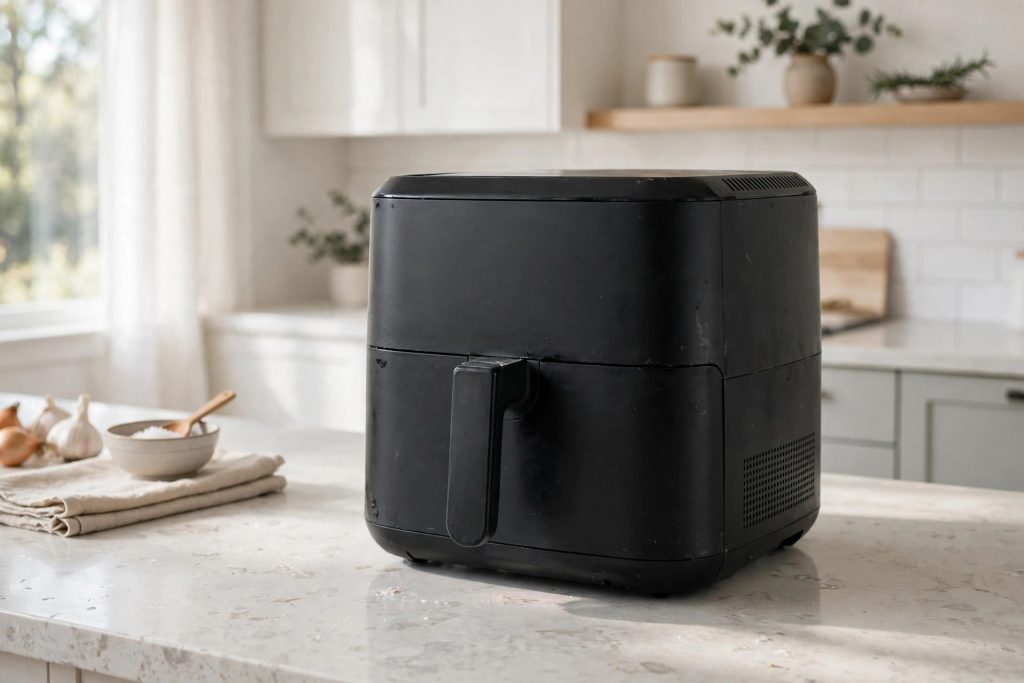
Fourteen inches. That was the depth of counter I had to offer, measured twice, written on a sticky note, carried into the purchase like a contract. The Chefman 2-quart digital mini fit into those fourteen inches the way a person fits into an airplane seat, technically and with feelings about it. The listing dimensions describe the fryer. They do not describe the fryer living somewhere. Behind the unit the vent wants about two inches of breathing room, the plug leaves the back in a straight stubborn line, and the basket needs a forward pull to open that nobody budgets for. My fourteen inches became eleven usable, and the mini, bought precisely because it was mini, spent its first week nosed halfway toward the counter edge like it was reconsidering the arrangement.
I cook in a kitchen where the microwave lives on top of the fridge, so let me establish the terms before the numbers. This is a first-fryer account from a small-kitchen cook, not a five-machine comparison wall, and the 2-quart class is a specific promise. One person generously, two people honestly, a side dish for three if the side dish is fries and expectations stay calm. The basket takes roughly two handfuls of frozen fries in a layer that crisps, or one chicken breast with room around it, or four chicken wings behaving themselves. Crowd it past that and the food steams in its own weather and comes out pale, and the cook blames the machine for a geometry problem.
The cooking itself, once the counter negotiation ended, is the strongest part of the whole deal. Frozen fries in about fifteen minutes at 400 with one shake in the middle, edges actually crisp, middles soft, no oven preheat ceremony for a portion that would look lonely on a sheet pan. Reheated pizza turned back into pizza instead of the damp compromise a microwave makes of it. A cutting board behind the unit solved the vent gap by giving the back wall something sacrificial to warm, which is either a trick or a warning depending on your temperament, and a small rotation of the fryer, corner angled, bought the basket its opening room. Small kitchens are won in inches and compromises, and this one eventually fit the way furniture fits in a studio, by turning slightly sideways and lowering everyone’s standards a quarter inch.
Time is the number the small-fryer class wins without arguing. Preheat is a rumor at this size, two or three minutes while a full oven is still clearing its throat, and for a single portion the whole event, frozen to plate, lands inside twenty minutes with a basket rinse at the end. Energy follows the same logic in miniature. I cannot give you meter readings I did not take, and I will not invent a cents-per-fry figure, but heating two quarts of air instead of a whole oven cavity for one person’s dinner is the kind of arithmetic that does not need a meter to sign.
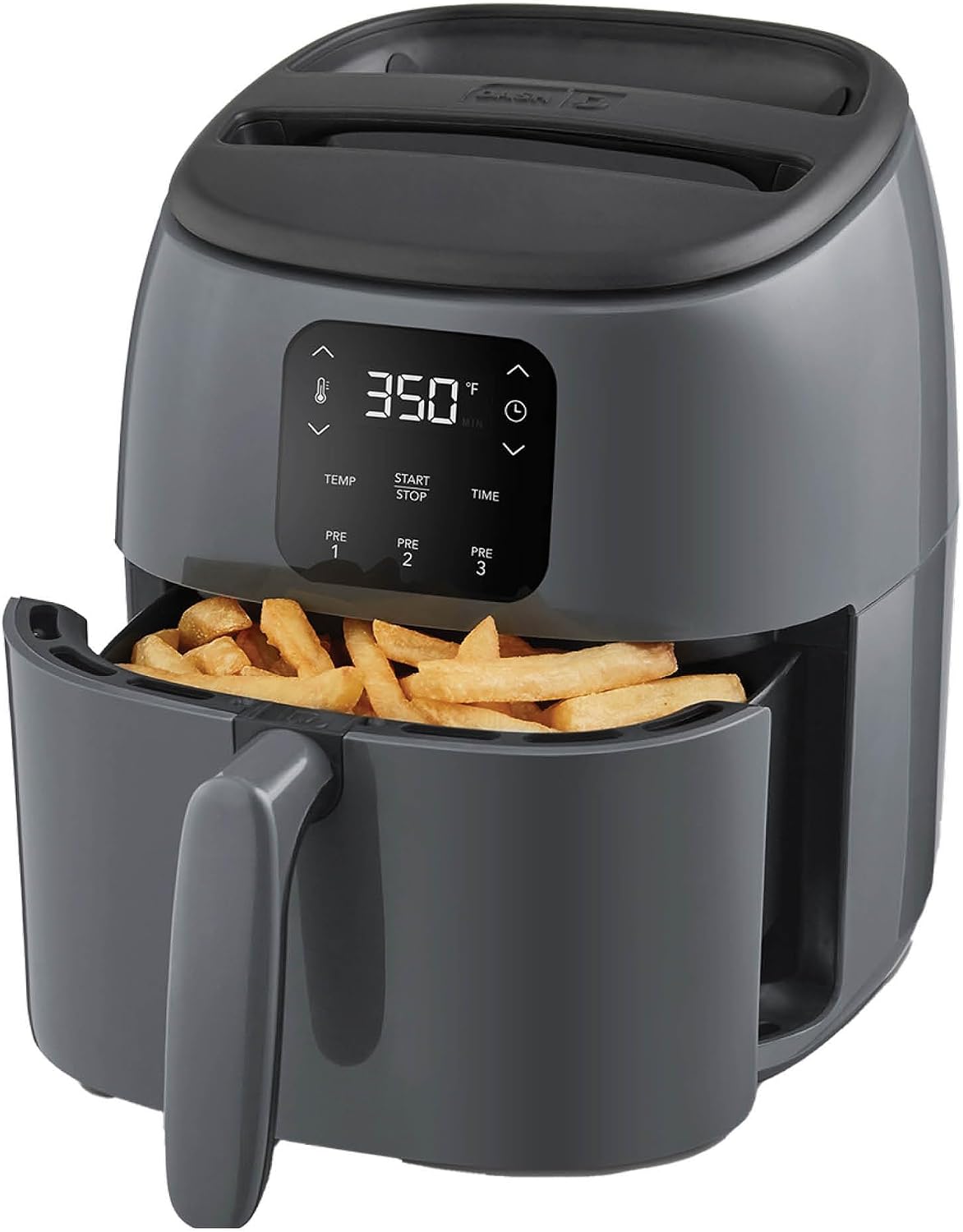
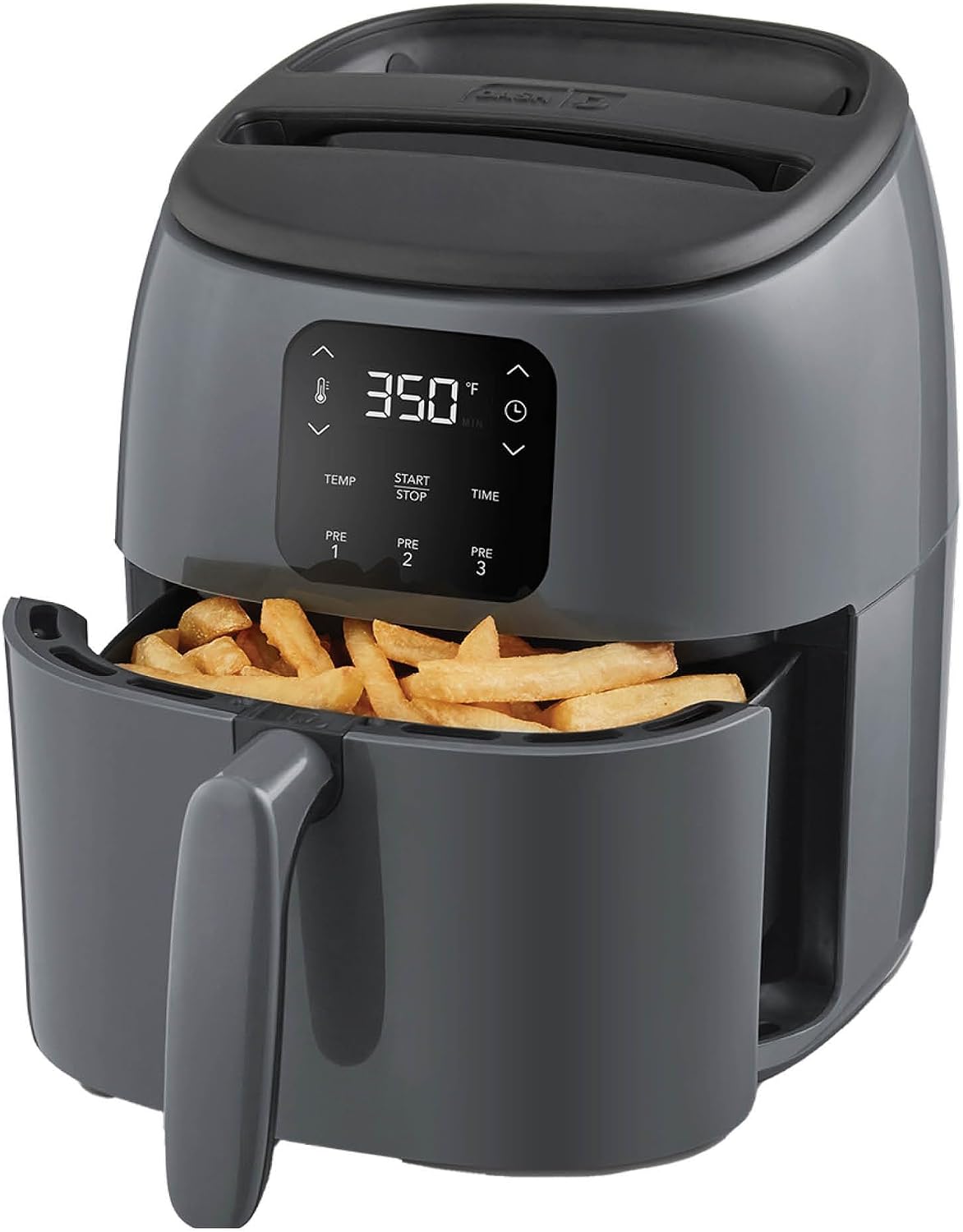
The same-size alternative – a touch more basket than the 2-quart mini class
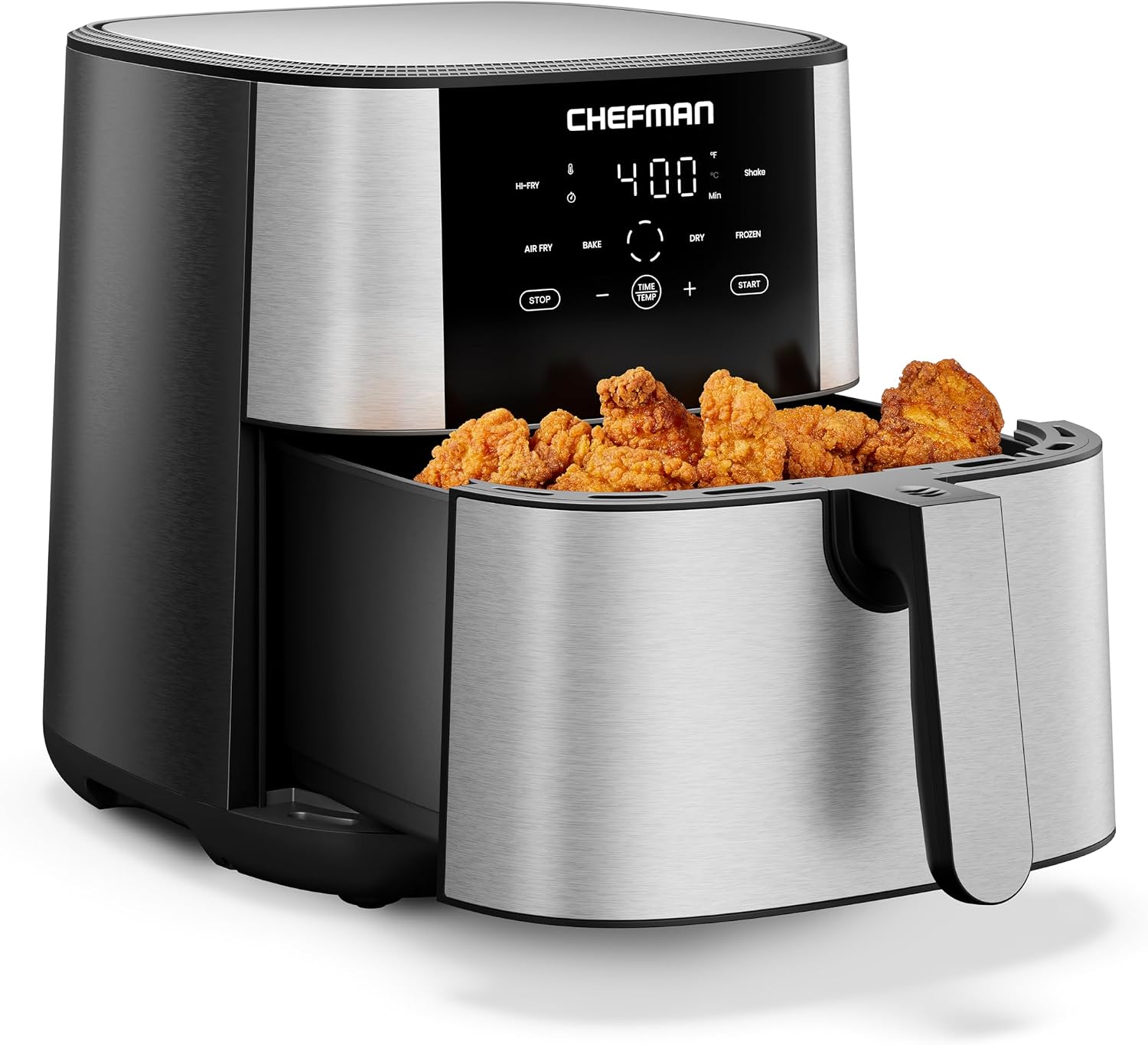
Same brand, family size – the step up when the mini starts losing arguments
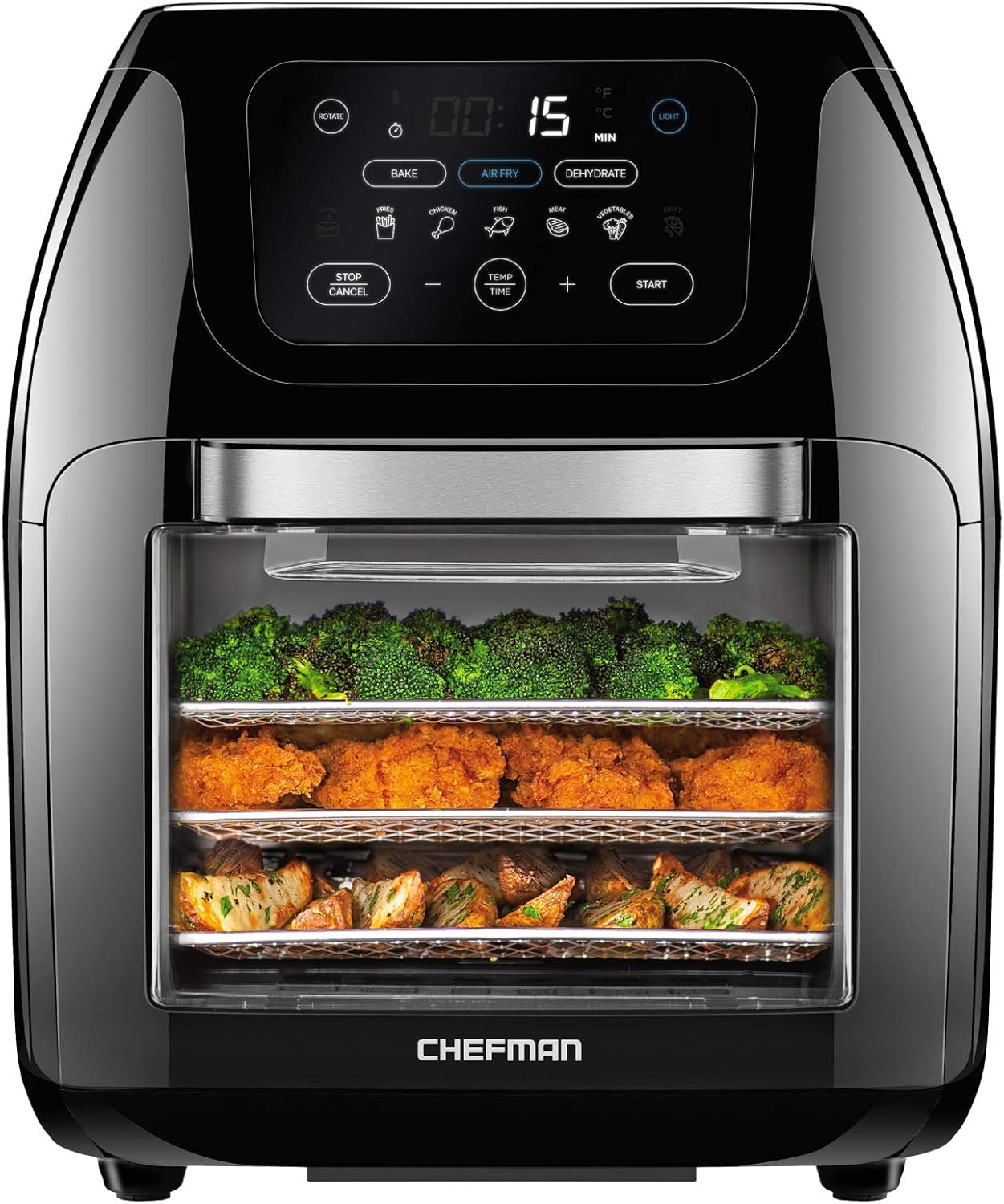
The oven-style Chefman – rotisserie and dehydrator, needs real counter depth
Prices and availability change often. The button shows the current listing.
A word about what is in that box and what is not, because honesty about the shelf matters more than tidiness. The Chefman 2-quart mini itself moves in and out of stock under shifting listings, and the row above sticks to machines whose listings could be opened and checked today, the Dash at nearly the same size and two larger Chefman units. The mini’s own story still stands on its own below. Just do not let any seller’s bundle page convince you the 2-quart and the 8-quart are cousins in capacity. They share a surname and a touchscreen font. The cooking overlap ends there.
Where the mini class shows its seams is batch cooking, and the seam splits exactly where the sticky note said it would. Two people wanting fries and wings means two runs, and the second run eats the time savings the first one bragged about. Salmon for one is a small triumph. Salmon for two is a sequencing exercise with a warming drawer I do not own. This is the honest shape of the trade. The machine is not underpowered, it is under-sized, and those are different complaints with different fixes. The fix for under-sized is a bigger fryer and a bigger counter, and one of those I cannot buy my way into.
Cleaning, at least, scales down with the machine. Basket and crisper plate, both small enough to fit a small sink without the diagonal tilt a big basket demands, a quick soak while dinner is eaten and the coating releases what it caught. The coating question hangs over every basket fryer at every size, and the small ones at least fail cheap if they fail. Mine is months in, hand-washed mostly, dishwasher twice when I was tired, and the plate still wipes clean without persuasion. Ask me again at a year. Coatings keep their secrets past the season reviews are written in.
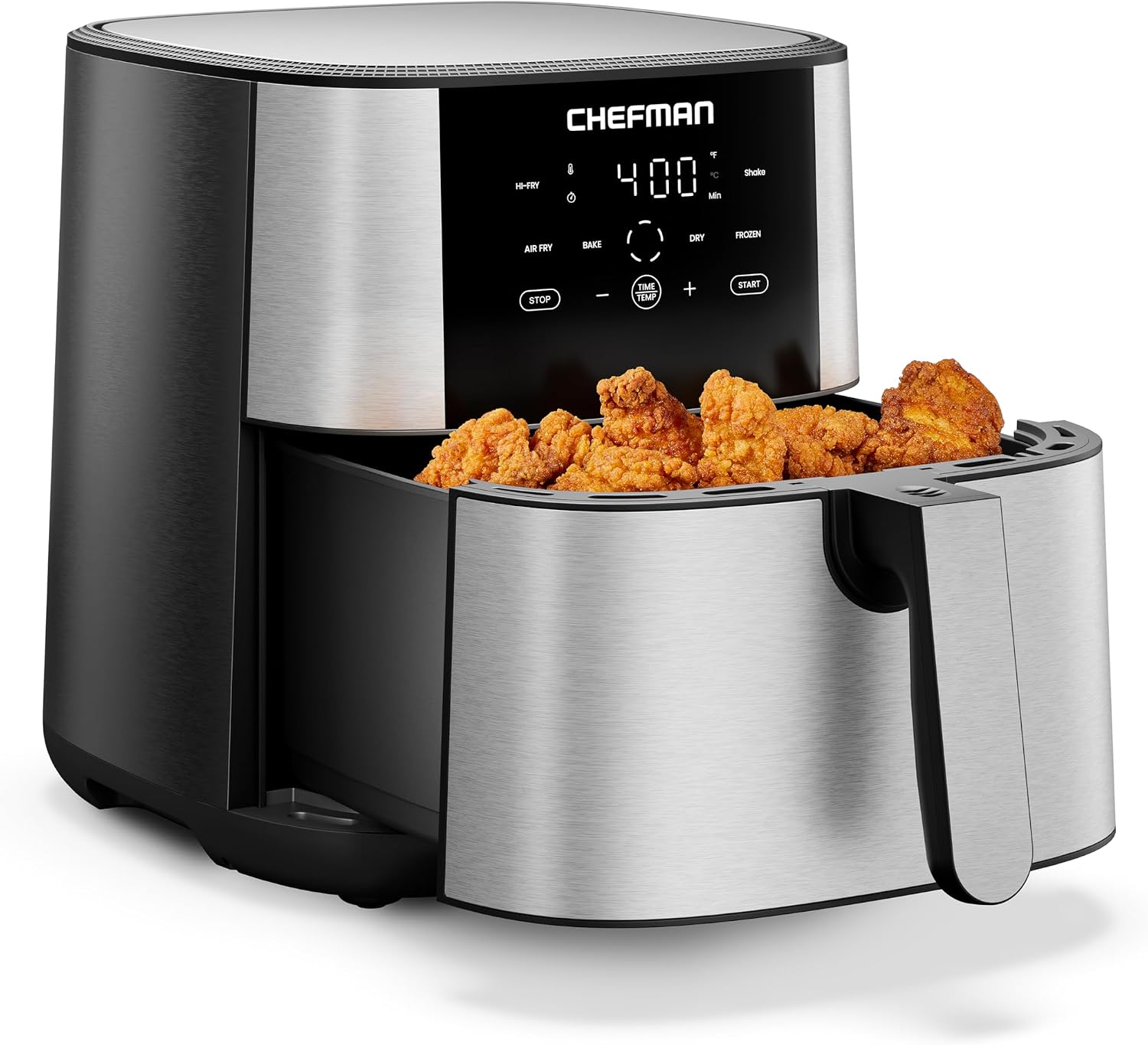
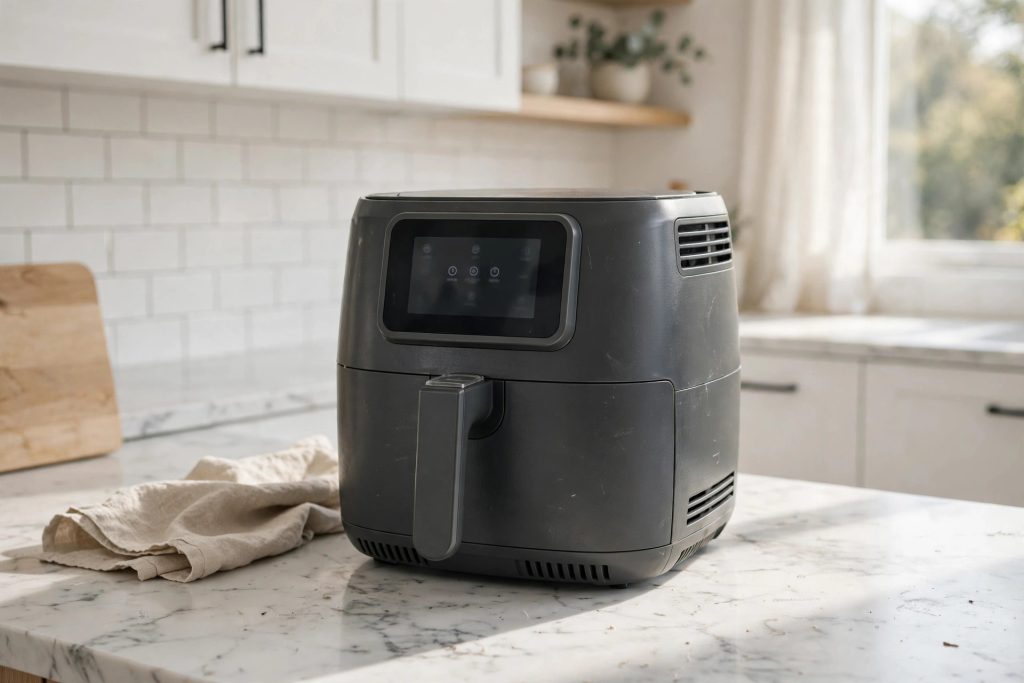
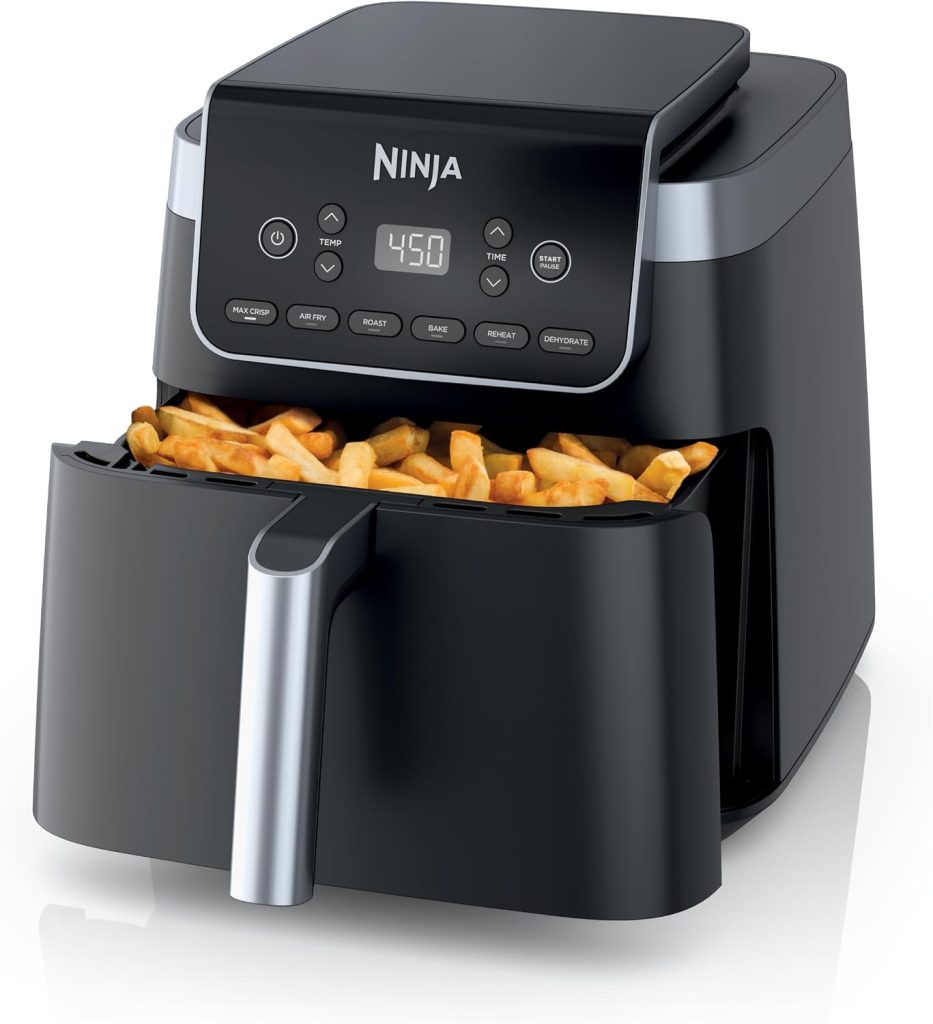
The controls deserve one dry sentence of respect. A touchscreen on a budget mini usually means pressing a number four times while the machine considers it, and this one mostly registers a fingertip the first time, even a slightly damp one, which in a kitchen is the difference between a control panel and a suggestion box. Mostly. Wet hands straight from rinsing chicken still defeat it, and I have stood there drying a thumb on my shirt like a person defusing something, which is a dignity cost no listing will ever disclose. For wider comparisons across the small-fryer shelf, the Ninja AF101 review covers the 4-quart middle ground, and my own Chefman oven-style write-up covers where this brand goes when the counter allows it.
Noise, since somebody always asks at the end. A small fan moving fast in a small cavity, heard across a studio apartment, ignorable across a house. It runs for fifteen minutes at a stretch in my life, not an hour, and short is the whole pitch of the class. Short cooks, small loads, tiny sink footprint, a basket that holds dinner for the person who actually lives in the small kitchen instead of the family the listings keep imagining. That person exists in large numbers. The listings are slowly noticing.
Frequently Asked Questions
Is a 2-quart air fryer actually enough for two people, or is that marketing rounding up?
It depends entirely on what two people are eating, and the honest version goes like this. Fries for two, yes, in one layer with a shake halfway. A pair of chicken thighs, yes, if they are modest thighs. Two salmon fillets fit if they do not overlap, and overlap is where crisp goes to die in this class. Wings for two as a main course, no, that is two batches and a patience test. The 2-quart figure is the basket at its most optimistic, and the working load is more like three cups of food with air around it. Couples who cook one shared side and a protein done another way live happily at this size. Couples who want the fryer to carry the whole dinner usually trade up within a year.
The listing says the fryer is only about 9 inches deep. Why does it not fit my counter?
Because the listing measures the box the fryer is, and your kitchen has to fit the fryer in use. The rear vent wants clearance so the hot air leaving the back is not blowing straight into a wall at an inch’s distance, the plug exits the back in a straight line on most of these minis and adds its own inch or two before it bends, and the basket opens toward you, which pulls the whole unit forward in your mind even if it stays put. Add it together and a nine-inch fryer lives like an eleven or twelve-inch one. Measure for the life, not the box. Everyone learns this once, usually with a sticky note still on the counter.
Can I put the basket in the dishwasher, or will that kill the coating?
The basket and plate on most of these small fryers are sold as dishwasher safe, and safe and wise are cousins, not twins. The coating’s enemies are heat, abrasion, and time, and a dishwasher serves all three in stronger doses than a sink and a soft sponge. Mine has survived a couple of tired-night cycles without visible harm, but the hand-wash takes ninety seconds at this size, which is the mini class quietly winning again. If the dishwasher is the difference between cooking and not cooking, use it and accept a shorter coating life as the price of dinner happening. Just skip the heated dry when you can.
Why do my fries crisp at the edges and stay soft in the middle of the basket?
That middle is where the food is thickest and the air is laziest, and in a small basket the temptation to mound fries in the center is strong because the edges fill first. Spread them flatter than feels generous, shake once at the midpoint and actually redistribute instead of jiggling the basket in place, and the middle catches up. A light oil toss before cooking helps the stragglers more than a longer cook does. Longer mostly dries the edges toward cardboard while the center thinks things over. Flat layer, one real shake, fourteen-ish minutes at 400 for frozen. That unglamorous sentence is most of air frying, at every size ever sold.
Is a mini fryer worth it if I already own a full-size oven?
For one or two people, the case is time and it is stronger than it sounds. The oven heats a large cavity for fifteen minutes before a small portion even starts, and the mini is cooking inside three minutes and done in fifteen, with a basket rinse instead of a sheet pan soak. For a household cooking full trays, the oven wins and the mini becomes a reheating toy, which is a fine thing to be and a waste of the purchase if reheating is all it ever does. I cannot judge anyone else’s dinner rhythm. Mine is one person, weeknights, small portions at odd hours, and in that rhythm the mini is the most used hot box in the kitchen.
The sticky note is still on the cabinet, fourteen inches in fading ink, and the fryer still sits turned a few degrees sideways under it, basket opening into the room it was not quite measured for, cooking dinner for one most nights without complaint from either of us, though I notice I have started measuring other appliances before I even read their reviews now, which feels like the mini teaching the cook instead of the other way around.
This site contains affiliate links. We may earn a commission on qualifying purchases.