This site contains affiliate links. We may earn a commission on qualifying purchases.
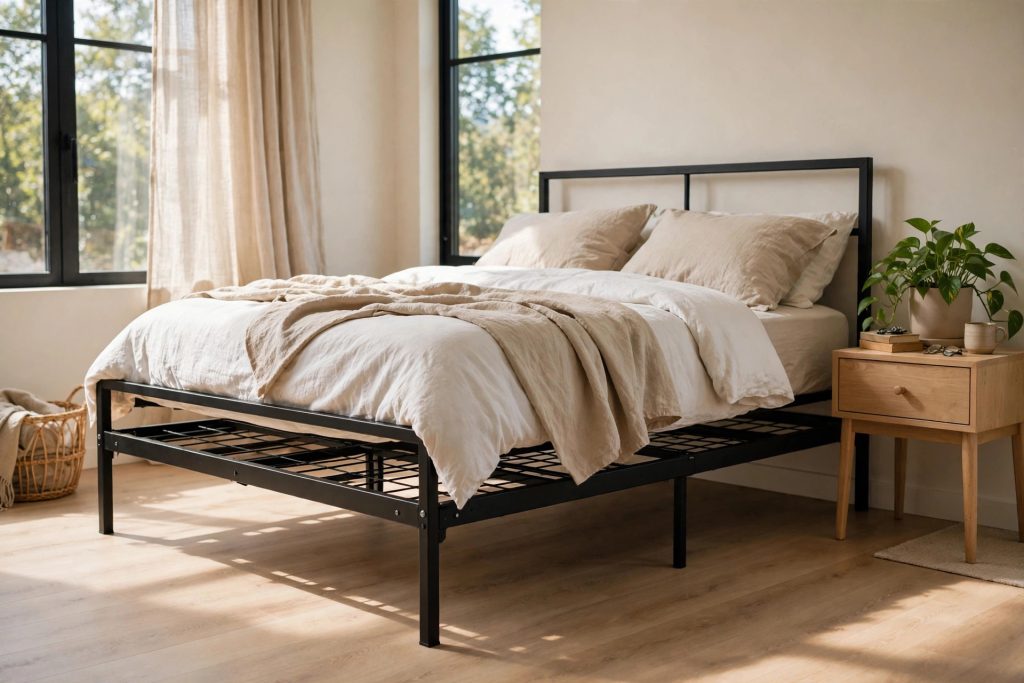
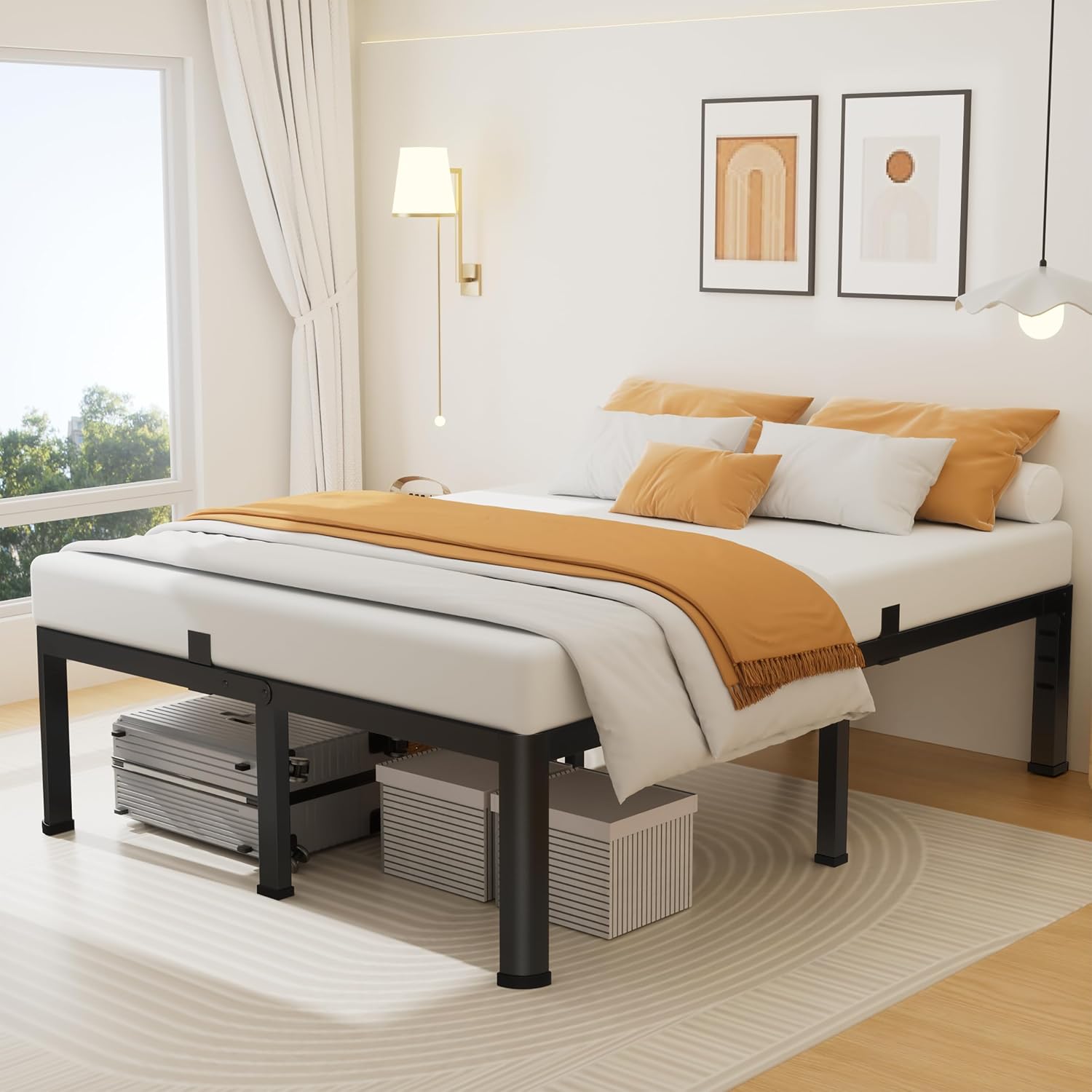
A bed frame reaches my workbench — well, my notebook, since frames do not fit on benches — only after it has started making a noise, and the noise is almost never where the owner thinks it is. So this page about the JETO queen metal platform bed is going to accumulate slowly, the way these frames accumulate complaints: a bolt here, a slat there, a storage promise that turns out to be a geometry problem. The title says integrated storage, and that phrase needs correcting before anything else, because there are no drawers in this frame and no lift mechanism hiding under the slats. What the title means is clearance. Open space under a steel platform, 12 inches of it on the shorter frame in the first box, and what you do with that space is entirely your own storage system, boxes and all.
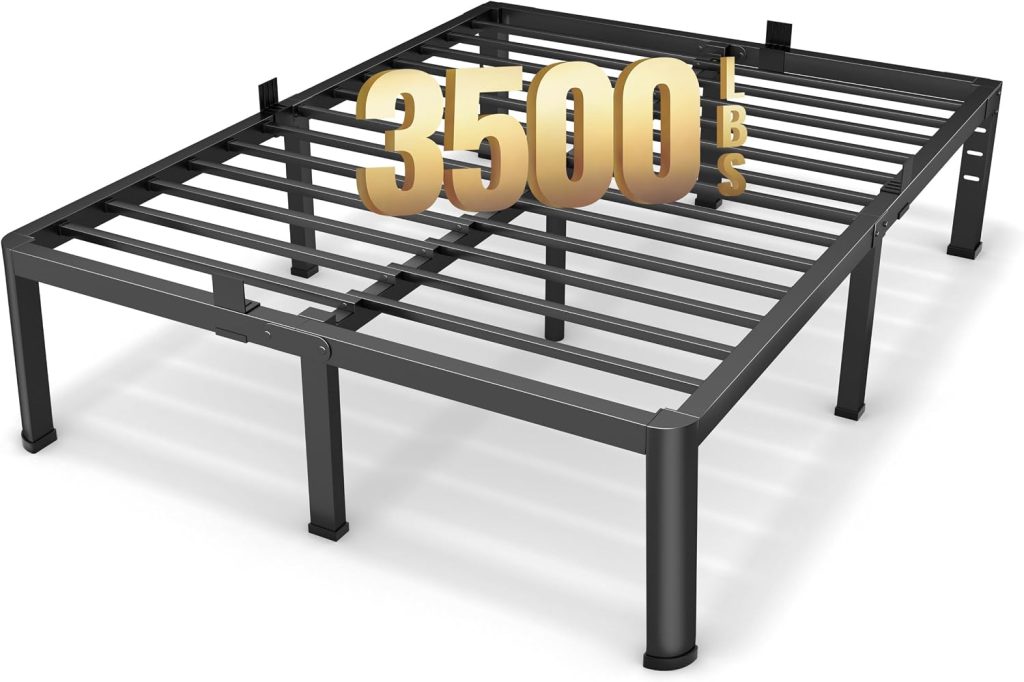
Start with the sitting test, because height is the decision everything else hangs off. A 12-inch frame under a 10-inch mattress puts the sleeping surface at about 22 inches, which is ordinary chair height, and most adults can sit on the edge with their feet flat and stand up without using their hands. Add a thicker mattress, say 14 inches, and the same frame lands at 26 inches, which is still civilized. The 18-inch version in the second box with that same 14-inch mattress reaches 32 inches. Barstool territory. I have watched people — actually, no, let me put that more honestly, people have described to me, in the annoyed tone reserved for furniture — climbing into a bed they bought for storage and discovering the storage was not the part they had to live with twice a day. The climb was.
The arithmetic has a second layer that listing photos never show, and it is the layer that decides whether your storage boxes fit. The headline height is measured to the top of the frame. The usable height under it is smaller, because the side rails hang below the slat line and the center support legs stand in the middle of the space like fence posts. A bin that measures fine against the outside of the frame can refuse to slide in past the rail, and a long flat box that fits the length on paper meets a center leg halfway in. Under-bed space on a frame like this is not one room. It is a row of bays, divided by legs, and it stores short things well and long things badly. Nobody puts that in a product photo. The photo shows one tidy bin, centered, in the one bay where it fits.
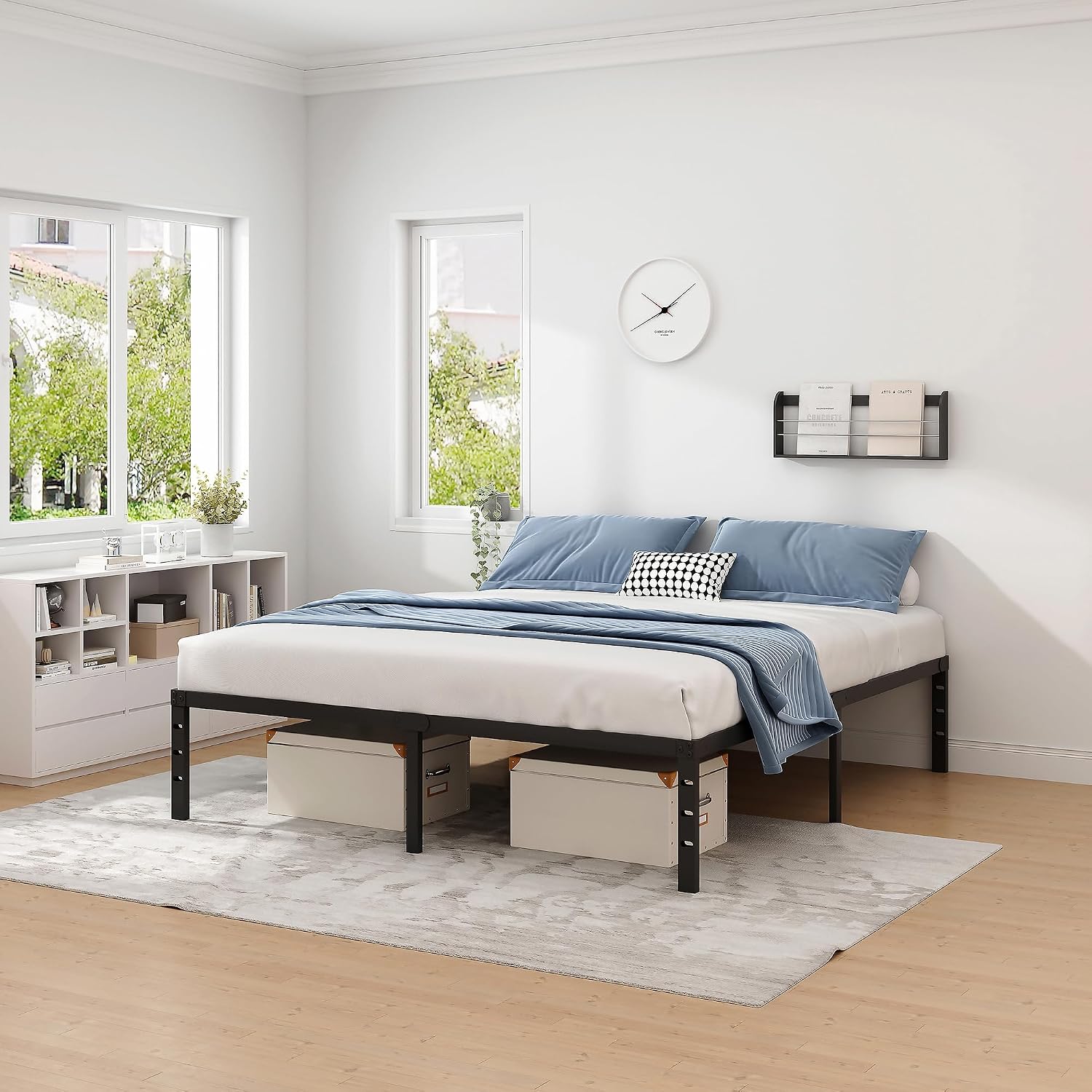
On to the steel itself, since that is the part I can speak to with a straight face. The slats on these JETO frames lock into the side rails rather than screwing down, and locking slats are the detail I would keep if I could keep only one, because screwed slats work loose on a schedule set by how much the sleepers move, and loose slats are where the 2 a.m. noises are born. Metal on metal, a fraction of movement, amplified by a quiet room. When a frame like this starts talking at night, the fix-it sequence is boring and it works: get underneath with the wrench that came in the box, work through the frame bolts in a cross pattern, a quarter turn at a time, and then check the center rail legs actually touch the floor, because a center leg hovering a few millimeters above the boards makes the whole middle of the bed a drum. A drum with a mattress on it.
Where the wear actually starts
Powder coat, next. The black finish looks tough and mostly is, but it chips first where parts lock together, because that is where metal meets metal under load. A chip is not cosmetic on a bed frame, not in a humid room. Bare steel under a bed, in the least ventilated square footage of the bedroom, is where surface rust starts, and by the time it is visible from standing height it has been going a while. A dab of touch-up paint over a fresh chip — honestly, whatever is in the drawer — closes that door cheaply. I have not owned a white finish in this line, so I cannot judge whether it chips the same way. The black one does. They mostly do.
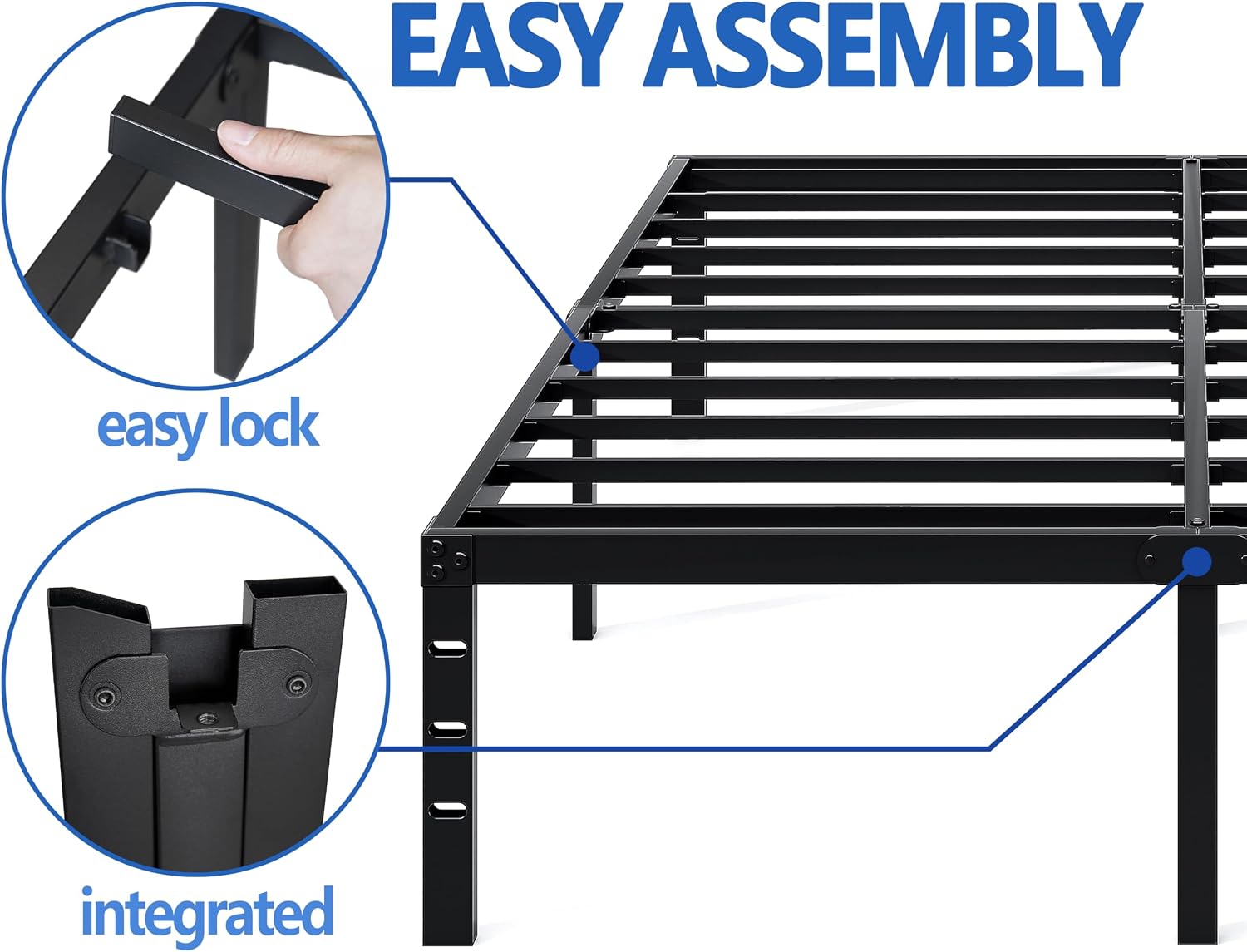
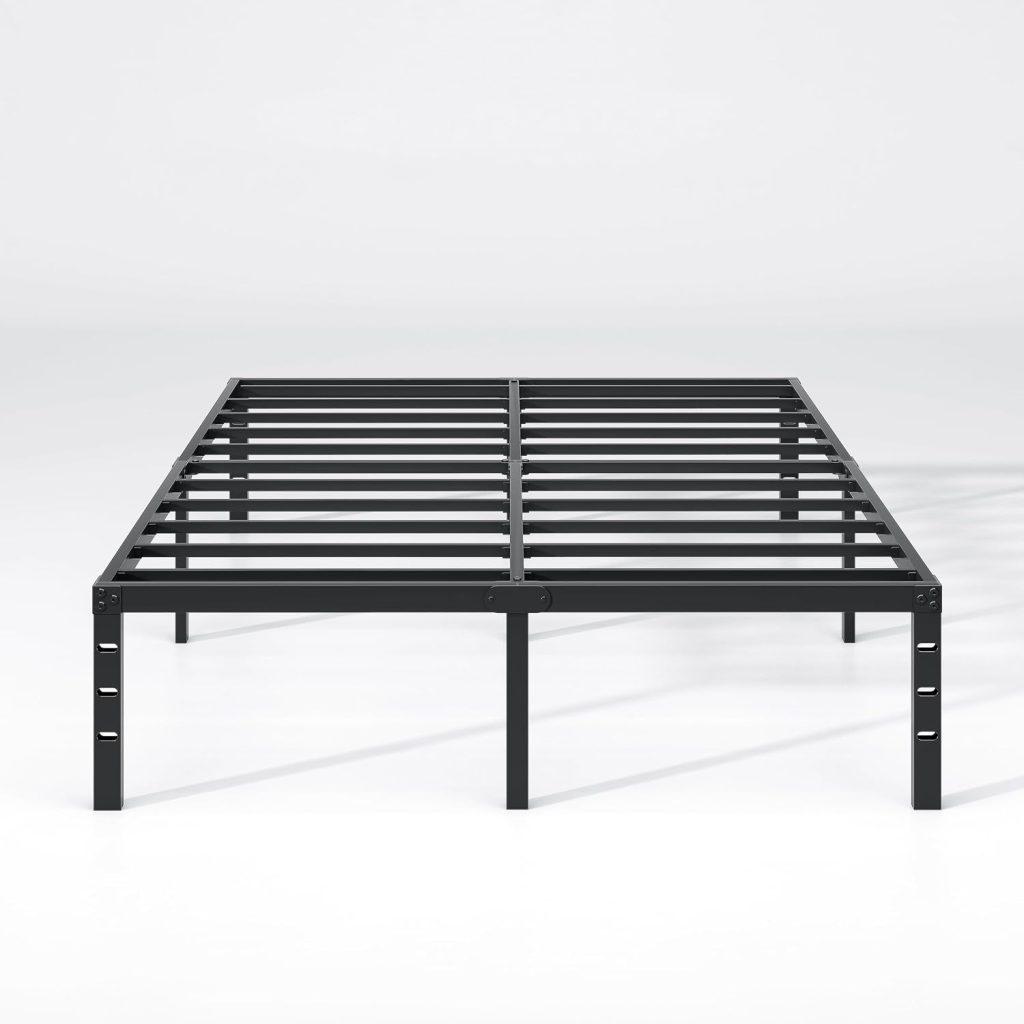
The subject of this page — the shorter JETO, whose roughly foot-high clearance is the version most bedrooms can actually live with
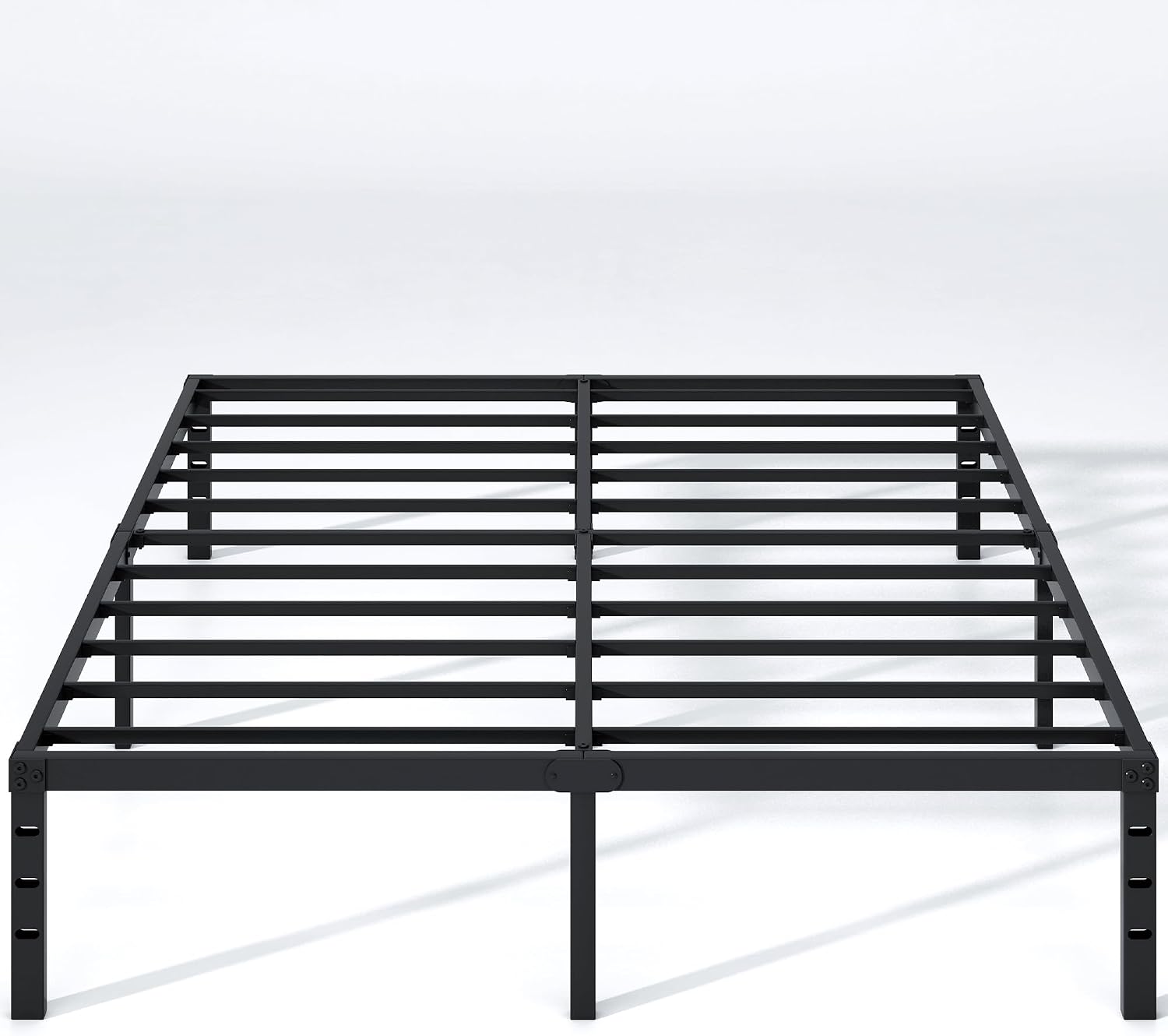
The same frame six inches taller — the storage doubles in usefulness and the climb into bed becomes a real consideration
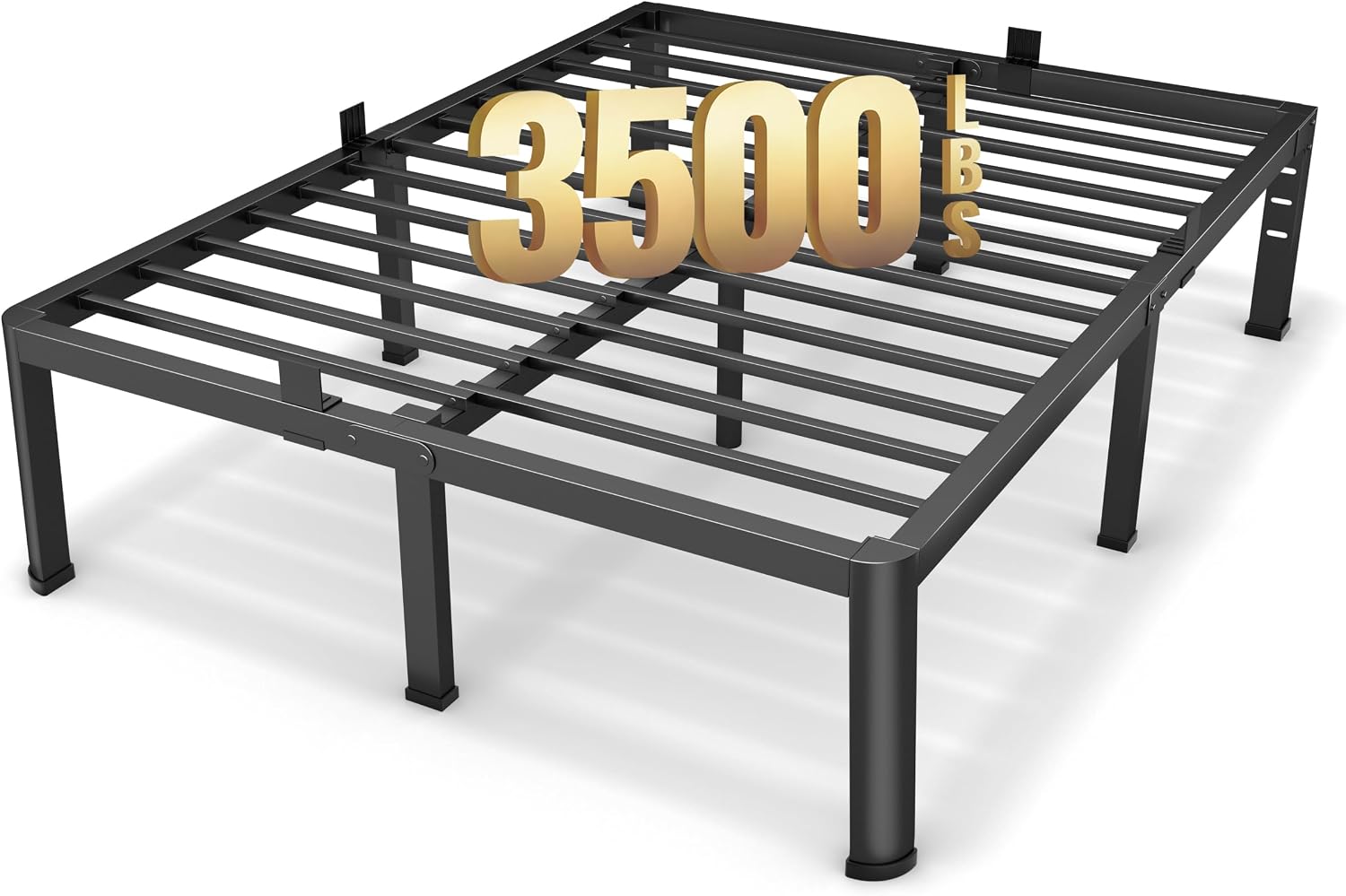
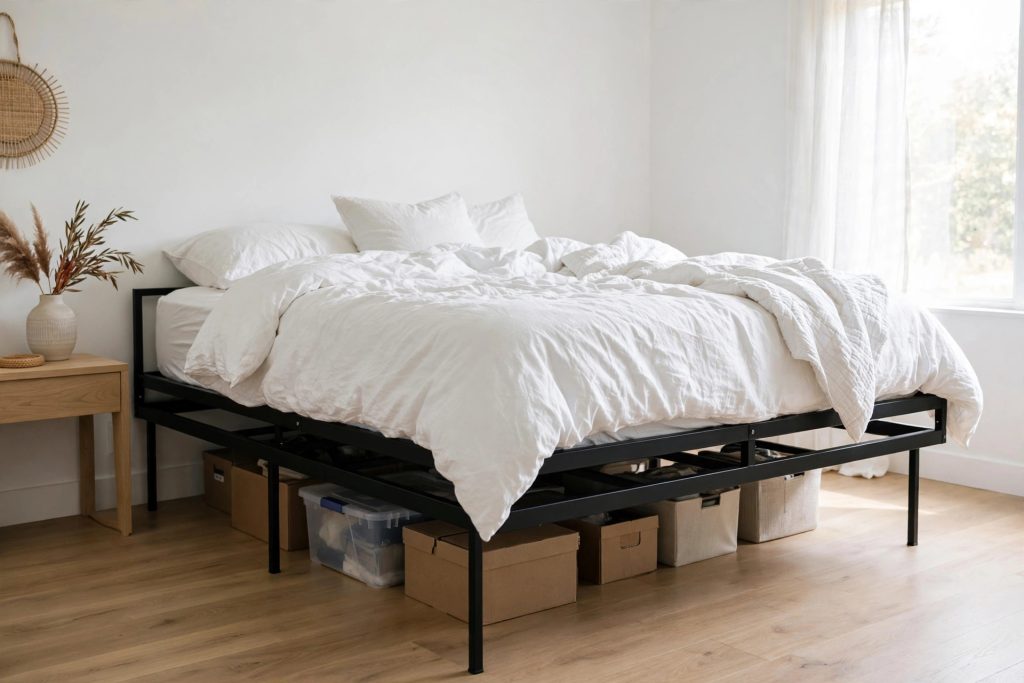
The tall alternative with rounded corners — the leg shape sounds cosmetic until a shin meets a square post at night
Prices and availability change; the listing is the final word.
The Superay in the third box earns its place in this comparison on one feature that reads like styling and behaves like safety equipment: rounded corner legs. The JETO posts are square. A square steel post at shin height, in the dark, on the way back from the bathroom, is an encounter you remember in detail, and the corner of it is the whole story — the impact concentrates on one sharp line. Rounded legs spread the same stupid collision over a curve. It still hurts. It hurts less, and it tears skin less, and in a small bedroom where the bed corners sit in the walking path, that difference stops being cosmetic by the second week. The corner treatment is the detail that keeps coming up in the taller Superay walkthrough too, for this exact reason.
Assembly, since owners always ask. One person, roughly forty minutes, parts labeled in a way a human can follow, and the included wrench is adequate rather than good, which is the normal state of included wrenches. What I would add from the repair side: assemble it where it will live. A queen frame is light enough to carry and awkward enough to hate carrying, and dragging an assembled frame through a doorway is how powder coat chips happen before the first night. Build it in the room. Sleep on it in the room.
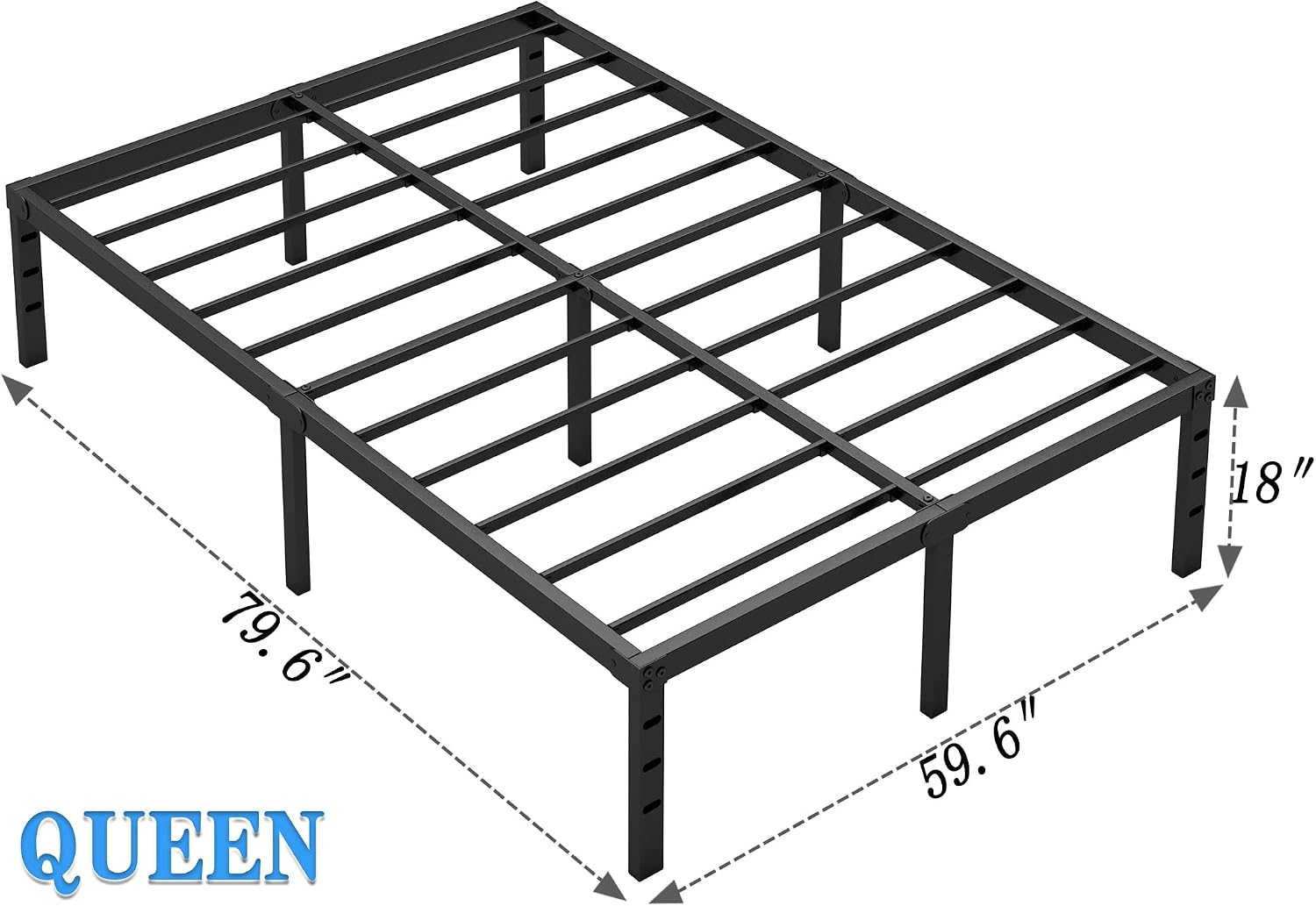
A word about the mattress, because frame and mattress are sold separately and blamed jointly. The slat spacing is what the mattress feels: gaps in the region of three inches keep foam from pressing down between slats and taking a set, and the steel slats on these frames sit in that neighborhood. If your warranty card specifies a maximum slat gap — many do, in print nobody reads — measure the frame before the mattress goes on, not after a sag claim gets denied. I cannot tell you what your specific warranty says. Nobody can, except the card in the plastic sleeve that went out with the packaging. Read the sleeve.
And the dog test, because every household runs it eventually. Sixty pounds of dog launching onto the middle of the bed is a dynamic load no static capacity figure describes, and frames fail that test at the center rail, not the corners. Which is why the center legs touching the floor matters more than rail thickness, more than the finish, more than —
It is the whole frame, really. The middle.
Noise, one more time, because it is the complaint that decides whether people keep these frames. A metal platform bed that is silent in month one can develop a vocabulary by month six, and the cause is almost never a broken part. It is relaxation. Bolts bedded into powder coat settle, the coating compresses a hair, and a joint that was silent gains just enough play to click under a turning sleeper. The cure is the same quarter-turn tour with the wrench, done once, around the half-year mark. The 18-inch Superay review tells a version of this same maintenance story at a taller height, and the pattern holds there too — the frames that get one re-tightening go quiet and stay quiet, and the frames that do not get blamed on the steel. The steel is fine. The schedule was missing.
Questions that come up
I bought the 18-inch for storage and now the bed feels like mounting a horse. Anything to do besides returning it?
Live with the math for a week before you decide, because some of the climb is novelty and your legs learn the new height faster than you expect. If it still annoys you after that, the honest options are limited: a thinner mattress lowers the total more than people think, since every inch of mattress is an inch of climb, and a low step by the bedside is the unglamorous fix households actually keep. What does not work is removing height from the frame itself — the legs are the structure. And check the storage honestly while you are deciding, because if the bays under there are not earning their keep with boxes you reach for monthly, the tall frame is charging you a climb for a warehouse you visit twice a year, and the 12-inch version with dustier, smaller boxes starts to look like the trade you meant to make.
The frame started clicking at night around month five. Is something broken?
Almost certainly not, and month five is nearly the textbook timing for it. The bolts on a powder-coated frame settle as the coating compresses under the joint faces, and a joint with a hair of new play clicks when weight shifts across it, which at night means when somebody turns over. Work underneath with the included wrench and give each frame bolt a quarter turn, moving in a cross pattern rather than around the edge, then lie on the bed and roll deliberately to find any click that survives. While you are under there, confirm the center rail legs are touching the floor — a hovering center leg makes a louder, duller version of the same complaint. Broken parts announce themselves differently, with movement you can feel while awake. Clicks that only exist at 2 a.m. are loose joints, and loose joints are a wrench, not a replacement.
Will standard under-bed storage boxes actually fit the 12-inch frame?
Mostly, with one measurement standing between you and a return trip. Standard under-bed boxes run about six to seven inches tall, and against the 12-inch headline figure that sounds like room to spare — but the space that matters is from the floor to the underside of the side rail, which is less than the headline, and the center legs divide the space into bays, so a box fits a bay, not the whole footprint. Measure the tallest box you own, lid included, and measure the frame at the rail, not at the leg-free middle. Boxes in the six-inch range slide in and out without thinking. Taller seasonal bins are where people get caught, usually with the bin halfway in and the lid flexing. The 18-inch frame forgives all of this, which is the one unqualified point in its favor.
Do I still need a box spring on a platform frame like this?
No, and adding one undoes the design. The steel slats are the support system — that is the entire premise of a platform frame — and most foam and hybrid mattresses are built expecting a flat, firm base of exactly this kind. A box spring on top of the slats adds height you did not plan, adds a flex layer the mattress was not tuned for, and on the 18-inch frame it would put the sleeping surface somewhere near hip height on an average adult, which is a mounting exercise, not a bed. The one homework item is your mattress warranty, which sometimes names a maximum slat gap. Check it against the frame before the first night, while both are still returnable, rather than during a sag dispute two years from now.
The frame is still in the spare room, still quiet since the one re-tightening, holding a mattress and a rotating cast of visiting relatives and one dog with no respect for static load ratings. The tall bins never did fit under it. They live in the closet now, and the low boxes hold the winter blankets, and I reach them maybe four times a year, lying half on the floor, wondering whether the storage was ever the point.
This site contains affiliate links. We may earn a commission on qualifying purchases.