This site contains affiliate links. We may earn a commission on qualifying purchases.
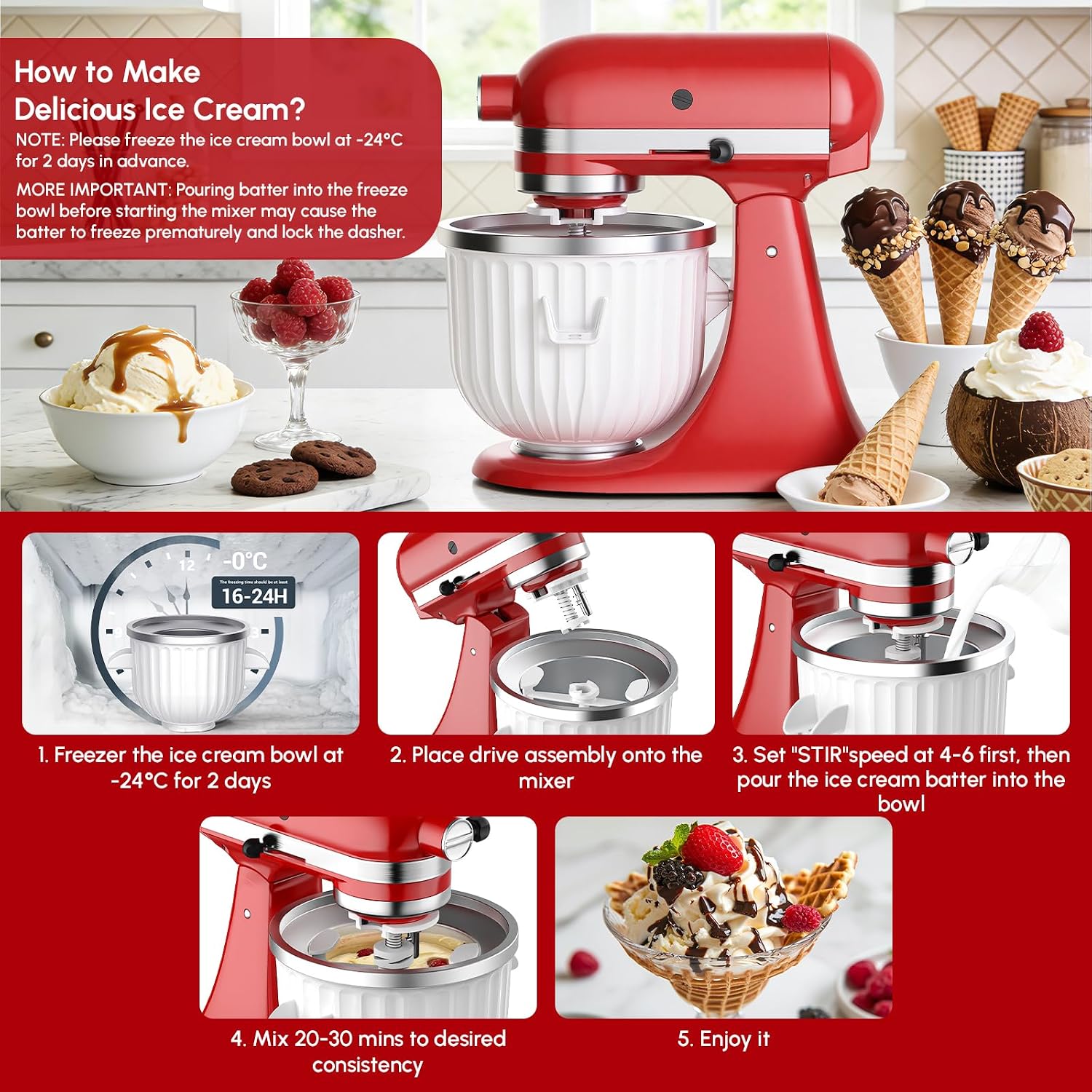
Fifteen hours. That is the number this whole product lives or dies on, and it is the number the box mentions in the smallest print it can get away with. The freezer bowl — 2 quarts, a metal bowl with coolant sealed inside its walls and a plastic dasher that turns through the mixture — has to sit in your freezer for at least 15 hours before it will churn anything, and 24 is the safer figure if your freezer runs warm or gets opened by children hunting for snacks every twenty minutes. I am a person who cooks daily and owns a small graveyard of attachments, and I say this with love: the ice cream this thing makes is genuinely good, and the ice cream it makes is never, ever spontaneous. Every pint is a decision you made yesterday.
The arithmetic continues, because 15 is only the first number. Churning itself takes 20 to 30 minutes once the base is in, with the mixer turning the dasher at its slowest speed while the mixture thickens against the frozen wall. What comes out at minute twenty-five is soft-serve — lovely, honest soft-serve, but soft. Scoopable, firm ice cream needs the mixture transferred to a container and given another 2 to 4 hours in the freezer. So the full line from wanting ice cream to eating the firm kind runs about 20 hours end to end, most of it waiting, and a household that understands that timeline in advance loves this attachment. A household that discovers it at 7 p.m. with guests at 8 writes the one-star reviews. Same bowl. Different expectations, set by whoever read the small print and whoever did not.
Then there is the yield number, and this one surprises people in the other direction. The bowl says 2 quarts, and a full 2 quarts of base is a mistake — the mixture grows as the dasher works air into it, and a bowl filled to the brim churns its newest ice cream up and over the rim in the last five minutes. The working fill is roughly two-thirds, call it five cups of base or so, and the finished yield lands around a quart and a half. That is a generous amount for a family dessert and a slightly annoying amount for a dinner party, because a second batch is not a second batch — it is another 15 hours of freezing while your guests eat something else and talk about the ice cream they almost had. One batch per freeze. That is the real capacity, whatever the bowl’s headline says.
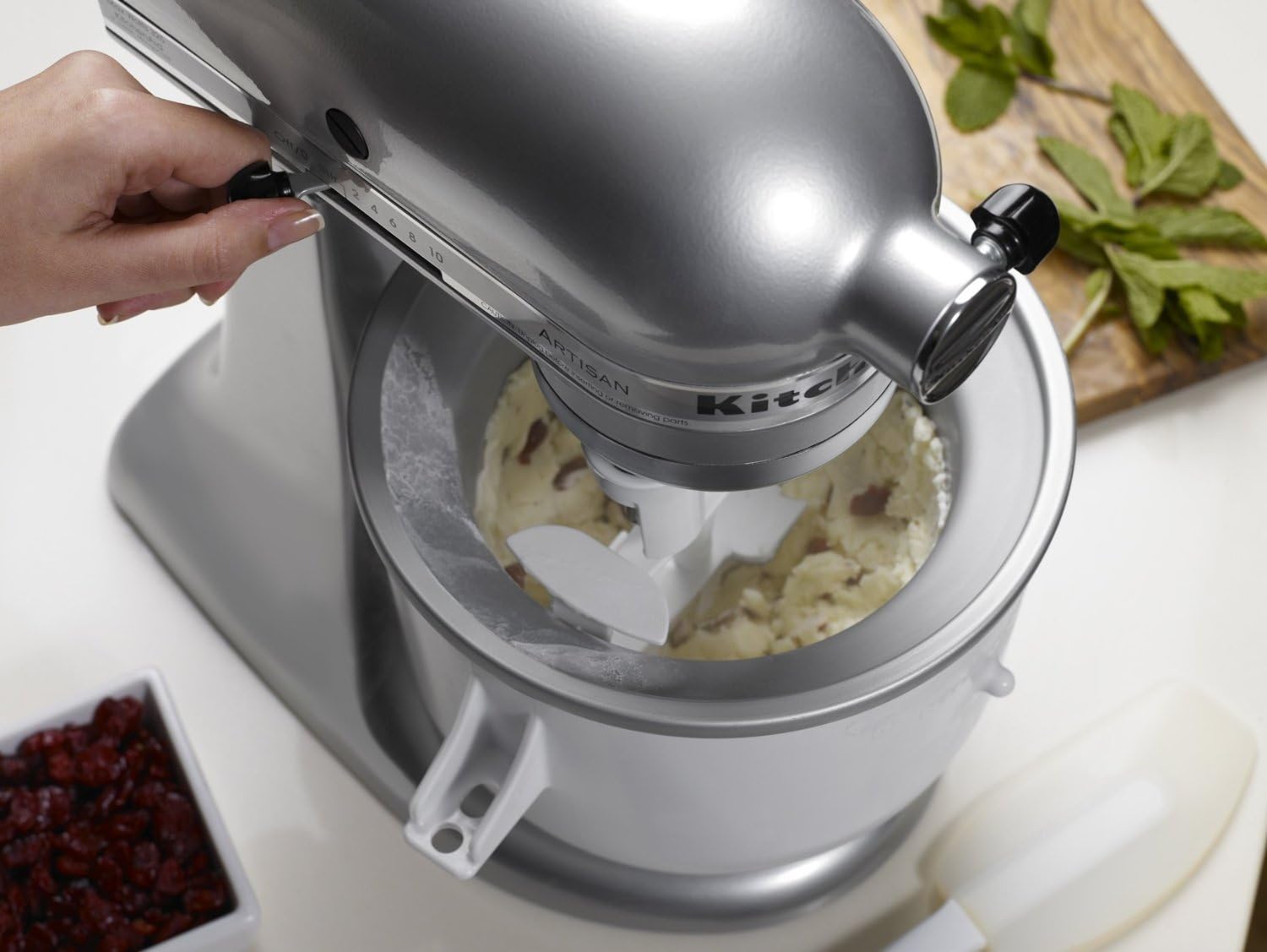
Fit is the number nobody counts at all, and it is the one that decides whether the attachment works on your mixer in the first place. The dasher is driven from the mixer’s head, and the drive setup differs between tilt-head and bowl-lift models — the maker’s own listing for this attachment says plainly that it excludes the 7 and 8 quart machines and most 6 quart models, and fits the 5 to 6 quart range it was built for. Read that sentence twice before ordering, because the secondhand market is full of these bowls sold on by people who did not. The attachment also assumes freezer geometry: a 2-quart bowl with some height to it has to live somewhere in your freezer for the better part of a day, flat and level, and in a small freezer that footprint evicts a bag of peas, a tray of ice, and whatever was hiding behind both. The Cuisinart 2-quart frozen dessert maker review looks at a standalone 2-quart machine for people whose freezer said no.
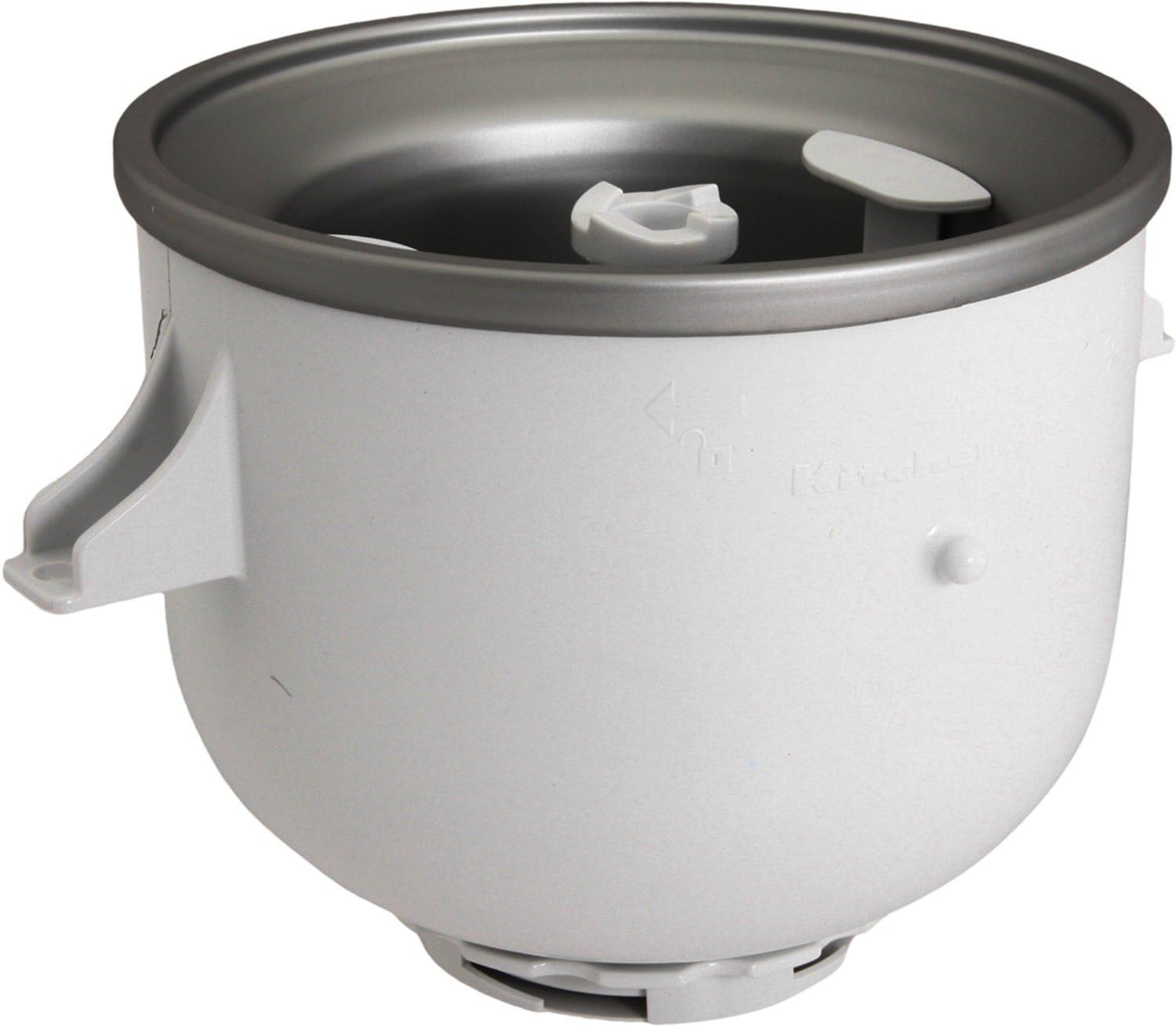
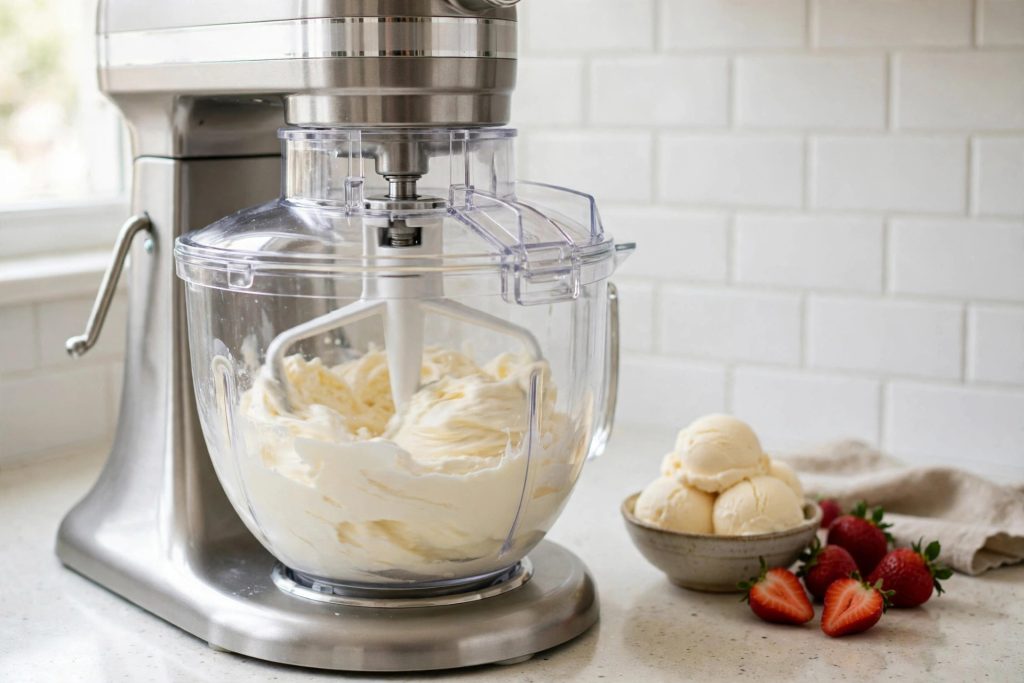
The maker-brand freezer bowl and dasher for the mixer’s front hub — the version this review is about, sized for 5 to 6 quart mixers per its own listing
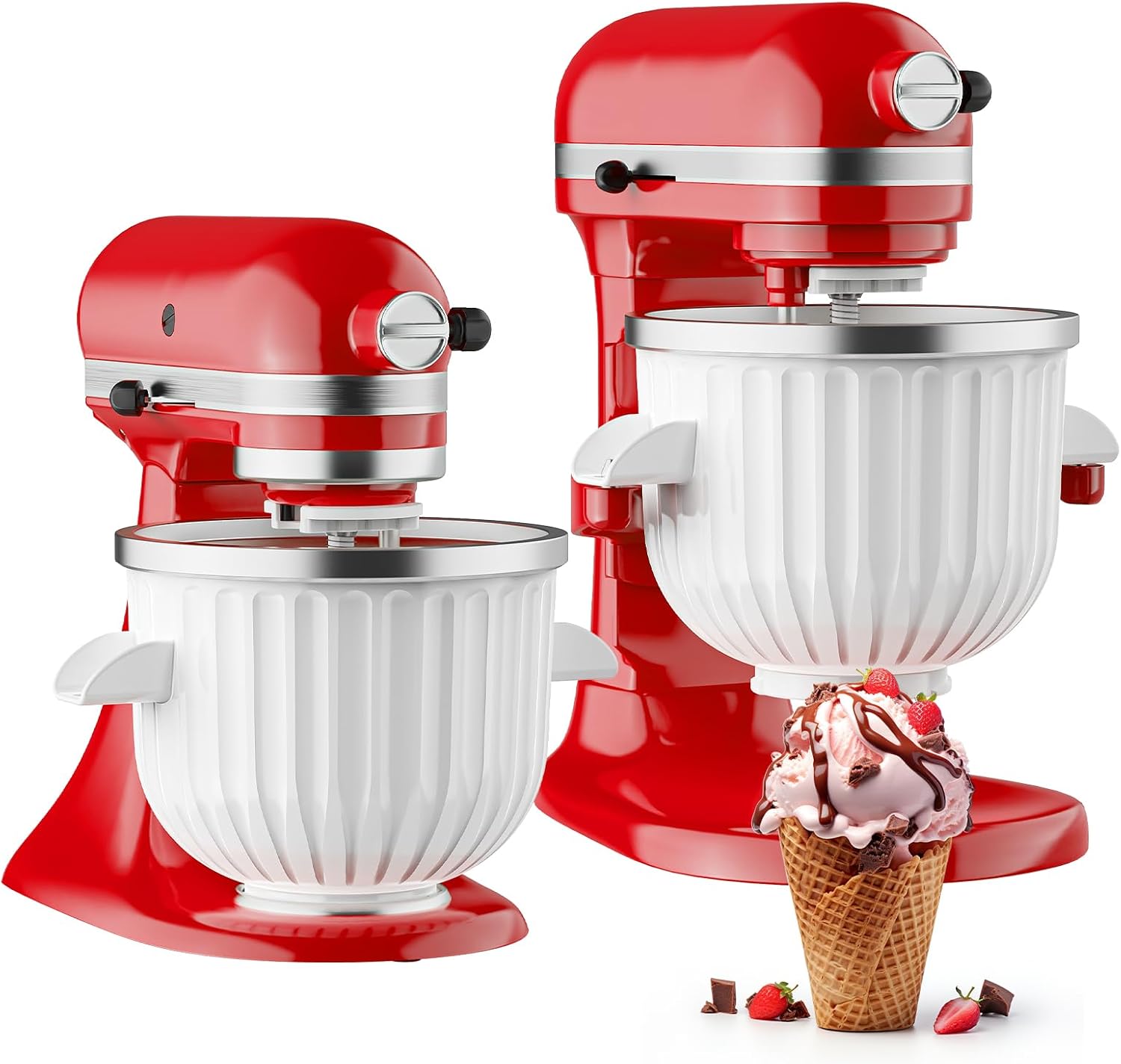
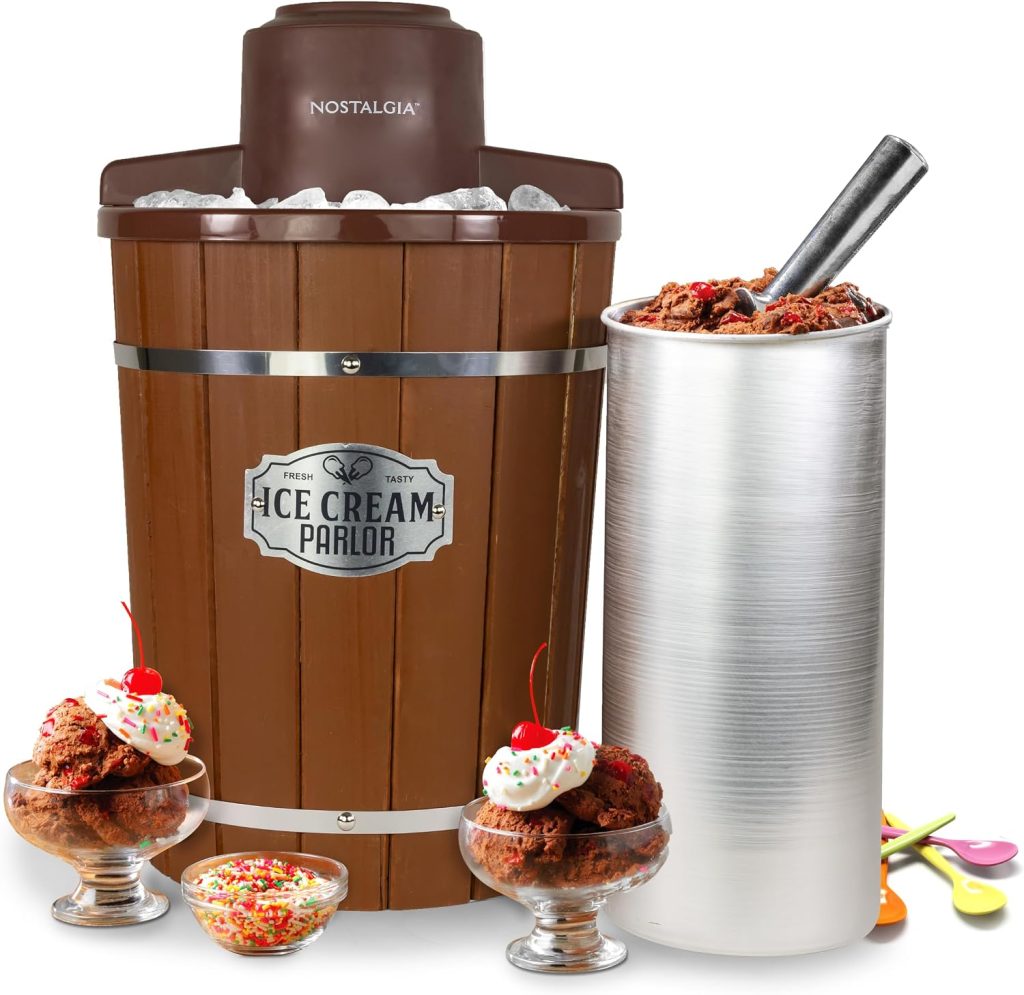
A compatible attachment from another maker — same working idea, freezer bowl and dasher, at the price these compatible versions usually ask
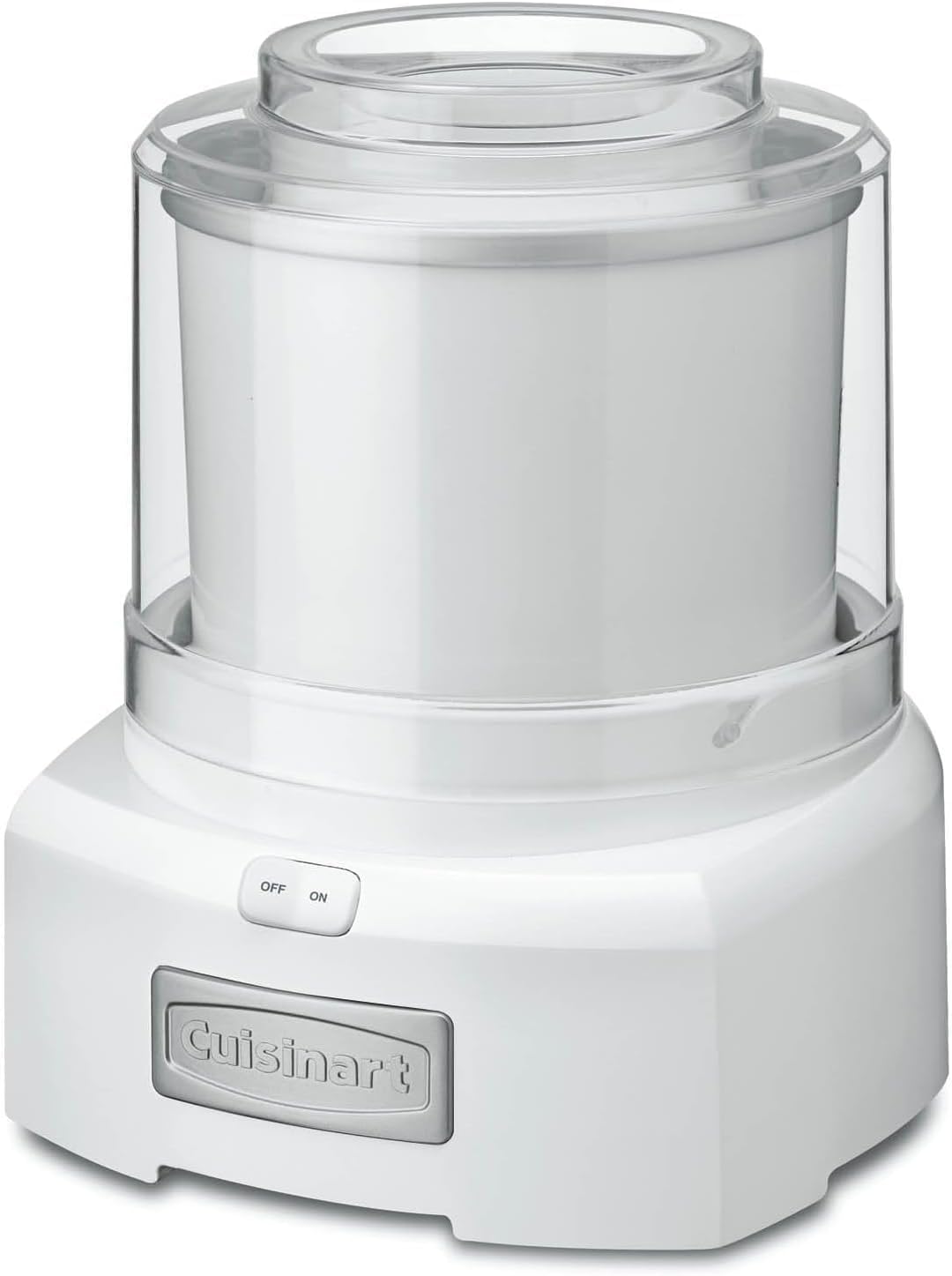
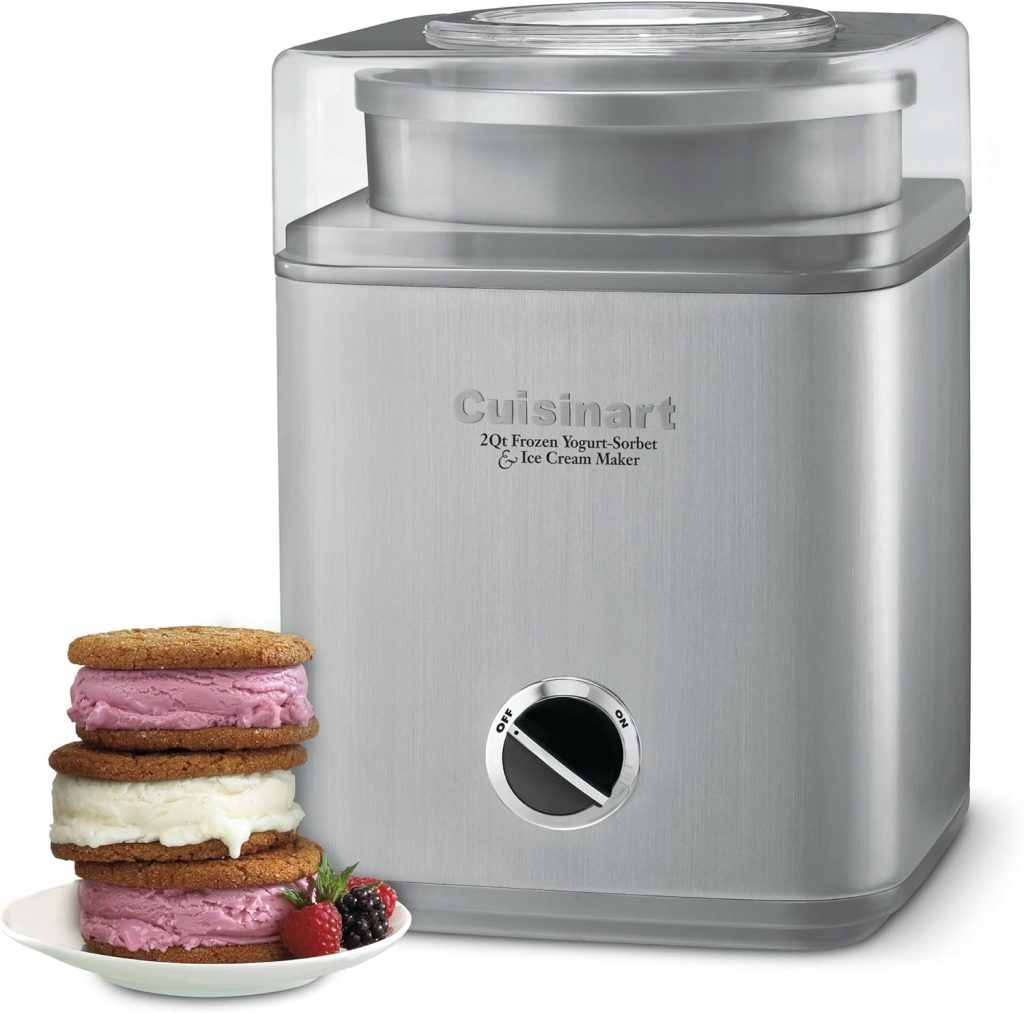
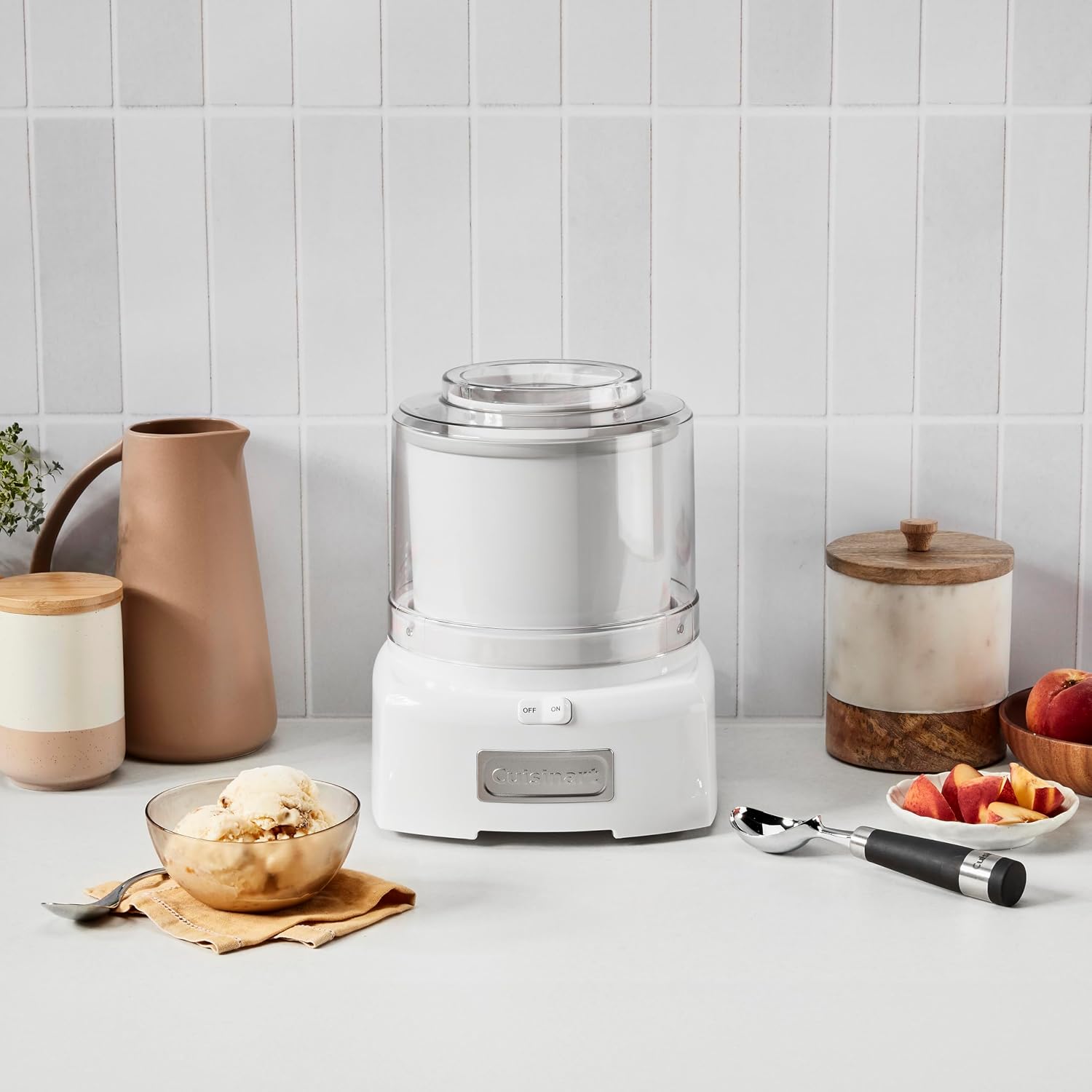
The standalone answer — its own motor, its own freezer bowl, no mixer required, a little smaller at 1.5 quarts
Prices and availability change; the listing is the final word.
The compatible attachment in the second box exists because the working idea here is not complicated — a gel-walled bowl, a dasher, a drive piece that meets the mixer’s head — and other makers build the same arrangement for less money. What you are judging between the first two boxes is mostly the drive fit and the bowl’s manners. A drive piece that engages loosely will chatter and can walk the bowl around on the stand; a bowl whose gel wall freezes unevenly churns one side firm and leaves the other side soup. I have not run the compatible bowl through a winter of batches, so I cannot judge its gel wall over time, and that is the honest limit of this page. The name-brand bowl I can judge, and its freeze has stayed even across a lot of batches, which is the entire job.
Care is the last set of numbers, small ones. The bowl is hand-wash only — the coolant walls and dishwasher heat do not mix, and a warped seal is a bowl that will never freeze right again. Wash it, dry it fully, and only then send it back to the freezer, because a wet bowl grows a skin of frost that the dasher will scrape into the next batch as ice crystals. Do not drop it while it is frozen. That sounds like advice nobody needs until you picture the gel pack inside those walls: a hard knock on a frozen bowl can crack a seam you cannot see, and the failure announces itself a week later as a bowl that churns for thirty minutes and produces cold soup. And never try to speed a thaw with warm water. The bowl lives a slow life. Everything about it is slow. That is the deal you are signing.
What about the standalone machine in the third box, the one that asks for no mixer at all? Its bowl is smaller — 1.5 quarts against the attachment’s 2 — and its freezer bowl plays by the same physics, the same overnight freeze, the same one-batch-per-freeze rule. What it changes is the doorway into all this: no front hub, no fit chart, no owning a stand mixer in the first place. The Chefman Iceman Trio review covers a compressor machine that skips the freezing ritual entirely, for the households who know themselves well enough to know the ritual is exactly what will fail. The standalone’s real cost is counter and cupboard space, because it is one more single-purpose body to store, while the attachment bowl stores in the freezer it already lives in. Two different taxes. Pick the one your kitchen is richer in.
A short story the numbers do not cover. My best batch with this attachment was a vanilla custard I made for a birthday, frozen the bowl a full day ahead like a person who had read her own review, churned it in the afternoon, and firmed it while the cake cooled. It beat every pint I have bought under eight dollars, and it was not close. My worst batch was the same recipe attempted on a whim at 6 p.m., bowl only four hours frozen, producing a sweet cold soup that I served in glasses with straws and called a milkshake with great confidence and no shame. The attachment was identical in both cases. The difference was entirely the clock, which is why this review keeps counting hours at you. The bowl is a good bowl. The calendar is the appliance.
So the figures, one last time, in one place, because they are the review: 15 hours minimum in the freezer, 24 if you want certainty; 20 to 30 minutes of churning; 2 to 4 hours more if you want it firm enough to scoop; about a quart and a half finished from a bowl that says 2 quarts; one batch per freeze; a mixer in the 5 to 6 quart range with the right head style; and a freezer shelf that can hold the bowl flat for a day at a time. Households that can run that schedule get ice cream that embarrasses the store-bought pints at the same money. Households that cannot will own a very well-made bowl that holds fruit on the counter, and they will feel a small, specific resentment every time they look at it — I know, because mine held bananas for the whole of one February, waiting for me to become a person who plans dessert a day ahead.
Questions that come up
I froze the bowl overnight like it said, and my mix stayed soup — is the bowl broken?
Probably not, and overnight is the word doing the damage in that sentence. The bowl needs at least 15 hours, and 24 is safer, in a freezer that is actually at its coldest setting, sitting at the back where the temperature holds steady — the door shelf is the warmest real estate in the box and the worst place for it. Shake the frozen bowl gently next to your ear before you churn. A properly frozen bowl is silent, solid all the way through. If you hear sloshing, the gel is not fully frozen and no amount of churning will rescue the batch, because the dasher can only scrape what the wall gives it. Warm base is the other silent culprit: a custard that went in lukewarm spends the bowl’s cold on cooling itself down and has nothing left for freezing. Chill the base cold — fridge-cold, hours cold — before it ever meets the bowl.
Can I just make a second batch right after the first one finishes?
No, and this is the limit that shapes how you use the thing. The first churn spends the cold stored in the bowl’s walls — that stored cold is the entire fuel supply — and a spent bowl is just a metal bowl at freezer temperature going nowhere. Refreezing takes the same 15-plus hours as the first freeze. Hosts learn to work around it: churn the party batch the day before and hold it in a container, or accept that the attachment serves one flavor per day. I have seen owners buy a second bowl to run back-to-back batches, which works mechanically and turns a modest attachment into a two-bowl freezer commitment, and I cannot decide if that is devotion or a warning sign. Either way, plan flavors like you plan courses — one per freeze, no encores.
Does it matter which stand mixer I have, or do all the attachments fit everything?
It matters more than any other question on this page. The attachment drives from the mixer’s head, and the drive arrangement differs between tilt-head and bowl-lift models, and the maker’s own listing excludes the 7 and 8 quart machines and most 6 quart models outright. Owners of the big bowl-lift machines are the ones writing the confused reviews — the bowl physically sits there looking plausible while the drive piece never properly engages. Check your model against the fit list before you order, and if you are buying the compatible version in the second box, check twice, because third-party fit charts are written with more optimism than the name-brand one. A bowl that churns is a dessert machine. A bowl that almost churns is a freezer ornament with a dasher.
The bowl went back into my freezer this morning, empty, washed, dried, taking up its usual shelf like it pays rent — because tonight-me would like ice cream tomorrow, and yesterday-me has finally learned she cannot be trusted to start fifteen hours early without writing it on the freezer door in marker. There is a note there now. It just says BOWL, in capitals, next to a pint I bought as backup and do not intend to need.
This site contains affiliate links. We may earn a commission on qualifying purchases.