This article contains affiliate links. If you buy through them, we may earn a commission at no extra cost to you.
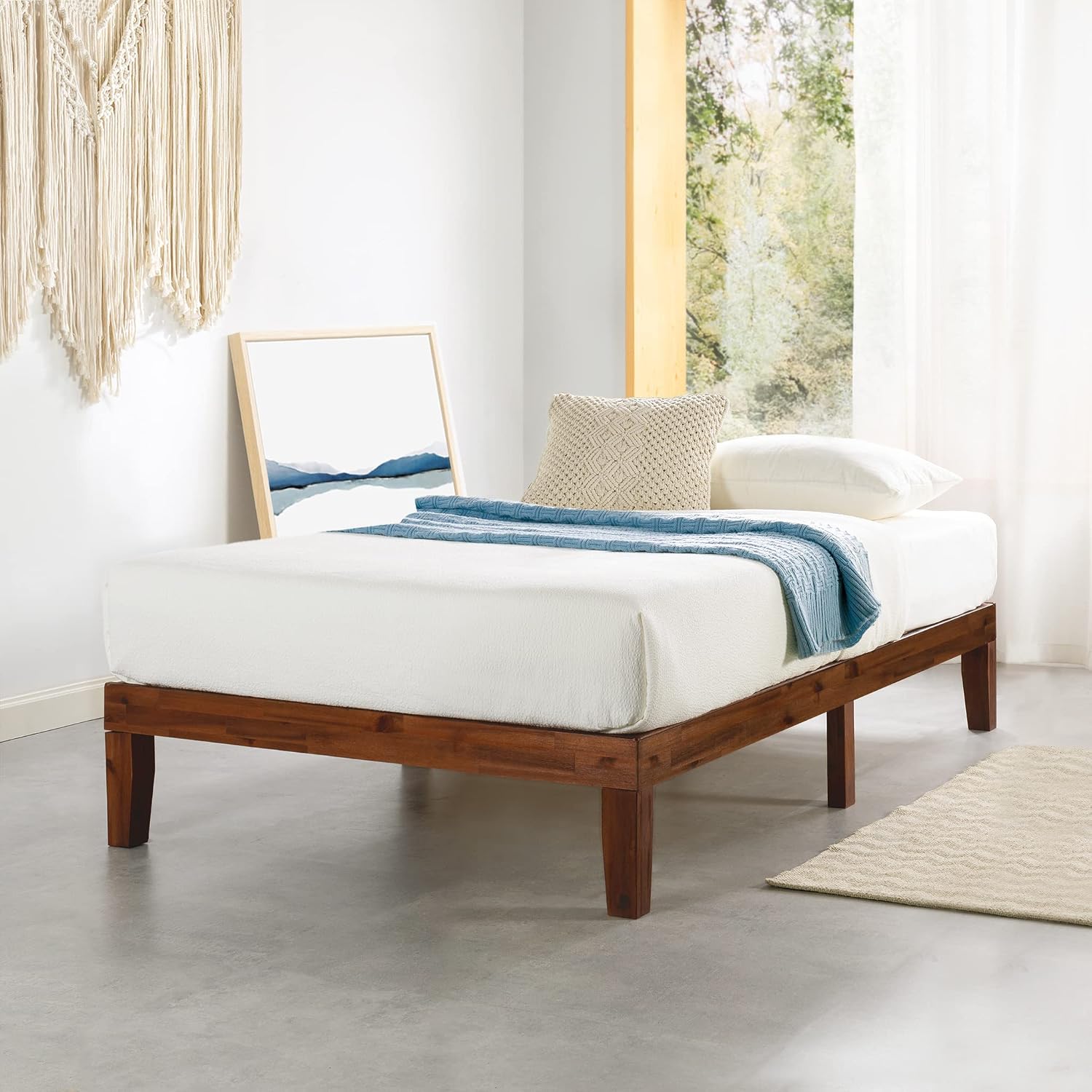
I have returned a bed frame for noise. Not a squeak — a whole percussion section, every roll-over announced to the downstairs neighbours at 2 a.m., and the return process for a queen frame is a special kind of penance involving a borrowed car and a restocking conversation I still think about. So when I say the first thing I judge on a platform bed is whether it will stay silent in month nine, I am not being poetic. Wood frames like this Mellow Naturalista start with an advantage metal cannot fake: joints that can be snug instead of merely tight, and slats with some give in them. The question is never the first night. The first night, everything is silent. The question is the two-hundredth.
The design is mid-century in the honest sense — tapered legs, a low profile, slats sitting in a frame rather than a forest of centre supports with plastic caps waiting to crack. Twelve inches of height puts the mattress top at a civilised level for a modern thick mattress, and leaves roughly eight and a half inches of clearance underneath, which is the difference between storage boxes that slide and storage boxes that almost slide. I measured that gap twice because the almost version has cost me a Saturday before. Under-bed space is a promise written in inches, and this one keeps it for the standard flat boxes, not the tall ones. Tall ones still lose. They always lose.
Where wood frames actually fail

Not the slats, usually. The slats get blamed because they are visible, but the failures I have lived through start at the side-rail joints, where hardware loosens in tiny increments and each increment buys a new sound. Solid wood helps here in a way particleboard never will: screws bite into something with grain, and re-tightening actually re-tightens instead of spinning in dust. The centre support matters more than the marketing admits, too. A queen bed is two people and a combined load that shifts, and a centre rail with a real leg under it is the difference between a frame that ages as one object and one that develops a valley with opinions.
Assembly. Let us talk about assembly, because the listing will not. The estimate on the box assumes the parts are perfect and you have done it before, and I have learned to double every such estimate the way you double a recipe’s ‘prep time’ written by someone who has never held a knife. Wood frames go together kinder than flat-pack metal in one respect — the pieces are few and large — and crueller in another: a misaligned pre-drilled hole in a big hardwood rail is not a problem you bully with a mallet without consequences. Check every rail before the first bolt. Retrofitting patience mid-build, floor covered in slats, is nobody’s good evening.

The finish is a lifestyle decision
White, white wash, espresso — the three finishes in the comparison box are the same bed wearing three levels of honesty about your life. White shows every scuff and dust line and looks wonderful for exactly the length of a photograph. White wash forgives, because variation is already in the finish. Espresso hides the most and darkens a small room the most. I say this as someone who once bought a white bed frame for a room with a dog. The dog won. Grain variation belongs in the same conversation: solid wood means no two rails match perfectly, and buyers raised on foil-wrapped perfection sometimes read real grain as a defect. It is not a defect. It is the receipt proving the material is what the listing said it was.
No box spring, and the mattress warranty people should be thanked for finally admitting it. A slatted platform with close spacing supports foam and hybrid mattresses the way they are designed to be supported, and the money a box spring would have eaten buys a better mattress or, in my case, the rug that made the room stop echoing. One caution that matters: slat spacing. Wide-spaced slats under a soft foam mattress give you that hammock sag between supports over time, and the fix — a bunkie board, an extra layer — quietly returns the cost you saved. Count the slats in the listing photos. It is a boring count that predicts your third year with the bed.
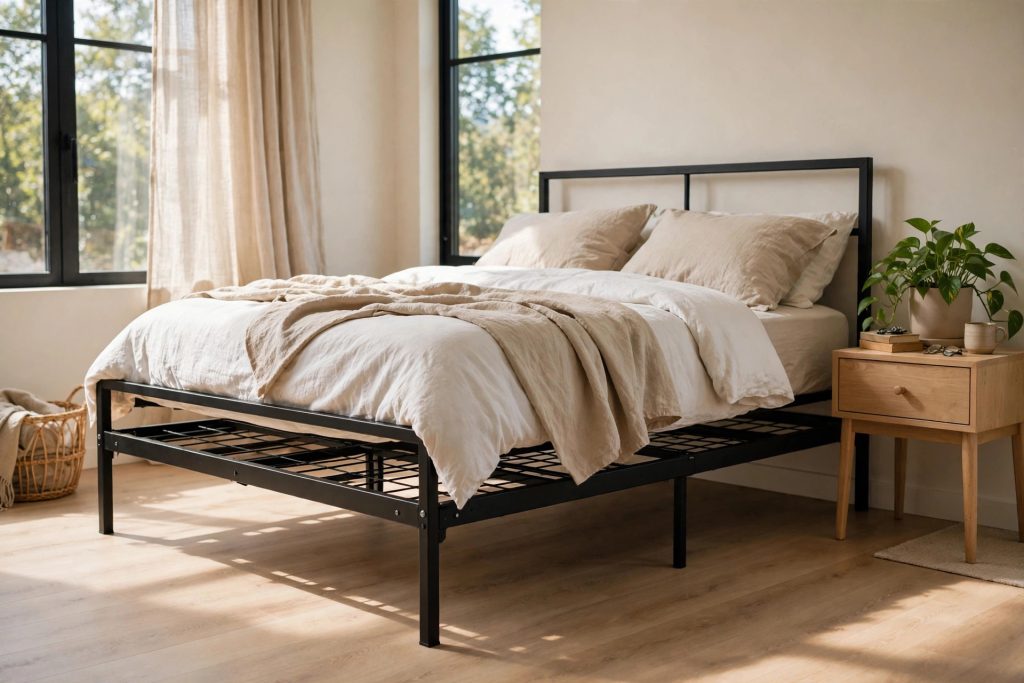
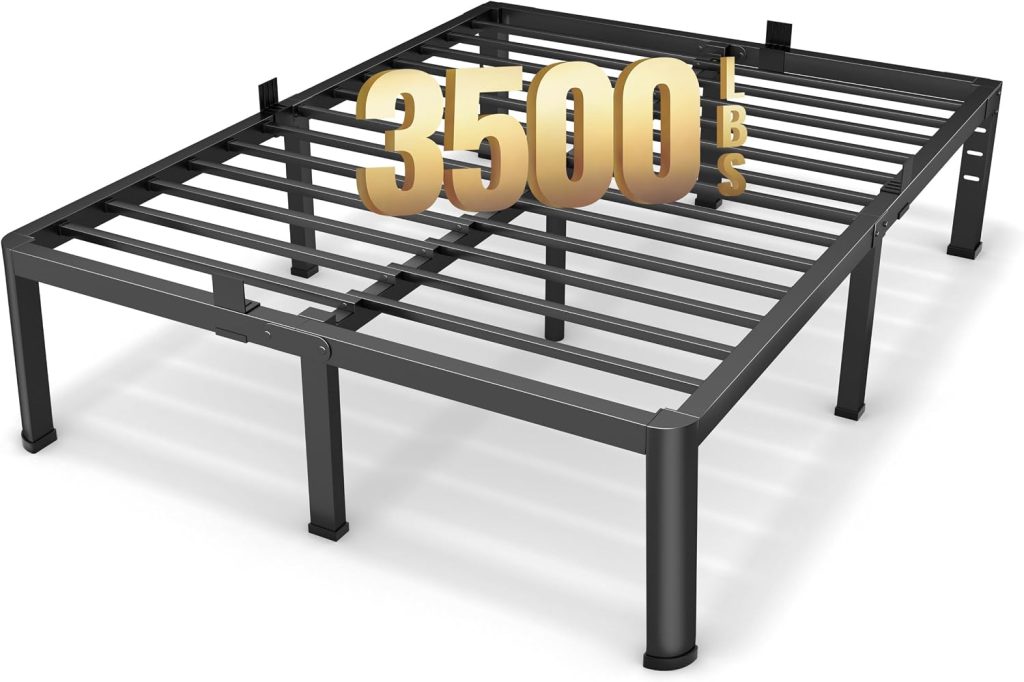
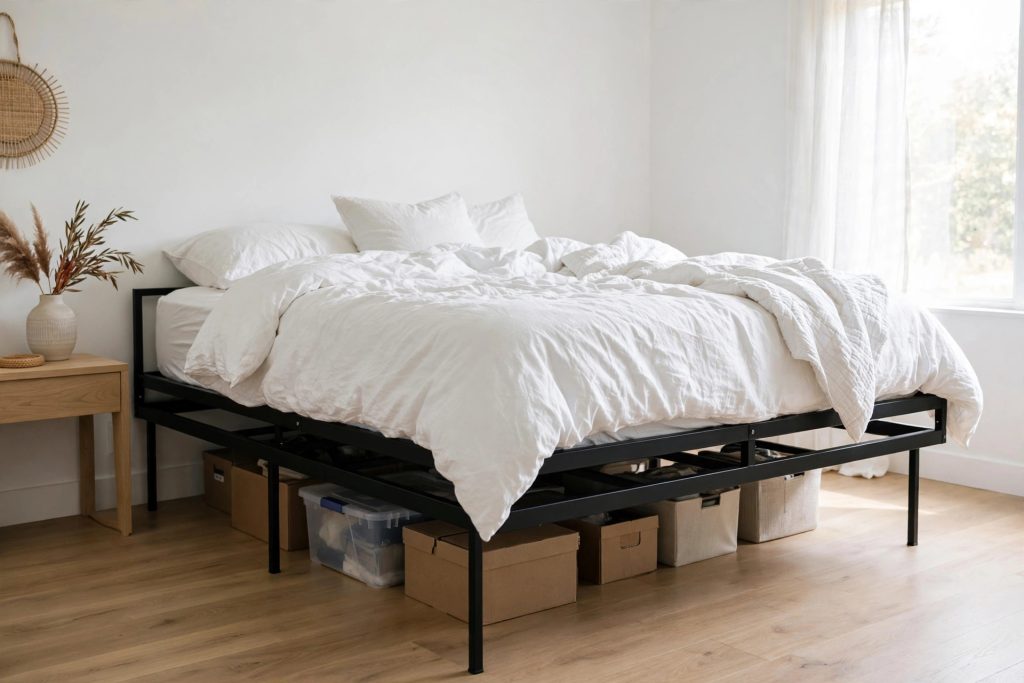
The metal end of this market argues back through the Superay 20-inch queen metal platform frame and the JETO queen metal bed with storage — different material, same inches, and the same silence test waiting in month nine.
Questions people actually ask
Will a solid wood platform bed stay quieter than a metal frame over time?
Generally yes, and the reason is the joints rather than the material’s image. Metal frames depend on bolts through thin walls and plastic-capped supports, and small looseness becomes noise quickly. Wood joints can be genuinely snug, screws bite into grain, and a seasonal re-tightening actually restores them instead of spinning. No frame is silent forever if it is never maintained — the honest routine is a five-minute bolt check when the seasons change. But the starting point and the recovery are both better with solid wood, which is why people who have returned a noisy metal frame tend to land here.
Do I need a box spring with the Naturalista 12-inch frame?
No. It is a platform design, and the slats are the support system — that is the point of the category. A box spring on top would push the sleeping surface awkwardly high and add a cost the design already removed. What matters instead is slat spacing relative to your mattress: foam and soft hybrids want closer support. If your mattress maker specifies a maximum slat gap, measure the frame’s spacing against it before ordering. That single check prevents the slow sag that people blame on the mattress in year two.
How long does assembly really take?
Longer than the box says, like every bed frame ever sold. A first-timer working alone should plan on a proper hour and lay every rail out first, checking the pre-drilled holes line up before committing to a sequence. Two people make the side rails a non-event. The instructions are pictorial, and one step in every wood frame I have built is ambiguous in a way that only resolves when you dry-fit the centre support. Dry-fit first, tighten in sequence, and re-check the bolts after the first week of sleeping — wood settles, and the second tightening is the one that counts.
White or espresso — which finish ages better in a real bedroom?
White wash is the forgiving middle: variation is built into the finish, so scuffs and grain differences read as texture. Gloss white shows dust and marks soonest and looks the best in listings, which is not the same thing. Espresso hides the most wear and shrinks a small or pale room visually. All three are the same frame structurally. Choose by your light and your honesty about housekeeping, not by the styled photograph — the photograph’s bedroom has no dog, no laundry chair, and no 2 a.m. glass of water balanced on the rail.
It stands in the room now doing the thing I asked of it, which is nothing, silently, every night. Sometimes I catch myself listening for it the way you listen for a fridge hum you once had to fix. Nothing. The old metal frame is a story I tell; this one is furniture, which is the highest praise a bed frame can earn from a person who has returned one — it has stopped being a topic.
This article contains affiliate links. If you buy through them, we may earn a commission at no extra cost to you.