
SUPERDANNY Extension Cord and Flat Plug Surge Protector: Your Essential Guide to Powering Up
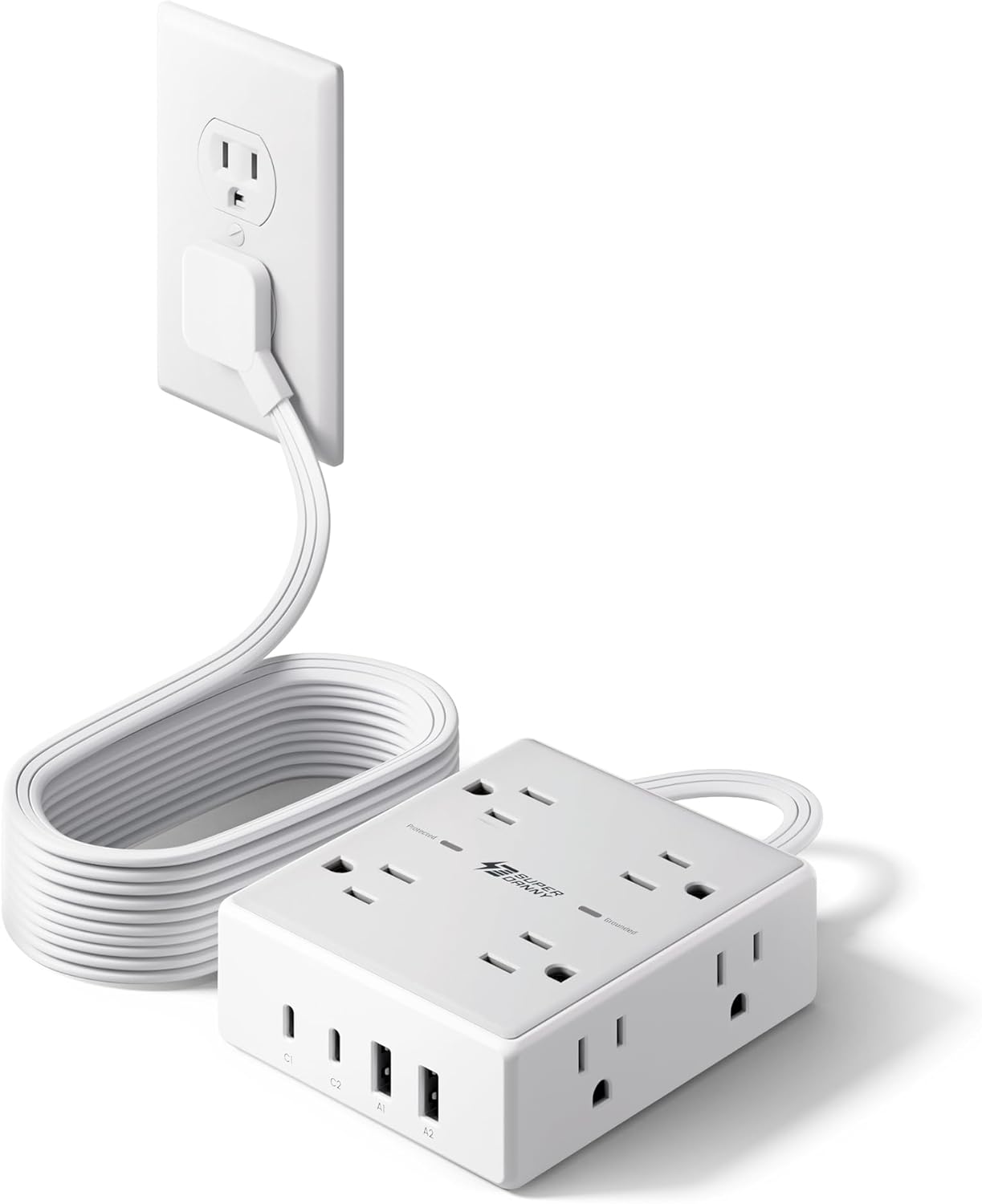
This guide cuts through the noise surrounding the SUPERDANNY Extension Cord, Flat Plug Surge Protector Power Strip, 10Ft | 8 AC & 4 USB Ports (2 USB C), Surge Protector with 1050J, Desk Charging Station for Home Office, College Dorm Room Essentials. We’re looking at what makes a product like this stand out, who it’s truly for, and whether it earns its spot in your setup. If you’re tired of tangled cords and hunting for an open outlet, this breakdown is for you.
Quick Answer
The SUPERDANNY extension cord configuration is a solid choice for anyone needing a centralized, versatile charging hub in a compact space, especially for home offices or dorm rooms. Its combination of numerous AC outlets, high-speed USB-C ports, and a space-saving flat plug addresses common modern power frustrations directly. It’s certainly a step up from basic power strips, offering genuinely useful features for today’s gadget-heavy lives.
What to Look For (The Buying Criteria)
Navigating the world of power strips and surge protectors can feel surprisingly complex, right? You’d think it’d be simple – just plug in and go. But when you’re eyeing something like the SUPERDANNY extension cord with its specific feature set, a few things really matter. Don’t just grab the first multi-outlet strip you see. Think about how you actually use power.
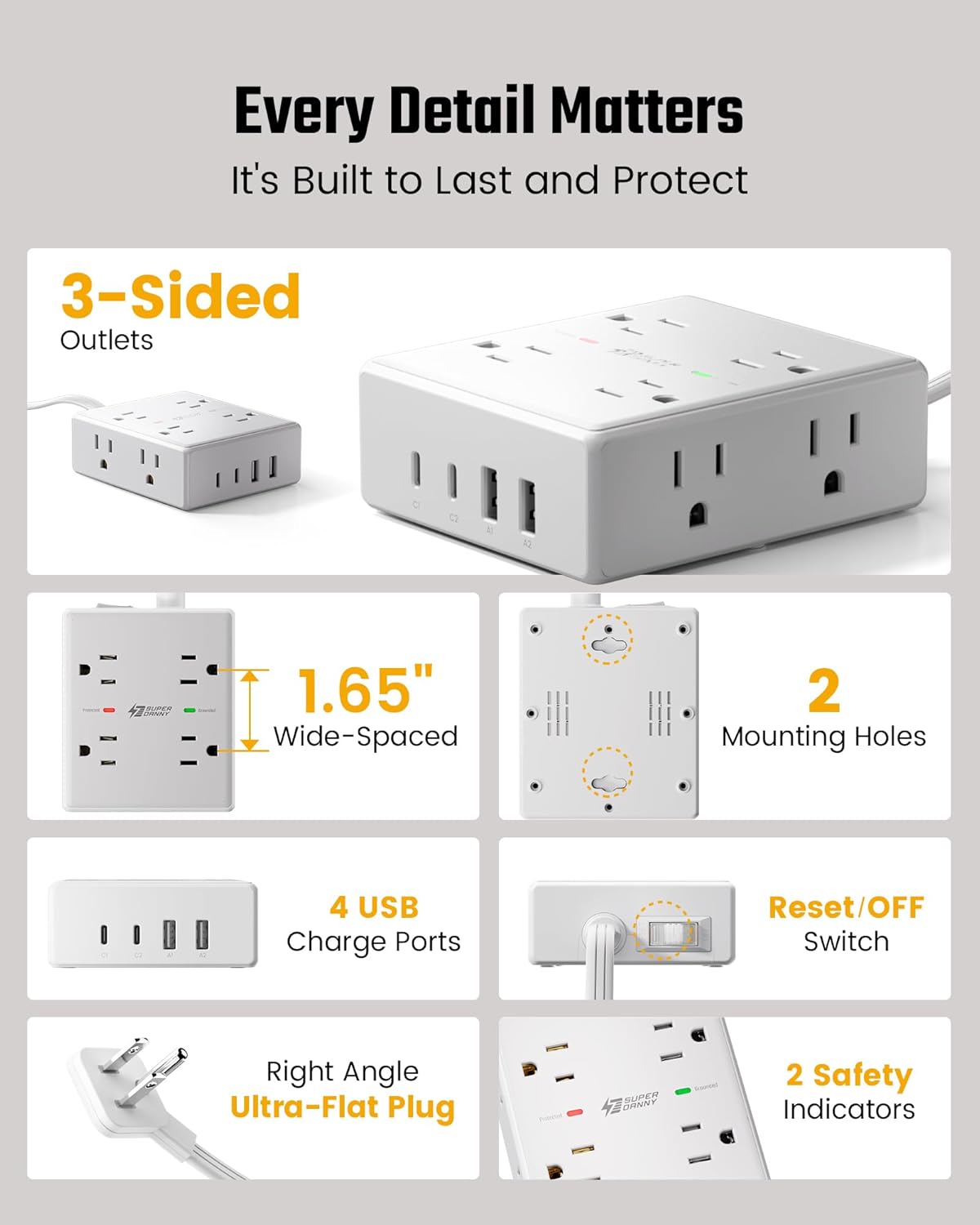
First up, that flat plug design. Seriously, this often gets overlooked. A standard chunky plug sticks out from the wall like a sore thumb, pushing furniture away or making it impossible to use outlets behind beds or desks. A flat plug, like the one on this SUPERDANNY unit, lets you tuck things tight against the wall. It’s a small detail that makes a huge difference in tight spaces, but it does mean the cord often exits downwards, which might not be ideal if your outlet is high up and you need the cord to go up. Consider your furniture placement carefully.
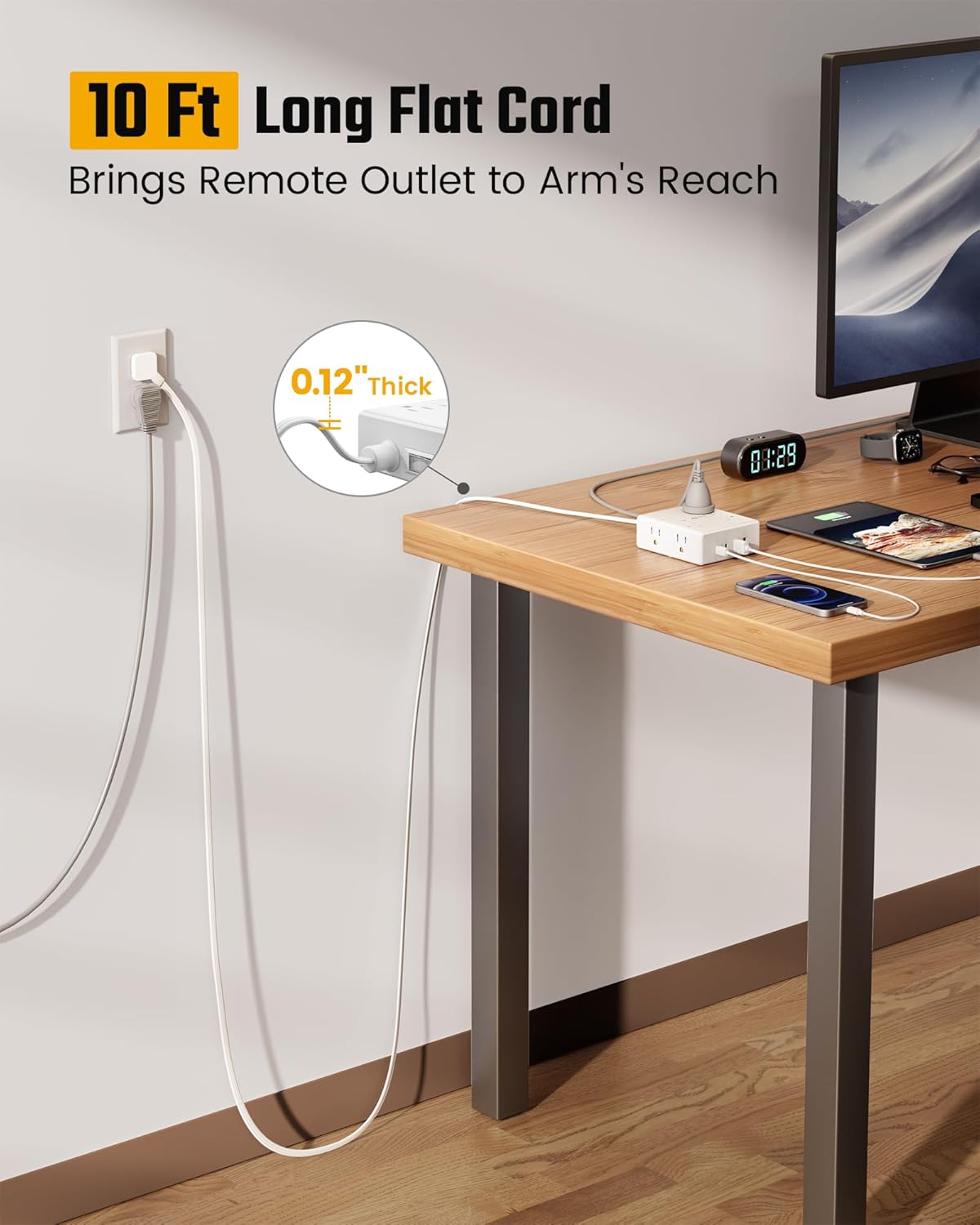
Then there’s cord length and flexibility. A 10-foot cord, as offered here, is quite generous. This kind of length means you aren’t stuck right next to the wall outlet, giving you freedom to position the actual power strip where it’s most convenient – say, on your desk, rather than fumbling around under it. Too short, and you’re frustrated. Too long, and you’ve got extra cable to manage, which can be a real pain. It’s a Goldilocks situation, and 10 feet usually hits that “just right” spot for most rooms, though a super sprawling setup might still need more.
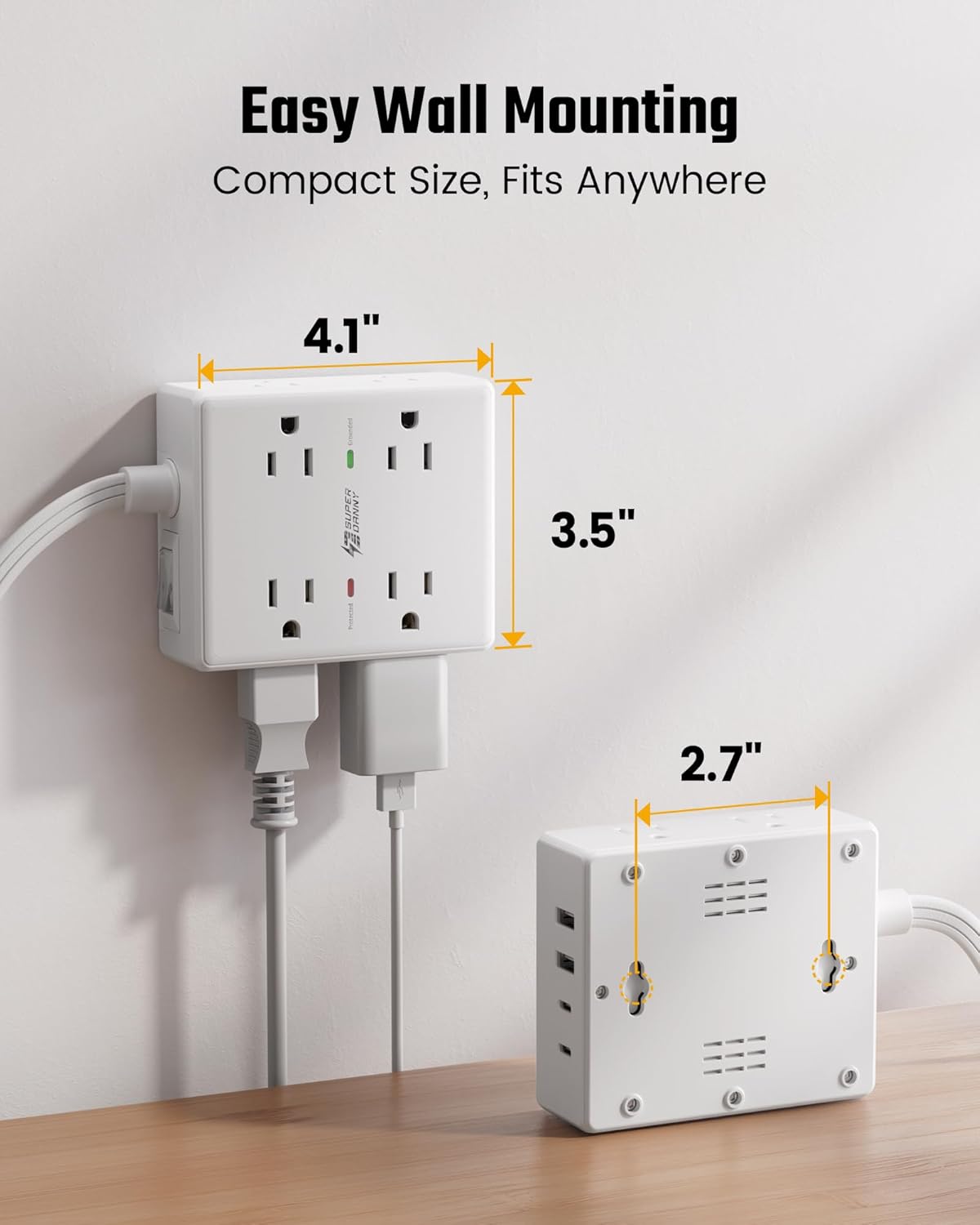
Now, let’s talk outlet configuration and spacing. Eight AC outlets? That’s substantial. But it’s not just about the number; it’s about how they’re arranged. Are they spaced widely enough to accommodate those bulky “wall wart” chargers that seem to infest all our devices? The SUPERDANNY design often addresses this with some angled or spread-out ports, but even so, eight simultaneously used wall warts can be a challenge on any strip. It’s a constant battle, isn’t it? If you have many large plugs, always double-check product images for spacing.
Crucially, we’ve got USB charging capabilities. The inclusion of four USB ports, with two of them being USB-C, is a big deal. Older power strips often only have slow USB-A ports, which are increasingly irrelevant for modern phones, tablets, and even laptops. USB-C with proper power delivery (PD) output can fast-charge compatible devices, reducing clutter by eliminating separate charging bricks. However, not all USB-C ports are created equal in terms of wattage; if you plan on charging a laptop directly, you need to ensure the power output is sufficient, and not just a trickle charge. That’s a common pitfall.
Next up, surge protection rating (joules). This particular unit specifies 1050J. What does that mean? Joules measure how much energy the surge protector can absorb before it fails. A 1050J rating is decent for general electronics like lamps, chargers, and small appliances. For really sensitive, expensive gear – think high-end gaming PCs, professional audio equipment, or massive TVs – you might want something with a much higher joule rating, perhaps 2000J or more, and even then, remember surge protectors aren’t eternal. Their protection capability degrades over time or after a major surge. Don’t forget that.
Finally, consider safety features and certifications. This isn’t the sexy part, but it’s vital. Look for features like overload protection, which prevents your devices from drawing too much power and potentially causing a fire. A main power switch is also key for easily cutting power to everything. Fire-resistant casing is another common but important safety aspect. These aren’t just buzzwords; they’re your peace of mind. A cheap, uncertified power strip can be a genuine hazard, and skimping here isn’t worth the risk.
How to Match the Product to Your Situation
Choosing the right power strip isn’t a one-size-fits-all deal. Your setup, your habits, and your tech arsenal all play a role. A product like the SUPERDANNY Extension Cord, Flat Plug Surge Protector really shines for certain user types.
The Dorm Room Dynamo
You’re living in a compact space, maybe sharing a room, and every inch of wall outlet access is precious. You’ve got a laptop, a phone, a tablet, probably some desk lamp, a mini-fridge, and who knows what else. The flat plug means your bed or desk can actually sit flush against the wall. That 10-foot cord provides the reach you need to put the charging hub on your desk, making it accessible. The multiple AC outlets handle your larger devices, while the integrated USB ports, especially the USB-C ones, are perfect for keeping your phone and tablet juiced without bringing extra bulky chargers. You don’t have space for clutter, and this unit aims to reduce it.
The Home Office Hub
Your home office isn’t just a desk; it’s a command center. Multiple monitors, a laptop, maybe a printer, a desk lamp, a wireless charger pad, headphones – the list goes on. You need reliable power and efficient charging. The SUPERDANNY setup works well as a central desk charging station. Its array of AC outlets can handle your core peripherals, while the USB-C ports are clutch for fast-charging your phone or a secondary tablet. The flat plug ensures your desk can be positioned exactly where you want it without unsightly gaps. Cable management is still your job, though, even with a neat power strip. It won’t magically organize everything for you.
The Casual User with Clutter
Maybe you’re not in a dorm or a dedicated home office, but you’re tired of the jumble of chargers behind your nightstand or entertainment center. Your living room needs power for a TV, soundbar, streaming stick, and then everyone’s phone needs charging when they visit. This kind of power strip brings order. The 8 AC outlets mean fewer adapter hunts, and the USB ports handle personal devices. That long cord lets you hide the main unit or place it subtly, reducing visual noise. It’s about practicality, making daily charging less of a scavenger hunt.
Product Type Comparison
Let’s look at how a unit like the SUPERDANNY extension cord stacks up against its relatives in the world of power delivery. Different needs, different solutions.
| Type/Tier | Best For | Price Tier | Key Feature | Watch-Out |
|---|---|---|---|---|
| Basic Wall Tap Surge Protector | Minimal devices, temporary use, budget-conscious | Budget-friendly | Direct wall plug, simple surge protection | Limited outlets, often no USB, bulky, no cord length for flexibility. |
| This is your entry-level solution, great for a guest room or a single appliance that needs a bit of surge safety, but it won’t solve your modern charging dilemmas. | ||||
| Standard Long Cord Power Strip | Extending power reach, multiple AC devices | Mid-range | Multiple AC outlets, flexible cord length | Usually lacks USB-C, plugs can be poorly spaced, often has a bulky wall plug. |
| These are ubiquitous, handling numerous AC plugs, but they often fall short on smart charging and design aesthetics, leaving you with a wall of bricks. | ||||
| Integrated Desk Charging Station (like SUPERDANNY) | Modern multi-device setups, home office, dorms | Mid-range | Flat plug, AC outlets + USB-C, compact design | Joule rating might not be for high-end AV equipment, USB wattage varies. |
| Here’s where the SUPERDANNY unit fits in; it balances functionality, form, and modern charging needs in one package, aimed at everyday convenience. | ||||
| High-Capacity Pro-Grade Strip | Expensive electronics, demanding power loads | Premium | High joule rating, advanced filtering, robust build | Significantly more expensive, often overkill for basic needs, larger footprint. |
| When you’re protecting thousands of dollars in sensitive equipment, this is the route. It’s specialized, but not everyone needs that level of protection. |
Powering a Cramped Dorm Room Desk
Dorm rooms are notorious for their lack of outlets and limited space. You’re trying to set up a study zone, a relaxation spot, and a charging station, all within a few square feet. That’s a tall order. A SUPERDANNY extension cord with its 10-foot reach is a lifesaver here. You can snake the cord from a far-off wall outlet, maybe behind a dresser, and bring the power hub right onto your desk. The flat plug is a godsend; it means your desk can sit snug against the wall, gaining you precious inches. And those USB-C ports? They make sure your phone and earbuds charge up quickly, leaving the AC outlets for your laptop power brick and that essential desk lamp. It’s all about maximizing utility in minimal real estate.
Streamlining Your Home Office
Your home office demands both functionality and a semblance of tidiness. Nobody wants a spaghetti junction of cables under their feet. The SUPERDANNY Flat Plug Surge Protector really helps streamline things. Place it directly on or near your desk. Connect your monitor, laptop dock, printer, and whatever else requires AC power. Then, use the integrated USB-C ports to charge your phone and wireless peripherals. This centralization avoids needing separate wall chargers and helps consolidate cables. The flat plug ensures the main connection to the wall is discrete, so your office looks cleaner, even if your actual desk surface remains perpetually cluttered. (Mine certainly does, a constant battle.)
Tackling the “Wall Wart” Problem
Ah, the dreaded wall wart. Those bulky, oddly shaped power adapters that devour adjacent outlets on any standard power strip. It’s a universal annoyance. While no single power strip can completely solve this design flaw in modern electronics, the smart layout often found in a SUPERDANNY Extension Cord aims to mitigate it. By offering outlets that are slightly spaced out or angled, it attempts to give each adapter a fighting chance at its own space. It won’t work miracles if you have eight gargantuan bricks, but for a mix of standard plugs and a few larger ones, it definitely improves the situation. Sometimes, you just need a bit of elbow room for your plugs.
Common Mistakes
People often make a few blunders when picking out or using power strips and surge protectors. Avoid these pitfalls to get the most out of your purchase.
One big mistake is ignoring the joule rating entirely. Many just see “surge protector” and assume it’s all good. But a low joule rating means minimal protection for sensitive electronics. It might protect against a minor spike, but a serious surge? Not so much. Match the joule rating to the value of the equipment you’re protecting.
Another common no-no is daisy-chaining power strips. That means plugging one power strip into another. Seriously, don’t do it. This creates a fire hazard by potentially overloading the first outlet and bypassing safety mechanisms. It’s a huge electrical safety risk and can void product warranties. Just don’t.
People also often overload the power strip. Each power strip has a maximum current rating, usually specified in amps. Plugging in too many high-power devices (like space heaters, hair dryers, microwaves) can exceed this limit, tripping the breaker on the strip or even in your home, and posing a fire risk. The SUPERDANNY extension cord has eight AC outlets, but that doesn’t mean you can plug in eight high-draw appliances. Be mindful of total wattage.
Finally, not fully utilizing the USB-C ports properly is a missed opportunity. Many users will still plug their phone’s wall adapter into an AC outlet instead of directly using the available USB-C port, especially if they’re not sure about the port’s charging speed. Verify the wattage output of the USB-C ports to ensure they meet your device’s fast-charging needs. You bought the feature, use it!
Why/How/What
Why is a flat plug a game-changer?
A flat plug, like the one found on the SUPERDANNY Extension Cord, is genuinely a game-changer because it addresses a fundamental design frustration. Standard plugs protrude several inches from the wall, making it impossible to push furniture flush. This wastes space and looks messy. A flat plug sits nearly flush against the wall, allowing you to reclaim those lost inches behind a sofa, a bed, or a desk. It’s a small innovation with significant practical impact, especially in tight living quarters.
How do surge protectors really work?
Surge protectors, at their core, use components called Metal Oxide Varistors (MOVs). When a sudden voltage spike (a surge) occurs, these MOVs essentially shunt the excess electricity away from your devices and absorb it. Think of them as sacrificial lambs; they take the hit so your electronics don’t. The joule rating, like the 1050J on the SUPERDANNY Flat Plug Surge Protector, indicates how much energy these MOVs can absorb before they degrade or fail. They don’t last forever, especially after significant surges, so periodic replacement is good practice.
What’s the deal with USB-C for charging?
USB-C is the modern standard for good reason. It’s reversible, so no more fumbling to plug it in the right way. More importantly, it supports much higher power delivery (PD) than older USB-A ports. This means a single USB-C port can fast-charge a wider range of devices, from smartphones and tablets to even some laptops, much quicker than a traditional USB-A port. For a product like the SUPERDANNY Extension Cord that aims to be a desk charging station, having multiple USB-C ports is critical for current and future device compatibility.
FAQ
How long does a surge protector typically last?
A surge protector’s lifespan isn’t fixed; it depends on how many surges it absorbs. Every time it takes a hit, its protection capability slightly diminishes. Most recommend replacing them every 3-5 years, or immediately after a major power event like a lightning strike.
Can I plug a space heater into an extension cord power strip?
Generally, no. Space heaters, air conditioners, and other high-wattage appliances draw a lot of current and should almost always be plugged directly into a wall outlet. Plugging them into an extension cord or power strip, even one with surge protection like the SUPERDANNY Extension Cord, can overload the strip and create a fire hazard.
Is a 10-foot cord too long for a desk?
A 10-foot cord offers flexibility, letting you route power cleanly. For a desk, it means you can reach an outlet that’s a bit further away or position the power strip precisely where you want it. Any excess cord can usually be managed with simple cable ties or wraps to keep it tidy.
What does “1050J surge protection” mean for my devices?
1050J indicates the amount of energy the surge protector can absorb during a power spike. It’s a decent level of protection for everyday electronics like phones, lamps, and most computer peripherals. For highly sensitive or very expensive equipment, a higher joule rating, say 2000J+, is often recommended for added peace of mind.
Why do I need USB-C ports if I have traditional USB-A ones?
USB-C ports, especially those with Power Delivery (PD) capabilities, offer faster charging and are the new standard for many modern devices. They can charge your phone much quicker and even power some laptops, reducing the need for bulky AC adapters. The SUPERDANNY extension cord recognizes this shift.
Can this unit protect against lightning strikes?
While a surge protector like the SUPERDANNY Flat Plug Surge Protector offers protection against many power surges, a direct lightning strike is usually too powerful. No residential-grade surge protector can guarantee protection against a direct hit. For comprehensive lightning protection, you’d need whole-home surge protection installed at your electrical panel.
What’s the benefit of a “desk charging station” design?
A desk charging station consolidates multiple power needs into one accessible unit on your desk. Instead of reaching under your desk or fumbling behind furniture, all your AC and USB ports are right there. This design, like that of the SUPERDANNY extension cord, reduces clutter and makes daily charging far more convenient.
Final Recommendation
For most folks navigating the demands of modern tech in a compact living or working space – think dorm rooms, small apartments, or dedicated home office setups – the SUPERDANNY Extension Cord, Flat Plug Surge Protector Power Strip lands squarely in the “smart buy” category. Its combination of a space-saving flat plug, generous 10-foot cord, ample AC outlets, and, crucially, those high-speed USB-C ports, means it’s built for today’s devices. It effectively serves as a centralized power hub, reducing clutter and making your charging life a good deal simpler.
If your primary concern is convenience, versatility, and getting rid of some of that charger sprawl, this integrated desk charging station is a strong contender. You’re getting a lot of features in a thoughtful design, which is more than you can say for many basic power strips out there. It’s a practical upgrade that addresses real-world power frustrations head-on.
#SUPERDANNY #Extension #CordFlat #Plug #Surge #Protector #Power #Strip10Ft #USB #Ports #USB #CSurge #Protector #1050JDesk #Charging #Station #Home #OfficeCollege #Dorm #Room #Essentials




Reviews
There are no reviews yet.