
Wired Headphones for Kids for School: Volume Limits, Mics, and Making Sense of the Options
Navigating the dizzying array of wired headphones for kids can feel like a full-time job, especially when you’re trying to find that sweet spot for school, home, and travel. This guide cuts through the noise, focusing specifically on wired headphones for kids for school, emphasizing features like the crucial 3.5mm cord, safe volume limits (85dB/94dB), and built-in microphones. We’ll explore which options truly deliver value for your child, whether they’re a toddler starting online lessons or an older student needing focus for tablet-based learning. It’s about finding robust, comfortable over-ear headphones that can survive the backpack and the daily grind.
Quick Answer
For most children needing wired headphones for school and general use, prioritize models with a safe volume limit (85dB to 94dB max) and a durable 3.5mm cord. Over-ear designs generally offer better passive noise isolation and comfort for longer sessions, while a built-in microphone is pretty essential for interactive learning these days. Look for a foldable design for portability and, if your little one is really young, consider specific toddler headphones to ensure a proper fit and a truly robust build.
What to Look For (The Buying Criteria)
Honestly, picking out headphones for kids isn’t just about grabbing the cheapest pair adorned with their favorite cartoon character. There’s a lot more under the hood that impacts safety, durability, and whether your child will actually use them. These aren’t just gadgets; they’re tools for learning and peace of mind.
Safety First: The Crucial Volume Limits
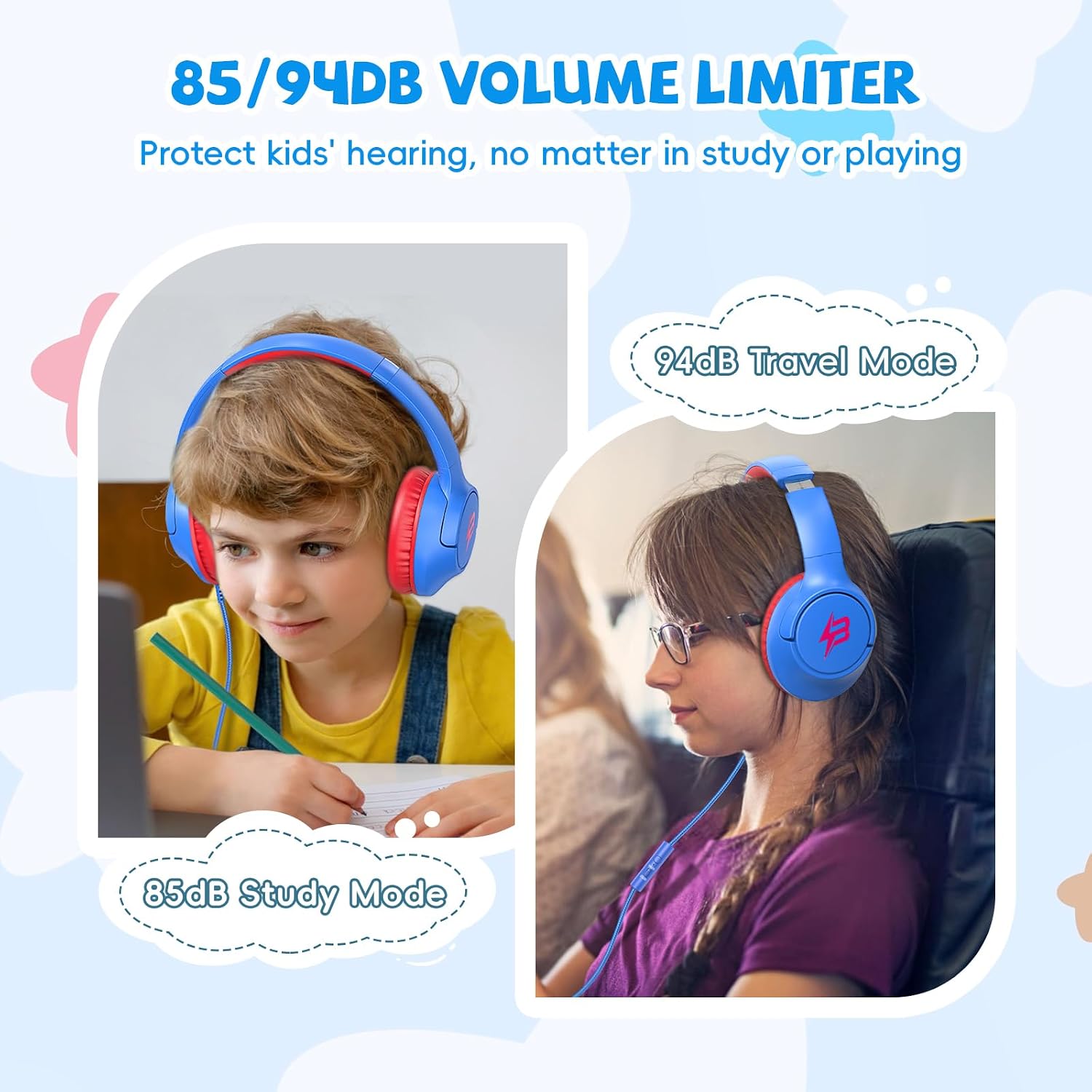
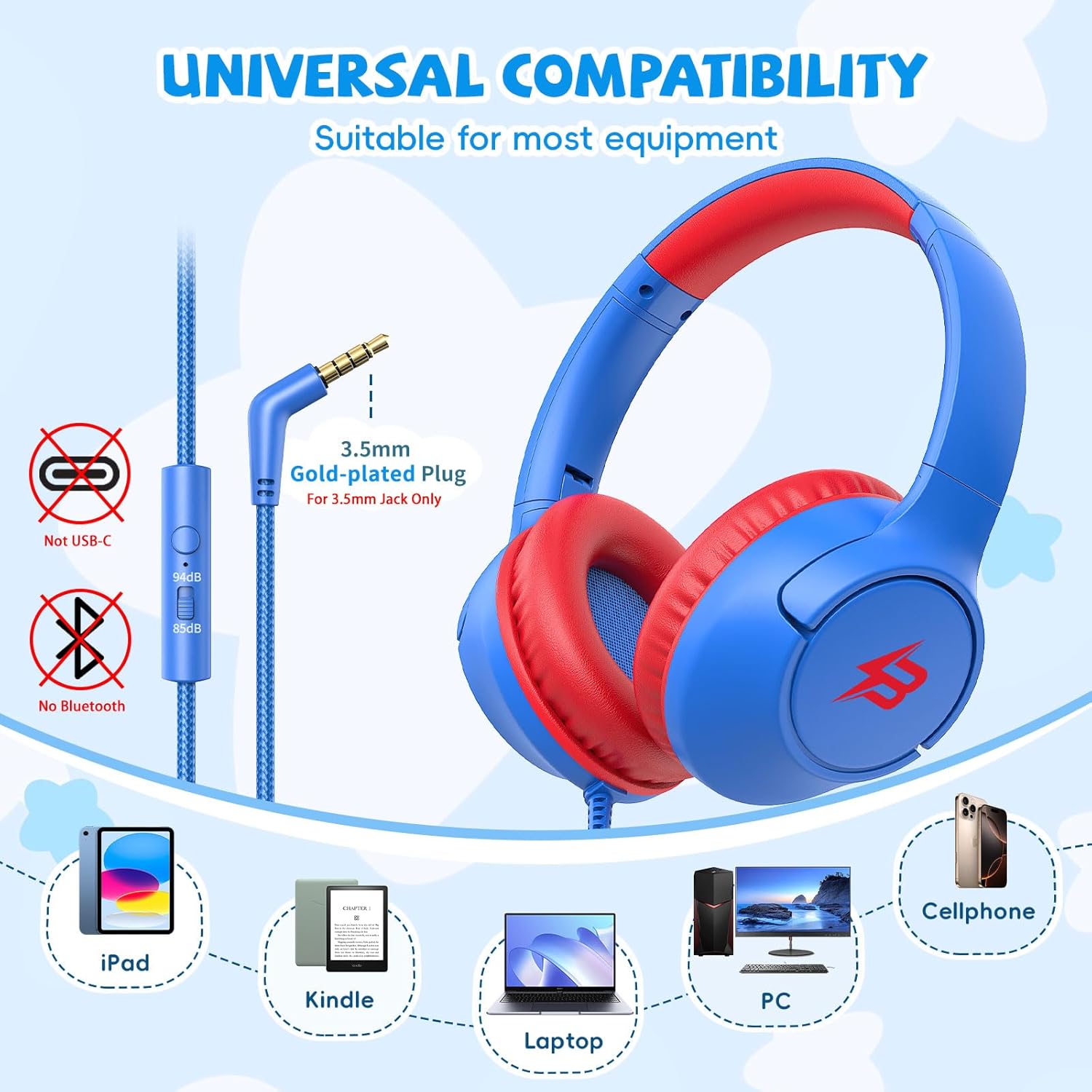
This is, without a doubt, the most important factor. Kids’ ears are delicate, still developing, and super susceptible to damage from prolonged exposure to loud sounds. That’s why the safe volume limit isn’t just a suggestion; it’s a non-negotiable feature. Most quality children’s headphones will specify an 85dB or 94dB maximum.
What’s the difference? Well, 85dB is typically considered the safer, more conservative limit for extended listening periods, like a full school day or a long flight. It means even if your child cranks the volume all the way up, it won’t exceed a level considered safe. Headphones capped at 94dB offer a bit more “oomph,” which might be preferable in noisier environments like an airplane or a bustling classroom, but you’ll want to be more mindful of listening duration. The trade-off here is clear: absolute safety versus adaptability to noisier surroundings. A volume limiter isn’t a gimmick; it’s a necessary guardian for tiny eardrums.
Connection Type: The Unsung Hero – A Solid 3.5mm Cord
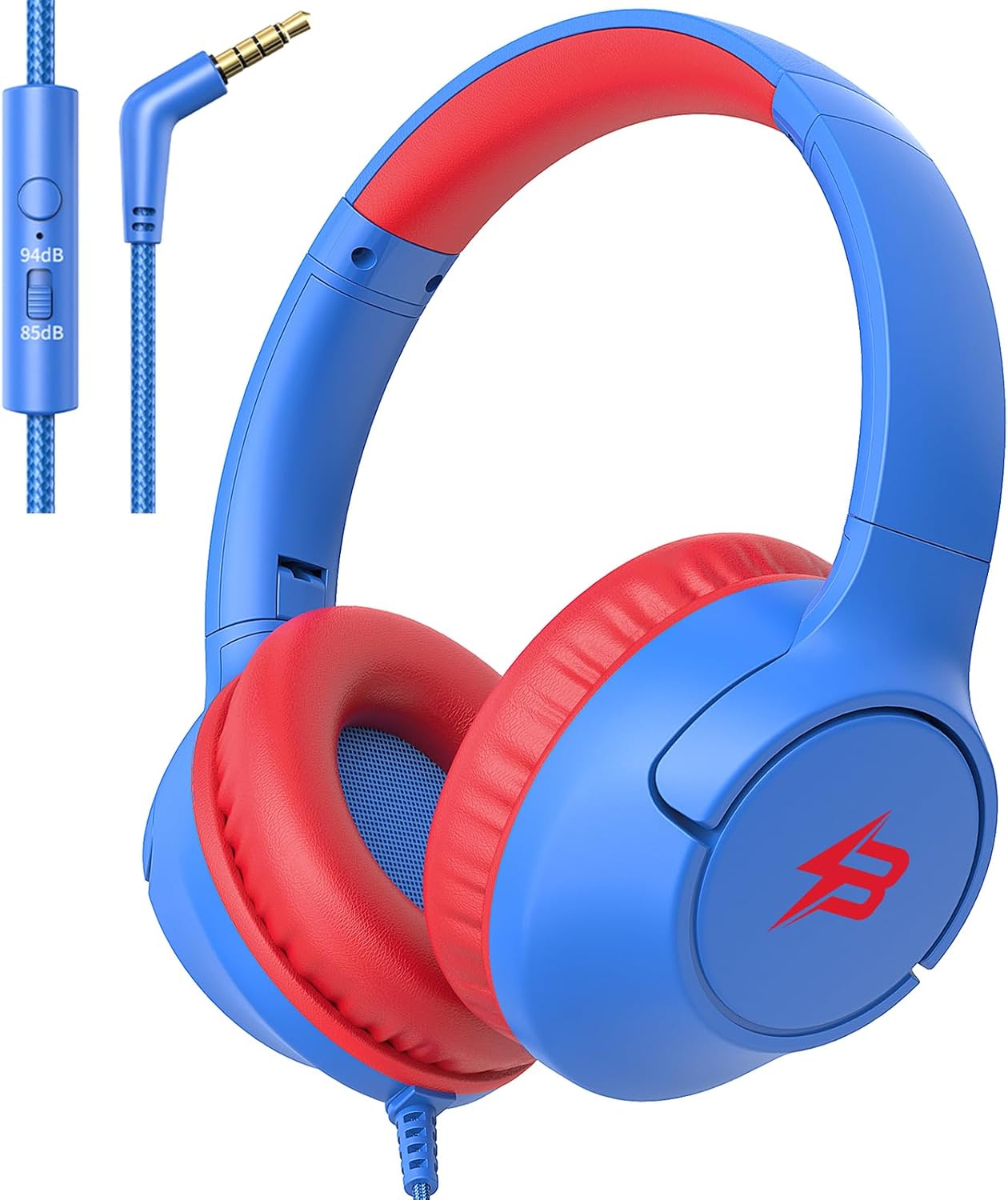
Yeah, wireless seems cool, but for school, for younger kids, and for reliability, the 3.5mm cord is still king. Why? No charging needed. Ever. Imagine the frustration of a dead battery right before an online class. With a wired connection, you just plug it in, and it works. This universality means it’s compatible with almost everything: tablets, Kindles, Chromebooks, laptops – you name it.
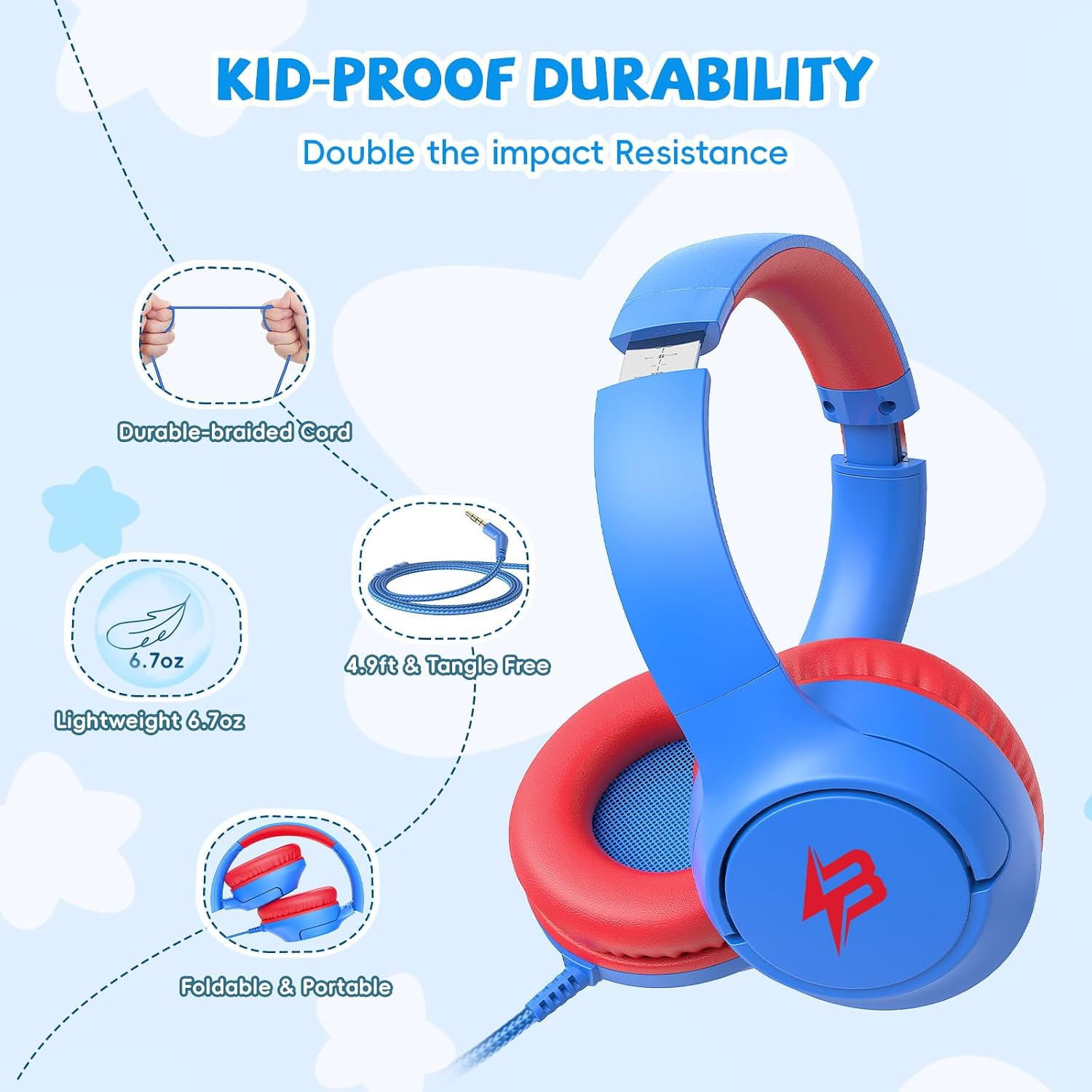
The downside? Wires can tangle. They can snag. And they can, inevitably, break if they’re not built tough. So, when you’re looking, pay attention to the cord itself. Is it braided? Is it thick? Does it feel like it can withstand being shoved into a backpack and pulled out countless times? A durable, tangle-resistant 3.5mm cord is a feature worth paying a little extra for.
Comfort and Fit: Happy Ears, Focused Minds
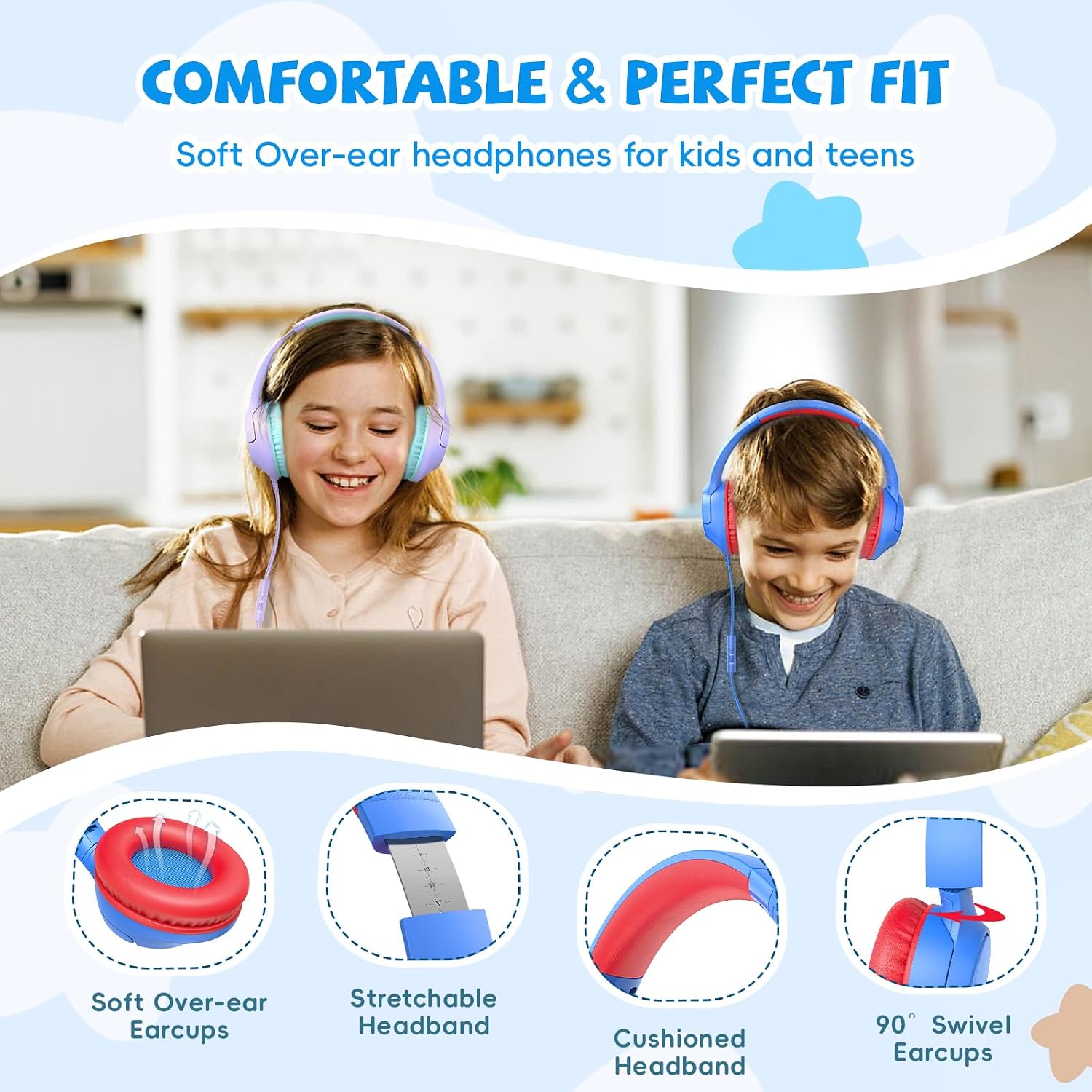
Ever tried wearing headphones that pinch or slip off constantly? It’s miserable. Now imagine that on a smaller head, for hours. Comfort is paramount, particularly with over-ear headphones. Look for soft, breathable earcups that completely cover the ear – this also helps with passive noise reduction. The headband should be adjustable, offering a snug yet gentle fit without undue pressure.
For toddler headphones, this is even more critical. Their heads are smaller, more delicate. Many “kids’ headphones” are designed for elementary schoolers, so if you’re buying for a preschooler, double-check that the adjustability range truly caters to tiny heads. Ill-fitting headphones won’t just be uncomfortable; they might not even stay on, defeating the whole purpose. This is a common pitfall people don’t think about until the kid complains.
Durability: Built to Last (and Be Bashed)
Let’s be real. Kids are not known for their delicate handling of electronics. Headphones for children, especially those destined for the rigors of school and travel, need to be tough. We’re talking flexible headbands that can twist without snapping, reinforced cable connections, and sturdy plastic that can handle a drop or two.
Some models boast virtually indestructible designs, using materials that bend rather than break. This isn’t just marketing hype; it’s a practical necessity. Investing in a slightly more robust pair upfront often saves you money in the long run by avoiding frequent replacements. Trust me, I’ve seen people spend way too much on flimsy models that barely make it through a single term.
Communication: The Built-in Microphone
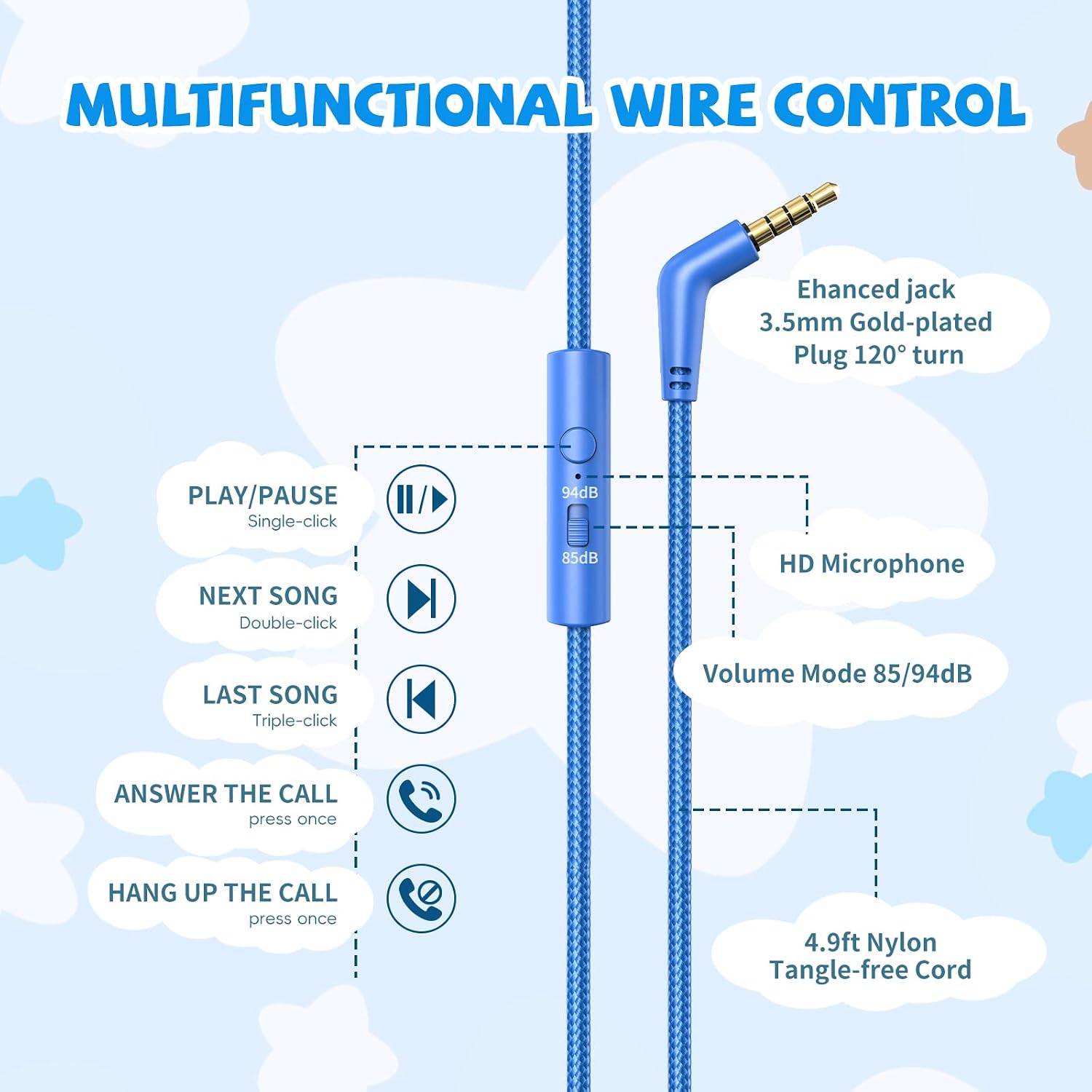
With the rise of online learning, virtual playdates, and video calls, a built-in microphone has shifted from a nice-to-have to an essential feature. Whether it’s for asking a question in a Google Meet, chatting with grandparents, or recording a school project, clear audio input is crucial.
You’ll find two main types: an inline mic on the cable or a small boom mic that extends from one earcup. Boom mics often offer clearer voice pickup because they’re closer to the mouth, but they can also be more fragile. Inline mics are more discreet but sometimes pick up more background noise. Consider how and where your child will be using them. For quiet home use, inline might be fine. For a bustling classroom, a good boom mic could be a lifesaver for their teacher’s ears.
Portability & Storage: The Foldable Advantage
When headphones are tossed into a backpack alongside textbooks, lunchboxes, and whatever else kids manage to cram in there, a foldable design becomes a godsend. It protects the headphones by allowing them to collapse into a more compact, less vulnerable shape. This is particularly useful for airplane travel or daily commutes to school.
Some models even come with a drawstring pouch or a hard case. A case adds another layer of protection, preventing scratches and keeping the cord tidy. If your child will be taking their headphones out of the house frequently, don’t underestimate the value of a design that folds down neatly. This small detail truly impacts the longevity of the product.
How to Match the Product to Your Situation
Every child and every family’s routine is different. The “perfect” pair of headphones for one kid might be a total mismatch for another. Let’s think about who’s using them and where.
The E-Learning Explorer (Younger Kids, Home/Early School)
This is your preschooler or early elementary student who might be doing tablet-based activities, watching educational videos, or having their first taste of online interaction. For them, ultimate safety is the priority. You absolutely want that 85dB volume limit. The headphones must be virtually indestructible, able to withstand drops, tugs, and maybe even a chew test (though hopefully not!). Comfort for small ears is huge; they won’t wear anything that feels off. Simplicity is key. Think toddler headphones that are simple plug-and-play, no complicated buttons. The 3.5mm cord should be robust and tangle-resistant, maybe even detachable, to prevent accidental damage.
The School-Aged Scholar (Elementary/Middle School)
These kids are actively participating in online classes, using educational apps, listening to audiobooks, and possibly even gaming. They need a clear built-in microphone for communication. Comfort is still important, especially for longer study sessions, so look for well-padded over-ear headphones. Durability remains a concern—those backpacks aren’t getting any gentler. A foldable design is a definite plus for easy storage in a locker or school bag. You might lean towards a 94dB limit here if their environment is often noisy, but still with caution for listening duration. They appreciate a bit of style too, maybe a cool blue color as mentioned in our keyword.
The Jet-Setting Junior (Travel Focused)
Long car rides, plane journeys, or even just waiting rooms—these environments demand specific features. Durability is paramount, as they’ll be packed and unpacked constantly. Comfort for extended wear is non-negotiable; nobody wants a squirming child on a flight because their headphones hurt. Passive noise reduction (the natural sound blocking of well-fitting over-ear cups) is a huge bonus here, helping to muffle engine hum or airport chatter without needing active noise cancellation. A foldable design with an included travel case is ideal. A slightly longer 3.5mm cord might give them more freedom of movement if the jack is in an awkward spot, like the back of a car seat.
A Comparison of Kids’ Wired Headphone Tiers
It’s easy to get caught up in the sheer number of options. But when you boil it down, most wired headphones for kids fall into a few distinct tiers, each with its own pros and cons.
| Type/Tier | Best For | Price Tier | Key Feature | Watch-Out |
|---|---|---|---|---|
| Basic Classroom Set | Simple, infrequent school use; backup pair | Budget-friendly | Volume limiting, basic function | Often less durable, comfort can be hit-or-miss. |
| All-Rounder for Daily Use | Blended home/school, occasional travel | Mid-range | Balanced features, decent build, mic | May lack premium comfort or advanced durability. |
| Premium Durable/Feature-Rich | Frequent travel, older kids, demanding users | Premium | Superior build, comfort, passive noise reduction | Higher cost doesn’t always translate to exponentially better. |
Basic Classroom Set: These are your entry-level options. They generally cover the bare minimum: a volume limiter and a 3.5mm cord. They’re fine for occasional use or if you need several pairs without breaking the bank. Just don’t expect them to survive a daily gauntlet for very long; their construction is usually pretty basic, and the earcups might not be the cushiest.
All-Rounder for Daily Use: This is where most parents find their sweet spot. These models hit a good balance, offering a reasonable level of durability, decent comfort for regular wear, and usually include a built-in microphone. They’re suitable for both home learning and taking to school, and can handle occasional airplane travel. They might feature a foldable design and perhaps a braided cable, providing more peace of mind than the budget options.
Premium Durable/Feature-Rich: These headphones are designed for the long haul. Expect top-notch durable construction, superior comfort with plush earcups, and often a more refined sound profile (within the safe volume limits, of course). They often come with features like detachable cords, audio sharing ports, and highly effective passive noise isolation, making them ideal for frequent flyers or kids who are particularly hard on their gear. But be warned, sometimes the extra cost is more for branding than truly groundbreaking features.
Scenario-Specific Sound Solutions
Let’s get specific. Your child’s activities dictate a lot about what kind of wired headphones will actually make a difference.
Schoolyard Survival & Classroom Concentration
When your child is heading to school with their headphones, they’re not just for listening; they’re a shield. These need to be durable. Seriously. Think about the rough and tumble of a backpack, the accidental drops, the pulls and tugs. A flexible headband and a reinforced 3.5mm cord are critical. For classroom concentration, particularly during online lessons or independent work, a clear built-in microphone is a must-have. It helps them communicate effectively with teachers and peers without constant repetition. And don’t forget the safe volume limit – you want them protected whether they’re listening to a story or a video explanation. A simple, robust model that’s easy for little hands to manage without fiddling with complex controls is often the best bet here.
Tablet Time & Kindle Quiet
Ah, the quiet moments with a Kindle or tablet. For these times, comfort takes center stage, especially if your child gets absorbed in a story or game for an hour or more. Over-ear headphones with soft padding and a secure, non-pinching fit are crucial. You want them to forget they’re even wearing them. Compatibility is generally not an issue, as most tablets still feature a standard 3.5mm jack. The volume limiter is still important, allowing them to control their own listening experience safely. Some models offer dual input jacks, meaning another child could plug in to share the audio. It’s a small detail, but it can make a big difference for siblings.
Airplane Adventures & Long Road Trips
Travel with kids, right? It’s an adventure. Wired headphones can be a real sanity saver. Here, portability is key. A foldable design that tucks neatly into a small bag is essential. And comfort? Absolutely. Hours in a confined space demand plush earcups and a headband that doesn’t create pressure points. Passive noise isolation becomes a superhero. The natural seal of well-designed over-ear headphones can noticeably dampen engine noise or road hum, making listening to movies or music far more enjoyable and less fatiguing for small ears, even with the safe volume limits. A slightly longer 3.5mm cord can be helpful too, so they aren’t tugging if the device is a bit far.
Common Mistakes When Buying Kids’ Wired Headphones
Look, we’ve all been there. Trying to make a quick purchase, you miss something obvious. But with children’s headphones, a small oversight can have big consequences.
- Ignoring the Volume Limit: This is probably the biggest blunder. Focusing solely on price or how “cool” the headphones look, and completely overlooking the stated dB limit. You might think “my kid will be careful,” but volume creep is real, and hearing damage is permanent. Don’t compromise here.
- Underestimating Durability Needs: You buy a cheap pair, thinking they’re just for a few months. Then they snap after a week in a backpack. Now you’re buying another pair, and suddenly that initial “bargain” wasn’t so cheap after all. Kids treat gear differently than adults do.
- Forgetting the Microphone: “Oh, they just need to listen to their lessons!” Then the teacher asks a question, or a classmate wants to interact, and suddenly your child is yelling across the room or pulling out a separate device. A built-in microphone is not a luxury anymore for school-aged kids.
- Poor Fit: Buying headphones that are too big or too small. Too big, and they slide around, letting in outside noise and causing discomfort. Too small, and they pinch, making listening a chore. Especially for toddler headphones, a proper, adjustable fit is crucial for both comfort and effective sound delivery.
Why, How, What About Kids’ Wired Headphones?
Why are wired headphones often preferred over wireless for school and travel?
It boils down to reliability and simplicity. Wired headphones, with their 3.5mm cord, never need charging, which means no dead batteries mid-lesson or mid-flight. They offer a stable, uninterrupted connection, free from Bluetooth pairing hassles or dropouts. For schools, this often translates to easier classroom management; fewer technical glitches mean more learning time. It’s just plug-and-play.
How does a safe volume limit really work to protect hearing?
These headphones include a small, internal circuit or acoustic design feature that actively caps the maximum sound output. Even if you turn the connected device’s volume to its highest setting, the headphones physically prevent the sound waves from exceeding the specified decibel level, be it 85dB or 94dB. This acts as a guardian, ensuring prolonged listening at “full volume” won’t damage delicate inner ear structures, giving parents a vital layer of peace of mind.
What are the key differences between on-ear and over-ear headphones for children?
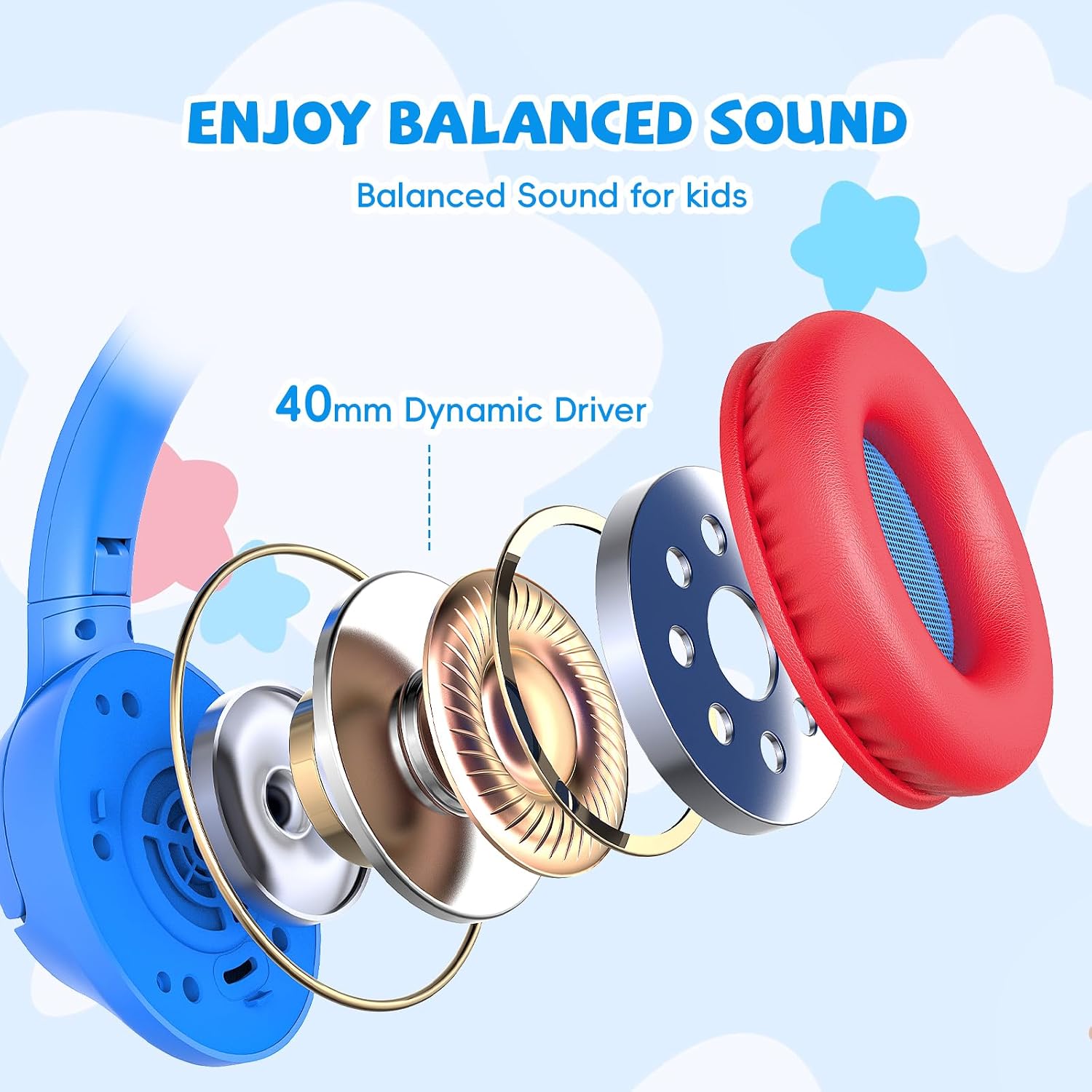
Over-ear headphones cup around the entire ear, typically offering better passive noise isolation—they naturally block more external sound. This design also often allows for larger, softer earcups, providing superior comfort for longer listening periods. On-ear headphones, by contrast, sit directly on top of the ears. While they can be more compact and lighter, they usually let in more ambient noise and can sometimes cause discomfort due to pressure on the ear itself. For school and travel, over-ear generally wins for immersion and comfort.
FAQ
Are 85dB or 94dB volume limits better for my child?
Choosing between 85dB and 94dB depends on your child’s age and environment. For younger children and general daily use at home, 85dB is the safer choice for preventing long-term hearing damage. If your child is in a particularly noisy setting, like an airplane or a busy classroom, 94dB might offer better clarity by cutting through more background noise, but you should monitor listening duration more closely.
Can wired headphones break easily?
Unfortunately, yes, if they’re not built with kids in mind. The weakest points are usually the cable connections and the headband. Look for features like reinforced 3.5mm cords, braided cables, and flexible headbands that can twist without snapping. Durability is a key factor that often separates truly good children’s headphones from disposable ones.
My child complains about comfort, what should I look for?
Comfort is all about fit and materials. Seek out over-ear headphones with soft, breathable padding on the earcups that fully enclose the ear without pinching. An adjustable, well-padded headband is also essential. For very young children, ensure the headphones aren’t too bulky or heavy for their smaller heads.
Do all wired headphones work with Kindles and tablets?
Almost all wired headphones with a standard 3.5mm cord will work with the vast majority of Kindles, tablets, laptops, and other devices. This universal compatibility is one of the big advantages of choosing wired over wireless. Just plug them in.
Is a built-in mic necessary if they only listen?
While not strictly “necessary” if your child only ever listens to content, a built-in microphone has become almost essential for school-aged children. It enables participation in online classes, video calls with family, and interacting with educational apps. Even for passive listening, having the option for communication is incredibly useful.
How do I know if the headphones fit my toddler?
Look for headphones specifically labeled as toddler headphones. Check the adjustability range of the headband – it should have a smaller minimum size than typical kids’ headphones. The earcups should be proportionate to their smaller ears, providing a gentle seal without being too large or heavy. A good fit means they won’t slip off easily.
What’s passive noise isolation, and do kids’ headphones have it?
Passive noise isolation isn’t about electronics; it’s the physical barrier created by the headphone’s design, specifically how well the earcups seal around the ear. Well-fitting over-ear headphones naturally block out a good amount of ambient sound just by their design and materials. This is distinct from active noise cancellation (ANC), which uses electronics to cancel out sound waves. Many quality children’s headphones offer decent passive noise isolation.
Final Recommendation
When choosing wired headphones for kids for school, it really comes down to balancing safety, durability, and specific use-case needs. If you’re primarily outfitting a young toddler or a child just starting school, the “E-Learning Explorer” persona, then prioritizing a robust 85dB safe volume limit and a near-indestructible design in the “All-Rounder for Daily Use” tier will serve you well. These offer a good blend of features without unnecessary bells and whistles.
For the older “School-Aged Scholar” who’s doing more interactive online learning and might use their headphones for airplane travel, stepping up to the “Premium Durable/Feature-Rich” tier makes sense. You’ll get better comfort for extended wear, often superior passive noise isolation, and a clearer built-in microphone, which are crucial for consistent performance in varied environments. No matter what, though, never skimp on the volume limit. It’s the single most important feature.
#Wired #Headphones #Kids #School #3.5mm #Cord #Safe #Volume #Limit #Blue #Ear #Headphones #Mic #8594dB #Boys #Girls #Toddler #Foldable #Plug #Headphone #Kindle #Tablet #Airplane #Travel
![Roblox Digital Gift Card - 1,000 Robux [Includes Exclusive Virtual Item] [Digital Code]](https://www.decorwild.com/wp-content/uploads/2026/08/Roblox-1000-Robux-Digital-Code-Exclusive-Virtual-Item-300x189.jpg)

Reviews
There are no reviews yet.