
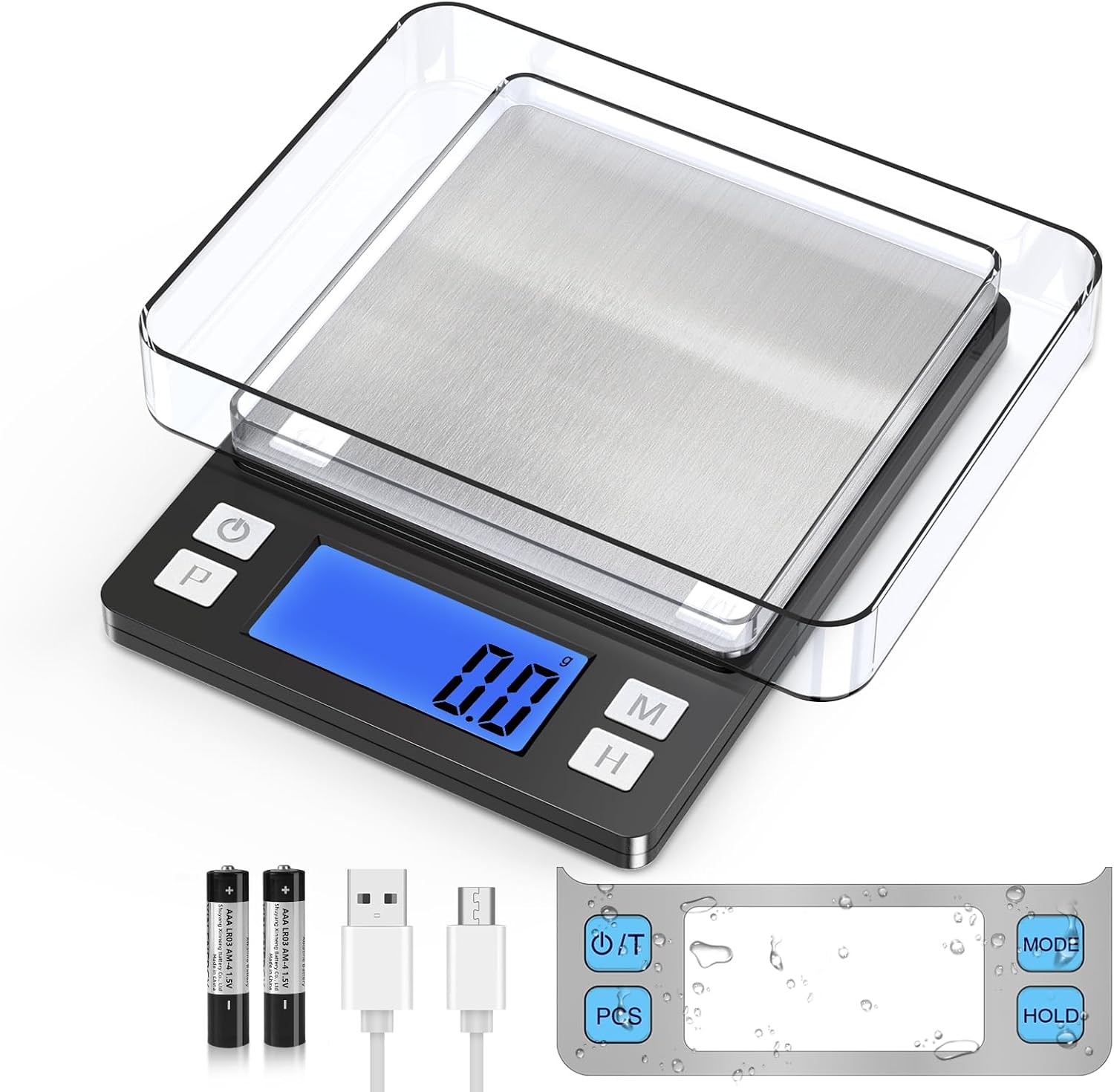
Is the BOMATA Upgraded Small Food Scale Worth Your Kitchen Countertop Real Estate?
Choosing a good kitchen scale can feel like a small decision, but it makes a huge difference if you’re serious about baking, nutrition, or even just getting consistent with your morning coffee. This guide cuts through the noise, specifically dissecting the BOMATA Upgraded Small Food Scale with 0.1 g/0.001 oz High Precision to see if it delivers on its promises. We’re looking for genuine value here, not just marketing fluff.
Quick Answer
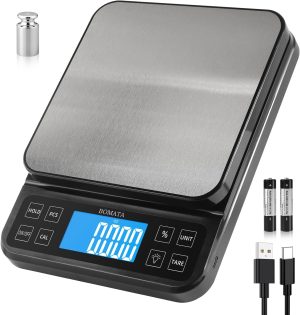
For home cooks, bakers, and those needing precision for smaller items like spices or jewelry, the BOMATA Upgraded Small Food Scale presents a compelling mid-range option. Its fine 0.1g/0.001oz increments and useful ‘Hold’ function stand out, making it a solid choice for detailed tasks without venturing into professional-grade costs. If accuracy and specific features for small measurements are your primary drivers, it’s definitely worth a closer look.
The Weigh-In: Is the BOMATA Scale Right for You?
Considering a new digital food scale? This quick decision tree will help you figure out if the BOMATA Upgraded Small Food Scale aligns with your specific needs.
- Do you frequently measure very small amounts (e.g., spices, yeast, coffee grounds, jewelry components)?
- Yes: Proceed to next question.
- No (only large batches): This scale’s precision might be overkill; a simpler, less granular kitchen scale could suffice.
- Is precise measurement (down to 0.1g/0.001oz) a critical factor for your recipes or hobbies?
- Yes: Proceed to next question.
- No (general measurements are fine): You’re likely better off with a standard kitchen scale that focuses on larger capacity and ease of use.
- Do you often find yourself needing to read a weight, but the item itself obstructs the display?
- Yes: The “New Hold Function” on the BOMATA scale could be a lifesaver. Go for it.
- No (or you use small containers): This feature is a bonus, not a necessity for you. Consider other factors.
- Are you looking for a compact, easily storable digital kitchen scale that won’t clutter your space?
- Yes: The BOMATA’s design often emphasizes portability and a smaller footprint. This fits.
- No (size isn’t an issue): You have more options, perhaps scales with larger platforms.
- Is rechargeable power (USB) important to you over replaceable batteries?
- Yes: The USB rechargeable aspect is a significant convenience. This model is a strong contender.
- No (or prefer replaceable batteries): The power source isn’t a deal-breaker. Look at other features.
Final Verdict based on tree: If you answered “Yes” to most of these questions, especially the first two, the BOMATA Upgraded Small Food Scale with 0.1g/0.001oz High Precision is likely a very good fit for your particular kitchen tasks.
Key Takeaways
- Precision matters for micro-measurements: The 0.1g accuracy is its primary draw, especially for specialized tasks.
- “Hold” function is surprisingly useful: No more craning your neck or lifting items to see the display.
- USB charging offers convenience: A modern touch that many appreciate over fiddly battery changes.
- Compact size: Fits well in smaller kitchens or for those who store their appliances away.
- Potential Trade-off: While accurate for small items, its maximum capacity (3000g/6.6lb) is mid-range, not ideal for huge batches.
What to Look For: The Buying Criteria for Your Next Kitchen Scale
Choosing a digital kitchen scale isn’t just about picking the first shiny one you see. Oh no, there’s a whole universe of considerations that separate a “meh” scale from one you’ll actually use daily. When you’re eyeing something like the BOMATA Upgraded Small Food Scale, these are the factors that should be running through your head.
1. Precision and Capacity: It’s a Balancing Act
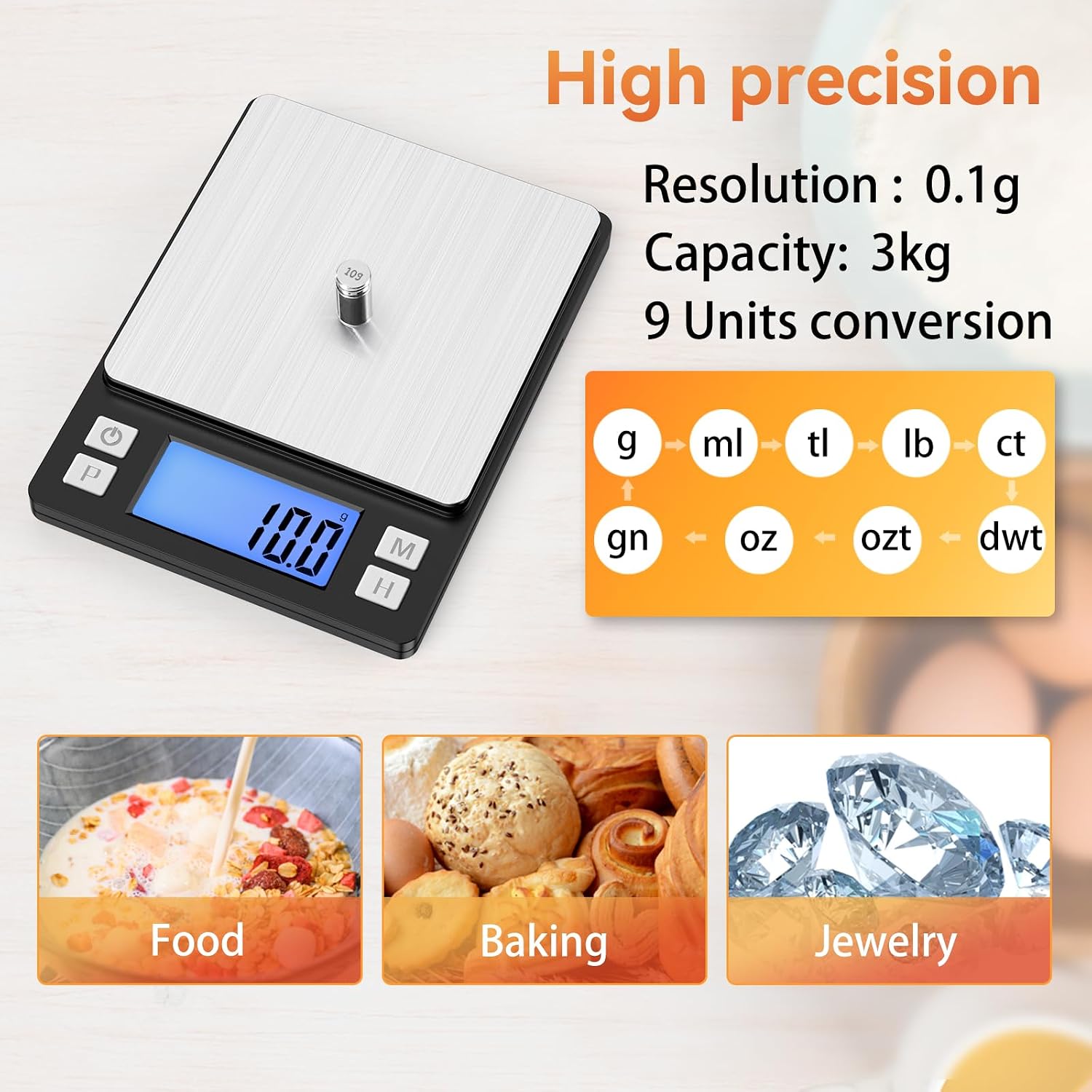
This is arguably the most critical aspect, particularly with a scale boasting “0.1 g High Precision” like the BOMATA. What are you mostly weighing? If it’s yeast for bread making, coffee beans for a perfect pour-over, or even small portions for nutrient tracking, then those tiny increments, often down to a tenth of a gram or thousandth of an ounce, are absolutely vital. A generic grocery store scale just won’t cut it there. But here’s the rub: high precision usually comes with a lower overall capacity. The BOMATA scale hits a respectable 3000g (or 6.6lb). That’s plenty for most everyday cooking, but if you’re weighing out ingredients for a massive holiday feast or a bulk batch of dough, you might find yourself bumping up against that limit. Sometimes, you need a different tool for a different job.
2. Display Readability and Features: Don’t Strain Your Eyes
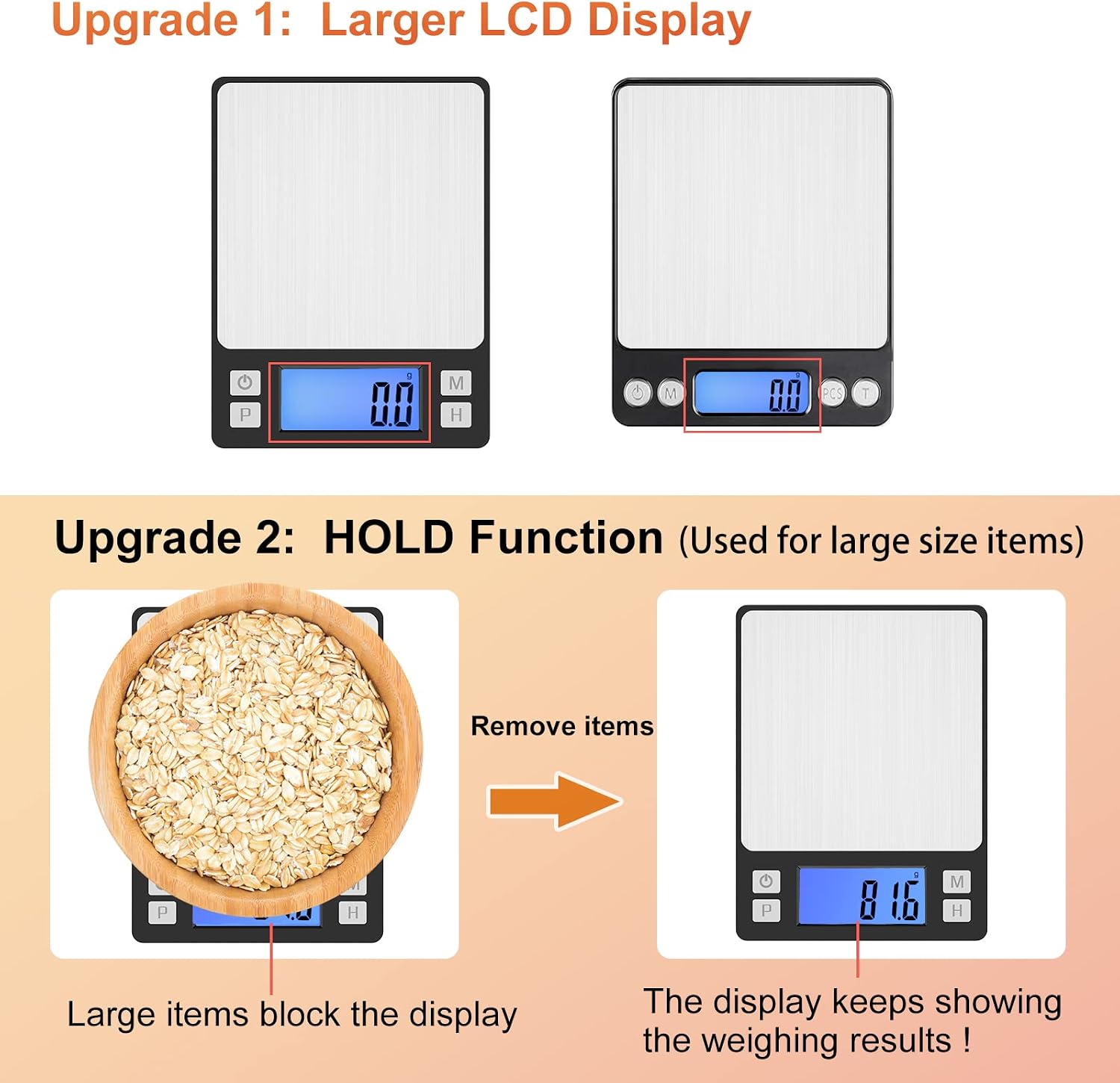
Ever had to contort yourself just to see the display because a mixing bowl was blocking it? It’s a frustrating dance, isn’t it? A well-designed kitchen scale, like the BOMATA with its “Larger Display” and “New Hold Function,” tackles this head-on. A bright, backlit display is non-negotiable in my book, especially in kitchens with less-than-ideal lighting. The ‘Hold’ function, which essentially locks the weight on the screen after you remove the item, is a godsend for larger containers. It’s one of those features you don’t think you need until you have it, and then you wonder how you ever lived without it. Some simpler, budget-friendly scales skip these niceties, which can quickly lead to buyer’s remorse when you’re fumbling around during a recipe.
3. Power Source and Convenience: Batteries Are a Drag
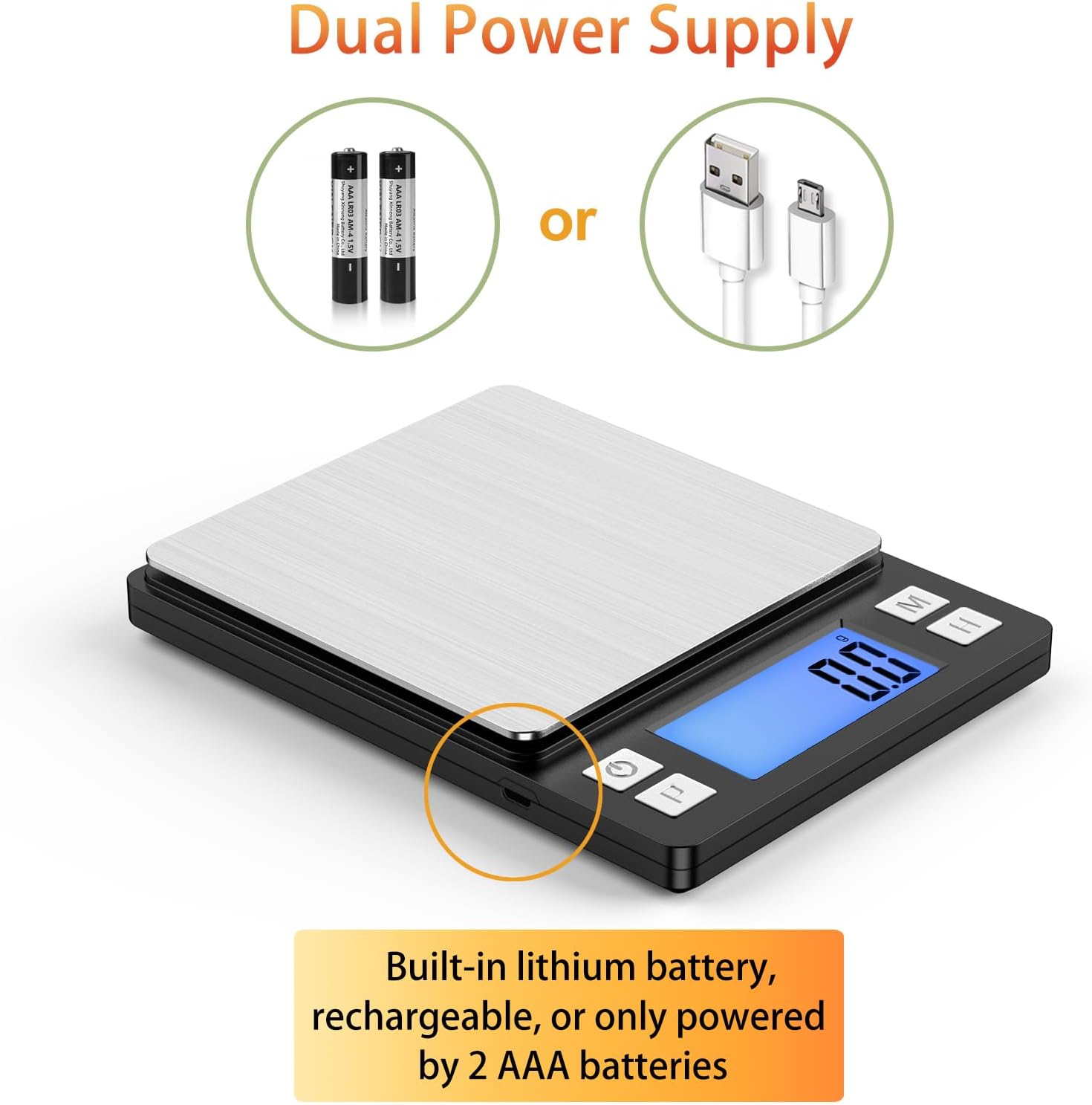
Nobody likes scrambling for AAA batteries mid-recipe. The BOMATA Upgraded Small Food Scale’s claim of being “USB Rechargeable” is a definite win for convenience. It means you can charge it up just like your phone or tablet, potentially reducing battery waste and ensuring it’s always ready to go. On the flip side, what happens if you forget to charge it and it dies during a critical measurement? You’re stuck. Scales that use standard, easy-to-find AA or AAA batteries offer the advantage of a quick swap, though they do require keeping spares on hand. It’s a personal preference, really, but the convenience of USB charging is hard to argue with for most modern kitchens.
4. Tare Functionality: Essential, Not Optional
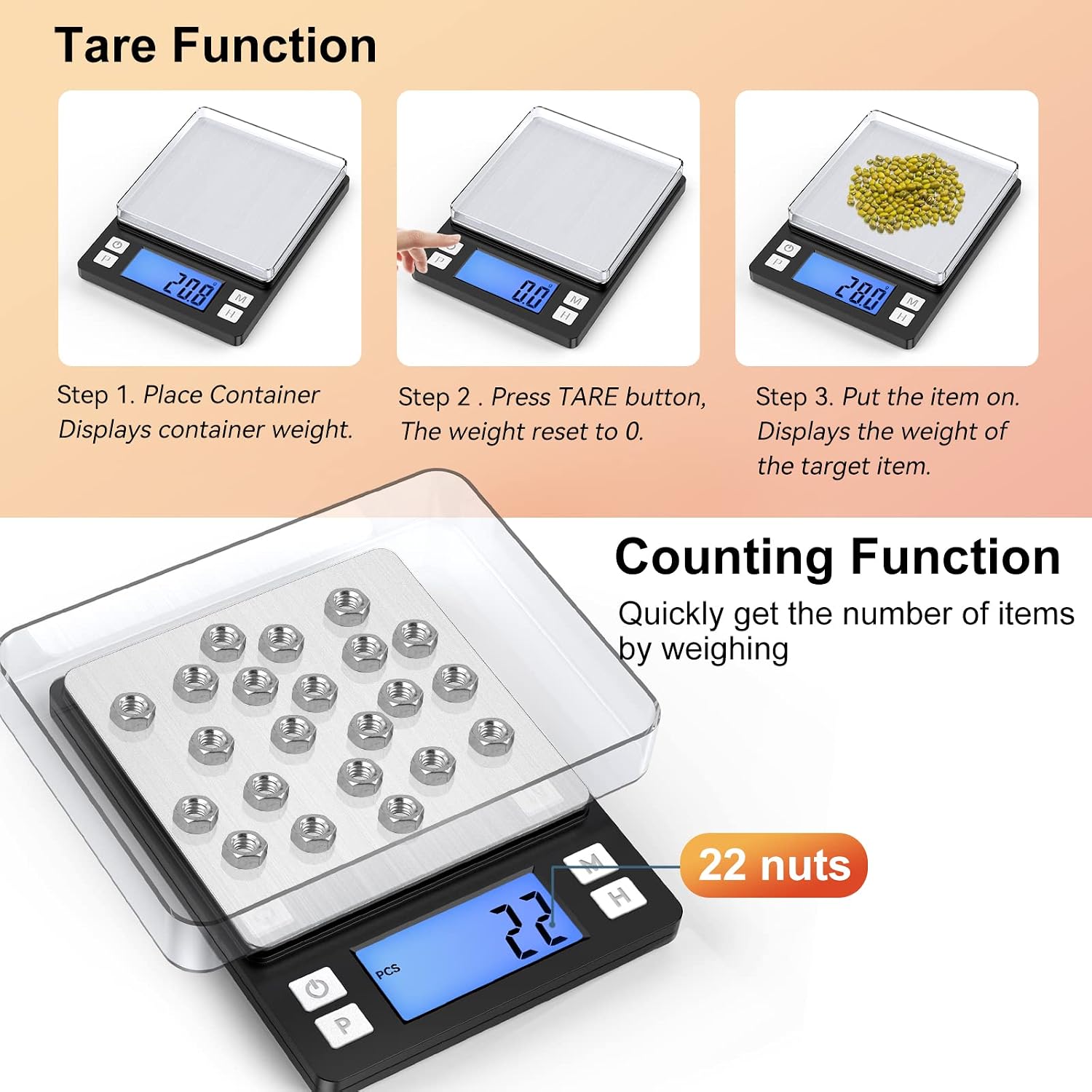
The tare function? Absolutely fundamental. This isn’t some fancy extra; it lets you zero out the weight of your bowl or previous ingredients, so you’re only measuring the new ingredient. Every decent food scale should have it. The real question is how easily it’s activated and how responsive it is. A sluggish tare button can really interrupt your flow, especially if you’re adding multiple ingredients to the same bowl. While the BOMATA scale certainly includes this, the responsiveness can vary across models and brands. Always something to consider.
5. Design and Footprint: Will It Fit Your Life?
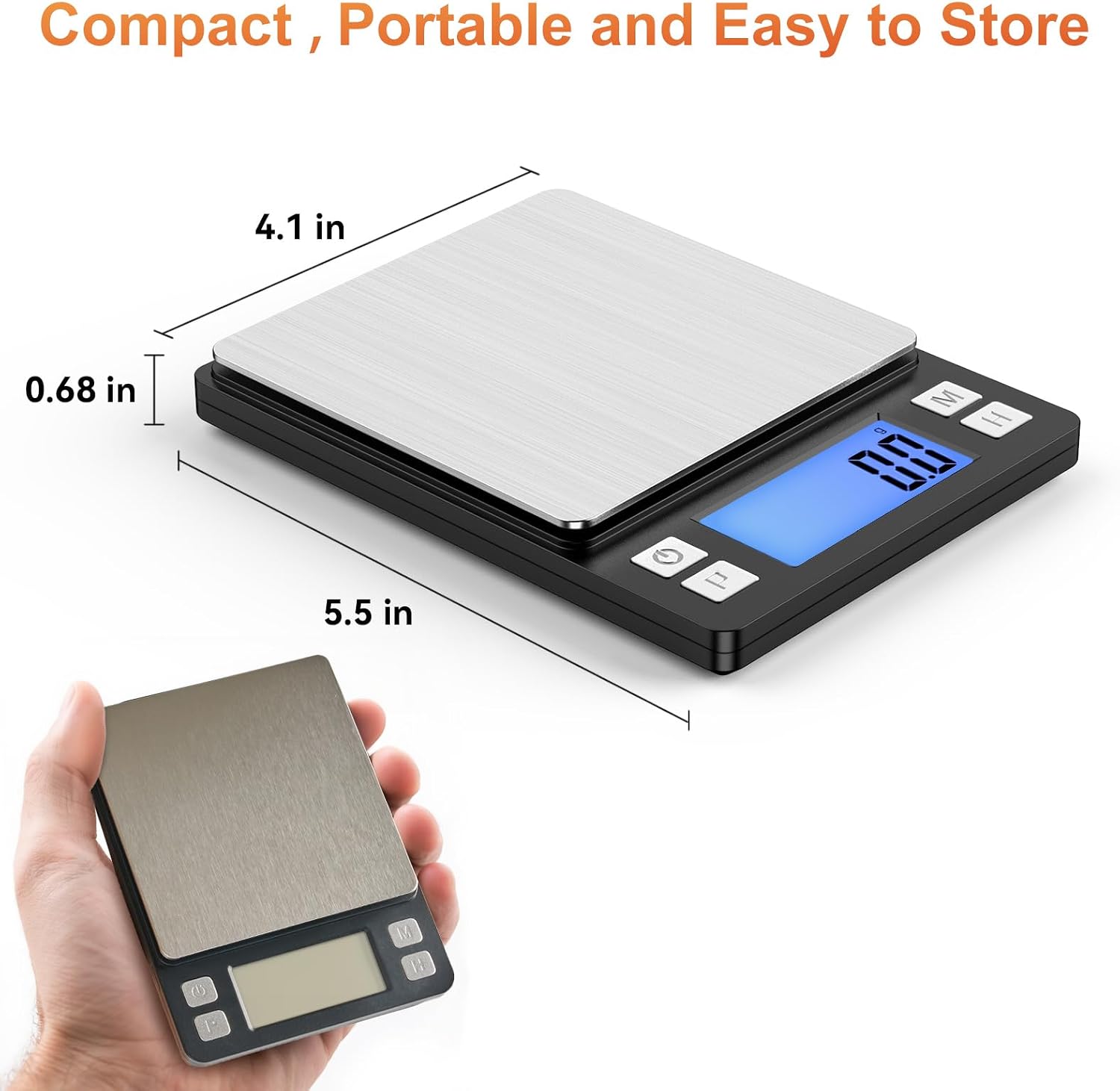
A “Small Item” scale often means a compact design. This is crucial for smaller kitchens where counter space is precious, or if you plan to store your gram scale away when not in use. A sleek, minimal design often cleans up easily too. The BOMATA Upgraded Small Food Scale, with its black finish, aims for that streamlined aesthetic. But a small platform also means large bowls or plates might overhang, which can obscure the display (though the hold function helps with that). You’re trading off a compact form factor for potential limitations with very large containers. Some people swear by the premium option with a removable, larger platform. Others? Not so much.
6. Durability and Material Quality: Built to Last?
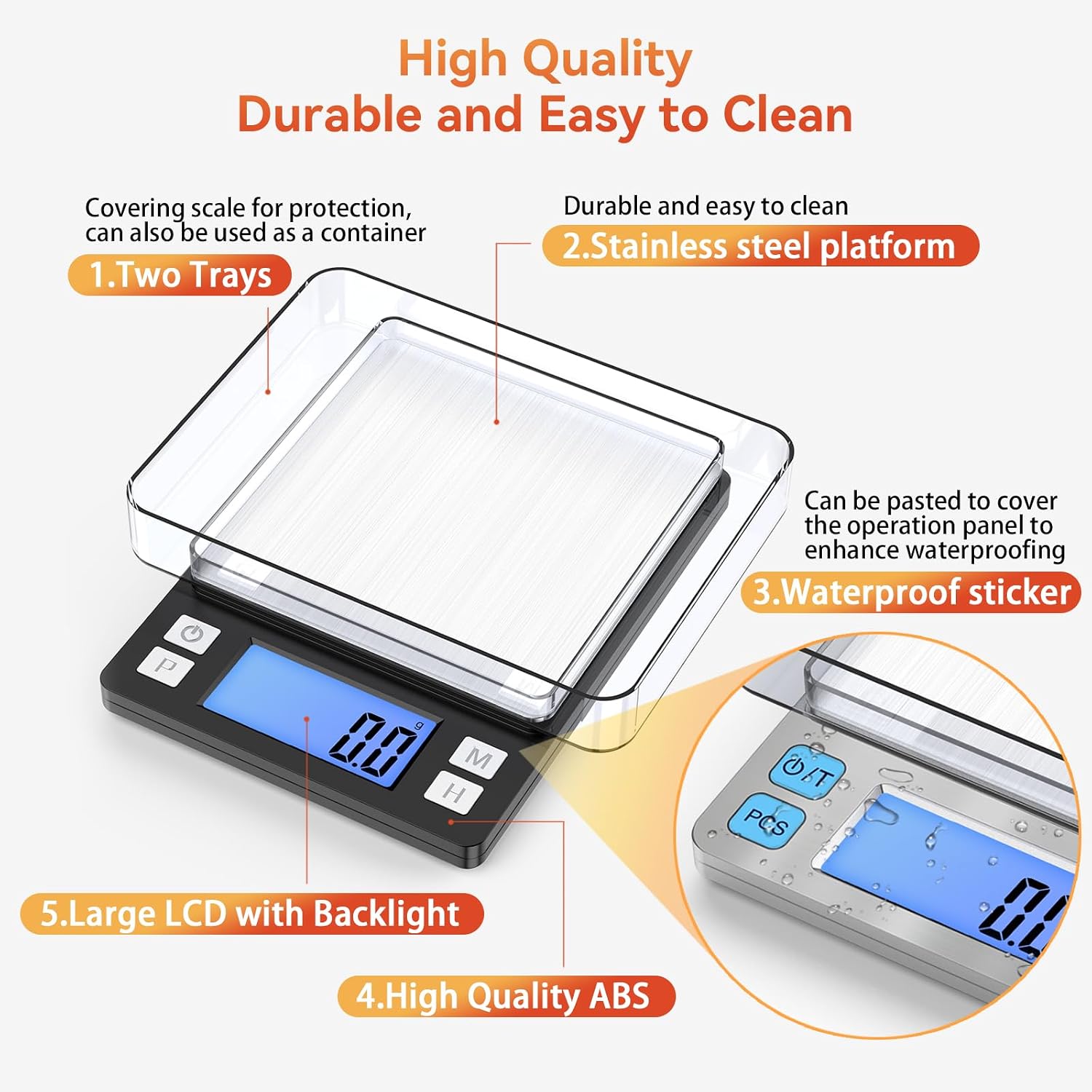
A kitchen scale, even one for “small items,” lives in a sometimes messy, sometimes wet environment. You want something that can withstand a few spills and bumps. Stainless steel platforms are typically easier to clean and more robust than plastic. The BOMATA scale, like many modern digital scales, likely uses a combination of materials. What’s the build quality like? Is the button membrane sealed against spills? These aren’t always obvious from an online listing, but they speak to the longevity of the device. A cheap, flimsy scale might save you a few bucks upfront, but it’ll probably need replacing sooner, which isn’t exactly value-conscious, is it?
How to Match the Product to Your Situation
Your ideal kitchen scale isn’t everyone’s ideal scale. It really boils down to how you cook, what you cook, and how much space you’ve got. Let’s break down a few personas and see how a scale like the BOMATA Upgraded Small Food Scale might fit, or not.
The Precision Baker/Coffee Enthusiast
You’re the type who meticulously measures everything, where half a gram can make or break a recipe. For you, consistency is king, whether it’s for artisan bread dough, delicate French macarons, or that perfect morning pour-over. You’re likely weighing out coffee beans, specific flours, or small amounts of active dry yeast.
- Why the BOMATA scale fits: The 0.1 g/0.001 oz high precision is your primary draw. You need that granular accuracy for your craft. The “New Hold Function” would be incredibly handy when you’re slowly adding espresso grounds to your portafilter or flour into a large mixing bowl, avoiding awkward leaning. Plus, the USB rechargeability means one less battery type to worry about in your already cluttered gadget drawer.
The Health-Conscious Meal Prepper
Your kitchen scale is a tool for tracking macros, ensuring portion control, and perhaps even mixing custom supplements. You’re weighing cooked proteins, vegetables, and complex carbohydrates to stay on track with dietary goals. You might also be keen on weighing smaller ingredients like spices or specific herbs for flavorful, low-sodium meals.
- Why the BOMATA scale fits: While its maximum capacity is good for individual portions, the high precision is useful for calorie-dense items like nuts or oils, where even small differences matter. For example, accurately weighing out a serving of nut butter (a small item) can make a big difference in daily calorie intake. Its compact size would also be appealing for easy storage in a busy meal-prep kitchen.
The Hobbyist Crafter/Jeweler
Okay, so not strictly kitchen use, but the product name itself mentions “Jewelry,” and for good reason. Many small digital scales cross over into craft rooms. If you’re measuring beads, precious metals, or tiny components for projects, you need extreme accuracy.
- Why the BOMATA scale fits: This is where the 0.1 g/0.001 oz high precision truly shines. It’s what you’d look for in a dedicated jewelry scale. Its compact design means it won’t take up too much space on a workbench, and the “Hold Function” helps when you’re trying to add tiny components without them rolling off. It’s a specialized tool, and this scale is built for that kind of detail.
Kitchen Scale Types & Tiers: What’s the Real Difference?
It’s easy to get lost in the sheer number of digital kitchen scales out there. But generally, they fall into a few key categories based on their features, precision, and — yep, you guessed it — cost. Here’s a quick run-down to help you understand where the BOMATA Upgraded Small Food Scale sits.
| Type/Tier | Best For | Price Tier | Key Feature | Watch-Out |
|---|---|---|---|---|
| Basic Digital Scales | Everyday cooking, general portioning | Budget | Simple tare, clear LCD | Lower precision (1g increments), often plastic, basic features |
| Mid-Range Precision Scales | Baking, coffee, nutrition tracking, small items | Mid-range | Higher precision (0.1g), better build, tare, sometimes unit conversion | Capacity limits for very large batches, feature set can vary |
| BOMATA Upgraded Small Food Scale | Bakers, coffee, small components, precise tracking | Mid-range | 0.1g precision, Hold Function, USB rechargeable | Smaller platform can be awkward for very large bowls, 3kg capacity |
| Professional/Hybrid Scales | Commercial use, advanced home cooks, large batches | Premium | Very high precision AND capacity, advanced features, robust build | Significantly higher cost, larger footprint, often overkill for daily use |
Basic Digital Scales are your entry point. They’re fine for weighing flour for pancakes or a piece of chicken. They won’t break the bank, but don’t expect surgical precision or fancy features.
Mid-Range Precision Scales step things up. This is where you start seeing 0.1g accuracy, often a nicer finish (stainless steel platforms are common), and a few extra conveniences like better backlighting. This is where most serious home cooks find their sweet spot.
The BOMATA Upgraded Small Food Scale fits squarely in this mid-range category, distinguishing itself with that “Hold Function” and the USB charging, which aren’t always standard in this tier. It’s purpose-built for those needing the fine detail, like a jewelry scale, but packaged for the kitchen.
Professional/Hybrid Scales are for the pros or the truly obsessed. Think commercial kitchens or serious culinary endeavors. They handle large weights with pinpoint accuracy, but they’re costly and bulky. You probably don’t need one.
Scenario-Specific Insights for Your Kitchen Scale
A kitchen scale isn’t just a kitchen scale. Its utility shifts depending on how and when you plan to use it. Thinking through these scenarios can highlight why specific features, like those on the BOMATA Upgraded Small Food Scale, matter.
When Precision is Paramount (Baking & Brewing)
You’re trying to replicate that artisan sourdough recipe or dial in your espresso. For these tasks, a gram scale with high precision isn’t just nice to have; it’s essential. Consider the BOMATA scale’s 0.1 g/0.001 oz increments. This level of granularity directly impacts the consistency of your results. A small difference in yeast, salt, or coffee grounds can drastically alter the outcome. This isn’t about guesswork. It’s about exactitude. The ‘Hold Function’ also shines here, especially when you’re slowly pouring water over coffee grounds or adding minor additions to a large bowl of ingredients. You get your reading, no fuss, no spills trying to peek under a container.
For the Space-Conscious Cook
Not everyone has a sprawling kitchen island. Many of us operate in tighter quarters, where every appliance needs to earn its spot. A compact design like what the BOMATA Upgraded Small Food Scale offers becomes a real advantage. Can it tuck away easily in a drawer or stand discreetly on a shelf? A smaller footprint means less visual clutter and more actual workspace. But there’s a trade-off: a smaller platform might not comfortably accommodate your largest mixing bowls without obscuring the display. Still, for weighing smaller ingredients or individual portions, its size is a clear benefit. You decide what’s more important: maximum platform size or minimum storage space.
On-the-Go or Battery-Free Living
Do you detest dealing with traditional batteries? The USB rechargeable feature on the BOMATA scale is a modern convenience that resonates with many. It means one less type of battery to stock, and the ability to charge it alongside your other gadgets. This is particularly good for those who might use their food scale occasionally in different spots – maybe for weighing ingredients for a picnic basket or even using it in a crafting corner. You just plug it in, top it off, and it’s ready. The alternative, of course, is a scale that runs on readily available AA or AAA batteries, which can be swapped out instantly but generates more waste over time. Which hassle do you prefer?
Common Mistakes When Buying (and Using) a Kitchen Scale
Buying a digital kitchen scale seems straightforward, right? Pick one, use it. But often, people make a few crucial errors that lead to frustration or underutilization. Let’s head those off at the pass.
1. Skimping on Precision for Price
This is perhaps the biggest one. You see a budget scale that weighs in whole grams and think, “Good enough!” But then you try to make macarons or weigh out micro-nutrients, and suddenly that 1-gram increment scale feels hopelessly inadequate. For tasks like accurately measuring yeast for bread, expensive saffron, or even precise coffee ratios, a 0.1g high precision scale, like the BOMATA Upgraded Small Food Scale, is a must. If your needs are purely general, then a 1g scale might cut it. But if you’re reading this, chances are you need more. Don’t compromise on accuracy if your recipes demand it.
2. Ignoring Platform Size and Display Location
So you’ve got your beautiful, enormous mixing bowl. You place it on your new, small food scale, and poof – the display is completely hidden. What’s the point? Many compact scales, while great for storage, have small platforms. If you frequently use large containers, ensure the display is positioned well, or look for features like the BOMATA scale’s “New Hold Function” which helps mitigate this issue by locking the weight. Always consider your most commonly used bowls before committing. It’s a classic oversight.
3. Forgetting About Power Source & Maintenance
A scale that’s dead is just counter clutter. Are you okay with regularly replacing batteries, or do you prefer the modern convenience of a USB rechargeable unit? The BOMATA scale handles the latter. Also, consider cleaning. Scales live in a food-splattered environment. A sleek stainless steel platform is usually far easier to wipe down than textured plastic, which can trap crumbs and spills. Durability matters too; a scale that can withstand a little moisture is a smart investment.
4. Not Understanding the Tare Function (or its Limits)
The tare function is your friend. Use it. Zero out your bowl before adding ingredients. Then, zero it out again after each ingredient if you’re adding multiple items to the same container. However, remember that tare doesn’t magically increase the scale’s maximum capacity. If your bowl weighs 500g and the scale’s max is 3000g, you only have 2500g left for ingredients, even after taring. A common pitfall for new users!
Why, How, What: Unpacking Your Kitchen Scale Needs
A few core questions often pop up when people consider a specialized tool like the BOMATA Upgraded Small Food Scale. Let’s get to them.
Why do I need a kitchen scale with 0.1g precision?
You need this level of high precision if you’re working with delicate ingredients where small variations genuinely alter the outcome. Think about baking, where just a gram or two of baking powder or yeast can make the difference between a perfect rise and a dense brick. Or perhaps you’re a coffee connoisseur, dialing in that precise bean-to-water ratio for an artisanal brew. For measuring spices, fine powders, or even small portions for strict dietary needs, that 0.1g increment is simply non-negotiable for consistent, professional-level results at home.
How does a “Hold Function” actually help in daily use?
Picture this: you’ve got a big, beautiful mixing bowl overflowing with ingredients, and it’s completely covering the scale’s display. Frustrating, right? The “Hold Function” (like the “New Hold Function” on the BOMATA scale) steps in here. You place the item on the scale, press the ‘Hold’ button, and then you can remove the item and still see its weight displayed. No more guessing, no more lifting bowls off the scale just to read the number. It’s a small convenience, but it makes a significant difference for larger containers or awkward measurements, smoothing out your workflow.
What’s the real advantage of a USB rechargeable kitchen scale?
The most obvious advantage of a USB rechargeable kitchen scale, like the BOMATA model, is convenience. You don’t have to keep a stash of specific batteries on hand, which is especially nice if it uses those less common coin cells. Instead, you can plug it in with a standard USB cable, just like your phone or headphones, and it’s ready to go. This can also be a more eco-friendly option over time, as it reduces the number of disposable batteries you’re tossing out. For those who appreciate modern gadgetry and hate last-minute battery hunts, it’s a clear win.
FAQ: Your Kitchen Scale Questions Answered
Q: Why should I choose a digital kitchen scale over an analog one?
A: Digital scales offer superior accuracy and are much easier to read. Analog scales often have wider increments and can be prone to inconsistencies, making precise measurements for baking or nutrition a real headache. A digital scale just gives you a clear number.
Q: Can I measure liquids on a kitchen scale?
A: Yes, absolutely! You can measure liquids by weight. Just place your container on the scale, tare it to zero, then pour in your liquid. Many recipes are now giving liquid measurements in grams or ounces because it’s far more accurate than volumetric cups, especially for things like honey or syrup.
Q: How do I properly calibrate my kitchen scale?
A: Most modern digital kitchen scales, especially quality ones, are factory calibrated and hold their calibration well. Some higher-end models might offer a manual calibration mode using a specific weight. For the BOMATA scale and similar types, routine calibration isn’t usually a user task, but always refer to the specific instructions provided with your unit.
Q: What’s the difference between a food scale and a postal scale?
A: While both measure weight, a food scale (or kitchen scale) is designed for precision with relatively smaller items and specific kitchen tasks, often featuring unit conversions for cooking. A postal scale typically handles much larger capacities and is geared more towards larger parcels, often lacking the fine 0.1g increments needed for culinary precision.
Q: Is the BOMATA scale durable enough for everyday use?
A: The BOMATA Upgraded Small Food Scale aims for a balance of precision and everyday utility. While it’s designed to be sturdy for home use, like any precision instrument, it benefits from careful handling. Its compact size helps protect it, but avoid dropping it or submerging it in water to ensure longevity.
Q: Can I weigh objects heavier than 3000g if I tare it first?
A: No, taring only subtracts the weight of the container, allowing you to measure the ingredients accurately within the kitchen scale’s maximum capacity. It does not increase the overall weight limit. If the BOMATA scale has a maximum capacity of 3000g (6.6lb), you cannot weigh anything that, with the container, totals more than that. Overloading risks damaging the sensor.
Q: How often should I clean my kitchen scale?
A: For hygiene and optimal performance, it’s a good idea to wipe down your food scale after every use, especially if any ingredients have spilled on the platform or display. Use a damp cloth; avoid harsh chemicals or excessive water, particularly around buttons or where the platform meets the base.
Final Recommendation: Pinpointing Your Perfect Kitchen Scale
Alright, so where does all this leave us? If you’ve been nodding along to the idea of baking with extreme consistency, perfecting your coffee brew, or needing meticulous portion control for dietary tracking, then a kitchen scale with 0.1g high precision is absolutely your sweet spot. This isn’t a frivolous feature; it’s a functional necessity for those tasks.
The BOMATA Upgraded Small Food Scale with 0.1 g/0.001 oz High Precision makes a strong case for itself in this arena. Its core strength lies in that granular accuracy, coupled with genuinely useful features like the “New Hold Function” and USB rechargeability. It’s a compelling mid-range option for anyone who’s tired of imprecise measurements and wants a reliable, compact tool without breaking the bank. For bakers, coffee lovers, and those weighing small, critical items, it offers a solid blend of capability and convenience.
#BOMATA #Upgraded #Small #Food #Scale #g0.001 #High #Precision #g6.6 #Hold #Function #Larger #Display #USB #Rechargeable #Digital #Kitchen #Scale #Small #Item #Jewelry #Black
Reviews
There are no reviews yet.