
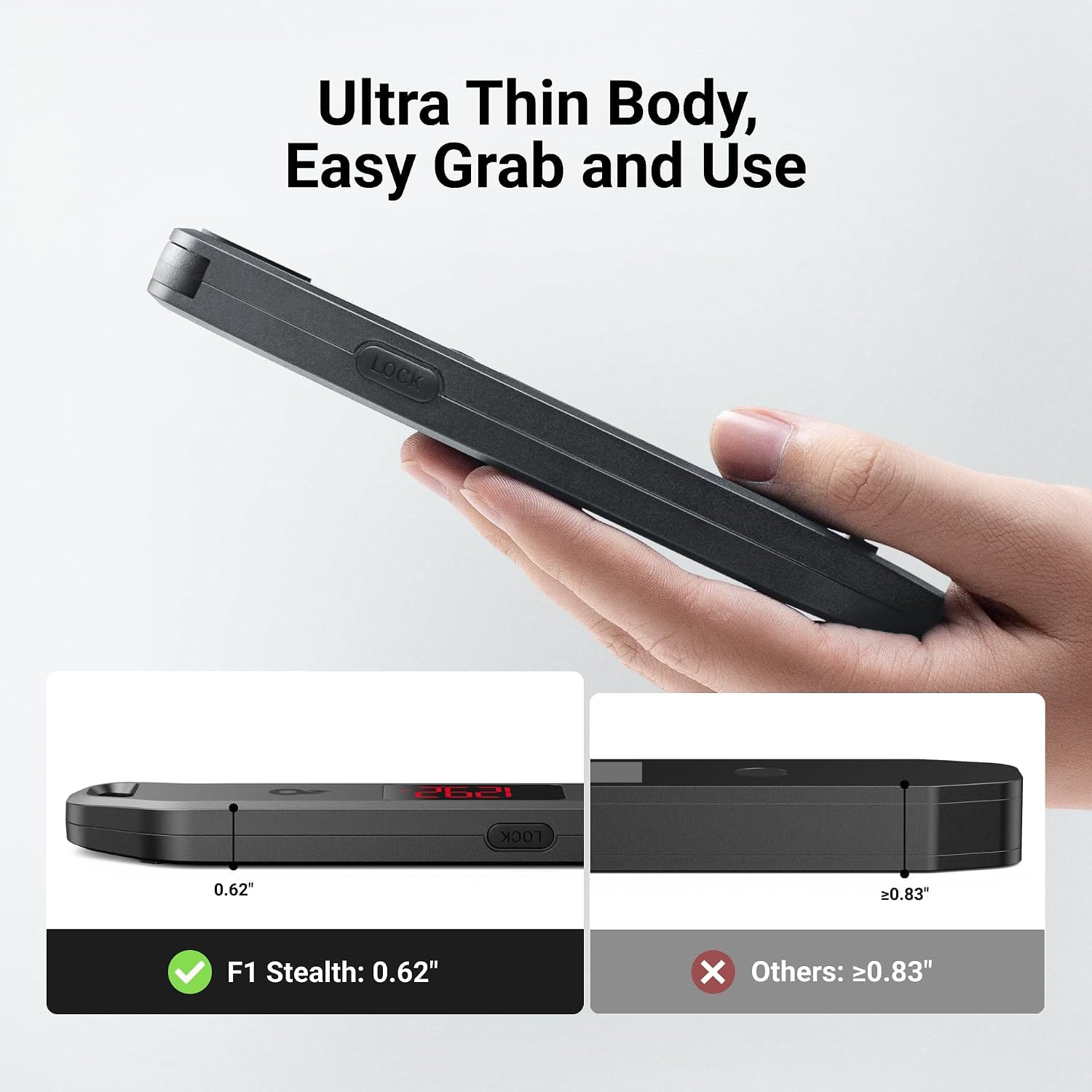
The Digital Meat Thermometer Deep Dive: Is the ThermoMaven 1 Sec Worth Your Hard-Earned Cash?
Picking the right meat thermometer can feel like a surprisingly big decision, especially if you’re serious about your cooking. This guide cuts through the noise, focusing on what really matters when you’re considering a premium digital thermometer like the ThermoMaven 1 Sec Professional Digital Meat Thermometer, which promises rapid, accurate readings. We’re breaking down the features, comparing it to other types, and helping you figure out if its particular blend of speed and precision is truly a smart buy for your kitchen or grill.
Quick Answer
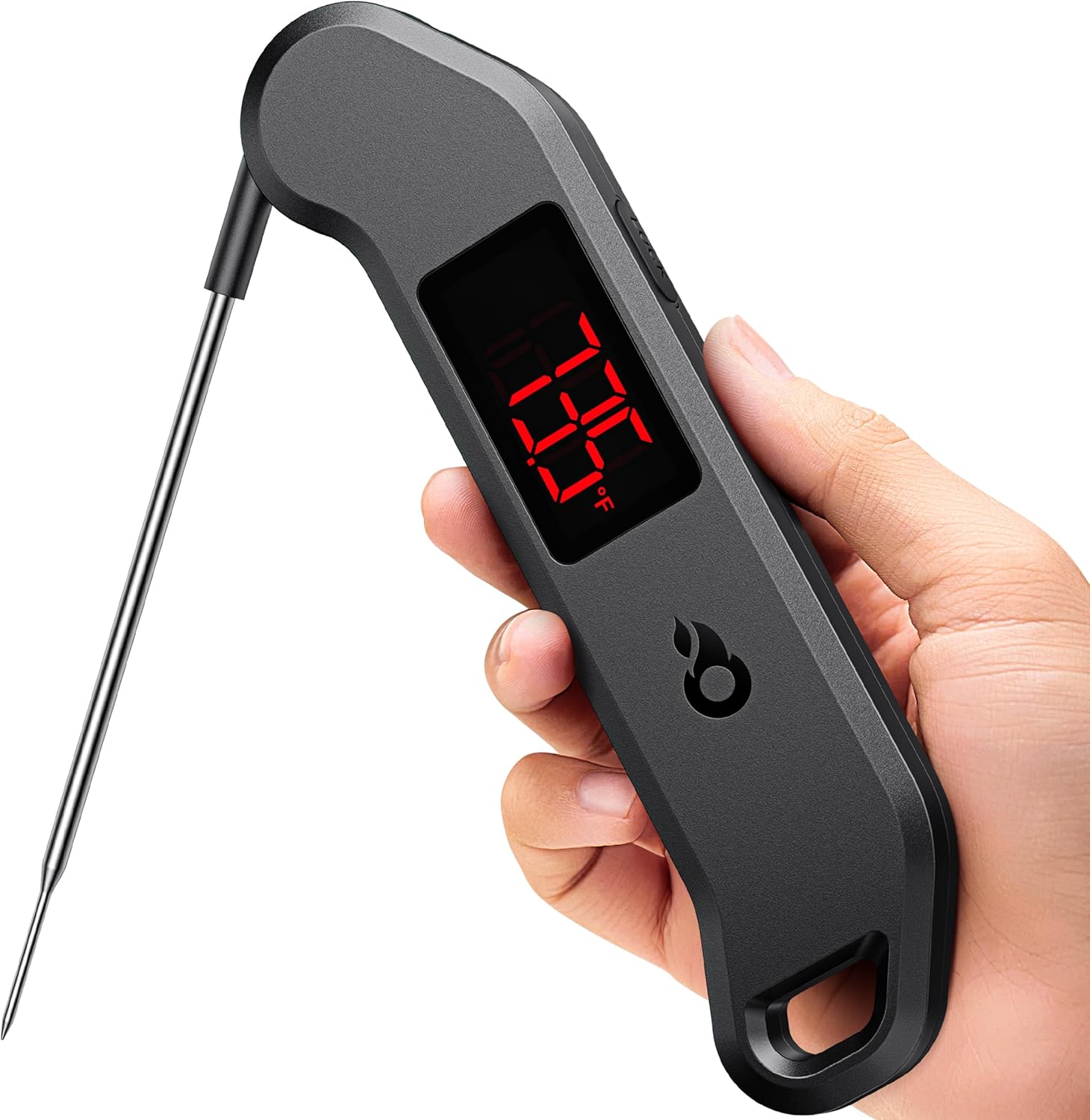
For home cooks and grill masters prioritizing speed and pinpoint accuracy, the ThermoMaven 1 Sec Professional Digital Meat Thermometer often justifies its position as a top-tier instant-read thermometer. Its ability to deliver a temperature reading in roughly one second, coupled with robust features like an auto-rotating bright LED screen and a highly waterproof design, makes it a compelling choice for those who routinely cook various meats and value food safety above all else.
What to Look For (The Buying Criteria)
Navigating the world of meat thermometers can be a bit overwhelming, what with all the different types and claims. But when you boil it down, a few core factors truly differentiate a useful tool from a frustrating gimmick. These are the aspects savvy shoppers hone in on.
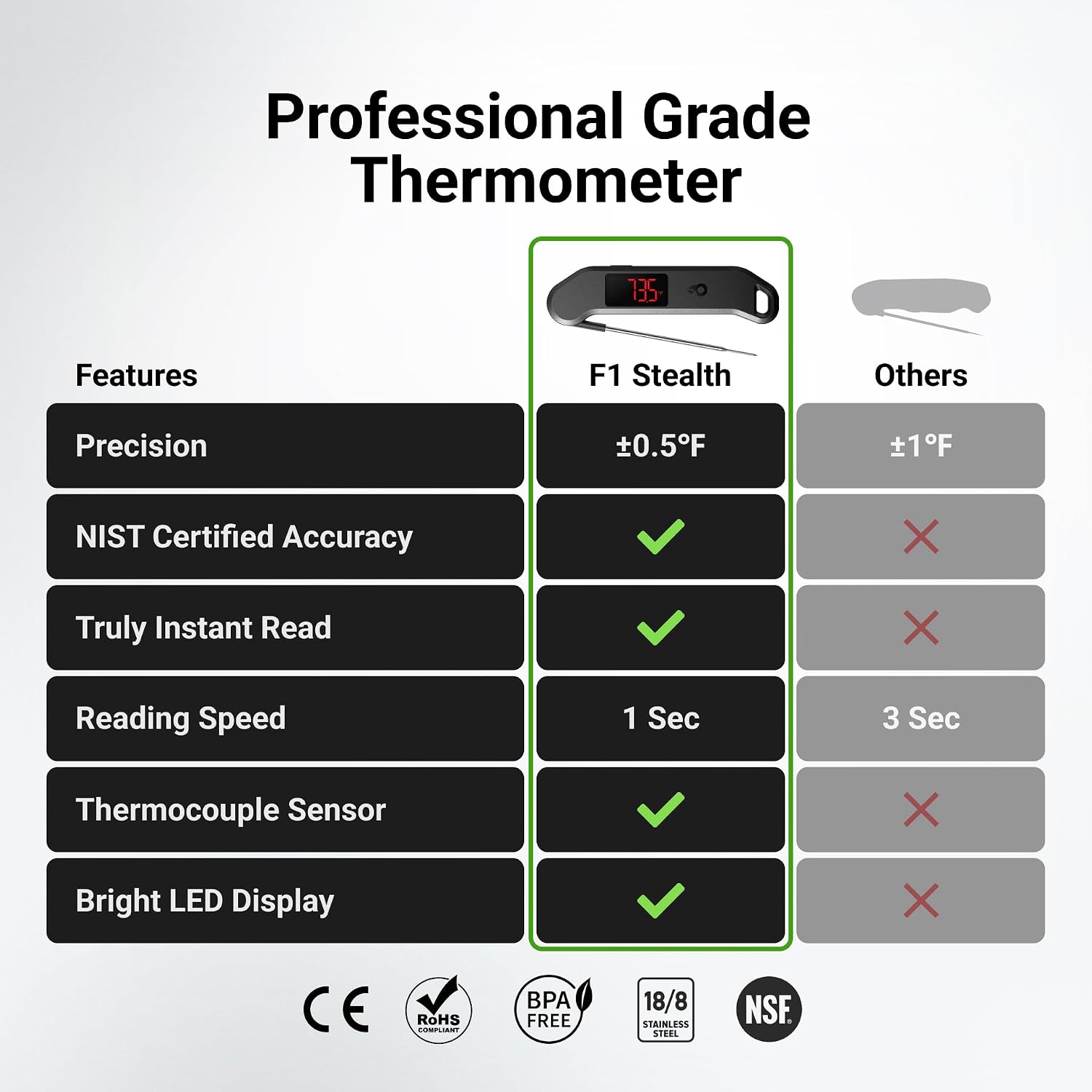
First up, accuracy and speed. You want a digital thermometer that gives you a reliable reading, period. The whole point of a meat thermometer is to ensure your food is cooked safely and perfectly, not underdone or overcooked. Models like the ThermoMaven 1 Sec boast impressive ±0.5℉ accuracy, which is genuinely important. And that one-second read time? It’s not just a marketing brag; it prevents heat loss from your oven or grill when you’re checking internal temperature, and it stops you from holding your hand over a hot surface any longer than necessary. Of course, even the most accurate thermometer needs proper calibration and technique, a step many users skip, leading to frustration.
Then there’s durability and build quality. Look, your kitchen isn’t a sterile lab. Things get dropped, splashed, and sometimes left out in the elements. A good probe thermometer needs to withstand some abuse. A highly waterproof design, like that found on the ThermoMaven 1 Sec, is a huge plus, meaning you can rinse it off without fear of shorting it out. It also suggests better overall sealing against grime and grease. Cheaper models often skimp here, leading to early failures or finicky buttons after a few uses. But let’s be real: “highly waterproof” doesn’t mean “submersible for an hour.” There are always limits.
Display and ease of use also matter quite a bit. What good is accurate data if you can’t easily read it? A bright LED screen is a blessing, especially when you’re grilling at dusk or have less-than-perfect kitchen lighting. An auto-rotate screen, a feature of the ThermoMaven 1 Sec, sounds minor until you’re trying to read a display at an awkward angle. Nobody wants to twist their neck or flip the device around just to see the temperature. Buttons should be intuitive, not require a manual every time. The downside? More advanced displays can sometimes drain batteries faster, a minor inconvenience but one to consider.
Probe design and materials are often overlooked. The probe needs to be long enough to reach the center of a thick roast but thin enough to minimize juice loss. Stainless steel is the standard for a reason; it’s durable and food-safe. Some probes have a step-down tip, making them even easier to insert into dense meats. Think about the variety of dishes you cook. If it’s mostly thin cuts, a shorter probe might be fine. For a whole turkey or brisket, a longer one is indispensable. Really, nobody enjoys wrestling a tiny probe into a giant piece of meat.
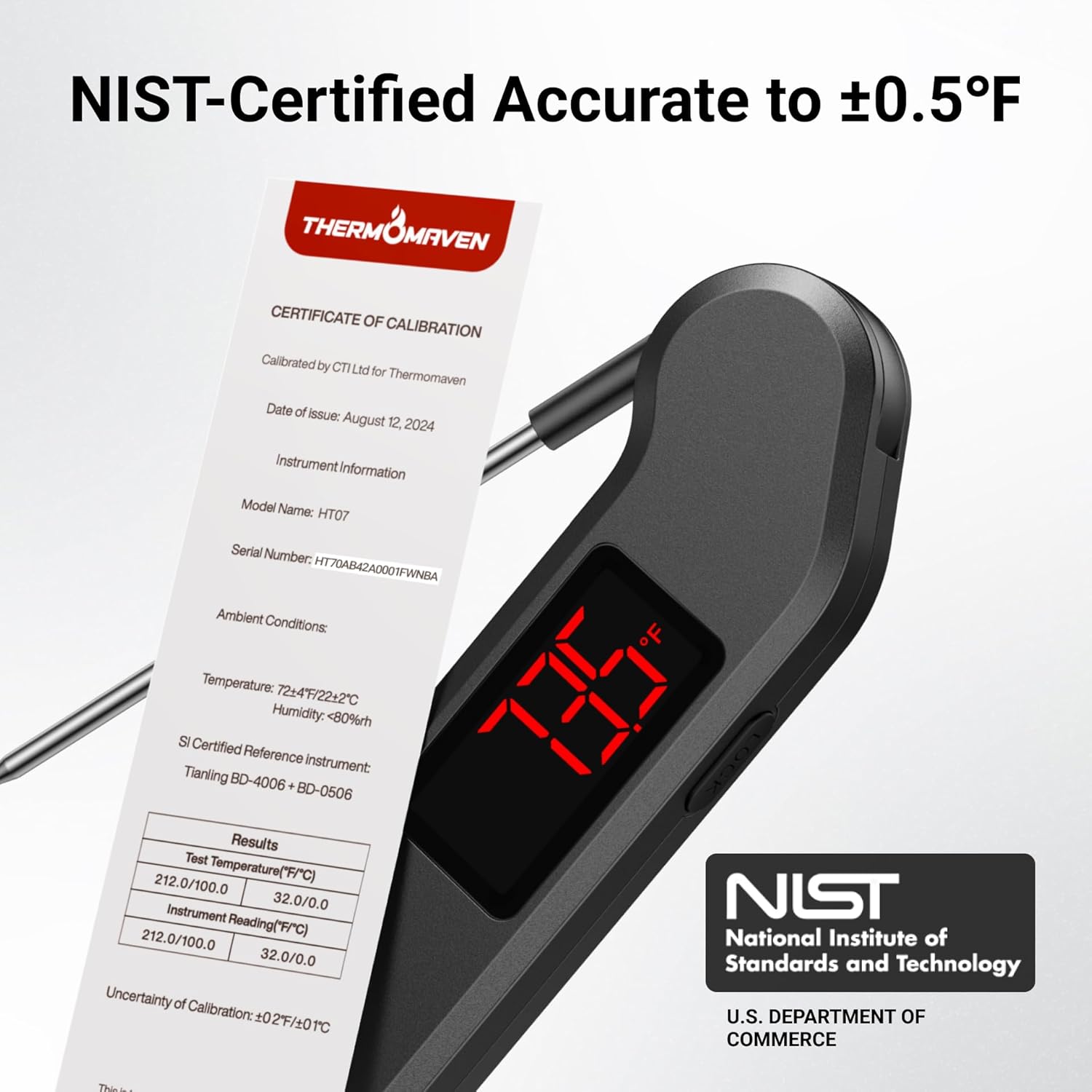
Certification and compliance offer a layer of trust. When a food thermometer is NIST and NSF certified, like the ThermoMaven 1 Sec, it means it meets certain standards for accuracy and public health safety. NIST (National Institute of Standards and Technology) traceability means it can be linked to national measurement standards, and NSF International certification means it’s been evaluated for material safety and performance. These aren’t just fancy acronyms; they provide independent verification that the device does what it claims. It’s a stamp of approval, not just a brand’s promise. Still, these certifications don’t guarantee the user will use it correctly, which is the biggest variable of all.
Finally, consider power source and battery life. Most digital thermometers run on common coin cell or AAA batteries. Auto-off features are crucial for extending battery life, something the ThermoMaven 1 Sec includes. You don’t want to grab your thermometer only to find it dead because you forgot to turn it off. Some premium models are even rechargeable, which is convenient but adds to the initial cost. What’s worse than an undercooked steak? Not having the juice to check it.
How to Match the Product to Your Situation
Finding the right meat thermometer really depends on your culinary habits and preferences. Not everyone needs the same tool, after all.
The Avid Home Chef (aka The Weekend Warrior): This person loves to cook, from weeknight dinners to elaborate Sunday roasts and occasional grilling. They value precision, consistency, and a gadget that won’t let them down during a dinner party. For them, a model like the ThermoMaven 1 Sec Professional Digital Meat Thermometer is an investment. They’re looking for that ±0.5℉ accuracy to nail medium-rare every time, and the quick, one-second read means less fussing over a hot pan or grill. The waterproof design appeals because accidents happen, and cleanup should be easy. This user often already owns a few quality kitchen tools and sees a high-performing digital thermometer as a logical next step.
The Dedicated Grill Master (aka The BBQ Boss): Folks who spend serious time at the grill or smoker need rugged reliability. They deal with high heat, smoke, and often outdoor conditions. A waterproof thermometer is non-negotiable here. The bright LED screen of something like the ThermoMaven 1 Sec would be invaluable, especially for those twilight grilling sessions. The fast reading speed is also critical; nobody wants to lose all that precious smoke or heat from the barbecue by holding the lid open too long. While they might occasionally use a wireless thermometer for long smokes, an accurate, rapid-response instant-read thermometer is essential for checking individual cuts and ensuring everything comes off the heat at its prime. They might even appreciate the auto-rotate screen more than others, given the varied angles they’re often contorting into around a smoker.
The Practical Cook (aka The “Just Gimme a Temp” User): This individual cooks regularly but isn’t necessarily a culinary enthusiast. They want to ensure their food is safe to eat and generally tastes good, but they’re not hyper-focused on perfection down to the degree. For them, the ThermoMaven 1 Sec might be overkill. A good quality, entry-level digital thermometer with decent accuracy (say, ±1-2℉) and a clear display would likely suffice. They probably don’t need the super-fast one-second read or the auto-rotating screen, though a waterproof model is still a smart idea for longevity. They’re looking for value and ease of use without all the bells and whistles they won’t fully utilize. It’s about confidence, not culinary mastery.
Comparison of Meat Thermometer Types
| Type/Tier | Best For | Price Tier | Key Feature | Watch-Out |
|---|---|---|---|---|
| Basic Digital | Everyday cooking, checking general food safety | Budget-friendly | Simple, clear digital display, fast enough for most | Accuracy can vary, often not waterproof, slower response times. |
| Instant-Read Digital | Precision cooking, grilling, frequent use | Mid-range | Rapid temperature readings, often backlit displays | Not all are waterproof, probe might be shorter, battery life can be hit-or-miss. |
| Premium Instant-Read | Professional results, high-volume cooking | Premium | Sub-second readings, high accuracy, robust build | Higher initial cost, advanced features might be overkill for casual users. |
| Wireless/Smart | Long smokes, roasts, monitoring food remotely | Premium | Remote monitoring via app, multiple probes | Can be complicated to set up, signal interference is a common complaint. |
Basic digital thermometers are perfect for those just needing a quick check on chicken or a basic roast; they get the job done without breaking the bank. Instant-read digital thermometers step up the game with faster response times and better accuracy, making them a solid choice for most home cooks looking for an upgrade. The premium instant-read category, where a device like the ThermoMaven 1 Sec sits, is all about speed, precision, and durability for those who demand the absolute best in their kitchen tools. Wireless or smart thermometers are a different beast entirely, built for hands-off monitoring during long cooking processes like smoking a brisket, though they aren’t meant for that quick, immediate temperature check the way an instant-read is.
Decision Tree: Is a Premium Instant-Read Right for You?
- Do you frequently cook expensive cuts of meat (e.g., steaks, prime rib, whole poultry)?
- Yes: Go to 2.
- No (mostly basic cuts, don’t mind a little variation): A good mid-range instant-read will probably suit your needs better. Save some money.
- Is absolute temperature accuracy (within 1 degree Fahrenheit) critical for your cooking style?
- Yes (you aim for perfect medium-rare every time): Go to 3.
- No (close enough is usually fine): A standard instant-read thermometer is likely sufficient.
- Do you value sub-second temperature readings to minimize heat loss and quickly move on?
- Yes (you’re impatient, or your grill loses heat fast): Go to 4.
- No (a few seconds won’t kill your vibe): A mid-range instant-read still offers good speed.
- Are features like a highly waterproof design, auto-rotating display, and certified quality (NIST/NSF) important for durability and convenience?
- Yes: A premium instant-read like the ThermoMaven 1 Sec Professional Digital Meat Thermometer is an excellent choice for you.
- No (you can be careful, and don’t need all the bells and whistles): You might find a high-quality mid-range instant-read to be a better value.
Scenario-Specific Considerations for Your Meat Thermometer
Different cooking situations demand different things from your tools. A meat thermometer might seem simple, but its utility shifts depending on where and what you’re cooking.
Grilling and BBQ: Out here, you’re battling smoke, grease, and often inconsistent lighting. The ThermoMaven 1 Sec Professional Digital Meat Thermometer, with its highly waterproof for grill BBQ design, is truly a friend to the outdoor cook. A bright, auto-rotating LED screen is invaluable when you’re leaning over a hot grill, trying to get a quick read on that brisket or a perfectly seared steak. You don’t want to fumble with a dim display or have to twist your wrist awkwardly. The speed here also matters; every second the grill lid is open, precious heat escapes.
Roasting Large Cuts in the Oven: Think about a Thanksgiving turkey or a substantial beef roast. You’re constantly opening the oven door, letting out heat, just to check the internal temperature. That’s where a thermometer with 1 Sec Professional Digital Meat Thermometer speed comes into its own. Minimizing the time the oven door is open helps maintain a consistent oven temperature, leading to more even cooking. And if you’re pulling out a hot, heavy pan, you want a quick reading so you can get that door closed again without losing too much warmth.
Everyday Kitchen Use and Food Safety: For daily meal prep, whether it’s perfectly cooked chicken breasts or ensuring ground meat reaches a safe temperature, a reliable instant-read thermometer is non-negotiable for food safety. The ±0.5℉ accuracy of a device like the ThermoMaven 1 Sec gives you peace of mind. No more guessing if that pork chop is truly done. It’s about consistency and avoiding foodborne illnesses, which, let’s be honest, is a pretty big deal.
Common Mistakes Buyers Make
So many folks trip up when buying or using a meat thermometer. It’s not rocket science, but there are definitely pitfalls.
One big one: ignoring accuracy claims. People often grab the cheapest digital thermometer they see, assuming “it’s a thermometer, it’ll be fine.” But cheap models can be wildly inaccurate, giving you false confidence or leading you to overcook food unnecessarily. Always look for models that boast specific accuracy ratings, like the ±0.5℉ of the ThermoMaven 1 Sec. That level of precision truly makes a difference in the outcome of your cooking.
Another mistake is neglecting the probe’s length and thickness. If you mostly cook thin fish fillets, a short probe might work. But try to check the center of a whole chicken with a two-inch probe, and you’ll quickly realize your error. Conversely, an overly thick probe on delicate foods can leave noticeable holes and let out juices. Match the probe to your typical cooking habits.
And this is a biggie: not understanding the difference between instant-read and leave-in thermometers. An instant-read, like the ThermoMaven 1 Sec, is designed for quick spot checks. You insert it, wait a few seconds (or just one!), then remove it. A leave-in probe, often connected to a base unit or a smart device, stays in the meat for the entire cooking process. Using an instant-read as a leave-in device will destroy it, and using a leave-in for a quick check is just… awkward.
Finally, people often forget about cleaning and storage. These aren’t disposable items! A highly waterproof design is fantastic for quick rinses, but if you toss it into a drawer with sharp knives or let grease build up on it, you’re asking for trouble. Keep it clean, dry, and store it safely. Simple as that.
Why/How/What
Why is a fast-reading meat thermometer important for grilling?
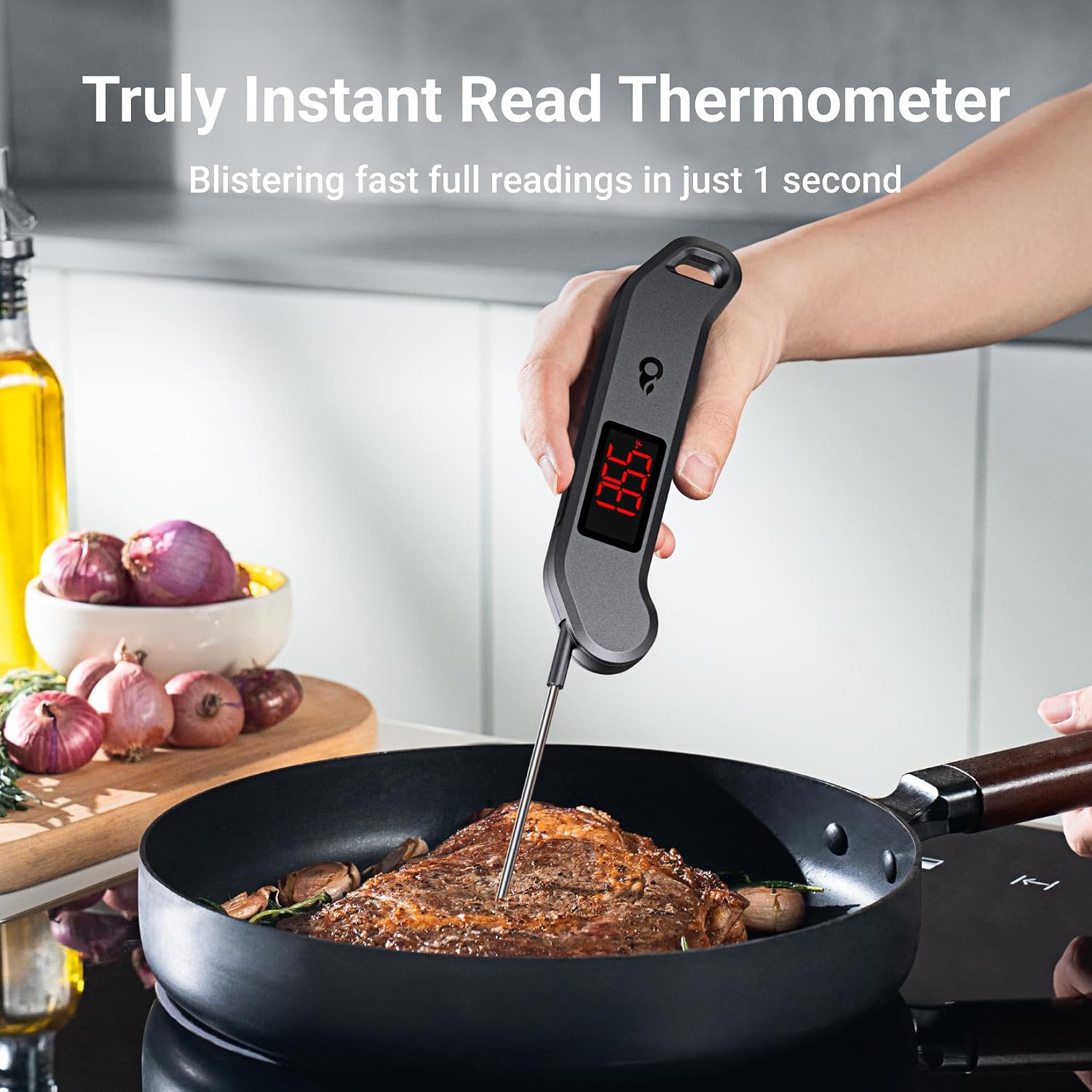
When you’re grilling or barbecuing, every time you lift the lid to check the temperature, you’re letting heat escape. A slow thermometer means the lid stays open longer, dropping the internal temperature of your grill or smoker and potentially affecting your cook time and consistency. A thermometer like the ThermoMaven 1 Sec with its one-second reading minimizes this heat loss, keeping your cooking environment more stable and your food progressing steadily. It’s about efficiency and better results.
How does NIST & NSF Certification benefit a home cook?
These certifications aren’t just for commercial kitchens. For a home cook, NIST and NSF certifications mean that the meat thermometer has undergone independent testing to verify its accuracy and adherence to public health standards regarding materials and design. This provides an extra layer of confidence that the device will provide reliable temperature readings, crucial for food safety, and that its components are safe for contact with food. It’s peace of mind, really, knowing someone besides the manufacturer has vouched for it.
What does an auto-rotate bright LED screen add to the user experience?
An auto-rotate bright LED screen might seem like a small detail, but it makes a significant difference in practical use, especially for a probe thermometer. Imagine trying to read the display while holding it at an awkward angle over a hot pan or a crowded grill. With auto-rotation, the display adjusts itself no matter how you hold it, ensuring the numbers are always right-side up and easy to see. The brightness means you can read it clearly in various lighting conditions, from a dimly lit kitchen to bright outdoor sunshine. It’s a quality-of-life feature that makes cooking less frustrating.
Key Takeaways
- Speed is Paramount for Precision: A thermometer that reads in one second isn’t just a gimmick; it directly impacts food quality by minimizing heat loss and allowing quick, repeated checks.
- Accuracy You Can Trust: Don’t skimp on precision. A ±0.5℉ accuracy rating is a hallmark of truly reliable cooking, vital for food safety and perfect results.
- Durability is Not a Luxury: Features like a highly waterproof design aren’t just about surviving splashes; they indicate overall robust construction that will stand up to the rigors of a real kitchen or grill environment.
- User Experience Matters: A bright, auto-rotating screen might seem minor, but it makes a huge difference in usability, especially when you’re busy or dealing with difficult angles.
- Certification = Confidence: NIST & NSF certifications offer an independent assurance of quality and safety, giving you peace of mind with your purchase.
FAQ
How often should I calibrate my meat thermometer?
Most digital thermometers, especially premium ones, hold calibration well. But it’s a good habit to check its accuracy every few months, or if you suspect it’s off, using an ice bath or boiling water method. It’s quick, simple maintenance.
Can I leave my instant-read meat thermometer in the oven or grill?
No, definitely not. Instant-read thermometers are designed for quick checks and are not built to withstand prolonged exposure to the intense, continuous heat of an oven or grill. Leaving one in will damage its internal electronics, often beyond repair.
What’s the ideal internal temperature for common meats like chicken or beef?
Poultry (chicken, turkey) should generally reach 165°F (74°C). For beef, it varies: rare is around 125-130°F, medium-rare 130-135°F, medium 135-140°F, and well-done is 155°F+. Always check a reliable food safety chart.
Is a longer probe always better for a meat thermometer?
Not necessarily. While a longer probe is essential for large roasts or turkeys, it can be cumbersome and awkward for smaller cuts of meat. A moderate length, around 4-5 inches, is often a good compromise for versatility, or you might own two different lengths.
What makes a meat thermometer “highly waterproof”?
A highly waterproof rating typically means the device can withstand splashes, spills, and even quick rinses under a faucet without being damaged. It usually implies sealed buttons and a well-protected battery compartment, making cleanup much easier and extending the thermometer’s life.
Why is the read speed so important for a digital meat thermometer?
Fast read speed is crucial for accuracy and convenience. It minimizes the time heat escapes from your oven or grill, and it reduces the chance of overcooking due to waiting. For delicate proteins, a quick read helps you pull them off the heat at the exact moment of perfection.
Final Recommendation
For the cook who prioritizes precision, speed, and durability, the ThermoMaven 1 Sec Professional Digital Meat Thermometer absolutely holds its own. If you frequently handle expensive cuts, grill often, or simply demand reliable, exact temperatures for food safety and culinary perfection, its premium feature set — think sub-second readings, top-tier accuracy, and a genuinely waterproof design — makes it a worthwhile investment. It’s built for those who appreciate tools that perform flawlessly under pressure and make cooking more predictable, less stressful.
However, if you’re a more casual cook just looking for basic temperature assurance, some of its advanced features, and the associated premium cost, might be more than you truly need. A good mid-range instant-read thermometer will certainly get the job done for most everyday tasks. But for the serious food enthusiast? The ThermoMaven 1 Sec delivers a level of confidence and efficiency that’s hard to beat.
#ThermoMaven #Sec #Professional #Digital #Meat #Thermometer #Accuracy #NISTNSF #Certified #Food #Thermometer #AutoRotate #Bright #LED #Screen #Highly #Waterproof #Grill #BBQ #Black
Reviews
There are no reviews yet.