![Titanium Cutting Board Double Sided Food Grade, Pure Titanium/PP for Kitchen, Cutting Board Easy to Clean[15.5”*10.5”+12”*8.5”]](https://www.decorwild.com/wp-content/uploads/2026/08/Review-TitaniumPP-Kitchen-Cutting-Boards-Double-Sided-Food-Grade-Easy.jpg)
Is a Titanium Cutting Board Worth the Investment for Your Kitchen Prep?
Alright, let’s talk cutting boards. Specifically, those fancy titanium cutting board options, often sporting a dual-sided design—one face of pure titanium, the other of PP plastic. This guide’s for folks eyeing that specific setup, wondering if it’s just marketing fluff or a legitimate step up for their kitchen prep routine. We’re going to peel back the layers on this premium option and figure out if it actually delivers real value where it counts.
Quick Answer
A titanium cutting board with a PP plastic reverse offers stellar hygiene and impressive durability, thanks to its food-grade materials. It’s a premium choice that excels in specific kitchen tasks, especially where cleanliness is paramount, but its impact on your knife edges demands careful consideration. Don’t expect it to replace every board in your collection, but it could certainly earn its place.
What to Look For (The Buying Criteria)
Choosing the right cutting board feels simple until you dive into the options. With a titanium cutting board on the table, things get a bit more nuanced. Here’s what you truly need to consider.
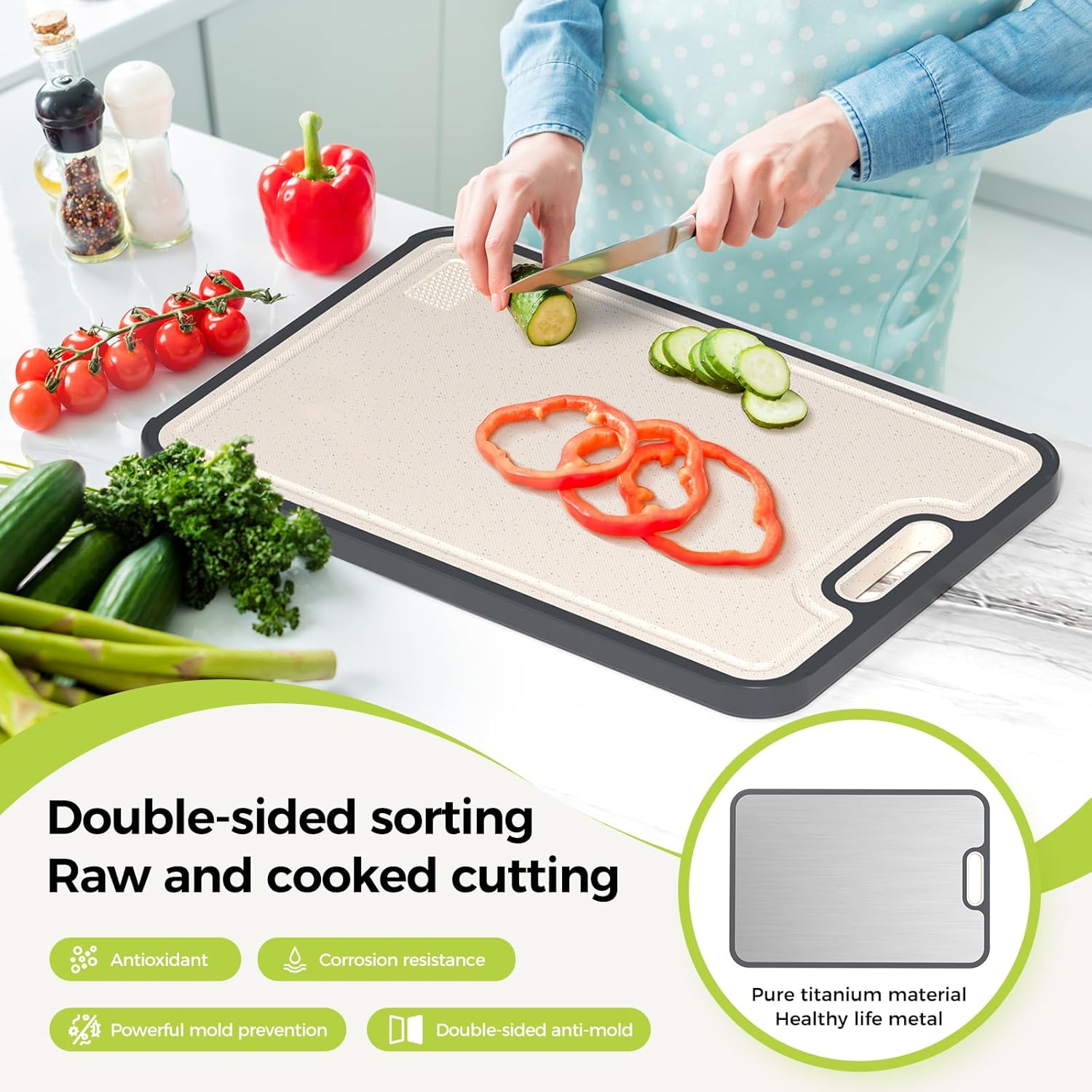
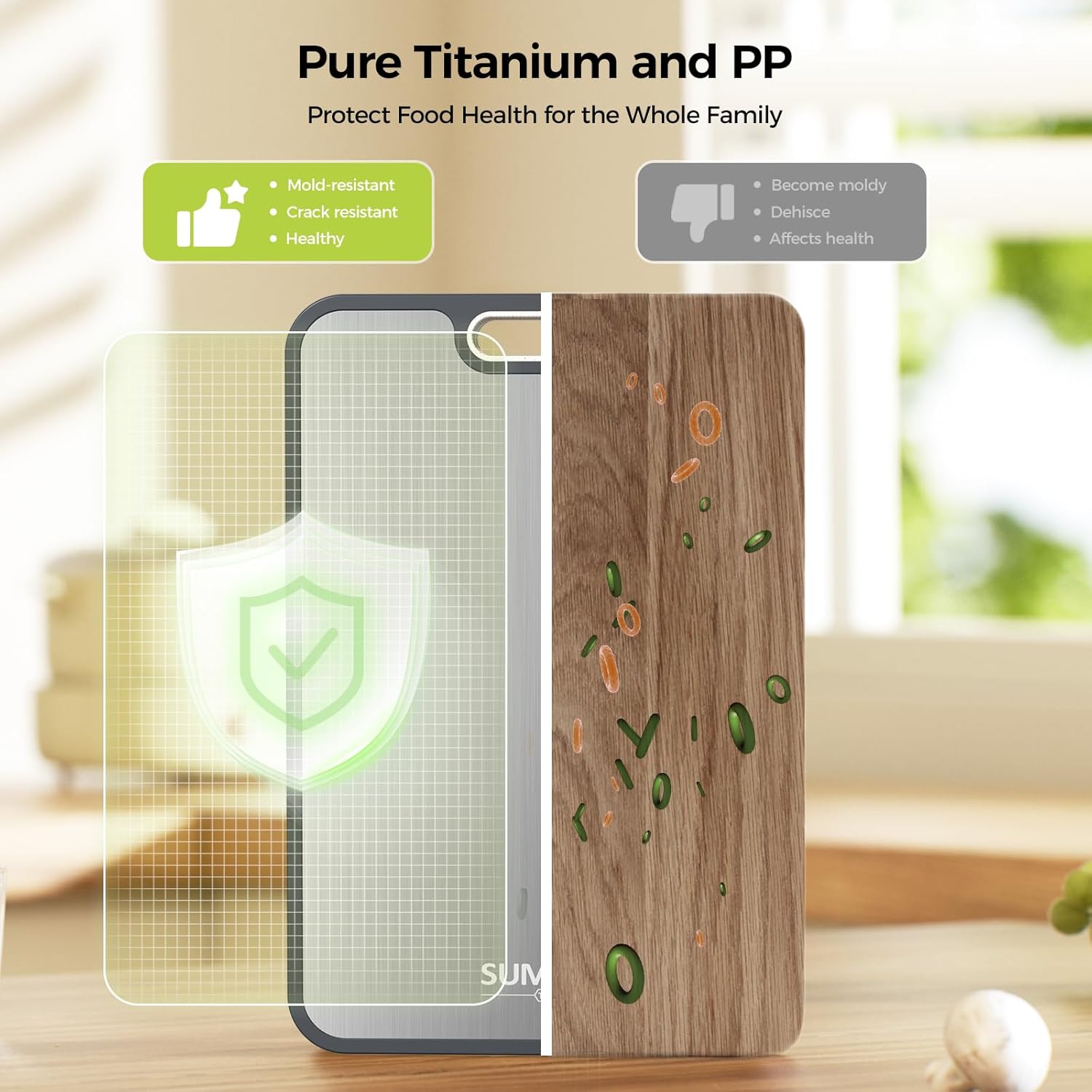
Material Composition: This is where the titanium/PP combo shines—and sometimes causes a wrinkle. You’re getting pure titanium on one side, typically for tasks where absolute hygiene and stain resistance are key. Think raw meats, fish, or brightly colored produce that would otherwise leave a mark. Titanium is non-porous, naturally antibacterial-ish, and incredibly tough. But that toughness is a double-edged sword, right? On the flip side, the PP plastic offers a softer surface. This is your go-to for general chopping, particularly if you’re using high-quality knives. It’s still food-grade, generally dishwasher safe, and offers some give for your blades. The trade-off? The PP side will show knife marks over time, just like any plastic board. It’s a compromise, plain and simple.
Durability and Longevity: Look, a titanium cutting board isn’t going to warp, crack, or splinter like wood. It won’t melt or degrade like some cheap plastics. This thing is built to last, potentially for decades. The titanium side is practically indestructible under normal kitchen use. The PP side, while tough, will eventually wear down with heavy knife work. That’s just the nature of plastic. You’re not buying a forever board on both sides, but the titanium side certainly comes close. This longevity can justify a higher upfront cost for many people.
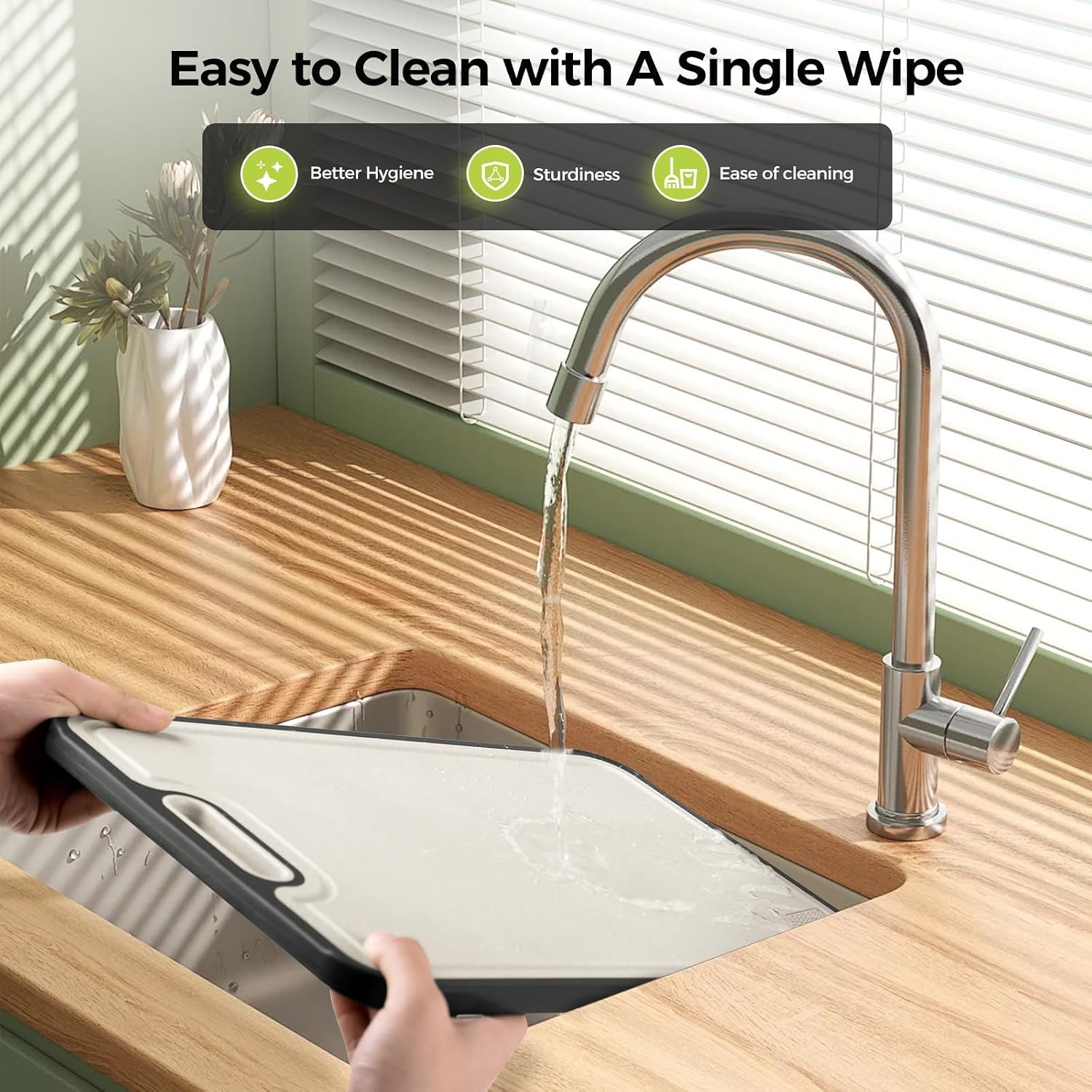
Hygiene and Cleaning: This is a huge selling point for titanium cutting boards. Both titanium and food-grade PP are non-porous. This means bacteria, odors, and food juices can’t seep into the material. Wiping them down is generally easy. For tougher jobs, they can typically handle hotter water and stronger sanitizers than, say, a traditional wood cutting board. Many of these boards are also marketed as easy to clean, and that’s usually true. But remember, the PP side still gets grooves, which can harbor nasties if not cleaned thoroughly.
Weight and Stability: Titanium is lighter than steel, but a solid titanium board still has some heft to it. This can be a good thing, providing stability on your countertop. No one wants a board that slips and slides while you’re trying to slice through a butternut squash. The specific dimensions (like the common 15.5”x10.5” and 12”x8.5” sizes) mean they’re not necessarily unwieldy, but they’re not feather-light either. You want a board that stays put, but also one you can easily move around.
Knife Friendliness: Okay, this is the elephant in the room. Hard materials like titanium are undeniably tougher on knife edges than wood or softer plastics. Professional chefs typically shy away from anything harder than wood for their primary prep. The titanium side of a dual-sided design is not your friend for daily knife work if you value razor-sharp edges. That’s why the PP side exists. It’s a much kinder surface, offering enough give to protect your blades. So, you’re essentially getting two distinct experiences. If you ignore the PP side and constantly chop on titanium, you’ll be sharpening your knives a lot more often. That’s a definite trade-off to keep in mind.
Size and Versatility: Often, these premium boards come in useful pairs or specific sizes. The 15.5”x10.5” board is a decent size for most main courses, big enough for a chicken breast or a pile of veggies. The smaller 12”x8.5” can be perfect for quick tasks, slicing fruit, or small prep. Having two sizes adds practical versatility, letting you keep different boards for different jobs. This means less cross-contamination, which is always a plus in my book.
How to Match the Board to Your Situation
Your kitchen, your rules. But certain cutting board choices just make more sense for specific routines.
The Meticulous Home Chef: You’re the kind of cook who preps everything just so. Hygiene isn’t a suggestion; it’s law. You regularly handle raw meats and seafood, and you despise staining. For you, the titanium cutting board is a compelling option. The titanium surface virtually eliminates concerns about bacteria seeping in, and it laughs at beet juice or turmeric. It’s built for those precise, clean tasks where material integrity is everything. You’ll likely reserve that titanium side for your most sensitive ingredients, leveraging its inherent cleanliness.
The Busy Weeknight Cook: Life’s a whirlwind, and you need kitchen tools that keep up without demanding too much fuss. Cleanup needs to be quick and easy. A dual-sided board offers that flexibility. You’ll probably lean on the PP plastic side for most vegetable chopping and everyday meals. It’s less demanding on your knives for routine tasks, and still simple enough to wash up. Then, when you’ve got a tricky raw protein, flip to the titanium side. Less thought about proper sanitation, more time for dinner. It simplifies the choice, really.
The Space-Conscious Urbanite: Living in a smaller dwelling means every kitchen item needs to pull its weight. A single item doing double duty is often preferred. This dual-sided design is intriguing because it effectively gives you two boards in one footprint. You’ve got the ultra-hygienic titanium and the knife-friendly plastic, both within the same piece. And if it comes as a set with a smaller companion, that’s even better for varied tasks without cluttering up limited counter or storage space. It’s about efficiency, isn’t it?
Cutting Board Material Comparison
Choosing a chopping board isn’t a one-size-fits-all deal. Here’s how the titanium/PP combo stacks up against other common contenders.
| Type/Tier | Best For | Price Tier | Key Feature | Watch-Out |
|---|---|---|---|---|
| Titanium/PP Board | Hybrid demands, high hygiene, longevity | Premium | Dual-sided function | Higher initial cost, titanium’s hardness. |
| Wood Boards | Knife preservation, aesthetic, classic | Mid-range | Natural self-healing | Maintenance needs, porosity. |
| Plastic Boards | Budget-conscious, raw meat tasks | Budget | Dishwasher-safe | Prone to scoring, needs frequent replacing. |
| Composite Boards | Durability, heat resistance | Mid-range | Non-porous, thin | Can be hard on knives, limited sizes. |
The titanium cutting board with its PP reverse offers a truly unique proposition, marrying extreme durability and hygiene with a gentler surface for knives. Wood cutting boards are beloved for their knife-friendliness and natural aesthetic, but they require regular oiling and aren’t always ideal for raw protein due to their porosity. Traditional plastic cutting boards are budget-friendly and easy to toss in a dishwasher, but they score deeply over time, becoming breeding grounds for bacteria and requiring frequent replacement. Composite boards like those made from paper or wood fiber resin offer a good balance of durability and hygiene, but they can still be quite hard on blades and sometimes lack the heft or size flexibility of other options.
Scenario-Specific Considerations for Your Kitchen
Sometimes, the general advice isn’t enough. Let’s get specific about how a titanium cutting board fits into different kitchen tasks.
For Heavy-Duty Chopping: Are you breaking down a whole chicken? Dicing a mountain of root vegetables? For these tasks, the durability of titanium is undeniable. You won’t nick or gouge the titanium side. However, remember what we talked about with knife friendliness. The PP plastic side is the smarter choice here for your blade’s sake. It offers a more forgiving surface, absorbing some of the impact. The robust nature of the board as a whole means it won’t budge under pressure.
For Raw Meat & Fish Prep: This is where the titanium cutting board really earns its stripes. The non-porous surface of both the titanium and the food-grade PP means there’s nowhere for juices or bacteria to hide. You can confidently prep raw poultry, fish, or beef without worrying about cross-contamination with your produce. Cleanup is straightforward; a quick wash and it’s ready for anything else, minimizing that lingering raw meat smell. Seriously, this alone is a game-changer for some folks.
For Everyday Vegetable & Fruit Slicing: Most of your day-to-day work—slicing an apple for a snack, dicing an onion, prepping a salad—will probably land on the PP side. It’s easy, convenient, and won’t harm your knives for these lighter tasks. The smaller 12”x8.5” board, if you get the set, is particularly handy for these quick jobs. It’s about grabbing the right tool for the job.
Common Mistakes When Buying Cutting Boards
We all make ’em. Here are a few pitfalls to sidestep when you’re looking for your next chopping board.
Ignoring Knife Health: Folks often get caught up in the idea of a “durable” cutting surface and forget that durability for the board can mean dullness for their knives. A rock-hard surface might make for an indestructible board, but it’s going to chew through your blade’s edge. This is a crucial point for a titanium cutting board; don’t just use the titanium side for everything. That PP side exists for a reason, you know?
Underestimating Maintenance: While a titanium cutting board is practically zero-maintenance on one side, other boards, especially wood cutting boards, demand regular oiling and specific cleaning. Assuming every board is “set it and forget it” can lead to warping, cracking, or worse, unsanitary conditions. Even the PP side, for all its convenience, needs a good scrub to get out those score marks.
Buying One-Size-Fits-All: Trying to make one tiny board work for breaking down a whole brisket and slicing a lime? Or conversely, using a massive slab for a single garlic clove? It’s inefficient and frankly, a bit annoying. Consider the tasks you actually perform. The availability of different sizes, like the 15.5”x10.5” and 12”x8.5”, directly addresses this. Don’t limit your kitchen prep by having the wrong board size for the job.
Overlooking Hygiene: Some people just wipe down a board and call it good. But porous materials or deeply scored surfaces can harbor bacteria even after a cursory rinse. This is particularly important for raw proteins. Always prioritize how effectively you can sanitize your chosen food-grade surface.
Why/How/What
Let’s quickly tackle some fundamental questions about these premium kitchen tools.
Why choose a titanium cutting board?
You choose a titanium cutting board primarily for its unparalleled hygiene, extreme durability, and resistance to staining and odors. It’s a non-porous surface that doesn’t harbor bacteria, making it exceptionally safe for various kitchen prep tasks, especially those involving raw ingredients. For certain specific needs, it truly outperforms traditional materials.
How do you care for a dual-sided board?
Caring for a dual-sided board means treating each side appropriately. The titanium side is practically indestructible; a simple wash with soap and water is usually sufficient. The PP side, while durable, will benefit from regular thorough cleaning, especially to scrub out any knife marks that appear. Most boards of this type are easy to clean and can often handle a run through the dishwasher, though checking manufacturer guidance is always smart.
What makes “food grade” important for cutting surfaces?
“Food grade” means the material is certified safe for contact with food, designed not to leach harmful chemicals into your ingredients or react negatively with acids and other food components. This is crucial for any chopping board to ensure your meals remain safe and untainted. It’s a basic but absolutely non-negotiable standard for kitchenware.
FAQ
Are titanium cutting boards truly non-stick?
Not in the sense of a non-stick frying pan, no. Food will still cling to the surface. Their non-stick claim often refers to how easily food residue and odors release from the surface during cleaning, due to the material’s non-porous nature.
Can I put a titanium cutting board in the dishwasher?
Generally, yes. Both pure titanium and food-grade PP plastic are highly resistant to heat and detergents, making them suitable for most dishwashers. Always check the specific care instructions for your model, though.
How durable is the PP side compared to the titanium?
The PP plastic side is durable for plastic, certainly more so than cheaper alternatives. It will resist warping and cracking well. However, it will inevitably show knife marks and score over time with regular use, unlike the titanium side, which is much more resistant to cutting damage.
Will a titanium cutting board dull my knives quickly?
Yes, the titanium side will dull your knives faster than a softer material like wood or the board’s own PP side. Titanium is very hard. This is the main reason these boards include a softer, PP plastic surface—to give your knife edges a break for general slicing and chopping.
What are the benefits of a double-sided design?
A double-sided design offers incredible versatility and hygiene. You get a super-tough, non-porous titanium surface for raw proteins and highly pigmented foods, and a knife-friendly PP plastic side for everyday general kitchen prep. It’s like having two specialized boards in one compact package.
Are there specific foods I should avoid cutting on titanium?
While titanium is exceptionally resistant to staining and odors, it’s generally recommended to avoid cutting anything that requires heavy, repeated chopping on the titanium side if you want to preserve your knife edges. Use the PP side for those tasks.
Do titanium boards scratch easily?
The pure titanium side is exceptionally scratch-resistant, much more so than wood or plastic. Minor superficial marks might occur with extreme force, but deep scratches that would compromise hygiene are highly unlikely. The PP side, however, will scratch with knife use, just like any plastic board.
Decision Tree: Is a Titanium/PP Board Right for You?
- Do you regularly prep raw meats or fish and prioritize extreme hygiene? Yes / No
- Are you frustrated by stains or lingering odors on your current cutting board? Yes / No
- Do you own quality knives and want a surface that won’t dull them for every task? Yes / No (If yes, you’ll need to commit to using the PP side for daily chopping.)
- Is ease of cleaning and minimal maintenance (for one side, at least) a top priority? Yes / No
- Are you okay with a higher upfront cost for a durable, long-lasting kitchen tool? Yes / No
If you found yourself answering “Yes” to most of these questions, especially the first two, this board is probably a good fit. If knife preservation is your absolute top priority for all tasks, you might lean elsewhere, or at least be very disciplined about which side you use.
Key Takeaways on Titanium/PP Cutting Boards
Here’s the skinny: a titanium cutting board with its dual-sided design offers a unique blend of benefits. Its non-porous surfaces provide top-tier hygiene, making it a standout for raw food preparation. The titanium itself is incredibly durable, laughing in the face of stains and warps. However, that toughness comes at a cost to your knife edges; the PP side is there specifically to mitigate this. It’s a premium option, no doubt, but one that brings tangible advantages for specific kitchen needs. Think of it as a specialized tool, not necessarily a universal replacement for all your existing chopping board favorites.
Final Recommendation
For the discerning home cook who prioritizes absolute hygiene, desires exceptional durability, and handles a wide range of ingredients including raw proteins, a titanium cutting board with a PP plastic reverse is a genuinely smart investment. It effectively solves the problem of cross-contamination and staining that plagues many traditional boards. Just remember to leverage that softer PP side for your everyday kitchen prep to keep your good knives happy and sharp. If you’re willing to pay a bit more for a resilient, easy to clean, and long-lasting board that excels in specific, high-stakes tasks, then this dual-sided design will serve you well for years to come.
#Titanium #Cutting #Board #Double #Sided #Food #Grade #Pure #TitaniumPP #Kitchen #Cutting #Board #Easy #Clean15.510.5128.5