
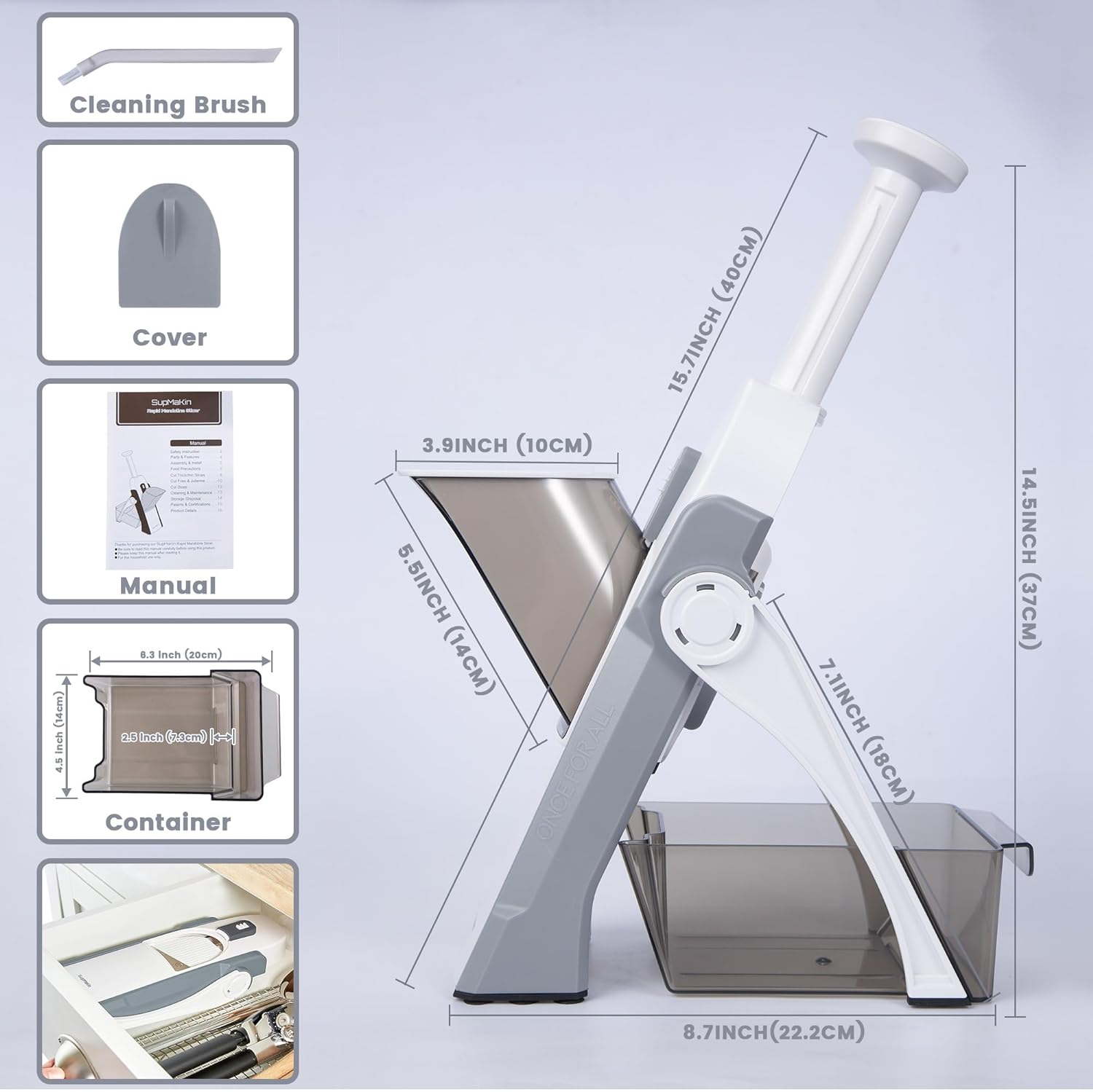
Navigating the Slice: Is a Premium Mandoline Slicer Worth the Investment?
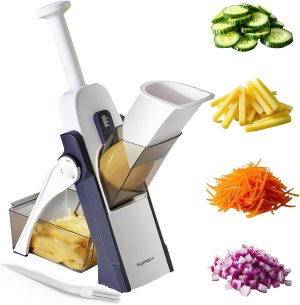
So, you’re eyeing a mandoline slicer, perhaps the SupMaKin Safe Mandoline Slicer for Kitchen, Adjustable Potato Slicer 1-8 mm? Good. This guide is for home cooks who are tired of uneven knife cuts and wrestling with awkward kitchen gadgets. We’ll cut through the marketing fluff to figure out what truly matters in a mandoline slicer and whether spending a bit more actually pays off in your daily food prep.
Quick Answer Box
For consistent, professional-looking slices and significantly reduced prep time, a quality mandoline slicer is a serious upgrade to any kitchen. The real question isn’t if you need one, but which one offers the best blend of safety, versatility, and durability for your budget and specific cooking habits.
What to Look For in a Mandoline Slicer (The Buying Criteria)
Buying a mandoline slicer isn’t like picking out a new spoon; there are actual safety implications here. And efficiency. A cheap one might just collect dust, or worse, get you a trip to urgent care. Here’s what smart shoppers consider.
1. Blade Material and Sharpness
Look, this is non-negotiable. Stainless steel blades are the standard for a reason. They hold an edge, resist rust, and glide through even tougher vegetables. Some budget models cut corners with flimsier steel, and you’ll feel it immediately when you try to slice a sweet potato. Dull blades don’t just struggle; they’re actually more dangerous because you have to apply more force, increasing slip risk. A high-quality blade ensures smooth, clean cuts every single time. It’s the heart of the operation.
2. Safety Features
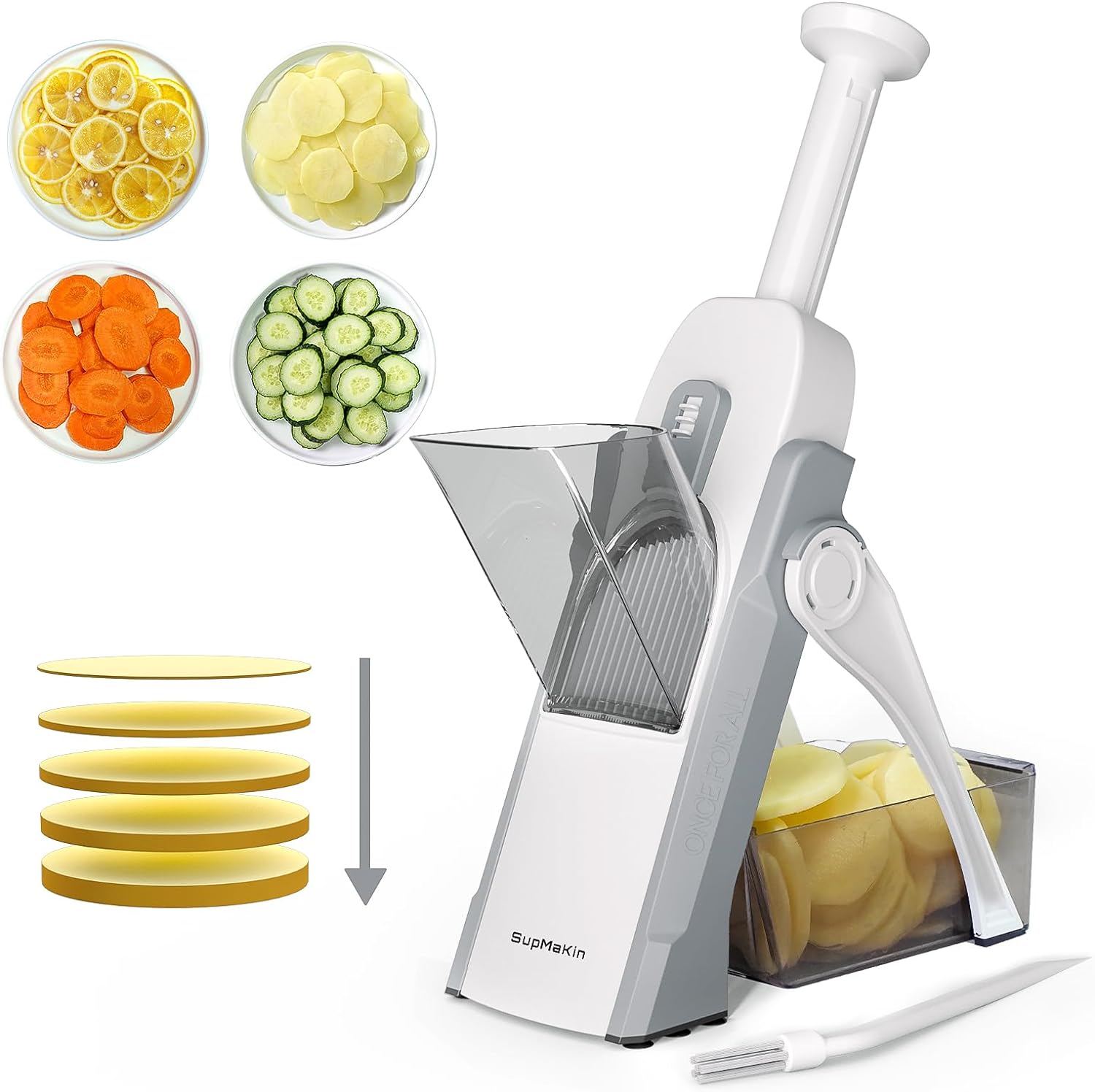
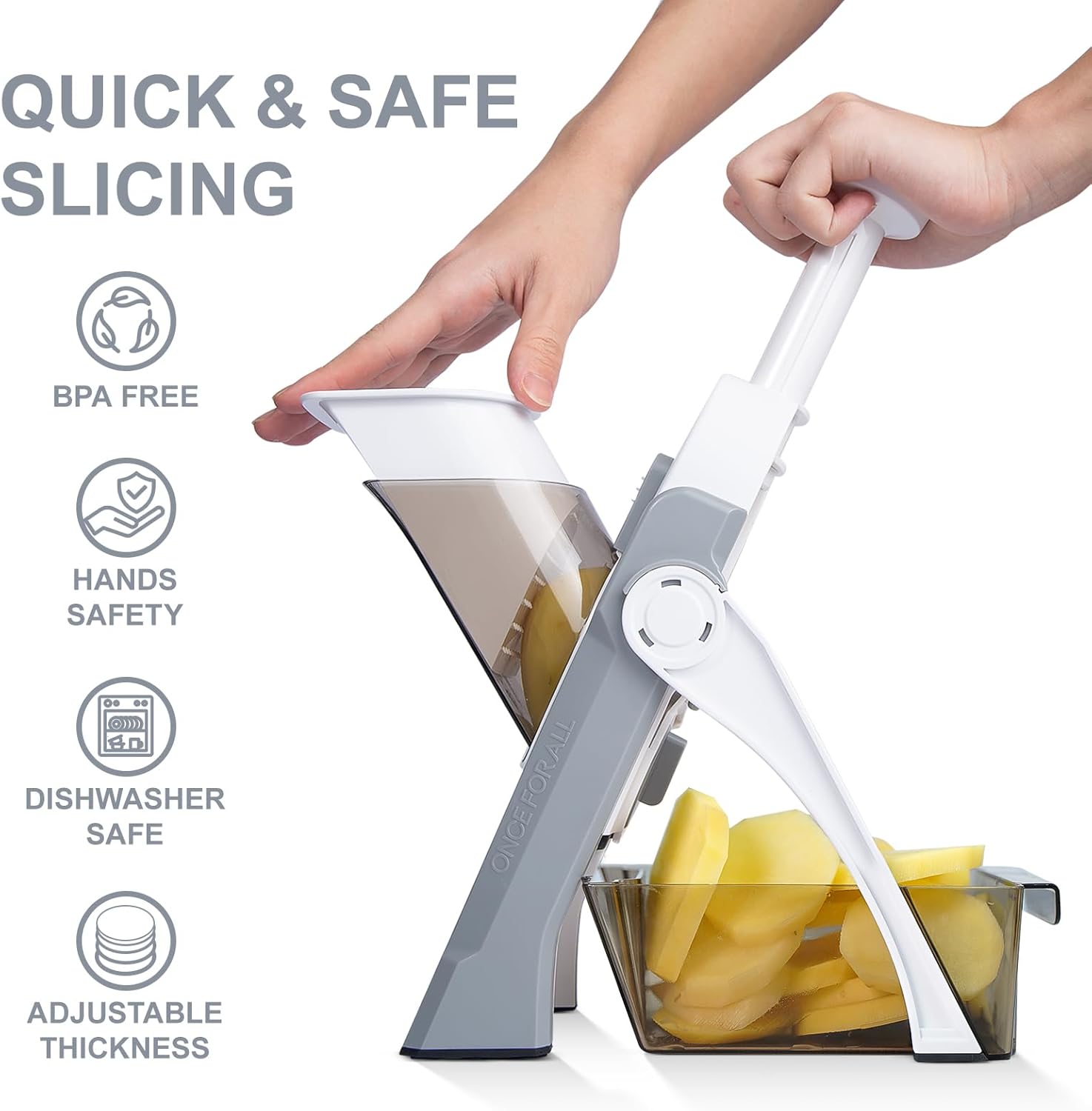
This is where the SupMaKin Safe Mandoline Slicer shines, emphasizing “safe” right in its name. And for good reason. Mandolines are notorious for slicing fingers if you’re not careful. Think about it: razor-sharp blades, slippery produce, fast movements. A reliable hand guard is crucial; it needs to grip the food securely and shield your fingers effectively. Some models integrate the blade system more deeply, minimizing exposure. Others have retractable blades or locking mechanisms. Honestly, any mandoline that feels flimsy or exposes too much blade makes me nervous. Don’t skimp here. Ever.
3. Adjustability and Versatility
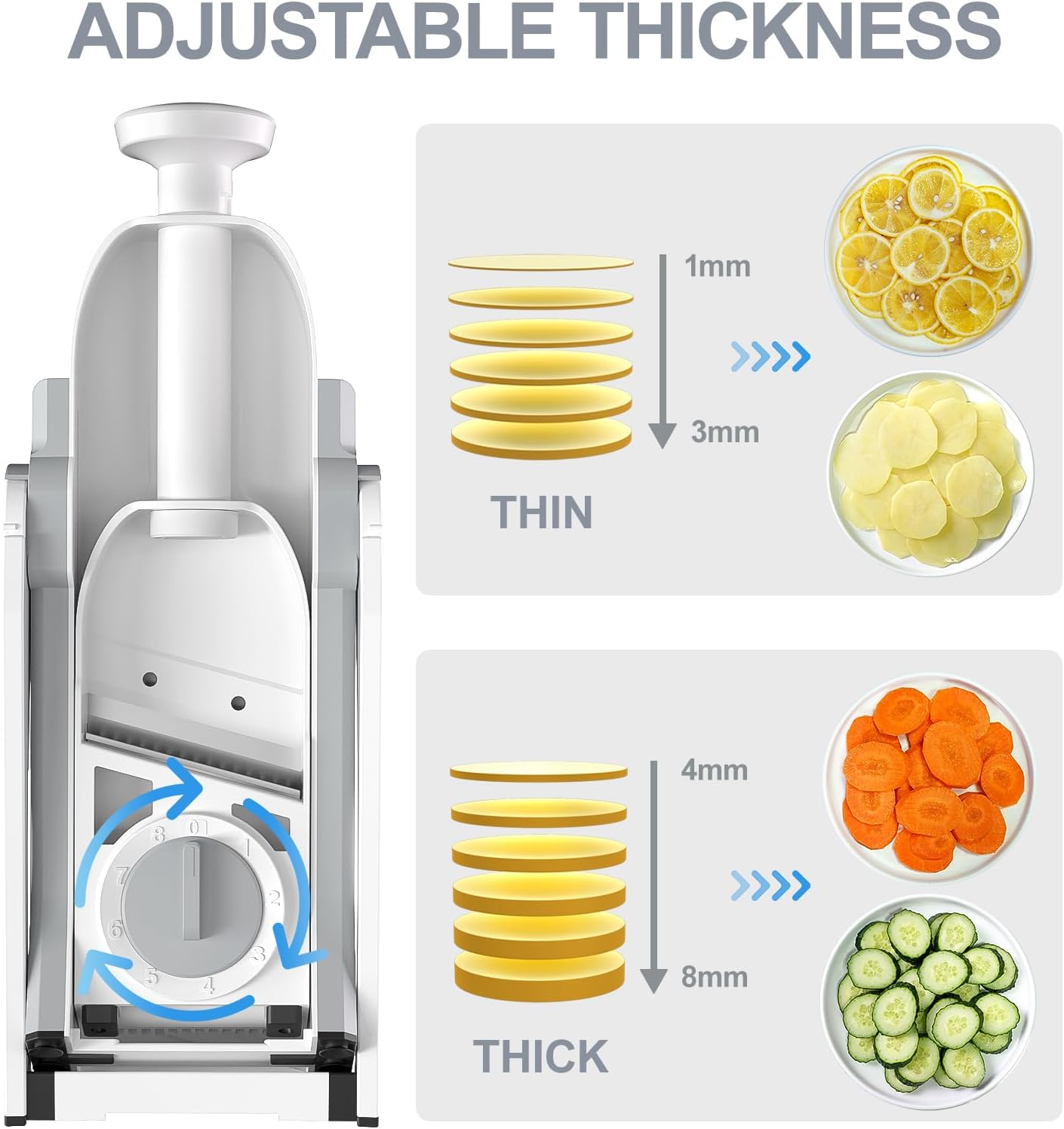
What do you actually want to do with this thing? Most people think “thin slices,” but a good mandoline slicer can do so much more. You’ll want adjustable slice thickness, typically from super thin (think paper-thin cucumber for salads) up to about 8mm for thicker potato slices or robust gratins. Beyond thickness, look for options like julienne cuts (matchsticks for fries or stir-fries) and perhaps even dicing capabilities. A versatile unit reduces the need for other single-purpose kitchen gadgets. But be warned: the more features a mandoline has, the more parts there sometimes are to clean, which can be a real drag.
4. Stability and Build Quality
A mandoline that wobbles around on your counter is just asking for trouble. It needs a sturdy base with non-slip feet. Construction materials matter, too. High-grade plastics mixed with stainless steel are common. Cheap, brittle plastic? Pass. The overall feel should be substantial, not flimsy. When you’re pushing produce down, you want confidence, not fear that it’s going to collapse or slide away. And remember, the more premium options often use more metal, which adds heft, but also durability.
5. Ease of Cleaning and Storage
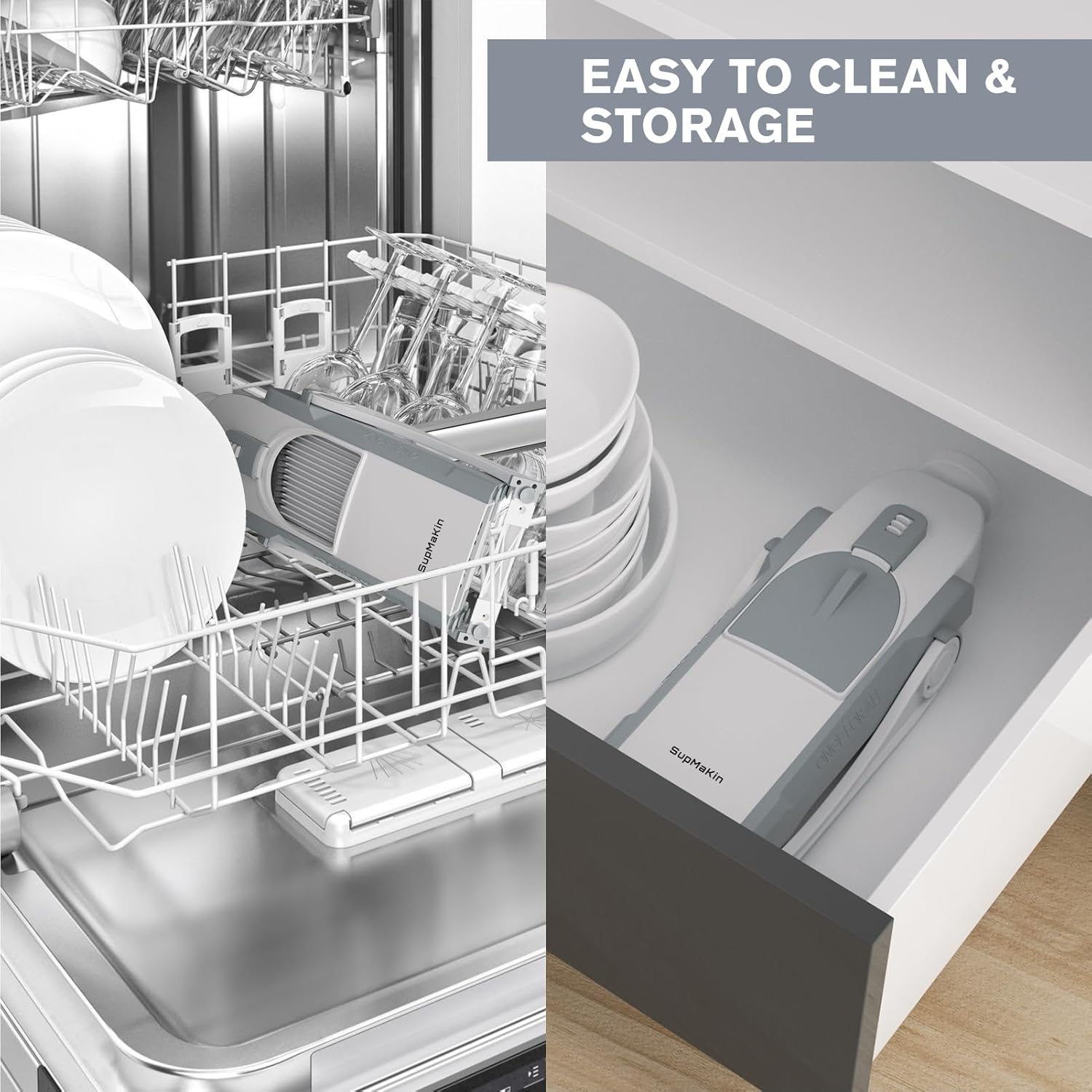
This is the unsexy part, but it’s vital for any kitchen tool. If it’s a pain to clean, you won’t use it. Period. Look for models that disassemble easily, don’t have too many intricate crevices where food can get stuck, and are ideally dishwasher-safe. The SupMaKin model touts being dishwasher friendly, which is a big plus. Storage is another consideration. Some are bulky. Others fold flat or come with integrated containers to catch your slices, which is smart but can also mean a larger footprint. Consider your cabinet space.
6. User Comfort and Ergonomics
Your hands will be doing the work. Does the hand guard feel comfortable to hold? Is the angle of the slicing surface natural? Are the adjustment mechanisms intuitive, or do they feel clunky and stiff? A well-designed mandoline slicer reduces strain and makes the whole process smoother. It’s often an overlooked detail until you’re halfway through a mountain of veggies and your hand is cramping.
How to Match the Mandoline Slicer to Your Situation
Not every kitchen needs the same mandoline. What kind of cook are you?
The Enthusiastic Home Chef: You love cooking, experiment with recipes, and appreciate consistent results. You’re probably doing more than just slicing cucumbers. You’ll want a versatile mandoline slicer, perhaps a vertical mandoline style like some of the Japanese models, offering multiple cuts and precise thickness control. Safety is paramount, but so is efficiency. You’re looking for a workhorse that can handle daily use without a fuss. A mid-range to premium option with robust construction and a variety of inserts is probably your sweet spot.
The Weeknight Warrior (Busy Parent/Professional): Time is precious. You need something fast, safe, and easy to clean. You’re not looking for fancy cuts; you just want uniform slices for quick salads, stir-fries, or roasted vegetables without risking a digit. Simplicity is key. A compact, user-friendly model with strong safety features and easy adjustments would be ideal. Maybe something like the SupMaKin Safe Mandoline Slicer, which prioritizes safety and ease of use, making dinner prep a breeze without a huge learning curve. No one wants to spend 20 minutes cleaning a gadget after a long day.
The Occasional Kitchen Helper (Minimalist Cook/Gifter): You don’t cook elaborate meals often, or perhaps you’re buying a gift. Durability and versatility might take a backseat to affordability and basic functionality. You still need it to be safe, but a simpler, more budget-friendly mandoline slicer that does basic slicing well might suffice. It needs to be intuitive enough that anyone can pick it up and use it without feeling overwhelmed. Think consistent potato slices for gratins, or quick fruit preparation. The focus here is on value and straightforward operation, rather than extensive features.
Mandoline Slicer Types: A Comparison
Choosing a mandoline isn’t just about brand; it’s about the type of device. Each has its pros and cons.
| Type/Tier | Best For | Price Tier | Key Feature | Watch-Out |
|---|---|---|---|---|
| Basic Flat-Blade | Simple, thin slicing of softer produce | Budget | Straightforward, compact design | Limited versatility; often fewer safety features, blades can dull quickly. |
| These are good if you only need thin, uniform slices of things like cucumbers or onions occasionally, but don’t expect much more. | ||||
| V-Blade Mandoline | Precision slicing of firmer produce like potatoes or tomatoes | Mid-Range | V-shaped blade reduces resistance, often sharper | Can be bulkier; proper technique needed to avoid blade contact, more difficult to clean. |
| The V-blade design makes slicing denser items smoother, minimizing crushing, but it demands careful handling. | ||||
| Japanese Vertical/Tabletop | Versatile cuts, high precision for all produce types | Mid-Range | Often integrated julienne, dice options; very stable | Larger footprint; usually requires specific hand guards, some are more complex to operate. |
| These models are typically more robust, offering a wider array of cuts beyond just basic slices, making them quite flexible. | ||||
| Integrated Box/Container Design | Less mess, easy collection of sliced items, safety focus | Budget-Mid | Slices directly into a container; often compact | Limited in overall length of produce it can handle; container size can be restrictive. |
| Models like the SupMaKin Safe Mandoline Slicer often fall into this category, emphasizing contained slicing and safety. |
Scenario-Specific Slicing Needs
Cooking isn’t a one-size-fits-all thing, and your mandoline slicer shouldn’t be either.
For the Frequent Dinner Party Host:
You’re constantly whipping up elaborate salads, prepping veggie platters, or making homemade potato chips. You need speed, consistency, and an array of fancy cuts. A premium, highly adjustable mandoline slicer with robust interchangeable blades for julienne cuts, waffle cuts, and various thicknesses is a must. You’re not just slicing; you’re crafting. Look for something that can handle large quantities of ingredients efficiently, with minimal cleanup hassle, so you can focus on entertaining. A model that’s a bit heavier might actually be better here, providing stability under continuous use.
When Meal Prepping for the Week:
Sunday is your big cook day. You’re slicing mountains of vegetables for lunches, dinners, and snacks. Here, safety features and ease of use become paramount. You’re probably tired after a long week, and your attention might wander. A mandoline slicer designed with user protection in mind, perhaps an integrated vertical slicer where your hands are far from the blade, will save you time and peace of mind. The ability to quickly swap between a few common slice thicknesses without fiddly adjustments is also key. And, oh my goodness, it must be easy to clean. No one wants food gunk stuck in every nook and cranny after an hour of slicing. The SupMaKin Safe Mandoline Slicer, with its focus on contained slicing and user protection, fits this bill remarkably well.
If You’re New to Mandolines (or a Gifting Idea):
Maybe you’ve heard horror stories, or you’re just not confident with super-sharp tools. Or perhaps you’re looking for a thoughtful kitchen gadget gift. For a beginner, the learning curve needs to be minimal, and forgiveness for slight errors is a blessing. Prioritize models that have the most comprehensive and intuitive hand guard designs and fully enclosed blades where possible. Simpler models focusing on basic, safe slicing, perhaps with a smaller number of distinct settings, are far better than an overly complicated one that intimidates users. The goal is to make slicing easier and safer than a knife, not scarier. This is where models like the SupMaKin, which emphasize safety and a more enclosed design, truly shine for those just starting out.
Common Mistakes Buyers Make with Mandoline Slicers
Okay, so you’ve decided to get one. Smart move. But don’t fall into these traps!
1. Ignoring Safety Features: This is number one for a reason. People look at price, features, blade type, then gloss over the hand guard. Big mistake. A mandoline is basically an exposed blade with a push-stick. You absolutely, positively need a robust, comfortable, and effective hand guard. Some folks try to use a fork or just their bare hands for the last bit of a vegetable. Honestly, I’ve seen people get way too casual with these things, thinking they can eyeball it for the last bit. Please don’t. That’s a quick trip to the ER. Always, always use the safety pusher.
2. Buying Too Cheap (or Too Complicated): There’s a sweet spot. A dirt-cheap mandoline slicer often means flimsy plastic, a dull blade, and unstable footing. It’ll frustrate you and probably won’t last. On the flip side, some get suckered into a super complex, multi-functional kitchen gadget that promises to julienne, dice, grate, and slice a thousand different ways. Most of those extra features? They’re gimmicks. Or they’re incredibly hard to clean. Stick to what you’ll actually use.
3. Not Understanding Blade Care: These blades are sharp. Really sharp. And they need to stay that way. Throwing them loose into a drawer where they bang against other utensils is a recipe for dullness and accidental cuts when reaching in. Always store blades safely, often in their own protective sleeves or integrated storage. And remember, some blades are delicate; always check if they’re dishwasher-safe or if handwashing is recommended. Neglecting this part of the routine just means you’ll have a dull, dangerous tool on your hands much sooner than you’d like.
4. Skipping the Manual: Who reads manuals, right? Well, for a mandoline slicer, it’s not a bad idea. Seriously. Different models have different ways of adjusting thickness, swapping blades, or engaging safety locks. Fumbling around trying to guess can lead to frustration, damage to the tool, or worse, an injury. A quick read can save a lot of grief. Especially for something that’s quite literally razor-sharp.
Why, How, and What About Mandoline Slicers
Why get a mandoline slicer in the first place?
Because consistency is key to both presentation and cooking. Think about perfectly uniform potato slices for an evenly cooked gratin, or paper-thin cucumber slices that make a salad look gourmet. A mandoline achieves this consistency with speed and precision that’s nearly impossible to replicate with a knife, saving you significant prep time and effort. It’s about elevating your cooking without becoming a master chef overnight.
How do I safely clean a mandoline slicer?
Safety first, always. Many models like the SupMaKin are designed to be dishwasher-safe, which is a huge convenience. If handwashing, always use a brush, never your bare hands, especially around exposed blades. Disassemble it carefully, wash components, and reassemble only when completely dry, or store blades in their protective housings. Seriously, fingers and sharp edges don’t mix.
What kinds of vegetables and fruits are best for a mandoline slicer?
Harder, firmer produce like potatoes, carrots, onions, cucumbers, apples, and bell peppers are ideal. They hold their shape well under the blade. Softer items like ripe tomatoes or very juicy citrus can be tricky, often requiring a very sharp V-blade or specific technique to avoid squishing. For things like a perfectly even potato slicer experience, a mandoline is unbeatable.
FAQ About Mandoline Slicers
Can I really get restaurant-quality thin slices with a home mandoline?
Absolutely. That’s one of the main appeals. With a well-designed mandoline slicer, you can achieve incredibly thin, uniform slices that are difficult to get consistently with even the sharpest chef’s knife. It really makes a difference in presentation and how food cooks.
Are all mandoline slicers difficult to use?
Not at all. While some professional-grade models might have more intricate adjustments, many consumer-oriented mandoline slicers, like the SupMaKin Safe Mandoline Slicer, are designed for intuitive operation. The key is reading the instructions and always using the provided hand guard.
What’s the difference between a straight blade and a V-blade mandoline?
A straight blade is a single, flat edge. A V-blade, as the name suggests, has two angled blades forming a ‘V.’ The V-blade often cuts more smoothly through firmer vegetables by creating two smaller cuts that meet in the middle, reducing resistance and preventing crushing.
How do I make julienne cuts with a mandoline slicer?
Many modern mandoline slicers include integrated or interchangeable blades specifically for julienne cuts. You typically adjust a dial or insert a different blade cartridge. The SupMaKin Safe Mandoline Slicer specifically highlights its adjustable nature for various cuts, often including julienne.
Is cleaning really a big deal for these kitchen gadgets?
Yes, it can be. Food can get lodged in the mechanisms, and you definitely don’t want to cut yourself trying to dig it out. Look for models that are easy to disassemble and, ideally, dishwasher-safe for hassle-free cleanup. This factor can make or break your regular use.
What does “stainless steel blades” actually mean for performance?
It means durability and sharpness retention. High-quality stainless steel resists corrosion, maintains a keen edge longer, and offers a smoother slicing experience than cheaper alternatives. It’s a hallmark of a reliable and efficient vegetable slicer.
Decision Tree: Which Mandoline Slicer is Right for You?
This is where you figure out your path.
Start Here: Do you prioritize safety above all else, and want an intuitive, easy-to-clean design, even if it means slightly fewer exotic cut options?
- YES: Head straight for a model like the SupMaKin Safe Mandoline Slicer. Its enclosed design and emphasis on hand protection make it a strong contender for everyday, safe slicing. It’s also often budget-friendly.
- NO: You’re comfortable with more traditional designs and crave maximum versatility, precision, and a wider range of specialty cuts. Proceed below.
Next Question: Are you an experienced cook who needs a wide array of julienne, waffle, and dice options, willing to invest in a premium, robust tool that will last for years and handle anything?
- YES: Look at high-end Japanese vertical mandoline or professional-grade V-blade models. These are often built with more metal, offer unparalleled precision, and can be adjusted with extreme finesse. Expect a mid-range to premium price.
- NO: You need something more flexible than a basic model but don’t require every single bells-and-whistles feature. Your focus is on efficiency and good, consistent results for common tasks. Proceed below.
Final Question: Do you primarily need uniform slices and occasional julienne for routine cooking, and want a good balance of safety, versatility, and value without breaking the bank?
- YES: Consider a well-regarded V-blade mandoline or a mid-range integrated container design. These offer a significant upgrade over basic models, providing better slicing performance and more robust construction for a reasonable investment. They strike a solid balance.
Key Takeaways: Smart Slicing Choices
- Safety First, Always: Don’t skimp on a good hand guard and safe blade storage. This isn’t just a convenience; it’s a necessity. The SupMaKin Safe Mandoline Slicer gets a nod here for its explicit design focus on user protection.
- Blade Quality Matters: Stainless steel is the baseline, but the grade of steel determines sharpness retention and overall cutting performance. A dull blade is a dangerous blade.
- Match to Your Routine: An occasional cook doesn’t need a pro-level multi-function slicer. A busy meal prepper needs something fast and easy to clean. Figure out your habits before you buy.
- Versatility vs. Complexity: More features can be great, but they often mean more parts to clean or more potential points of failure. Find the sweet spot for your actual needs.
- Check Cleaning & Storage: If it’s a pain to put away or scrub down, it won’t get used. Period.
Final Recommendation
For the vast majority of home cooks looking to upgrade their food prep game without undue risk or a steep learning curve, a mid-range, safety-focused mandoline slicer makes the most sense. The SupMaKin Safe Mandoline Slicer for Kitchen, Adjustable Potato Slicer 1-8 mm fits this description well. Its emphasis on user safety, adjustable thickness, and contained slicing means you can achieve those coveted uniform slices and julienne cuts without the white-knuckle fear sometimes associated with these tools. It hits a sweet spot for value and practicality.
If you’re a seasoned chef who needs to prep specialty cuts for large quantities, then investing in a more premium, heavy-duty vertical or V-blade mandoline will undoubtedly deliver the precision and durability you demand. But for anyone else, especially those eyeing consistent potato slicer results or faster vegetable slicer prep for everyday meals, the SupMaKin offers a compelling blend of safety, versatility, and ease that’s tough to beat. It truly delivers on its promise of being a safer, faster kitchen artifact.
#SupMaKin #Safe #Mandoline #Slicer #KitchenAdjustable #Potato #Slicer #Vegetables #Fruits #Slicer #Container #Stainless #Steel #BladesFaster #Slicer #Artifact #Kitchen #Gadgets #Dishwasher #Gifts
Reviews
There are no reviews yet.