
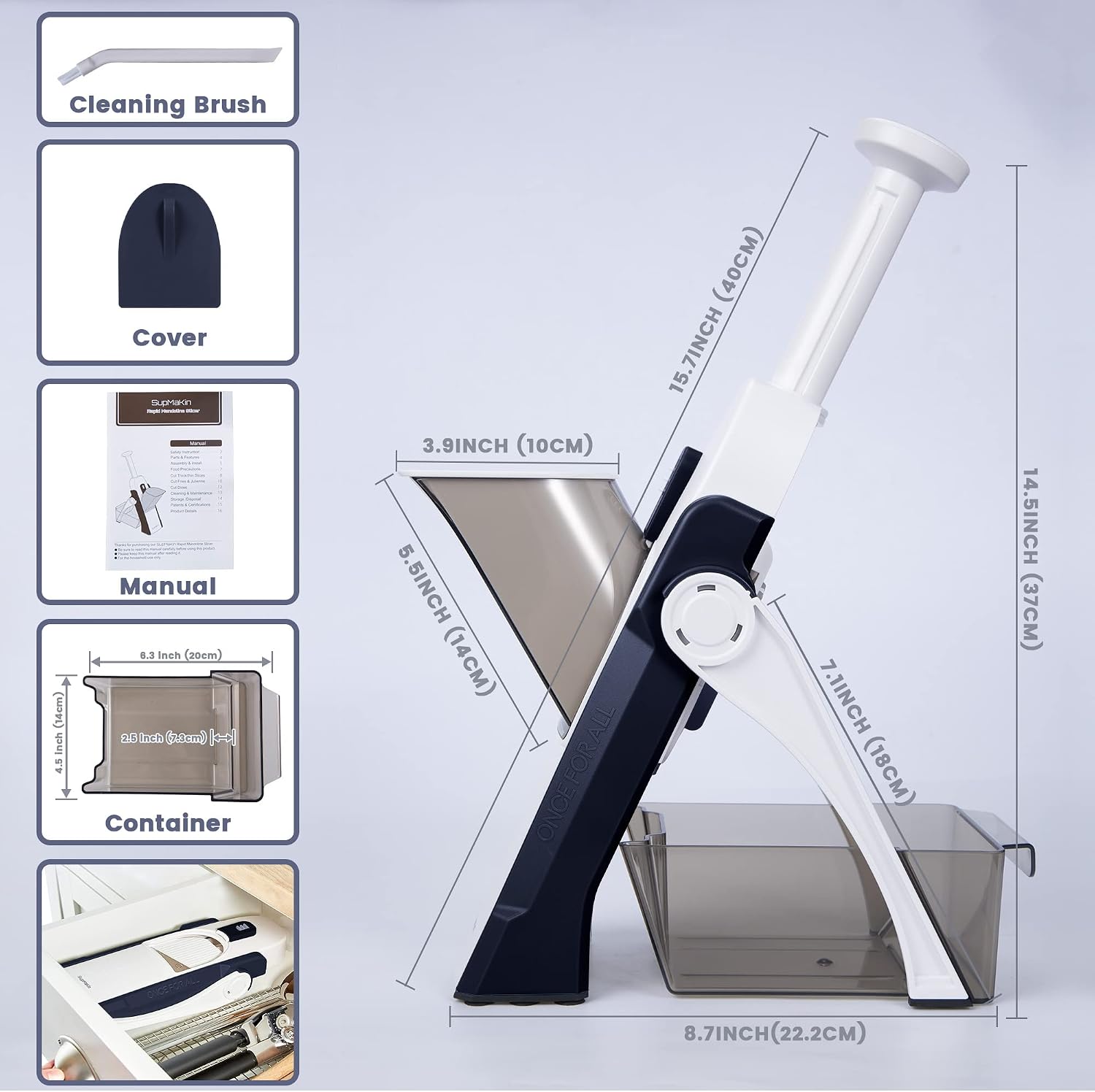
Slicing Smarter: Is the SupMaKin Safe Mandoline Slicer the Kitchen Upgrade You Need?
Looking for a proper mandoline slicer? You’ve come to the right place. This guide is built for anyone tired of uneven knife cuts or, frankly, the sheer danger some traditional slicers present. We’re diving deep into what makes a good mandoline, specifically eyeing models like the SupMaKin Safe Mandoline Slicer for Kitchen — a device that promises precision without the usual kitchen knife-fight drama. We’ll cut through the marketing jargon, give you the unvarnished truth, and help you decide if a feature-rich, safety-first option is genuinely worth your countertop space.
Quick Answer
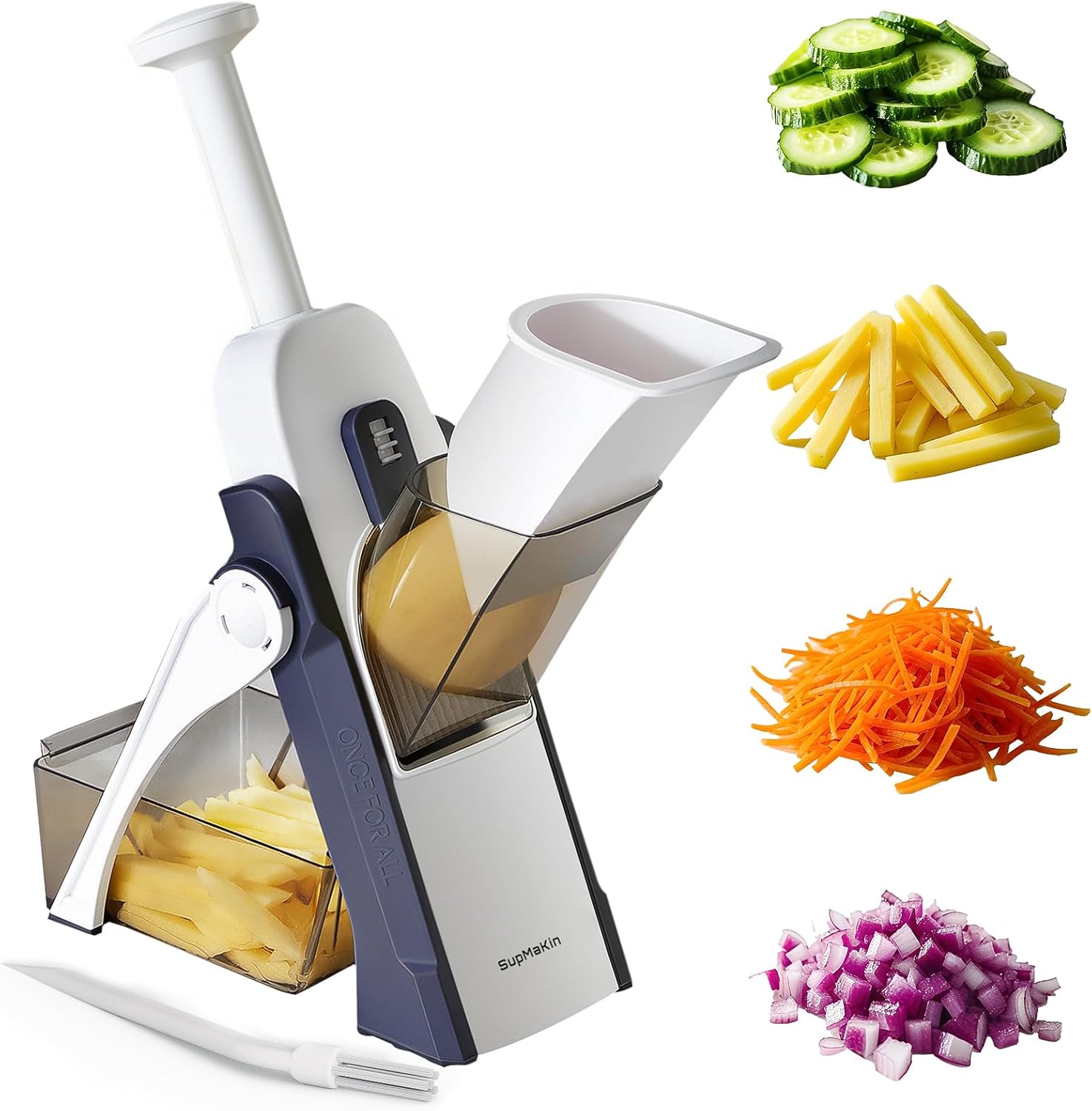
For many home cooks, especially those prioritizing safety and versatility, a modern, enclosed mandoline slicer like the SupMaKin provides a significant upgrade over traditional blades. Its integrated blade system and multi-mode functionality offer consistent cuts from thick potato slices to fine julienne strips, making detailed food prep far less intimidating and surprisingly fast.
What to Look For (The Buying Criteria)
Choosing a mandoline slicer isn’t as simple as grabbing the cheapest one. Nope. You’re making an investment in your kitchen efficiency, and let’s be real, your fingertips. Here’s what really matters when you’re shopping around.
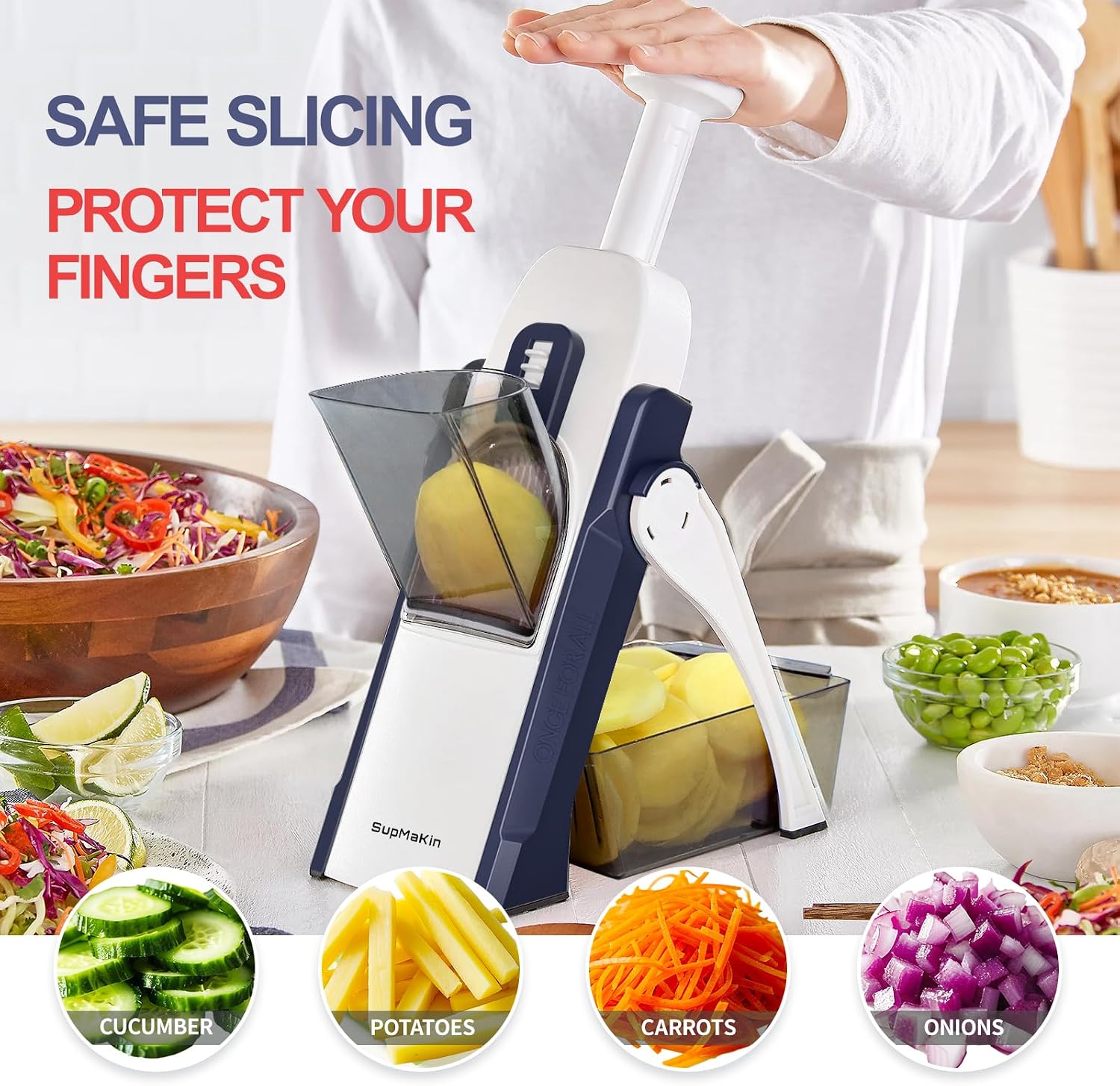
First up, and probably the most critical, is safety features. This category is notorious for ER visits. Traditional open-blade mandolines, while effective, demand surgical precision and an unflinching hand guard use. Devices like the SupMaKin, with their fully enclosed designs where blades are only exposed when food passes through a chute, change the game. Look for sturdy hand guards, non-slip feet, and a mechanism that keeps your fingers well clear of the sharp edges. If you’re buying it for someone else, particularly as a gift, safety’s usually paramount. Don’t skimp here.
Next, consider the blade material and construction. Most quality mandolines, including the SupMaKin, use stainless steel blades. Why? They hold an edge better and resist rust. Ceramic blades exist, offering extreme sharpness, but they’re also more brittle. A well-constructed blade assembly, often built right into the unit, means less fumbling with separate inserts and generally a safer experience. Check if the entire cutting mechanism feels solid, not flimsy. A little wiggle? That’s a pass for me.
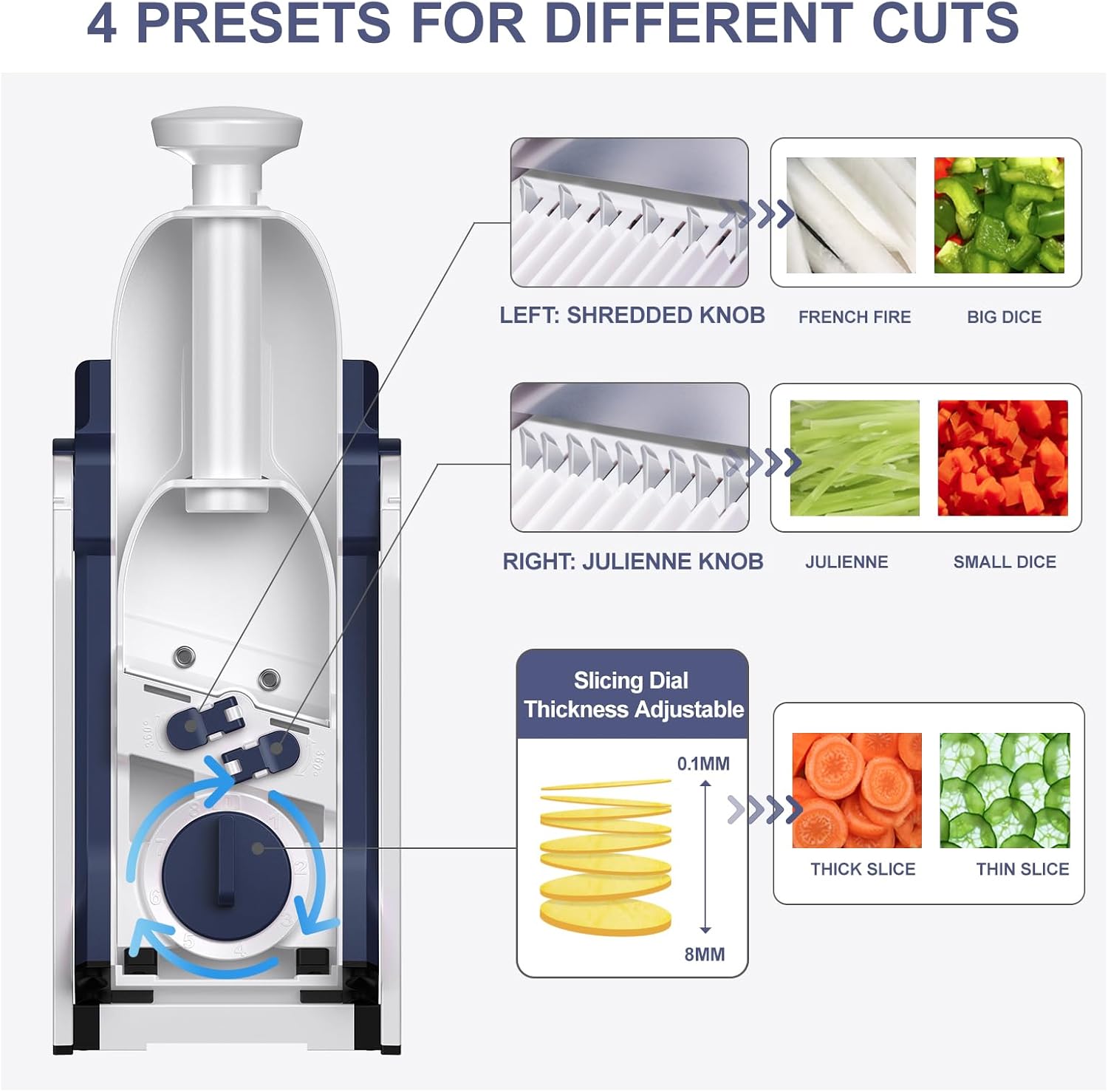
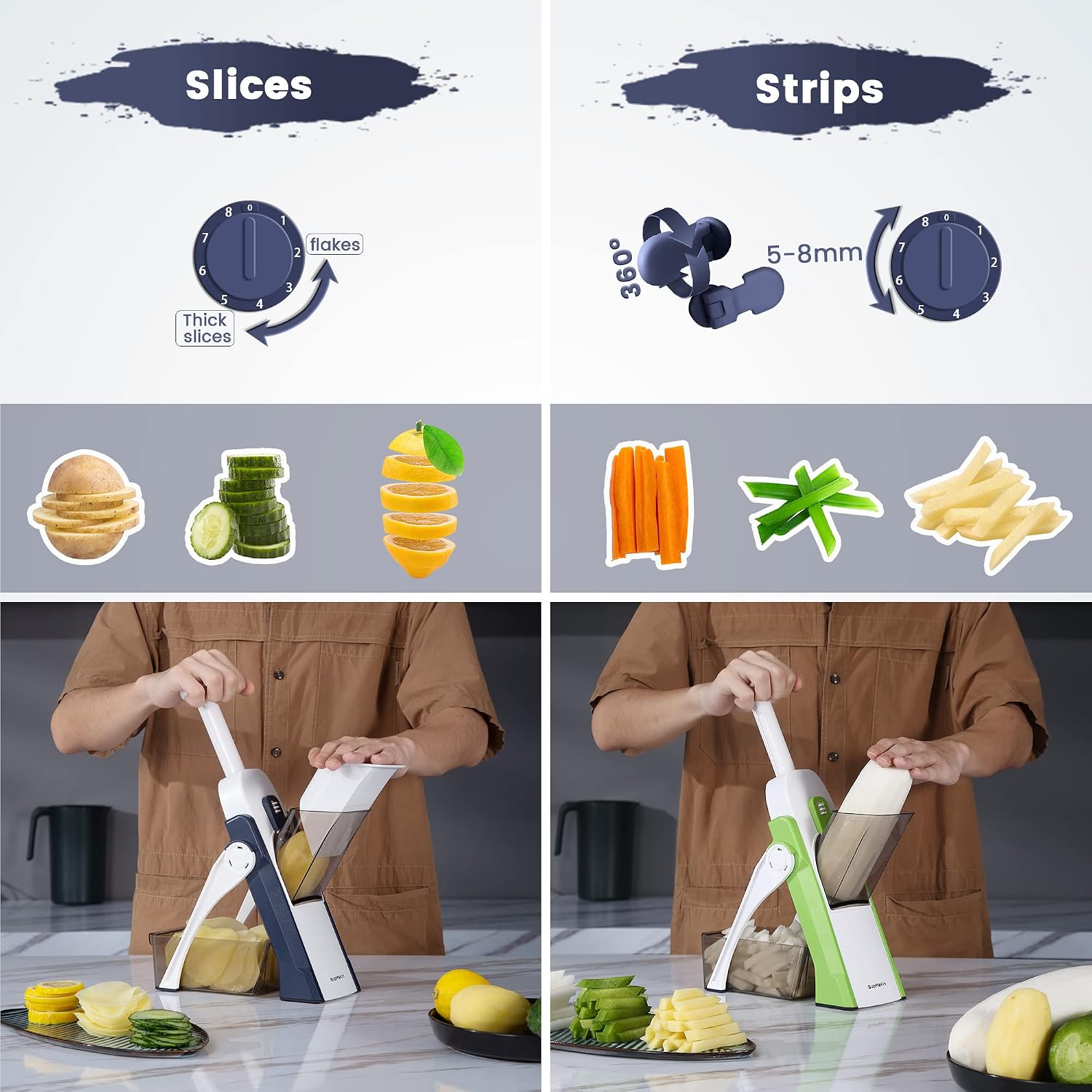
Adjustability and versatility are huge. Some basic slicers only offer one or two thickness settings. But if you want to tackle everything from paper-thin cucumber slices for a salad to thicker potato slices for gratin, or even French fry-style vegetable strips, you’ll need more options. The SupMaKin boasts 1-8 mm adjustable settings and promises four distinct modes: slice, strips, julienne, and a dicer function. This kind of range is what separates a one-trick pony from a true kitchen workhorse. But remember, more features often mean more parts to clean, which is a trade-off.
Ease of cleaning and storage is often overlooked until you’re scrubbing stubborn carrot residue from tiny crevices. Many newer vegetable slicers claim to be dishwasher safe, which is a blessing. Foldable designs, like the one found on the SupMaKin, also make a huge difference in cramped kitchens. If it’s a pain to put away, you simply won’t use it. It’s that simple. And frankly, some of these gadgets are bulky.
Finally, think about build quality and durability. A mandoline isn’t something you want to replace every year. Look for robust plastics, strong hinges on foldable models, and secure mechanisms. The cost often reflects this. A cheaper plastic unit might feel fine initially, but heavy use of its julienne dicer could reveal its weaknesses pretty quick. Sometimes a mid-range investment up front saves you a headache (and another purchase) later. But a premium model isn’t always necessary for light, occasional use, so don’t get carried away.
How to Match the Product to Your Situation
Your ideal mandoline slicer isn’t just about features; it’s about how it fits into your life. Different cooks have different needs, right?
The Safety-First Home Cook:
This persona values peace of mind above all. Maybe you’ve had a close call with a knife, or you’re just not comfortable with exposed blades. You might be buying this as a gift for a parent or someone less experienced in the kitchen. For you, the integrated, enclosed design of a SupMaKin Safe Mandoline Slicer is practically non-negotiable. You’ll appreciate its hand guard and chute feeding system, even if it means sacrificing a tiny bit of speed for absolute security. Consistency in cutting isn’t just for chefs; it makes home-cooked meals look far more appealing, too.
The Weeknight Meal Prep Warrior:
You’re busy. You need to get dinner on the table fast, and you’re probably chopping a fair amount of vegetables multiple times a week. Uniformity isn’t just aesthetic; it ensures even cooking. Think about making a big batch of sweet potato fries or a large salad. A versatile vegetable slicer that handles various cuts – slice, strips, julienne – and offers quick thickness adjustments is key. Durability and easy cleanup are also vital here. You can’t afford to waste precious minutes scrubbing fiddly parts. The dishwasher-safe aspect of a model like the SupMaKin would be a real draw.
The Culinary Hobbyist (or Aspiring One):
You’re interested in elevating your dishes, experimenting with textures, and maybe even dabbling in intricate garnishes. You might already own a decent chef’s knife, but you know a mandoline offers a level of precision that even the sharpest blade struggles to achieve. You’re looking for that perfect, consistent thickness for gratin potatoes or thinly sliced radishes for a professional-looking plating. While you might appreciate the safety of a SupMaKin, you might also consider traditional, open-blade professional mandolines if you’re confident in your knife skills and meticulous about using safety gloves. Still, for many, the multi-mode functionality, including a julienne dicer, within a safe enclosure is a very compelling package.
Mandoline Slicer Comparison: What’s Out There?
| Type/Tier | Best For | Price Tier | Key Feature | Watch-Out |
|---|---|---|---|---|
| Basic Flat Slicers | Occasional simple slicing (e.g., cucumbers) | Budget-friendly | Single, fixed blade for straightforward cuts. | Limited versatility, often less robust build quality. |
| Traditional Open-Blade | Experienced cooks, specific professional use | Mid-range | Unparalleled speed and precision with practice. | Significant safety risk; requires extreme caution. |
| Integrated Safety Models | Home cooks, safety-conscious users, gifts | Mid-range/Premium | Enclosed design, multi-mode, user-friendly. | Can be bulkier, sometimes slower than open-blade. |
| Specialty Cutters | Specific tasks (e.g., spiralizers, fry cutters) | Varies | Optimized for one or two unique cuts/shapes. | Not a true mandoline replacement; very limited scope. |
Basic Flat Slicers are entry-level options, typically compact and inexpensive. They’re fine for slicing a few onions or cucumbers but don’t expect much in the way of varied cuts or robust construction. They often lack proper hand guards, relying on a basic pusher.
Traditional Open-Blade mandolines, think French-style stainless steel beasts like some Bron Coucke models, are what professional kitchens often use. They are incredibly sharp and efficient but come with a steep learning curve regarding safety and proper technique. You’ve really got to know what you’re doing.
Integrated Safety Models, like the SupMaKin Safe Mandoline Slicer, represent a significant evolution. These prioritize user protection with internal blade systems and robust pushers, offering multiple functions (slice, strips, julienne, dicer) without direct blade contact. They strike a balance between versatility and preventing trips to the emergency room.
Specialty Cutters aren’t quite mandolines in the classic sense. Devices like spiralizers or dedicated fry food cutters do one or two things exceptionally well but won’t give you the range of slicing and dicing a true multi-functional mandoline provides. They’re a good complement, not a substitute.
Usage Scenarios for Your Mandoline Slicer
It’s one thing to talk about features, another to picture them in action. How does a mandoline slicer actually fit into your cooking routine?
Elevating Everyday Dinners:
Imagine this: you’re planning a quick stir-fry. Instead of unevenly chopped carrots and zucchini, your mandoline whips out perfectly uniform strips or julienne cuts. They cook evenly, look professionally prepped, and you didn’t risk a finger doing it. For something like gratins or potato crisps, that adjustable 1-8 mm thickness control on the SupMaKin is a godsend for getting that consistent, golden-brown finish. This isn’t just about speed; it’s about consistency, which means better results on the plate.
Prepping for a Party or Big Gatherings:
Hosting a brunch? Need a huge platter of caprese salad with evenly sliced tomatoes and mozzarella? Or maybe a mountain of coleslaw? That’s where a high-capacity, efficient slicer shines. The sheer volume of cutting involved for a crowd can be daunting, but a good mandoline, especially one that tackles multiple vegetables with ease and has several modes like slice, strips, and julienne, significantly reduces prep time and fatigue. And honestly, for something like a charcuterie board, thin, consistent cuts of veggies or fruit just look better. It’s presentation, pure and simple.
Health-Conscious Cooking & Snack Prep:
Trying to eat more vegetables? A mandoline can make it genuinely easier and more appealing. Making homemade sweet potato fries or zucchini chips suddenly feels less like a chore when you can quickly produce uniform slices. Want to add thin, crisp radishes or bell pepper strips to your wraps? Done. The precision encourages creativity with healthy ingredients. This is where the ability to make various sizes of veggie strips, much like a dedicated fry food cutter, comes in handy. It transforms raw vegetables into appealing snacks or components of a healthier meal.
Common Mistakes Buyers Make with a Mandoline Slicer
- Ignoring Safety Features: This is number one, hands down. People see a cheaper model, figure they’ll “be careful,” and then quickly learn why that’s a terrible idea. Always prioritize robust hand guards, non-slip bases, and enclosed blade designs, especially if you’re not an experienced chef. A few extra dollars for a secure setup like the SupMaKin Safe Mandoline Slicer is an investment in intact digits.
- Underestimating Cleaning Difficulty: Some complex mandolines, particularly those with lots of interchangeable parts or intricate cutting mechanisms, can be a nightmare to clean. Food gets stuck. Water gets trapped. If it’s not dishwasher safe or easily rinsable, you’ll hate using it. Seriously, you will.
- Buying for a Single Use Case: Unless you only ever need to slice one type of vegetable at one specific thickness, a single-function slicer will quickly become frustrating. Many folks get a basic slicer only to realize they also wanted julienne strips or a dicer function later. Consider the multi-mode functionality (slice, strips, julienne, dicer) up front to avoid buyer’s remorse.
- Not Considering Storage: These things can be bulky. A mandoline that doesn’t fold or break down into compact pieces will hog valuable cabinet space. If you have a small kitchen, a foldable design is a huge plus. Out of sight, out of mind usually means it won’t get used.
Why/How/What Mini-Section
Why should I consider an adjustable mandoline slicer like the SupMaKin?
You should consider it for unparalleled consistency and expanded culinary possibilities. A good adjustable mandoline helps you achieve uniform cuts from super thin to noticeably thick, something nearly impossible with a knife alone. This uniformity ensures even cooking, looks professional, and opens up new recipe ideas from gratins to perfectly sized julienne salads, all while reducing the risk inherent in manual slicing.
How do I safely use a mandoline slicer, particularly models with exposed blades?
Safety is paramount, full stop. Always, always use the provided hand guard, and consider investing in cut-resistant gloves for added protection. Keep your fingers well away from the blade, using the hand guard to push the food down. Work slowly and deliberately, never rushing the process. For models like the SupMaKin, the enclosed design significantly minimizes direct blade contact, making it inherently safer for less experienced users.
What exactly is a “julienne dicer” function?
A julienne dicer on a mandoline slicer, like what the SupMaKin offers, typically means it can produce thin, stick-like cuts (julienne) and also has a mechanism to then dice those sticks into small cubes. Instead of just long strips, you get uniform little cubes, which is amazing for things like mirepoix, tiny salad toppings, or even small pieces for a relish. It’s about more than just strips; it’s about taking those strips to the next dimension of cut.
FAQ
What’s the main benefit of a mandoline slicer over a knife?
The primary benefit is consistency in cut thickness, which ensures food cooks evenly and looks more appealing. It also significantly speeds up repetitive slicing tasks compared to manual knife work.
Are all mandoline slicers dangerous?
Many traditional mandolines with exposed blades can be dangerous if not used correctly and with extreme caution. Modern designs, like the SupMaKin Safe Mandoline Slicer, aim to minimize this risk with enclosed blades and integrated hand guards, making them much safer for home use.
Can a mandoline slicer cut soft foods like tomatoes?
Yes, a high-quality mandoline with a very sharp blade can cut soft foods like tomatoes, but it often requires a specific technique. Some mandolines struggle with very ripe tomatoes, so look for stainless steel blades that stay exceptionally sharp.
How do I maintain the sharpness of my mandoline’s blades?
Most mandoline blades are not user-sharpenable. To maintain sharpness, always clean them immediately after use, avoid cutting on hard surfaces, and store the unit safely to prevent accidental dulling or damage.
Is the SupMaKin Safe Mandoline Slicer easy to clean?
Yes, the SupMaKin model is designed with ease of cleaning in mind, stating it’s dishwasher safe and foldable. This is a crucial feature for encouraging regular use, as intricate cleaning can be a deterrent.
What vegetables can I cut with a mandoline?
You can cut a wide variety of vegetables, including potatoes (for slices or fry food cutter styles), cucumbers, carrots, onions, zucchini, cabbage, radishes, and apples. Harder, firmer vegetables tend to work best.
Are there any foods I shouldn’t put through a mandoline slicer?
Avoid very soft, overripe, or extremely fibrous foods that might mash rather than slice cleanly. Also, don’t use it for foods with pits or extremely irregular shapes that can’t be held securely by the hand guard.
Final Recommendation
For the average home cook, especially one who values safety and wants to expand their culinary repertoire without investing in a pro-grade setup, a modern, enclosed mandoline slicer like the SupMaKin Safe Mandoline Slicer is an excellent choice. Its multi-mode capabilities — handling everything from potato slicer duties to intricate julienne dicer work — combined with its emphasis on user protection, make it a smart addition to most kitchens. It provides consistent, professional-looking results for everyday meals and party prep, dramatically reducing the common anxieties associated with this type of kitchen gadget.
Ultimately, if you’re looking to upgrade from haphazard knife cuts, speed up your vegetable prep, and want the confidence of a safe design, this type of integrated safety model hits the sweet spot. It’s a versatile tool that truly helps you cook smarter, not harder.
#SupMaKin #Safe #Mandoline #Slicer #KitchenAdjustable #Potato #Slicer #Modes #Slice #StripsJulienne #DicerVegetables #Slicer #Fry #Food #CutterStainless #Steel #Blades #Foldable #Dishwasher #SafeGifts
![Titanium Cutting Board Double Sided Food Grade, Pure Titanium/PP for Kitchen, Cutting Board Easy to Clean[15.5”*10.5”+12”*8.5”]](https://www.decorwild.com/wp-content/uploads/2026/08/Review-TitaniumPP-Kitchen-Cutting-Boards-Double-Sided-Food-Grade-Easy-300x219.jpg)

Reviews
There are no reviews yet.