Decoding the Baking Sheet: Is That HONGBAKE Set Really Worth It?
Anyone who spends time in the kitchen knows a good baking sheet is an absolute workhorse. It’s not just for cookies; it roasts, bakes, toasts, and frankly, often serves as a quick tray to move stuff around. This guide cuts through the marketing fluff to help you understand what truly makes a baking sheet reliable, practical, and a smart buy, specifically looking at how a set like the HONGBAKE Baking Sheet Pan Set of 3 measures up against what serious home cooks need. We’re talking about getting the right tools for your specific baking and cooking adventures.
Quick Answer
For most home bakers and cooks, a well-constructed carbon steel baking sheet like the HONGBAKE set offers a compelling balance of durability, effective nonstick performance, and heat distribution that justifies its spot in your kitchen. Its darker, textured surface often translates to nicely browned results without breaking the bank, a solid step up from flimsy alternatives.
What to Look For (The Buying Criteria)
Choosing the right baking sheet can feel surprisingly complex once you dig in. There are so many options, each with its own claims. Forget the hype for a minute; let’s talk about what actually matters.
Material Matters: Aluminum, Carbon Steel, or Stainless Steel?
The stuff your sheet pan is made from profoundly affects its performance. Aluminum is a popular choice, budget-friendly and a fantastic heat conductor, meaning it heats up fast and cooks evenly. But, and it’s a big “but,” thinner aluminum can warp dramatically at higher temperatures, especially if it’s cheap. Ever heard that loud POP from the oven? That’s typically a thin aluminum sheet flexing under stress. Plus, aluminum can react with acidic foods, sometimes imparting a metallic taste.
Then you have carbon steel, which is what the HONGBAKE set uses. This material heats slower than aluminum but retains heat exceptionally well, leading to consistently browned results – think crispier edges on your cookies or more caramelized roasted veggies. It’s often thicker, too, inherently more warp-resistant. The trade-off? It can be heavier, and without proper care, it’s susceptible to rust if its protective coating is compromised.
Stainless steel baking sheets are out there, sturdy as all get-out, non-reactive with food, but they’re generally not as good at conducting heat as aluminum or carbon steel. This can lead to uneven cooking, and they’re usually pricier. They also tend to stick more unless heavily greased or lined, which kinda defeats the purpose for many.
Gauge and Thickness: The Heftier, the Better?
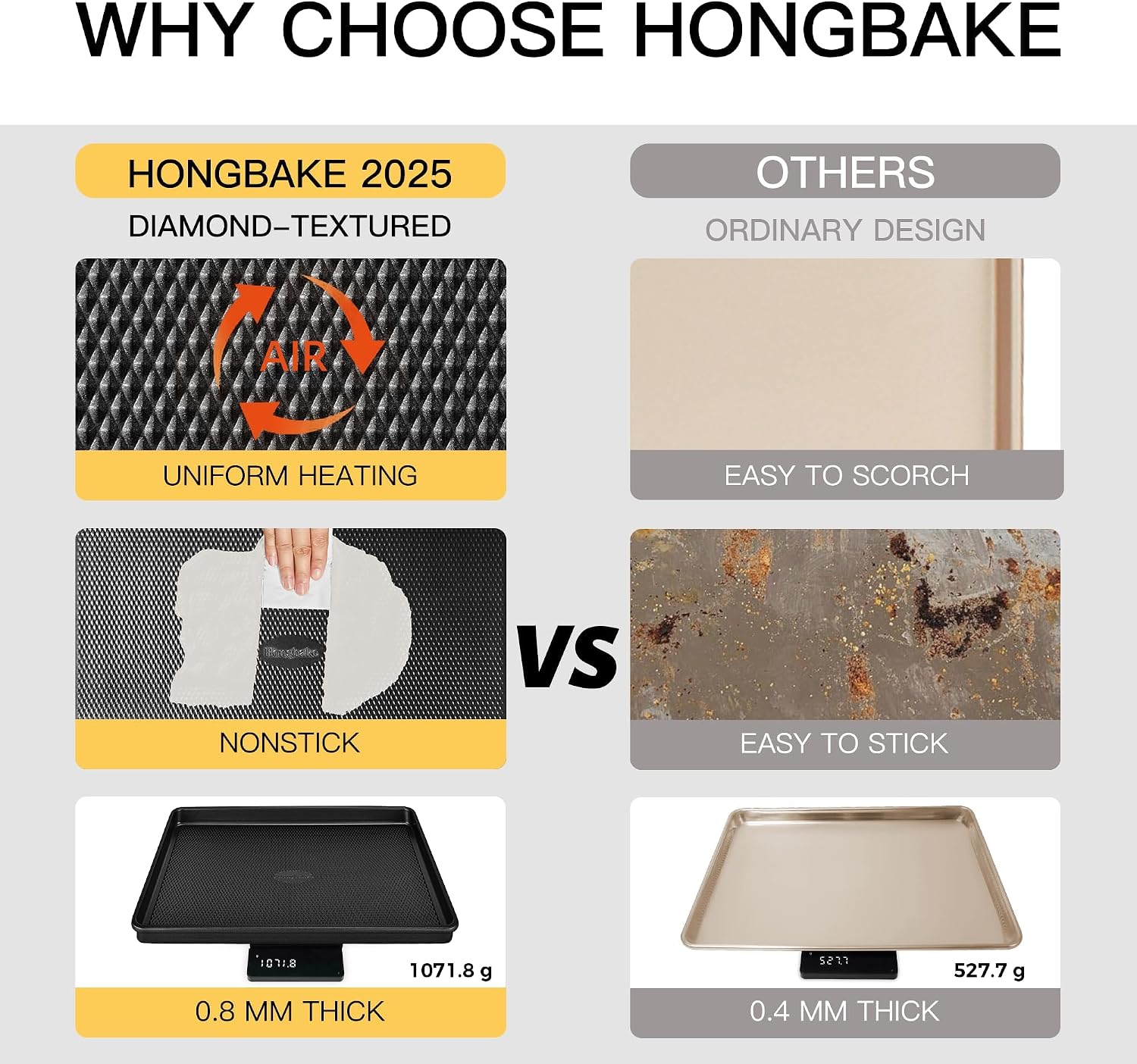
Here’s where many budget baking sheets fall short. Gauge refers to the thickness of the metal. A lower gauge number means thicker metal. Thicker metal means better warp resistance, plain and simple. It distributes heat more evenly across the surface too, preventing those dreaded hot spots that burn one side of your treats while the other remains pale. The HONGBAKE set boasts being “57% thicker carbon steel,” which is a pretty specific claim and, if true, suggests a significant advantage in this department. A thicker pan won’t bend and twist when you pull it from a hot oven, reducing spills and frustration. Nobody wants a cookie avalanche.
Nonstick Coating: Convenience vs. Durability
Ah, nonstick. The holy grail for easy cleanup. But not all nonstick is created equal. Some coatings chip, scratch, or degrade over time, especially with high heat or abrasive scrubbing. You want a durable nonstick surface that releases food effortlessly without flaking into your dinner. Many modern coatings, like the type you’d find on the HONGBAKE cookie trays, are designed for resilience, often featuring reinforced layers. Still, even the best nonstick will eventually wear out; it’s just a fact of life in the kitchen. Avoid metal utensils. Stick to silicone or wood. And for heaven’s sake, don’t use harsh scrubbers. The convenience of nonstick is undeniable, but it demands a little TLC.
Design Features: Rolled Edges, Texture, and Color
Small design details make a big difference. Rolled edges on a jelly roll pan strengthen the structure, further preventing warping, and make it easier to grip with oven mitts. Without them, edges can be sharp or just flimsy.
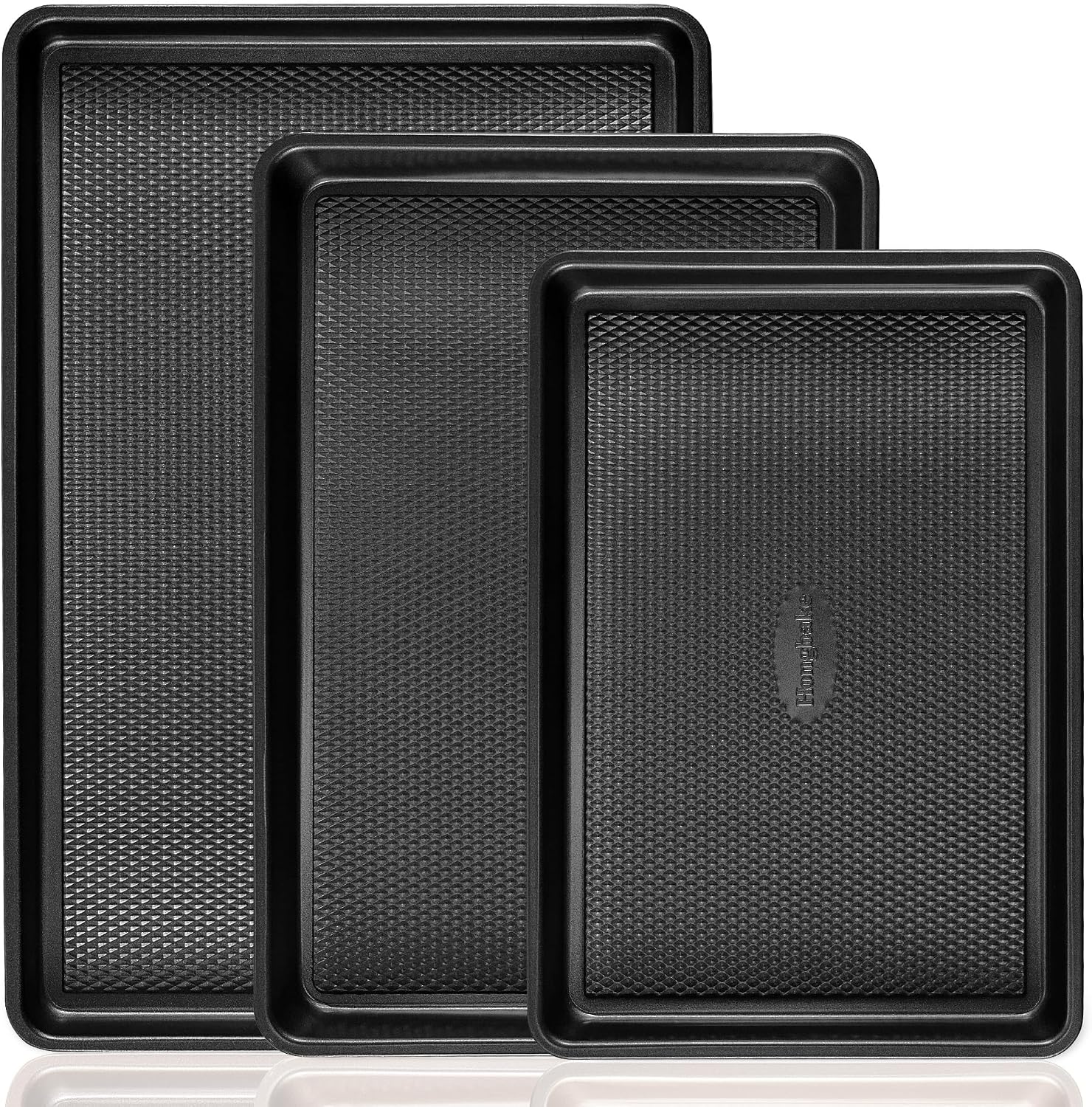
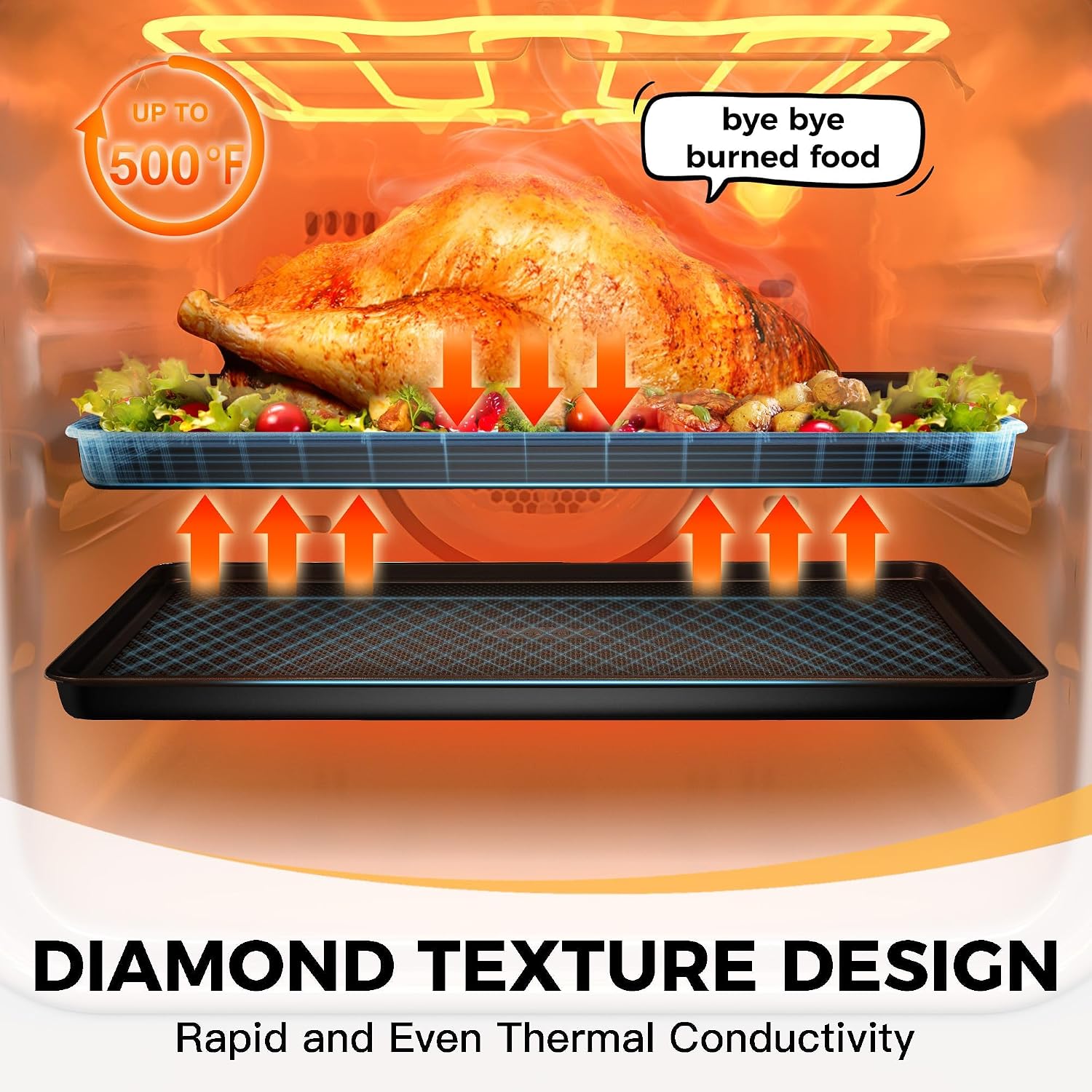
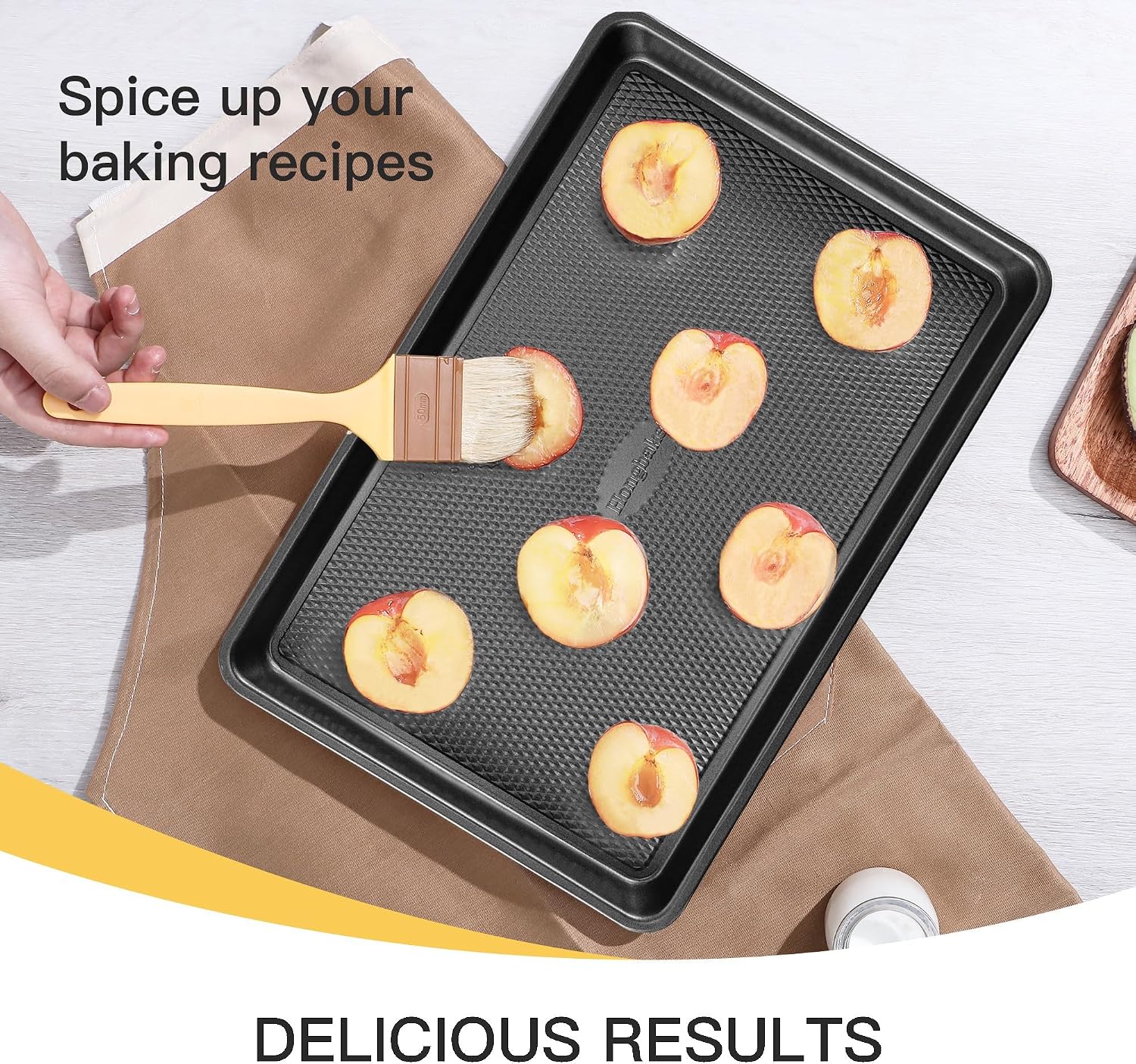
The diamond texture pattern on the HONGBAKE pans isn’t just for looks. It’s often designed to promote airflow underneath food, ensuring more even baking and sometimes aiding in food release by minimizing direct contact. It also adds rigidity to the pan’s surface. Think of it like corrugated cardboard; the waves make it stronger.
And the dark grey color? Darker pans absorb more heat and radiate it to your food, which means faster browning and crisping. This can be a boon for roasting vegetables or getting that perfect golden crust on baked goods. But, it’s a double-edged sword: you might need to adjust your oven temperature down a touch or shorten baking times to avoid over-browning, especially with delicate items. It’s a bit of a learning curve.
Size and Set Configuration: What Do You Really Need?
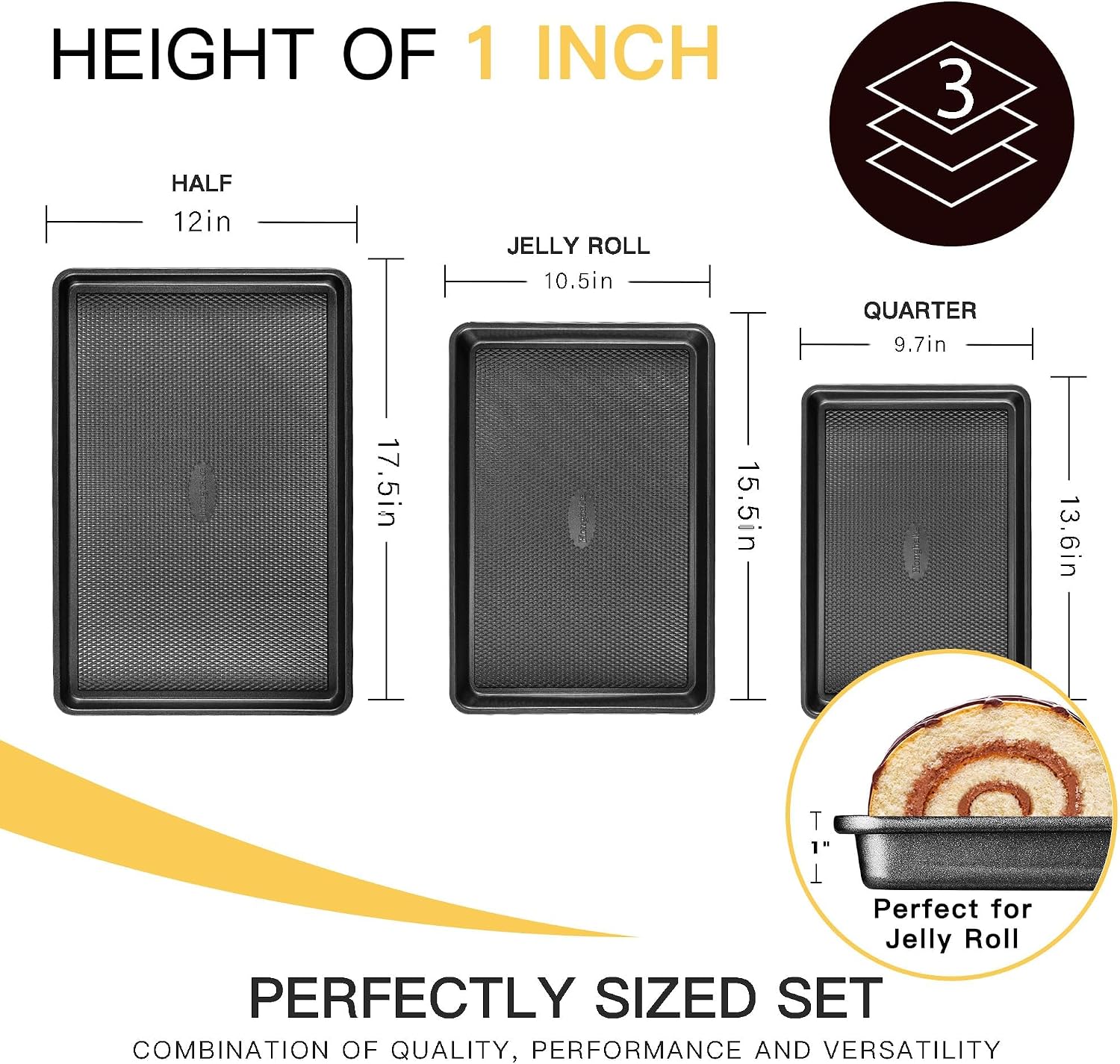
Most home kitchens benefit from a variety of sizes. A half sheet pan (roughly 18×13 inches) is the quintessential workhorse, fitting most standard ovens and perfect for dinners, large batches of cookies, or a full roast. Quarter sheets (around 13×9 inches) are fantastic for smaller tasks, toasting nuts, heating up leftovers, or cooking for one or two. The term “jelly roll pan” usually refers to a shallow-rimmed sheet, often similar in size to a quarter sheet, traditionally for making sponge cakes. The HONGBAKE set gives you a good mix, covering common needs with half, quarter, and jelly roll pan options. Don’t underestimate the utility of having multiple sizes. It makes cooking so much more efficient.
Care and Maintenance: Long Live Your Bakeware
This is where the rubber meets the road for long-term satisfaction. Some oven bakeware is dishwasher safe, but many manufacturers (especially for nonstick and carbon steel) recommend hand washing. Why? The harsh detergents and high heat of a dishwasher can degrade nonstick coatings and even contribute to rust on carbon steel. For the HONGBAKE carbon steel cookie trays, gentle hand washing with warm, soapy water and a soft sponge is typically advised to preserve the finish. And always dry them thoroughly immediately after washing to prevent rust. Neglect these steps, and you’ll find your “nonstick” pan suddenly quite sticky, quite fast.
How to Match the Product to Your Situation
Finding the right baking sheet isn’t about the single “best” pan, it’s about what works for your life and your cooking habits.
The Everyday Baker (and Roaster)
If you’re someone who bakes cookies weekly, roasts vegetables several times a month, and perhaps even makes sheet pan dinners a couple of times a week, you need durability and versatility. You’re probably looking for something that handles high heat without warping and cleans up relatively easily. A heavy-gauge carbon steel set, like the HONGBAKE, makes a lot of sense here. The robust construction holds up to frequent use, and the nonstick coating helps streamline cleanup after a busy weeknight meal. You might even appreciate the darker color for achieving that extra crisp on roasted potatoes.
The Specialized Enthusiast
Maybe you’re all about delicate macarons, artisanal breads, or complex multi-component pastries. Your needs are a bit more nuanced. While the HONGBAKE set offers good general performance, a very dark, highly conductive pan might be too aggressive for extremely delicate items that require slower, more even heat transfer to prevent over-browning. You might want to invest in a lighter-colored aluminum sheet for those specific tasks, or at least be prepared to make significant temperature and time adjustments with a darker pan. For high-heat bread baking, you might even look towards heavy-duty stainless steel or even cast iron, which offers superior thermal mass. This type of cook typically has a wider array of baking trays for different purposes.
The Beginner or Occasional Cook
Just getting into baking? Only pull out a cookie sheet for holiday cookies or frozen pizzas? You probably prioritize ease of use and a budget-friendly entry point. The HONGBAKE set, while leaning mid-range, could still be a solid starting point because it offers a good range of sizes and better durability than the absolute cheapest options. The nonstick factor is a huge plus for beginners, making cleanup less intimidating. You won’t need anything ultra-specialized, but something that performs consistently without warping and making a racket in the oven will save you a lot of headache.
Baking Sheet Comparison Table
Let’s break down the common choices you’ll find when shopping for baking sheets and how they stack up.
| Type/Tier | Best For | Price Tier | Key Feature | Watch-Out |
|---|---|---|---|---|
| Thin Aluminum | Budget-conscious, light baking tasks | Budget-friendly | Excellent heat conduction; very lightweight | Prone to warping; can react with acidic foods; often sticks |
| Carbon Steel | Everyday baking, roasting, consistent browning | Mid-range | Good heat retention; robust; durable nonstick | Can rust without proper care; heavier; darker finish requires heat adjustment |
| Heavy-Gauge Aluminum | Serious bakers, even baking, professional look | Mid-range | Superior even heating; warp-resistant; lighter color | Can still react with acid; sometimes needs parchment/silicone mat |
| Stainless Steel | High-heat roasting, broiling, extreme durability | Premium | Non-reactive; incredibly sturdy; long lifespan | Poorer heat conduction (uneven cooking); usually requires oil/lining |
Thin Aluminum sheets are a common sight, affordable, but they often buckle and warp under high heat, making them a temporary solution for quick jobs. Carbon Steel, like the HONGBAKE set, steps up the game with better heat retention and a sturdier build, ideal for getting that rich browning on your food, though they need careful washing. Heavy-Gauge Aluminum offers a balance for those who want even heat and warp resistance without the reactivity issues of thinner aluminum, often preferred for delicate items. Finally, Stainless Steel is nearly indestructible and won’t react with food, but its uneven heat distribution can be a challenge for precise baking.
Scenario-Specific Uses for Your Baking Sheets
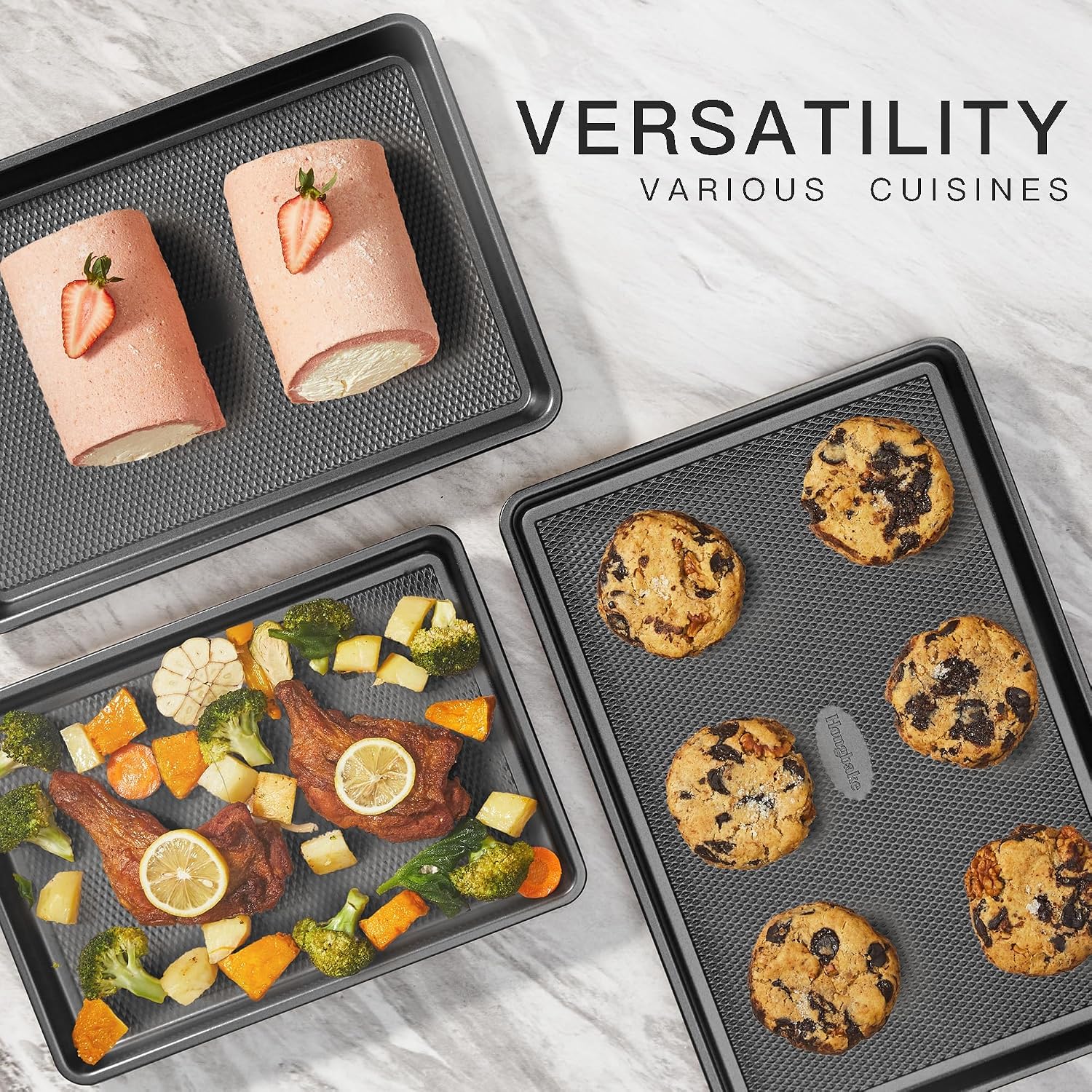
A good baking sheet isn’t a one-trick pony. The versatility is what makes it a kitchen MVP.
Baking Delicate Cookies
When you’re trying to achieve that perfect, even bake on a batch of delicate sugar cookies or shortbread, pan selection matters. A darker, carbon steel pan like HONGBAKE’s with its inherent heat absorption properties can sometimes lead to overly browned bottoms if you’re not careful. For these specific instances, you might need to drop your oven temperature by 10-20 degrees or reduce baking time. Alternatively, parchment paper or a silicone mat becomes your absolute best friend, creating a buffer between the cookie and the hot surface, helping to distribute heat more gently and prevent sticking.
Roasting Vegetables and Meats
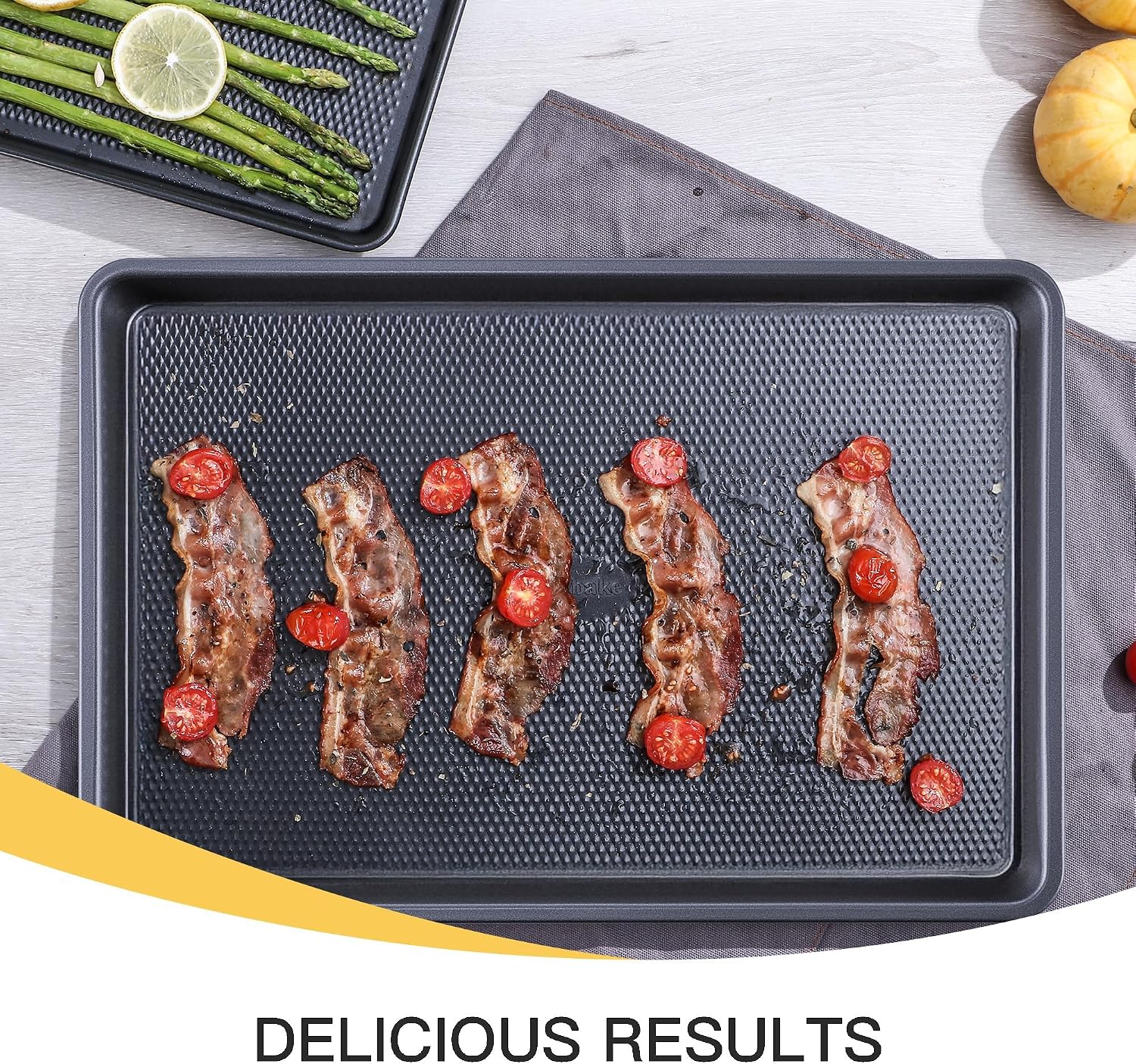
This is where the HONGBAKE baking sheet really shines. For getting beautifully caramelized roasted broccoli, crispy brussels sprouts, or a sheet pan full of chicken thighs and potatoes, you want something that gets hot and stays hot. The heavy-gauge carbon steel construction, combined with the darker finish, helps to achieve that crucial Maillard reaction on your food, giving you deep, rich flavors and satisfying textures. Don’t overcrowd the pan, though; steam is the enemy of crispiness. Use two pans if you need to.
Creating Sheet Pan Dinners
Sheet pan dinners are a modern weeknight savior. One pan, minimal cleanup, full meal. For this, you absolutely need a pan that can handle a lot of ingredients without warping under the weight or high heat, and that means a sturdy half sheet pan. The nonstick surface of a quality set like HONGBAKE makes it easy to toss ingredients without them fusing to the pan, and cleanup is a breeze even with sticky sauces or caramelized bits. The rolled edges, too, are key here, keeping all those delicious juices and marinades contained, rather than dripping into your oven.
Common Mistakes Buyers Make
Look, we all make mistakes. Here are a few common pitfalls when buying or using baking sheets that you can totally avoid.
- Ignoring Care Instructions: You bought a beautiful nonstick pan, right? Then don’t attack it with a metal spatula or throw it in the dishwasher every time. The moment you scratch that nonstick, it starts failing. And for carbon steel, neglecting to dry it properly will lead to rust. It’s not a suggestion; it’s a lifespan extension strategy.
- Going Too Thin on Gauge: That super-cheap cookie sheet you found might save you a few bucks upfront, but the moment you crank up the heat, it’s going to buckle and twist. You’ll end up with unevenly cooked food and a perpetually bent pan. Investing in a thicker, heavy-gauge option, like the 57% thicker carbon steel HONGBAKE, pays off in performance and longevity.
- Not Understanding Pan Color: Darker pans, like the dark grey ones in the HONGBAKE set, absorb more heat. If you’re used to baking on shiny aluminum, you might burn the bottoms of your cookies or pastries if you don’t adjust your oven temperature or baking time. This isn’t a flaw in the pan; it’s a feature you need to account for.
- Buying Single-Purpose Pans: Unless you’re a professional baker with specific needs, don’t fill your kitchen with a dozen different pans that only do one thing. A good set of half/quarter/jelly roll pans offers immense versatility for everything from cookies to roasting to quick snacks. A multi-size set is a kitchen essential.
Why/How/What Mini-Section
Why choose nonstick baking sheets?
The primary reason to pick nonstick baking sheets is, quite simply, convenience. Food releases more easily, reducing the need for excessive oil or parchment paper for many applications, and cleanup becomes significantly less of a chore. For everyday home cooking, this translates directly to less scrubbing and more enjoyment. It really takes the pain out of sticky situations.
How to prevent baking sheets from warping?
Warping is often a consequence of thin metal rapidly expanding and contracting when exposed to extreme temperature changes. To minimize this, opt for heavy-gauge pans – the thicker the metal, the less likely it is to warp. Also, avoid shocking a hot pan with cold water. Let it cool gradually on a wire rack before washing.
What’s the deal with diamond texture patterns?
The diamond texture pattern found on some sheet pans, including the HONGBAKE set, serves a couple of clever purposes. It helps to increase the surface area of the pan, potentially promoting more even heat distribution and airflow around your food. Plus, it adds structural rigidity to the pan, bolstering its resistance to warping. It’s a smart design.
FAQ
What’s the difference between a baking sheet and a cookie sheet?
Traditionally, a cookie sheet has one or no raised edges, making it easy to slide cookies off. A baking sheet or sheet pan usually has four raised sides, perfect for containing liquids from roasts or preventing items like roasted vegetables from falling off. Most people use the terms interchangeably for general oven use.
Can I use my HONGBAKE baking sheet for high-temperature roasting?
Yes, carbon steel is generally very good for high-temperature roasting, often better than thinner aluminum thanks to its heat retention and durability. Just remember its dark color will brown foods faster, so keep an eye on things and adjust oven temps or times if needed.
Is hand washing really necessary for nonstick baking sheets?
For most nonstick and especially carbon steel bakeware, hand washing is highly recommended. Dishwashers can use harsh detergents and high heat that erode the nonstick coating and can lead to rust on carbon steel, significantly shortening the lifespan of your pan. A quick scrub with warm, soapy water is usually all it takes.
Will a dark grey baking sheet always burn my food?
Not necessarily, but it does heat more aggressively than lighter, shinier pans. You might find you need to reduce your oven temperature by about 25°F (around 15°C) or shorten the cooking time to prevent over-browning, particularly with items like cookies or delicate pastries. It’s about adapting to the tool.
How do I store my baking sheets to prevent scratching the nonstick?
Stacking can damage nonstick coatings. If you must stack, place a sheet of parchment paper, a silicone mat, or even a thin dish towel between each baking sheet to protect the surface. You can also use pan organizers to store them vertically.
My baking sheet makes a popping noise in the oven, is that normal?
That loud pop or ping is usually a sign of a thinner metal baking sheet warping from rapid temperature change. It’s not necessarily dangerous, but it means your pan isn’t distributing heat evenly and is under stress. A thicker, heavy-gauge pan is less likely to do this.
Can I cut food directly on my HONGBAKE baking sheet?
No, absolutely not. Cutting directly on any nonstick surface with a metal knife or sharp utensil will inevitably scratch and damage the coating. Use a plastic or wooden cutting board, or transfer food to a plate before slicing.
Final Recommendation
So, is that HONGBAKE baking sheet set a smart move? For the vast majority of home cooks and bakers, the answer is a resounding yes. If you’re tired of flimsy, warping pans and unevenly cooked food, the HONGBAKE Baking Sheet Pan Set of 3 offers a substantial upgrade. Its 57% thicker carbon steel construction combined with a durable nonstick surface tackles the common frustrations of sticky messes and pan distortion head-on.
You’re getting a versatile range of sizes – half, quarter, and jelly roll pans – that will cover almost every baking and roasting task imaginable. The darker finish and diamond texture pattern are real performance enhancers, promoting better browning and crisping, though you’ll want to make slight adjustments if you’re used to lighter aluminum. For a robust, reliable, and overall excellent set of oven bakeware that delivers consistent results without needing to constantly replace bent and scratched pans, this HONGBAKE set represents a solid, mid-range investment that genuinely enhances your kitchen capabilities. Just remember those simple care instructions, and these sheets should serve you well for a long time.
#Cookie #Sheets #Baking #Nonstick #HONGBAKE #Baking #Sheet #Pan #Set #HalfQuarterJelly #Roll #Pan #Oven #Diamond #Texture #Pattern #Thicker #Carbon #Steel #Cookie #Trays #Dark #Grey