The Great Can Opener Conundrum: Is the KitchenAid Classic Multifunction Can Opener Truly Worth It?
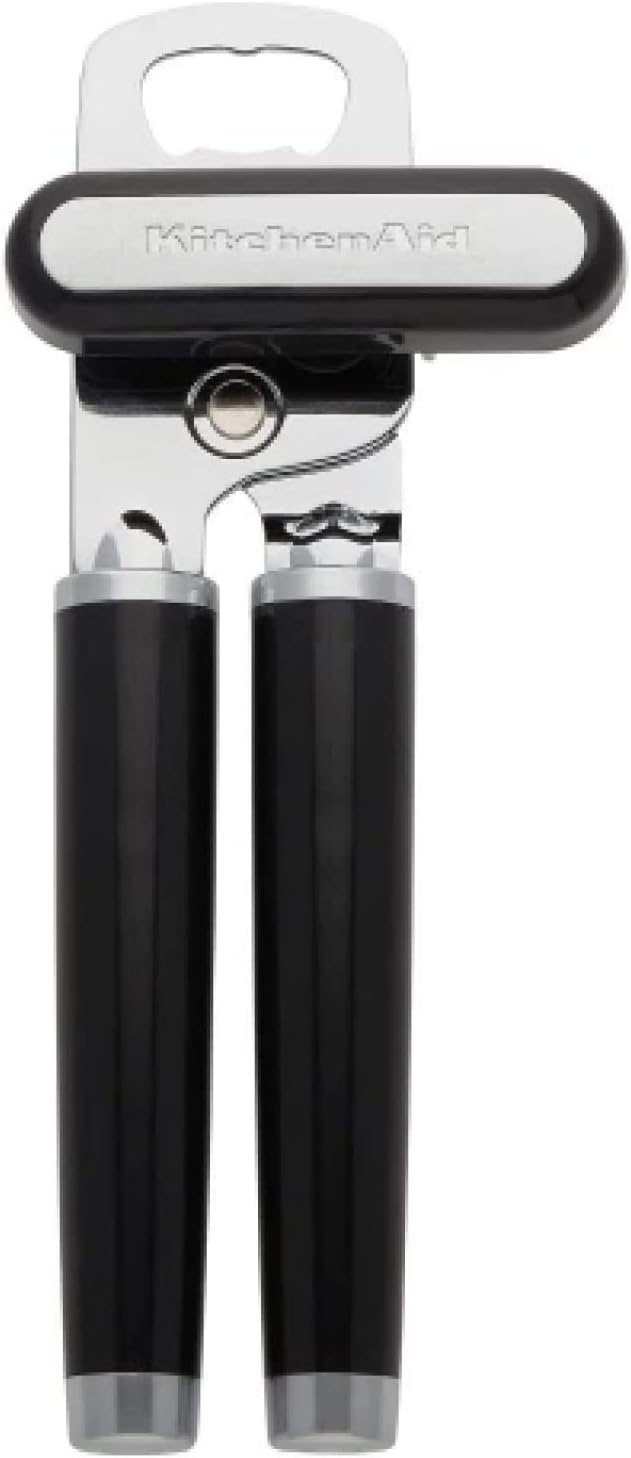
Let’s face it: the humble can opener is often an afterthought, something grabbed from the kitchen drawer only when necessity calls. But anyone who’s wrestled a stubborn lid knows the frustration. This guide dives deep into what makes a good can opener, focusing squarely on the popular KitchenAid Classic Multifunction Can Opener and Bottle Opener Easy to Use, Razor Sharp Stainless Steel Cutting Wheel, Soft Ergonomic Handles, Black. We’re cutting through the marketing noise to figure out if this widely recognized model genuinely delivers value, or if you’re just paying for a brand name.
Quick Answer
The KitchenAid Classic Multifunction Can Opener offers a compelling balance of durability, user comfort, and solid performance for its mid-range cost. Its razor sharp stainless steel cutting wheel and soft ergonomic handles address common complaints about cheaper models, making it a reliable workhorse for most kitchens. If you’re tired of flimsy openers and want something built to last without breaking the bank, this one makes a very strong case for itself.
What to Look For in a Can Opener (The Buying Criteria)
Choosing a can opener might seem trivial, but a poor choice can quickly become a kitchen headache. Here’s what really matters when you’re shelling out your hard-earned cash.
1. The Cutting Mechanism and Blade Material
This is the heart of any manual can opener. You’re looking for clean, consistent cuts without excessive effort. A cheap blade, often made of lower-grade steel, will dull quickly, slip often, and leave jagged edges. This isn’t just annoying; it’s genuinely unsafe. What good is a bargain if it tears at the lid, leaving metal shards or requiring Herculean strength?
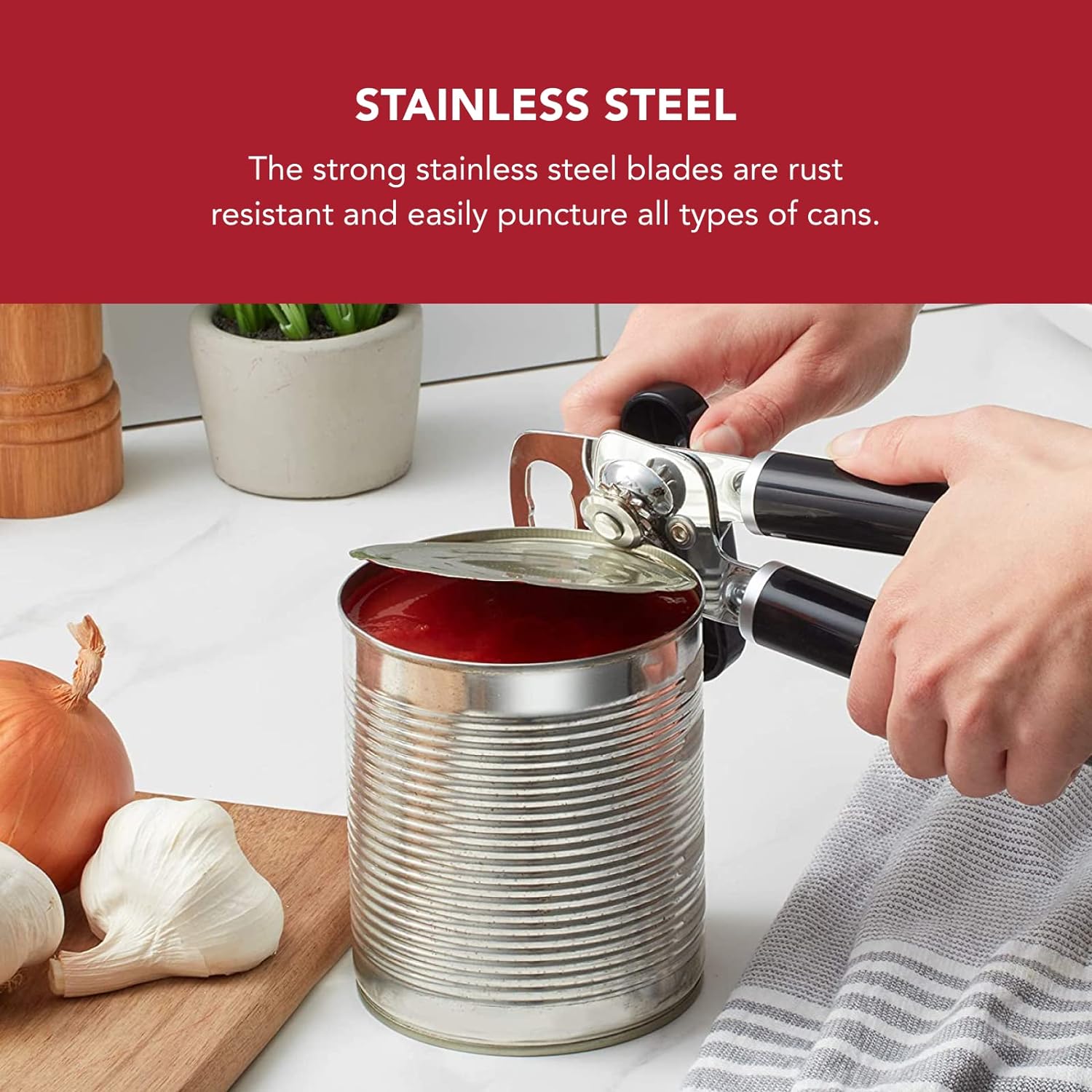
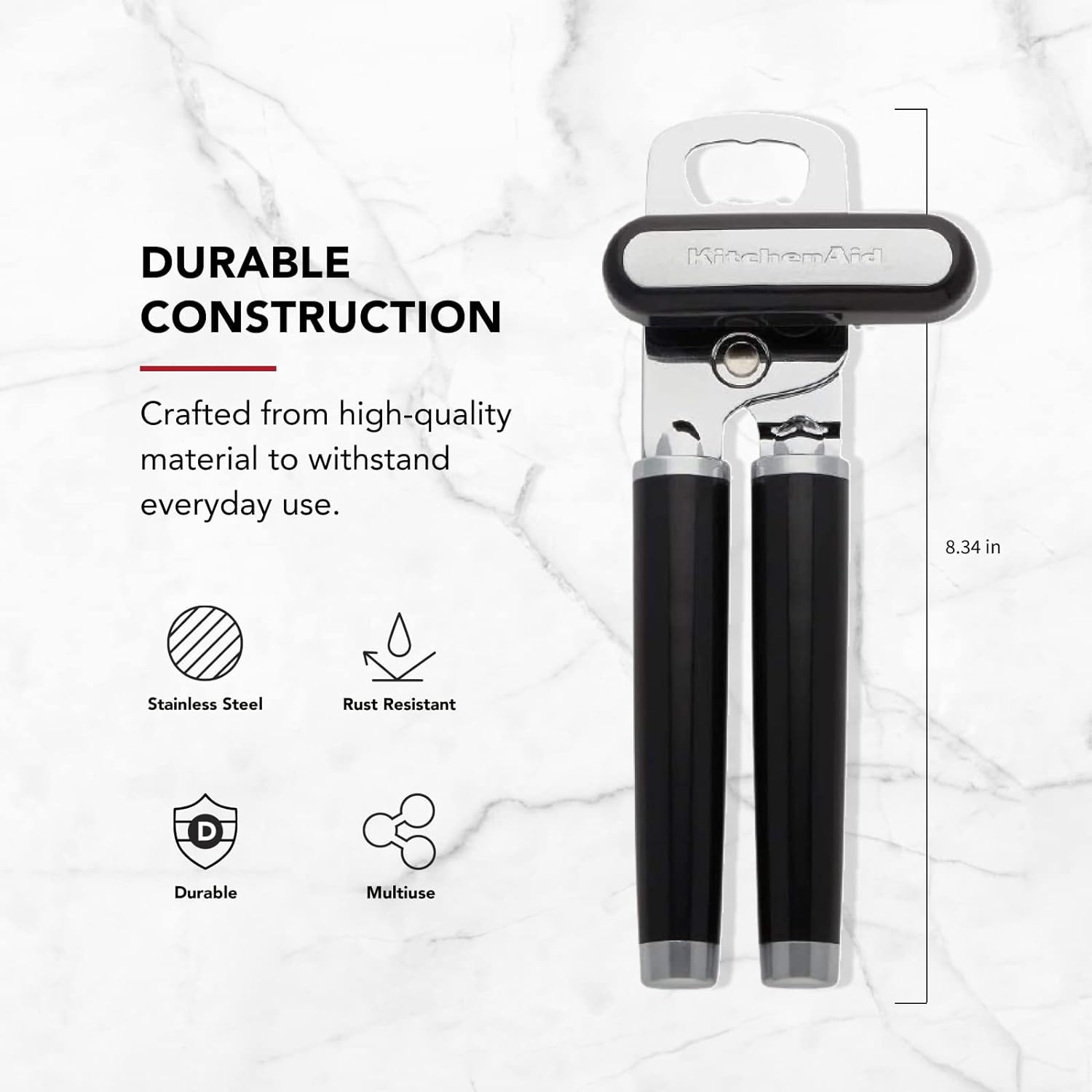
The KitchenAid Classic Multifunction Can Opener boasts a razor sharp stainless steel cutting wheel. This is a big deal. Stainless steel resists rust better than carbon steel and generally holds an edge longer. It means smoother operation, fewer frustrating moments, and a more sanitary experience over time. The trade-off? Even the best blades can gum up with dried food or adhesive from can labels. Regular cleaning isn’t optional here if you want that sharpness to last.
2. Ergonomics and Handle Comfort
Ever tried to open a dozen cans with tiny, hard plastic handles digging into your palms? It’s torture. Honestly. Especially if you’re dealing with hand strength issues or arthritis, or if you do a lot of batch cooking. Comfort isn’t just a luxury; it’s a necessity for tools you use regularly.
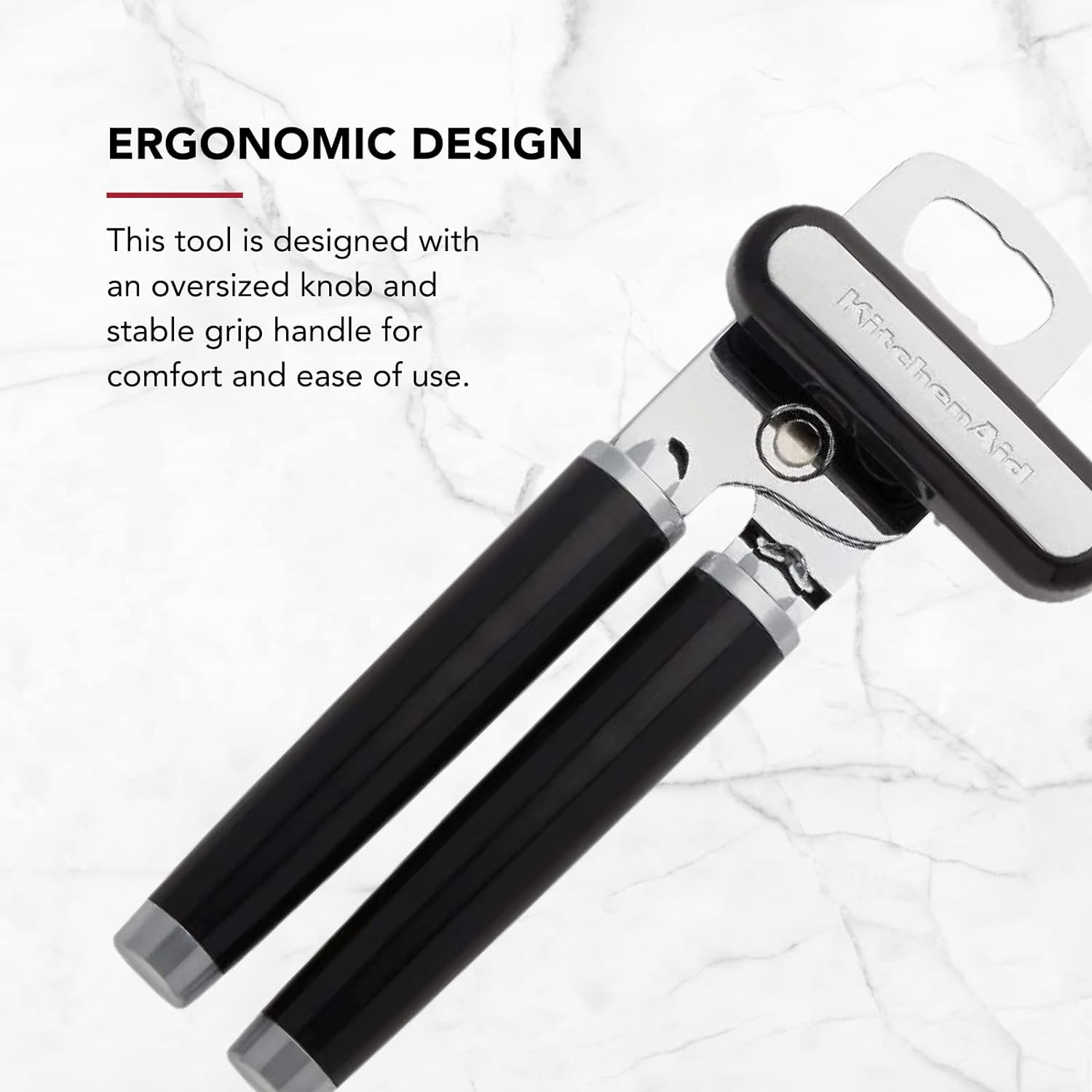
The Soft Ergonomic Handles on the KitchenAid model are a key selling point. They’re designed to fit comfortably in your hand, providing a secure grip and reducing strain. This is a significant step up from the bare metal or hard plastic grips found on many budget options. Sure, some premium models have even more elaborate designs, but the KitchenAid strikes a practical balance. They add a bit of bulk, though, which might be a minor consideration if drawer space is at an absolute premium.
3. Crank Mechanism Smoothness
The crank is where the leverage happens. A clunky, stiff, or poorly aligned crank means more effort, more slipping, and frankly, more swearing in the kitchen. You want a smooth, easy turn that engages the can lid without a fight. A good crank mechanism feels solid, not loose and wobbly.
The typical crank mechanism on the KitchenAid Classic is a swing-away design, meaning the cutting wheel swings out for easy positioning and then locks onto the can. It’s a tried-and-true method. The “Easy to Use” claim in its full name isn’t just puffery; it refers largely to this mechanism’s reliability. However, even the smoothest cranks can sometimes seize up if gunk gets in the gears. A little maintenance goes a long way.
4. Durability and Build Quality
Nobody wants to replace a kitchen tool every year. A can opener should feel substantial, not flimsy. Look for sturdy construction, securely attached components, and materials that won’t bend or break under normal use. The cost of repeatedly buying cheap replacements quickly adds up. Where’s the value in that?
The KitchenAid name generally suggests a certain level of build quality. The Classic model usually features robust metal components where it counts, unlike some of the almost entirely plastic competitors. It’s meant to endure years of regular kitchen life. Still, metal parts can corrode if left wet, and even the most durable plastic handles can crack if dropped just right. Longevity, even for a solid piece like this, demands a modicum of care.
5. Multifunctionality
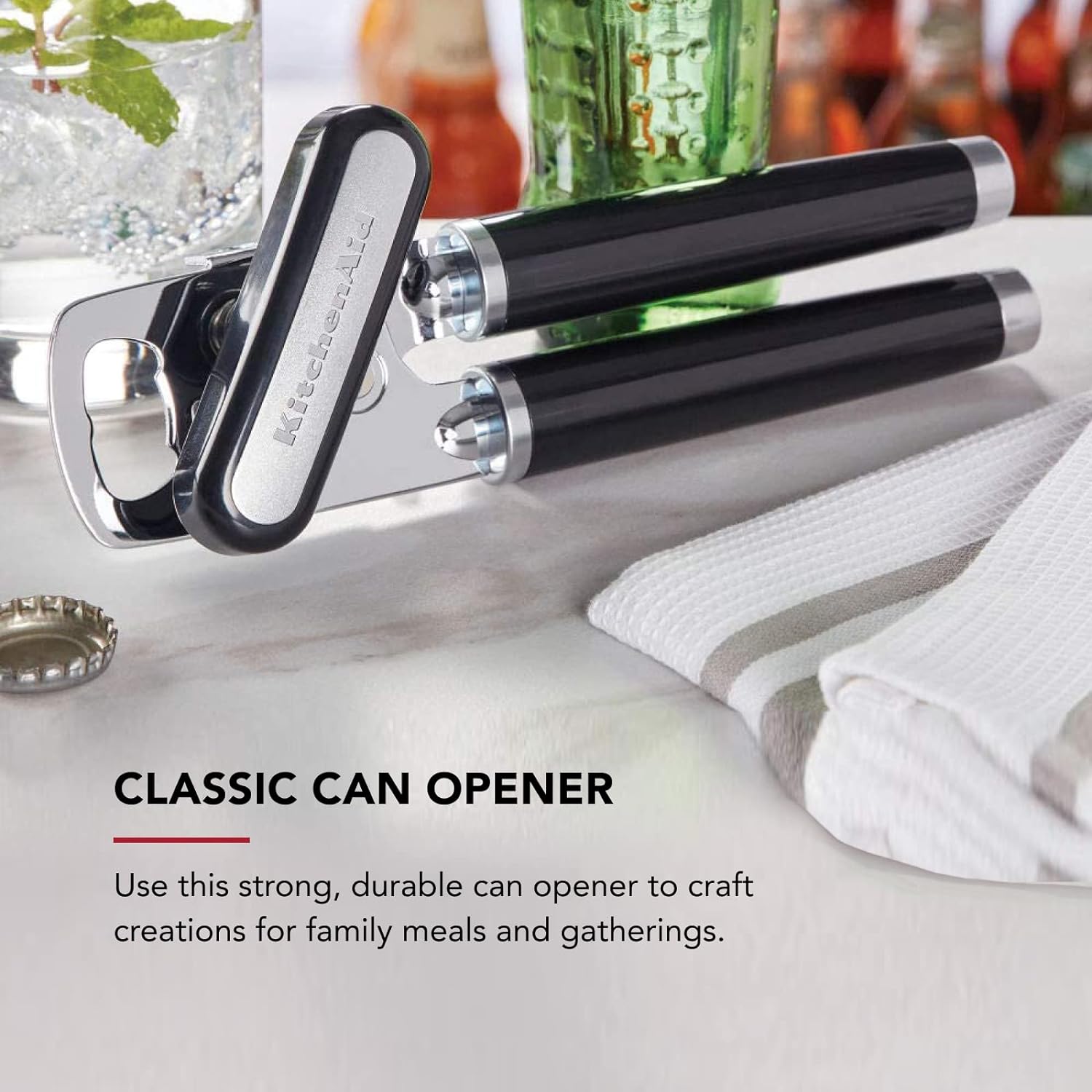
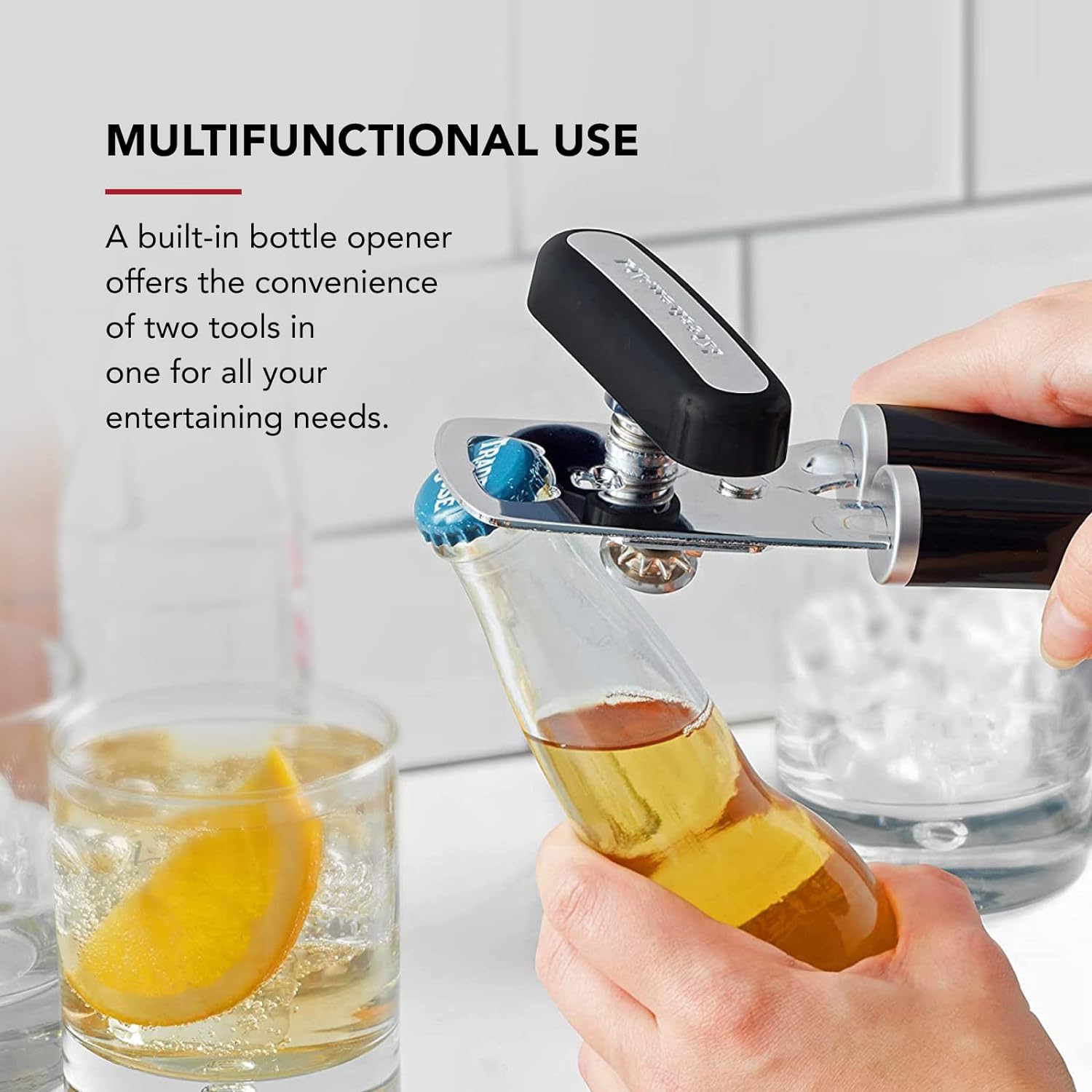
Does your can opener do more than just open cans? The KitchenAid Classic Multifunction Can Opener and Bottle Opener clearly answers this. Having a built-in bottle opener is a small but welcome addition, especially if you’re trying to keep your kitchen tools streamlined and reduce clutter.
This multifunctionality might seem minor, but it’s a practical touch. It saves you from rummaging for another gadget when cracking open a soda or a brew. Is it revolutionary? Nah. But it’s convenient. And honestly, for a tool that often disappears into the back of a drawer, having it cover two bases just makes sense. Don’t expect it to brew coffee, though. It’s a can and bottle opener, and that’s its job.
How to Match Your Can Opener to Your Situation
Finding the right kitchen tool isn’t about finding the best one universally, but the best one for you. Your needs, your space, your habits—they all play a part.
The Occasional Cook
You’re not opening industrial-sized cans daily. Maybe a can of diced tomatoes for chili every now and then, or some chickpeas for hummus. You need something reliable, easy to store, and not overly complicated. A basic, solid manual can opener fits the bill. You don’t need all the bells and whistles, just something that works when called upon. The KitchenAid Classic, with its robust build, might actually be more than you strictly need here, but its durability means it’ll be ready years down the line when you do eventually reach for it.
The Regular Home Cook
You’re in the kitchen a lot. Canned goods are a pantry staple. You value efficiency and comfort. A can opener that feels good in your hand and cuts consistently saves precious time and frustration. For you, ease of use and durability are paramount. You’re likely to appreciate the soft ergonomic handles and razor sharp stainless steel cutting wheel of the KitchenAid Classic Multifunction Can Opener. It’s the kind of workhorse that won’t let you down in the middle of a big recipe. You expect your tools to perform, and this one usually does.
The Strength-Challenged or Elderly User
Opening cans can be a real struggle for those with limited hand strength, arthritis, or dexterity issues. Tiny handles, stiff cranks, and slipping blades become major obstacles. For this group, a premium manual model with excellent leverage and comfort, or even an electric can opener, is often necessary. While the KitchenAid Classic’s ergonomic handles are a big improvement over basic models, a smooth-edge safety can opener or an electric one might provide even greater ease and independence. It really depends on the severity of the strength issue.
Decision Tree: Choosing Your Manual Can Opener
Here’s a quick thought process to help you decide.
- Do you prioritize absolute ease for all users, including those with severe hand issues?
- Yes → Consider a smooth-edge safety can opener or an electric model.
- No → Continue below.
- Do you want something that’s comfortable to hold and cuts cleanly every time, built to last?
- Yes → The KitchenAid Classic Multifunction Can Opener is a strong contender.
- No (i.e., you only need the cheapest option that barely works) → A basic, budget-friendly manual model might suffice, but temper your expectations.
- Is countertop space at a premium, and you prefer manual operation?
- Yes → The KitchenAid Classic is a compact, reliable choice.
- No → An electric model could be an option if space isn’t an issue.
- Do you need basic bottle opening functionality in the same tool?
- Yes → The “multifunction” aspect of the KitchenAid is a bonus.
- No → Focus purely on can opening performance.
Can Opener Types: A Comparison
The world of can openers is bigger than you might think. Let’s break down the main contenders.
| Type/Tier | Best For | Price Tier | Key Feature | Watch-Out |
|---|---|---|---|---|
| Basic Manual | Infrequent use, tight budgets | Budget-friendly | Minimalist design, simple operation | Often flimsy, stiff cranks, uncomfortable handles, dull quickly. |
| KitchenAid Classic-Tier Manual | Regular home use, value for durability | Mid-range | Razor sharp stainless steel cutting wheel, soft ergonomic handles | Still requires some hand strength, can gum up if not cleaned. |
| Smooth Edge/Safety Manual | Safety-conscious, those who hate sharp edges | Mid-range to Premium | Cuts along the side of the can, leaving no sharp rim | Can be tricky to align initially, sometimes leaves small burrs, slower. |
| Electric Can Openers | Users with hand strength issues, high volume | Premium | Hands-free operation, consistent cut | Bulky, takes up countertop space, needs power, harder to clean. |
Basic Manual Can Openers
These are the entry-level models you often find for just a few bucks. They get the job done… eventually. You’ll likely encounter stiff cranks, handles that pinch, and blades that struggle. They might be fine for the occasional can, but they test your patience pretty quickly. You really do get what you pay for in this tier.
KitchenAid Classic-Tier Manual Can Openers
This is where the KitchenAid Classic Multifunction Can Opener lives. It’s a significant step up from the basic models, offering a much more pleasant user experience. The stainless steel cutting wheel and soft ergonomic handles mean less wrestling with cans and more comfortable handling. It’s a solid performer that’s built to withstand regular use, bridging the gap between flimsy and premium.
Smooth Edge/Safety Manual Can Openers
These are a different breed. Instead of cutting into the top, they cut along the side of the can, beneath the rim, creating a smooth, re-sealable (briefly) lid. No sharp edges! This is fantastic for safety, especially if you have kids or just tend to be clumsy. The downside? Some people find them a bit awkward to start, and they can sometimes struggle with oddly shaped or dented cans.
Electric Can Openers
The ultimate in convenience. Just position the can, press a button, and let the machine do the work. These are a lifesaver for people with severe hand strength issues or those who prep a lot of canned food. The trade-offs are significant, though: they take up valuable countertop real estate, they need an outlet, and they’re often harder to clean thoroughly. Plus, they’re generally the most expensive option.
Scenario-Specific Can Opener Choices
Not every kitchen, or every cook, operates the same way. What works for one might be a disaster for another.
For the Small Kitchen Dweller
If your kitchen is compact, every inch of counter and drawer space matters. An electric can opener might be out of the question simply due to its bulk. Here, a well-designed manual option is king. The KitchenAid Classic Multifunction Can Opener, being a sturdy, reliable manual tool, fits perfectly. It tucks away neatly in a drawer and doesn’t demand prime counter space. Its multifunctionality (that bottle opener!) also means one less gadget floating around. Efficiency is key.
For the Batch Cooker or Frequent Host
You’re routinely opening multiple cans for big meals, parties, or weekly meal prep. Speed and comfort aren’t just preferences; they’re critical. You absolutely need an opener that works smoothly, consistently, and without causing hand cramps. A flimsy basic model will drive you absolutely mad. This is precisely where the comfort of the soft ergonomic handles and the efficiency of the razor sharp stainless steel cutting wheel on the KitchenAid Classic Multifunction Can Opener shine. You’ll thank yourself for investing in something that performs under pressure. It’s less hassle, more cooking.
For the Outdoor Enthusiast or Camper
Heading into the great outdoors means leaving electricity behind. An electric can opener is useless. And a flimsy manual one could leave you hungry if it fails. You need something rugged, reliable, and maybe even packable. A basic, no-frills but sturdy manual opener is essential. The KitchenAid Classic Can Opener fits this bill well; it’s tough enough for a camping trip, doesn’t need power, and its simple design means fewer points of failure than more complex smooth-edge models. Just remember to wipe it down well to prevent rust after use, especially in damp conditions.
Common Can Opener Mistakes People Make
Honestly, a lot of folks mess up their can openers, and it’s usually preventable.
- Not Cleaning It Properly: This is a big one. Bits of food, paper from labels, and can gunk get trapped in the gears and around the blade. This buildup dulls the cutting wheel, makes the crank stiff, and can even promote rust. A quick rinse and towel dry after every use? It’s a habit worth forming. Especially for that razor sharp stainless steel cutting wheel; you want to protect that edge.
- Forcing It When It’s Stuck: If your can opener isn’t cutting, don’t just apply more brute force. You’ll likely strip the gears, bend the handle, or deform the can. Stop. Reposition the opener. Check for any obstructions. Sometimes, the issue isn’t the opener itself but a slight dent in the can or an improper initial grip. Patience, not power.
- Storing It Wet: This is a surefire way to accelerate rust, even on stainless steel components. After washing, take a moment to thoroughly dry your can opener, particularly the cutting mechanism and any metal joints. That little extra step can add years to its life. You don’t want to pull out a rusty tool, do you? Nobody does.
- Ignoring Comfort and Ergonomics: Many people just buy the cheapest thing available, then complain about hand pain or difficulty. This isn’t a problem with the can opener; it’s a problem with the choice. Investing a little more in something like the KitchenAid Classic with its soft ergonomic handles is an investment in your own comfort and a far better long-term solution. Your hands will thank you.
Why/How/What Mini-Sections
Why bother with a good can opener anyway?
Because life’s too short for bad kitchen tools. A decent can opener, like the KitchenAid Classic Multifunction Can Opener, saves you frustration, effort, and potential injury from jagged edges. It makes a common chore tolerable, even easy. When a tool consistently performs its primary function without fuss, it frees you up to focus on the actual cooking, not the struggle to get the can open. It’s about efficiency, safety, and frankly, peace of mind in the kitchen.
How do I maintain my manual can opener for peak performance?
It’s actually pretty simple. After each use, rinse the cutting wheel and gears under warm water, using a small brush if necessary to dislodge any stuck food or paper. Then, thoroughly dry it with a cloth. Store it in a dry place. Occasionally, a tiny drop of mineral oil on the crank mechanism can keep things moving smoothly. This minimal effort ensures the razor sharp stainless steel cutting wheel stays sharp and rust-free, extending the life of your opener significantly.
What makes a good can opener blade so important?
The blade is where the magic happens—or fails to happen. A good blade, like the stainless steel cutting wheel on the KitchenAid Classic, needs to be sharp enough to pierce the can easily, durable enough to hold that edge, and resistant to corrosion. A quality blade ensures a clean, consistent cut around the can’s rim without slipping or leaving dangerous metal shards. It’s the difference between effortless opening and a frustrating, potentially unsafe ordeal. It truly is the critical component.
Key Takeaways
When evaluating the KitchenAid Classic Multifunction Can Opener, it’s clear this isn’t just another gadget. Its core strengths lie in its robust build, the precision of its razor sharp stainless steel cutting wheel, and the comfort of its soft ergonomic handles. For most home cooks, this model provides a significantly better experience than basic alternatives without the commitment to a larger, more expensive electric unit. It’s a smart mid-range choice that prioritizes reliability and user experience. Still, no can opener is indestructible, and proper cleaning remains crucial for long-term performance.
Frequently Asked Questions
H3: Is the KitchenAid Classic Can Opener really easy to use, or is that just marketing hype?
It’s generally considered very easy to use for a manual opener. The design prioritizes a comfortable grip and a smooth crank, which translates to less effort for opening cans compared to many budget models. The swing-away arm helps in initial positioning too.
H3: What’s the deal with the stainless steel cutting wheel – does it actually stay sharp?
Yes, a good stainless steel cutting wheel, like the one on the KitchenAid Classic, holds its edge much longer than cheaper steel blades. It’s also more resistant to rust, contributing to consistent, clean cuts over many years of use, provided it’s kept clean and dry.
H3: Are the “soft ergonomic handles” just for show?
Not at all. The soft ergonomic handles provide a much more comfortable and secure grip. This makes a noticeable difference during extended use or if you have any hand discomfort, reducing strain and improving leverage. It’s a genuine functional improvement.
H3: Can I really open bottles with this KitchenAid model?
Absolutely. The KitchenAid Classic Multifunction Can Opener includes a built-in bottle opener. It’s typically integrated into the handle or near the cutting mechanism, providing a handy two-in-one tool for convenience.
H3: How does a manual can opener like this compare to an electric one for speed?
While an electric can opener is generally faster because it automates the process, a good manual opener like the KitchenAid Classic is quite efficient once you get the hang of it. For most home cooks, the speed difference isn’t a huge factor unless you’re opening dozens of cans daily.
H3: Will this can opener rust?
The stainless steel cutting wheel is highly resistant to rust, but no metal is completely immune, especially if left wet for extended periods. The best practice is to always hand wash and thoroughly dry your can opener immediately after use to prevent corrosion.
H3: Is the KitchenAid Classic Can Opener worth the money over a cheaper model?
For many, yes, it absolutely is. The improved durability, consistent performance from the sharp blade, and the enhanced comfort of the ergonomic handles make it a worthwhile upgrade. The frustration saved from struggling with a flimsy, inefficient opener quickly justifies the slightly higher cost.
Final Recommendation
If you’re still wrestling with a budget can opener that skips, grinds, or pinches, it’s time for an upgrade. For the vast majority of home kitchens, the KitchenAid Classic Multifunction Can Opener and Bottle Opener Easy to Use, Razor Sharp Stainless Steel Cutting Wheel, Soft Ergonomic Handles, Black represents a genuinely smart investment. It’s not the cheapest option out there, nor is it the most technologically advanced, but it hits that sweet spot of dependable performance, comfortable use, and robust build quality that simply makes kitchen life a little easier.
Skip the frustration, avoid the flimsy designs, and get yourself a workhorse that consistently does its job without a fuss. This KitchenAid model delivers on its promises, making it a clear recommendation for anyone seeking a reliable, mid-range manual can opener that’s built to last. You won’t regret paying a little more for a tool that actually works, every time.
#KitchenAid #Classic #Multifunction #Opener #Bottle #Opener #Easy #Razor #Sharp #Stainless #Steel #Cutting #Wheel #Soft #Ergonomic #Handles #Black