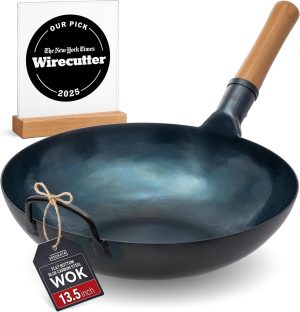
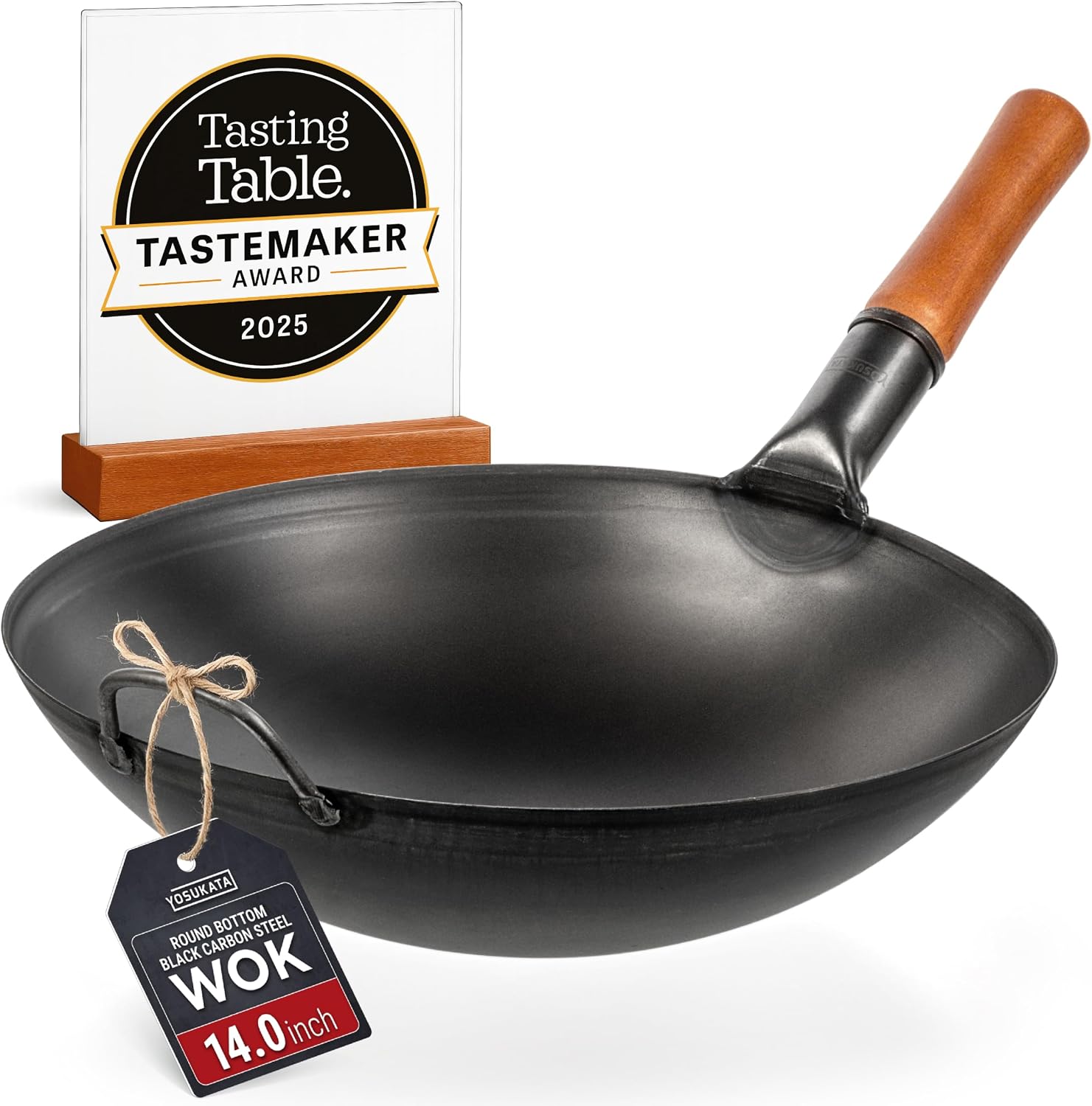
The YOSUKATA 14″ Carbon Steel Wok: Is This Traditional Pow Wok the Right Pick for Your Kitchen?
So, you’re on the hunt for a proper wok, aren’t you? Something that screams authenticity, ready to tackle blistering stir-fries and aromatic noodle dishes with a kind of prowess your average skillet just can’t touch. This guide is all about navigating the world of traditional carbon steel woks, with a specific focus on the YOSUKATA 14″ Round Bottom model – a pre-seasoned pow wok designed for everything from your gas stovetop to outdoor cooking over an open flame. We’ll cut through the marketing fluff, digging into what truly makes a wok sing and if this particular black steel pan has the right notes for your culinary orchestra.
Quick Answer
The YOSUKATA 14″ Carbon Steel Wok is a compelling option for serious home cooks and outdoor enthusiasts who value traditional design and high-heat performance. Its round-bottomed structure shines on gas burners, delivering exceptional wok hei potential, but demands ongoing care to maintain its seasoning. If you’re ready for the commitment, this traditional Chinese Japanese black steel pan offers remarkable cooking capabilities.
What to Look For (The Buying Criteria)
Choosing a wok isn’t like picking out a spoon. There’s a heritage, a specific design language that dictates performance. Ignore these factors, and you might just end up with a glorified frying pan.
First up, Material Matters. The YOSUKATA model, like many serious contenders, is made from carbon steel. This stuff is beloved for a reason: it heats up incredibly fast, distributes that heat evenly, and crucially, it cools down quickly when you take it off the flame. That responsiveness is key for stir-frying, giving you precise control over your ingredients. Sure, cast iron woks exist, and they hold heat like nobody’s business, which is great for certain dishes. But they’re heavy, slower to react, and can be a pain to maneuver for quick tossing. Stainless steel? Forget it. You’ll stick, you’ll burn, and you’ll miss that deep, developed flavor that carbon steel delivers. The trade-off? Carbon steel needs TLC; it’s not non-stick straight out of the box and requires seasoning and proper cleaning.
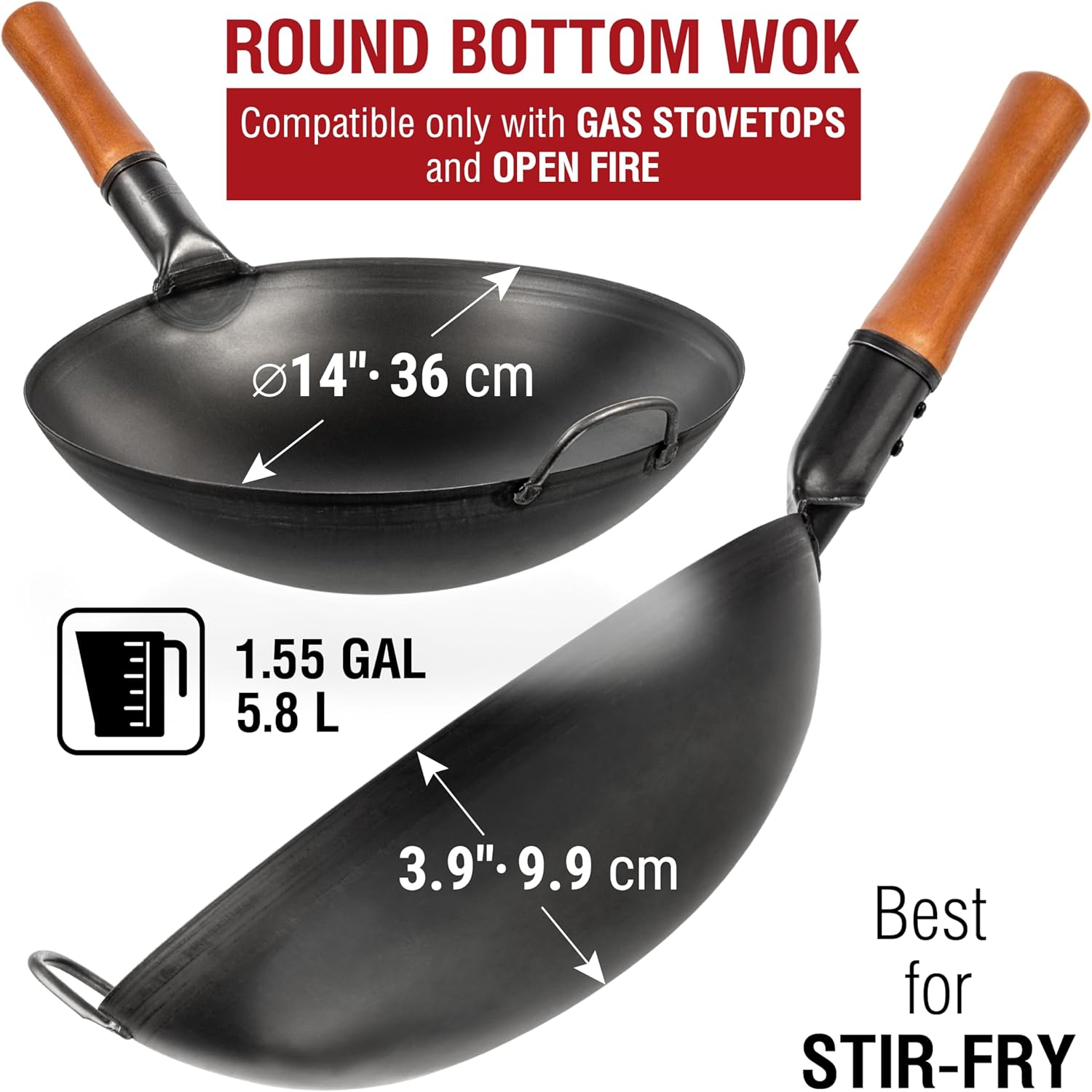
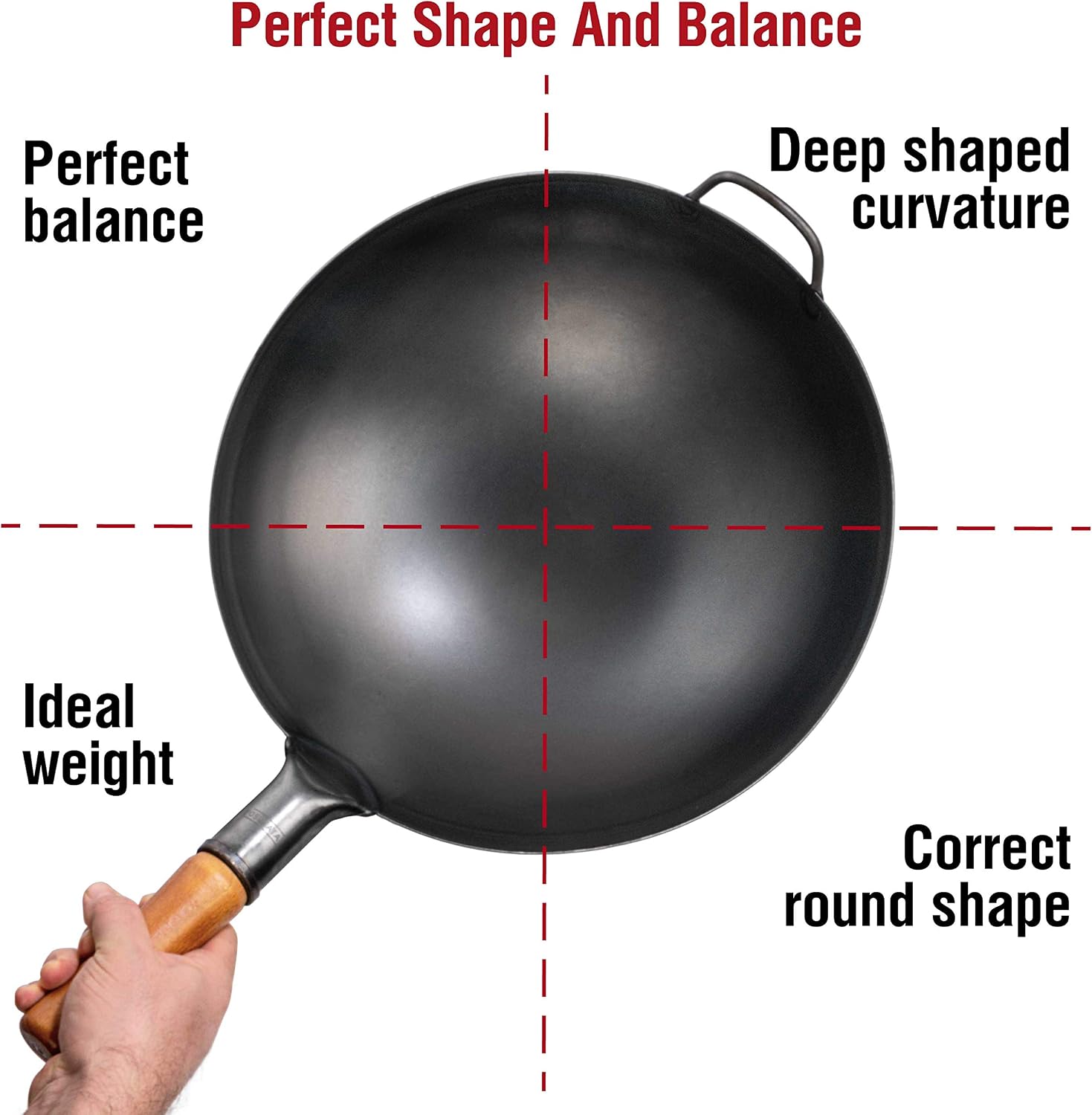
Then there’s the Shape and Size. This YOSUKATA is a 14-inch round bottom wok. The round bottom is quintessential for authentic wok cooking, especially if you have a powerful gas burner with a wok ring. It maximizes the heat contact, creating those intensely hot zones for searing, while the sloping sides offer cooler areas for cooked food to rest. This shape is crucial for the “toss and tumble” method of stir-frying, letting food cascade from the bottom to the sides and back. Now, a round bottom won’t work on a flat electric or induction cooktop without a specialized adapter, which often compromises heating efficiency. If you’ve got an electric range, you’re looking at a flat-bottomed wok, a compromise that still gets the job done but simply isn’t the same. And 14 inches? That’s a versatile size for feeding a family of four to six, or doing a decent batch of single-serve stir-fry. It’s not so big it’s unwieldy, but not so small that you’re cramped.
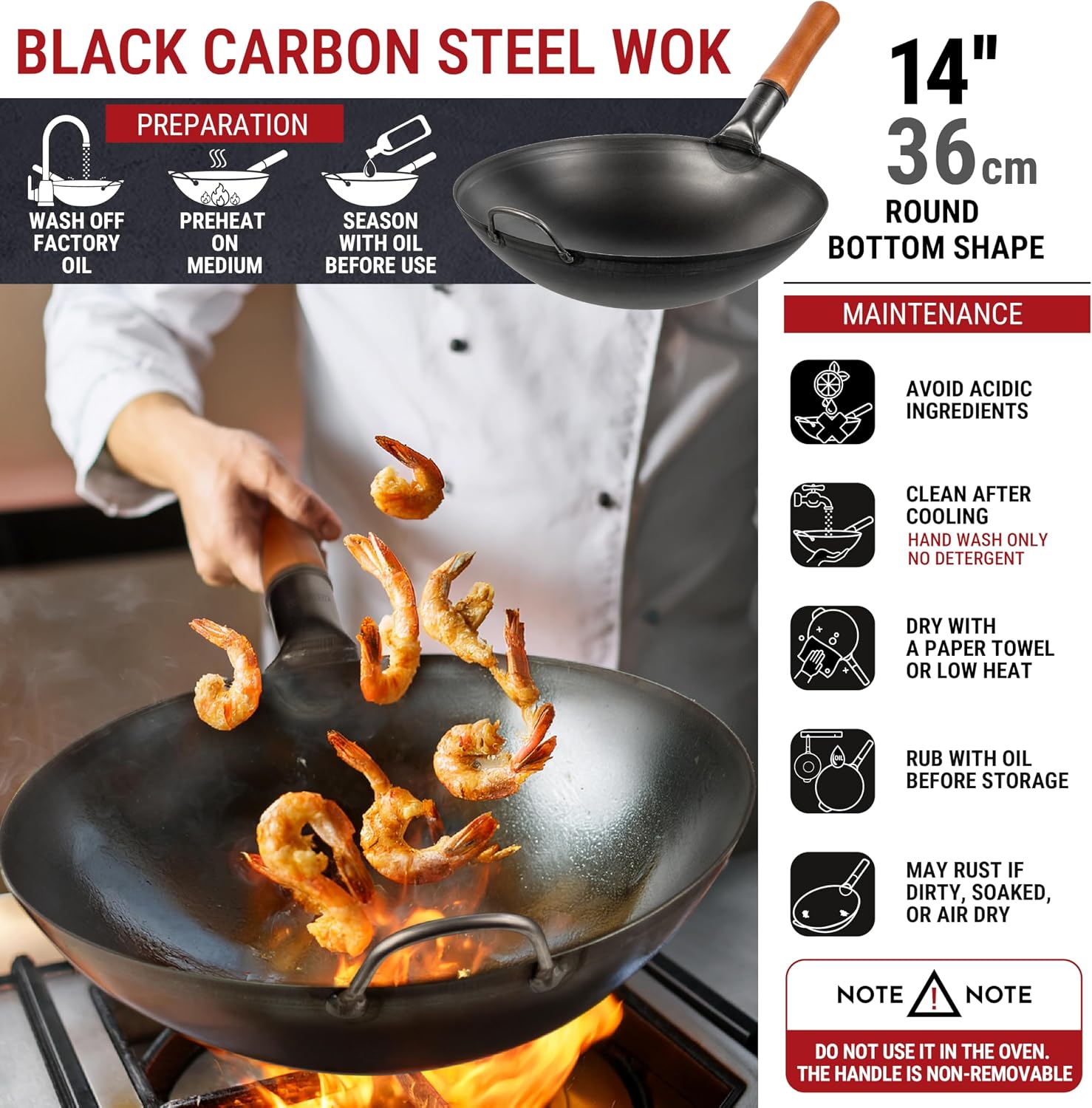
Let’s talk about Seasoning – or Pre-Seasoning. The YOSUKATA model touts itself as “pre-seasoned.” That’s a nice head start. It means the manufacturer has already applied a layer of polymerized oil, providing some initial non-stick properties and rust protection. You won’t have to spend hours scrubbing and baking oil when it first arrives. But here’s the honest truth: “pre-seasoned” doesn’t mean “maintenance-free.” You’ll still need to build on that foundation with regular use and proper care. Every time you cook, you’re adding to that seasoning, making it darker, smoother, and more non-stick. Skip the oil after washing, or let it air dry, and you’ll find rust. It’s a relationship, not a one-night stand.
Handle Design is another subtle but critical point. A good wok handle should be sturdy, securely riveted, and comfortable to grip, especially when you’re tossing ingredients with some vigor. Many traditional woks, like the YOSUKATA, feature a long wooden handle, sometimes with an additional helper handle. The wood stays cool, which is a lifesaver when you’re cooking over high heat, and it provides leverage for lifting and maneuvering. Just be aware that some wooden handles aren’t oven-safe or might need extra care during washing to prevent drying out or cracking.
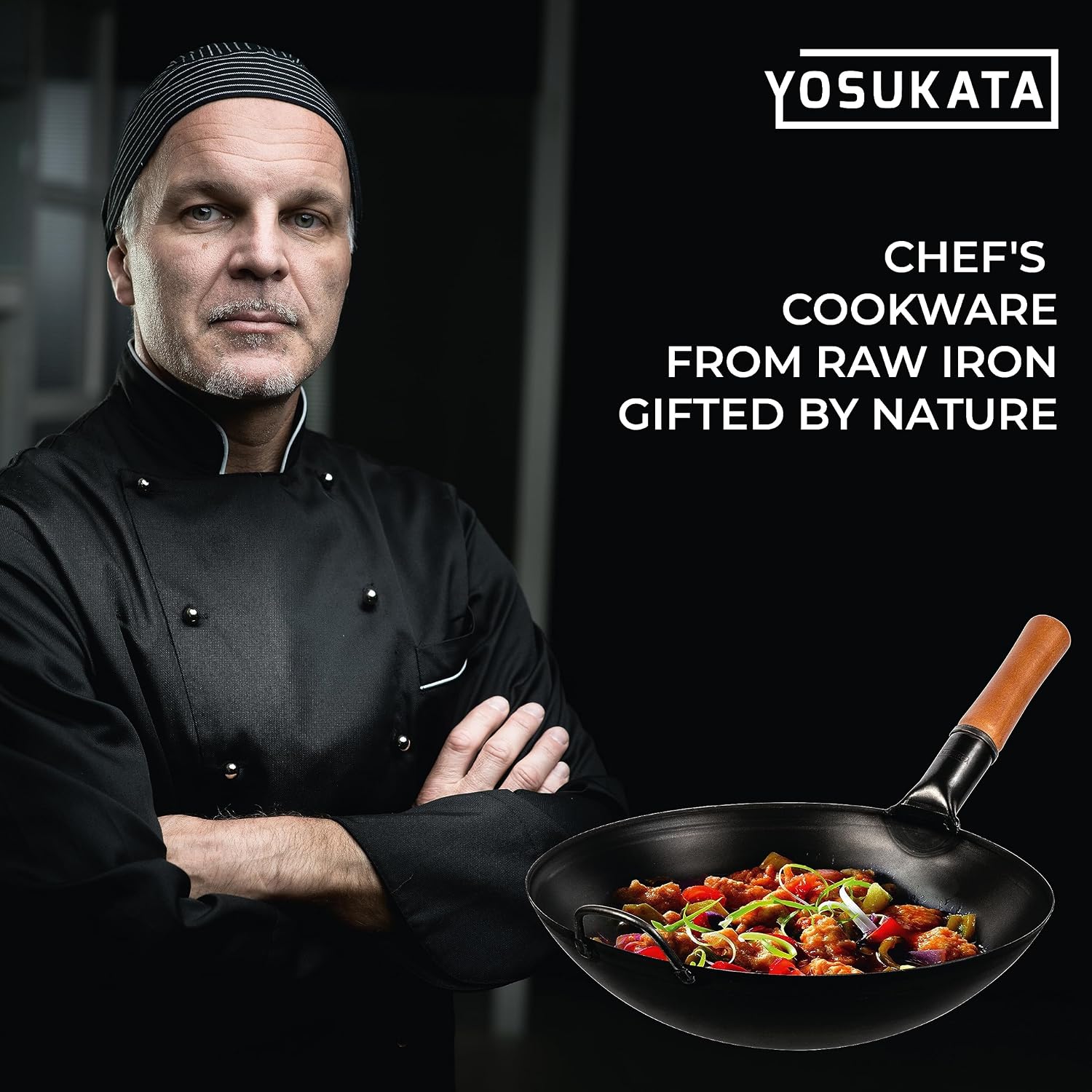
Finally, consider its Versatility for Outdoor Cooking. The YOSUKATA model specifically mentions “outdoor cookware for gas stovetops, open fire, BBQ, camping.” This speaks to its robust nature. A good carbon steel wok thrives on intense heat, and an outdoor wok burner or even a roaring campfire can provide that better than many indoor ranges. If you envision camp stir-fries or backyard barbecue adventures, this kind of durability and heat tolerance is precisely what you need. Just be mindful of how you’ll stabilize a round-bottom wok on uneven outdoor surfaces – you might need a dedicated stand.
How to Match the Product to Your Situation
Finding the right wok isn’t a one-size-fits-all deal. Your cooking style and kitchen setup really dictate what’ll work for you.
The Stir-Fry Aficionado
You live for the sizzle, the smoke, the lightning-fast action of wok hei. Your kitchen probably boasts a powerful gas range, maybe even a dedicated wok ring. You understand that carbon steel requires a bit of nurturing, and you’re ready to commit to building that perfect seasoning layer. For you, the YOSUKATA 14″ Carbon Steel Wok is practically made to order. Its round bottom allows for optimal heat distribution and the dynamic tossing you crave. The pre-seasoned start just gets you into the action sooner. You want that authentic experience.
The Casual Home Cook with Limited Space
Perhaps you’re intrigued by the idea of wok cooking, but you’ve got an electric stovetop or induction burner, and maybe less counter space. You might not be whipping up stir-fries every night, but you want something versatile for occasional Asian-inspired meals, deep frying, or even steaming. A traditional round-bottomed wok like the YOSUKATA would be a struggle on your cooktop without a special adapter, which adds another layer of complexity. You’d probably be better off with a flat bottom wok (likely still carbon steel for performance), sacrificing a bit of traditional technique for practicality on your specific stove. It’s a trade-off, no doubt.
The Outdoor Chef/Camper
Your culinary adventures often happen under the open sky. You’ve got portable burners, perhaps even an open fire pit ready for some serious cooking. Durability and heat resilience are paramount. The YOSUKATA’s claims for outdoor use — “open fire, BBQ, camping” — hit home for you. This pan is built to take a beating and perform under rugged conditions where delicate non-stick coatings would perish instantly. You’re comfortable managing fire and heat, and the traditional design lets you achieve that high-heat sear outdoors. Plus, who doesn’t love the smell of campfire-infused stir-fry?
Wok Comparison: Types & Tiers
| Type/Tier | Best For | Price Tier | Key Feature | Watch-Out |
|---|---|---|---|---|
| Traditional Carbon Steel Pow Wok (e.g., YOSUKATA) | Authentic stir-frying, high-heat cooking on gas/outdoor burners. | Mid-range | Superior heat responsiveness, seasoning develops flavor. | Requires dedicated seasoning, prone to rust if neglected. |
| Flat-Bottom Carbon Steel Wok | Electric or induction stovetops, beginners needing stability. | Budget-friendly | Versatility across various cooktops. | Less “wok hei” potential, can feel less authentic for purists. |
| Cast Iron Wok | Deep frying, slow braising, stewing; retaining heat. | Mid-range | Excellent heat retention, very durable. | Extremely heavy, slow to heat/cool, can be difficult to toss. |
| Non-stick Coated Wok | Convenience, minimal oil cooking, easy cleanup. | Budget-friendly | User-friendly, less maintenance. | Coatings can scratch/degrade at high wok temps, short lifespan. |
The traditional carbon steel pow wok, like our featured YOSUKATA, stands out for its unmatched heat control and ability to achieve that sought-after “wok hei” aroma, which literally translates to “breath of the wok.” A flat-bottom carbon steel wok offers a good compromise for those without a gas range, still providing decent performance without the instability issues. The cast iron wok is a beast, amazing for holding heat but a literal workout to lift and toss, and it reacts slowly to temperature changes. Finally, a non-stick coated wok might seem like the easy button, but high-heat wok cooking can quickly degrade those coatings, ultimately making them a short-term solution that just doesn’t deliver the same flavor.
Getting the Most Out of Your Wok
This isn’t just about buying a pan; it’s about adopting a cooking method.
For the Frequent Frier
If you plan on using your wok several times a week, you’ll find the YOSUKATA’s carbon steel construction becomes a true extension of your cooking arm. The more you use it, the better the seasoning gets, leading to an incredibly slick, naturally non-stick surface. Don’t be afraid to put it through its paces. High heat is its friend. Regular use actually simplifies maintenance; the seasoning builds itself.
For Occasional Stir-Fryers
Only breaking out the wok once in a while? That’s fine too, but you’ll need to be extra diligent about care. The seasoning on a carbon steel wok, especially if not used regularly, can thin out or even rust if stored improperly. Make sure it’s immaculately dry after washing and apply a very thin layer of cooking oil before putting it away. This little ritual ensures it’s ready to go when the craving for stir fry strikes next.
Cooking Outdoors? Know Your Heat Source
When taking the YOSUKATA outdoors, whether for a BBQ, camping, or over an open fire, remember that heat control can be wildly different. A roaring campfire offers incredible, uneven heat, which can be thrilling but challenging. A dedicated outdoor wok burner will give you more precise control. Always ensure your wok is stable. Nothing ruins a meal faster than a tipping pan of hot food and oil. Also, keep the wooden handle in mind – it’s fine for direct flame, but avoid letting it char excessively.
Common Mistakes When Buying a Wok
People make a few classic blunders when first diving into the world of woks. Avoid these, and you’ll save yourself a headache.
First, ignoring your cooktop type. I’ve seen people spend way too much on a beautiful round-bottomed wok, only to realize it wobbles precariously on their flat electric stove. That YOSUKATA 14″ is a round bottom, after all. If you don’t have gas or a special burner, you’ll be frustrated. It’s an important detail.
Another common slip-up is overlooking the maintenance commitment. Carbon steel isn’t like your grandma’s ceramic non-stick. It needs seasoning. It needs to be washed without harsh soap and dried immediately. If you’re someone who tosses pans in the dishwasher or leaves them to soak, a carbon steel wok will quickly become a rusty, sticky mess. Be realistic about your kitchen habits.
Then there’s the mistake of buying too small (or too big). A wok that’s too small for your family means crowded food, which steams instead of sears. You lose that crispy texture, that glorious caramelization. Too big? It’s unwieldy, hard to heat evenly on a home stove, and a nightmare to store. The 14-inch size of the YOSUKATA is a generally versatile wok size for most home cooks; it hits a sweet spot.
Finally, a lot of folks initially shy away from the heat. A wok is meant to be abused by flame! If you’re cooking on low or medium heat, you’re not stir-frying; you’re just heating food in a big bowl. Carbon steel loves high temperatures. Embrace the smoke, embrace the sizzle. That’s where the magic happens.
Why/How/What
Why choose carbon steel over other materials for a wok?
Carbon steel offers an unparalleled balance of rapid heating and cooling, which is absolutely crucial for proper stir-frying. This responsiveness allows you to precisely control the cooking process, achieving intense searing temperatures at the bottom while allowing ingredients on the sloped sides to cook more gently. Unlike stainless steel, it develops a natural non-stick patina with seasoning, and it’s much lighter and more maneuverable than cast iron for tossing.
How do you properly clean a carbon steel wok?
After cooking, typically, you’ll clean a carbon steel wok with hot water and a soft brush or sponge – no harsh soaps or abrasive scrubbers that strip the seasoning. For stubborn bits, you can use a bit of salt as a gentle abrasive. Crucially, dry it immediately and thoroughly, either on low heat on the stove or with a towel. Then, wipe it with a very thin layer of cooking oil before storing, to protect the seasoning and prevent rust.
What is “wok hei” and why is it so important in Asian cooking?
“Wok hei” (鑊氣) translates to the “breath of the wok” or “essence of the wok,” and it’s that distinct, smoky, intensely flavorful aroma and taste characteristic of expertly stir-fried dishes. It’s achieved through extremely high heat, rapid tossing, and the slight caramelization and charring of food particles that occur when they come into contact with the blistering hot carbon steel surface. It’s a signature, almost elusive flavor that’s impossible to replicate in a standard pan.
FAQ
Is a pre-seasoned wok truly non-stick from day one?
Not exactly. While a pre-seasoned wok like the YOSUKATA offers a good head start, it’s not a fully developed non-stick surface. You’ll still need to build up the seasoning layer through regular cooking and proper maintenance for optimal performance.
Can I use a round bottom wok on an electric stovetop?
You can, but it’s not ideal. A round-bottom wok requires a wok ring to stabilize it, and even then, the contact with an electric burner is minimal, leading to uneven and inefficient heating. A flat-bottom wok is generally a better choice for electric or induction ranges.
How do I prevent my carbon steel wok from rusting?
The key is thorough drying immediately after washing, followed by applying a very thin layer of cooking oil before storage. Moisture is carbon steel’s enemy. Regularly cooking with oil also helps maintain and build the protective seasoning.
What kind of oil should I use for cooking and seasoning my wok?
For seasoning, high smoke point oils like grapeseed, canola, or flaxseed are excellent. For general cooking in the wok, any high smoke point oil works well—peanut, grapeseed, or even vegetable oil. Avoid extra virgin olive oil as it has a low smoke point.
Is the YOSUKATA 14″ wok suitable for deep frying?
Absolutely. Its deep, rounded shape makes it excellent for deep frying, requiring less oil than a flat-bottomed pan to achieve sufficient depth. The carbon steel maintains heat well, though its quick responsiveness means you need to monitor oil temperature carefully.
My wok food sometimes sticks, even with seasoning. What am I doing wrong?
Often, sticking happens because the wok isn’t hot enough, or you’re crowding it with too much food. Ensure your wok is smoking hot before adding oil, and then add ingredients in batches if necessary. This keeps the temperature high enough for proper searing.
Can I use metal utensils in a carbon steel wok?
Yes, in fact, metal spatulas and ladles are traditional for wok cooking. They help scrape up delicious bits from the bottom, which contributes to the seasoning. Just be gentle and avoid aggressively gouging the surface, especially if your seasoning is still developing.
Final Recommendation
For those with a gas stovetop or serious outdoor cooking ambitions, the YOSUKATA 14″ Carbon Steel Wok with Round Bottom stands out as a genuinely worthwhile investment. Its traditional design and carbon steel construction are precisely what you need to unlock authentic flavors and achieve that elusive wok hei. Yes, it asks for a bit of care and commitment – the black steel pan won’t pamper itself – but in return, it offers unparalleled cooking performance and durability that cheaper, coated alternatives simply can’t match.
If you’re ready to embrace the art of wok cooking, to build a relationship with your cookware, and to create incredibly flavorful dishes, then this particular pow wok is an excellent choice. It truly delivers on its promise for stir fry, traditional Chinese Japanese cuisine, and robust outdoor cookware ventures.
#YOSUKATA #Carbon #Steel #Wok #Bottom #PreSeasoned #Pow #Wok #Stir #Fry #Traditional #Chinese #Japanese #Black #Steel #Pan #Outdoor #Cookware #Gas #Stovetops #Open #Fire #BBQ #Camping