
Navigating the World of Wooden Trivets: A Smart Shopper’s Guide to Tabletop Sanctuary
If you’ve ever winced at the thought of a scorching hot pot marring your prized dining table, you know why a good trivet isn’t just a kitchen accessory, it’s essential. This guide cuts through the clutter, helping you understand the real deal with wooden trivets, especially those eye-catching Christmas tree and blossom-shaped stackable designs. We’re talking about smart heat protection here, without throwing money away on something that just won’t cut it. You’ll find advice for ensuring your hot dishes never meet your delicate surfaces unprotected again. Because honestly, nobody wants to inherit their grandma’s water rings – or worse, burn marks.
Quick Answer Box
For protecting surfaces from hot dishes, wooden trivets offer both natural aesthetics and decent heat resistance. Models like the Christmas tree trivet or blossom shape trivet provide stackable convenience and decorative appeal, making them a solid choice for everyday use and special occasions. Consider material quality and design versatility to find one that truly lasts and complements your space.
What to Look For (The Buying Criteria)
Choosing the right wooden hot pads isn’t rocket science, but there are a few nuances that separate a genuinely useful piece from something that just looks pretty. You want something that actually works, right? And looks good doing it. That’s the sweet spot.
Wood Type and Quality: This is foundational. You’ll see everything from bamboo to acacia to walnut. Bamboo is popular for its sustainability and often budget-friendly price point, but it can sometimes be thinner, making it less robust for truly heavy, piping hot casseroles. Hardwoods like acacia or walnut, on the other hand, usually offer a denser grain and greater heat resistance, meaning they’re less likely to warp or char over time. The trade-off? They often come with a higher price tag. Think about how often you’ll be using it, and for what temperatures. A thin bamboo wood coaster might be fine for a teacup, but not your searing cast iron skillet.
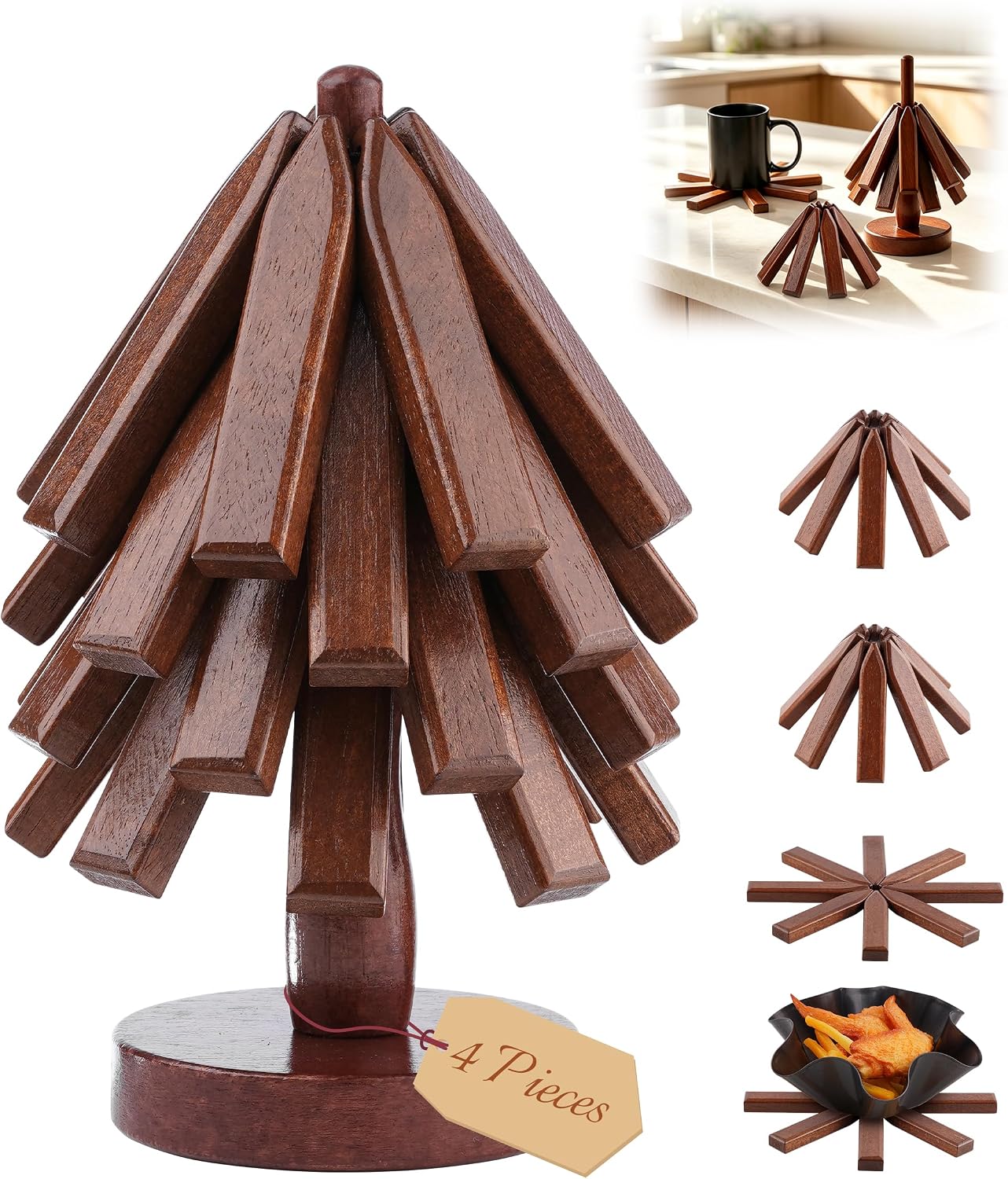
Design and Aesthetics: Function is key, yes, but let’s be real, these are going to be on display. So they need to blend with your décor. The Christmas tree trivet and blossom shape trivet designs, especially the interlocking or stackable kind, are genuinely clever. They don’t just protect; they add a decorative touch. But here’s the rub: some intricate designs, while visually striking, might have thinner contact points or more gaps, potentially reducing their overall stability for oddly shaped pots. Always balance flair with practicality. Does that gorgeous decorative wooden hot pad actually hold a soup tureen securely? A fair question, you’d agree.
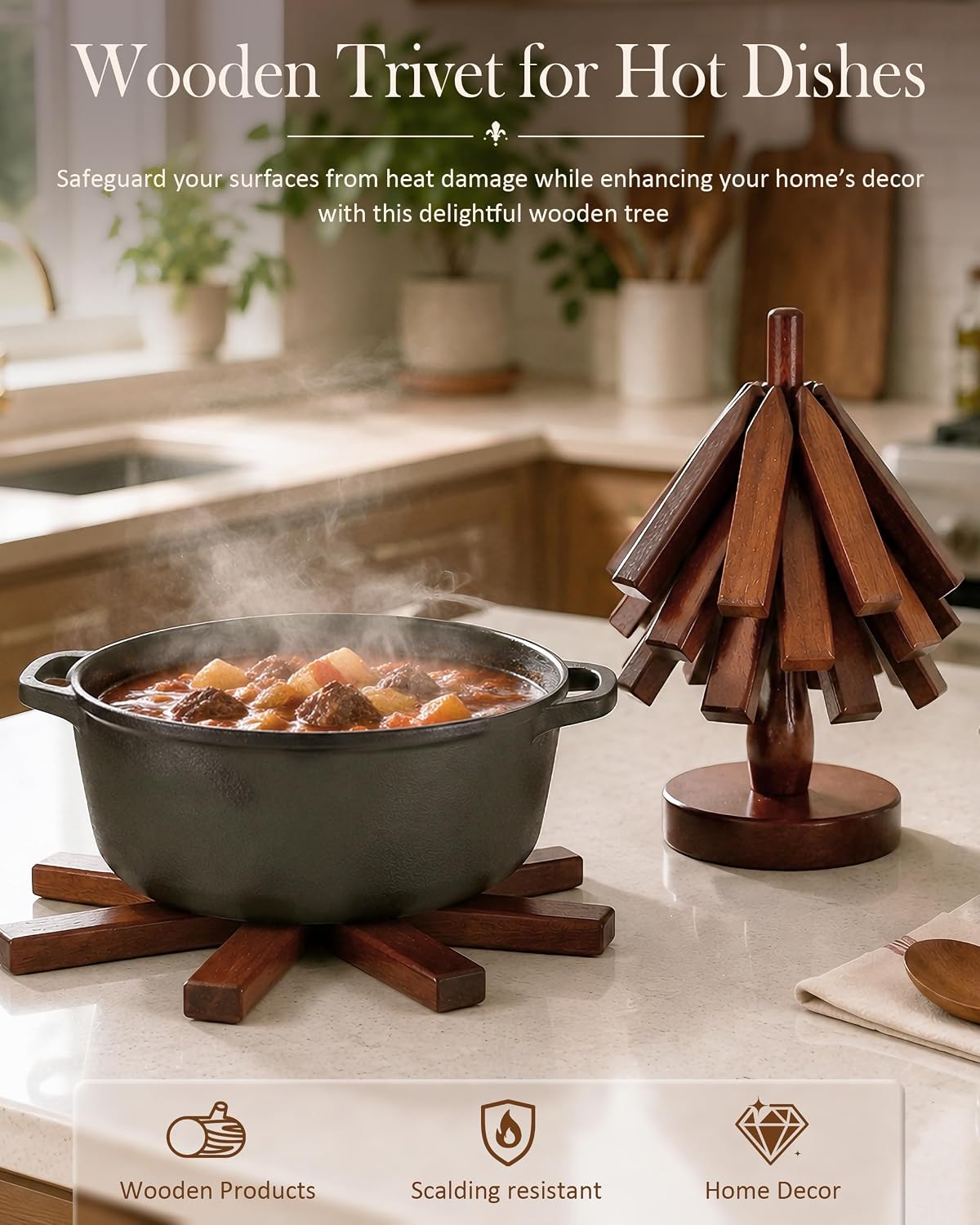
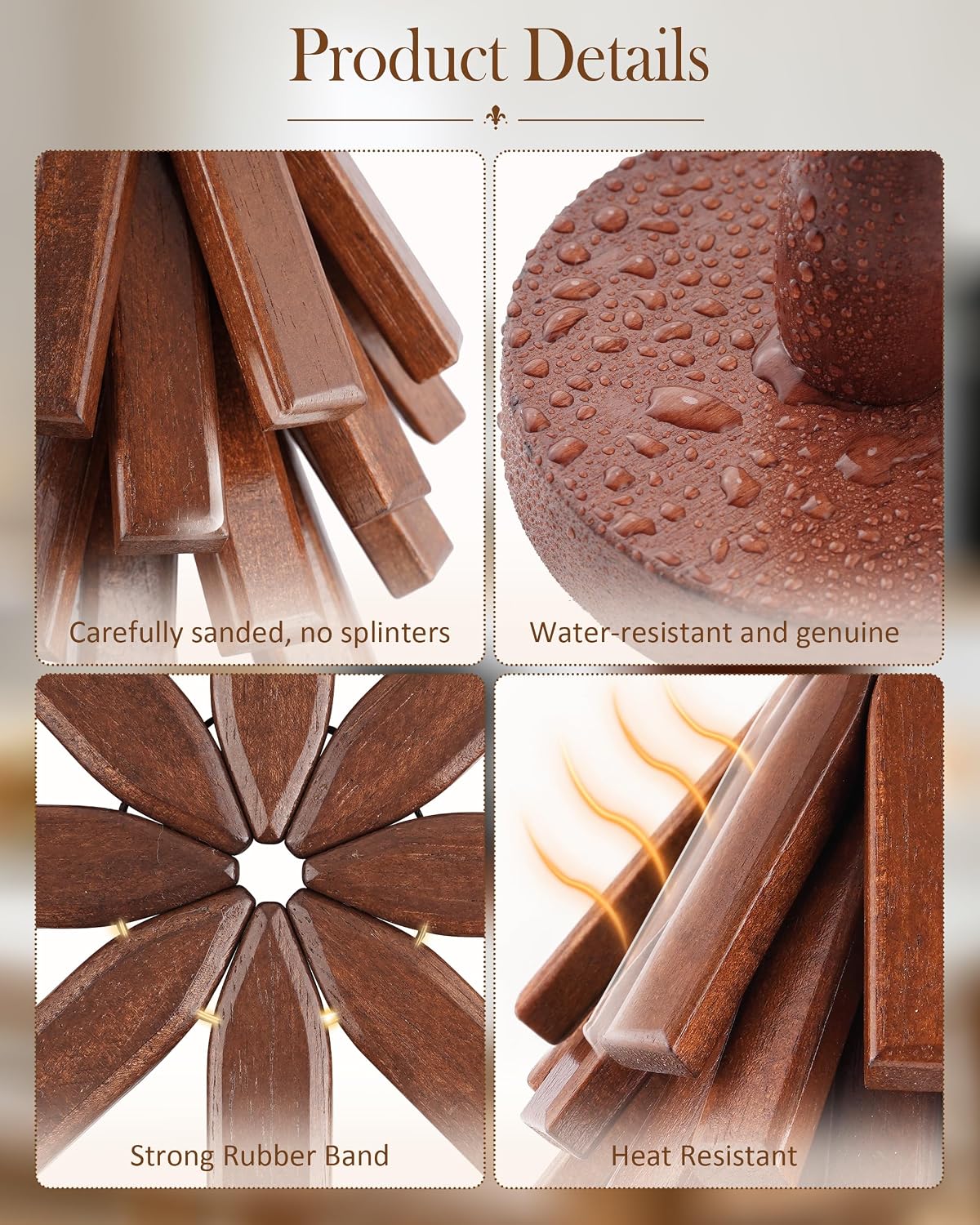
Heat Resistance and Airflow: The whole point of a trivet is to create a buffer. Wooden options do this by putting a layer of material between your hot cookware and the table. Many designs, particularly those with individual leaves or slats (like the upgraded 8-leaf blossom shape), intentionally create small gaps. This isn’t just for looks; those gaps allow air to circulate. Good airflow helps dissipate heat more effectively, preventing it from building up too much in one spot on the table surface. A solid block of wood might seem sturdier, but without airflow, it just transfers heat slower, rather than dissipating it. That said, even the best wood has its limits. Don’t expect it to magically handle something straight from a 500-degree oven indefinitely without some charring eventually occurring.
Stability and Surface Contact: What’s the biggest fear when placing a hot pot on a trivet? It’s wobbling. Or worse, tipping. A well-designed trivet needs a broad, stable base that can accommodate various pot sizes without rocking. Look for non-slip feet or a design that naturally grips the table. Some stackable trivets rely on their interlocked design for stability, which works well if they’re placed correctly. If you have an uneven surface, or particularly heavy pots, something with a wider footprint might be a smarter bet. A tiny, cute wood coaster is just not going to cut it for a dutch oven.
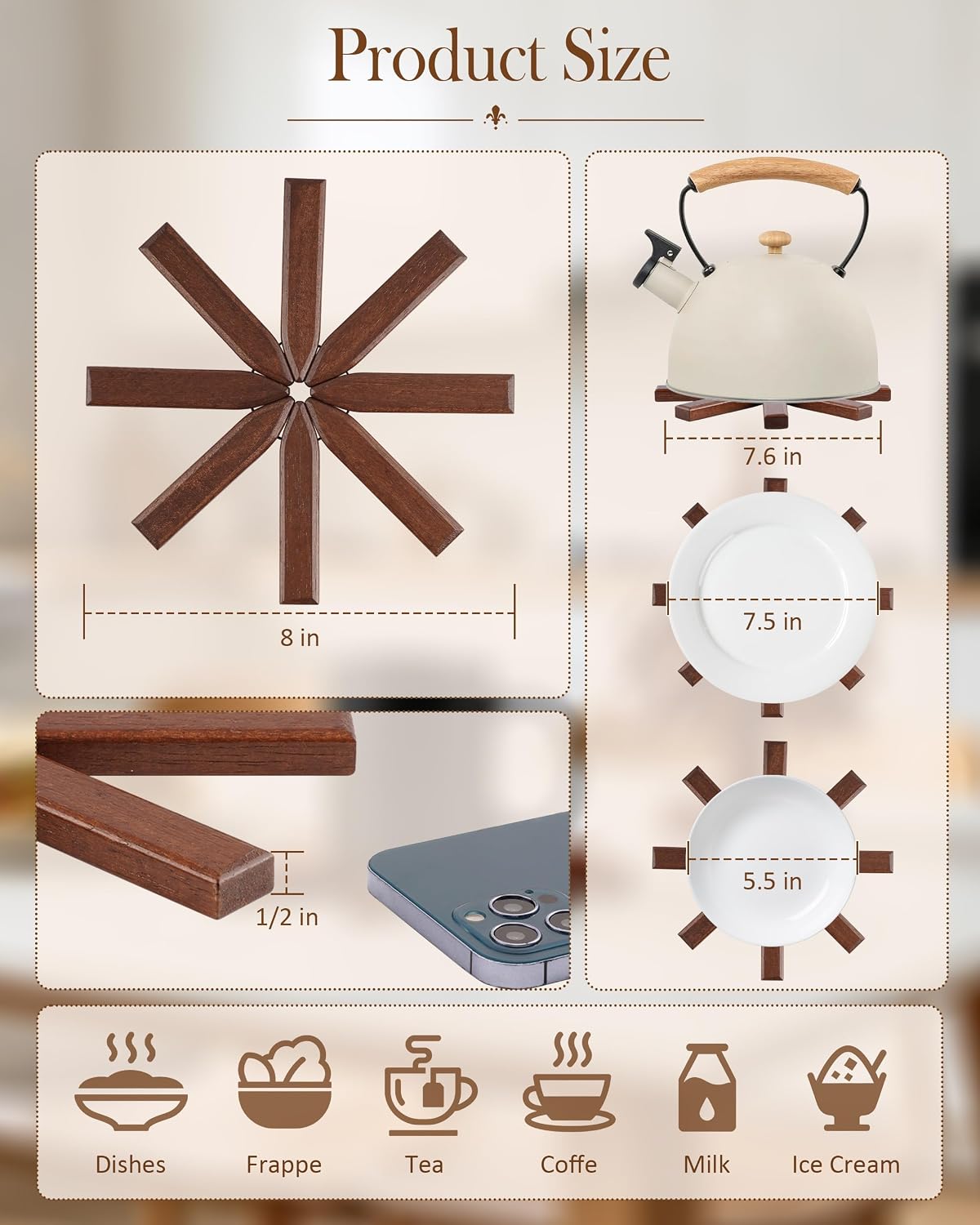
Size and Versatility: We all have different cookware. Some have tiny saucepans, others wield enormous roasting pans. The “one size fits all” approach rarely works here. Consider the typical sizes of your hot pots and pans. Do you need a single large trivet, or multiple smaller ones? The beauty of the stackable trivets with organizer is their flexibility; you can often use individual pieces for smaller items or combine them for larger ones. But this also means you need to be mindful of how many pieces you actually get and whether they truly form a cohesive larger unit. Don’t get caught short.
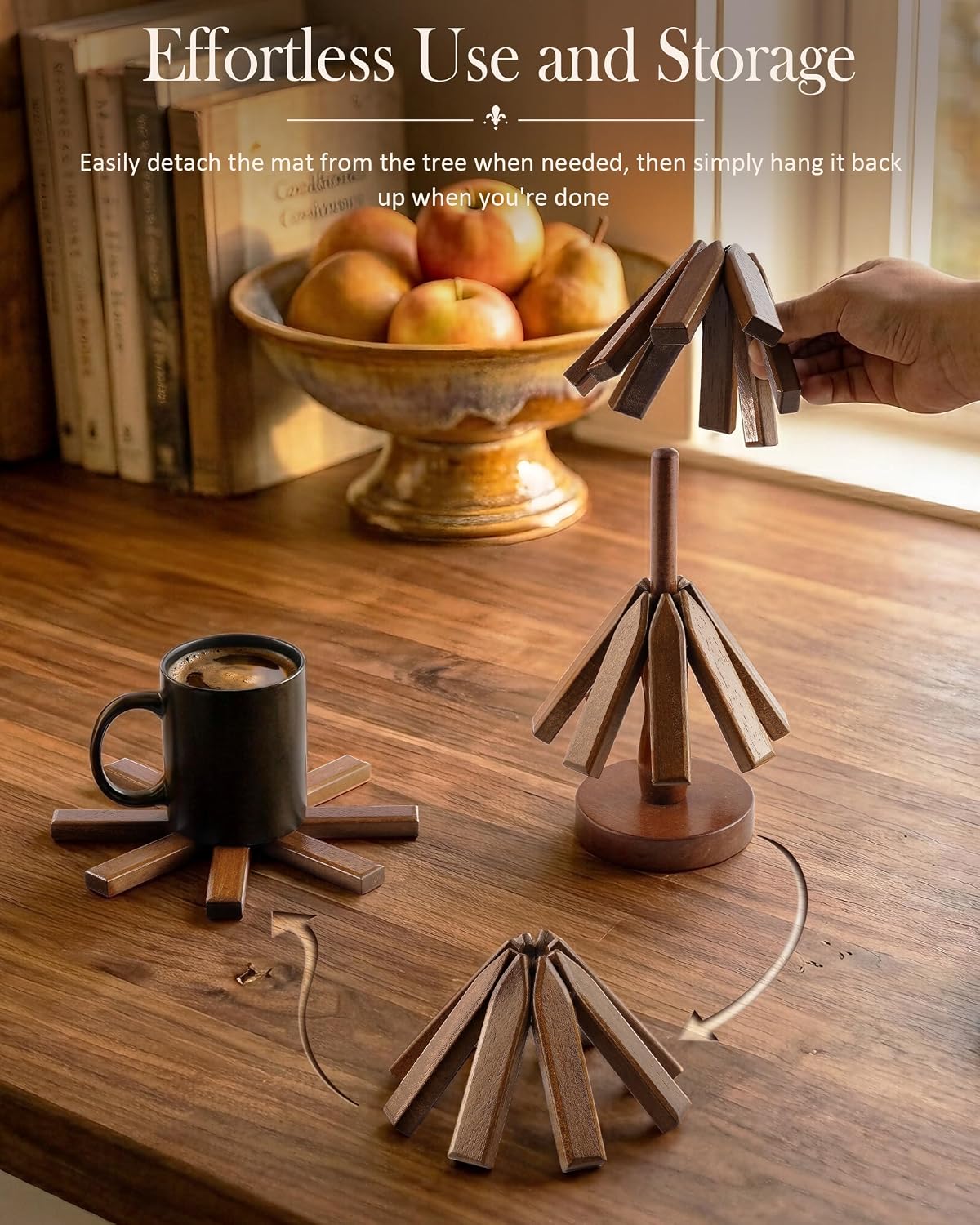
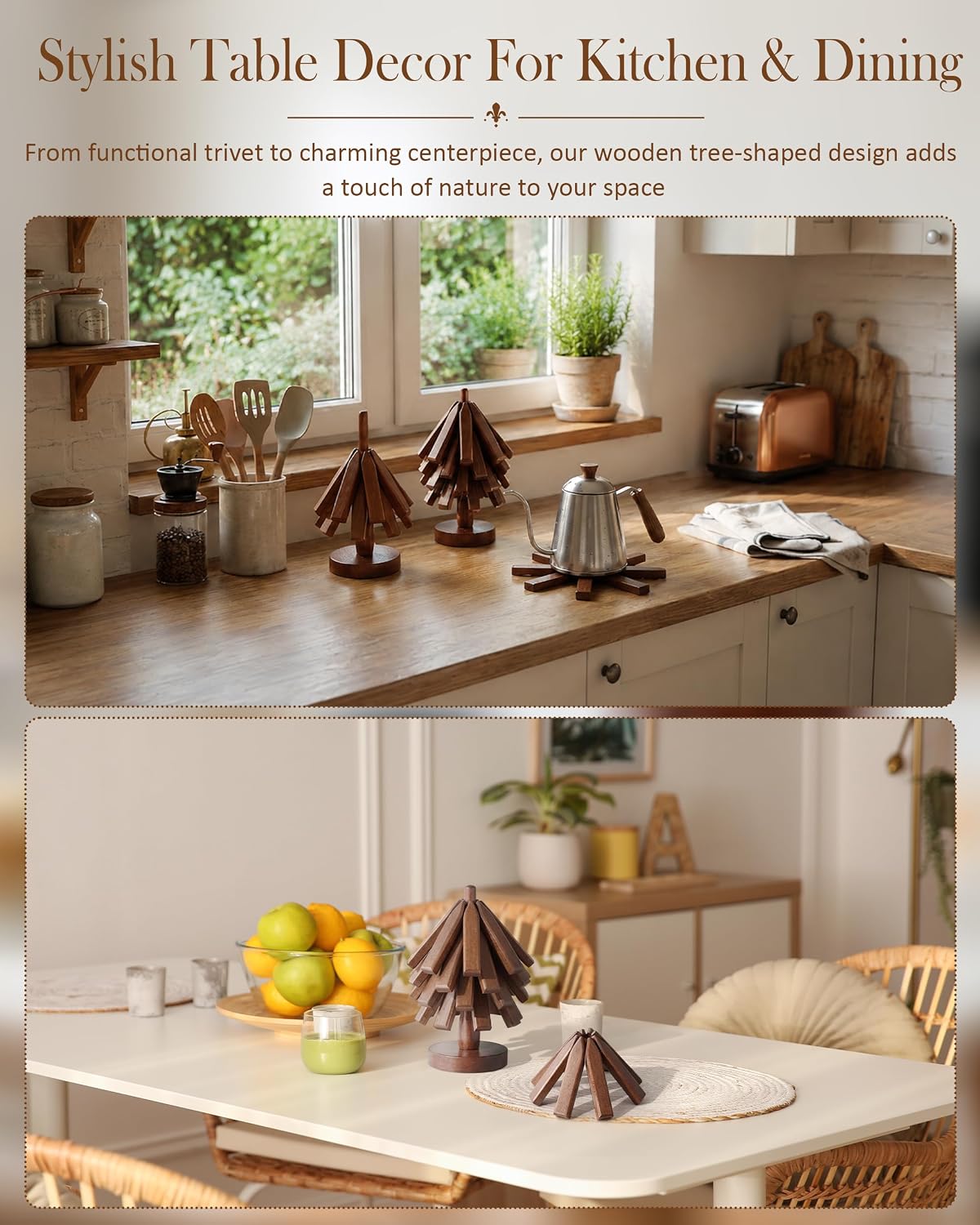
Storage and Organization: If your kitchen is anything like mine, every inch of counter space is precious. This is where those stackable trivets really shine. The Christmas tree-shaped stackable trivets with organizer designs, for instance, let you neatly tuck them away into a compact holder when not in use. This keeps things tidy and accessible. Otherwise, a bunch of loose hot pads can quickly become clutter. If storage isn’t an issue for you, then a larger, single-piece design might be perfectly fine. But for most of us, especially those with smaller kitchens, smart storage is a definite plus. A lot of people overlook this, honestly.
How to Match the Product to Your Situation
Your ideal wooden trivet really depends on how you cook and entertain. One size hardly ever fits all, you know? It’s about finding that sweet spot between utility and aesthetic appeal for your lifestyle.
The Everyday Cook: Practicality Reigns Supreme
You’re in the kitchen daily, whipping up meals for family, maybe even meal prepping. Your needs are simple: durability, reliable heat protection, and ease of use. You don’t need anything overly fancy or delicate. For you, the focus should be on robust wood types like acacia, and designs that offer maximum surface coverage and stability. A simpler, thicker set of wooden trivets that can take a beating from heavy pots and pans would be ideal. The ability to quickly grab and go, without fussing over intricate interlocking, is probably more valuable than a highly decorative piece.
The Entertainer: Presentation is Paramount (with a side of function)
You love hosting dinner parties, holiday gatherings, and Sunday brunches. Your dining table is often the star of the show, laden with multiple hot dishes. Here, aesthetics become a serious consideration. The Christmas tree trivet or the blossom shape trivet that comes as a stackable set? That’s your jam. Not only do they look attractive, acting as decorative wooden hot pads, but their modular nature means you can configure them to fit various platters and serving bowls. You want something that draws compliments, not just prevents burns. Just remember to ensure they’re still stable enough for a large, heavy serving dish. No one wants a spill mid-party.
The Minimalist/Occasional User: Less is More, But Quality Matters
Your kitchen is streamlined, and every item has its place and purpose. You might not use trivets every single day, but when you do, you need them to work efficiently and disappear discreetly afterward. Compact, stackable trivets with organizer are perfect for you. The smaller footprint of an integrated organizer means it won’t clutter your limited counter space. You’ll appreciate the understated elegance of natural wood grain and a design that feels intentional, not just an afterthought. Perhaps a single, well-crafted wooden coaster for your evening tea, alongside a larger, elegant stack for when the moment calls for it. No excess.
Trivet Types: A Quick Comparison
Different materials and designs offer distinct advantages, though we’re focusing on wood here, it helps to see what else is out there and why wood holds its own.
| Type/Tier | Best For | Price Tier | Key Feature | Watch-Out |
|---|---|---|---|---|
| Basic Wooden Slats | Everyday use, budget-conscious, practical | Budget-friendly | Simple, functional design, decent heat insulation | Can sometimes warp if exposed to extreme, prolonged heat or moisture; less stable. |
| Decorative Wooden (e.g., Christmas Tree, Blossom) | Entertaining, adding aesthetic flair, modular use | Mid-range | Stackable, interlocking pieces, visual appeal | Intricate designs might have more gaps, potentially reducing direct surface contact. |
| Thick Hardwood Blocks | Heavy-duty use, maximum durability, premium feel | Mid-to-premium | Superior heat resistance, very stable, long-lasting | Less airflow, can be bulky to store, fewer decorative options than modular types. |
| Cork or Felt Trivets | Light-duty items, delicate surfaces, quiet placement | Budget-friendly | Soft contact, non-scratch, good sound dampening | Lower heat resistance, can stain easily, not suitable for scorching hot pans. |
- Basic wooden slats get the job done without much fanfare. They are typically an affordable option, but their simple construction means they might not be the most stable or long-lasting under continuous high heat.
- Decorative wooden options, like the Christmas tree trivet or blossom shape trivet, truly shine when you want functionality that doubles as décor. Their stackable nature is a real perk for organization, though sometimes their complex shapes can mean slightly less direct contact with the table.
- Thick hardwood blocks are the workhorses; they can handle virtually anything you throw at them, offering substantial heat protection and impressive stability. However, their solid mass means they’re not always the most compact or airflow-friendly.
- Cork or felt trivets are fantastic for lighter items or where you need absolute silence placing things down, but they simply can’t stand up to the extreme temperatures that a proper hot pot can dish out.
Scenario-Specific Needs
Your kitchen life isn’t a single static picture. Different situations call for different solutions, even when it comes to something as straightforward as trivets.
Busy Weeknight Dinners:
When it’s Tuesday, you’re tired, and dinner needs to get on the table fast, you don’t want to mess around. You need trivets that are easy to grab, reliably protect your surfaces, and don’t require any assembly or thought. A few robust, single-piece hardwood hot pads or a readily available set of stackable ones in their organizer are key. Function over form, every time. You might even opt for multiple smaller ones you can quickly spread out for different serving bowls, rather than trying to puzzle together one large setup.
Holiday Feasts and Gatherings:
Now this is where the decorative wooden hot pads truly shine. Imagine Thanksgiving dinner: multiple steaming casseroles, a roast straight from the oven, gravy boats galore. You’re not just protecting your dining table; you’re setting a scene. Those Christmas tree trivet designs, or the upgraded 8-leaf blossom shape, provide a beautiful, cohesive look. Their modular nature allows you to arrange them perfectly for a long buffet or a round dining table, accommodating different serving dishes. Aesthetics absolutely matter here, complementing your spread and making the meal feel even more special.
Protecting Delicate Tabletops:
Some surfaces just require extra care. Maybe it’s a cherished antique table, a polished marble counter, or a glass-top dining set. For these, countertop safety is paramount, and you need heat protection that goes above and beyond. While wood offers a good barrier, you’ll want to ensure the trivets themselves don’t scratch. Look for designs with soft, non-slip feet – cork or rubber pads are common. And choose thicker, more substantial wood types, as they tend to transfer heat slower and resist warping better than thinner options. Don’t skimp here; a scratched or burned heirloom is a painful sight.
Common Mistakes Buyers Make
Even with something seemingly simple like trivets, there are pitfalls. You don’t want to learn these lessons the hard way.
- Ignoring Material Limitations: Folks often assume all wood is the same. It’s not. A thin bamboo wood coaster is just not built to handle a screaming hot cast iron pan fresh off the burner. Using it for that kind of extreme heat will likely lead to charring, warping, or worse, still damage your surface. Always consider the wood type and thickness against the heat intensity you’re dealing with.
- Underestimating Size Needs: Ever tried to balance a large casserole dish on a trivet meant for a small saucepan? It’s a recipe for disaster. One of the biggest mistakes is not thinking about the actual size of the hot pots and pans you typically use. Many beautiful decorative wooden hot pads are small. Make sure you have enough surface area for your average serving dishes, or invest in stackable trivets that can be expanded.
- Prioritizing Looks Over Function: It’s tempting to grab the cutest, most aesthetically pleasing Christmas tree trivet or blossom shape trivet you see. And sometimes, you get lucky and they perform well. But sometimes, a very intricate or delicate design can compromise stability or heat resistance. Always check the base, the thickness, and how it holds various items. A beautiful piece that lets your pot wobble is just frustrating.
- Neglecting Care and Maintenance: Wooden items, even trivets, need a little love. Throwing them in the dishwasher or letting them soak in water will drastically shorten their lifespan. A quick wipe-down, maybe an occasional oiling for natural wood, is all it takes. Forgetting this simple step means they’ll dry out, crack, or warp much faster.
Why/How/What Mini-Section
Why are wooden trivets so popular for kitchen accessories?
Wooden trivets hit a sweet spot between natural aesthetics and functional heat protection. They offer a warm, organic look that complements almost any décor, unlike some metal or silicone options that can feel a bit industrial. Plus, wood is a decent insulator, effectively preventing direct heat transfer from hot dishes to your delicate tabletops, keeping your dining table safe.
How do I properly clean and maintain wooden hot pads?
Keeping your wooden trivets in good shape is pretty simple. After use, just wipe them down with a damp cloth; avoid soaking them or putting them in a dishwasher. For any stubborn food residue, a little mild soap can help. Once they’re clean, let them air dry completely before storing them. Occasionally, especially for untreated woods, a rub-down with food-grade mineral oil can prevent drying and cracking.
What’s the real benefit of stackable trivets with an organizer?
The main draw of stackable trivets is their fantastic space-saving design and versatility. Instead of a jumble of individual hot pads cluttering your drawers, they condense into a neat, compact unit, often with a dedicated organizer. This makes them easy to store and access, while also offering the flexibility to use individual pieces for smaller hot pots or combine them into a larger surface for platters.
FAQ
Are wooden trivets safe for all hot items?
Mostly, yes. Wooden trivets provide good insulation for most hot dishes, casseroles, and serving bowls. However, for extremely high-heat items like a cast iron skillet straight from a scorching oven, a very thin wooden trivet might show some charring over time. Consider a thicker hardwood option for those kinds of temperatures.
Do wooden trivets leave marks on surfaces?
Generally, well-finished wooden trivets shouldn’t leave marks. The main concern is if they have rough, unfinished edges or if moisture gets trapped underneath, potentially leaving a water ring. Look for smooth finishes or even small felt/rubber feet to ensure optimal countertop safety.
Can I use a wooden trivet in the oven?
No, definitely not. Wooden hot pads are designed to protect surfaces from hot items, not to withstand oven temperatures themselves. The high, dry heat of an oven would quickly cause the wood to dry out, warp, crack, or even catch fire. Keep them away from direct oven heat.
How long do wooden trivets typically last?
With proper care, a good quality wooden trivet can last for many years, even decades. Thicker hardwoods tend to be more durable than thinner bamboo. Regular cleaning and occasional oiling will significantly extend their lifespan, preventing issues like cracking or warping.
Are natural wood trivets better than bamboo options?
It depends on your priorities. Natural hardwoods (like acacia or walnut) generally offer superior density, heat protection, and longevity compared to typical bamboo. Bamboo is often more budget-friendly and sustainable, but can be less robust. For heavy-duty use, a solid natural hardwood is often a stronger choice, while bamboo works well for lighter hot pots and general use.
Final Recommendation
Choosing the right wooden trivets isn’t about finding the best one, it’s about finding the best one for you. If you’re someone who loves to host and wants to combine elegant dining table presentation with robust heat protection, then a set of decorative wooden hot pads, especially those Christmas tree-shaped stackable trivets with organizer or the blossom shape trivet designs, will serve you beautifully. They offer the versatility to adapt to various serving needs while tidying away neatly afterward.
For the everyday cook prioritizing sheer functionality and durability, a simpler, thicker set of wooden trivets made from a substantial hardwood like acacia will be a more reliable workhorse. You want minimal fuss and maximum countertop safety from your hot dishes, and these robust options deliver that without complaint. Remember, the goal is always to keep your surfaces pristine, so pick a product that stands up to the heat – literally.
#Wooden #Trivets #Tree #Hot #Dishes #Wood #Coaster #Hot #Pots #Pans #Christmas #TreeShaped #Stackable #Trivets #Organizer #Upgraded #8Leaf #Blossom #Shape #Decorative #Wooden #Hot #Pads #Pack