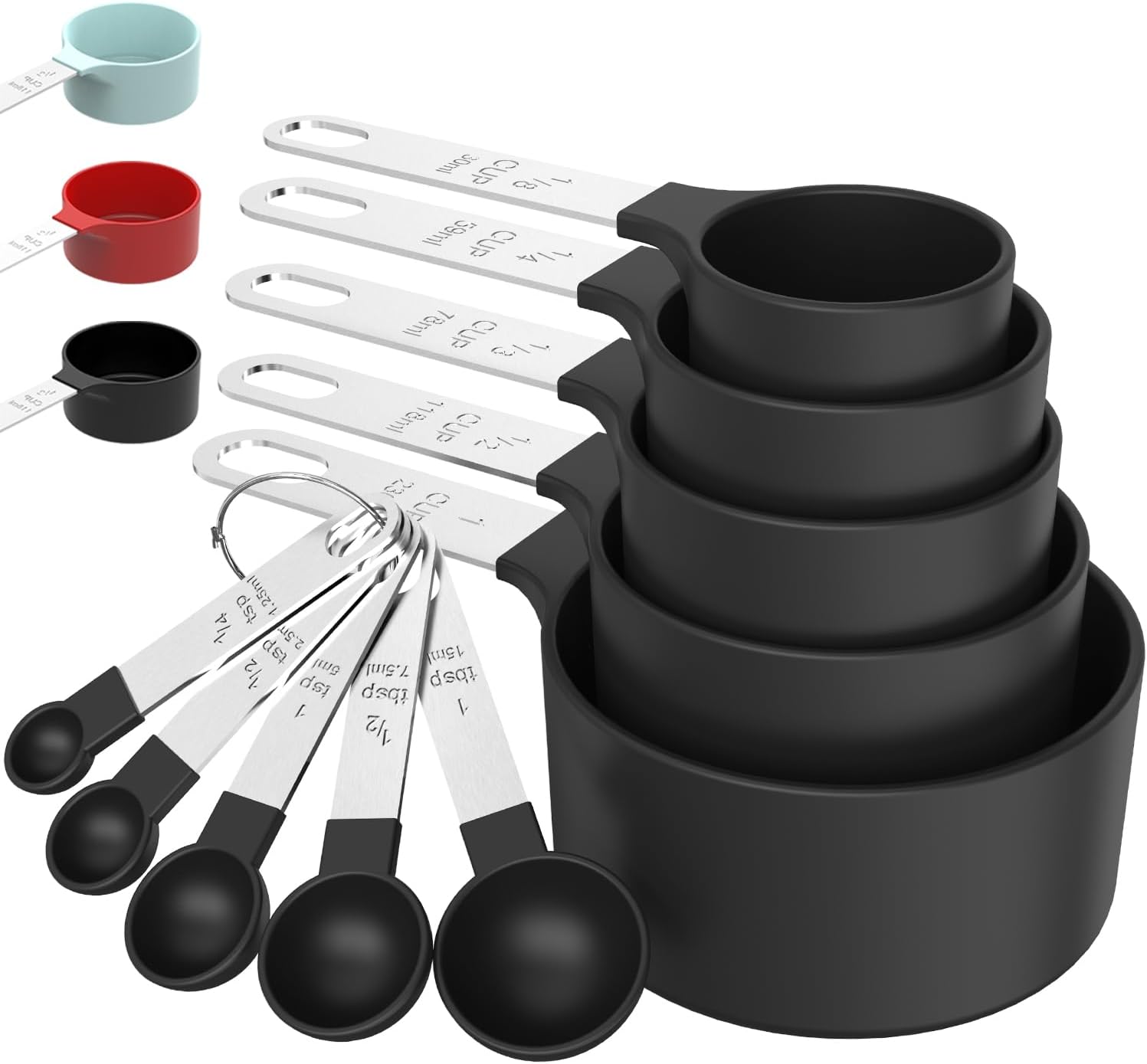
Unpacking the Value of a Measuring Cups & Spoons Set: Stackable, Stainless, and Worth It?
Anyone who spends time in the kitchen, whether you’re a seasoned baker or just trying to get dinner on the table without burning it, knows the drill: precise measurements matter. We’re digging deep into what makes a good measuring cups set, specifically those stackable, nesting designs with stainless steel handles that pop up everywhere. This guide is for the savvy shopper tired of flimsy plastic and wondering if shelling out for a more robust kitchen gadget is genuinely worth the investment.
Quick Answer
For most home cooks and bakers, a mid-range, stackable measuring cups and spoons set with stainless steel handles offers the sweet spot between durability, accuracy, and reasonable cost. While budget options might suffice for occasional use, the improved feel and longevity of a slightly pricier, robust set generally pay off quickly, especially for regular cooking and baking.
What to Look For (The Buying Criteria)
Choosing the right set isn’t rocket science, but ignoring a few key factors can lead to frustration, or worse, a ruined recipe. Here’s what I look at when evaluating these essential kitchen tools.
1. Material and Build Quality: The Durability Question
This is perhaps the biggest differentiator, and frankly, it’s where many budget sets fall apart – sometimes literally. You’ll mostly find plastic, stainless steel, or a combination.
- Plastic: Often budget-friendly. They come in vibrant colors, which is fun. But, they can stain, absorb odors, and become brittle over time, leading to cracks or fading measurement markings. Ever had a handle snap off a plastic cup mid-scoop? It’s profoundly annoying. Cheap plastic just feels… well, cheap. And those embossed measurements? They can wear down in a dishwasher or with vigorous scrubbing.
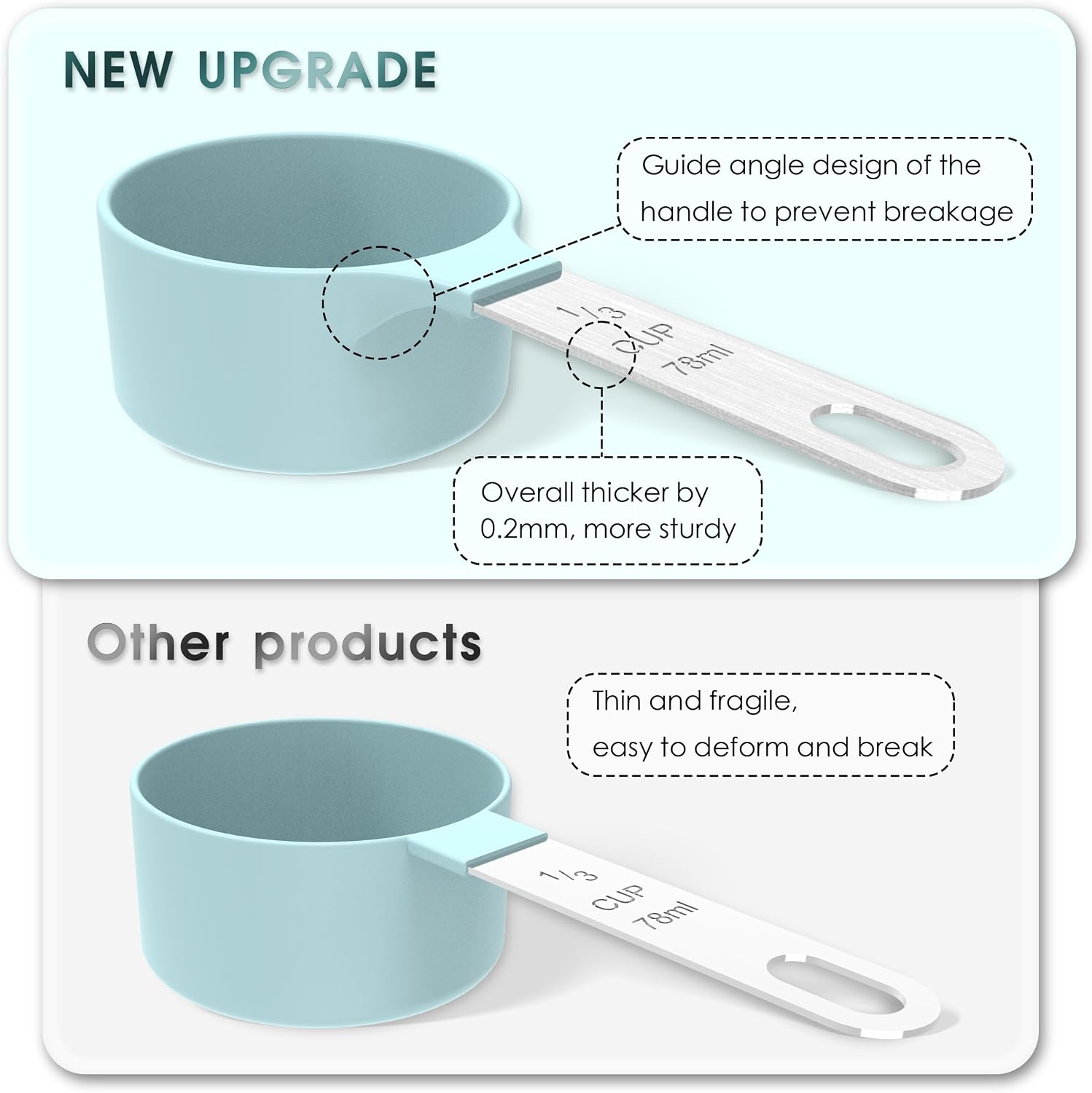
- Stainless Steel: The gold standard for durability. It resists rust, stains, and odors, and generally handles the rigors of a busy kitchen much better. A solid stainless steel handle that’s properly riveted or molded into the cup is a huge plus for longevity and comfort. The markings are typically etched, meaning they won’t fade. But, they can dent if dropped on a hard floor. Also, watch out for thinner gauge stainless steel; some budget stainless sets can feel flimsy, almost tin-like. Thicker material just feels better in hand. It signals quality, you know?
2. Accuracy and Measurement Markings: Getting It Right
What’s the point of a measuring cup if it’s not accurate? This sounds obvious, but not all sets are created equal.
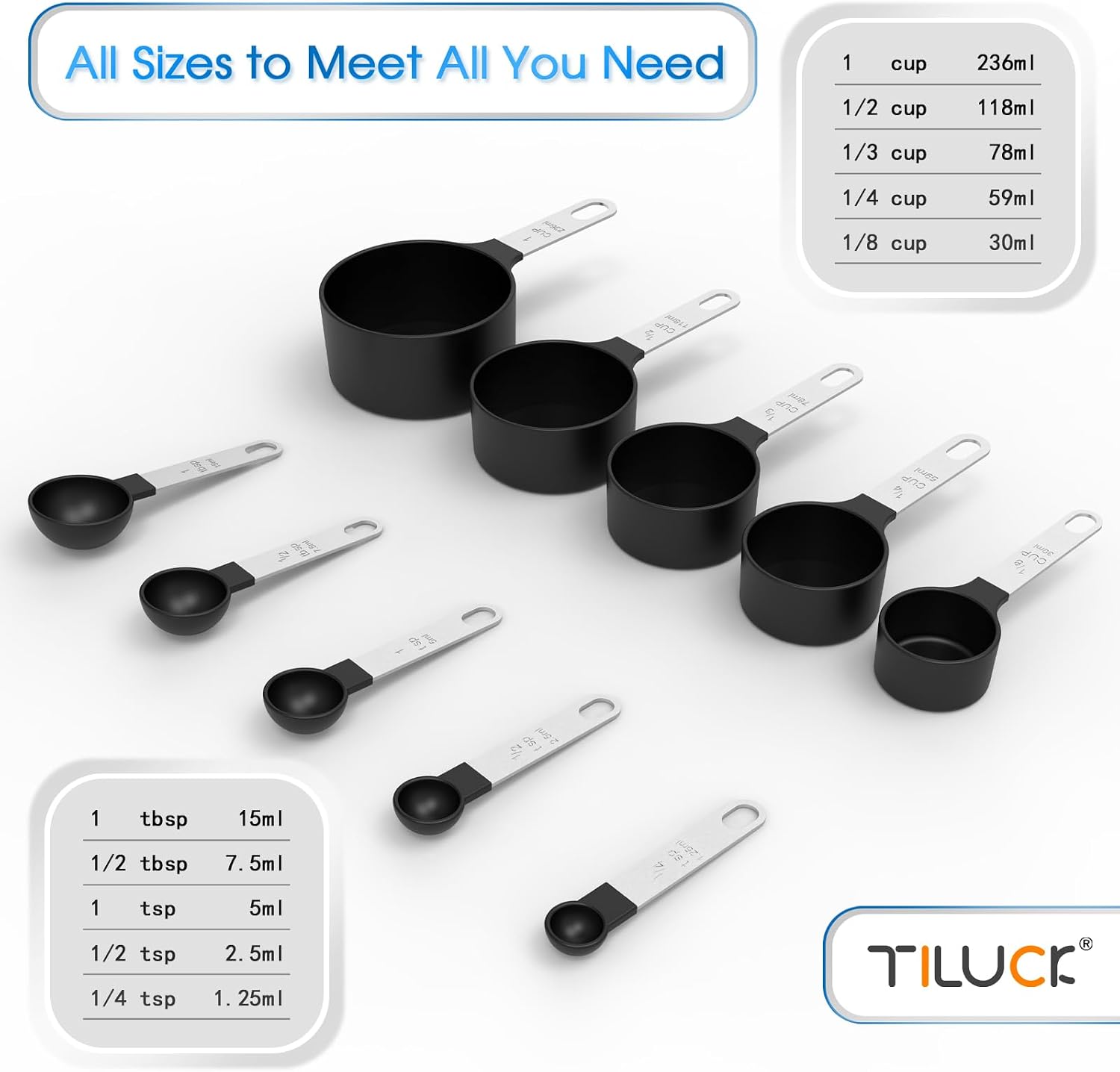
- Standardized Sizes: Ensure the set includes the common increments: 1/4 cup, 1/3 cup, 1/2 cup, and 1 cup, often with corresponding spoon sizes (1/4 tsp, 1/2 tsp, 1 tsp, 1 tbsp). Some sets throw in a 2/3 cup or 3/4 cup, which can be surprisingly handy for specific recipes.
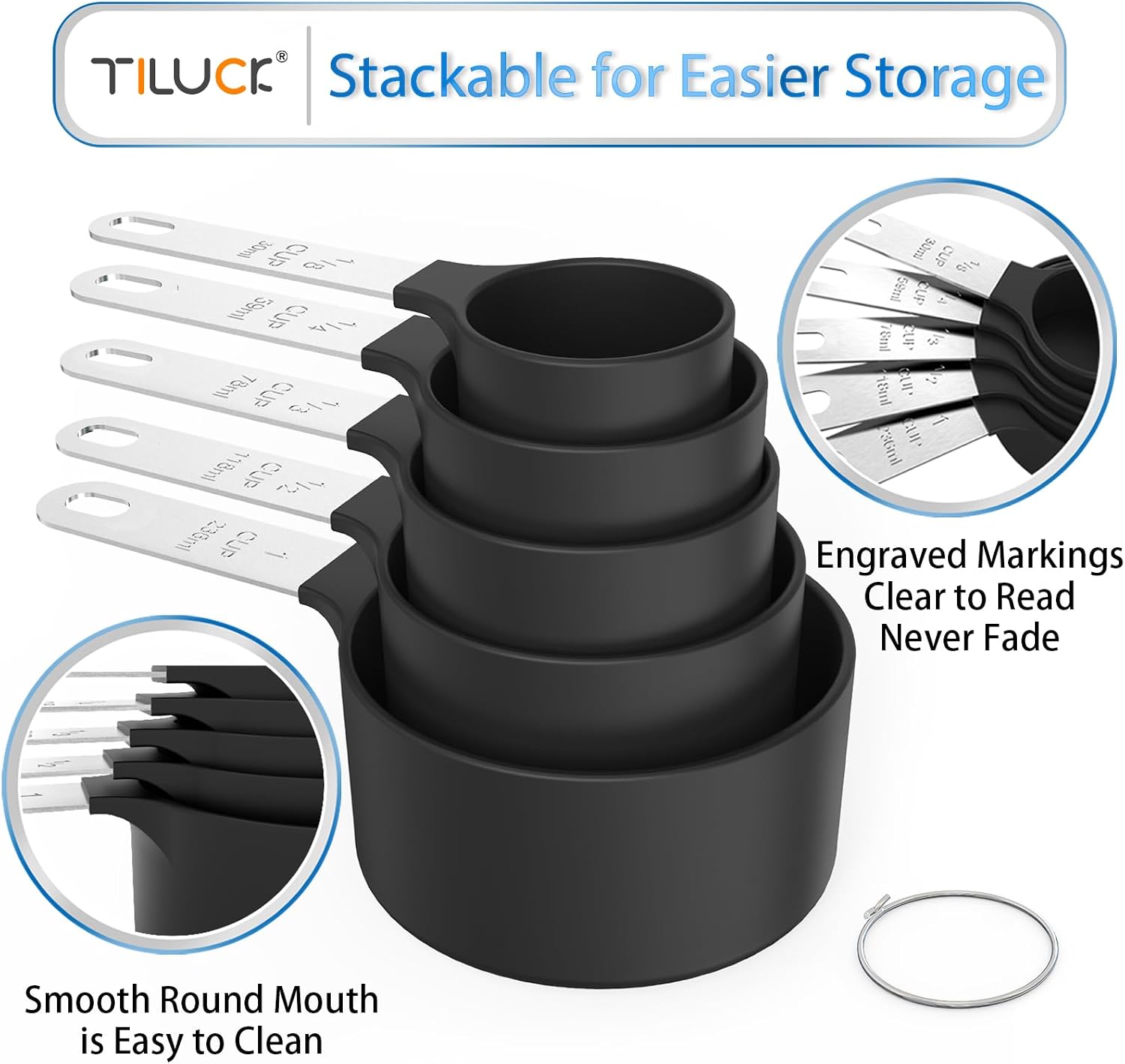
- Legibility: The markings need to be easy to read and permanently affixed. Etched markings on metal sets are usually superior to printed ones on plastic, which tend to disappear over time. Contrast is important too. Dark markings on a light surface, or vice versa. Some sets even feature both metric and imperial measurements, which is a lifesaver if you follow international recipes.
3. Stackability and Storage: The Nesting Advantage
Kitchen space is precious. Seriously, who has an endless supply of drawer space? A stackable design or nesting measure cups are non-negotiable for tidiness and ease of access.
- Compactness: Good nesting sets slot together snugly, often held by a ring, minimizing clutter. This is especially important for smaller kitchens or anyone aiming for a minimalist approach.
- Ease of Separation: While nesting is great, you don’t want to wrestle them apart every time. Look for sets where the cups and spoons separate easily from their holding ring but stay together when stored. Some rings are simple clips; others are screw-on. Just make sure it works for you. A common complaint with super-tight nesting sets is the struggle to pull one cup out without pulling the whole stack. That’s a hassle we don’t need.
4. Design and Ergonomics: Comfort in Your Hand
You’ll be holding these. A lot.
- Handle Comfort: A well-designed stainless steel handle isn’t just about durability; it’s about grip. Thin, flat handles can dig into your hand when scooping dense ingredients like flour or peanut butter. Look for wider, more rounded, or ergonomically shaped handles that offer a secure, comfortable grip. Some even have silicone inserts for extra traction.
- Balance: A cup that feels balanced in your hand, even when full, is less likely to tip or spill. This might sound minor, but try scooping four cups of flour with an unbalanced cup. You’ll see what I mean.
5. Cleaning and Maintenance: The Aftermath
Nobody likes scrubbing tiny nooks and crannies after baking.
- Dishwasher Safe: Most modern sets claim to be dishwasher safe. Stainless steel generally is, but some plastics might warp or lose their markings with high heat. Always check.
- Crevices: Look for smooth designs without too many tight seams or decorative elements that can trap food particles. Simple, clean lines are often easier to clean.
6. Specialty Features: What Else is There?
Some sets go a bit beyond the basics.
- Scrapers or Levelers: Some include a straight edge or a dedicated tool for leveling off dry ingredients, which can be super useful for accurate measurements.
- Extra Sizes: As mentioned, 2/3 cup or 3/4 cup. Maybe even a dash or pinch spoon. Think about what you bake or cook most often. Is that extra spoon really going to change your life? Probably not, but it could save you from doing some quick mental math.
How to Match the Product to Your Situation
Your ideal measuring cups set depends entirely on how, and how often, you plan to use it. No single set is “best” for everyone.
1. The Casual Cook/Occasional Baker:
- Who you are: You whip up dinner a few times a week, maybe bake cookies for a holiday, or follow a recipe sporadically. You’re not looking to invest heavily in specialized kitchen gadgets.
- What you need: A reliable, basic set that’s easy to store. You probably don’t need the absolute toughest material or every obscure measurement.
- My take: A mid-range plastic set or a basic thin-gauge stainless steel set will probably serve you well. Focus on good stackable design and clear, embossed plastic markings or etched stainless steel. Don’t overthink it. You’re not trying to open a bakery.
2. The Regular Home Chef/Avid Baker:
- Who you are: You’re in the kitchen several times a week, experimenting with new recipes, baking bread, or making elaborate meals. You appreciate quality tools that stand up to frequent use.
- What you need: Durability, accuracy, and comfort are paramount. You’ll benefit from a set that feels substantial and won’t fail you mid-recipe.
- My take: You should absolutely lean towards a high-quality stainless steel set. Look for thick-gauge metal, robust stainless steel handles, and deeply etched measurements. The upfront cost is a bit more, but it’ll last for years, possibly decades. You’ll notice the difference in how they feel, how they scoop. It’s a joy to use good tools.
3. The Precision Enthusiast/Recipe Developer:
- Who you are: You demand exacting accuracy, maybe you scale recipes up or down often, or you’re just a stickler for detail. You treat your kitchen like a lab.
- What you need: The most precise measurements available, often with both imperial and metric options. You might also appreciate specialty sizes or built-in leveling features.
- My take: Go for a premium, high-grade stainless steel set, potentially one designed with specific weight tolerances in mind (though this is less common for dry measures). Consider a set that explicitly offers both metric and imperial markings for maximum versatility. Sometimes a second, smaller set of tiny spoons (dash, pinch, smidgen) complements a primary set beautifully.
Measuring Cups & Spoons Set Comparison
| Type/Tier | Best For | Price Tier | Key Feature | Watch-Out |
|---|---|---|---|---|
| Basic Plastic | Occasional use, minimal baking, budget-focused | Budget | Lightweight, inexpensive, often colorful | Prone to staining, warping, fading markings, less durable handles. |
| Mid-Range SS | Everyday cooking & baking, good value | Mid-range | Durable stainless steel, clear etched markings | Handles can sometimes be a bit thin; less ergonomic than premium. |
| Premium SS | Avid bakers, demanding home chefs, longevity | Premium | Heavy-gauge steel, ergonomic handles, superior | Higher initial investment; may be overkill for very occasional users. |
- Basic Plastic: These are your entry-level options. They work for simple tasks, but don’t expect them to last forever, especially if they see a lot of dishwasher action or heavy use.
- Mid-Range Stainless Steel: This is where many people find their sweet spot. They offer significantly better durability and aesthetic than plastic, often featuring robust stainless steel handles and clear measurements that won’t fade.
- Premium Stainless Steel: When you want tools that feel substantial and professional. These sets often boast thicker metal, highly ergonomic grips, and impeccable finishing, making them a pleasure for constant cooking and baking.
Scenario-Specific Mini-Sections
For the Baker Who Can’t Stand Clutter
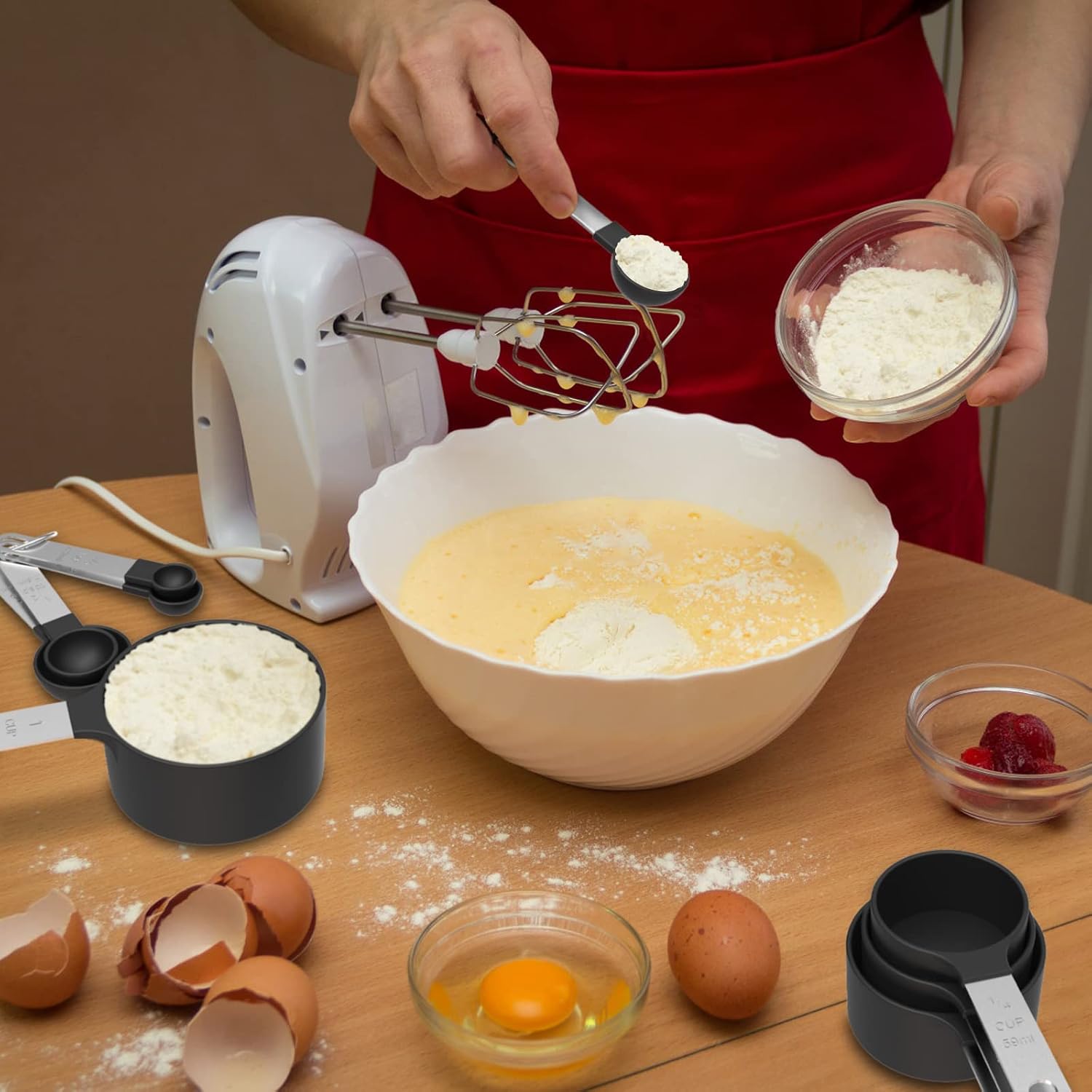
Let’s face it, our kitchens can get messy. When you’re dealing with flour, sugar, and various culinary tools, the last thing you want is a drawer full of jumbled measuring cups. This is where a truly nesting measure cups set with a smart stackable design becomes a hero. I’ve seen kitchens where the measuring cups just live in a pile, completely disorganized. That’s a waste of time and space. A good stackable set, especially one with a connecting ring, means you grab one piece and have the whole set, neatly contained. It’s just so much less frustrating when you’re mid-recipe and need that specific size.
For the Cook Who Values Consistency
Maybe you’ve got a family recipe you make every Sunday, or you’re on a strict nutrition plan. Consistency isn’t just nice; it’s necessary. This means you need tools that are not only accurate but stay accurate. Those cheap plastic cups that warp slightly in the dishwasher? They’re going to throw off your measurements eventually. A sturdy stainless steel set ensures that your 1/2 cup is always a 1/2 cup, even after countless washes and uses. This reliability builds confidence in your cooking and leads to predictable, delicious results. No more wondering why Grandma’s cookies just don’t taste the same when you make them.
For the Small-Kitchen Dweller
Living in an apartment or a smaller home often means kitchen real estate is a luxury. Every kitchen gadget needs to earn its spot. This is where the compact nature of a well-designed, stackable cups and spoons set pays dividends. If your current set takes up half a drawer, it might be time for an upgrade. Look for something that truly nests tightly, perhaps even with a carabiner-style clip that lets you hang them inside a cabinet door. Maximizing vertical space or tightly packed horizontal space can make a huge difference in the perceived size and functionality of a small kitchen. It’s not about magic, it’s about smart design.
Common Mistakes Buyers Make
1. Prioritizing Price Over Material: It’s tempting to grab the cheapest measuring cups set you see. But if it’s flimsy plastic that cracks after three months or markings that wash off, you’ll end up replacing it sooner, costing you more in the long run. Durability has a price, and it’s often a worthwhile one.
2. Ignoring Handle Comfort: Many shoppers don’t think about ergonomics until their hand aches from scooping brown sugar with a thin, sharp-edged handle. A comfortable, substantial handle, especially a well-integrated stainless steel handle, makes a huge difference in daily use. Don’t underestimate this.
3. Overlooking Storage and Stackability: You think you have space. You don’t. A sprawling set that doesn’t nest well will quickly become a nuisance, cluttering drawers or taking up valuable counter space. Always consider how it will fit into your existing kitchen setup. A disorganized kitchen is a frustrating kitchen.
4. Forgetting About Cleaning: Some sets have intricate designs or tight crevices that are a nightmare to clean by hand, and aren’t truly dishwasher safe. If you hate handwashing, make sure your chosen set is simple in design and genuinely holds up to machine washing.
Why/How/What Mini-Section
Why are stainless steel handles important for a measuring cups set?
A robust stainless steel handle is crucial for longevity and user comfort. Plastic handles on measuring cups are notorious for cracking or snapping off, especially when scooping dense ingredients. Metal handles provide a much stronger connection to the cup, resisting breakage and offering a more secure, comfortable grip that won’t flex under pressure. They also tend to look sharper, a small but nice bonus.
How do I ensure my nesting measure cups stay together in the drawer?
Many nesting measure cups sets include a removable ring or clip to keep them organized. The trick is to actually use it! Once you’re done with your cooking and baking, clean and dry the individual cups, then thread them back onto their designated ring. This not only keeps them together but also makes them easier to find when you need them for your next recipe. Some rings are more robust than others, so pay attention to the connection mechanism.
What’s the real benefit of a stackable design for kitchen gadgets?
The real benefit of a stackable design is maximizing precious kitchen real estate. Instead of having individual cups and spoons scattered or awkwardly piled, a stackable set consolidates them into a single, compact unit. This frees up drawer space, reduces clutter, and ensures you can quickly grab the entire set of kitchen gadgets whenever a recipe calls for precise measurements, streamlining your prep work.
FAQ
Are black measuring cups really any different from other colors?
No, the color (Black) usually refers to the handle’s silicone grip or the plastic itself, not the core function. It’s purely an aesthetic choice. Some cooks prefer black for a sleek look that matches other kitchen gadgets, while others might choose brighter colors for easy visibility.
Can I wash my measuring cups and spoons set in the dishwasher?
Most measuring cups set made from stainless steel are perfectly fine in the dishwasher. If your set is plastic, check the manufacturer’s guidelines; some plastics can warp or fade under high heat, especially cheaper ones. For etched markings, washing shouldn’t be an issue.
How do I keep my measuring cups accurate over time?
Accuracy largely depends on the initial quality and preventing damage. Avoid dropping metal cups on hard surfaces, which can dent them. For plastic, keep them out of extreme heat. Always use a flat edge to level off dry ingredients for consistent measurements.
Why do some sets include a 2/3 cup or 3/4 cup?
These less common increments are included to simplify recipes that frequently call for them, reducing the need for combination measurements (e.g., two 1/3 cups to make 2/3 cup). They’re a convenience feature, not a necessity, but can save a step during intense baking.
Is a connected ring for the measuring cups a good idea?
For most people, yes. A connected ring helps keep all your nesting measure cups and spoons together, preventing them from getting lost in a chaotic drawer. It simplifies storage and retrieval, making your prep work more efficient. Just ensure the ring mechanism allows for easy removal and reattachment.
Final Recommendation
For the vast majority of home cooks and bakers, the sweet spot lies squarely in a high-quality, mid-range to premium stainless steel measuring cups set. These sets provide exceptional durability, ensuring your investment lasts for years of consistent cooking and baking. The robust construction, especially with well-integrated stainless steel handle designs, resists the common pitfalls of flimsy plastic—no more broken handles or faded markings.
If you’re only whipping up a recipe once in a blue moon, a basic plastic set might suffice for now. But honestly, for anyone who spends regular time in the kitchen, the enhanced feel, reliable accuracy, and enduring quality of a solid stainless steel set are absolutely worth the slightly higher initial cost. It’s a tool you’ll use almost every day, and choosing one that makes your prep work easier and more enjoyable is simply smart thinking.
#Measuring #Cups #Spoons #Set #Stackable #Cups #Spoons #Nesting #Measure #Cups #Stainless #Steel #Handle #Kitchen #Gadgets #Cooking #Baking #Black