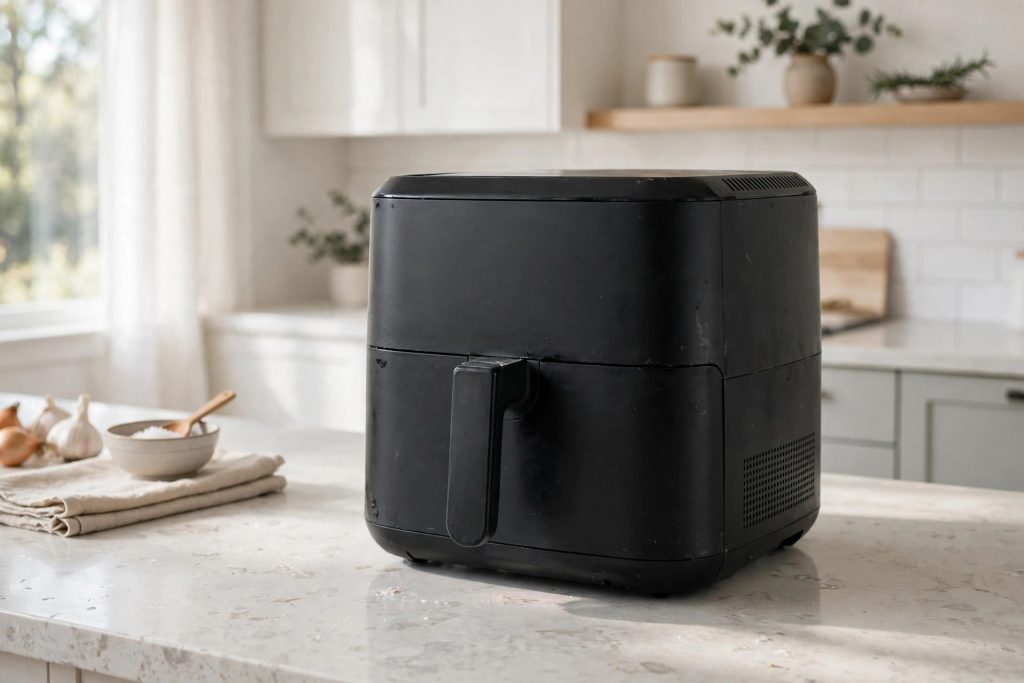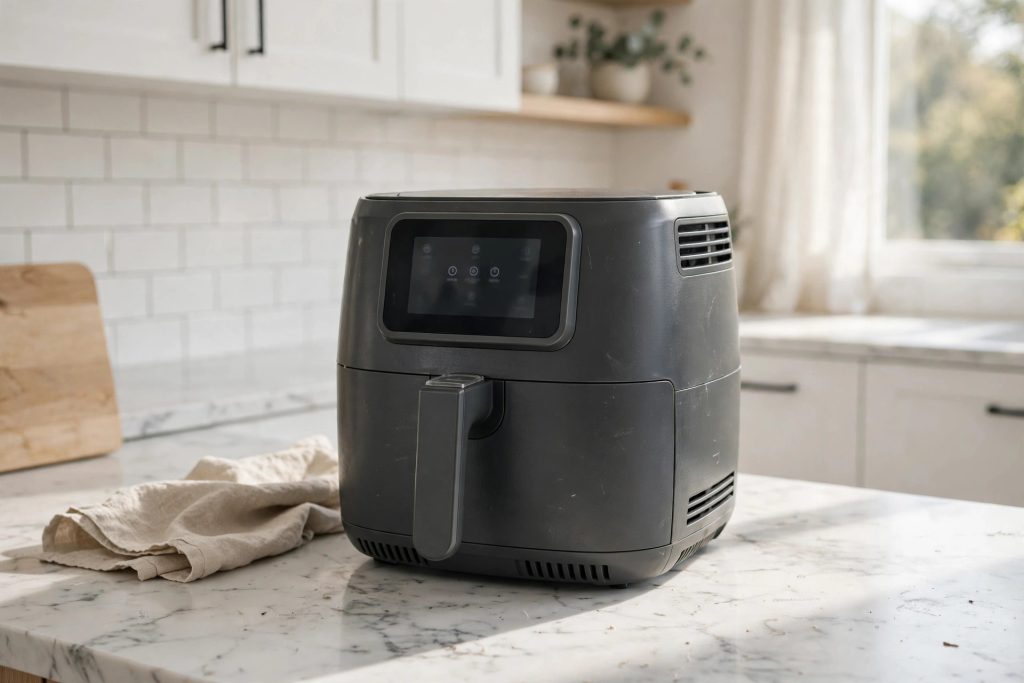
Returns teach you the order in which people fall out of love with an appliance, and with big countertop ovens the order is almost always the same. First the footprint, quietly, in the first week, a tape measure appearing next to the machine like a doctor next to a bed. Then the doors. Then, months later and usually in January, the capacity number, when the holiday bird or the party tray meets the actual rack and somebody finally does the math the box never encouraged. The Emeril Lagasse French door air fryer toaster oven, the extra-large 26-quart one with the two doors that open together off a single handle pull, is a good oven that has been returned for every one of those reasons, and I know because I have processed the paperwork on its category for years and the reasons repeat like weather.
Start with the footprint, since it starts there in real life too. This is a wide, deep box of a machine, and the depth is the number people underestimate, because the doors need their swing and the back needs clearance for heat, and a standard counter is twenty-four inches deep before the backsplash starts asking questions. On a deep counter in a big kitchen, none of this matters. On the counter in a galley kitchen, the oven moves in like a tenant who also expects the hallway. Measure depth first, then width, then the height under your cabinets, in that order. Width is the number in the listing photos. Depth is the number in the return forms.
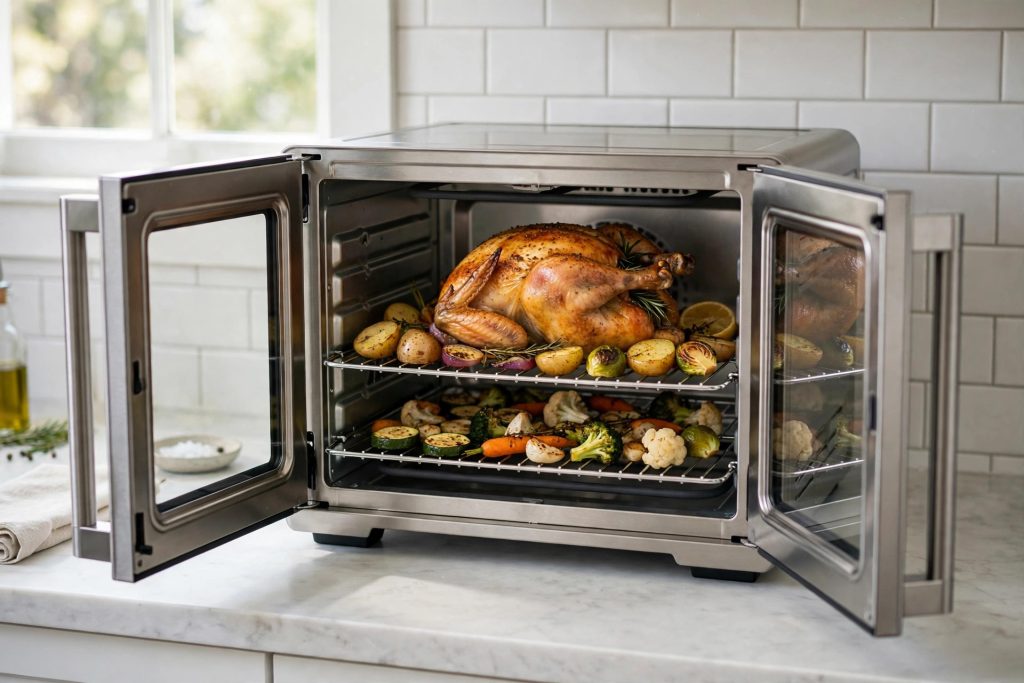
The French doors themselves are the second act. One handle, both doors, and the charm is real: you can open it with a wrist while holding a tray, no drop-down door catching drips and burning your forearm’s inner real estate. The failure mode is also real. The doors meet in the middle, and the seal along that meeting line is where heat leaks and where crumbs migrate, and an oven door you open forty times a month will tell you about its alignment by month six in the form of one side sitting a hair proud. Not broken. Just a hair proud, forever, in the way of all two-door things, from cabinets to cars.
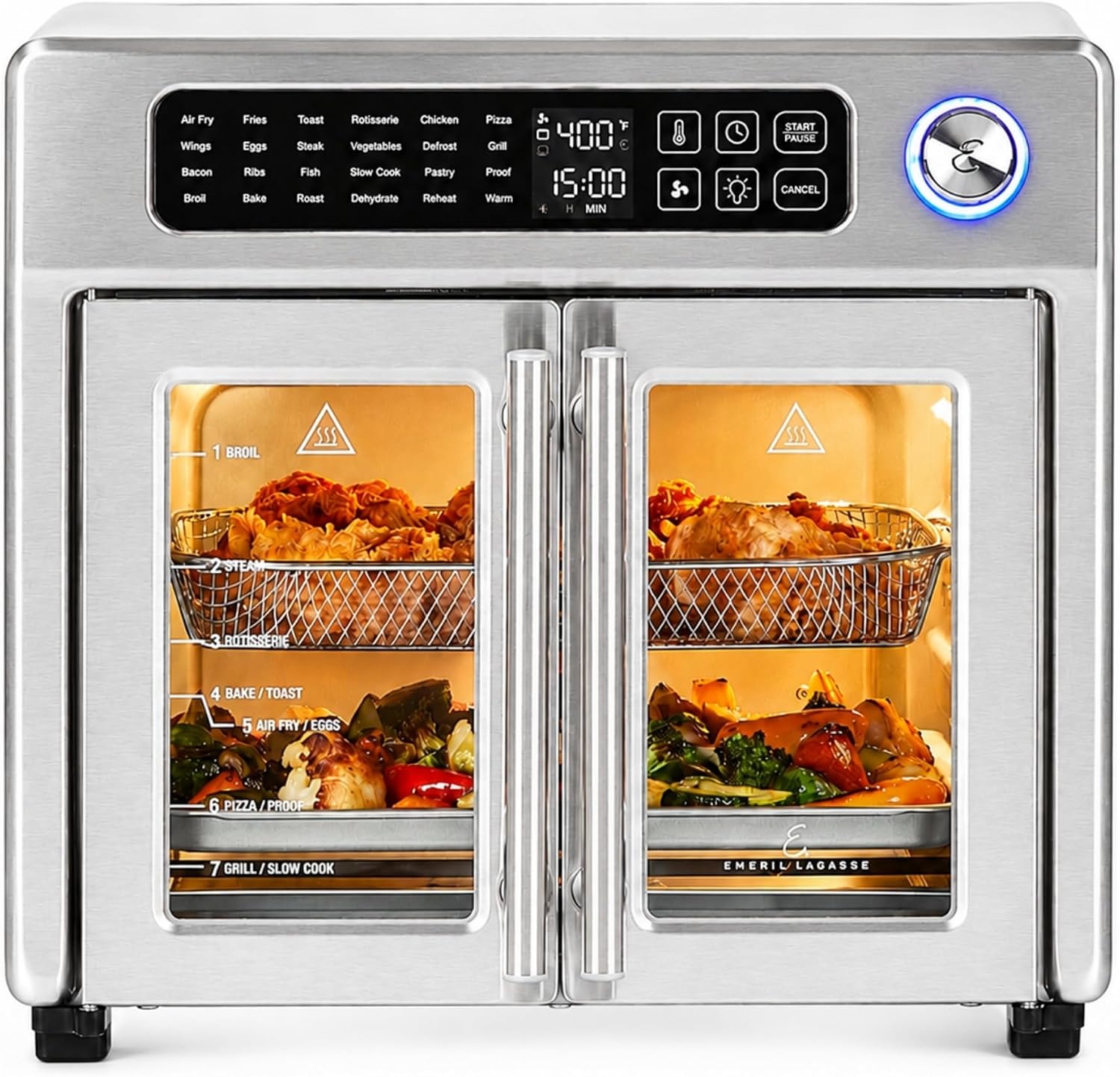
Then the capacity, the slow third act. Twenty-six quarts counts the whole cavity, floor to ceiling, including the space under the rack that no food will ever occupy, which is legal and standard and still manages to surprise people holding a quarter sheet pan. The usable truth: a 12-inch pizza fits, a whole chicken fits, a 13-inch pan is a negotiation and a true quarter sheet is a coin toss depending on handles. Every oven in this class plays the same counting game. This one is not worse. It is just the one with its name on the return label I kept reading.
Twenty-four cooking functions, the box says, and the returns desk translation is that functions are combinations. Air fry, bake, broil, toast, roast, dehydrate, a handful of honest modes, and the rest are time-and-temperature presets wearing their own buttons. Nobody returns an oven because a preset existed. They return it because twenty-four raised an expectation of twenty-four different machines, and expectation, not temperature, is what this category actually sells.
24 preset functions, 7 accessories, fits a 12-inch pizza and a whole chicken
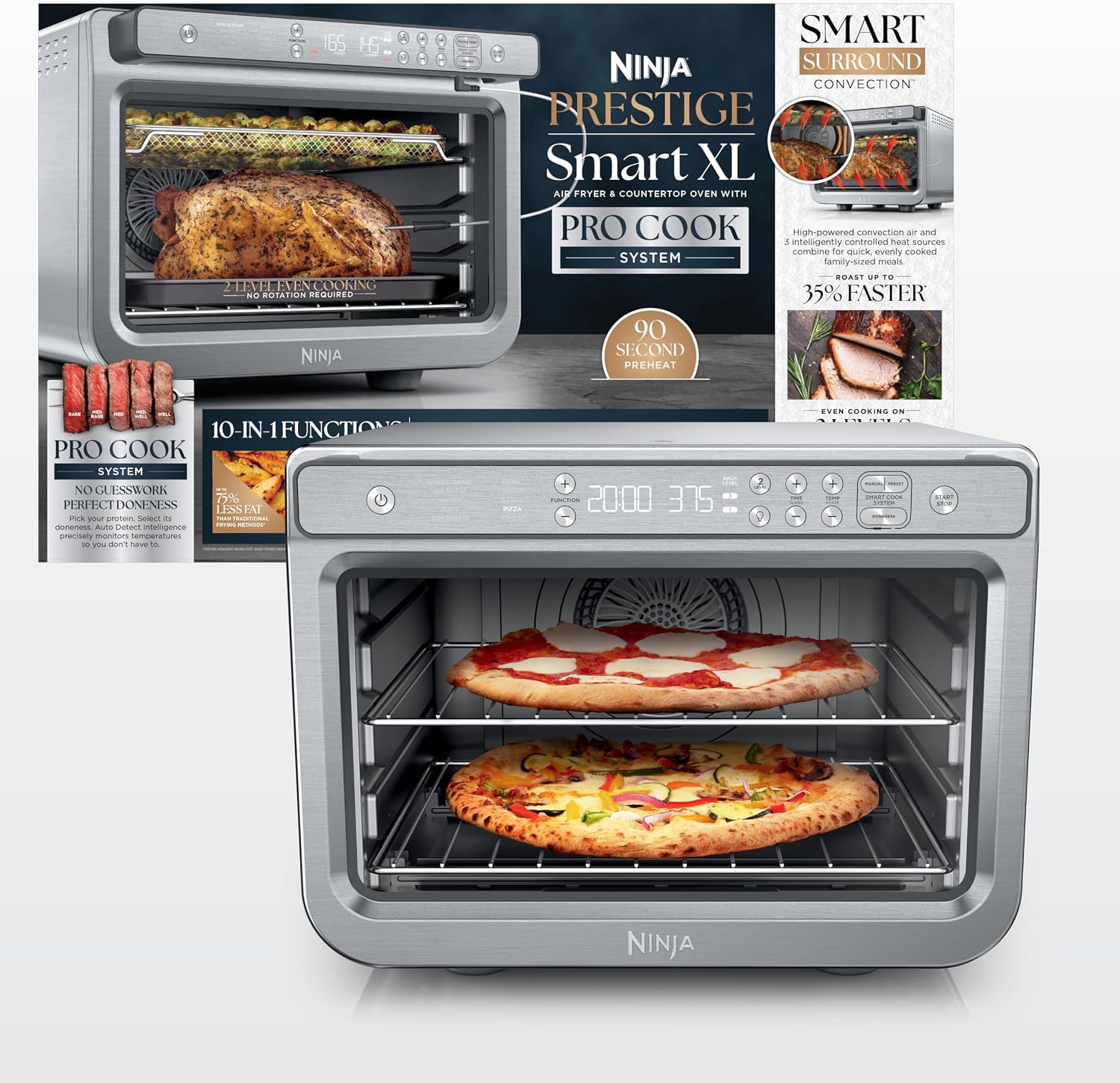
The drop-door rival – 10-in-1 with a leave-in thermometer for roasts
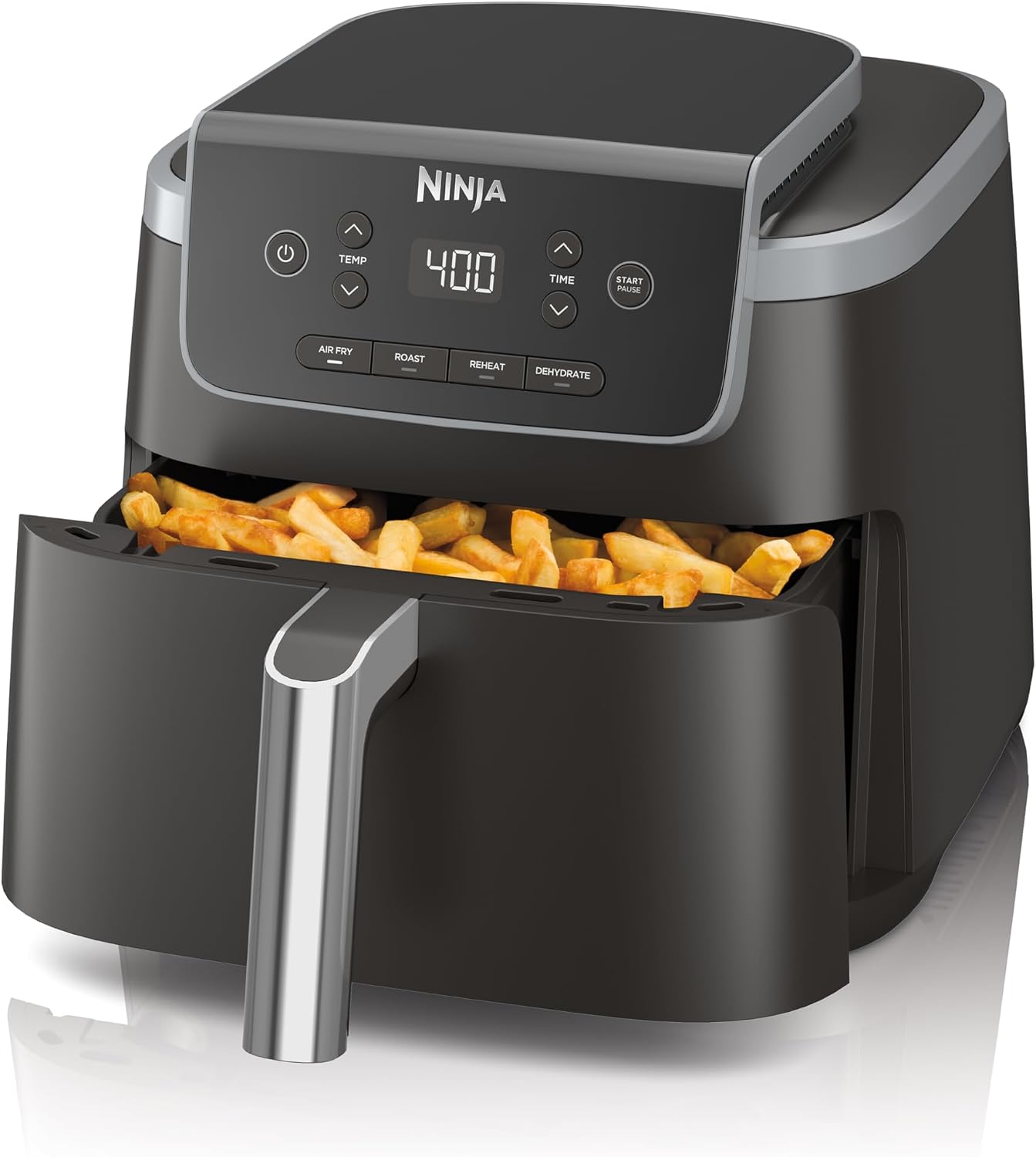
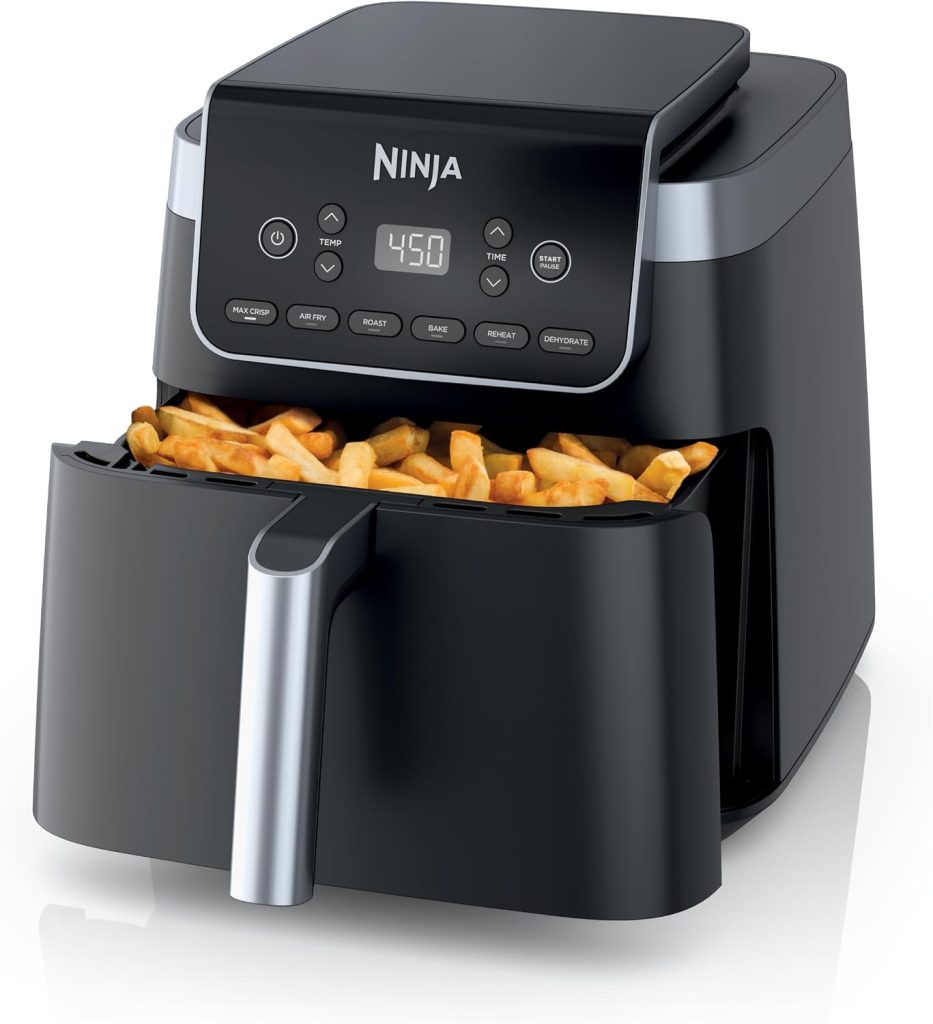
The step-down basket if the oven footprint fails the tape measure
Prices and availability change often. The button shows the current listing.
Here is what the return forms never show, because people do not return things that work: the daily competence. Toast for a household, evenly, without a separate toaster owning counter space. A frozen pizza that comes out with a bottom, an actual crisp bottom, because the rack position and the fan do the thing the big oven does slowly. Reheating fried food back to something like its first intentions. The air fry basket handles a family’s worth of wings in one layer, which no basket fryer at half the price can say, and for a house that cooks for five, that one layer is the entire argument.
It is also the machine that eats the other appliances’ jobs. Toaster, gone. The small oven, gone. The basket fryer, arguably gone. Returns data has a shadow side nobody quotes: for every unit that comes back for size, several more quietly absorb three appliances’ worth of counter in somebody else’s kitchen and never generate a form at all. I only ever saw the sad paperwork. It took me years to remember that the paperwork is a biased sample wearing a uniform.
Actually, I want to correct the impression the doors paragraph may have left. The hair-proud door thing sounds like a verdict and it is not one, it is a maintenance note. The meeting line collects crumbs and grease film, and a wiped seal sits flusher than a neglected one. Half the alignment complaints I ever read about this style of oven were a cleaning issue performing as a manufacturing defect. Wipe the seal line. It is the cheapest repair in the whole category and it is not in the quick-start card in any type size a human would notice.
Heat, one more slow-accumulating fact. A box this size heats the kitchen more than a basket fryer does, and takes longer to preheat than the little machines have trained people to expect, five to ten minutes depending on the target, which feels like forever the first week and like nothing by the second month, because the food it cooks is also bigger. The mismatch that generates returns is not the oven’s speed. It is the memory of a faster, smaller machine sitting in the same spot in somebody’s habits.
For the counter-space comparison, the Ninja XL MaxCrisp 6.5-quart review covers the big basket alternative, and the Cosori TurboBlaze 6-quart review covers the smaller one. Some kitchens honestly need the oven. Some need a basket and their cabinet back. The tape measure knows which kitchen yours is before you do.
I cannot judge the rotisserie over years, the spit and the fetch tool are the accessories that come back in the box still wrapped in a surprising number of returns, which tells you how often they get used at all. The owners who rotisserie weekly exist. They are just not the median owner, and reviews written from the median, including this one, should admit the spit is a promise most of us make to ourselves in the store and break by February.
Frequently Asked Questions
It says 26 quarts. Why doesn’t my quarter sheet pan fit like the number promised?
Because quarts measure volume and pans need shape. The 26 counts every cubic inch of the cavity, including the low space beneath the lowest rack position that no pan can use. What fits is governed by the width between the walls and the depth from door to back element: a 12-inch pizza yes, a whole chicken yes, most 9-by-13 dishes yes if the handles are modest. A quarter sheet is right at the edge where handle style decides. It is not this brand being slippery, every maker counts quarts the same generous way, which is exactly why the number deserves your suspicion and the rack dimensions deserve your tape measure.
The two doors don’t sit perfectly flush anymore. Is it defective?
Probably not, and try the boring fix first. The seal line where the doors meet collects crumb and grease film, and a film you can barely see is enough to hold one door a hair out. Wipe both meeting edges and the frame they land on, slowly, with a damp cloth, and check again. If it still sits proud after a clean seal, or one door has started drooping at the hinge, that is a warranty conversation. But a surprising share of the flush complaints I have seen over the years were housekeeping wearing a defect’s coat, and the fix costs one paper towel.
How long does it actually take to preheat? It feels slower than my old basket fryer.
It is slower, and the feeling is accurate. There is simply more air and more metal to bring up to temperature, five to ten minutes depending on how hot you are going. The basket fryer spoiled everyone with its three-minute sprint. What the oven gives back is capacity per batch, so the honest comparison is total time for the full amount of food, not time to first fry. Two basket loads at three minutes of preheat each, against one oven load at eight. The oven wins the meal and loses the stopwatch, and which of those matters is a question about how many people are standing in your kitchen hungry.
Is this too much oven for a household of two?
For two people who cook most nights, it can be, and the returns agree with me. The cavity heats slower and uses more counter than small meals justify, and the daily friction of a big machine for two portions is exactly the slow accumulation that ends in a January return. Two people who batch-cook, entertain, or bake bread weekly are the exception that loves it. Count your big meals honestly. If the answer is most weeks, the size is a feature. If the answer is Thanksgiving and a birthday, the size is a tenant, and tenants who only work two days a year get evicted in this category every single January.
The last 26-quart return I ever processed had a note in the box, handwritten, apologizing to the oven. It is not you, the note said. It is my counter. I think about that note whenever I read a capacity number now, the quarts counted floor to ceiling by people who knew exactly how a kitchen would misunderstand them, and the oven sitting blameless in its box with its two doors shut, waiting for a deeper counter and a household that measures first.
This site contains affiliate links. We may earn a commission on qualifying purchases.