This site contains affiliate links. We may earn a commission on qualifying purchases.
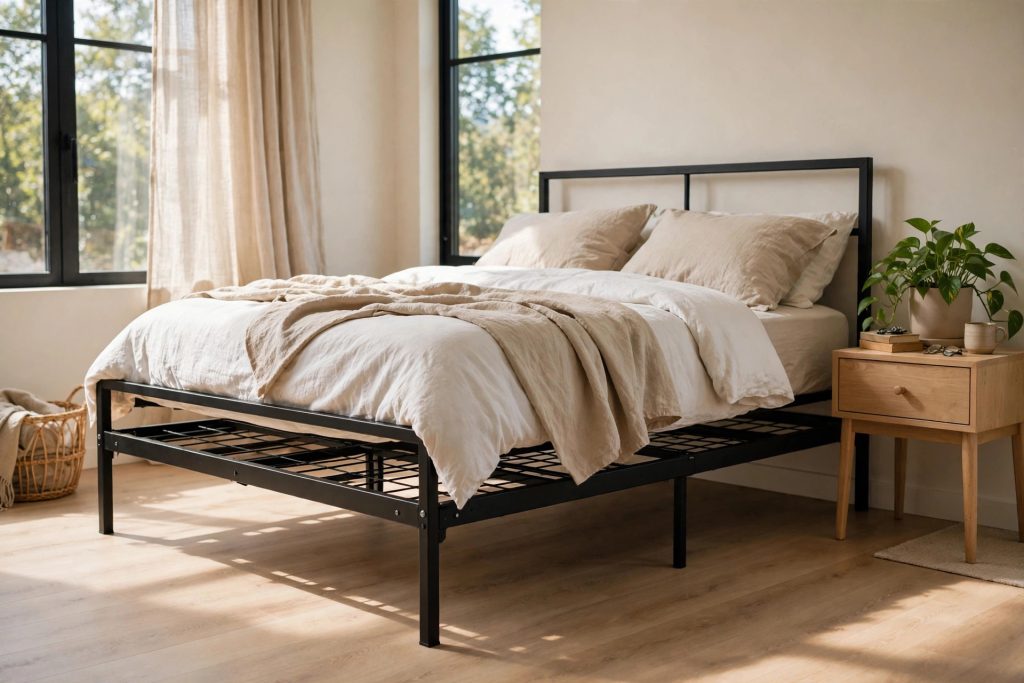
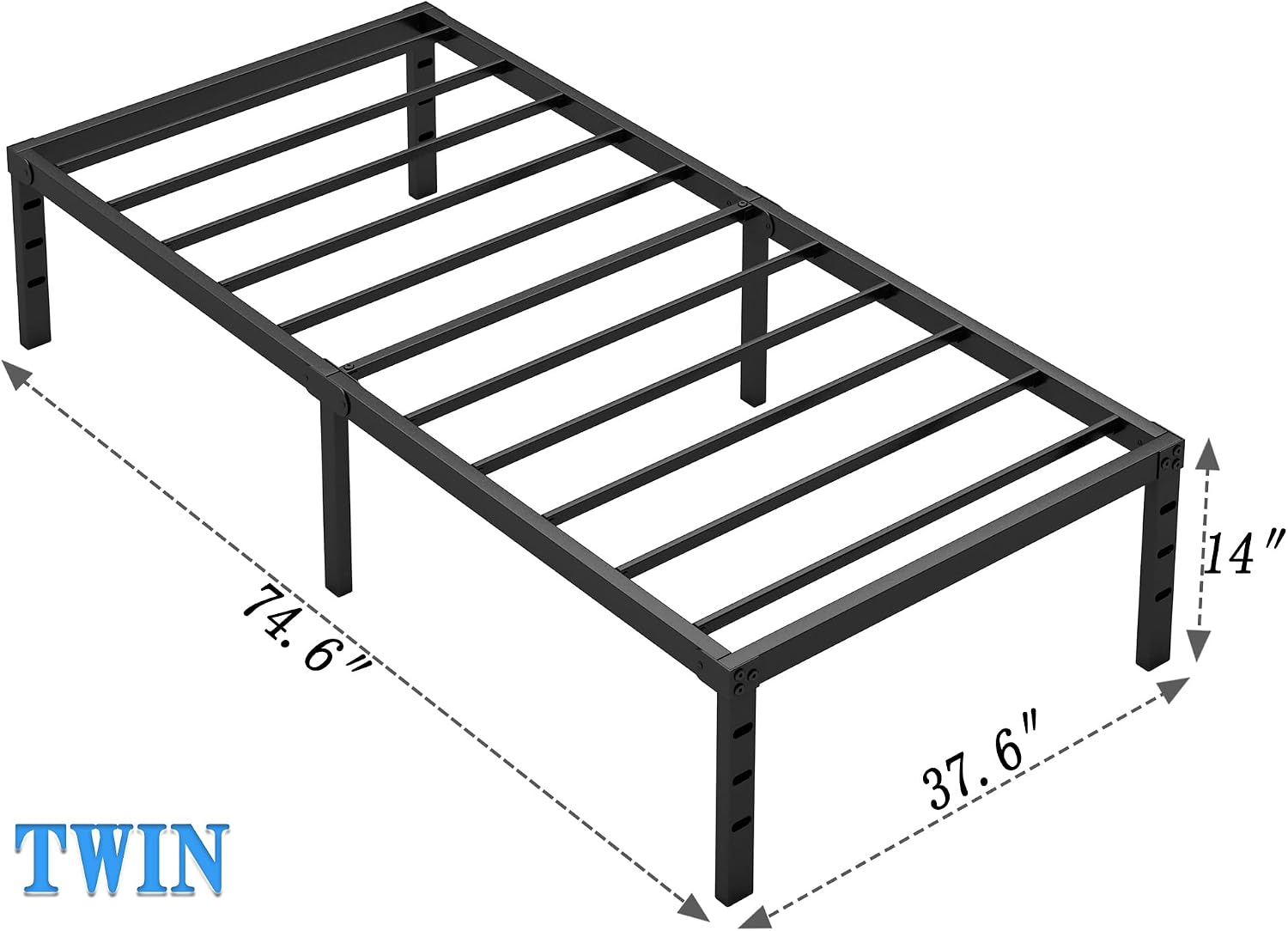
Fragment one. A twin frame is the fastest-moving bed I handle, and the slowest to photograph well, because nobody dreams about a twin. It is bought for a kid outgrowing a toddler bed, a guest room that is also an office, a first apartment, a dorm that allows it — practical money, spent by people who measure the room twice and the mattress never. The JETO twin in this review, a black metal platform frame sold in 14-inch and 12-inch heights with storage space underneath, is exactly that kind of purchase, and the original version of this article treated it like a smaller queen. It is not. A twin is 38 to 39 inches wide, which changes what storage means, what slat span means, and what a wobble feels like at 2 a.m. when the sleeper is nine years old and bouncing. I flip furniture for a living, I have carried more of these frames up more stairs than I can count, and the fragments below are what the carrying teaches you.
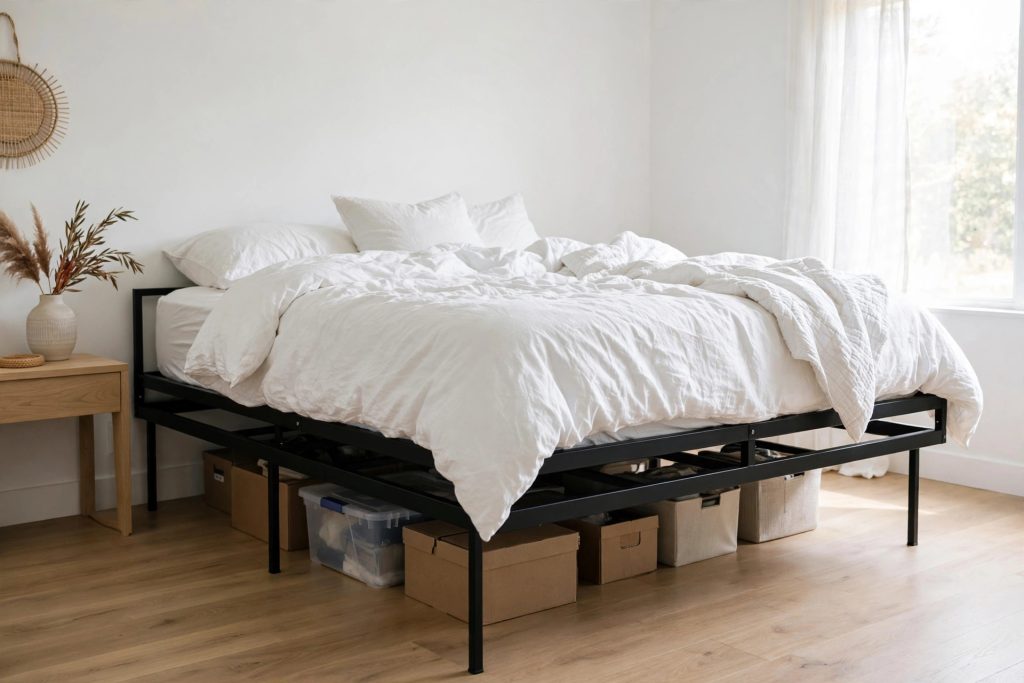
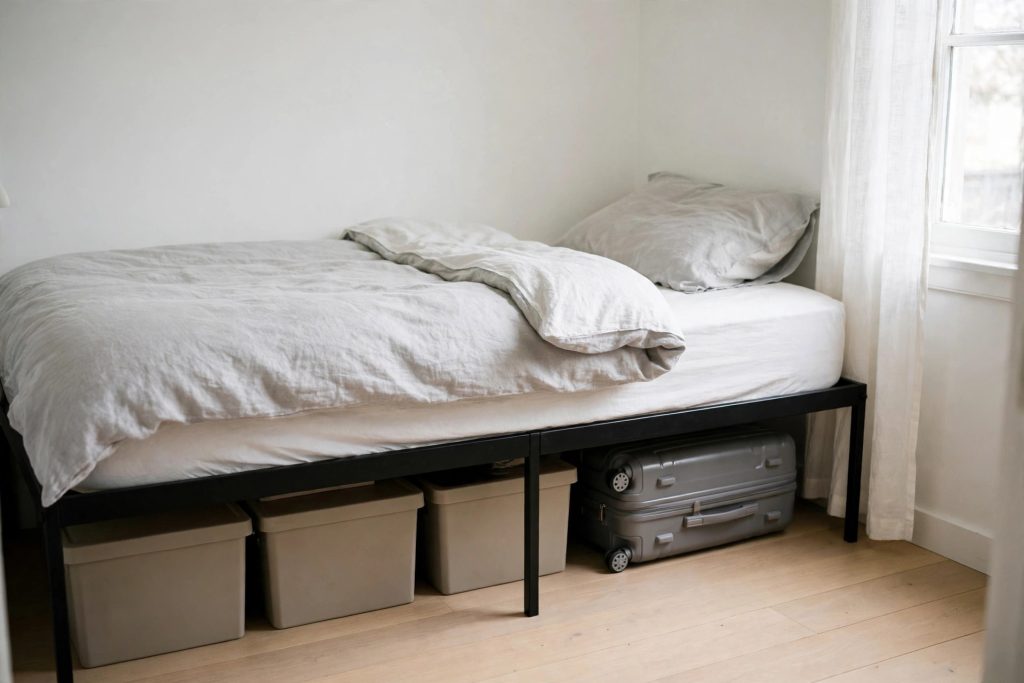
Fragment two, the height, because the title promises storage. Fourteen inches is the height of the frame at its top rail, and the space your bins actually get is less — the side rail hangs below the slat line, the legs and the cross members take their share, and a bin that is exactly the advertised height of the space will scrape its lid the whole way in. The bins that live happily under the 14-inch JETO are the common low under-bed boxes, the ones in the six-to-seven-inch range with room to spare for a hand on top, plus the soft bags for off-season clothes that compress to whatever space they are given. Under the 12-inch version the same boxes fit and the taller rigid bins stop fitting, and that — not the sleeping, the sleeping is identical — is the entire difference between the two listings. Two inches of bin. People agonize over it like it is a mattress choice. Measure the bins you own, not the ones in the listing photo, which were chosen by someone whose job was making the gap look generous.
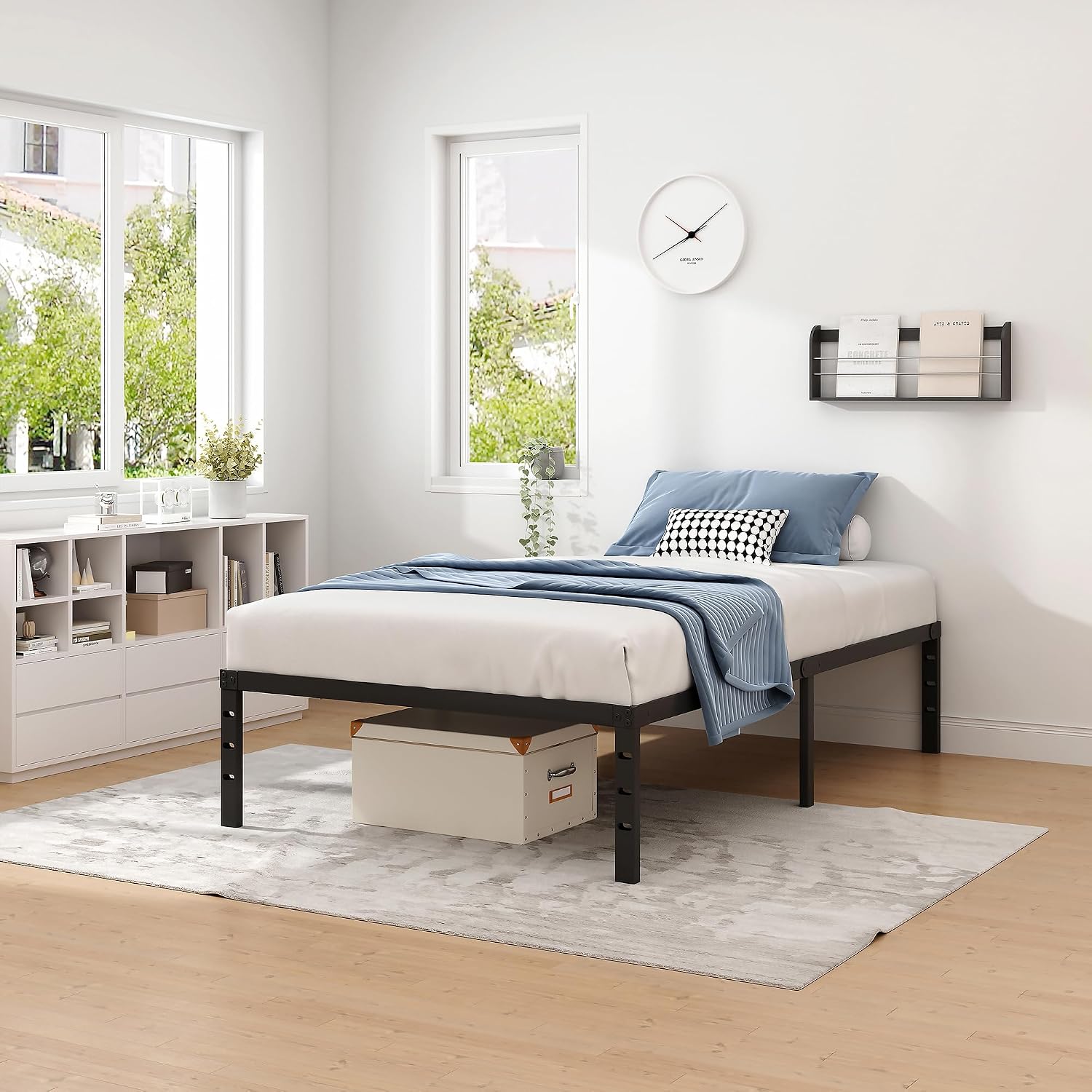
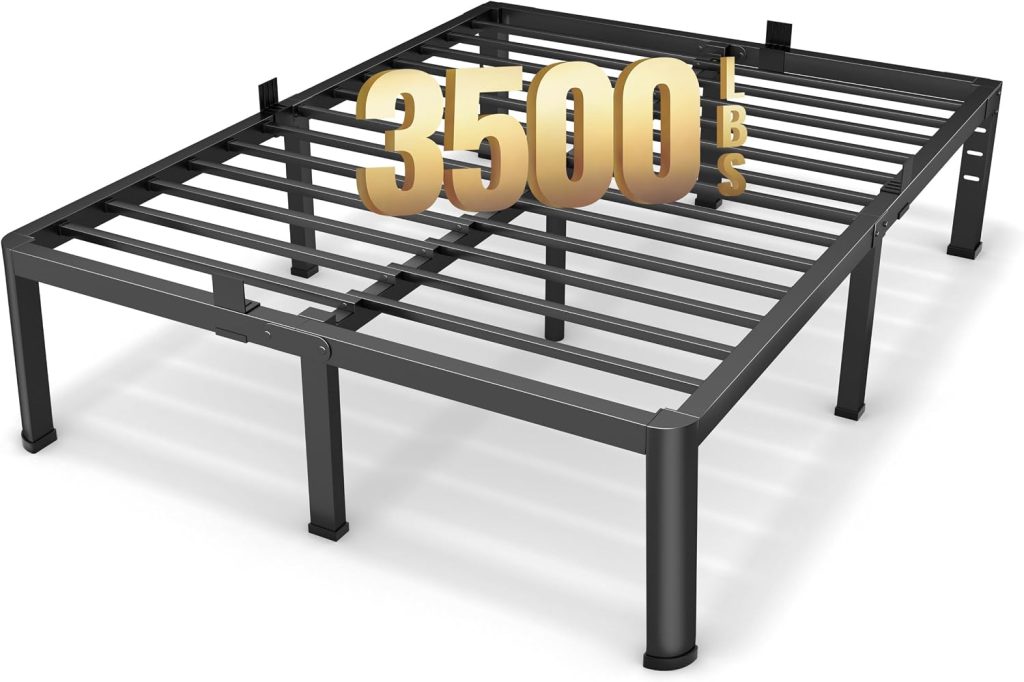
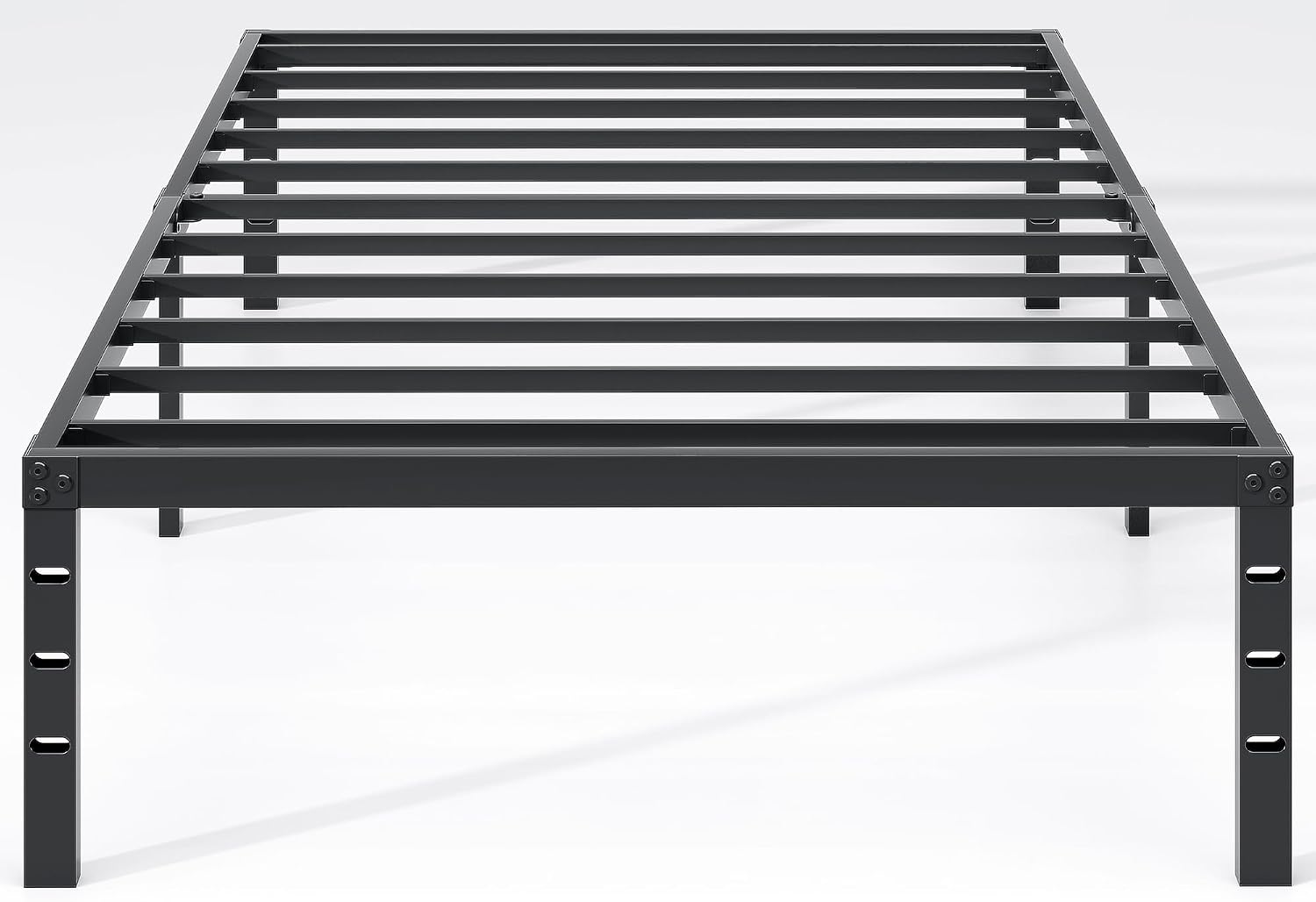
Fragment three. Slats. On a twin the span is short, which is the small frame’s secret advantage: a metal slat that would flex noticeably across a queen barely notices a twin’s 39 inches, and the foam mattresses that void warranties over wide slat gaps on big frames are far more forgiving here. The gap on frames of this class runs around three inches, give or take, I have measured enough of them to trust the neighborhood if not the decimal. What I check on a used JETO, and what an owner should check at assembly, is not the slats themselves but whether every one of them is seated and capped — a single slat riding loose makes a click that the sleeper will hear as the bed breaking, slowly, nightly, and the fix is reseating it, not replacing anything. The click sells more replacement frames than any actual failure I know of. That sentence is the reseller’s whole business model in this category, and I am aware of what it says about me that I am printing it.
Fragment four, for the kid-room reality. Static load numbers are the listing’s favorite fiction — a big round number measured with the weight spread politely and nobody moving. A twin in service does not live statically. It gets sat on at the edge, hard, by a person tying shoes, which concentrates half a body at the rail’s weakest argument; it gets stood on by children who have been told, in writing, presumably, not to stand on it. Frames of this build handle the edge-sitting fine and complain about it through the joints first: a creak at one corner when weight shifts is the bolts at that corner asking for a quarter turn, months before anything bends. I tighten corner bolts on every twin I resell, in a cross pattern, and about half the frames that come to me as wobbly leave as silent. The other half have a bent center support leg from a move — frames get dragged sideways by one leg during moves, the leg folds a degree or two, and the bed rocks on it forever until someone straightens or replaces that leg. Dragging is the enemy. Lift the thing, even if it is light, especially because it is light and dragging feels free.
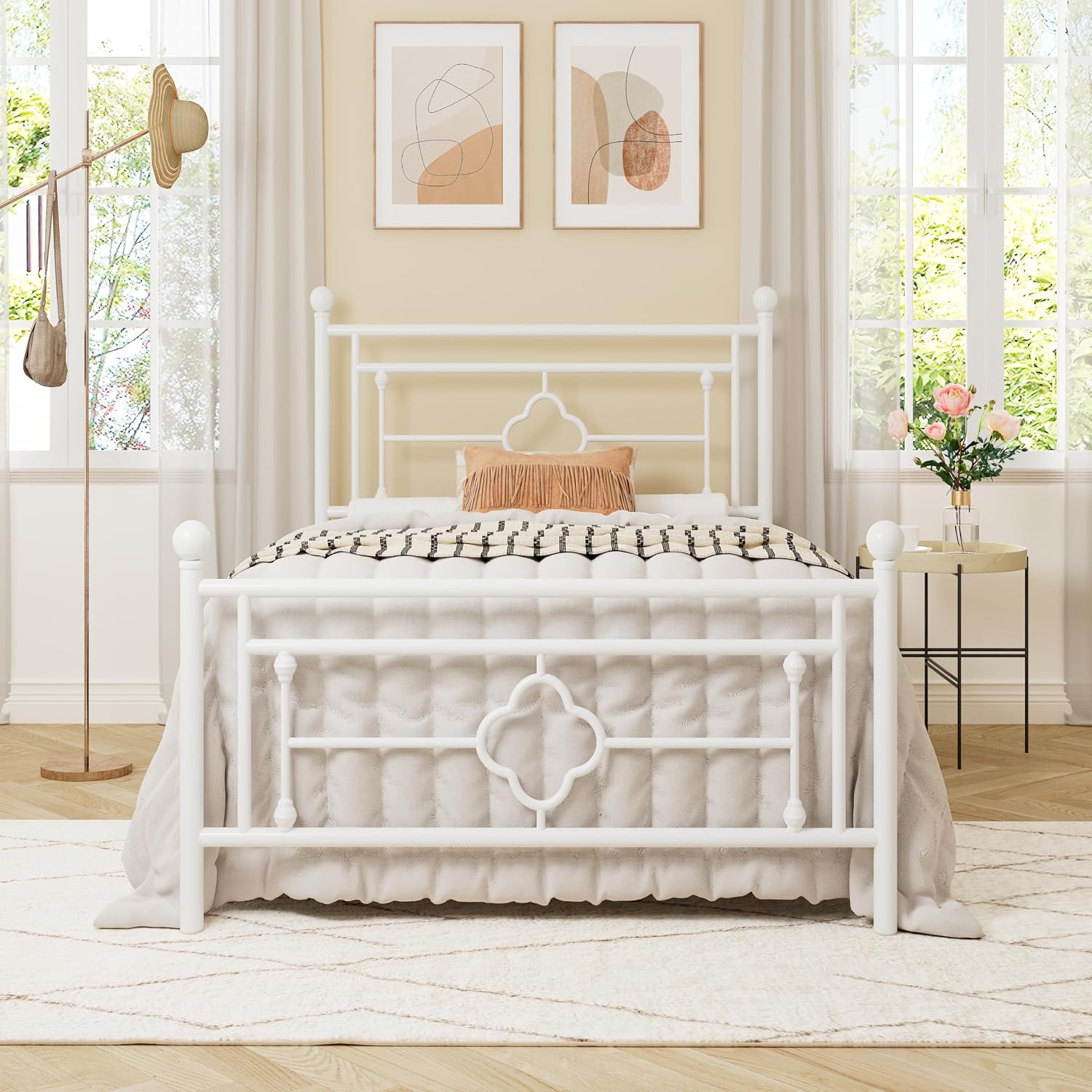
The one with a headboard and a look
Prices and availability change; the listing is the final word.
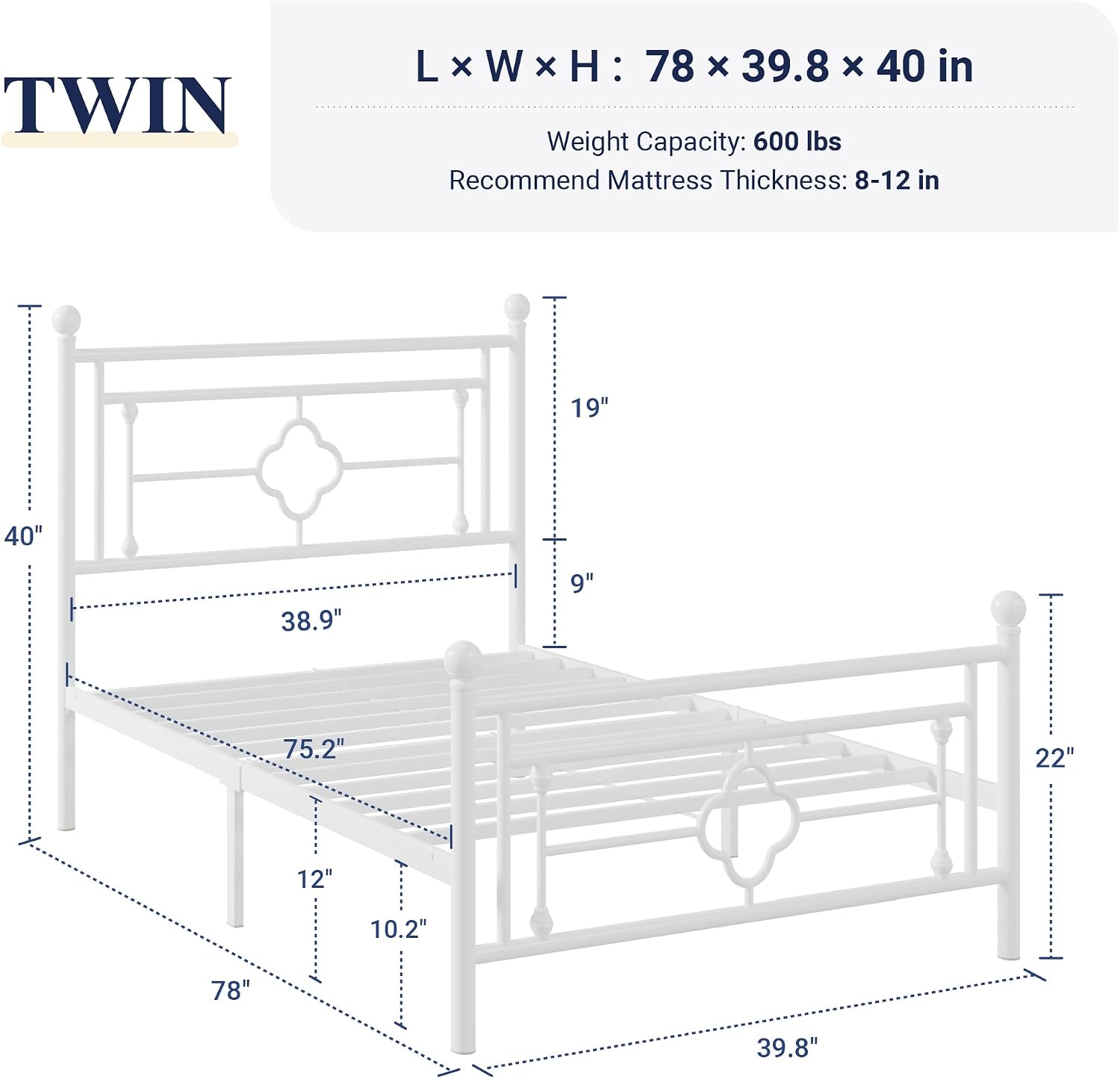
Fragment five, the white one. The Allewie in the third box is the same species — twin metal platform, no box spring wanted — wearing a Victorian-style headboard and a white finish, and it sells to a completely different room. The JETO is bought by the spreadsheet; the Allewie is bought by the photograph of a guest room or a girl’s room that someone wants to feel finished. Practical notes, since that is the job here: a headboard adds its own bolts and its own creak if they are loose, it adds height that matters in rooms with sloped ceilings and low windows, and the white powder coat shows the scuffs that black hides, every one of them, from vacuum cleaners and shoe heels and the metal buckle of a belt during a move. It also ages more gracefully in a bright room than black does, which is not nothing. I have resold both. The white one goes faster and comes back more often — decor purchases get returned by taste, utility purchases get kept by need. Draw your own conclusion. I have drawn mine, and it is sitting in a warehouse corner in black, waiting for the next kid who outgrows a toddler bed, because that buyer never brings it back.
Fragment six, assembly, the part everyone does on the floor at 9 p.m. These frames go together with an Allen key and a bag of bolts that contains, in my experience across many units, exactly the bolts required and no spares worth mentioning, which means the bolt that rolls under the dresser is a hardware-store trip, not a shrug. Lay the parts out, count the slats against the instructions before the first bolt, because a frame assembled one slat short will hold a mattress and a grudge. And keep the key. Tape it under the side rail. Every used frame I buy is missing its key, and every second buyer asks me for one, and the little envelope of keys I now carry exists because the first owner of every frame did not tape theirs under the rail. the 20-inch Superay walkthrough and the 18-inch Superay review cover the taller queen frames from another maker, where the same bolt-and-key story plays out at twice the span and with noticeably more flex to argue about.
Questions that come up
My twin frame creaks at one corner when my kid rolls over. Is it bending?
It is almost certainly not bending. A single-corner creak on a frame like this is loose joint hardware nine times out of ten — the bolts at that corner have backed off a fraction, and the joint now moves a hair under load and announces it. Tighten the corner bolts in a cross pattern, snug them again after the first week of use, and the creak usually dies on the spot. What deserves a closer look is a creak paired with a visible rock, or a frame that was recently moved: a center support leg bent slightly by dragging will rock the whole bed and creak at whatever corner takes the strain. Straighten or replace the leg. Corners complain. Legs confess.
Will standard under-bed storage boxes fit under the 14-inch frame?
The common ones will. Low under-bed boxes in the six-to-seven-inch height range slide under the 14-inch JETO with room for your hand on top, and soft storage bags compress to fit nearly anything. Where people get caught is trusting the headline number: 14 inches is the top of the frame, and the usable clearance is less once the side rail and cross members take their share, so a rigid bin bought at exactly the advertised clearance scrapes or sticks. Measure your tallest bin, lid included, and leave it an inch of grace. That inch is the whole difference between storage you use weekly and storage you used once, angrily, and then stored somewhere else, which is a sentence about most under-bed systems ever sold.
Do I still need a box spring with a metal platform frame like this?
No, and adding one is the most common way people ruin the setup. The slats are the support — that is what platform means — and a box spring on top of them adds height the frame was not laid out for, raises the mattress to a climb for a kid, and can make the whole stack feel less settled than the mattress alone on the slats. What the mattress does need is slat spacing in the sane range, roughly three inches on frames of this class, which a twin’s short span makes easier to get right than on a queen. Check your mattress maker’s spacing guidance if it is foam, keep the receipt until you have slept a week, and let the frame do the one job it was built for.
Is the 12-inch version worse, or just lower?
Just lower, and for some rooms that is better. The sleeping surface, the slats, the build — the two JETO listings are the same frame family at two heights. What the 12-inch gives up is bin clearance: the taller rigid storage boxes that fit under the 14 stop fitting, while low boxes and soft bags fit both. What it gains is a lower step-up, which matters for smaller kids and for rooms where a tall bed eats the window light. People shop the two heights like one is the upgraded model. Neither is. One of them fits your bins and your room, the other fits someone else’s, and the listing photos will never tell you which, because the bins in the photos were chosen to fit both and to make the gap look like a closet.
The frame I cannot seem to sell is a 12-inch twin I have listed three times at a fair price, complete, silent, every bolt present. It will go the week school starts, to someone who measured their bins wrong the first time. They always go eventually. That is the thing about twins — the need is real, it just keeps its own calendar, and mine apparently runs a few months behind it.
This site contains affiliate links. We may earn a commission on qualifying purchases.