
Slicing Through the Hype: Is the SupMaKin Upgrade Safe Mandoline Slicer Plus Worth Your Kitchen Counter Space?
Let’s talk about mandoline slicers. For anyone serious about making quick, consistent cuts in the kitchen, a good mandoline isn’t just a gadget; it’s a real tool. This guide cuts through the marketing noise surrounding models like the SupMaKin Upgrade Safe Mandoline Slicer Plus, helping you decide if this kind of upgraded kitchen gear truly earns its spot in your culinary arsenal. We’re looking at value, features, and who this design actually serves best.
Quick Answer
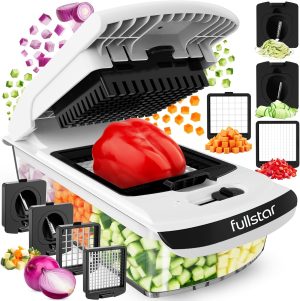
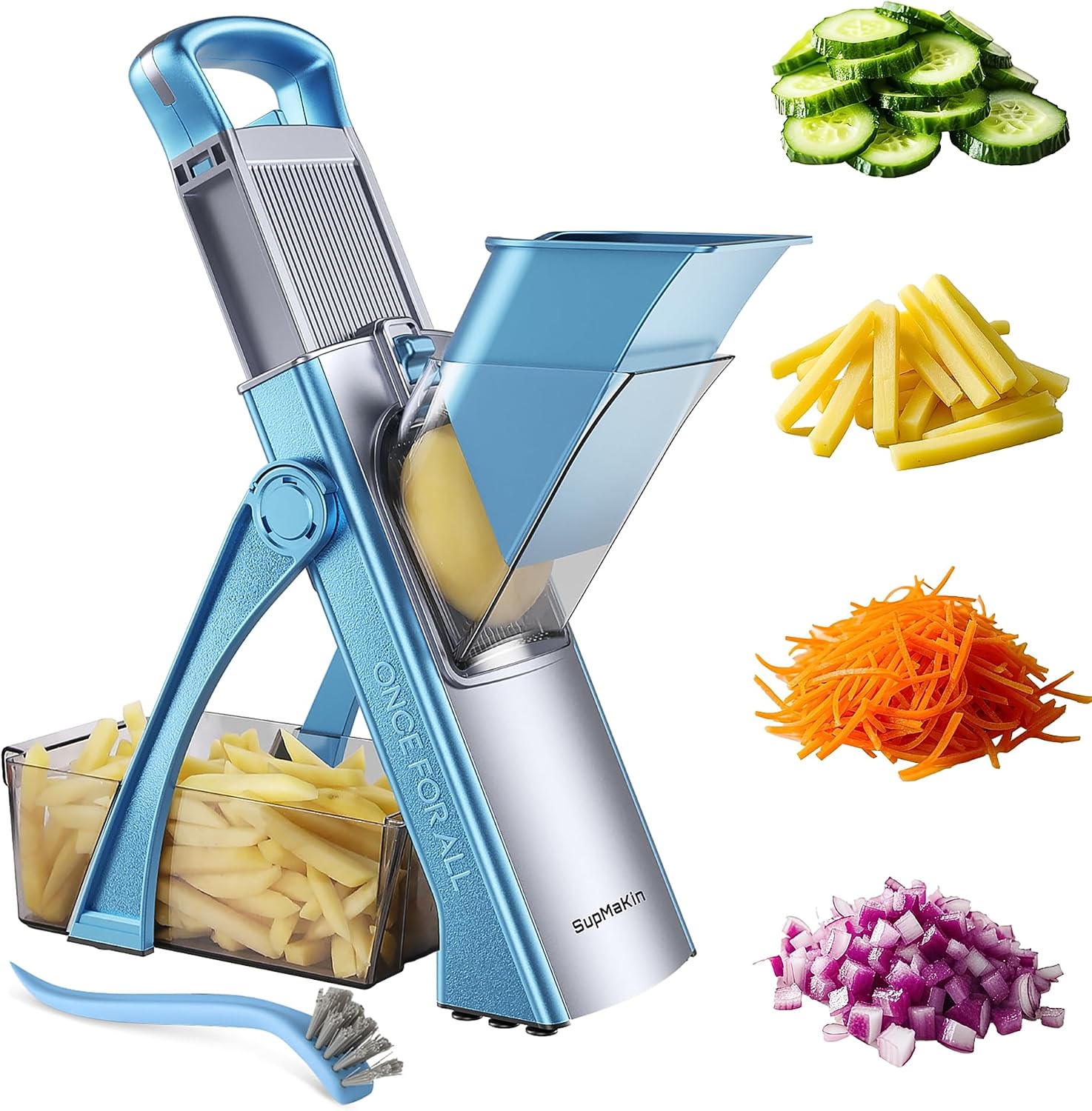
The SupMaKin Upgrade Safe Mandoline Slicer Plus, with its integrated safety features and multi-functionality (think vegetable chopper, potato slicer, and fry cutter all in one), is a strong contender for those who prioritize safety and versatility in their kitchen prep. It offers a premium experience without necessarily demanding a top-tier price, making it a sensible choice for cooks wanting precision and speed without the typical finger-tip anxiety.
What to Look For (The Buying Criteria)
Choosing the right mandoline slicer can feel like a maze. Honestly, it’s not just about getting a slicer; it’s about getting the right slicer for your kitchen. Here’s what matters:
Safety First, Always
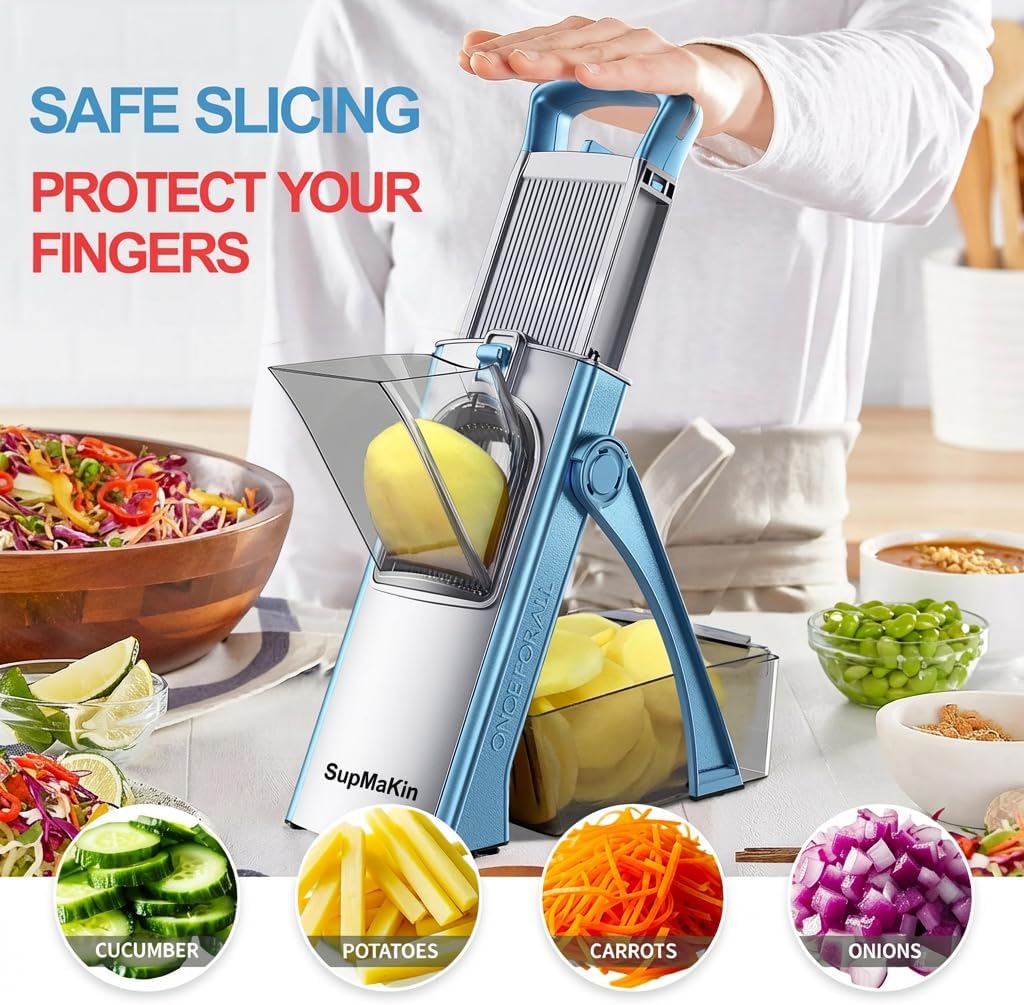
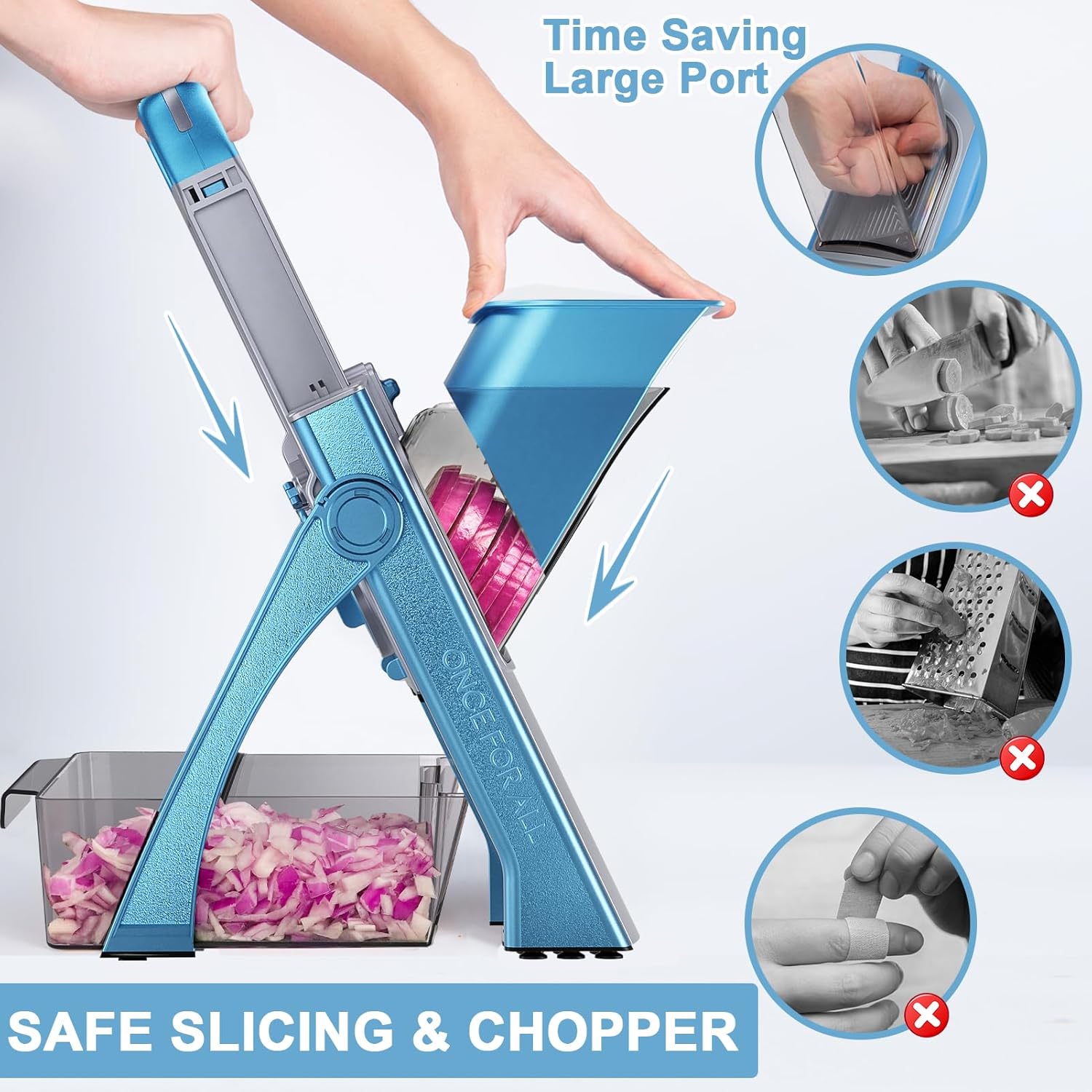
This isn’t negotiable. Anyone who’s spent five minutes with a traditional, open-blade mandoline understands the inherent danger. Those razor-sharp blades are fantastic for producing paper-thin slices, but they’re absolutely unforgiving if your fingers get in the way. Look for designs that enclose the blade, requiring you to push food down a chute with a plunger, much like the SupMaKin Upgrade Safe Mandoline Slicer Plus promotes. Integrated hand guards, sturdy food holders – these aren’t extras. They’re lifesavers. Some older designs? They’re basically fancy finger guillotines, and frankly, I’m baffled they’re still sold widely.
Blade Material & Sharpness
Most decent mandolines sport stainless steel blades, and for good reason. They resist rust, hold an edge fairly well, and are easy enough to clean. But not all stainless steel is created equal, you know? The better ones, often described as “cut resistant stainless steel blades,” keep their sharpness longer, which means less effort and cleaner cuts for you. A dull blade isn’t just inefficient; it’s more dangerous because you’ll push harder, increasing slip risk. You want blades that stay keen for a long stretch of slicing action. If a slicer feels like it’s tearing rather than slicing, the blade isn’t up to snuff.
Adjustability & Versatility
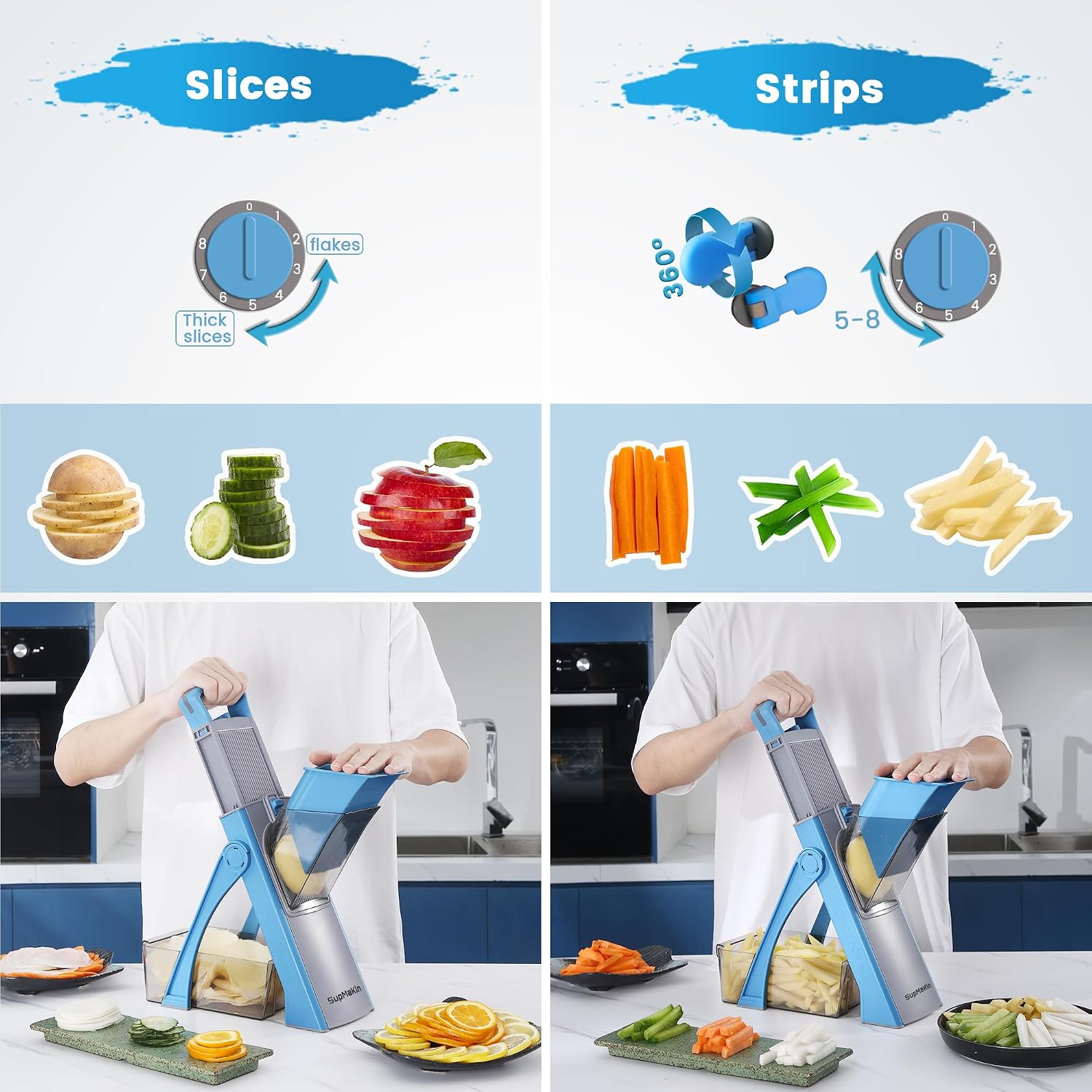
This is where a mandoline slicer really earns its keep over a simple knife. Can it do super-thin potato chips and thick onion rings? Does it offer julienne cuts for stir-fries? What about dicing for a veggie salad or specific sizes for a potato fry cutter? The SupMaKin, for instance, touts a range from 0.1-8mm and includes functions like a vegetable chopper and onion chopper. That kind of range is crucial. A single-purpose slicer might be fine for some, but if you’re looking to streamline various prep tasks, versatility matters. Don’t buy a gadget that only does one trick; you’ll never use it.
Stability & Build Quality
Picture this: you’re trying to slice a tough sweet potato, and the whole contraption is wobbling on your counter. Frustrating, right? Worse, it’s unsafe. A good mandoline needs a solid, non-slip base. Rubberized feet are a minimum. The overall construction should feel substantial, not flimsy. High-quality plastics should be rigid, not bendy. If it flexes under pressure, steer clear. Durability, especially for something with moving parts and sharp edges, is critical. A cheap, flimsy tool might save you a few bucks upfront, but it’ll probably break or just plain annoy you into not using it.
Ease of Cleaning & Storage
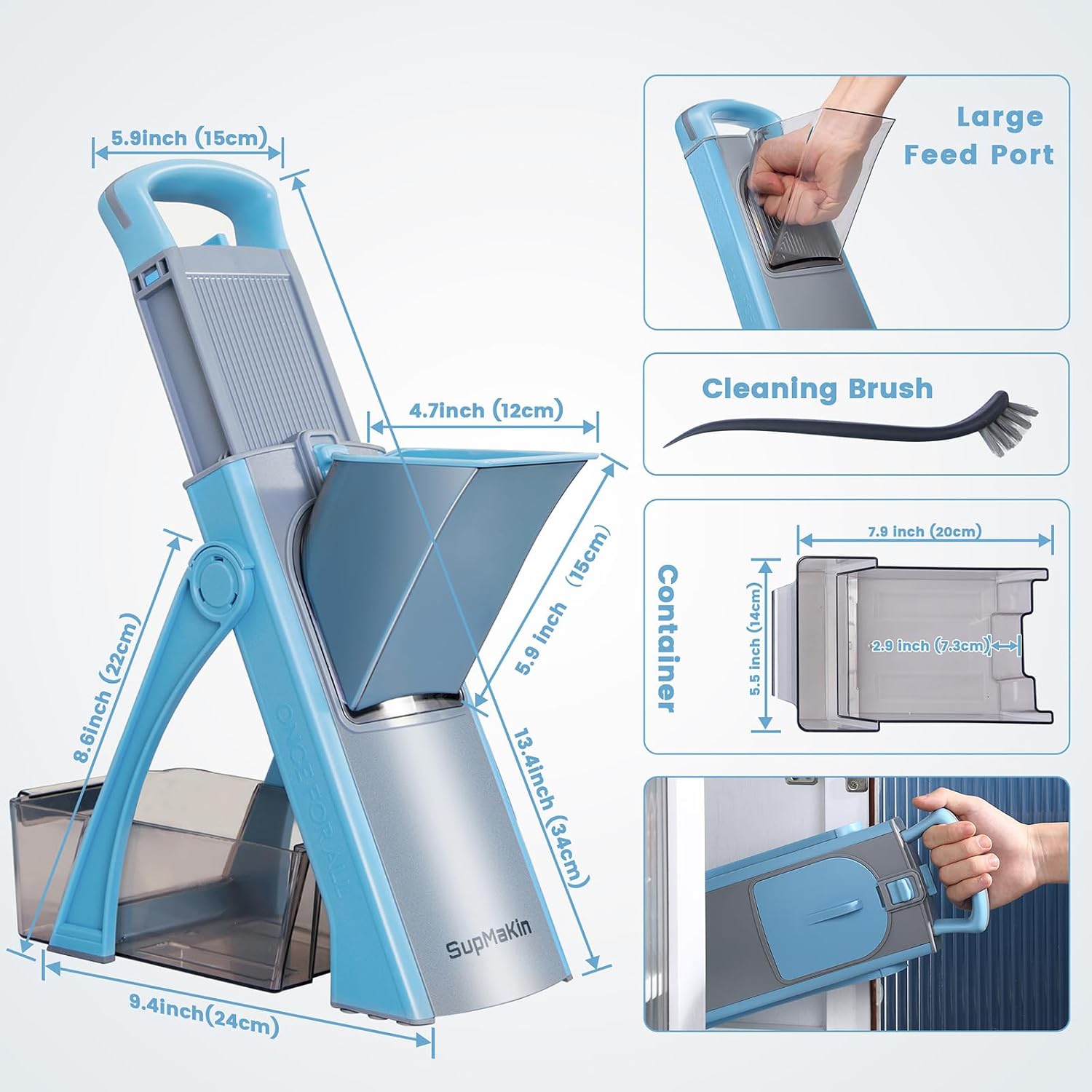
After the slicing spree, comes the cleanup. And let’s be real, nobody wants to spend an hour scrubbing tiny food particles out of intricate nooks and crannies. Look for models with detachable components that are easy to rinse. Is it dishwasher safe, as the SupMaKin claims? That’s a huge bonus. And once it’s clean, where does it go? Foldable designs, like the SupMaKin’s, are brilliant for smaller kitchens where counter and cupboard space are precious. A bulky unit that lives in a box under the sink? You just won’t reach for it.
Ergonomics & User Comfort
This often gets overlooked, but how does the food slicer feel in your hands? Is the plunger comfortable to grip? Does the unit sit at a natural angle for slicing? If you’re going to be slicing a lot of vegetables for meal prep, an uncomfortable grip can lead to hand fatigue. Even if a mandoline is safe and sharp, if it’s a pain to hold or push, you’ll find yourself reaching for a knife more often than not. Some designs are just… awkward. And that’s a problem.
How to Match the Product to Your Situation
Your ideal mandoline slicer isn’t just about features; it’s about how those features fit your life. Different cooks have different demands, right?
The Occasional Cook
You whip up salads now and then, maybe some quick stir-fries. You don’t need a professional-grade behemoth. For you, a more straightforward, budget-friendly vegetable chopper or basic mandoline that handles simple slices and maybe julienne cuts is perfect. Safety is still paramount, but you likely won’t be pushing it to its limits. Look for something easy to clean and store – compact is key. The focus here is convenience without commitment.
The Meal Prepper
Consistency is your god. You spend Sunday afternoons dicing, slicing, and chopping for the week ahead. You need speed, precision, and the ability to make multiple kinds of cuts quickly and safely. This is where something like the SupMaKin Upgrade Safe Mandoline Slicer Plus really shines. Its emphasis on safety through enclosed blades and its versatility (hello, onion chopper and various cut types!) means less time fretting over fingertips and more time getting those veggies ready. Durability and ease of cleaning are high on your list, too. You’re a heavy user; your tools need to keep up.
The Aspiring Home Chef
You love experimenting. Presentation matters. You might be attempting gourmet potato dauphinoise or intricate fruit garnishes. For you, ultra-fine adjustability, superior blade quality for razor-sharp results every time, and robust construction are essential. You might lean towards models with a wider range of accessories for specialized cuts. While safety is still crucial, you’re comfortable with more advanced operations, perhaps even those with slightly more exposed blades if the precision payoff is significant. You appreciate true craft in your tools.
Mandoline Slicer Types: A Quick Comparison
It’s not a one-size-fits-all world. Here’s a quick look at the landscape:
| Type/Tier | Best For | Price Tier | Key Feature | Watch-Out |
|---|---|---|---|---|
| Basic Handheld Slicer | Simple, quick slices; small batches. | Budget-friendly | Minimalistic design, easy storage. | Less stable, often basic safety features. |
| V-Blade Mandoline | Efficient slicing of soft and firm produce. | Mid-range | V-shaped blade for cleaner, faster cuts. | Blades can be exposed; requires careful handling. |
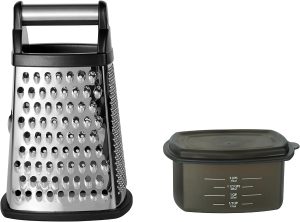
| Multi-Function Box Grater Combo | Space-saving; combines various prep tasks. | Mid-range | All-in-one chopping, grating, slicing. | Often less precise than dedicated slicers. |
| Premium Enclosed Mandoline | High-volume, varied cuts; maximum safety. | Mid-range to premium | Fully integrated blade, enhanced safety guard. | Can be bulky; might have more components to clean. |
Basic Handheld Slicers are great for someone just dipping their toes into the mandoline world, perhaps just needing quick cucumber slices for a salad. They’re compact, but you really need to watch your fingers with these, as the food guard can sometimes feel flimsy.
V-Blade Mandolines offer a substantial upgrade in slicing power, especially for tomatoes or other softer foods that tend to crush on a straight blade. Still, many of these rely on an external food holder, meaning the V-blade itself is often quite exposed.
Multi-Function Box Grater Combos attempt to do everything, which is sometimes their downfall. They’re undeniably convenient for small kitchens, offering a vegetable chopper and different slicing options, but the slicing action itself might not be as smooth or as adjustable as a dedicated unit.
Premium Enclosed Mandolines, like the SupMaKin Upgrade Safe Mandoline Slicer Plus, represent a leap forward in safety and versatility. The fully integrated blades mean your hands are much safer, and features like 0.1-8mm adjustable thickness and specific potato fry cutter options make them incredibly adaptable, though their bulkier design can sometimes make cleanup a little more involved.
Mandoline Slicers in Action: Scenarios to Consider
Thinking about how you’ll use a food slicer helps narrow down the choices significantly.
High-Volume Prep
You’re cooking for a crowd, or maybe you’re into serious meal prepping for the week. Consistency and speed are non-negotiable. A robust, stable model with high adjustability, like one that boasts precise 0.1-8mm slicing, is crucial here. You’ll be making dozens of cuts, so an efficient onion chopper or potato slicer mechanism is key. The constant push and pull demand a strong build that won’t fatigue you or fall apart mid-batch. Anything less just won’t keep up.
Limited Kitchen Space
City living, small apartment? Every inch counts. Bulky kitchen gadgets are a non-starter. This is where a foldable design becomes a hero. Units that collapse for compact storage or have detachable components that pack neatly away are worth their weight in gold. You still want functionality, of course, but it absolutely must fit into your modest cupboards without a fight. Sacrificing some specialized features for a smaller footprint might be necessary, but a safe and effective slicer is still attainable.
Safety-Conscious Users
Perhaps you’ve had a close call before, or maybe you’re just starting out and a little nervous about those sharp blades. A model with an integrated, fully enclosed design, like the SupMaKin Upgrade Safe Mandoline Slicer Plus, is your best friend. Look for mechanisms that keep your fingers far, far away from the cut resistant stainless steel blades. These designs often involve a chute and plunger system, minimizing direct contact. Don’t let fear keep you from consistent slices. Prioritize the models that literally build safety into their core mechanics.
Common Mandoline Slicer Mistakes Buyers Make
So many people get this wrong, and it’s a shame. Don’t be one of them.
First, underestimating the blade sharpness. These aren’t toys. Even “safe” models have incredibly sharp blades, designed for precision cutting. Treating them casually is a fast track to an injury, even with all the guards in place. Always, always pay attention.
Another common slip-up? Ignoring the cleaning complexity. You buy this shiny new vegetable chopper, use it once, and then dread the cleanup because food particles are stuck everywhere, and reaching into those tight spots feels dangerous. Always check how easily it disassembles and whether parts are truly dishwasher safe.
Some folks also overspend on features they’ll never use. Do you really need eighteen different julienne settings if you’re only making basic slices for salad? A fancier model with every bell and whistle, like an advanced fry cutter or veggie salad dicer, might sound appealing, but if you don’t incorporate those uses into your routine, it’s just wasted money.
And finally, not checking for stability. A wobbly food slicer is an unsafe slicer. Period. If it slides around on your countertop, it’s a hazard. Make sure it has robust, non-slip feet and a sturdy base. Otherwise, you’re not just risking uneven cuts; you’re risking a trip to urgent care.
Your Burning Questions, Answered
Why use a mandoline over a knife?
For sheer consistency, a knife just can’t compete. A mandoline slicer produces slices of uniform thickness every single time, whether you’re aiming for paper-thin potato slices or perfectly even cucumber rounds. This consistency is key for even cooking and attractive presentation, something that’s incredibly hard to achieve with a hand and a knife, no matter how skilled you are. It’s a massive time-saver for repetitive tasks.
How do I keep my fingers safe?
The absolute best way is to choose a mandoline, like the SupMaKin Upgrade Safe Mandoline Slicer Plus, that incorporates an enclosed design. These models typically feed food through a chute and use a spring-loaded plunger or pusher, keeping your fingers well away from the sharp cut resistant stainless steel blades. If you’re using a more traditional open-blade model, always use the provided food guard or a cut-resistant glove. No exceptions.
What’s the deal with cut resistant blades?
“Cut resistant” in the context of blades usually refers to the material of the blade itself, implying a certain level of hardness and edge retention, meaning it stays sharp longer through repeated use. It doesn’t mean the blade can’t cut you—it absolutely can. Rather, it speaks to the blade’s durability and ability to maintain a keen edge, which in turn leads to cleaner cuts and, paradoxically, a safer user experience because you don’t have to exert as much force.
Decision Tree: Is the SupMaKin Upgrade Safe Mandoline Slicer Plus Right for You?
- Do you frequently prepare vegetables, needing consistent slices or diverse cuts (dicing, julienne)?
- Yes: Proceed to 2.
- No (only occasional, basic slicing): Consider a simpler, more budget-friendly handheld slicer. The SupMaKin might be overkill.
- Is kitchen safety a primary concern, especially regarding sharp blades and finger protection?
- Yes: Proceed to 3.
- No (comfortable with open blades and traditional guards): You might find other V-blade or professional models suit your preference, though personal injury risks are higher.
- Do you value multi-functionality (e.g., vegetable chopper, potato slicer, onion chopper, fry cutter) and adjustable thickness in a single device?
- Yes: The SupMaKin Upgrade Safe Mandoline Slicer Plus is a strong contender. Its enclosed design, versatility, and focus on safety align perfectly with your needs.
- No (prefer dedicated tools for each task): You might find the combined features less precise than individual specialized tools. Look for dedicated slicers, dicers, and choppers.
Key Takeaways
- Safety First: Prioritize mandolines with enclosed blades and robust safety mechanisms.
- Versatility: Look for adjustable thickness and multiple cut types if you want a true workhorse.
- Build Quality: A stable, durable unit prevents frustration and accidents.
- Ease of Use & Clean-up: Detachable, dishwasher-safe, and foldable features add significant value.
- SupMaKin’s Niche: This model is particularly well-suited for safety-conscious meal preppers and home cooks who want a highly versatile tool without the typical mandoline dangers.
FAQ
Are mandoline slicers really that much faster?
Absolutely. Once you get the hang of it, a mandoline slicer can process a pile of vegetables in a fraction of the time it would take with a knife, especially for tasks requiring uniform thickness. It’s a huge time-saver for meal prep.
What’s the difference between a veggie chopper and a mandoline?
A veggie chopper usually focuses on dicing or chopping vegetables into cubes or irregular pieces, often using a grid-like blade system. A mandoline slicer, on the other hand, is designed primarily for creating consistent slices, from paper-thin to thicker cuts, and often julienne strips. The SupMaKin device actually blurs this line by including features for both, acting as a vegetable chopper and a precise slicer.
Can I slice soft foods like tomatoes?
Yes, many modern mandoline slicers, particularly those with a very sharp blade or a V-blade design, excel at slicing soft foods like tomatoes or even ripe peaches without crushing them. The key is consistent pressure and a razor-sharp edge.
How do I sharpen the blades?
For most consumer-grade mandoline slicers, especially those with integrated blades, sharpening isn’t typically recommended or easily done by the home user. The cut resistant stainless steel blades are usually designed to hold their edge for a long time. If they become dull, replacing the unit might be the most practical solution, or checking if the manufacturer offers replacement blades for detachable components.
Is stainless steel the only blade option I should consider?
While stainless steel is the most common and generally reliable choice for mandoline slicer blades, ceramic blades are also an option. Ceramic blades are incredibly sharp and don’t rust, but they are also more brittle and prone to chipping or breaking if dropped or mishandled. For most users, high-quality stainless steel offers the best balance of durability, sharpness, and maintenance.
What about models with a potato fry cutter?
A dedicated potato fry cutter feature means the mandoline can produce consistent, baton-shaped cuts ideal for French fries or crudités. It’s usually achieved through a specific blade attachment or setting that slices the potato into uniform sticks. It’s a fantastic feature for anyone who loves making homemade fries or wants to add variety to their vegetable prep.
Is a detachable design truly better for cleaning?
Definitely. A mandoline with detachable components allows you to separate the cutting parts from the body, making it significantly easier and safer to clean all the nooks and crannies where food might get stuck. This also helps ensure thorough hygiene, preventing food residue buildup.
Final Recommendation
So, where do we land? For the practical home cook who values both pristine cuts and their fingertips, a premium enclosed mandoline slicer like the SupMaKin Upgrade Safe Mandoline Slicer Plus truly offers a compelling package. It bridges the gap between old-school, slightly terrifying designs and overly simplistic gadgets. Its focus on integrated safety, combined with impressive versatility as a vegetable chopper, potato slicer, and fry cutter, makes it a genuinely smart choice for those tackling regular meal prep or aspiring to more consistent culinary results.
If you’re an occasional cook or someone with truly minimal kitchen space, a simpler, more compact unit might suffice. But if you’re regularly in the kitchen, churning out salads, stir-fries, or experimenting with textures, the SupMaKin’s blend of security and functionality, particularly its broad 0.1-8mm adjustable thickness, means you’re investing in a tool that will actually see consistent use. It’s about getting consistent results, safely. And that’s pretty hard to argue with, isn’t it?
#SupMaKin #Upgrade #Safe #Mandoline #Slicer #Vegetable #Chopper #Potato #Slicer #Food #Slicer #Onion #Chopper #Fry #Cutter #Veggie #Salad #Dicer #Kitchen #Chopping #Artifact #Gifts #Blue #0.18mm #Cut #Resistant #Stainless #Steel #BladesPotato #Fry #Cutter #Onion #Chopper #DetachableFoldable #Dishwasher #Safe #Gifts