Decoding the Spiralizer: Is a 4-in-1 Veggie Slicer Truly Worth It?
If you’ve ever scrolled through healthy recipes or tried to cut down on carbs, the spiralizer has probably popped up on your radar. This guide is all about cutting through the noise around these clever kitchen gadgets, especially those marketed as a “4-in-1 Vegetable Spiralizer Slicer for Veggie Noodles” with adjustable thickness and handy extras. We’re here to figure out if these zoodle makers live up to the hype and help you decide which one, if any, makes sense for your kitchen.
Quick Answer
For most home cooks looking to easily incorporate more vegetables like zucchini or cucumber into their meals as pasta alternatives or decorative garnishes, a versatile spiralizer — particularly a manual 4-in-1 model with adjustable thickness and a built-in container — offers serious value. It’s often a budget-friendly way to experiment with veggie noodles without committing to bulkier, more expensive appliances. Just manage expectations; it won’t replace every knife or mandoline.
What to Look For (The Buying Criteria)
Navigating the world of vegetable noodle makers can feel a bit like wading through an alphabet soup of features. Honestly, most folks just want something that works and doesn’t end up gathering dust in the back of a cupboard. Here’s what actually matters when you’re considering a spiralizer, especially one promising multiple functions.
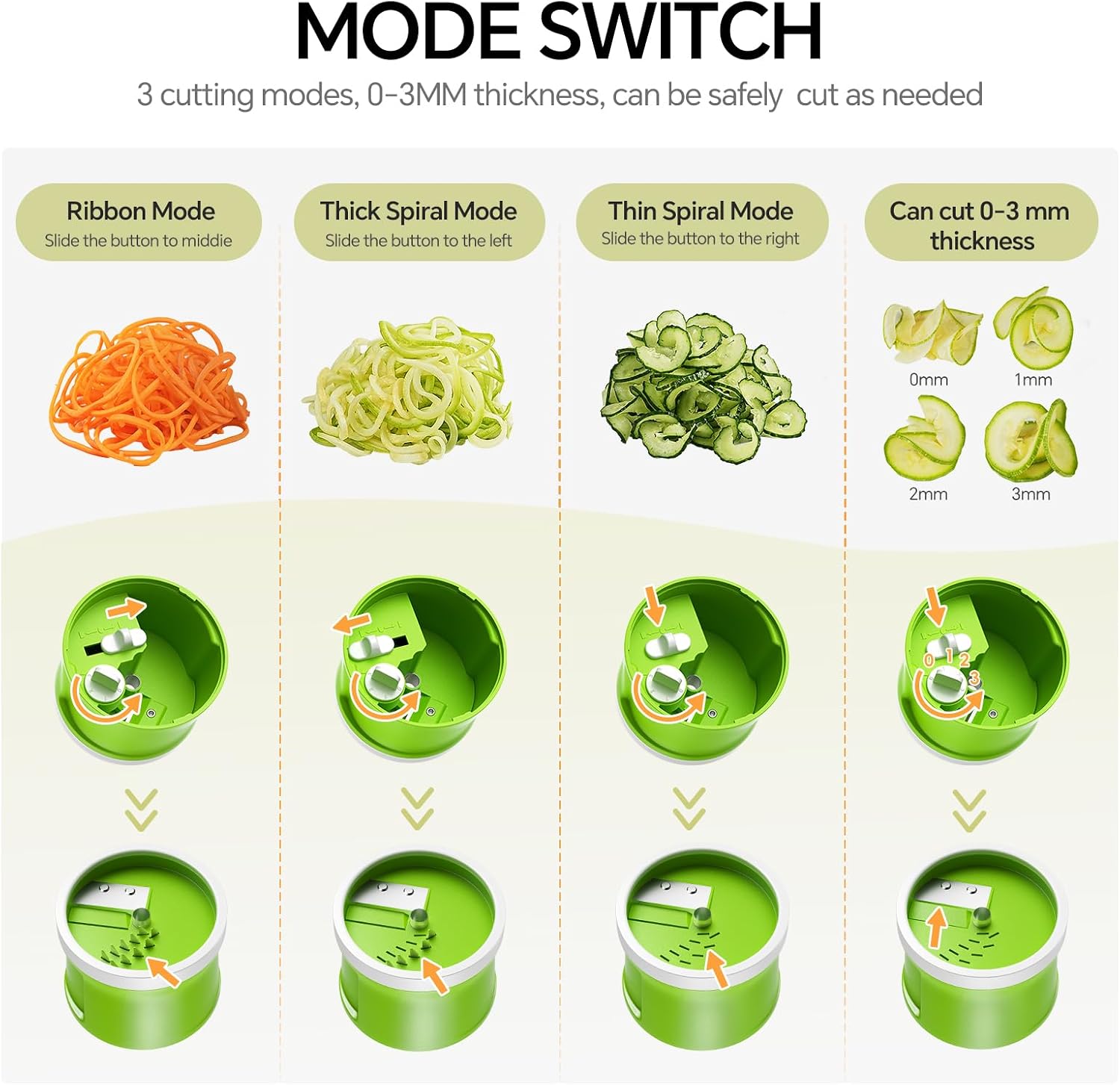
First up, Blade Variety and Adjustability. This is the absolute core of any spiralizer worth its salt. A 4-in-1 model, like the kind touting “adjustable thickness,” suggests it comes with different blades or a mechanism to change the noodle shape. You’ll usually find options for thin spaghetti-like strands, wider fettuccine ribbons, and sometimes even flat slices or curly fries. Think about what you’ll actually make. Do you live for delicate zucchini spaghetti? Or do you prefer hearty cucumber ribbons for salads? Some cheaper models might offer only one or two fixed blades. That’s a serious limitation if you crave variety. The ability to adjust thickness on a single blade is a really smart feature, letting you go from super-fine angel hair to a more robust pasta texture without swapping out parts. But be warned: sometimes, “adjustable” can mean finicky, with tiny levers that feel like they’ll snap off after a few uses. It’s a trade-off between versatility and potential fragility.
Then there’s the Design and Power Source. We’re mostly talking about manual spiralizers here, often divided into handheld, horizontal crank, or vertical crank designs. Handheld spiralizers are compact, usually shaped like a cup or an hourglass, and you twist the veggie right into the blade. They’re dead simple, often quite budget-friendly, but they demand a good grip and aren’t so kind to your wrists if you’re processing a mountain of zucchini. A horizontal crank spiralizer, which typically suctions onto your countertop, gives you leverage. You push the veggie into a blade at one end and turn a handle. This is the workhorse for many. Vertical crank versions are similar, but the veggie stands upright, which can sometimes be more stable, particularly for longer, thinner vegetables like carrots. Electric versions exist too, but that’s a whole other ball game — usually pricier, bulkier, and honestly, often overkill for most people’s spiralizing needs. A common pitfall? Suction cups that fail on textured counters. That’s just annoying.
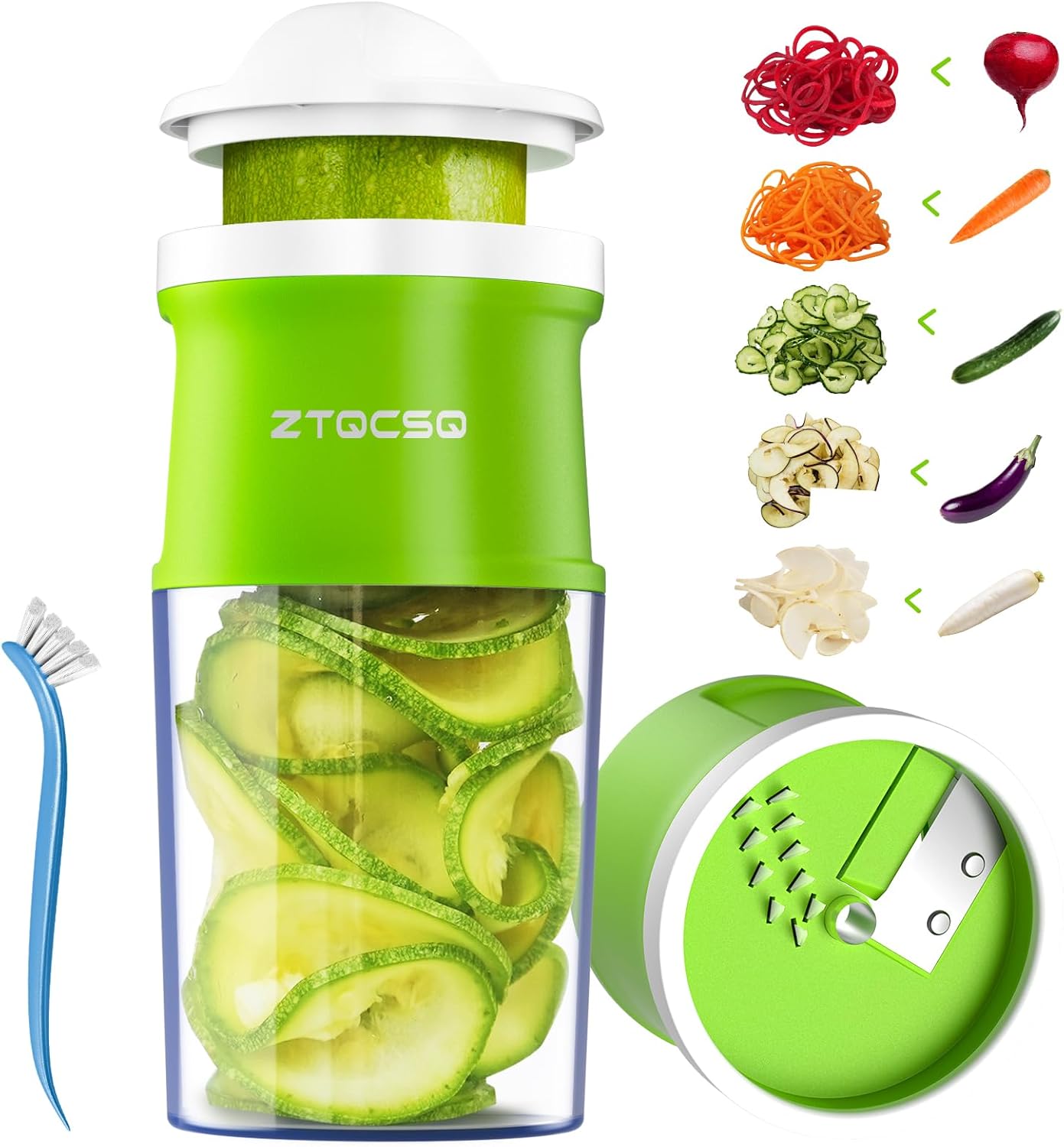
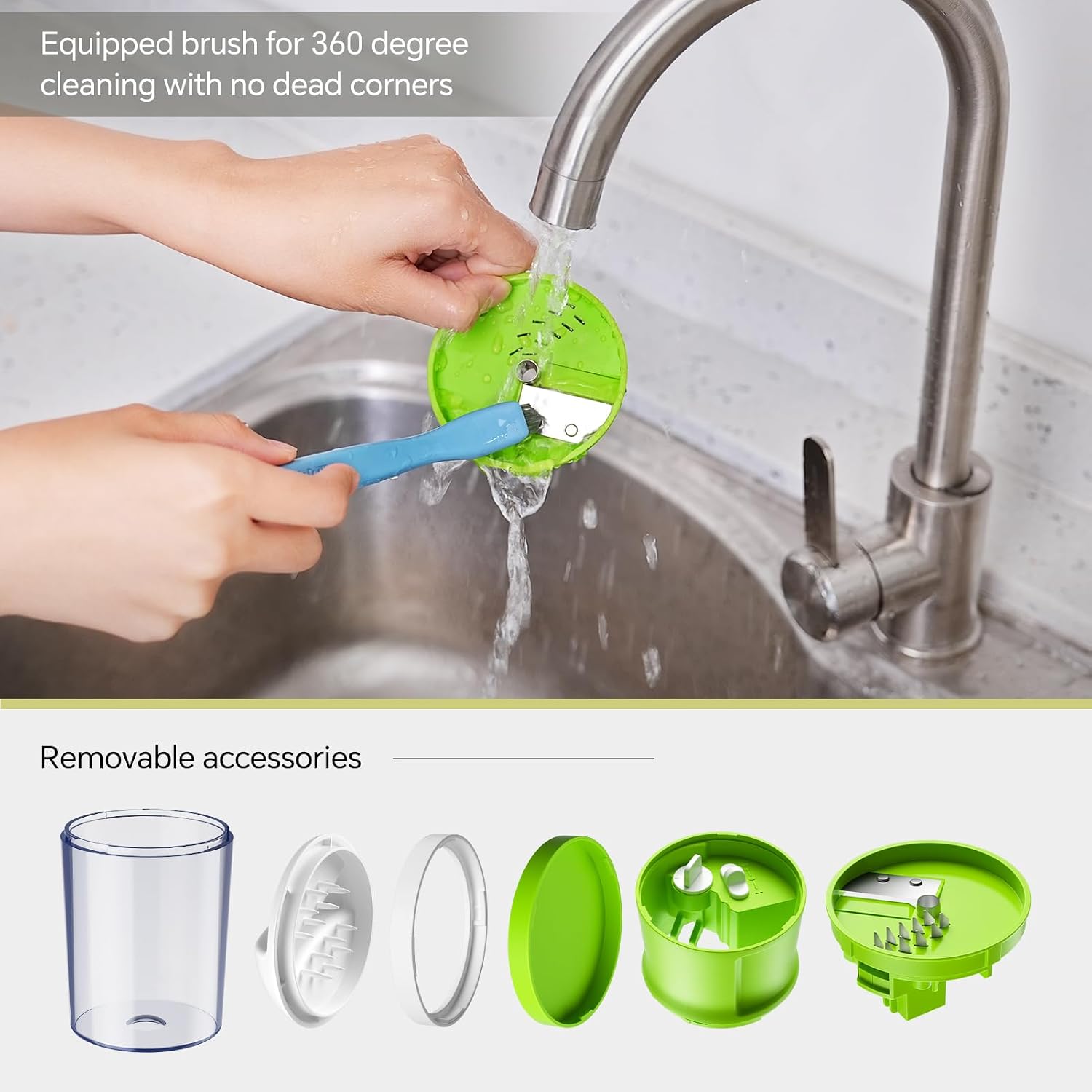
Ease of Cleanup is paramount. Let’s be real: if a kitchen tool is a pain to clean, you won’t use it. Period. Spiralizers, with their intricate blades and nooks, can be notorious for trapping veggie bits. Models that come apart easily, are dishwasher safe, or include a dedicated cleaning brush (like the specific green model often highlighted) are far more appealing. Blades can be sharp, naturally, so you want to minimize hand contact. Think about how many separate pieces you’ll be washing. More parts mean more scrubbing. That’s just physics.
Consider Build Quality and Materials. Cheaper plastics often feel flimsy and might not stand up to the pressure of harder vegetables like sweet potatoes. You want sturdy, food-grade ABS plastic for the body and sharp, rust-resistant stainless steel for the blades. A wobbly handle or a blade that dulls after a few uses is a recipe for frustration. Some premium models incorporate metal components for added durability, but those push up the price. Don’t cheap out too much here; a flimsy one is a waste of money no matter how little you pay.
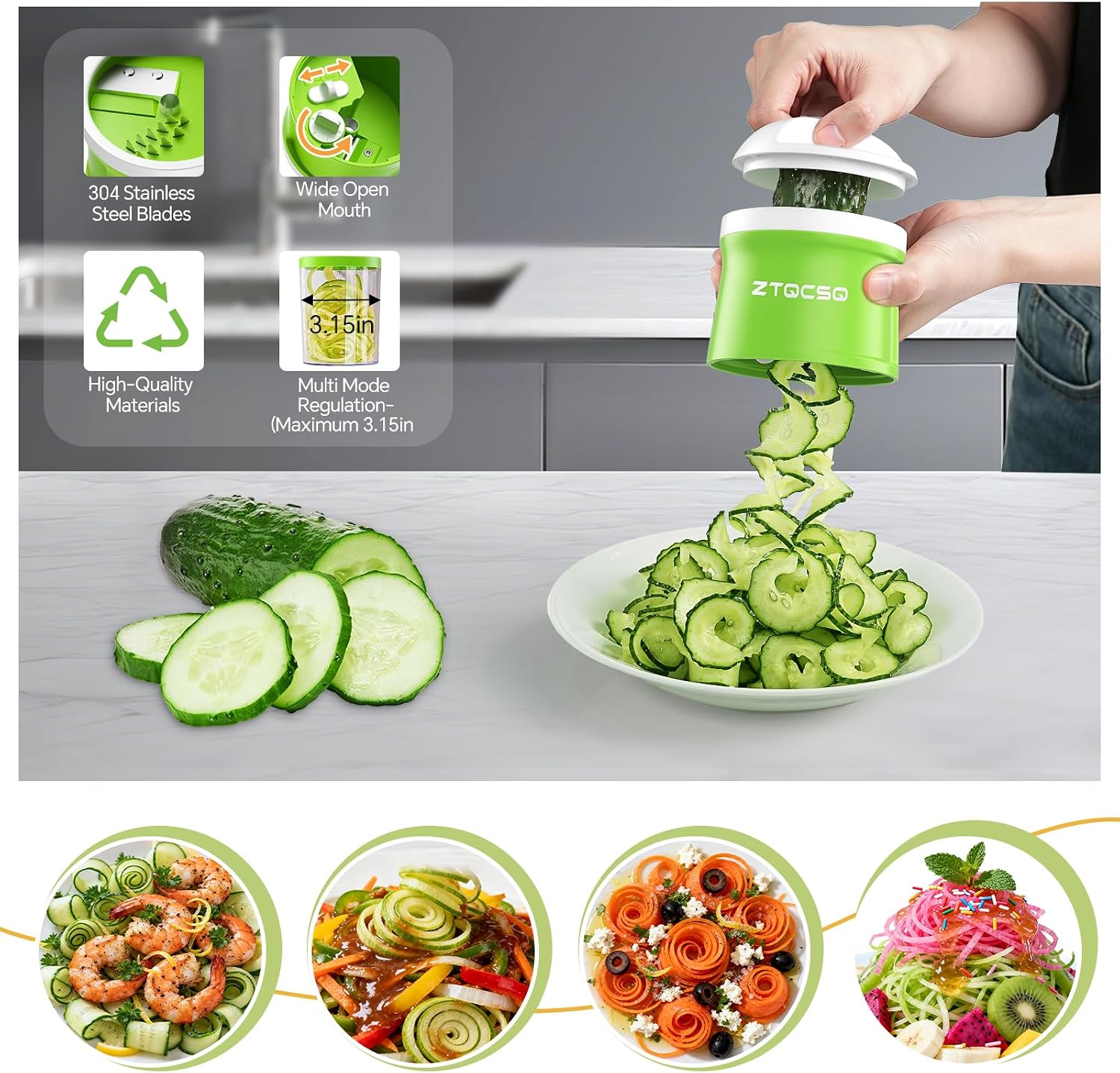
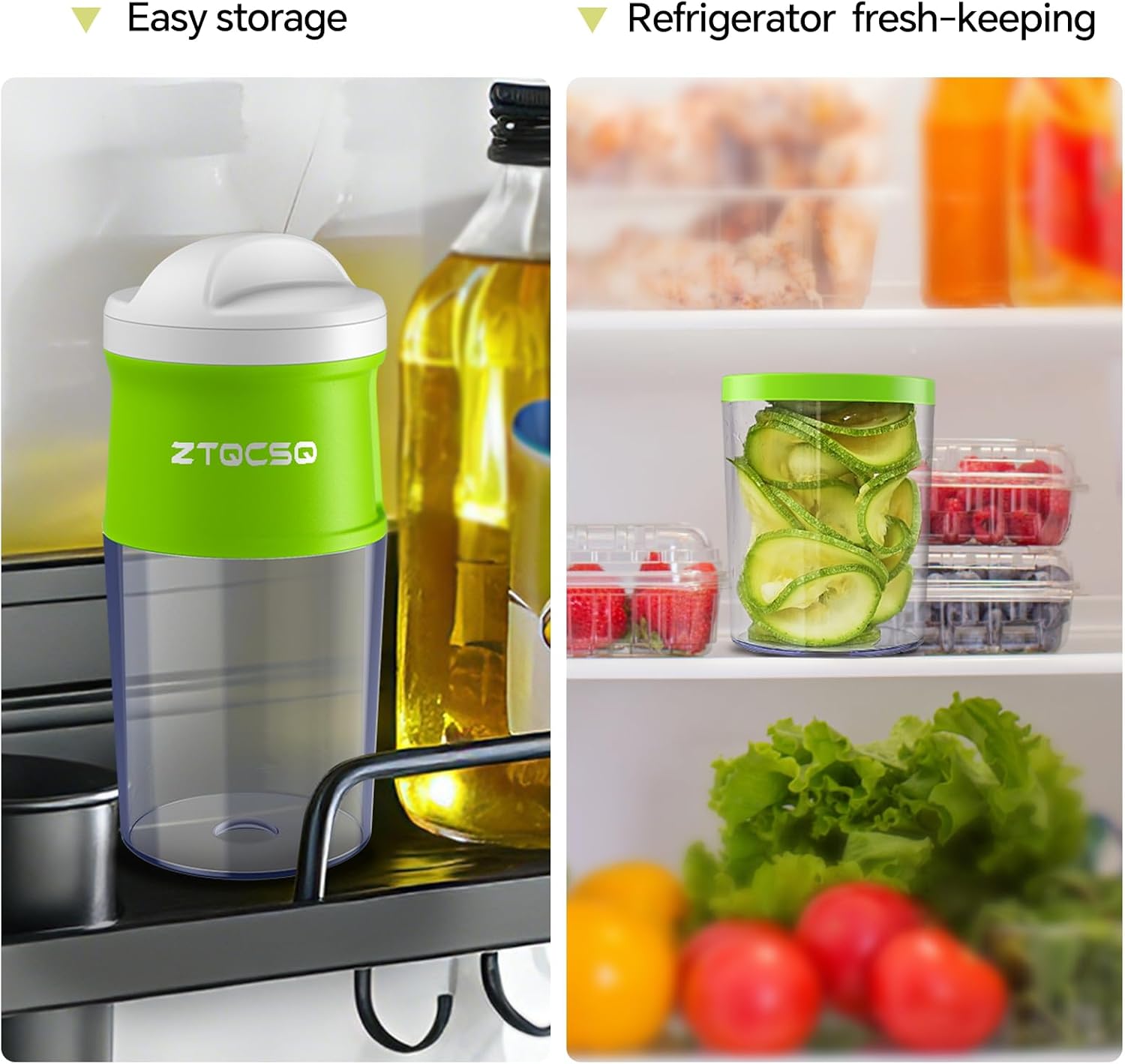
Integrated Features can seriously improve the user experience. A food container to catch your veggie noodles? Genius. It minimizes mess, saves you from needing an extra bowl, and makes transfer to your pan or plate simple. A cleaning brush (as noted in the featured product description)? Absolutely invaluable. Nobody wants to use a toothpick to dig out stubborn carrot bits. Some spiralizers also include a built-in storage compartment for extra blades, which is super convenient and helps prevent lost pieces. Little things, but they add up.
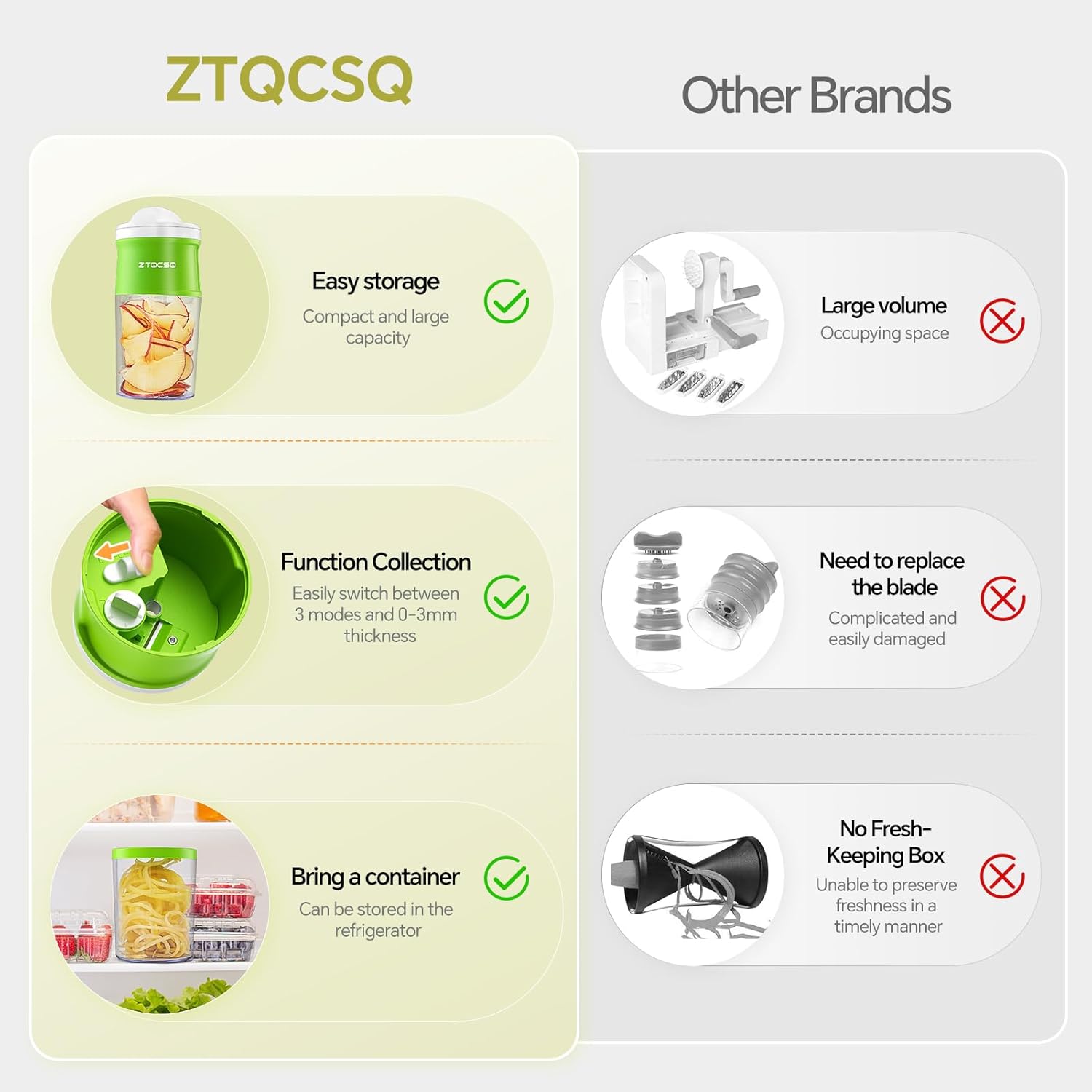
Finally, Footprint and Storage. Where are you going to put this thing? Handheld spiralizers are tiny. Crank models, while more efficient, take up more drawer or cupboard space. If your kitchen is already crammed, a bulky machine isn’t going to get used, no matter how good its “zucchini spiralizer veggie noodle maker” capabilities are.
How to Match the Product to Your Situation
Choosing the right spiralizer isn’t a one-size-fits-all deal. Your lifestyle, cooking habits, and how often you plan to make veggie noodles really dictate what’s going to work. Let’s look at a few common scenarios.
The Health-Conscious Meal Prepper: You’re all about those healthy eating goals. Swapping out traditional pasta for zoodles, cucumber spaghetti, or even sweet potato noodles is a regular thing. You’re likely processing a fair amount of vegetables at once, maybe once or twice a week. For you, consistency, efficiency, and a good variety of noodle shapes are key. You don’t want to wrestle with a tiny handheld gadget for 30 minutes. You need something robust, stable, and quick. A horizontal or vertical crank spiralizer, especially one with adjustable thickness and multiple blades, will be your friend. The “4-in-1” models are right in your wheelhouse here.
The Busy Parent or Casual Cook: You appreciate convenience. Maybe you want to sneak extra veggies into your kids’ meals or whip up a quick weeknight salad. You’re not spiralizing industrial quantities, but you do want it to be easy and mess-free. Cleanup is a major factor. You need something simple to operate and even simpler to clean. A crank model with an integrated food container makes sense, preventing vegetable bits from flying everywhere. The cleaning brush is a must-have. You’re looking for that “zoodle maker” that just works without a fuss. Don’t want extra stress.
The Kitchen Minimalist/Occasional Explorer: Your counter space is precious. You dabble in new recipes, maybe trying zoodles for a specific dish, but it’s not a daily habit. You appreciate compact tools that don’t demand a lot of storage. A handheld spiralizer could be a decent option, especially if you’re mostly doing softer veggies like zucchini and cucumber. They’re affordable and disappear into a drawer. Just remember their limitations on harder produce or larger batches. You’re not trying to open a vegetarian restaurant, after all.
A Comparison of Spiralizer Types
| Type/Tier | Best For | Price Tier | Key Feature | Watch-Out |
|---|---|---|---|---|
| Handheld Spiralizer | Small portions, soft vegetables, travel | Budget-friendly | Ultra-compact, easy to store | Less stable, tough on wrists for large batches |
| Crank Spiralizer (Basic) | Regular use, various veggies, stable setup | Mid-range | Good leverage, multiple fixed blades | Can be bulky, suction cups vary in reliability |
| Crank Spiralizer (4-in-1 Versatile) | Frequent use, varied recipes, meal prep | Mid-range+ | Adjustable thickness, integrated container | More moving parts, potential for finicky adjustments |
| Electric Spiralizer | Large quantities, minimal effort, limited mobility | Premium | Hands-off operation, very efficient | Significant counter space, harder to clean, pricey |
Handheld Spiralizer: These are your entry-level spiralizers, often shaped like an hourglass. They’re undeniably convenient for small jobs, say, a single zucchini for one serving. But don’t expect to spiralize a whole bag of sweet potatoes without a serious arm workout.
Crank Spiralizer (Basic): A step up, these models typically suction onto your countertop, providing stability and leverage. They’re usually equipped with several interchangeable blades, good for different noodle shapes, but often lack the precise thickness adjustments of more advanced models.
Crank Spiralizer (4-in-1 Versatile): This is where models like the “4-in-1 Vegetable Spiralizer Slicer” fit in. They marry the stability of a crank with superior blade options, often including adjustable thickness settings, which is a significant upgrade for culinary flexibility. Plus, the included food container and cleaning brush are huge bonuses.
Electric Spiralizer: If you’re running a commercial kitchen or have mobility issues, an electric model might be justified. Otherwise, for the average home cook, these take up a lot of real estate and cost a good bit more for a task that manual models handle perfectly fine.
Spiralizing for Specific Scenarios
Look, we don’t all cook the same way every day. Your spiralizer needs to flex with your routine.
For Daily Meal Prep Warriors
If you’re making zoodles, cucumber ribbons, or other veggie noodles a few times a week for meal prep, you need efficiency and durability. You’ll be using this tool often. A crank spiralizer with a strong suction base and adjustable blade thickness will be your MVP. The “4-in-1” designation is important here because you’ll want those different noodle types for variety in your meals. And that food container? A godsend for batch processing. No more scattering zucchini spirals across your counter.
When Entertaining Guests
Let’s say you’re hosting a dinner party and want to impress with a colorful, fresh salad featuring spiralized carrots or a unique cucumber garnish. Here, presentation matters. The adjustable thickness feature becomes surprisingly handy, allowing you to create delicate, uniform strands that look professional. You’re not necessarily making huge quantities, but you want reliability and ease of use under pressure. The included cleaning brush means less time scrubbing when you’d rather be socializing.
In a Compact Kitchen Setting
Tight on space? Most of us are. You might think a handheld spiralizer is the only option, but many compact crank models offer better performance without taking over your whole drawer. Look for one where the blades store neatly within the unit itself, and if it comes with a food container, that’s one less dish you need to find space for. The ability to break down easily for storage is a serious plus here. Don’t compromise entirely on function if you don’t have to.
Common Mistakes When Buying or Using a Spiralizer
A lot of frustration with kitchen gadgets comes from unrealistic expectations or simple user errors. Spiralizers aren’t immune.
One big mistake is underestimating the force needed. Especially with harder vegetables like sweet potatoes, carrots, or even denser zucchini, you need to apply firm, even pressure. If you’re gentle, you’ll get broken bits and uneven noodles, not those beautiful spirals. People often blame the machine when their technique is the issue. It’s not magic, it’s mechanics.
Another common pitfall is not using the right vegetable size or type. A giant, overgrown zucchini that’s mostly seeds won’t spiralize well – you’ll get watery, messy results. Similarly, trying to spiralize something too small or too soft (like a ripe tomato) will just lead to mush. Stick to firm, relatively straight vegetables that fit securely into the device’s holder. And core apples and pears before trying to spiralize them; seeds are not your friend here.
Ignoring immediate cleanup is a recipe for regret. Those tiny veggie bits dry and harden into concrete if left on the blades. What was a 30-second rinse can become a 5-minute scraping ordeal. Use that cleaning brush right away. You’ll thank yourself.
Finally, some folks expect perfect pasta replication. Veggie noodles are not pasta. They have a different texture, different mouthfeel, and cook differently. Embrace the vegetable for what it is! Zoodles are delicious, but they’re not al dente linguine. Setting this expectation early prevents disappointment.
Why/How/What
Why bother with a spiralizer when you have a knife? Because a spiralizer creates uniform, consistent strands of vegetables that are nearly impossible to achieve by hand, transforming them into visually appealing and fun “noodles.” It encourages healthy eating by offering a genuinely satisfying, low-carb alternative to traditional pasta, and it simply adds a touch of culinary flair that makes meals more exciting.
How does a 4-in-1 spiralizer achieve adjustable thickness? Typically, these models use either interchangeable blade cartridges with varying gaps, or a single blade assembly with a movable guide that can be positioned closer or further from the blade. This allows you to select how much vegetable passes through the cutting edge, resulting in thicker or thinner noodles. It’s usually a dial or a lever you flip.
What kind of vegetables work best in a spiralizer? Firm, cylindrical, or slightly tapered vegetables with a relatively solid core are ideal. Think zucchini, cucumber, carrots, sweet potatoes, beets, apples, and even firm pears. Softer veggies or those with very large seed cavities, like bell peppers, tend to be less successful.
FAQ
What does “4-in-1” actually mean for a spiralizer?
It usually refers to the number of different blade types or cutting styles the device offers, such as thin spaghetti, wider fettuccine, a ribbon cut, and sometimes a grating or slicing option. These different cuts allow for diverse culinary applications.
Are spiralizers hard to use for beginners?
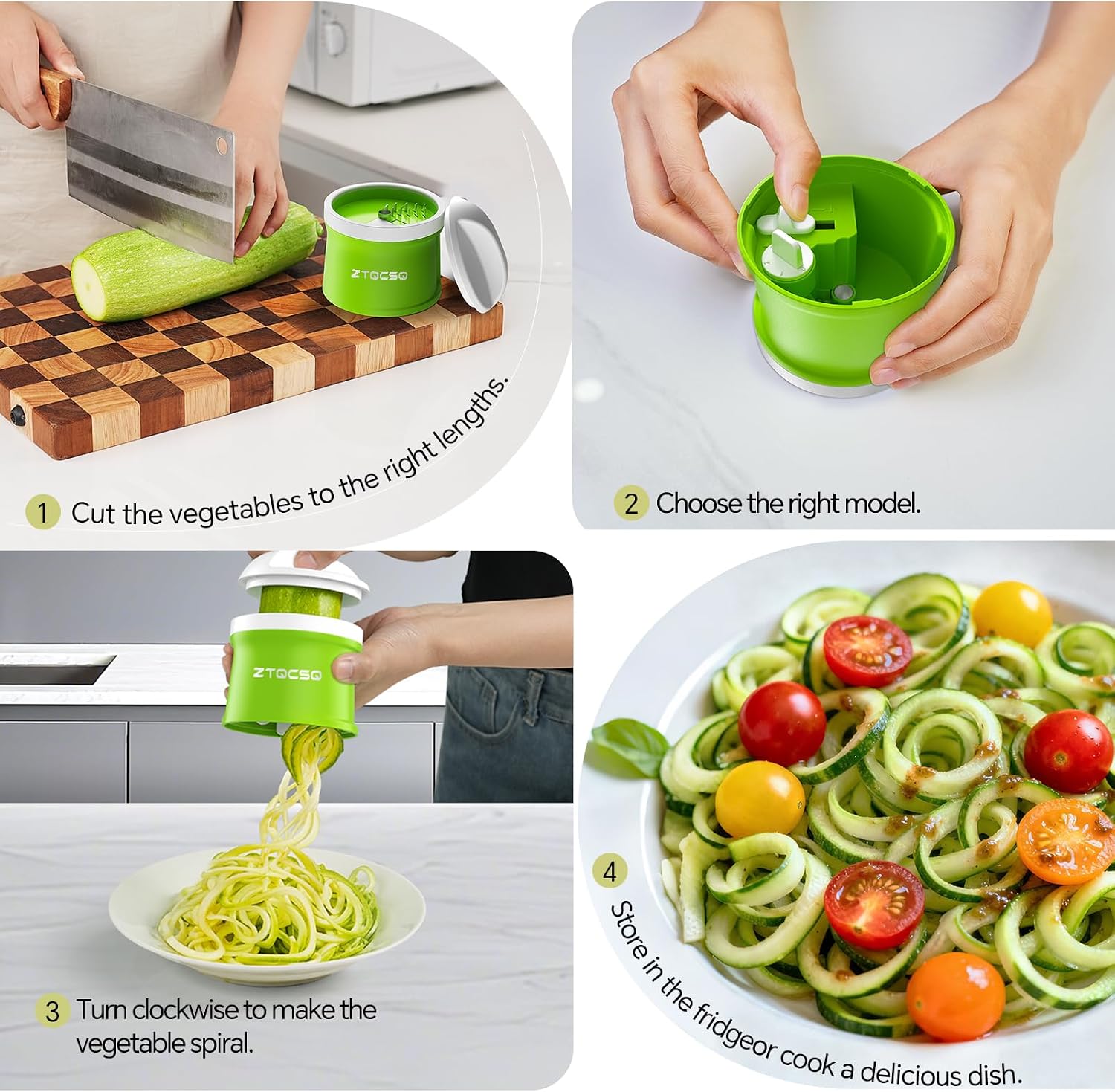
Not at all. Most manual spiralizers, especially crank models, are quite intuitive. It’s typically a matter of inserting the vegetable and turning a handle or twisting. There might be a slight learning curve for applying even pressure, but it’s generally quick to master.
Can I spiralize harder vegetables like sweet potatoes with a manual spiralizer?
Yes, absolutely. Manual crank models are generally robust enough for harder vegetables. You’ll need to apply more consistent pressure, but a well-made spiralizer with sharp blades can handle sweet potatoes, beets, and even firm squash.
Is it difficult to clean a spiralizer’s blades?
Cleaning can be a pain if not done immediately, as bits of vegetable can get stuck. However, models that disassemble easily and include a dedicated cleaning brush (like the “green” model described) make the task much simpler and faster.
Do spiralized vegetables cook faster than regular cut vegetables?
Yes, they do. The increased surface area and thinner strands mean spiralized vegetables cook much more quickly, whether you’re sautéing, steaming, or even eating them raw. This is a huge time-saver for busy cooks.
What’s the benefit of an integrated food container?
An integrated food container catches the spiralized vegetables as they’re produced, minimizing mess on your countertop. It also makes it easier to transfer the noodles directly to a pan or bowl, streamlining your meal preparation.
Will a spiralizer really help me eat healthier?
Many people find it does! By making vegetables more fun and accessible as “noodles” or decorative elements, a spiralizer can encourage increased vegetable consumption. It’s a simple, visual trick to make healthy food more appealing, especially for kids.
Final Recommendation
For most home cooks who are serious about incorporating more fresh vegetables into their diet, particularly as a versatile alternative to traditional pasta, a 4-in-1 crank spiralizer with adjustable thickness and an integrated food container is your sweet spot. This type of gadget offers the best balance of efficiency, versatility, and user-friendliness without venturing into expensive, bulky electric territory.
If you’re making zoodles or cucumber spaghetti regularly for meal prep, the stability of a crank model and the benefit of catching all those veggie noodles in one tidy container are invaluable. Don’t waste your money on a flimsy handheld version if you plan on consistent use; you’ll just end up frustrated and potentially with sore wrists. Look for one that promises easy cleanup, maybe even includes a brush. That’s the real winner for practical, everyday use.
#Vegetable #Spiralizer #Slicer #Veggie #Noodles #Adjustable #Thickness #Zucchini #Spiralizer #Veggie #Noodle #Maker #CucumberZoodleSaladSpaghettiPasta #Food #Container #Cleaning #Brush #Green
![Titanium Cutting Board, Double Sided Food Grade Pure Titanium/PP, Cutting Board for Kitchen, Easy to Clean Large Size [18”*12.5”+15.5”*10.5”+12”*8.5”]](https://www.decorwild.com/wp-content/uploads/2026/08/Review-Pure-TitaniumPP-Double-Sided-Board-Large-Easy-Clean-Kitchen-300x240.jpg)