


The Savvy Shopper’s Guide to the Modern Can Opener: Is the Kitchen Mama Auto Electric Worth Your Dime?
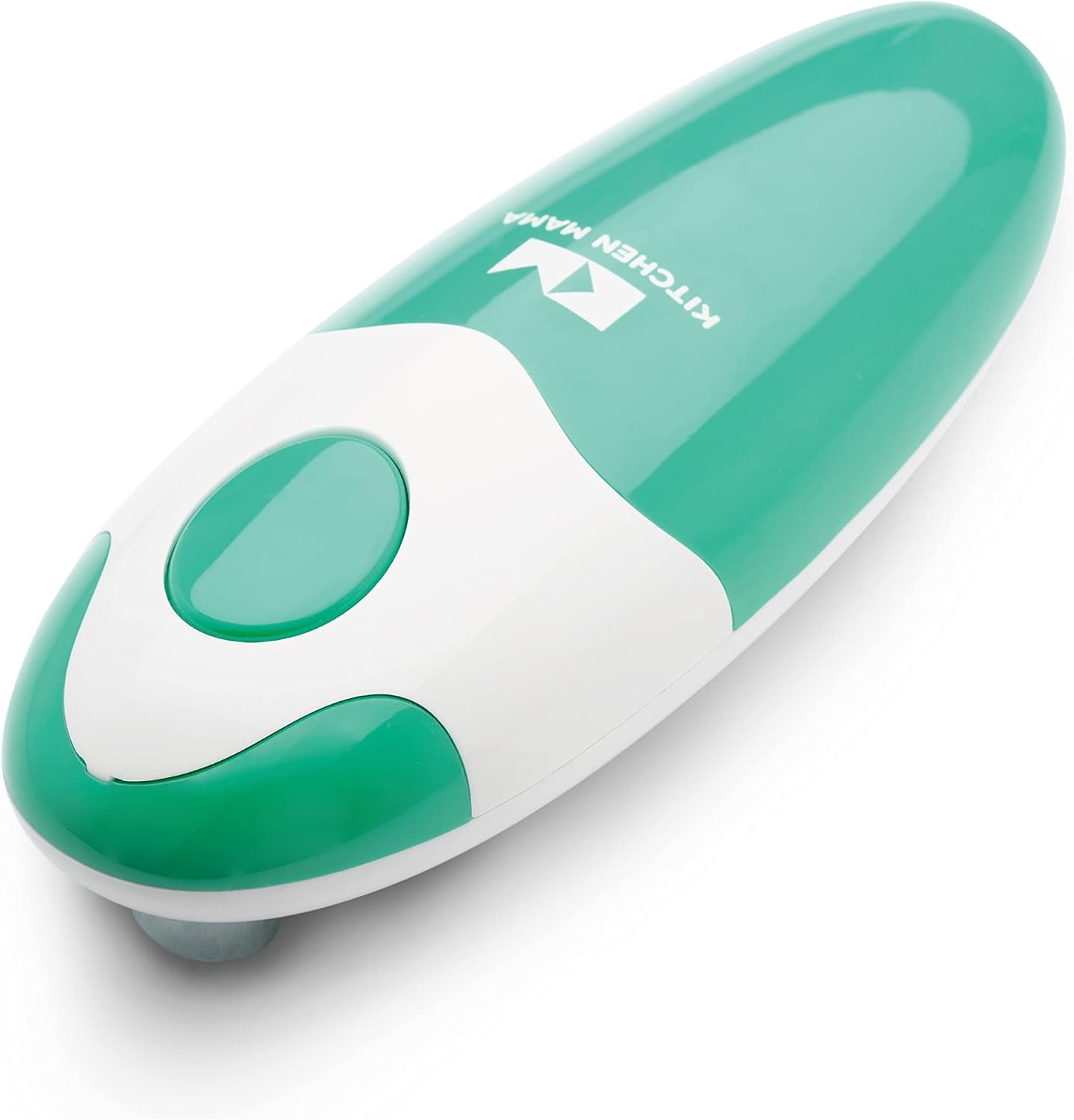
Alright, let’s talk can openers. Not exactly the sexiest kitchen gadget, I know, but trust me, a bad one can absolutely ruin your day, or worse, your dinner. This guide cuts through the noise, diving deep into what really matters when you’re looking for one of these essential tools, especially if you’ve been eyeing something like the Kitchen Mama Auto Electric Can Opener, Teal. We’re here to figure out if upgrading to an automatic, hands-free model with a smooth edge is actually a smart move for your kitchen and your wallet.
Quick Answer Box: The Kitchen Mama Verdict
For many, the Kitchen Mama Auto Electric Can Opener is a genuinely smart buy, especially if you value safety, convenience, and ease of use. It excels for those with limited hand strength or busy kitchens, offering a smooth-edge cut that eliminates sharp lids. While it won’t be the cheapest option out there, its hands-free operation and innovative design make it a compelling choice for specific needs, providing tangible benefits that often justify the investment.
What to Look For (The Buying Criteria)
Navigating the world of can openers, believe it or not, involves a few key decisions. It’s not just a blade and a handle anymore. If you’re pondering an automatic electric can opener, particularly one like the Kitchen Mama, these are the factors that should really steer your decision-making.
First up, the type of operation. Are we talking manual muscle, a countertop electric behemoth, or something sleek and battery-powered? Manual openers are often budget-friendly and simple. No cords, no batteries, just good old hand power. But they demand grip strength and can leave wicked sharp edges. Countertop electrics, on the other hand, are hands-free and powerful, usually corded, taking up permanent counter real estate. They’re consistent, no doubt, but sometimes a bit much for a small kitchen. Then you have the automatic, battery-operated types, like our subject here. These promise the best of both worlds: electric ease without the counter clutter. But they introduce battery dependence, which, let’s be honest, can be a pain if you forget to swap them out.
Then there’s the truly crucial aspect: the edge type. This isn’t just a minor detail; it’s a safety game-changer. Most traditional can openers, both manual and electric, cut down into the top of the can lid, leaving a notoriously jagged, razor-sharp edge. Ever tried to push a lid into the can for disposal and nearly sliced a finger? Yeah, that’s what I’m talking about. A “smooth-edge” or “safety cut” can opener works differently. It cuts under the rim, separating the lid from the can body, so both the can and the lid end up with a smooth, blunt edge. This is a huge win for safety, especially if you have kids rummaging through the trash or just prefer not to flirt with stitches every time you open a can of beans.
Ease of use and ergonomics are far more important than many realize. I’ve seen people spend way too much on features they never use, or worse, get a product that’s a nightmare to operate. A good can opener, especially for something you use regularly, should be comfortable in your hand (if it’s a handheld model) and require minimal effort. For automatic models, look for straightforward controls—ideally, a single button. If you’re someone who struggles with grip strength, perhaps due to arthritis or age, this factor becomes non-negotiable. Trying to wrestle a stubborn manual opener open when your hands hurt? No thanks.
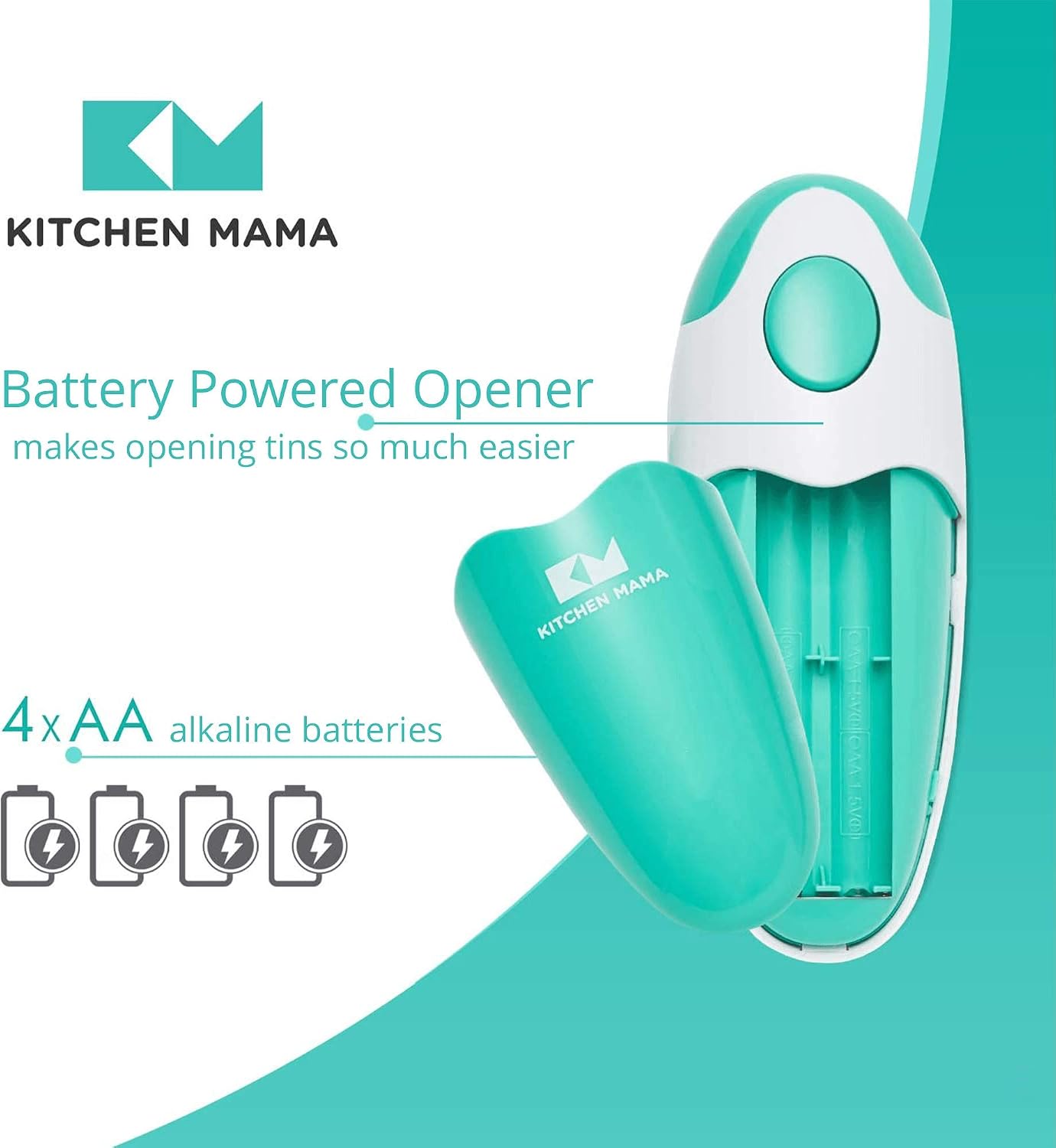
Next, consider the power source and portability. With electric models, you’re either plugged into a wall or running on batteries. Countertop models need an outlet, meaning they’re static. Battery-operated models, like the Kitchen Mama, offer fantastic portability. You can use them anywhere, store them in a drawer, and they won’t add to your countertop clutter. That freedom is appealing. However, it also means you’ll need to keep spare batteries handy or face the frustrating moment when your can opener dies mid-can. It’s a trade-off, really: ultimate flexibility versus constant power.
Durability and materials come into play for longevity. Nobody wants to buy a new can opener every year, right? Look for robust construction. Sturdy plastics are fine, but metal components in the cutting mechanism tend to last longer and stand up to tougher cans. Food-safe materials are a given, of course, but it’s worth a quick check to ensure the parts that contact your food are up to snuff. A flimsy construction will lead to frustration and replacement sooner than you’d like.
Finally, think about cleaning and maintenance. Can openers, especially those that touch food, need to be clean. Some manual openers can be awkward to wash, with nooks and crannies for food to get stuck. Electric models might have removable parts, or they might just need a simple wipe-down. The easier it is to keep hygienic, the more likely you are to actually keep it clean. It’s a small thing, but it adds up over time.
How to Match the Product to Your Situation
Finding the right can opener isn’t a one-size-fits-all deal. It’s about aligning the tool with your specific needs and kitchen rhythm. Let’s sketch out a few common scenarios and see where a particular can opener, especially the automatic kind, truly shines.
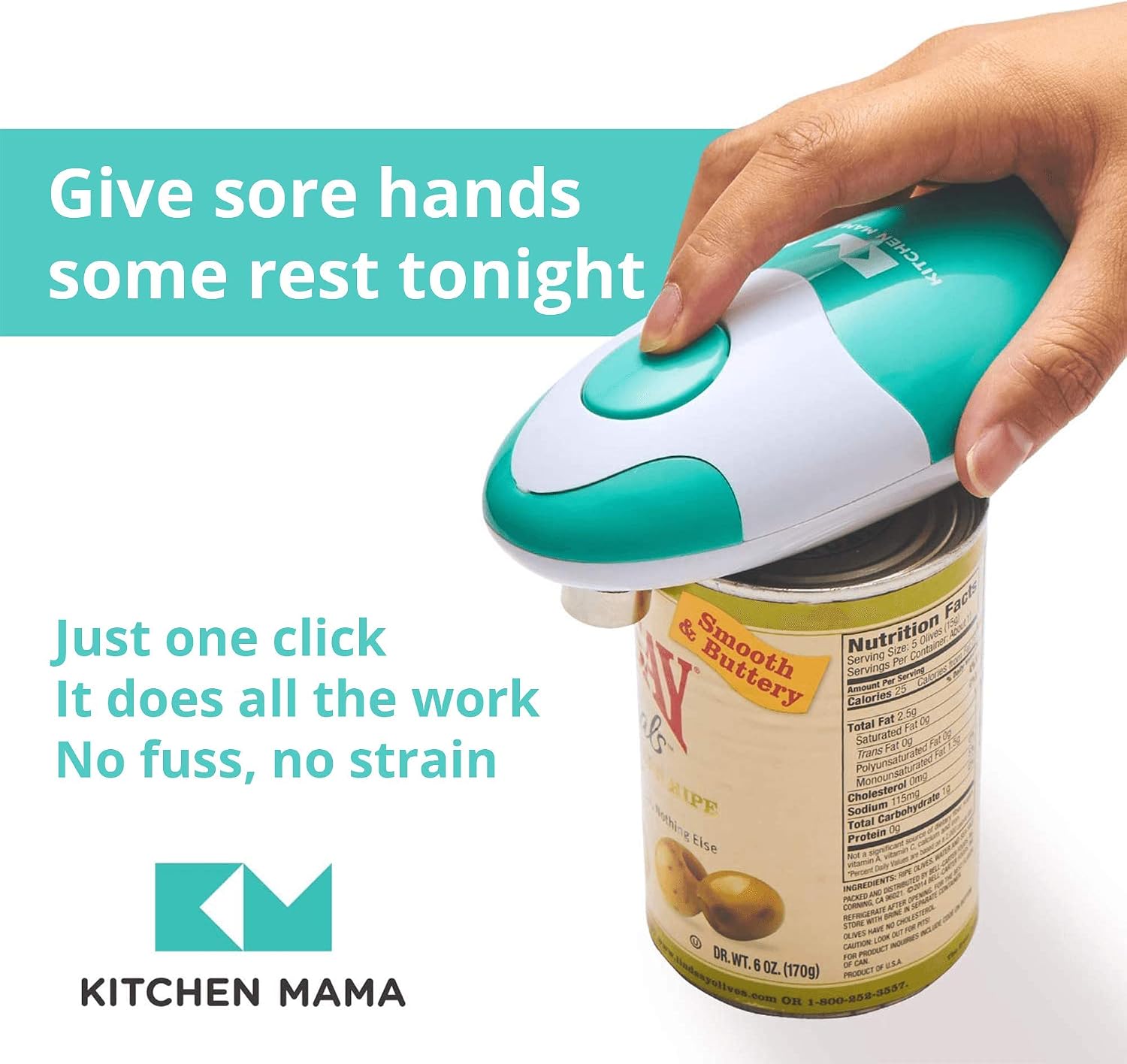
First, there’s The “Everyday Convenience Seeker.” This person probably cooks often, uses canned goods regularly, and frankly, has better things to do than wrestle with a can. They value efficiency. Maybe they’re multitasking in the kitchen, or just want to minimize effort after a long day. For this individual, an automatic electric can opener like the Kitchen Mama is a godsend. Its hands-free operation means you can set it and forget it for a moment, letting it do its thing while you chop veggies or stir a pot. The convenience factor is high, and for someone opening a few cans a week, it starts to look less like a splurge and more like a smart investment in domestic tranquility. It simply makes life a little easier.
Then we have The “Kitchen Minimalist/Budget Watcher.” This person prizes simplicity, doesn’t want another gadget cluttering up their limited counter or drawer space, and is super mindful of cost. They don’t mind a bit of elbow grease. For them, a well-made, sturdy manual can opener is probably the answer. It’s inexpensive, reliable (no batteries to worry about!), and takes up virtually no space. They might not get the smooth edge or the hands-free luxury, but they’re okay with that trade-off for the sake of simplicity and savings. They’re probably not opening multiple cans every single day, so the effort isn’t a deal-breaker.
Finally, consider The “Assisted Living/Accessibility-Focused Cook.” This is perhaps where the automatic, smooth-edge can opener like the Kitchen Mama makes its most profound impact. Folks dealing with arthritis, carpal tunnel syndrome, limited hand strength, or visual impairment often find traditional can openers, even countertop electrics, incredibly challenging or even dangerous. The one-touch, no-grip, smooth-edge design isn’t just a convenience here; it’s a necessity. It provides independence and safety, allowing someone to prepare meals without pain or the fear of injury. For this group, the slight premium for a battery-operated can opener like the Kitchen Mama is absolutely justified. It’s about dignity and practicality.
Decoding Can Openers: A Type-by-Type Rundown
Choosing a can opener isn’t just about picking a color. The category has distinct tiers, each with its own perks and pitfalls. Let’s break down the common options you’ll find out there.
| Type/Tier | Best For | Price Tier | Key Feature | Watch-Out |
|---|---|---|---|---|
| Basic Manual Can Opener | Occasional users, small kitchens, emergency kits | Budget-friendly | Simplicity, no power required | Requires hand strength, often leaves sharp edges. |
| Classic Corded Electric Can Opener | Regular can users, busy households, dedicated counter space | Mid-range | Hands-free operation, consistent cut | Can be bulky, takes up permanent counter space. |
| Automatic Hands-Free (e.g., Kitchen Mama) | Dexterity challenges, safety-conscious, convenience-driven | Mid-range to Premium | Smooth-edge cut, portable, one-touch | Relies on batteries, might be slower than manual. |
| High-End Manual Can Opener | Durability seekers, precise control, “buy it for life” mentality | Premium | Superior build quality, ergonomic design | Still requires manual effort, often lacks smooth-edge feature. |
Basic Manual Can Openers are the workhorses of the kitchen, cheap and cheerful, but they demand a firm grip and can be a real pain with certain can types or if your hand strength isn’t what it used to be. The edges they leave are often razor sharp, a definite hazard.
Classic Corded Electric Can Openers offer hands-free ease, consistently getting the job done with minimal fuss once the can is in place; however, they tether you to an outlet and gobble up valuable counter space, which is a real bummer in smaller kitchens. They’re reliable, though.
The Automatic Hands-Free models, exemplified by the Kitchen Mama Auto Electric Can Opener, Teal, represent a modern approach, offering a smooth-edge cut that’s a big step up in safety and a hands-free experience that’s fantastic for convenience. You get portability since they’re battery-operated, but keep those batteries charged!
High-End Manual Can Openers, while still requiring your effort, boast robust construction and thoughtful designs that make them a joy to use for those who prefer mechanical precision; they’re built to last for decades, but usually don’t offer the smooth-edge safety.
Scenario Specifics: When Does the Kitchen Mama Really Shine?
Let’s zoom in on a few situations where a specialized tool like the Kitchen Mama Auto Electric Can Opener, Teal, isn’t just a nice-to-have, but genuinely makes a difference.
First up, for folks with dexterity challenges. This is a huge one. Anyone dealing with arthritis, tremors, carpal tunnel, or just generally reduced hand strength knows the struggle of a traditional can opener. The twisting, the gripping, the force needed to pierce the lid—it’s often painful, if not impossible. The Kitchen Mama’s one-touch, walk-away operation is revolutionary here. You simply place it, press a button, and it motors around the can, hands-free. No gripping required. No strenuous twisting. It’s about enablement, pure and simple.
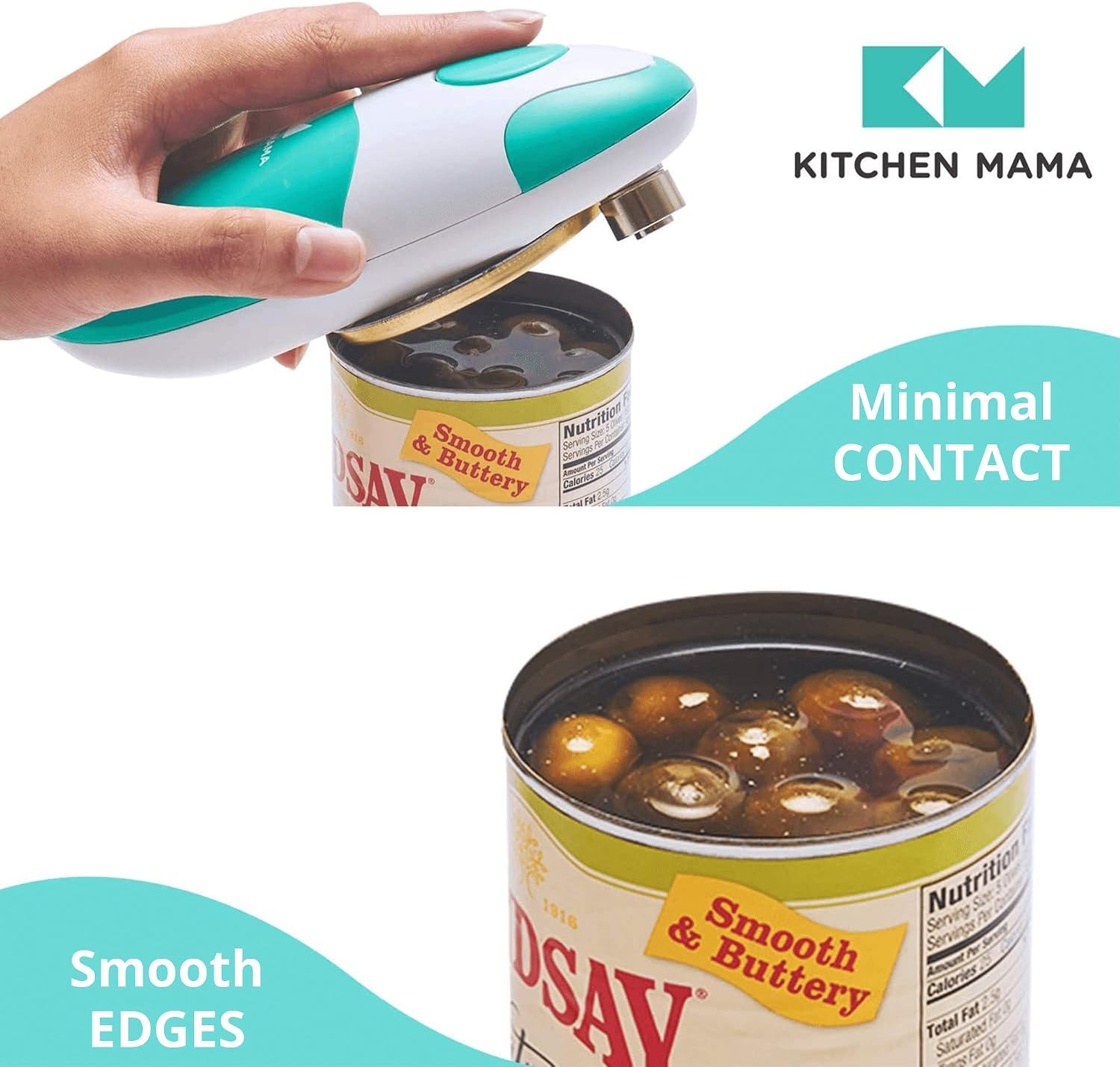
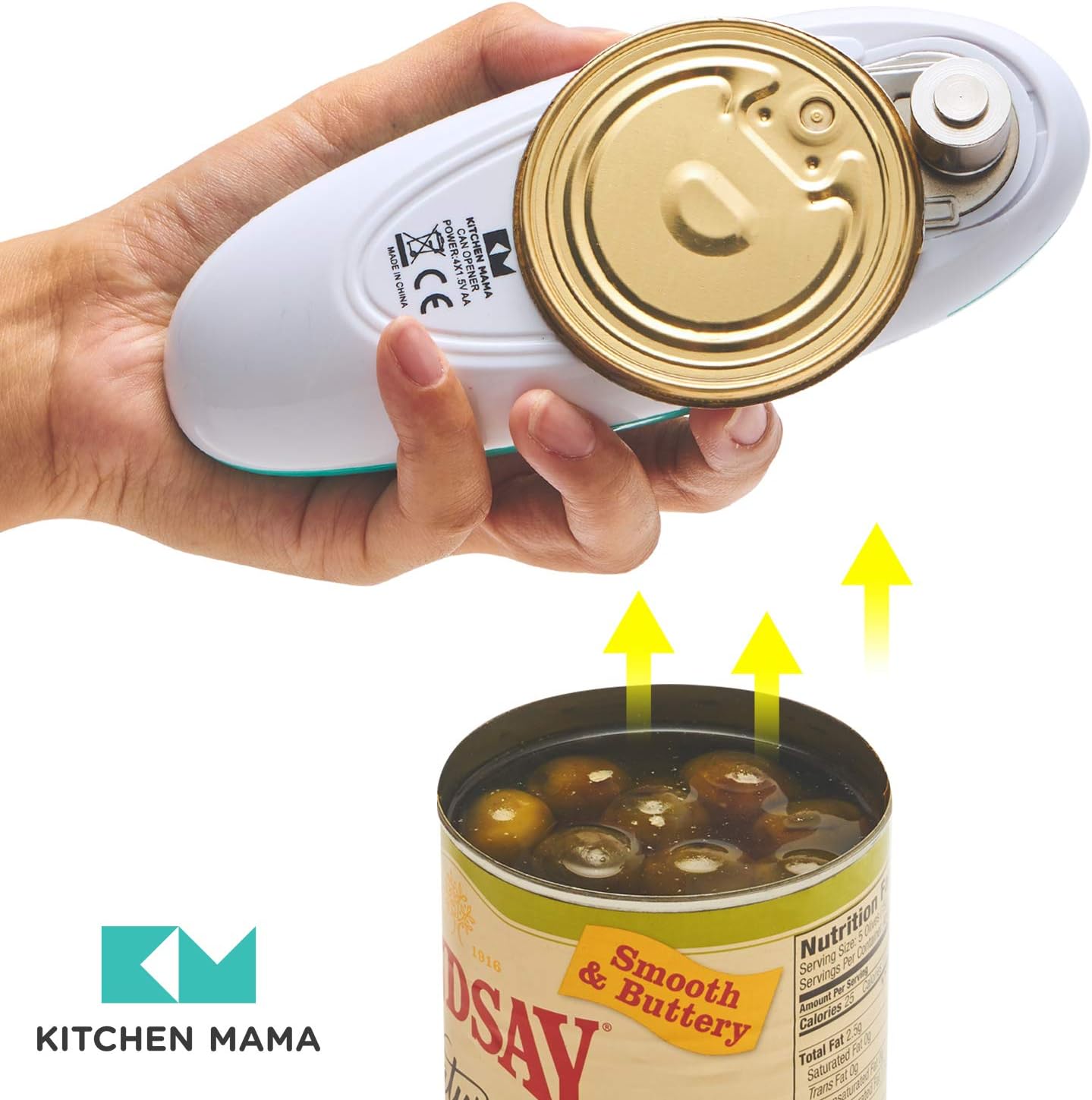
Next, consider the safety-conscious household. Picture this: you’ve just opened a can of diced tomatoes. Now you have a lid with an edge sharper than a chef’s knife. What do you do with it? If you have curious kids helping in the kitchen (or just wandering through), or if you’re dealing with pets who might poke around the trash, those jagged edges are a serious hazard. The Kitchen Mama’s smooth-edge cut is a literal lifesaver. It cuts the can from the side, below the rim, separating the lid without creating any sharp points. Both the can and the lid are left with blunt edges. That’s peace of mind right there. It’s a small detail, but a really significant one.
Finally, think about the decluttered kitchen advocate, or really, anyone who hates another cord snaking across their counter. Corded electric can openers are reliable, sure, but they’re bulky. They’re designed to live in one spot, plugged in. The Kitchen Mama, being battery-operated, doesn’t need to stay out. You grab it, use it, then tuck it away in a drawer. It preserves your precious counter space. Now, it’s still a gadget, so it’ll take up some drawer real estate, but the trade-off is often worth it for the visual cleanliness and flexibility it offers. It gives you back your space.
Common Missteps When Buying a Can Opener
It’s easy to overthink this, or, more commonly, underthink it. People often make a few recurring blunders when picking out a new can opener. Let’s avoid those.
The biggest mistake? Ignoring the edge type. Seriously, so many people just grab any can opener, assuming they all do the same thing. They don’t. That dangerous, jagged lid is a relic that, frankly, we should’ve left behind years ago. Always check if a model offers a smooth-edge or safety cut. If you pass on this, you’re missing out on a huge step forward in kitchen safety.
Another common slip-up is overlooking battery life or the power source. For electric models, especially automatic, battery-operated ones, you have to consider this. Are you okay with replacing batteries every few months, or do you expect a rechargeable solution? A can opener that’s dead in the water because you forgot to swap out the AAs is infinitely more frustrating than just cranking a manual one. It’s a genuine pain point if you’re not prepared.
Then there’s assuming all electrics are “hands-free.” Not quite. Many traditional countertop electric can openers require you to hold the can in place, or at least guide it, as it cuts. While less effort than manual, it’s not the same set-it-and-forget-it convenience offered by fully automatic, battery-powered models like the Kitchen Mama. If true hands-free operation is your goal, be specific in what you’re looking for.
And here’s a simple one: buying purely on price without considering your use case. A dirt-cheap manual opener might seem like a win, but if you’re opening multiple cans daily or have mobility issues, that “bargain” quickly turns into frustration. Conversely, shelling out for a premium electric model when you open a can only once a month is just throwing money away. Match the tool to the task, always.
The “Why,” “How,” and “What” of Modern Can Opening
Modern kitchen tools solve problems we often just accepted. Can openers are no different.
Why invest in a specialized can opener like the Kitchen Mama? It’s about convenience, safety, and consistency. You’re not just buying a tool; you’re buying back a bit of time and effort, reducing the risk of injury, and ensuring every can opens cleanly. For many, the ability to operate it with one hand or with minimal dexterity is a game-changer. It takes a tedious, sometimes dangerous task and makes it simple, even pleasant.
How does a smooth-edge can opener work its magic? Instead of cutting down through the top of the can and its lid, these clever devices cut horizontally just below the can’s rim. This action separates the lid from the can body without ever creating those dreaded sharp edges. The can’s remaining rim and the detached lid both end up with a blunt, safe-to-handle edge. It’s a fundamental shift in design that prioritize safety and ease of handling post-opening.
What should you do if your electric can opener gets stuck? First, don’t panic or force it. Most often, it’s either an alignment issue—the can isn’t seated quite right on the gear—or, for battery-operated models, the batteries might be weak. Try repositioning the can firmly. If it’s battery-powered, swap in some fresh ones. If it still jams, check the cutting mechanism for any stuck food bits or debris that might be impeding its rotation. A quick clean can often resolve the issue.
Frequently Asked Questions About Can Openers
Are electric can openers really better than manual ones?
“Better” depends entirely on your needs. Electric can openers generally offer more convenience, hands-free operation, and sometimes a safer, smooth-edge cut. Manual ones are simpler, more portable, and never run out of power.
How do smooth-edge can openers make a difference?
They cut below the rim of the can, leaving both the can and the lid with blunt, smooth edges. This vastly reduces the risk of cuts and makes disposing of the lid much safer for everyone, especially kids or pets.
Can a battery-operated can opener handle heavy-duty cans?
Most quality battery-operated models, like the Kitchen Mama, are designed to handle standard-sized cans, including heavier-gauge ones. However, extremely thick or oddly shaped industrial cans might still be a challenge for some.
Is the Kitchen Mama easy to clean?
Yes, generally. Since it cuts on the outside of the rim, the cutting mechanism doesn’t come into direct contact with the food inside the can. Usually, a quick wipe with a damp cloth is all that’s needed to keep it clean.
What’s the typical lifespan of an electric can opener?
This varies widely by brand and build quality. A well-constructed electric can opener from a reputable manufacturer can easily last many years, sometimes even a decade or more, with proper care. Budget options, not so much.
Do all automatic can openers leave a smooth edge?
No, surprisingly, not all of them. While many newer automatic models prioritize the smooth-edge feature for safety, some older or less advanced electric can openers still employ a traditional top-cut method. Always check the product description for “smooth-edge” or “safety cut.”
Can I open oddly shaped cans with an automatic model?
Automatic can openers, especially those that grip the can from the side, generally perform best on standard round cans. Opening square, rectangular, or unusually shaped cans can be tricky, if not impossible, for most automatic designs.
Final Recommendation
So, where does that leave us with the Kitchen Mama Auto Electric Can Opener, Teal? For a specific set of users, it’s absolutely a worthy investment. If you consistently find yourself struggling with a manual can opener, whether due to hand pain, a desire for utmost convenience, or a keen awareness of kitchen safety, this device makes a compelling case. It’s a genuine problem-solver.
It’s not for the minimalist who opens a can twice a year and treasures every inch of their drawer space, or the die-hard traditionalist who swears by a basic manual opener. But for anyone prioritizing a smooth-edge cut, hands-free operation, and a bit of everyday luxury in the kitchen, the Kitchen Mama offers tangible benefits that can truly simplify meal prep. Its portability and dedicated safety features position it as a smart, practical choice for the modern kitchen, especially where accessibility or peace of mind are paramount.
#Kitchen #Mama #Auto #Electric #Opener #Teal #Automatic #Hands #Free #Smooth #Edge #FoodSafe #Battery #Operated