Navigating the Waters: Is a 2-Tier Large Dish Drying Rack Really Worth the Counter Space?
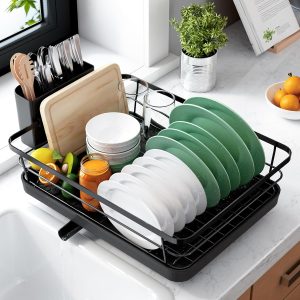
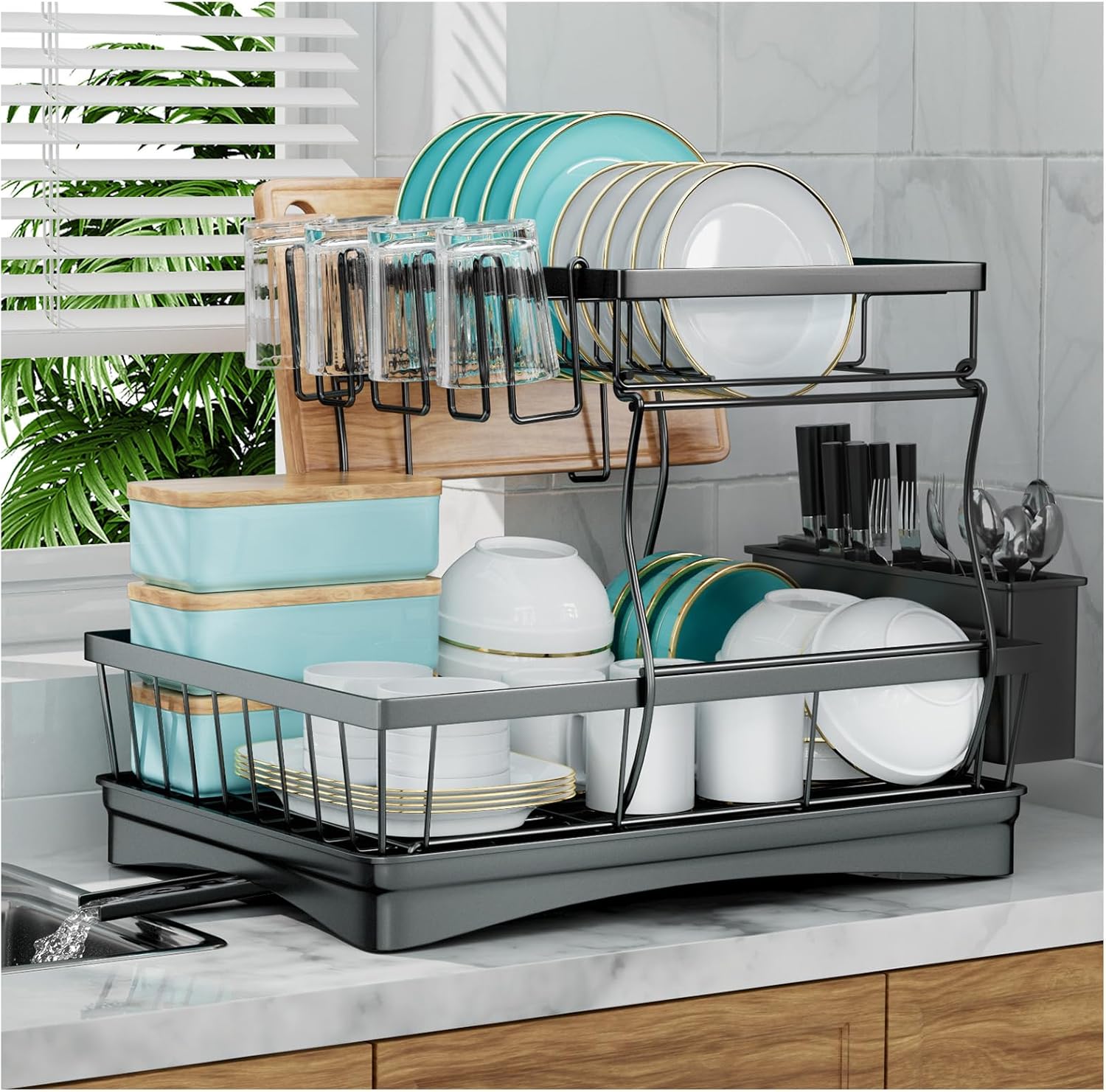
Let’s talk about the unsung hero of many kitchens: the dish rack. Specifically, we’re diving deep into models like the 7 code 2-Tier Large Dish Drying Rack, which promises big capacity, smart drainage, and rust-proof construction. This guide is for anyone tired of wet counters and cluttered sinks, trying to figure out if investing in a feature-rich, multi-level solution is truly a smart move for their space and sanity.
Quick Answer
A 2-tier large dish drying rack, exemplified by the 7 code model, absolutely earns its keep for households with frequent dishwashing or limited counter space. Its stacked design maximizes vertical real estate, often including clever features like an auto-drain system and dedicated holders, making it a worthy upgrade for those seeking efficient drying and organization. For many, the peace of mind from a tidy kitchen makes it a no-brainer.
What to Look For (The Buying Criteria)
Choosing a dish rack might seem straightforward, but you’d be surprised how many folks end up regretting their choice a few months down the line. To avoid that particular brand of kitchen frustration, here are the real factors that matter.
Capacity and Configuration
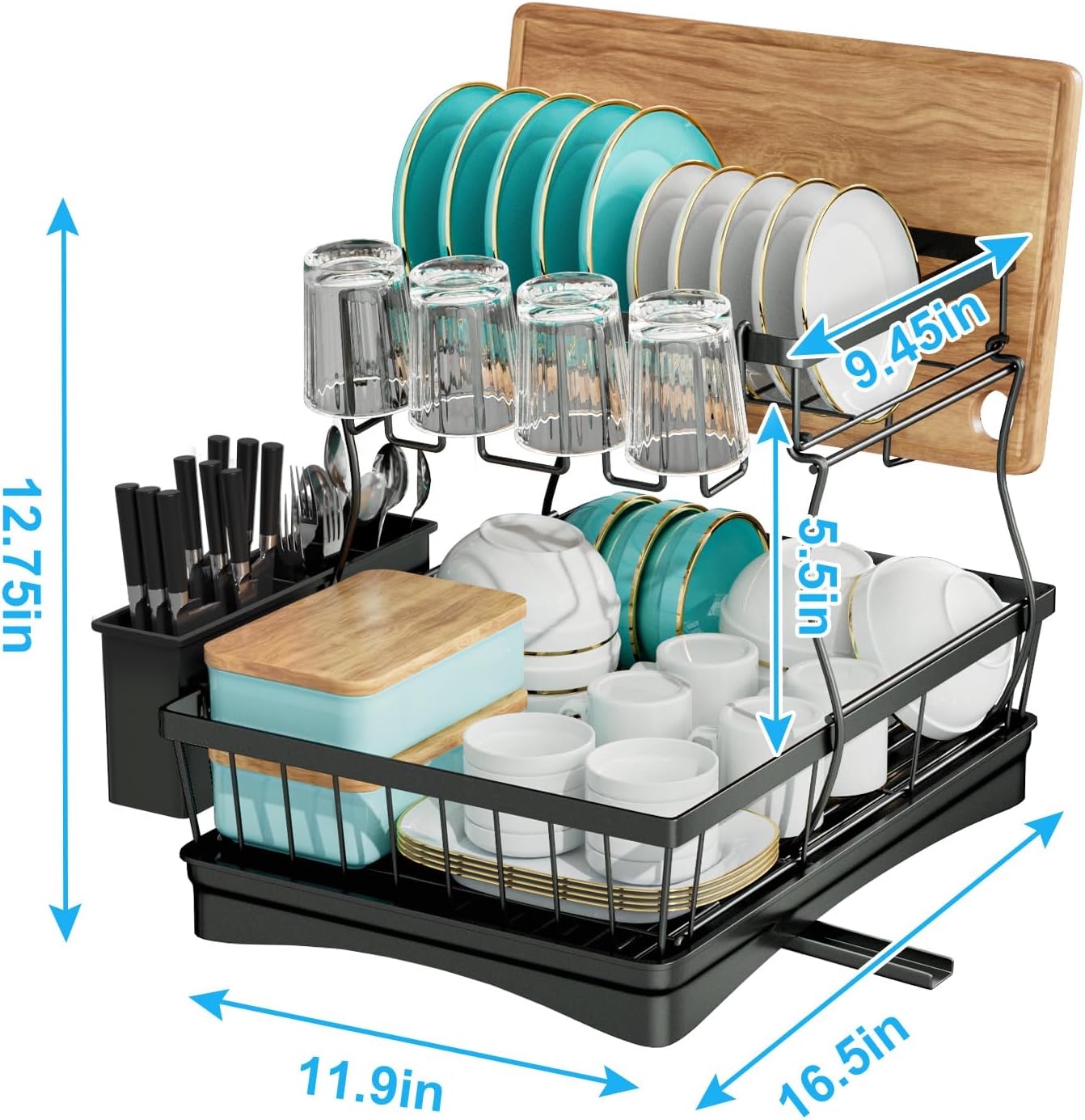
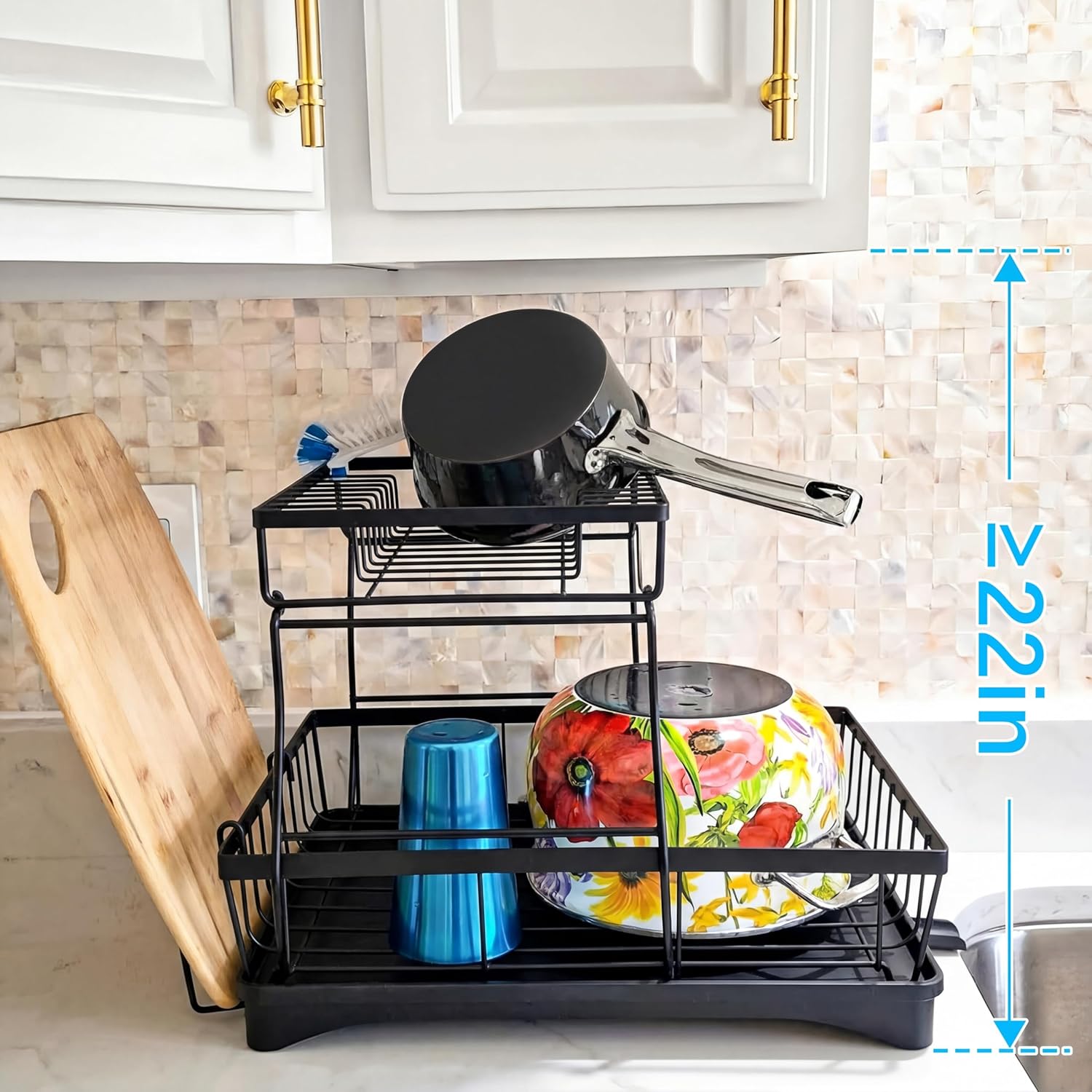
Look, if you’re single and eat out half the time, a tiny rack is probably fine. But for families, or even just someone who loves to cook, a large capacity dish drainer is non-negotiable. Two-tier designs, like our featured 7 code dish rack, excel here because they stack vertically. This means you can dry plates up top and bowls, pots, or mugs down below without everything touching. The downside? A 2-tier dish rack can feel a bit imposing on your counter if your cabinets hang low. Measure your vertical clearance, people! Don’t get stuck with something that barely fits.
Drainage System
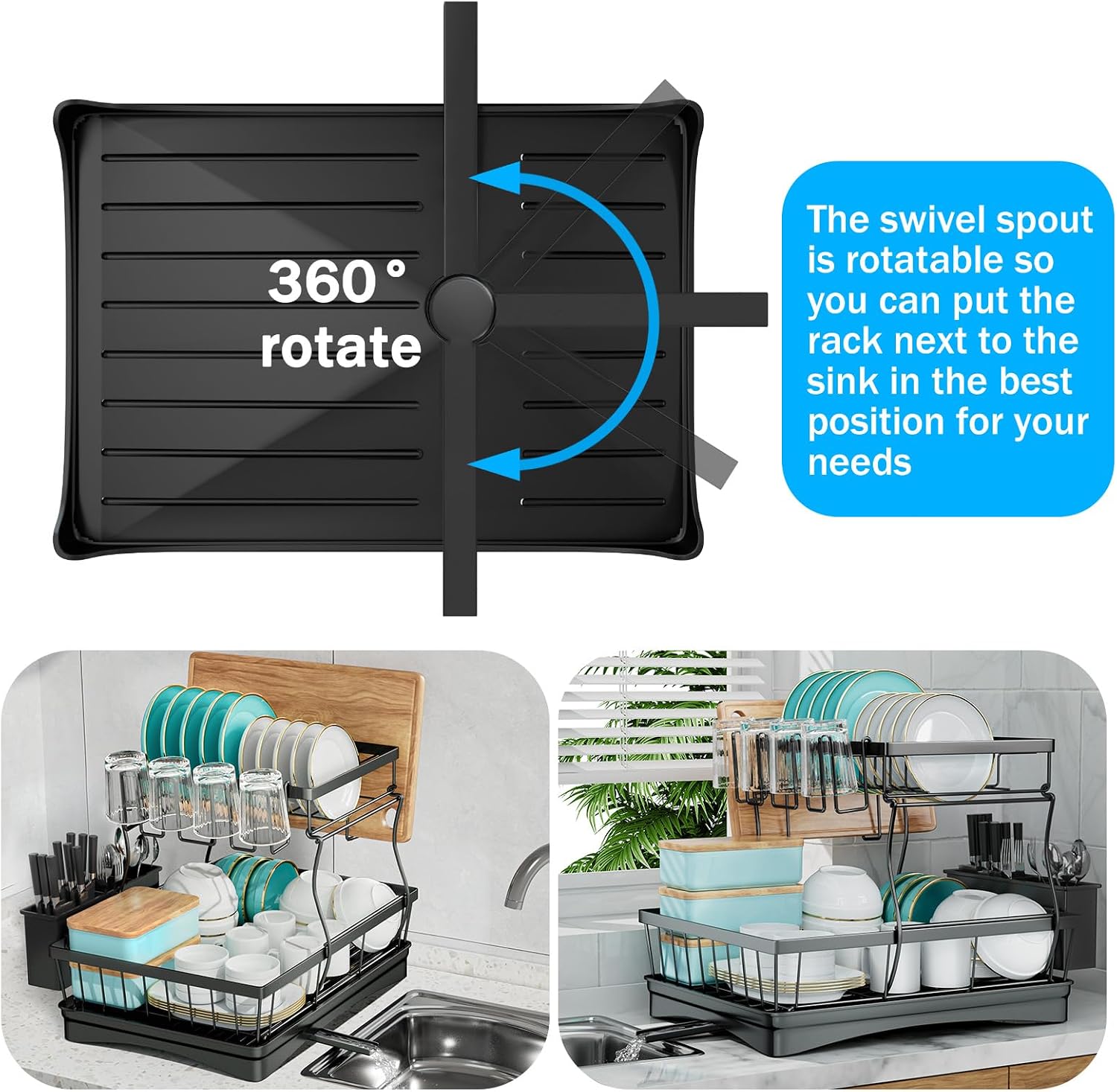
This is where the magic (or the mess) happens. An auto drain system is a lifesaver. Seriously. It means water from your freshly washed dishes flows directly back into the sink, not into a stagnant pool under the rack, or worse, all over your kitchen counter. Many basic models still use a flat drain board that needs manual emptying, which is just… annoying. Look for a drain spout that swivels, giving you flexibility in placing the rack. A non-swiveling spout restricts where it can sit next to your sink. A real pain if your sink isn’t perfectly flush with the wall.
Material and Durability
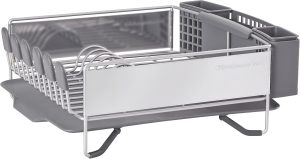
Rust is the enemy. Period. Nothing looks worse than an orange-stained dish rack after a few months. That’s why an anti-rust dish rack isn’t just a fancy marketing term; it’s a necessity. Stainless steel dish rack options are generally robust, but even then, quality matters. Some coated metals claim to be rust-proof, but scuffs can expose the underlying material, leading to corrosion. Look for materials like rust-proof coated steel or genuinely high-grade stainless that won’t give up on you easily. Think long-term. Replacing a cheap rack every year adds up.
Accessory Holders (Cups, Utensils, Cutting Boards)
It’s the little things, right? Having dedicated cup holders that hang off the side keeps mugs from taking up prime real estate inside the main basket. Same goes for utensil holders — a good one will keep forks, knives, and spoons separated so they actually dry, rather than nesting together in a wet clump. Some premium models even offer slots for cutting boards or knife blocks. These accessories, especially if they’re detachable, contribute significantly to the overall functionality of a dish drying rack. But remember, the more dangly bits you have, the wider your dish rack footprint becomes.
Design and Aesthetics
Let’s face it, your dish rack sits out in the open. It might as well look decent. Black finishes, like on the 7 code model, often blend better with modern kitchens than shiny chrome, which can show water spots immediately. While functionality is key, nobody wants an eyesore on their counter. A streamlined, thought-out design can make a big difference in how your kitchen feels. That said, sometimes the most functional designs aren’t the prettiest. It’s a trade-off.
Stability and Footprint
A fully loaded large capacity dish drainer can get heavy. Stability is crucial; you don’t want it wobbling, especially with fragile dishes. Check for sturdy construction and non-slip feet. Also, consider the actual footprint. While 2-tier designs save horizontal space, they still occupy a specific area. Some kitchens just don’t have that kind of counter luxury, and even a compact dish drying solution needs a home.
Decision Tree: Is a 2-Tier Dish Rack Right for You?
                           Start Here
                               |
                  Do you frequently wash a
                  large volume of dishes?
                               |
                  +------------+------------+
                  |                         |
                 Yes                       No
                  |                         |
      Do you have limited counter space
      but sufficient vertical clearance?
                  |                         |
      +------------+------------+            Consider a
      |                         |            smaller, single-tier
     Yes                       No            rack. Or hand-drying!
      |                         |
Is efficient, hands-off drying Do you prefer
a top priority? manual drying or
| have ample space?
| |
+————+————+
| |
Yes No
| |
A 2-tier large dish drying rack is You might be happier with
likely a great fit! a basic drain board or
another dish storage solution.
How to Match the Product to Your Situation
Okay, so you’re considering a more robust dish drying rack. But which kind of user are you? Because one size definitely does not fit all.
The Busy Family Cook
You’re constantly washing pots, pans, plates, and a never-ending stream of sippy cups. Your counter space is a battlefield. For you, a 2-tier dish rack like the 7 code is practically a necessity. The vertical stacking means you can dry a mountain of items without taking over the entire kitchen. Look for models with ample cup holders and a generous utensil basket. The detachable dish rack feature is also key – allowing you to reconfigure or clean easily when life gets messy. And with an auto drain system, you won’t have to add “empty the drip tray” to your already overflowing chore list.
The Apartment Dweller with Limited Space
Every inch counts in your compact kitchen. You need a dish drying rack that works hard without dominating the room. The verticality of a 2-tier design is your friend here. It offers significant drying capacity in a smaller footprint than a sprawling single-tier unit. Prioritize stability and a sleek design, perhaps a black finish that blends in rather than stands out. A model featuring a flexible drain board that truly funnels water away is crucial to protect your precious counter space from puddles. Don’t underestimate the power of a well-designed compact dish drying solution.
The “Clean Kitchen, Happy Life” Enthusiast
You despise clutter and water rings. Your kitchen is your sanctuary. For you, the details matter. An anti-rust dish rack is a must, perhaps even a stainless steel dish rack, guaranteeing longevity and a clean appearance. The auto drain system is paramount; no standing water, no mildew risk. You’ll appreciate the well-thought-out accessories – dedicated spots for everything. The 7 code rack with its specific features would appeal to this user because it’s designed for order and efficiency. It’s less about just drying and more about maintaining a pristine kitchen environment.
Product Type Comparison
Let’s break down the different flavors of dish drying solutions out there.
| Type/Tier | Best For | Price Tier | Key Feature | Watch-Out |
|---|---|---|---|---|
| Basic Single-Tier Rack | Individuals, infrequent dishwashers | Budget-friendly | Simplicity, low profile | Limited capacity, often manual drainage |
| Single-Tier with Drain | Small families, moderate dishwashing | Mid-range | Integrated drain board | Still takes up significant horizontal space |
| 2-Tier Dish Rack | Families, cooks, limited counter space | Mid-range | Vertical capacity, often auto-drain | Can be tall, some feel bulky on the counter |
| Roll-Up Over Sink Rack | Ultra-compact kitchens, occasional drying | Budget-friendly | Disappears when not in use | Less capacity, dishes dry over the sink |
A basic single-tier rack is the no-frills option, usually fine for a few plates but will quickly get overwhelmed if you cook at all. The single-tier with an integrated drain is an upgrade, keeping your counters drier, though it still demands a good chunk of real estate. For true space efficiency and more serious dish duty, a 2-tier dish rack, like the 7 code model, is generally the way to go, though you need to consider its height. Finally, roll-up racks are clever for tiny spaces, but they’re not a primary drying solution for a big meal.
Key Takeaways
- Verticality is Gold: A 2-tier design, like the 7 code, makes the most of your kitchen’s vertical space, leaving more counter free.
- Drainage is Non-Negotiable: An auto drain system isn’t just a convenience; it’s a hygiene factor and a counter protector.
- Rust-Proofing Pays Off: Opting for an anti-rust dish rack saves you from unsightly stains and premature replacements.
- Accessories Enhance Experience: Dedicated cup holders and utensil holders, especially if they are detachable, transform a basic rack into a true dish storage solution.
Scenario-Specific Mini-Sections
Let’s think about how different situations might influence your dish rack choice.
For the Daily Dinner Crowd
If your kitchen sees nightly home-cooked meals, a robust, large capacity dish drainer is just common sense. You’re washing multiple plates, several glasses, maybe a couple of pots and pans every evening. Trying to cram all that onto a tiny rack? Frustrating. A 2-tier model gives you the real estate you need without forcing you to dry in batches or spread dishes all over the counter. The efficiency of a full-featured dish drying rack in this scenario is a huge stress reliever. You don’t want to think about it; you just want it to work.
When Looks Matter (But So Does Function)
Perhaps your kitchen is open concept, or maybe you just appreciate a cohesive design. The aesthetics of your kitchen counter dish rack come into play. A black finish, common in models like the 7 code, often provides a sleeker, more modern appearance than the traditional chrome. It can blend in better with darker countertops or appliances. But don’t let looks completely trump function. Make sure that sleek design still includes the critical auto drain system and anti-rust construction. What’s the point of a pretty rack if it’s a rusty, leaky mess in six months?
Dealing with Delicates and Odd-Sized Items
Some dishes just don’t play nice with the dishwasher. Think hand-washed wine glasses, large serving platters, or that oddly shaped baking dish. This is where the flexibility of a detachable dish rack system shines. You can adjust sections, perhaps even remove a tier temporarily, to accommodate those bulkier items. Dedicated cup holders are also great for keeping delicate stemware out of the main pile, preventing accidental chips or breaks. A well-designed 2-tier large dish drying rack provides that versatility.
Common Mistakes Buyers Make
Even with something as seemingly simple as a dish rack, there are pitfalls. And trust me, I’ve seen ’em all.
- Ignoring Counter Space (Both Width and Height): People often only measure the horizontal space. But a 2-tier rack is tall! You absolutely need to check the clearance under your cabinets. Nothing’s worse than unboxing your new large capacity dish drainer only to find it’s a good two inches too tall. Measure twice, buy once. Always.
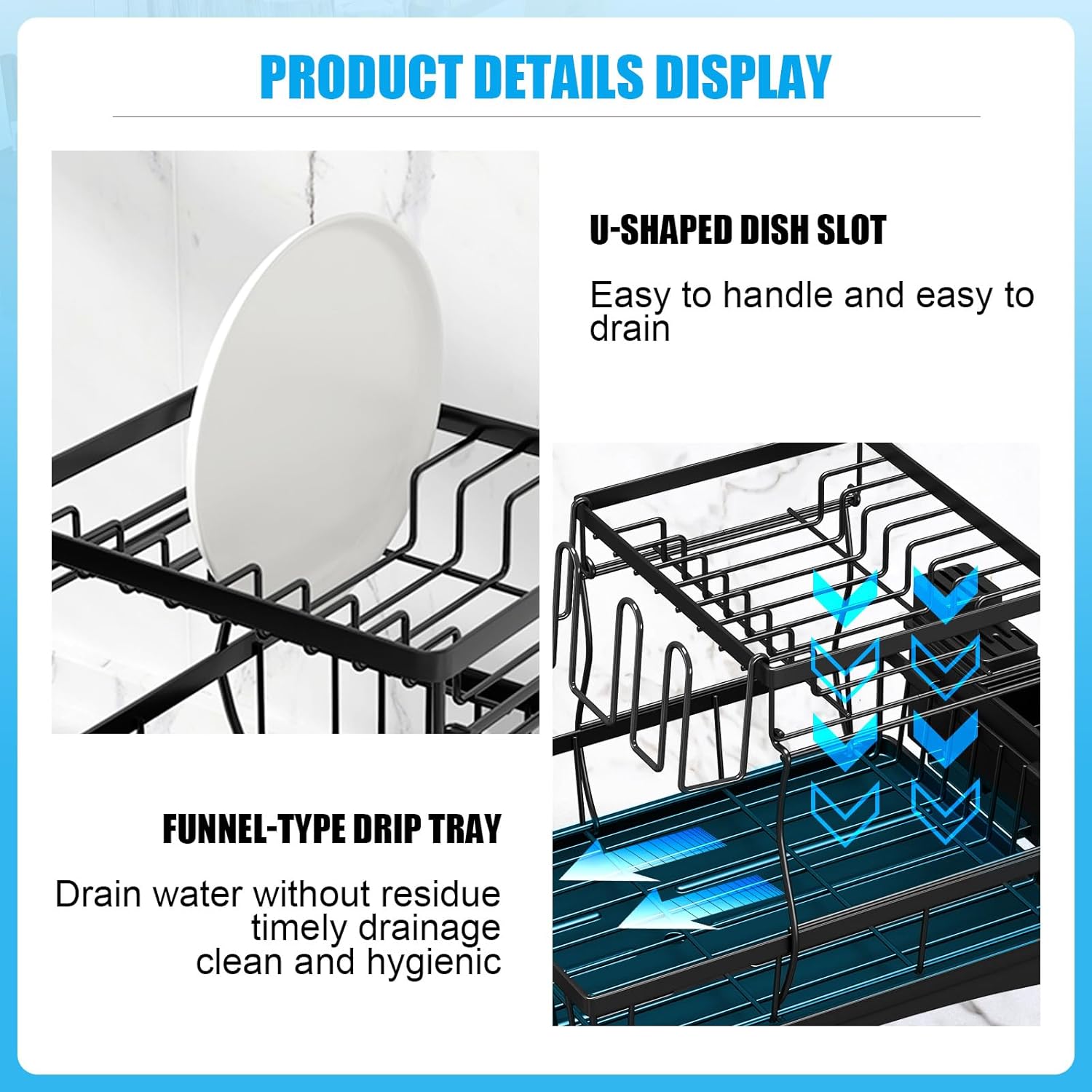
- Underestimating Drainage Needs: Buying a rack with a flat, shallow drain board is a recipe for standing water and potential mildew. Many assume any drain board will do. But a proper auto drain system that slopes and funnels water actively to the sink is a game-changer. Don’t skimp here; it’s where most daily frustration lies.
- Prioritizing Price Over Durability: Going for the cheapest option might save you a few bucks upfront, but if it rusts out in six months, what have you gained? An anti-rust dish rack made from quality materials, even if it’s a bit more of an investment, will save you money and headaches in the long run. Rust is ugly, and unhealthy, too.
- Forgetting About Accessories: You’ll need somewhere for your spoons, knives, and cups. Some basic racks don’t include adequate utensil holders or cup holders, leaving you with items awkwardly balancing or cluttering the main drying area. It sounds minor, but it makes a huge difference in real-world use.
Why/How/What Mini-Section
Why choose a 2-tier dish rack over a single-tier?
A 2-tier design fundamentally changes how you approach dish drying by utilizing vertical space. It lets you organize more dishes—plates up top, bowls or pots below—without hogging all your precious counter real estate. If you frequently wash a lot of items, this vertical expansion prevents the counter overflow that’s inevitable with single-tier models. It’s simply more efficient for high-volume households.
How does an auto drain system work, and is it really necessary?
An auto drain system typically involves a slightly angled drain board with a spout. This spout is positioned directly over your sink, so gravity does the work, guiding water runoff from your drying dishes straight back into the basin. Necessary? For a clean, hygienic kitchen counter, absolutely. It prevents stagnant water, reduces mold risk, and means you never have to manually tip out a tray full of murky water.
What are the main benefits of a detachable dish rack?
The main benefit of a detachable dish rack is versatility and ease of cleaning. You can often remove tiers or sections, reconfiguring the rack to fit larger pots or pans when needed. This also simplifies deep cleaning; instead of trying to scrub around fixed bars, you can easily take components apart, wash them thoroughly, and put them back. It’s about adapting to your daily needs.
FAQ
Is a black finish on a dish rack harder to keep clean?
Not necessarily harder, but darker finishes, like the black on the 7 code dish rack, can sometimes show hard water spots more readily than lighter ones. Regular wiping down, especially after heavy use, helps maintain its appearance. It’s a trade-off for that modern, sleek aesthetic.
Can I use a 2-tier dish rack if my cabinets are very low?
You’ll need to measure carefully. A standard 2-tier large dish drying rack usually requires about 16-18 inches of vertical clearance from your countertop. If your cabinets are lower than that, it might feel cramped or not fit at all. There are shorter 2-tier options, but they might compromise on capacity.
Are the cup holders truly useful, or just a gimmick?
Dedicated cup holders are definitely useful, especially for smaller items like mugs, glasses, or even baby bottles. They keep these items separate from the main pile, allowing better airflow for drying and preventing them from taking up valuable space inside the rack itself. A good design will ensure they don’t drip outside the drain board.
What’s the difference between “anti-rust” and “stainless steel” for a dish rack?
“Anti-rust” is a general claim, often meaning the material is coated to resist rust, like a powder-coated steel. “Stainless steel” refers to a specific alloy designed to be corrosion-resistant throughout its structure. A high-quality stainless steel dish rack is typically more reliably rust-proof, while coated options can eventually chip, exposing vulnerable metal underneath.
How often should I clean my dish rack?
You should rinse and wipe down your dish drying rack at least once a week, especially the drain board, to prevent mineral buildup and mildew. A deeper clean with soap and water, or even a vinegar solution, should happen monthly. Regular maintenance keeps it hygienic and looking good.
Will a large capacity dish drainer fit any kitchen sink?
While the rack itself sits on the counter, its drain spout needs to reach into your sink. Most large capacity dish drainer models come with a swivel spout that offers some flexibility. However, if your sink is unusually shaped, very small, or far from where you want to place the rack, you might run into issues. Always check the spout’s reach.
Is a detachable dish rack easier to store away when not in use?
Yes, absolutely. The ability to take apart a detachable dish rack can make it much more compact for storage. If you don’t use it daily or need to clear your counters for entertaining, breaking it down and stashing it in a pantry or cupboard is far simpler than trying to find space for a bulky, fully assembled unit.
Final Recommendation
For most households that do any regular cooking and dishwashing, particularly those contending with limited counter space, a well-designed 2-tier large dish drying rack is undeniably worth the investment. It’s a significant upgrade over basic, single-tier models.
Models like the 7 code, with their focus on detachable tiers, an auto drain system, and anti-rust materials, genuinely solve common kitchen frustrations. If you’re tired of soggy counters, overflowing single-tier racks, or struggling to find space for everything, embracing a vertical, feature-rich drying solution will make a real difference in your kitchen workflow and overall tidiness. It’s an investment in a calmer, cleaner kitchen experience.
#code #2Tier #Large #Dish #Drying #Rack #Kitchen #Counter #Black #Detachable #Large #Capacity #Dish #Drainer #Organizer #Auto #Drain #AntiRust #Dish #Rack #Cup #Utensil #Holders