
Cutting Through the Hype: A Smart Shopper’s Guide to Trivets That Really Work
Navigating the world of kitchen essentials, especially something as seemingly simple as a trivet, can get surprisingly complicated. This guide slices through the marketing speak to help you find the most popular and reliable trivets for your home, with a special focus on the often-misunderstood benefits and pitfalls of cork trivets. We’re talking about real-world use for hot dishes, pots, and pans – the kind that actually protects your surfaces without fuss or unnecessary frills.
Quick Answer
For most home cooks, high-density, thick cork trivets are a solid, budget-friendly choice, offering reliable heat resistance and surface protection for everyday hot pots and pans. While fancier materials exist, the real value in cork comes from its natural insulation, non-slip grip, and ability to handle consistent heat without breaking the bank. Don’t overthink it, but don’t underspend on flimsy options either.
What to Look For (The Buying Criteria)
So, you need something to keep your bubbling lasagna dish from melting a hole in your antique dining table. Smart move. But what actually separates a genuinely useful trivet from just… well, a piece of something? When you’re eyeing cork trivets for hot dishes, especially those designed for hot pots and pans, several things truly matter.
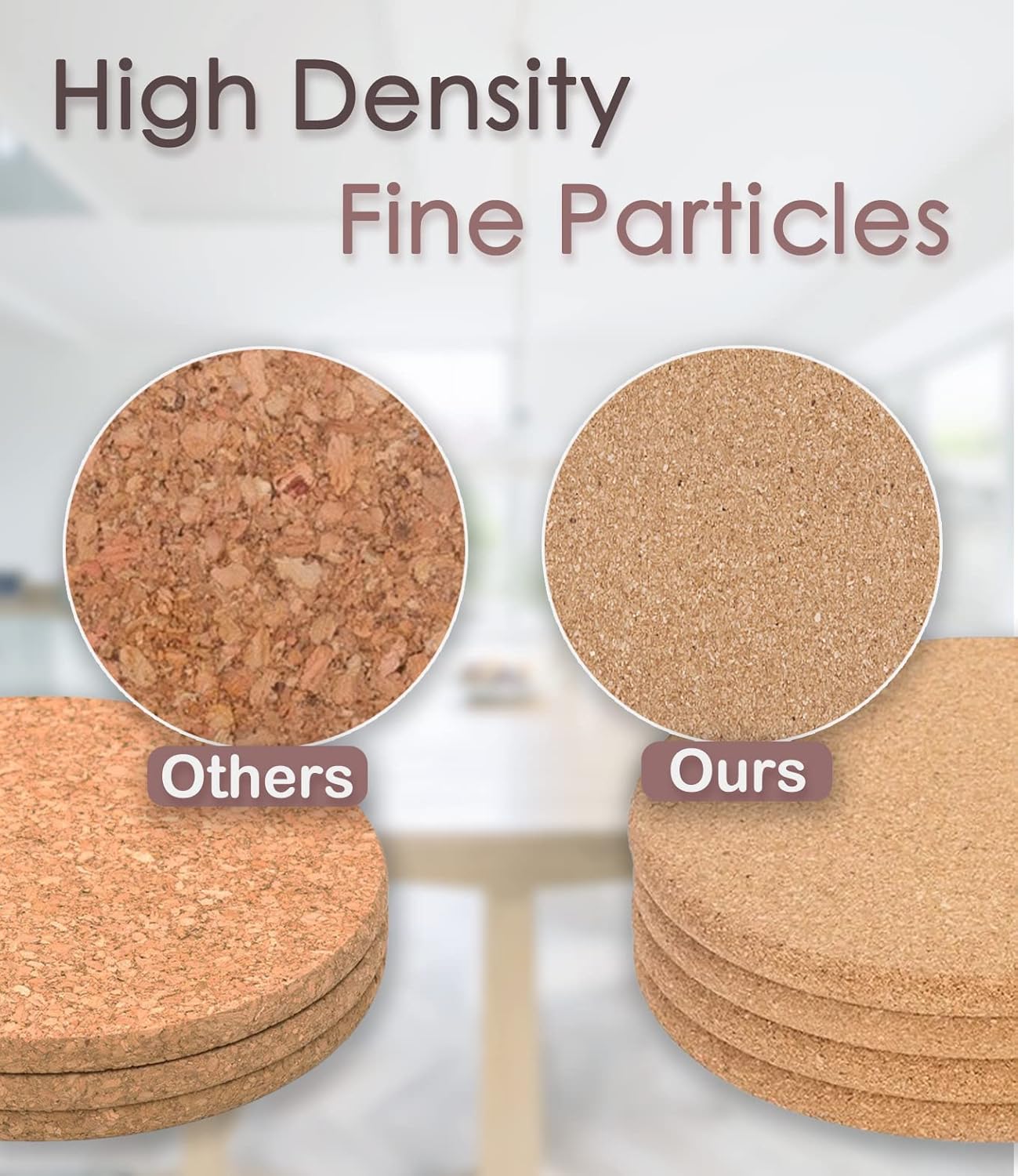
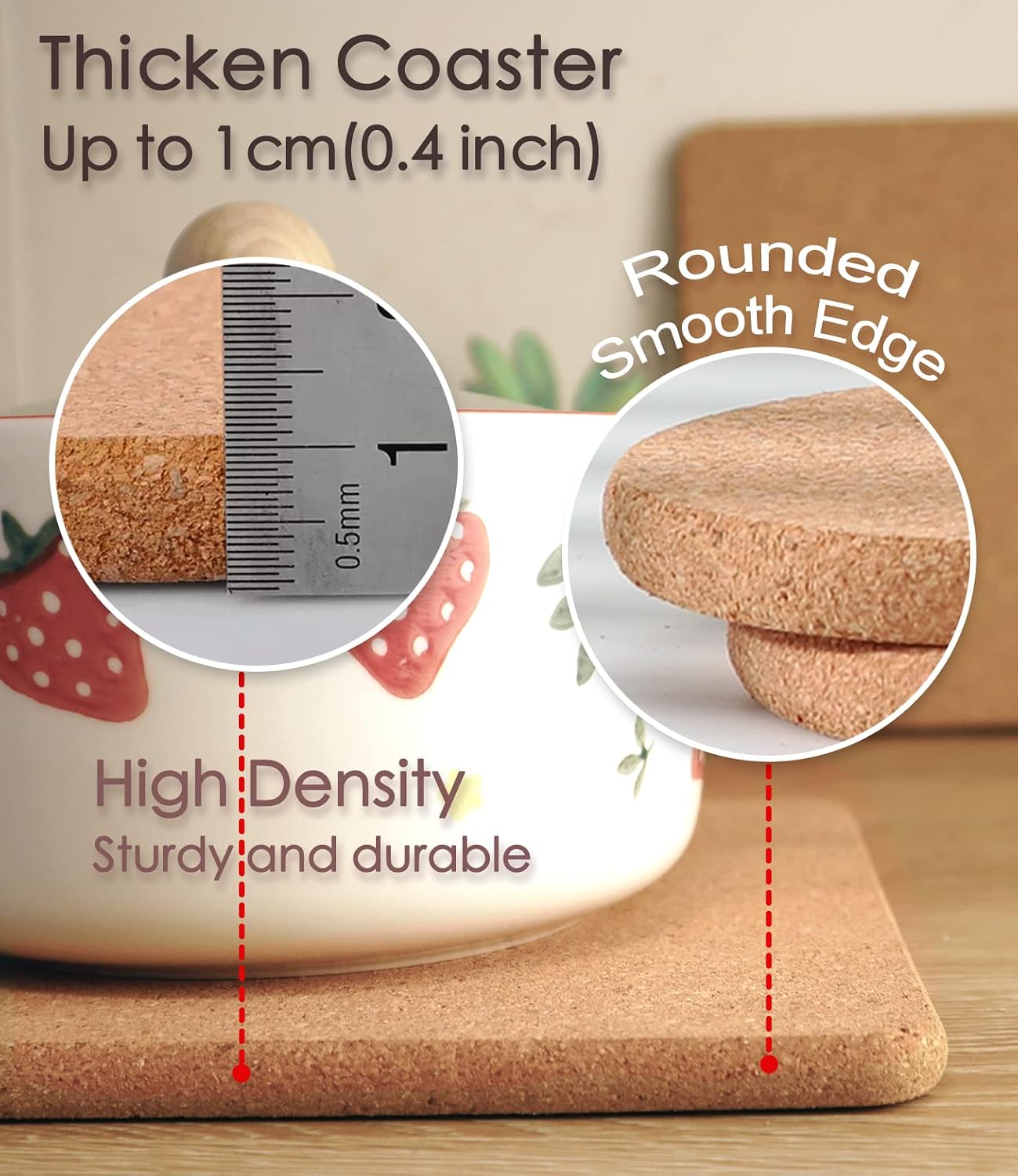
First up, Material Density and Composition. This is probably the biggest differentiator you’ll find in cork options. You’ll see “fine particle cork” mentioned often, and that’s usually a good sign. Lower-end trivets often use coarser, loosely packed cork granules, which can break down faster, shed bits, and offer less consistent heat protection. High-density, fine particle cork means the material is compressed tightly, creating a more uniform surface that resists crumbling and provides superior insulation. Think of it like a quality cutting board versus a flimsy one; one holds up, the other warps. A common pitfall? Assuming all cork is created equal. It just isn’t. The trade-off here is that extremely dense cork might feel less ‘natural’ or flexible, lacking the rustic charm some shoppers prefer from lighter, more porous options.
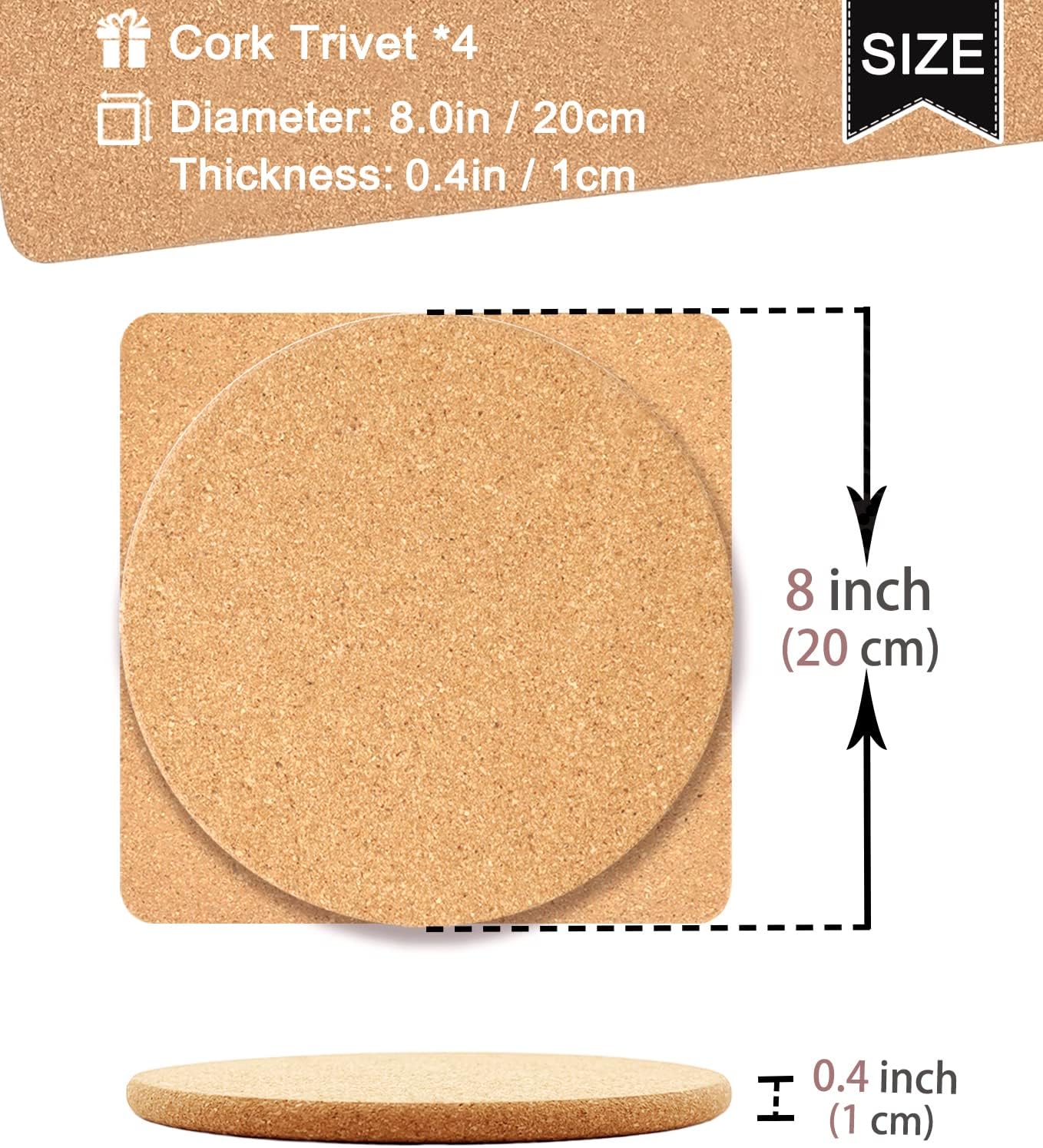
Then there’s Thickness. Oh boy, this one’s critical. A paper-thin trivet, even if it’s cork, isn’t doing much more than a folded towel. You need a bit of heft to create an effective thermal barrier. For serious protection against hot pots and pans, you want something noticeably thick—we’re talking a good half-inch or more. Thicker cork means more air pockets, more insulation, and a much better chance your countertop or table won’t get scorched. Too thin, and that heat’s radiating straight through. It’s a simple physics problem, really. A thicker trivet, however, might not fit as neatly into a shallow drawer, which can be annoying if kitchen storage is already a squeeze.
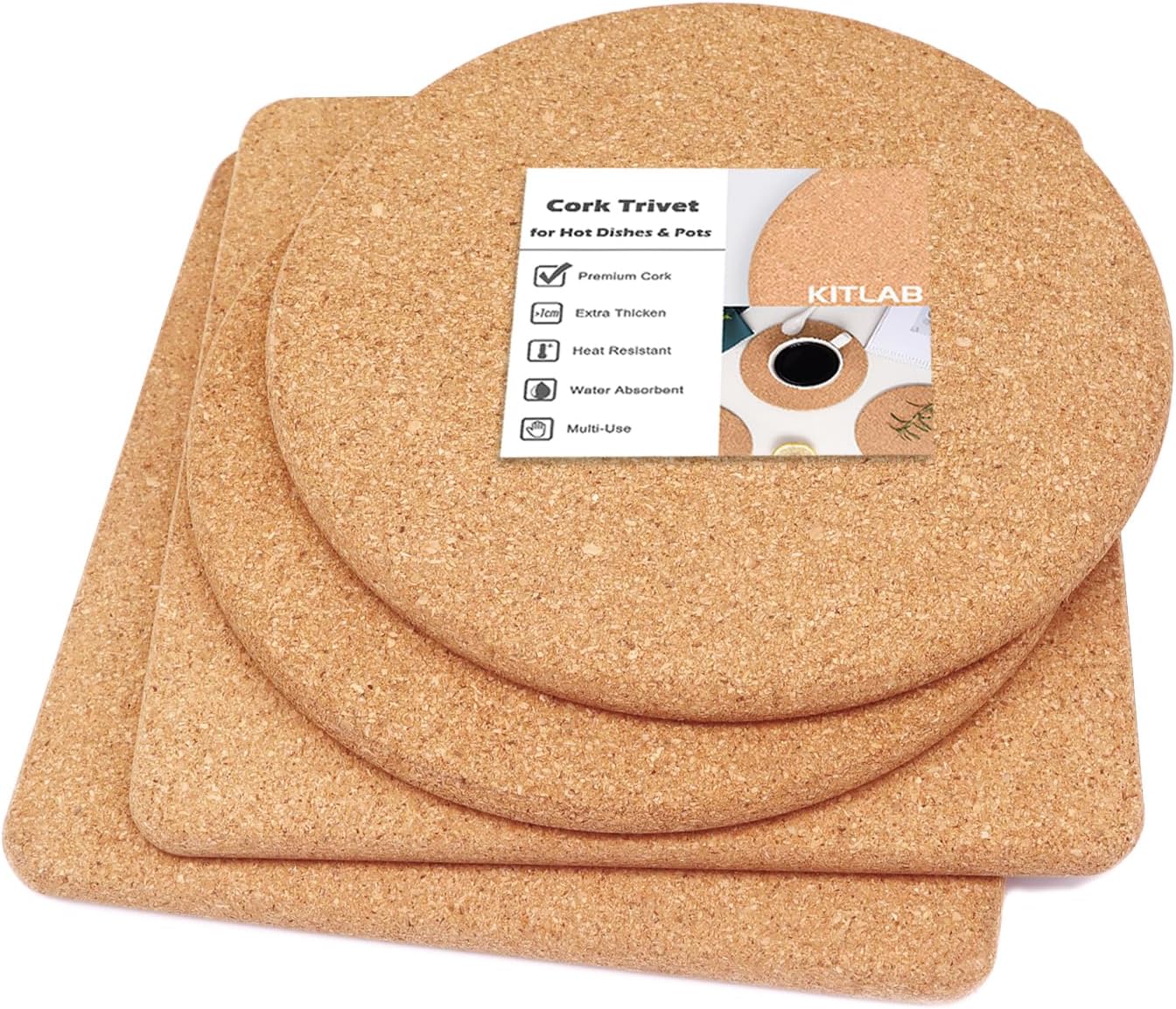
Next, Size and Shape. The target term mentions 8 inch 4 pcs, which is a pretty standard, versatile size. You need to consider the typical footprint of your dishes. Are you usually setting down large casserole dishes, or smaller teapots? An 8-inch trivet is a good general-purpose size for dinner plates and medium pots. But if you’re a baker who regularly pulls massive cookie sheets or roasting pans from the oven, you’ll need something larger, or a modular system of smaller trivets that can be arranged. A single, too-small trivet forces you into a precarious balancing act; nobody wants a serving mishap because the trivet couldn’t handle the dish. The downside of going too big? They can dominate a smaller table setting or become cumbersome to store.
Heat Resistance. This is the whole point, right? While cork is naturally a decent insulator, its true heat resistance isn’t limitless. High-density cork can typically handle temperatures well beyond what you’d get from a dish fresh out of a standard oven or off a stovetop burner for a short period. What you’re really looking for is that “heat resistant” claim to be backed up by the material’s structural integrity. Some materials might technically resist heat but degrade quickly, warp, or start to smell. Good cork doesn’t usually off-gas or deform under normal cooking temperatures. If it’s ultra-thin, its ability to resist and dissipate heat becomes questionable.
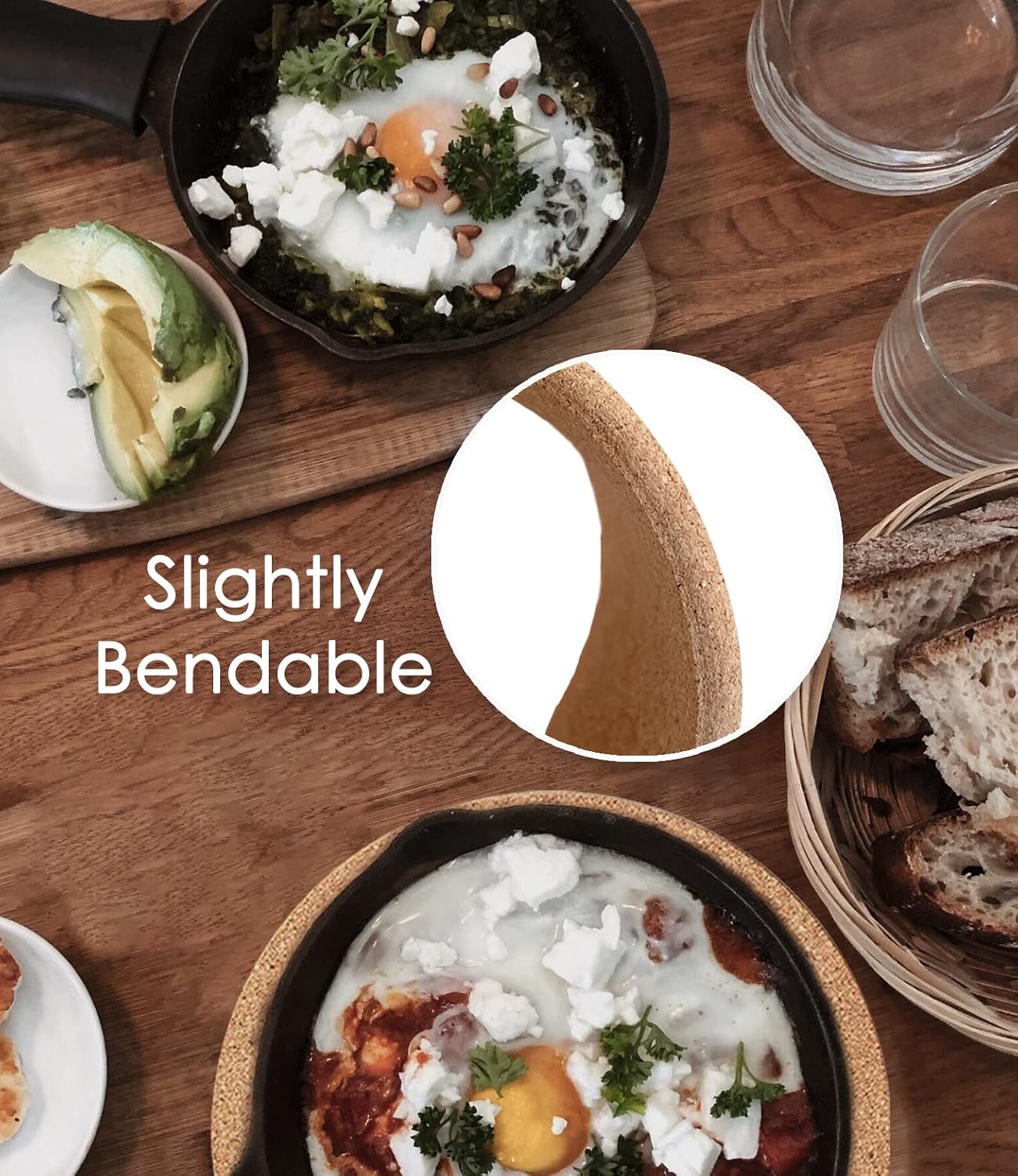
Consider Surface Texture and Stability. A good trivet won’t let your serving dish slip and slide. Cork, particularly the finer particle varieties, often offers a naturally grippy surface. This isn’t just about preventing spills; it’s about stability when you’re scooping out servings or moving things around. A completely smooth, lacquered trivet might look sleek, but if it lets your pot wander off, it’s a hazard. The trade-off? A very grippy surface might also pick up crumbs or dust more easily, requiring more frequent wiping down.
Finally, think about Durability and Longevity. How long will this thing actually last? A high density thick cork trivet should withstand years of regular use without falling apart, crumbling, or losing its shape. Cheaper, less dense options might start flaking after a few months, leaving little cork crumbs everywhere. You want something that remains a reliable hot pad for countertop protection, not a crumbly mess that needs constant replacement. The best cork doesn’t magically last forever, mind you; it’s a natural product. But quality cork has impressive staying power.
How to Match the Product to Your Situation
Not every kitchen has the same demands, nor does every cook. Matching the right trivet to your specific lifestyle means understanding where you fall on the spectrum of kitchen use.
The Everyday Family Cook. You’re cooking meals most nights, often with multiple hot dishes hitting the table. Durability and consistent performance are paramount. You need something that can take a beating, perhaps absorb a minor spill, and provide reliable protection for your surfaces day in and day out. Aesthetics are secondary to pure function and ease of use. A sturdy set of high density thick cork trivets, like the 8 inch 4 pcs mentioned, would be your workhorse. They’re forgiving, easy to clean, and don’t make you wince if a kid slides a pot across them. You want protection you don’t have to think about.
The Occasional Entertainer. Hosting dinner parties or holiday meals means presentation matters. While function is still key – you don’t want to ruin your new table – you also want your trivets to blend seamlessly with your decor or even enhance it. Maybe you’re looking for larger sizes or a more refined finish. For this persona, a slightly more premium cork option, perhaps with a decorative edge or a very uniform, smooth surface, would be ideal. You might even consider stacking multiple standard cork trivets for extra height and visual interest, knowing they won’t see the kind of constant, heavy use that an everyday cook puts them through. The trade-off here is that these might be pricier, and perhaps a bit more delicate than pure utility-grade options.
The Minimalist or Budget-Conscious Shopper. You just need something to do the job, plain and simple. You’re not looking for designer pieces; you’re looking for effective heat resistant protection without any fuss. The goal is maximum bang for your buck. For you, the focus is on basic, functionally sound cork trivets that are thick enough to work, regardless of how they look. You might choose a simpler, perhaps slightly less refined granulated cork option, as long as it’s dense enough to prevent heat transfer. This approach avoids unnecessary spending on features or finishes you don’t value, but you absolutely still need to ensure they’re thick enough. Flimsy options are a false economy.
Comparing Trivet Types and Tiers
There’s a surprisingly wide world of trivets out there, even when we narrow it down to cork. Each type offers a different blend of features, price, and suitability.
| Type/Tier | Best For | Price Tier | Key Feature | Watch-Out |
|---|---|---|---|---|
| Basic Granulated Cork | Light, occasional use; budget-driven. | Budget-friendly | Natural, lightweight, highly affordable. | Can crumble, less durable, limited heat protection. |
| High-Density Cork | Everyday use; balance of value and function. | Mid-range | Solid heat resistance, good durability, versatile. | Might lack premium aesthetics or unique designs. |
| Solid Cork/Composite Cork | Stylish serving, prolonged heat exposure. | Mid-range/Premium | Superior heat protection, refined look, long-lasting. | Can be less flexible, heavier, higher initial cost. |
| Decorative Hybrid Trivets | Entertaining, aesthetic-focused kitchens. | Premium | Often cork base with wood/ceramic top; visual appeal. | Top material might scratch, less pure cork insulating. |
Basic Granulated Cork trivets are your entry point. They’re cheap, cheerful, and widely available, offering a basic buffer for moderately hot items, but don’t expect them to last forever or stand up to seriously hot pots straight from a searing stovetop.
High-Density Cork is often the sweet spot. This tier is where you find the thick cork trivet, fine particle cork constructions that deliver on the promise of reliable heat resistant, large coaster for kitchen protection without breaking the bank.
With Solid Cork or Composite Cork, you’re moving into a more robust and often more aesthetically pleasing territory. These offer enhanced durability and a more uniform appearance, often feeling substantial in your hand.
Decorative Hybrid Trivets sometimes use cork as a non-slip base but integrate other materials like ceramic, slate, or wood for the primary surface. They look lovely, but the cork isn’t doing all the heavy lifting, and the top material might have its own heat limitations or scratch potential. Just something to consider.
Trivet Use in Real-World Scenarios
Different kitchens, different rhythms, different needs for your trivets.
For Daily Family Meals. The hustle and bustle of weeknight dinners, holiday potlucks. You need something that can handle a lot of different temperatures, spills, and movements. A set of 8 inch 4 pcs of high density thick cork trivet is invaluable here. Scatter them across the table. They’re unassuming, they work, and if one gets a bit stained, it’s not the end of the world. What’s ideal for daily use might not be the prettiest, but it’s sturdy, reliable, and frankly, you’ll barely notice them until you need them.
For Occasional Entertaining. When guests are coming over, you want things to look nice. Those same everyday cork pads might feel a bit too utilitarian. This is where you might pull out a slightly larger, perhaps rounder or more stylized cork hot pad for countertop, or even use a few of your standard ones arranged artfully under a serving platter. Presentation matters, so while the basic cork functions, you might splurge a tiny bit on something that offers a bit more flair or a cleaner, more uniform finish. The goal is to protect your surface while still looking chic.
For Small Kitchens or Limited Storage. Living in a smaller space means every item needs to earn its keep and not hog valuable real estate. Here, stackable, thin-profile cork trivets are a godsend. While you still need adequate thickness for heat resistance, choose designs that nest together neatly or can be tucked away easily. A modular set that can be combined for larger dishes but stored individually helps save space. Sometimes, having a few smaller, multi-purpose large coasters for kitchen is better than one giant, unwieldy slab of cork. It’s all about efficiency.
Common Mistakes Buyers Make
Look, nobody sets out to buy a dud. But with trivets, especially cork trivets, there are a few easily avoidable missteps that can leave you with scorched surfaces or a short-lived product.
First, Buying Too Thin. This is probably the biggest rookie error. A thin cork trivet, no matter how “high-density” it claims to be, simply doesn’t have enough material to create an effective thermal break for intense heat. You’re effectively buying a placemat, not a protector. A dish straight from a 400°F oven needs more than a quarter-inch of cork. Seriously, a half-inch is your bare minimum for peace of mind; more is better.
Another common slip-up is Ignoring Size Needs. People often grab whatever looks “standard” without actually thinking about the typical diameter of their largest casserole dishes, roasting pans, or even serving bowls. An 8 inch trivet is great for many things, but try putting a 12-inch dutch oven on it. It’s a balancing act that’s just asking for trouble, or at least inadequate protection around the edges. Measure your largest pots and pans if you’re unsure.
Then there’s the assumption that All Cork Is Equal. We touched on this already, but it bears repeating. There’s a world of difference between loosely pressed, coarse-grain cork and the tightly bound, fine particle cork that provides superior insulation and durability. Cheaper options often fall apart after a few months, leaving little bits of cork all over your counter, which is just annoying. Don’t fall for the “it’s cork, so it works” trap.
Finally, Improper Cleaning and Care. Cork is a natural material. It’s not meant to be tossed in the dishwasher or soaked in a sink full of soapy water. Too many people treat their trivets like ceramic plates. Soaking cork can cause it to swell, warp, or even grow mildew. A simple wipe with a damp cloth is usually all it needs. Ignore this, and you’ll dramatically shorten the lifespan of even the best thick cork trivet. And nobody wants a moldy hot pad for countertop use.
Why, How, What
Why are cork trivets so popular?
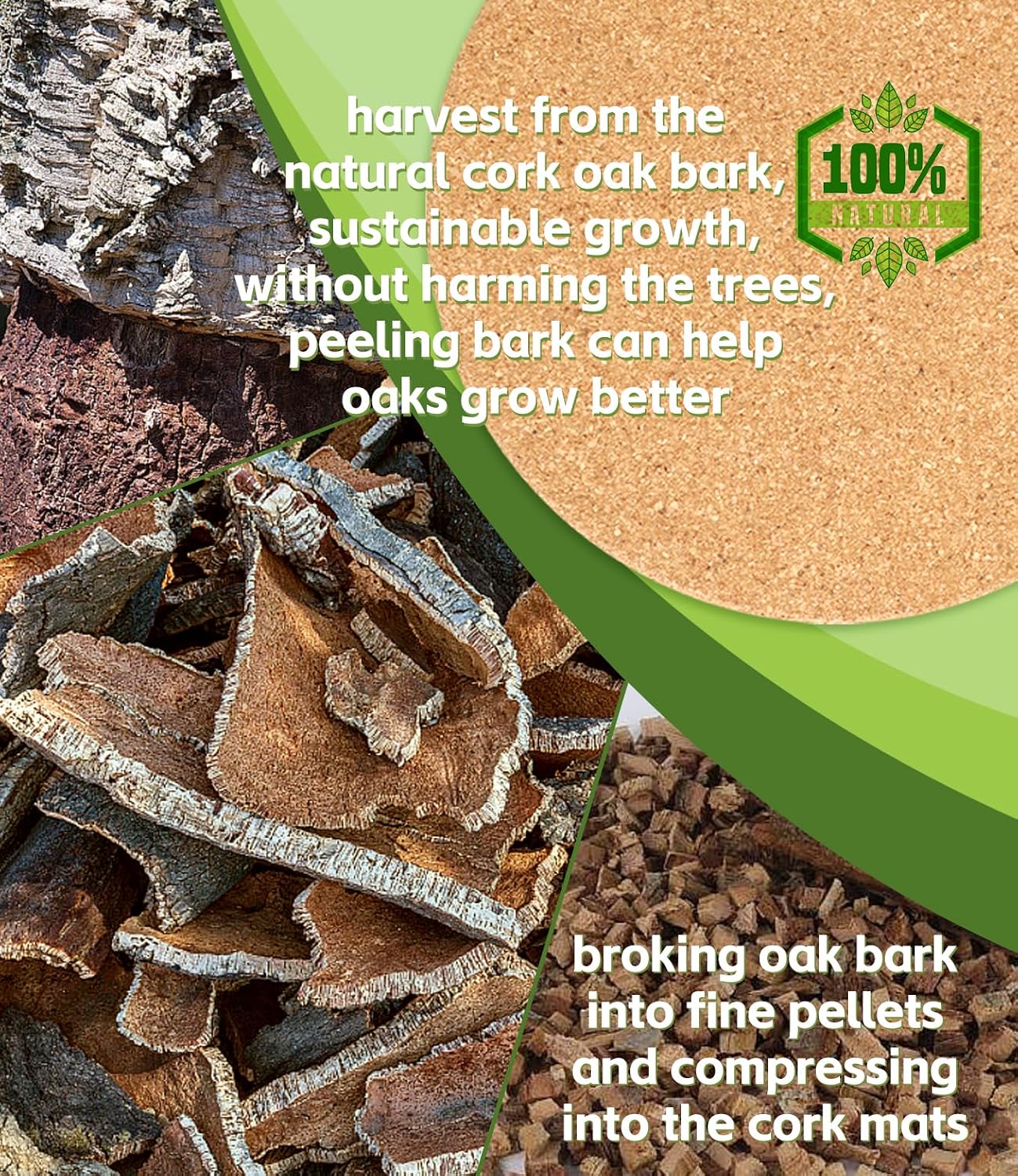
They hit a sweet spot, don’t they? Cork is a fantastic natural insulator, it’s sustainably harvested, and it offers a naturally grippy surface. Beyond that, it’s incredibly affordable compared to many other heat-resistant materials, making it accessible for almost any household. Plus, they’re light and easy to store.
How do you clean cork trivets properly?
Keep it simple. Don’t submerge them in water. Just wipe them down with a damp cloth, maybe with a tiny bit of mild dish soap for stubborn spots. Let them air dry completely before storing to prevent mildew. That’s it.
What makes a trivet truly “heat resistant”?
It’s a combination of material properties and physical characteristics. For cork, that means its natural cellular structure traps air, which slows heat transfer. Thickness and density amplify this effect, creating a robust barrier that prevents intense heat from reaching your precious surfaces. It’s more than just enduring high temperatures; it’s about stopping them.
FAQ
H3 Are cork trivets really heat resistant enough for any hot pot?
Not quite for any situation. High-density, thick cork handles standard oven-hot dishes and stovetop pots very well. But if you’re talking about a cast iron skillet that’s been searing on high for ages, it might be pushing cork’s limits, especially if the trivet is thin.
H3 How long do cork trivets typically last?
A good quality, high density thick cork trivet can last for years with proper care. Budget options, especially those with looser granules, might only hold up for a few months of regular use before showing signs of wear and tear, like crumbling edges.
H3 Can cork trivets prevent scratches too?
Absolutely. The soft, natural surface of cork makes it perfect for protecting delicate surfaces like polished wood or glass from scratches and scuffs, not just heat. It’s a dual-purpose protector, which is part of its appeal.
H3 What’s the difference between “fine particle cork” and regular cork?
“Fine particle cork” refers to cork that has been ground down and then compressed very tightly. This creates a denser, more uniform, and often more durable material than coarser, more loosely bound cork, which can be prone to flaking.
H3 Are there eco-friendly cork trivet options?
Yes, definitely. Cork is inherently sustainable as it’s harvested from the bark of cork oak trees without harming the tree itself, which regrows its bark. Look for products that highlight recycled cork content or responsible sourcing.
H3 Can I use cork trivets outdoors?
For short periods, sure. But cork isn’t designed for continuous outdoor exposure. Humidity, rain, and direct sunlight can cause it to degrade, swell, or dry out over time, greatly reducing its lifespan. Keep them mostly inside.
H3 Do cork trivets absorb liquid spills?
They can, to a degree. Cork is naturally somewhat porous. While it won’t instantly soak up a huge spill, it can absorb minor drips. This is why wiping them clean immediately is important, as prolonged exposure to liquids can lead to staining or warping.
Final Recommendation
When it comes down to it, for most households, the sweet spot for trivets truly lies with high density thick cork trivet options. They offer a fantastic blend of protection, durability, and affordability. If you’re an everyday cook handling various hot dishes, hot pots, and pans, a set of these – perhaps the 8 inch 4 pcs mentioned – gives you the practical, reliable defense your countertops and tables need without making you overthink it. It’s a genuine workhorse, easy on the eyes and even easier on your wallet in the long run.
For those who prioritize aesthetics or need something for occasional, more formal entertaining, stepping up to a solid cork or even a well-designed composite cork option is a worthwhile investment. These often provide a more refined finish and might feel more substantial. The key is to avoid the flimsy, ultra-cheap cork that crumbles after a few uses. Invest in density and thickness, and your surfaces will thank you for years to come.
#Cork #Trivets #Hot #Dishes #Hot #Pots #Pans #Inch #Pcs #High #Density #Thick #Cork #Trivet #Fine #Particle #Cork #Heat #Resistant #Large #Coaster #Kitchen #Hot #Pads #Countertop

Reviews
There are no reviews yet.