Is the OXO Good Grips Handheld Mandoline Slicer Really Worth It? A Smart Buyer’s Guide
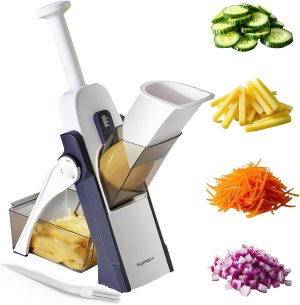
Alright, let’s talk about the mandoline slicer. It’s one of those kitchen gadgets that either sits gathering dust or becomes an absolute workhorse, transforming your meal prep. This guide cuts through the noise, specifically evaluating the OXO Good Grips Handheld Mandoline Slicer to help you figure out if it’s genuinely a smart buy for your kitchen, or if you should be looking elsewhere. We’ll dive into what truly matters when picking a vegetable slicer and how this particular model stacks up against its rivals.
Quick Answer
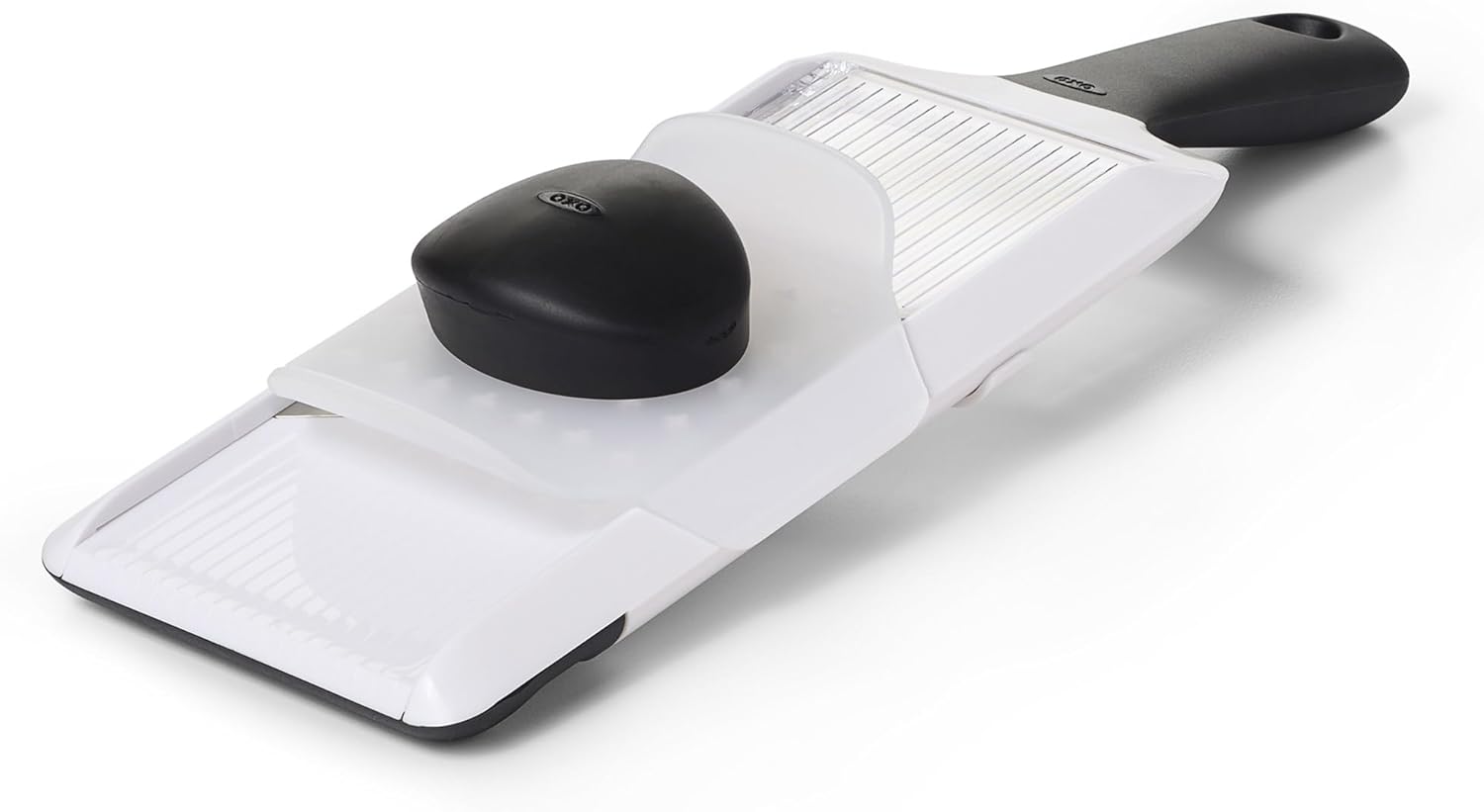
For many home cooks, the OXO Good Grips Handheld Mandoline Slicer offers a solid blend of safety, simplicity, and consistent performance for routine slicing tasks. It’s a compelling choice if you value ease of use and compact storage over a sprawling array of advanced features or heavy-duty capacity. Still, it isn’t for everyone.
Key Takeaways
- Safety First, Always: The built-in hand guard isn’t just a suggestion; it’s essential for this kind of tool.
- Simplicity Wins for Many: While larger models offer more, the OXO’s focused design minimizes clutter and complexity.
- Know Your Needs: Occasional salads versus daily meal prep changes everything about what you should buy.
- Cleaning Matters: Don’t overlook how easy or difficult it is to actually clean the thing after use.
What to Look For (The Buying Criteria)
Navigating the world of mandoline slicers means sifting through a lot of marketing fluff. Forget the glossy pictures for a second. We’re drilling down into the practical bits, the stuff that actually makes a difference when you’re in the kitchen trying to get dinner on the table. Here are the real factors that should guide your decision, especially if you’re eyeing something like the OXO Good Grips Handheld Mandoline Slicer.
First up, Blade Type and Material. Most mandolines come with either a straight blade or a V-blade. Straight blades are often simpler, but they can struggle a bit with softer produce. Think tomatoes or ripe peaches. A V-blade, on the other hand, slices from two points, making it much easier to glide through tricky items with less resistance. It’s usually sharper, too. Now, material: stainless steel is common, durable, and generally keeps an edge well. Ceramic blades are wicked sharp but more prone to chipping if mishandled. The trade-off? V-blades, while more efficient, often have more intricate nooks around the blade housing, making cleanup a bit trickier than a simple straight blade. Sometimes, that extra cutting power comes at a cost in dish duty.
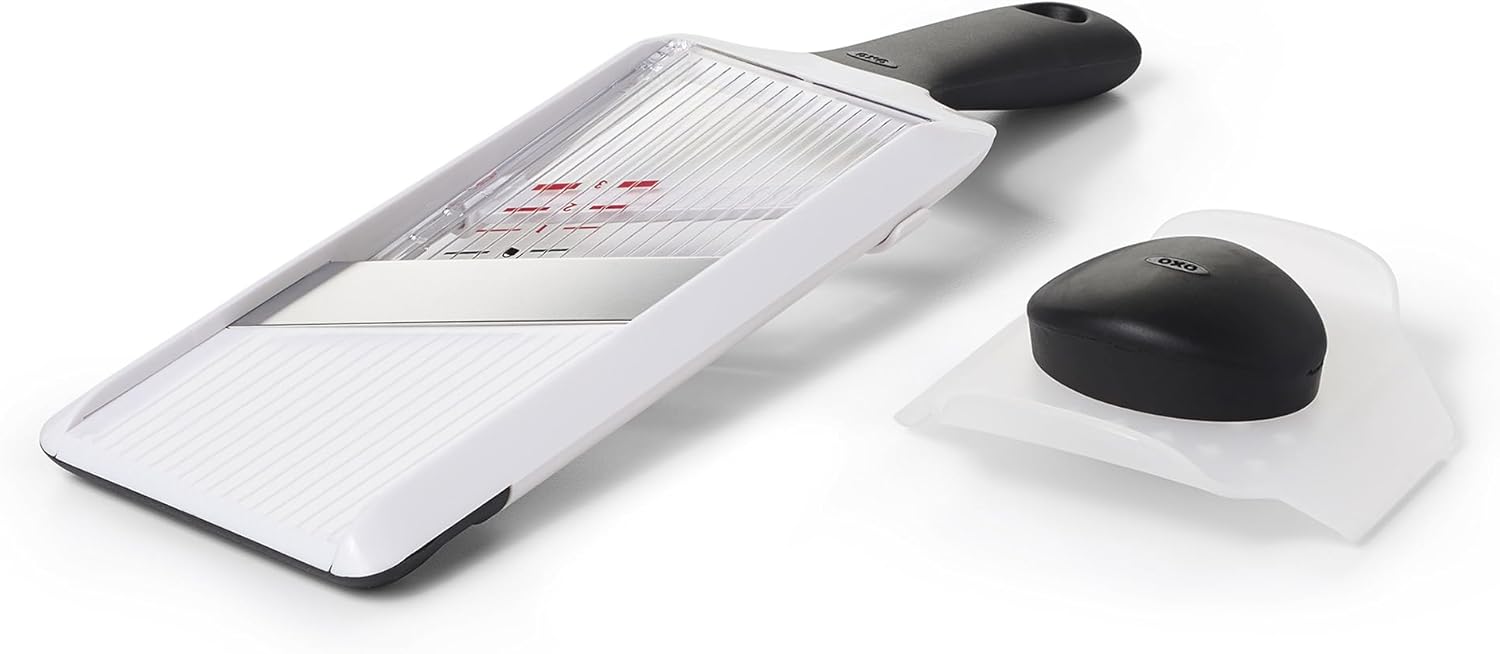
Then there’s Adjustable Thickness. This is non-negotiable for a truly useful mandoline. You need versatility. The ability to switch between paper-thin cucumber slices for a garnish, medium-thick potato chips, or slightly thicker onion rings is crucial. Look for clear, intuitive adjustment mechanisms. Dials, levers, push-button systems – they all aim for the same thing. Some models offer a huge range, but honestly, for most home cooks, three to five distinct thickness settings are plenty. The downside of more granular adjustments? More moving parts can sometimes mean more opportunities for debris to get stuck or for the mechanism to feel less robust over time. It’s a balance, really.
Safety Features. This one’s huge. Absolutely non-negotiable. Mandolines are, by their very nature, incredibly sharp. That’s the point. But it also means they’re incredibly dangerous if you’re not paying attention. A sturdy, comfortable hand guard is paramount. It should securely hold your food while keeping your fingers well away from the blade. Non-slip feet or a grippy base are also critical; you don’t want the thing sliding around your counter as you slice. Some models even have blade covers for storage. Here’s the rub though: some hand guards, while supremely safe, can be a bit bulky, making it a challenge to slice the very last bit of a smaller vegetable without waste. There’s a sweet spot.
Ease of Cleaning is often overlooked until you’re elbow-deep in potato starch and trying to dislodge tiny bits of carrot from a dozen crevices. Nobody enjoys scrubbing specialized kitchen tools for ages. Look for models with removable, easily accessible parts. Dishwasher safety is a huge bonus, but always double-check if the blades should go in there; sometimes the harsh detergent can dull them faster. Simpler designs, like the OXO handheld, often win here because there are fewer places for food to hide. The more attachments a mandoline has, the more separate pieces you’ll be washing. It’s just a fact.
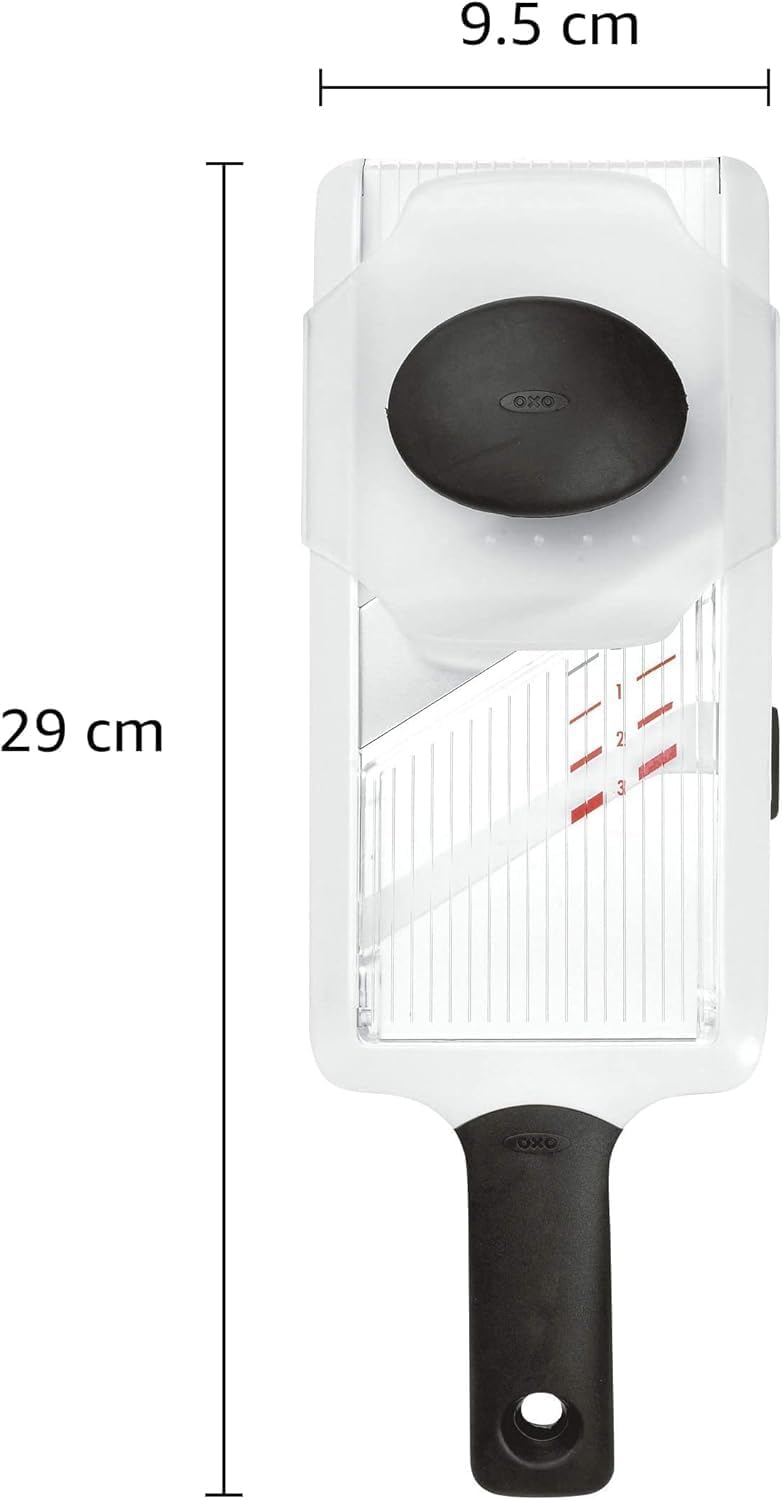
Now, think about Size and Storage. Where will this thing live in your kitchen? Handheld mandolines, like the OXO Good Grips, are brilliant for smaller kitchens or folks with limited cabinet space. They tuck away easily in a drawer. Larger countertop models offer more stability and a wider cutting surface, which is awesome for big batches, but they demand a dedicated spot. Collapsible designs try to offer the best of both worlds, but they can sometimes feel less sturdy than a fixed-frame unit. This is a classic space-versus-capacity trade-off. Which matters more to you?
Finally, Durability and Build Quality. A mandoline should feel substantial, not flimsy. Blades should be firmly affixed. Plastic components should be thick and resilient, not brittle. You want this tool to last more than a few months. While premium materials certainly contribute to longevity, they also push the price tag up. Sometimes, a well-designed, mid-range plastic build can outperform a cheap metal one. It’s not just about what it’s made of, but how it’s put together.
How to Match the Product to Your Situation
Finding the right mandoline slicer isn’t a one-size-fits-all deal. Your cooking habits, kitchen space, and general attitude toward kitchen gadgets really dictate what will serve you well. Let’s look at a few common scenarios.
The Casual, Health-Conscious Cook: Maybe you’re just trying to eat more salads, add some thin veggies to your wraps, or whip up a quick stir-fry. You don’t need a commercial-grade beast. For you, consistency is key, but so is not feeling overwhelmed by a complex tool. You probably only pull it out a couple of times a week. The OXO Good Grips Handheld Mandoline Slicer is a near-perfect fit here. It’s simple, intuitive, and takes up minimal drawer space. You won’t spend ten minutes figuring out settings or wrestling with attachments. Its focus on basic, reliable slicing is exactly what you need.
The Weeknight Meal Prep Warrior: You’re slicing a lot of stuff, fairly often, maybe for a few meals at once. Think potatoes for gratins, cucumbers for a big batch of infused water, or a mountain of onions for caramelized goodness. Speed and efficiency matter, but safety remains paramount. While the OXO handheld is good, you might find its narrower cutting surface a little slow for truly large quantities. You might gravitate towards something with a wider deck, perhaps an entry-level countertop model that offers more stability and faster processing for bigger produce. The handheld might feel like a tiny car on a long road trip—it gets you there, but maybe not as comfortably or quickly.
The Ambitious Home Chef (or Wannabe Chef): You’re experimenting, striving for restaurant-quality presentation, and perhaps want to tackle specific techniques like making perfect julienne strips or waffle cuts. For you, a basic slicer just won’t cut it (pun intended). You need more versatility, more blade options, and likely a more robust, stable platform. You’re probably looking at a V-blade mandoline or a professional-style countertop unit that can handle various cuts beyond just simple slices. You understand the learning curve and value the expanded capabilities, even if it means a larger footprint in your kitchen.
Mandoline Slicer Types: A Comparison
Choosing a mandoline slicer means navigating a few distinct categories, each with its own strengths and weaknesses. Here’s a rundown to help you put the OXO Good Grips Handheld into perspective.
| Type/Tier | Best For | Price Tier | Key Feature | Watch-Out |
|---|---|---|---|---|
| Handheld Mandolines | Quick, small-batch slicing; limited storage. | Budget-friendly | Compact size; ease of use. | Limited cutting width; less stable for larger items. |
| Entry-Level Countertop | Frequent home cooking; more stability. | Mid-range | Wider cutting surface; often includes julienne. | Takes up more counter/storage space; can still feel less robust. |
| Professional/V-Blade | Serious cooks; diverse cuts (julienne, dice). | Mid-range to premium | Extremely sharp V-blade; versatile attachments. | Requires more careful handling; cleaning can be complex. |
| Japanese Flat-Blade | Ultra-thin, precise slices; simple elegance. | Mid-range | Unmatched precision; often a simple, sturdy design. | Generally limited to flat slices; less versatile for other cut types. |
The Handheld Mandolines, like our focus OXO Good Grips model, truly shine for everyday, straightforward slicing. They’re super convenient and don’t ask for much space. But you do run into capacity issues, especially with big items or when you’ve got a lot to get through.
Entry-Level Countertop Models bridge the gap for those who slice a bit more often. They offer a larger footprint, which gives you a more stable platform and often the ability to do more than just straight slices, maybe some julienne attachments even. Just remember, they’re not quite as nimble or as easy to put away as the handhelds.
For the really ambitious cooks, or anyone tired of struggling with dull knife skills, the Professional/V-Blade Mandolines are a serious step up. They tackle anything you throw at them with impressive speed and often boast more sophisticated options for different cuts. Just be prepared for the learning curve and the serious respect these sharp tools demand during use and cleanup.
Finally, the Japanese Flat-Blade Mandolines are specialists. If you need razor-thin radish slices or perfectly transparent cucumber ribbons, this is your tool. Their simplicity is their strength, focusing on one job and doing it exceptionally well. The downside? If you’re hoping for julienne or crinkle cuts, you’ll need another tool entirely.
Scenario-Specific Slicer Insights
Let’s get down to the brass tacks – how these devices actually perform in real-world kitchen situations. Because it’s one thing to read about features, and another to imagine yourself actually using it.
The Weeknight Dinner Dash: You’ve just walked in the door, hungry, maybe a little tired. Dinner needs to happen fast. This is where a simple, effective tool like the OXO Good Grips Handheld Mandoline Slicer earns its keep. Grabbing it from the drawer, snapping the hand guard on, and quickly slicing a cucumber for a side salad or some zucchini for a quick sauté takes mere seconds. No elaborate setup. No hunting for multiple blades. The ease of getting consistent slices, fast, minimizes stress and shaves precious minutes off your prep. It truly shines when you just need a few quick, uniform cuts without a fuss.
Prepping for a Party: Now, imagine you’re hosting. You need a big platter of crudités, or maybe a fancy potato gratin that demands perfectly even slices for that show-stopping presentation. Here, the handheld might feel a bit small for the job. While it can certainly manage, the sheer volume means repetitive motions over a smaller cutting surface. You’d likely wish for a wider deck, perhaps an entry-level countertop mandoline, for better stability and faster processing of larger vegetables, say a big head of cabbage for coleslaw or several potatoes for those uniform chips. For impressive presentation on a grand scale, consistency over a large quantity is key, and a more robust tool helps immensely.
Dealing with Tricky Produce: Ever tried to get uniform slices from a perfectly ripe, but somewhat soft, tomato with a chef’s knife? It’s often a squishy disaster. This is where blade quality and a good hand guard really separate the contenders. A sharp, well-designed blade—like the one on the OXO handheld—can glide through ripe tomatoes or delicate mushrooms without crushing them. The hand guard ensures you can push even the slipperiest items across the blade safely. Without these features, you’re not just risking your fingers, you’re risking a frustrating mess and wasted ingredients. It’s a critical capability for those delicate items that demand precision.
Common Mistakes Buyers Make
Look, nobody’s perfect. And when buying kitchen gear, it’s easy to fall into some common traps. Especially with something as deceptively simple as a mandoline slicer.
One of the biggest blunders? Ignoring safety features entirely. Seriously, people buy these things for their speed and precision, then scoff at using the hand guard because it “slows them down” or feels awkward. That’s a recipe for a trip to the emergency room, not to mention a lot of wasted food and a painful lesson. The hand guard isn’t optional; it’s the most vital component after the blade itself.
Another mistake is buying based purely on the lowest cost. You might spot a bargain-basement mandoline, but often, the blades are flimsy, the plastic is brittle, and the adjustment mechanism is wonky. A cheap mandoline isn’t just frustrating; it can be more dangerous because it doesn’t perform predictably. A dull or poorly secured blade is a hazard waiting to happen. Sometimes, paying a little more for a reputable brand like OXO, known for its thoughtful design, genuinely pays off in safety and longevity.
Then there’s not considering cleaning difficulty beforehand. It’s shiny and new in the box, but imagine it covered in sticky potato starch or oily bits of whatever you just sliced. If it has a zillion tiny crevices, non-removable parts, or isn’t dishwasher friendly (where appropriate), you’ll quickly stop using it. An inconvenient tool becomes an unused tool. Period.
Finally, people often forget about storage limitations. They buy a big, multi-attachment mandoline thinking they’ll use all those fancy functions, only to realize it takes up an entire shelf or requires dismantling into a dozen pieces just to put away. If your kitchen is cramped, a compact, simple design like the OXO handheld mandoline slicer is a far smarter choice than a bulky model that just adds to your clutter frustration.
Why/How/What
Why invest in a good mandoline slicer?
Well, honestly, it boils down to three things: consistency, speed, and presentation. No matter how skilled you are with a knife, achieving perfectly uniform slices, especially thin ones, takes practice and time. A good mandoline makes quick work of it, ensuring every potato chip, every cucumber slice, every onion ring is identical, which not only looks professional but also cooks more evenly. It’s a real time-saver.
How do adjustable thickness settings work?
Most systems operate by raising or lowering the cutting platform in relation to the fixed blade. Imagine a ramp that moves up and down. When the ramp is higher, the space between it and the blade is smaller, resulting in a thinner slice. Lower the ramp, and you get a thicker cut. Simple levers, dials, or sometimes even interchangeable plates control this distance, allowing you to fine-tune your slice thickness.
What’s the deal with the hand guard?
The hand guard isn’t just a pusher; it’s a safety device. It typically has prongs or pins that grip the food item, allowing you to slide the food across the blade without your fingers ever getting close. It’s designed to keep your digits intact while ensuring you can slice almost the entire piece of food with confidence. Without it, you’re freehanding it, which is incredibly risky.
Decision Tree
Are you looking for quick, occasional slices of vegetables or fruits, primarily for salads, garnishes, or small sides?
- YES: Do you have limited kitchen storage space?
- YES: The OXO Good Grips Handheld Mandoline Slicer is likely an excellent fit. It’s compact, safe, and efficient for these tasks.
- NO: Consider the OXO handheld for simplicity, or an entry-level countertop model if you envision slightly larger batches.
- NO: Do you regularly prepare larger quantities, need diverse cuts (like julienne, waffle), or want ultimate stability for presentation?
- YES: Are you comfortable with a larger, potentially more complex tool and dedicated storage?
- YES: Look into a robust V-blade mandoline or a premium countertop model for maximum versatility and capacity.
- NO: A mid-range entry-level countertop model might be a good compromise between features and manageability.
- NO: If your needs are still simple but you want a wider cutting area, an entry-level countertop model could be suitable.
- YES: Are you comfortable with a larger, potentially more complex tool and dedicated storage?
FAQ
1. Is a handheld mandoline really safe?
Absolutely, when used correctly! The key is always, always using the provided hand guard. That little pusher keeps your fingers well away from the incredibly sharp blade, making it far safer than trying to achieve super-thin slices with a knife.
2. Can I slice soft fruits like tomatoes with it?
Yes, a good handheld mandoline like the OXO model, with its sharp blade, is particularly adept at slicing soft items like tomatoes, mushrooms, or ripe strawberries cleanly, without crushing them. Just ensure the fruit isn’t overly ripe to the point of being mushy.
3. What’s the hardest part about using an OXO Good Grips mandoline?
Probably getting the hang of holding both the mandoline and the hand guard at the right angle for consistent pressure. It’s not difficult, but there’s a slight learning curve to maximize efficiency and minimize waste, especially with the very last bits of produce.
4. How do I clean an OXO handheld mandoline slicer safely?
The safest way is to rinse it immediately after use. Many parts are dishwasher safe, but always check specific instructions for the blade. If hand-washing, use a brush, not your fingers, and wash away from the blade’s edge.
5. Are there other cuts besides slices, like julienne?
The specific OXO Good Grips Handheld Mandoline Slicer generally focuses on adjustable slices. If you need julienne, crinkle, or other specialized cuts, you’ll typically need to step up to a larger countertop model that offers interchangeable blades or more complex settings.
6. How long do the blades stay sharp?
A quality stainless steel blade, like those found in the OXO slicer, will retain its sharpness for a significant amount of time with proper care. Avoiding abrasive cleaning pads and cutting on very hard surfaces will prolong its life. It’s not something you typically sharpen at home.
7. Is it worth getting a basic model versus a full-featured one?
For many home cooks, a well-designed basic model like the OXO Good Grips Handheld is actually more worth it. It does one job exceptionally well, is easy to use and store, and avoids the complexity (and often higher cost) of features you might rarely, if ever, use. Don’t pay for features you don’t need.
Final Recommendation
So, where does the OXO Good Grips Handheld Mandoline Slicer land? For the vast majority of home cooks who need consistent, perfectly thin slices for everyday meals, salads, or quick garnishes, it’s a brilliant buy. Its compact size, intuitive design, and robust safety features make it a no-brainer for those with limited space or anyone who values simplicity over a Swiss Army knife approach to kitchen gadgets. You’re getting reliable performance without the fuss or intimidation factor of bigger, more complex machines.
However, if you’re a serious meal prepper churning through pounds of vegetables, or an aspiring culinary artist who needs precise julienne, waffle cuts, and a wide array of specialized features, you’ll likely find the handheld a bit limiting. For those demanding tasks, exploring a more robust countertop mandoline with interchangeable blades would be a smarter investment. But for efficient, safe, and consistent slicing of fruits and vegetables in a compact package? The OXO Good Grips Handheld delivers on its promise. It really does.
#OXO #Good #Grips #Handheld #Mandoline #Slicer #NonSlip #Handle #Kitchen #Adjustable #Thickness #Settings #Hand #Guard #Included #Slice #Vegetables #Fruit #EasyClean #Design #NonSlip #Grip